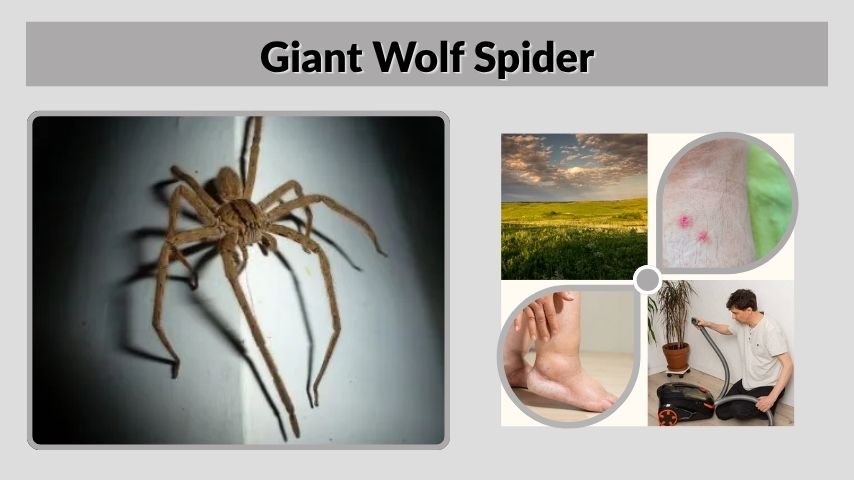
A giant wolf spider is usually a large member of the wolf spider family, known for its speed, strong legs, hairy body, and ground-hunting behavior. These spiders can look scary because of their size, but most are not aggressive toward people. This guide explains giant wolf spider size, bite risk, habitat, identification, and how they compare with giant house spiders and huntsman spiders.
What Is a Giant Wolf Spider?
A giant wolf spider is not always one exact species. Many people use the name for large wolf spiders, especially species in the family Lycosidae. Wolf spiders are active hunters that chase prey instead of catching insects in sticky webs.
Why They Are Called Wolf Spiders
Wolf spiders get their name from the way they hunt. They do not build web traps like orb-weavers or house spiders. Instead, they run across the ground, wait in hiding places, and pounce on insects.
Their speed can make them startling indoors or outdoors. However, they are usually trying to escape, not attack.
Are Giant Wolf Spiders Real?
Yes, large wolf spiders are real. Some species can grow big enough to be called giant wolf spiders. The Carolina wolf spider, for example, is one of the largest wolf spiders in North America.
However, the phrase “giant wolf spider” can also appear in fantasy games such as Dungeons & Dragons. A real giant wolf spider is much smaller than a fantasy monster spider.
Giant Wolf Spider Identification
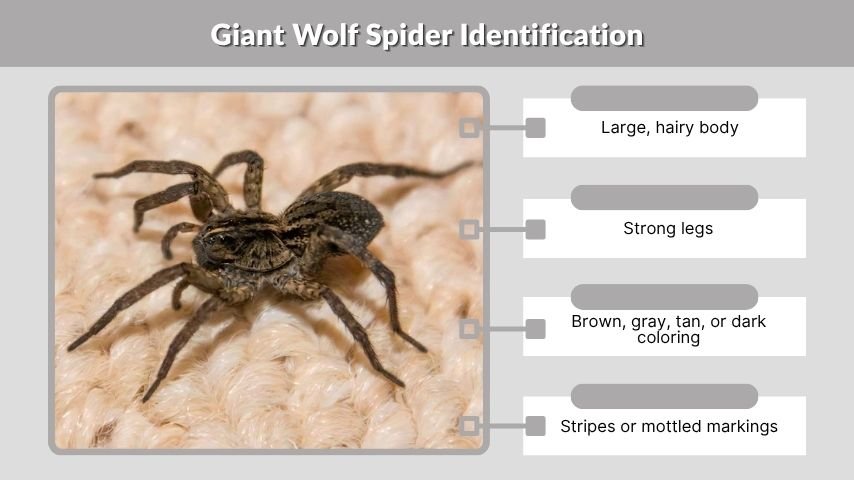
Identifying a giant wolf spider is easier when you look at body shape, eyes, legs, and behavior. Color alone is not enough because many spiders are brown, gray, or black.
What Does a Giant Wolf Spider Look Like?
A giant wolf spider usually has a strong, hairy body and long legs built for running. It may be brown, gray, tan, blackish, or mottled with stripes.
Common features include:
- Large, hairy body
- Strong legs
- Brown, gray, tan, or dark coloring
- Stripes or mottled markings
- Fast movement
- Ground-hunting behavior
- Large forward-facing eyes
- No web used for catching prey
The spider may look bulky compared with many house spiders.
Giant Wolf Spider Eyes
Wolf spiders have excellent eyesight. They have eight eyes arranged in a distinctive pattern, including two large front-facing eyes.
At night, their eyes may reflect flashlight beams. If you shine a light across grass or leaf litter, wolf spider eyes may appear as tiny shining dots.
Giant Wolf Spider vs Other Brown Spiders
Large wolf spiders are sometimes confused with brown recluse spiders, hobo spiders, grass spiders, or giant house spiders. Wolf spiders are usually hairier, faster, and more robust than many look-alike species.
They also do not rely on web funnels or sticky web traps to catch prey.
Giant Wolf Spider Size
Giant wolf spider size depends on the species, age, and sex. Females are often larger than males.
How Big Is a Giant Wolf Spider?
A large wolf spider may have a body length of around 1 inch or more, with a wider leg span. Some species appear much larger because of their long legs and thick body.
The Carolina wolf spider is often considered one of the largest wolf spiders in the United States. Other large species may be found in Australia, Europe, and parts of Asia.
Giant Wolf Spider Size Comparison
The table below compares a giant wolf spider with similar spiders people often confuse it with.
| Spider | Typical Look | Web Use | Human Risk |
|---|---|---|---|
| Giant wolf spider | Hairy, strong, fast runner | Hunts without web traps | Low to moderate bite irritation |
| Giant house spider | Long legs, often indoors | Funnel-like webs | Low |
| Huntsman spider | Very wide leg span, flat body | Hunts actively | Usually low |
| Brown recluse | Smooth, plain brown, violin mark | Hidden irregular webs | More medically concerning |
| Tarantula | Very large, heavy, hairy body | Burrows or hides | Depends on species |
Where Do Giant Wolf Spiders Live?
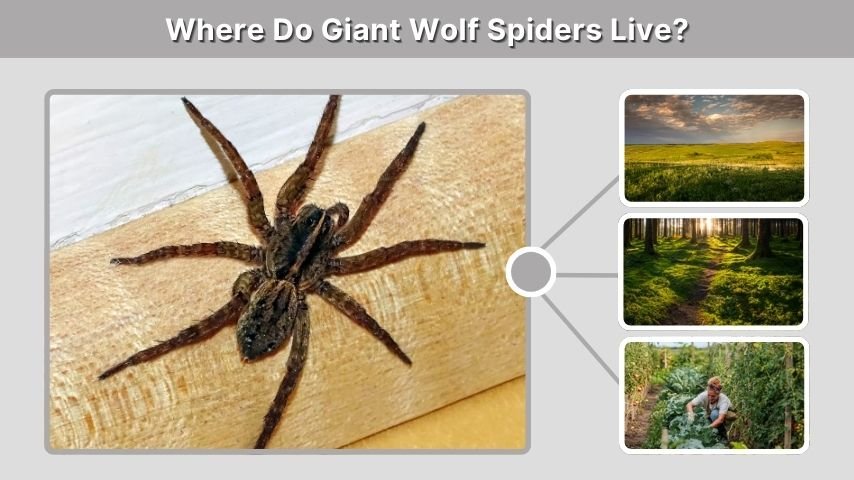
Giant wolf spiders live in habitats where they can hide during the day and hunt at night. They are mostly ground-dwelling spiders.
Outdoor Habitat
Outdoors, giant wolf spiders may live in:
- Grasslands
- Forest floors
- Gardens
- Fields
- Leaf litter
- Mulch beds
- Under rocks
- Around logs
- Burrows
- Wetlands
- Desert edges, depending on species
They are useful predators because they eat many insects and other small arthropods.
Giant Wolf Spider in the House
A giant wolf spider in the house usually wandered in by accident. It may enter through gaps under doors, cracks in foundations, garages, basements, or open windows.
They often come indoors when looking for shelter, warmth, moisture, or prey insects. Finding one wolf spider does not usually mean your home is infested.
Regional Giant Wolf Spiders
Large wolf spiders are reported in many places, including Texas, Florida, Colorado, Missouri, Michigan, North Carolina, Tennessee, Utah, Australia, and the UK. The exact species depends on the region.
In the United States, large wolf spiders are especially common in warm areas, gardens, grasslands, and around homes.
Types of Giant Wolf Spiders
There are many large wolf spider species. Some names are common names, while others refer to specific genera or local species.
Carolina Giant Wolf Spider
The Carolina wolf spider is one of the best-known giant wolf spiders in North America. It is large, fast, and often found on the ground in open habitats.
Despite its size, it is not aggressive toward humans. It may bite if trapped or handled, but it usually tries to run away.
Wetland Giant Wolf Spider
A wetland giant wolf spider usually refers to large wolf spiders that live near marshes, wetlands, reed beds, or damp grassland areas. These spiders hunt insects and other small prey around moist habitats.
Because wetlands support many insects, they can be good hunting grounds for wolf spiders.
Woodland Giant Wolf Spider
Woodland giant wolf spiders are often found in forests, leaf litter, logs, and shaded ground cover. Their brown and gray markings help them blend into soil, bark, and fallen leaves.
They are important predators in woodland ecosystems.
Giant Australian Wolf Spider
Australia has many large spiders, including wolf spiders. Giant Australian wolf spiders can look intimidating, but most are not aggressive toward people.
As with any spider, avoid handling them with bare hands and seek medical advice if a bite causes severe symptoms.
Giant Wolf Spider Bite
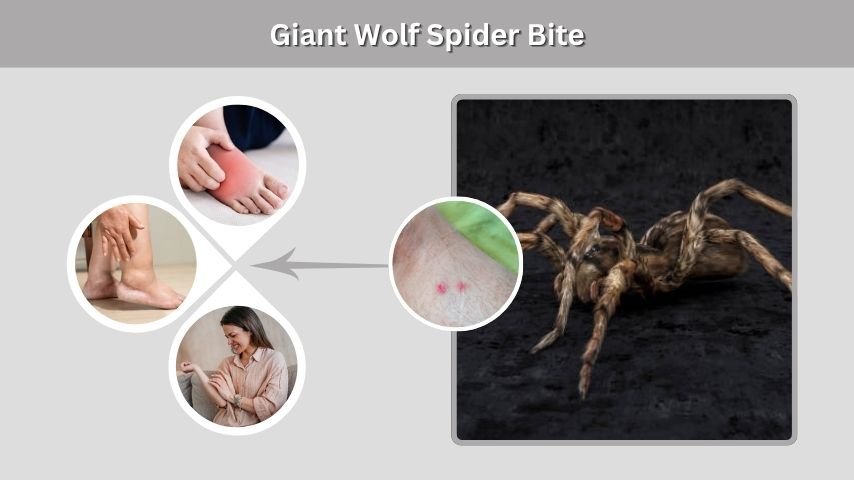
A giant wolf spider bite can happen, but these spiders usually bite only when trapped, pressed against skin, or handled.
Is a Giant Wolf Spider Bite Dangerous?
For most people, a wolf spider bite is not considered highly dangerous. It may cause pain, redness, swelling, itching, or mild irritation.
Possible symptoms include:
- Sharp pinch or sting
- Redness
- Swelling
- Mild pain
- Itching
- Tenderness
- Small puncture marks
Most mild bites improve with basic care. However, reactions vary from person to person.
What to Do After a Bite
If you think a giant wolf spider bit you, clean the area and monitor symptoms.
Basic bite care includes:
- Wash the bite with soap and water.
- Apply a cold compress.
- Keep the area clean.
- Avoid scratching.
- Watch for spreading redness or swelling.
- Seek medical help if symptoms worsen.
Get medical attention if you experience severe pain, breathing trouble, fever, spreading redness, infection, or an unusual reaction.
Giant House Spider vs Wolf Spider
The giant house spider and wolf spider are often confused because both can be large, brown, and fast.
Main Differences
A giant house spider often has long, slender legs and may be found near funnel-like webs indoors. A wolf spider usually has a stockier, hairier body and hunts on the ground without a prey-catching web.
Wolf spiders are more likely to run across open floors, lawns, or garages. Giant house spiders are more associated with indoor corners, walls, and webbed hiding places.
Is a Giant House Spider a Wolf Spider?
No, a giant house spider is not a wolf spider. They belong to different spider groups and have different hunting styles.
Both can be helpful because they eat insects, but they are not the same type of spider.
Giant Wolf Spider vs Huntsman Spider
Wolf spiders and huntsman spiders are both active hunters, but they look different.
Body Shape
A huntsman spider often has a flatter body and very long legs that spread sideways. This gives it a wide, crab-like appearance.
A giant wolf spider usually has a more compact, muscular body and legs that are built for fast running on the ground.
Behavior
Both spiders may run quickly, but wolf spiders are more commonly seen on the ground, in grass, mulch, or leaf litter. Huntsman spiders often hide under bark, in crevices, or on walls depending on the species.
Neither spider wants to attack humans. Bites usually happen when the spider is handled or trapped.
What Do Giant Wolf Spiders Eat?
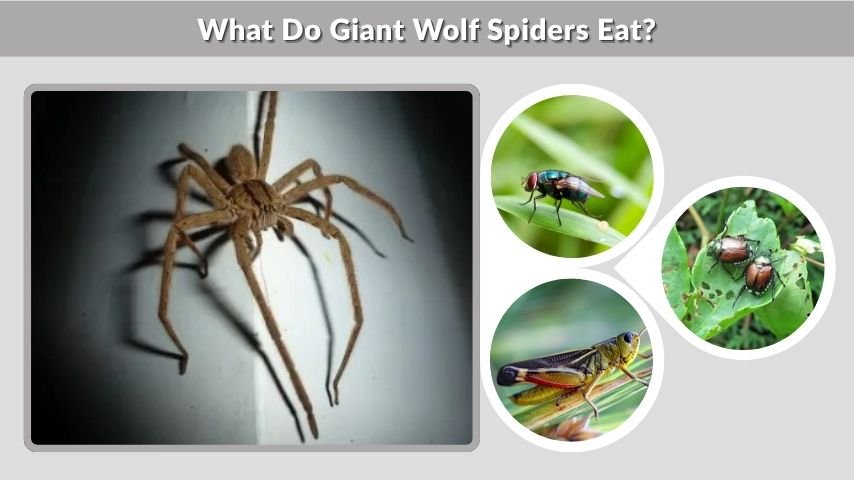
Giant wolf spiders are carnivores. They eat insects and other small animals they can overpower.
Common Prey
Their diet may include:
- Crickets
- Grasshoppers
- Beetles
- Cockroaches
- Flies
- Moths
- Ants
- Earwigs
- Smaller spiders
- Other small arthropods
Large wolf spiders help control pest populations naturally.
How They Hunt
Wolf spiders rely on speed, eyesight, and ambush tactics. Some wait near burrows or hiding spots, while others roam at night searching for prey.
They do not spin web traps, but they may use silk for egg sacs or burrow lining.
Giant Wolf Spider Behavior
Giant wolf spiders are mostly solitary. They do not live in colonies or work together like ants or bees.
Night Hunting
Many wolf spiders are active at night. They use their large eyes to detect movement and hunt insects in low light.
During the day, they often hide under objects, in burrows, or among leaves.
Female Carrying Egg Sac
Female wolf spiders are famous for carrying egg sacs attached to the back of the abdomen. This round sac may look like a ball attached to the spider.
After the spiderlings hatch, they climb onto the mother’s back and ride there for a short time. This is one of the most recognizable wolf spider behaviors.
Giant Wolf Spider 5e and DND
The term giant wolf spider is also popular in Dungeons & Dragons. In DND 5e, a giant wolf spider is a fantasy creature, not a real animal.
Real Spider vs DND Spider
A real giant wolf spider is a large but normal spider. It does not grow to the size of a horse, carry riders, or act like a fantasy monster.
A 5e giant wolf spider may have game stats, poison damage, climbing abilities, and combat rules. That version belongs to fantasy gameplay, while real wolf spiders are small predators that eat insects.
Can a Character Ride a Giant Wolf Spider?
In DND, whether a kobold or small character can ride a giant wolf spider depends on the game rules and the Dungeon Master. In real life, no animal-sized riding wolf spider exists.
How to Remove a Giant Wolf Spider
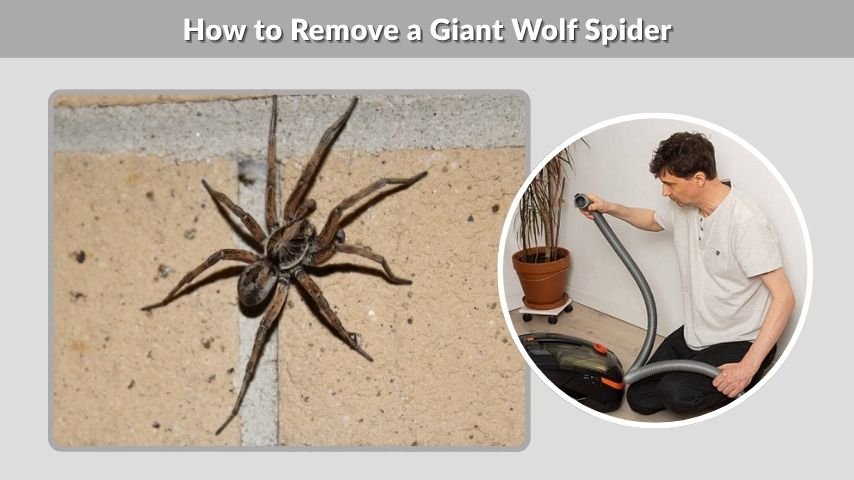
If you find a giant wolf spider indoors, safe removal is usually better than killing it.
Safe Removal Steps
Use a simple catch-and-release method:
- Place a cup or container over the spider.
- Slide stiff paper under the container.
- Carry it outside carefully.
- Release it away from doors and windows.
- Seal entry points afterward.
Do not handle the spider with bare hands.
Prevention Tips
To reduce wolf spiders indoors:
- Seal cracks and gaps.
- Install door sweeps.
- Repair window screens.
- Reduce clutter in basements and garages.
- Move firewood away from the house.
- Vacuum corners and storage areas.
- Reduce indoor insects.
- Turn off unnecessary outdoor lights at night.
Reducing prey insects often reduces spider activity.
FAQs
Are giant wolf spiders dangerous?
Giant wolf spiders are not usually dangerous to humans. They can bite if trapped or handled, but most bites cause mild pain, redness, or swelling. Severe reactions are uncommon, but medical care is important if symptoms worsen.
How big is a giant wolf spider?
A giant wolf spider can be around an inch or more in body length, with a larger leg span. Size depends on species, sex, and age. The Carolina wolf spider is one of the largest wolf spiders in North America.
Do giant wolf spiders live in houses?
Giant wolf spiders may enter houses by accident, especially through gaps, basements, garages, or open doors. They usually prefer outdoor habitats and do not form large indoor colonies. They may come inside while searching for insects or shelter.
What is the difference between a wolf spider and giant house spider?
A wolf spider is usually stockier, hairier, and hunts on the ground without a prey-catching web. A giant house spider often has longer, slimmer legs and may stay near funnel-like webs indoors. They are different types of spiders.
Is the giant wolf spider in DND real?
No, the giant wolf spider in DND 5e is a fantasy creature. Real giant wolf spiders exist, but they are normal spiders that hunt insects. They do not grow to fantasy sizes or carry riders like creatures in tabletop games.