From city parks to quiet woodlands, North America is home to a variety of beautiful songbirds. This guide highlights 20 common species, helping you identify each by their appearance, habitat, behavior, and unique singing patterns. Whether you’re a seasoned birdwatcher or just starting out, these songbirds are easy to spot and even easier to enjoy.
1. American Robin

The American Robin is a familiar and beloved songbird across North America. Known for its bright orange breast and cheerful presence, it’s often one of the first birds to appear in spring. As a member of the thrush family, the robin stands out not just for its looks but for its rich, flute-like song that echoes at dawn and dusk.
Identification
- Bright orange-red breast
- Dark gray back and head
- Yellow beak
- White eye-ring
- Medium-sized body (around 10 inches)
Natural Habitat
American Robins thrive in a variety of environments, from suburban lawns and city parks to forest edges and open countryside. They are especially drawn to areas with short grass for hunting worms and trees or shrubs for nesting.
Song Patterns and Seasonal Singing
Robins are most vocal during the early morning and evening, especially in spring and summer. Their song is a smooth series of clear whistles, often described as “cheerily, cheer up, cheer up, cheerily, cheer up.” Singing peaks during the breeding season when males mark their territory and try to attract mates.
Behavior and Daily Activity
These birds are active during daylight hours, frequently seen hopping across lawns in search of earthworms. While they are solitary or in pairs during nesting season, they may form loose flocks in fall and winter. Their seasonal migration and early singing habits make them a reliable sign of changing weather.
2. Northern Cardinal

The Northern Cardinal is one of the most easily recognized songbirds in North America, especially the bright red males. Its strong, whistled songs and striking appearance make it a favorite among birdwatchers. Both males and females sing, which is unusual among songbirds.
Identification
- Males are bright red with a black face mask
- Females are pale brown with red accents
- Short, thick orange beak
- Prominent crest on the head
- Medium-sized (around 8–9 inches long)
Natural Habitat
Northern Cardinals are common in woodlands, gardens, shrublands, and suburban backyards. They prefer dense vegetation for nesting and feeding and are year-round residents in much of the eastern and central United States.
Song Patterns and Seasonal Singing
Their song is a loud, whistling series of phrases that sounds like “cheer-cheer-cheer,” “birdy-birdy-birdy,” or “purdy-purdy-purdy.” Cardinals sing throughout the year, but males are most vocal during spring and early summer when establishing territory. Females often sing from the nest, communicating with their mates.
Behavior and Daily Activity
Cardinals are mostly ground feeders, often seen hopping beneath shrubs or at feeders. They are territorial during breeding but may gather in small groups during the winter. Mated pairs often stay together year-round, and they show strong loyalty to nesting sites.
3. House Finch

The House Finch is a small, social songbird commonly found in urban and suburban areas. Males are known for their rosy red faces and chests, while their cheerful, warbling song is a common sound in cities and towns.
Identification
- Males have red on the head, chest, and rump
- Females are brown-streaked with no red
- Small, conical beak
- Short, slightly notched tail
- Small-sized (around 5–6 inches long)
Natural Habitat
House Finches thrive in human-influenced habitats—backyards, parks, farms, and city streets. They nest in trees, hanging planters, or building ledges and are rarely found in deep forests or wilderness areas.
Song Patterns and Seasonal Singing
Their song is a long, jumbled warble with rising and falling notes. It can be heard year-round, often from rooftops, wires, or tree branches. Males sing more during the breeding season, but both sexes make chirps and calls throughout the year.
Behavior and Daily Activity
House Finches are highly social, often gathering in flocks, especially outside the breeding season. They are active foragers and frequently visit bird feeders. Their adaptable nature allows them to thrive in nearly every corner of North America.
4. Song Sparrow

The Song Sparrow is one of the most widespread and variable songbirds across North America. Its streaky plumage blends well with shrubs and grasses, but its sweet, complex song is what truly sets it apart. It’s a year-round resident in many regions, known for singing even on cold winter mornings.
Identification
- Brown streaked body with bold chest streaks
- Small dark spot in the center of the chest
- Grayish face with a brown crown and eye stripe
- Short, rounded wings and a long tail
- Medium-small size (around 5.5–7 inches)
Natural Habitat
Song Sparrows are commonly found in brushy fields, marshes, garden edges, and forest clearings. They prefer dense vegetation near open areas for nesting and foraging.
Song Patterns and Seasonal Singing
Their song begins with a few clear notes followed by a varied mix of buzzes, trills, and short phrases. Males sing persistently during the breeding season, often perched on open branches or fences. The song varies by region, but its lively rhythm is always distinctive.
Behavior and Daily Activity
Song Sparrows are mostly solitary or in pairs during breeding but may gather in small flocks at other times. They forage mostly on the ground, scratching through leaf litter for seeds and insects. These birds are also known for their persistent singing during cool, damp mornings.
5. Eastern Bluebird

The Eastern Bluebird is a symbol of happiness for many, with its vivid blue plumage and soft, melodious song. Males are especially bright, and their gentle calls often echo across meadows and pastures during spring and summer.
Identification
- Males are bright blue above with a rusty-red chest
- Females are gray-blue with lighter reddish underparts
- Small, straight black beak
- White belly and flanks
- Small to medium size (around 6.5–7.5 inches)
Natural Habitat
Eastern Bluebirds are found in open fields, orchards, golf courses, and woodland edges. They prefer areas with scattered trees and are commonly seen perched on fence posts or power lines.
Song Patterns and Seasonal Singing
Their song is a soft, musical warble that sounds like “cheer cheerful charmer.” Bluebirds sing mostly during spring and early summer. Males use song to defend territory and attract a mate, and they often sing while flying or perched.
Behavior and Daily Activity
These birds are active during daylight, often seen flying low to catch insects or dropping to the ground to forage. They are cavity nesters and often use nest boxes. Bluebirds are gentle and social, and their calm nature makes them welcome backyard visitors.
6. Carolina Wren

The Carolina Wren is a small but energetic bird known for its loud voice and curious nature. Despite its size, its bold personality and rich, rolling song can fill forests, gardens, and backyards throughout the southeastern United States.
Identification
- Warm reddish-brown upperparts
- Buffy-orange underparts
- Distinct white eyebrow stripe
- Slightly curved bill
- Small and chunky (around 5.5 inches)
Natural Habitat
Carolina Wrens live in dense vegetation, woodpiles, thickets, and brushy suburban areas. They prefer cluttered spaces near forest edges, gardens, or under porches where they can find both food and nesting spots.
Song Patterns and Seasonal Singing
Their song is a rapid, repeating series of whistled phrases like “teakettle-teakettle-teakettle!” Males sing year-round and can often be heard even during winter. Their volume and persistence make them easy to locate despite their secretive habits.
Behavior and Daily Activity
Carolina Wrens are agile and active, often hopping and flitting around in search of insects. They pair for life, often seen traveling and foraging together. These birds are curious and sometimes nest in hanging planters, mailboxes, or garage shelves.
7. American Goldfinch

The American Goldfinch is a bright, cheerful songbird often seen feeding in weedy fields and backyard feeders. Males shine in lemon-yellow plumage during the summer, making them one of the most eye-catching birds of the season.
Identification
- Males are bright yellow with black wings and cap (in summer)
- Females and winter males are duller yellow-brown
- Small, cone-shaped beak
- Black-and-white markings on wings
- Small size (about 5 inches)
Natural Habitat
Goldfinches prefer open landscapes like fields, meadows, and weedy edges. They’re frequent visitors to gardens and feeders, especially those with sunflower or nyjer seeds.
Song Patterns and Seasonal Singing
Their song is a sweet, high-pitched series of twitters and warbles. A common flight call sounds like “per-chick-o-ree” or “potato-chip.” Singing peaks in late summer during breeding, much later than most other songbirds.
Behavior and Daily Activity
American Goldfinches are social and acrobatic, often seen hanging upside down while feeding. They breed later in the summer, in sync with thistle seed availability. Outside the breeding season, they gather in flocks and remain active throughout the day.
8. Indigo Bunting

The Indigo Bunting is a small songbird admired for its vibrant blue plumage and bubbly song. During the warmer months, males dazzle in rich indigo hues, often singing from the tops of trees or telephone wires.
Identification
- Males are bright, deep blue all over in summer
- Females are warm brown with faint streaks
- Small, conical bill
- Short tail and compact body
- Small size (around 5 inches)
Natural Habitat
Indigo Buntings prefer brushy fields, woodland edges, and overgrown roadsides. They thrive in sunny areas with scattered shrubs and trees, especially near open meadows or farmland.
Song Patterns and Seasonal Singing
Their song is a rapid series of paired notes, often described as “sweet-sweet, chew-chew, sweet-sweet.” Males sing frequently during spring and summer, usually from exposed perches to establish territory and attract mates.
Behavior and Daily Activity
These buntings are active and alert, usually seen alone or in pairs during breeding. They forage for seeds and insects low in vegetation and migrate at night, using stars for navigation. Males are very territorial and return to the same nesting areas each year.
9. Black-capped Chickadee

The Black-capped Chickadee is a small, friendly bird known for its distinctive “chick-a-dee-dee-dee” call and curious behavior. It’s a common backyard visitor, especially in northern forests and suburban gardens.
Identification
- Black cap and throat
- White cheeks
- Soft gray back and wings
- Buff-colored sides
- Small and round (about 5 inches)
Natural Habitat
Chickadees inhabit mixed and deciduous forests, woodland edges, and suburban neighborhoods. They’re frequent visitors to feeders and nest boxes, especially during the colder months.
Song Patterns and Seasonal Singing
Their song is a clear, whistled “fee-bee” or “hey-sweetie,” most often heard in late winter and early spring. Their “chick-a-dee-dee” call varies in intensity and is used for communication and alerting others to danger.
Behavior and Daily Activity
Black-capped Chickadees are bold and inquisitive, often approaching humans closely. They form small flocks in winter and cache food for later use. Their acrobatic movements and year-round presence make them favorites among birdwatchers.
10. Tufted Titmouse

The Tufted Titmouse is a lively, gray-crested songbird that often joins chickadees and woodpeckers at feeders and in forest flocks. Its sharp, whistled call and confident movements make it a standout in wooded backyards and eastern forests.
Identification
- Soft gray upperparts and white underparts
- Rust-colored sides beneath the wings
- Distinct gray crest on the head
- Black forehead and large black eyes
- Small to medium size (about 6.5 inches)
Natural Habitat
Tufted Titmice are most common in deciduous or mixed forests, wooded suburbs, and backyard gardens. They nest in tree cavities or nest boxes and are regular visitors to feeders, especially those with sunflower seeds.
Song Patterns and Seasonal Singing
Their song is a clear, whistled “peter-peter-peter” that’s repeated several times. It’s most prominent during spring and early summer but can be heard year-round. Their calls also include harsh scolds and sharp chirps used for communication within small flocks.
Behavior and Daily Activity
Tufted Titmice are active and bold, often seen moving through trees in search of insects, seeds, and berries. They frequently form mixed-species flocks in winter and are known for caching food in bark crevices or under leaves for later use.
11. White-throated Sparrow

The White-throated Sparrow is a handsome bird with a distinct white throat patch and a beautiful, mournful whistle. It often forages in leaf litter and is especially common in forested regions during migration and winter.
Identification
- White throat bordered by dark stripes
- Black-and-white or tan-and-black striped crown
- Yellow spot between the eye and beak
- Gray breast and streaked brown back
- Medium size (around 6.5–7 inches)
Natural Habitat
These sparrows prefer forests, woodland edges, and brushy clearings. During winter, they are often found in parks and gardens, foraging on the ground under shrubs and feeders.
Song Patterns and Seasonal Singing
Their song is a slow, clear whistle that sounds like “Oh-sweet-Canada-Canada” or “Old-Sam-Peabody-Peabody,” depending on local interpretation. Males sing mostly in spring and early summer but may also sing quietly during fall migration.
Behavior and Daily Activity
White-throated Sparrows forage mostly on the ground, scratching through leaves in search of seeds and insects. They migrate in flocks and often feed together, especially in colder months. Their gentle, flute-like song adds a peaceful touch to forest mornings.
12. House Sparrow

The House Sparrow is one of the most familiar urban songbirds in the world. Introduced to North America in the 1800s, it quickly adapted to city life and is now a constant presence near human activity. Though not native, it adds lively chirps and chatter to streets, gardens, and farms.
Identification
- Males have gray heads, black bibs, and chestnut necks
- Females and young are brown with streaked backs and plain faces
- Short, stout beak
- Stocky body with a rounded tail
- Small size (about 6 inches)
Natural Habitat
House Sparrows are highly adaptable and found almost anywhere people live—from cities and towns to barns and parking lots. They nest in building crevices, vents, and eaves and are often seen hopping along sidewalks.
Song Patterns and Seasonal Singing
Their song is a series of repetitive chirps and sharp calls, not as musical as many other songbirds but constant and energetic. Males chirp persistently during breeding season to defend territory and attract mates, especially from rooftops and wires.
Behavior and Daily Activity
These birds are bold, noisy, and social, forming large flocks throughout the year. They forage on the ground for crumbs, grains, and insects. House Sparrows often outcompete native birds for nest sites and food, especially in densely populated areas.
13. Baltimore Oriole

The Baltimore Oriole is a striking songbird with vivid orange and black plumage and a sweet, flute-like song. Its arrival each spring is eagerly awaited by many bird enthusiasts, especially in the eastern U.S.
Identification
- Males are bright orange with black heads and backs
- Females are yellow-orange with grayish wings
- Slender, pointed beak
- Medium size (about 7 inches)
- White wing bars
Natural Habitat
Baltimore Orioles prefer open woodlands, river edges, orchards, and suburban areas with tall deciduous trees. They build hanging, woven nests in the outer branches and feed on insects, fruit, and nectar.
Song Patterns and Seasonal Singing
Their song is a rich, whistling series of fluty notes, often described as sweet and musical. Males sing from high perches during spring and summer to claim territory and attract mates. Their call includes sharp, distinctive chatter.
Behavior and Daily Activity
These orioles are active during the day, moving quickly through treetops or hovering while feeding on nectar or fruit. They are solitary or in pairs during breeding season but migrate in loose flocks. Many people attract them to backyards with oranges and jelly feeders.
14. Purple Finch

The Purple Finch is a colorful songbird with a rich, warbling voice. Often described as a bird “dipped in raspberry juice,” the male’s reddish hue and lively song help it stand out among forest birds across the northern U.S. and Canada.
Identification
- Males are rosy red on the head, chest, and back
- Females are brown and white with heavy facial markings
- Thick, conical beak
- Streaked underparts on females
- Medium size (about 6 inches)
Natural Habitat
Purple Finches prefer mixed woodlands, evergreen forests, and wooded suburbs. In winter, they may visit backyard feeders, especially those with sunflower seeds.
Song Patterns and Seasonal Singing
Their song is a rich, warbling mix of sweet notes that rolls fluidly and often includes mimicked calls of other birds. Males sing most during the breeding season from perches high in the canopy.
Behavior and Daily Activity
Purple Finches are calm and sociable, often found foraging in pairs or small groups. They feed on seeds, buds, and fruit, and may migrate short distances depending on food supply. They are less aggressive than the similar House Finch and more likely to give up feeders when crowded.
15. Yellow Warbler

The Yellow Warbler is a bright, sunshine-colored bird that fills wetlands and woodland edges with cheerful, whistling songs during spring and summer. Its vivid color and musical tune make it a favorite among birdwatchers.
Identification
- Males are bright yellow with reddish streaks on the chest
- Females are slightly duller yellow without streaks
- Slim body with rounded head
- Thin, pointed beak
- Small size (about 5 inches)
Natural Habitat
Yellow Warblers are commonly found in thickets, wetland edges, and shrubby clearings. They prefer areas near water and nest in low shrubs or small trees.
Song Patterns and Seasonal Singing
Their song is a quick, sweet series of notes often described as “sweet-sweet-sweet, I’m so sweet.” Males sing constantly during spring and early summer to mark territory and attract a mate. The song is bright, repetitive, and very distinctive.
Behavior and Daily Activity
Yellow Warblers are active insect hunters, flitting through foliage in constant motion. They migrate long distances from Central and South America each spring and are often among the earliest warblers to arrive. Their energetic movements and nonstop singing signal a lively, healthy habitat.
16. Common Yellowthroat

The Common Yellowthroat is a small, energetic warbler easily recognized by the male’s striking black facial mask and lively “witchety-witchety-witchety” song. Found across most of North America, it prefers dense, low vegetation near wetlands and streams.
Identification
- Males have bright yellow throats and black face masks bordered with white
- Females are olive-brown with yellow throats but no mask
- Slim body and slightly rounded wings
- Short tail often held upright
- Small size (around 5 inches)
Natural Habitat
Common Yellowthroats favor marshes, wet meadows, and dense brushy areas. They also live along woodland edges and in overgrown fields—anywhere with thick cover and moisture.
Song Patterns and Seasonal Singing
Their signature song is a fast, repeated “witchety-witchety-witchety,” often heard from hidden spots in dense undergrowth. Males sing frequently during the breeding season, usually from low, concealed perches. Their song helps them defend territory and attract females.
Behavior and Daily Activity
These warblers are active and secretive, usually staying low to the ground while foraging for insects. They are constantly in motion, flicking their tails and darting through brush. Despite being hard to spot, their loud song reveals their presence.
17. Blue Grosbeak
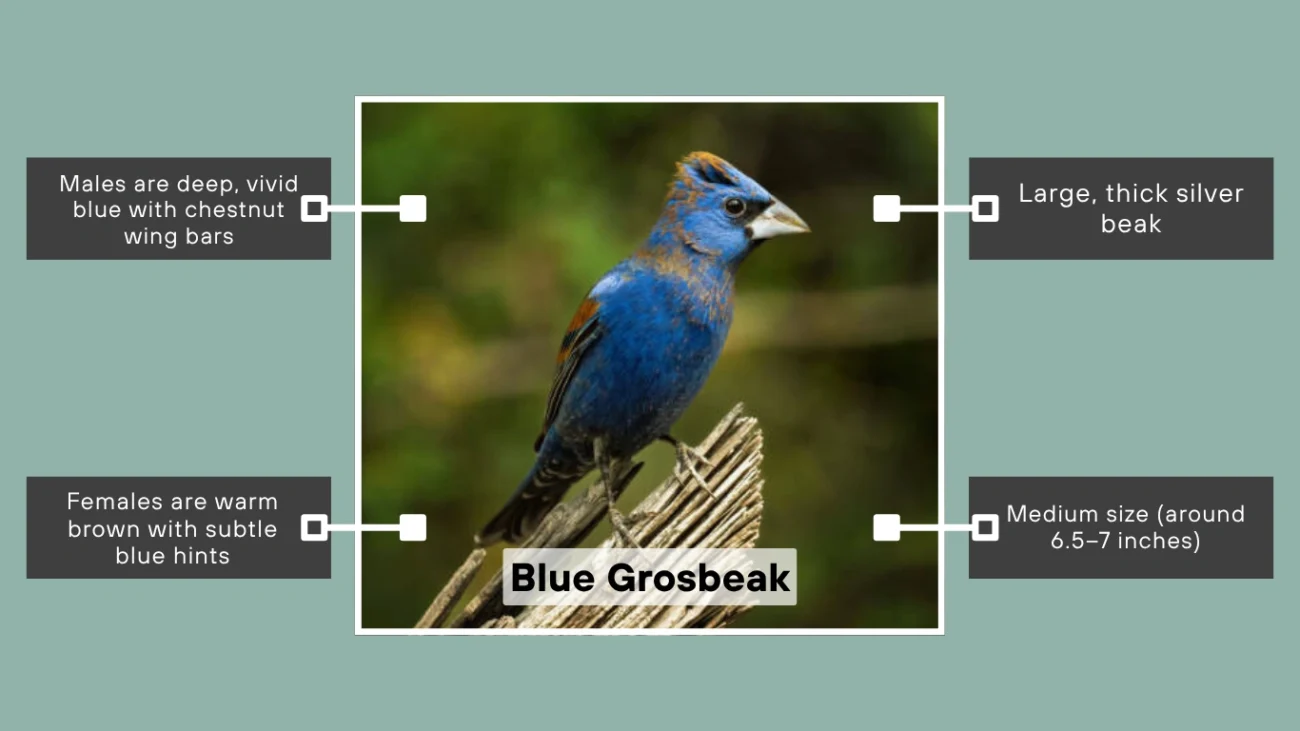
The Blue Grosbeak is a medium-sized songbird known for its deep blue feathers and bold silver beak. Though shy and somewhat secretive, its sweet, rich song often rings out from brushy fields and forest edges.
Identification
- Males are deep, vivid blue with chestnut wing bars
- Females are warm brown with subtle blue hints
- Large, thick silver beak
- Sturdy body with a slightly rounded tail
- Medium size (around 6.5–7 inches)
Natural Habitat
Blue Grosbeaks inhabit shrubby fields, forest borders, and overgrown roadsides. They prefer transitional habitats with a mix of open space and tall vegetation, especially near water.
Song Patterns and Seasonal Singing
Their song is a rich, warbling melody with layered phrases, somewhat similar to a Purple Finch or Indigo Bunting. Males sing from elevated perches in spring and summer, especially at dawn and dusk.
Behavior and Daily Activity
These birds forage low in dense vegetation, feeding on insects and seeds. They are solitary or found in pairs during the breeding season and migrate to Central America for winter. Though not always easy to spot, their beautiful song often gives them away.
18. Rose-breasted Grosbeak

The Rose-breasted Grosbeak is a striking and melodic songbird, admired for both its vivid coloring and rich, flute-like song. It’s a regular visitor in wooded backyards and forest edges during spring and summer in eastern and central North America.
Identification
- Males are black and white with a bold rose-red patch on the chest
- Females are brown and heavily streaked with a white eyebrow
- Large, pale pink conical beak
- Medium size (about 7–8 inches)
Natural Habitat
Rose-breasted Grosbeaks prefer deciduous and mixed woodlands, forest clearings, and suburban gardens. They often nest in tall shrubs or trees and forage in the canopy and undergrowth.
Song Patterns and Seasonal Singing
Their song is a rich, flowing melody often compared to an American Robin but more refined and fluid. Males sing during spring and summer to define territory and court females. Their mellow calls and soft whistles are also heard during migration.
Behavior and Daily Activity
These grosbeaks are calm and deliberate, foraging for insects, seeds, and fruit. Both sexes take turns feeding the young. During migration, they may visit feeders stocked with sunflower seeds, offering a chance to observe them up close.
19. European Starling

The European Starling, introduced to North America in the 1800s, has become one of the continent’s most common and adaptable songbirds. Known for their iridescent plumage and mimicry, starlings are both fascinating and controversial.
Identification
- Shiny black feathers with iridescent purple and green tones
- Yellow beak in spring and summer; darker in winter
- Short tail and triangular wings
- Heavily speckled in winter
- Medium size (about 8 inches)
Natural Habitat
Starlings thrive in urban areas, farmlands, parks, and anywhere with open ground for foraging. They nest in cavities in buildings, trees, and even traffic lights.
Song Patterns and Seasonal Singing
Their vocalizations are complex and mimic a variety of sounds, including other birds, alarms, and whistles. Starlings often sing year-round, especially males, who use song to attract mates and advertise nesting sites.
Behavior and Daily Activity
Highly social and aggressive, starlings often gather in large flocks. They forage on the ground and feed on insects, grains, and scraps. Their synchronized flocking, known as murmurations, creates dramatic sky patterns during migration and winter roosting.
20. Western Meadowlark

The Western Meadowlark is a grassland songbird known for its vivid yellow chest and flute-like song. It’s often seen perched on fence posts in open fields, filling the landscape with its rich voice.
Identification
- Bright yellow chest with a bold black “V”
- Streaked brown back and wings
- White outer tail feathers visible in flight
- Stout body and medium-length bill
- Medium size (about 8.5–10 inches)
Natural Habitat
Western Meadowlarks inhabit prairies, grasslands, pastures, and agricultural fields across western and central North America. They nest on the ground, hidden among tall grasses.
Song Patterns and Seasonal Singing
Their song is a liquid, whistled melody often described as rich and flute-like. Males sing from elevated spots during spring and early summer, using their songs to claim territory and attract females. Each bird’s tune may slightly vary from region to region.
Behavior and Daily Activity
Western Meadowlarks forage on the ground for insects and seeds. They are solitary during nesting season but may gather in loose flocks in fall and winter. Their song and presence are often associated with wide-open landscapes and blooming meadows.