Flying carpenter ants often alarm homeowners, especially when they suddenly appear indoors or around lights. Many people mistake them for termites or assume all flying ants are the same. However, understanding flying carpenter ants is important because their presence can signal a nearby colony.
These ants are not a separate species but a reproductive stage of carpenter ants. When conditions are right, they develop wings and leave the nest to mate and start new colonies. Recognizing them early can help prevent larger infestations.
What Are Flying Carpenter Ants?
Flying carpenter ants, also known as swarmers, are reproductive ants that leave the colony to reproduce. They are a natural part of the carpenter ant lifecycle.
Do Carpenter Ants Fly?
Not all carpenter ants can fly. Only specific members of the colony, known as reproductive ants, develop wings. These ants take flight during certain times of the year to mate and establish new colonies.
Why Carpenter Ants Develop Wings
Carpenter ants grow wings when the colony becomes mature and large enough to expand. Their main purpose is reproduction. After mating, males die, while fertilized females (queens) shed their wings and start new nests.
When Do Carpenter Ants Fly?
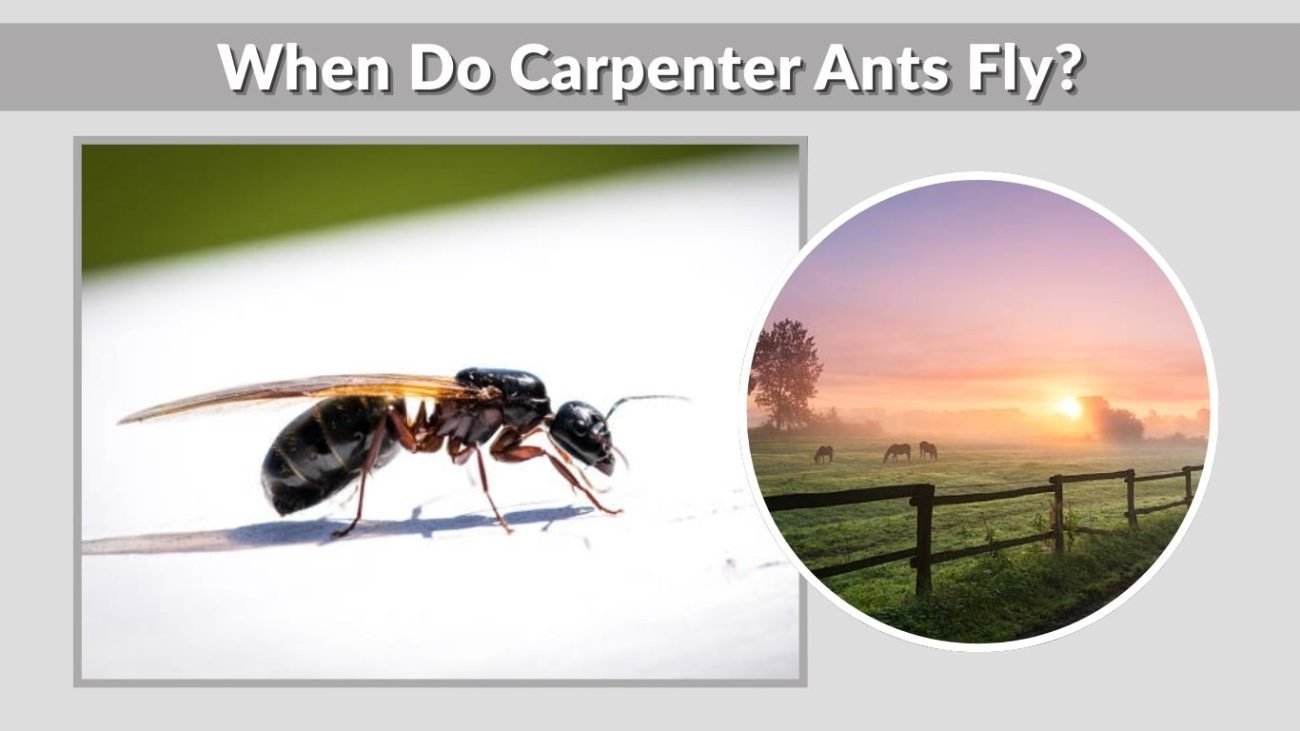
Flying carpenter ants typically appear during specific seasons when environmental conditions are favorable.
Swarming Season
Swarming usually occurs in spring and early summer. Warm temperatures and humidity often trigger this behavior, making it more likely to see flying carpenter ants during these periods.
Carpenter Ant Flying Pattern
Flying carpenter ants do not travel long distances. They usually fly short distances and are often attracted to light sources, which is why they are commonly seen near windows, doors, or outdoor lights.
Flying Carpenter Ants Identification
Proper identification is key to distinguishing them from other insects like termites or regular flying ants.
What Do Flying Carpenter Ants Look Like?
Flying carpenter ants are generally larger than other flying ants. They have a distinct body structure with a narrow waist and elbowed antennae. Their color is usually black or dark brown, though some may have reddish tones.
Size of Flying Carpenter Ants
They are noticeably bigger compared to typical flying ants. This size difference is one of the easiest ways to identify them quickly.
Flying Carpenter Ants vs Flying Ants
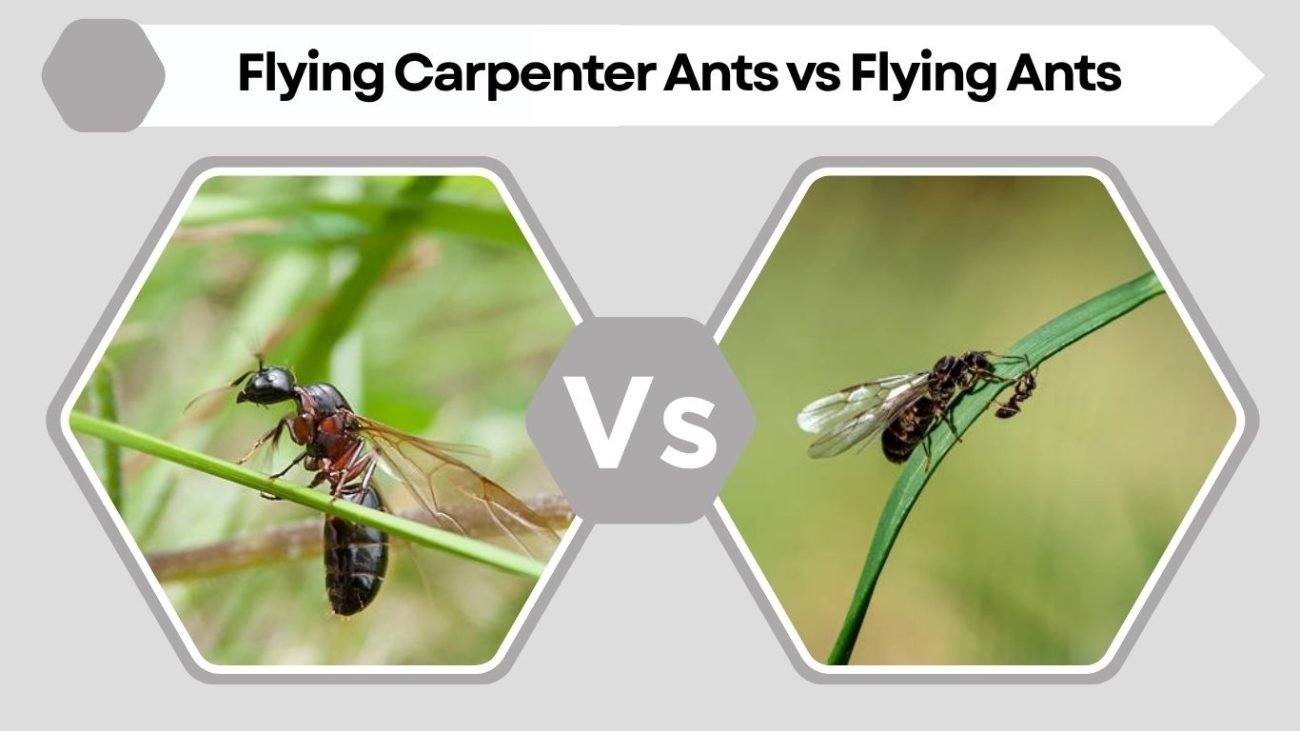
Many people confuse flying carpenter ants with other flying ants, but there are clear differences.
Key Differences
- Carpenter ants are larger and more robust
- They have elbowed antennae, while other ants may vary
- Their wings are uneven in size, with front wings longer than back wings
These features help separate carpenter ants from other flying ant species.
Flying Carpenter Ants vs Termites
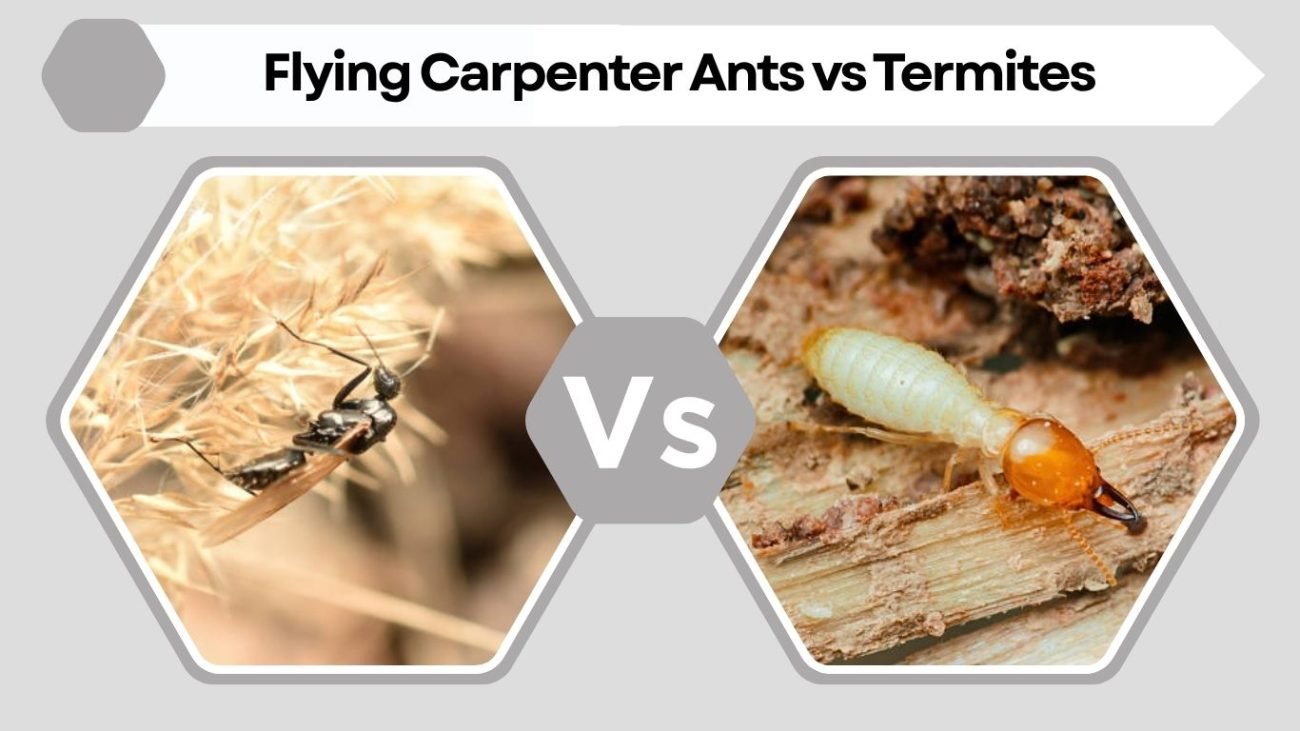
Another common confusion is between flying carpenter ants and termites, especially during swarming season.
Physical Differences
Carpenter ants have a narrow waist and bent antennae, while termites have a straight body and straight antennae. Additionally, termite wings are equal in size, while carpenter ant wings are not.
Behavior Differences
Carpenter ants tunnel through wood to create nests, while termites consume wood as food. This difference makes termites more destructive, although carpenter ants can still cause damage over time.
Are All Flying Ants Carpenter Ants?
Not all flying ants are carpenter ants. Many ant species produce winged ants during their reproductive stage, which leads to confusion.
Carpenter ants are just one type of ant that develops wings. Identifying them correctly requires looking at body shape, size, and wing structure rather than assuming all flying ants are the same.
Flying Carpenter Ants in the House
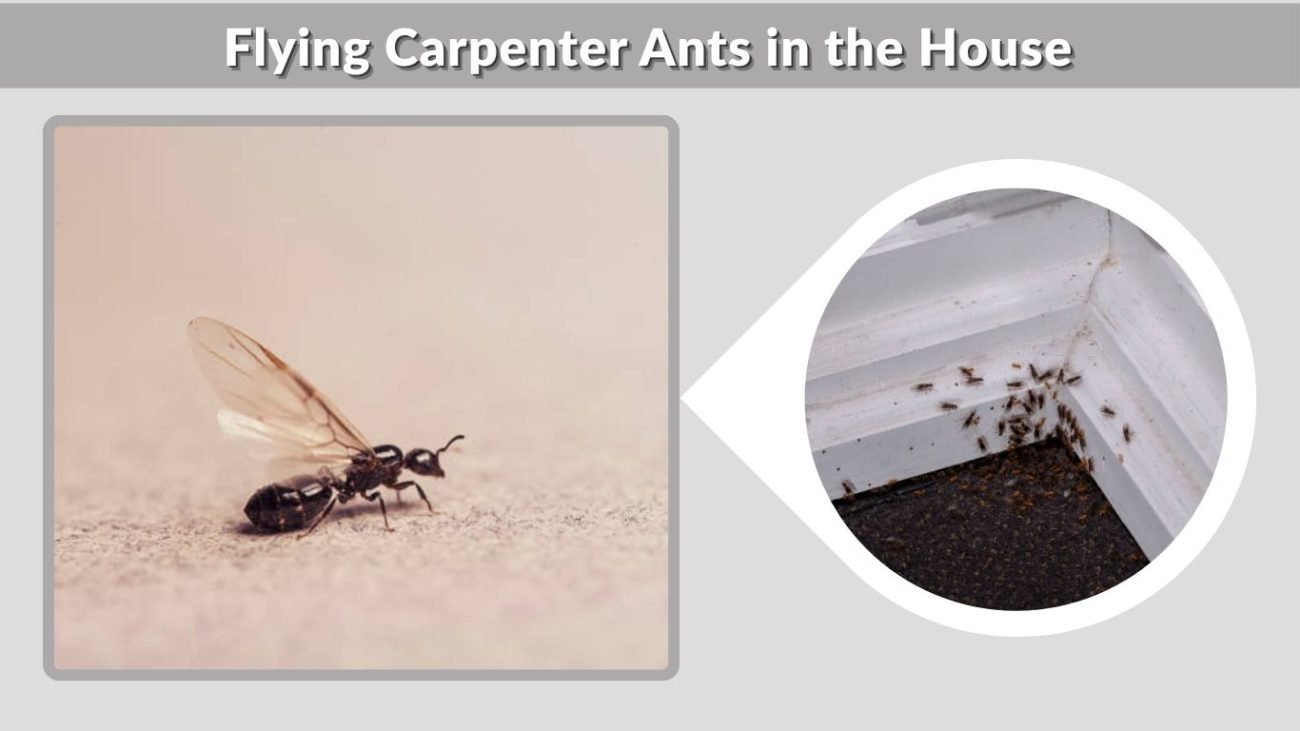
Seeing flying carpenter ants inside your home is often a warning sign that should not be ignored.
Why They Enter Homes
Flying carpenter ants are attracted to light, which is why they often gather near windows, doors, and indoor lighting. They may also enter homes when a nest is located nearby or inside the structure.
Signs of Infestation
Repeated sightings of flying carpenter ants indoors usually indicate a mature colony. Finding discarded wings near windows or floors is another strong sign that ants are nesting nearby.
Are Flying Carpenter Ants Dangerous?
Flying carpenter ants are not dangerous to humans in most cases, but they can still pose risks.
Do Flying Carpenter Ants Bite or Sting?
They can bite, but it is rare and usually not harmful. Some may cause mild irritation, but they are not considered dangerous pests in terms of health.
Property Damage Risk
The real concern is structural damage. Flying carpenter ants indicate an established colony, which means there may already be wood damage occurring nearby
Flying Carpenter Ant Infestation Signs
Identifying an infestation early can help prevent serious problems.
Key Warning Signs
- Swarms of flying ants indoors or around the home
- Piles of discarded wings near windows or doors
- Presence of large ants along with flying ants
- Ant trails leading to hidden areas
How to Get Rid of Flying Carpenter Ants
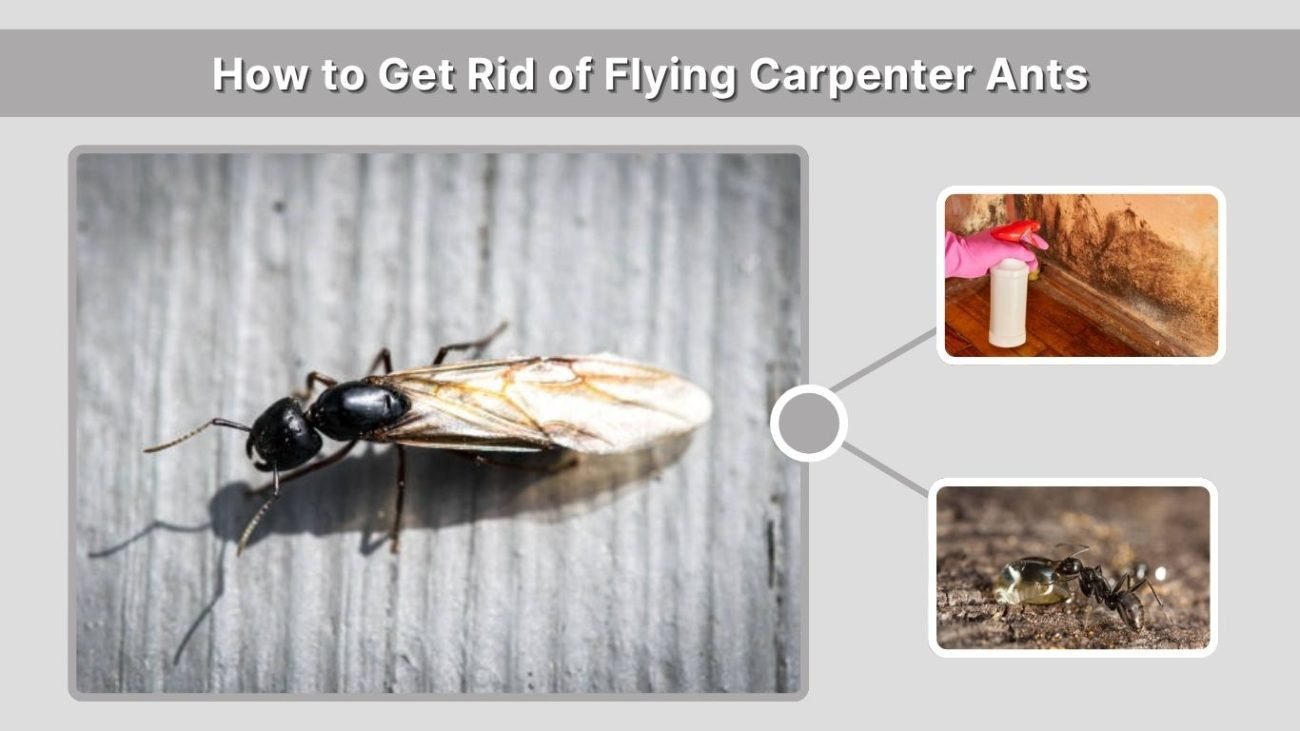
Getting rid of flying carpenter ants requires more than just killing the ones you see.
Immediate Control
The first step is to eliminate visible ants and clean affected areas. This helps reduce immediate activity but does not solve the root problem.
Long-Term Solutions
To fully eliminate the infestation, you need to target the colony. Using bait systems allows worker ants to carry poison back to the nest, eventually eliminating the queen and the entire colony.
Best Way to Kill Flying Carpenter Ants
The most effective approach focuses on eliminating the source of the problem.
- Use bait instead of relying only on sprays
- Locate and destroy the nest
- Combine treatment with prevention methods
This ensures that the infestation does not return.
Prevention Tips
Preventing flying carpenter ants is the best long-term solution.
Key Prevention Actions
- Seal cracks and entry points around your home
- Reduce moisture in wood and surrounding areas
- Turn off unnecessary lights at night
- Inspect your home regularly for early signs
FAQs
Are flying carpenter ants dangerous?
They are not dangerous to humans, but they can indicate a nearby infestation that may damage wooden structures.
How do you get rid of flying carpenter ants?
The best method is to locate the nest and use bait systems to eliminate the colony completely.
What is the difference between flying ants and carpenter ants?
Carpenter ants are larger, have elbowed antennae, and uneven wings, while other flying ants vary in size and structure.
Do all carpenter ants fly?
No, only reproductive ants develop wings and fly during mating season.