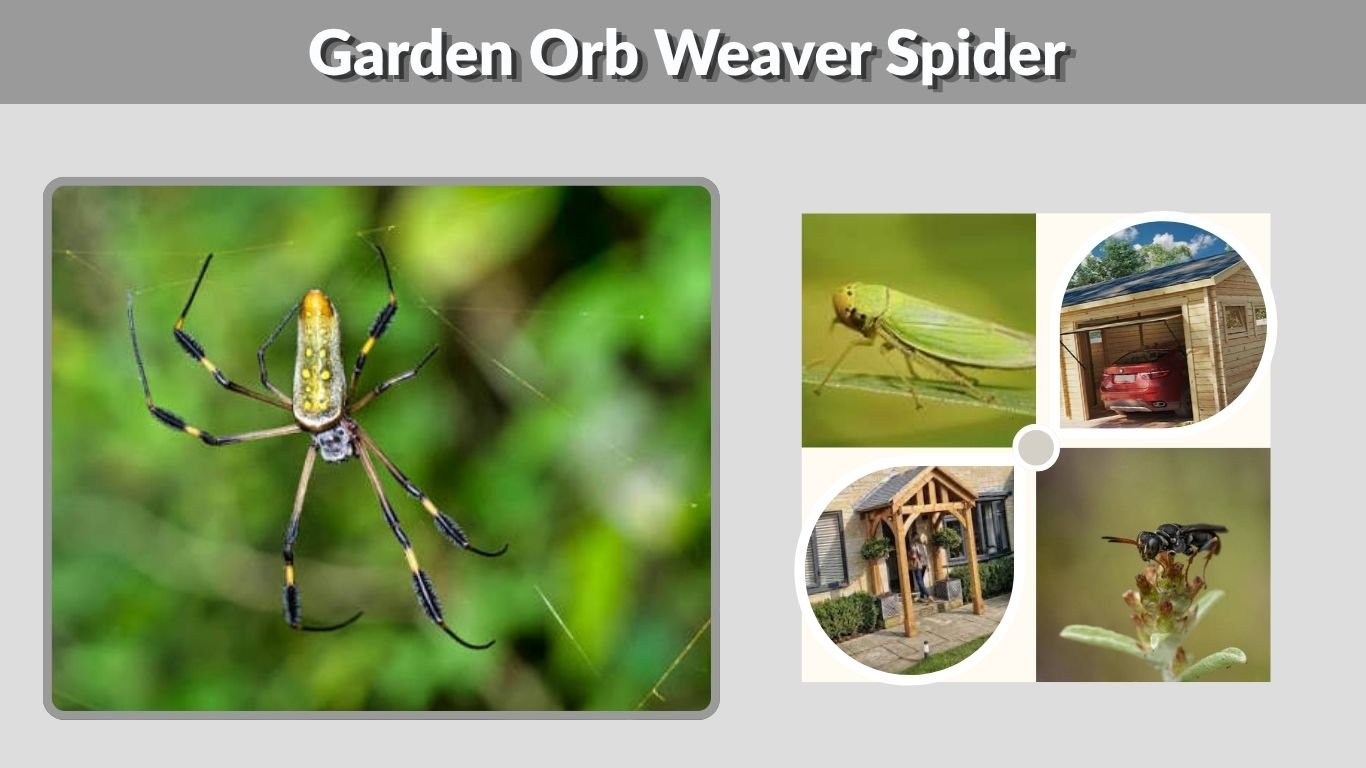
The garden orb weaver spider is a common outdoor spider best known for building round, wheel-shaped webs in gardens, yards, shrubs, fences, and around homes. Many people search for “spider garden orb weaver” or “garden spider orb weaver” because the names can be confusing. In simple words, many garden spiders are orb weavers, but not every orb weaver is the same garden spider. These spiders are usually helpful, not harmful. They catch flying insects, reduce garden pests, and rarely bite unless handled or trapped.
Garden Orb Weaver Spider Keyword Analysis
The keyword list shows that most searchers want to know what a garden orb weaver looks like, whether it is poisonous, what its web looks like, where it lives, and how it compares with similar spiders. The main search terms are “spider garden orb weaver,” “garden orb weaving spider,” “garden orb weaver spider,” and “garden spider orb weaver.”
Several keywords also show strong safety intent, such as garden orb weaver spider bite, garden orb weaver spider poisonous, garden orb weaving spider poisonous, and garden orb weaver spider dangerous. Comparison keywords are also important, including orb weaver vs garden spider, yellow garden spider vs orb weaver, golden orb weaver vs garden spider, and garden spider vs golden orb weaver.
| Search Intent | Keywords to Cover |
|---|---|
| Identification | garden orb weaver spider, garden spider orb weaver |
| Safety | bite, poisonous, venomous, dangerous |
| Web | garden orb weaving spider web, garden orb weaver spider web |
| Locations | Australia, USA, UK, Florida, Texas, California |
| Comparisons | orb weaver vs garden spider, yellow garden spider vs orb weaver |
| Life cycle | eggs, egg sac, lifespan, baby spider |
The best article angle is a complete guide that answers identification, safety, habitat, web, bite, eggs, and common comparison questions in simple language.
What Is a Garden Orb Weaver Spider?
A garden orb weaver spider is a web-building spider commonly found in gardens and outdoor spaces. The term can describe several orb-weaving spiders that live around plants, shrubs, trees, and homes. These spiders belong to the larger orb-weaver group, known for making circular webs.
One well-known example is the European garden spider, also called the cross orb weaver or cross spider. Its scientific name is Araneus diadematus, and it is found across Europe and parts of North America. The Essig Museum of Entomology notes that this species is known by names such as cross orb-weaver, European garden spider, and pumpkin spider.
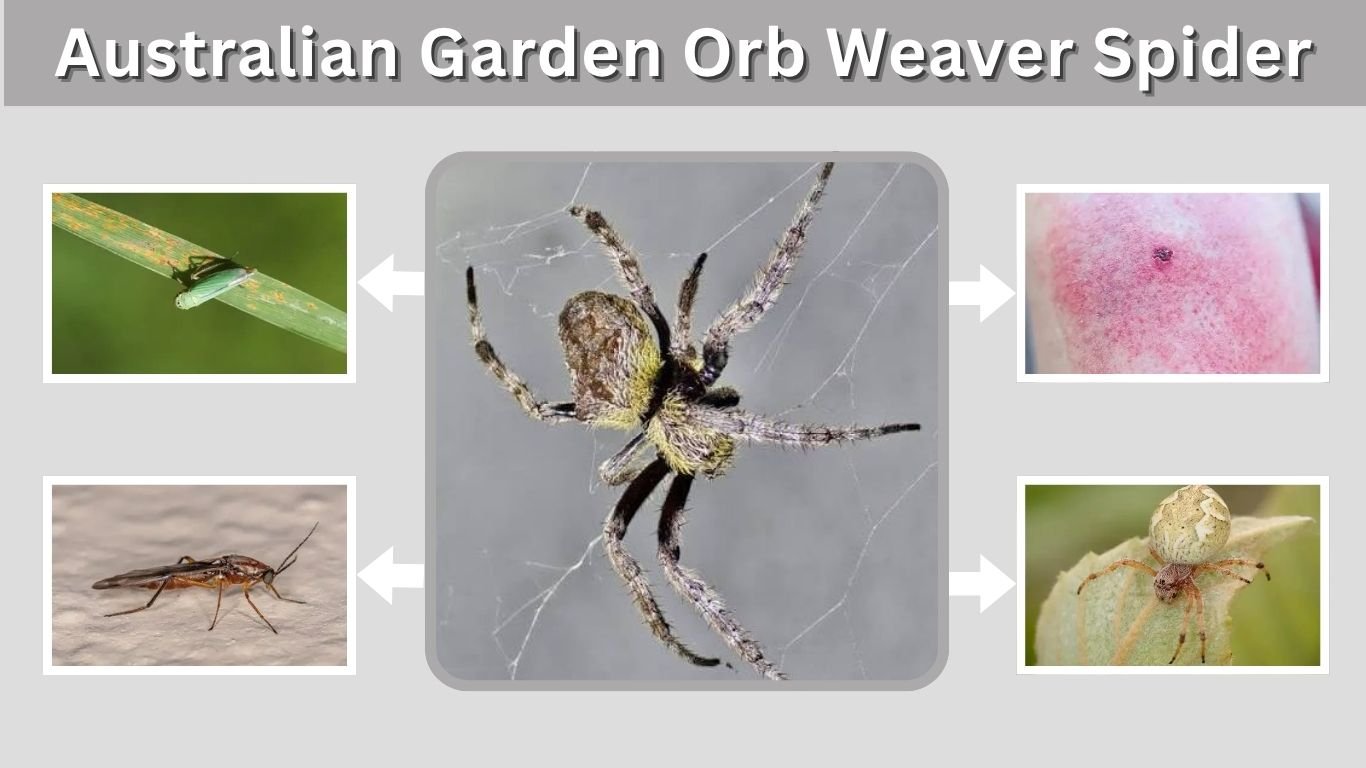
In Australia, the name “garden orb weaving spider” often refers to several related orb-weaving spiders commonly found in yards and gardens. The Australian Museum explains that garden orb weaving spiders are reluctant to bite, and their bite symptoms are usually mild if they occur.
Garden Orb Weaver Spider Size
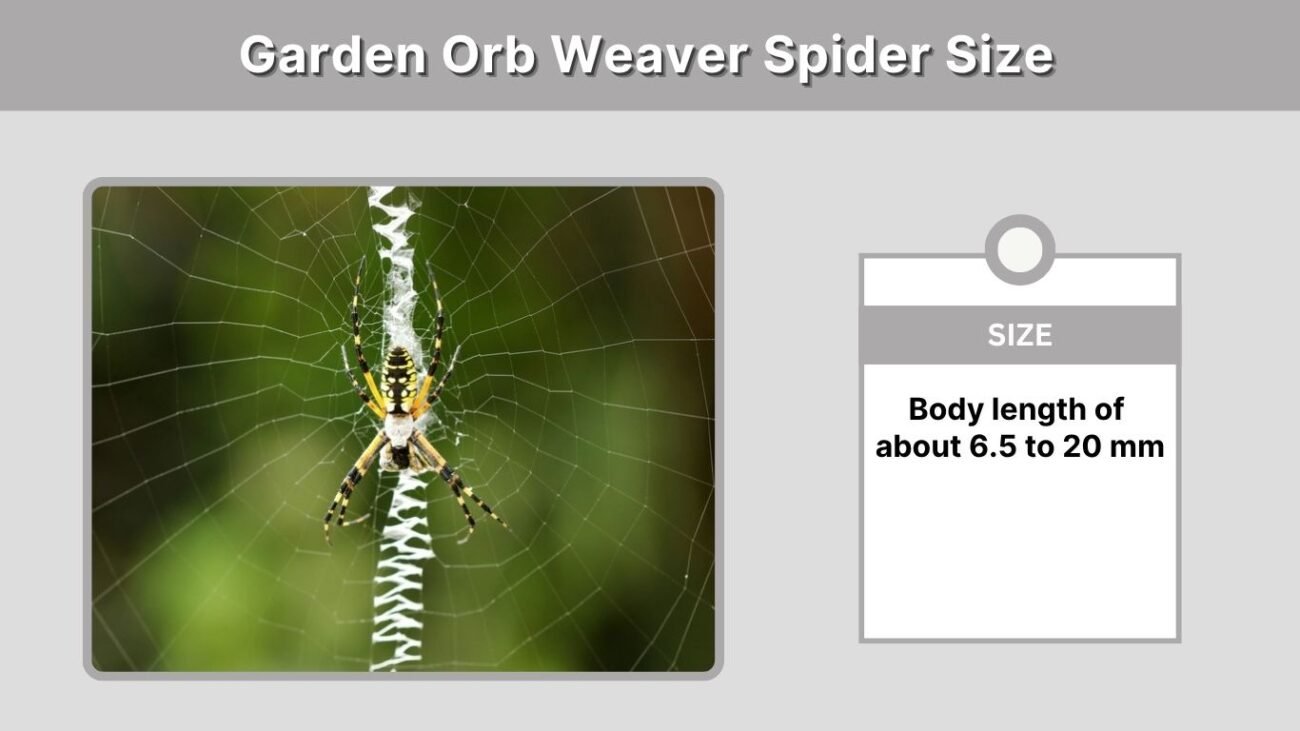
Garden orb weaver size depends on the species, age, and sex. Females are usually larger than males. Female garden orb weavers often have a rounded abdomen, while males are smaller and slimmer.
The cross orb weaver, or European garden spider, has a body length of about 6.5 to 20 mm, while males are about 5.5 to 13 mm. Animal Diversity Web also notes that this spider can range in color from pale yellow-brown to nearly black.
Garden Orb Weaver Size Chart
| Type | Approximate Size | Notes |
|---|---|---|
| Adult female | Larger, often round-bodied | Most visible in webs |
| Adult male | Smaller and slimmer | Often seen searching for females |
| Juvenile | Tiny to small | Builds smaller webs |
| Yellow garden spider female | Often larger than many garden orb weavers | Black and yellow body |
| Cross orb weaver | 6.5–20 mm body length | Common European garden spider |
A large female in a web may look intimidating because of her long legs and round abdomen, but size alone does not mean danger.
Garden Orb Weaver Spider Identification
The easiest way to identify a garden orb weaver is by its web. These spiders build classic orb-shaped webs with radiating lines and a sticky spiral. Many sit in the center of the web or hide nearby and wait for prey.
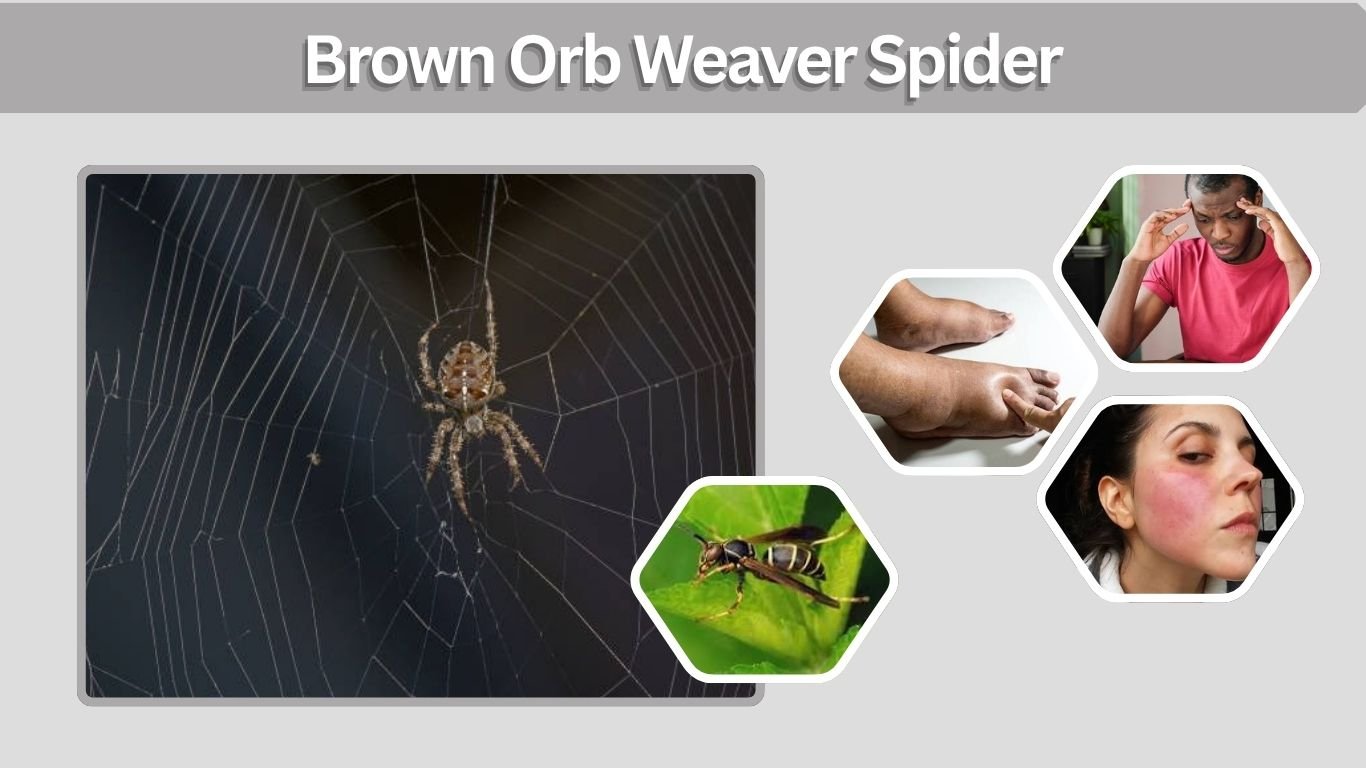
Garden orb weavers can be brown, gray, orange, yellow, black, or patterned. The European garden spider often has a pale cross-like marking on the abdomen. Yellow garden spiders have bold yellow-and-black markings. Brown garden orb weavers may blend in with bark, dry leaves, or garden structures.
Common ID Signs
- Round, wheel-shaped web
- Spider often sits in the web center
- Rounded or oval abdomen
- Long legs
- Brown, gray, orange, yellow, or black markings
- Web placed between plants, fences, shrubs, or porch posts
- Usually seen outdoors
- More noticeable in late summer and fall
Do not identify a spider only by color. Many harmless spiders are brown, and many orb weavers vary in color by age, sex, and species.
Garden Orb Weaver Spider Habitat
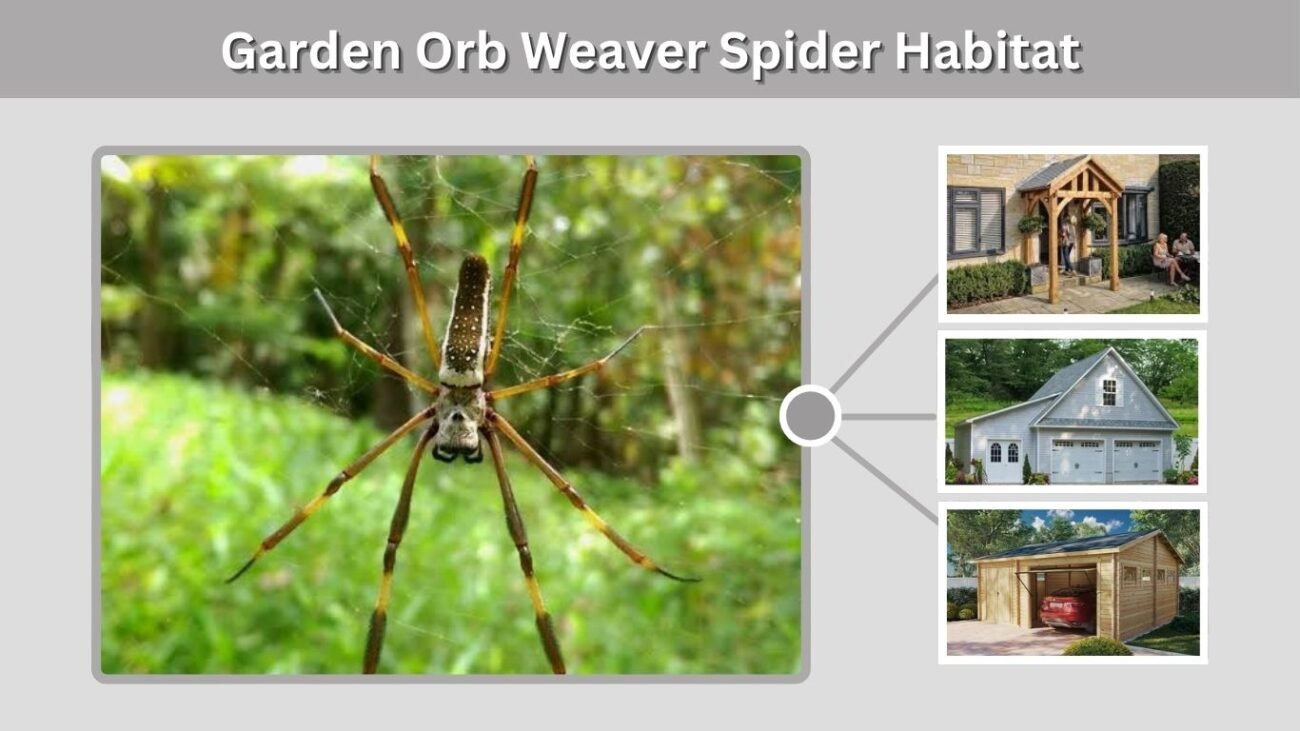
Garden orb weavers live in places where they can build webs and catch insects. Common habitats include gardens, shrubs, hedges, forests, meadows, fences, porches, sheds, and around outdoor lights. They usually choose web sites with good support lines and steady insect traffic.
In gardens, they may build webs between tall plants, tomato cages, bushes, tree branches, and fence posts. Around homes, they may appear near porches, windows, decks, garages, and exterior lights. Outdoor lights attract moths and flies, which can attract orb weavers.
Garden orb weavers are found in many regions, including the United States, United Kingdom, Europe, Australia, South Africa, and parts of Asia. The exact species depends on location.
Garden Orb Weaver Spider Web
The web is the most important feature of a garden orb weaver. Orb webs are designed to catch flying insects. The web has support lines, spokes, and sticky spiral silk. When an insect hits the sticky part, the spider feels the vibration and moves in to secure the prey.
Arkansas Cooperative Extension explains that an orb spider may spin a new web in the evening and later eat the old web before rebuilding. The spider begins with a silken strand, forms a structure, adds non-sticky spokes, and then fills the spiral with sticky silk.
Web Features
- Round or spiral shape
- Sticky capture silk
- Strong support lines
- Often rebuilt or repaired
- Usually placed in insect flight paths
- May be built at night or evening
- Can appear between plants, fences, or porch areas
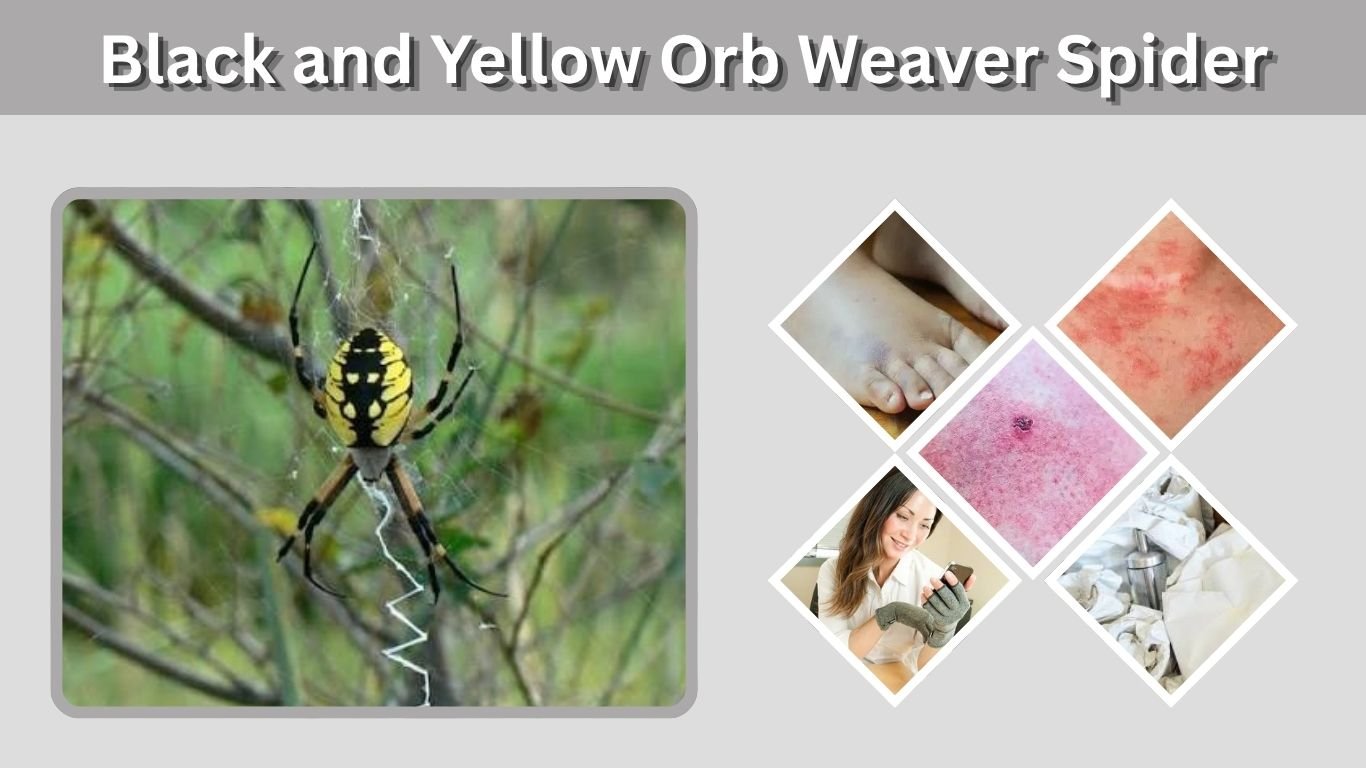
Some garden spiders, especially yellow garden spiders, add a white zigzag pattern called a stabilimentum. Penn State Extension describes the yellow garden spider as an orb weaver and notes that its web has a distinct zigzag band of silk.
What Do Garden Orb Weavers Eat?
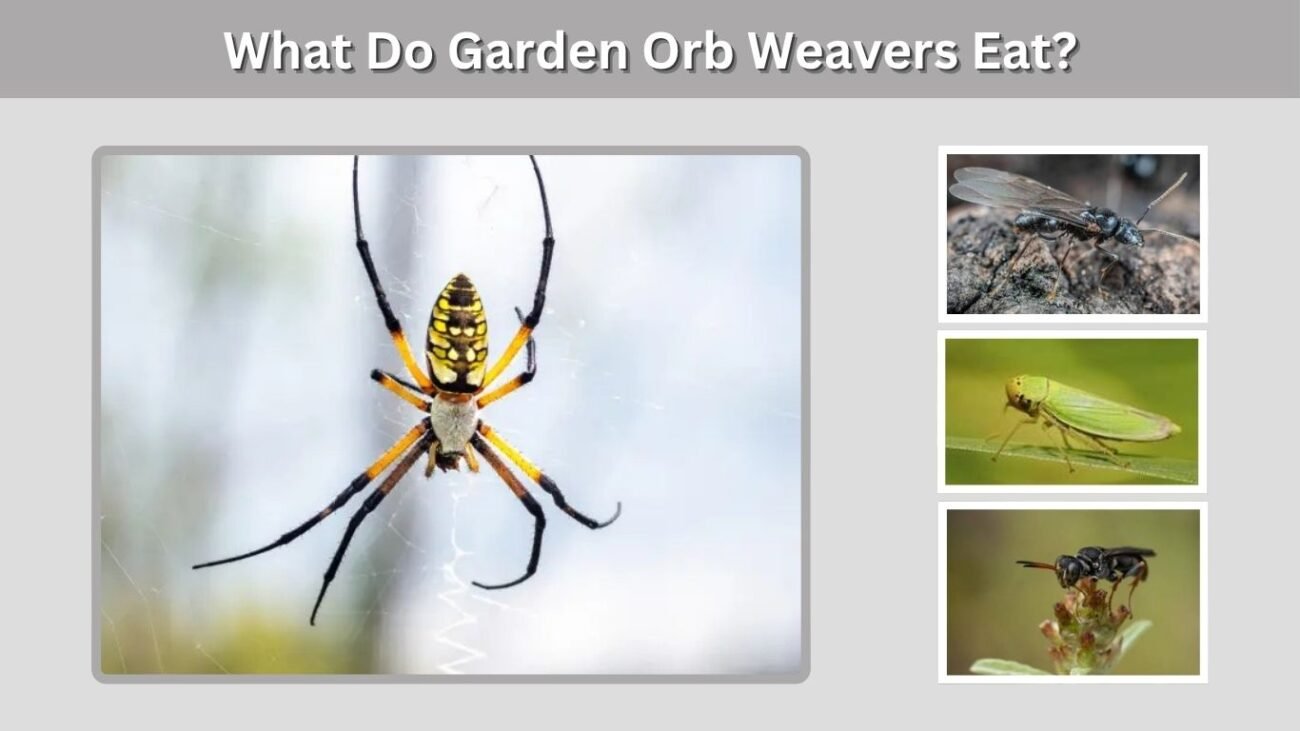
Garden orb weavers eat insects and other small arthropods. They are beneficial because they help reduce flying pests around gardens and homes. Their diet depends on what gets caught in the web.
Common prey includes flies, moths, mosquitoes, gnats, beetles, leafhoppers, small wasps, and flying ants. The spider does not chase prey across the ground. It waits for vibrations in the web.
Common Food
- Flies
- Mosquitoes
- Moths
- Gnats
- Beetles
- Leafhoppers
- Flying ants
- Small wasps
- Other small insects
Because they catch pest insects, garden orb weavers are useful in vegetable gardens, flower beds, orchards, and yards.
Is a Garden Orb Weaver Spider Poisonous?
Garden orb weavers are venomous, not poisonous, but they are not considered dangerous to most people. Venom means they can inject venom through a bite. Poisonous means harmful when touched or eaten. Garden orb weavers use venom to subdue insects, not to attack humans.
The Australian Museum says garden orb weaving spiders are reluctant to bite, and symptoms are usually negligible or mild local pain, numbness, and swelling. It also advises seeking medical attention if symptoms persist.
For most healthy adults, a garden orb weaver bite is usually mild. However, anyone with allergies, severe swelling, spreading redness, dizziness, breathing trouble, or ongoing pain should get medical help.
Garden Orb Weaver Spider Bite
A bite is uncommon unless the spider is handled, squeezed, or trapped against skin. Most garden orb weavers try to escape when disturbed. They may drop from the web, run away, or stay still.
Possible bite symptoms include:
- Mild pain
- Redness
- Small swelling
- Itching
- Local tenderness
- Temporary numbness in some cases
Wash the bite with soap and water, apply a cold compress, and avoid scratching. Do not cut the wound or use harsh chemicals. Seek medical care if symptoms get worse or do not improve.
Garden Orb Weaver Eggs and Egg Sac
Female garden orb weavers lay eggs inside a silk egg sac. The sac may be attached near the web, hidden in leaves, placed under bark, or fixed to garden structures. Egg sacs protect the eggs from drying out and from some predators.
In many seasonal climates, adults die after mating and egg laying, while the eggs survive until the next generation hatches. Baby garden orb weavers, called spiderlings, may stay together briefly and then disperse. Some spiderlings travel by ballooning, using silk threads carried by the wind.
Orb Weaver vs Garden Spider
The difference between an orb weaver and a garden spider depends on how the names are used. “Orb weaver” is a broad group of spiders that build orb-shaped webs. “Garden spider” is a common name used for several spiders found in gardens. Many garden spiders are orb weavers, but the term garden spider is less specific.
| Feature | Orb Weaver | Garden Spider |
|---|---|---|
| Meaning | Broad spider group | Common name for garden species |
| Web | Round orb web | Often round orb web |
| Species | Many species | Varies by region |
| Habitat | Gardens, forests, yards, fields | Mostly gardens and yards |
| Example | Cross orb weaver, golden orb weaver | Yellow garden spider, European garden spider |
So, if someone asks “is a garden spider an orb weaver?” the answer is often yes, especially when talking about yellow garden spiders or European garden spiders.
Yellow Garden Spider vs Garden Orb Weaver
The yellow garden spider is a type of orb weaver. Its scientific name is Argiope aurantia. It is known for its black-and-yellow body and large web with a white zigzag pattern. Penn State Extension states that females are larger, while males are only about 5 to 8 mm long.
A general garden orb weaver may be brown, gray, orange, or patterned and may not have a bold zigzag in the web. Yellow garden spiders are more distinct because of their bright markings and stabilimentum.
Golden Orb Weaver vs Garden Spider
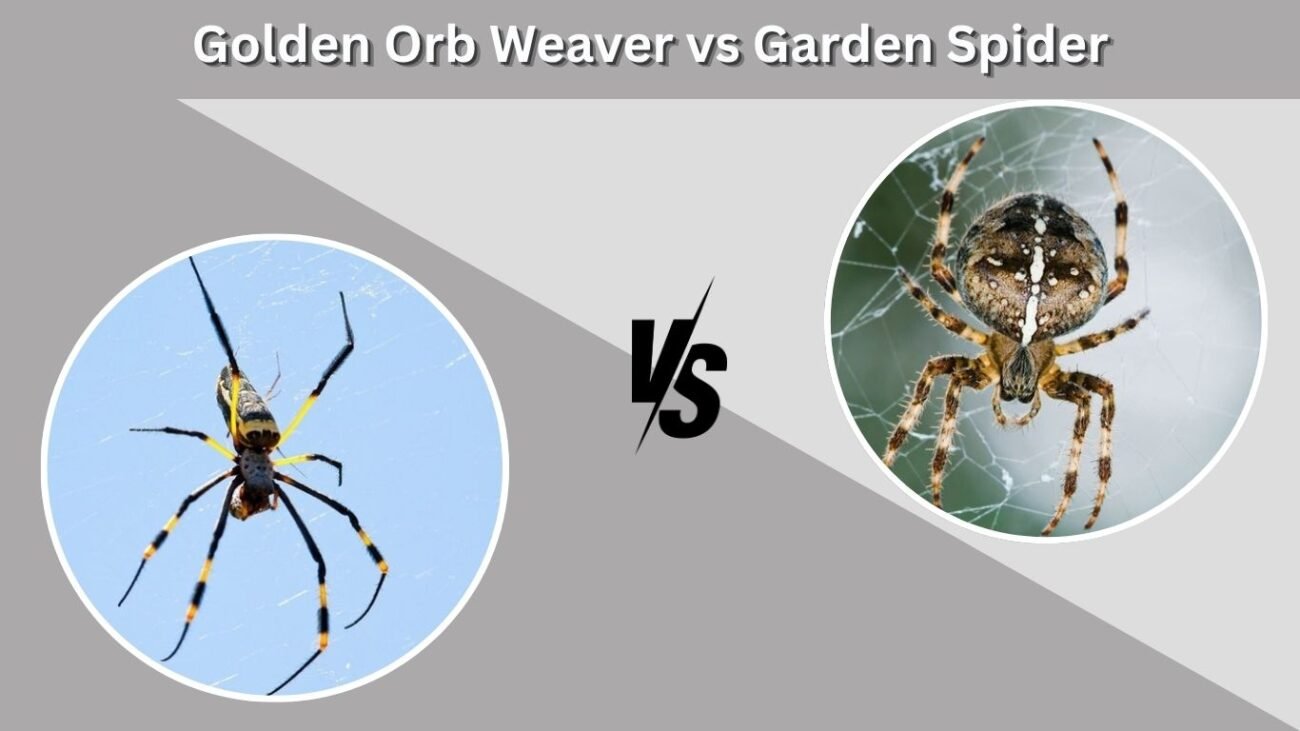
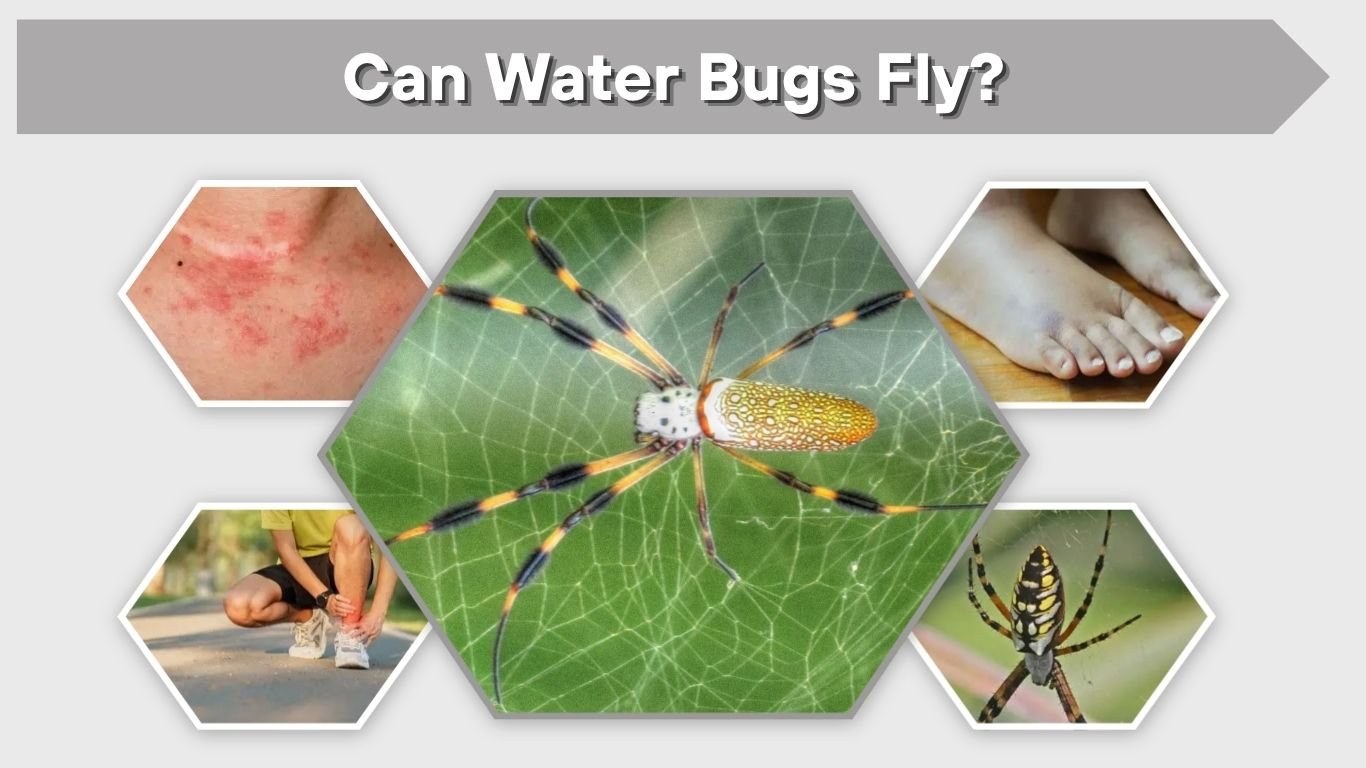
Golden orb weavers are usually larger and are famous for golden-colored silk. Garden spiders are a broader common-name group and may include yellow garden spiders, cross orb weavers, and brown garden orb weavers.
Golden orb weavers often have long legs, large webs, and yellowish silk. Garden spiders may have smaller webs, different body shapes, and more varied colors. Both are usually beneficial and not dangerous to most people.
What Should You Do If You Find One?
If a garden orb weaver is outside and not blocking a walkway, leave it alone. It is helping your garden by catching insects. If the web is across a doorway, path, or area where people walk, gently move the web with a stick or broom. The spider will usually relocate and rebuild.
If one gets indoors, catch it with a cup and paper and release it outside. Avoid handling it with bare hands.
Safe Handling Tips
- Do not touch the spider directly.
- Do not panic if you walk into a web.
- Move webs from high-traffic areas only.
- Turn off unnecessary outdoor lights.
- Keep shrubs trimmed away from doors.
- Avoid spraying pesticides unless truly needed.
FAQs
Is a garden orb weaver spider dangerous?
No, garden orb weaver spiders are not considered dangerous to most people. They may bite if handled or squeezed, but bites are usually mild.
Is a garden orb weaver spider poisonous?
It is venomous, not poisonous. The venom helps it catch insects. It is not usually medically significant for healthy adults.
What does a garden orb weaver web look like?
The web is usually round or wheel-shaped, with spokes and sticky spiral silk. Some species add a white zigzag pattern in the center.
Is a yellow garden spider an orb weaver?
Yes. The yellow garden spider, also called Argiope aurantia, is an orb-weaving spider that builds a large circular web.
Should I remove garden orb weavers from my yard?
Usually, no. They help control insects. Remove or relocate them only if their web blocks a doorway, walkway, or busy area.