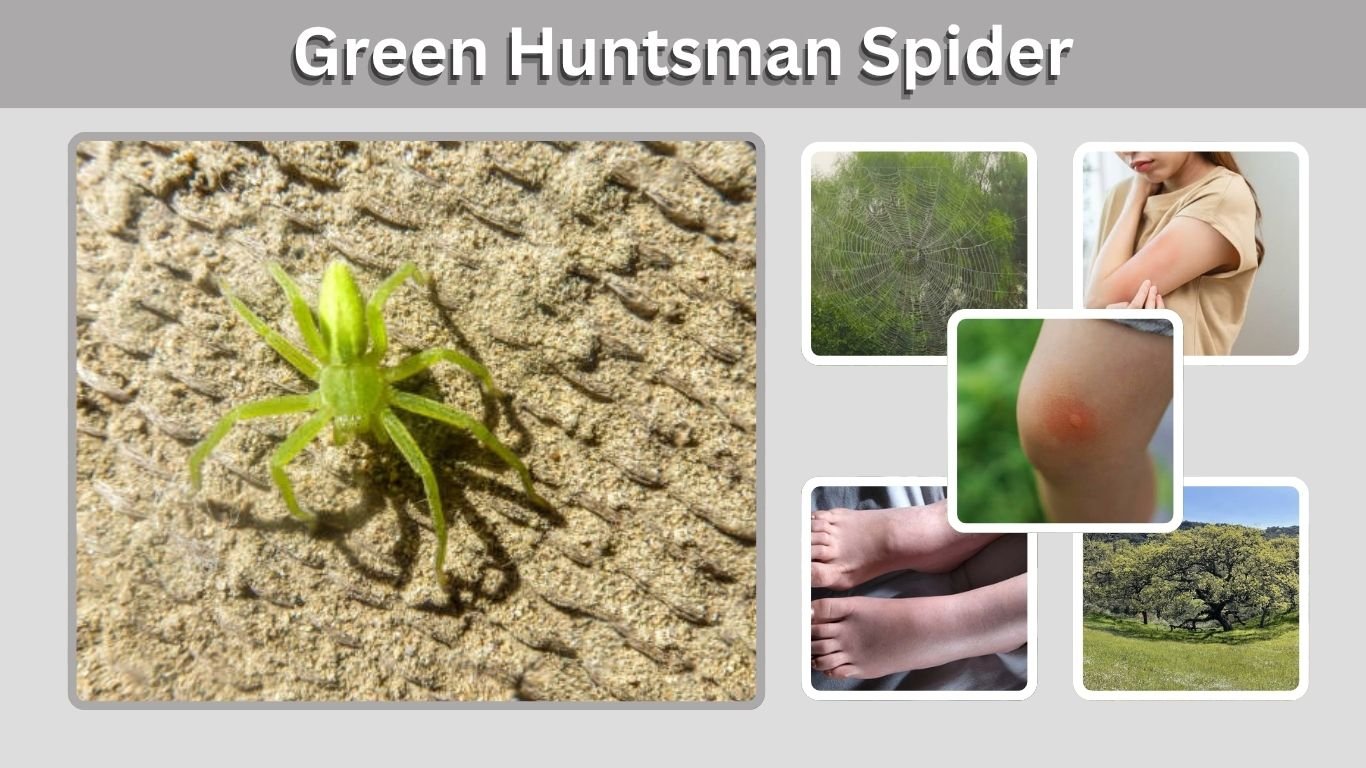
The green huntsman spider is one of the most eye-catching huntsman spiders because of its bright green body and leaf-like camouflage. Unlike the large brown huntsman spiders often seen on walls and ceilings, green huntsman spiders are usually found among grass, shrubs, forest edges, and leafy vegetation. They may look unusual, but they are not considered highly dangerous to humans.
What Is a Green Huntsman Spider?
The name green huntsman spider is most often used for Micrommata virescens, a green species in the huntsman spider family, Sparassidae. It is also called the emerald spider because of its vivid green color. This species is naturally found across parts of Europe, including Northern and Central Europe, and it has records in Britain.
Like other huntsman spiders, it does not use a web to catch prey. Instead, it actively hunts insects in vegetation. Its green color helps it blend into leaves and grass, making it hard for both prey and predators to notice.
Why It Is Called a Huntsman
Huntsman spiders are named for the way they hunt. They chase, stalk, or ambush prey instead of waiting in a sticky web. The green huntsman spider uses speed, camouflage, and patience to catch small insects.
Its body is flatter and leggier than many common garden spiders. However, it is usually not as large as the giant brown huntsman spiders people associate with Australia or Florida.
Green Huntsman Spider Identification
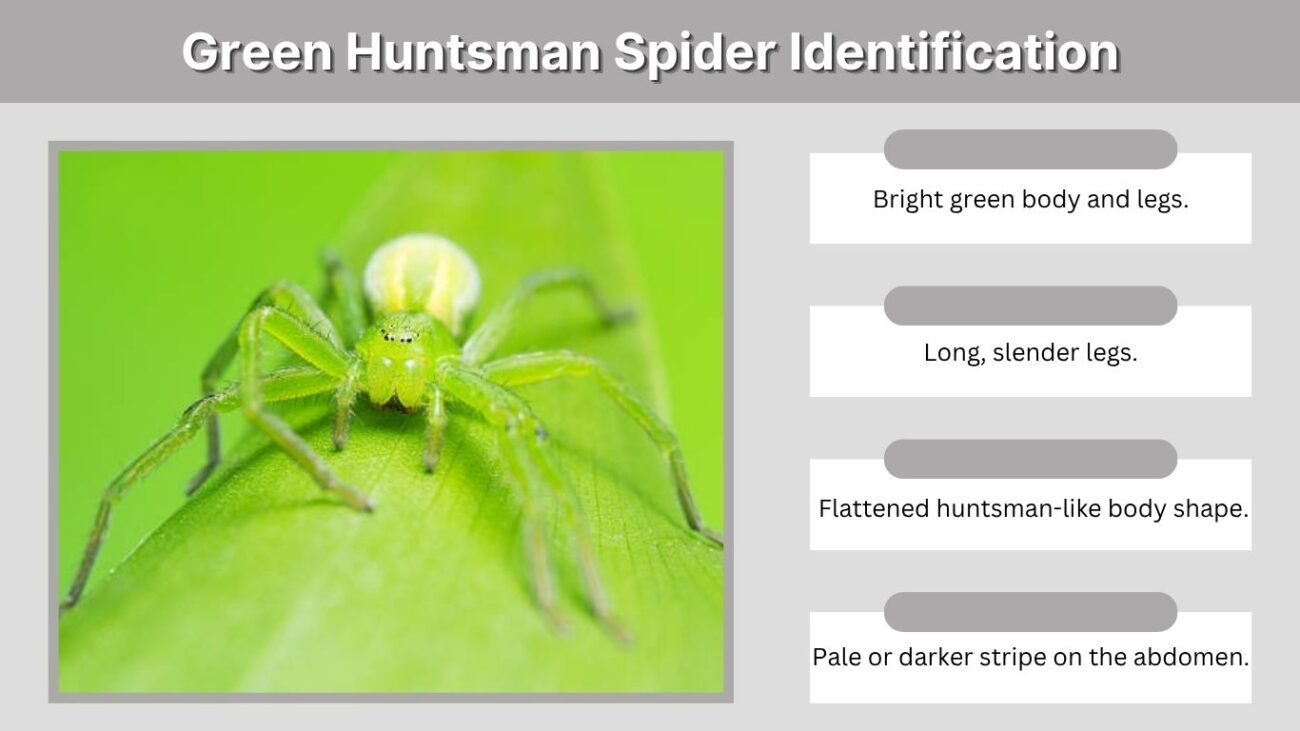
The green huntsman spider is easier to recognize than many brown spiders because of its color. Adult females are usually bright green, with long green legs and a lighter green abdomen. They may have a darker green stripe running along the abdomen. Males often look different, with a slimmer body and reddish or brownish markings on the abdomen.
Young spiders may not look fully green at first. Juveniles can be more yellowish or brownish before developing adult coloration after later molts.
Key Identification Features
Look for these signs when identifying a green huntsman spider:
- Bright green body and legs
- Long, slender legs
- Flattened huntsman-like body shape
- Pale or darker stripe on the abdomen
- Active movement on leaves, grass, or shrubs
- No large prey-catching web
- Female usually rounder and greener
- Male usually slimmer with reddish markings
Because many green spiders exist, color alone is not enough for perfect identification. Green crab spiders, lynx spiders, and some orb-weavers can also appear bright green.
Green Bellied Huntsman Spider
The phrase green bellied huntsman spider may refer to Australia’s green-bellied huntsman, Typostola barbata. This is a different spider from the European green huntsman, Micrommata virescens. The green-bellied huntsman is known from Australia and is described as a timid huntsman species.
This difference is important because common names can be confusing. A person searching for a green huntsman in the UK may be looking for Micrommata virescens, while someone in Australia may mean a green-bellied huntsman or another greenish huntsman species.
Green Huntsman vs Green-Bellied Huntsman
The European green huntsman is usually a smaller, bright green spider found in grassy and leafy habitats. The Australian green-bellied huntsman belongs to a different genus and is part of Australia’s diverse huntsman spider group.
Both may have green coloring, but they are not the same species. Location is one of the best clues when trying to identify them.
Green Huntsman Spider Size
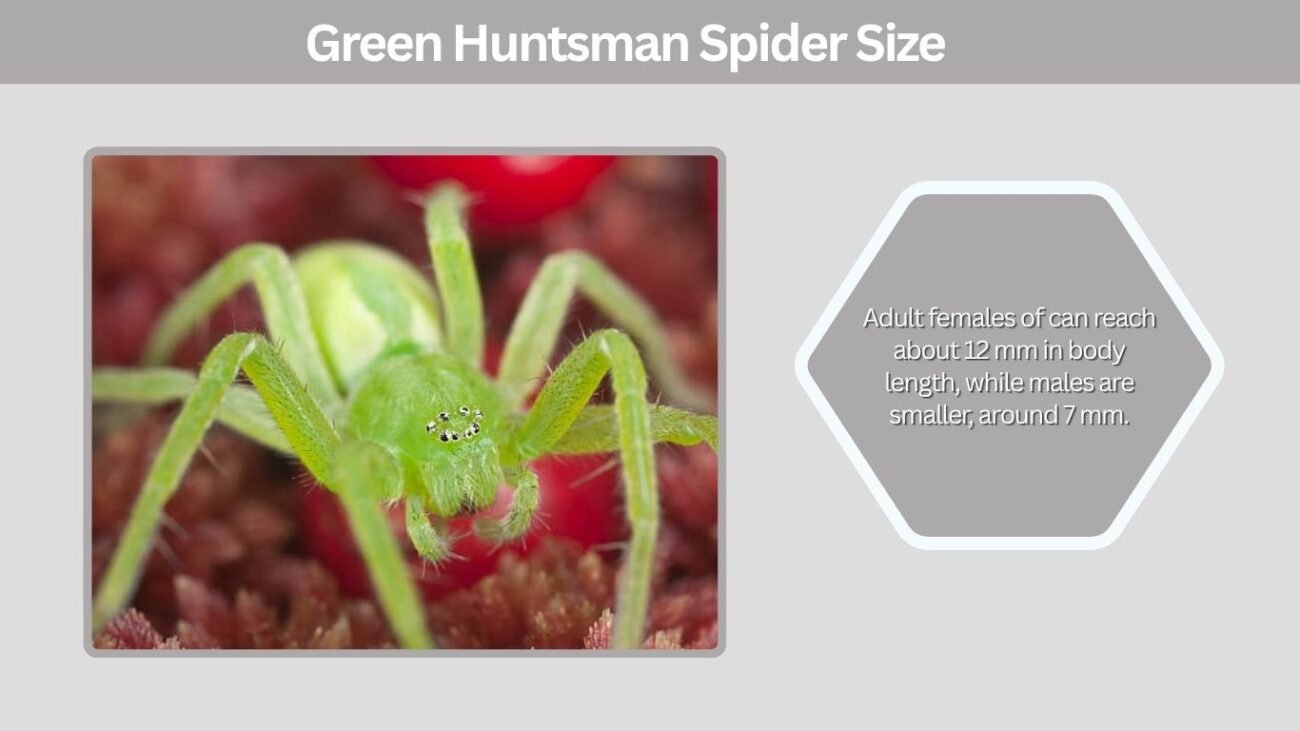
The green huntsman spider is not usually a giant spider. Adult females of Micrommata virescens can reach about 12 mm in body length, while males are smaller, around 7 mm. The full leg span makes the spider appear larger than the body measurement alone.
Compared with large Australian or Florida huntsman spiders, the green huntsman is modest in size. It can still look noticeable on a leaf because of its bright color and long legs.
| Feature | Green Huntsman Spider |
|---|---|
| Common name | Green huntsman spider, emerald spider |
| Scientific name | Micrommata virescens |
| Family | Sparassidae |
| Female body length | Up to about 12 mm |
| Male body length | About 7 mm |
| Main color | Bright green |
| Habitat | Meadows, hedges, forest edges, vegetation |
| Hunting style | Active hunter, no capture web |
| Human danger level | Usually low |
The green-bellied huntsman of Australia may be larger depending on species and individual growth, but exact size should be checked by species rather than by common name alone.
Where Do Green Huntsman Spiders Live?
The European green huntsman prefers natural vegetation. It is commonly associated with meadows, hedgerows, woodland edges, clearings, and lower branches of trees. It relies on greenery for camouflage and hunting.
Unlike large house huntsman spiders, it is not mainly known as an indoor wall spider. You are more likely to see it outdoors on leaves, grass stems, shrubs, or low vegetation during warmer months.
Green Huntsman Spider in the UK
In the UK, the green huntsman is considered the country’s only huntsman species by some arachnid resources. It is uncommon and more likely to be recorded in suitable southern habitats, such as heathland, grassland, woodland edges, and warm vegetated areas.
If you find a bright green spider in the UK, it may be Micrommata virescens, but other green spiders are possible. A clear photo, location, and body shape can help with identification.
Green Huntsman Spider in Australia
In Australia, the term green huntsman may be used more loosely for greenish huntsman spiders, including the green-bellied huntsman. Australia has many huntsman species, and not all are the same as the European green huntsman.
A green huntsman in Australia may be found in forests, shrubs, gardens, or vegetation-rich areas. Because Australia has many similar-looking huntsman spiders, identification should be based on species, not only color.
Green Huntsman Spider in South Africa and Asia
Searches for green huntsman spiders in South Africa, India, Malaysia, Thailand, Cyprus, Portugal, France, and other warm regions often reflect the fact that many green or greenish spiders are called huntsman spiders by casual observers. Some may be true huntsman spiders, while others may belong to different spider families.
For accurate identification, location and body structure are essential. The scientific name is more reliable than a color-based common name.
Is the Green Huntsman Spider Poisonous?
The green huntsman spider is venomous, not poisonous. Venom is injected through a bite, while poison is harmful when eaten or touched. Like most spiders, green huntsman spiders use venom to subdue prey.
For humans, the green huntsman spider is not considered highly dangerous. It may bite if handled, squeezed, or trapped, but it usually avoids contact. Most huntsman spiders are defensive rather than aggressive toward people.
Is It Dangerous?
For healthy adults, the danger level is usually low. A bite may cause local pain, redness, mild swelling, itching, or tenderness. Severe reactions are not expected in most cases, but any bite can become more serious if a person has an allergy, the wound becomes infected, or the spider is misidentified.
Children, elderly people, and people with allergies should be monitored more carefully after any spider bite.
Green Huntsman Spider Bite
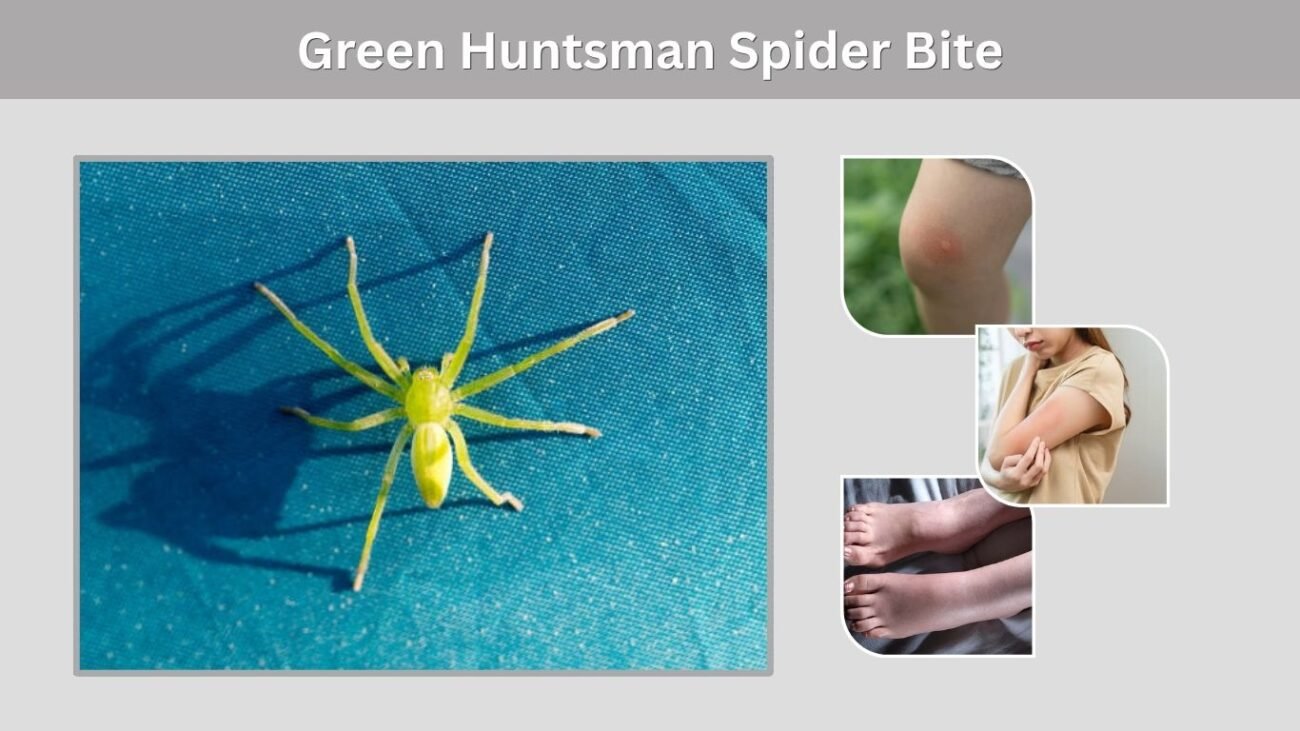
A green huntsman spider bite is uncommon because these spiders are not likely to attack people. Bites may happen if someone handles the spider, presses it against the skin, or accidentally traps it in clothing or gardening gloves.
Possible Bite Symptoms
A mild bite may cause:
- Sharp local pain
- Redness around the bite
- Mild swelling
- Itching or burning
- Tenderness
- Small puncture marks
- Minor irritation
Most symptoms should remain near the bite site and improve with basic care.
First Aid for a Bite
If bitten by a suspected green huntsman spider, wash the area with soap and water. Apply a cold pack wrapped in cloth for 10 to 15 minutes. Keep the area clean and avoid scratching.
Seek medical advice if pain becomes severe, swelling spreads, the bite looks infected, or the person feels dizzy, sick, or short of breath. If possible, take a photo of the spider from a safe distance for identification.
Green Huntsman Spider Facts
The green huntsman spider is interesting because it is both beautiful and well-camouflaged. Its color helps it disappear among plants, where it waits for small insects.
Quick Facts
- It belongs to the huntsman spider family.
- It is also called the emerald spider.
- It is usually found in vegetation, not indoor corners.
- It hunts without a capture web.
- Females are bright green and broader-bodied.
- Males are slimmer and may show reddish markings.
- Young spiders may be yellowish or brownish before turning green.
- It is not considered highly dangerous to humans.
- Its green color helps it avoid predators and surprise prey.
Female Micrommata virescens guard their egg sacs by enclosing them in leaves stitched together with silk. The young hatch after several weeks and gradually develop adult coloring as they grow.
Giant Green Huntsman Spider
The phrase giant green huntsman spider is often used online, but it can mean different things. Some people use it for a large green-bellied huntsman in Australia. Others may use it for any big green spider that looks like a huntsman.
The European green huntsman is not truly giant. It is attractive and noticeable, but its body is small compared with giant huntsman species from tropical regions. When writing about or identifying a “giant green huntsman,” it is best to check the species name and location.
Are They Sold as Pets?
Some searches show transactional interest, but green huntsman spiders are not as common in the pet trade as tarantulas or larger huntsman species. If someone is considering buying one, they should first check local laws, ethical sourcing, species identity, and care needs.
Wild-caught spiders should not be taken from protected habitats. Captive-bred animals from responsible sources are always preferable when legal.
How to Tell It Apart From Other Green Spiders
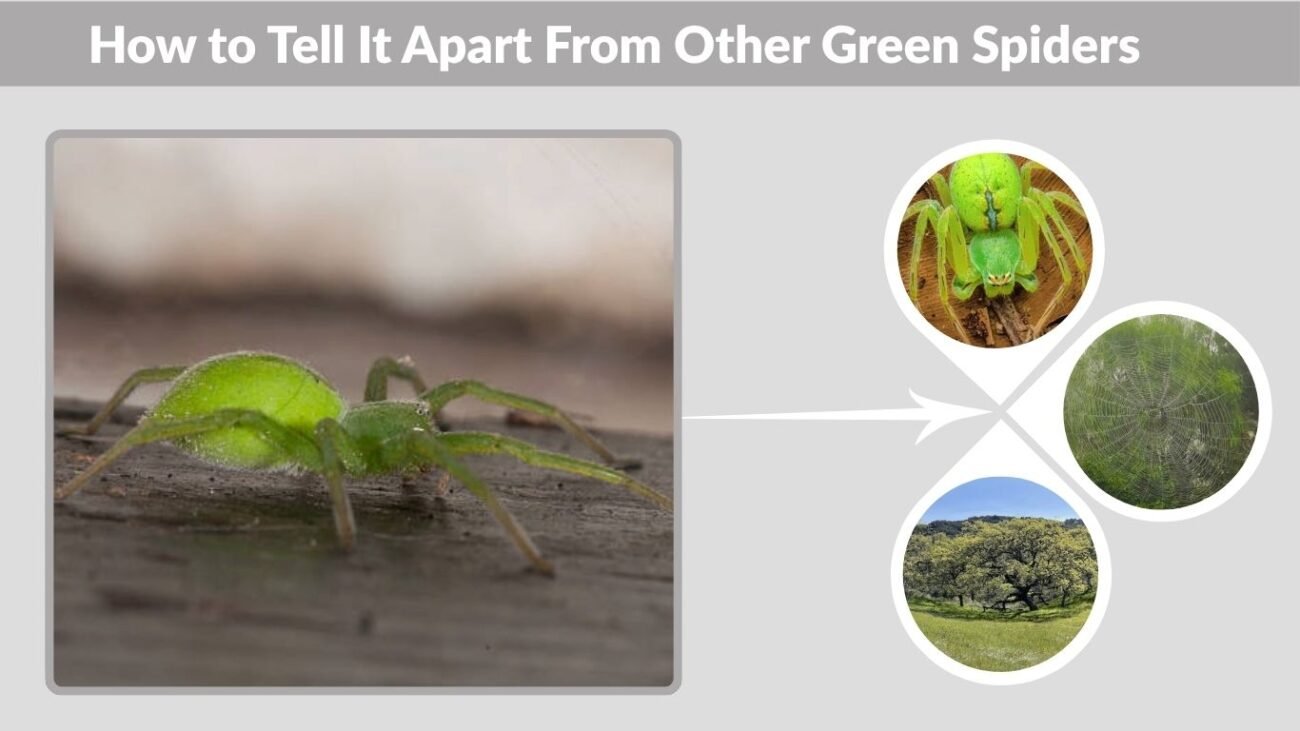
Many green spiders can be confused with a green huntsman. The most common confusion comes from green crab spiders, cucumber green spiders, green lynx spiders, and young orb-weavers.
Identification Tips
Use these clues:
- Huntsman spiders have long sideways legs.
- They do not sit in large orb webs.
- They actively hunt on vegetation.
- The body is flatter than many web-building spiders.
- Females may show a long green abdomen with a stripe.
- Males may have reddish markings.
- Location matters strongly.
If the spider is sitting in a circular web, it is probably not a huntsman. If it is flat, leggy, and moving through leaves without a web, a green huntsman is more likely.
Should You Remove a Green Huntsman Spider?
If the spider is outdoors, it is best to leave it alone. It helps control insects and is part of the local ecosystem. Since it relies on vegetation, removing it from its habitat is usually unnecessary.
If one enters a home, use a container and piece of cardboard to move it outside. Do not handle it with bare hands, even if it is not considered dangerous.
Safe Removal Steps
- Place a clear cup or container over the spider.
- Slide stiff paper or cardboard underneath.
- Carry it outside carefully.
- Release it into shrubs, grass, or garden vegetation.
- Avoid squeezing or shaking the spider.
- Wash your hands afterward.
This method protects both the spider and the person.
FAQs
Is a green huntsman spider poisonous?
A green huntsman spider is venomous, not poisonous. It uses venom to catch insects, but it is not considered highly dangerous to humans. A bite may cause local pain, redness, or swelling, especially if the spider is handled or trapped. Serious reactions are uncommon but should be checked.
Where are green huntsman spiders found?
The European green huntsman, Micrommata virescens, is found in parts of Europe, including Britain and Central Europe. It usually lives in meadows, hedges, woodland edges, and leafy vegetation. Similar greenish huntsman spiders may be found in Australia, Asia, and other warm regions.
How big is a green huntsman spider?
The European green huntsman is not very large compared with giant huntsman spiders. Adult females can reach about 12 mm in body length, while males are around 7 mm. The long legs make them look larger, but they are much smaller than large brown huntsman species.
Does a green huntsman spider bite hurt?
A green huntsman spider bite may hurt like a small pinch or sting, but bites are uncommon. The spider usually avoids people and bites only if handled, squeezed, or trapped. Mild redness, swelling, tenderness, or itching may occur. Worsening symptoms should be checked by a doctor.
Is the green-bellied huntsman the same as the green huntsman?
No, not always. The green huntsman usually refers to Micrommata virescens, a European species. The green-bellied huntsman often refers to Typostola barbata, an Australian species. Both are huntsman spiders with green coloring, but they are different species from different regions.