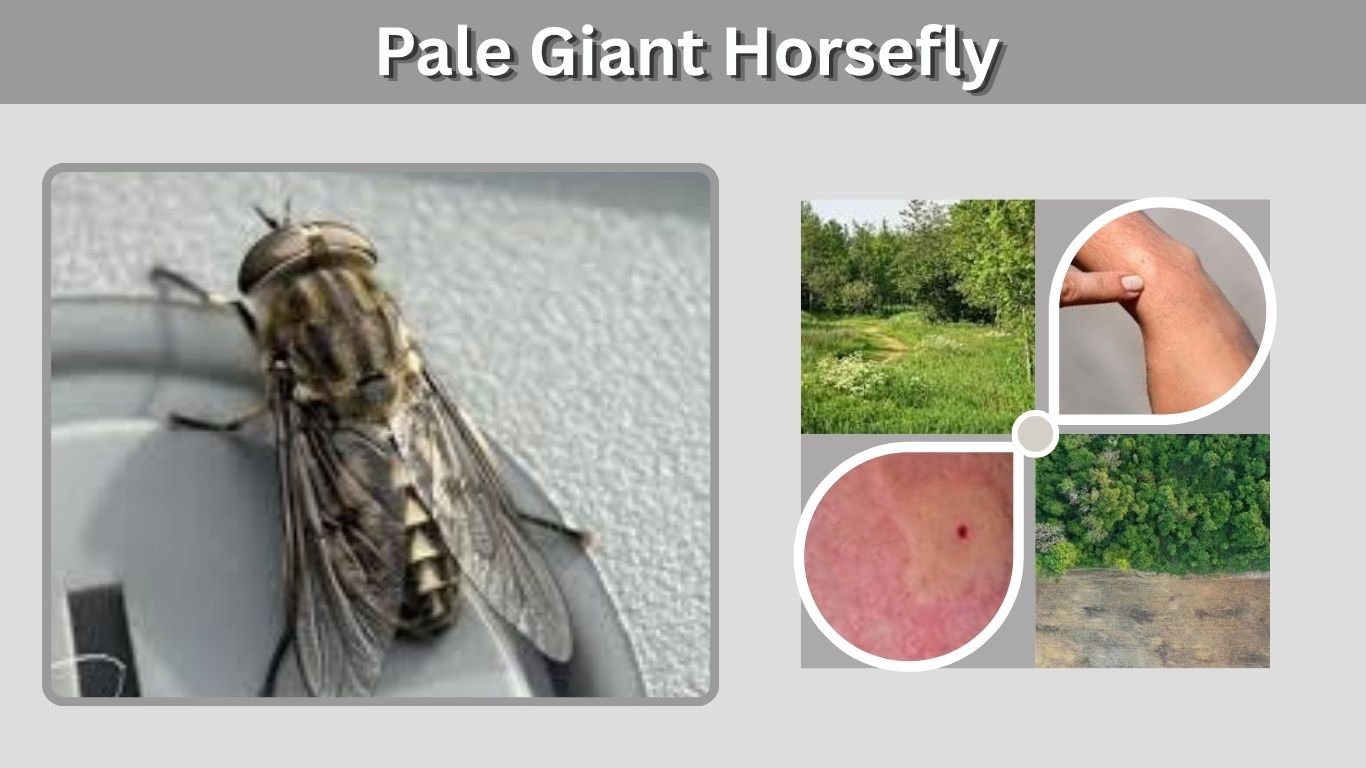
The pale giant horsefly is a large, powerful fly known scientifically as Tabanus bovinus. Its broad body, prominent compound eyes, loud flight, and brown-patterned abdomen make it one of Europe’s most noticeable horseflies. Although it mainly targets cattle and other large mammals, a female may occasionally bite a person. The bite can be immediately painful because the fly cuts the skin rather than piercing it with a needle-like mouthpart. Tabanus bovinus belongs to the horsefly family Tabanidae and was formally described by Carl Linnaeus in 1758.
Pale Giant Horsefly Quick Facts
| Feature | Description |
| Common name | Pale giant horsefly |
| Scientific name | Tabanus bovinus |
| Family | Tabanidae |
| Order | Diptera |
| Body length | Often more than 20 mm; some references report 25–30 mm |
| Main colors | Brown, gray, yellowish brown, and reddish brown |
| Diet | Nectar and other plant sugars; females also consume blood |
| Preferred hosts | Cattle, horses, deer, and other mammals |
| Bite risk | Females can bite humans |
| Main habitat | Pastures, woodland edges, wetlands, and areas near livestock |
The species is among the largest horseflies encountered in Britain and Europe. Size estimates differ slightly among identification resources, partly because specimens vary and measurements may be taken differently.
What Does a Pale Giant Horsefly Look Like?
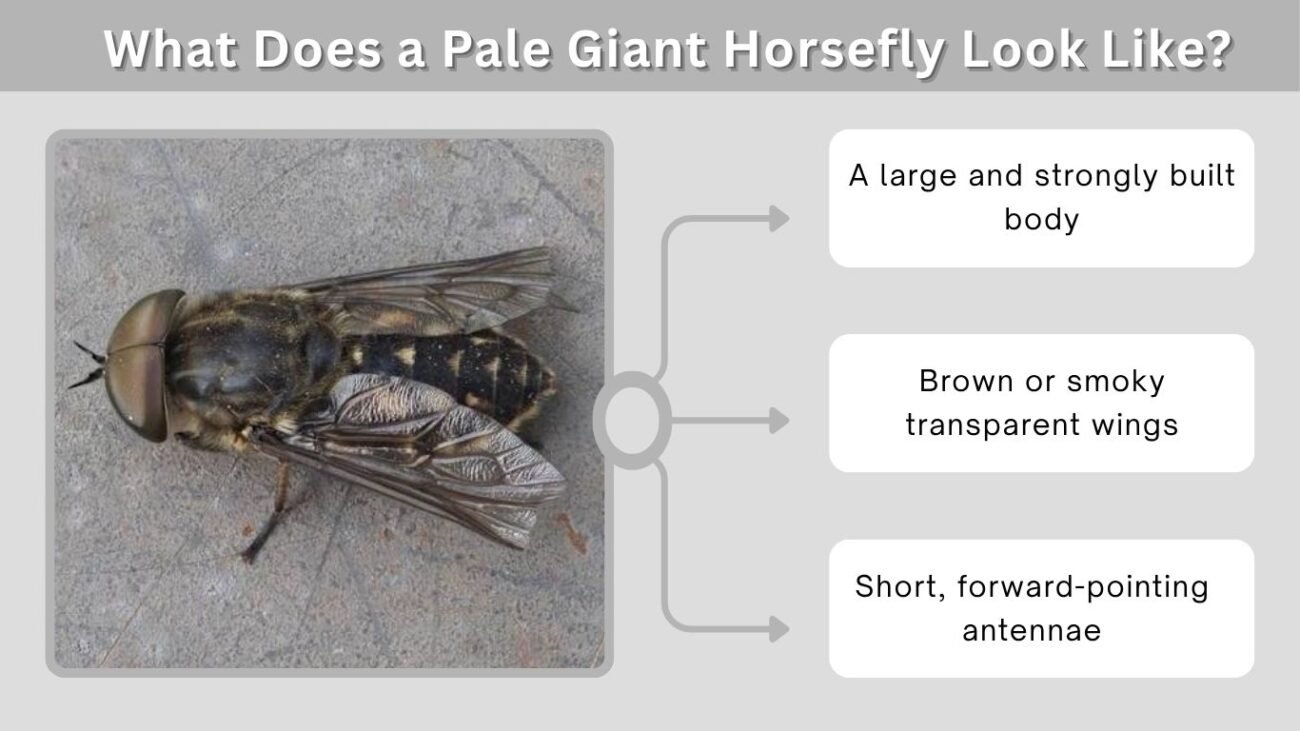
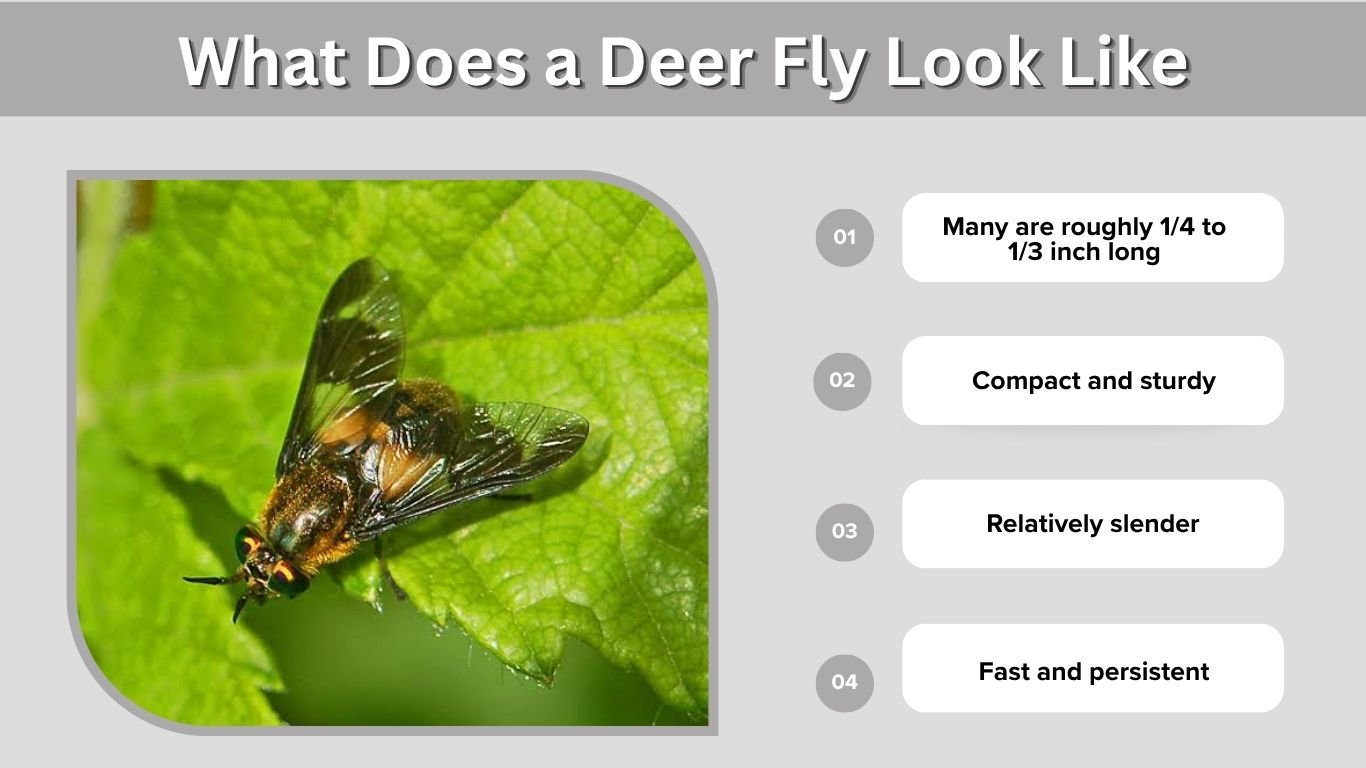
The pale giant horsefly has the heavy, muscular appearance typical of the genus Tabanus. Its large head is dominated by broad compound eyes, while its wings rest flat or slightly spread over the abdomen.
Identification Features
Look for the following characteristics:
- A large and strongly built body
- Brownish-gray thorax with fine hairs
- Brown or smoky transparent wings
- Broad abdomen with pale central triangular markings
- Yellowish, orange-brown, or reddish-brown areas along the abdomen
- Large compound eyes that may appear greenish or bronze
- Short, forward-pointing antennae
- Strong legs suited for landing on large animals
Its pale abdominal coloring gives the species its common name. However, color can change with lighting, specimen age, sex, and viewing angle.
Male and Female Differences
Female pale giant horseflies take blood meals to obtain nutrients needed for egg development. Males do not bite and rely on nectar and other plant-derived sugars. Female horseflies are therefore the individuals normally seen circling cattle, horses, or people.
Pale Giant Horsefly vs. Dark Giant Horsefly
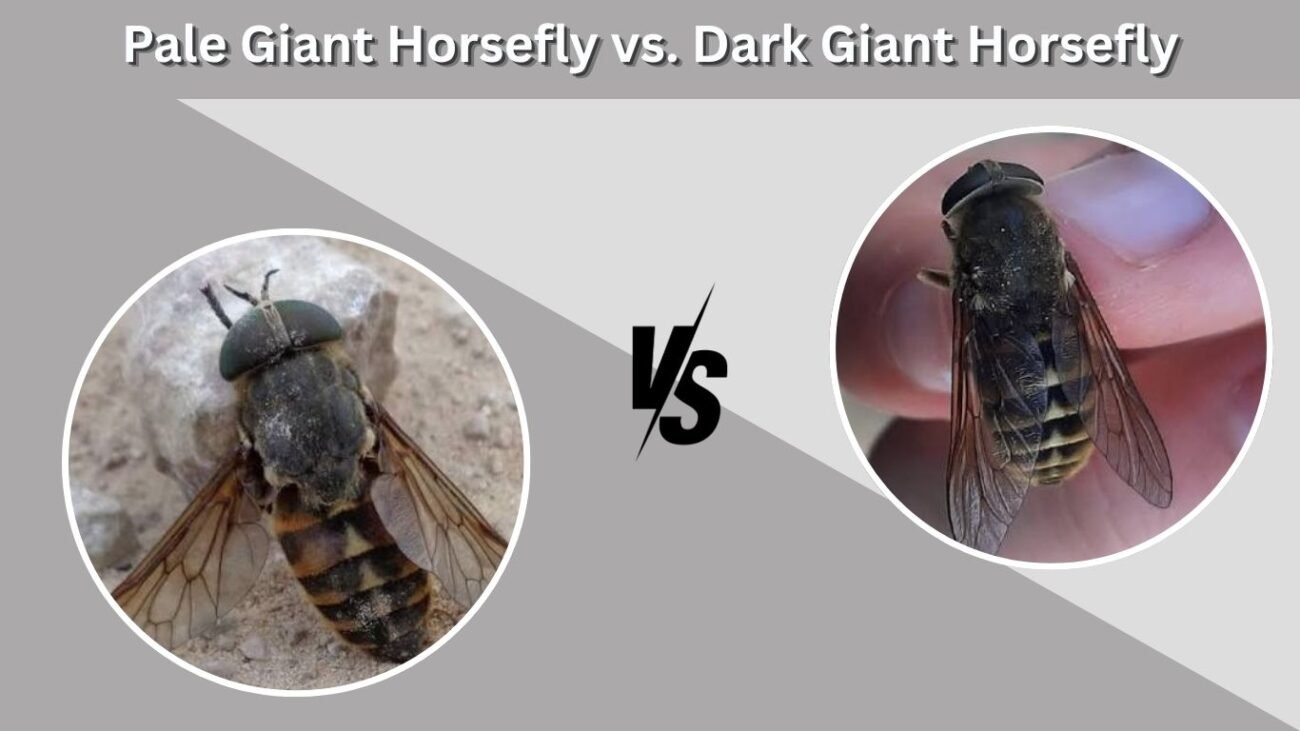
The pale giant horsefly can be confused with the dark giant horsefly, Tabanus sudeticus. Both are exceptionally large, brown horseflies with similar abdominal markings.
The pale giant horsefly generally appears lighter, with more noticeable reddish-orange or yellowish-brown areas along the sides of its abdomen. Its pale central triangles may also appear longer. The dark giant horsefly normally has a darker overall abdomen.
These features are not always dependable in photographs. Experts may need to examine the antennae, legs, abdominal patterns, eyes, and other small structures before confirming the species. Even experienced observers sometimes find females of these two species difficult to separate.
Where Do Pale Giant Horseflies Live?
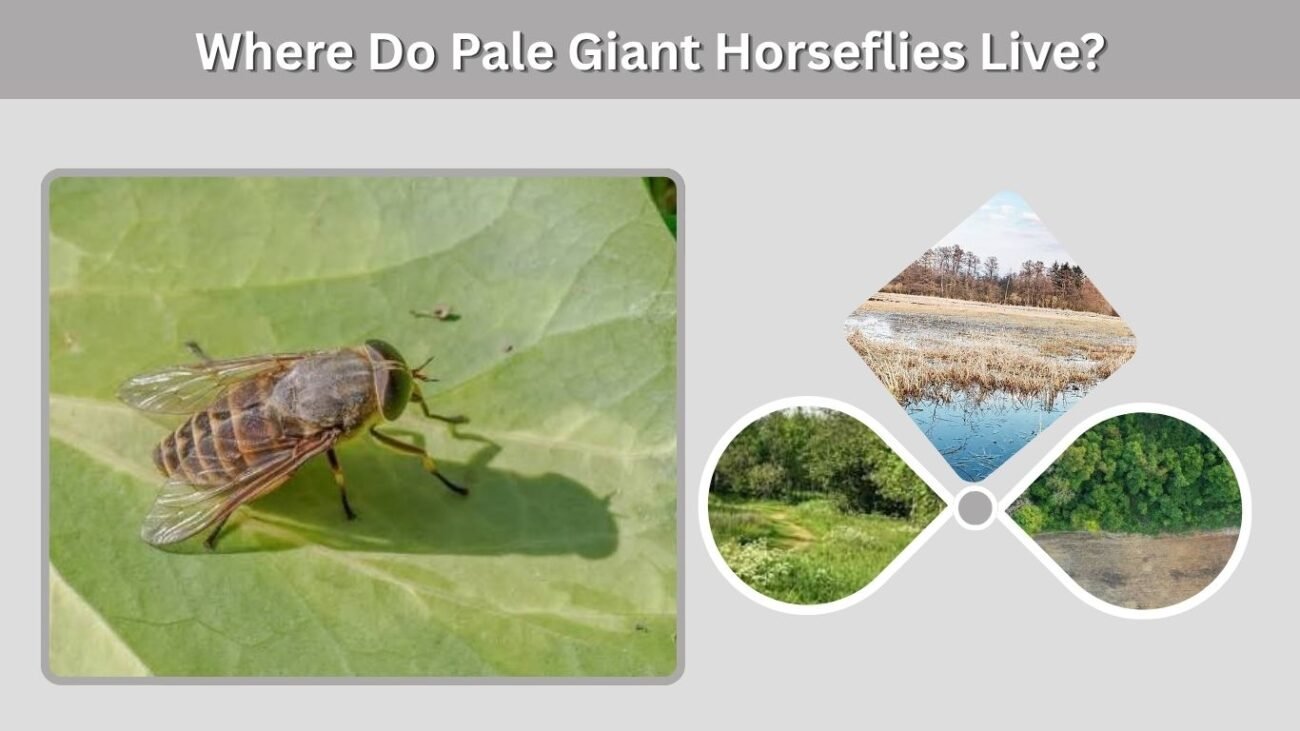
Tabanus bovinus is a European horsefly with records distributed across a broad portion of the continent. Its range overlaps with several other large Tabanus species.
Preferred Habitat
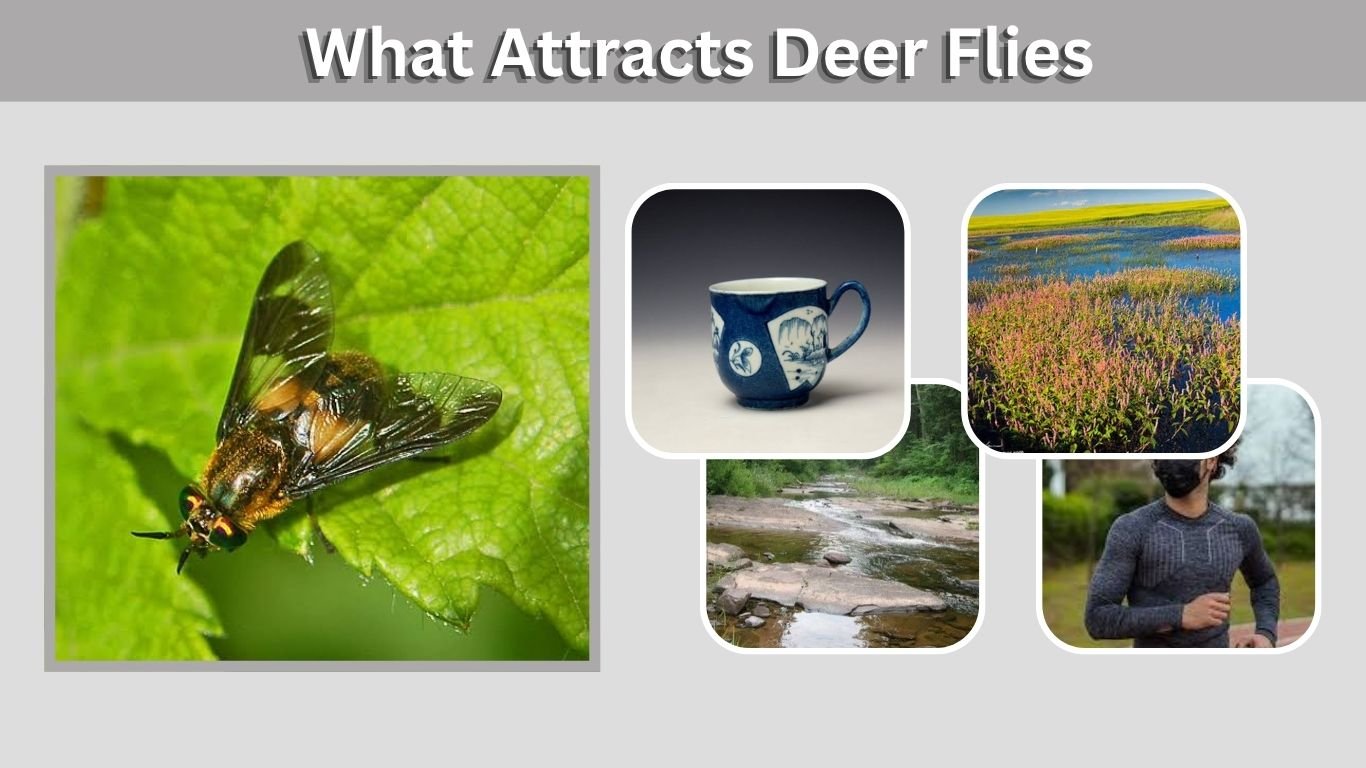
Adults are commonly associated with places where suitable breeding ground and large mammal hosts occur together, including:
- Cattle pastures
- Horse fields
- Damp meadows
- Woodland clearings
- Forest edges
- Marshy ground
- River and pond margins
- Rural areas with livestock
The presence of cattle or horses can make an area particularly attractive to blood-seeking females. Adults are most noticeable during warm daylight hours when they actively search for hosts.
Can They Enter Houses?
A pale giant horsefly may occasionally fly through an open door or window, particularly when attracted by movement, warmth, or reflected light. However, it is not a household pest and normally cannot reproduce inside an ordinary home.
An individual found indoors can usually be released by opening a large window or covering it with a container and sliding a piece of card underneath. Avoid handling the fly directly because a female may bite when trapped against the skin.
What Do Pale Giant Horseflies Eat?
Adult pale giant horseflies use plant sugars for energy. Their feeding behavior differs according to sex and reproductive needs.
Male Diet
Males feed on nectar and other sugary plant secretions. Because they do not need blood for egg production, they lack the blood-feeding behavior of females and cannot deliver the characteristic horsefly bite.
Female Diet
Females also use plant sugars for energy, but they take blood from mammals to support egg production. Cattle appear to be important hosts, which is reflected in the name bovinus. Horses, deer, and other large mammals may also be approached.
A female lands on the host and cuts the skin using blade-like mouthparts. Her saliva slows clotting, allowing her to lap up the blood. This cutting action is why a horsefly bite often feels sharper and causes more visible bleeding than a mosquito bite.
Does the Pale Giant Horsefly Bite Humans?
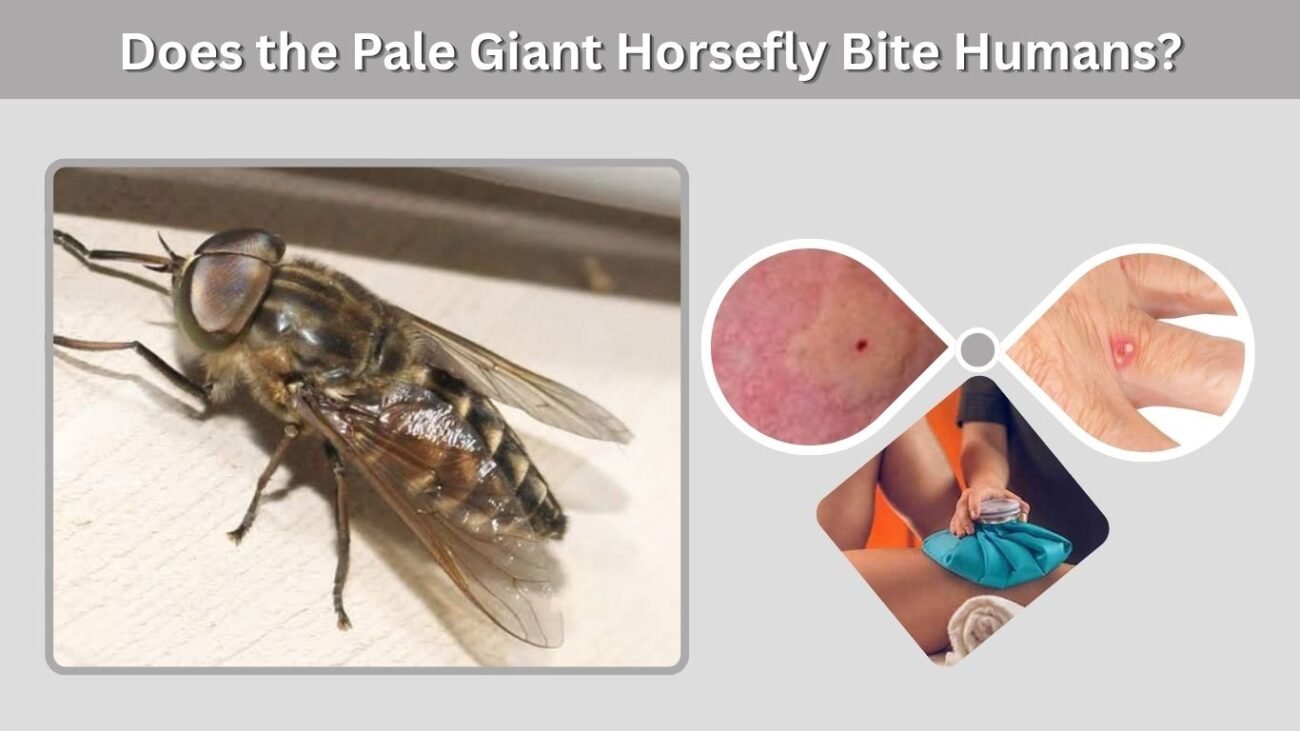
Yes, a female pale giant horsefly can bite a human, although people are not necessarily its preferred host. The fly may investigate someone walking near livestock, swimming near suitable habitat, or spending time in a damp rural area.
What Does the Bite Feel Like?
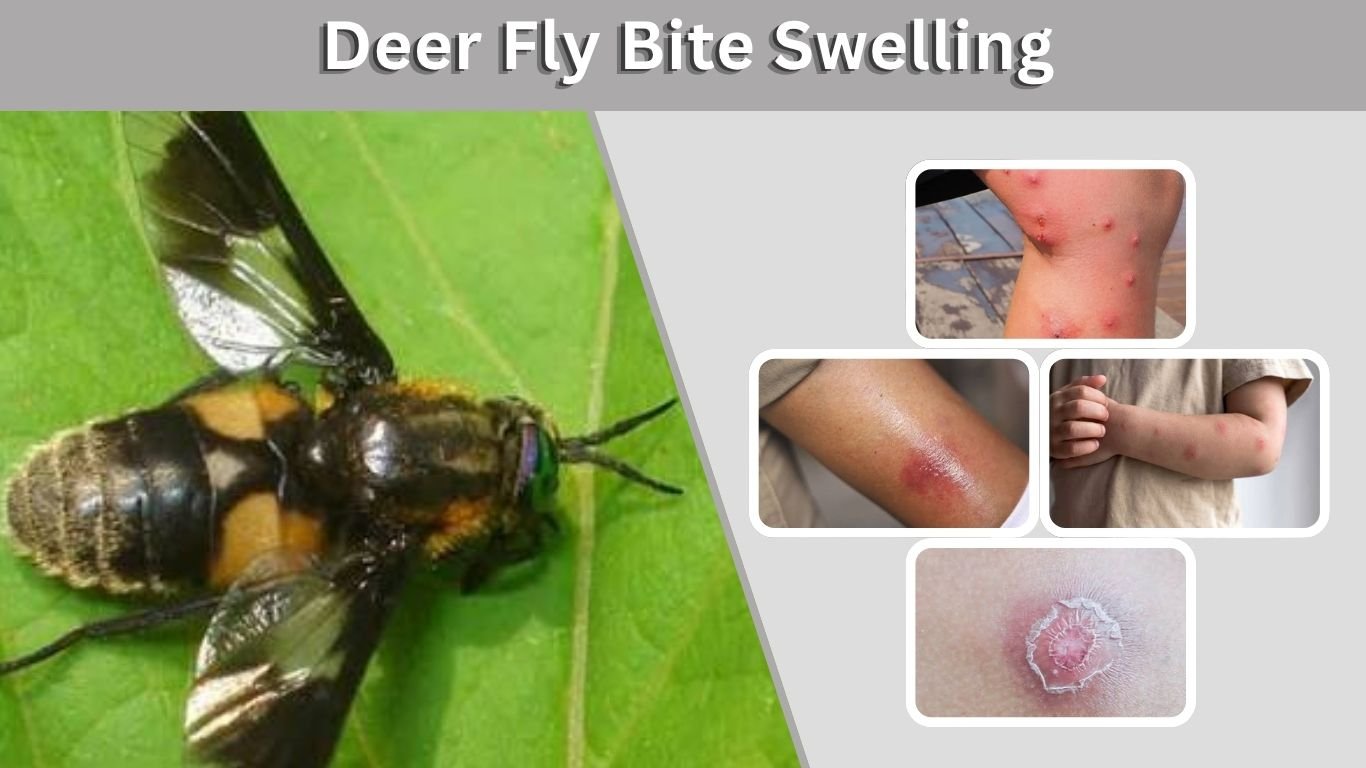
A bite usually causes immediate sharp or burning pain. Afterward, the affected area may develop:
- A raised red or discolored bump
- Localized swelling
- Tenderness or warmth
- Itching
- A small amount of bleeding
- A visible cut or open spot
Most uncomplicated horsefly bites improve within several days. More serious reactions are uncommon but can include infection or an allergic response.
How to Treat the Bite
Wash the wound with soap and clean water. Apply a cold compress wrapped in cloth to reduce pain and swelling, and avoid scratching the area. A pharmacist may recommend a suitable antihistamine, pain reliever, or mild steroid cream when appropriate.
Seek medical care if redness continues spreading, pain becomes worse, pus appears, or the area becomes increasingly hot and swollen. Call emergency services for breathing difficulty, faintness, widespread hives, or swelling of the lips, tongue, mouth, or throat.
Life Cycle of the Pale Giant Horsefly
Like other true flies, the pale giant horsefly develops through four stages: egg, larva, pupa, and adult.
Eggs and Larvae
Female horseflies generally place egg masses on vegetation or other surfaces near water or wet soil. After hatching, the larvae drop or crawl into moist ground, mud, or shallow water.
Horsefly larvae are not blood feeders. Many are predators that consume small invertebrates, although they may also use organic material in their environment. Development can be slow, lasting many months or longer depending on the species and environmental conditions.
Pupae and Adults
When fully developed, a larva moves into a somewhat drier location and forms a pupa. The winged adult later emerges and begins searching for food and mates.
Adult activity is closely connected to warm weather. Females become particularly noticeable when they patrol fields and other open areas containing livestock.
How to Avoid Pale Giant Horsefly Bites
Complete protection can be difficult because horseflies are fast, persistent fliers. However, exposure can be reduced by wearing long sleeves, long pants, closed shoes, and tightly woven clothing around fields or wetlands.
Avoid remaining close to cattle or horses when large numbers of flies are active. Screens can keep occasional individuals out of buildings, while specialized horsefly traps may help reduce activity around limited outdoor areas. Because horseflies respond strongly to movement and large dark objects, remaining calm and moving indoors or into a vehicle is often more effective than repeatedly swatting at a circling fly.
FAQs
Is the pale giant horsefly dangerous?
It is not venomous, and most bites cause only temporary pain, redness, and swelling. However, secondary infection and serious allergic reactions are possible. Increasing redness, pus, fever, facial swelling, or breathing difficulty requires medical attention.
How big is a pale giant horsefly?
It is one of the largest European horseflies. Adults are commonly longer than 20 mm, and some identification references describe specimens reaching approximately 25–30 mm in body length.
Why is it called a pale giant horsefly?
“Giant” refers to its unusually large body, while “pale” describes its relatively light brown, yellowish, or reddish abdominal coloring compared with the similar dark giant horsefly.
Do pale giant horseflies sting?
No. They do not have stingers. A female bites by cutting the skin with specialized mouthparts and then feeding on the exposed blood.
Are pale giant horseflies found in the United States?
Tabanus bovinus is primarily associated with Europe and nearby parts of the Palearctic region. Large American horseflies may look similar, but they are generally different species and should not automatically be identified as pale giant horseflies.