Robins are among the most beloved and easily recognized birds in North America, famous for their bright orange bellies and cheerful morning songs. One of the most exciting moments in birdwatching is discovering a robin nest and wondering when the eggs will hatch. If you’ve spotted a robin’s nest or are simply curious, this article will guide you through the full process—from laying to hatching.
Robin Egg Hatching Time – The Quick Answer
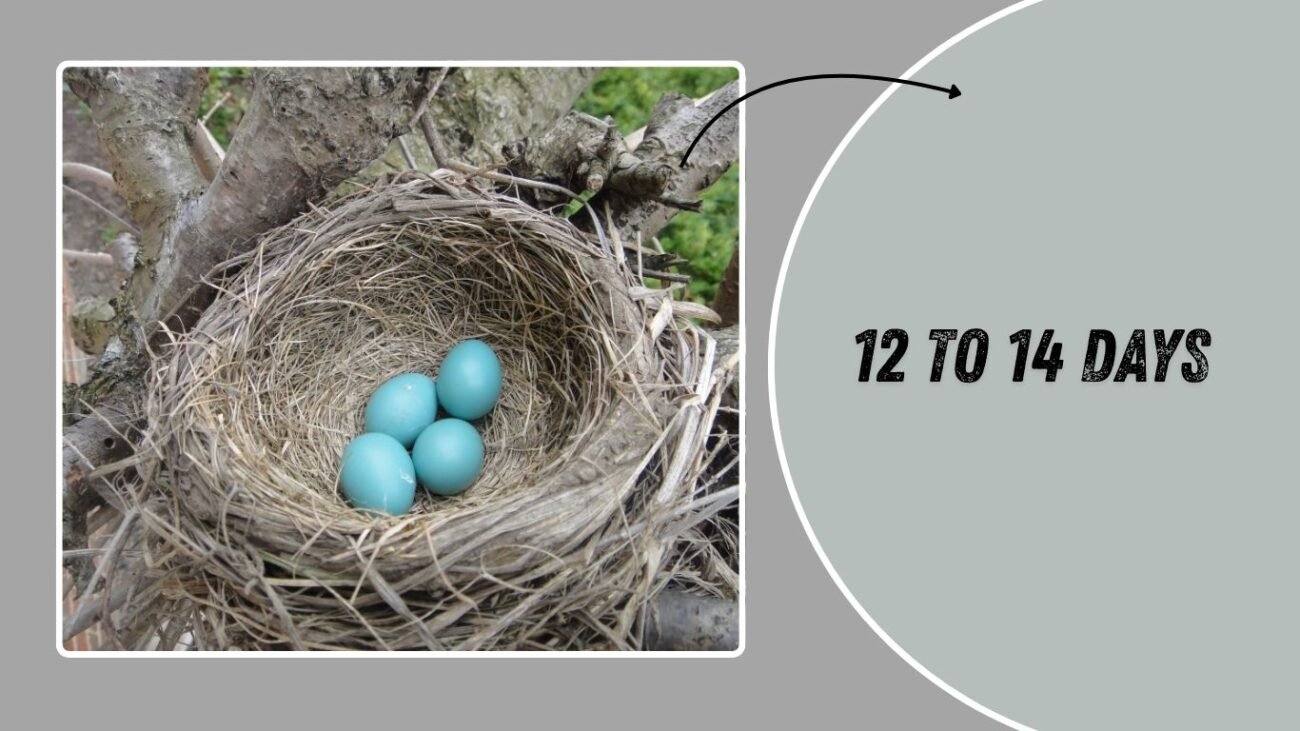
In general, robin eggs take 12 to 14 days to hatch after the female starts incubating them. The exact timing can vary slightly based on environmental factors such as temperature, weather conditions, and the individual bird’s health. Unlike some species, robins do not begin incubation immediately after the first egg is laid. Instead, they wait until the entire clutch (usually 3–5 eggs) is laid, which ensures all the babies hatch around the same time.
The Nesting Process Before Hatching

Choosing a Nesting Site
Robins are clever when it comes to selecting nest locations. They often build their nests in forks of trees, on ledges, or under eaves, usually 5 to 25 feet above the ground. The location must offer some protection from rain, predators, and human disturbance. Many robins return to familiar spots year after year.
Building the Nest
The female robin takes the lead in nest construction. She collects twigs, dry grass, and bits of leaves, binding them together with mud. She shapes the inner cup with her breast, pressing against the sides to create a sturdy, rounded bowl. The process takes about 3 to 6 days, depending on weather and material availability.
Egg Laying Schedule
Once the nest is complete, the female lays one egg per day in the early morning until the clutch is finished. A typical clutch contains 3 to 5 eggs. The eggs are a beautiful pale blue and about the size of a large marble.
Importantly, incubation doesn’t start until all eggs are laid. This strategy helps ensure that all the chicks hatch within a day or two of each other.
Incubation Stage – Day-by-Day Development

Who Incubates the Eggs?
The female robin handles all incubation duties. She sits on the eggs almost continuously, only leaving for short periods to feed or stretch. The male robin stays nearby, guarding the nest and sometimes bringing food to the female.
How the Eggs Stay Warm
The female robin fluffs her belly feathers to create a warm “brood patch,” allowing her body heat to transfer directly to the eggs. She carefully shifts and turns the eggs multiple times a day to ensure even warmth and proper development.
Temperature and Weather Impacts
Temperature plays a major role in development. If the weather is too cold, the hatching process can be delayed. Heavy rain or storms can also interrupt incubation if the female is forced to leave the nest for extended periods. In warm, stable weather, development tends to stay right on track—hatching usually occurs between day 12 and day 14.
Signs That Hatching Is Near
Physical Changes in Eggs
As hatching time approaches, the eggs may become slightly darker or more translucent at the edges. A close observer might even see the first cracks appearing in the shell, known as “pipping,” where the baby bird begins breaking through using a small bump on its beak called an “egg tooth.”
Behavioral Signs from the Female
Just before hatching, the female may become more active and attentive. She may sit lower in the nest or change position more frequently. Some females even softly vocalize or shift in response to movements inside the eggs.
What Happens After the Eggs Hatch?
Appearance of Newly Hatched Chicks
When the robin chicks first hatch, they are blind, featherless, and incredibly fragile. Their skin appears pink, and their eyes are sealed shut. They rely entirely on their parents for warmth and food. Though helpless, they begin responding to vibrations and sounds almost immediately, opening their mouths for food when the parent returns.
Parental Care Begins
Both parents spring into action once the eggs hatch. The female continues to brood the chicks for the first few days to keep them warm, while the male brings a steady supply of insects and worms. As the chicks grow, both parents take turns feeding them, sometimes hundreds of times per day.
By day 5–7, the chicks start growing feathers and opening their eyes. By day 9–11, they become more alert and active, and by day 13–15, they fledge—leaving the nest, though the parents continue to care for them nearby for another week or more.
Common Questions About Robin Egg Hatching
What if robin eggs don’t hatch after 14 days?
If eggs remain unhatched beyond day 15, they may not be viable. Robins may abandon a nest if they sense the eggs are not developing or if disturbed too often.
Can I touch robin eggs or the nest?
It’s best not to. Touching the eggs or nest can cause the parents to abandon it. In some regions, disturbing bird nests is illegal under wildlife protection laws.
Do robins reuse their nests?
Robins rarely reuse old nests for a new clutch but may build a fresh one in the same area. However, some will renovate the old one if it’s in good shape.
How many broods do robins raise each year?
Robins typically raise 2 to 3 broods per year, especially in warmer climates. Each new brood involves building or repairing a nest and starting the cycle over.
What predators threaten robin eggs?
Common threats include squirrels, snakes, blue jays, raccoons, and domestic cats. Choosing a high, hidden location helps reduce the risk of predation.
Final Thoughts
Watching robin eggs develop and hatch is a rewarding experience that connects us to the rhythm of nature. From careful nest construction to the first chirps of hungry chicks, the robin’s nesting journey is both intricate and inspiring. If you’re lucky enough to observe a robin nest nearby, remember to keep a respectful distance and enjoy the incredible transformation that takes place in just a few short weeks—from pale blue egg to fluttering fledgling.