The American Robin is one of the most familiar birds in North America. Their red-orange breast and cheerful song signal the arrival of spring in many regions. But while robins are easy to recognize, telling the difference between a male and a female isn’t always so obvious. They look quite similar at first glance—but upon closer observation, you’ll notice subtle differences in color, behavior, and roles during breeding.
This guide breaks down 7 key differences between male and female American Robins so you can identify them with more confidence—whether you’re a backyard birdwatcher or a curious nature enthusiast.
Comparison Table: Male vs Female American Robin
| Feature | Male Robin | Female Robin |
| Color Intensity | Brighter red-orange breast | Duller, more washed-out breast color |
| Head Color | Dark blackish-gray head | Pale gray or brownish head |
| Beak Color | Bright yellow | Slightly duller yellow |
| Behavior | More vocal, active in territory defense | Quieter, more cautious |
| Size & Shape | Slightly larger and broader | Slightly smaller and slimmer |
| Breeding Role | Attracts female, guards territory | Builds nest, incubates eggs |
| Seasonal Appearance | Maintains bright colors year-round | May appear duller outside breeding season |
1. Color Intensity of the Breast
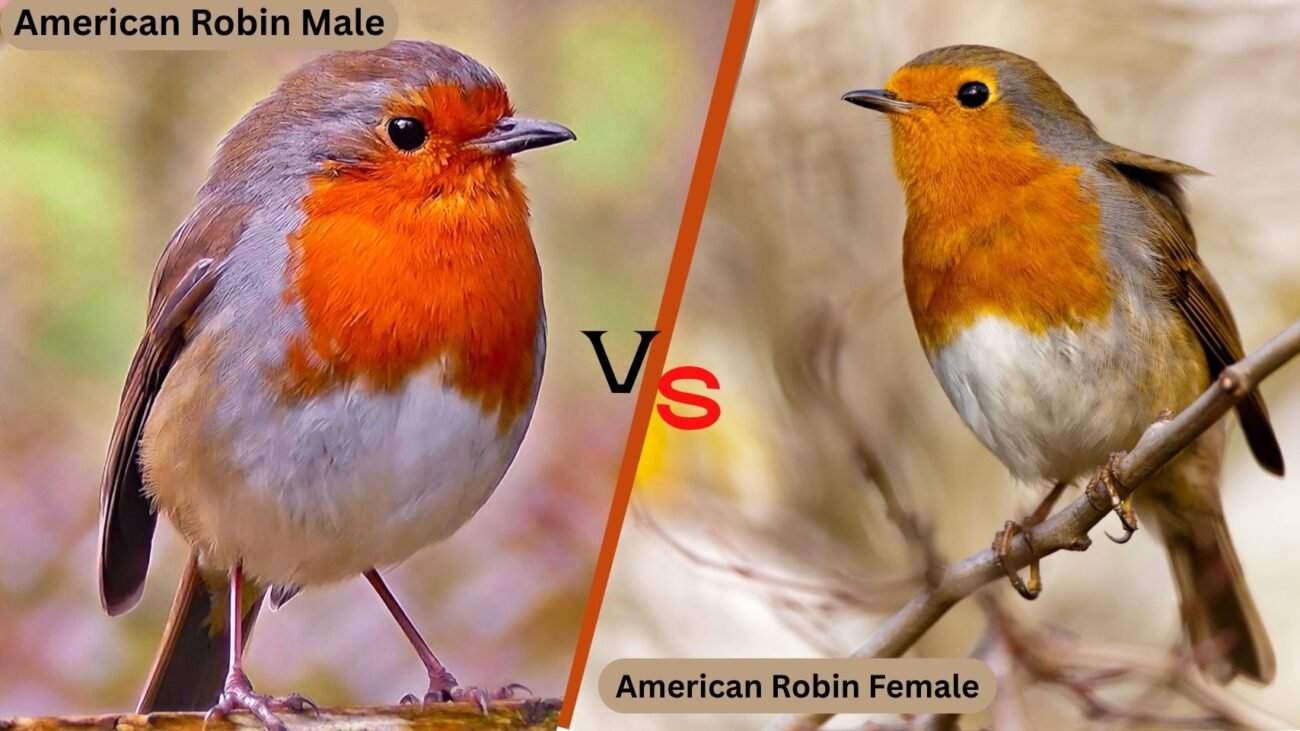
Male
One of the most striking features of a male American Robin is the bold, red-orange color of its breast. During the breeding season, this color becomes especially vibrant, helping males stand out and attract mates. A deeper hue often signals better health, which females consider during selection.
Female
Female robins also have a red-orange breast, but the color is usually more subdued and slightly washed out. Their appearance may vary slightly depending on age and region, but in general, females have less vivid coloring. This muted tone helps them stay more hidden, especially while nesting.
2. Head and Back Coloring
Male
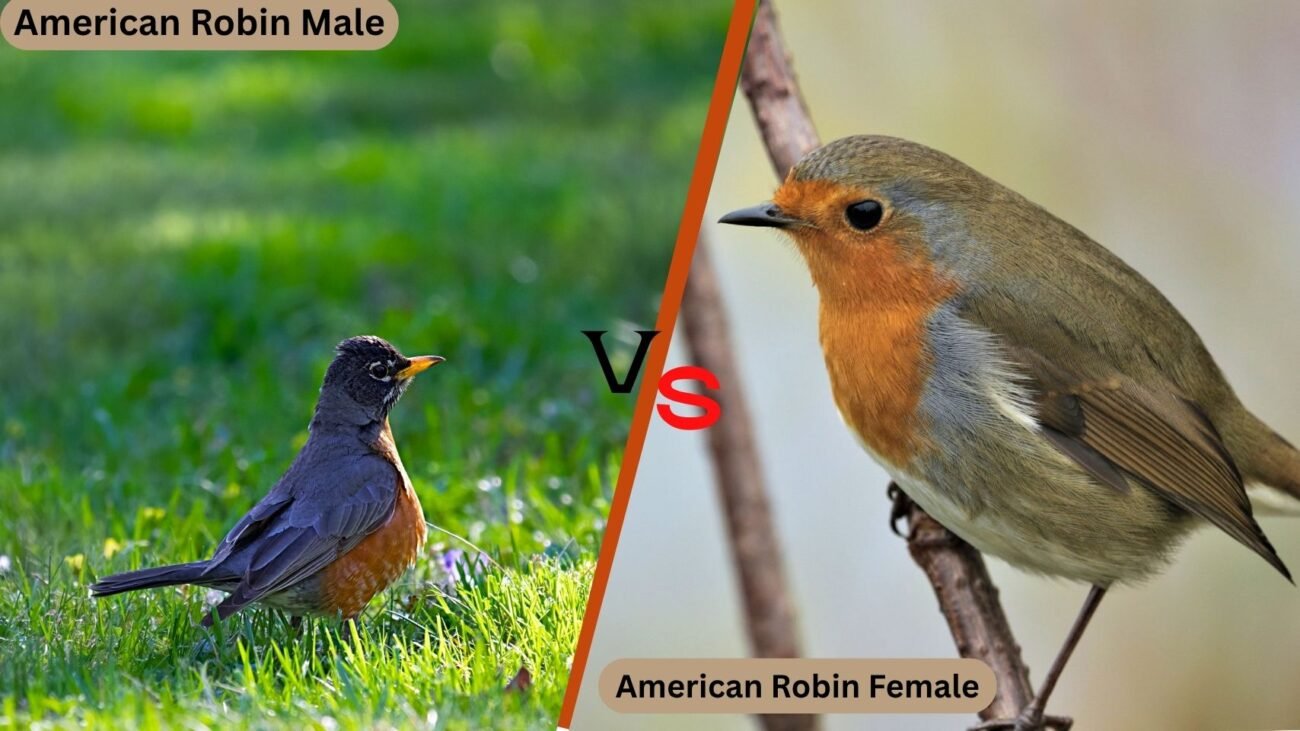
The head of a male robin is typically dark black or charcoal gray, creating a sharp contrast with its bright breast. This darker head also contrasts with its white throat and eye ring, enhancing its bold appearance. In good lighting, this contrast makes males easy to spot.
Female
Female robins have a paler head, usually light gray or brownish-gray. This softer coloring blends in more with the back and wings, making females appear more uniform. While the difference is subtle, it becomes clear when males and females are seen side by side.
3. Beak and Eye Ring
Male
Male robins have a bright yellow beak, which often appears more saturated and clean. The white ring around the eyes is usually more prominent and well-defined, adding to the boldness of their facial features.
Female
Females have a duller beak, which may appear slightly grayish or more faded in color. The eye ring is also less distinct, sometimes broken or faint, making their facial markings more understated.
4. Vocal Behavior and Song Activity
Male
Male robins are the more vocal sex, especially during spring and early summer. They sing often to mark their territory and attract mates. Their clear, flute-like calls can be heard in the early morning, long before sunrise.
In addition to singing, males are more likely to engage in visual displays, like puffing their chest, spreading their wings, or chasing away intruders.
Female
Females are generally quieter and more reserved. While they may produce soft chirps or alarm calls, they rarely sing full songs. Their silence helps them stay hidden while nesting and raising young, which reduces the chance of attracting predators.
5. Size and Body Shape
Male
Male robins are typically slightly larger and bulkier than females. They may have a broader chest and longer wings. However, the difference is minimal—only noticeable when both sexes are seen side by side.
Female
Female robins are often slightly smaller and slimmer in build. This leaner shape may help them navigate nest-building and incubation tasks more easily. However, without comparison, it’s hard to use size alone for identification.
6. Nesting and Breeding Role
Male
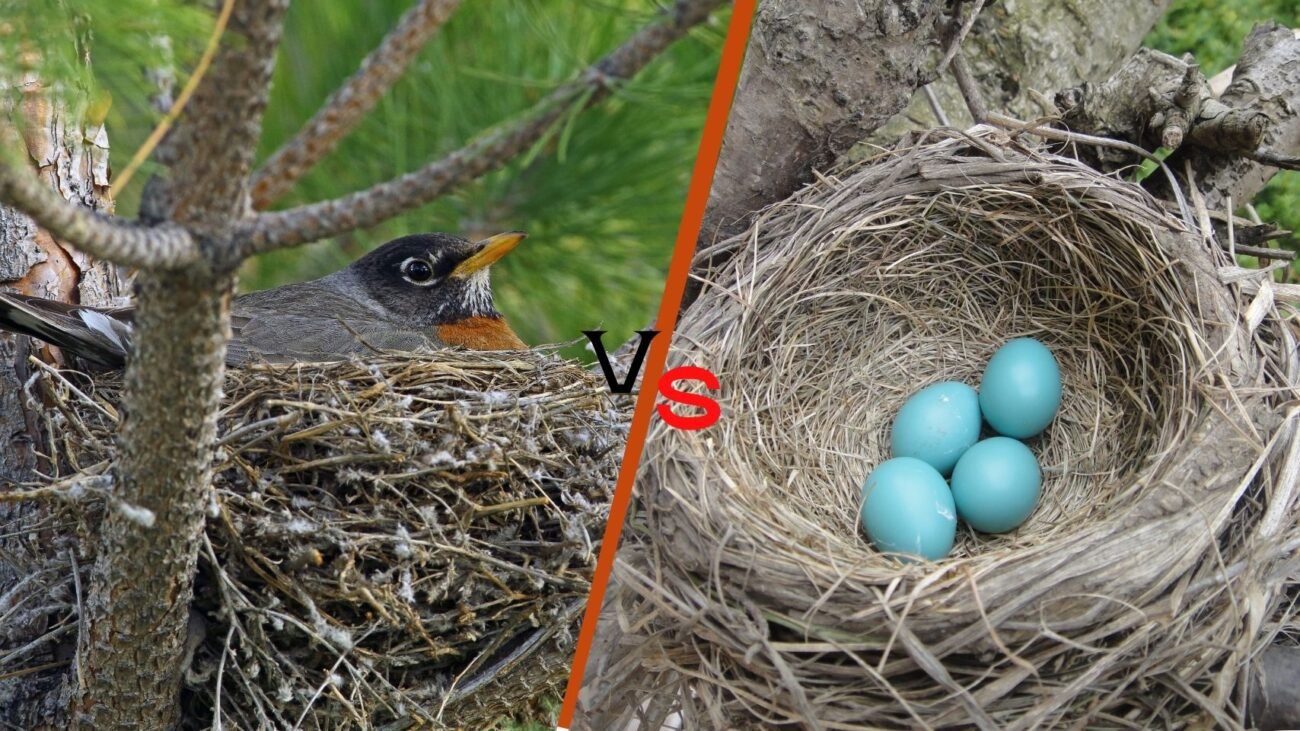
During the breeding season, male robins focus on defending their territory and attracting a mate. Once paired, the male often guards the area around the nest, warning off other birds and predators.
Some males may assist in feeding the young once they’ve hatched, but they do not help with nest building or incubation.
Female
The female robin does most of the heavy lifting when it comes to nesting. She gathers materials—twigs, grass, mud—and builds the nest entirely on her own. After laying eggs (typically 3 to 5), she incubates them for about two weeks, staying mostly hidden and silent.
Once the eggs hatch, the female continues caring for the chicks, although males sometimes help feed the fledglings.
7. Seasonal Appearance Changes
Male
Male robins tend to retain their vibrant coloring throughout the year, though feathers may become slightly duller after the summer molt. Their bright breast and dark head remain relatively consistent, making them easy to recognize year-round.
Female
Females may appear even duller in fall and winter, as their feathers become worn or faded. During non-breeding months, it becomes more difficult to distinguish females from younger or molting males, especially in overcast lighting or at a distance.
Summary of Differences
Male and female American Robins may look alike at first glance, but with careful observation, the differences become clear:
- Males are brighter, bolder, and more vocal.
- Females are quieter, duller in color, and more involved in nesting.
- Males defend the territory; females raise the young.
- Color intensity, especially on the breast and head, is the most reliable clue.
By paying attention to these visual and behavioral cues, birdwatchers can confidently identify the sex of robins in their yard or on the trail.
FAQs
Can female robins sing?
Female robins may chirp or make alarm calls, but they rarely sing full melodies like males. Their quiet behavior helps avoid attracting predators to their nests.
Do male and female robins migrate together?
Robins migrate separately, with males returning to breeding grounds earlier in spring to establish territory. Females arrive later, after males have claimed their space.
Do juveniles look more like males or females?
Young robins typically resemble females with duller plumage. They also have speckled breasts which gradually fade as they mature.
Can male robins help raise the chicks?
Yes, in some cases, males help feed the chicks after they hatch. However, the female still does most of the incubation and early chick care.
Why do some robins look brighter than others?
Diet, age, and feather condition all affect robin coloration. Males with access to carotenoid-rich foods (like berries) may appear brighter and redder, while molting or older birds may look more faded.
Final Thoughts
Distinguishing between a male and female American Robin may take a trained eye, but it’s a fun and rewarding challenge for any birdwatcher. From coloration and beak brightness to behavior and nesting roles, the differences offer insight into how these beautiful birds live and interact with their environment.