





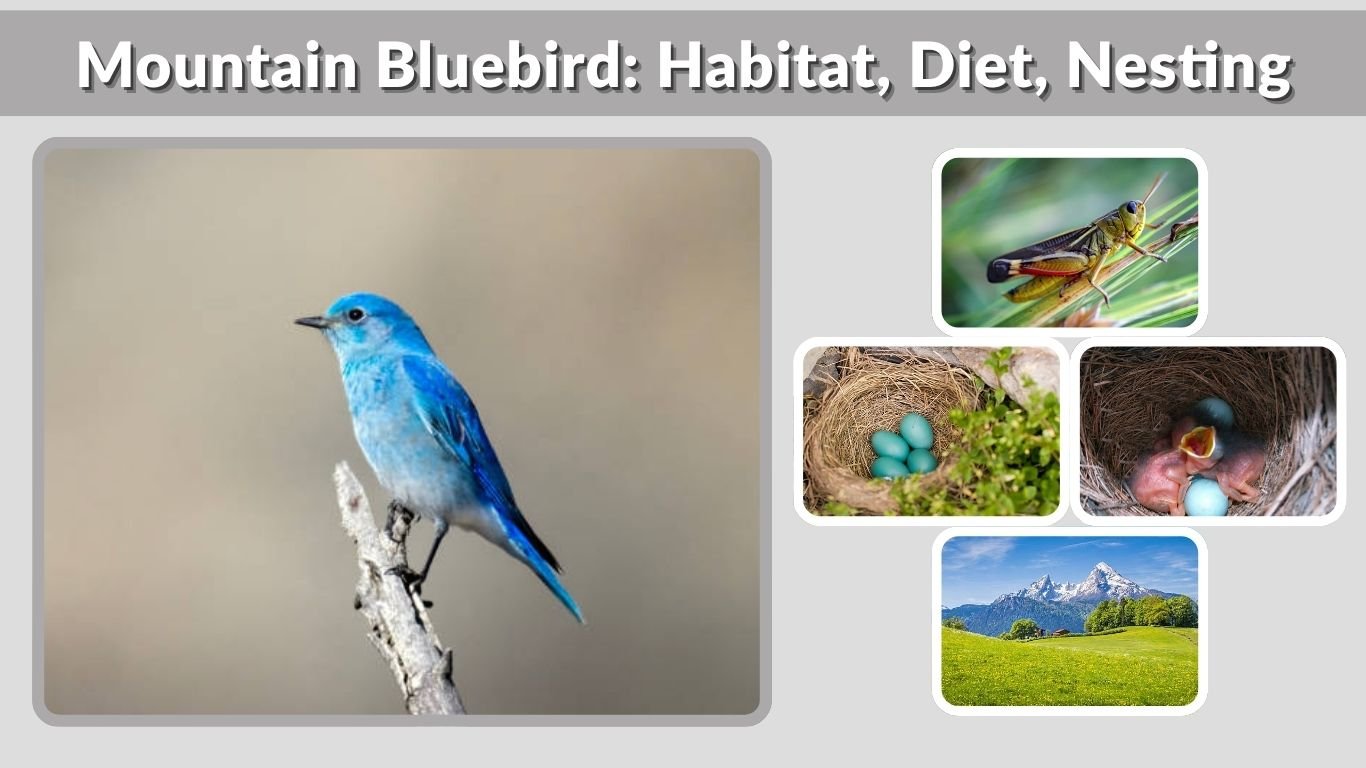
The mountain bluebird is one of North America’s most striking and beloved birds, known for its vivid sky-blue coloring and graceful flight across open landscapes. Often found in grasslands, meadows, and mountainous regions, this small thrush plays an important role in the ecosystem by controlling insect populations. In this guide, you’ll explore everything about the mountain bluebird—from its habitat and diet to nesting habits and early life stages.
Mountain Bluebird Habitat: Where Do They Live?
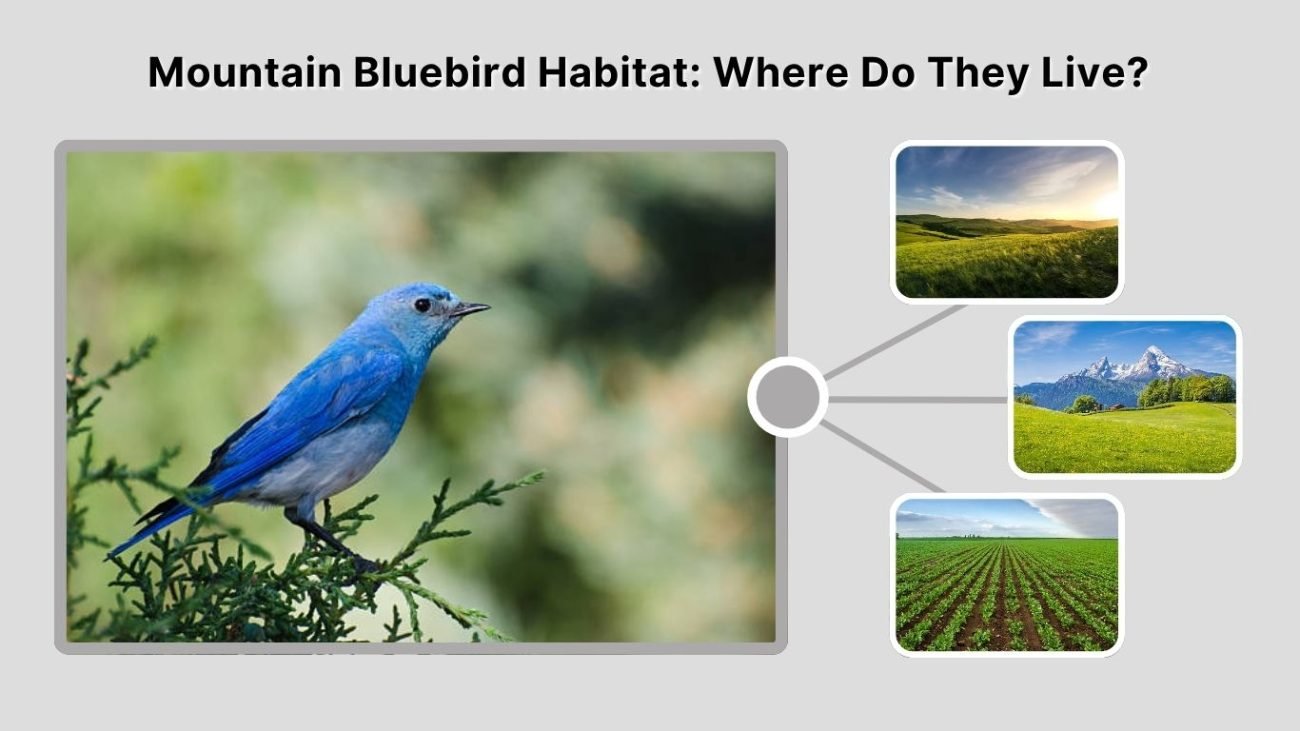
Mountain bluebirds prefer open, expansive environments rather than dense forests. You’ll commonly find them in:
- Grasslands and prairies
- Alpine meadows
- Sagebrush plains
- Farmlands and pastures
They are widely distributed across western North America, including regions of Canada, the United States, and parts of northern Mexico. During the breeding season, they tend to move to higher elevations, while in winter, they migrate to lower, milder areas.
These birds rely heavily on open spaces with scattered trees or fence posts, which they use as perches to spot prey. Habitat loss due to agriculture and urban expansion has impacted their populations, but conservation efforts—like installing nest boxes—have helped stabilize their numbers.
Mountain Bluebird Facts: Appearance, Behavior & Unique Traits
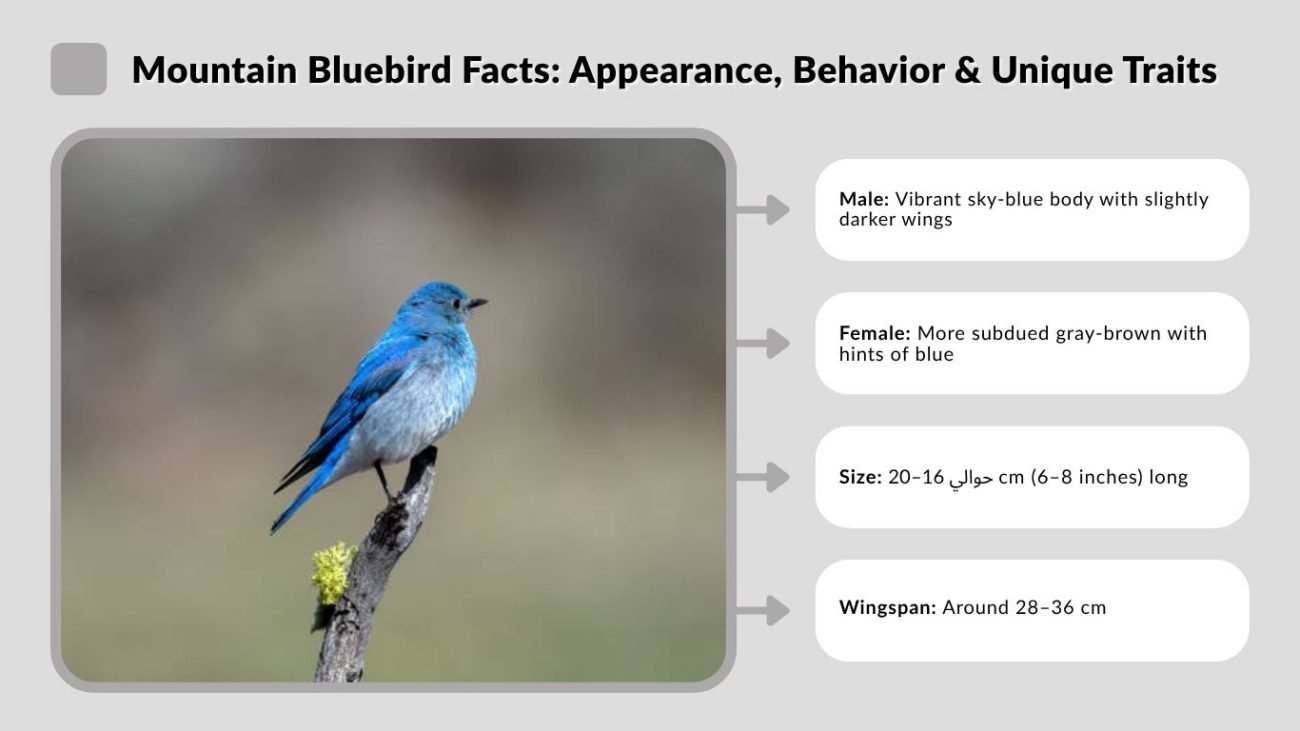
The mountain bluebird is admired for its bright coloration and gentle behavior.
Key Identification Features:
- Male: Vibrant sky-blue body with slightly darker wings
- Female: More subdued gray-brown with hints of blue
- Size: حوالي 16–20 cm (6–8 inches) long
- Wingspan: Around 28–36 cm
Unlike some other birds, mountain bluebirds have a soft, warbling song, often heard during the breeding season. Their flight is smooth and slightly buoyant, and they frequently hover briefly before diving to catch prey.
They are generally non-aggressive and social, sometimes forming small flocks outside the breeding season.
Mountain Bluebird Diet: What Do They Eat?
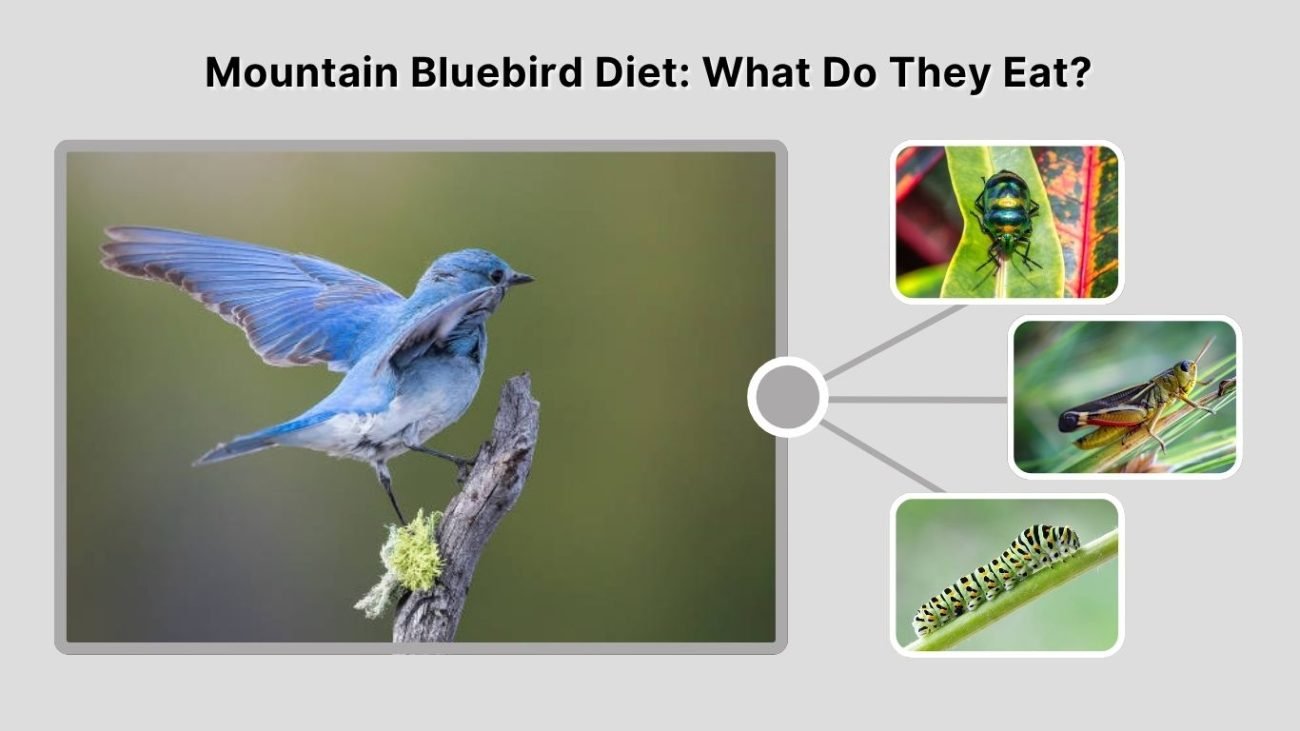
Mountain bluebirds are primarily insectivores, meaning insects make up the majority of their diet.
Main Food Sources:
- Beetles
- Grasshoppers
- Caterpillars
- Spiders
During colder months, when insects are scarce, they switch to eating berries and small fruits, such as juniper berries and elderberries.
Hunting Behavior:
- They perch on a high point (like a fence or branch)
- Spot prey on the ground
- Glide or swoop down to catch it
This feeding style makes them highly efficient hunters and valuable for natural pest control.
Mountain Bluebird Nest: Location, Structure & Materials
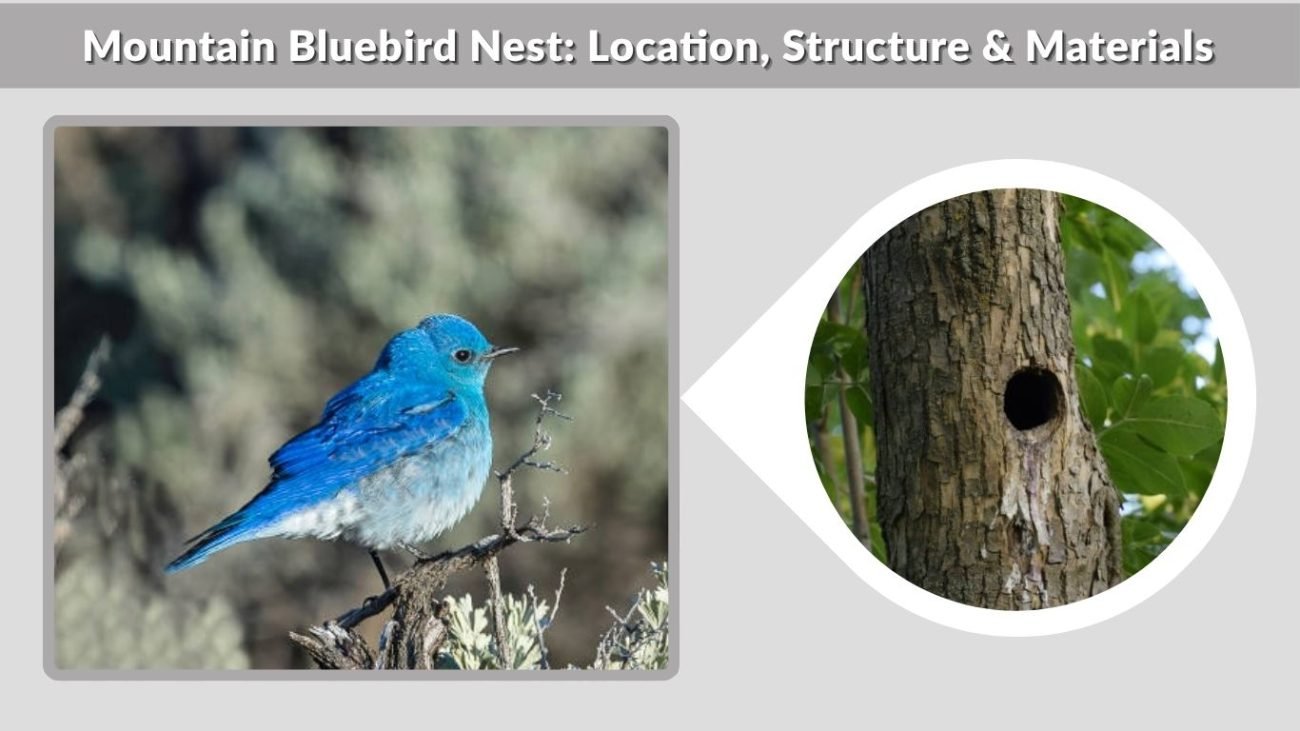
Mountain bluebirds are cavity nesters, meaning they build their nests inside holes rather than on open branches.
Common Nesting Sites:
- Tree cavities (natural or abandoned woodpecker holes)
- Nest boxes provided by humans
- Fence posts or cliffs (occasionally)
Nest Construction:
The female is primarily responsible for building the nest using:
- Dry grasses
- Pine needles
- Feathers
- Soft plant fibers
The nest is shaped like a shallow cup, designed to keep eggs secure and insulated.
Interestingly, males often help by guarding the nesting area and sometimes bringing materials.
Mountain Bluebird Eggs: Appearance & Incubation
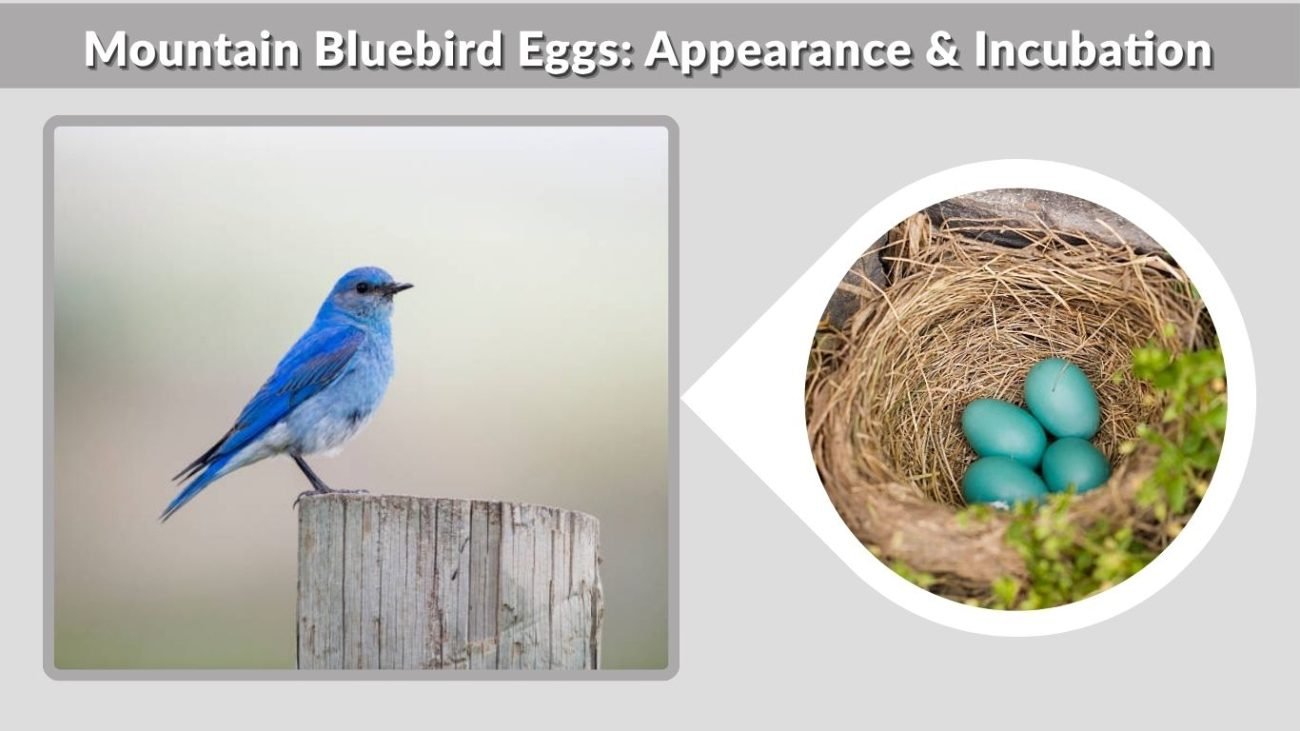
Once the nest is complete, the female lays a clutch of eggs.
Egg Characteristics:
- Color: Pale blue (sometimes white)
- Clutch size: عادة 4–6 eggs
Incubation:
- Duration: About 13–14 days
- The female incubates the eggs while the male provides food
After incubation, the eggs hatch into fragile chicks that depend entirely on parental care.
Mountain Bluebird Baby: Growth & Early Development
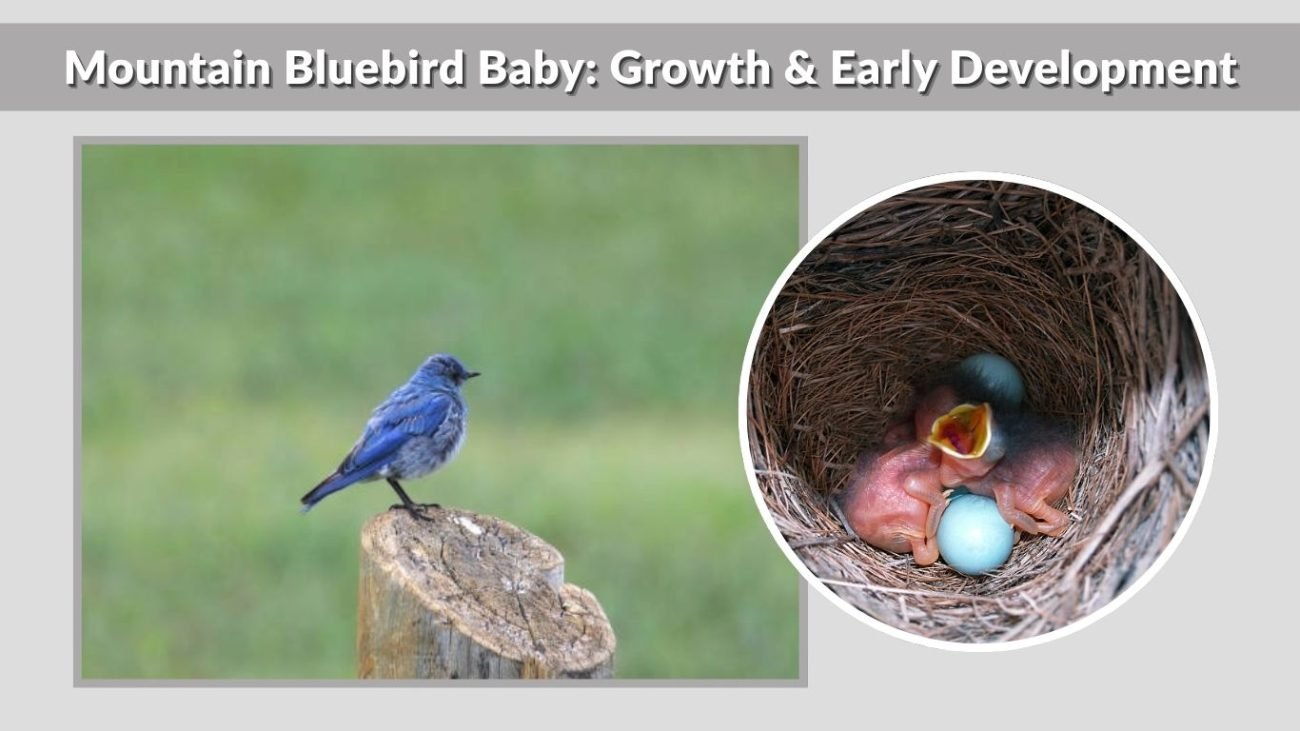
Baby mountain bluebirds, known as hatchlings, are born blind and featherless, making them highly vulnerable.
Early Stage:
- Completely dependent on parents
- Fed a steady diet of soft insects
- Rapid growth within the first week
As they develop into nestlings, they begin to grow feathers and become more active. Both parents work tirelessly to feed them and keep the nest clean.
After about 17–23 days, the young birds are ready to leave the nest—a stage known as fledging.
Mountain Bluebird Life Cycle: From Egg to Adult
The life cycle of the mountain bluebird follows a clear and fascinating progression, with each stage playing a crucial role in survival and development.
1. Egg Stage
The cycle begins when the female lays 4–6 eggs in a सुरक्षित, well-built nest. During the 13–14 day incubation period, the female keeps the eggs warm while the male brings food.
2. Hatchling Stage
Once hatched, the chicks are:
- Blind
- Featherless
- Completely dependent on parents
At this stage, both parents feed them frequently with soft insects to support rapid growth.
3. Nestling Stage
Within a few days:
- Feathers begin to grow
- Eyes open
- Movement increases
The chicks grow quickly and require constant feeding. Parents also remove waste from the nest to keep it clean and safe.
4. Fledgling Stage
After about 17–23 days, the young birds leave the nest. Although they can fly short distances, they still rely on their parents for food and protection.
5. Adult Stage
Within a few weeks:
- They become independent
- Learn to hunt and survive on their own
- Reach breeding maturity by the next season
This cycle repeats annually, especially during the spring and early summer breeding season.
Mountain Bluebird Lifespan: How Long Do They Live?
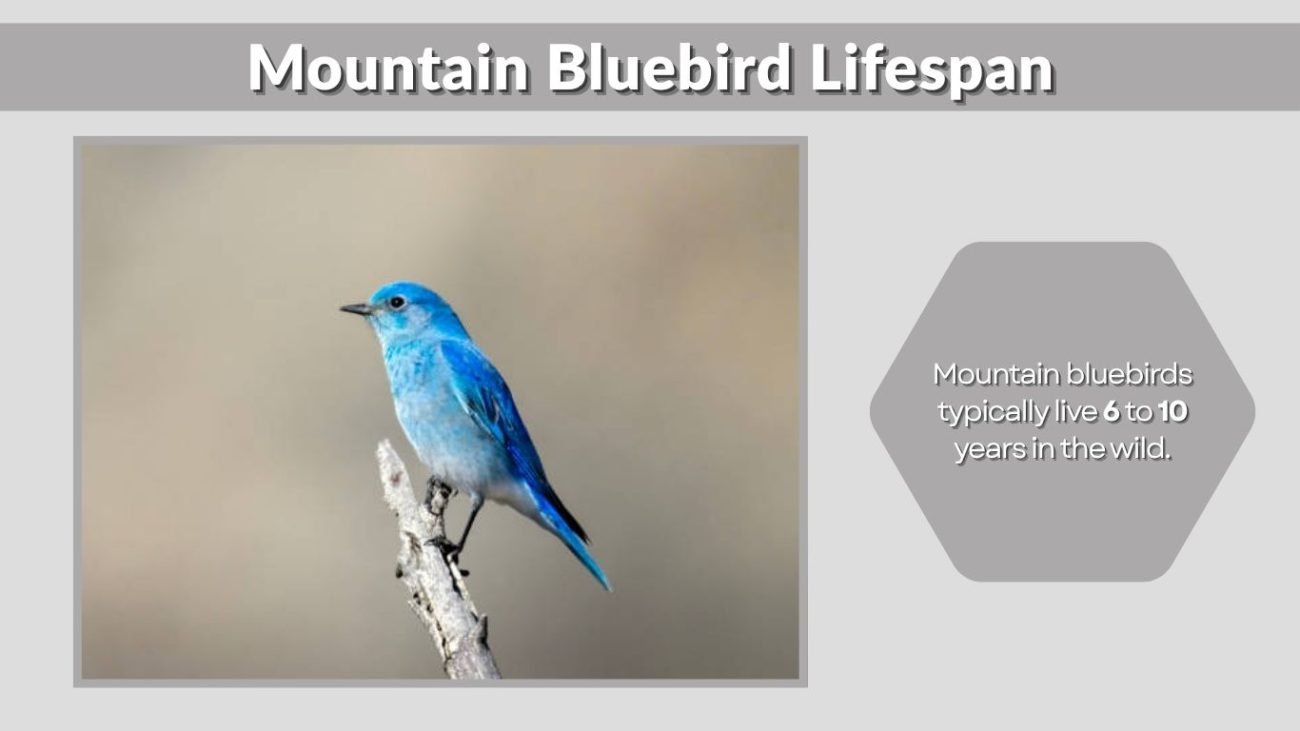
Mountain bluebirds typically live 6 to 10 years in the wild, although many do not survive their early years due to natural challenges.
Factors Affecting Lifespan:
- Predators: Snakes, hawks, and mammals
- Weather conditions: Harsh winters or storms
- Food availability: Seasonal shortages
- Habitat loss: Human development and land changes
Birds that survive their first year generally have a much higher chance of reaching adulthood and living longer.
Behavior & Ecology: Interesting Mountain Bluebird Facts
Mountain bluebirds are not just beautiful—they also display fascinating behaviors that make them unique among birds.
Social Behavior:
- Often seen alone or in small groups
- May form larger flocks during winter
- Males can be territorial during breeding season
Migration Patterns:
- Partial migrants (not all populations migrate)
- Move to lower elevations or warmer areas in winter
- Return to breeding grounds in spring
Adaptation to Humans:
Mountain bluebirds have benefited from human efforts such as:
- Nest box programs
- Conservation of open habitats
These efforts have significantly helped maintain their populations.
Additional Mountain Bluebird Facts You Should Know
- They belong to the thrush family (Turdidae)
- Their bright blue color comes from light reflection, not pigment
- They are one of three bluebird species in North America
- They play an important role in controlling insect populations
FAQs
What is special about the mountain bluebird?
The mountain bluebird is known for its bright sky-blue color, gentle behavior, and ability to thrive in open landscapes. Unlike many birds, its blue color comes from light reflection rather than pigment.
Where do mountain bluebirds build their nests?
They build nests in natural cavities such as tree holes or in man-made nest boxes. They prefer open areas with scattered trees or posts for easy access to food.
What do baby mountain bluebirds eat?
Baby mountain bluebirds are fed soft insects like caterpillars and beetles by their parents, which provide the nutrients needed for rapid growth.
When is the breeding season for mountain bluebirds?
Their breeding season typically occurs in spring and early summer, when food is abundant and weather conditions are favorable for raising young.
Are mountain bluebirds endangered?
No, mountain bluebirds are not currently endangered. In fact, their populations have improved due to conservation efforts like nest box programs and habitat protection.
Conclusion
The mountain bluebird is more than just a visually stunning bird—it’s an essential part of its ecosystem and a symbol of open, wild landscapes. From its nesting habits and diet to its life cycle and lifespan, every aspect of this bird reflects adaptability and resilience. With continued conservation efforts, these beautiful birds will remain a cherished sight across North America for generations to come.