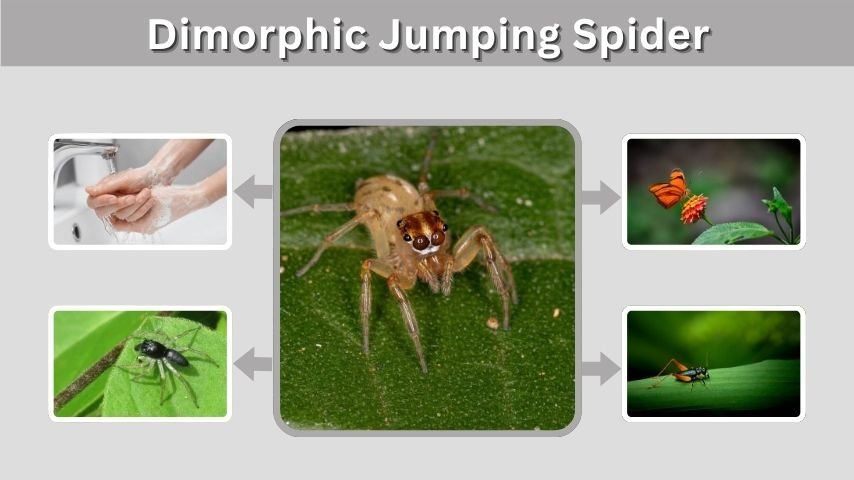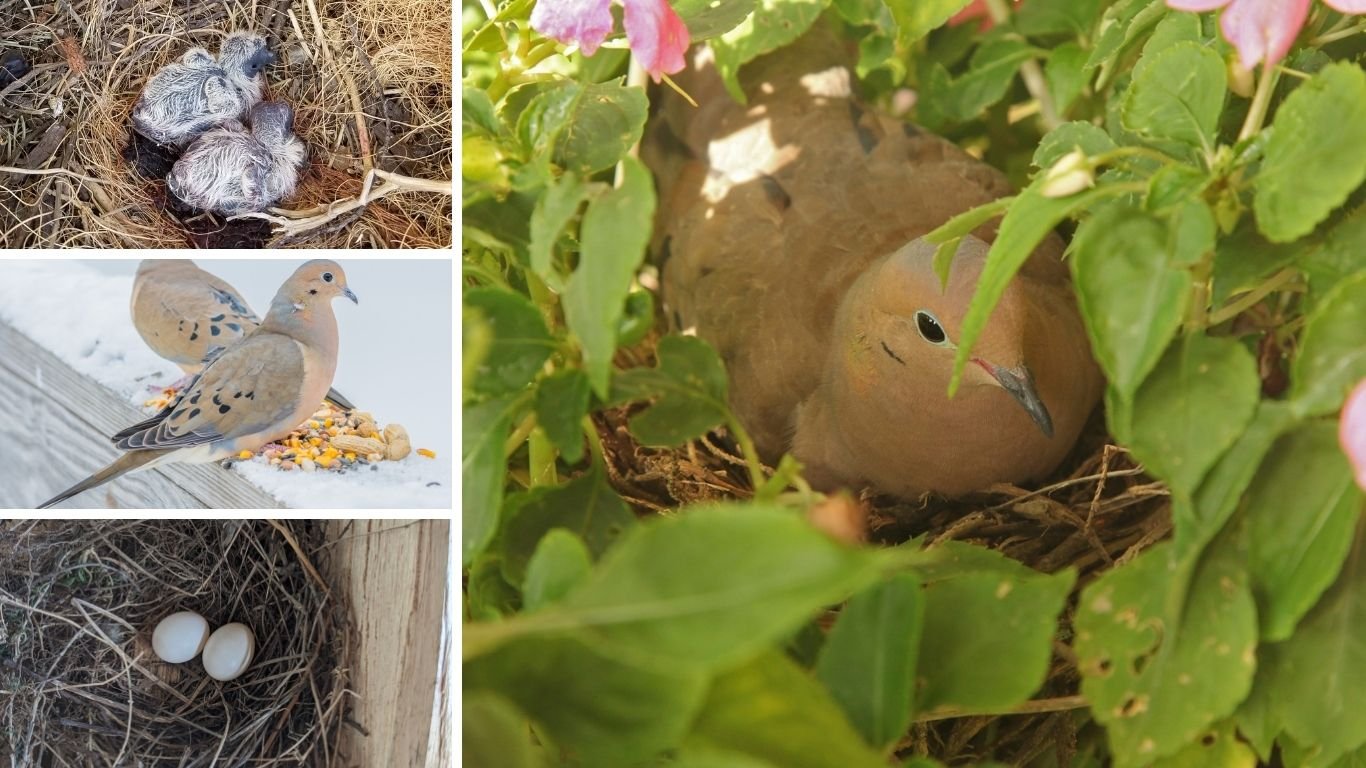
Mourning doves are peaceful and familiar backyard birds known for their soft cooing sounds and graceful appearance. Whether you’re a birdwatcher or simply curious about nature, learning about their nesting habits, delicate eggs, baby development, and diet offers a close look at how these gentle creatures live and thrive. This guide covers the full story—from nest to flight—of mourning doves.
Mourning Dove Nest

Mourning doves are not picky nesters—they often build simple, loosely made nests in open areas where they feel safe. These birds reuse the same sites, quietly raising multiple broods through the year.
Where Do Mourning Doves Build Their Nests?
- Commonly found in trees, shrubs, gutters, balconies, and hanging planters
- Prefer flat, horizontal surfaces with minimal disturbance
- May use old nests or build on top of previous ones
Nest Structure and Materials
- Made from twigs, pine needles, grass stems, and other lightweight materials
- Males gather supplies; females arrange them
- Nests appear flimsy but are usually stable enough for eggs
Nesting Season and Behavior
- Breeding starts as early as February and may continue into October
- A single pair may raise 3–6 broods per year
- Doves may begin building a new nest while still caring for their young
Mourning Dove Eggs
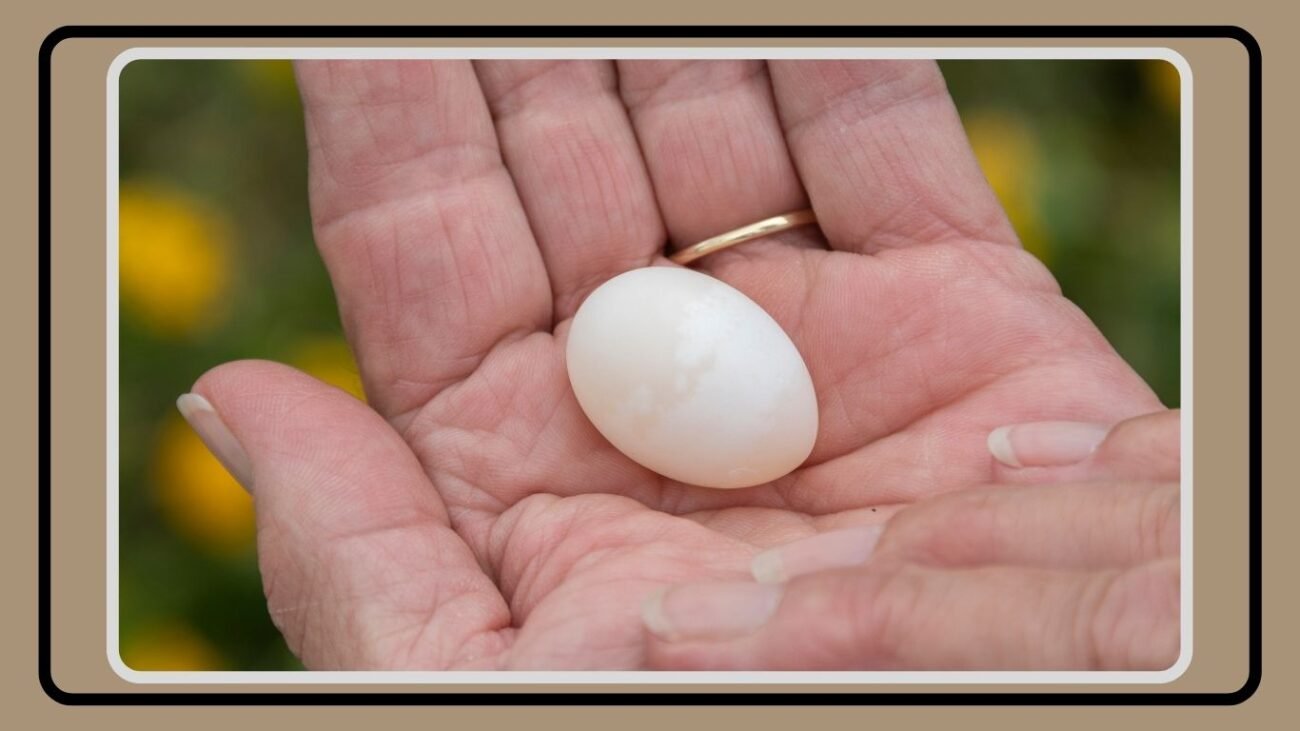
Mourning dove eggs are small, pure white, and delicate. These eggs are typically laid in pairs and are carefully incubated by both parents, showing the cooperative nature of these gentle birds.
Egg Appearance and Count
Mourning doves usually lay two eggs per clutch. The eggs are oval-shaped, smooth, and bright white in color. It’s rare to find a clutch with more than two eggs, as this species prefers to focus on fewer chicks with higher survival chances.
Incubation Period
The incubation period lasts about 14 days. Both the male and female take turns keeping the eggs warm. Males usually incubate during the day, while females take the night shift. This sharing of duty allows each parent time to rest and feed.
Hatching and Parental Care
- Eggs typically hatch at the same time
- Parents feed the chicks “crop milk,” a nutrient-rich secretion
- Both parents are actively involved in feeding and protecting the hatchlings
- The nest remains quiet and undisturbed during this stage to avoid attracting predators
Mourning Dove Baby (Squabs)
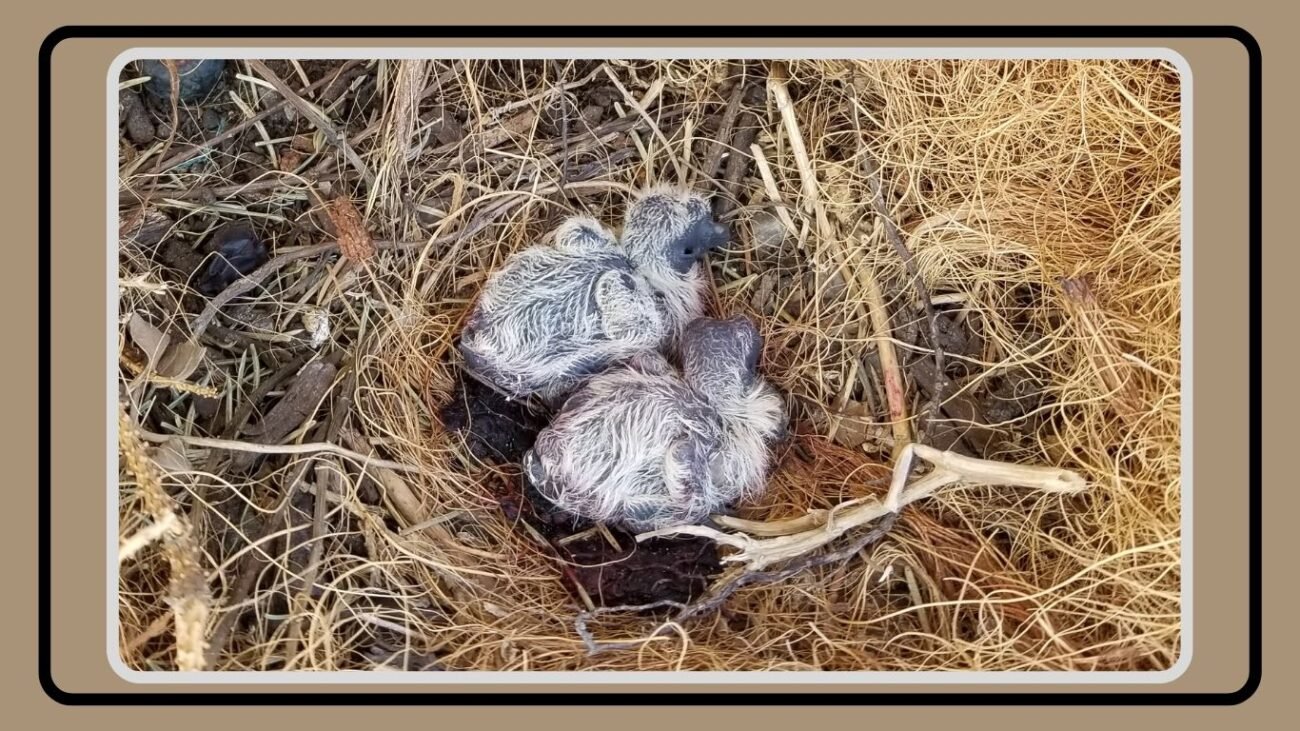
Mourning dove chicks, known as squabs, are born fragile and dependent. Within just a few weeks, they transform into strong, feathered juveniles ready to explore the world.
Appearance and Growth Stages
Newborn squabs are blind, featherless, and covered in sparse yellow down. Within a few days, their eyes open, and their bodies begin to grow quickly. By the end of the first week, pinfeathers appear, and they become more alert and active.
Feeding and Development
Parents feed the chicks crop milk for the first 4–5 days. Afterward, seeds are gradually introduced into their diet. Growth is rapid—by day 10, squabs resemble small adult doves. They strengthen their wings and begin fluttering near the nest.
Life After Fledging
- Fledging typically occurs between 12 and 15 days of age
- Young doves stay close to the nest for a few extra days
- Parents may continue feeding them briefly after fledging
- Squabs soon gain full independence and may leave the territory altogether
Mourning Dove Diet

Mourning doves are primarily seed eaters, and their peaceful feeding habits make them welcome visitors in gardens and open landscapes. Their diet changes slightly with the seasons and their life stage.
What Do Mourning Doves Eat in the Wild?
In the wild, mourning doves forage mostly on the ground. They eat a wide variety of seeds, including grass seeds, grains, sunflower seeds, millet, and corn. Occasionally, they may consume small insects or snails, especially during the breeding season when they need extra protein.
What to Feed Mourning Doves in Backyards
To attract mourning doves to your yard, offer a seed mix with plenty of millet, cracked corn, and sunflower seeds. Use ground feeders or low platform feeders, as they prefer flat, open spaces. Always provide clean, shallow water nearby for drinking and bathing.
Seasonal Diet Changes
- During spring and summer, they may consume more protein (like insects) for egg and chick development
- In fall and winter, they rely more on high-energy seeds and grains
- Doves adjust their foraging patterns depending on food availability and temperature
FAQs
How many eggs do mourning doves lay at a time?
Mourning doves typically lay two eggs per clutch. It’s rare for them to lay more than that, and this allows them to focus on nurturing both chicks equally.
How long do baby mourning doves stay in the nest?
Baby doves usually fledge between 12 and 15 days after hatching. However, they may remain nearby for a few days as they adjust to independence.
Do mourning doves reuse their nests?
Yes, mourning doves often reuse their old nests, sometimes even layering new twigs over an old base. A single nest may be used for multiple broods in one season.
Can you feed mourning doves at home?
Absolutely. You can offer them a seed mix rich in millet, sunflower seeds, and cracked corn using ground or low platform feeders. Always keep water available.
What do mourning doves feed their babies?
Parents feed their squabs “crop milk,” a nutrient-rich secretion from their crops. After a few days, they slowly introduce regurgitated seeds into the chicks’ diet.
Are mourning doves good for gardens?
Yes. Mourning doves help clean up fallen seeds and are peaceful birds that don’t disturb other wildlife. Their presence is often a sign of a calm and healthy environment.