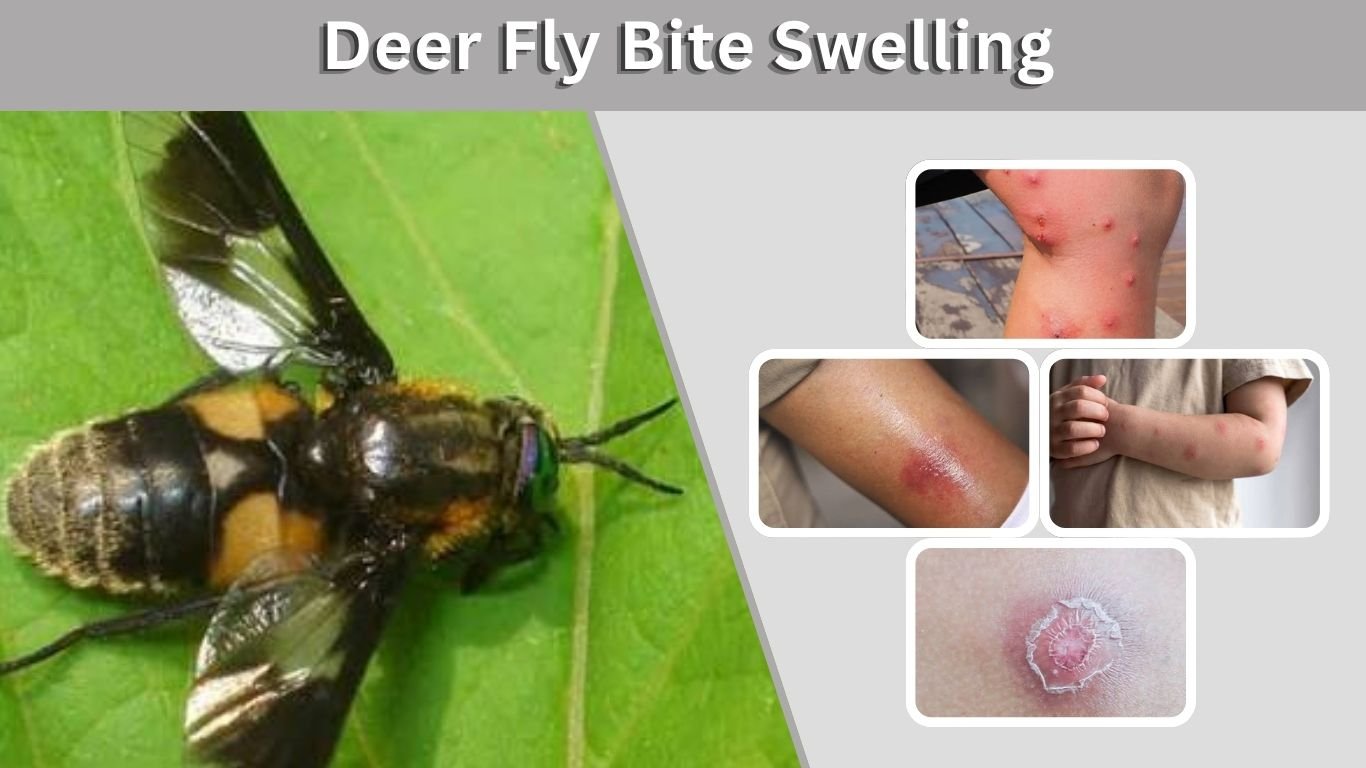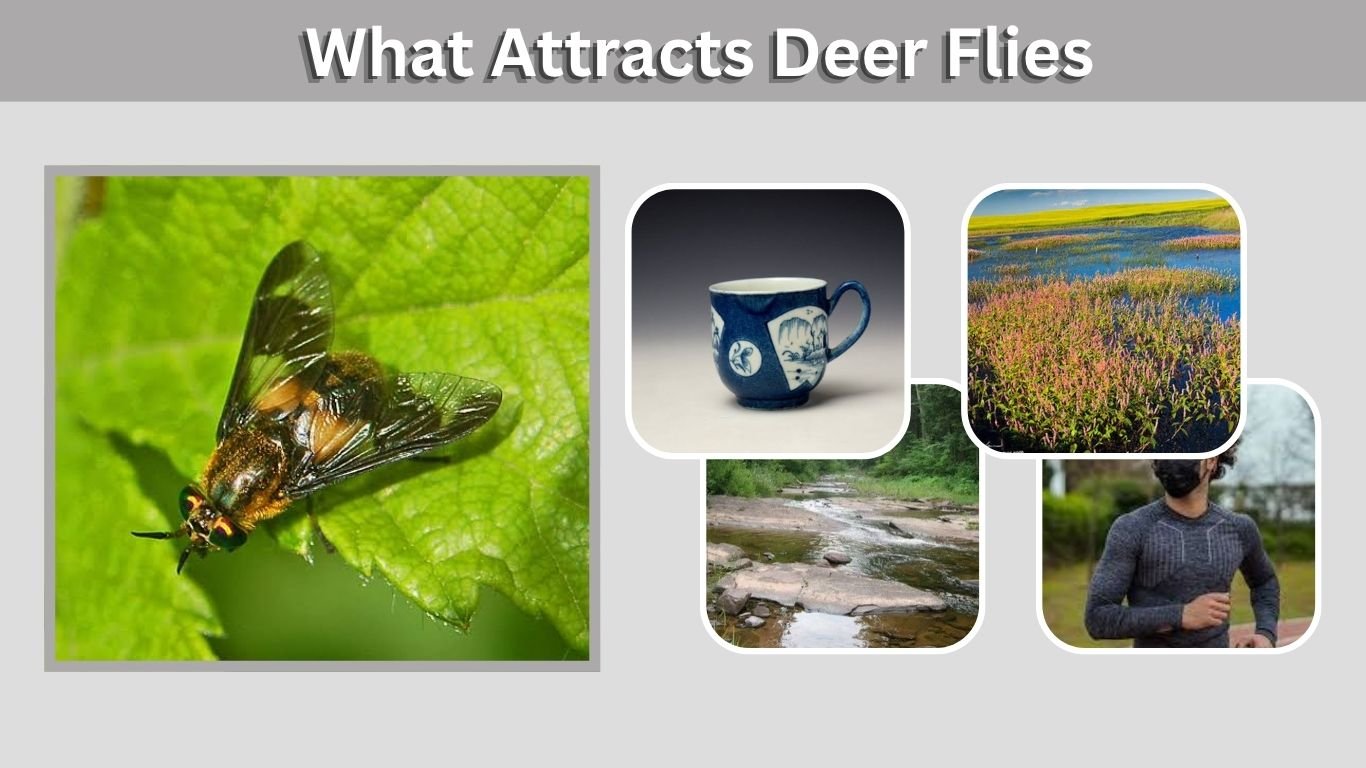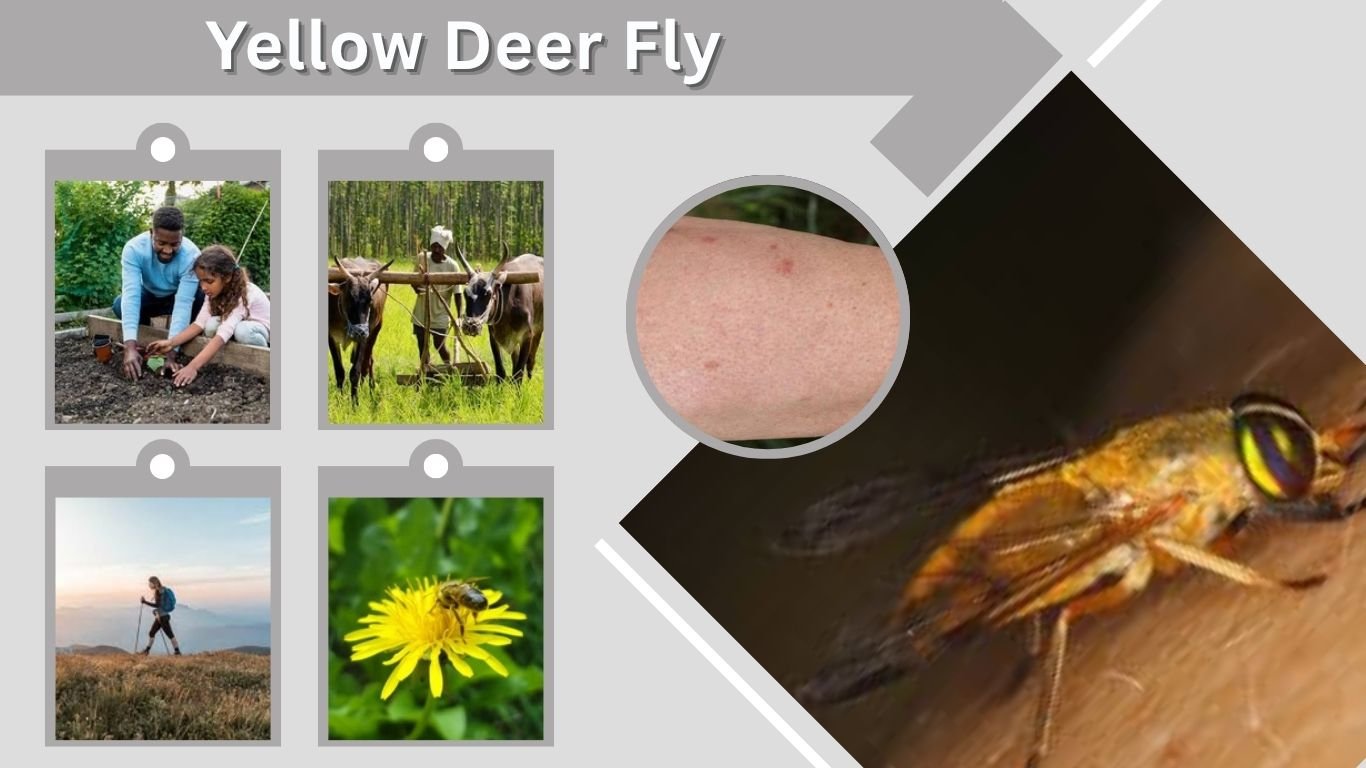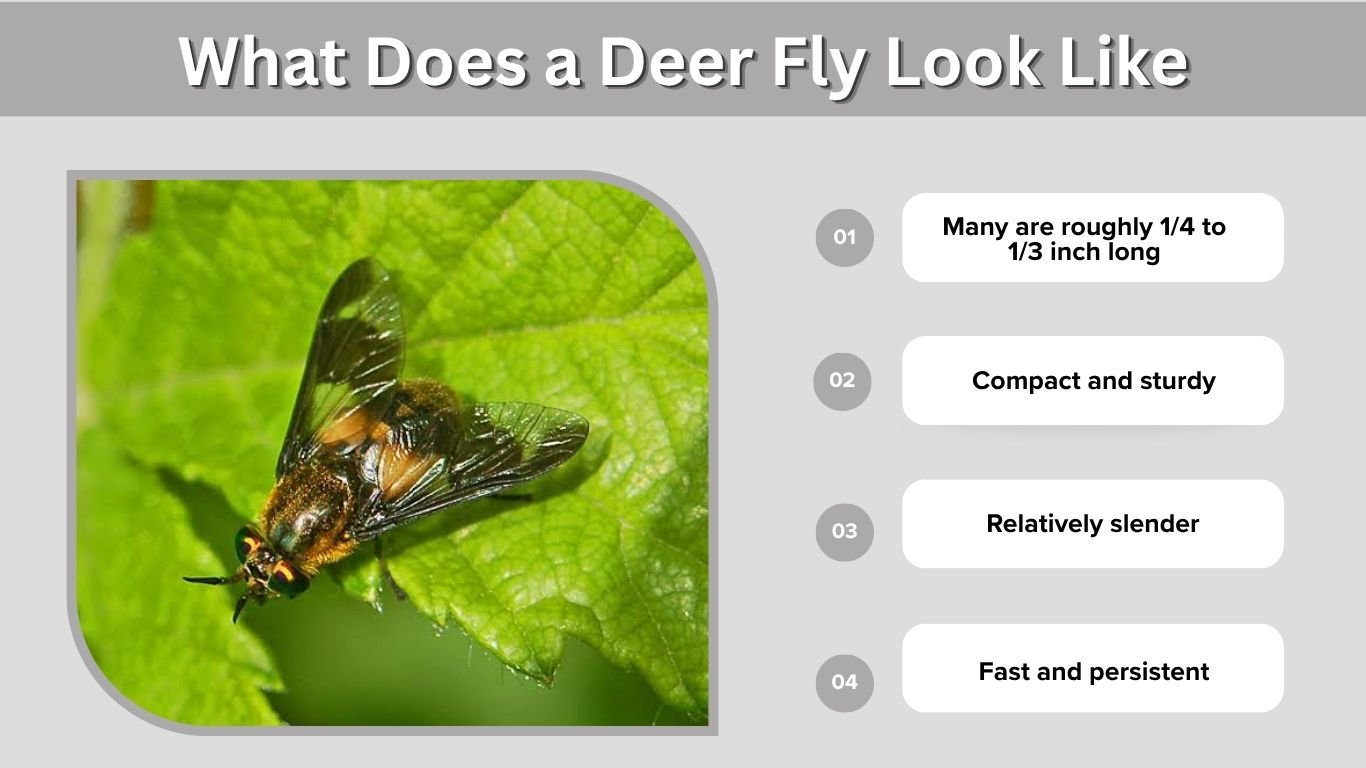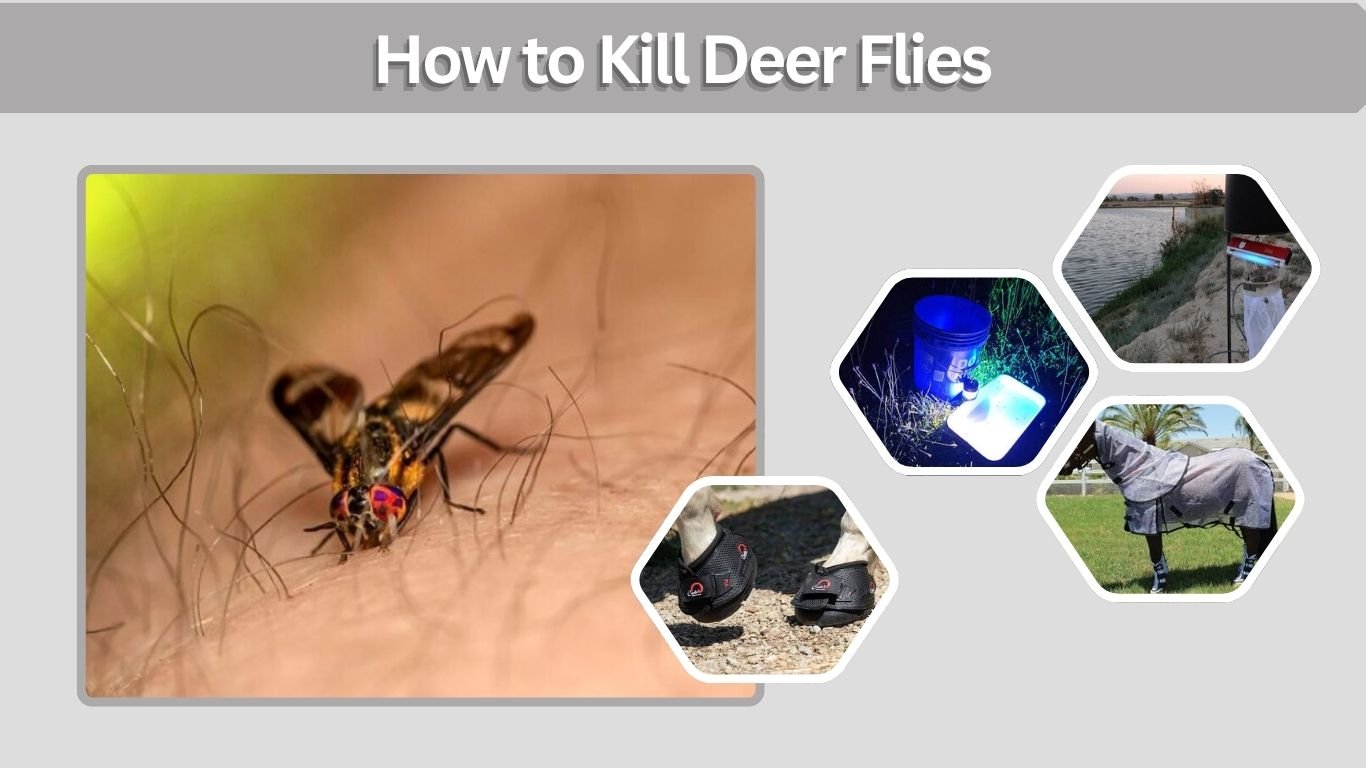
Deer flies are difficult to eliminate because they breed in wetlands, fly considerable distances, and spend little time resting where ordinary fly sprays can reach them. The most effective strategy combines visual traps, protective clothing, correctly labeled repellents, and changes to when and where you spend time outdoors. Broad spraying alone rarely provides lasting control, particularly when flies continually arrive from nearby marshes, ponds, streams, or wooded areas.
What Is the Best Way to Kill Deer Flies?
For most homes, farms, and outdoor work areas, a visual deer-fly trap is the best practical killing method. Deer flies locate hosts largely through sight, so effective traps imitate the dark shape and movement of a large animal.
| Control method | Effectiveness | Best use |
| Dark visual trap | High in a limited area | Yards, pastures and work areas |
| Swatter or electric racket | Good for individual flies | Immediate personal protection |
| Skin repellent | Variable, temporary | Hiking and outdoor activities |
| Permethrin-treated clothing | Protective barrier | Clothing and outdoor gear |
| Broad yard spraying | Usually limited | Only where specifically labeled |
| House-fly bait | Poor | Not recommended for deer flies |
| Bug zapper | Unreliable | May catch a few, not full control |
Why Are Deer Flies So Hard to Control?
Deer flies belong to the horse-fly family Tabanidae. Adult females feed on blood, while males generally obtain energy from plant sugars. The females are strong daytime fliers and may travel from wooded or marshy breeding areas to find people, livestock, pets, and wildlife.
Their immature stages develop in wet soil, mud, marshes, stream edges, and other aquatic or semi-aquatic environments. Treating these habitats is normally impractical and may damage fish, amphibians, pollinators, and other wildlife. Control is therefore focused mainly on intercepting or repelling adult flies.
1. Use a Visual Deer-Fly Trap
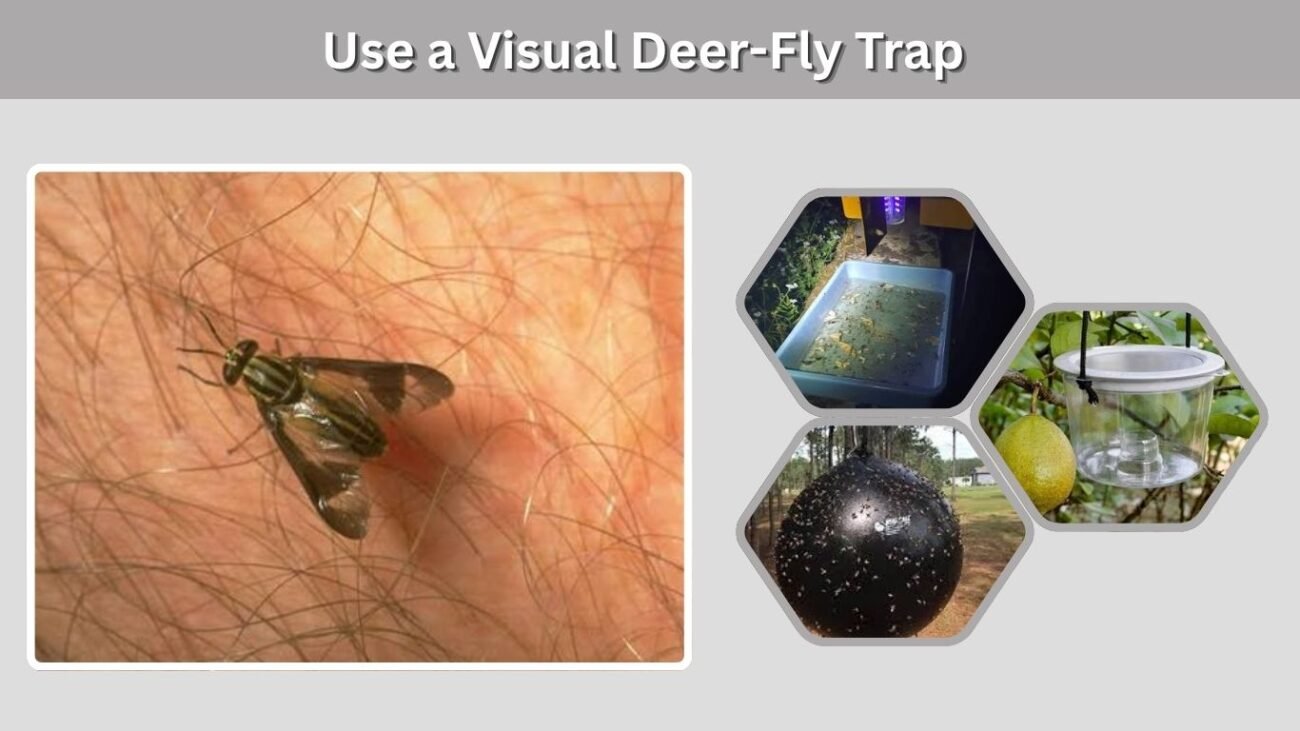
Specialized horse- and deer-fly traps are more effective than ordinary fly bait because they exploit the flies’ visual attraction to large, dark moving objects.
Common designs include:
- A suspended black ball beneath a funnel or canopy
- A large dark panel with soapy-water collection trays
- A dark box trap with an open bottom and screened top
- A dark moving target covered with insect-trapping adhesive
Place the trap in a sunny, open location where deer flies approach from woods, marshes, or water. Keep it away from doors, patios, play areas, and livestock handling points so the trap does not draw flies directly toward people or animals. Moving an unsuccessful trap by only a few yards can sometimes improve catches.
One properly positioned commercial-style trap may provide coverage across a limited area, but results depend heavily on fly density, habitat, visibility, and placement. Trapping becomes less practical across large properties because several traps may be required.
2. Kill Individual Deer Flies
A fly swatter or electric insect racket can quickly kill individual deer flies circling a person. Deer flies often circle the head and repeatedly return after being disturbed, which can provide an opportunity to strike them when they land.
Some hikers place a dark adhesive patch on the back of a hat because deer flies often attack the highest moving part of a person. Use only adhesive products designed for insect trapping, position them where hair and skin cannot touch them, and discard them safely after use.
Manual killing helps during short outdoor activities, but it will not control flies continually entering from surrounding habitat.
3. Wear Protective Clothing
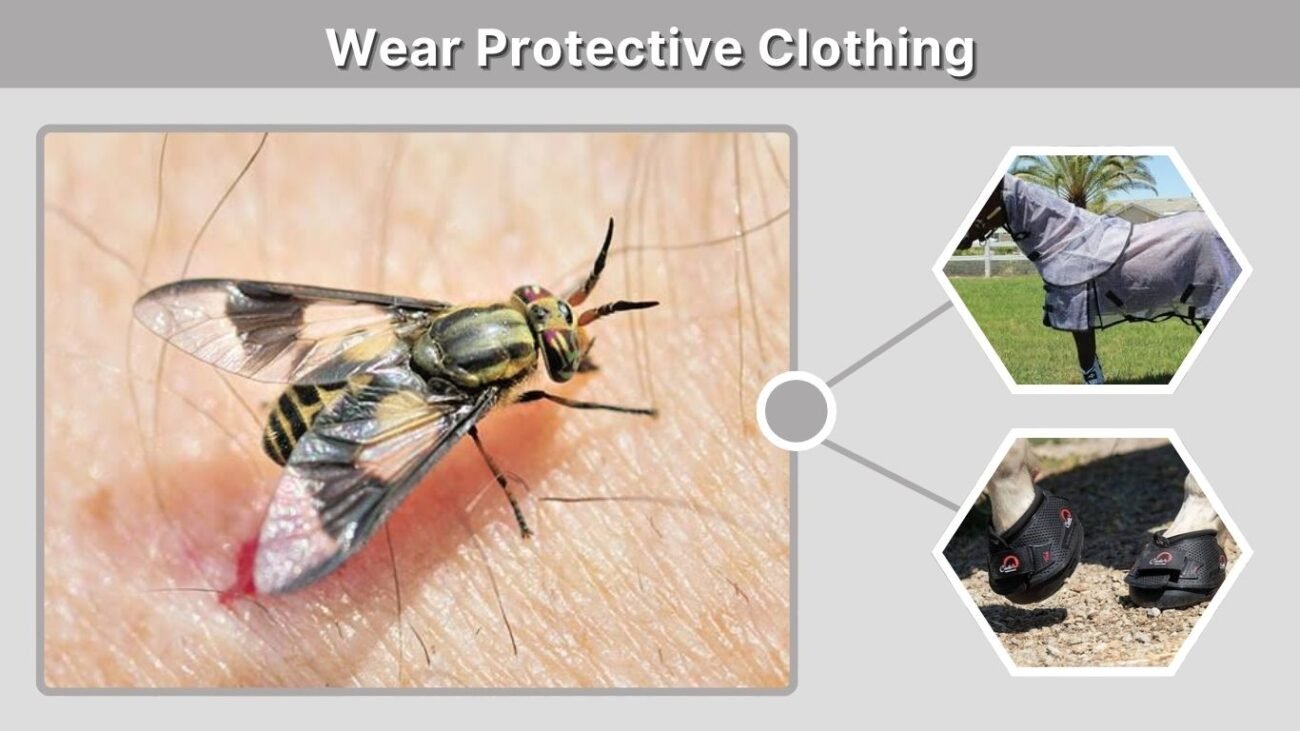
Physical barriers are often more dependable than trying to kill every fly. Wear long sleeves, long trousers, socks, closed shoes, and a hat when deer flies are abundant. The CDC recommends covering exposed skin to reduce deer-fly bites.
For livestock and horses, properly fitted fly masks, sheets, boots, and leggings can protect vulnerable areas. Deep shade or a screened shelter also provides relief because horse and deer flies are primarily active during daylight and tend to avoid deeply shaded areas.
4. Apply an EPA-Registered Repellent
Repellents may reduce deer-fly bites, but they do not necessarily kill the flies and may provide incomplete or temporary protection. Choose a product whose label specifically lists deer flies or biting flies.
EPA-registered skin repellents may contain:
- DEET
- Picaridin
- IR3535
- Oil of lemon eucalyptus or PMD
- 2-undecanone
The CDC recommends EPA-registered repellents when preventing deer-fly exposure, and EPA records include DEET products specifically labeled for deer flies. Always follow the application frequency and age restrictions printed on the product.
Do not apply repellent under clothing, around the eyes or mouth, over cuts, or in enclosed spaces. Spray the product onto your hands before applying it to the face.
Does Permethrin Kill Deer Flies?
Permethrin is an insecticide that can kill or repel many insects. For personal protection, it is commonly used on clothing and gear rather than directly on human skin. Factory-treated garments and consumer clothing-treatment products must be used according to their pesticide labels.
Permethrin-treated clothing can supplement a skin-applied repellent, but only the covered area is protected. Never assume that an agricultural, livestock, household, or landscape permethrin product is safe for clothing, skin, pets, or horses. The product label must authorize that exact use.
Do Bifenthrin, Malathion, Talstar, or Sevin Kill Deer Flies?
These names refer to insecticides or product brands, but their suitability depends on the current label, formulation, country, application site, and listed pest. A chemical that kills a deer fly upon direct contact may still be ineffective for long-term yard control because new adults can continually fly into the treated area.
Before using any pesticide:
- Confirm that deer flies, horse flies, or biting flies are listed on the label.
- Confirm that the intended location—such as vegetation, a building exterior, livestock facility, clothing, or animal—is permitted.
- Follow all mixing, application, re-entry, protective-equipment, and environmental instructions.
- Never apply a landscape or premise insecticide to human skin or an animal.
- Avoid contaminating ponds, streams, flowering plants, animal feed, and drinking water.
Fogging or repeatedly spraying an entire property may kill some exposed adults but usually gives short-lived results. Deer flies are mobile, and many spend limited time resting on treated surfaces.
Do Bug Zappers Kill Deer Flies?
A bug zapper may kill an occasional deer fly, but it is not considered a dependable primary control method. Deer flies use visual cues associated with large moving hosts, which is why dark-ball, panel, and box traps are specifically designed for them. It is reasonable to infer that a general ultraviolet light trap will be less targeted than a trap designed around their host-seeking behavior.
House-fly jug traps, scatter baits, and similar food-based traps are also generally ineffective against horse and deer flies.
How to Kill Deer Flies Outside Naturally
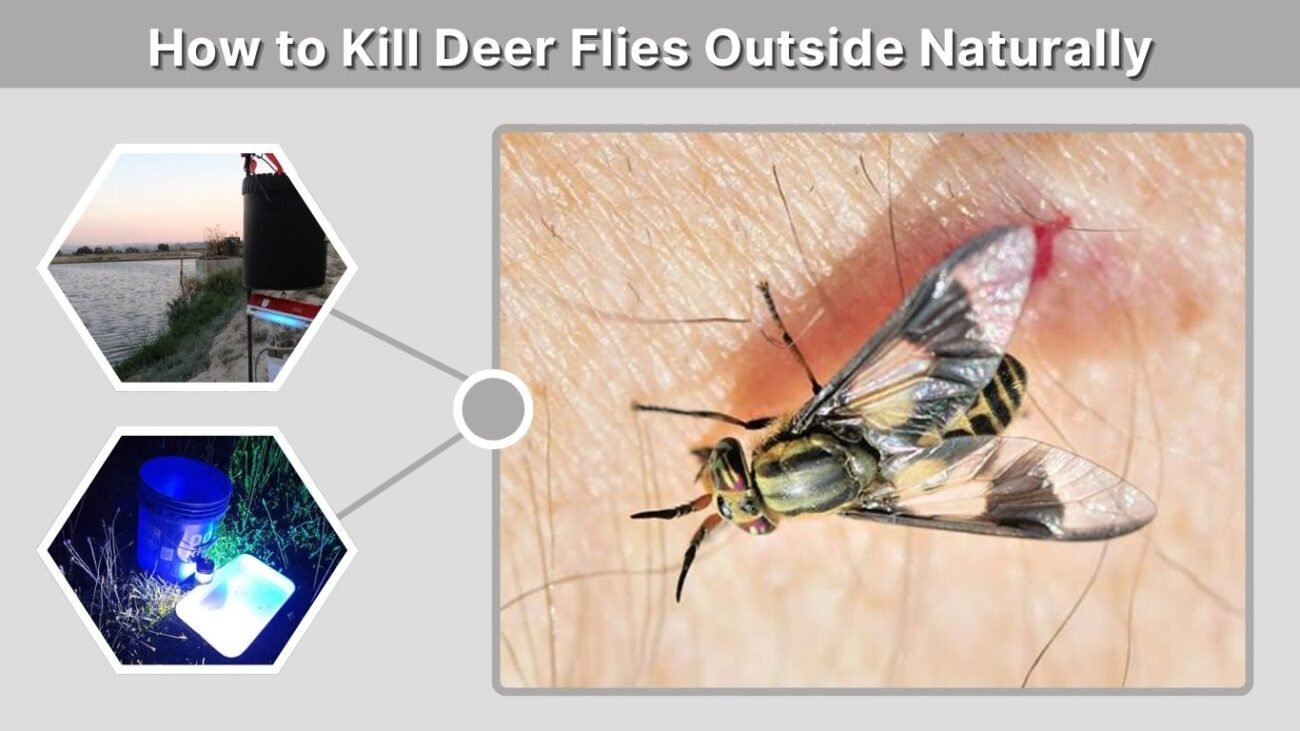
A pesticide-free approach should focus on trapping and avoiding exposure:
- Place dark visual traps between activity areas and nearby woods or wetlands.
- Use screened porches, sheds, barns, or shelters.
- Work outdoors during cooler or less active periods when possible.
- Wear long, tightly woven clothing.
- Use fans around small patios or workstations.
- Move animals into deep shade or shelter during severe daytime activity.
Draining natural wetlands or applying homemade chemicals to water is not recommended. Deer-fly breeding habitats support many beneficial species, and unauthorized treatments can create environmental and legal problems.
Can Deer Flies or Horse Flies Kill You?
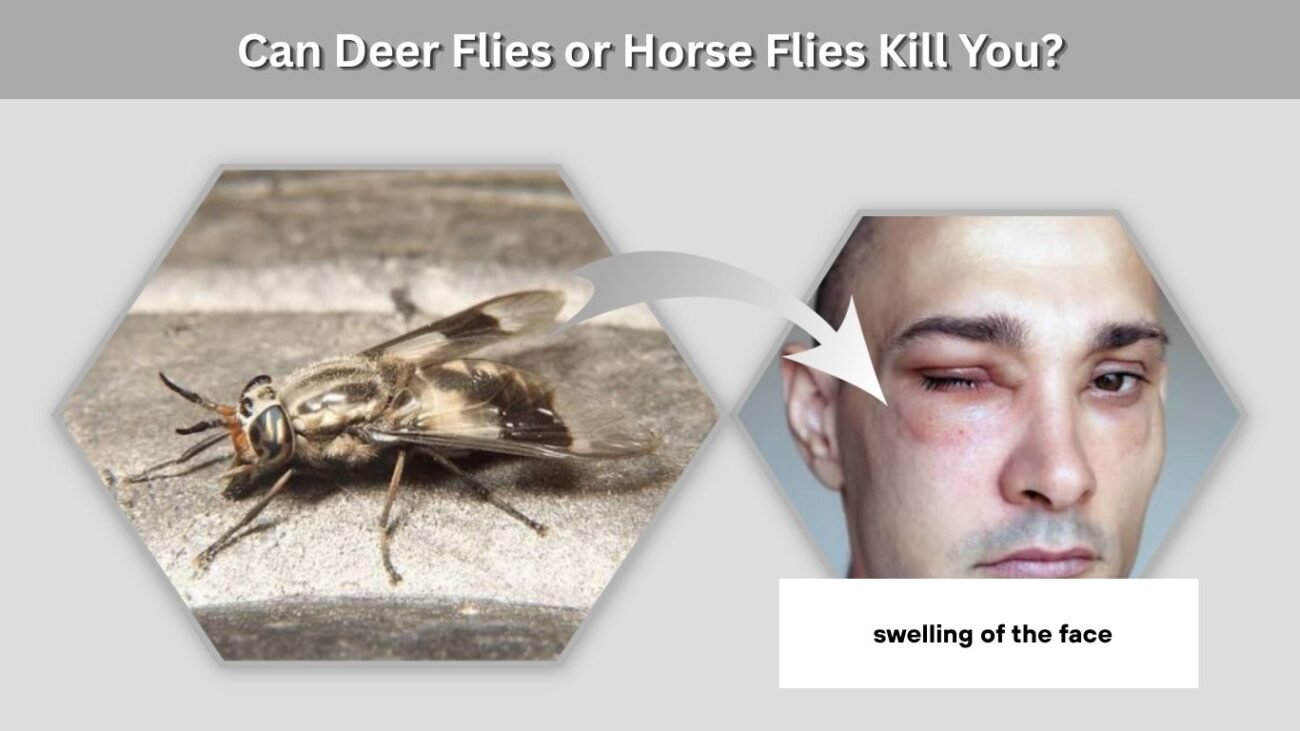
A typical deer-fly or horse-fly bite is painful but not fatal. However, any insect bite can occasionally trigger a severe allergic reaction. Difficulty breathing, fainting, widespread hives, trouble swallowing, or swelling of the face, mouth, tongue, or throat requires immediate emergency care.
In the United States, deer flies can transmit tularemia in some regions, particularly in the West. The disease is rare but potentially serious and may cause fever, swollen lymph nodes, and an ulcer near the bite. Seek medical advice when illness develops after a deer-fly bite.
How to Treat a Deer-Fly Bite
Wash the area with soap and water, apply a cloth-wrapped cold pack, and avoid scratching. Medical advice is appropriate when redness spreads, swelling becomes severe, pus develops, pain worsens, or fever and swollen lymph nodes appear. Severe allergic symptoms require emergency treatment.
FAQs
What is the fastest way to kill a deer fly?
Use a swatter or electric racket for one fly. For repeated outdoor problems, install a dark visual trap along the flight path between the activity area and nearby woods, marshes, or water.
What kills deer flies outside?
Purpose-built dark-ball, panel, and box traps can capture and kill adults. A pesticide should only be used when its current label specifically permits deer-fly control at the intended site.
What spray kills deer flies?
Some registered repellents and insecticides list deer flies or biting flies on their labels. The active ingredient alone does not guarantee suitability, so check the pest list, application site, and safety directions.
Can you kill deer-fly larvae?
Direct larval control is rarely practical because larvae develop in wet soil and aquatic habitats. Treating wetlands may harm non-target organisms, so control normally targets adults instead.
What is the best deer-fly killer?
A correctly positioned visual deer-fly trap is usually the best non-chemical option for a limited outdoor area. Combine it with protective clothing, shelter, and a labeled repellent for better protection.