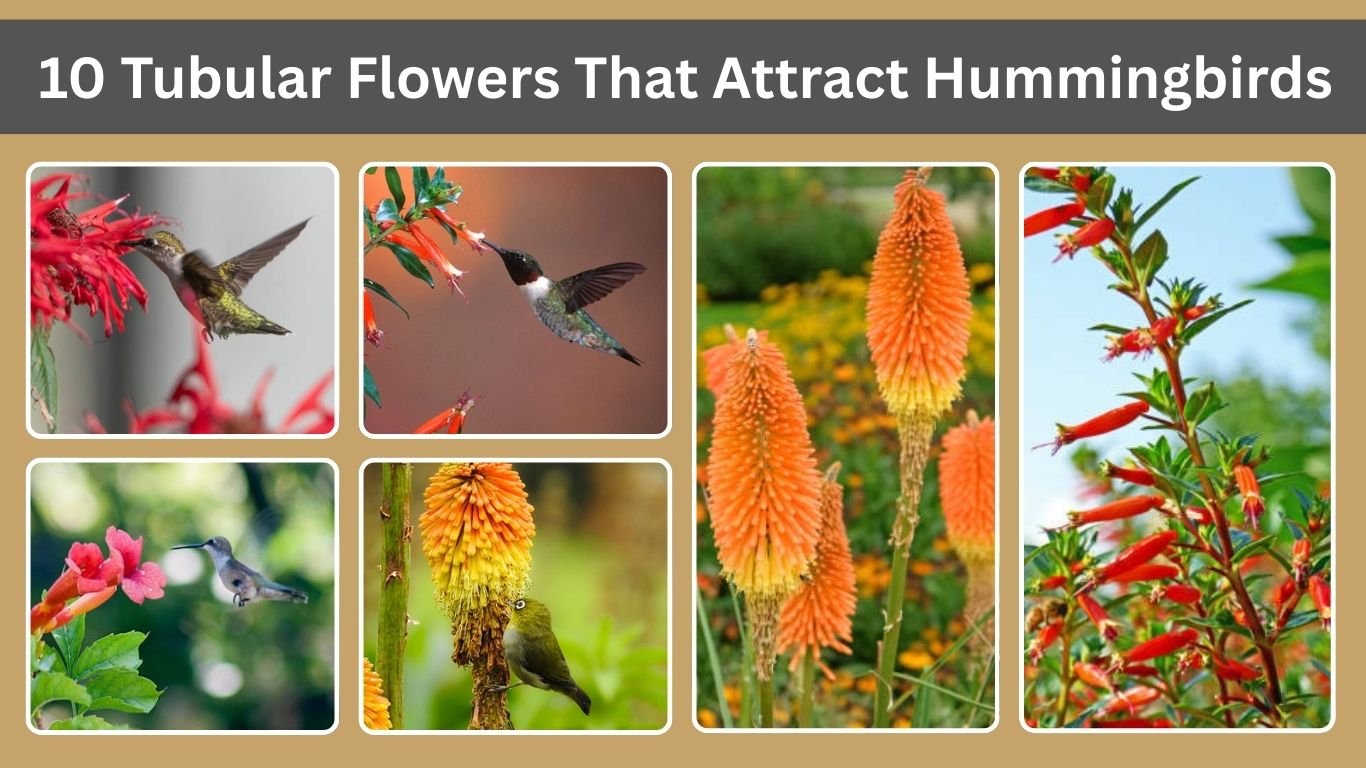
Hummingbirds are naturally drawn to tubular flowers because their long beaks and tongues are perfectly adapted to sip nectar deep inside these blossoms. Planting tubular flowers in your garden not only adds bursts of vibrant color but also ensures a steady stream of hummingbird visitors. From vines to perennials, these blooms provide beauty, charm, and essential nourishment for these fascinating birds throughout the growing season.
1. Trumpet Vine
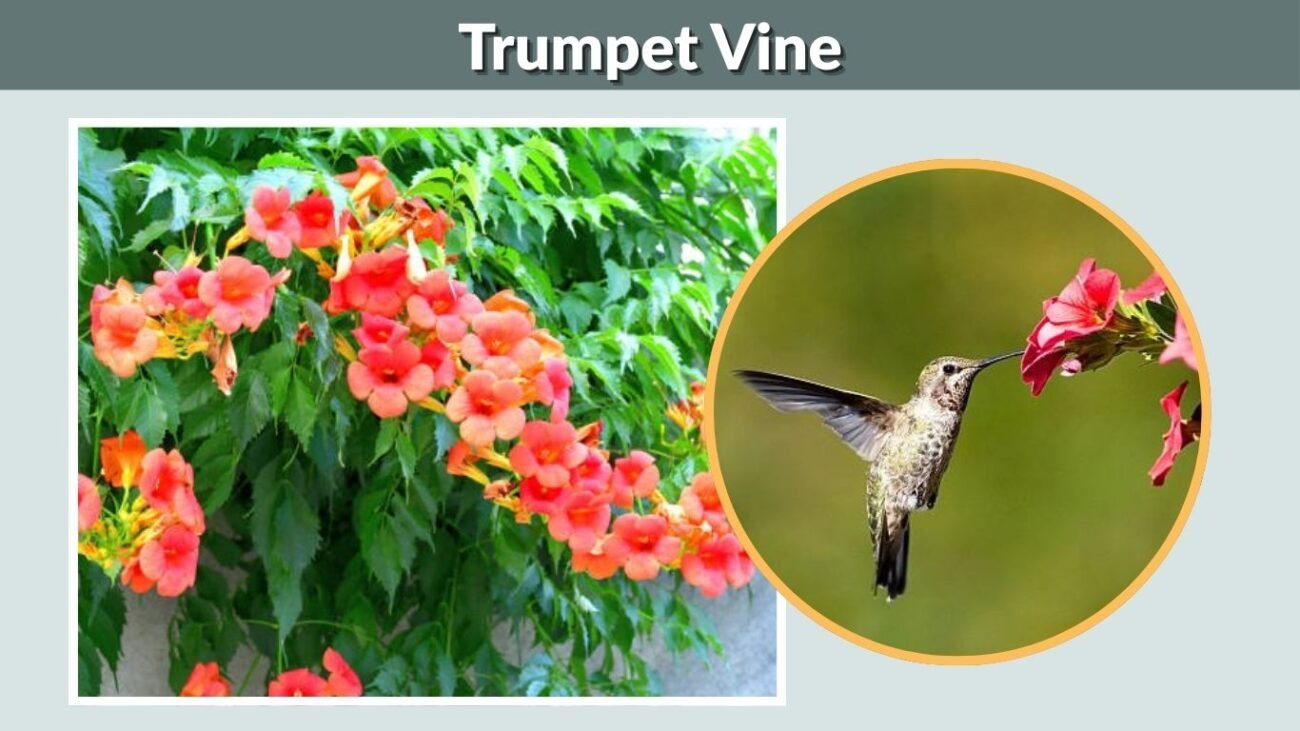
Trumpet Vine, also known as Campsis radicans, is one of the most striking tubular flowers for attracting hummingbirds. Its large, trumpet-shaped blossoms are rich in nectar and perfectly designed for hummingbird feeding. The vigorous growth and vibrant colors make it a standout addition to any garden.
Identification
- Large, trumpet-shaped flowers in orange to red hues
- Woody, fast-growing climbing vine with compound leaves
- Can reach 20–40 feet with proper support
Habitat
Trumpet Vine thrives in full sun but tolerates partial shade. It prefers well-drained soil and grows vigorously on trellises, fences, or walls.
Blooming Season
This plant blooms from mid-summer to early fall, providing a reliable nectar source during peak hummingbird activity.
Role in Attracting Hummingbirds
The tubular shape and vivid color of Trumpet Vine flowers are highly attractive to hummingbirds. Their nectar-rich blooms keep the birds visiting repeatedly, making it one of the best choices for wildlife gardens.
2. Coral Honeysuckle
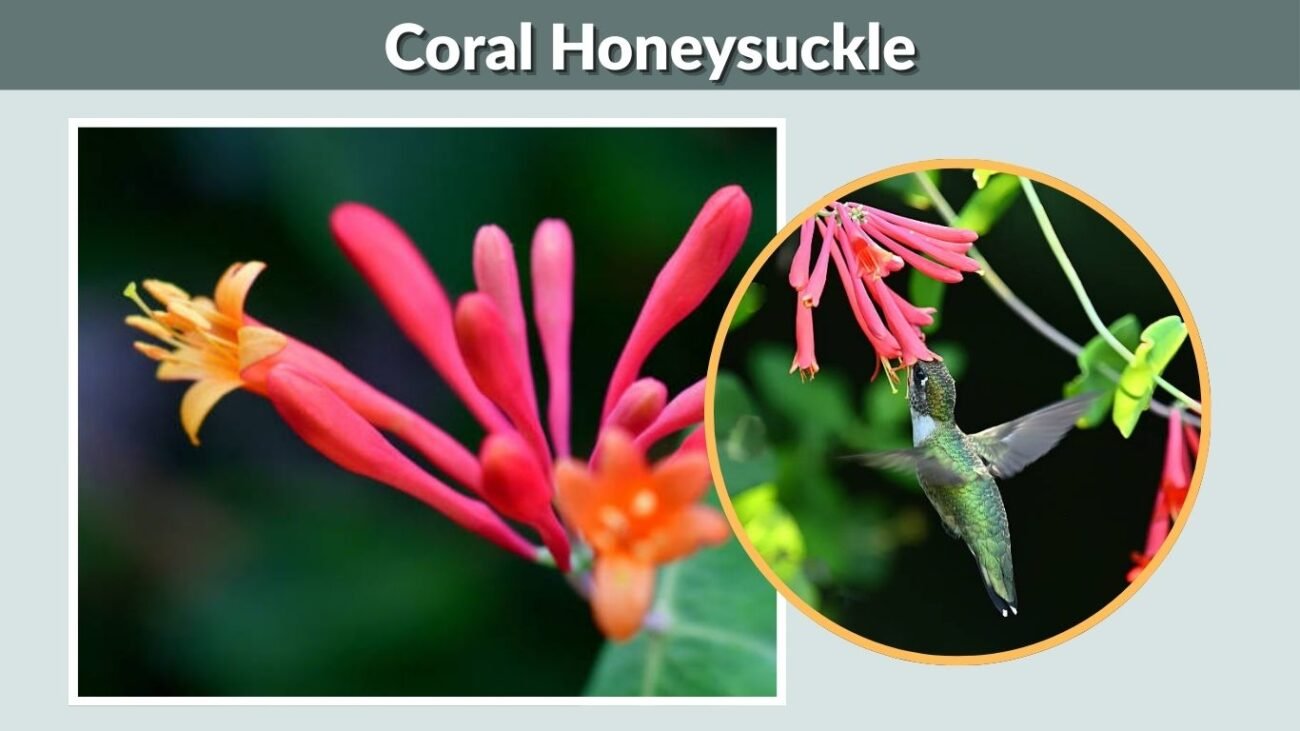
Coral Honeysuckle (Lonicera sempervirens) is a native climbing vine admired for its clusters of tubular, coral-red flowers. Unlike invasive honeysuckle species, this one is well-behaved and highly beneficial for wildlife, especially hummingbirds that find its blooms irresistible.
Identification
- Slender, tubular flowers in coral-red with yellow throats
- Semi-evergreen vine with smooth, paired leaves
- Can climb 10–20 feet with support
Habitat
Coral Honeysuckle thrives in full sun to partial shade and adapts to various soil types, provided they are well-drained. It works well on fences, trellises, or arbors.
Blooming Season
It begins blooming in spring and continues into summer, with scattered blooms even into fall in warmer regions.
Role in Attracting Hummingbirds
The vibrant tubular flowers produce abundant nectar, making them a consistent food source for hummingbirds. Their climbing growth habit also creates natural feeding stations at various heights.
3. Salvia
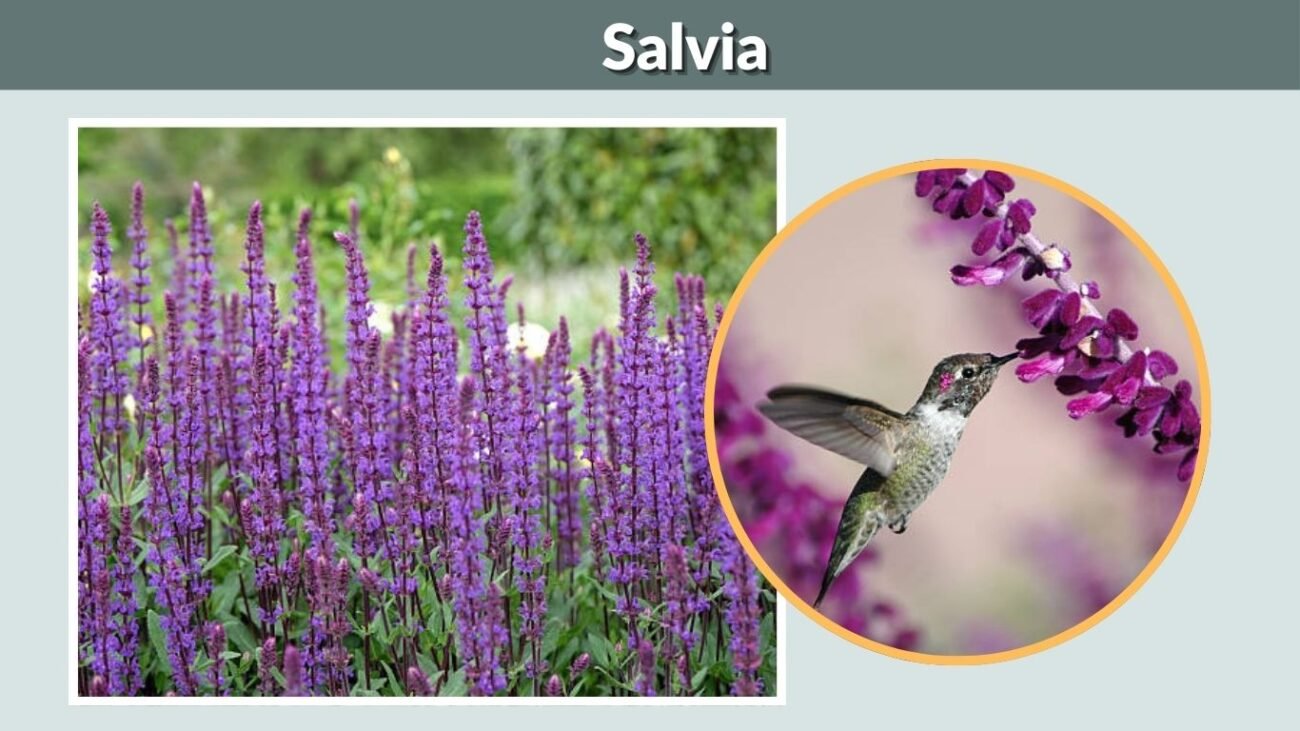
Salvia, commonly called sage, is a favorite among gardeners and hummingbirds alike. With its spikes of tubular flowers in bold colors, it not only adds beauty to gardens but also provides a steady nectar supply. Its long bloom time ensures hummingbirds return again and again.
Identification
- Tall spikes of tubular flowers in red, purple, pink, or blue
- Square stems with aromatic, lance-shaped leaves
- Grows 1–4 feet tall, depending on the variety
Habitat
Salvia thrives in full sun and well-drained soil. It tolerates drought once established, making it an excellent low-maintenance choice for hummingbird gardens.
Blooming Season
Depending on the variety, Salvia blooms from late spring through fall, offering nectar throughout the hummingbird season.
Role in Attracting Hummingbirds
The bright tubular flowers of Salvia are perfectly shaped for hummingbird feeding. Their long blooming period ensures the birds always find a reliable food source.
4. Penstemon
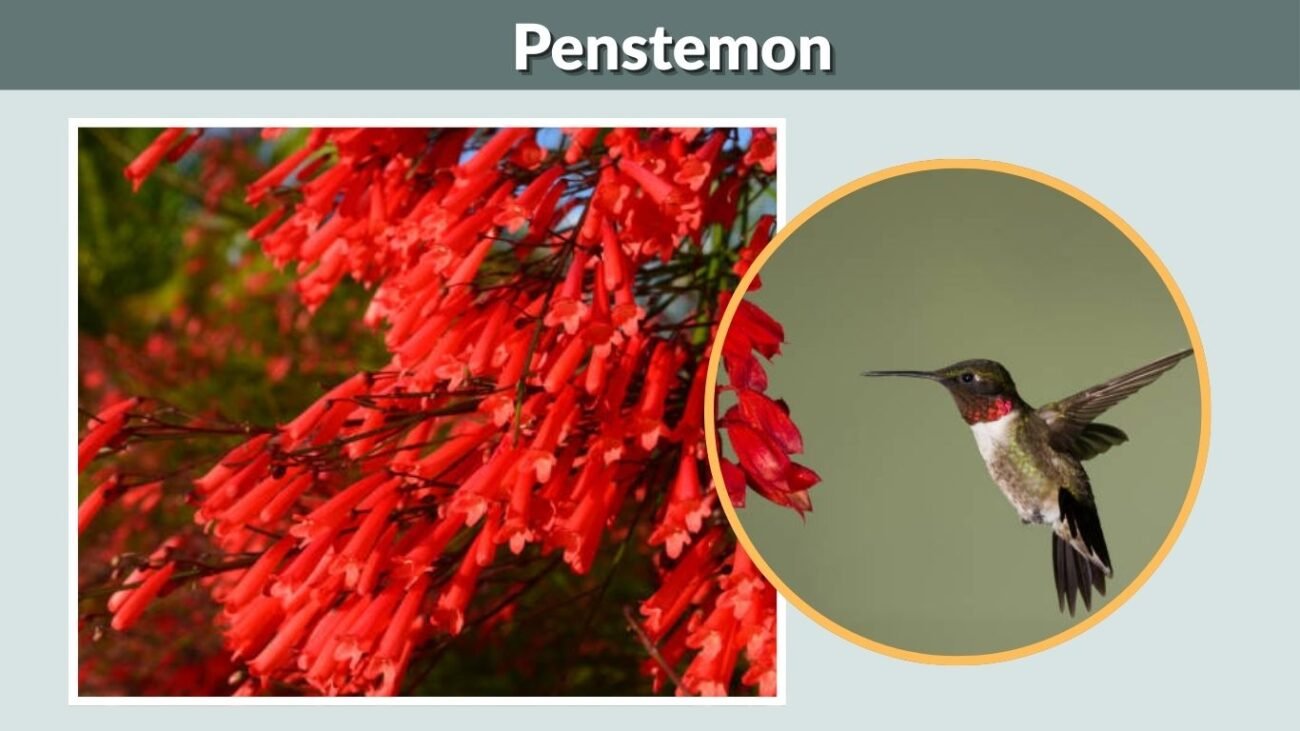
Penstemon, often called beardtongue, is a perennial known for its showy spikes of tubular flowers. Its blossoms resemble tiny trumpets, making them an ideal nectar source for hummingbirds. With a wide variety of colors, Penstemon adds charm and diversity to gardens.
Identification
- Clusters of tubular, trumpet-like flowers in red, pink, purple, or blue
- Narrow, lance-shaped leaves growing along upright stems
- Typically grows 1–3 feet tall
Habitat
Penstemon prefers full sun and well-drained soil, thriving in dry or rocky areas. It is drought-tolerant and works well in pollinator-friendly or xeriscape gardens.
Blooming Season
It blooms from late spring through summer, producing nectar when hummingbirds are most active.
Role in Attracting Hummingbirds
The colorful, tubular flowers of Penstemon are irresistible to hummingbirds, providing them with abundant nectar and encouraging frequent visits to the garden.
5. Bee Balm
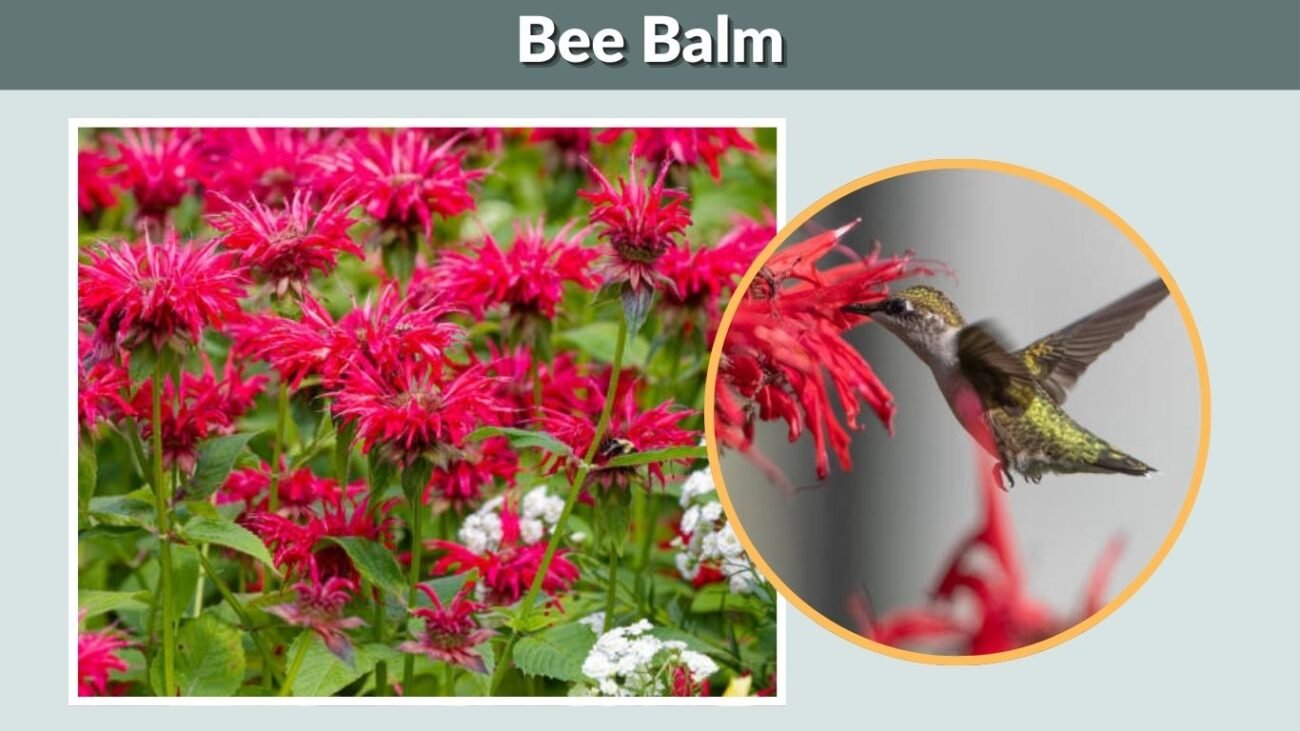
Bee Balm (Monarda) is a striking perennial with clusters of brightly colored, tubular flowers that draw in hummingbirds, butterflies, and bees. Its fragrant foliage and vibrant blooms make it a staple in pollinator gardens, adding both beauty and ecological value.
Identification
- Spiky clusters of tubular flowers in red, pink, purple, or white
- Aromatic, lance-shaped leaves often used in herbal teas
- Grows 2–4 feet tall with upright stems
Habitat
Bee Balm thrives in full sun to partial shade and prefers moist, well-drained soil. It spreads easily, making it great for naturalized or cottage-style gardens.
Blooming Season
It blooms in mid to late summer, offering nectar during peak hummingbird feeding times.
Role in Attracting Hummingbirds
The tubular flowers are perfectly shaped for hummingbird feeding, and their bold colors act as a beacon. Once established, Bee Balm becomes a reliable nectar source every summer.
6. Cardinal Flower
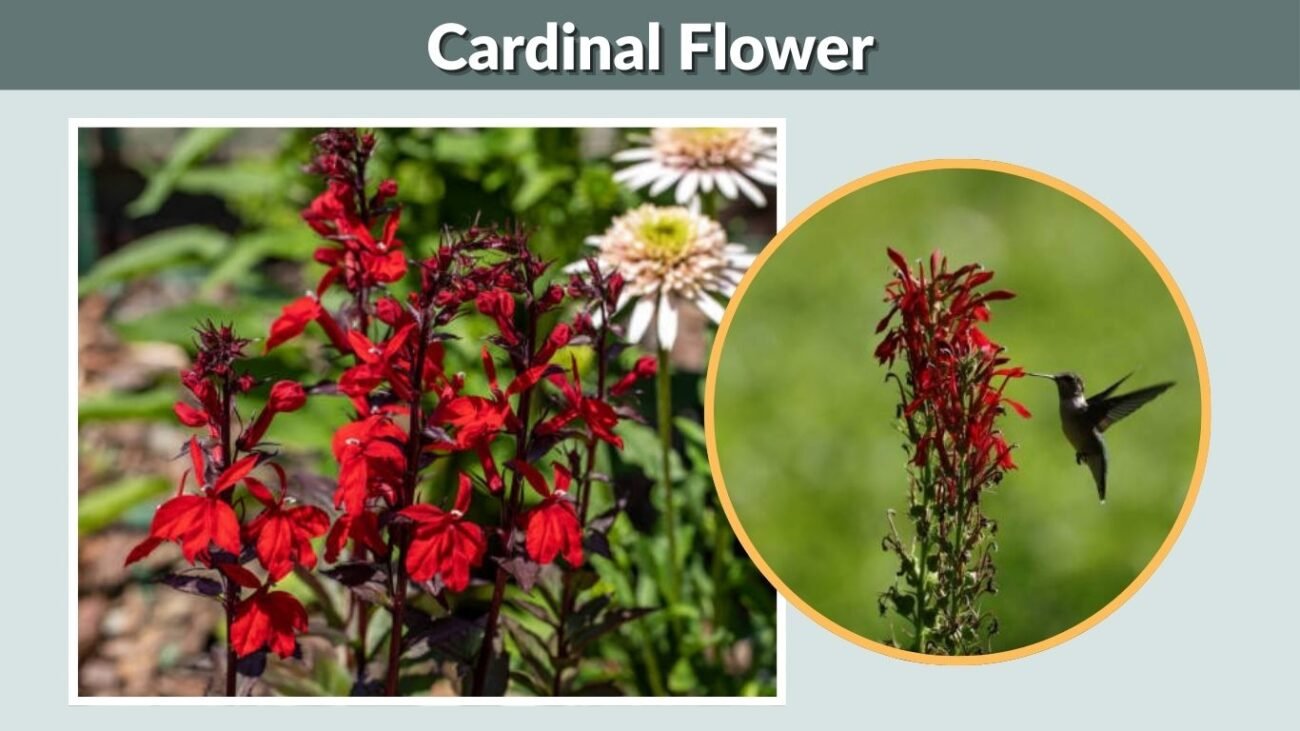
Cardinal Flower (Lobelia cardinalis) is a stunning perennial that produces brilliant red tubular flowers, highly favored by hummingbirds. Its striking color and vertical spikes make it an eye-catching centerpiece in any garden.
Identification
- Bright red, tubular flowers arranged on tall spikes
- Lance-shaped, dark green leaves along upright stems
- Typically grows 2–4 feet tall
Habitat
Cardinal Flower prefers moist, rich soil and thrives in full sun to partial shade. It often grows near streams, ponds, or wet meadows, making it suitable for rain gardens.
Blooming Season
It blooms in mid to late summer, aligning with peak hummingbird activity.
Role in Attracting Hummingbirds
The vivid red color and tubular structure of the flowers are magnets for hummingbirds, ensuring regular visits during the blooming season.
7. Trumpet Creeper
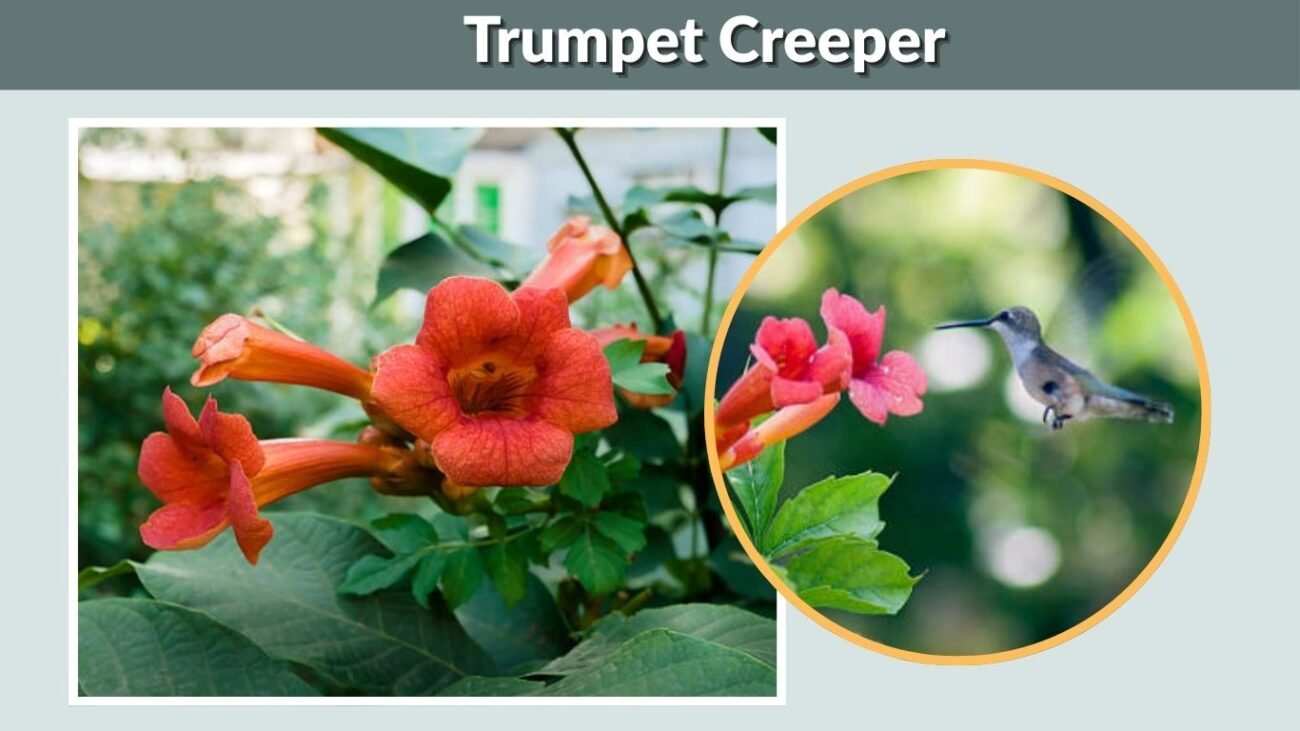
Trumpet Creeper (Campsis radicans) is a vigorous climbing vine known for its bold, trumpet-shaped flowers. Its bright blossoms are not only visually stunning but also provide abundant nectar that hummingbirds can’t resist.
Identification
- Large, trumpet-shaped flowers in shades of orange to red
- Woody vine with pinnate leaves composed of 7–11 leaflets
- Can grow 30–40 feet with strong support
Habitat
Trumpet Creeper thrives in full sun and well-drained soil. It can adapt to various conditions but needs space due to its rapid growth and spreading nature.
Blooming Season
This plant blooms from mid-summer into early fall, providing nectar during the peak hummingbird season.
Role in Attracting Hummingbirds
The large, tubular flowers are perfectly suited for hummingbird feeding. Their nectar-rich blooms and climbing growth habit create a natural feeding station at different heights.
8. Red Hot Poker (Torch Lily)
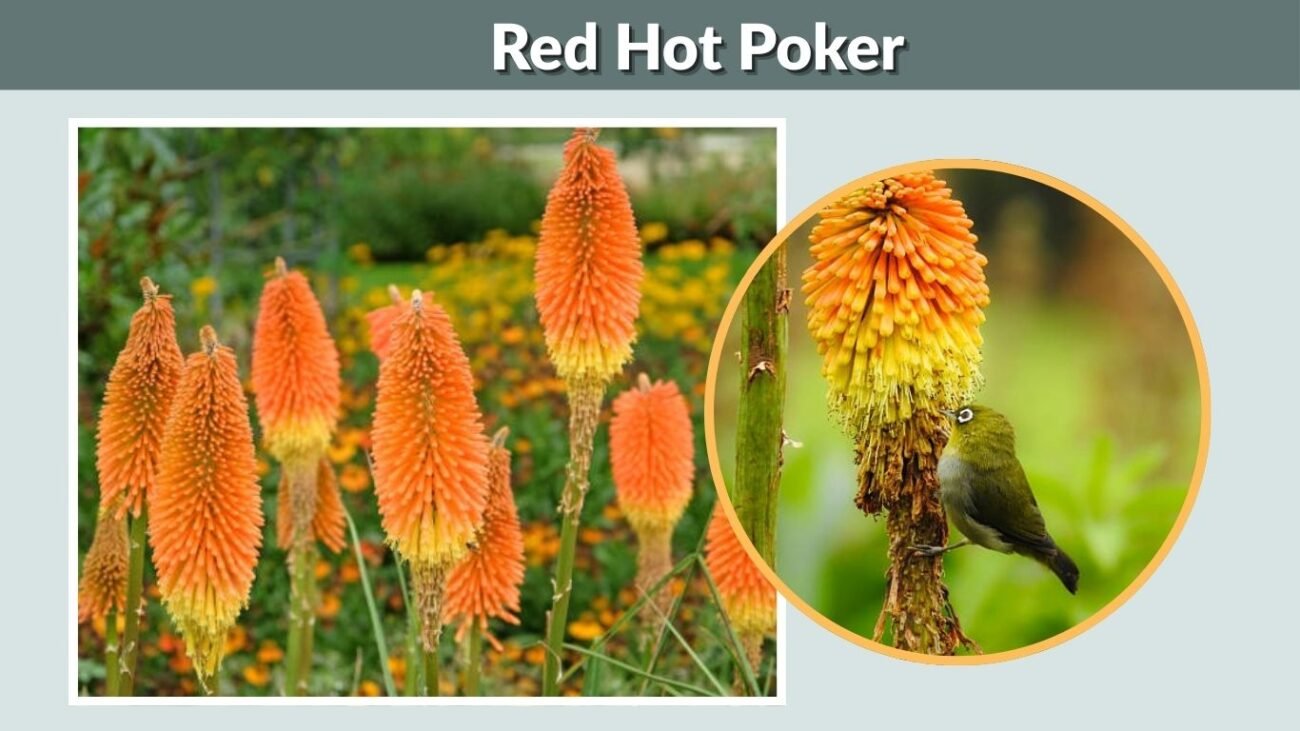
Red Hot Poker (Kniphofia) is a striking perennial that produces tall spikes of tubular flowers resembling fiery torches. Its dramatic blooms and nectar-rich flowers make it a favorite for both gardeners and hummingbirds.
Identification
- Dense spikes of tubular flowers in red, orange, and yellow hues
- Long, grass-like leaves forming clumps at the base
- Typically grows 2–5 feet tall, depending on the variety
Habitat
Red Hot Poker thrives in full sun with well-drained soil. It is drought-tolerant once established and works well in borders or as a focal point in gardens.
Blooming Season
It blooms from late spring to early fall, with peak flowering in summer, ensuring a long nectar supply.
Role in Attracting Hummingbirds
The tall spikes and tubular structure of Red Hot Poker flowers are highly attractive to hummingbirds, offering abundant nectar throughout the blooming season.
9. Columbine
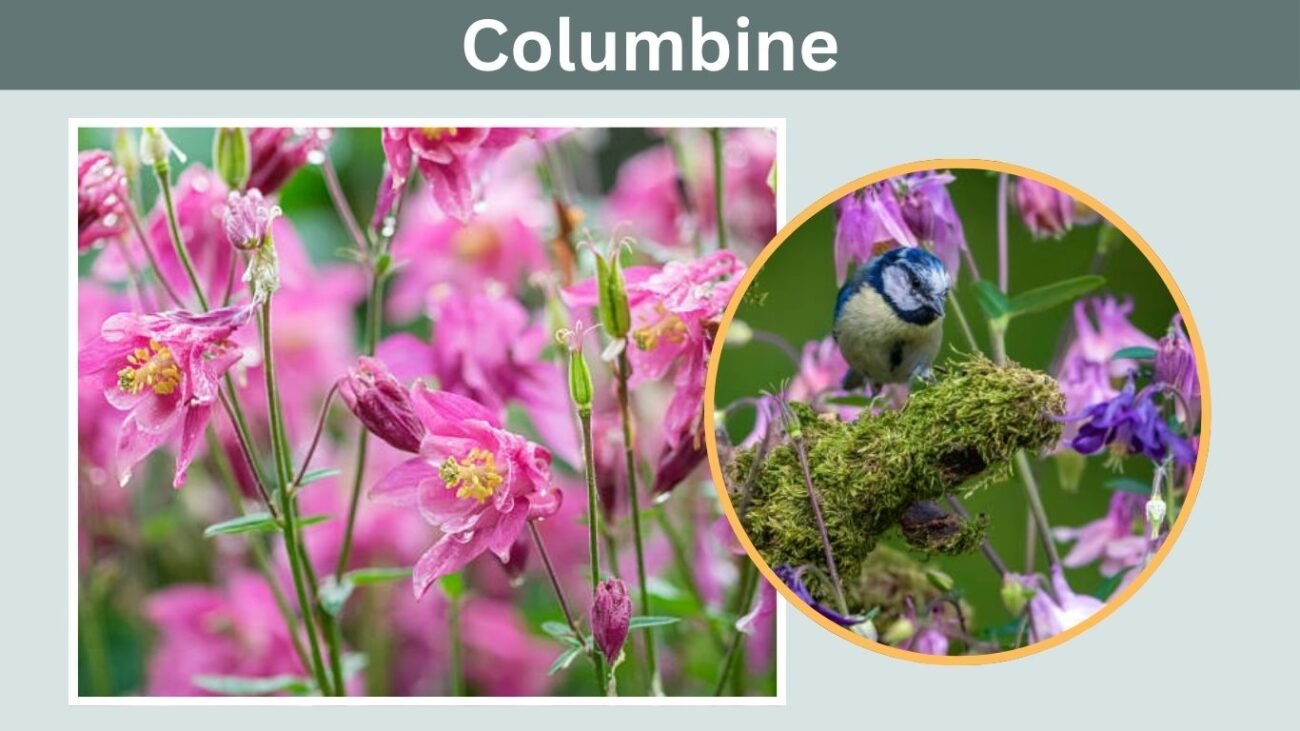
Columbine (Aquilegia) is a delicate perennial that produces uniquely shaped tubular flowers with spurred petals. Its colorful blossoms provide an early nectar source for hummingbirds in spring gardens.
Identification
- Distinctive bell-shaped flowers with long spurs
- Colors range from red, yellow, blue, purple, to white
- Grows 1–3 feet tall with airy, fern-like foliage
Habitat
Columbine thrives in partial shade and well-drained soil, often found in woodland gardens and meadows. It adapts well to cooler climates and naturalized areas.
Blooming Season
It blooms in mid to late spring, offering nectar early in the hummingbird season.
Role in Attracting Hummingbirds
The tubular, nectar-rich flowers are perfectly designed for hummingbirds, providing an essential food source during their spring migration.
10. Cuphea (Cigar Plant)
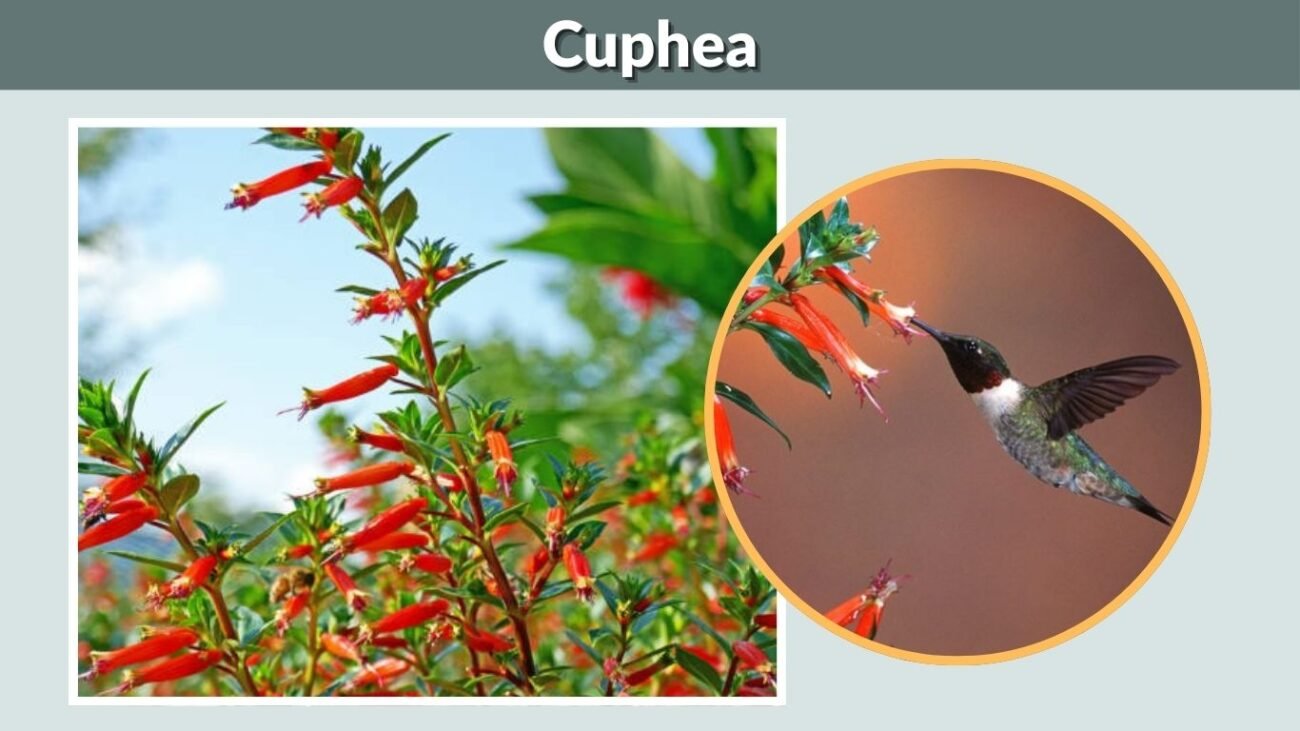
Cuphea, commonly known as Cigar Plant, is a compact flowering plant with numerous small tubular blooms. Its continuous flowering and bright colors make it an excellent choice for attracting hummingbirds to gardens and containers.
Identification
- Small, tubular flowers resembling little cigars, usually red with purple or white tips
- Dense, bushy growth habit with glossy green leaves
- Grows 1–3 feet tall, depending on the variety
Habitat
Cuphea thrives in full sun to partial shade and prefers well-drained soil. It does well in garden beds, borders, or hanging baskets, making it versatile for different settings.
Blooming Season
It blooms from spring through fall, providing a long-lasting nectar source for hummingbirds.
Role in Attracting Hummingbirds
The cigar-shaped tubular flowers are filled with nectar, ensuring frequent hummingbird visits throughout the season. Its long blooming period makes it a reliable food source.