Army ants are some of the most fascinating and formidable insects in the natural world. Known for their nomadic lifestyles, massive colonies, and coordinated hunting raids, they play a crucial role as apex predators among invertebrates. This guide explores 15 distinct species of army ants, highlighting their unique identification traits, habitats, behaviors, and dietary habits to provide a deeper understanding of these powerful social insects.
1. Eciton burchellii

Eciton burchellii, also known as the army ant or legionary ant, is one of the most well-known army ant species in the Americas. It is famous for its aggressive foraging raids, nomadic lifestyle, and the massive colonies that can number in the hundreds of thousands.
Identification
- Medium to large-sized ants with elongated bodies.
- Soldiers have large, sickle-shaped mandibles for defense and hunting.
- Workers are polymorphic, ranging from 3 mm to over 12 mm in length.
- Typically dark brown to black in color.
Habitat
This species is primarily found in the tropical rainforests of Central and South America. It prefers humid, shaded environments with dense vegetation, where prey availability is high.
Behaviors
Eciton burchellii is highly nomadic, moving its entire colony frequently in search of food. Colonies alternate between nomadic and statutory (stationary) phases. During raids, millions of ants form wide swarms that overwhelm and consume insects, spiders, and even small vertebrates. Their aggressive behavior and teamwork make them dominant predators in their ecosystem.
Diet
They are obligate predators and feed on a wide range of arthropods, especially other ants, beetles, wasps, and their larvae. Occasionally, they also prey on small reptiles, amphibians, and birds. They do not rely on cultivated fungus like leafcutter ants but instead sustain themselves solely through hunting.
2. Eciton hamatum

Eciton hamatum is another prominent species of New World army ants, known for its large-scale raids and efficient predatory strategies. It is closely related to Eciton burchellii but can be distinguished by certain morphological and behavioral traits.
Identification
- Workers show clear polymorphism, with soldiers having long, curved mandibles.
- Body color ranges from reddish-brown to dark brown.
- Workers typically measure 3–12 mm in length, with soldiers being much larger.
- Long legs compared to other army ants, aiding in fast and expansive raids.
Habitat
This species inhabits tropical and subtropical forests of Central and South America. It thrives in dense, moist forest environments, often nesting temporarily in leaf litter or tree cavities as the colony migrates.
Behaviors
Eciton hamatum is highly aggressive during raids, forming massive columns of ants that flush prey from hiding. They exhibit a nomadic lifestyle similar to E. burchellii, alternating between statary and nomadic phases. Colonies can number in the hundreds of thousands, and they are known to hunt both day and night.
Diet
Their diet primarily consists of arthropods such as spiders, wasps, beetles, and other ants. They are also opportunistic and may capture small vertebrates like lizards and frogs. Unlike leafcutters, they do not farm fungus but survive entirely through predation.
3. Eciton vagans
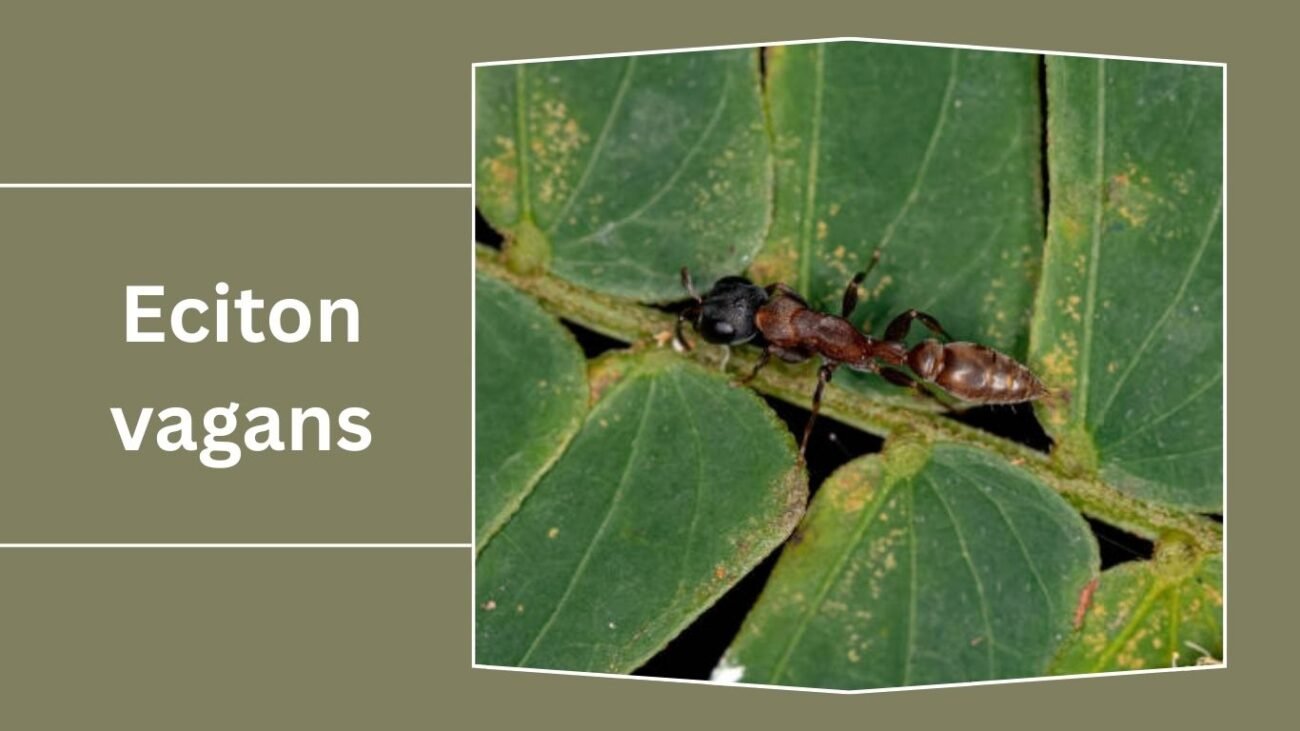
Eciton vagans is a widespread species of army ant, notable for its fast-moving raids and adaptability to different habitats. Though less famous than Eciton burchellii, it is an important predator in many ecosystems across the Americas.
Identification
- Workers are polymorphic, with smaller workers and larger soldier castes.
- Soldiers possess strong, curved mandibles used for defense and prey capture.
- Body color varies from dark reddish-brown to nearly black.
- Worker size ranges from about 3 mm to 10 mm, with soldiers being larger.
Habitat
This species ranges widely through Central and South America. It occupies tropical rainforests, dry forests, and secondary growth habitats. Colonies are highly mobile, nesting in temporary bivouacs that shift locations regularly.
Behaviors
Like other army ants, E. vagans display alternating starry and nomadic phases. During the nomadic phase, the colony moves frequently while conducting foraging raids. Raids involve coordinated swarms of thousands of ants that overwhelm prey. They are known for their ability to adapt to various environments, allowing them to thrive in both dense forests and disturbed habitats.
Diet
Eciton vagans primarily preys on other social insects, such as ants and wasps, as well as beetles, spiders, and their larvae. They are opportunistic hunters and will attack any available arthropods, occasionally targeting small vertebrates if encountered.
4. Eciton mexicanum
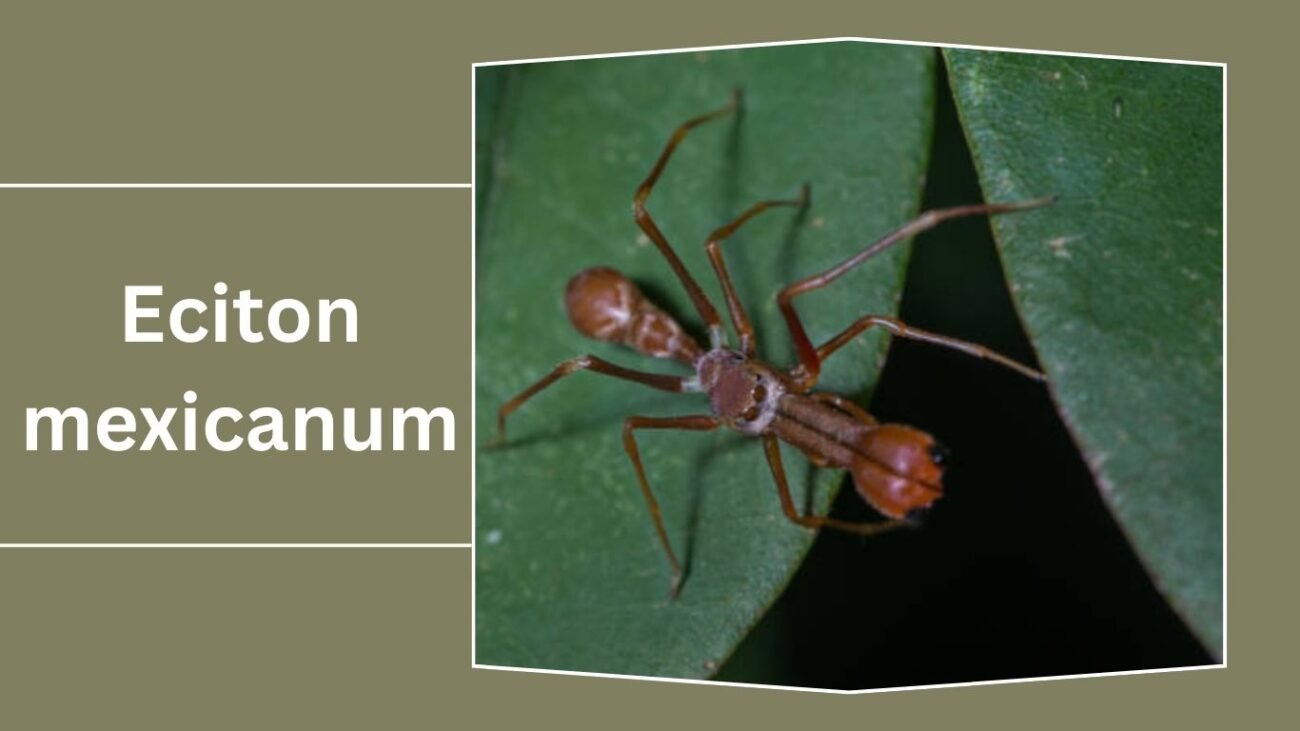
Eciton mexicanum is a notable species of army ant found mainly in Central America. Like other members of the Eciton genus, it exhibits nomadic behavior and large-scale raids, making it a dominant predator in its range.
Identification
- Workers are dimorphic, with minor workers and larger soldier forms.
- Soldiers possess long, sickle-shaped mandibles suited for defense and prey capture.
- Body color is typically dark brown to black.
- Worker size ranges from 3 mm to 12 mm, with soldiers being the largest individuals.
Habitat
This species is distributed across Central America, especially in Mexico and extending southward. It inhabits tropical forests, subtropical regions, and areas with abundant ground cover that supports its foraging and nesting cycles. Colonies build temporary bivouacs that shift as the ants move through their nomadic cycle.
Behaviors
Eciton mexicanum alternates between statary and nomadic phases. During the nomadic phase, raids can cover vast areas, with swarms of ants working together to capture prey. Their raids are highly organized, and they form dense columns that overwhelm arthropods and other small animals. Colonies are massive, numbering in the hundreds of thousands.
Diet
The species feeds on a wide variety of arthropods, including spiders, beetles, caterpillars, and especially other ants. They are obligate predators and depend entirely on live prey to sustain their colonies. Occasionally, they may capture small vertebrates when encountered during raids.
5. Eciton lucanoides
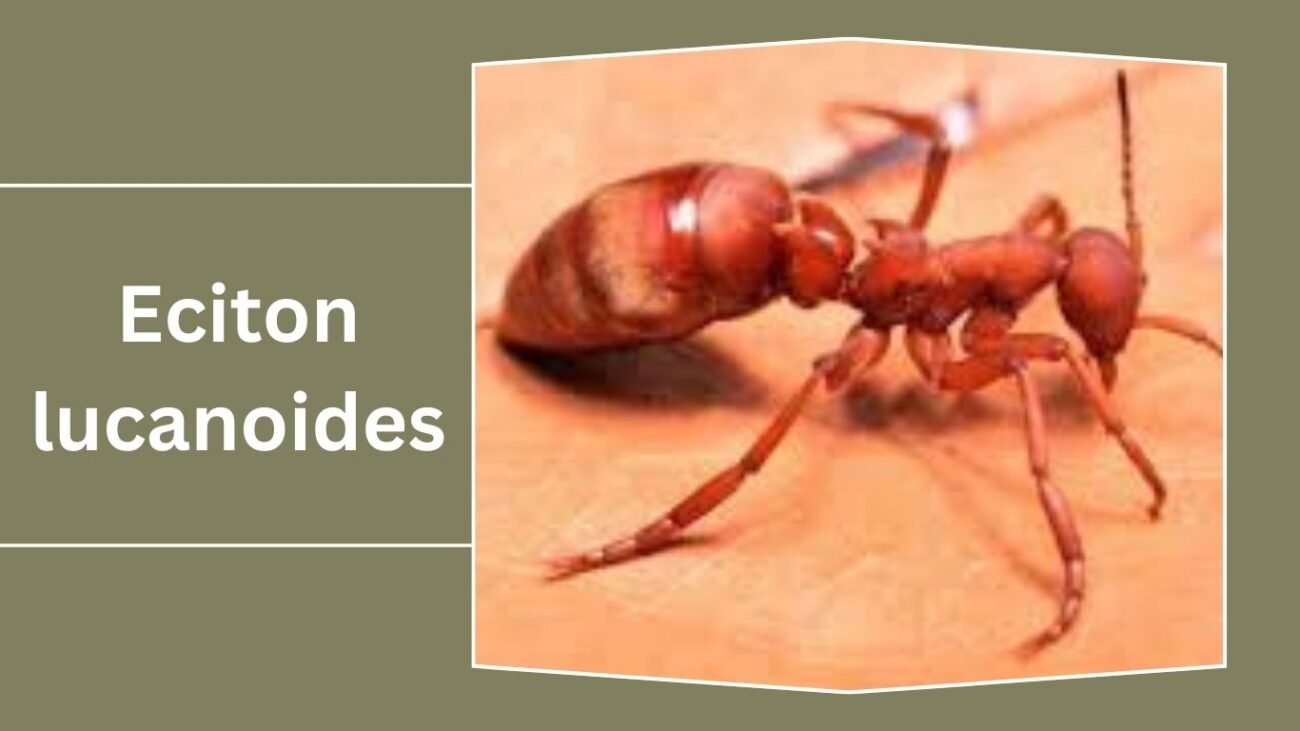
Eciton lucanoides is a lesser-known but important species of army ant within the genus Eciton. Like its close relatives, it is nomadic and a specialized predator that plays a key role in controlling insect populations in its habitat.
Identification
- Workers are polymorphic, with small workers and larger soldier castes.
- Soldiers have strong, curved mandibles adapted for defense and prey capture.
- Typically dark reddish-brown to nearly black in coloration.
- Worker size ranges from 3 mm to 11 mm, with soldiers being significantly larger.
Habitat
This species inhabits tropical and subtropical forests of Central and South America. Colonies build temporary bivouacs that shift regularly, reflecting their nomadic lifestyle. They prefer dense, moist forested areas with abundant insect prey.
Behaviors
Eciton lucanoides colonies alternate between statary and nomadic phases. During nomadic phases, large swarms of ants conduct highly coordinated raids, flushing prey from the leaf litter and understory. Colonies can contain several hundred thousand individuals, working collectively in raids that resemble moving rivers of ants.
Diet
The species feeds mainly on other insects, with a strong preference for social insects such as ants and wasps. They are opportunistic predators and will also attack beetles, spiders, and other small arthropods. Occasionally, they may target small vertebrates when available.
6. Labidus praedator
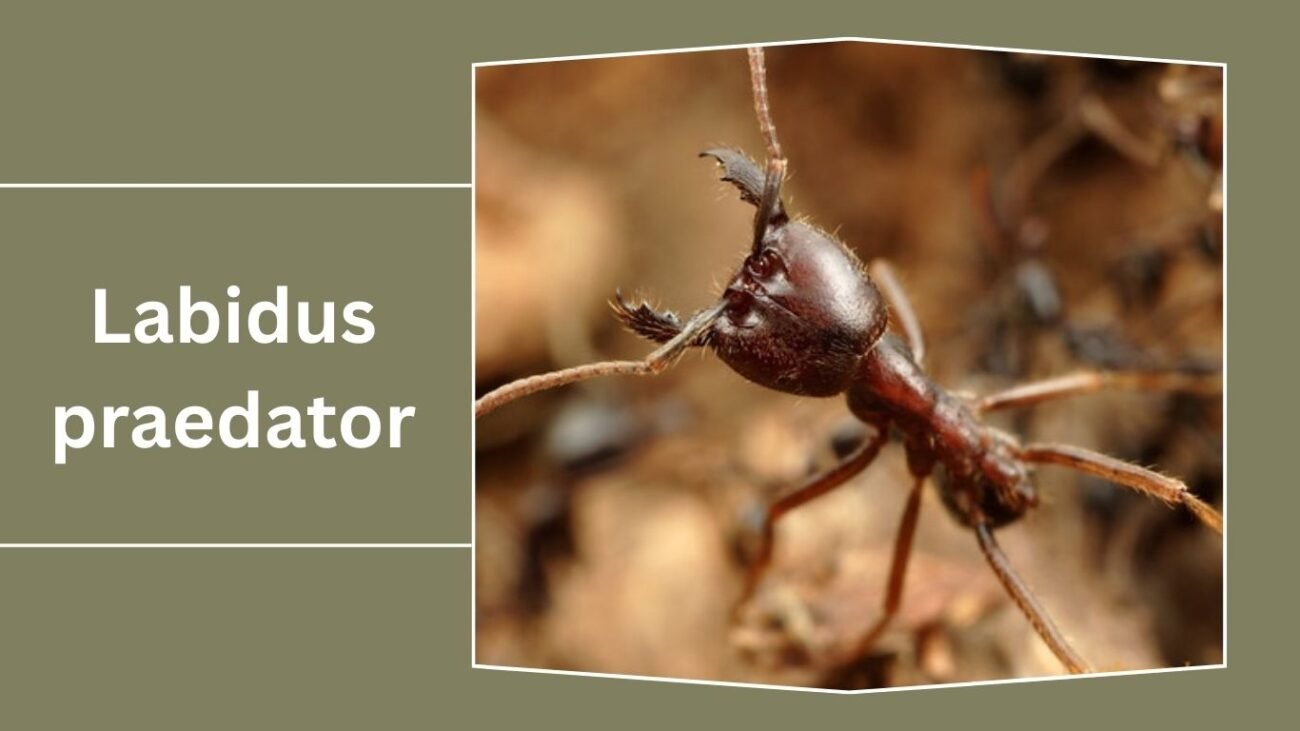
Labidus praedator is one of the largest and most widely distributed species of New World army ants. Known for its massive colony sizes and relentless hunting raids, it is a dominant predator in tropical ecosystems.
Identification
- Workers show clear polymorphism, ranging from tiny workers to large soldiers.
- Soldiers have elongated mandibles suited for cutting and gripping prey.
- Body coloration is generally dark brown to black.
- Worker size varies between 3 mm and 13 mm, with soldiers being much larger.
Habitat
This species is widespread across Central and South America, inhabiting tropical rainforests, plantations, and disturbed habitats. Colonies construct temporary bivouacs in soil, under logs, or within leaf litter, shifting location during their nomadic cycles.
Behaviors
Labidus praedator is highly aggressive and forms vast raiding columns that can include millions of ants. Their raids cover large areas, flushing out insects and small animals from the forest floor. Colonies alternate between statutory and nomadic phases, with raids becoming more intense during the nomadic phase. They are known to raid both during the day and at night.
Diet
They are obligate predators and feed primarily on arthropods such as ants, beetles, termites, and wasps. They also consume the larvae and pupae of other insects. Opportunistically, they may prey on small vertebrates, including reptiles, amphibians, and ground-nesting birds.
7. Labidus coecus

Labidus coecus is a unique species of army ant notable for its subterranean lifestyle. Unlike many other army ants that conduct conspicuous surface raids, this species spends much of its life underground, making it less frequently observed.
Identification
- Workers are blind (as implied by the name coecus = “blind”).
- Polymorphic caste system with small workers and larger soldiers.
- Soldiers possess powerful mandibles adapted for tunneling and defense.
- Body coloration is typically pale to dark brown.
- Worker sizes range from 2 mm to 10 mm.
Habitat
This species is widespread in tropical and subtropical regions of Central and South America. Unlike most army ants, Labidus coecus is primarily subterranean, nesting deep in the soil and conducting much of its activity below ground. Colonies are nomadic but less visible due to their underground lifestyle.
Behaviors
Labidus coecus is unusual among army ants because it primarily raids underground. Colonies can still reach enormous sizes, and their movements follow the same statutory and nomadic cycles seen in other army ants. On rare occasions, large numbers emerge to the surface, forming raiding columns, but most activity remains hidden.
Diet
The species preys on a variety of soil-dwelling invertebrates, such as termites, ants, beetle larvae, and other insects. They may also consume small vertebrates if encountered underground. Unlike leafcutters, they do not farm fungus, relying entirely on live prey.
8. Labidus mars

Labidus mars is a powerful species of army ant within the genus Labidus, known for its aggressive raids and wide distribution in the Americas. It is a surface-raiding species and plays an important role as a top arthropod predator in its ecosystems.
Identification
- Workers are polymorphic, with distinct soldier and worker castes.
- Soldiers have long, sharp mandibles suited for seizing and cutting prey.
- Typically dark brown to black in coloration.
- Workers range in size from 3 mm to 12 mm, with soldiers being considerably larger.
Habitat
This species inhabits tropical and subtropical forests across Central and South America. Colonies establish temporary bivouacs in soil, leaf litter, or beneath fallen logs. Like other army ants, they are nomadic, shifting their nesting sites regularly as they deplete local prey.
Behaviors
Labidus mars is highly aggressive during foraging raids, sending out columns of thousands of workers. These raids sweep through forest floors, flushing out and overwhelming prey. Colonies alternate between statuary and nomadic phases, with foraging intensity peaking during the nomadic phase. Their raiding strategy makes them formidable predators that can reshape local insect populations.
Diet
The diet consists primarily of arthropods such as ants, beetles, wasps, and their larvae. They are opportunistic feeders and may also consume small reptiles, amphibians, and ground-nesting bird chicks when encountered. Like other army ants, they rely exclusively on predation rather than farming fungi.
9. Labidus spininodis

Labidus spininodis is a lesser-known but aggressive species of army ant, belonging to the genus Labidus. Like its close relatives, it is nomadic and conducts large-scale raids that can devastate local arthropod populations.
Identification
- Workers are polymorphic, with distinct soldier and minor worker castes.
- Soldiers possess strong mandibles and a slightly more robust thorax.
- Typically dark brown to nearly black in coloration.
- Worker sizes range from 3 mm to 11 mm, with soldiers being larger and more heavily built.
Habitat
This species is distributed in tropical regions of Central and South America. Colonies construct temporary bivouacs in soil, leaf litter, or beneath logs. They thrive in moist forest environments but can also adapt to secondary growth areas with sufficient prey density.
Behaviors
Labidus spininodis exhibits the classic nomadic and statuary phases of army ants. During the nomadic phase, massive swarms sweep across the forest floor in dense raiding columns. They demonstrate cooperative hunting strategies, with soldiers guarding the flanks while workers capture prey. Colonies can number in the hundreds of thousands and relocate frequently to exploit new areas.
Diet
The species preys primarily on arthropods, including beetles, ants, wasps, and their immature stages. They are opportunistic and will also target spiders and other ground-dwelling invertebrates. Occasionally, small vertebrates are captured during raids, adding diversity to their diet.
10. Neivamyrmex nigrescens

Neivamyrmex nigrescens is one of the most widely distributed and commonly encountered species of army ants in North America. It is especially notable because it ranges farther north than most army ants, making it a key representative of the genus Neivamyrmex.
Identification
- Workers are relatively small compared to Eciton and Labidus species.
- Soldiers have elongated mandibles for defense and prey handling.
- Body color is typically dark brown to black.
- Worker size generally ranges from 2 mm to 8 mm, with soldiers slightly larger.
Habitat
This species is found across much of North America, extending from the southern United States into Central and parts of South America. It inhabits dry forests, deserts, grasslands, and subtropical woodlands, showing high adaptability compared to tropical-only army ant species.
Behaviors
Neivamyrmex nigrescens follows the nomadic lifestyle typical of army ants, alternating between statutory and nomadic phases. Colonies often move underground or through leaf litter, forming temporary bivouacs in soil or hidden cavities. Though raids are less massive than those of Eciton burchellii, they are still highly effective and organized.
Diet
The species preys mainly on other ants, making it a specialized predator. Raids often target ant colonies, consuming broods, workers, and sometimes queens. They will also take other insects and arthropods opportunistically but are strongly adapted to raiding social insects.
11. Neivamyrmex opacithorax

Neivamyrmex opacithorax is a specialized army ant species in the genus Neivamyrmex, recognized for its subterranean habits and predatory focus on other ant colonies. Though less conspicuous than surface-raiding species, it plays an important role as a predator of social insects.
Identification
- Small to medium-sized workers, usually between 2 mm and 7 mm.
- Soldiers are larger, with strong, curved mandibles used for raiding.
- Body color ranges from dark reddish-brown to black.
- Workers are slender and adapted for fast, coordinated movement underground.
Habitat
This species inhabits subtropical and tropical regions of Central and South America. Colonies are often hidden deep in soil, leaf litter, or under logs. Because they spend much of their lives underground, sightings are less common compared to surface-raiding army ants.
Behaviors
Neivamyrmex opacithorax demonstrates nomadic cycles like other army ants, alternating between stationary and migratory phases. Raids are typically subterranean, targeting nests of other ants. Colonies move frequently, forming temporary bivouacs in underground cavities. Their raiding behavior is less visible to humans but equally organized and devastating to prey colonies.
Diet
This species specializes in preying on other ants, particularly brood and workers, making it a highly specialized myrmecophagous predator. While ants make up the majority of their diet, they may also consume beetle larvae and other small arthropods when available.
12. Neivamyrmex texanus
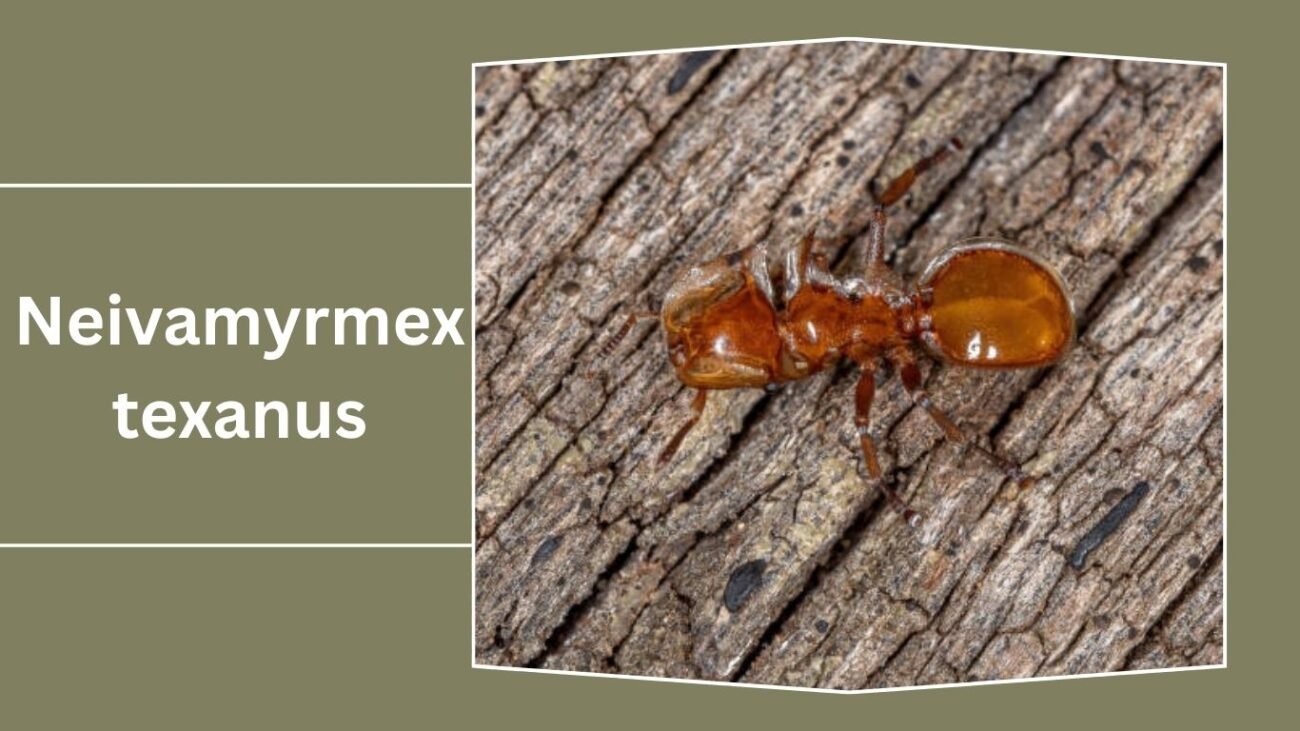
Neivamyrmex texanus is a North American species of army ant that is relatively well-known due to its distribution across the southern United States. Like other Neivamyrmex ants, it specializes in raiding other ant colonies, making it an important predator in its ecosystem.
Identification
- Workers are small, usually ranging from 2 mm to 6 mm in length.
- Soldiers are larger, equipped with strong, hooked mandibles.
- Body color is generally dark brown to black.
- Slender body build, adapted for fast movement during raids.
Habitat
This species is found across the southern United States, particularly in Texas (from which its name derives), extending into Mexico and parts of Central America. It inhabits dry woodlands, deserts, and grasslands, often nesting underground or beneath logs and rocks.
Behaviors
Neivamyrmex texanus follows the classic nomadic and statary cycles typical of army ants. Colonies relocate frequently, forming temporary bivouacs in soil or natural cavities. Raiding behavior is highly organized, with long raiding columns that specifically target nearby ant nests. Their raids are often nocturnal, reducing exposure to predators and heat.
Diet
The species is a specialist predator of other ants, consuming brood, pupae, and workers from targeted colonies. While ants form the bulk of their diet, they may also opportunistically consume termites, beetle larvae, and other soil-dwelling arthropods.
13. Neivamyrmex pilosus
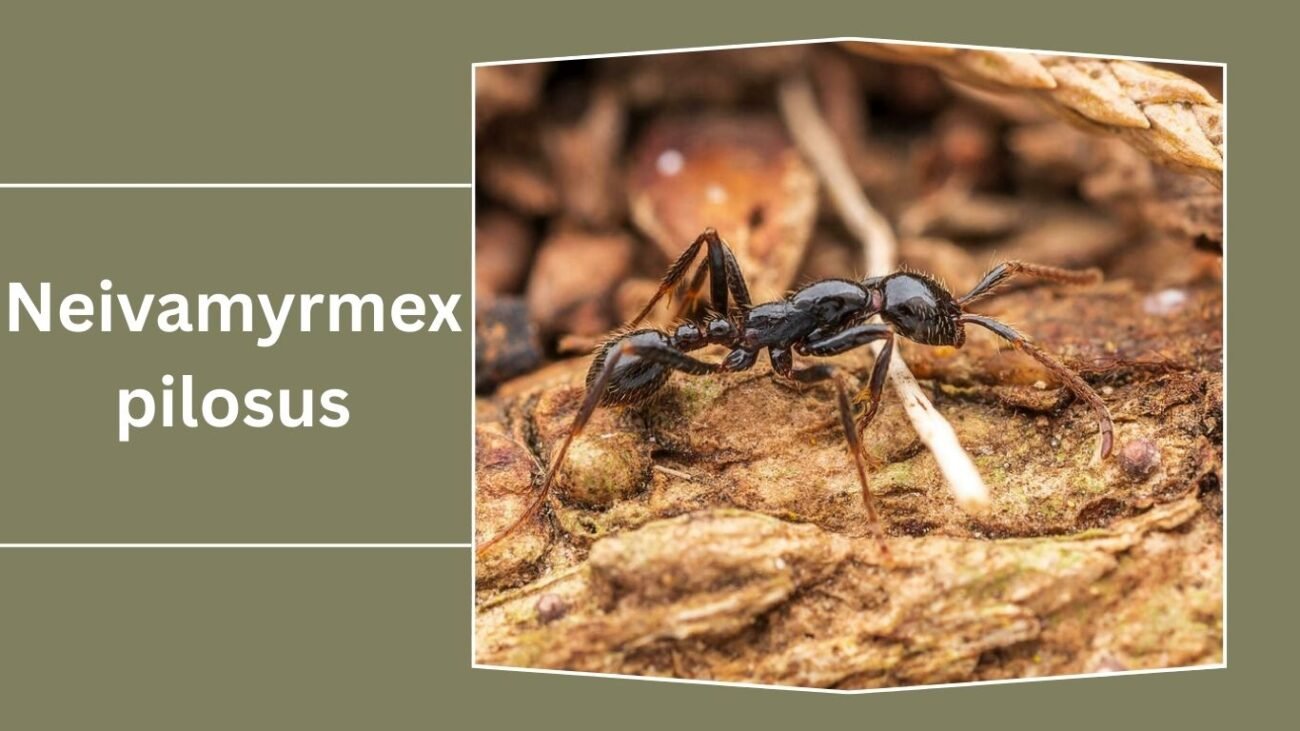
Neivamyrmex pilosus is a widespread species of army ant that ranges across the Americas. It is recognized for its adaptability to different environments and its highly specialized predation on other ant species.
Identification
- Workers are small to medium-sized, ranging from 2 mm to 7 mm.
- Soldiers are larger and equipped with robust, curved mandibles.
- Body coloration is usually dark reddish-brown to black.
- Covered with fine hairs (pilosus meaning “hairy”), giving a slightly fuzzy appearance compared to related species.
Habitat
This species inhabits a broad range of environments from dry woodlands and grasslands to tropical forests. Colonies establish temporary bivouacs underground, in rotting logs, or in dense leaf litter. They are highly adaptable and can thrive in disturbed habitats as well as natural forests.
Behaviors
Neivamyrmex pilosus displays nomadic behavior, alternating between stationary and migratory phases. Raids are highly coordinated, with long columns of ants invading the nests of other ant species. Colonies relocate frequently, maintaining flexibility in response to prey availability. They are mostly nocturnal raiders, reducing the risk of detection and heat stress.
Diet
This species is primarily myrmecophagous, feeding on brood and adult workers of other ants. Their raids are particularly destructive to nearby colonies, often resulting in the complete collapse of the prey population. In addition, they may opportunistically consume other soil-dwelling arthropods such as beetles and termites.
14. Neivamyrmex harrisi
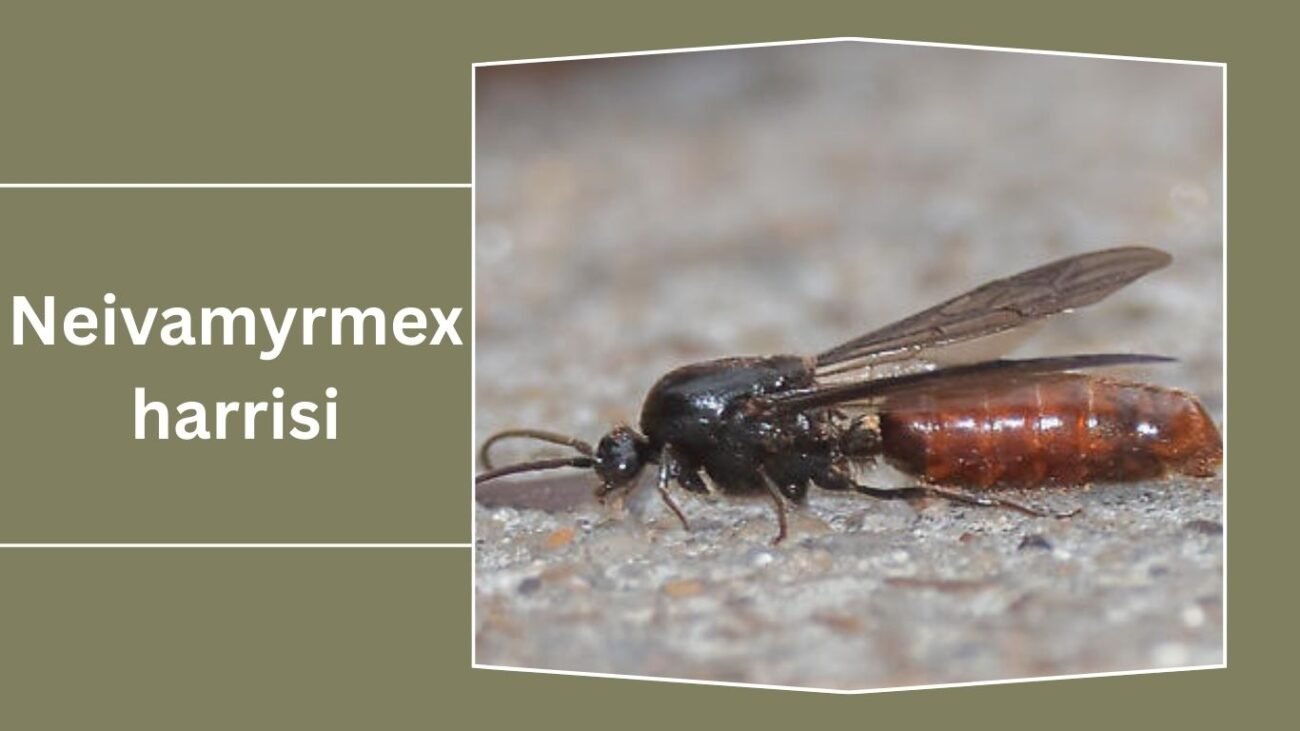
Neivamyrmex harrisi is a lesser-known but ecologically significant species of army ant. Like other members of the genus Neivamyrmex, it is a specialized predator of other ant colonies and follows a nomadic lifestyle.
Identification
- Workers are small, generally 2 mm to 6 mm in size.
- Soldiers are larger, with strong, hooked mandibles designed for raiding and defense.
- Body color is typically dark brown to black.
- Slender-bodied, with adaptations for fast and coordinated movement in raiding columns.
Habitat
This species is distributed in parts of North and Central America, often found in subtropical forests, dry woodlands, and semi-arid regions. Colonies form bivouacs underground, beneath rocks, or inside rotting logs. Their habitat choice is strongly tied to the availability of prey colonies.
Behaviors
Neivamyrmex harrisi demonstrates nomadic colony cycles, alternating between stationary and migratory phases. During raids, long, coordinated trails of ants overwhelm prey colonies, focusing on other ant species. They tend to raid at night or in shaded environments, which reduces exposure to predators and environmental stress.
Diet
This species is a specialist predator, primarily consuming broods, workers, and queens of other ant species. While ants are the main diet, they may occasionally feed on other small arthropods encountered during raids. Their predatory habits make them important regulators of ant populations in their ecosystems.
15. Dorylus molestus

Dorylus molestus is one of the most notorious Old World army ant species, found in Africa. It is famous for its massive colonies, aggressive swarming raids, and the ability to overwhelm even large vertebrates if encountered in their path.
Identification
- Workers are highly polymorphic, ranging from tiny workers to huge soldiers.
- Soldiers (also called “majors”) have extremely large, sickle-shaped mandibles.
- Body color is usually dark reddish-brown to black.
- Workers vary from 3 mm to over 15 mm, with soldiers much larger.
Habitat
This species is native to East and Central Africa, inhabiting tropical forests, savannas, and agricultural regions. Colonies nest temporarily in soil or hidden ground cavities, forming bivouacs that are relocated during the nomadic cycle.
Behaviors
Dorylus molestus is renowned for its enormous colonies, which can contain millions of individuals. Raids are massive, covering wide areas and consuming nearly everything in their path. They are aggressive toward both arthropods and vertebrates, and their swarms can be dangerous to small animals and sometimes even humans if provoked. Colonies alternate between statary and nomadic phases, shifting locations frequently.
Diet
The species preys on a wide variety of arthropods, including ants, beetles, termites, and wasps, but is also capable of subduing small vertebrates such as reptiles, amphibians, birds, and even small mammals. Unlike some ants, they do not cultivate fungus, relying solely on aggressive predation to feed their massive colonies.