Assassin bugs (Reduviidae) are fascinating predatory insects found worldwide, known for their stealthy hunting strategies and powerful piercing mouthparts. With diverse species ranging from brightly colored ambush hunters to large aggressive predators, they play a vital role in controlling insect populations. This guide introduces 17 types of assassin bugs, providing details on their identification, habitats, behaviors, and diets to better understand their ecological importance and unique adaptations.
1. Zelus longipes

Zelus longipes, commonly called the Milkweed Assassin Bug or Longlegged Assassin Bug, is a predatory insect known for its slender body and elongated legs. It is a highly effective hunter that preys on a wide variety of soft-bodied insects, making it both an important natural pest controller and a fascinating insect to observe.
Identification
- Slender body, usually reddish-orange to brown.
- Long, thin legs with dark bands.
- Narrow head with a long, curved rostrum (piercing-sucking mouthpart).
- Size ranges between 12–18 mm.
- Antennae are long and slender, aiding in detecting prey.
Habitat
This species is widespread in the Americas, particularly common in the southern United States, Central America, and parts of South America. It prefers areas with abundant vegetation such as gardens, agricultural fields, grasslands, and forest edges where prey insects are plentiful.
Behaviors
Zelus longipes is an ambush predator. It waits motionless on vegetation and uses its sticky forelegs to capture unsuspecting prey. Once caught, it pierces the prey with its rostrum and injects digestive enzymes, liquefying the tissues for consumption. They are solitary hunters and are most active during the day.
Diet
The species feeds primarily on soft-bodied insects such as caterpillars, aphids, flies, and other small arthropods. Occasionally, it may feed on pollinators like bees and butterflies, but overall, it plays a crucial role in maintaining ecological balance by controlling pest populations.
2. Zelus luridus

Zelus luridus, often called the Pale Green Assassin Bug, is a predatory insect recognized for its striking green coloration. It is a stealthy hunter that helps control insect populations in both natural and cultivated environments.
Identification
- Slender, pale green body that provides excellent camouflage among foliage.
- Size typically ranges from 10–15 mm.
- Long legs adapted for ambush hunting.
- Distinct, elongated head with a strong piercing rostrum.
- Antennae thin and almost as long as the body.
Habitat
This species is found in North America, particularly in the eastern and central United States. It thrives in meadows, gardens, forest edges, and areas with dense vegetation where it can blend with its surroundings and hunt efficiently.
Behaviors
Zelus luridus is an ambush predator that relies on its green coloration to remain hidden among leaves. It captures prey using its sticky forelegs and quickly immobilizes them with its rostrum. It is solitary and territorial, usually hunting alone.
Diet
The species feeds on a variety of insects, including caterpillars, flies, beetles, and other small arthropods. Its predatory behavior makes it beneficial in controlling pests, especially in agricultural and garden settings.
3. Zelus renardii

Zelus renardii, commonly known as the Leafhopper Assassin Bug, is a skilled predator often encountered in gardens and agricultural fields. It is valued for its ability to reduce pest populations, though it can occasionally prey on beneficial insects as well.
Identification
- Medium-sized insects, usually 12–18 mm long.
- Body color ranges from yellowish-green to light brown.
- Long, spindly legs, with the forelegs adapted for grasping prey.
- Distinct rostrum (piercing-sucking mouthpart) used for injecting enzymes.
- Antennae are slender and extend forward prominently.
Habitat
Zelus renardii is native to North and Central America but has spread to other regions, including parts of Europe. It thrives in agricultural fields, orchards, gardens, and areas with diverse vegetation where pest insects such as leafhoppers and caterpillars are abundant.
Behaviors
This assassin bug is an active ambush predator. It waits patiently on leaves or stems, capturing insects that come too close. It uses its sticky forelegs to hold prey before injecting digestive saliva through its rostrum. The prey’s internal tissues are liquefied and consumed.
Diet
Zelus renardii primarily preys on leafhoppers, caterpillars, and flies. However, it may also target pollinators like bees and butterflies, making its role in ecosystems a balance between pest control and incidental predation of beneficial species.
4. Zelus tetracanthus

Zelus tetracanthus, known as the Four-spined Assassin Bug, is a well-recognized predator that plays a vital role in controlling pest populations. Its name comes from the four small spines found on its thorax, a distinguishing feature among assassin bugs.
Identification
- Medium-sized, usually 12–15 mm in length.
- Brown to reddish body with a slightly rough texture.
- Four small spines located on the thorax (a key identification trait).
- Long, slender legs adapted for grasping prey.
- Distinct elongated head with a piercing rostrum.
Habitat
This species is found throughout much of North and Central America. It inhabits gardens, fields, forests, and areas with abundant vegetation. It often positions itself on plants where insect activity is high, such as flowering areas or near pest-infested crops.
Behaviors
Zelus tetracanthus is an ambush predator that uses stealth and patience. It captures prey with sticky forelegs and quickly immobilizes it using its rostrum. Known for being solitary, it usually avoids other assassin bugs unless competing for food.
Diet
The species preys on a wide range of insects, including caterpillars, beetles, leafhoppers, and other soft-bodied arthropods. Like other assassin bugs, it consumes prey by injecting enzymes that liquefy tissues, allowing it to suck out the nutrients.
5. Zelus cervicalis

Zelus cervicalis is a lesser-known species of assassin bug in the Zelus genus. It is recognized for its elongated body and predatory efficiency, contributing to natural pest control in its habitat.
Identification
- Slender body, typically brownish to reddish in color.
- Medium size, about 12–16 mm in length.
- Long legs with sticky pads on the forelegs for capturing prey.
- Elongated head with a curved piercing rostrum.
- Antennae long and thread-like, extending forward.
Habitat
Zelus cervicalis is distributed in parts of Central and South America, inhabiting forests, fields, and agricultural zones. It prefers vegetation-rich areas where insect prey is abundant, often hiding on leaves and stems for ambush.
Behaviors
Like other Zelus species, Z. cervicalis is an ambush predator. It waits patiently for unsuspecting insects to pass by, then uses its sticky forelegs to secure them before delivering a piercing bite with its rostrum. It is solitary in nature and highly territorial around feeding sites.
Diet
The species feeds on a variety of soft-bodied insects such as flies, moth larvae, and beetles. Its predation helps reduce agricultural pests, making it an ally for farmers despite occasionally preying on beneficial insects.
6. Zelus socius

Zelus socius is a predatory insect within the Zelus genus, recognized for its slender build and effective hunting strategies. It contributes to natural pest management by feeding on a wide range of small insects.
Identification
- Medium-sized body, typically 10–14 mm long.
- Reddish-brown to dark brown coloration.
- Long legs with adhesive pads on the forelegs for trapping prey.
- Distinct elongated head with a sharp rostrum for piercing.
- Antennae are long, slender, and segmented.
Habitat
This species is found in parts of Central and South America, favoring warm climates with dense vegetation. It commonly inhabits gardens, meadows, crop fields, and forest edges where prey populations are high.
Behaviors
Zelus socius is an ambush predator, often sitting motionless on plants and striking quickly when prey comes near. It uses sticky secretions on its forelegs to immobilize insects before injecting digestive enzymes with its rostrum. This solitary species is highly efficient in reducing pest numbers.
Diet
Its diet consists mainly of flies, caterpillars, beetles, and other soft-bodied insects. It is considered beneficial for pest control but, like many assassin bugs, may also feed on pollinators if they become available.
7. Apiomerus crassipes

Apiomerus crassipes, often called the Bee Assassin Bug, is a well-known predator in the assassin bug family. It is particularly famous for its habit of preying on bees and other pollinators, making it both fascinating and somewhat notorious in ecosystems.
Identification
- Robust body, typically dark brown to black with reddish or orange markings.
- Size ranges from 12–18 mm.
- Thickened forelegs with spines, used for grasping prey.
- Strong, curved rostrum designed for piercing and injecting digestive enzymes.
- Wings present, often with noticeable reddish hues.
Habitat
Apiomerus crassipes is widespread across the Americas, especially in North and Central America. It is frequently seen in gardens, meadows, and areas with flowering plants where bees and pollinators are active.
Behaviors
This species is an ambush predator, often waiting near flowers to strike unsuspecting prey. It uses its powerful forelegs to immobilize insects and then feeds through its rostrum. Its predatory behavior is opportunistic, and it often targets pollinators.
Diet
The species primarily preys on bees, wasps, and other nectar-feeding insects, but it will also consume flies, beetles, and caterpillars. While it can reduce pollinator numbers, it also contributes to regulating insect populations within ecosystems.
8. Apiomerus flaviventris

Apiomerus flaviventris, commonly known as the Yellow-bellied Bee Assassin Bug, is a striking species within the Apiomerus genus. It is especially recognized for its preference for hunting bees, making it an efficient but controversial predator in pollinator-rich habitats.
Identification
- Medium to large size, ranging from 12–18 mm.
- Distinctive yellowish abdomen contrasting with a darker thorax and head.
- Strong, spiny forelegs adapted for grabbing and holding prey.
- Long, sturdy rostrum used for piercing and injecting enzymes.
- Wings dark with reddish to orange tints, often folded flat over the body.
Habitat
This species is distributed across North and Central America, commonly found in regions with flowering plants. Meadows, gardens, orchards, and open fields are typical habitats where it can easily encounter pollinators.
Behaviors
Apiomerus flaviventris is an ambush predator, often waiting on or near flowers to capture bees and other nectar-feeding insects. It uses quick strikes with its forelegs and rostrum to subdue prey. Like other assassin bugs, it relies on stealth and patience rather than active pursuit.
Diet
The diet is heavily centered on bees, earning it the “bee assassin” name. However, it also feeds on wasps, flies, beetles, and other insects. While it helps maintain insect balance, its predation on pollinators can impact local ecosystems and agriculture.
9. Apiomerus geniculatus

Apiomerus geniculatus is another notable species of the Apiomerus genus, belonging to the group often referred to as bee assassin bugs. It is known for its predatory nature and preference for hunting nectar-feeding insects around flowering plants.
Identification
- Medium to large body, typically 14–20 mm long.
- Dark brown to black coloration with reddish or orange highlights.
- Distinct thickened femora (leg joints) that aid in grasping prey.
- Long, sturdy rostrum adapted for piercing prey.
- Wings usually darker with reddish tones, folded flat over the back.
Habitat
This species is native to Central and South America, where it inhabits gardens, fields, and forest edges. It is often associated with areas rich in flowering plants, providing access to pollinator prey.
Behaviors
Apiomerus geniculatus is a patient ambush predator. It typically positions itself near blossoms, waiting for bees or other pollinators to approach. Once prey is within range, it seizes it with its forelegs and pierces it with its rostrum to inject digestive enzymes.
Diet
Like its close relatives, this species feeds primarily on bees and wasps but also consumes flies, beetles, and caterpillars. Its predation contributes to natural insect control, though its heavy focus on pollinators gives it an ambivalent ecological role.
10. Arilus cristatus (Wheel Bug)

Arilus cristatus, commonly known as the Wheel Bug, is one of the largest and most recognizable assassin bugs in North America. Its name comes from the distinctive cogwheel-like crest on its thorax, making it unique among insects.
Identification
- Large size, ranging from 25–36 mm in length.
- Gray to dark brown coloration with a rough, armored appearance.
- Distinct semicircular “wheel” crest on the thorax.
- Strong, curved rostrum capable of delivering a painful bite.
- Long, robust legs and wings that cover the abdomen when folded.
Habitat
The Wheel Bug is found throughout much of the United States and parts of Central America. It prefers wooded areas, gardens, orchards, and fields where prey is abundant. It often rests on plants, waiting for insects to pass by.
Behaviors
Arilus cristatus is a stealthy ambush predator. It captures prey with its legs and delivers a powerful bite with its rostrum, injecting enzymes that liquefy internal tissues. Known for being solitary and territorial, it is highly efficient at controlling large insect populations. Despite its usefulness, it is feared by humans due to its extremely painful bite when mishandled.
Diet
The diet includes caterpillars, beetles, grasshoppers, moths, and other large insects. Its predatory habits make it a valuable ally for farmers and gardeners in reducing pest species, though it occasionally preys on beneficial insects as well.
11. Pselliopus barberi
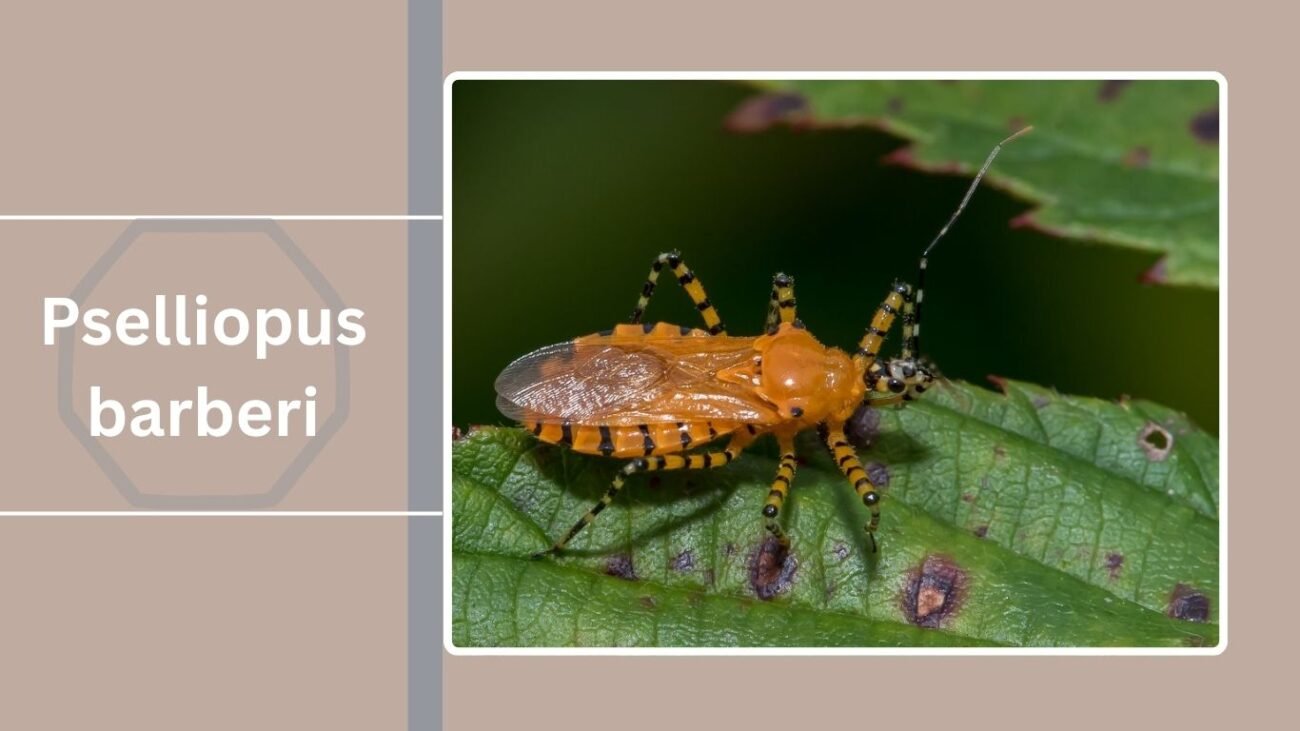
Pselliopus barberi is a brightly colored assassin bug species often encountered in gardens and meadows. It is known for its striking appearance and effective predatory habits, particularly in controlling small insect populations.
Identification
- Medium-sized, typically 9–13 mm long.
- Bright orange to reddish body with black markings.
- Legs banded with alternating orange and black.
- Long, narrow head with a strong piercing rostrum.
- Wings transparent to smoky with visible veins.
Habitat
This species is found across North America, especially in the eastern and central United States. It inhabits fields, meadows, gardens, and forest edges, preferring vegetation where prey insects are abundant.
Behaviors
Pselliopus barberi is an active and agile predator. Unlike some ambush species, it may actively move through vegetation in search of prey. It captures insects with its legs and delivers a rapid bite with its rostrum. This species is solitary and can be observed resting on flowers or leaves between hunts.
Diet
The species preys on small soft-bodied insects such as flies, caterpillars, and beetles. It contributes to natural pest control in agricultural and garden ecosystems. Although highly beneficial, it may occasionally bite humans if handled, causing localized pain.
12. Pselliopus cinctus

Pselliopus cinctus is a vividly patterned assassin bug, closely related to Pselliopus barberi. It is admired for its bright coloration and plays an important role as a natural predator of small insects in its habitat.
Identification
- Medium-sized insect, typically 9–12 mm long.
- Orange to reddish body with prominent black bands across the thorax and abdomen.
- Legs distinctly banded with orange and black.
- Long, narrow head with piercing rostrum.
- Transparent to smoky wings folded neatly over the back.
Habitat
This species is found mainly in North America, particularly in the United States and parts of southern Canada. It inhabits meadows, gardens, orchards, and edges of woodlands where insect populations are high.
Behaviors
Pselliopus cinctus is an active hunter but may also use ambush tactics. It waits on flowers or leaves for prey to approach and then swiftly seizes it with its legs. Using its rostrum, it injects enzymes to paralyze and digest its prey. It is solitary and territorial in nature.
Diet
The species feeds on flies, beetles, small caterpillars, and other soft-bodied insects. Its predation makes it beneficial in controlling pest populations, though it will not hesitate to attack beneficial insects if available.
13. Pselliopus latifasciatus

Pselliopus latifasciatus is a colorful assassin bug species recognized for its bold markings and efficient predatory behavior. It belongs to the Pselliopus genus, which is known for species that actively hunt small insects in vegetation-rich habitats.
Identification
- Medium-sized, usually 10–13 mm long.
- Bright orange to reddish body with broad black bands across the thorax and abdomen.
- Legs prominently banded with orange and black.
- Narrow head with a long, sharp rostrum.
- Wings transparent to dusky, lying flat across the abdomen.
Habitat
This species is found across parts of North America, especially in warmer regions of the United States. It prefers meadows, gardens, forest edges, and agricultural areas with abundant flowering plants that attract insect prey.
Behaviors
Pselliopus latifasciatus is a stealthy predator that often waits on flowers or foliage for prey to come within reach. It uses its legs to seize prey before piercing them with its rostrum to inject digestive enzymes. Though solitary, it can sometimes be seen in the same area as other assassin bugs if prey is plentiful.
Diet
The species feeds on small insects such as flies, caterpillars, beetles, and plant pests. Like other assassin bugs, it plays an important role in natural pest control, though it does not discriminate and may prey on beneficial insects as well.
14. Rhynocoris iracundus

Rhynocoris iracundus is a strikingly patterned assassin bug commonly found in Europe. It is an aggressive predator, easily recognizable by its bold coloration, which also acts as a warning to potential predators.
Identification
- Medium to large body, around 12–18 mm long.
- Bright red and black coloration with distinctive striped patterns.
- Long, spiny legs built for grasping prey.
- Narrow head with a strong, curved rostrum.
- Wings dark, often with reddish or orange tones.
Habitat
This species is widespread across Europe and parts of Asia. It thrives in meadows, hedgerows, forest edges, and gardens. It is usually found on flowers and foliage where insects are active, making it an effective predator in natural ecosystems.
Behaviors
Rhynocoris iracundus is an ambush predator, waiting for insects to approach before seizing them. It is known for its aggressive strikes and efficient use of its rostrum to inject digestive saliva. Its vivid red-and-black pattern serves as aposematic (warning) coloration, deterring predators.
Diet
The species preys on flies, beetles, grasshoppers, caterpillars, and other insects. It plays a key role in regulating insect populations, although it does not distinguish between pests and beneficial species.
15. Rhynocoris rubricus

Rhynocoris rubricus is a vividly colored assassin bug species belonging to the Reduviidae family. It is closely related to Rhynocoris iracundus and is known for its striking appearance and strong predatory instincts.
Identification
- Medium-sized body, typically 12–17 mm long.
- Bright red and black markings across the body and legs.
- Long, spiny legs adapted for ambush hunting.
- Narrow head with a long, piercing rostrum.
- Wings dark with reddish or orange highlights.
Habitat
This species is distributed across southern and central Europe, extending into parts of western Asia. It inhabits meadows, grasslands, gardens, and sunny forest edges where insect activity is high.
Behaviors
Rhynocoris rubricus is an ambush predator, lying in wait on vegetation until prey passes by. Its bright coloration serves as a warning to potential predators. Like other assassin bugs, it uses its rostrum to inject enzymes that paralyze and liquefy prey, making it easier to consume.
Diet
The species feeds on a wide variety of insects, including beetles, grasshoppers, flies, and caterpillars. Its predation helps control insect populations, making it an important natural regulator in its ecosystem.
16. Rasahus hamatus

Rasahus hamatus is a large and powerful assassin bug species, often recognized for its strong predatory behavior and distinctive appearance. It belongs to the Rasahus genus, which includes some of the more robust members of the Reduviidae family.
Identification
- Large body size, typically 20–30 mm long.
- Dark brown to black coloration with lighter markings on the legs and abdomen.
- Long, strong legs equipped with spines for grasping prey.
- Prominent, elongated rostrum capable of delivering a painful bite.
- Wings dark and leathery, covering the abdomen when folded.
Habitat
Rasahus hamatus is native to Central and South America, where it inhabits forests, fields, and agricultural landscapes. It prefers areas with dense vegetation that provide cover for ambushing prey.
Behaviors
This species is an active and aggressive predator. It does not always rely on ambush; instead, it may stalk and chase its prey when necessary. Using its rostrum, it injects potent enzymes that immobilize and digest its prey quickly. Rasahus hamatus is also known for being defensive and may bite if threatened, causing significant pain to humans.
Diet
The diet consists mainly of large insects such as beetles, grasshoppers, and caterpillars. Its ability to overpower relatively large prey makes it a valuable predator in its ecosystem, though its aggressive nature means it is often feared when encountered.
17. Sinea diadema

Sinea diadema is a small but effective predatory assassin bug species. It is particularly common in North America and is considered beneficial due to its appetite for agricultural pests.
Identification
- Small to medium size, usually 8–12 mm long.
- Dark brown to black body with a slightly rough texture.
- Short, sturdy legs compared to many other assassin bugs.
- Distinct curved rostrum used for piercing prey.
- Antennae are relatively short and thick for the group.
Habitat
This species is widely distributed in North America. It inhabits grasslands, agricultural fields, gardens, and forest edges. It prefers areas with dense vegetation that attract pest insects.
Behaviors
Sinea diadema is an ambush predator that remains still on plants until prey comes close. It uses its legs to hold the insect firmly before piercing it with its rostrum. Though beneficial in pest control, it may deliver a painful bite if handled by humans.
Diet
The species feeds on a variety of small insects, including caterpillars, beetles, grasshoppers, and flies. Its predatory nature makes it highly valued in agricultural systems as a natural pest regulator.