Spittlebugs, also known as froghoppers, are small sap-feeding insects recognized for the foamy “spittle” their nymphs produce on plants. These insects are found worldwide, thriving in grasslands, forests, and agricultural fields. While some species are harmless, others are notorious pests of crops like sugarcane and rice. This guide explores 12 notable spittlebug species, highlighting their unique identification features, natural habitats, behaviors, and dietary preferences.
1. Philaenus spumarius

Philaenus spumarius, commonly called the meadow spittlebug or froghopper, is one of the most widespread and well-known spittlebug species. It is recognized for producing the frothy foam or “spittle” on plants, which protects its nymphs from predators and environmental stress.
Identification
- Small insect, measuring 5–7 mm in length.
- Coloration highly variable: brown, green, yellow, or patterned with dark spots.
- Strong hind legs adapted for jumping, similar to grasshoppers.
- Nymphs are pale green and hidden within white frothy spittle masses.
Habitat
This species is found across North America, Europe, and parts of Asia. It thrives in meadows, grasslands, gardens, and agricultural fields where host plants such as clover, alfalfa, and grasses are abundant.
Behaviors
Philaenus spumarius is known for its ability to leap great distances relative to its body size. Nymphs live inside protective spittle masses, which prevent desiccation and deter predators. Adults are free-living, feeding openly on plant sap. They are also notable vectors of plant pathogens, such as Xylella fastidiosa.
Diet
Both nymphs and adults feed on the sap of herbaceous plants and grasses. They insert their piercing-sucking mouthparts into plant tissue, extracting fluid from the xylem and phloem.
2. Prosapia bicincta
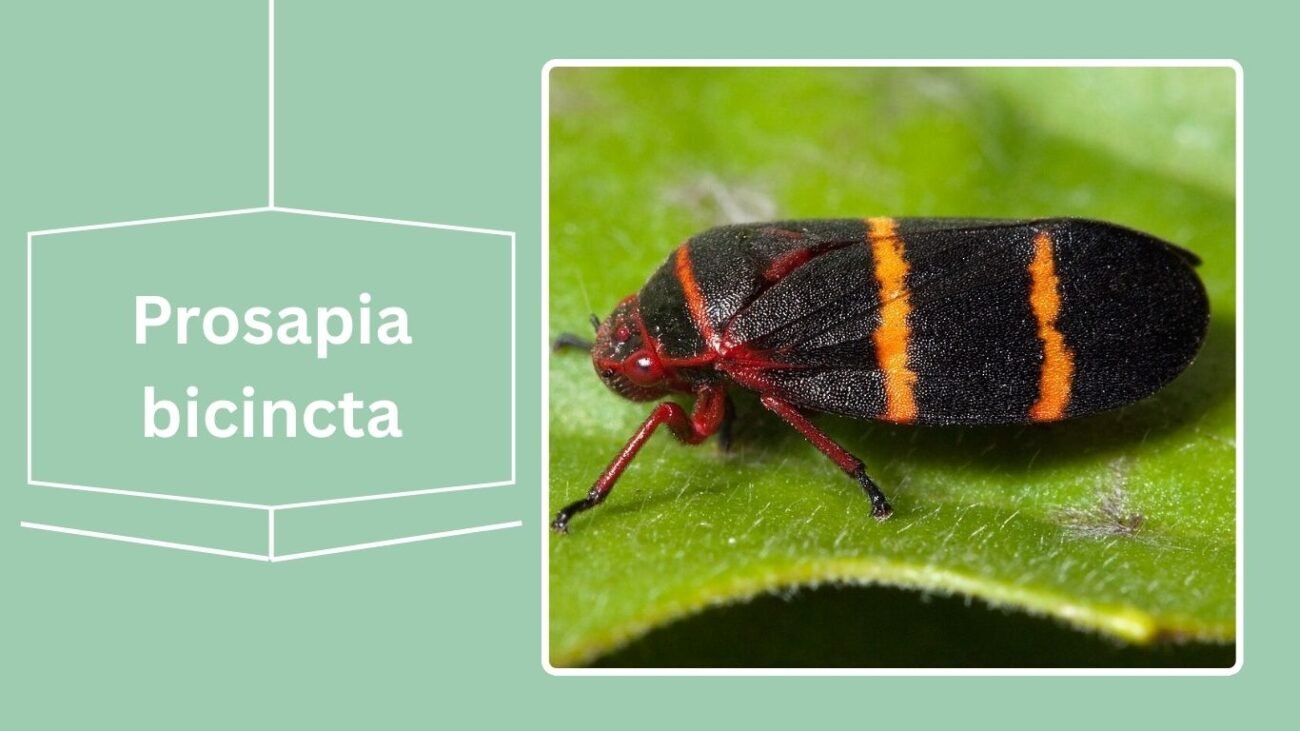
Prosapia bicincta, commonly known as the two-lined spittlebug, is a striking species of spittlebug that is especially harmful to turfgrass and forage crops. Its distinct appearance and agricultural importance make it one of the most recognized species in North America.
Identification
- Adult length ranges from 8–10 mm.
- Shiny black body with two prominent orange or red transverse lines across the wings.
- Nymphs are yellowish to orange and produce spittle masses at the base of grasses.
- Strong, wedge-shaped body adapted for jumping.
Habitat
This species is primarily distributed in the southeastern United States, though it can be found in other regions of North and Central America. It inhabits lawns, pastures, and fields where grasses and turf are abundant.
Behaviors
Nymphs remain within foamy spittle masses at the base of grass stems, using them for moisture retention and protection from predators. Adults are strong jumpers and move readily between host plants. In high numbers, they can cause severe damage to turfgrass by injecting toxins while feeding.
Diet
Both nymphs and adults feed on the sap of grasses and related plants. Preferred hosts include Bermuda grass, centipede grass, and forage grasses. Their feeding can result in yellowing, wilting, and in severe cases, death of host plants.
3. Clastoptera obtusa

Clastoptera obtusa, often referred to as the alder spittlebug, is a small species that primarily feeds on woody plants. Despite its modest size, it plays an important role in its ecosystem as both a herbivore and prey for other insects.
Identification
- Adults are small, usually 4–6 mm long.
- Body is stout, with a brownish or grayish coloration often marked with darker spots.
- Wings are held roof-like over the body.
- Nymphs are pale green to whitish and covered in protective spittle masses.
Habitat
This species is commonly associated with alder trees, but it may also feed on other shrubs and woody plants. It is found in forest edges, wetlands, and areas where alder is abundant across North America.
Behaviors
Like other spittlebugs, the nymphs produce frothy spittle masses to shield themselves from predators, dehydration, and temperature fluctuations. Adults are agile jumpers and are often found resting on host plants. Their population density is usually lower than that of turfgrass-feeding species, making them less of an agricultural concern.
Diet
Clastoptera obtusa nymphs and adults feed on plant sap by piercing plant tissues with their specialized mouthparts. Alders are the preferred host, though they may occasionally feed on other related plants.
4. Aphrophora saratogensis
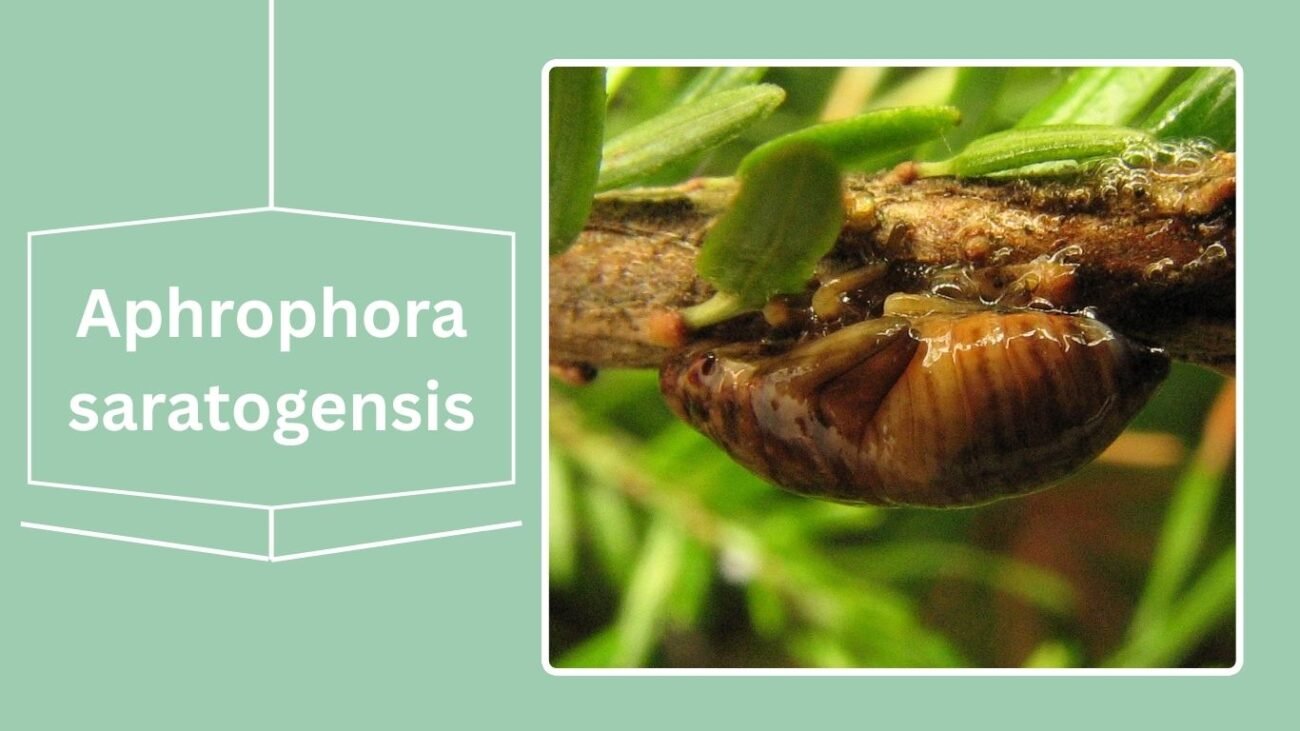
Aphrophora saratogensis, commonly known as the pine spittlebug, is a notable species because of its association with coniferous trees. It can be a pest in pine forests and plantations due to the damage it causes while feeding.
Identification
- Adults measure about 8–10 mm in length.
- Brownish to dark gray body with mottled or streaked wing patterns that provide camouflage on tree bark.
- Strong, elongated body shape adapted for piercing woody plants.
- Nymphs are pale and live within white spittle masses on conifer stems.
Habitat
This species is predominantly found in North America, especially in pine forests and conifer plantations. It thrives in temperate regions where pine, spruce, and fir trees are abundant.
Behaviors
Nymphs remain hidden within foamy spittle on conifer branches and stems, while adults actively move among host trees. Infestations can weaken trees, as heavy feeding stresses the plant, reduces growth, and increases vulnerability to pathogens or secondary pests. Adults are also strong jumpers, making them difficult to capture.
Diet
Both nymphs and adults feed on the sap of coniferous trees, particularly pine species. Prolonged feeding can cause yellowing of needles, dieback of branches, and in severe cases, overall decline in tree health.
5. Aphrophora alni

Aphrophora alni, commonly called the alder spittlebug, is a species strongly associated with alder trees but can also be found on other deciduous hosts. It is widespread in temperate regions and is more noticeable during the nymph stage due to the characteristic foamy spittle.
Identification
- Adults measure around 7–9 mm in length.
- Brownish-gray coloration with darker mottled patterns that blend well with bark and foliage.
- Elongated wedge-shaped body and well-developed hind legs for jumping.
- Nymphs are pale green to whitish, hidden within protective spittle masses.
Habitat
This species occurs across Europe, North America, and parts of Asia. It is typically found in woodlands, forest edges, and moist habitats where alder trees are common. Occasionally, it can also be observed on willow and birch.
Behaviors
Nymphs produce spittle masses on leaves and stems, which serve as both a protective covering and a microhabitat. Adults are strong jumpers and move easily between host plants. Though not usually considered a major pest, high populations may weaken trees, especially young ones.
Diet
Both nymphs and adults feed on plant sap, mainly from alder, but also from other deciduous shrubs and trees. Feeding can reduce plant vigor and growth, though severe economic damage is rare.
6. Aeneolamia varia

Aeneolamia varia, often referred to as the sugarcane spittlebug, is an agriculturally significant species due to the serious damage it can cause to sugarcane crops in tropical and subtropical regions.
Identification
- Adults are medium-sized, about 8–11 mm long.
- Body color varies from dark brown to black with reddish or orange markings.
- Wings are opaque and slightly patterned, giving them a dull appearance.
- Nymphs are yellowish to orange, typically concealed within frothy spittle masses at the base of grasses and sugarcane.
Habitat
This species is primarily found in Central and South America, where sugarcane is cultivated extensively. It prefers warm, humid regions and thrives in agricultural fields dominated by grasses, especially sugarcane plantations.
Behaviors
Nymphs develop within protective spittle masses at the base of sugarcane stems, where they feed on plant sap. Adults are capable of rapid jumping and disperse across fields in search of new host plants. Heavy infestations can lead to severe crop damage, including reduced sugar yields and stunted plant growth.
Diet
Both nymphs and adults feed on the sap of sugarcane and other grasses. Their feeding not only drains plant resources but also introduces toxins that cause yellowing, drying, and in severe infestations, plant death. This makes them one of the most destructive spittlebug pests in agriculture.
7. Poophilus costalis

Poophilus costalis is a spittlebug species widely distributed in tropical and subtropical regions. It is known for its association with grasses and other herbaceous plants, where both nymphs and adults live and feed.
Identification
- Adults measure around 6–8 mm in length.
- Typically dark brown to black in coloration, with lighter banding or markings on the wings.
- Compact, wedge-shaped body adapted for jumping.
- Nymphs are pale in color and produce protective spittle masses around stems and leaves.
Habitat
This species inhabits grassy fields, meadows, and agricultural lands across Africa and parts of Asia. It thrives in moist, warm environments where grasses dominate, making it common in both wild and cultivated landscapes.
Behaviors
Nymphs remain within their characteristic foamy spittle, which provides both protection and humidity for survival. Adults are strong jumpers, moving quickly between host plants. They form localized populations that can build up in areas with dense grass cover.
Diet
Both nymphs and adults feed on the sap of grasses and related plants. Their feeding can reduce plant vigor, and in large numbers, they may cause stunted growth in crops and forage grasses.
8. Mahanarva fimbriolata

Mahanarva fimbriolata, commonly known as the sugarcane spittlebug in South America, is a notorious pest species that significantly affects sugarcane production. Its destructive feeding habits have made it one of the most studied spittlebugs in agriculture.
Identification
- Adults measure about 8–10 mm in length.
- The body is typically dark brown to black, with lighter markings on the wings.
- Robust body structure with strong hind legs for jumping.
- Nymphs are creamy-white to yellowish, found hidden within dense spittle masses near plant bases.
Habitat
This species is widespread in South America, especially in Brazil, where sugarcane cultivation is extensive. It thrives in humid, grassy fields and plantations, with a preference for areas dominated by sugarcane and pasture grasses.
Behaviors
Nymphs live at the base of sugarcane plants, enclosed in foamy spittle, which helps maintain moisture and deters natural enemies. Adults are highly mobile and capable of dispersing across fields quickly. High infestations can lead to reduced sugar yields and significant economic losses.
Diet
Both nymphs and adults feed on the sap of sugarcane and other grasses. Feeding introduces toxic compounds into the plant, causing yellowing, drying, and in severe infestations, plant death. This makes the species one of the most serious pests of sugarcane in South America.
9. Cercopis vulnerata
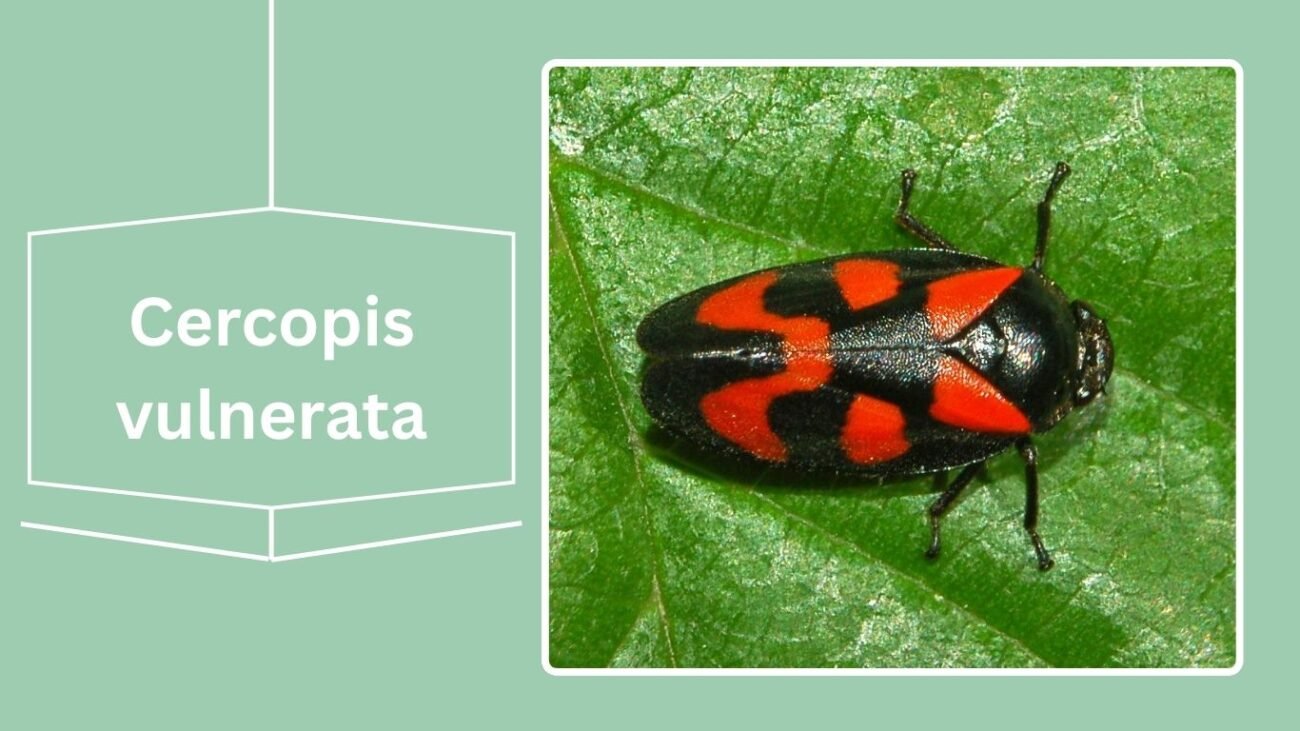
Cercopis vulnerata, often called the red-and-black froghopper, is one of the most visually striking spittlebug species. Its bold coloration makes it easily recognizable, and it is often spotted in European meadows during spring and summer.
Identification
- Adults measure about 8–9 mm in length.
- Glossy black wings marked with bright red bands or patches.
- Stout, wedge-shaped body with strong legs for jumping.
- Nymphs are pale green to yellowish and concealed within spittle masses on grasses and herbs.
Habitat
This species is native to Europe and commonly found in grasslands, meadows, forest edges, and gardens. It prefers sunny, open areas where host plants are plentiful.
Behaviors
Nymphs produce frothy spittle masses on herbaceous plants, where they remain hidden until reaching adulthood. Adults are strong jumpers and can move quickly between plants, often seen resting on grasses and flowers. Their striking coloration may serve as a warning to predators.
Diet
Both nymphs and adults feed on the sap of grasses, herbs, and low-growing plants. While generally not considered a serious pest, heavy feeding can weaken plants and reduce their growth.
10. Callitettix versicolor

Callitettix versicolor is a colorful spittlebug species found mainly in Asia, where it inhabits grassy and agricultural landscapes. It is well known for its distinctive markings and is sometimes considered a pest of rice and related crops.
Identification
- Adults measure about 7–9 mm in length.
- Shiny black wings with striking orange to red bands or patches.
- Compact, wedge-shaped body with strong jumping legs.
- Nymphs are light-colored and develop within foamy spittle masses on host plants.
Habitat
This species occurs widely in South and Southeast Asia. It is commonly found in rice paddies, grasslands, and agricultural fields where moisture levels are high and host plants are abundant.
Behaviors
Nymphs remain inside protective spittle until adulthood, while adults are highly mobile and often seen perched on grasses. They are strong jumpers and can disperse quickly across crop fields. In large populations, they may cause economic losses in rice cultivation.
Diet
Both nymphs and adults feed on the sap of grasses, including rice and other cereal crops. Feeding can lead to stunted plant growth and reduced yields when infestations are severe.
11. Cosmoscarta hera
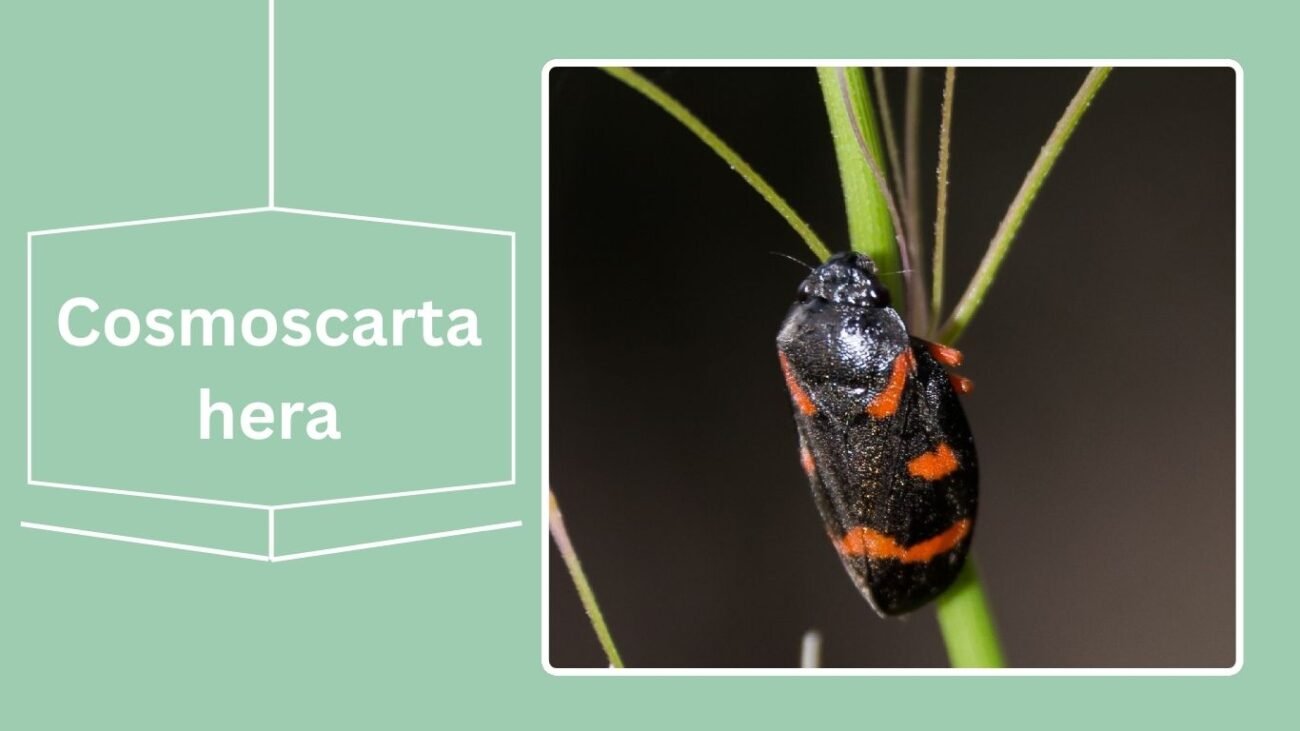
Cosmoscarta hera is a vividly colored spittlebug species often admired for its striking appearance. Found mainly in tropical Asia, it is more noted for its ornamental beauty in nature than for agricultural impact.
Identification
- Adults measure about 9–11 mm in length.
- Distinctive bright coloration, usually a mix of red, orange, and black with bold patterns.
- Wings are glossy and often marked with symmetrical bands or spots.
- Nymphs are pale and enclosed within a frothy spittle on stems and leaves.
Habitat
This species is native to tropical regions of South and Southeast Asia. It inhabits forest edges, gardens, and grassy fields, often preferring moist environments where host plants thrive.
Behaviors
Nymphs remain inside characteristic spittle masses, which protect them from predators and drying out. Adults are active during the day, resting on host plants and using their bright coloration possibly as a form of warning display. They are strong jumpers, quickly moving when disturbed.
Diet
Both nymphs and adults feed on plant sap, mainly from grasses and herbs. While their feeding is not typically considered economically damaging, local infestations can weaken plants.
12. Tomaspis saccharina
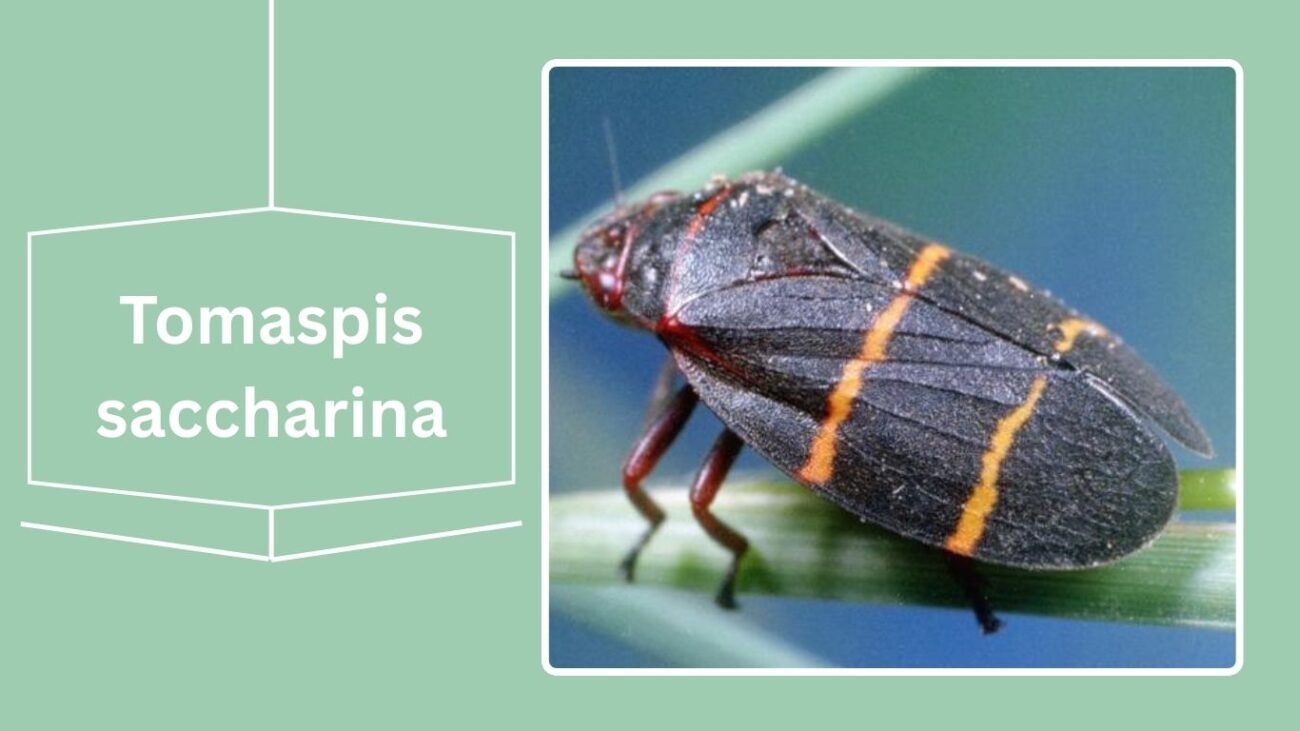
Tomaspis saccharina, commonly called the sugarcane froghopper, is a major agricultural pest that affects sugarcane crops in tropical regions. Its feeding behavior causes significant economic losses in commercial sugarcane production.
Identification
- Adults are medium-sized, measuring about 8–10 mm in length.
- Dark brown to black body, often with lighter wing markings.
- Compact, wedge-shaped body with strong hind legs adapted for jumping.
- Nymphs are yellowish to pale, found within foamy spittle masses at the base of sugarcane plants.
Habitat
This species is primarily found in Central and South America, where sugarcane cultivation is extensive. It thrives in warm, humid agricultural areas with dense stands of sugarcane and other grasses.
Behaviors
Nymphs develop in spittle masses, which provide moisture and protection. Adults disperse across sugarcane fields, feeding and reproducing rapidly. High infestations can devastate entire plantations, making this species a critical pest to monitor and manage.
Diet
Both nymphs and adults feed on sugarcane sap. Their feeding not only drains plant resources but also injects toxins, leading to yellowing, drying, reduced sugar yield, and in severe cases, plant death.