Auks are remarkable seabirds built for life on the ocean, known for their diving skills, unique plumage, and cliffside nesting habits. Found across the North Atlantic and Pacific, these birds include puffins, murres, guillemots, auklets, and murrelets. This guide covers 18 distinct types of auk birds, each with its own identification traits, preferred habitat, and diet—perfect for birdwatchers, researchers, or anyone fascinated by marine wildlife.
1. Atlantic Puffin
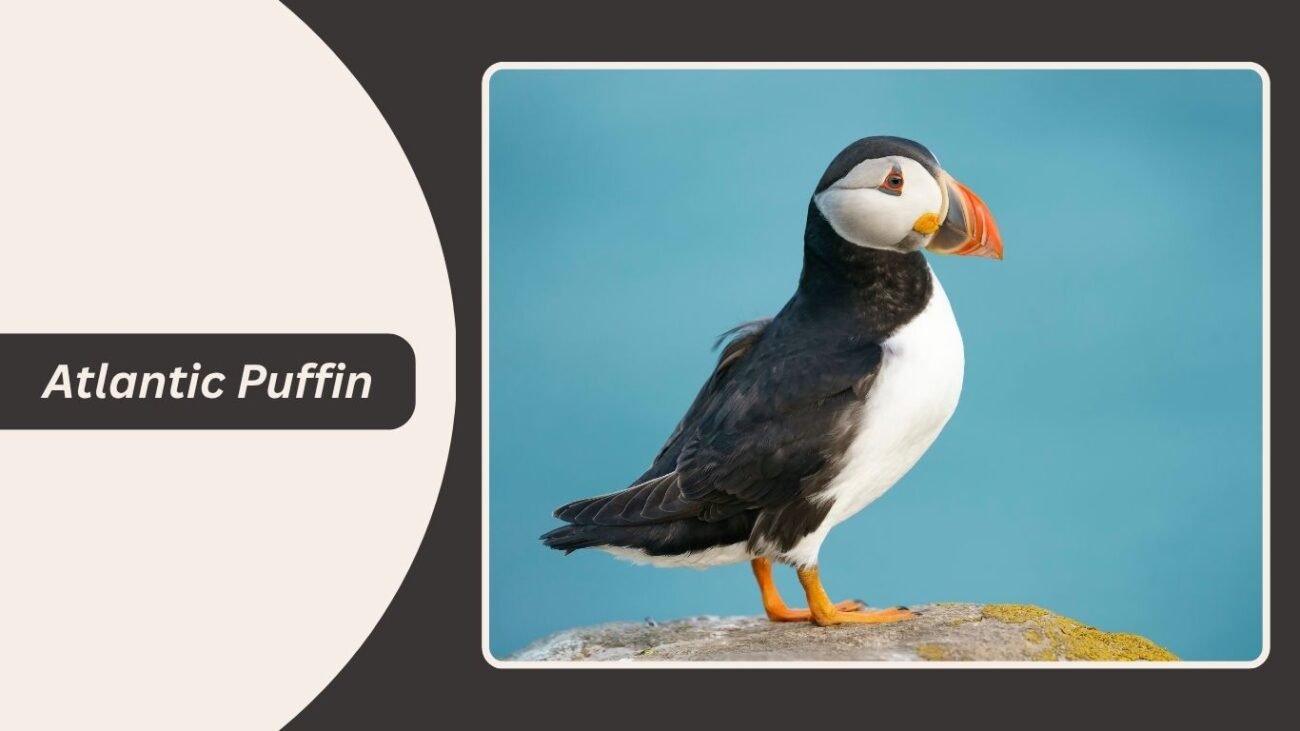
The Atlantic Puffin (Fratercula arctica) is one of the most iconic and beloved seabirds in the North Atlantic. With its colorful beak and upright stance, it’s often nicknamed the “clown of the sea.” This puffin is the only one found in the Atlantic Ocean and nests in large colonies on coastal cliffs and islands.
Identification
- Bright orange, triangular beak (larger and more colorful in summer)
- Black back and white underparts
- Distinct black cap and neck band
- Orange legs and webbed feet
- Compact body: about 26–29 cm long with a wingspan of 47–63 cm
Behavior
Atlantic Puffins are strong, fast fliers and expert swimmers. They use their wings to “fly” underwater while chasing fish. During breeding season, they form monogamous pairs and return to the same burrows each year. Outside of breeding, they live entirely at sea.
Habitat
They breed along the coasts of the North Atlantic, from eastern Canada and Greenland to Iceland, Norway, and the British Isles. Puffins prefer grassy or rocky cliffs and offshore islands where they can dig burrows or nest in rock crevices.
Diet
Their diet mainly consists of small fish such as sand eels, herring, and capelin. They can carry multiple fish crosswise in their beak thanks to a special hinge that keeps their catch in place. Puffins also eat crustaceans and zooplankton when fish are scarce.
2. Horned Puffin
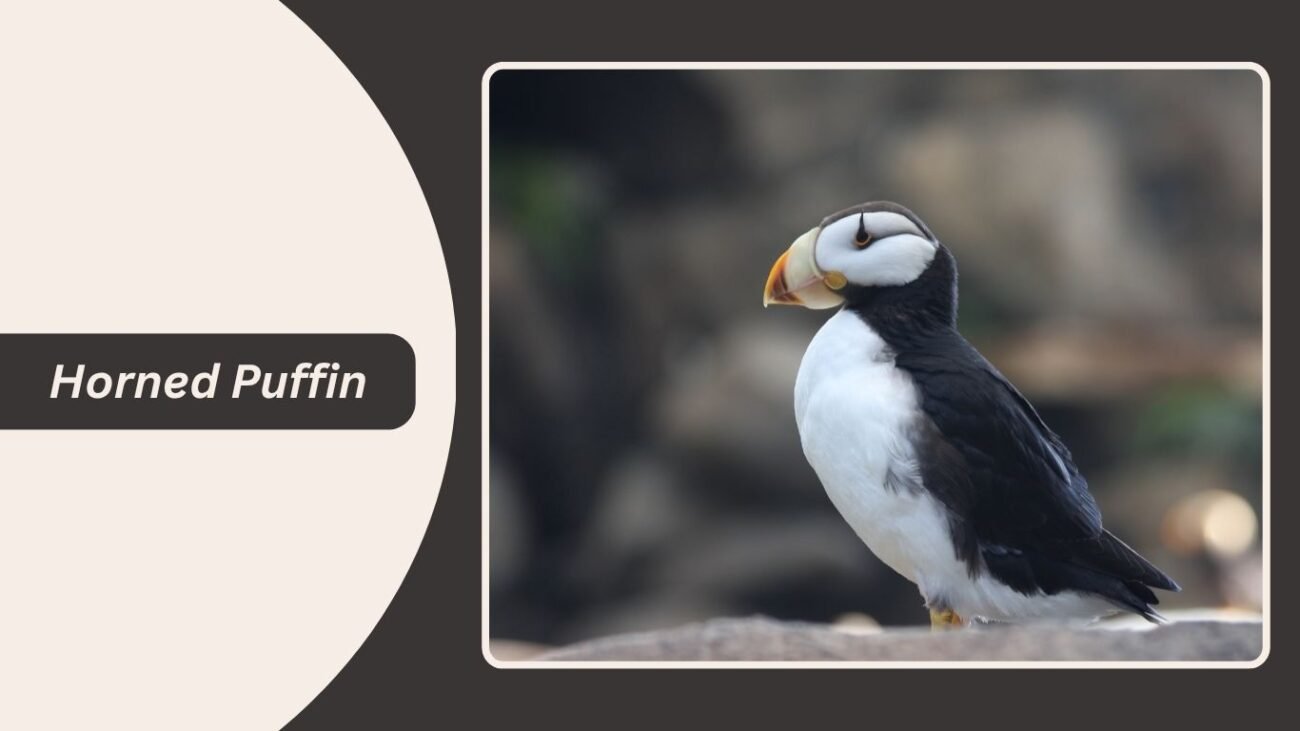
The Horned Puffin (Fratercula corniculata) is a striking seabird native to the North Pacific. It resembles the Atlantic Puffin but has unique facial features, including small fleshy “horns” above its eyes. These birds nest on rocky cliffs and spend much of their life at sea.
Identification
- Thick, colorful orange-yellow beak with red tip
- Black back and white underparts
- White face with a thin black line and small horn-like extensions above the eyes
- Orange feet
- Body length: 30–35 cm with a wingspan around 56–60 cm
Behavior
Horned Puffins are skilled swimmers and divers, using their wings to propel themselves underwater. They are monogamous and nest in rock crevices or under boulders rather than in burrows. Outside of breeding season, they are entirely pelagic and solitary.
Habitat
They nest along the rocky coastlines and offshore islands of Alaska, eastern Russia, and the Bering Sea. Unlike Atlantic Puffins, they prefer steeper cliffs with crevices for nesting rather than soil for burrowing.
Diet
Their diet mainly consists of small fish, including herring and sand lance, as well as squid and crustaceans. Horned Puffins catch prey by diving and may carry several fish at once in their specialized beaks.
3. Tufted Puffin
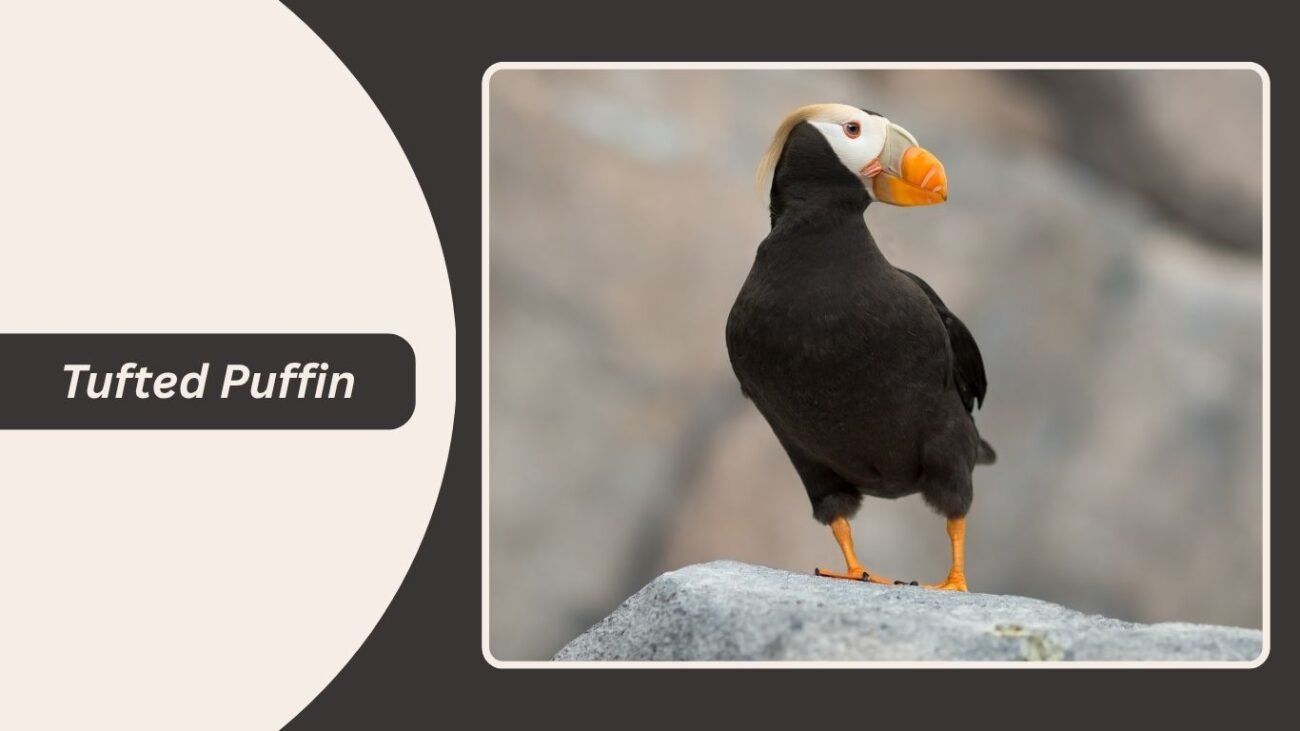
The Tufted Puffin (Fratercula cirrhata) is the most distinctive of all puffins, known for its golden tufts and bold appearance. It is the largest puffin species and thrives in the North Pacific.
Identification
- Entirely black body with a white face
- Long, golden-yellow feather tufts extending from behind the eyes
- Large red-orange beak
- Orange legs and feet
- Size: about 35 cm long with a wingspan up to 63 cm
Behavior
Tufted Puffins are excellent divers, plunging up to 60 meters to catch fish. They nest in burrows or crevices on grassy cliffs and show strong site fidelity, returning to the same nesting area annually. Outside the breeding season, they are solitary and remain far offshore.
Habitat
They breed on coastal cliffs and grassy islands across the North Pacific, from Japan and Siberia to Alaska and British Columbia. They prefer slopes or cliff tops where they can dig burrows for nesting.
Diet
They feed mainly on small fish, squid, and crustaceans. Tufted Puffins are efficient hunters, using rapid underwater wing beats to chase prey. They bring back multiple fish at a time during chick-rearing season.
4. Razorbill

The Razorbill (Alca torda) is a sleek, black-and-white seabird and the closest living relative of the extinct Great Auk. It breeds along rocky coastlines in the North Atlantic and is known for its deep diving ability and distinctive thick bill.
Identification
- Black head, back, and wings
- White underparts
- Thick, blunt black bill with a white vertical stripe
- White line extending from the bill to the eye
- Size: about 38–43 cm with a wingspan of 60–69 cm
Behavior
Razorbills are monogamous and return to the same rocky ledges each year to breed. They form large colonies and lay a single egg per season. Agile underwater hunters, they use their wings to swim and can dive more than 100 meters deep.
Habitat
They nest on rocky cliffs, ledges, and crevices along North Atlantic coasts, including eastern Canada, Greenland, Iceland, and northern Europe. Outside breeding season, they live far offshore in open waters.
Diet
Primarily feed on small fish like sand eels, herring, and capelin, but they also eat crustaceans. They often dive deep and forage in groups, sometimes bringing multiple fish to their chicks at once.
5. Common Murre

The Common Murre (Uria aalge), also known as the Common Guillemot in Europe, is a slender, black-and-white seabird that nests in vast, crowded colonies. It resembles a penguin in posture but is a strong flier and diver.
Identification
- Black head, back, and wings during breeding season
- White underparts
- Thin, pointed black bill
- Occasionally a white ring around the eye with a trailing line (bridled morph)
- Size: about 38–45 cm with a wingspan of 61–73 cm
Behavior
Common Murres breed in dense colonies, often standing shoulder-to-shoulder on narrow cliff ledges. They lay a single pear-shaped egg directly on bare rock. Chicks leap from cliffs into the sea before they can fly, guided by the calls of their parents.
Habitat
They nest on sheer cliffs and rocky islands across the North Atlantic and North Pacific, from northern Europe and eastern Canada to Alaska and Japan. Outside breeding, they migrate far offshore, often into open ocean.
Diet
They feed mainly on schooling fish like capelin, herring, and sand lance, as well as squid and marine worms. They are expert divers, reaching depths of over 100 meters, often staying submerged for more than a minute.
6. Little Auk

The Little Auk (Alle alle), also known as the Dovekie, is the smallest member of the auk family. Despite its tiny size, it’s incredibly hardy, thriving in the icy Arctic and forming vast breeding colonies on remote cliffs and scree slopes.
Identification
- Small, stocky body
- Black head, neck, and back
- White underparts
- Short, stubby black bill
- Size: about 19–21 cm with a wingspan of 34–38 cm
Behavior
Little Auks are highly social and nest in dense colonies, often numbering in the thousands. They nest in rock crevices or under boulders. Agile in flight and underwater, they use rapid wingbeats to “fly” through the sea while hunting plankton.
Habitat
They breed in the high Arctic, including Greenland, Svalbard, and Franz Josef Land, typically on rocky cliffs and scree slopes near the ocean. In winter, they migrate south to ice-free waters in the North Atlantic.
Diet
Their primary food source is zooplankton, especially copepods, amphipods, and other tiny marine invertebrates. They forage in large flocks and dive shallowly compared to larger auk species. Their diet is high-energy, helping them survive the cold Arctic climate.
7. Black Guillemot

The Black Guillemot (Cepphus grylle) is a medium-sized auk with striking seasonal plumage. Unlike many auks, it stays closer to shore year-round and is often seen alone or in small groups near rocky coastlines.
Identification
- Summer: solid black body with bold white wing patches
- Winter: mottled white and gray with dark wings
- Bright red legs and inside of mouth
- Thin, straight black bill
- Size: about 30–32 cm with a wingspan of 52–58 cm
Behavior
Black Guillemots are solitary nesters or form small colonies. They nest in rock crevices or under boulders and return to the same nesting spot year after year. They’re active swimmers and typically dive close to shore to forage.
Habitat
They are found along rocky coasts of the North Atlantic, including eastern Canada, Greenland, Iceland, the British Isles, and northern Europe. They are non-migratory in some areas, remaining in inshore waters even during winter.
Diet
Feeds mainly on small fish such as sculpins and blennies, as well as crustaceans and marine worms. They dive to moderate depths and often bring one fish at a time back to their chicks, held crosswise in their bill.
8. Pigeon Guillemot

The Pigeon Guillemot (Cepphus columba) is a coastal seabird of the North Pacific known for its bright red feet and striking contrast between its breeding and winter plumage. It often nests in burrows and rocky crevices along cliffs and sea caves.
Identification
- Summer: black body with large white wing patches
- Winter: mottled white and grey body with blackish wings
- Bright red feet and legs
- Thin, dark bill
- Size: about 30–34 cm with a wingspan of 50–58 cm
Behavior
Pigeon Guillemots are relatively solitary compared to other auk species. They often forage close to shore and nest in individual crevices or burrows, not in dense colonies. They are excellent divers and typically dive singly or in pairs.
Habitat
Found along the rocky shorelines of the North Pacific—from Alaska down to California and across to eastern Russia and Japan. They nest in coastal cliffs, sea caves, rock piles, and even man-made structures like wharves and piers.
Diet
They feed mainly on benthic (bottom-dwelling) prey such as fish (sculpins, sand lance), crustaceans, and marine worms. They hunt in shallow waters and often bring prey back whole to their chicks. Their diving is efficient but typically stays near shore.
9. Spectacled Guillemot
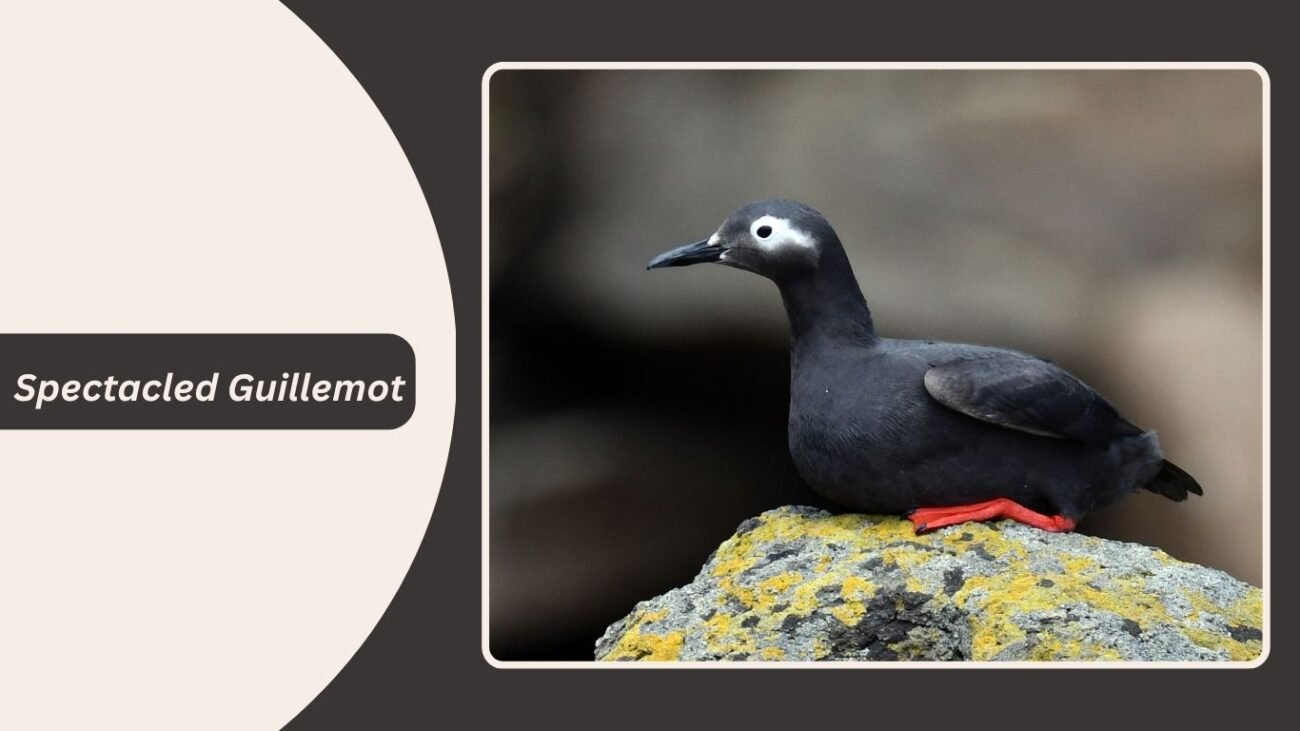
The Spectacled Guillemot (Cepphus carbo) is a lesser-known but striking seabird native to the coasts of northeastern Asia. Its name comes from the distinct white ring around its eye, giving it a “spectacled” look.
Identification
- Mostly black plumage during breeding
- Prominent white wing patch
- Distinct white eye ring (spectacle-like)
- Red feet and thin black bill
- Size: about 30–32 cm with a wingspan of 52–58 cm
Behavior
Spectacled Guillemots are shy and often stay close to rocky shores. They nest in crevices or under rocks, usually in small groups. During courtship, they perform fluttering displays near the water surface. They are less vocal than other guillemots but very territorial around nest sites.
Habitat
They breed along the coasts of Russia, Japan, and Korea, favoring rocky islands, cliffs, and rugged coastlines. Their nesting sites are often inaccessible and hidden in dense boulder fields or under overhangs.
Diet
Their diet includes small fish, shrimps, and crustaceans. They typically dive in shallow coastal waters to hunt near the seabed and use strong wing beats for agile underwater movement. They often carry prey back to the nest one piece at a time.
10. Ancient Murrelet

The Ancient Murrelet (Synthliboramphus antiquus) is a small, fast-moving seabird known for its unique breeding behavior—its chicks leave the nest just days after hatching and head straight to sea with their parents. It breeds along the North Pacific, including parts of North America and East Asia.
Identification
- Black head, throat, and back
- Grey wings and white underparts
- White streaks on the sides of the head (like a short white beard)
- Small, stubby black bill
- Size: about 25 cm long with a wingspan of 42–46 cm
Behavior
Ancient Murrelets nest in burrows or natural crevices and are nocturnal at colonies to avoid predators. After hatching, chicks immediately leave the nest and swim out to sea with their parents, relying on them for food. They are swift swimmers and fliers.
Habitat
Breeding colonies are found on remote islands along the coasts of British Columbia, Alaska, and northeast Asia. Outside of breeding, they spend their lives at sea, often in deep offshore waters.
Diet
Feeds on small fish, zooplankton, and crustaceans. They forage far offshore and dive to catch prey using rapid wing beats underwater. Their feeding strategy involves both surface pecking and pursuit diving.
11. Marbled Murrelet
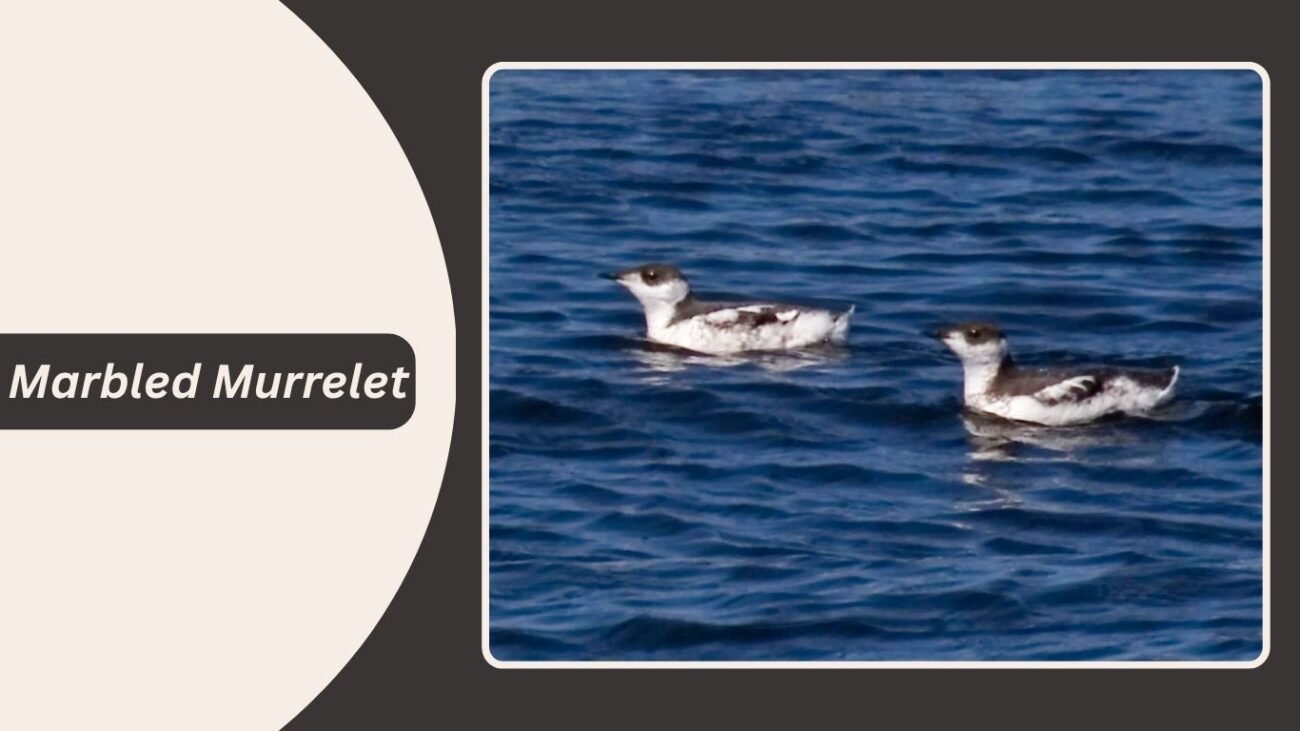
The Marbled Murrelet (Brachyramphus marmoratus) is a mysterious seabird famous for nesting in old-growth forests—sometimes miles from the sea. It’s one of the few seabirds in the world with this unusual inland nesting habit.
Identification
- Breeding: mottled brown and white plumage for camouflage in forest
- Non-breeding: black cap, white neck, and white underparts with a darker back
- Short neck and tail, chunky appearance
- Size: about 24 cm with a wingspan of 45–50 cm
Behavior
Unlike most auks, Marbled Murrelets fly inland to nest alone on wide mossy branches of ancient trees, often redwoods or Sitka spruce. They lay a single egg and raise their chick in near-complete solitude. Outside breeding, they stay in pairs or small groups at sea.
Habitat
Nests in coastal old-growth forests in the Pacific Northwest (USA and Canada), sometimes over 50 km from the shore. Foraging areas are typically coastal bays and inlets. Its unique nesting habitat makes it vulnerable to logging and habitat loss.
Diet
They feed on small fish such as sand lance and anchovies, as well as crustaceans. Foraging usually occurs nearshore. They’re skilled divers and can stay submerged for extended periods while hunting.
12. Kittlitz’s Murrelet
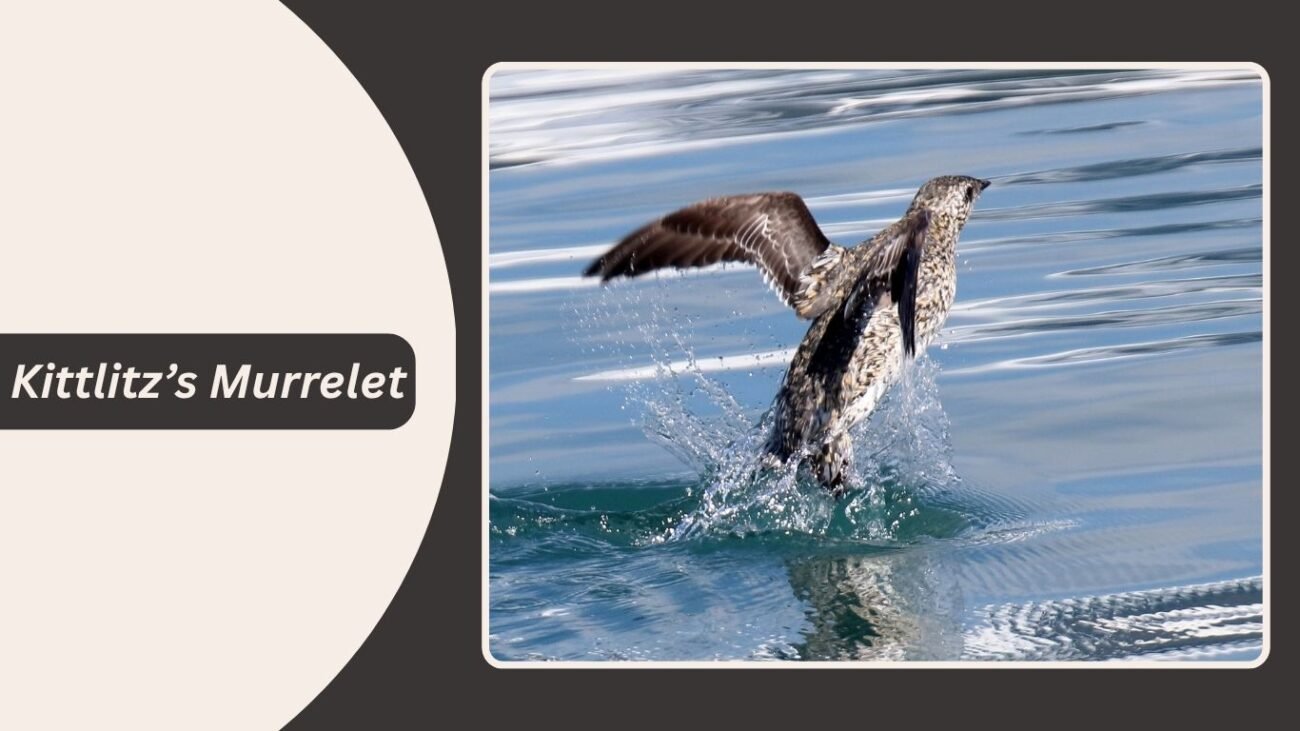
Kittlitz’s Murrelet (Brachyramphus brevirostris) is a rare and elusive seabird that inhabits the remote coastal areas of Alaska and eastern Russia. It is closely related to the Marbled Murrelet but prefers glacial environments, making it one of the most specialized auks.
Identification
- Breeding: mottled grey-brown plumage with pale face and underparts
- Non-breeding: white underparts and throat with dusky back and crown
- Short neck and tail, chunky body
- Distinctive pale eye-ring
- Size: about 25 cm with a wingspan of 40–45 cm
Behavior
Kittlitz’s Murrelets nest on barren, rocky alpine slopes near glaciers—sometimes miles inland. They are solitary nesters and extremely sensitive to disturbance. They are fast fliers and skilled divers, often foraging alone in glacial fjords.
Habitat
Found in remote coastal regions of western Alaska and northeastern Siberia. Breeding occurs in glacial or volcanic terrain near the coast. Outside the breeding season, they move into nearby coastal waters, especially in fjords and ice-edge areas.
Diet
Feeds primarily on small schooling fish such as sand lance and capelin, as well as zooplankton. Foraging is done close to the surface or via shallow dives. Their reliance on cold, glacial waters makes them highly vulnerable to climate change.
13. Long-billed Murrelet
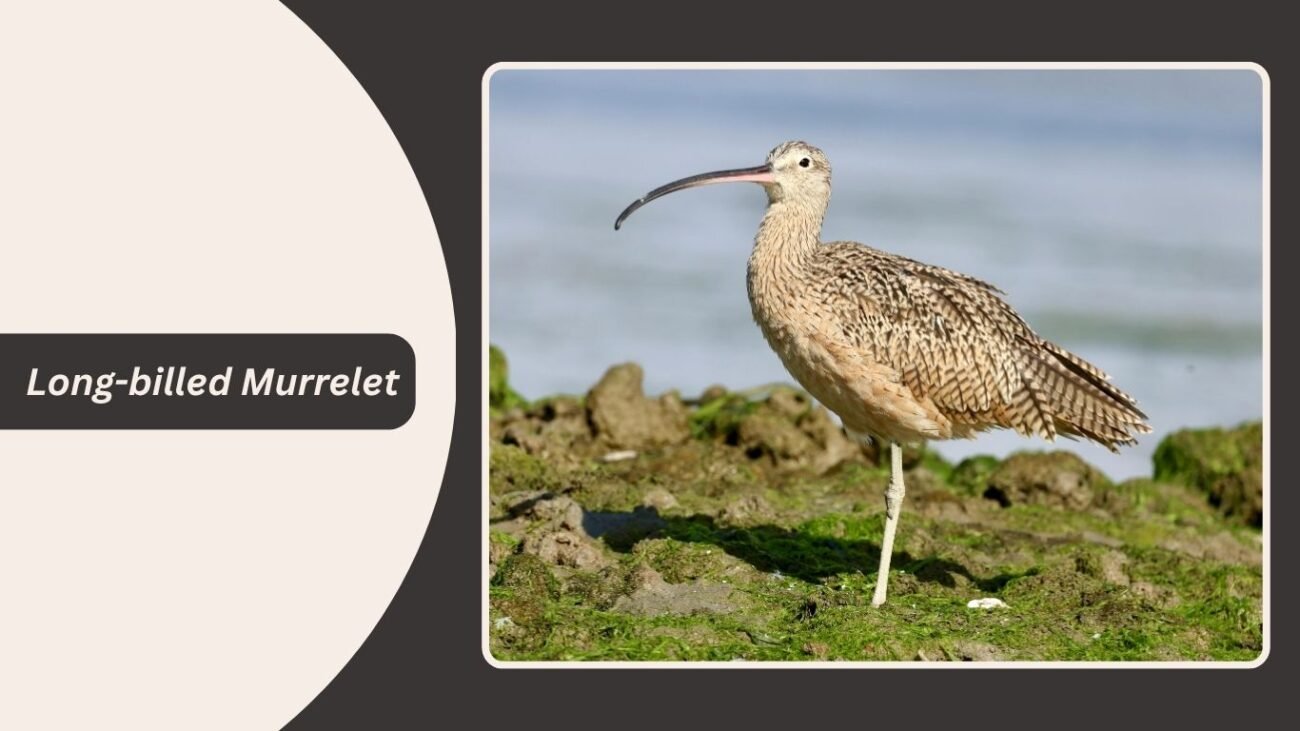
The Long-billed Murrelet (Brachyramphus perdix) is a cryptic seabird that nests in inland forests across parts of eastern Russia and occasionally Japan. It’s very similar to the Marbled Murrelet but has a longer bill and a slightly more contrasting appearance.
Identification
- Breeding: mottled brown body and dark wings for camouflage
- Non-breeding: white underparts and neck, dark upperparts and cap
- Longer bill compared to Marbled Murrelet
- Slightly paler underwings
- Size: about 25–26 cm with a wingspan of 45–50 cm
Behavior
Long-billed Murrelets fly long distances inland to nest in old trees, just like their close relatives. They are quiet and difficult to detect while nesting. At sea, they’re usually seen alone or in pairs and dive for prey using strong, fast strokes.
Habitat
Breeds in old-growth forests of eastern Siberia, far inland from the coast. Nesting usually takes place on horizontal limbs of ancient conifers. At sea, they forage in coastal waters, including bays and inlets, especially near their forested nesting zones.
Diet
They eat small fish (like anchovies and sand lance), crustaceans, and marine invertebrates. Foraging typically occurs close to the shore but may range farther out when feeding chicks. They catch prey by diving and swimming with their wings.
14. Japanese Murrelet
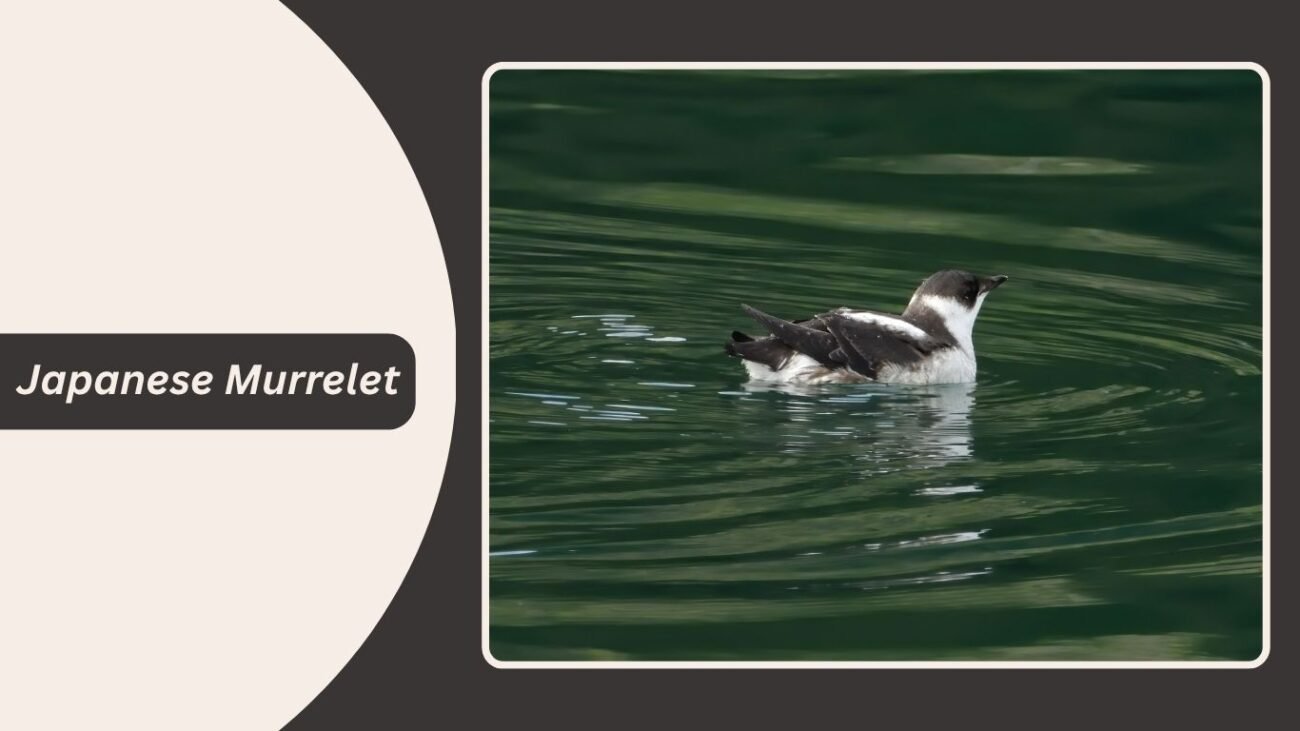
The Japanese Murrelet (Synthliboramphus wumizusume) is a small, rare seabird endemic to the coastal waters of Japan and southern Korea. With its distinct plumage and limited breeding range, it is considered one of the most endangered murrelets.
Identification
- Black crown and nape
- White face, throat, and underparts
- Grey back and wings
- Slender black bill and dark eye
- Size: about 23–25 cm with a wingspan of 43–46 cm
Behavior
Japanese Murrelets are shy and elusive. They nest in small crevices among coastal rocks and often remain hidden during the day. After breeding, they move offshore. They are swift underwater swimmers and capable fliers, often seen flying low over waves.
Habitat
They breed on remote, predator-free islets off the southern coasts of Japan and South Korea. Nesting typically occurs in rock crevices and grassy slopes close to shore. Outside of breeding, they forage in nearby coastal waters.
Diet
Their diet includes small fish such as anchovies and sardines, as well as crustaceans and planktonic invertebrates. They forage by diving and swimming, usually near the water surface or at moderate depths.
15. Cassin’s Auklet
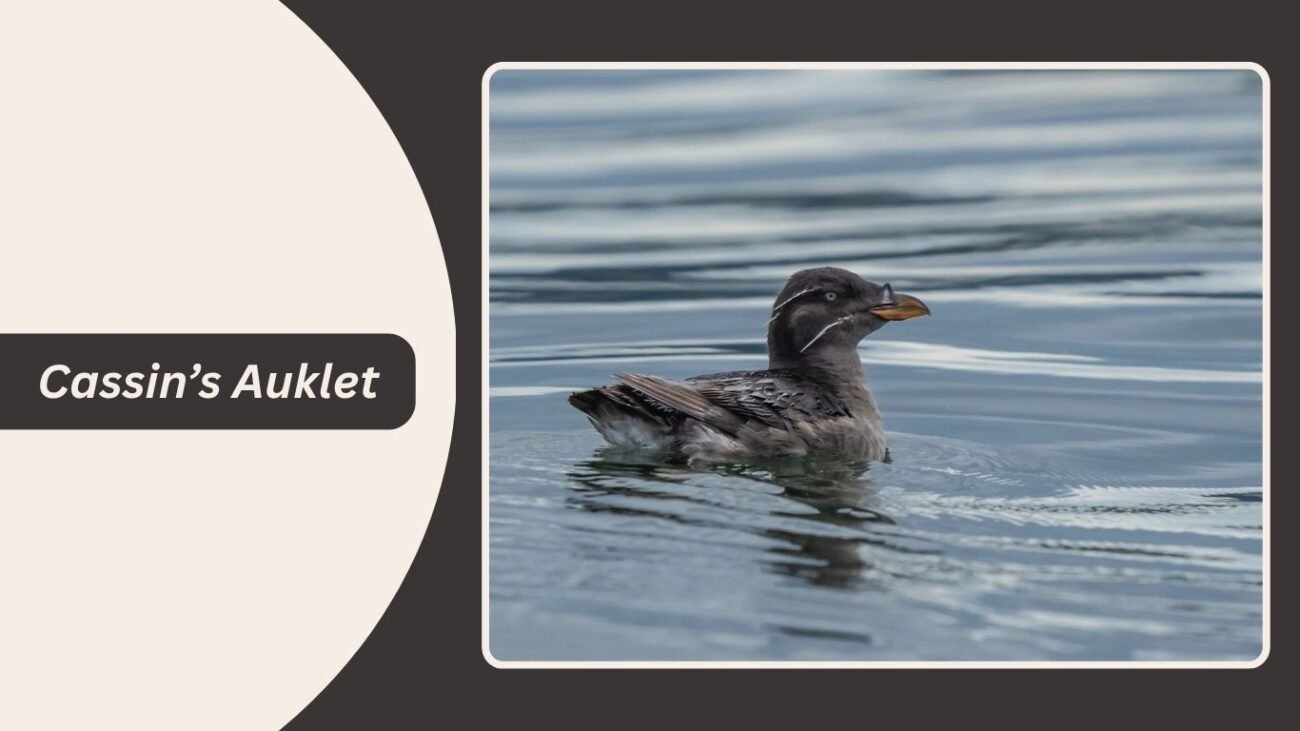
Cassin’s Auklet (Ptychoramphus aleuticus) is a small, nocturnal seabird of the North Pacific, often heard rather than seen due to its secretive nesting habits. It’s known for its strong, steady flight and burrow-nesting behavior.
Identification
- Slate-grey body
- Pale belly and throat
- Distinct pale crescent above the eye
- Stubby, dark bill
- Size: about 23 cm long with a wingspan of 38–40 cm
Behavior
Cassin’s Auklets are active at night at their nesting colonies to avoid predators. They nest in burrows dug into soil or grassy slopes, sometimes hundreds of pairs in a colony. Chicks are fed oily, energy-rich prey brought in by parents.
Habitat
They nest on remote islands along the Pacific coast of North America, from Alaska to Baja California. Burrows are usually in soft soil or under vegetation. At sea, they prefer cool, nutrient-rich upwelling zones far from shore.
Diet
Their diet consists mainly of krill, copepods, and other zooplankton, along with small fish. They are deep-diving foragers, often descending over 30 meters in pursuit of prey. Their high-energy diet helps them raise chicks rapidly.
16. Rhinoceros Auklet
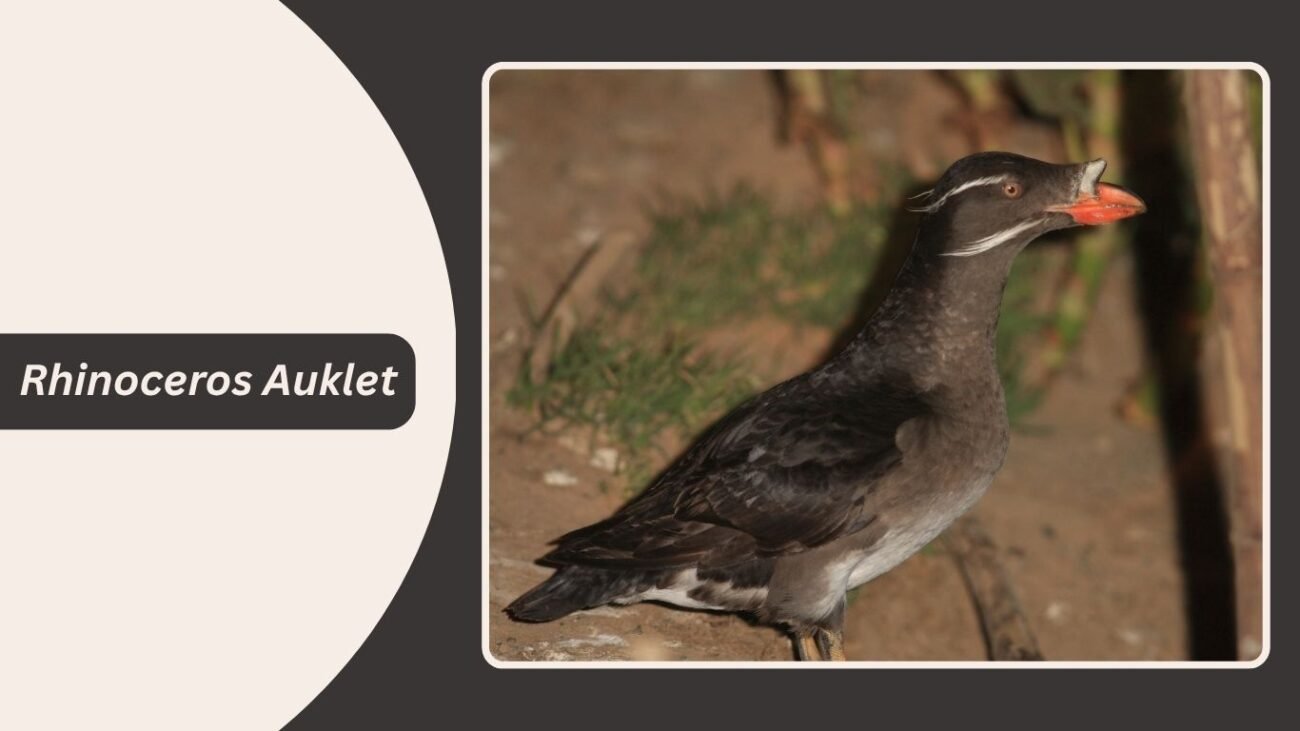
The Rhinoceros Auklet (Cerorhinca monocerata) is a chunky seabird in the auk family and a close relative of puffins, though it lacks the bright colors. It gets its name from the horn-like projection on its bill, visible during the breeding season.
Identification
- Slate-grey body and head
- White plumes behind the eyes and on the face in breeding season
- Thick orange bill with a vertical horn-like extension at the base
- Size: about 30–35 cm with a wingspan of 50–60 cm
Behavior
Rhinoceros Auklets are primarily nocturnal at their nesting colonies. They dig burrows or use natural crevices and lay a single egg per season. At sea, they are often solitary or in small groups and can dive to significant depths in search of prey.
Habitat
They nest on islands and coastal cliffs along the North Pacific, from California and Alaska to Japan and Korea. Nesting occurs in underground burrows on grassy slopes or wooded areas. At sea, they roam widely and can be found far from shore.
Diet
Their diet includes small fish such as anchovies, sand lance, and herring, as well as squid and crustaceans. They often forage at night and carry multiple fish in their bills crosswise to feed chicks—similar to puffins.
17. Whiskered Auklet

The Whiskered Auklet (Aethia pygmaea) is a small, secretive seabird found only in the Aleutian and nearby Russian islands. It is named for its long, white facial plumes or “whiskers,” which help it navigate in dark crevices.
Identification
- Dark grey to black body
- White “whisker” plumes on face during breeding season
- Orange bill and yellowish legs
- Small and round-bodied
- Size: about 19–21 cm with a wingspan of 34–36 cm
Behavior
Whiskered Auklets are crevice-nesters and highly nocturnal at colonies. They are unique among auklets for remaining near their breeding islands year-round. Their facial plumes are thought to be tactile aids for navigating rocky nests in total darkness.
Habitat
Inhabits the Aleutian Islands and nearby Russian islets. They nest in sea caves, rock piles, and lava crevices, typically in isolated, predator-free environments. Unlike many seabirds, they do not migrate far and stay nearshore year-round.
Diet
They feed on copepods, amphipods, and other zooplankton. Foraging usually occurs at night or early morning in nearshore waters. They are agile underwater swimmers, using their wings to chase plankton near the surface.