Tit birds are small, energetic, and widely loved for their bold personalities and adaptability. Found across Europe, Asia, and Africa, each species offers unique traits—from the colorful Blue Tit to the majestic Sultan Tit. This guide explores 25 types of tit birds, detailing how to identify them, where they live, and what they eat. Whether you’re a birder or nature lover, this list helps you spot and understand these feathered gems.
1. Great Tit
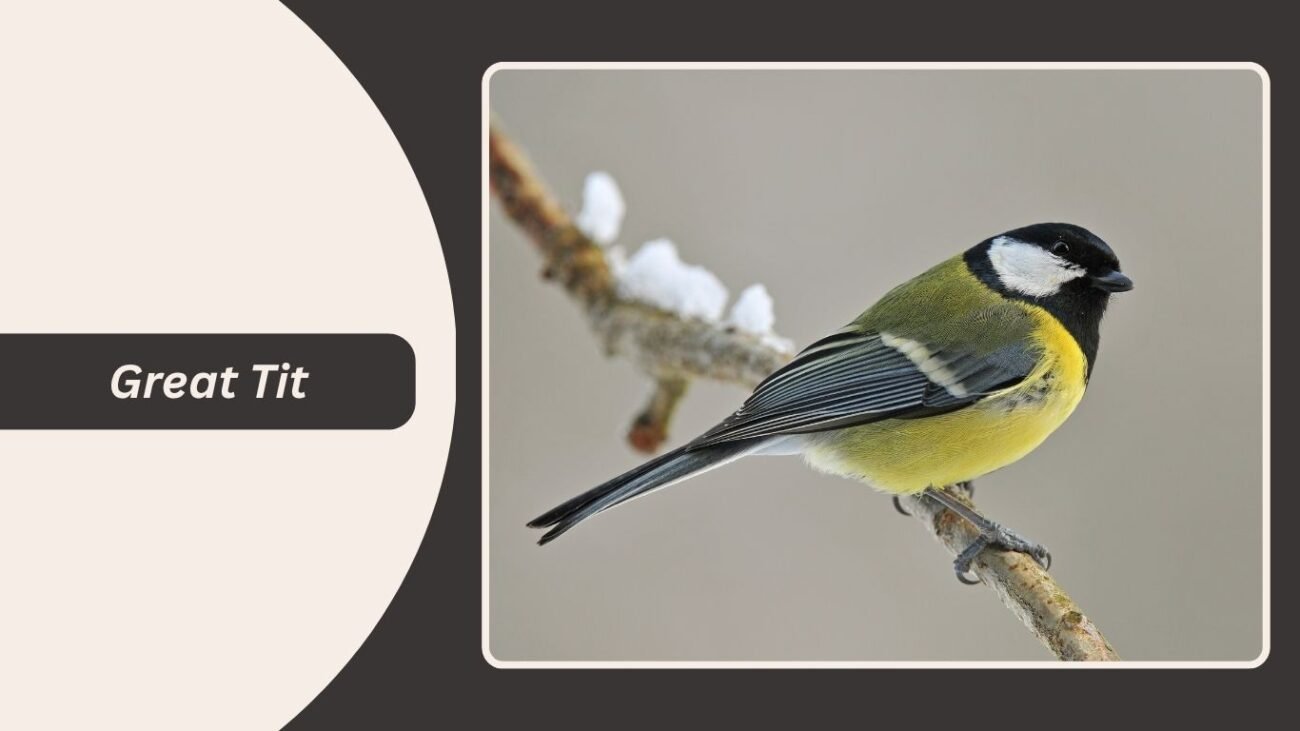
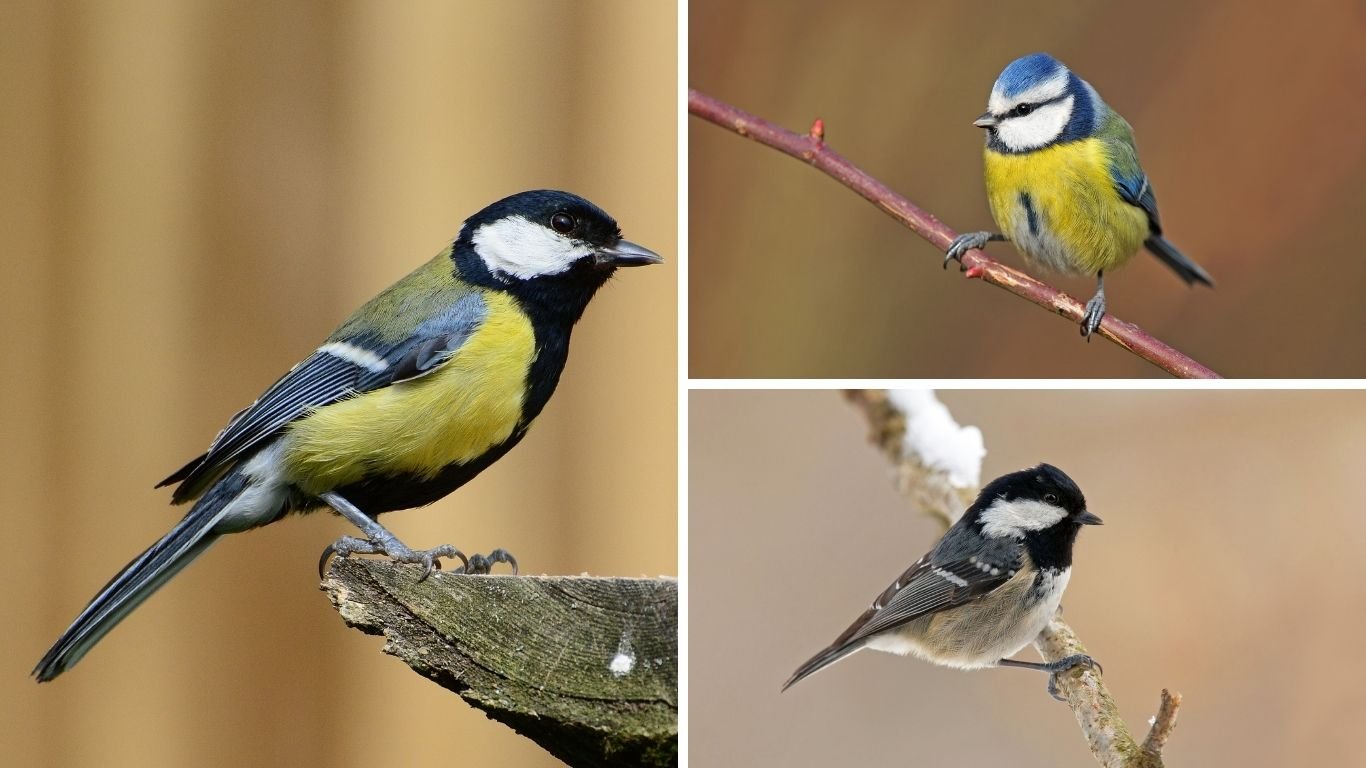
The Great Tit (Parus major) is the largest and one of the most widespread members of the tit family. Found across Europe, Asia, and parts of North Africa, this bird is easily recognized by its bold black, white, and yellow coloring. It thrives in woodland, gardens, and urban areas and is well known for its wide variety of calls.
Identification
- Bold black head and neck
- White cheeks
- Olive-green back and yellow underparts
- Black stripe running down the belly
- Medium-sized, about 12.5–14 cm long
Behavior
Great Tits are highly active and social birds. They often come to feeders and are known for their intelligence. They use tools and have complex vocalizations.
Habitat
They live in deciduous woodlands, parks, gardens, and hedgerows, often nesting in tree holes or nest boxes.
Diet
Great Tits feed on insects, seeds, and nuts. They also adapt quickly to bird feeders and urban food sources.
2. Blue Tit
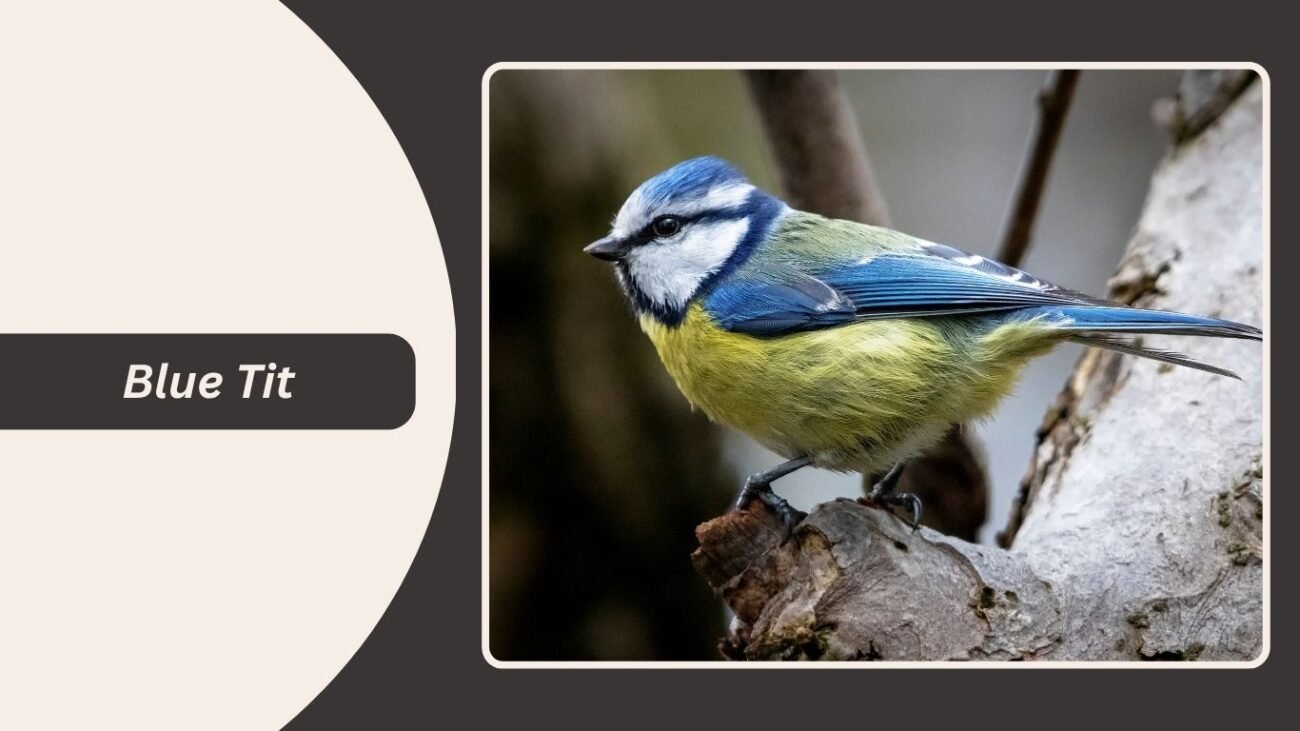
The Blue Tit (Cyanistes caeruleus) is a small, colorful bird found throughout Europe and parts of western Asia. It’s one of the most familiar garden birds in the UK, easily recognized by its vibrant blue and yellow plumage and acrobatic behavior.
Identification
- Bright blue cap, wings, and tail
- White face with a dark blue line through the eye
- Yellow underparts
- Greenish back
- Small size: around 11–12 cm
Behavior
Blue Tits are agile and curious. They often hang upside down from branches and feeders while searching for food. They’re also known for problem-solving skills, such as opening milk bottle tops in the past.
Habitat
They prefer woodland edges, gardens, parks, and hedgerows, especially where there are plenty of trees or shrubs for nesting.
Diet
They eat insects, caterpillars, seeds, and fat. They’re frequent visitors to bird feeders, especially for peanuts and suet.
3. Coal Tit
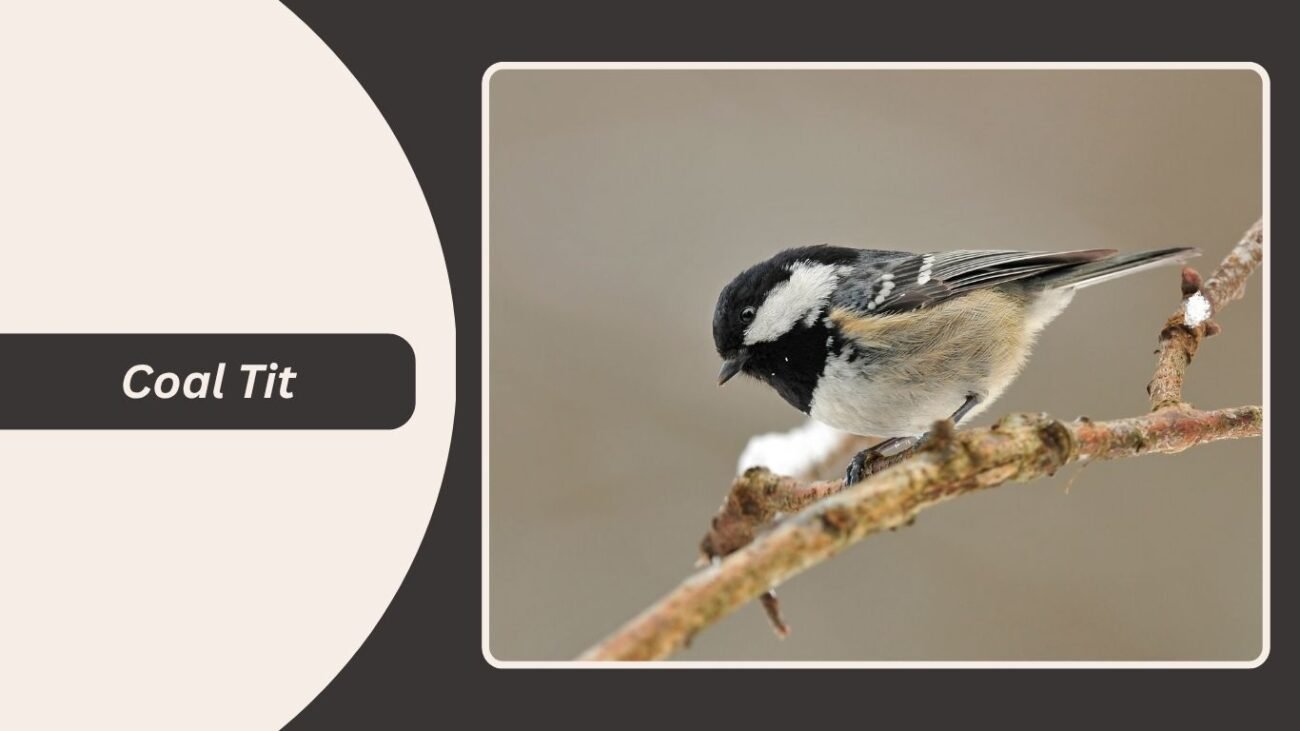
The Coal Tit (Periparus ater) is a small, energetic bird with a distinctive appearance and call. Though less brightly colored than other tits, it’s known for its high-pitched song and preference for coniferous woodland.
Identification
- Black cap and bib with white cheeks
- White patch at the back of the neck
- Grey back and buff underparts
- Two white wing bars
- Slightly smaller than a Blue Tit: around 10–11 cm
Behavior
Coal Tits are quick and restless, often seen flitting through trees and shrubs. They’re more secretive than other tit species but will still visit feeders.
Habitat
They are commonly found in coniferous forests, mixed woodlands, parks, and gardens.
Diet
They mainly eat insects and spiders in summer, switching to seeds and nuts in winter. They also store food in hidden places for later use.
4. Sultan Tit
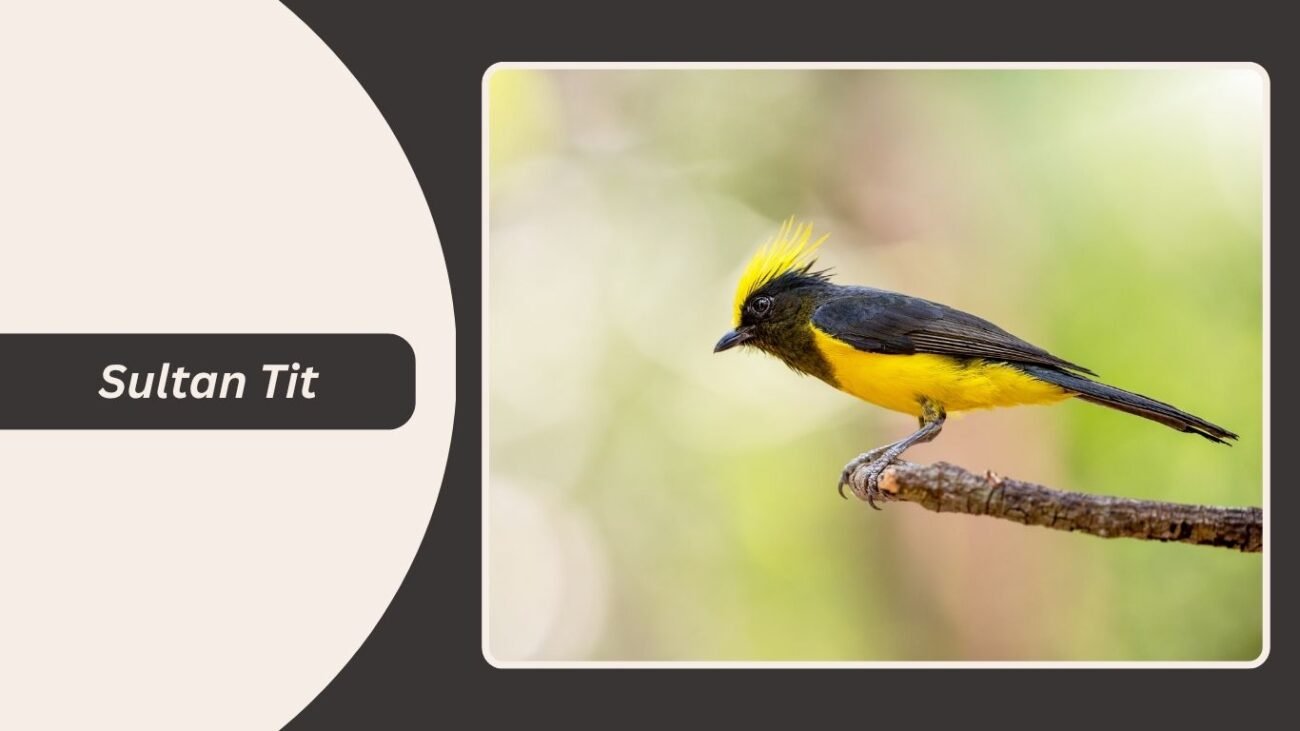
The Sultan Tit (Melanochlora sultanea) is the largest and most flamboyant member of the tit family, known for its brilliant yellow crest and greenish plumage. Found in the forests of South and Southeast Asia, it stands out for both its size and color.
Identification
- Bright yellow crest, cheeks, and underparts
- Glossy black head and upperparts
- Olive-green back and wings
- Long tail and strong bill
- Size: about 17–19 cm, making it the largest tit
Behavior
Sultan Tits are confident and sociable, often moving in small flocks. They forage actively in the canopy and mid-level branches, hopping and climbing through foliage with agility. Their calls are loud, musical, and varied.
Habitat
They inhabit dense evergreen and moist deciduous forests, often in hilly or mountainous terrain. Found from the Himalayan foothills to Thailand, Malaysia, and parts of Indonesia. They prefer undisturbed forest but can sometimes be seen in large parks or tea estates with good tree cover.
Diet
Feeds mainly on insects, caterpillars, and spiders during the breeding season. In other months, they consume fruits, berries, nectar, and seeds. Tds, suet, peanuts, and mealworms. They can peel husks off seeds with their tiny but strong beaks.
5. Spot-winged Tit
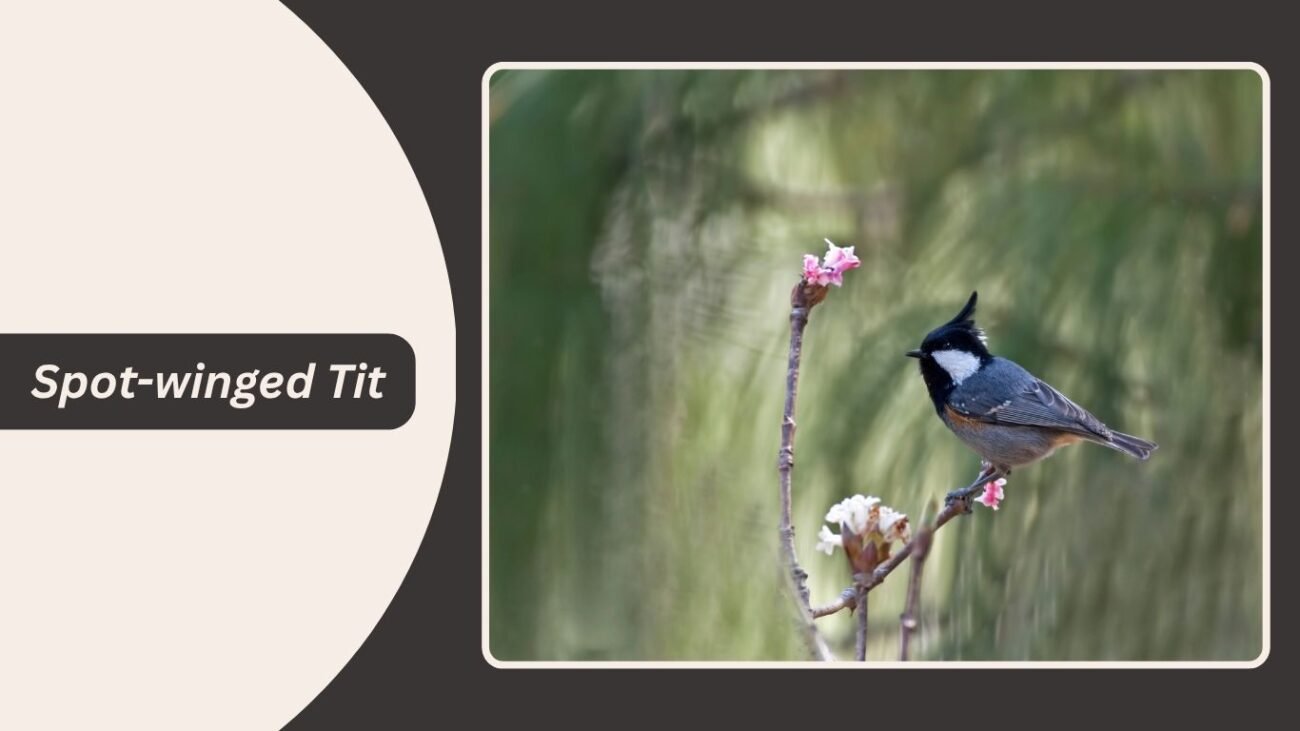
The Spot-winged Tit (Periparus melanolophus) is a high-altitude bird with distinctive markings and a spiky crest. Found in the western Himalayas, it is well-adapted to cold climates and coniferous forests.
Identification
- Black crest, head, and bib
- White cheeks and nape patch
- Grey upperparts with white spots on the wings
- Pale underparts with a faint buff wash
- Size: about 13 cm
Behavior
This tit is active and restless, often seen darting among branches or hanging upside down while foraging. It’s more often heard than seen, with a sharp, buzzing call. It joins mixed flocks during winter and is highly territorial during breeding.
Habitat
Inhabits pine, deodar, and mixed coniferous forests in the Himalayan foothills, typically between 1,500 and 3,000 meters. It prefers colder, open forests with a sparse undergrowth. Nesting occurs in tree holes or crevices, often lined with moss and fur.
Diet
Feeds on small insects, grubs, and spiders during the breeding season. In autumn and winter, it eats conifer seeds, berries, and sometimes visits f
6. Marsh Tit
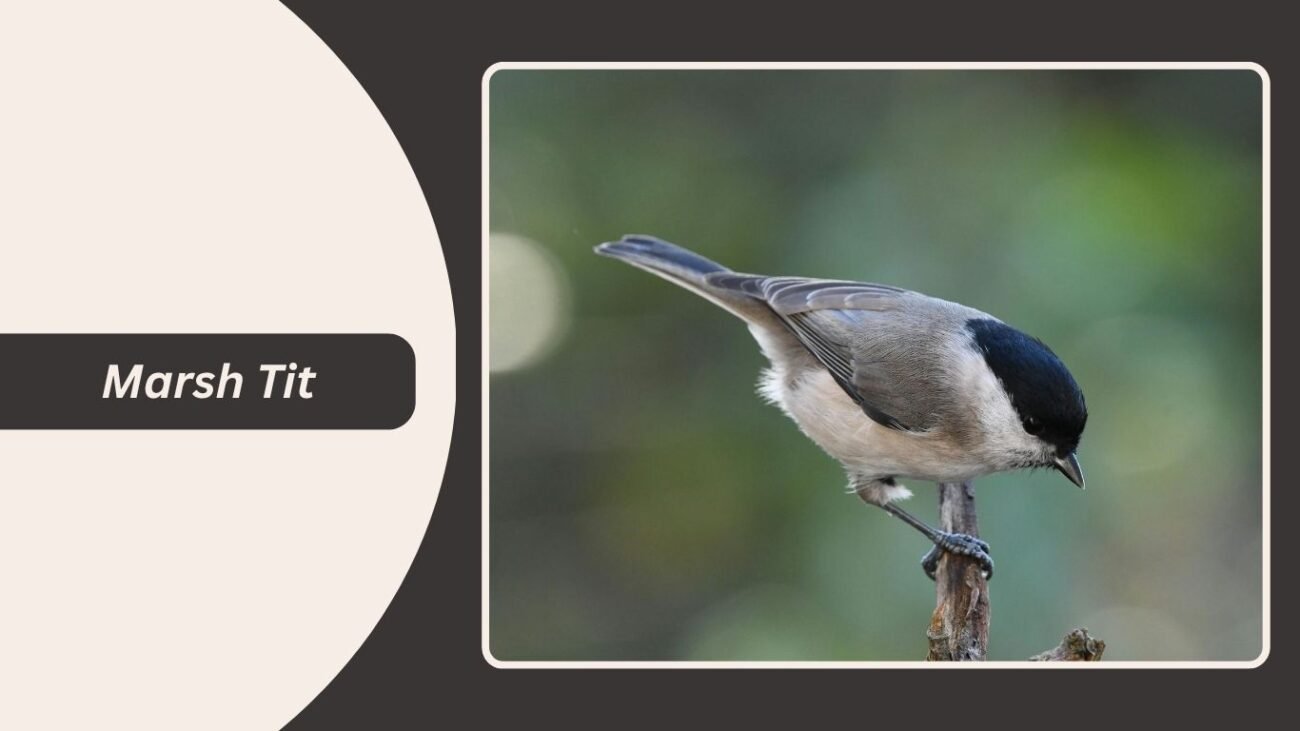
The Marsh Tit (Poecile palustris) is a small, secretive bird often confused with the Willow Tit. Despite its name, it is not limited to marshy areas and is more often seen in dense woodlands. It’s a quiet and solitary member of the tit family.
Identification
- Glossy black cap
- Small black bib
- Pale face with no white wing markings
- Buff underparts and grey-brown upperparts
- Tiny size: about 11–12 cm
Behavior
Marsh Tits are less active at feeders compared to other tits and prefer secluded areas. They are territorial and remain in the same range year-round. Unlike other tits, they have a weak call rather than a wide variety of vocalizations.
Habitat
Marsh Tits prefer mature deciduous woodlands with dense undergrowth, especially areas with oak, beech, and hazel. They are also found in wooded river valleys and old hedgerows. Though their name suggests wetland areas, they rarely inhabit actual marshes. They nest in tree cavities and may use nest boxes in appropriate habitats.
Diet
Their diet includes small insects, larvae, and spiders during spring and summer. In colder seasons, they shift to seeds and berries. Marsh Tits are known to store food in crevices, often visiting their caches later. While they may occasionally visit feeders, they tend to forage in natural surroundings, picking at bark and leaf litter.
7. Willow Tit
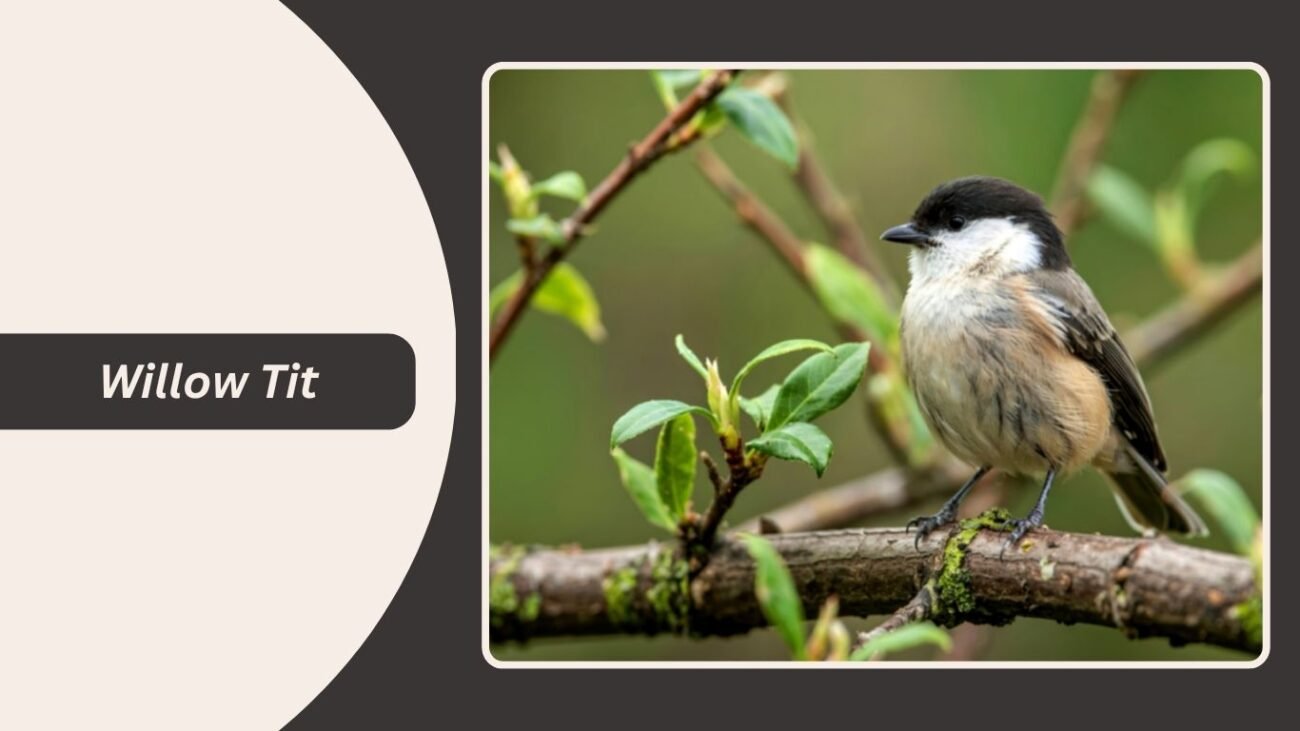
The Willow Tit (Poecile montanus) is very similar in appearance to the Marsh Tit but can be distinguished by voice and subtle features. It prefers wetter habitats and is in decline in many areas, making sightings more special.
Identification
- Black cap that extends down to the nape
- Small black bib
- Pale cheeks with a more “sooty” appearance than Marsh Tit
- Pale underparts, grey-brown back
- No white wing bar
- Size: 11–12 cm
Behavior
Willow Tits are calm and quiet birds, often overlooked due to their discreet behavior. They are known for their soft “zi-zi-zah” call and may dig their own nest holes in rotting wood—unusual for tits.
Habitat
They favor damp, lowland habitats like wet woodland, willow thickets, alder carr, and overgrown scrub near water. Unlike the Marsh Tit, Willow Tits are closely associated with marshy ground and often nest in decaying wood or soft tree trunks. Habitat loss has led to serious declines in many countries.
Diet
Their diet includes beetles, larvae, spiders, and other invertebrates in warmer months. During fall and winter, they switch to seeds, especially alder and birch, and are known to cache food. They visit feeders less frequently than Great or Blue Tits, but will take fat and seed when available.
8. Crested Tit
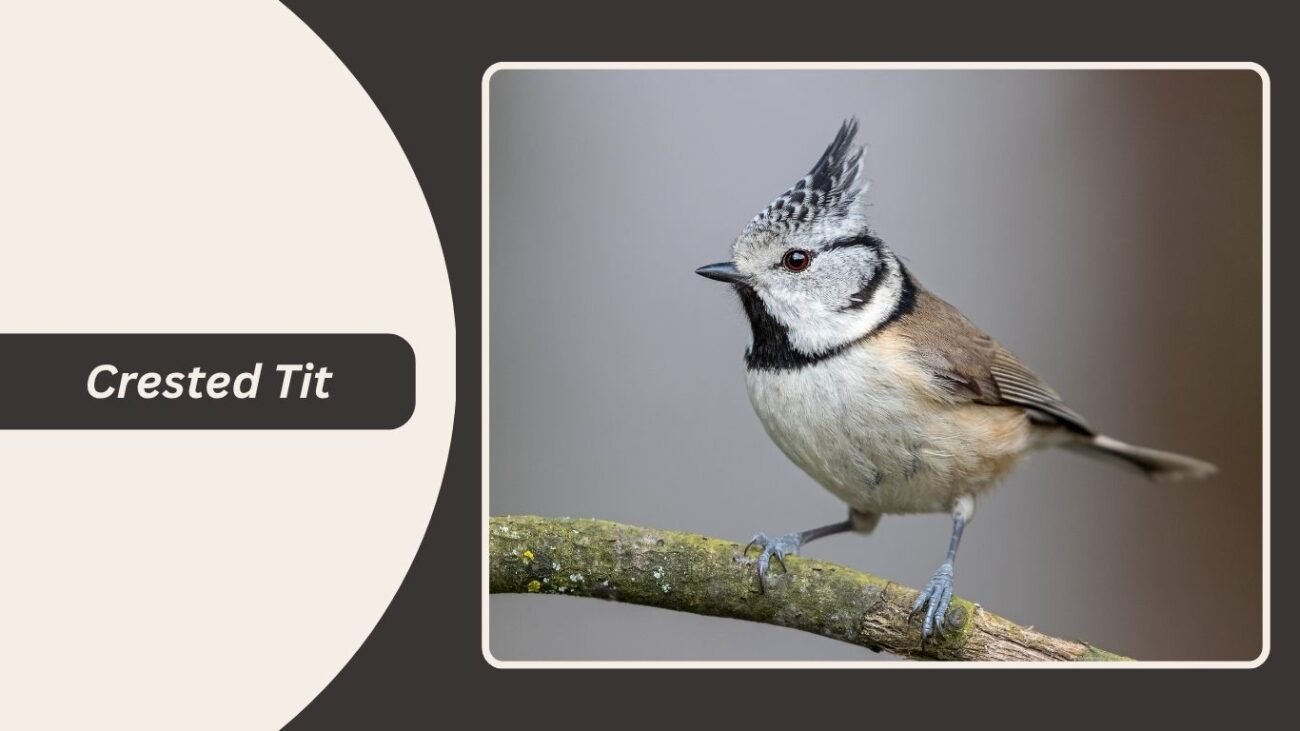
The Crested Tit (Lophophanes cristatus) is a striking and easily recognizable tit species due to its unique head crest. It’s mainly found in pine forests of central and northern Europe and is a favorite among birdwatchers for its charming appearance.
Identification
- Prominent black-and-white crest on the head
- Black eye-stripe and bib
- Pale face and underparts
- Brownish back and wings
- About 11.5 cm in size
Behavior
Crested Tits are active and social, often joining mixed-species flocks outside of the breeding season. They show curiosity and are known for their acrobatic feeding habits. During winter, they’re often seen with coal tits and other small birds.
Habitat
They are closely associated with mature coniferous forests, particularly Scots pine woodlands. In the UK, they are mostly found in the Caledonian pine forests of northern Scotland. In mainland Europe, they inhabit mountainous pine and mixed forests. They nest in tree holes, often in rotten stumps, and sometimes use nest boxes.
Diet
Crested Tits feed on insects, spiders, and caterpillars during the breeding season. In autumn and winter, they shift to conifer seeds, nuts, and other plant material. They’re frequent visitors to feeders in forested areas, where they enjoy sunflower seeds, suet, and peanuts. They may also hoard food for later use.
9. Long-tailed Tit
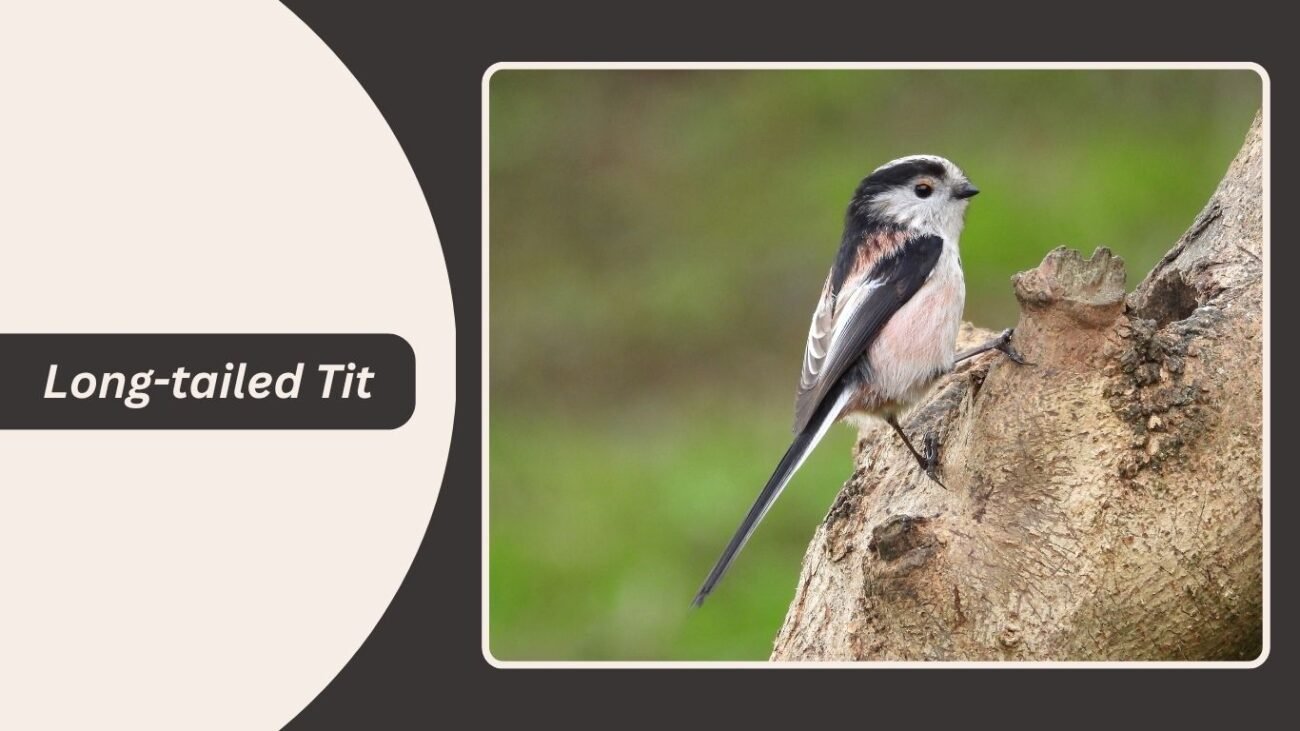
The Long-tailed Tit (Aegithalos caudatus) is not a “true” tit but is closely related and commonly grouped with them. It’s a small, fluffy bird with an exceptionally long tail, making it look larger than it really is. It’s known for its tight family bonds and stunning nest-building skills.
Identification
- Tiny round body with a long, thin tail (longer than the body)
- White head with black markings (some have pinkish tints depending on region)
- Pale pinkish flanks
- Black and white wings and tail
- Body size: 9–10 cm, tail adds another 7–9 cm
Behavior
Long-tailed Tits are very social and live in family flocks. They’re constantly calling to each other as they flit through trees and shrubs. They build elaborate domed nests made of moss, feathers, and spider silk—among the most intricate in the bird world.
Habitat
They are found in deciduous and mixed woodlands, hedgerows, parks, and gardens. They prefer areas with dense shrubs or brambles for nesting. Though they’re widely distributed across Europe and Asia, they’re more common in lower-altitude, bushy areas with plenty of insect life.
Diet
Their diet consists mainly of small insects, aphids, caterpillars, and spiders. During winter, they may take seeds and suet from feeders, especially in cold weather. Their foraging style is agile—they often hang upside down or cling to the tips of twigs to search for prey.
10. Azure Tit
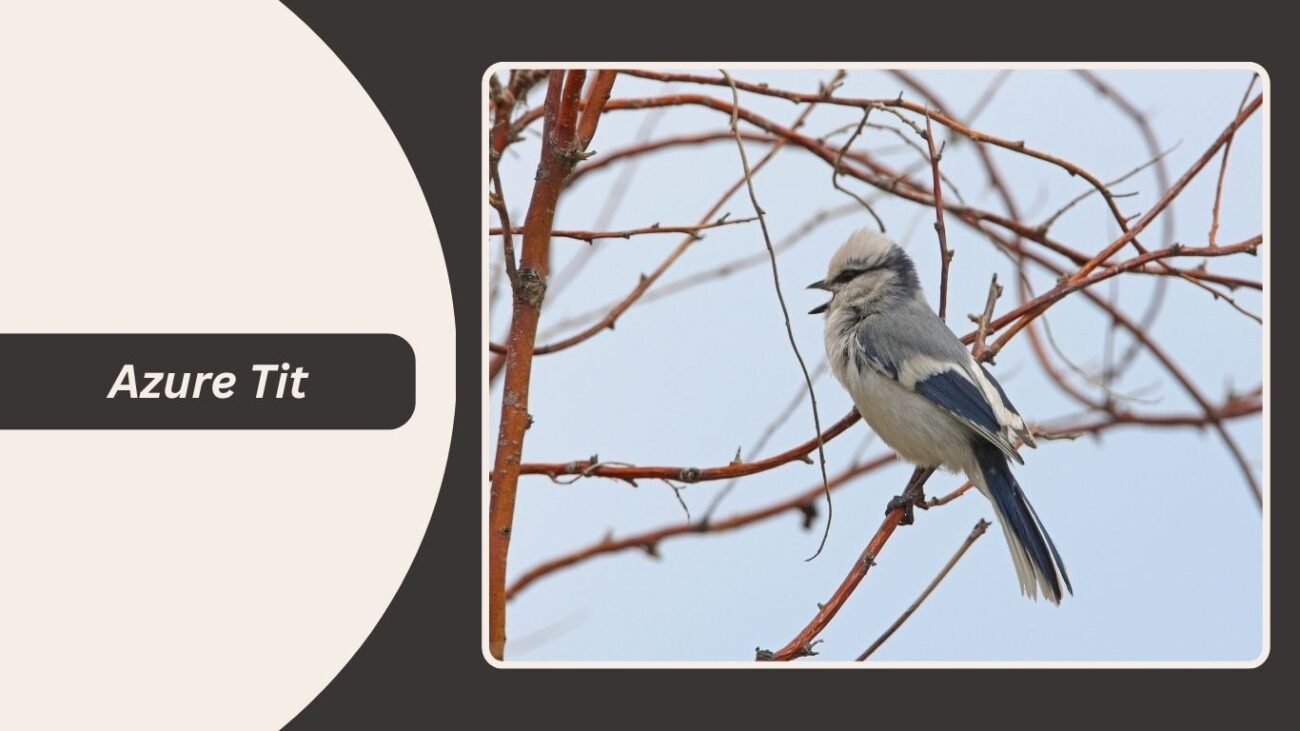
The Azure Tit (Cyanistes cyanus) is a stunning and elegant tit species found mainly in central and eastern Asia. With its icy blue and white coloring, it stands out among other tits and is occasionally spotted in eastern parts of Europe.
Identification
- Snow-white face, underparts, and forehead
- Sky-blue wings, tail, and crown
- Pale blue back and shoulders
- Thin black eye-stripe
- Size: about 12–13 cm
Behavior
Azure Tits are agile, fast-moving, and tend to forage in small groups. They are quiet and less aggressive than some other tit species. Though shy in nature, they are resourceful and show excellent memory when storing food.
Habitat
They inhabit riparian woodlands, especially areas with willow, poplar, and birch along rivers and wetlands. In colder months, they can be found in nearby cultivated areas and village edges. They nest in tree holes and are known to adapt to nest boxes when available.
Diet
Their primary diet includes insects, beetles, larvae, and spiders during spring and summer. In autumn and winter, they feed on seeds, berries, and other plant materials. Like other tits, they often cache food for later retrieval. They may visit feeders near human settlements in harsh winters.
11. Yellow Tit
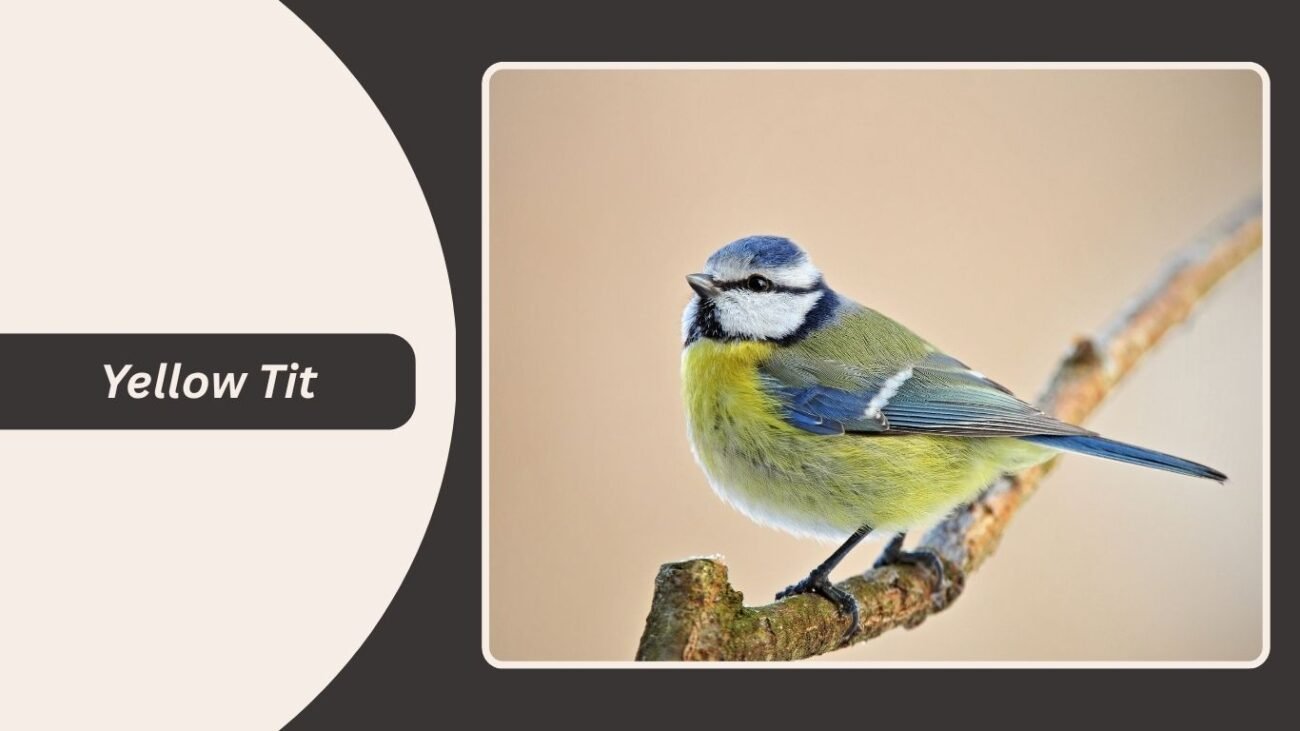
The Yellow Tit (Machlolophus holsti) is an attractive, rare tit species endemic to Taiwan. Its vibrant plumage and restricted range make it a highly sought-after bird for birdwatchers and ornithologists.
Identification
- Bright yellow underparts and cheeks
- Black head with a pointed crest
- Greenish-black wings and back with white markings
- Thin black bib
- Medium-sized: around 13–14 cm
Behavior
Yellow Tits are active, vocal, and move quickly through the canopy. They’re often seen alone or in pairs during breeding, joining mixed flocks outside the season. Their crest can be raised or lowered depending on mood or alertness.
Habitat
They reside in montane evergreen and mixed forests of Taiwan, typically at elevations between 1,000 and 2,800 meters. They favor areas with dense tree cover and good insect availability. Their limited range and specific habitat preference make them vulnerable to habitat loss.
Diet
Their diet includes insects, caterpillars, small spiders, and other arthropods, especially during the breeding season. In winter, they eat seeds and berries. While not regular feeder visitors, they forage among tree trunks and branches with agility, often flicking leaves to uncover hidden prey.
12. Sombre Tit
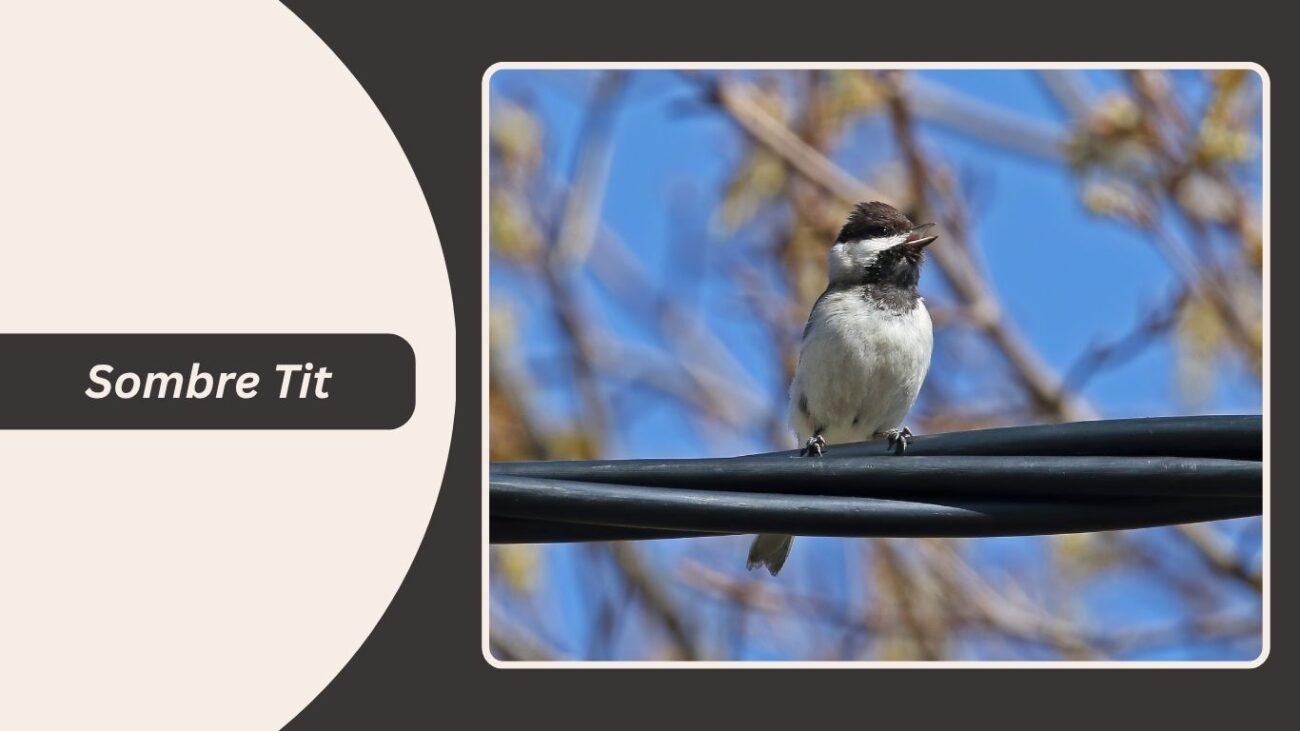
The Sombre Tit (Poecile lugubris) is a subtly colored bird found in southeastern Europe and parts of the Middle East. Its appearance may be modest, but its behavior and calls are distinctive, making it easier to identify in the field.
Identification
- Black head and throat with no nape patch
- Pale underparts with a slightly buff tone
- Brownish-grey back and wings
- Dark eyes and short, stout bill
- Size: approximately 12–13 cm
Behavior
Sombre Tits are generally shy and solitary or found in pairs. They are quieter than most other tits, often going unnoticed unless specifically searched for. They may excavate their own nest holes or use natural tree cavities.
Habitat
They favor dry, open woodlands, especially oak forests, pinewoods, and scrubby hillsides. Inhabiting elevations up to 1,500 meters, they prefer arid and semi-arid regions with scattered trees and old orchards. Unlike many tit species, they avoid densely vegetated or overly humid areas.
Diet
Their diet mainly includes insects and their larvae, spiders, and small invertebrates. During the colder months, they supplement with seeds, berries, and sometimes small fruits. They are not frequent feeder visitors but will take advantage of food when offered in their natural range.
13. Varied Tit
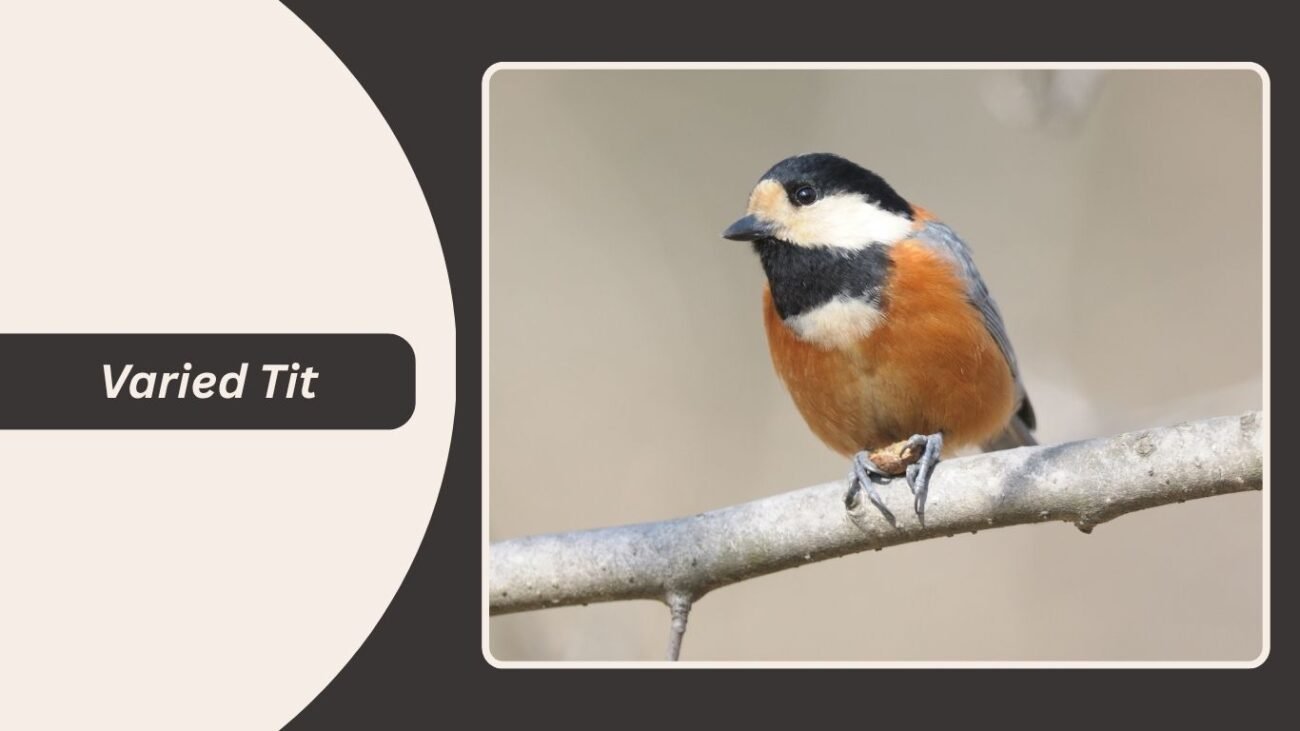
The Varied Tit (Sittiparus varius) is a colorful and charming bird native to East Asia. It’s particularly abundant in Japan and parts of Korea and Taiwan. Its bold coloration and tameness make it a favorite among bird enthusiasts.
Identification
- Black head with white cheeks
- Rusty orange underparts and nape
- Blue-grey back and wings
- Compact body with a short tail
- Size: around 14 cm
Behavior
Varied Tits are bold and inquisitive, often approaching humans closely in parks and gardens. They are smart and adaptable, capable of solving simple tasks to get food. They are known for their ability to remember food caches.
Habitat
They live in deciduous and mixed forests, bamboo groves, wooded gardens, and urban parks. In Japan, they’re commonly seen even in temple grounds and residential areas. They nest in tree cavities or nest boxes, sometimes even in crevices of buildings.
Diet
In summer, they feed on caterpillars, insects, and spiders. In fall and winter, they consume acorns, seeds, and fruits. They frequently cache acorns and hard seeds in moss or bark to eat later. They readily visit feeders, especially for sunflower seeds and suet.
14. Japanese Tit
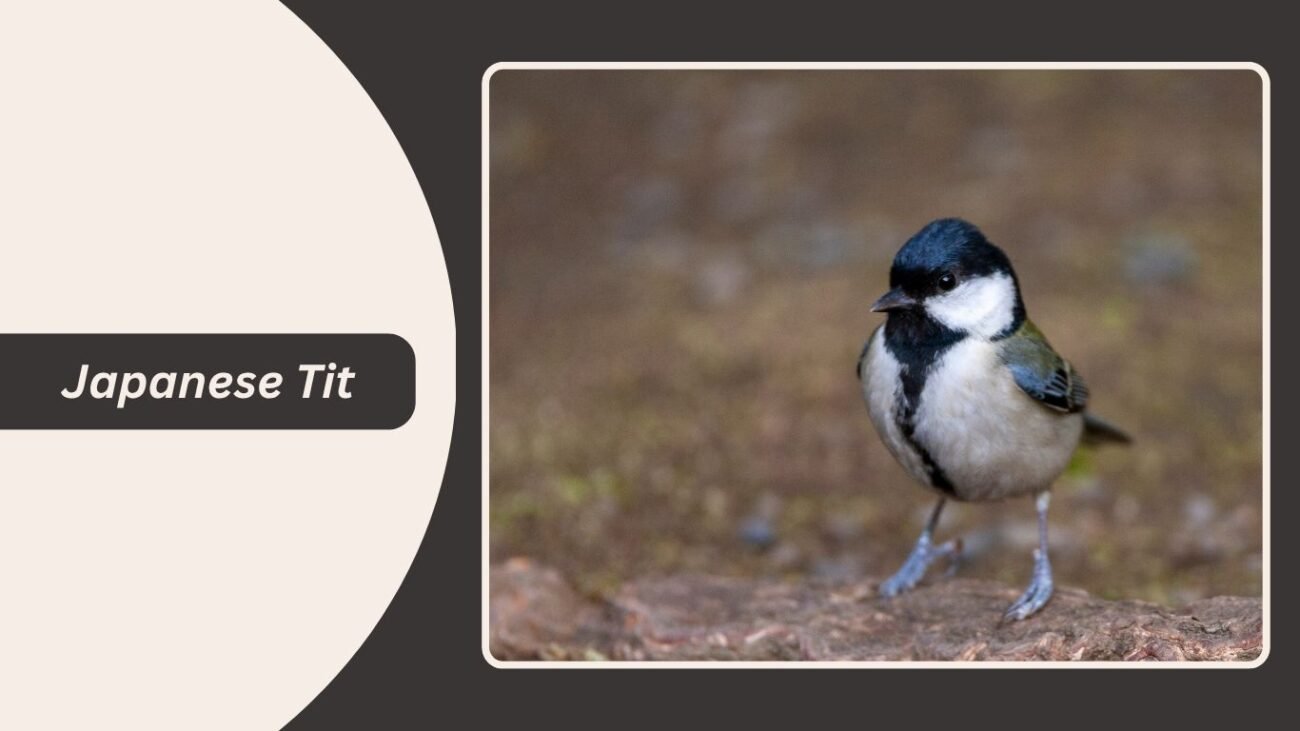
The Japanese Tit (Parus minor) is a close relative of the Great Tit and was once considered a subspecies of it. Found mainly in Japan and parts of the Korean Peninsula, this bird shares many behavioral traits with its western cousin but has subtle differences in voice and appearance.
Identification
- Black head and neck with white cheeks
- Olive-green back and pale underparts
- Prominent black stripe running from throat down to belly
- Lacks a white nape patch (unlike Great Tit)
- Size: around 13–15 cm
Behavior
Japanese Tits are energetic and intelligent birds. They use tools and display problem-solving skills, such as removing obstacles to reach food. They are vocal, using a range of calls to communicate, especially during the breeding season.
Habitat
These birds are highly adaptable and found in forests, gardens, parks, and even urban areas across Japan. They nest in tree cavities, wall crevices, and nest boxes. Their preference for varied landscapes, including rural and suburban zones, helps them stay common in their range.
Diet
Insects, caterpillars, and spiders make up the bulk of their diet in spring and summer, especially during chick-rearing. In fall and winter, they eat seeds, berries, and suet. They regularly visit feeders and are known to store seeds for later consumption.
15. Cinereous Tit
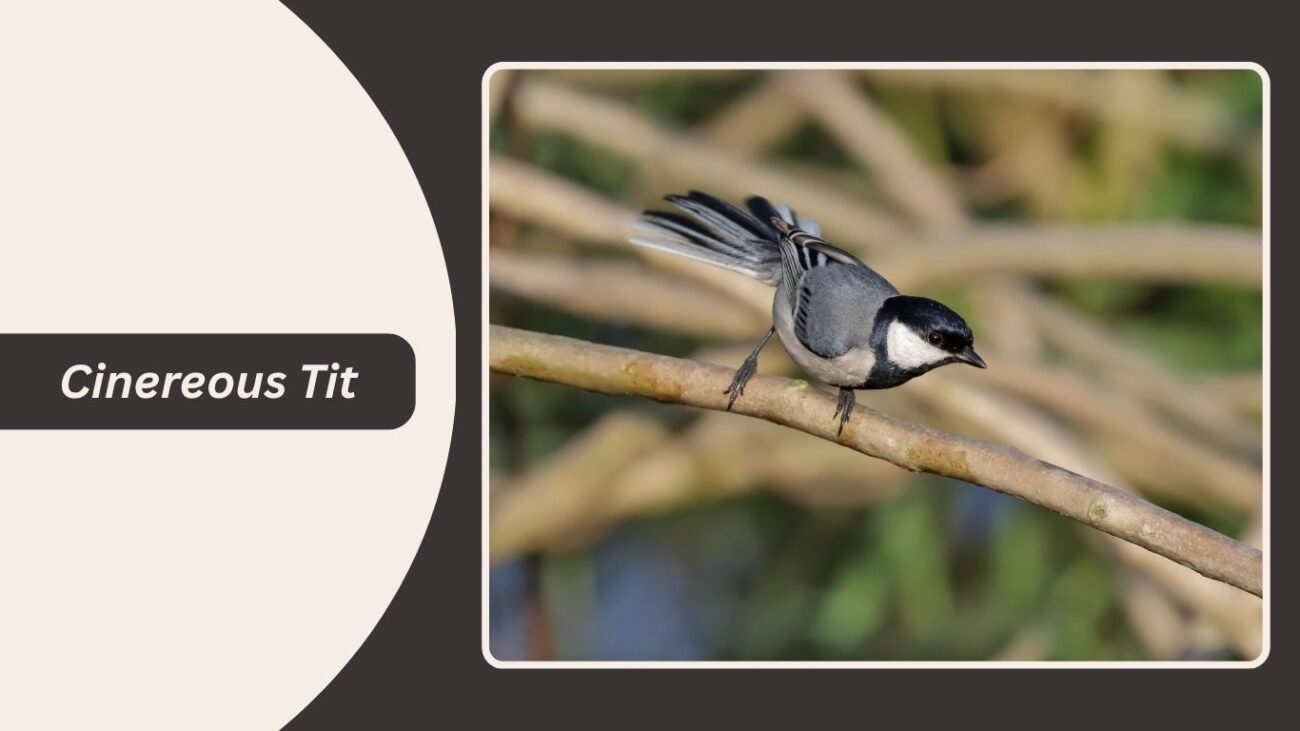
The Cinereous Tit (Parus cinereus) is a widespread species in South and Southeast Asia. Formerly grouped under the Great Tit complex, it is now recognized as a distinct species based on vocal and genetic differences. Its dark, crisp plumage contrasts with the softer tones of related species.
Identification
- Black head, throat, and bib
- White cheeks and pale underparts
- Grey back and wings with faint wing bars
- Bold black central belly stripe
- Size: about 13–14 cm
Behavior
Cinereous Tits are active, alert, and somewhat aggressive at feeders. They are territorial during breeding and raise several broods per season. They often join mixed-species flocks during the non-breeding season, especially in forest edges.
Habitat
This species is found in forests, wooded gardens, plantations, and urban parks. It thrives in both lowland and hill regions, showing high adaptability to human presence. It often nests in cavities of walls, trees, and artificial structures.
Diet
They feed on insects, beetles, and spiders during warmer months. In cooler seasons, they consume seeds, grains, and fruits. They frequently visit feeders and can be seen carrying seeds to hidden locations to store for later.
16. Grey Tit
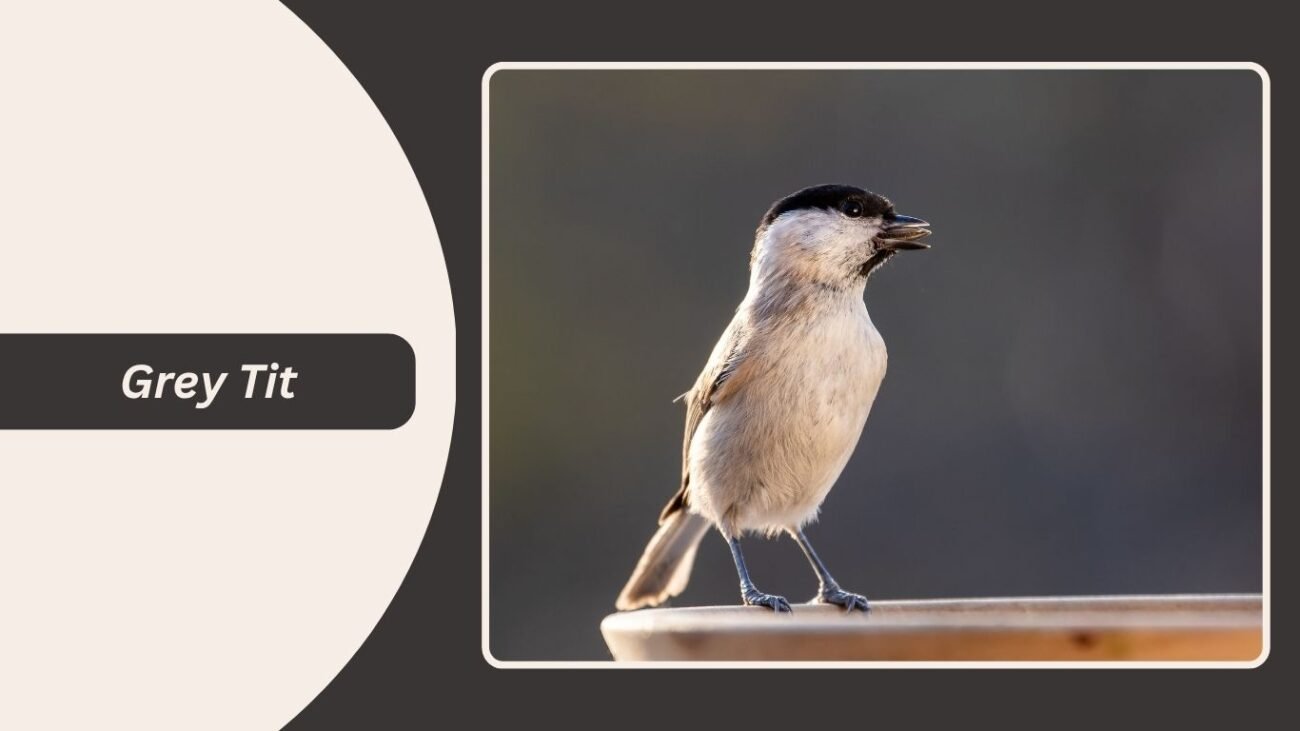
The Grey Tit (Melaniparus afer) is a relatively lesser-known member of the tit family, native to southern Africa. It’s a quiet, adaptable bird that blends in well with its dry surroundings and displays typical tit-like foraging behavior.
Identification
- Overall grey plumage with a darker grey to black cap
- Pale underparts and lighter grey cheeks
- White wing bars
- Slightly longer tail compared to other tits
- Size: around 13–14 cm
Behavior
Grey Tits are agile and often forage alone or in pairs. They search bark and foliage for insects and may hover briefly like a flycatcher. They’re known to be cautious but will sometimes join mixed feeding flocks.
Habitat
They inhabit arid and semi-arid regions, especially dry woodlands, thornveld, and savanna scrub. Common in areas with acacia trees, they can also be seen in gardens and farmland edges. They typically nest in tree cavities, sometimes occupying old barbet or woodpecker holes.
Diet
Their diet consists mostly of small insects, spiders, and caterpillars. In the dry season, they also consume seeds and small fruits. While they are not frequent feeder visitors, they will take suet or mealworms when offered in gardens.
17. Rufous-vented Tit
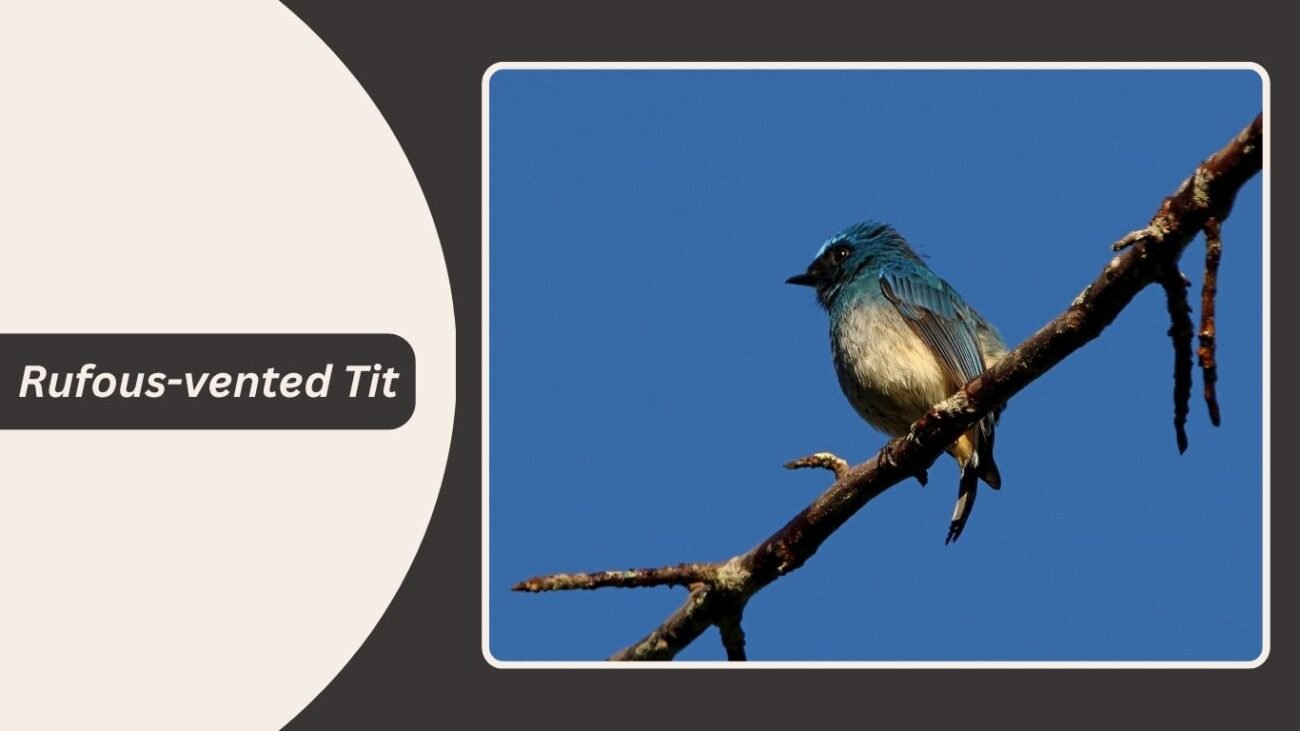
The Rufous-vented Tit (Periparus rubidiventris) is a high-altitude tit species found in the Himalayas and nearby mountainous regions. It’s known for its striking rufous vent area and preference for cold, elevated environments.
Identification
- Black head, throat, and bib
- White cheeks and nape patch
- Grey back and wings with two pale wing bars
- Reddish-brown (rufous) coloring on the lower belly and vent
- Size: around 12–13 cm
Behavior
This species is active, curious, and bold, often seen foraging in the upper canopy or darting between trees. It may associate with other tits in flocks during non-breeding seasons and is known for being vocal and alert.
Habitat
Rufous-vented Tits inhabit temperate forests, especially coniferous and mixed forests at elevations of 2,500–4,000 meters. They are most often found in the Himalayas, including regions of northern India, Nepal, and Bhutan. They nest in natural tree holes, crevices, or even rock cracks in mountainous zones.
Diet
They feed primarily on insects, larvae, and spiders during warmer months. In winter, they consume seeds, pine nuts, and berries. Their foraging involves pecking at bark and cones, and they may store food during times of abundance.
18. Black-bibbed Tit
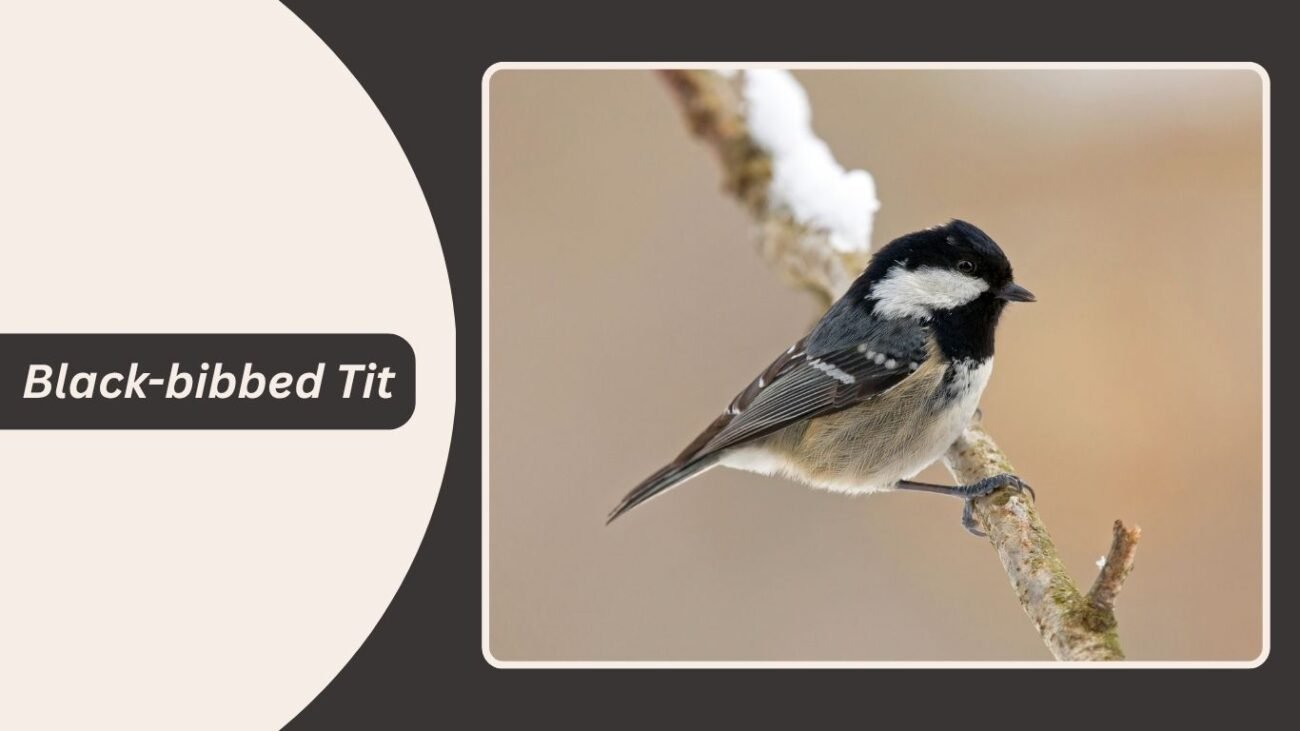
The Black-bibbed Tit (Poecile hypermelaenus) is a rare and localized species found in parts of southwestern China and northeastern Myanmar. It is known for its distinctive black throat and limited distribution in montane forests.
Identification
- Prominent black bib extending down the chest
- Black cap and nape
- White cheeks and underparts
- Greyish-brown upperparts
- Small, compact size: about 12–13 cm
Behavior
This species is elusive and quiet, usually seen singly or in pairs. It forages actively among tree branches, similar to other tits, but tends to stay higher in the canopy. Little is known about its breeding behavior due to its remote habitat.
Habitat
Black-bibbed Tits inhabit subtropical and temperate montane forests, particularly those dominated by oak and rhododendron. They are usually found at elevations between 2,000 and 3,500 meters in hilly and mountainous terrain. The dense, moist forest understory provides ideal cover and foraging ground.
Diet
Their diet consists mainly of insects, small invertebrates, and spiders during the breeding season. In colder months, they feed on seeds, berries, and may store food in bark crevices. They are not known to frequent bird feeders due to their isolated range.
19. White-fronted Tit
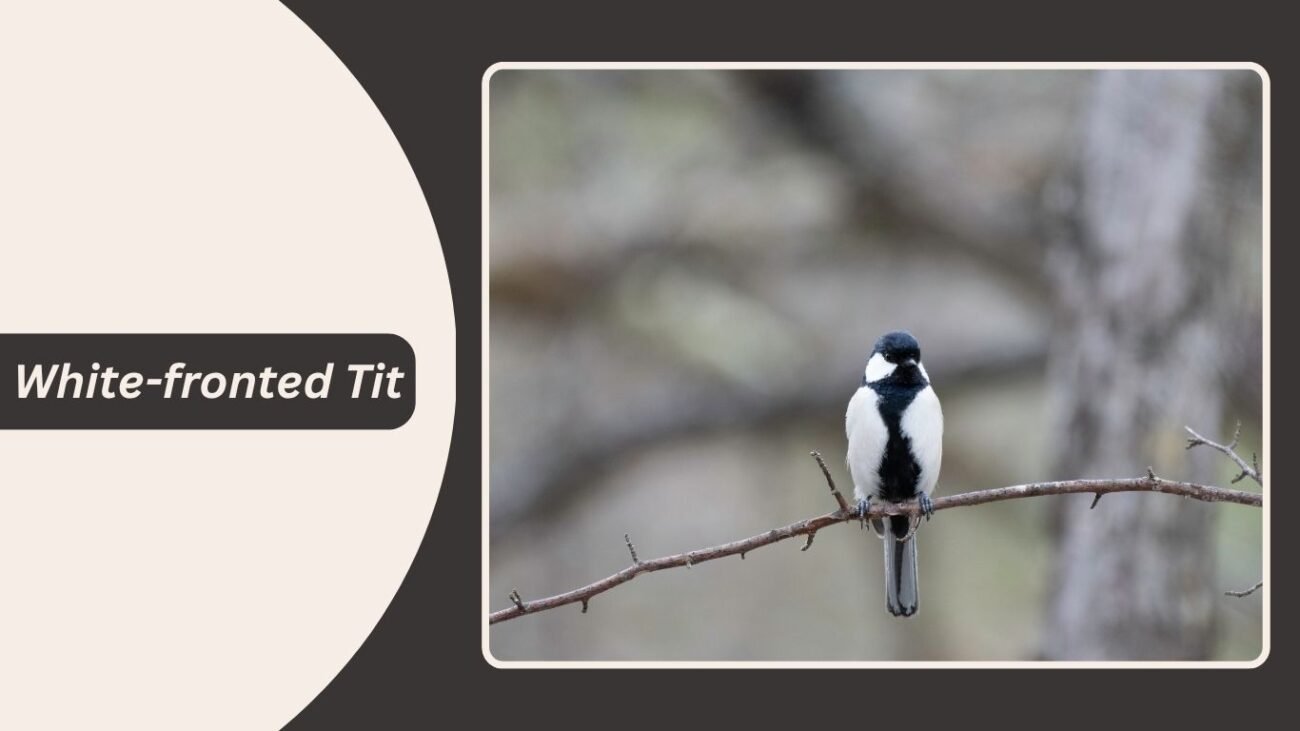
The White-fronted Tit (Melaniparus albifrons) is a little-known African species endemic to Angola. Its unique white facial marking sets it apart from other members of its genus. Due to its restricted range, sightings are limited.
Identification
- White forehead contrasting with black crown and throat
- Grey back and wings
- Pale underparts with a hint of grey-buff
- Small size: around 13 cm
Behavior
White-fronted Tits are elusive and understudied. They forage in pairs or small groups and are likely to follow typical tit behavior such as gleaning insects from bark and leaves. Vocalizations are rarely documented but presumed similar to other Melaniparus species.
Habitat
They are found in subtropical or tropical dry forests and savanna woodlands of Angola. These birds prefer remote areas with tall trees and minimal disturbance. They likely nest in natural cavities or abandoned holes in deadwood.
Diet
Their diet consists of small insects, grubs, and spiders, complemented by seeds and plant material during the dry season. Specific feeding behavior is not well-documented, but they are presumed to cache food like other tits in their family.
20. Rufous-naped Tit
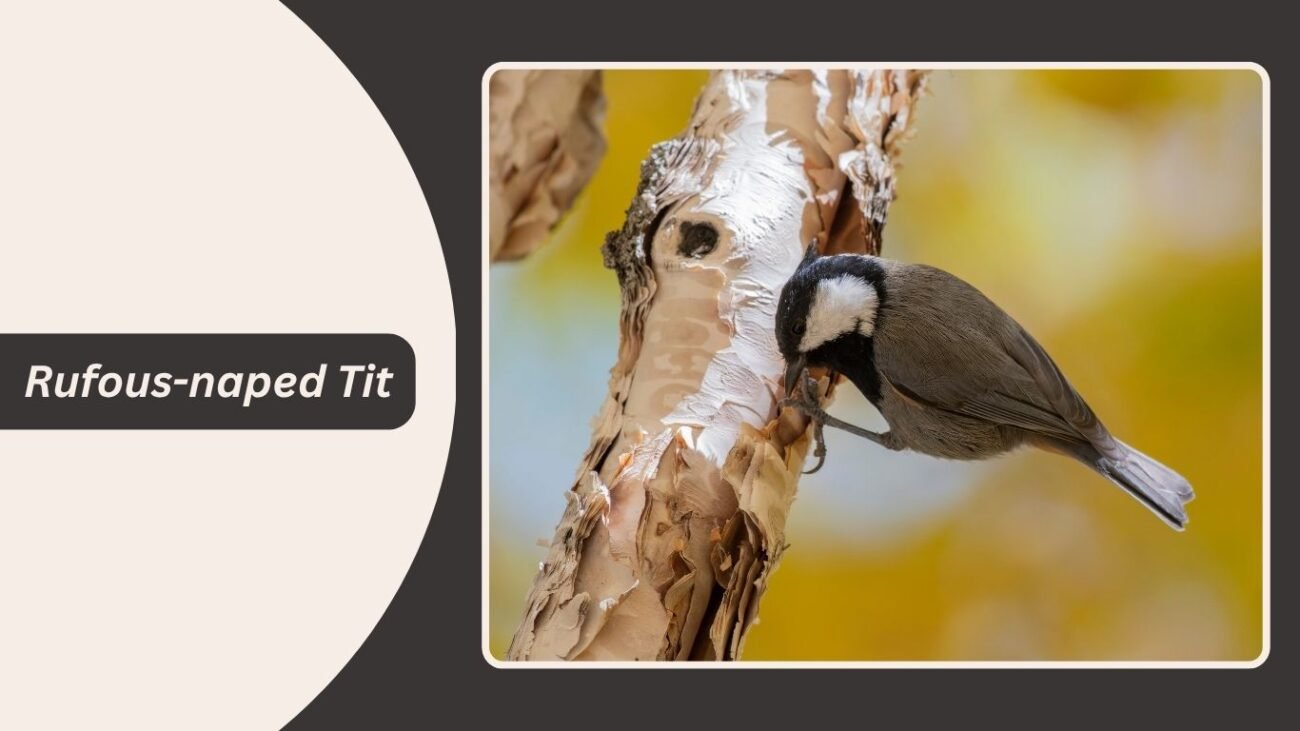
The Rufous-naped Tit (Periparus rufonuchalis) is a striking and high-altitude species found in parts of Central Asia, particularly in the mountainous regions of Pakistan and Afghanistan. It is closely related to the Rufous-vented Tit but can be recognized by the rufous coloring on the nape.
Identification
- Black head, throat, and bib
- White cheeks and a distinctive rufous patch on the nape
- Grey back with pale underparts
- Faint white wing bars
- Size: around 12–13 cm
Behavior
This tit is energetic and often forages along tree trunks and branches. It may be seen singly or in small groups, sometimes joining mixed-species flocks in winter. It is bold and resourceful in colder climates, often caching food.
Habitat
Found mainly in coniferous and mixed forests in mountainous areas between 2,000 and 3,500 meters elevation. It prefers regions with juniper, pine, and fir trees and is most common in remote, rocky landscapes with scattered vegetation.
Diet
Insects, spiders, and caterpillars form the main diet during the breeding season. In winter, it switches to pine seeds, small berries, and occasionally suet or nuts. Like many other tit species, it stores food in bark crevices for later consumption.
21. Rufous Tit
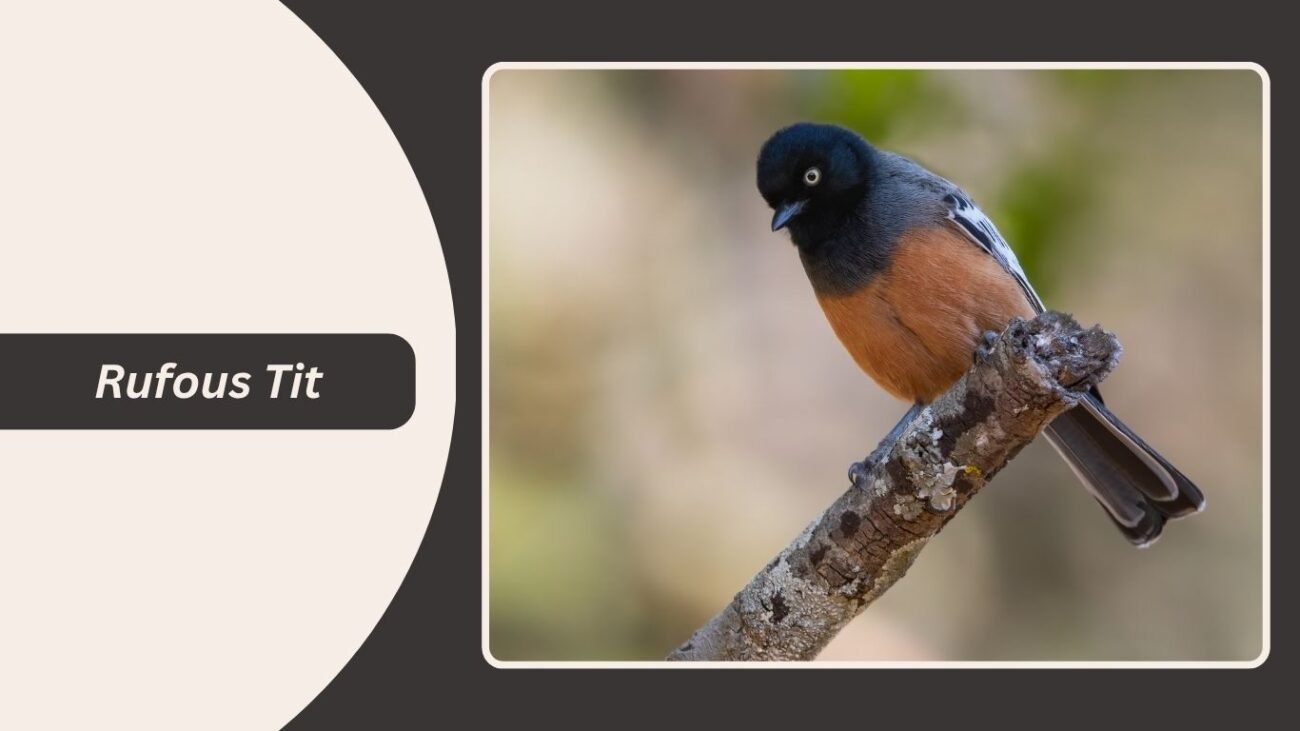
The Rufous Tit (Melaniparus rubescens) is a small, warm-toned tit species native to southern Africa. It is known for its rufous-colored belly and its preference for dry habitats, particularly in Namibia and Angola.
Identification
- Black head, throat, and bib
- Rufous-brown underparts
- Grey-brown back and wings
- White wing patches and cheeks
- Size: around 13–14 cm
Behavior
Rufous Tits are active and alert, often moving through shrubs and trees in pairs or small family groups. They communicate with sharp, short calls and exhibit typical tit-like acrobatics while foraging.
Habitat
They inhabit dry savannas, thornveld, and woodland areas with sparse tree cover. Often found in arid or semi-arid regions, they nest in tree cavities, fence posts, or old woodpecker holes. They are rarely seen far from acacia or mopane trees.
Diet
Their diet includes insects, beetles, and other small arthropods, along with seeds and plant matter during dry seasons. While they do not frequent feeders, they will eat suet or soft seeds if available in gardens or campsites.
22. Green-backed Tit
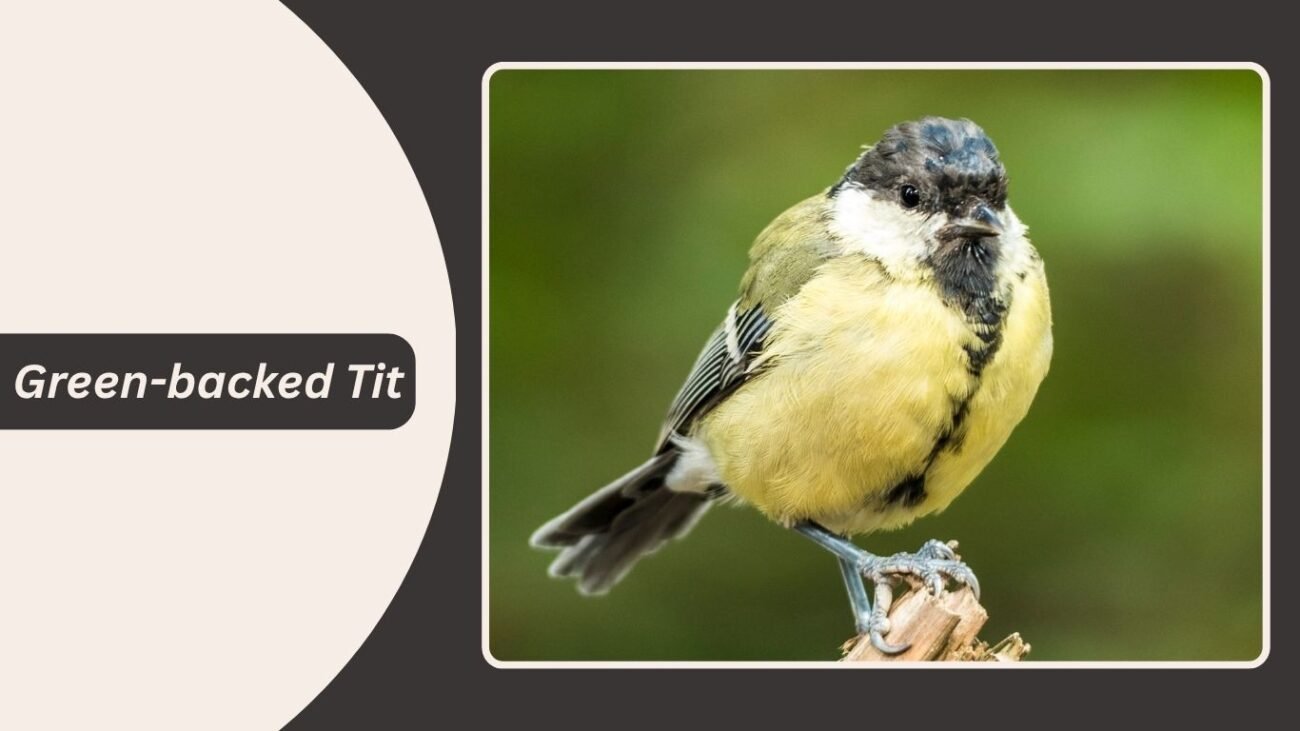
The Green-backed Tit (Parus monticolus) is a colorful and widespread species native to the Himalayas and parts of Southeast Asia. Its vivid plumage and adaptability to various elevations make it one of the most commonly observed tits in mountain regions.
Identification
- Black head with white cheeks
- Yellow underparts with a distinct black central stripe
- Bright green back
- Blue-grey wings with white wing bars
- Size: around 13–14 cm
Behavior
Green-backed Tits are bold and active, often foraging in mixed flocks. They hop energetically through trees and shrubs in search of food and are quick to explore feeders in forest lodges and hill stations.
Habitat
They inhabit temperate to subtropical forests, especially oak, rhododendron, and pine forests, from 1,000 to 3,000 meters elevation. Found across the Himalayan foothills through northeastern India, China, and Southeast Asia. They nest in natural cavities, stone walls, or artificial nest boxes.
Diet
Primarily insectivorous during the breeding season, feeding on caterpillars, beetles, and spiders. In colder months, they consume berries, seeds, and occasionally nectar. They frequently visit feeders in forest guesthouses for peanuts, suet, and seeds.
23. Yellow-bellied Tit
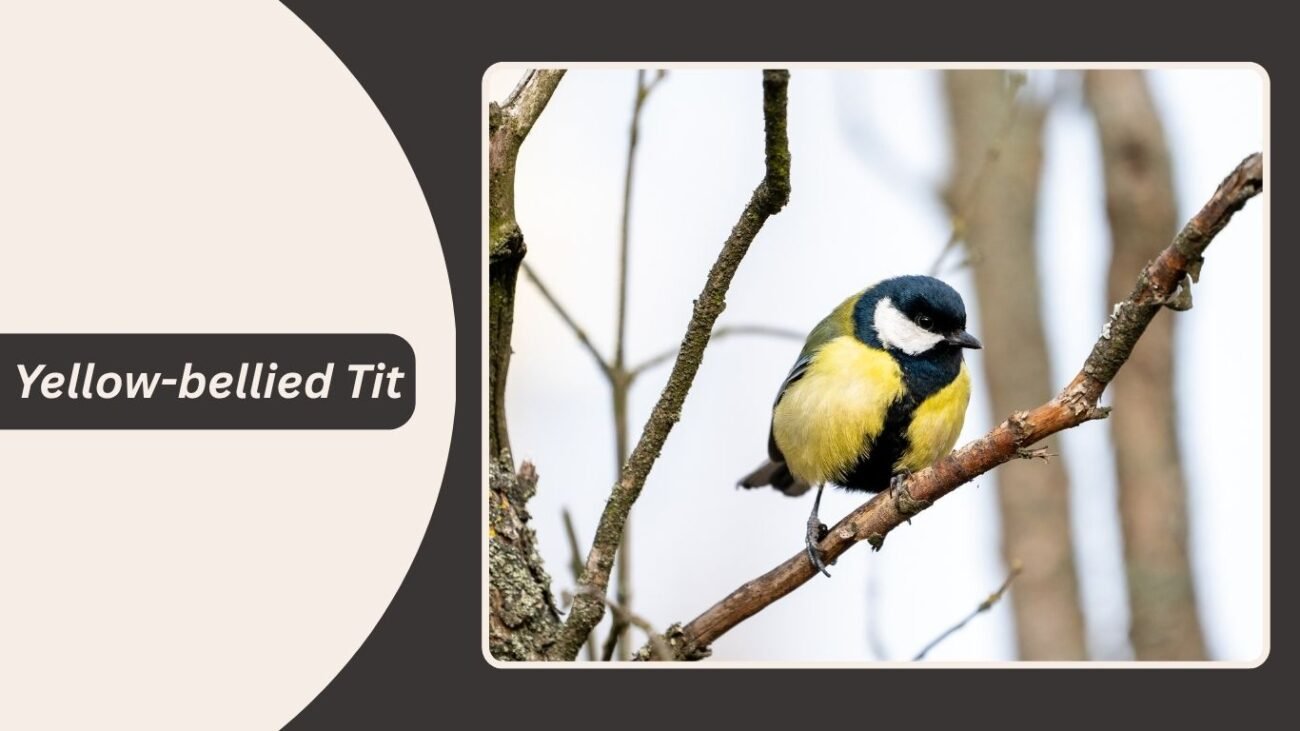
The Yellow-bellied Tit (Pardaliparus venustulus) is a small, vividly colored tit found mainly in southern and eastern China. Its bright plumage and distinct patterns make it easily recognizable despite its small size.
Identification
- Black head with white cheek patches
- Bright yellow underparts
- Black stripe down the belly
- Olive-green upperparts
- Two white wing bars
- Size: around 11–12 cm
Behavior
This species is active and vocal, often seen darting through foliage or hanging upside down while feeding. They tend to move in pairs or small family groups and are known for their sharp, metallic calls.
Habitat
Yellow-bellied Tits prefer broadleaf and mixed forests in lowland and hilly regions. They are most common in subtropical forests, bamboo groves, and forest edges. They nest in cavities and have adapted to secondary forests and disturbed habitats.
Diet
Feeds on insects, spiders, and other invertebrates during spring and summer. In winter, they shift to seeds, berries, and soft fruits. They are not frequent feeder visitors but will approach food sources in forested parks and reserves.
24. White-winged Tit
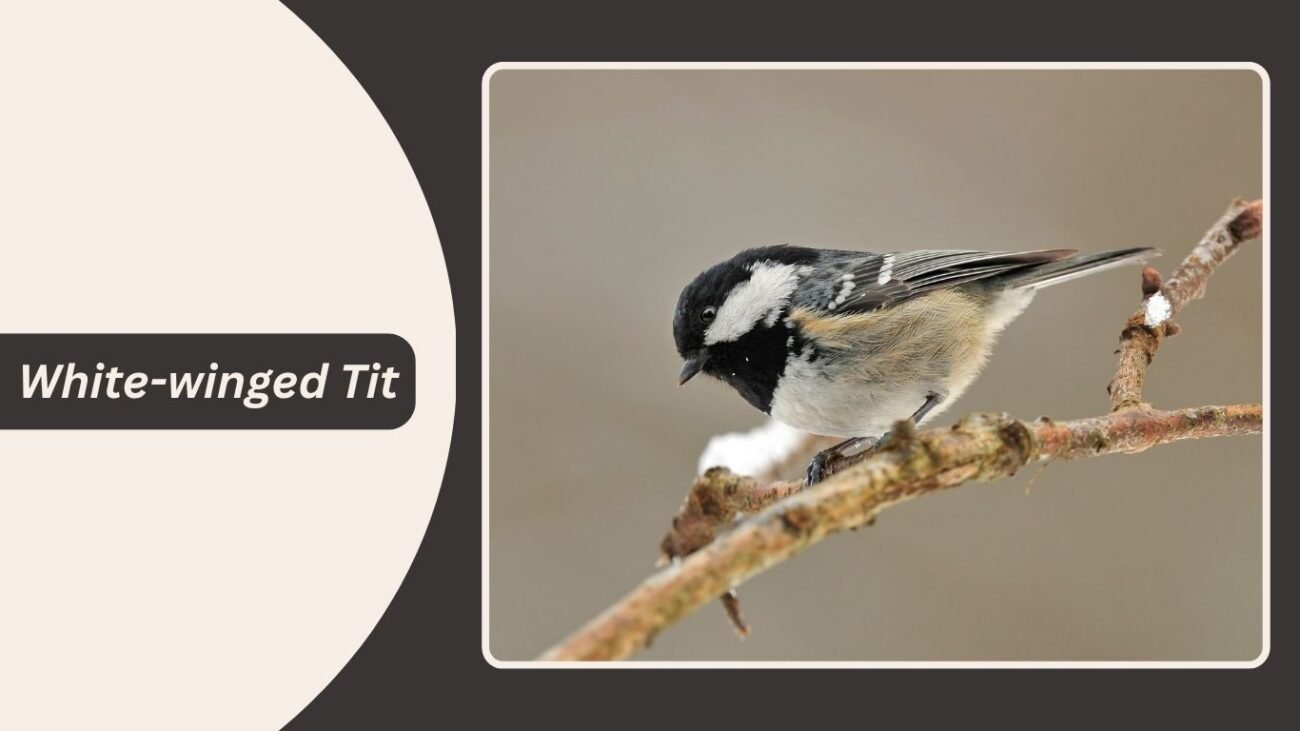
The White-winged Tit (Melaniparus leucomelas) is a striking and relatively uncommon tit species native to parts of sub-Saharan Africa. Its bold black-and-white pattern gives it a distinctive appearance compared to most other tit birds.
Identification
- Glossy black head, back, and underparts
- Bright white cheek patches and wing bars
- Short, sturdy bill
- Strong contrast between dark body and white wings
- Size: around 13 cm
Behavior
White-winged Tits are shy and often elusive, usually moving in pairs or small family groups. They’re active foragers, frequently flitting through acacia trees and thorn scrub while calling softly to one another.
Habitat
They are typically found in dry acacia woodland, savannas, and thornveld, especially in southern and eastern Africa. They prefer semi-arid areas with scattered trees and are often associated with mopane woodlands. Nesting takes place in tree cavities or old barbet nests.
Diet
Their diet consists of small insects, beetles, caterpillars, and spiders. During dry seasons, they also feed on seeds and sometimes small berries. They are not common at feeders but may visit campgrounds or garden spaces in their range if food is available.
hey are rarely seen at feeders but are commonly observed feeding on fruiting trees in the wild.
orest-edge feeders for suet or peanuts. It also stores food in moss or bark.
25. Rufous-naped Tit (Duplicate Name Clarification)
Note: The Rufous-naped Tit has already been listed as species #18. However, some taxonomies previously treated similar regional variants as distinct species or subspecies.
To maintain accuracy and avoid repetition, here is:
25. Black-crested Tit
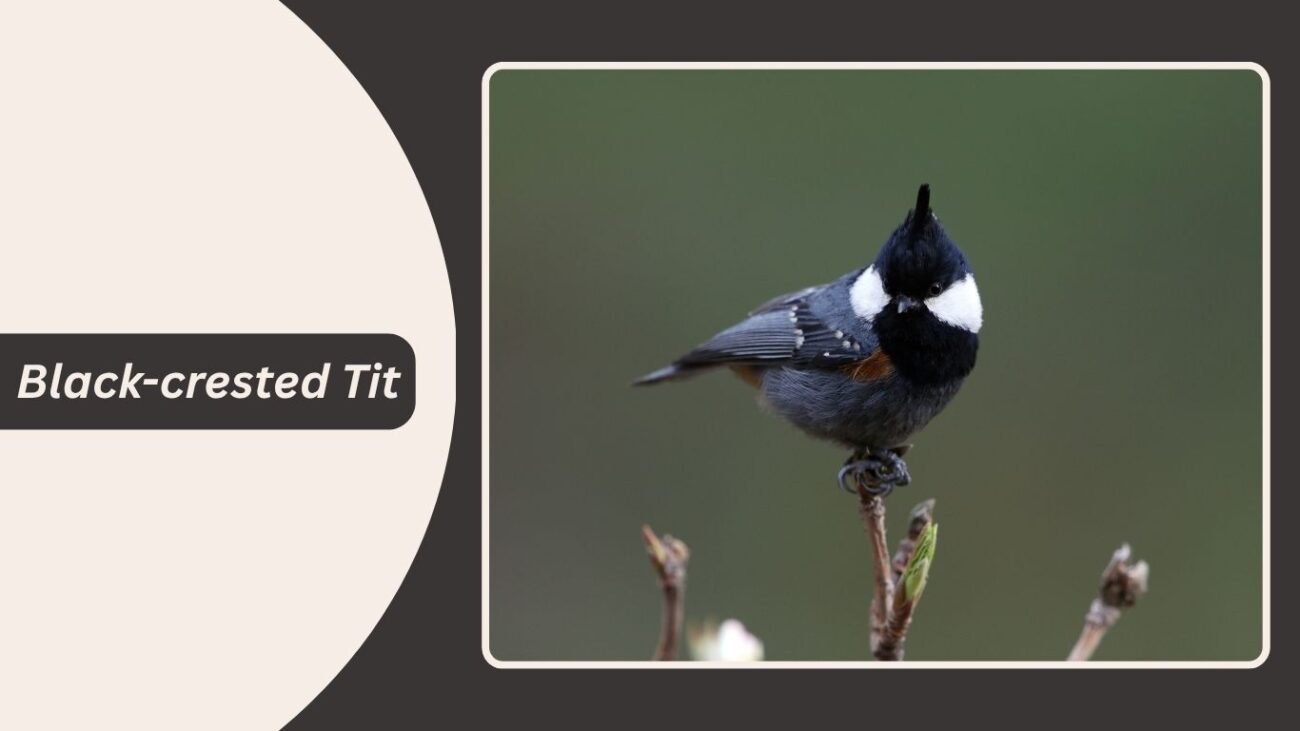
The Black-crested Tit is often considered a local variation or synonym of the Rufous-naped Tit (Periparus rufonuchalis), but some sources list it separately due to distinctive markings and regional isolation in Central Asia.
Identification
- Prominent black crest and head
- Pale cheeks and greyish upperparts
- Buffish underparts with a hint of rufous on the nape
- White wing bars
- Size: around 12–13 cm
Behavior
Similar to other high-altitude tit species, it is agile, alert, and often seen in coniferous forests foraging along branches. It may join flocks of other tits during non-breeding months.
Habitat
Mountainous forests with fir, spruce, and pine, typically in Afghanistan, Pakistan, and neighboring regions. Prefers altitudes over 2,500 meters and nests in tree holes or stumps.
Diet
Primarily insectivorous during breeding season. In colder months, feeds on pine seeds, small berries, and occasionally scavenges food scraps. Will store food in cracks and tree bark.