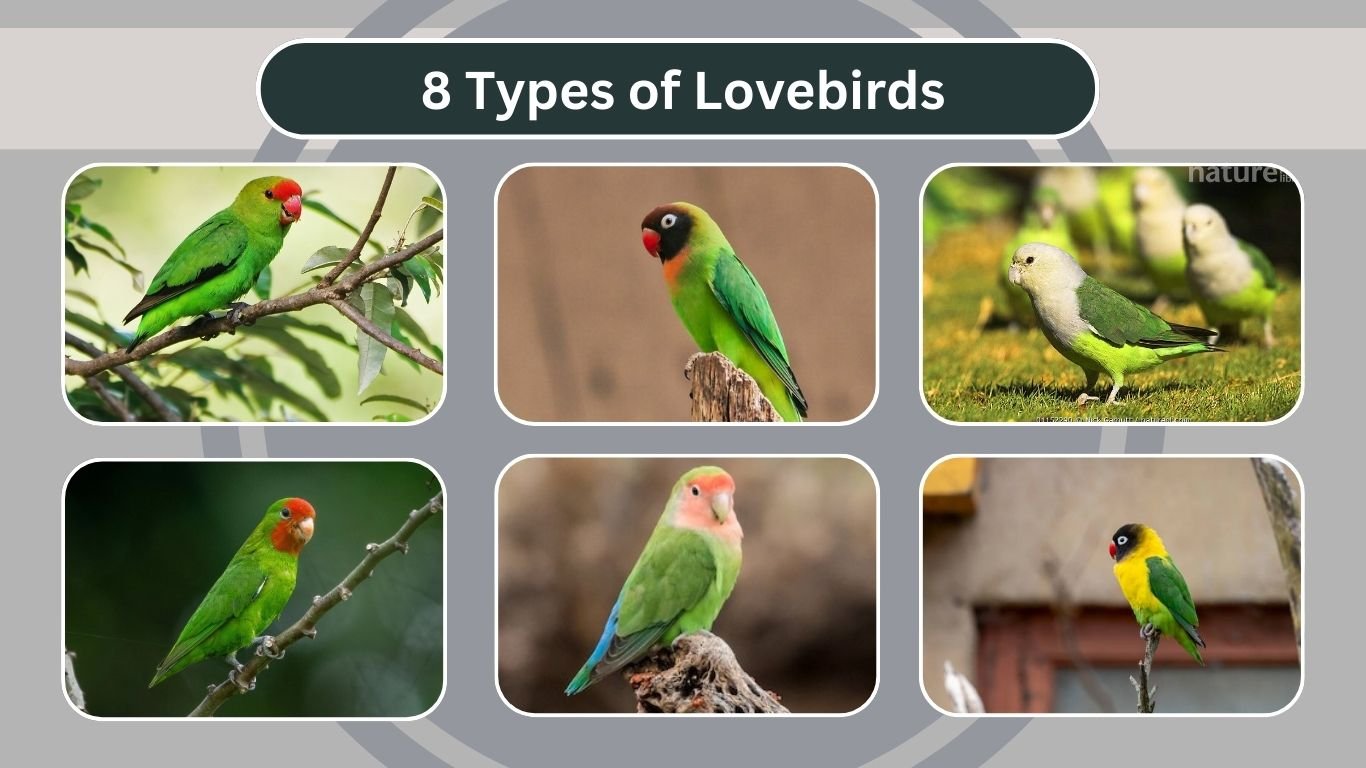
Lovebirds are among the most charming and affectionate members of the parrot family, admired for their strong pair bonds and vibrant plumage. Native to Africa and Madagascar, these small parrots are full of energy, curiosity, and social interaction. Each species has its own unique colors, habitats, and behaviors, ranging from the rosy-faced lovebird of Namibia to the rare black-cheeked lovebird of Zambia. In this guide, we’ll explore 9 types of lovebirds, highlighting their key traits, natural habitats, and behaviors.
1. Rosy-faced Lovebird (Peach-faced Lovebird)
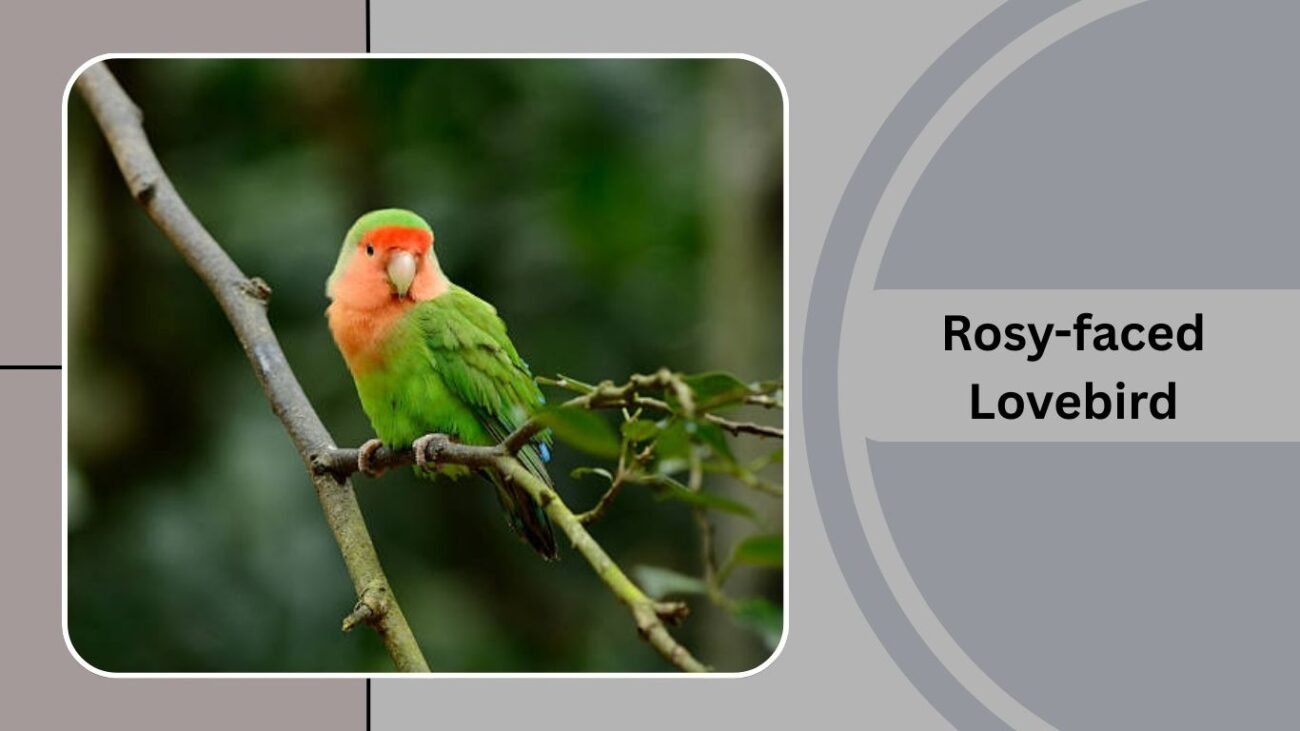
The Rosy-faced Lovebird (Agapornis roseicollis), also known as the Peach-faced Lovebird, is the most popular and widespread species of lovebird. Its bright colors and playful personality make it a favorite among bird enthusiasts and pet owners.
Identification
- Green plumage covering most of the body
- Rosy-pink face and throat, giving the species its name
- Blue rump and tail feathers visible in flight
- Small size, about 15 cm (6 in) long
Habitat
Rosy-faced Lovebirds are native to arid regions of southwestern Africa, particularly Namibia and Angola. They inhabit dry woodlands, savannas, and semi-desert areas, often staying near water sources.
Behavior
These lovebirds are highly social and affectionate, often forming strong lifelong pair bonds. They are playful and energetic, usually found in flocks in the wild. Their diet includes seeds, fruits, berries, and grasses. Known for their cheerful chatter, they are very vocal and active throughout the day.
2. Fischer’s Lovebird
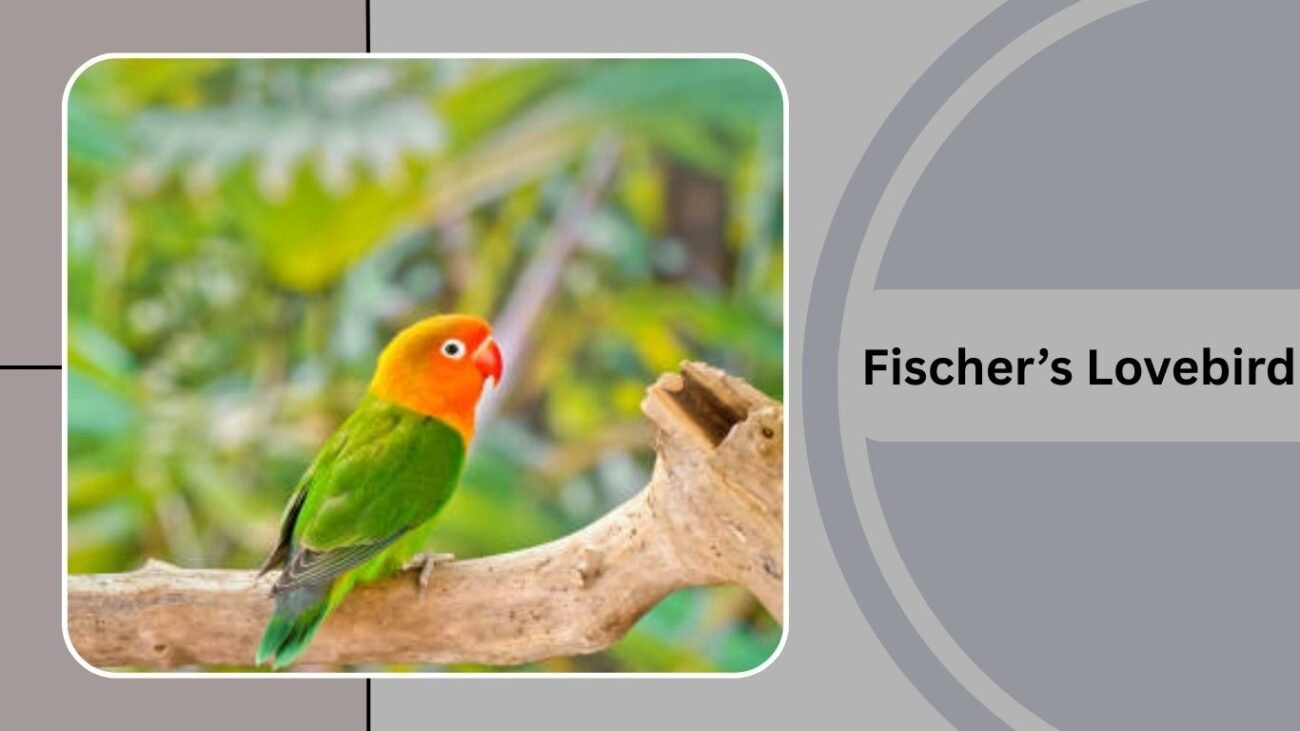
The Fischer’s Lovebird (Agapornis fischeri) is a small, colorful parrot named after the German explorer Gustav Fischer. Its vibrant plumage and lively nature make it one of the most striking and popular lovebird species.
Identification
- Bright green body with a yellow-orange upper chest
- Orange-red face blending into the throat
- Blue rump and tail feathers
- Small size, about 14–15 cm (5.5–6 in) long
Habitat
Fischer’s Lovebirds are native to north-central Tanzania in East Africa. They are commonly found in grasslands, open woodlands, and areas near cultivated fields, often roosting in large flocks.
Behavior
These lovebirds are extremely social, forming noisy flocks when feeding and roosting. They build their nests in tree cavities or sometimes on buildings, using strips of bark and leaves. Their diet consists of seeds, fruits, and berries. Like other lovebirds, they form strong pair bonds and are known for their affectionate interactions with mates.
3. Yellow-collared Lovebird (Masked Lovebird)
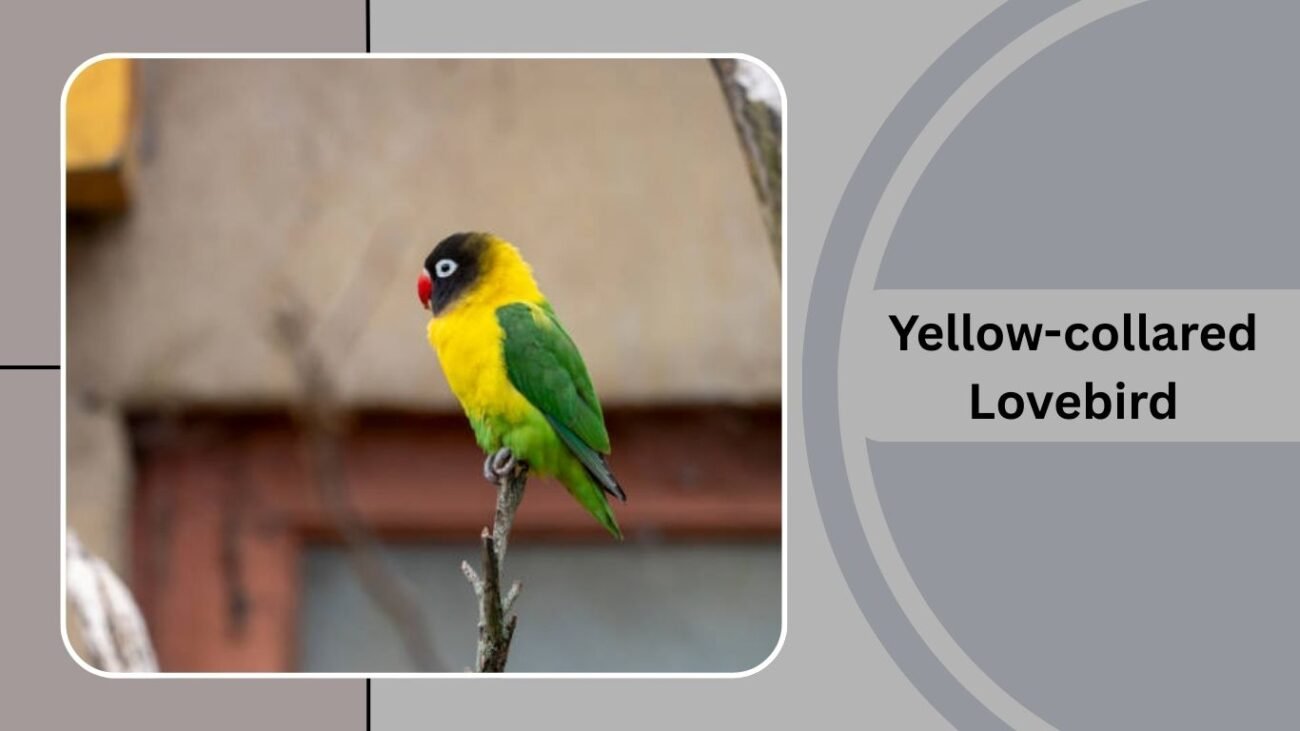
The Yellow-collared Lovebird (Agapornis personatus), also known as the Masked Lovebird, is a striking species with bold facial markings that give it a masked appearance. It is one of the most recognizable lovebirds due to its vivid colors.
Identification
- Bright green body with a yellow collar around the chest and neck
- Black head forming a “mask” with white eye-rings
- Blue rump and tail feathers
- Small size, about 14–15 cm (5.5–6 in) long
Habitat
This species is native to northeastern Tanzania, particularly around savannas, grasslands, and farmlands. They are also widely bred in captivity, resulting in many colorful mutations.
Behavior
Yellow-collared Lovebirds are energetic and playful, often forming large, noisy flocks. They feed on grass seeds, millet, and fruits while foraging both on the ground and in trees. Strong pair bonds define their social structure, and their nesting behavior involves carrying strips of bark or grass tucked under their feathers to build nests in tree cavities.
4. Lilian’s Lovebird (Nyasa Lovebird)
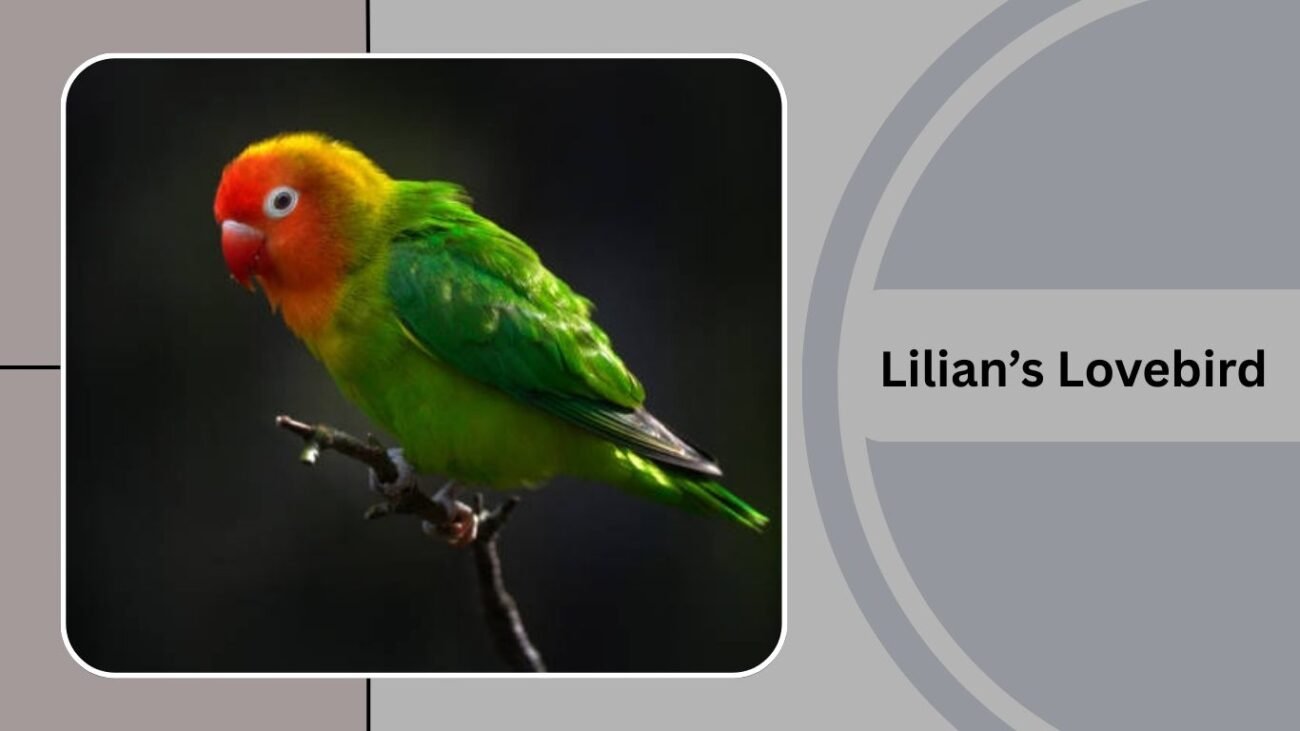
The Lilian’s Lovebird (Agapornis lilianae), also known as the Nyasa Lovebird, is one of the smaller and less common lovebird species. Its bright colors and cheerful nature make it especially appealing to bird enthusiasts.
Identification
- Green body with a bright orange face and throat
- Lighter orange blending into the upper chest
- Blue rump and tail feathers
- Small size, around 13–14 cm (5–5.5 in) long
Habitat
Lilian’s Lovebirds are native to parts of Malawi, Mozambique, Zambia, and Zimbabwe. They inhabit dry woodlands, grasslands, and river valleys, often seen near baobab and acacia trees.
Behavior
These lovebirds are very social, living in flocks that may number in the hundreds. They feed mainly on grass seeds, millet, and wild fruits, often foraging in cultivated fields as well. Their courtship and pair bonding are strong, with mates constantly preening and calling to each other.
5. Black-cheeked Lovebird
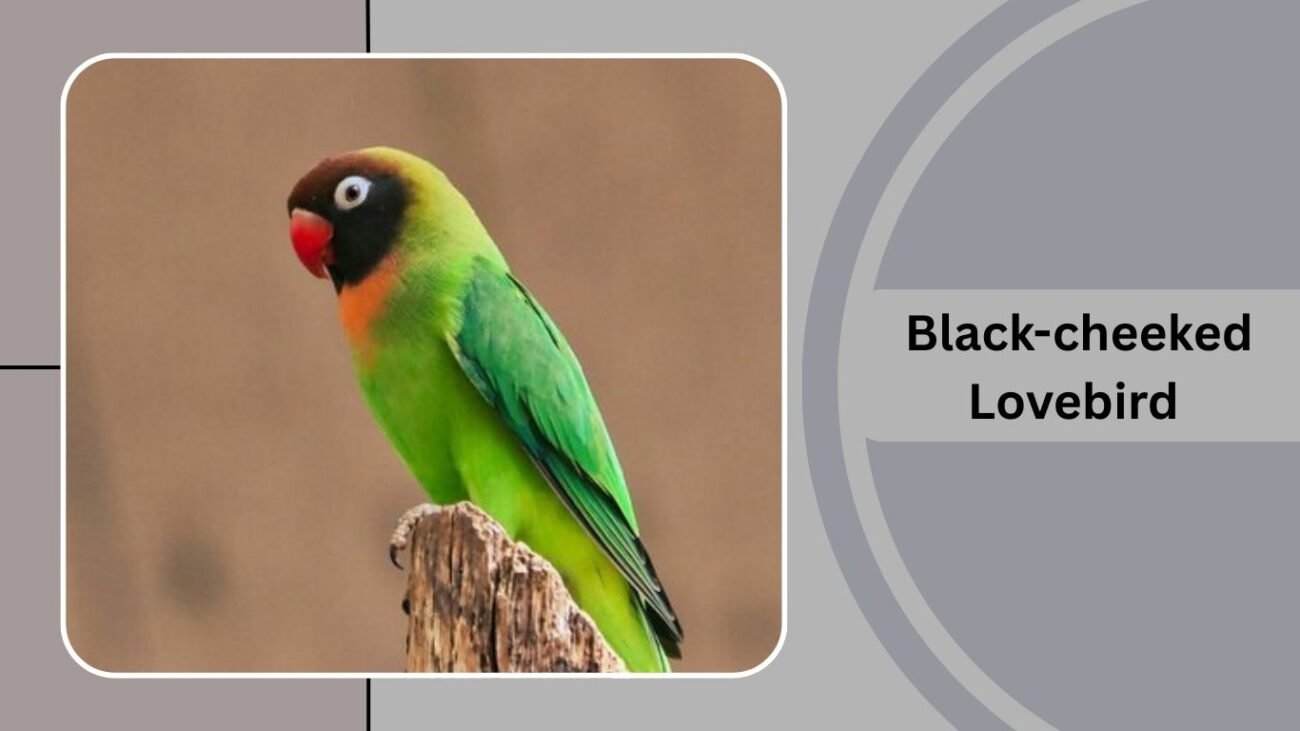
The Black-cheeked Lovebird (Agapornis nigrigenis) is a rare and attractive lovebird distinguished by its dark facial markings. It is among the least common species in the wild, with a restricted natural range in Africa.
Identification
- Green plumage covering most of the body
- Distinctive black cheeks and face extending around the eyes
- Orange throat and upper chest blending into yellow underparts
- Small, about 14 cm (5.5 in) long
Habitat
This species is native to southwestern Zambia, with small populations in Namibia, Botswana, and Zimbabwe. They prefer mopane woodlands, river valleys, and areas with permanent water sources.
Behavior
Black-cheeked Lovebirds are highly social, often forming large flocks near water. They feed on grass seeds, millet, and small fruits. During breeding, they nest in tree cavities, using bark strips and grasses for lining. Like other lovebirds, they are affectionate and form lifelong pair bonds.
6. Red-headed Lovebird (Peach-headed Lovebird)
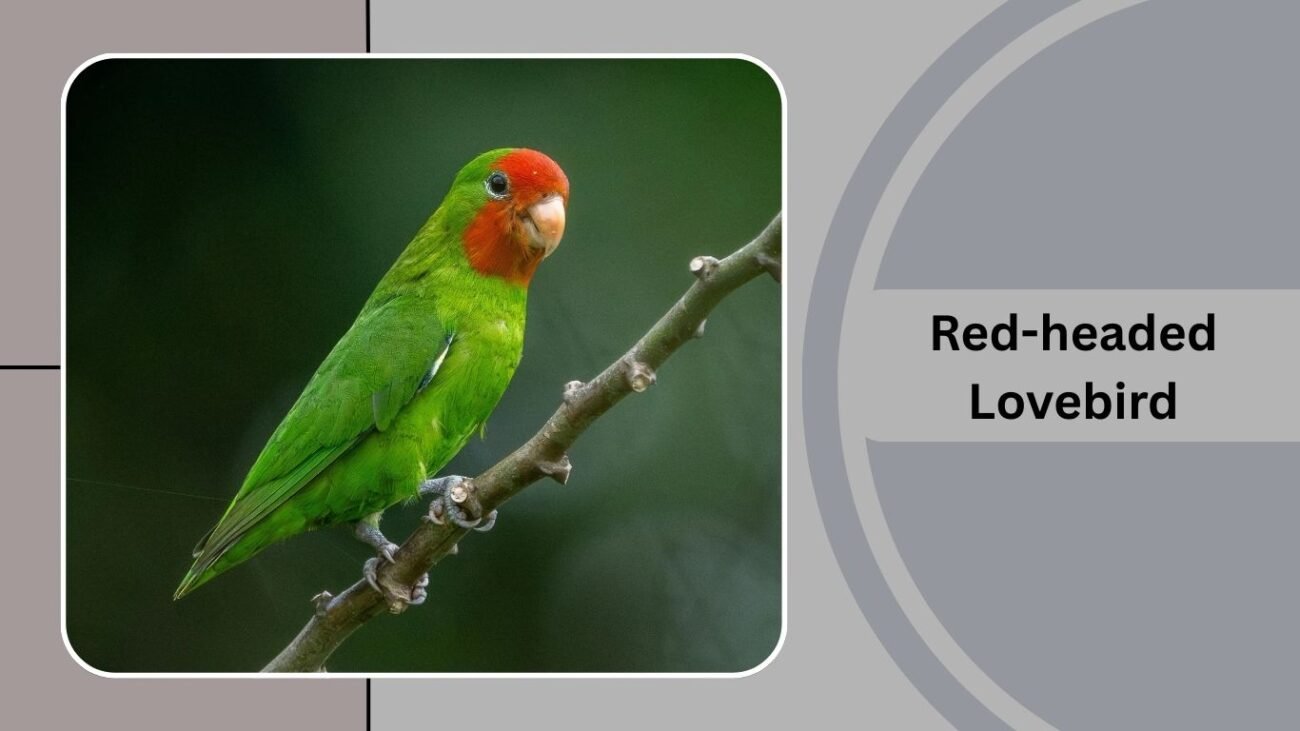
The Red-headed Lovebird (Agapornis pullarius), also called the Peach-headed Lovebird, is a brightly colored species widely spread across Africa. Its vivid red face sets it apart from most other lovebirds.
Identification
- Green body with bright red head and face
- Slight orange tint blending from the head into the chest
- Blue rump and tail feathers
- Small size, around 15 cm (6 in) long
Habitat
Red-headed Lovebirds are found across central and western Africa, from Guinea to Uganda. They prefer forest edges, savannas, and cultivated lands, often staying close to water.
Behavior
These lovebirds are active, noisy, and social, living in small to medium-sized flocks. They feed on grass seeds, millet, berries, and cultivated crops. Their nesting is unusual, as they often choose termite mounds or tree cavities for raising their young, carrying nesting material tucked into their feathers.
7. Black-winged Lovebird (Abyssinian Lovebird)
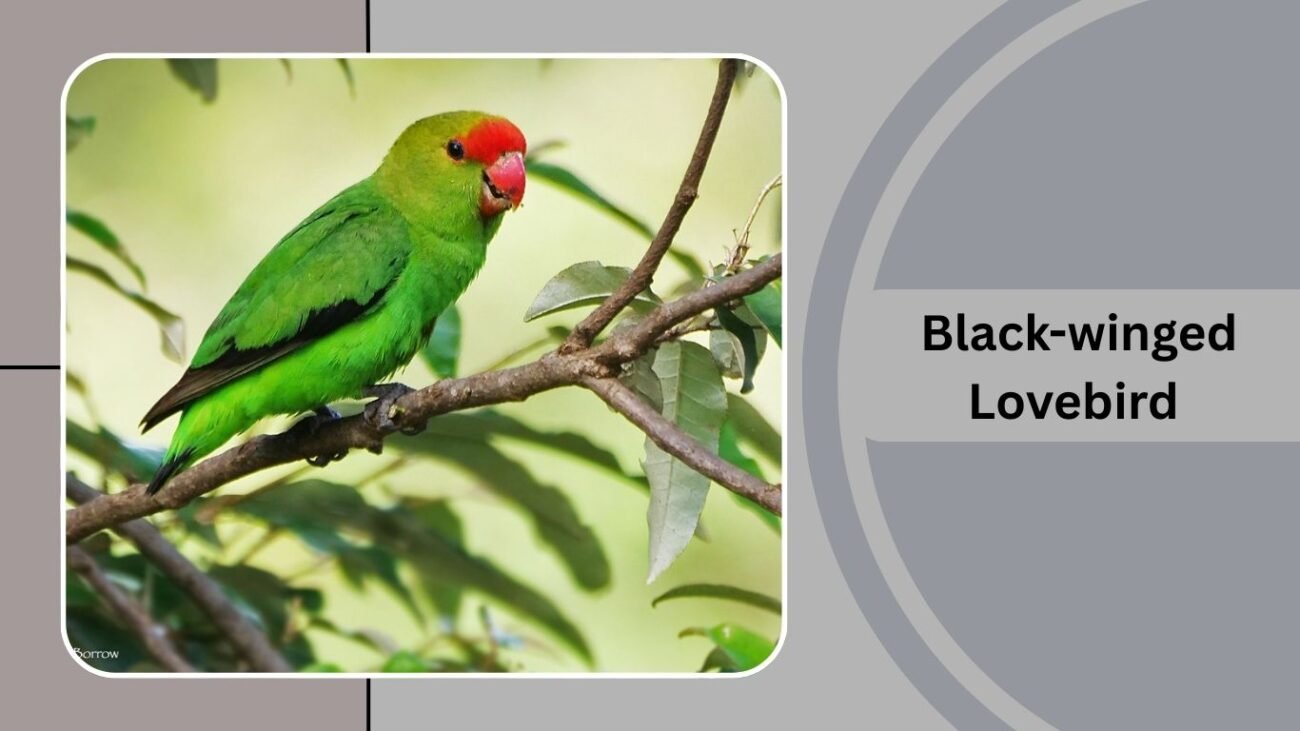
The Black-winged Lovebird (Agapornis taranta), also known as the Abyssinian Lovebird, is the largest of all lovebird species. Native to the highlands of Ethiopia and Eritrea, it is admired for its vibrant coloring and size.
Identification
- Green plumage over most of the body
- Black wing feathers giving the species its name
- Males have a bright red face and forehead, while females are entirely green
- Larger than most lovebirds, about 16–17 cm (6.5 in) long
Habitat
These lovebirds inhabit the Ethiopian Highlands, preferring forests, woodlands, and edges of cultivated fields. They are often seen in pairs or small groups at elevations above 1,500 meters (4,900 ft).
Behavior
Black-winged Lovebirds are energetic and agile, feeding on seeds, fruits, berries, and cultivated grains. They are quieter than many other lovebirds, though males call frequently during the breeding season. Pairs form strong bonds and often forage side by side, rarely separating from each other.
8. Madagascar Lovebird (Grey-headed Lovebird)
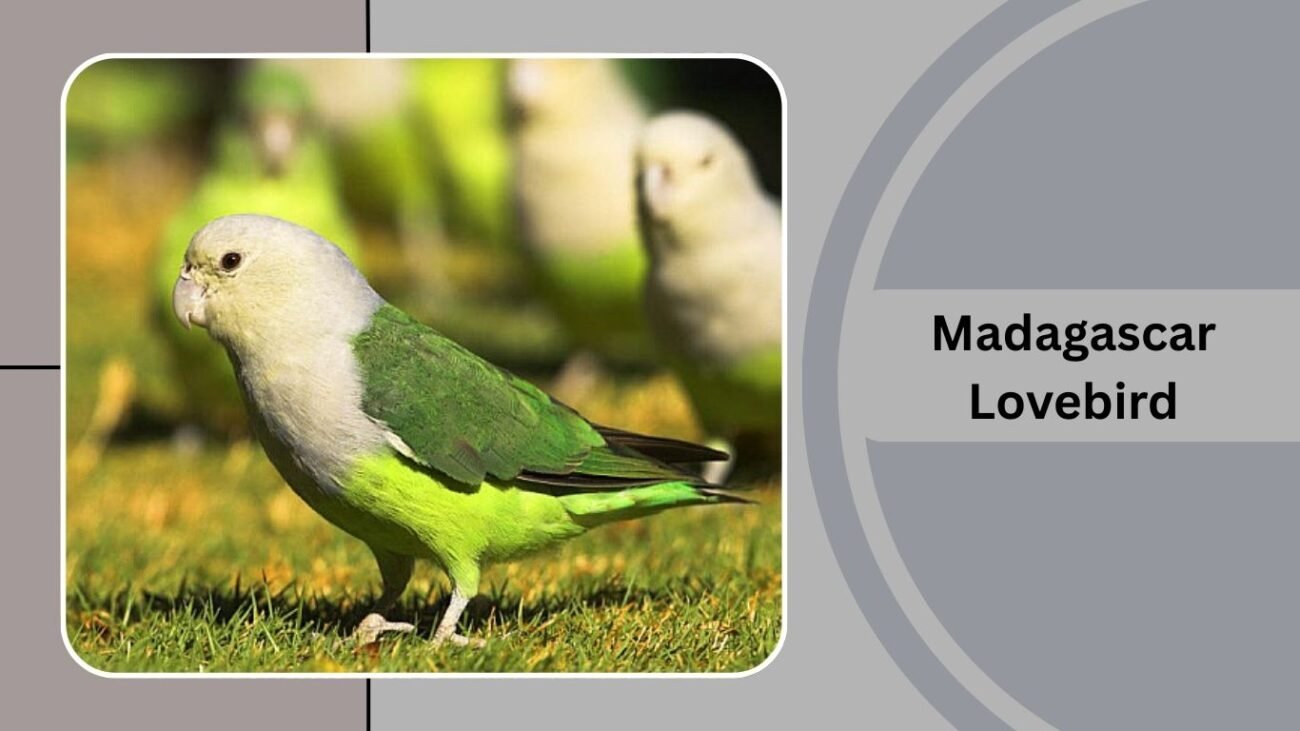
The Madagascar Lovebird (Agapornis canus), also called the Grey-headed Lovebird, is the only lovebird species native to Madagascar. It is small, fast, and easily identified by the male’s distinct head coloring.
Identification
- Males have a gray head and upper chest with a green body
- Females are entirely green, lacking the gray head
- Smallest lovebird species, about 13–14 cm (5–5.5 in) long
- Slender build with pointed wings for fast flight
Habitat
This species is found across Madagascar, inhabiting forests, scrublands, grasslands, and even agricultural fields. It adapts well to various habitats, as long as water and food sources are nearby.
Behavior
Madagascar Lovebirds are highly social, forming small flocks that forage together. They feed mainly on grass seeds, millet, and cultivated crops. Their flight is swift and direct, often accompanied by high-pitched calls. Despite their size, they are lively, playful, and show the same affectionate pair bonding as other lovebirds.
FAQs about Lovebirds
What makes lovebirds unique compared to other parrots?
Lovebirds are small parrots known for their strong pair bonds. Unlike many other parrots, they often show constant affection toward their mates, preening, feeding, and staying close together, which is why they are called “lovebirds.”
Do lovebirds really mate for life?
Yes, most lovebirds form lifelong pair bonds. Once bonded, they remain together, sharing feeding, nesting, and raising young. Their deep loyalty is one of the traits that make them so popular as companion birds.
What do lovebirds eat in the wild?
In the wild, lovebirds mainly eat seeds, fruits, grasses, and berries. Some species also feed on crops like millet and maize. Their strong beaks allow them to crack open tough seed shells with ease.
Are lovebirds noisy birds?
Lovebirds are very vocal and communicate with chirps, chatters, and sharp calls. While they are not as loud as larger parrots, their constant chatter can still be noticeable, especially when kept in groups.
Can different species of lovebirds live together?
It is generally not recommended to mix different species of lovebirds in the same aviary, as they can become aggressive and territorial. Lovebirds do best when paired with their own kind, and especially with a bonded mate.