Cockroaches are among the most adaptable insects on Earth, with over 4,000 known species worldwide. While some are notorious household pests, many live harmlessly in natural environments, playing vital roles in ecosystems. This guide explores 30 different types of cockroaches, highlighting their unique characteristics, preferred habitats, diets, behaviors, and lifecycles to help in both identification and understanding of their ecological significance.
1. American Cockroach

The American cockroach (Periplaneta americana) is one of the largest and most common cockroach species found worldwide. It thrives in warm, moist environments and is often seen in basements, sewers, and commercial buildings.
Identification
- Size: 1.5 – 2 inches long
- Color: Reddish-brown with a yellowish figure-eight pattern on the head
- Wings: Fully developed, capable of gliding
- Shape: Oval, with long antennae
Habitat
American cockroaches prefer warm, damp, and dark areas. They are commonly found in basements, kitchens, sewers, steam tunnels, and drains.
Behavior
They are fast runners, excellent climbers, and highly resilient. These cockroaches are nocturnal and typically hide during the day, becoming active at night in search of food.
Diet
Omnivorous scavengers—feed on decaying organic matter, food scraps, paper, and even fabric.
Lifecycle
The lifecycle includes egg, nymph, and adult stages. Females produce egg cases (oothecae) containing up to 16 eggs. Development from egg to adult takes 6–12 months, and adults live up to 2 years.
2. German Cockroach

The German cockroach (Blattella germanica) is one of the most troublesome household pests, especially in apartments, restaurants, and hotels. Known for its rapid reproduction and ability to adapt, it is among the most common indoor cockroaches worldwide.
Identification
- Size: 0.5 – 0.6 inches long
- Color: Light brown to tan with two dark parallel stripes on the pronotum (behind the head)
- Wings: Present but rarely used for flight
- Shape: Slim, with long antennae
Habitat
German cockroaches thrive in warm, humid indoor environments. They are frequently found in kitchens, bathrooms, cracks, crevices, and anywhere food and water are available.
Behavior
They are nocturnal, highly social, and prefer to cluster together. German cockroaches reproduce extremely quickly and spread infestations rapidly.
Diet
They consume almost anything—grease, food crumbs, garbage, soap, toothpaste, and even glue.
Lifecycle
The female carries her ootheca (egg case) until just before hatching, protecting the eggs. Each ootheca contains 30–40 eggs. Development takes 2–3 months, and adults typically live about 200 days.
3. Oriental Cockroach

The Oriental cockroach (Blatta orientalis), also known as the “water bug” or “black beetle cockroach,” is a large, dark species commonly associated with damp, unsanitary environments.
Identification
- Size: 1 – 1.25 inches long
- Color: Dark brown to nearly black with a shiny body
- Wings: Males have short wings covering about 3/4 of the body; females have very short, undeveloped wings
- Shape: Broad, flat body with long antennae
Habitat
Oriental cockroaches prefer cool, damp areas such as basements, crawl spaces, sewers, drains, and decaying organic matter outdoors.
Behavior
They are slower than other cockroach species and less adept at climbing smooth surfaces. Oriental cockroaches are often considered the dirtiest species due to their strong odor and preference for filthy environments.
Diet
Feeds on decaying organic matter, garbage, starchy foods, and plant material. They can survive for weeks without food but only a few days without water.
Lifecycle
Females produce dark brown oothecae containing about 16 eggs. Development from egg to adult takes 6–12 months depending on temperature. Adults live about 6 months.
4. Brown-banded Cockroach

The Brown-banded cockroach (Supella longipalpa) is a small, light-colored species often found in homes and offices. Unlike other cockroaches, it prefers drier environments and tends to infest furniture and higher areas of rooms.
Identification
- Size: 0.4 – 0.6 inches long
- Color: Light brown to tan with two pale bands across the wings and abdomen
- Wings: Present; males fly occasionally, females rarely fly
- Shape: Small, slender body with long antennae
Habitat
This species prefers warm, dry, and elevated areas rather than damp places. They are commonly found in ceilings, wall voids, behind picture frames, inside electronics, and furniture.
Behavior
Brown-banded cockroaches are nocturnal and highly secretive. Unlike German cockroaches, they disperse more widely within structures and hide in less obvious places.
Diet
They feed on starchy materials, adhesives, wallpaper paste, book bindings, food crumbs, and even non-food items such as soap or fabric.
Lifecycle
Females produce oothecae containing 10–18 eggs and attach them to hidden surfaces. The development cycle lasts about 3–6 months, and adults live around 6–8 months.
5. Smokybrown Cockroach

The Smokybrown cockroach (Periplaneta fuliginosa) is a large, dark-colored species commonly found in warm, humid climates. It is often seen in the southern United States and other subtropical to tropical regions.
Identification
- Size: 1.25 – 1.5 inches long
- Color: Uniform dark brown to mahogany, shiny body
- Wings: Long and extend past the abdomen; strong fliers
- Shape: Slender body with very long antennae
Habitat
Smokybrown cockroaches prefer outdoor habitats such as tree holes, mulch, leaf litter, and woodpiles. Indoors, they are often found in attics, basements, and areas with high humidity.
Behavior
They are nocturnal and highly attracted to light, unlike many other cockroach species. They are good fliers and can travel significant distances to find food and shelter.
Diet
They are omnivorous scavengers, feeding on plant matter, decaying organic material, garbage, and any available food scraps.
Lifecycle
Females produce oothecae containing about 24 eggs. The development from egg to adult takes 10–12 months. Adults can live for up to 1 year.
6. Australian Cockroach

The Australian cockroach (Periplaneta australasiae) is a large species often mistaken for the American cockroach, though it is slightly smaller and has distinctive yellow markings. Despite its name, it is found worldwide in warm regions.
Identification
- Size: 1.25 – 1.4 inches long
- Color: Reddish-brown with distinctive yellow markings on the thorax and wing edges
- Wings: Fully developed, capable of flight
- Shape: Slender body with long antennae
Habitat
Australian cockroaches prefer warm, humid environments. Outdoors, they are found in woodpiles, greenhouses, and gardens. Indoors, they infest attics, basements, and moist areas with access to food and water.
Behavior
They are active fliers and strong climbers. Unlike some cockroaches, they tolerate drier conditions but still require access to water. They are often attracted to light sources at night.
Diet
They are omnivores, feeding on plant matter, organic debris, food scraps, and paper-based materials. They particularly prefer starchy foods.
Lifecycle
Females produce oothecae containing about 24 eggs. Development to adulthood takes around 6–12 months depending on climate. Adults live for about 4–8 months.
7. Surinam Cockroach

The Surinam cockroach (Pycnoscelus surinamensis) is unique because it reproduces almost exclusively through parthenogenesis, meaning females produce offspring without mating. It is a burrowing species often associated with warm, moist soils.
Identification
- Size: 0.8 – 1 inch long
- Color: Shiny dark brown to black body with light brown wings
- Wings: Fully developed in females but rarely used for flight
- Shape: Smooth, oval body with short wings compared to body size
Habitat
Surinam cockroaches prefer outdoor environments and are usually found in warm, moist soils, gardens, flowerbeds, greenhouses, and potted plants. Indoors, infestations typically occur when they are brought in with soil or plants.
Behavior
They are burrowing insects that spend most of their time underground or hidden in soil. Uniquely, all known populations consist of females, reproducing without males.
Diet
They feed primarily on decaying plant material, roots, and organic matter in soil. Indoors, they can damage potted plants by eating roots.
Lifecycle
All individuals are females, and they produce live nymphs (not oothecae). Development to adulthood takes 3–4 months, and adults can live about 6–10 months.
8. Turkestan Cockroach

The Turkestan cockroach (Shelfordella lateralis), sometimes called the red runner cockroach, is an invasive species that has spread rapidly in parts of the United States, particularly in the southwest.
Identification
- Size: 0.8 – 1.2 inches long
- Color: Females are dark brown to black with cream-colored edges on the thorax and wing pads; males are reddish-brown with long, narrow wings
- Wings: Males have fully developed wings and can fly; females have short, underdeveloped wings
- Shape: Slender males, broader-bodied females
Habitat
Turkestan cockroaches prefer warm, dry environments. They are commonly found outdoors in compost piles, cracks in walls, under leaf litter, water meter boxes, and near lights at night.
Behavior
Males are strong fliers and often attracted to lights, while females remain hidden. They are fast runners and reproduce quickly, making them aggressive competitors with other cockroach species.
Diet
They feed on decaying organic matter, food scraps, and plant materials. They are opportunistic scavengers.
Lifecycle
Females produce oothecae containing about 18–25 eggs. Development to adulthood takes about 6–8 months. Adults live 6–12 months depending on environmental conditions.
9. Madagascar Hissing Cockroach

The Madagascar hissing cockroach (Gromphadorhina portentosa) is one of the largest cockroach species in the world, well-known for the distinctive hissing sound it produces. Native to Madagascar, it is often kept as an exotic pet.
Identification
- Size: 2 – 4 inches long
- Color: Dark brown to black with a glossy, segmented body
- Wings: Absent (wingless species)
- Shape: Large, oval body with spiny legs and long antennae
Habitat
Found in the forests of Madagascar, these cockroaches live in leaf litter, rotting logs, and other decaying organic matter.
Behavior
They are famous for their hissing, which is produced by expelling air through spiracles. This sound is used in communication, mating, and defense. They are non-invasive and do not infest human dwellings.
Diet
Primarily detritivores, feeding on decaying plant material, fruits, and other organic matter.
Lifecycle
Females give birth to live young after carrying the egg case internally. Each brood may contain 20–60 nymphs. Development takes 6–12 months, and adults can live 2–5 years.
10. Florida Woods Cockroach

The Florida wood cockroach (Eurycotis floridana), often called the “stinking cockroach,” is a large species native to the southeastern United States. It is known for releasing a foul-smelling defensive secretion.
Identification
- Size: 1.2 – 1.6 inches long
- Color: Dark reddish-brown to nearly black
- Wings: Very short, undeveloped; incapable of flight
- Shape: Broad, oval body with thick legs and long antennae
Habitat
They prefer outdoor habitats such as tree trunks, woodpiles, mulch, and decaying vegetation. Indoors, they may wander in but rarely establish infestations.
Behavior
They move slowly compared to other cockroach species. When threatened, they release a pungent secretion that acts as a deterrent against predators.
Diet
They feed on decaying plant material, leaf litter, and other organic debris.
Lifecycle
Females produce large oothecae containing 20–24 eggs. Development to adulthood takes about 9–10 months, and adults live for up to 1 year.
11. Asian Cockroach
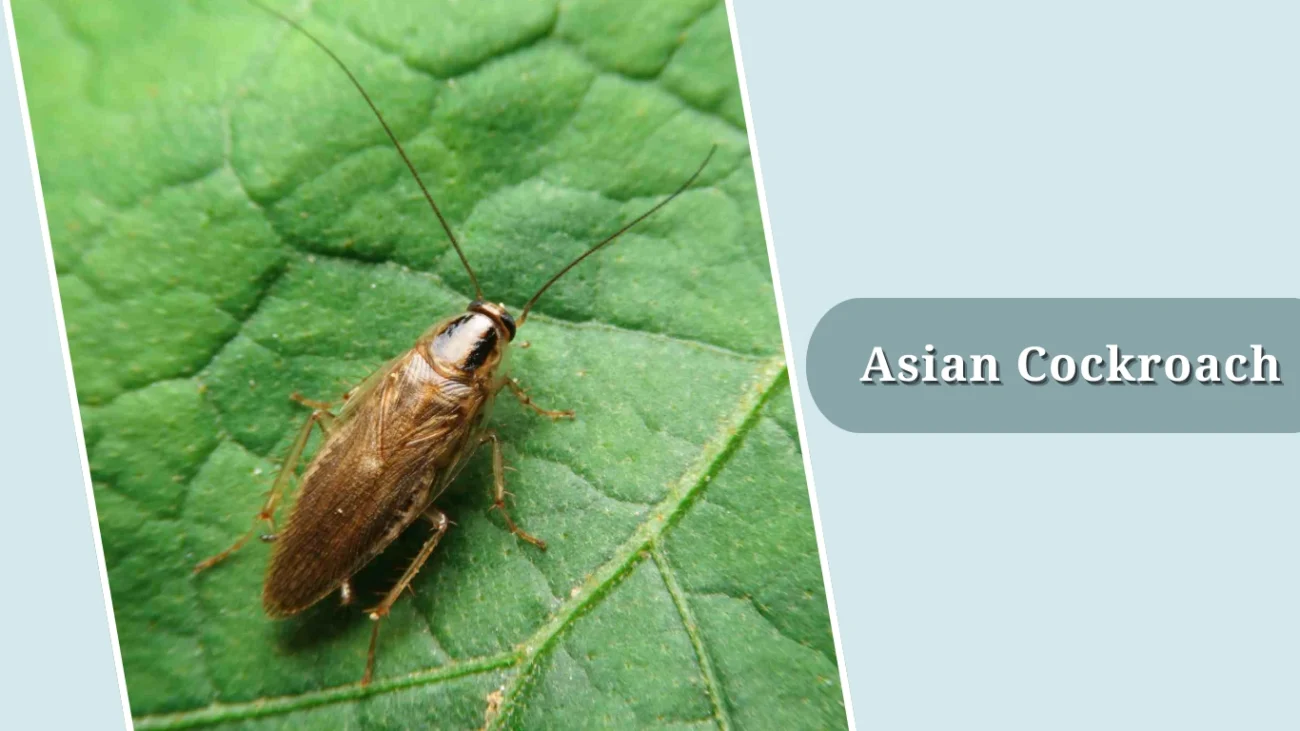
The Asian cockroach (Blattella asahinai) looks almost identical to the German cockroach but behaves very differently. It is primarily an outdoor species and is a strong flier, unlike its close relative.
Identification
- Size: 0.5 – 0.6 inches long
- Color: Light brown to tan with two dark parallel stripes on the pronotum (like German cockroach)
- Wings: Fully developed, capable of sustained flight
- Shape: Small, slim body with long antennae
Habitat
Asian cockroaches prefer outdoor habitats such as gardens, leaf litter, mulch, lawns, and shaded areas. They are attracted to light and often fly indoors at night but rarely establish infestations inside.
Behavior
They are strong fliers and highly attracted to light sources, often seen swarming around porch lights and windows in the evening. Unlike German cockroaches, they are less likely to infest kitchens or bathrooms.
Diet
Feeds on decaying organic matter, plant material, and occasionally food crumbs if they enter houses.
Lifecycle
Females produce oothecae containing about 30–40 eggs. Development from egg to adult takes about 60–90 days. Adults typically live for 3–6 months.
12. Lobster Cockroach

The Lobster cockroach (Nauphoeta cinerea), also known as the speckled cockroach, is commonly used as feeder insects for reptiles and amphibians. It is native to Africa but has spread globally in captivity.
Identification
- Size: 0.8 – 1.2 inches long
- Color: Grayish-brown with mottled or speckled patterns on the body
- Wings: Present and fully developed; capable of gliding but not strong fliers
- Shape: Flattened, oval body resembling a lobster shell pattern
Habitat
They naturally inhabit leaf litter, logs, and decaying plant matter. In captivity, they thrive in warm, humid enclosures with plenty of hiding spots.
Behavior
They are fast runners, highly social, and produce a musky odor when disturbed. Unlike pest cockroaches, they rarely infest homes and are mostly bred in controlled environments.
Diet
Omnivorous scavengers that feed on fruits, vegetables, grains, and decaying organic matter.
Lifecycle
Females carry oothecae internally until nymphs are born. Each brood produces 20–40 live young. Development to adulthood takes 2–3 months, and adults live 1–2 years.
13. Cuban Cockroach

The Cuban cockroach (Panchlora nivea), also known as the green banana cockroach, is a strikingly green species found in tropical regions. Unlike common household pests, it is primarily an outdoor species.
Identification
- Size: 0.6 – 1 inch long
- Color: Bright leaf-green with translucent wings; nymphs are dark brown to black
- Wings: Fully developed and strong fliers
- Shape: Slender, oval body with long antennae
Habitat
Cuban cockroaches prefer outdoor areas such as trees, shrubs, gardens, and areas with decaying vegetation. They are occasionally attracted to lights at night and may fly indoors but do not infest homes.
Behavior
They are active fliers, nocturnal, and non-invasive. Their bright green color provides camouflage among leaves.
Diet
Feeds on decaying plant material, fruits, and organic matter.
Lifecycle
Females produce oothecae with about 30 eggs, usually deposited in soil or leaf litter. Development takes 3–4 months. Adults live 6–10 months.
14. Giant Burrowing Cockroach

The Giant Burrowing cockroach (Macropanesthia rhinoceros), also called the rhinoceros cockroach or Queensland giant cockroach, is the heaviest cockroach species in the world. Native to Australia, it is a burrowing, wingless species and is often kept as a pet.
Identification
- Size: Up to 3.3 inches long
- Weight: Can reach over 30 grams
- Color: Dark brown, glossy body
- Wings: Absent (wingless)
- Shape: Broad, heavily armored body with strong legs for digging
Habitat
They inhabit sandy soils in Australia, particularly in Queensland. They live in permanent burrows up to 3 feet deep, where they shelter during the day.
Behavior
Unlike pest species, they are non-invasive and spend most of their lives underground. They use their strong legs to dig burrows and emerge at night to feed. They are clean, slow-moving, and do not produce foul odors.
Diet
Primarily feed on dry eucalyptus leaves and other plant litter, playing an important role in nutrient recycling.
Lifecycle
Females give birth to live young and provide parental care—rare among cockroaches. Nymphs develop slowly, taking up to 5 years to mature, and adults can live over 10 years.
15. Sand Cockroach

The Sand cockroach (Arenivaga spp.) is a burrowing insect native to arid and sandy regions, especially in the southwestern United States and Mexico. Unlike household pests, this species is harmless and lives mostly underground.
Identification
- Size: 0.6 – 1 inch long
- Color: Light tan to sandy brown, blending with soil
- Wings: Males have wings and can fly; females are wingless and remain underground
- Shape: Soft-bodied with short antennae compared to other cockroaches
Habitat
They are adapted to dry, sandy soils and are commonly found in deserts, dunes, and arid grasslands. Females spend their lives underground, while males fly at night in search of mates.
Behavior
Nocturnal and non-invasive, sand cockroaches are rarely encountered indoors. Males are attracted to lights at night, while females remain hidden underground.
Diet
They feed primarily on decaying organic matter and plant debris, contributing to soil enrichment.
Lifecycle
Females lay oothecae underground, and nymphs develop slowly in sandy burrows. Development to adulthood takes several months. Adults typically live less than a year.
16. Green Banana Cockroach

The Green Banana cockroach (Panchlora exoleta) is a vibrant, leaf-green species often mistaken for the Cuban cockroach. It is a tropical outdoor species and is sometimes kept as a pet or feeder insect.
Identification
- Size: 1 – 1.2 inches long
- Color: Bright green with translucent wings; nymphs are dark brown to black
- Wings: Fully developed, strong fliers
- Shape: Slender, oval body resembling a green leaf
Habitat
Native to Central and South America, they thrive in rainforests, gardens, and plantations. They prefer areas with high humidity and dense vegetation.
Behavior
They are nocturnal, strong fliers, and highly attracted to lights at night. Unlike household pests, they do not infest homes but may fly indoors accidentally.
Diet
Feeds on decaying plant matter, fruit, and organic debris.
Lifecycle
Females produce oothecae containing around 30 eggs, usually hidden in soil or leaf litter. Development takes 3–5 months, and adults live about 6–8 months.
17. Death’s Head Cockroach

The Death’s Head cockroach (Blaberus craniifer) is a large Central American species recognized by the skull-like marking on its thorax. It is often kept as an exotic pet and is not considered a household pest.
Identification
- Size: 1.5 – 2 inches long
- Color: Dark brown to black with a distinctive pale tan pronotum featuring a skull-like pattern
- Wings: Fully developed, capable of gliding but rarely strong fliers
- Shape: Broad, flat body with long antennae
Habitat
They are found in forests, caves, and decaying vegetation across Central America and the Caribbean. They prefer warm, humid environments with plenty of cover.
Behavior
Death’s Head cockroaches are nocturnal, slow-moving, and non-aggressive. They are valued in the pet trade due to their unique markings and calm nature.
Diet
Omnivorous scavengers—consume fruits, vegetables, decaying organic matter, and occasionally protein sources.
Lifecycle
Females carry oothecae internally until the nymphs hatch, producing live young. A single brood may contain 25–35 nymphs. Development takes 6–12 months, and adults can live up to 2 years.
18. Panchlora Cockroach

The Panchlora cockroach (Panchlora spp.) is a genus of bright green cockroaches native to tropical regions. The Cuban and Green Banana cockroaches are its most well-known representatives. They are popular in the pet trade and as feeder insects.
Identification
- Size: 0.6 – 1.2 inches long (depending on species)
- Color: Vivid green with translucent wings; nymphs are usually dark brown or black
- Wings: Fully developed, strong fliers
- Shape: Slender, leaf-like body with long antennae
Habitat
They inhabit rainforests, plantations, and gardens in Central and South America. They prefer humid areas with dense foliage, leaf litter, and decaying vegetation.
Behavior
They are nocturnal, excellent fliers, and strongly attracted to light at night. They are non-invasive and rarely found in homes.
Diet
Primarily feed on decaying plant matter, fruits, and organic debris.
Lifecycle
Females produce oothecae that hatch into nymphs after a few weeks. Nymphs develop in 3–5 months, depending on species and environment. Adults typically live 6–8 months.
19. Harlequin Cockroach

The Harlequin cockroach (Neostylopyga rhombifolia) is a colorful, patterned species that originates from Asia but has spread to other tropical regions. It is sometimes kept as an ornamental or feeder insect.
Identification
- Size: 1 – 1.2 inches long
- Color: Reddish-brown to black with distinctive yellow or orange patterns on the wings and thorax
- Wings: Fully developed; capable of gliding but not strong fliers
- Shape: Flat, oval body with striking patterned markings
Habitat
They prefer warm, humid climates and are often found outdoors in leaf litter, gardens, and decaying vegetation. Indoors, they may appear in tropical regions but are not major household pests.
Behavior
These cockroaches are nocturnal and highly active, with strong running ability. Their bright patterns provide camouflage among dead leaves.
Diet
Omnivorous scavengers—consume plant debris, fruits, grains, and decaying organic matter.
Lifecycle
Females produce oothecae containing 20–30 eggs, often hidden in soil or organic debris. Development takes 4–6 months, and adults live about 6–10 months.
20. Tawny Cockroach

The Tawny cockroach (Ectobius pallidus) is a small, outdoor species native to Europe and parts of Asia. Unlike many other cockroaches, it is not considered a pest and rarely invades homes.
Identification
- Size: 0.4 – 0.6 inches long
- Color: Pale yellowish-brown to light tan
- Wings: Fully developed; capable of flight
- Shape: Slender, delicate body with long antennae
Habitat
Tawny cockroaches live outdoors in fields, grasslands, gardens, and wooded areas. They are often found in leaf litter, under stones, and in low vegetation.
Behavior
They are diurnal as well as nocturnal, making them more visible than many cockroach species. Unlike house pests, they prefer outdoor environments and only occasionally wander indoors.
Diet
They feed on decaying plant material, seeds, and other organic debris.
Lifecycle
Females produce small oothecae containing 10–20 eggs. Nymphs develop outdoors, taking several months to reach adulthood. Adults typically live for 4–6 months.
21. Brown Cockroach

The Brown cockroach (Periplaneta brunnea) is a large species closely related to the American cockroach. It is less widespread but can still be found in warm, humid regions, particularly in the southern United States.
Identification
- Size: 1.4 – 1.6 inches long
- Color: Uniform reddish-brown to chestnut brown
- Wings: Fully developed, extending past the abdomen; capable of flight
- Shape: Large, oval body with long antennae
Habitat
They prefer warm, moist environments such as greenhouses, basements, sewers, and areas with abundant organic debris. Outdoors, they live in mulch, woodpiles, and decaying vegetation.
Behavior
Brown cockroaches are nocturnal, strong climbers, and can fly short distances. They are slower to spread than German cockroaches but are resilient once established.
Diet
Omnivorous scavengers—feed on food scraps, paper, glue, garbage, and decaying plant material.
Lifecycle
Females produce oothecae containing about 24 eggs, often deposited in protected areas. Development takes 8–12 months, and adults live 6–10 months.
22. Pale-bordered Field Cockroach

The Pale-bordered Field cockroach (Pseudomops septentrionalis) is a striking outdoor species found in parts of North and Central America. Unlike pest species, it does not infest homes and mainly lives in natural habitats.
Identification
- Size: 0.6 – 0.8 inches long
- Color: Dark brown to black with distinctive pale or yellow borders on the wings
- Wings: Fully developed; strong fliers
- Shape: Flattened, oval body with light edging that contrasts against the darker center
Habitat
These cockroaches prefer fields, forests, gardens, and areas with abundant leaf litter. They are rarely seen indoors, except when attracted to lights.
Behavior
They are nocturnal, fast-moving, and frequently attracted to outdoor lights. Unlike domestic pests, they pose no threat to homes or food supplies.
Diet
Feeds mainly on decaying plant matter, leaves, and organic debris.
Lifecycle
Females produce oothecae with 20–30 eggs, typically hidden in soil or under plant litter. Development to adulthood takes several months, and adults live 6–8 months.
23. Dusky Cockroach
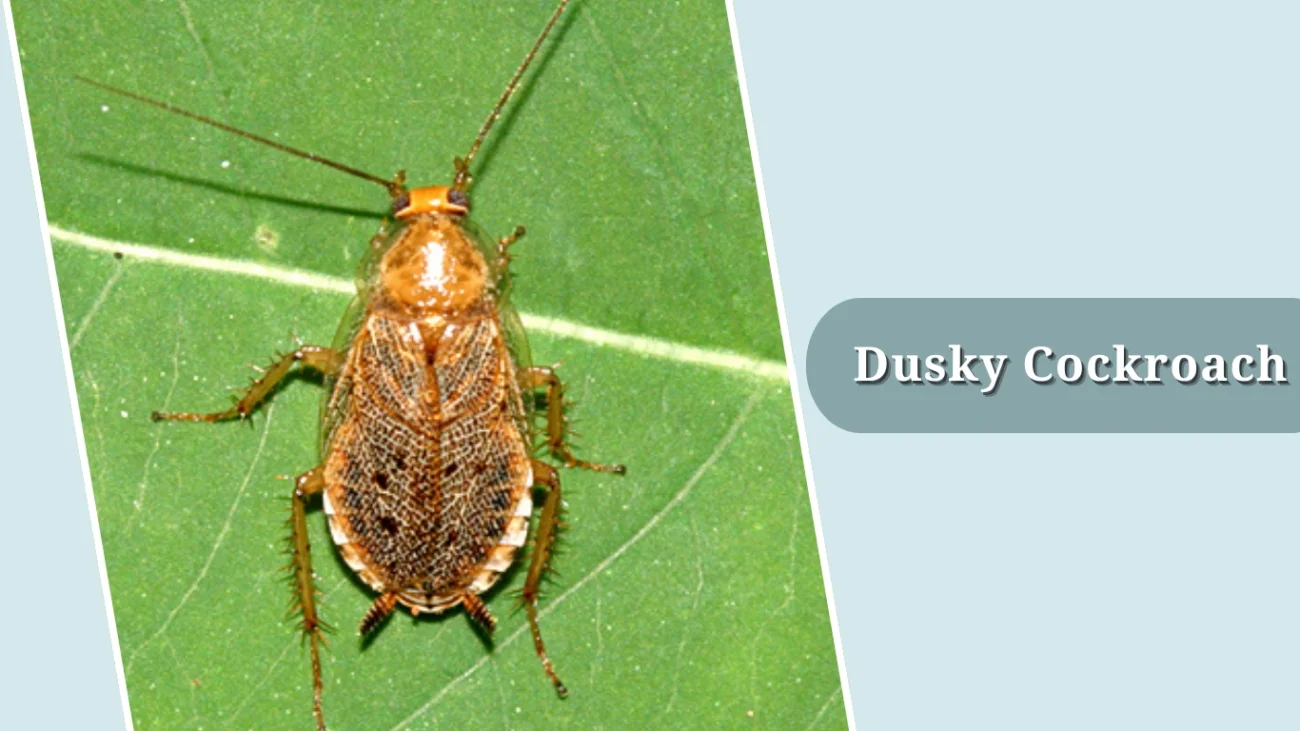
The Dusky cockroach (Ectobius lapponicus) is a harmless outdoor species native to Europe, North Africa, and parts of Asia. Unlike pest species, it does not infest homes and is often considered beneficial in the ecosystem.
Identification
- Size: 0.4 – 0.6 inches long
- Color: Dark brown to reddish-brown, sometimes with lighter markings
- Wings: Fully developed; capable of flight, more active in males
- Shape: Small, slender body with long antennae
Habitat
They inhabit forests, grasslands, fields, and gardens, often hiding under stones, bark, and leaf litter. They may wander indoors but do not establish infestations.
Behavior
Dusky cockroaches are diurnal and nocturnal, making them more likely to be seen than many other species. They are attracted to light and are often spotted flying around outdoor lamps.
Diet
They feed on decaying plant matter, leaves, and other organic debris, contributing to nutrient cycling.
Lifecycle
Females produce small oothecae with around 15–20 eggs, deposited in soil or hidden under litter. Development takes a few months, and adults live 4–6 months.
24. Black Giant Cockroach
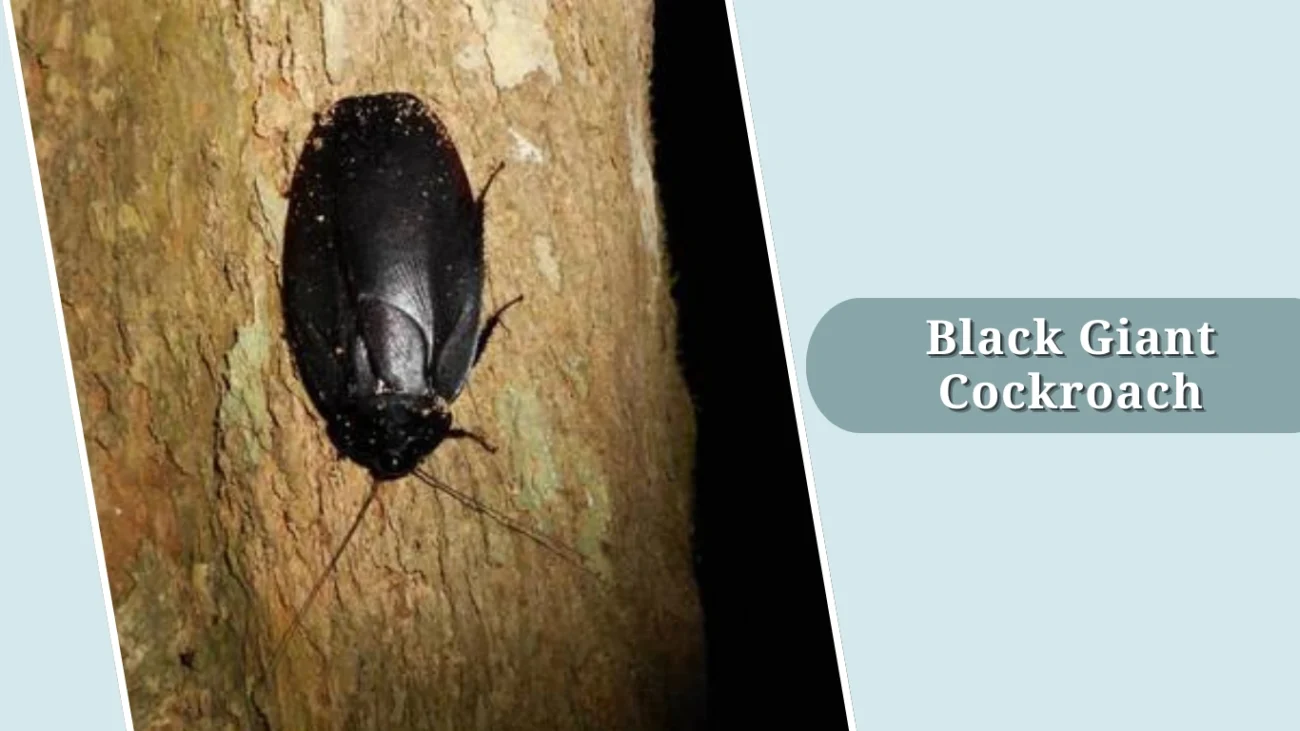
The Black Giant cockroach (Blaberus giganteus) is one of the largest cockroach species in the world, native to Central and South America. Despite its size, it is harmless and often kept as an exotic pet.
Identification
- Size: 3 – 4 inches long
- Color: Dark brown to nearly black, with lighter margins on the wings
- Wings: Fully developed; capable of gliding short distances
- Shape: Very large, broad body with long antennae
Habitat
They inhabit tropical rainforests, caves, and areas with dense vegetation. They prefer warm, humid environments with plenty of shelter.
Behavior
Black Giant cockroaches are nocturnal and slow-moving. They are non-invasive and do not infest homes, instead remaining in natural habitats.
Diet
They feed on decaying leaves, fruits, and organic matter, playing an important role in decomposition.
Lifecycle
Females carry oothecae internally and give birth to live young. Each brood produces around 20–30 nymphs. Development to adulthood can take 6–12 months, and adults may live up to 2 years.
25. Blaberus Cockroach

The Blaberus cockroach (Blaberus spp.) is a genus that includes several large tropical species, most famously the “discoid” cockroach (Blaberus discoidalis). They are popular in the pet trade and as feeder insects because they are non-invasive and easy to keep.
Identification
- Size: 2 – 3 inches long (varies by species)
- Color: Light brown to tan with darker markings, often a shield-like pattern on the thorax
- Wings: Fully developed; some species glide short distances
- Shape: Broad, flattened body with long legs and antennae
Habitat
Blaberus species are native to Central and South American rainforests, where they live in leaf litter, under logs, and in caves.
Behavior
They are nocturnal, slow-moving, and non-aggressive. Many species in this genus are winged but rarely fly.
Diet
Feed on decaying plant matter, fruits, vegetables, and other organic debris.
Lifecycle
Females carry oothecae internally and give birth to live young. Each brood may contain 20–40 nymphs. Development takes 4–6 months, and adults live about 1–2 years.
26. Brazilian Cockroach

The Brazilian cockroach (Blaberus parabolicus and related species) is one of the larger tropical cockroaches native to South America. While not a household pest, it is sometimes kept as a feeder or exotic insect in collections.
Identification
- Size: 2 – 2.5 inches long
- Color: Light tan to brown with darker patches on the wings and thorax
- Wings: Fully developed; capable of gliding but rarely flies long distances
- Shape: Broad, oval body with smooth edges and long antennae
Habitat
They thrive in tropical forests, caves, and areas with high humidity. They usually shelter under logs, leaves, and other organic debris.
Behavior
Brazilian cockroaches are nocturnal, slow-moving, and non-aggressive. They prefer to remain hidden in moist, shaded environments and are not invasive.
Diet
Feed on decaying organic matter, fruits, and vegetation.
Lifecycle
Females carry oothecae internally and give birth to live young. A brood typically contains 20–30 nymphs. Development takes 5–7 months, and adults live up to 1.5 years.
27. Cuban Burrowing Cockroach

The Cuban Burrowing cockroach (Byrsotria fumigata) is a large, wingless species native to Cuba and nearby Caribbean regions. Unlike household pests, it is a burrowing insect that lives primarily outdoors.
Identification
- Size: 1.5 – 2 inches long
- Color: Dark brown to nearly black
- Wings: Absent (wingless species)
- Shape: Thick, broad, heavily built body adapted for burrowing
Habitat
They prefer moist soils, gardens, and forested areas where they dig burrows for shelter. They are rarely seen indoors and pose no threat to homes.
Behavior
Cuban Burrowing cockroaches are nocturnal and spend much of their lives underground. They are slow-moving and non-invasive.
Diet
Feed mainly on decaying leaves, plant debris, and organic matter in soil.
Lifecycle
Females produce oothecae containing 20–30 eggs. Nymphs develop underground, taking several months to reach adulthood. Adults can live 1–2 years.
28. Indian Sand Cockroach

The Indian Sand cockroach (Polyphaga aegyptiaca) is a burrowing desert species found in India, the Middle East, and parts of North Africa. It is well adapted to arid environments and rarely seen outside its sandy habitats.
Identification
- Size: 0.8 – 1.2 inches long
- Color: Pale yellowish-brown to sandy tan
- Wings: Females are wingless; males have wings but fly only short distances
- Shape: Broad, robust body adapted for burrowing in sand
Habitat
They live in deserts and sandy soils, burrowing to escape extreme heat during the day. They are commonly found under stones and in dry, loose soil.
Behavior
Primarily nocturnal, they emerge at night to search for food. They are burrowers and avoid open spaces, making them less noticeable than other species.
Diet
They feed on decaying plant matter, roots, seeds, and organic debris in sandy soils.
Lifecycle
Females produce oothecae containing around 20 eggs, which are deposited underground. Nymphs develop slowly, taking several months to reach adulthood. Adults usually live less than 1 year.
29. Cape Mountain Cockroach

The Cape Mountain cockroach (Aptera fusca) is a large, wingless species native to South Africa. It is notable for its strong maternal care, which is rare among cockroaches.
Identification
- Size: 1.5 – 2 inches long
- Color: Dark brown to black with a shiny, armored body
- Wings: Absent (wingless species)
- Shape: Heavy-bodied, with strong legs for burrowing
Habitat
Found in South African mountains and grasslands, they live under rocks, logs, and in soil burrows. They prefer cool, moist areas at higher elevations.
Behavior
Cape Mountain cockroaches are slow-moving and non-invasive. Females exhibit maternal care, protecting and carrying their young for a period after birth.
Diet
They feed primarily on decaying plant matter, leaves, and organic debris, contributing to soil enrichment.
Lifecycle
Females give birth to live young rather than laying external oothecae. Nymphs remain close to the mother for protection before becoming independent. Adults can live up to 2 years.
30. Speckled Cockroach
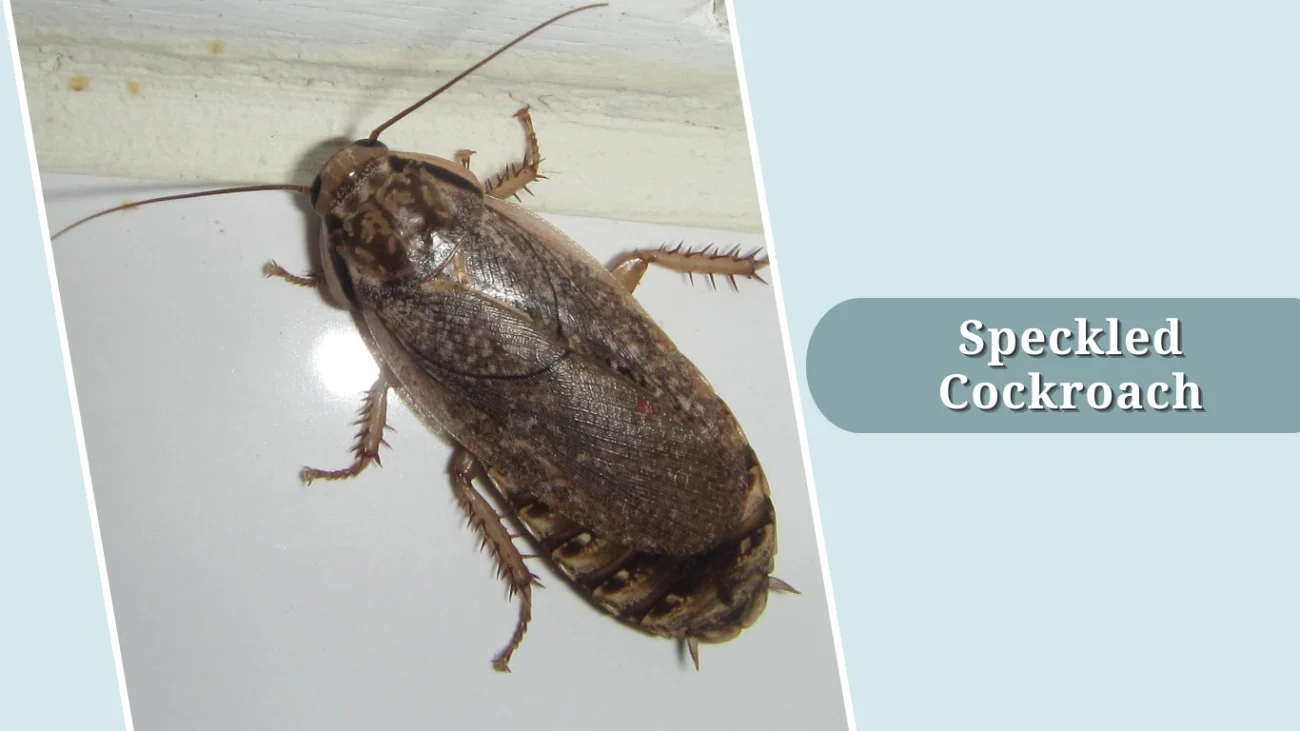
The Speckled cockroach (Nauphoeta cinerea – also sometimes referred to as the spotted or speckled feeder roach) is a medium-sized tropical species often bred for the pet trade. It is not considered a household pest.
Identification
- Size: 0.8 – 1 inch long
- Color: Light brown to gray with dark speckled or mottled patterns across the body
- Wings: Fully developed; capable of gliding short distances
- Shape: Oval, somewhat flattened body with long antennae
Habitat
They are native to Africa but are now widely distributed in captivity. In natural settings, they live in leaf litter, under logs, and in humid microhabitats.
Behavior
Speckled cockroaches are social, fast-moving, and produce a musky odor when disturbed. They are commonly kept as feeder insects due to their rapid breeding and ease of care.
Diet
Omnivorous scavengers—consume fruits, vegetables, grains, and decaying organic matter.
Lifecycle
Females carry oothecae internally and give birth to live nymphs. Each brood can produce 20–40 offspring. Development takes 2–3 months, and adults live about 1 year.