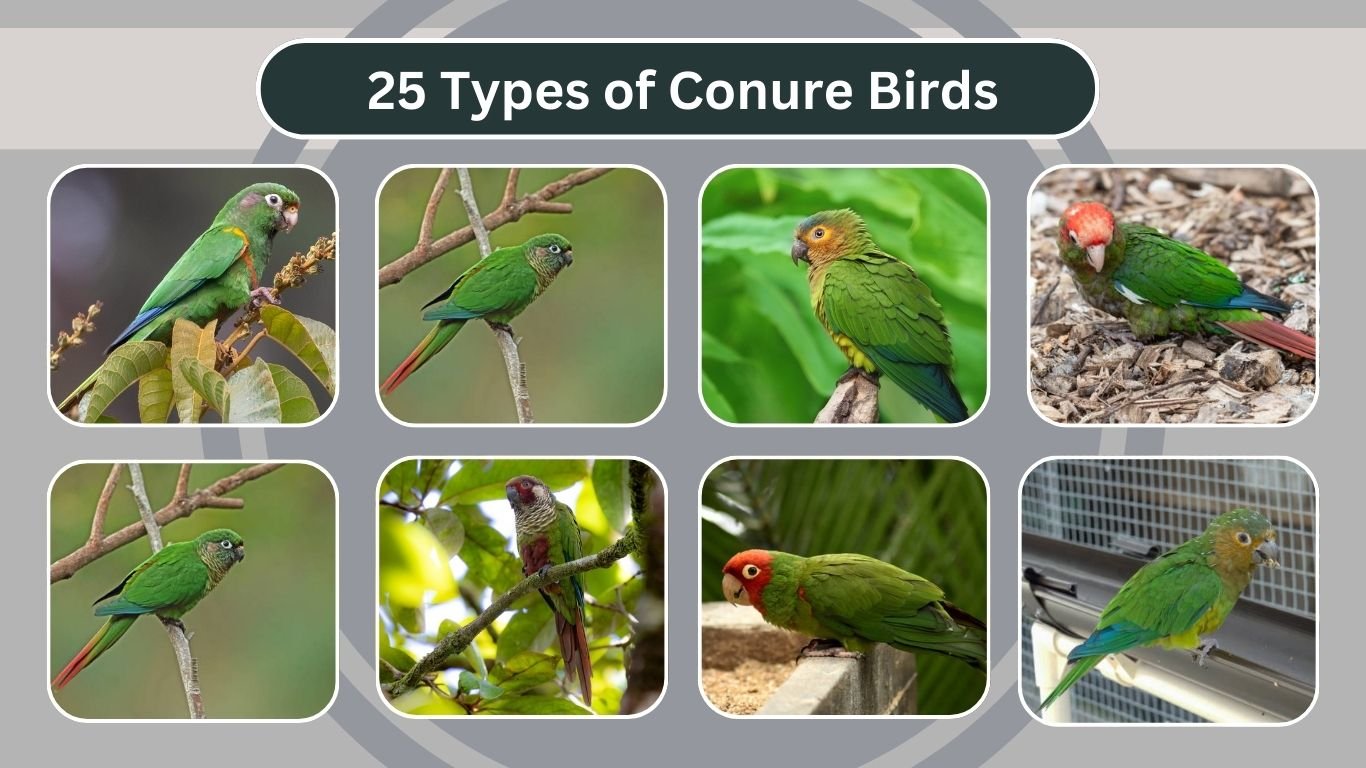
Conures are among the most beloved parrots, admired for their vibrant colors, playful personalities, and strong social bonds. Native to Central and South America, these medium-sized parrots come in a wide variety of species, each with its own unique traits. From the bright Sun Conure to the rare Santa Marta Conure, bird enthusiasts can find endless charm and diversity in these feathered companions. This guide explores 25 types of conure birds, covering their identification, natural habitats, behaviors, and diets.
1. Green-Cheeked Conure
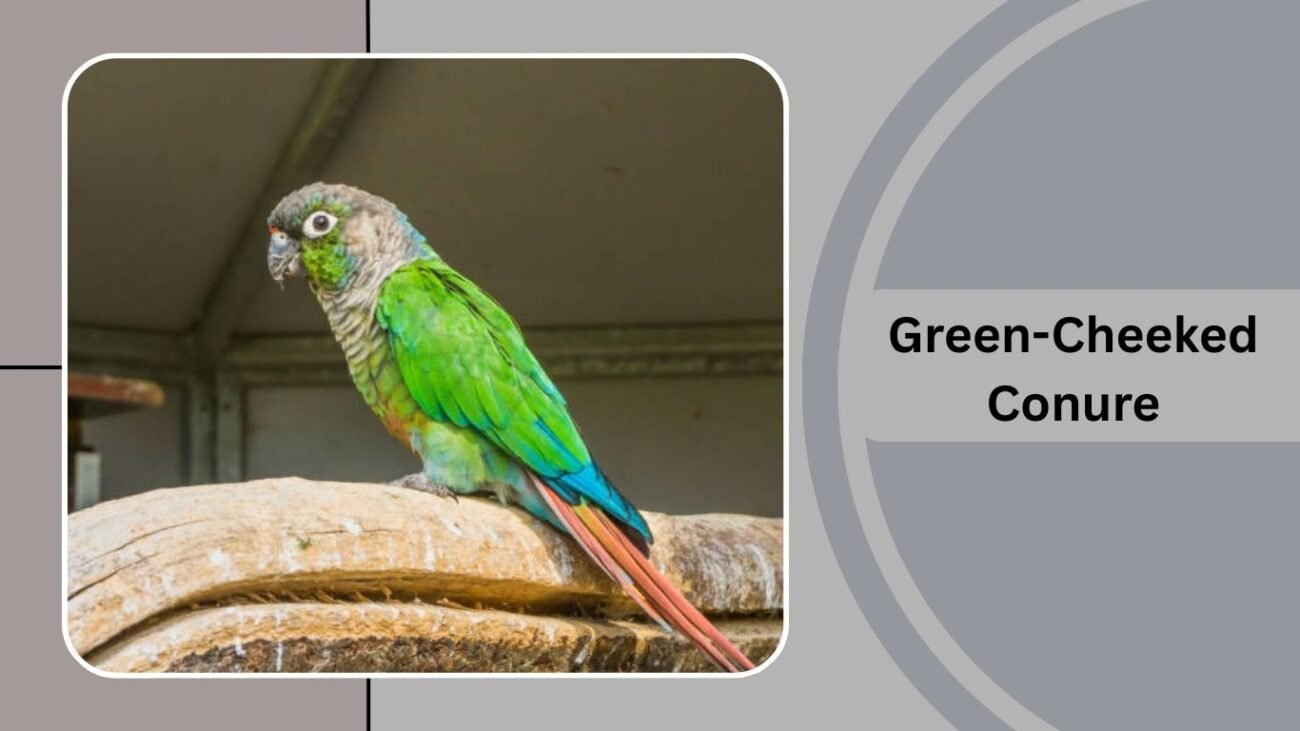
The Green-Cheeked Conure (Pyrrhura molinae) is one of the most popular pet conures, loved for its playful personality, smaller size, and relatively quiet nature compared to other conures. Native to South America, these birds are highly social, intelligent, and bond closely with their owners.
Identification
- Size: Around 10 inches (25 cm)
- Weight: 60–80 grams
- Color: Green body with grayish chest scales, maroon tail, and blue flight feathers
- Distinctive Mark: Dark green cheeks with a maroon patch on the belly
- Lifespan: 25–30 years in captivity
Natural Habitat
They are found in forests and woodland areas of Brazil, Bolivia, Argentina, and Paraguay, often living in flocks for protection and social interaction.
Behavior
Green-Cheeked Conures are curious, affectionate, and active birds. They enjoy climbing, chewing toys, and spending time with their human companions. They are less noisy than larger conure species, making them suitable for apartments.
Diet
In the wild, they feed on fruits, seeds, berries, and vegetation. In captivity, a balanced diet includes pellets, fresh fruits, vegetables, and occasional seeds.
2. Sun Conure
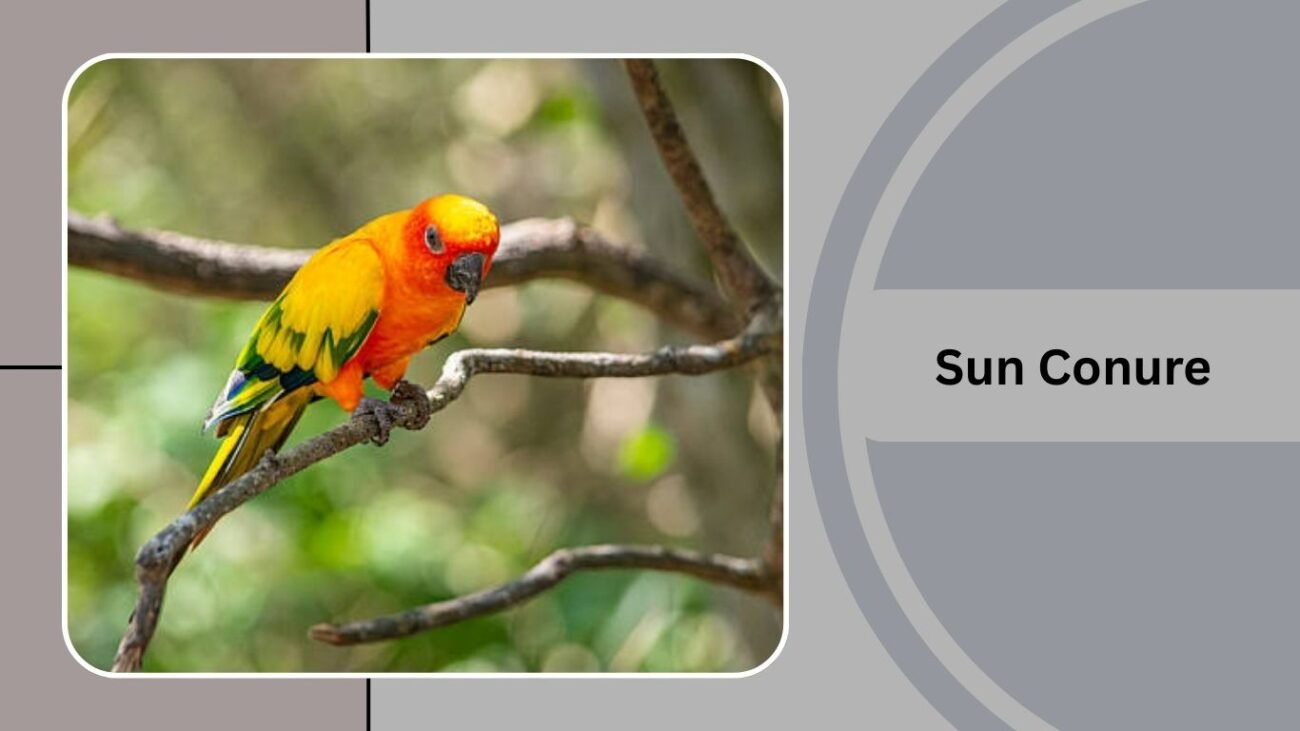
The Sun Conure (Aratinga solstitialis) is one of the most colorful conures, admired for its bright plumage and lively personality. Native to South America, it is highly popular as a pet due to its affectionate nature, but it is also known for being quite vocal.
Identification
- Size: Around 12 inches (30 cm)
- Weight: 100–120 grams
- Color: Bright yellow and orange body with green and blue wing feathers
- Distinctive Mark: Fiery orange face and underparts
- Lifespan: 25–30 years in captivity
Natural Habitat
They inhabit tropical forests, savannas, and coastal woodlands of northeastern South America, particularly in countries like Brazil and Guyana.
Behavior
Sun Conures are extremely social, playful, and enjoy being the center of attention. They can be loud, using their voices to communicate with their flock or human family.
Diet
Their diet consists of fruits, seeds, nuts, berries, and flowers. In captivity, pellets, fresh produce, and occasional nuts are recommended.
3. Jenday Conure
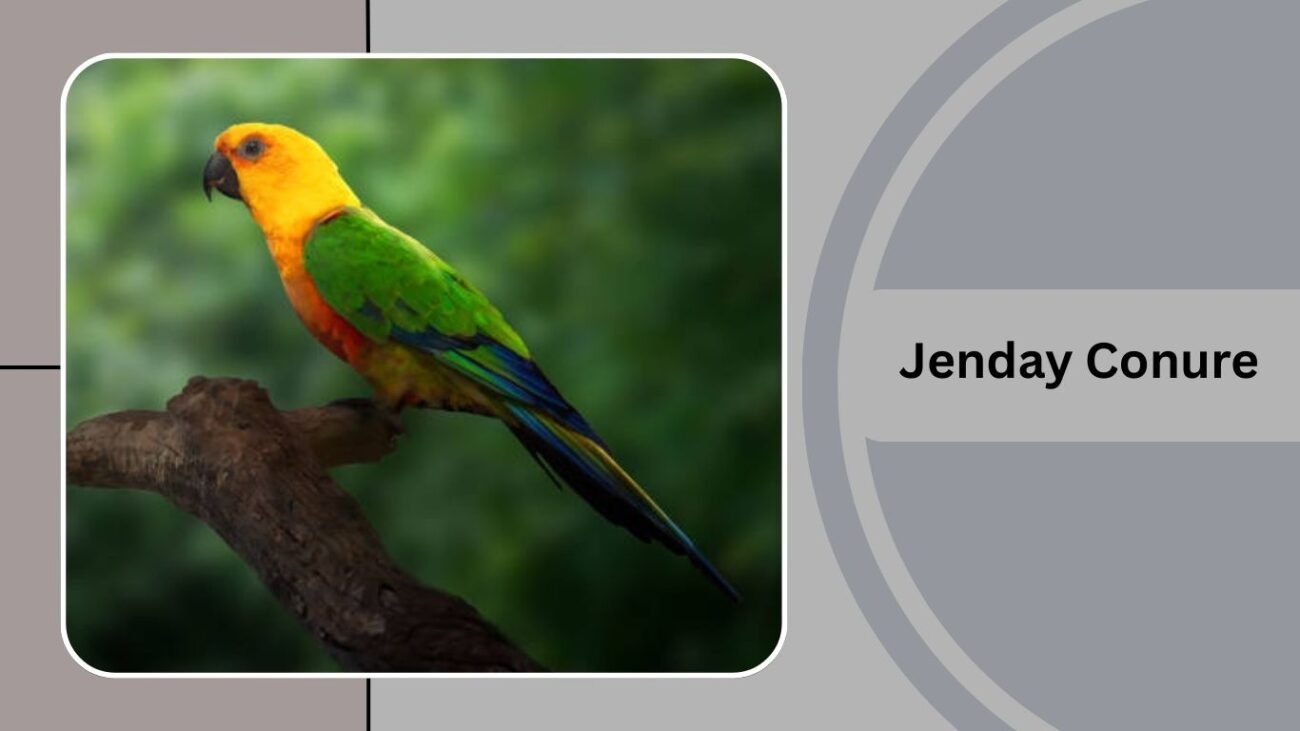
The Jenday Conure (Aratinga jandaya) is closely related to the Sun Conure, sharing similar size and temperament but with slightly different coloring. These birds are affectionate and bond strongly with their owners, making them a popular choice for pet lovers.
Identification
- Size: Around 12 inches (30 cm)
- Weight: 110–120 grams
- Color: Bright yellow body, orange-red head and chest, green wings and back
- Distinctive Mark: Solid orange face with green primary feathers
- Lifespan: 25–30 years in captivity
Natural Habitat
They are native to northeastern Brazil, found in dry woodlands, savannas, and palm groves.
Behavior
Jenday Conures are energetic, intelligent, and require plenty of attention. They can mimic sounds and sometimes words but are generally known for their loud, shrill calls.
Diet
Their diet in the wild includes fruits, seeds, nuts, and blossoms. As pets, they thrive on pellets, fruits, vegetables, and occasional seed mixes.
4. Nanday Conure
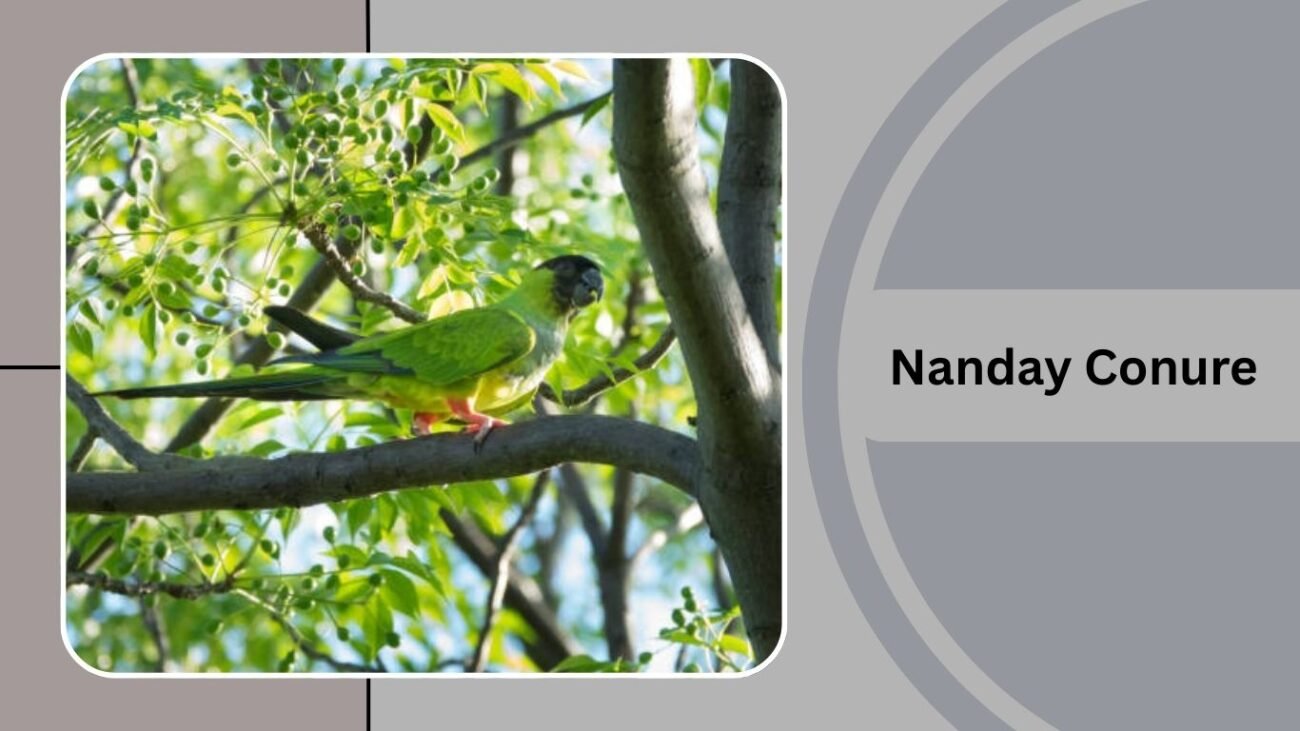
The Nanday Conure (Aratinga nenday), also called the Black-Hooded Parakeet, is a striking bird known for its distinctive dark head and loud calls. It is a highly social parrot, often seen in large flocks in the wild.
Identification
- Size: Around 11–12 inches (28–30 cm)
- Weight: 140–150 grams
- Color: Green body, black head, blue chest, and red lower legs
- Distinctive Mark: Prominent black facial mask
- Lifespan: 25–30 years in captivity
Natural Habitat
Native to South America, particularly Argentina, Brazil, Paraguay, and Bolivia, they inhabit savannas, grasslands, and forested regions.
Behavior
Nanday Conures are bold, curious, and very vocal. They are intelligent birds that require mental stimulation and can learn simple tricks and words.
Diet
They eat seeds, fruits, nuts, berries, and agricultural crops in the wild. In captivity, a balanced mix of pellets, fruits, and vegetables is ideal.
5. Blue-Crowned Conure
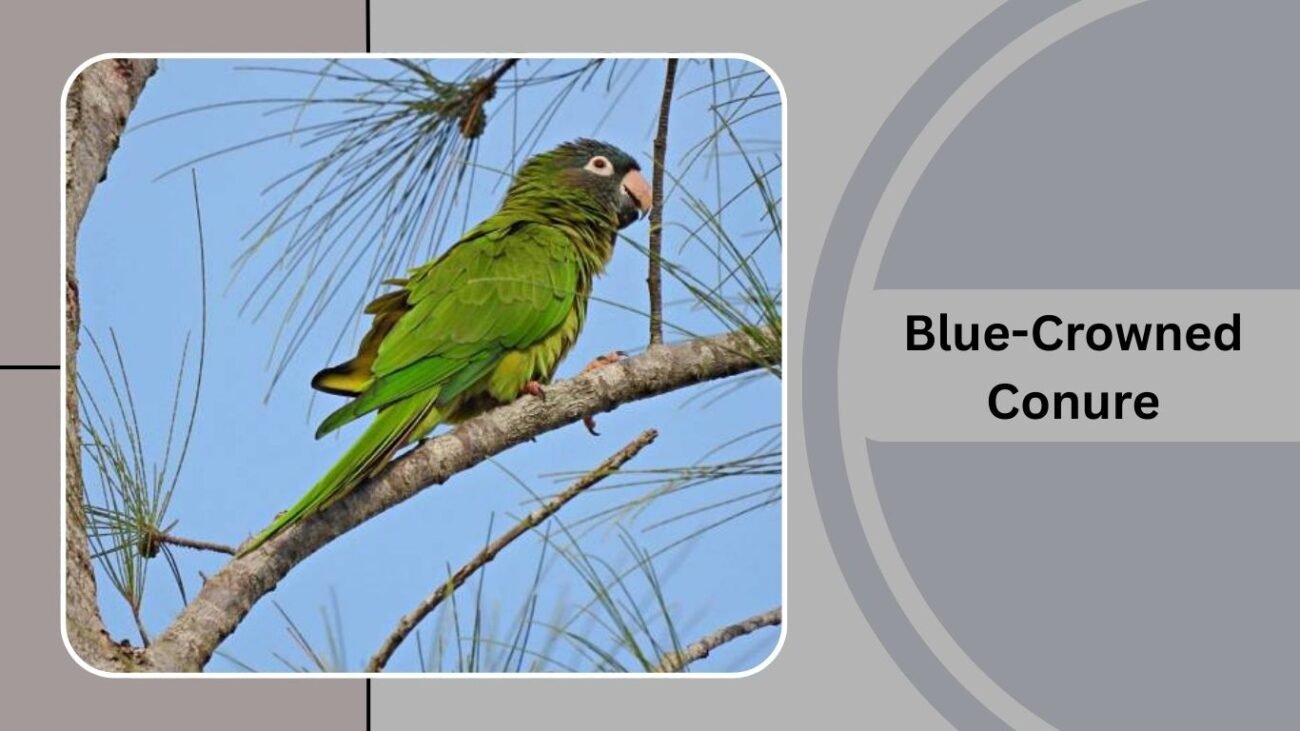
The Blue-Crowned Conure (Thectocercus acuticaudatus) is one of the largest conures and is recognized for its calm temperament and talking ability. Its blue head makes it easily distinguishable from other conures.
Identification
- Size: Around 14–15 inches (35–38 cm)
- Weight: 140–190 grams
- Color: Green body with a bright blue head and face
- Distinctive Mark: Long, pointed tail feathers
- Lifespan: 25–35 years in captivity
Natural Habitat
They are widespread across South America, inhabiting dry forests, savannas, and open woodlands, particularly in Argentina, Bolivia, Paraguay, and Brazil.
Behavior
Blue-Crowned Conures are less noisy than other conures and are known for their ability to mimic words and sounds. They are affectionate but need daily interaction to remain happy.
Diet
In the wild, they consume fruits, seeds, nuts, berries, and crops. Captive diets include pellets, leafy greens, fruits, and occasional nuts.
6. Peach-Fronted Conure
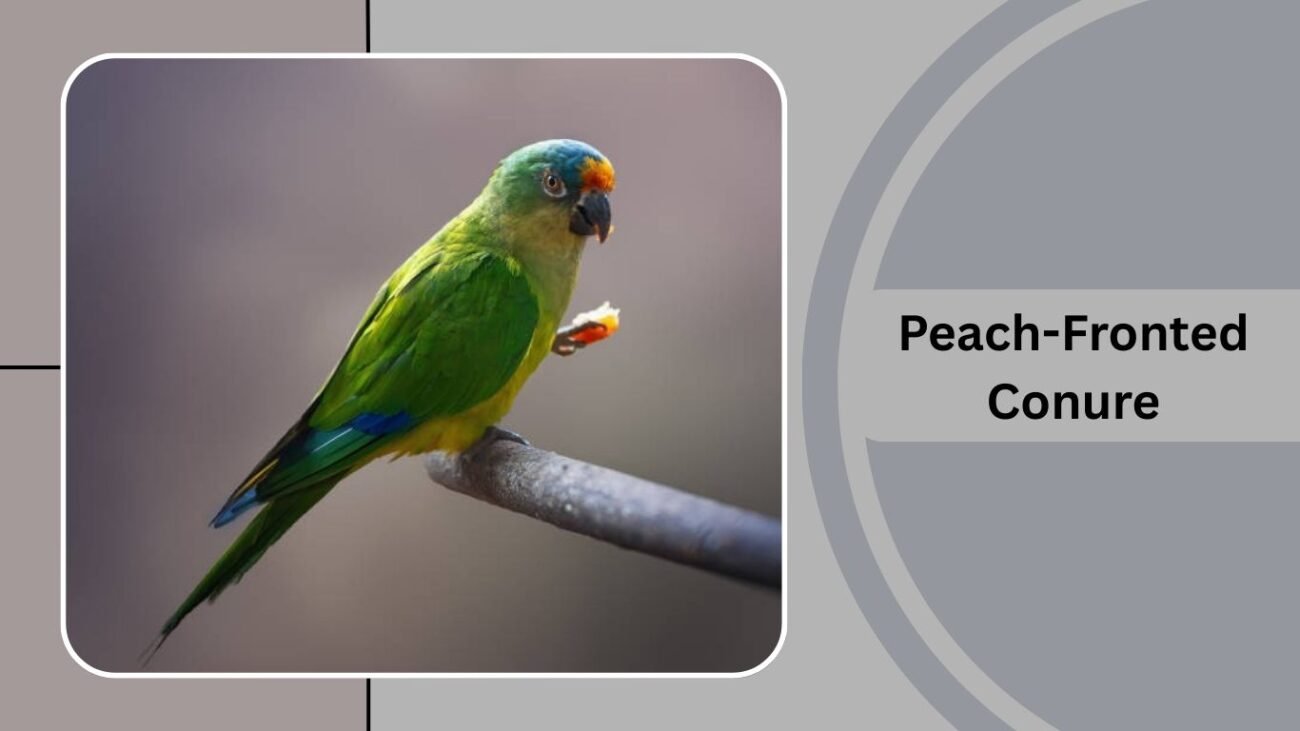
The Peach-Fronted Conure (Eupsittula aurea) is a medium-sized parrot known for its distinctive peach-colored forehead and playful personality. It is a popular species in aviculture due to its manageable size and charming behavior.
Identification
- Size: Around 10–11 inches (25–28 cm)
- Weight: 90–100 grams
- Color: Green body with a peach to orange forehead and blue-tipped wings
- Distinctive Mark: Orange-peach forehead above the beak
- Lifespan: 20–25 years in captivity
Natural Habitat
This species is native to South America, found in Brazil, Argentina, Bolivia, and Paraguay, thriving in savannas, dry forests, and grasslands.
Behavior
Peach-Fronted Conures are social and active, often seen in flocks. They enjoy climbing, playing, and interacting with humans, though they can be moderately noisy.
Diet
Their diet includes seeds, berries, fruits, flowers, and crops. In captivity, pellets, fruits, vegetables, and seeds form a healthy diet.
7. Maroon-Bellied Conure
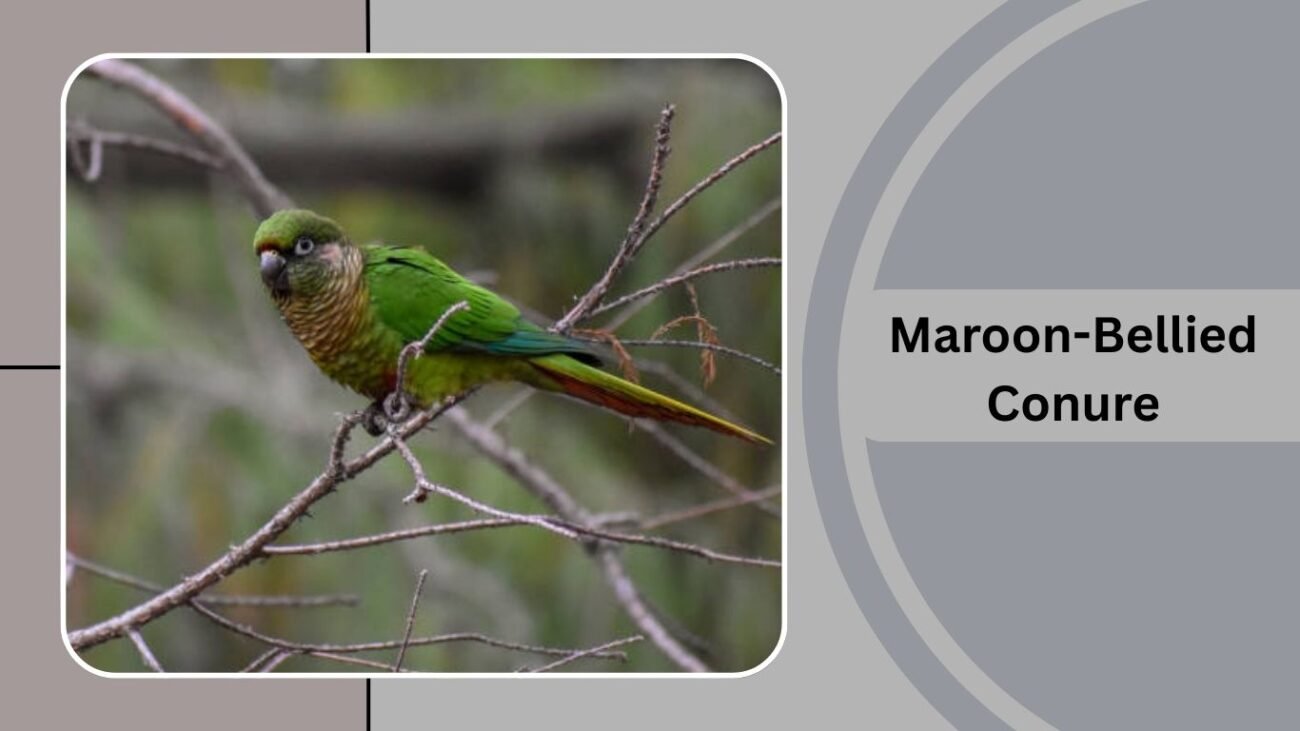
The Maroon-Bellied Conure (Pyrrhura frontalis) is a small and quiet parrot, making it a suitable pet for those who prefer less noise compared to larger conures.
Identification
- Size: Around 10–11 inches (25–28 cm)
- Weight: 60–80 grams
- Color: Green body with a maroon patch on the belly and scalloped chest feathers
- Distinctive Mark: Maroon belly and green tail with hints of blue
- Lifespan: 25–30 years in captivity
Natural Habitat
They are native to southeastern Brazil, Argentina, and Paraguay, often found in forests, woodlands, and suburban areas.
Behavior
Maroon-Bellied Conures are playful, affectionate, and less noisy than many other conures. They thrive on social interaction and require toys to prevent boredom.
Diet
In the wild, they eat seeds, berries, and fruits. A balanced captive diet includes pellets, fresh vegetables, fruits, and limited seeds.
8. Dusky-Headed Conure
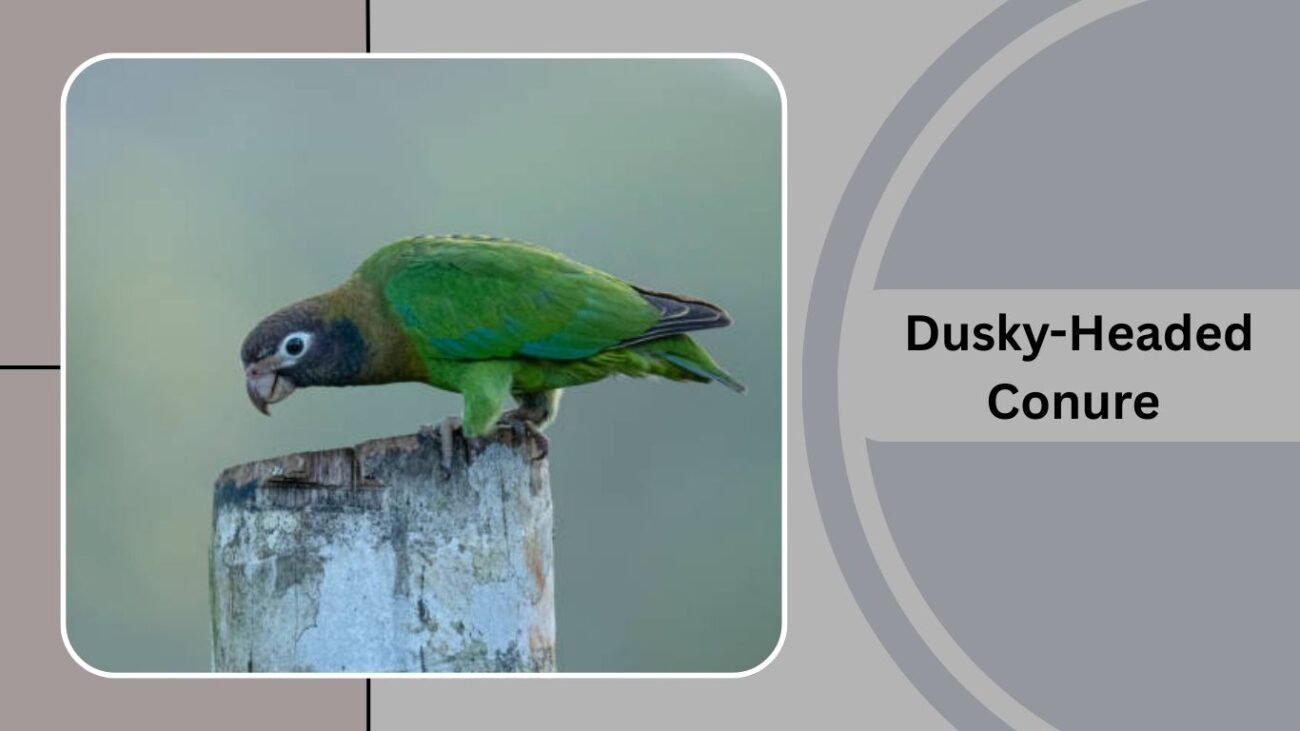
The Dusky-Headed Conure (Aratinga weddellii) is a medium-sized parrot recognized for its dusky-gray head and vibrant green body. It is known for its friendly nature and strong flocking behavior.
Identification
- Size: Around 11–12 inches (28–30 cm)
- Weight: 100–120 grams
- Color: Green body with grayish head and bluish flight feathers
- Distinctive Mark: Dusky-gray head contrasting with the green body
- Lifespan: 25–30 years in captivity
Natural Habitat
Native to western Amazonia, they are found in Peru, Bolivia, Brazil, and Ecuador, usually in forest edges, clearings, and riverine woodlands.
Behavior
These conures are social, often gathering in large, noisy flocks. They are intelligent, playful, and bond closely with their owners when kept as pets.
Diet
Their diet includes seeds, fruits, nuts, and blossoms. In captivity, pellets, fresh fruits, vegetables, and occasional seeds are ideal.
9. Half-Moon Conure
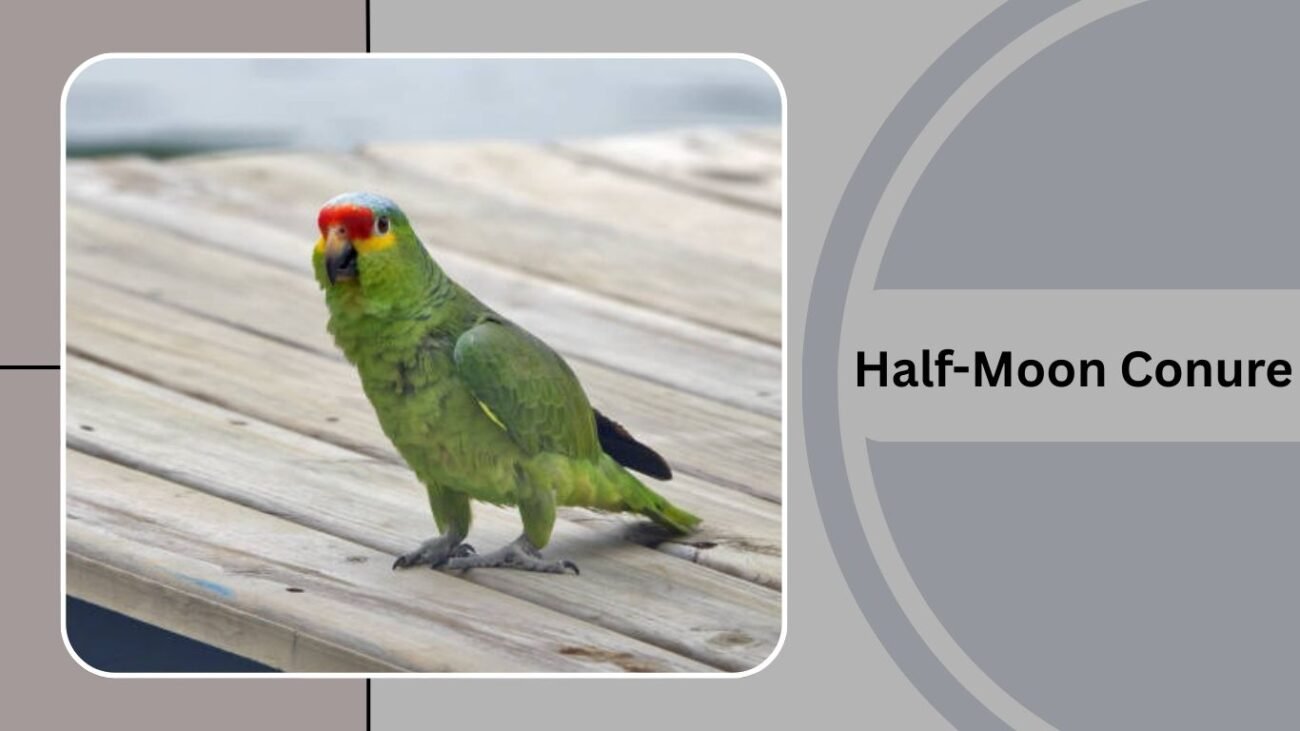
The Half-Moon Conure (Eupsittula canicularis), also called the Orange-Fronted Parakeet, is a small parrot known for its bright orange forehead and charming personality.
Identification
- Size: Around 9–10 inches (23–25 cm)
- Weight: 80–90 grams
- Color: Green body with an orange forehead and blue crown
- Distinctive Mark: Orange patch on the forehead resembling a half-moon
- Lifespan: 20–30 years in captivity
Natural Habitat
They are found from Mexico to Costa Rica, inhabiting dry forests, woodlands, and open savannas.
Behavior
Half-Moon Conures are playful, affectionate, and moderately noisy. They are known for being good mimics and can learn simple sounds and words.
Diet
In the wild, they eat seeds, nuts, fruits, and blossoms. In captivity, they thrive on pellets, fruits, vegetables, and occasional seeds.
10. Golden-Capped Conure
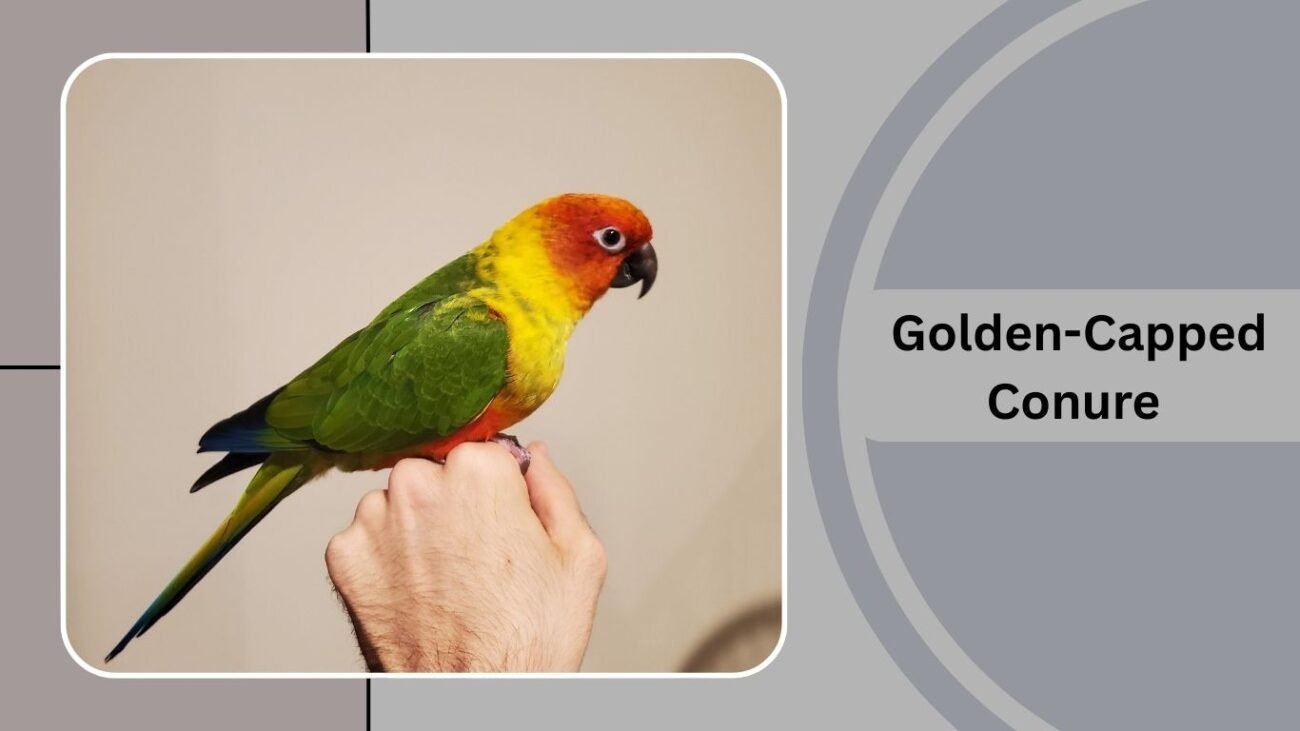
The Golden-Capped Conure (Aratinga auricapillus) is a striking parrot with a golden-orange crown and playful personality. It is energetic, affectionate, and enjoys interacting with people, making it a favored pet bird.
Identification
- Size: Around 13 inches (33 cm)
- Weight: 130–150 grams
- Color: Green body with a golden-orange cap and reddish belly
- Distinctive Mark: Bright orange crown that deepens with age
- Lifespan: 25–30 years in captivity
Natural Habitat
They are native to southeastern Brazil, usually found in forests, woodlands, and plantations.
Behavior
Golden-Capped Conures are lively and affectionate, often seeking attention and playtime. They are moderately noisy but intelligent and trainable.
Diet
Their diet consists of seeds, fruits, nuts, berries, and blossoms. In captivity, a pellet-based diet with fresh fruits and vegetables is recommended.
11. White-Eyed Conure
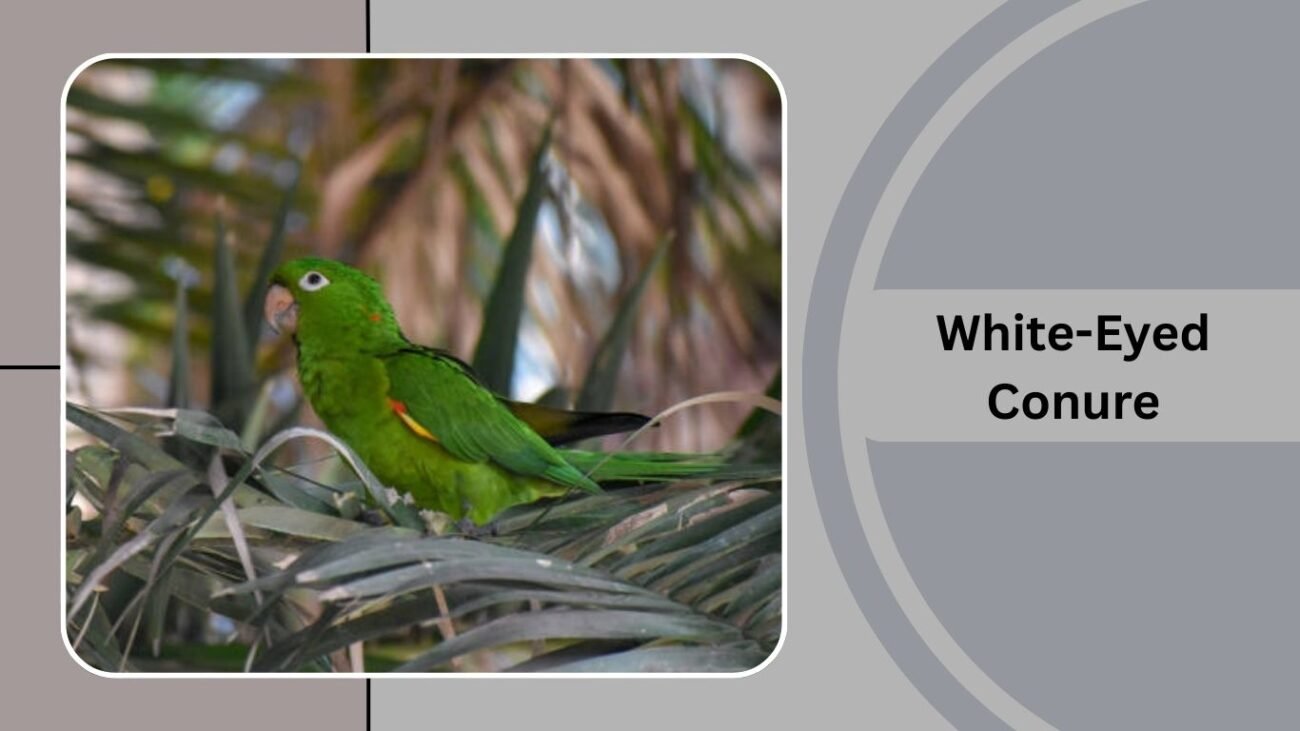
The White-Eyed Conure (Psittacara leucophthalmus) is a medium-sized parrot that stands out due to the white ring around its eyes. It is known for its intelligence, flocking nature, and strong vocalizations.
Identification
- Size: Around 13–14 inches (33–36 cm)
- Weight: 150–170 grams
- Color: Green body with scattered red feathers on wings and a white eye-ring
- Distinctive Mark: Prominent white skin around the eyes
- Lifespan: 25–30 years in captivity
Natural Habitat
They are found across South America, including Brazil, Argentina, and Paraguay, living in forests, savannas, and cultivated areas.
Behavior
White-Eyed Conures are social, noisy, and thrive in large flocks. They are affectionate with their owners but require mental stimulation and space to fly.
Diet
In the wild, they feed on seeds, fruits, nuts, berries, and crops. In captivity, pellets, leafy greens, fruits, and seeds provide balanced nutrition.
12. Mitred Conure
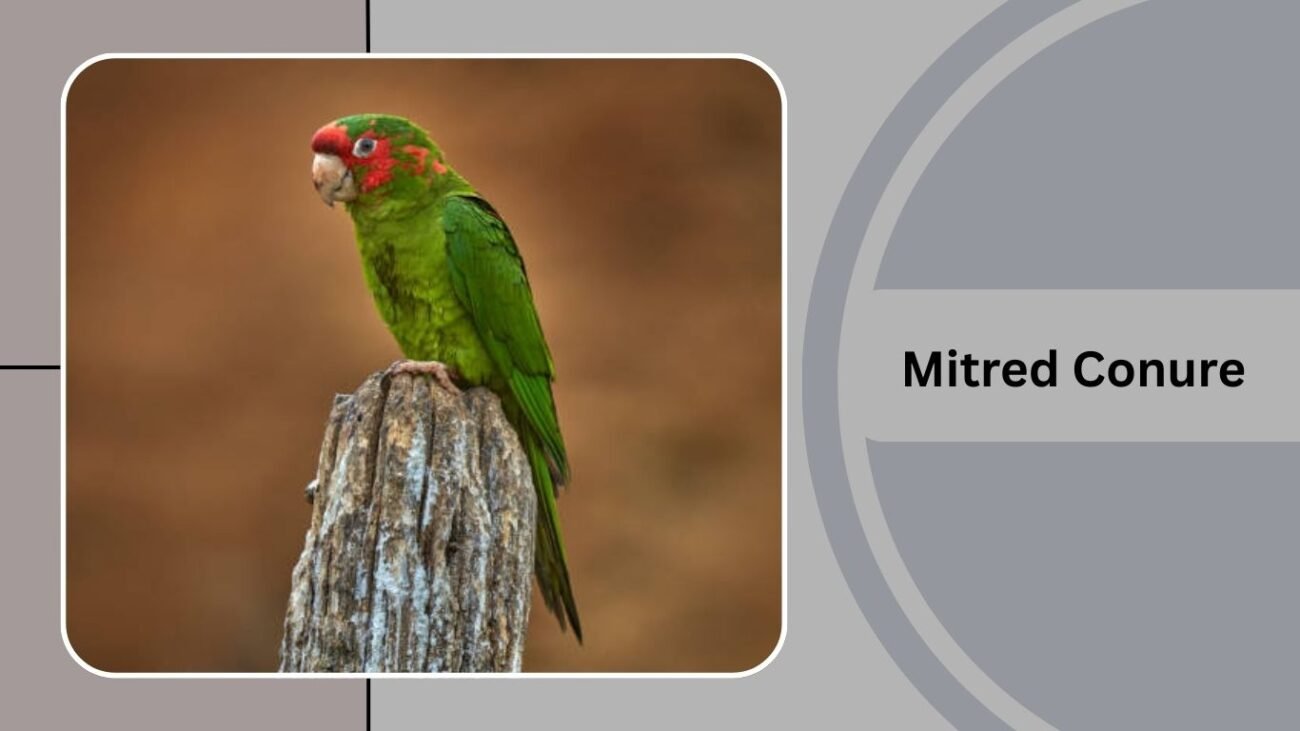
The Mitred Conure (Psittacara mitratus) is a large and vibrant parrot recognized for its green plumage marked with scattered red feathers. It is popular for its intelligence and strong personality.
Identification
- Size: Around 15 inches (38 cm)
- Weight: 200–250 grams
- Color: Bright green body with variable red patches on the face, wings, and head
- Distinctive Mark: Red “mitre-like” markings around the eyes and crown
- Lifespan: 25–35 years in captivity
Natural Habitat
Native to Argentina, Bolivia, and Peru, they inhabit forests, woodlands, and mountainous regions.
Behavior
Mitred Conures are bold, playful, and highly social. They can be loud and demanding, requiring plenty of attention and mental engagement.
Diet
In the wild, they consume fruits, seeds, berries, and crops. In captivity, a balanced diet includes pellets, fruits, vegetables, and occasional seeds.
13. Crimson-Bellied Conure
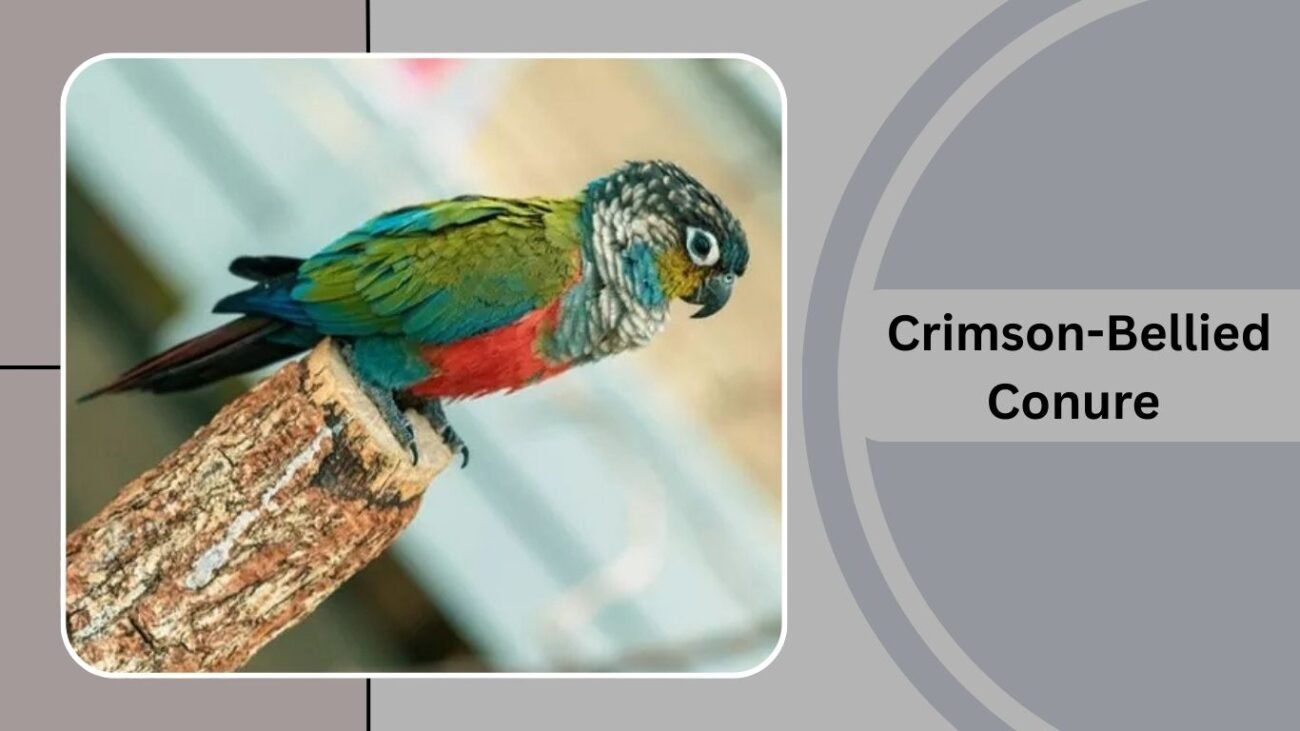
The Crimson-Bellied Conure (Pyrrhura perlata) is a beautiful medium-sized conure, admired for its bright crimson belly and affectionate nature.
Identification
- Size: Around 10 inches (25 cm)
- Weight: 70–85 grams
- Color: Green wings and back with a deep crimson-red belly and turquoise feathers
- Distinctive Mark: Vibrant red underparts with blue-tipped wings
- Lifespan: 20–30 years in captivity
Natural Habitat
They are native to central South America, particularly Brazil and Bolivia, where they inhabit lowland forests and edges.
Behavior
Crimson-Bellied Conures are playful, affectionate, and relatively quieter compared to larger conures. They are highly intelligent and bond closely with their families.
Diet
Their wild diet includes seeds, fruits, berries, and blossoms. In captivity, pellets, leafy greens, fruits, and vegetables make up a healthy diet.
14. Fiery-Shouldered Conure
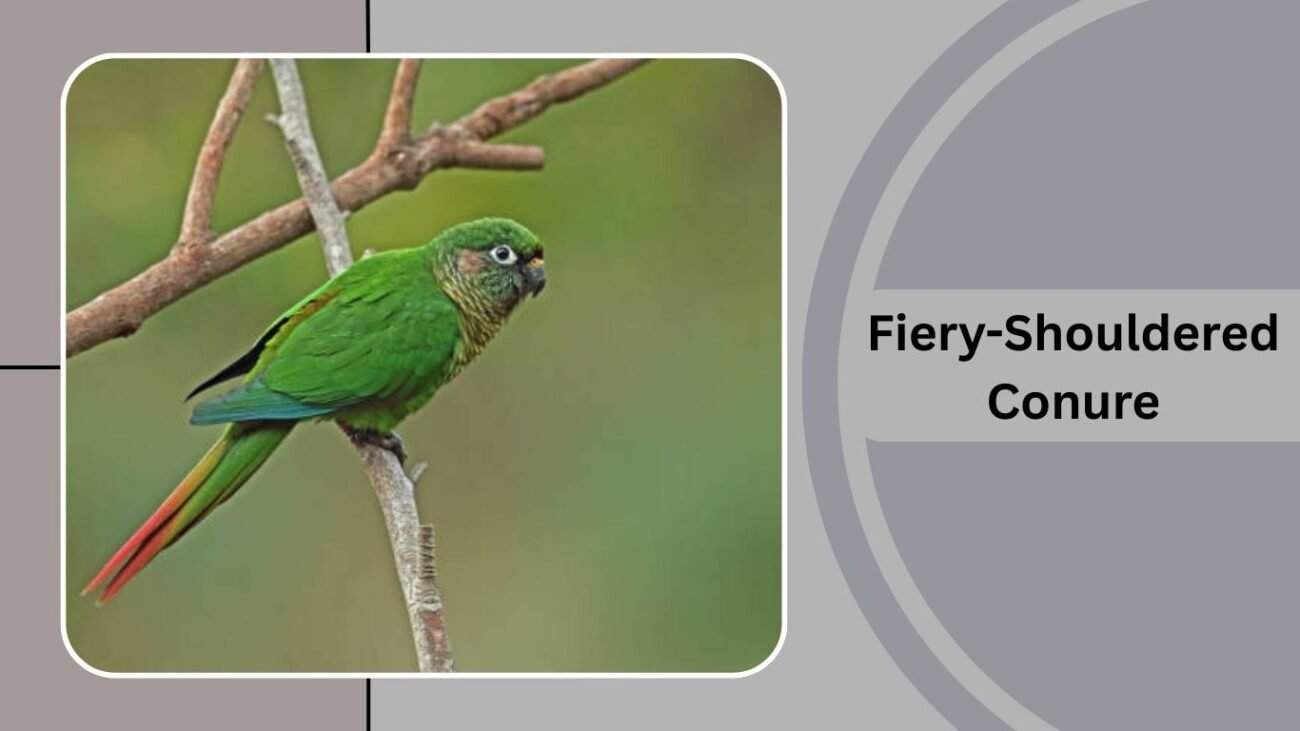
The Fiery-Shouldered Conure (Pyrrhura egregia) is a small and colorful parrot known for the distinctive fiery-red patch on its shoulders. It is less common as a pet but admired for its striking looks and social personality.
Identification
- Size: Around 9–10 inches (23–25 cm)
- Weight: 60–70 grams
- Color: Green body with orange-red shoulder patches and bluish flight feathers
- Distinctive Mark: Bright fiery shoulders against green wings
- Lifespan: 20–25 years in captivity
Natural Habitat
Native to Venezuela, Colombia, and Guyana, these birds are found in tropical forests, foothills, and woodland edges.
Behavior
Fiery-Shouldered Conures are lively, playful, and social. They enjoy flocking with others and form strong bonds when kept as pets.
Diet
They feed on fruits, seeds, nuts, berries, and blossoms. In captivity, a mix of pellets, vegetables, fruits, and seeds is ideal.
15. Red-Masked Conure
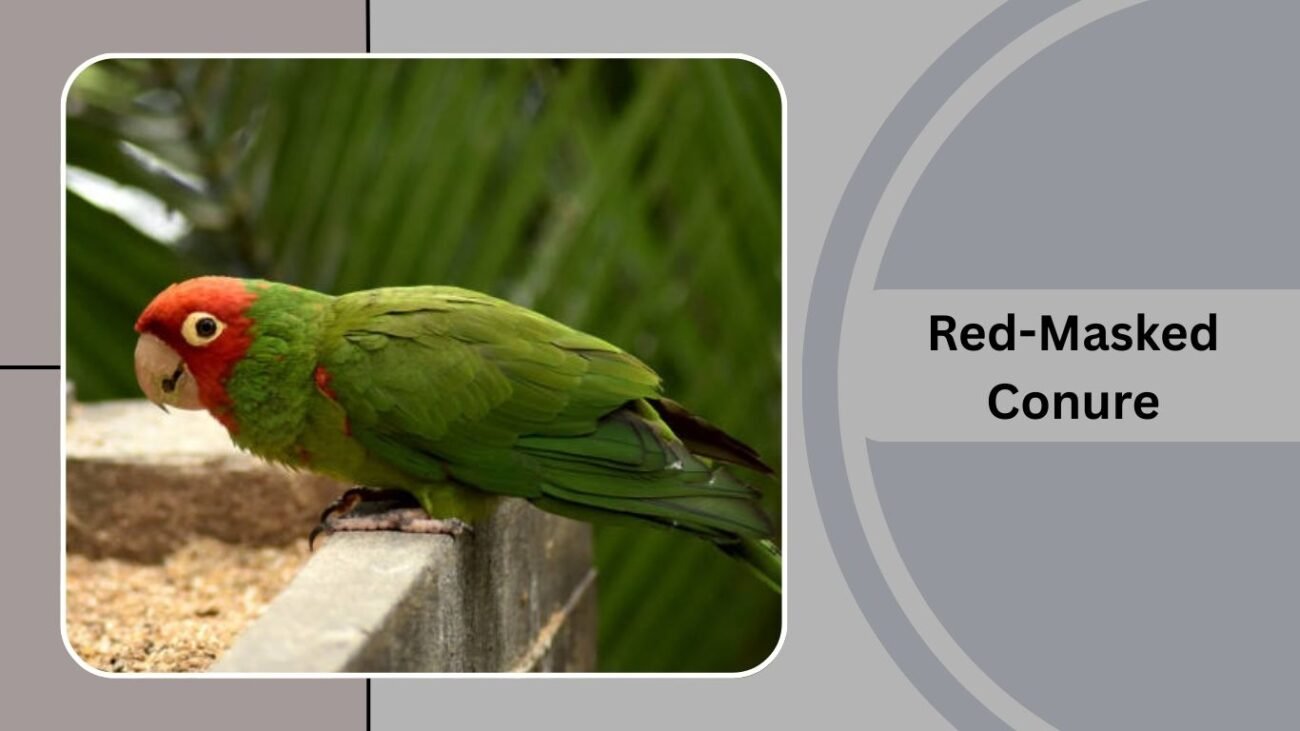
The Red-Masked Conure (Psittacara erythrogenys), also called the Cherry-Headed Conure, is a popular and charismatic bird, especially known for forming wild flocks in cities like San Francisco.
Identification
- Size: Around 13–14 inches (33–36 cm)
- Weight: 140–160 grams
- Color: Green body with a bright red mask covering the face and forehead
- Distinctive Mark: Vibrant red face contrasting with green plumage
- Lifespan: 25–30 years in captivity
Natural Habitat
They are native to Ecuador and Peru, living in dry forests, woodlands, and agricultural areas.
Behavior
Red-Masked Conures are energetic, vocal, and intelligent. They thrive in flocks and are affectionate with their human companions.
Diet
Their wild diet consists of seeds, fruits, nuts, and flowers. In captivity, pellets, fresh produce, and seeds make up a healthy diet.
16. Brown-Throated Conure
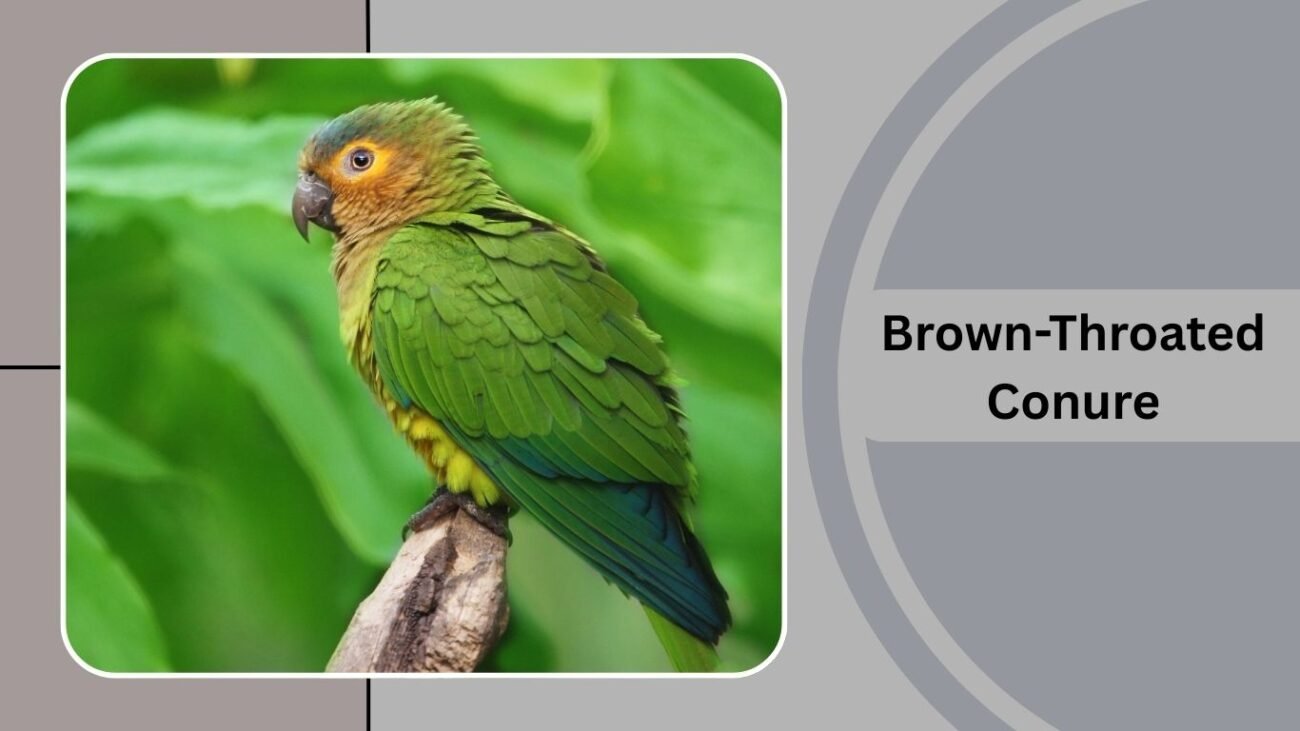
The Brown-Throated Conure (Eupsittula pertinax), also known as the Orange-Fronted Conure in some regions, is a hardy parrot with a wide natural range. It is adaptable and often seen in both wild and urban environments.
Identification
- Size: Around 10 inches (25 cm)
- Weight: 90–120 grams
- Color: Green body with brownish throat and orange forehead
- Distinctive Mark: Brown throat feathers blending into green plumage
- Lifespan: 20–30 years in captivity
Natural Habitat
They are found across northern South America and the Caribbean islands, thriving in forests, grasslands, and cultivated areas.
Behavior
Brown-Throated Conures are social, active, and moderately noisy. They are often seen in flocks and adapt well to different habitats.
Diet
Their diet includes seeds, berries, fruits, flowers, and crops. In captivity, a balanced mix of pellets, fruits, vegetables, and seeds works well.
17. Yellow-Sided Conure
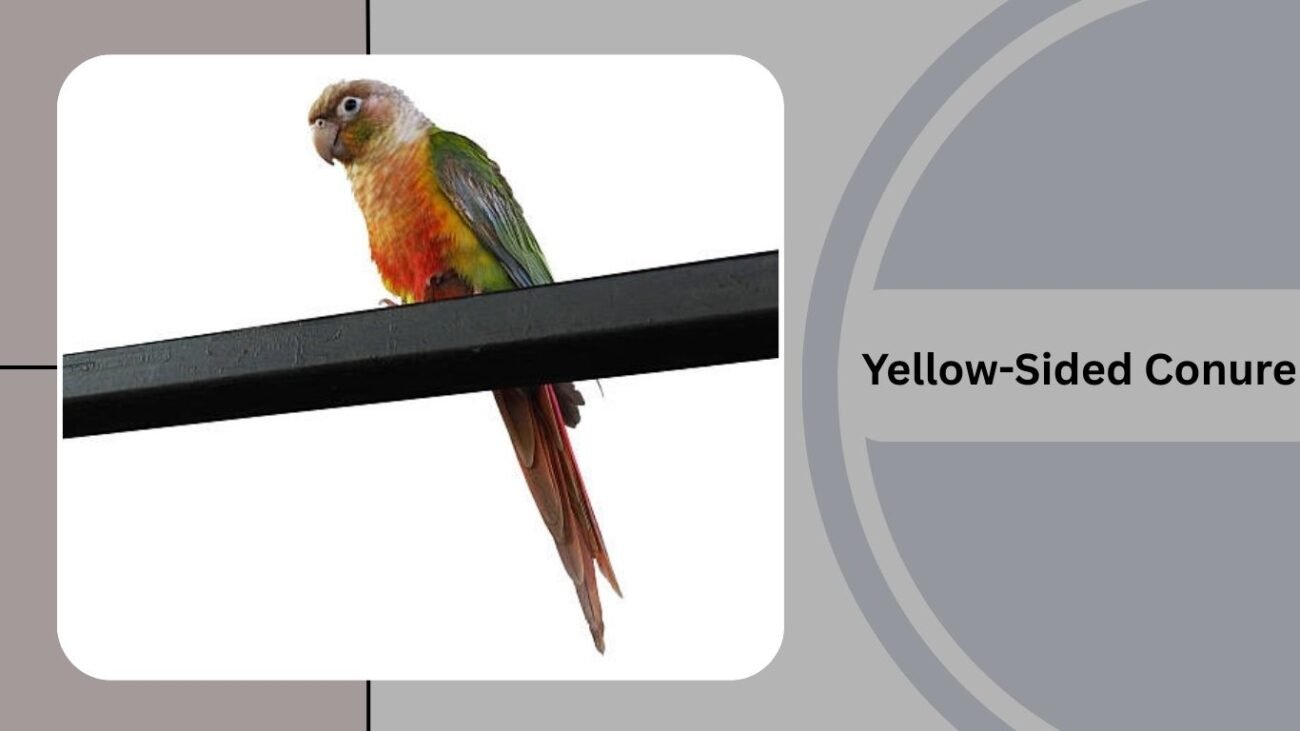
The Yellow-Sided Conure (Pyrrhura molinae hypoxantha) is a popular color mutation of the Green-Cheeked Conure, cherished for its vibrant colors and affectionate personality.
Identification
- Size: Around 10 inches (25 cm)
- Weight: 60–80 grams
- Color: Green wings and back with a bright yellow-red chest and maroon tail
- Distinctive Mark: Yellow-orange belly shading into red
- Lifespan: 25–30 years in captivity
Natural Habitat
Since it is a mutation of the Green-Cheeked Conure, its native range is South America, particularly Brazil, Bolivia, Paraguay, and Argentina.
Behavior
Yellow-Sided Conures are playful, intelligent, and less noisy than larger conures. They bond strongly with humans and enjoy daily interaction.
Diet
Their diet mirrors that of Green-Cheeked Conures: pellets, fruits, vegetables, leafy greens, and occasional seeds.
18. Black-Capped Conure
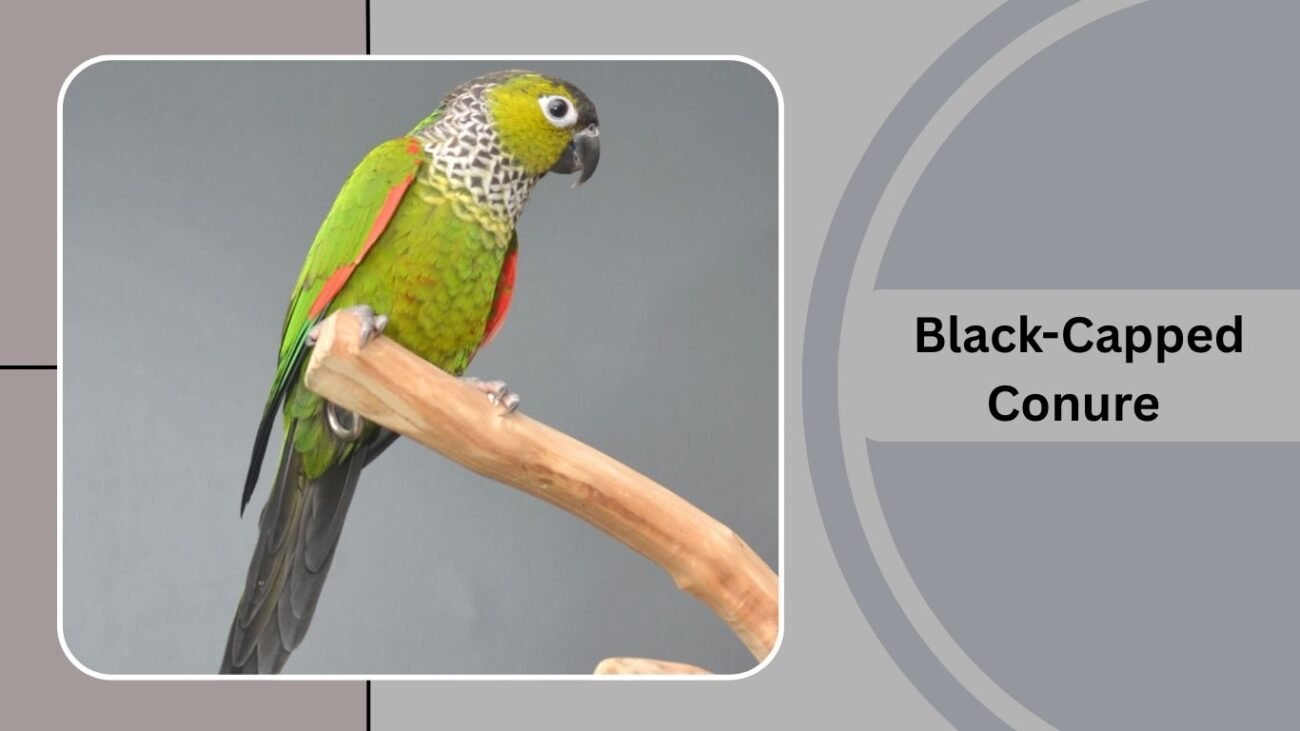
The Black-Capped Conure (Pyrrhura rupicola) is a small and charming parrot known for its dark cap and quiet temperament. It is one of the least noisy conures, making it a good choice for apartment living.
Identification
- Size: Around 10 inches (25 cm)
- Weight: 60–80 grams
- Color: Green body, black cap on the head, scalloped chest feathers, and maroon tail
- Distinctive Mark: Black head contrasting with a scaly chest pattern
- Lifespan: 25–30 years in captivity
Natural Habitat
They are native to the western Amazon Basin, particularly in Peru and Bolivia, living in lowland forests and wooded areas.
Behavior
Black-Capped Conures are affectionate, playful, and quieter than many other conure species. They thrive on social interaction and mental stimulation.
Diet
In the wild, they eat seeds, berries, and fruits. In captivity, they require pellets, vegetables, fruits, and limited seeds.
19. Slender-Billed Conure
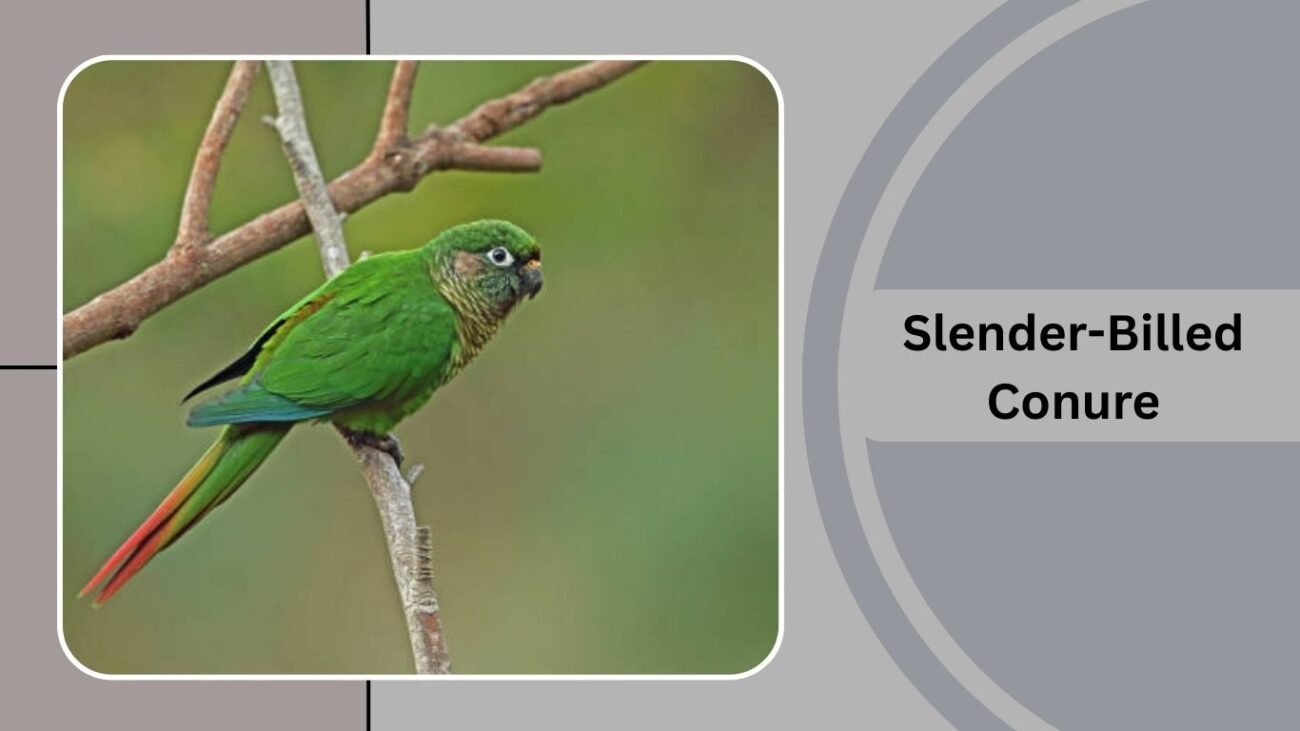
The Slender-Billed Conure (Enicognathus leptorhynchus) is a unique parrot with a noticeably long, slender beak that helps it feed on seeds and berries.
Identification
- Size: Around 16 inches (40 cm)
- Weight: 200–250 grams
- Color: Green plumage with a long, pointed tail and elongated upper beak
- Distinctive Mark: Long narrow bill adapted for foraging
- Lifespan: 20–30 years in captivity
Natural Habitat
They are native to central Chile, inhabiting forests, shrublands, and cultivated areas, often forming large flocks.
Behavior
Slender-Billed Conures are intelligent, social, and often noisy. They are active foragers and enjoy flying in flocks for safety and companionship.
Diet
Their wild diet consists of seeds, fruits, berries, and crops. In captivity, pellets, fresh produce, and seeds form a healthy balance.
20. Painted Conure
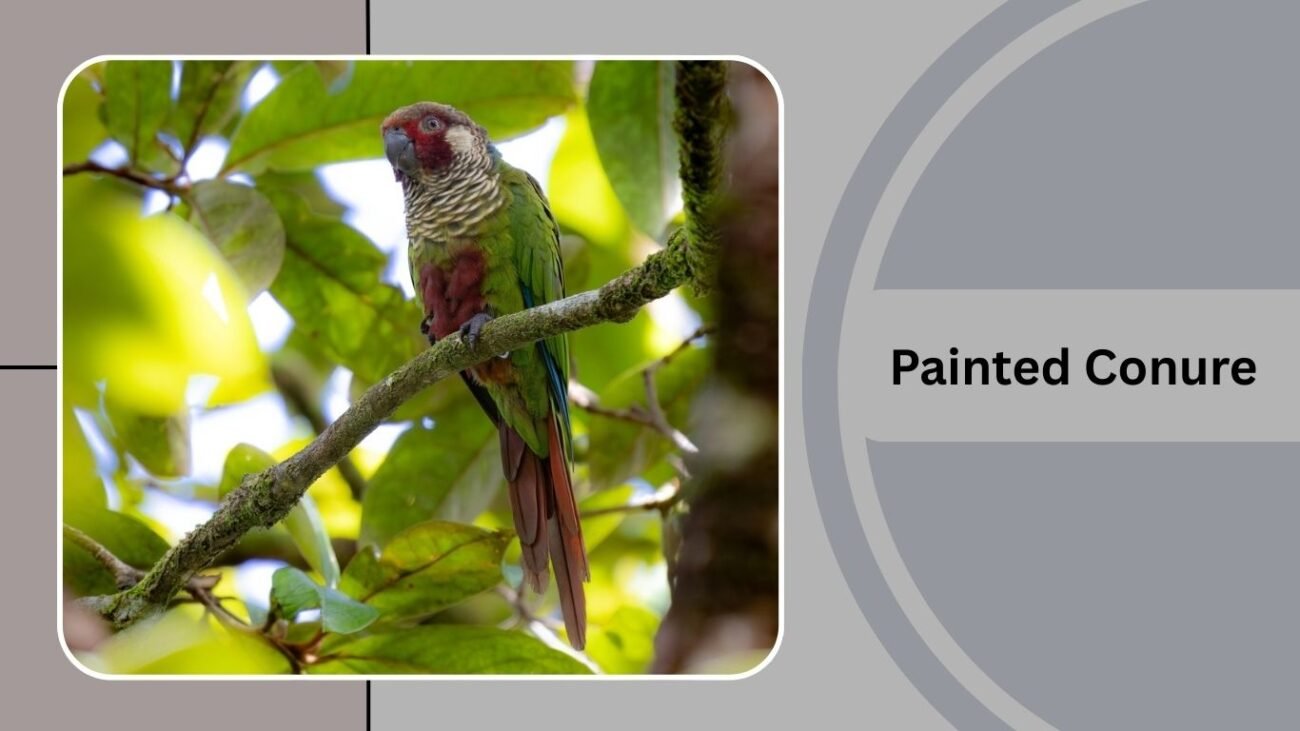
The Painted Conure (Pyrrhura picta), also called the Painted Parakeet, is a stunning medium-sized parrot that displays a mosaic of colors, giving it a “painted” appearance. It is admired for its beauty and lively personality.
Identification
- Size: Around 9–10 inches (23–25 cm)
- Weight: 65–80 grams
- Color: Green base plumage with a reddish belly, bluish wings, and scaly chest pattern
- Distinctive Mark: Multicolored feathering with red belly and blue tail highlights
- Lifespan: 20–25 years in captivity
Natural Habitat
Painted Conures are widely distributed across northern South America, including Venezuela, Guyana, Suriname, French Guiana, and northern Brazil. They prefer tropical rainforests, forest edges, and river basins.
Behavior
These birds are playful, affectionate, and flock-oriented. They tend to be moderately noisy and enjoy interacting with their companions. Painted Conures also show a strong curiosity, often exploring their surroundings actively.
Diet
In the wild, they eat seeds, fruits, berries, and blossoms. In captivity, a balanced mix of pellets, leafy greens, fruits, and occasional seeds is recommended to maintain their health and bright plumage.
21. Rose-Crowned Conure
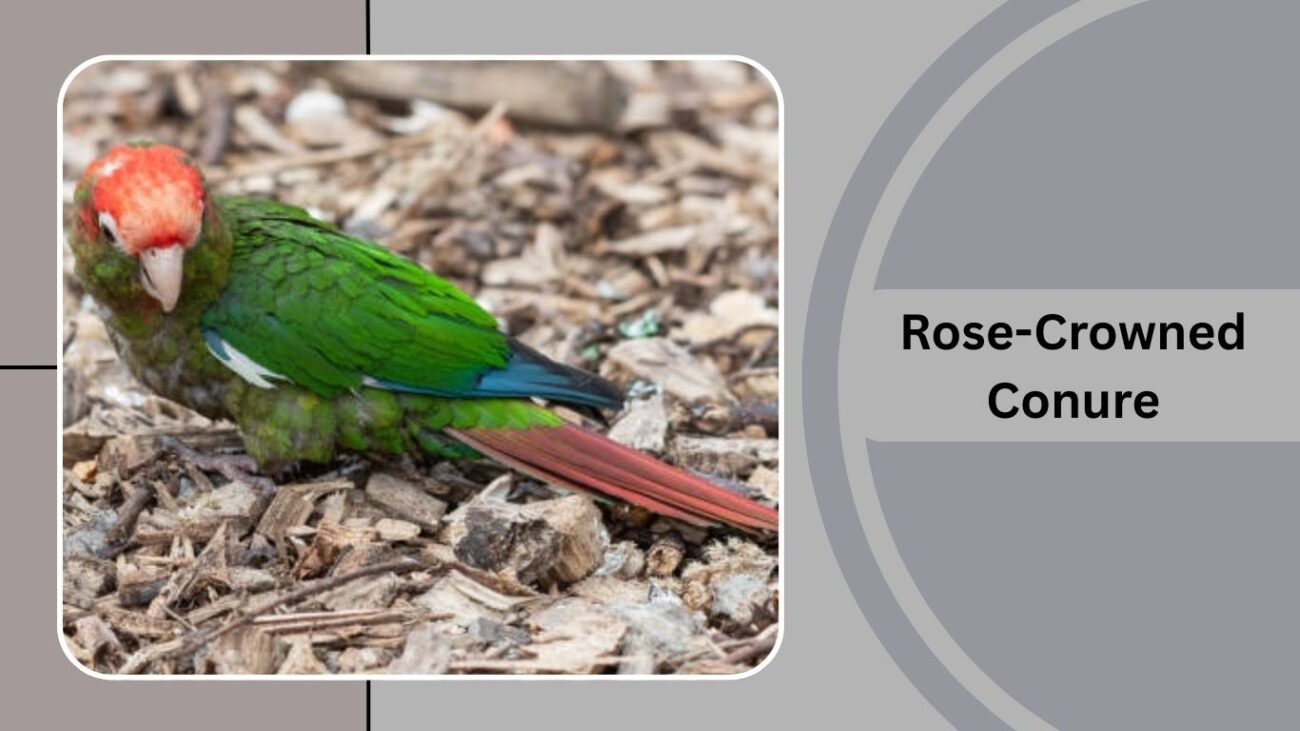
The Rose-Crowned Conure (Pyrrhura rhodocephala) is a rare and striking conure known for the rosy-red crown on its head. It is less commonly kept as a pet compared to other conures but is highly valued for its beauty and unique features.
Identification
- Size: Around 9–10 inches (23–25 cm)
- Weight: 60–75 grams
- Color: Green plumage with red crown and forehead, bluish wings, and scaly chest feathers
- Distinctive Mark: Vibrant rose-red crown above the beak and forehead
- Lifespan: 20–25 years in captivity
Natural Habitat
This conure is native to the Andes mountains of Venezuela, particularly found in subtropical and tropical moist montane forests. Its restricted range makes it a unique and regionally significant species.
Behavior
Rose-Crowned Conures are active, flock-loving, and highly social. They are less noisy than some larger conures but require daily enrichment and companionship to stay healthy.
Diet
They consume fruits, seeds, berries, and wild vegetation. In captivity, a diet of pellets, fruits, vegetables, and seeds ensures proper nutrition and vibrant feather coloration.
22. Cactus Conure
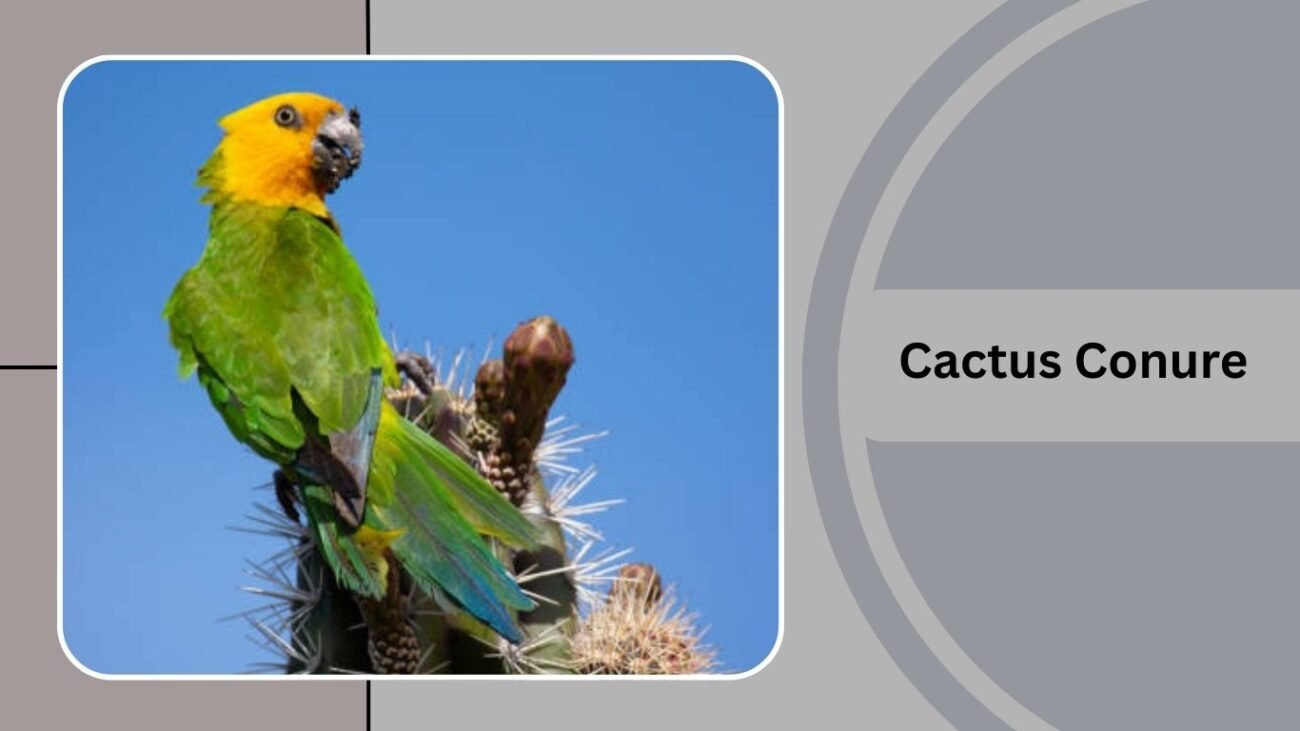
The Cactus Conure (Eupsittula cactorum) is a hardy parrot adapted to dry, thorny landscapes, often seen in semi-arid regions of Brazil. It is named for its preference for cactus-rich habitats.
Identification
- Size: Around 10–11 inches (25–28 cm)
- Weight: 90–110 grams
- Color: Green plumage with brownish tones on the head and reddish markings on the belly and wings
- Distinctive Mark: Subtle reddish patches and earthy color blends suited for camouflage
- Lifespan: 20–30 years in captivity
Natural Habitat
Native to northeastern Brazil, these conures thrive in caatinga (dry shrublands), savannas, and cactus-dominated landscapes.
Behavior
Cactus Conures are social and typically travel in small to medium-sized flocks. They are intelligent and active, often feeding in groups and communicating with loud calls.
Diet
Their diet includes seeds, fruits, cactus fruits, berries, and crops. In captivity, a healthy balance of pellets, fruits, vegetables, and some seeds supports their energetic lifestyle.
23. Santa Marta Conure
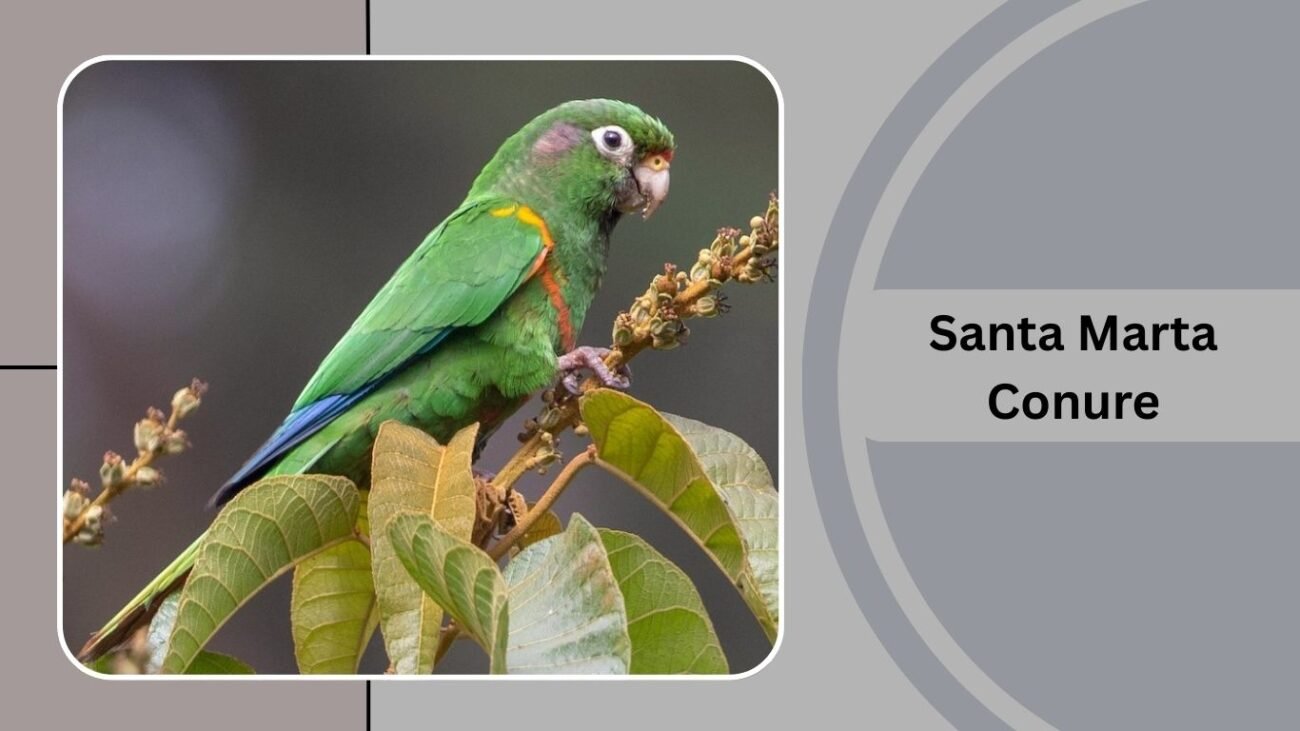
The Santa Marta Conure (Pyrrhura viridicata) is a rare and localized species, found only in the Sierra Nevada de Santa Marta region of Colombia. Its restricted range makes it vulnerable and highly sought after by bird enthusiasts.
Identification
- Size: Around 9–10 inches (23–25 cm)
- Weight: 65–80 grams
- Color: Green plumage with a bluish crown, red belly patches, and scalloped chest
- Distinctive Mark: Blue-tinged head and maroon patches on the belly
- Lifespan: 20–25 years in captivity
Natural Habitat
This conure is endemic to the isolated mountain forests of northern Colombia, mainly inhabiting subtropical and montane forests.
Behavior
Santa Marta Conures are flock-oriented, active, and vocal. Due to their rarity, much of their behavior in the wild is still being studied, but they are known to form small groups and communicate with high-pitched calls.
Diet
They feed on fruits, seeds, berries, and blossoms. In captivity, pellets, leafy greens, fruits, and seeds are provided to mimic their natural diet.
24. Hoffmann’s Conure
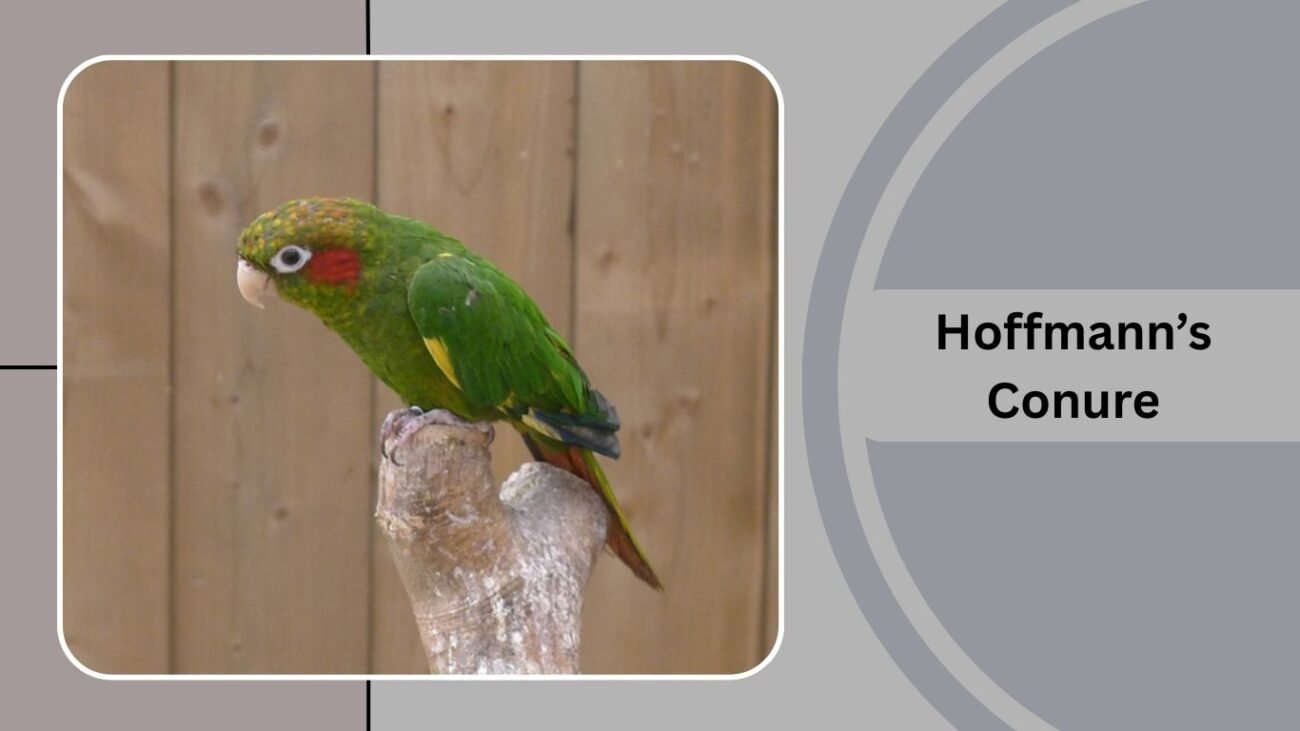
Hoffmann’s Conure (Psittacara hoffmanni) is a vibrant parrot native to Central America, named after German naturalist Karl Hoffmann. It is admired for its bright colors and strong social instincts.
Identification
- Size: Around 11–12 inches (28–30 cm)
- Weight: 120–140 grams
- Color: Green plumage with red patches on wings and head
- Distinctive Mark: Red markings on crown and wing coverts
- Lifespan: 25–30 years in captivity
Natural Habitat
They are found in Costa Rica and western Panama, inhabiting lowland forests, foothills, and agricultural areas.
Behavior
Hoffmann’s Conures are energetic, noisy, and flock-loving birds. They often travel in large groups and are highly vocal, making them noticeable in the wild.
Diet
Their diet includes fruits, seeds, berries, blossoms, and crops. In captivity, pellets, vegetables, and fruits make up a balanced diet.
25. Finsch’s Conure
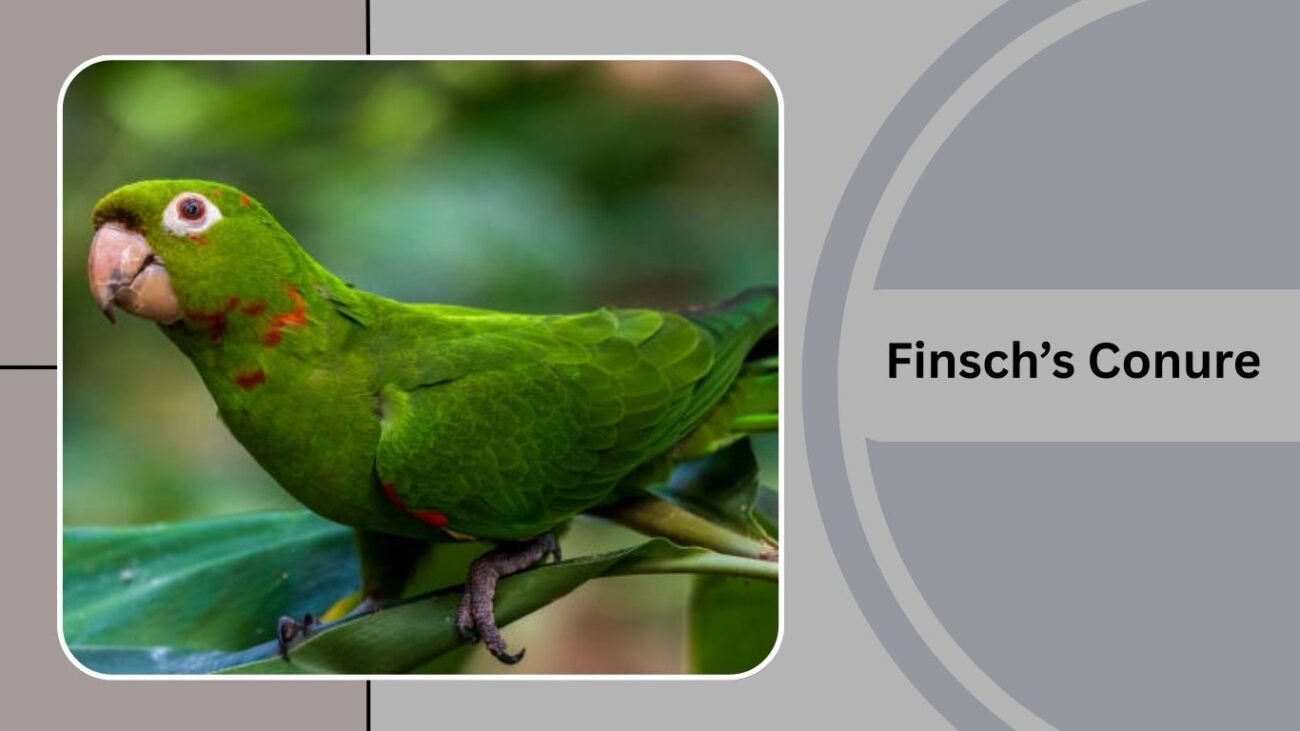
Finsch’s Conure (Psittacara finschi), also known as the Crimson-Fronted Parakeet, is a striking bird with a bright red forehead. It is common in parts of Central America and well-adapted to various habitats.
Identification
- Size: Around 11–12 inches (28–30 cm)
- Weight: 120–150 grams
- Color: Green body with a bright crimson-red forehead and scattered red on wings
- Distinctive Mark: Crimson forehead contrasting with green plumage
- Lifespan: 25–30 years in captivity
Natural Habitat
Native to Central America, especially Honduras, Nicaragua, Costa Rica, and Panama, they inhabit forests, woodlands, and urban areas.
Behavior
Finsch’s Conures are highly social, noisy, and often gather in large flocks. They are intelligent, playful, and bond closely with humans in captivity.
Diet
In the wild, they consume seeds, fruits, berries, and flowers. Captive diets include pellets, fruits, leafy greens, and occasional seed mixes.