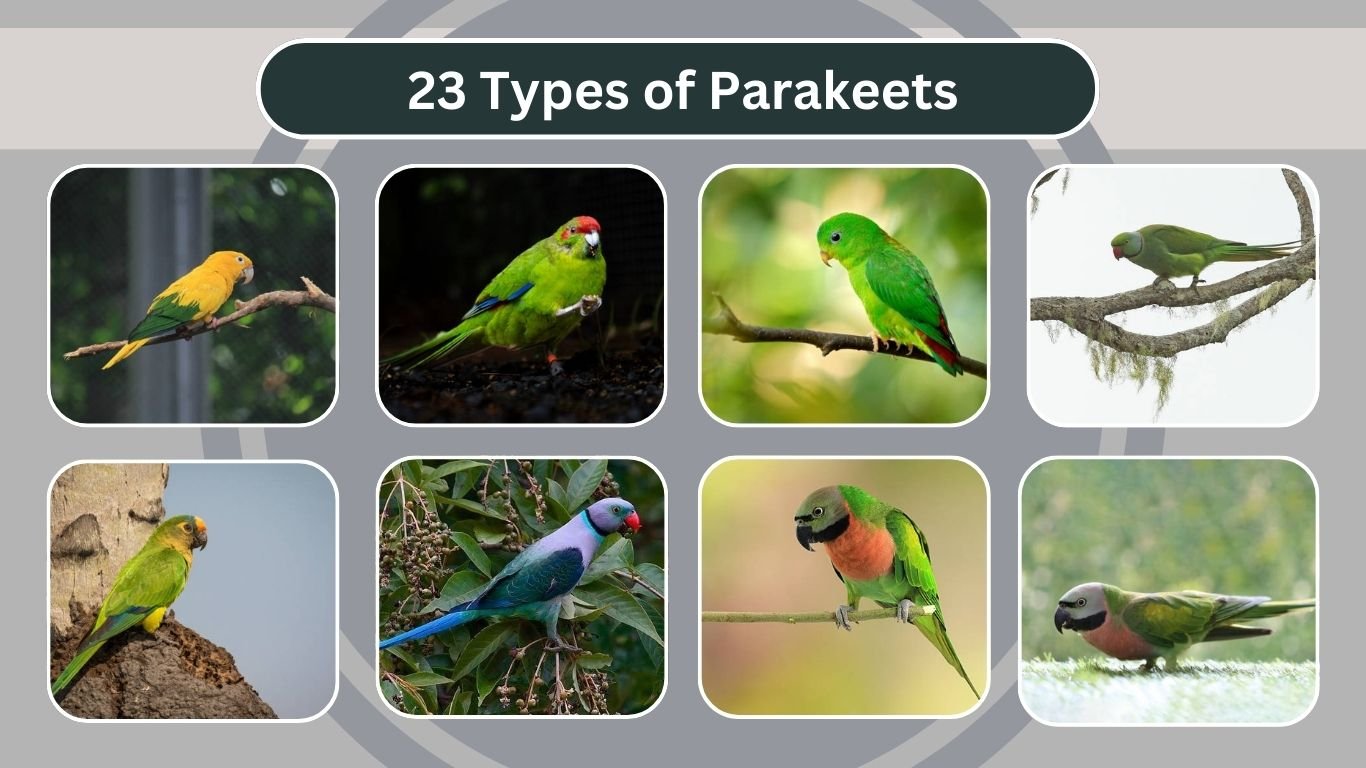
Parakeets are among the most diverse and vibrant members of the parrot family, known for their playful personalities, striking plumage, and social behavior. Found across Asia, Africa, Australia, and the Americas, these birds range from the tiny budgerigar to the large Nicobar Parakeet. Many species are popular as pets, while others remain wild treasures in their native habitats. In this guide, we’ll explore 25 types of parakeets, highlighting their unique appearances, habitats, and fascinating behaviors.
1. Budgerigar (Budgie)
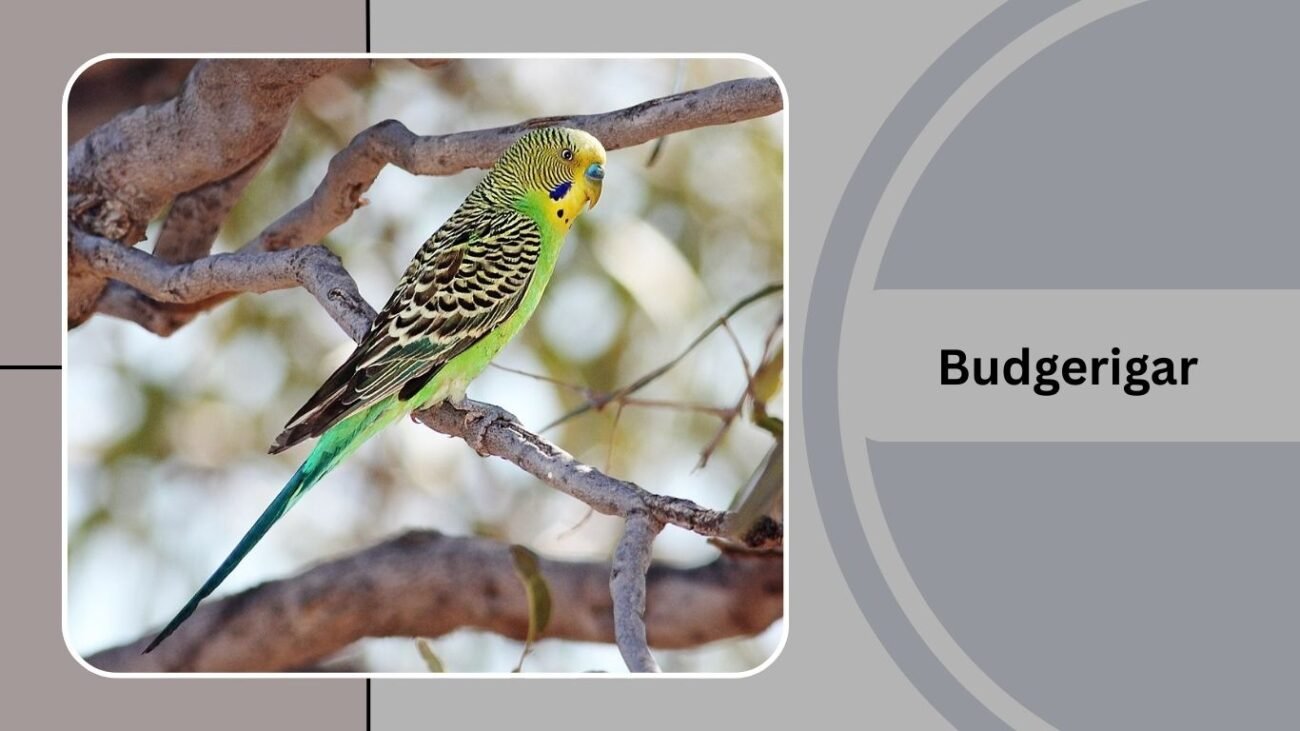
The Budgerigar (Melopsittacus undulatus), commonly called the budgie or parakeet, is the most popular pet parakeet worldwide. Native to Australia, this small parrot is beloved for its playful personality, bright plumage, and ability to mimic sounds and speech.
Identification
- Small size, about 18 cm (7 in) in length
- Green body with black scalloped markings on the back and wings in wild forms
- Blue, yellow, and white color variations in captive-bred birds
- Long tapering tail and small curved beak
- Dark eyes with a white iris ring in adults
Habitat
In the wild, budgerigars are found throughout the open woodlands, grasslands, and scrublands of Australia. They prefer dry regions with access to water sources, often gathering in large flocks near seeding grasses.
Behavior
Budgies are highly social, living in flocks that can number in the thousands. They are fast, agile flyers and feed mainly on grass seeds. In captivity, they are intelligent, curious, and capable of learning tricks and words. Their cheerful chirping and playful nature make them one of the most cherished companion birds.
2. Monk Parakeet (Quaker Parrot)

The Monk Parakeet (Myiopsitta monachus), also called the Quaker Parrot, is a small, bright-green parakeet known for its lively personality and large communal nests. Originally from South America, it has established wild populations in several countries due to escaped or released pets.
Identification
- Bright green plumage with a grayish-white face and chest
- Blue flight feathers visible on the wings
- Medium size, around 29 cm (11 in) long
- Short, squared tail compared to other parakeets
Habitat
Native to Argentina, Brazil, and surrounding regions, Monk Parakeets live in savannas, woodlands, and urban parks. Escaped populations now thrive in the United States and parts of Europe, adapting well to city life.
Behavior
These parakeets are highly social and known for building huge stick nests, sometimes shared by multiple pairs. They feed on seeds, fruits, and crops, often foraging in noisy groups. In captivity, they are playful, talkative, and capable of learning a wide vocabulary.
3. Alexandrine Parakeet

The Alexandrine Parakeet (Psittacula eupatria) is one of the largest species in the parakeet family, recognized for its striking colors and long tail. It is named after Alexander the Great, who is believed to have introduced this bird to Europe.
Identification
- Large size, around 58 cm (23 in) including tail
- Green plumage with a distinctive maroon shoulder patch
- Males have a black and pink ring around the neck
- Long tail feathers, bluish-green with yellow tips
Habitat
Alexandrine Parakeets are native to South and Southeast Asia, ranging from India and Sri Lanka to Myanmar and Cambodia. They thrive in forests, woodlands, and cultivated areas, often seen in flocks.
Behavior
They are strong fliers and feed on seeds, fruits, nuts, and blossoms. Social and intelligent, they often gather in noisy groups. In captivity, Alexandrine Parakeets are affectionate and capable of mimicking human speech, though they require space due to their size and energy.
4. Indian Ringneck Parakeet
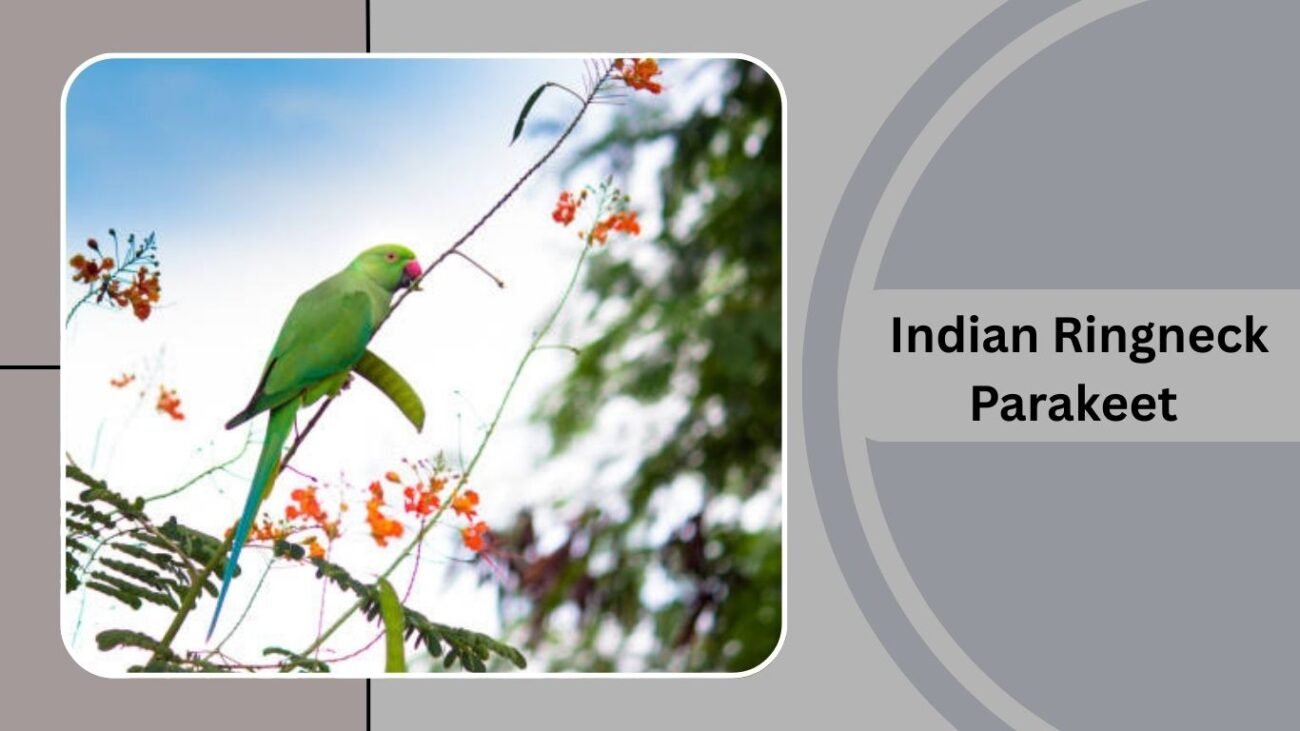
The Indian Ringneck Parakeet (Psittacula krameri manillensis) is a popular parakeet species admired for its intelligence, vocal abilities, and vibrant colors. It has been kept as a pet for centuries, even mentioned in ancient Indian history.
Identification
- Medium size, around 40 cm (16 in) including the long tail
- Bright green plumage with yellow underwings
- Males display a black and rose-colored ring around the neck, while females and young lack the ring
- Red-orange beak and long tapering tail feathers
Habitat
Native to India, Pakistan, Nepal, and Sri Lanka, this parakeet thrives in forests, farmlands, and urban areas. Escaped populations have also established themselves in many parts of Europe, the Middle East, and the United States.
Behavior
Indian Ringnecks are active, intelligent, and capable of learning many words and phrases. In the wild, they feed on fruits, seeds, grains, and flowers, sometimes raiding crops. Their loud calls and playful behavior make them highly noticeable in both wild and domestic settings.
5. Rose-ringed Parakeet
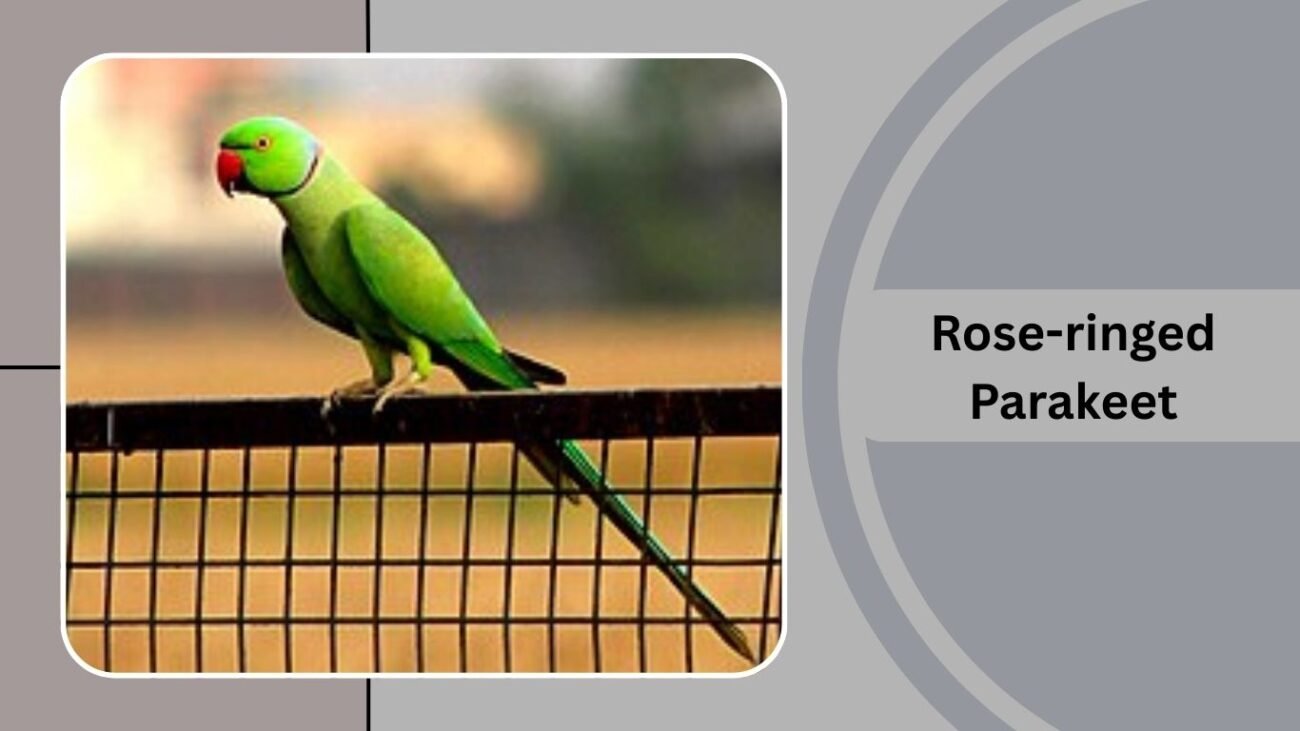
The Rose-ringed Parakeet (Psittacula krameri) is a widespread and adaptable parakeet species, often confused with the Indian Ringneck due to their close relation. It is among the most commonly seen parakeets in the wild across Asia and Africa.
Identification
- Around 40 cm (16 in) in length with long tail feathers
- Predominantly green body with a lighter green or yellow underside
- Males show a distinct black and pink “rose-colored” ring around the neck
- Strong red beak and pointed wings
Habitat
Rose-ringed Parakeets are native to Africa (west and central regions) and South Asia. They are highly adaptable, living in forests, savannas, farmlands, and cities. Large feral populations exist in Europe and the Middle East, where they thrive in urban parks.
Behavior
These parakeets are noisy, social, and often found in large flocks. Their diet includes fruits, grains, nuts, and seeds, and they are known to raid orchards and farms. In captivity, they are intelligent, energetic, and capable of mimicking human voices, although they can be quite demanding pets.
6. Plum-headed Parakeet
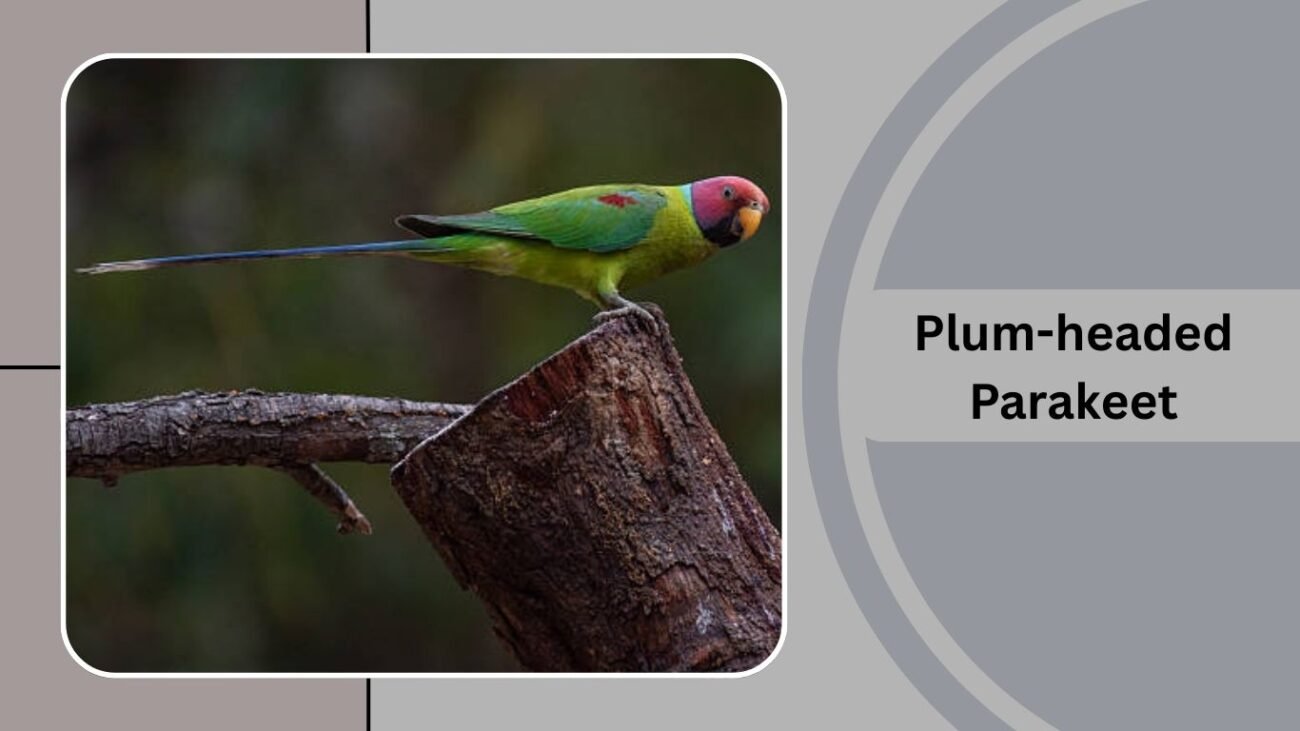
The Plum-headed Parakeet (Psittacula cyanocephala) is a colorful and graceful species native to the Indian subcontinent. It is admired for its vibrant head coloration and gentle personality, making it a favorite among bird enthusiasts.
Identification
- Medium size, around 33 cm (13 in) long
- Males have a bright plum-colored head with a black neck ring and bluish nape
- Females have a duller bluish-gray head without the black ring
- Green body with a red shoulder patch and long bluish-green tail
Habitat
Plum-headed Parakeets inhabit forests, woodlands, farmlands, and gardens across India, Sri Lanka, Nepal, and Bangladesh. They prefer areas with abundant fruiting trees and water sources.
Behavior
These parakeets are social, often found in small flocks outside the breeding season. They feed on fruits, seeds, grains, and flowers. Known for their swift flight and soft calls, they are less noisy than many other parakeet species.
7. Derbyan Parakeet
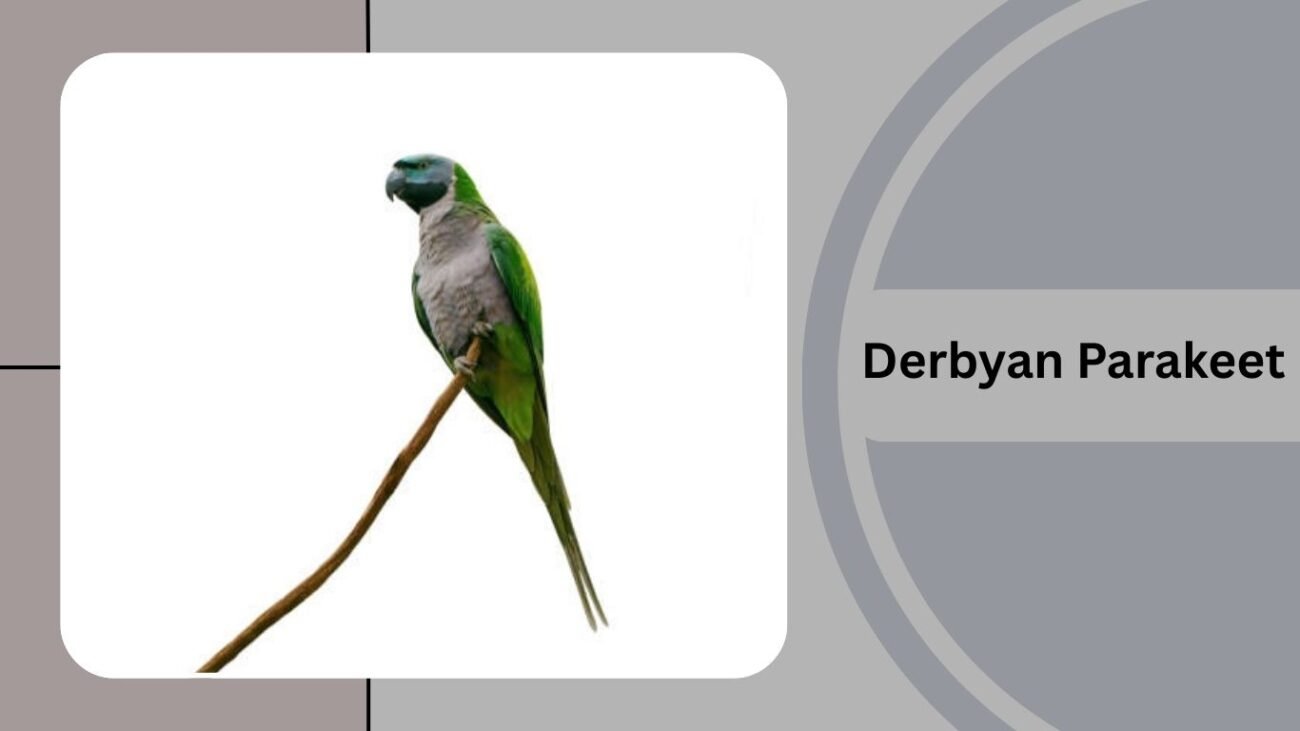
The Derbyan Parakeet (Psittacula derbiana) is a striking, large parakeet found in the Himalayan regions. Its unique two-toned head and vocal abilities make it one of the most distinctive parakeets.
Identification
- Large size, around 45–50 cm (18–20 in) long
- Males have a bluish-gray head with a pinkish-purple lower mandible and black throat band
- Females have a black beak and similar head coloration
- Green body with long, pointed tail feathers and bluish flight feathers
Habitat
Native to the mountainous forests of Tibet, northeast India, and southwestern China, Derbyan Parakeets prefer high-altitude woodlands and river valleys.
Behavior
They are intelligent and strong fliers, often moving in pairs or small groups. Their diet includes seeds, fruits, nuts, and berries. In captivity, they are known for their talking ability and playful yet independent nature, though they can be loud and demanding.
8. Malabar Parakeet
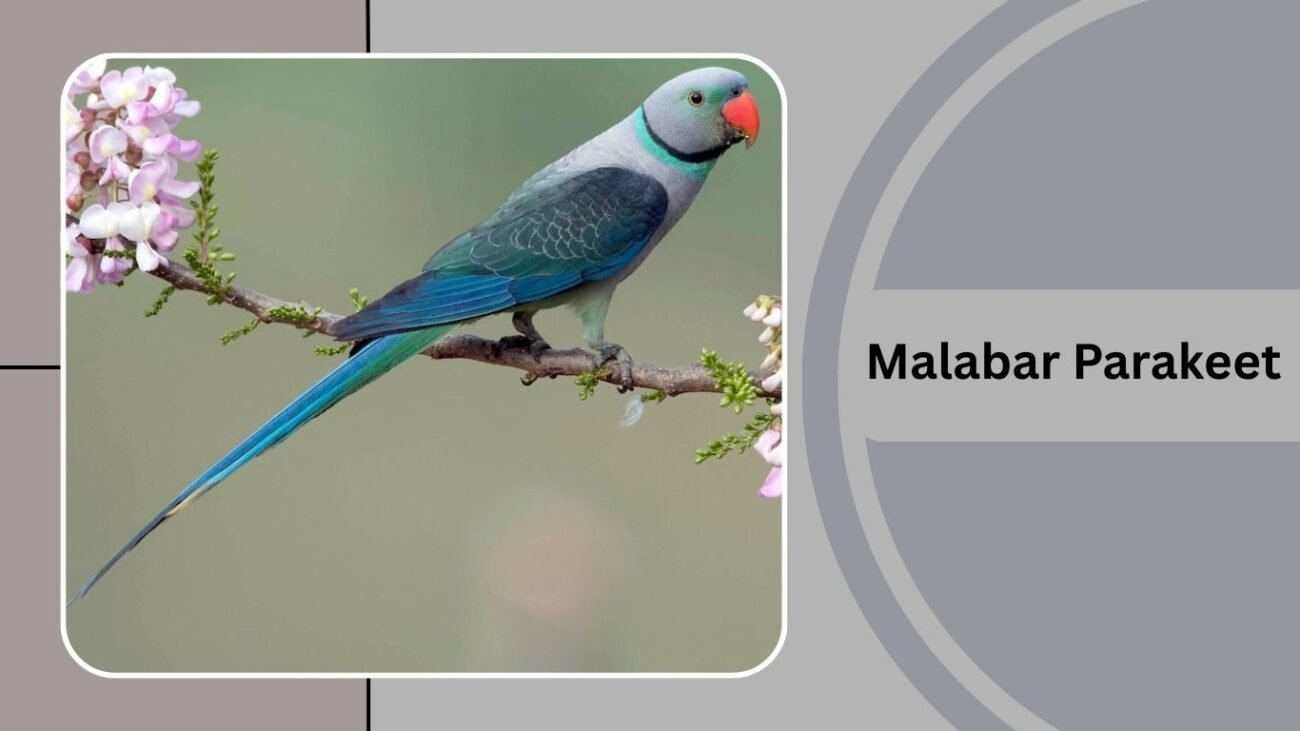
The Malabar Parakeet (Psittacula columboides), also known as the Blue-winged Parakeet, is an endemic species of the Western Ghats in India. It is admired for its elegant bluish-gray plumage and long tail.
Identification
- Medium size, about 38–40 cm (15–16 in) long
- Males have a bluish-gray head and body with a red upper beak and black neck ring
- Females are similar but lack the black neck ring and have an all-black beak
- Bright blue wings and tail with green highlights
Habitat
This parakeet is found only in the forests and wooded areas of the Western Ghats in India. It prefers evergreen and moist deciduous forests, often at mid to high elevations.
Behavior
Malabar Parakeets are usually seen in noisy flocks, flying swiftly between treetops. They feed on fruits, seeds, berries, and flower nectar. They are less common in captivity but highly valued for their beauty and strong pair bonds.
9. Slaty-headed Parakeet
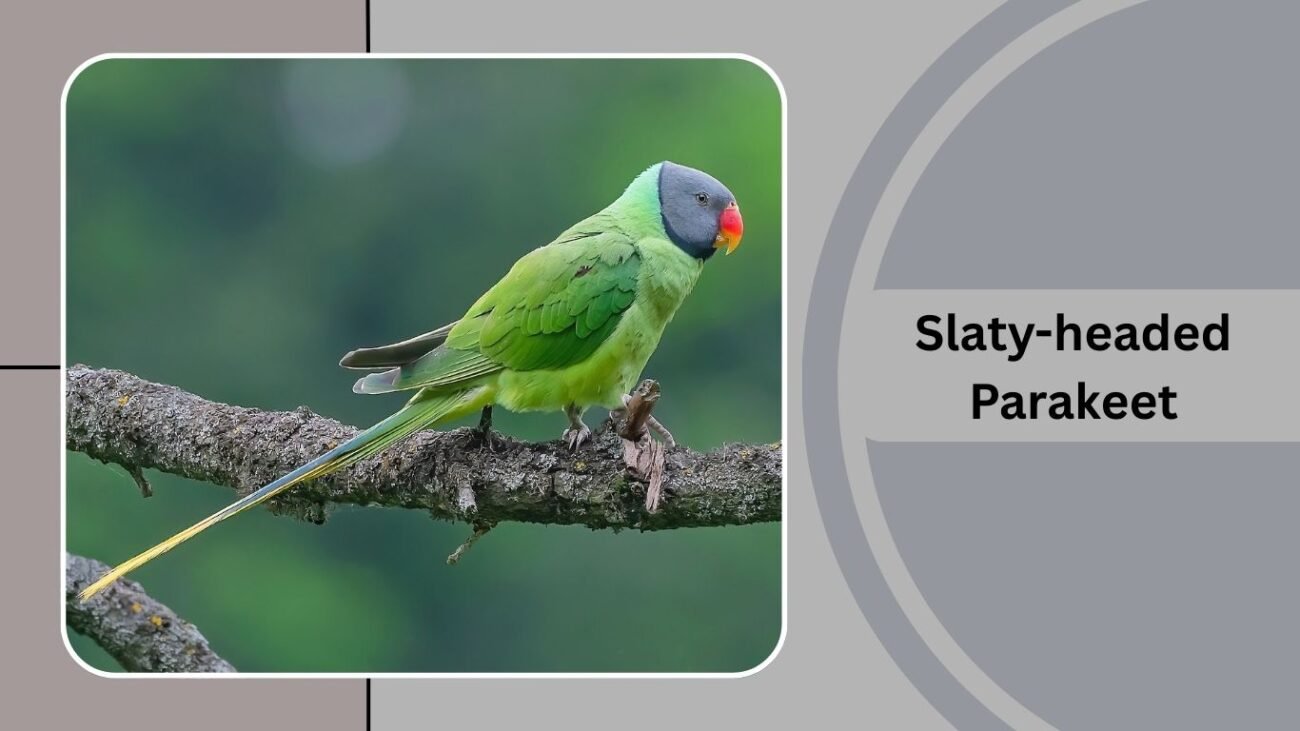
The Slaty-headed Parakeet (Psittacula himalayana) is a hardy parakeet native to the Himalayan ranges. It is well adapted to colder, high-altitude climates compared to many other parakeet species.
Identification
- Medium size, around 40 cm (16 in) long
- Distinct slaty-gray head with a red bill and narrow black neck stripe
- Green body with bluish wings and a long tail tipped in yellow
- Males often have a red shoulder patch
Habitat
Slaty-headed Parakeets inhabit forests and wooded valleys of the Himalayas, ranging from Afghanistan through northern India to Bhutan and Nepal. They prefer altitudes between 1,500–3,600 meters (4,900–11,800 ft).
Behavior
These parakeets form small flocks and are strong fliers, often traveling long distances between feeding grounds. Their diet includes fruits, berries, seeds, and flower nectar. They are hardy and playful in captivity but less common than other parakeet species.
10. Blossom-headed Parakeet
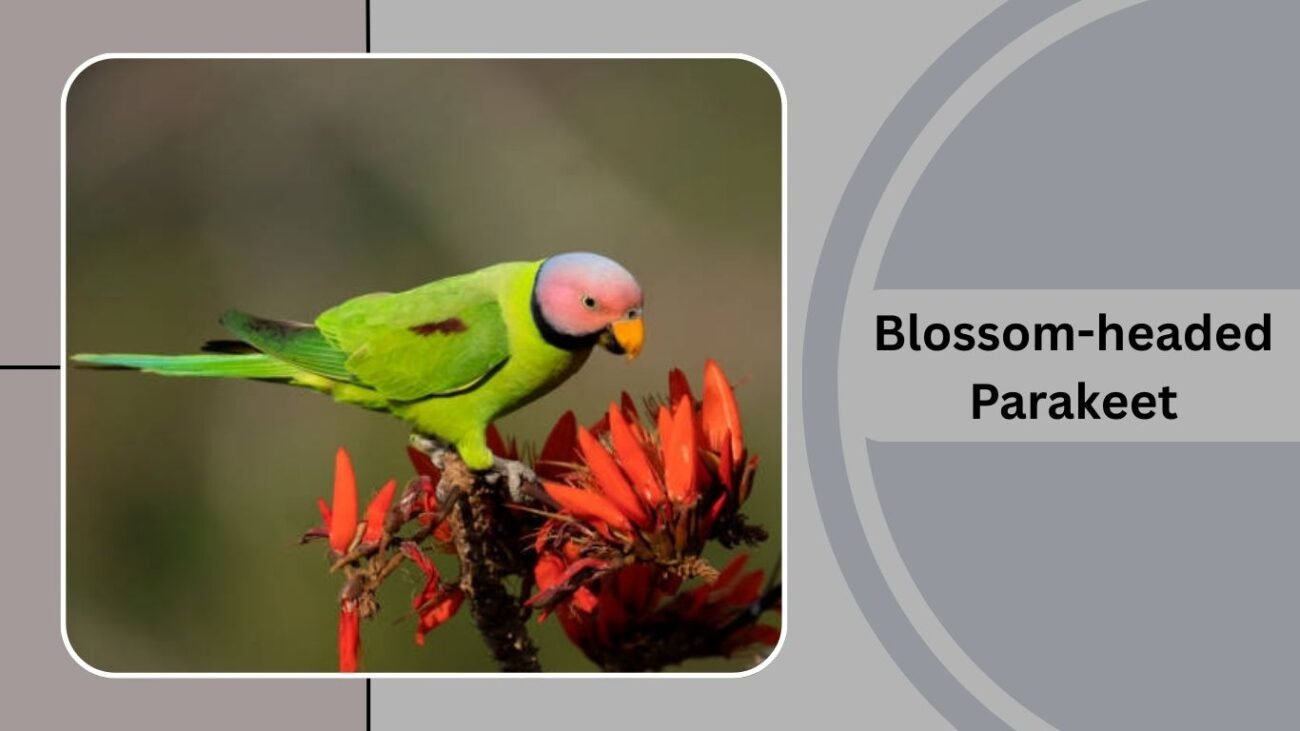
The Blossom-headed Parakeet (Psittacula roseata) is a vibrant species from South and Southeast Asia, closely related to the Plum-headed Parakeet but with more delicate coloration.
Identification
- Medium size, around 30–34 cm (12–13 in) long
- Males have a pinkish-red head with a bluish nape and black neck ring
- Females have a duller grayish-blue head without the black ring
- Green body with yellowish underparts and long bluish-green tail
Habitat
This parakeet is native to northeastern India, Bangladesh, Myanmar, and parts of Southeast Asia. It inhabits forests, farmlands, and open woodlands, often near rivers and cultivated areas.
Behavior
Blossom-headed Parakeets are social and active, usually seen in flocks. They feed on fruits, seeds, flowers, and cultivated crops. Their flight is swift and direct, and they are known for their cheerful calls.
11. Red-breasted Parakeet
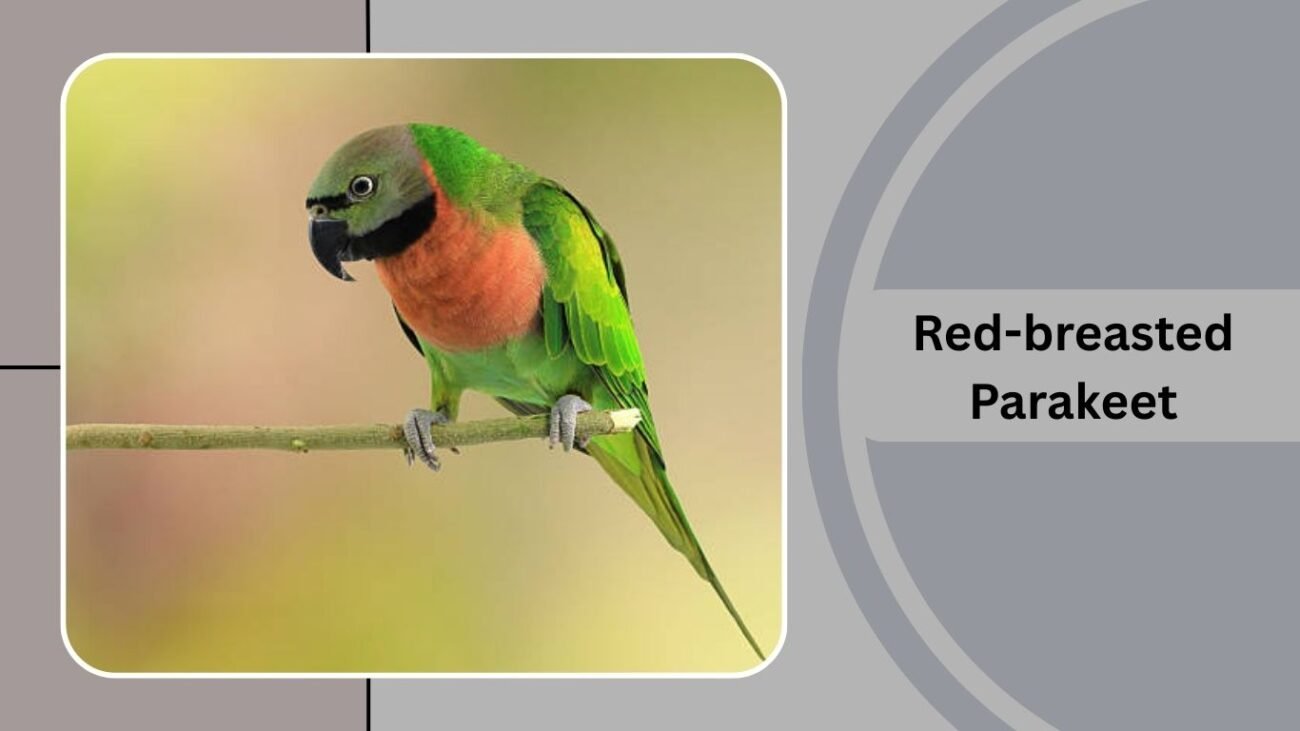
The Red-breasted Parakeet (Psittacula alexandri) is one of the most colorful parakeets, admired for its striking breast coloration. It is widespread across parts of South and Southeast Asia.
Identification
- Medium size, about 36 cm (14 in) long
- Green body with a distinct pinkish-red breast
- Grayish-blue head with a narrow black chin stripe
- Males often show brighter coloration than females
Habitat
Red-breasted Parakeets are found in India’s Andaman Islands, Nepal, Bangladesh, Myanmar, Thailand, and parts of Indonesia. They inhabit forests, plantations, and farmlands.
Behavior
These parakeets are noisy and sociable, often seen in flocks perched on treetops. They feed on fruits, seeds, and crops, frequently visiting orchards. Their courtship displays include soft calls, head bobbing, and mutual feeding between mates.
12. Nicobar Parakeet
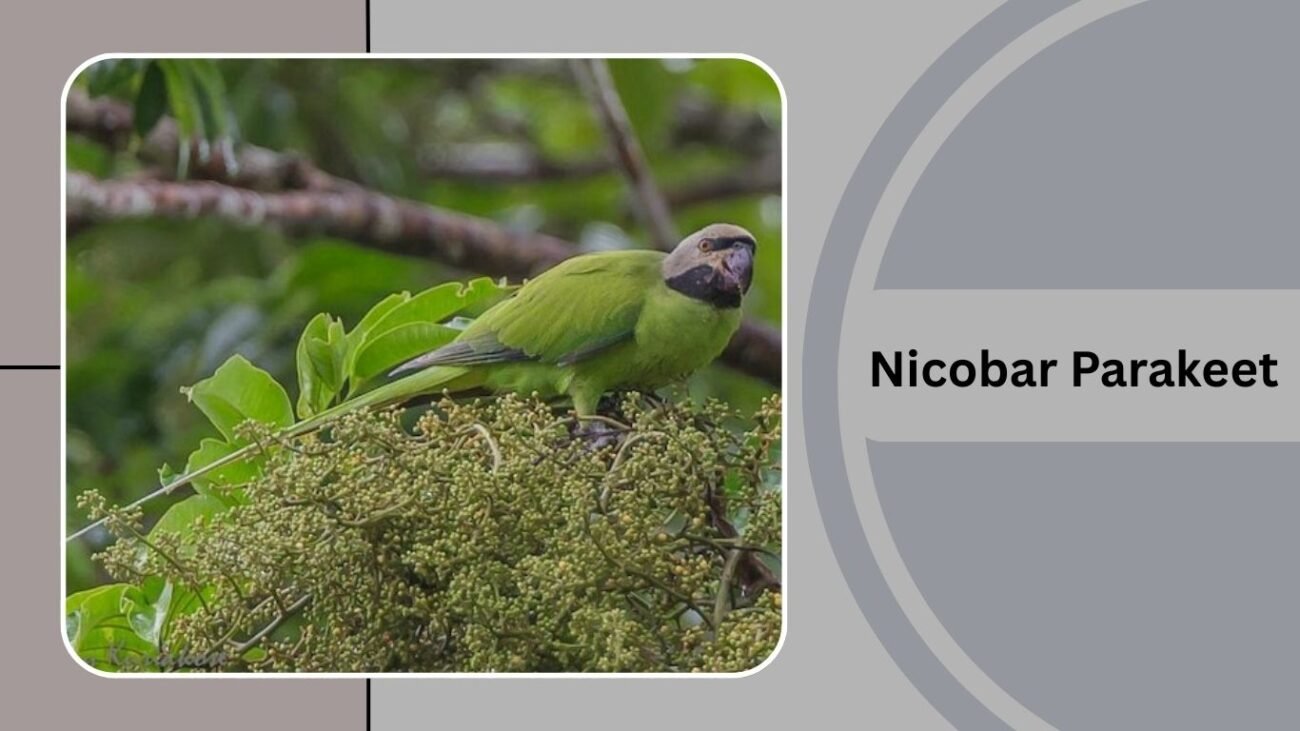
The Nicobar Parakeet (Psittacula caniceps), also called the Great Nicobar Parakeet, is the largest species in the Psittacula genus. Endemic to the Nicobar Islands of India, it is highly prized for its impressive size and striking coloration.
Identification
- Large parakeet, about 60 cm (24 in) long including the tail
- Green body with a long tapering tail
- Distinct gray head with a strong red upper mandible and yellow lower mandible
- Broad yellowish collar around the neck
Habitat
Found only in the Nicobar Islands, this species inhabits tropical and subtropical forests, mangroves, and coconut plantations. It prefers dense forest canopies but also visits coastal areas.
Behavior
Nicobar Parakeets are usually seen in small flocks, feeding on fruits, nuts, seeds, and cultivated crops. They are strong fliers and often noisy, making their presence known with loud calls. In captivity, they are rare and valued for their beauty and size.
13. Long-tailed Parakeet
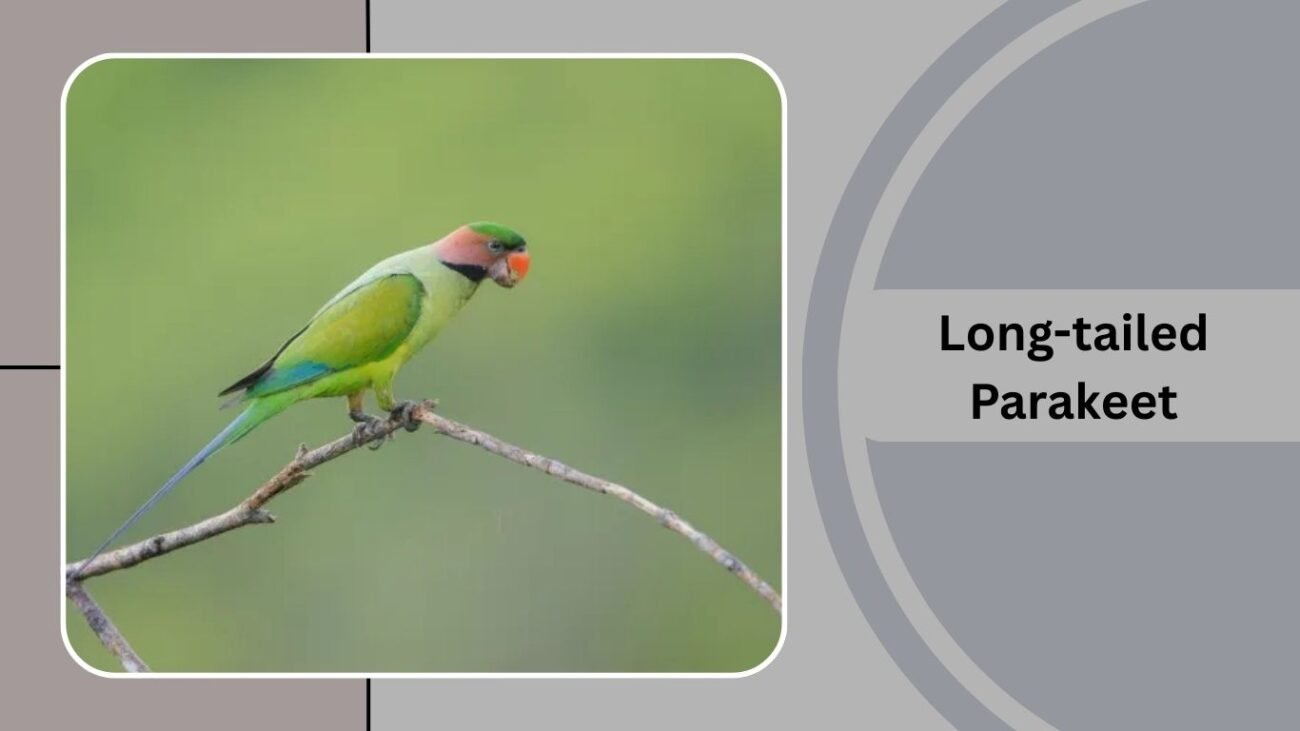
The Long-tailed Parakeet (Psittacula longicauda) is a beautiful and energetic parakeet known for its exceptionally long tail and bright plumage. It is native to Southeast Asia and often seen in flocks.
Identification
- Medium size, around 40 cm (16 in) with an exceptionally long tail
- Bright green body with a reddish face and throat
- Males have a black stripe from the beak to the eye and a maroon patch on the wing
- Females have duller coloration and lack the strong facial markings
Habitat
This parakeet inhabits forests, mangroves, plantations, and urban areas across Malaysia, Indonesia, Brunei, and southern Thailand.
Behavior
Long-tailed Parakeets are highly social, often gathering in flocks that feed noisily on fruits, nuts, berries, and cultivated crops. Their swift flight and long tail make them easy to identify. In captivity, they are active, playful, and require space to thrive.
14. Blue-winged Parakeet
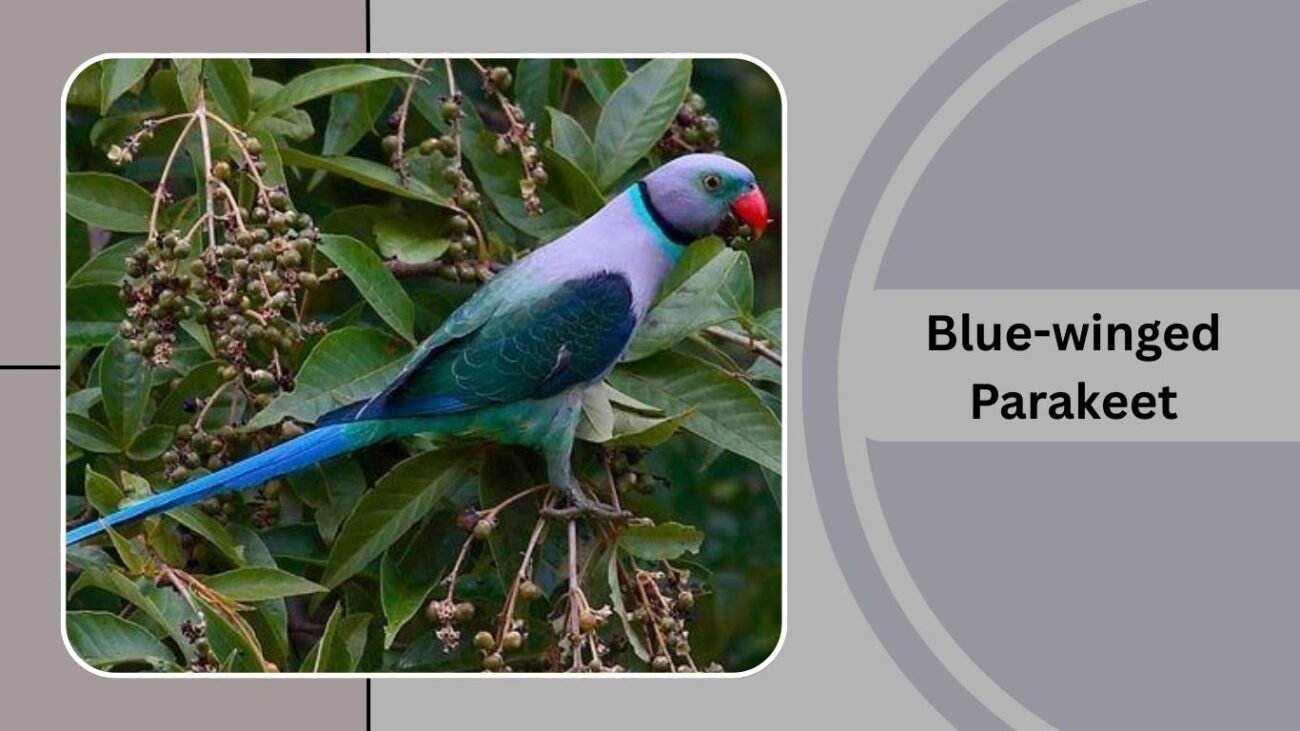
The Blue-winged Parakeet (Psittacula columboides), also called the Malabar Parakeet, is an elegant bird native to southern India. It is known for its bluish wings and graceful flight.
Identification
- Medium size, about 38 cm (15 in) long
- Greenish body with bluish wings and tail feathers
- Males show a black and rose-colored neck ring with a red upper mandible
- Females lack the neck ring and have a black bill
Habitat
This parakeet is found mainly in the forests of the Western Ghats. It thrives in evergreen and moist deciduous forests, often at mid-elevations.
Behavior
Blue-winged Parakeets are highly social, often flying in small to medium flocks. They feed on fruits, seeds, and berries, and their swift, direct flight is a common sight in forested valleys.
15. Grey-headed Parakeet
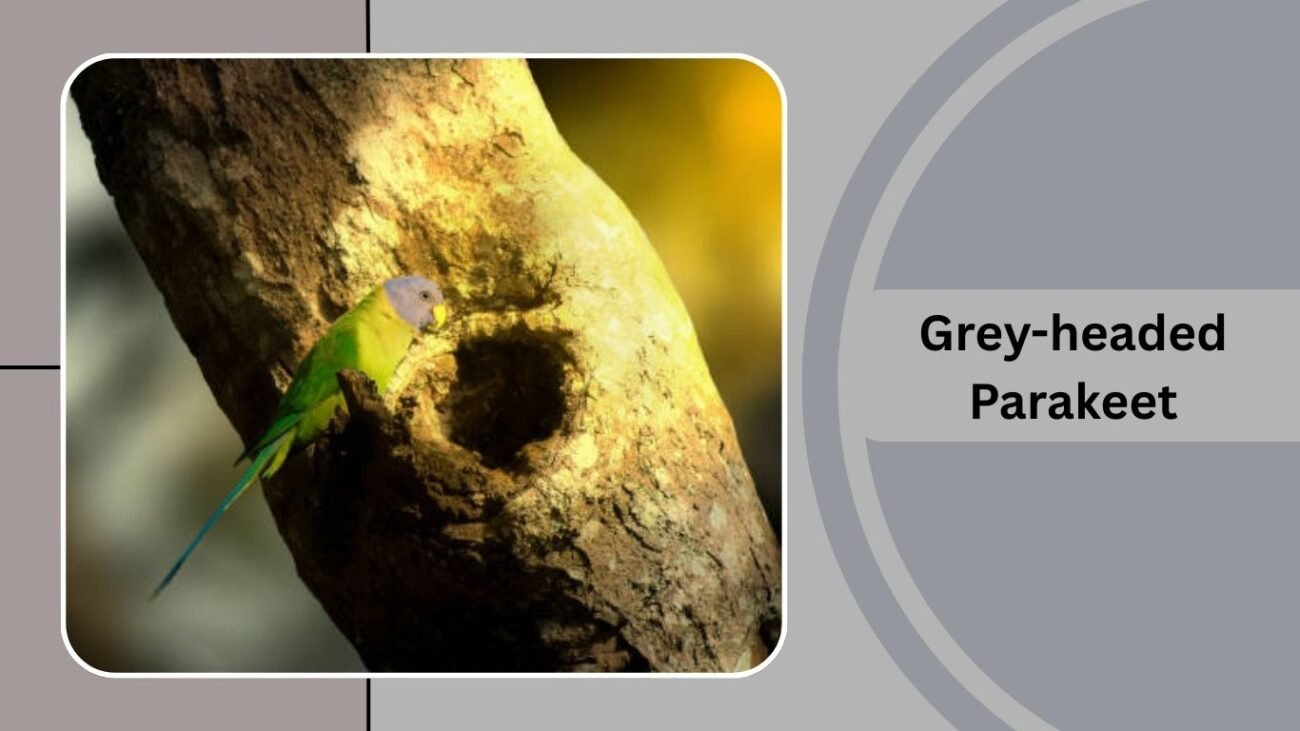
The Grey-headed Parakeet (Psittacula finschii) is a Southeast Asian species admired for its soft grayish head and long pointed tail. It is closely related to the Slaty-headed Parakeet but has a lighter coloration.
Identification
- Medium size, about 40 cm (16 in) long
- Pale gray head with green cheeks and throat
- Green body with bluish flight feathers and long tail tipped in yellow
- Males often show a faint black chin stripe
Habitat
Grey-headed Parakeets are found across Myanmar, Thailand, Laos, Cambodia, and Vietnam. They prefer subtropical forests, wooded valleys, and farmlands near rivers.
Behavior
These parakeets are fast fliers, usually moving in flocks. Their diet consists of seeds, fruits, and cultivated grains. They are highly active and noisy, often roosting together in large numbers during the evening.
16. Malayan Parakeet
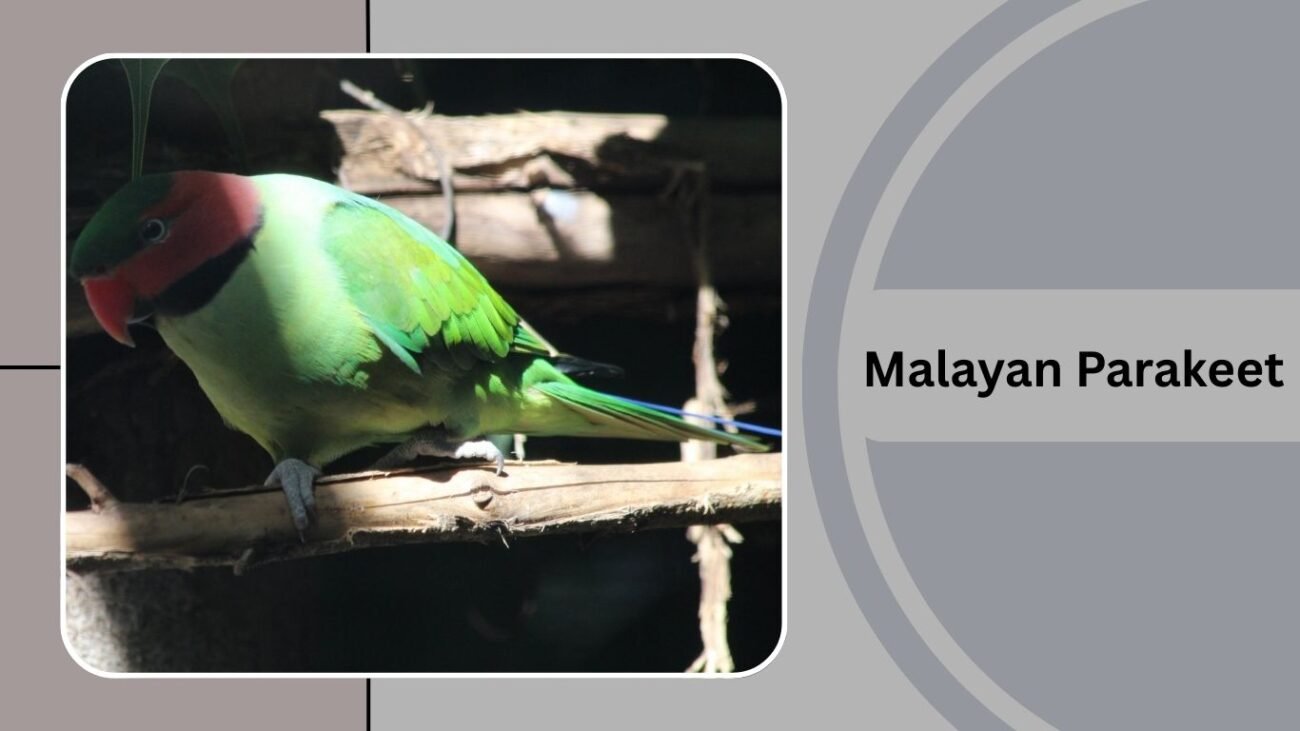
The Malayan Parakeet (Psittacula alexandri fasciata) is a regional subspecies of the Red-breasted Parakeet found in parts of Southeast Asia. It is admired for its colorful plumage and strong social behavior.
Identification
- Medium size, around 36 cm (14 in) long
- Green body with a rose-colored breast
- Males often show a bluish-gray head with a black chin stripe
- Long tapering tail and red bill
Habitat
Native to the Malay Peninsula and surrounding regions, it inhabits tropical forests, plantations, and farmlands. It is also found in urban parks where fruiting trees are common.
Behavior
Malayan Parakeets are gregarious, often gathering in noisy flocks. They feed on fruits, seeds, and cultivated crops such as mangoes and guavas. Their flight is swift, and they are capable of imitating calls when kept as pets.
17. Finsch’s Parakeet
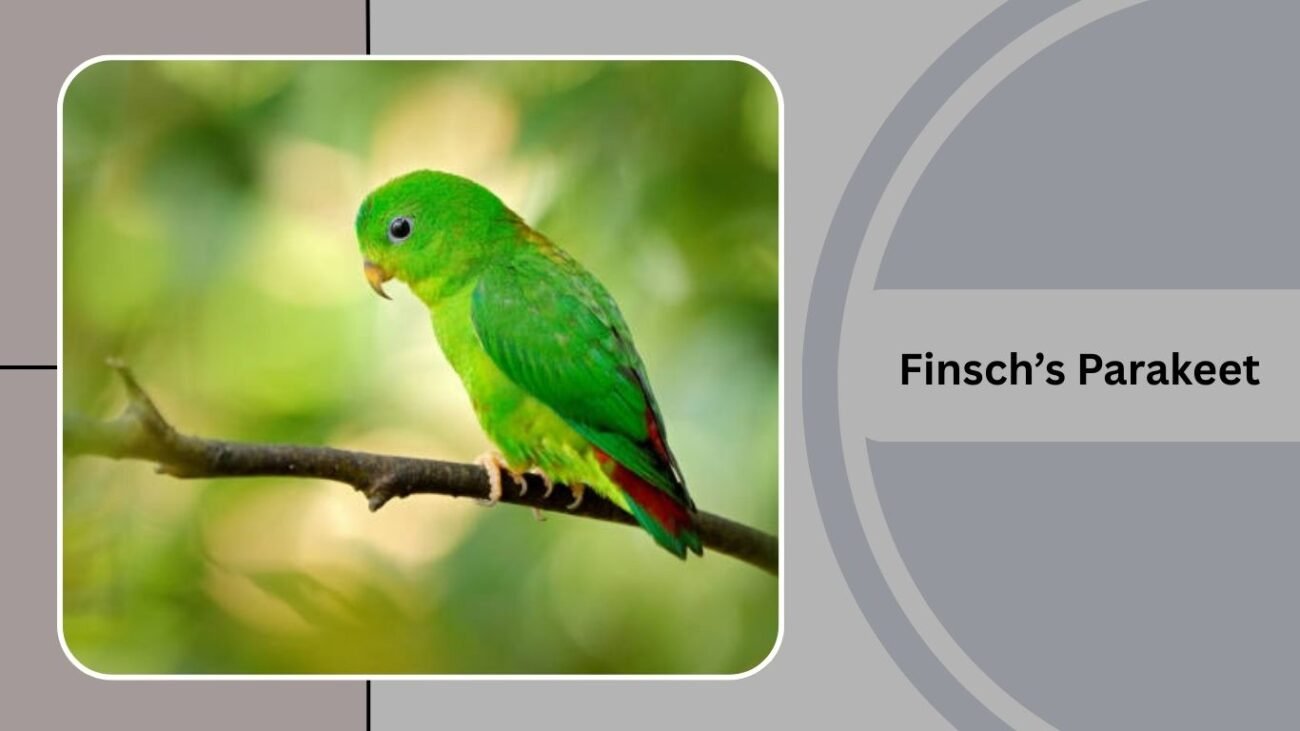
The Finsch’s Parakeet (Psittacara finschi), also called the Crimson-fronted Parakeet, is a Central American species known for its bright red forehead and lively nature.
Identification
- Medium size, around 28–30 cm (11–12 in) long
- Green body with a distinctive crimson patch on the forehead
- Some red markings on the wings and thighs
- Strong hooked bill and long pointed tail
Habitat
Finsch’s Parakeets are native to Central America, ranging from Nicaragua to Panama, often found in forests, woodlands, and cultivated areas.
Behavior
They are active, playful, and often noisy, moving in flocks. Their diet consists of fruits, seeds, nuts, and blossoms. They are strong fliers, and their bright red foreheads make them easy to spot among green foliage. In captivity, they are affectionate and intelligent, though they require plenty of space and attention.
18. Mustached Parakeet
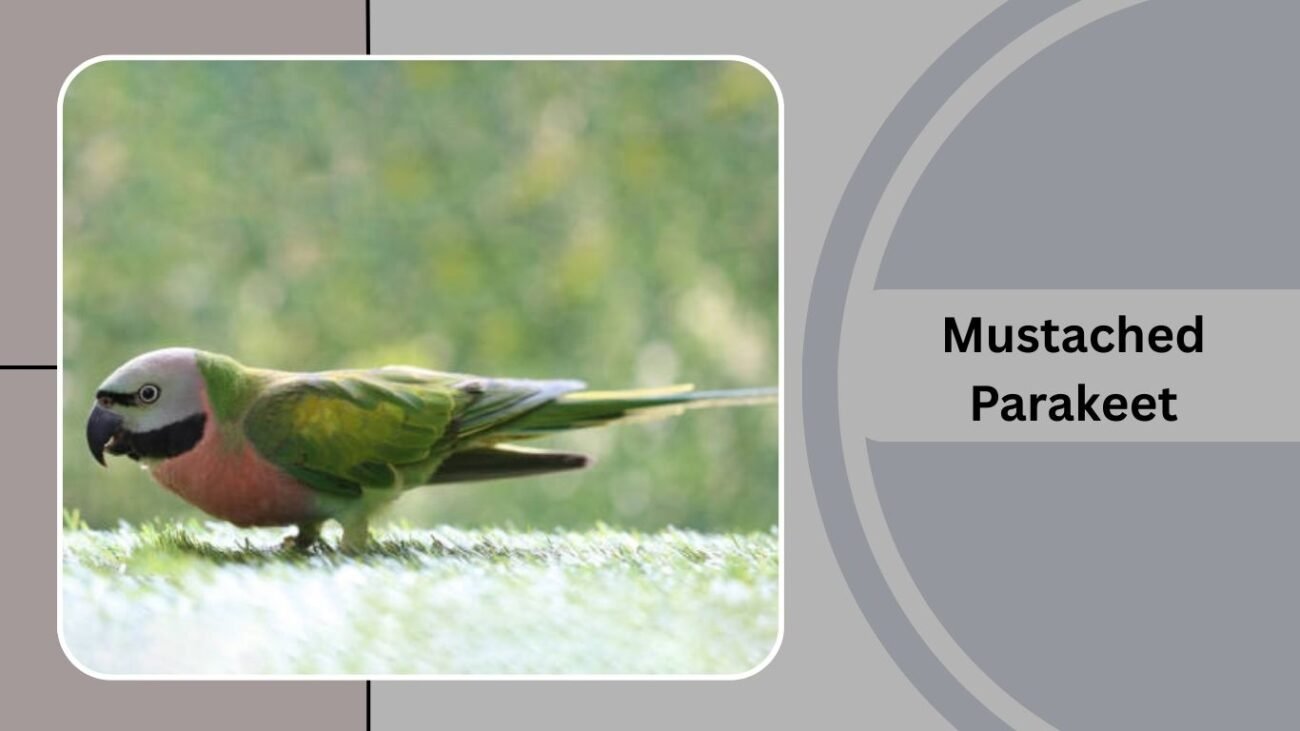
The Mustached Parakeet (Psittacula alexandri), also known as the Red-breasted Parakeet in some classifications, is a striking bird recognized for its unique facial markings that resemble a mustache.
Identification
- Medium size, about 38–40 cm (15–16 in) long
- Green body with a pinkish-red breast
- Bluish-gray head with a distinctive black stripe running across the face, resembling a mustache
- Long tail with bluish feathers and yellow tips
Habitat
Mustached Parakeets are native to Southeast Asia, including Thailand, Cambodia, Laos, Vietnam, and parts of Indonesia. They inhabit forests, plantations, and agricultural lands.
Behavior
These parakeets are lively, intelligent, and social, often found in small flocks. Their diet includes fruits, seeds, berries, and cultivated crops. They are strong fliers and excellent talkers in captivity, capable of learning a wide vocabulary.
19. Yellow-collared Parakeet
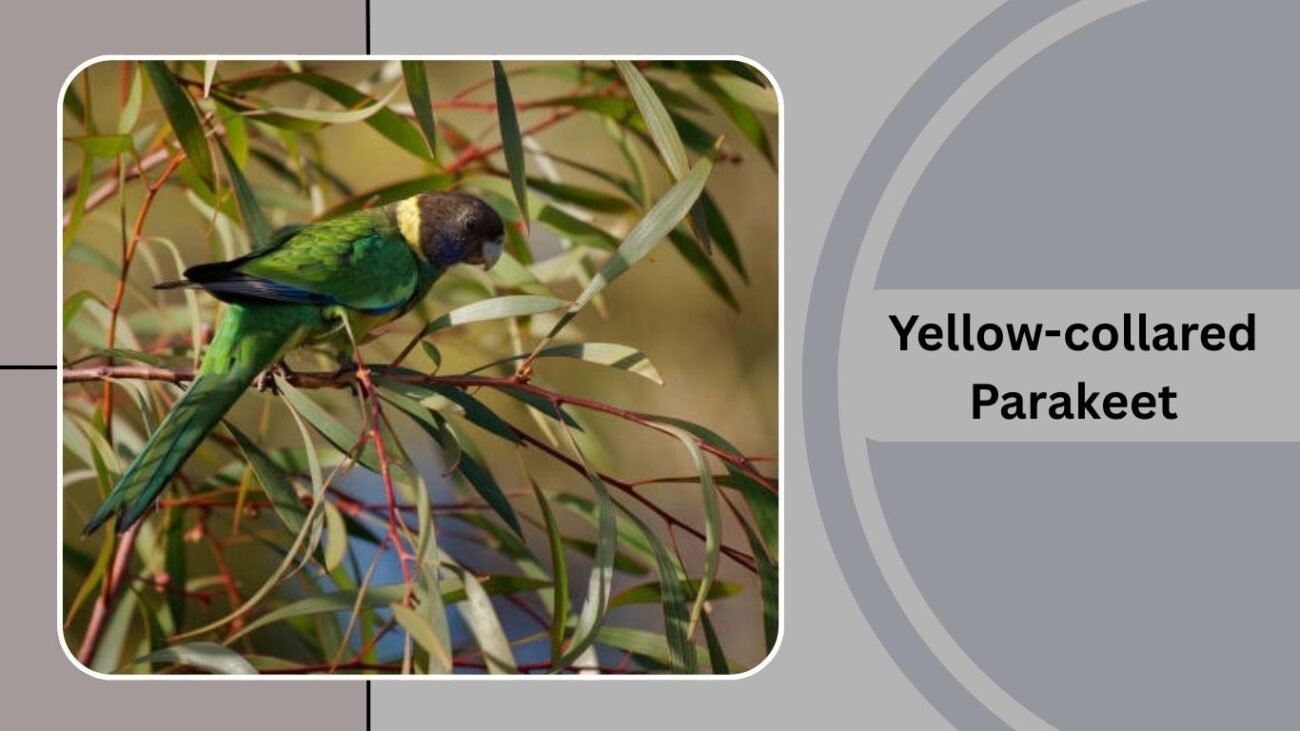
The Yellow-collared Parakeet (Psittacula xanthorrhyncha), also called the Mauritius Ringneck Parakeet, is a brightly colored species native to certain Indian Ocean islands.
Identification
- Medium size, about 40 cm (16 in) long
- Bright green body with a distinct yellow collar around the neck
- Red beak and long, tapered bluish-green tail
- Males typically have clearer and brighter collar markings than females
Habitat
Yellow-collared Parakeets are found on islands such as Mauritius and surrounding areas, living in forests, plantations, and gardens. They have also been introduced in some regions.
Behavior
These parakeets are active, noisy, and highly social, often seen in flocks. They feed on fruits, seeds, and blossoms, and are known to raid orchards. In captivity, they are playful, intelligent, and can mimic human speech, making them popular among bird keepers.
20. Mauritius Parakeet (Echo Parakeet)
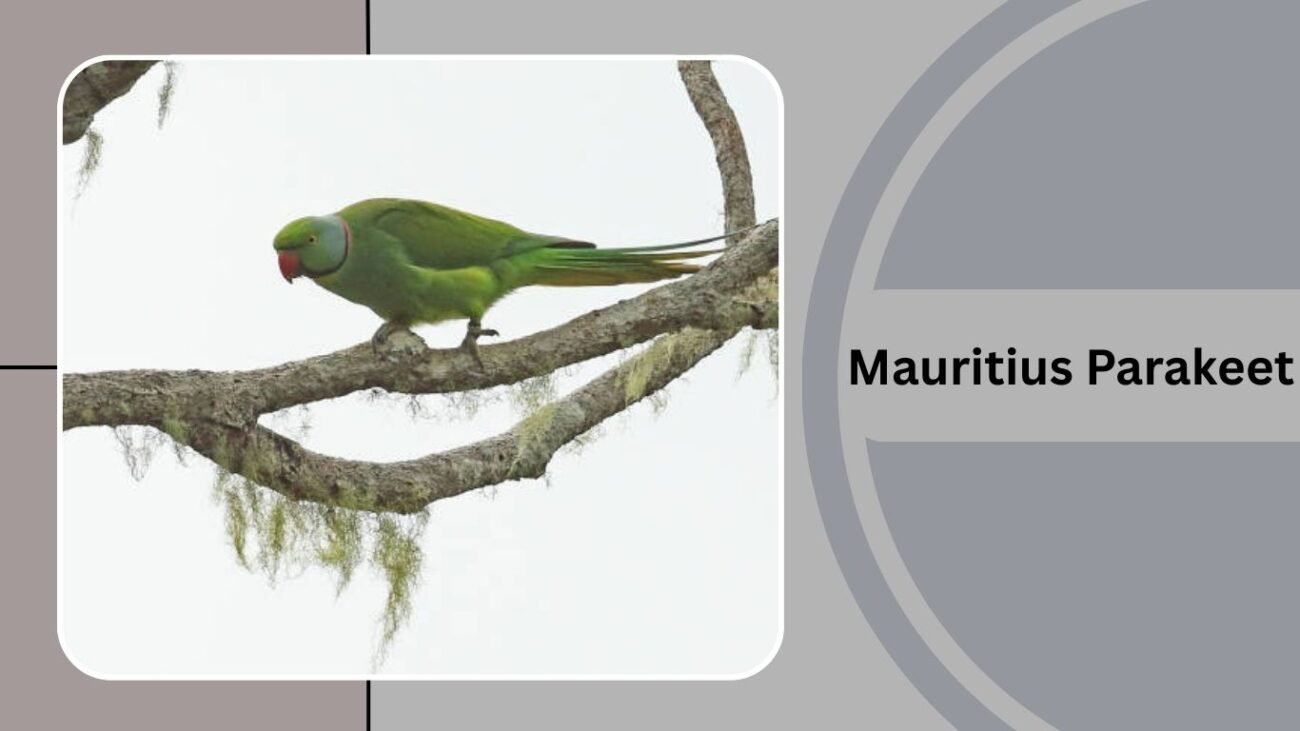
The Mauritius Parakeet (Psittacula eques), also called the Echo Parakeet, is one of the rarest parakeets in the world and the only surviving parrot species native to Mauritius. Once critically endangered, it has made a remarkable recovery due to conservation efforts.
Identification
- Medium size, about 36–40 cm (14–16 in) long
- Bright green plumage with a red beak
- Males have a black chin stripe and red patches on the wings
- Females lack the chin stripe and have duller coloration
Habitat
Found only on the island of Mauritius, these parakeets inhabit native evergreen forests. They prefer areas with dense canopies and fruit-bearing trees.
Behavior
Mauritius Parakeets are active and social, usually living in small flocks or pairs. They feed on native fruits, leaves, seeds, and flowers. In the wild, they are strong fliers and known for their loud calls echoing through the forests.
21. Red-fronted Parakeet (Kākāriki)
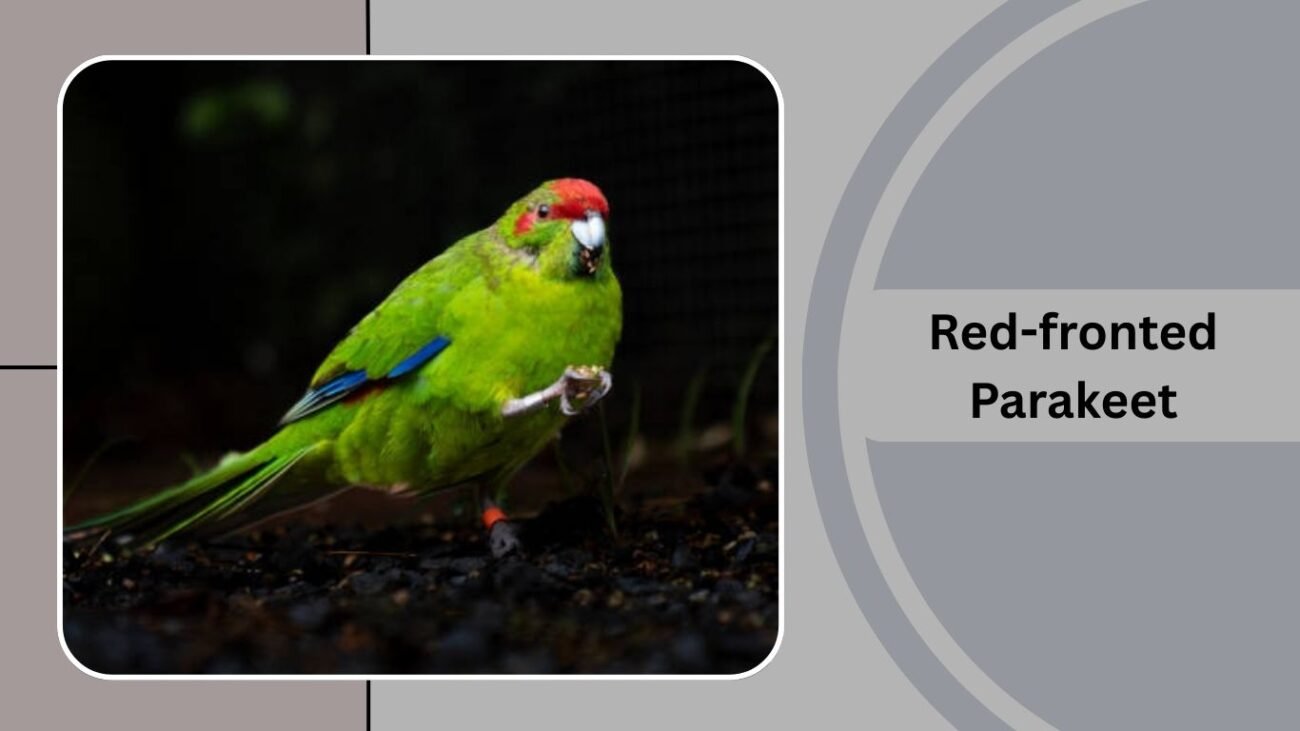
The Red-fronted Parakeet (Cyanoramphus novaezelandiae), commonly called Kākāriki in Māori, is native to New Zealand and its offshore islands. It is a small, lively bird with a distinctive red forehead.
Identification
- Small size, about 27 cm (10.5 in) long
- Bright green plumage with a vivid red forehead and crown
- Red patches around the eyes and base of the bill
- Long tail and slender build
Habitat
This parakeet inhabits forests, scrublands, and offshore islands of New Zealand. It has been reintroduced to predator-free islands as part of conservation programs.
Behavior
Red-fronted Parakeets are active and noisy, often flying swiftly in small flocks. They feed on seeds, fruits, leaves, and invertebrates. Known for their playful nature, they are often seen climbing and foraging among branches. In captivity, they are curious, energetic, and require stimulation to stay happy.
22. Orange-fronted Parakeet
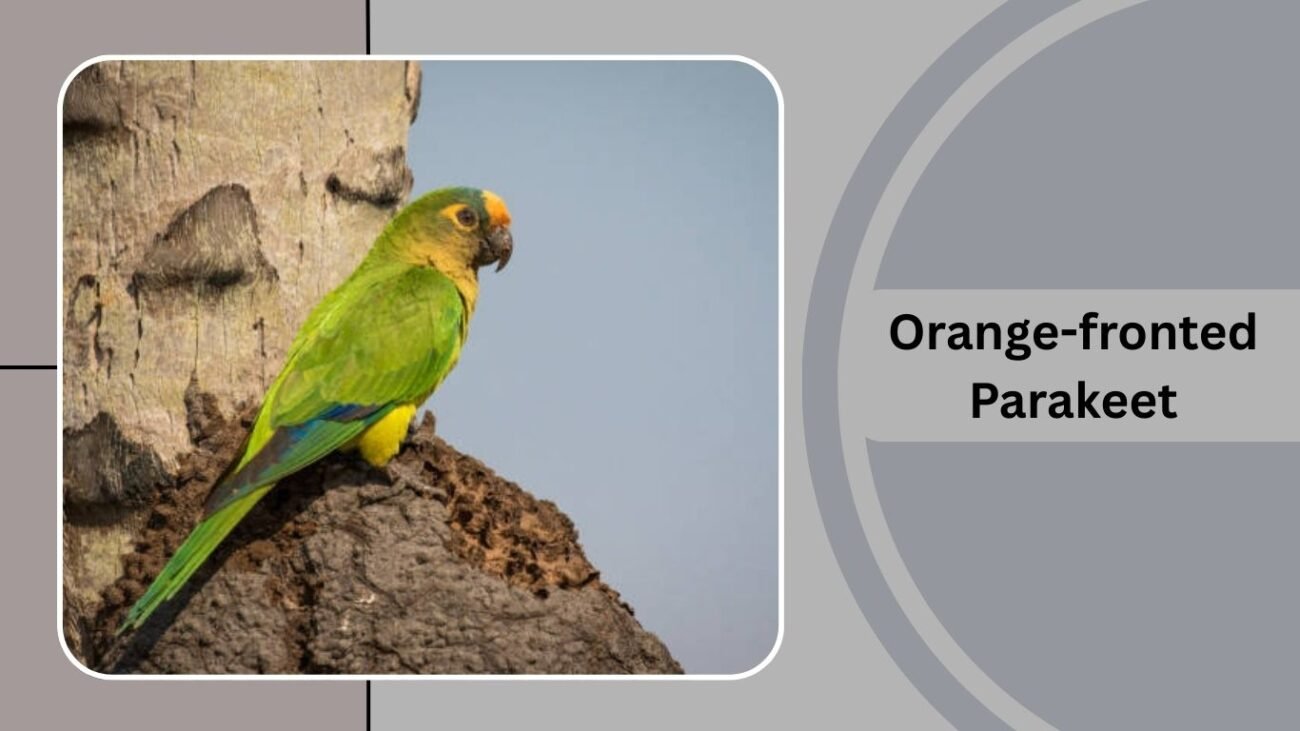
The Orange-fronted Parakeet (Eupsittula canicularis), also called the Half-moon Conure, is a colorful Central American species widely kept as a pet for its playful temperament.
Identification
- Small to medium size, about 24 cm (9.5 in) long
- Green body with a distinctive bright orange patch on the forehead
- Blue on the wings and tail feathers
- Short, stocky build with a grayish bill
Habitat
Native to Central America, from Mexico to Costa Rica, this parakeet inhabits dry forests, scrublands, and savannas. It adapts well to human presence and is often found near villages and farmland.
Behavior
Orange-fronted Parakeets are social, active, and usually move in small flocks. They feed on seeds, fruits, nuts, and blossoms, often visiting crop fields. In captivity, they are intelligent, friendly, and can learn to mimic sounds, though they are generally more playful than talkative.
23. Golden Parakeet (Queen of Bavaria Conure)
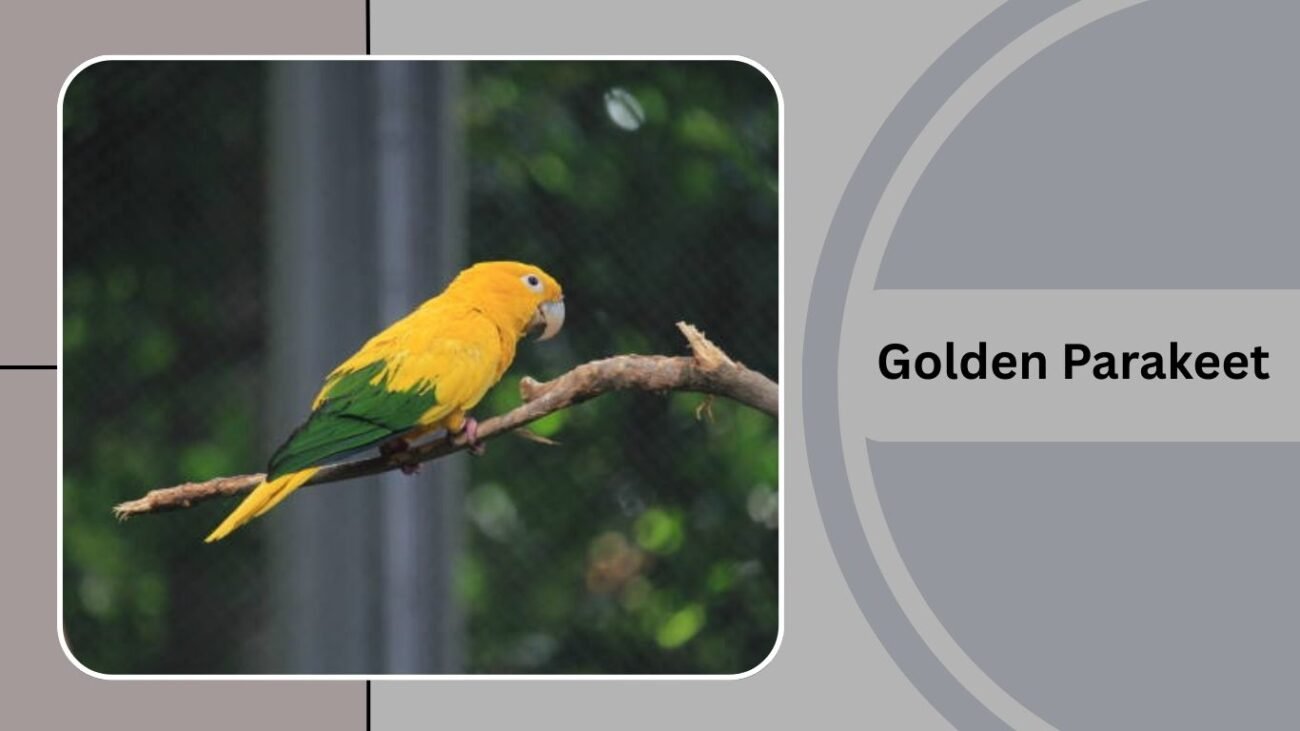
The Golden Parakeet (Guaruba guarouba), also known as the Queen of Bavaria Conure, is one of the most stunning parakeet species with its bright yellow plumage. It is native to the Amazon rainforest and highly prized for its beauty.
Identification
- Medium size, about 34 cm (13 in) long
- Brilliant golden-yellow plumage with green primary flight feathers
- Strong hooked bill and expressive dark eyes
- Stocky build with a relatively short tail compared to other parakeets
Habitat
Golden Parakeets inhabit the rainforests of northern Brazil, especially in the Amazon Basin. They prefer humid lowland forests and areas with abundant fruiting trees.
Behavior
These parakeets are highly social, often living in flocks and nesting communally. They feed on fruits, nuts, seeds, and blossoms. Known for their intelligence and affectionate nature, they are popular in aviculture but require experienced care due to their high energy and need for interaction.