Diving beetles are fascinating aquatic insects found in freshwater habitats around the world. Known for their excellent swimming skills and predatory nature, they play an important role in maintaining ecological balance. Both adults and larvae are voracious hunters, feeding on insects, tadpoles, and even small fish. This guide explores 15 types of diving beetles, highlighting their identification, habitat, behavior, diet, and lifecycle.
1. Great Diving Beetle (Dytiscus marginalis)
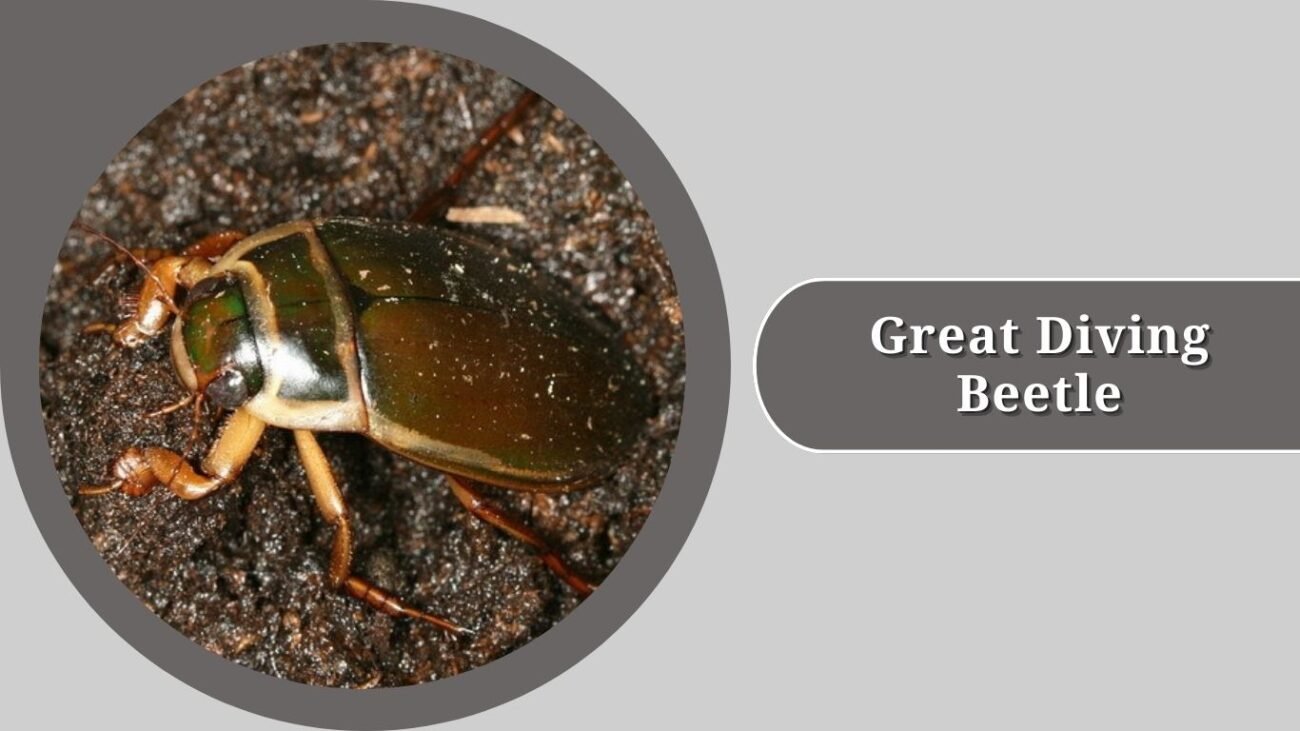
The Great Diving Beetle is one of the largest and most common aquatic beetles in Europe. Known for its strong swimming ability and predatory nature, it plays a vital role in freshwater ecosystems by keeping insect and amphibian populations in check.
Identification
- Large beetle, up to 35 mm long
- Oval, streamlined body for efficient swimming
- Dark greenish-brown elytra (wing cases) with a yellow margin
- Hind legs flattened and fringed with hairs for paddling
- Adults can fly between water bodies
Habitat
Found in ponds, lakes, ditches, and slow-moving rivers, especially in areas rich in vegetation. It prefers clean, still, or gently flowing freshwater habitats.
Behavior
The beetle surfaces to trap air under its wing cases and can remain submerged for long periods. It is an agile swimmer and a fierce predator both as an adult and larva. Adults are also capable of flying to new water sources when conditions change.
Diet
Carnivorous in both larval and adult stages, feeding on tadpoles, small fish, aquatic insects, and invertebrates. The larvae, sometimes called “water tigers,” are especially aggressive hunters.
Lifecycle
Females lay eggs in aquatic plants. The larvae grow through several molts before pupating in moist soil near water. After pupation, adults emerge and return to aquatic habitats, continuing the cycle.
2. Brown Diving Beetle (Ilybius fenestratus)
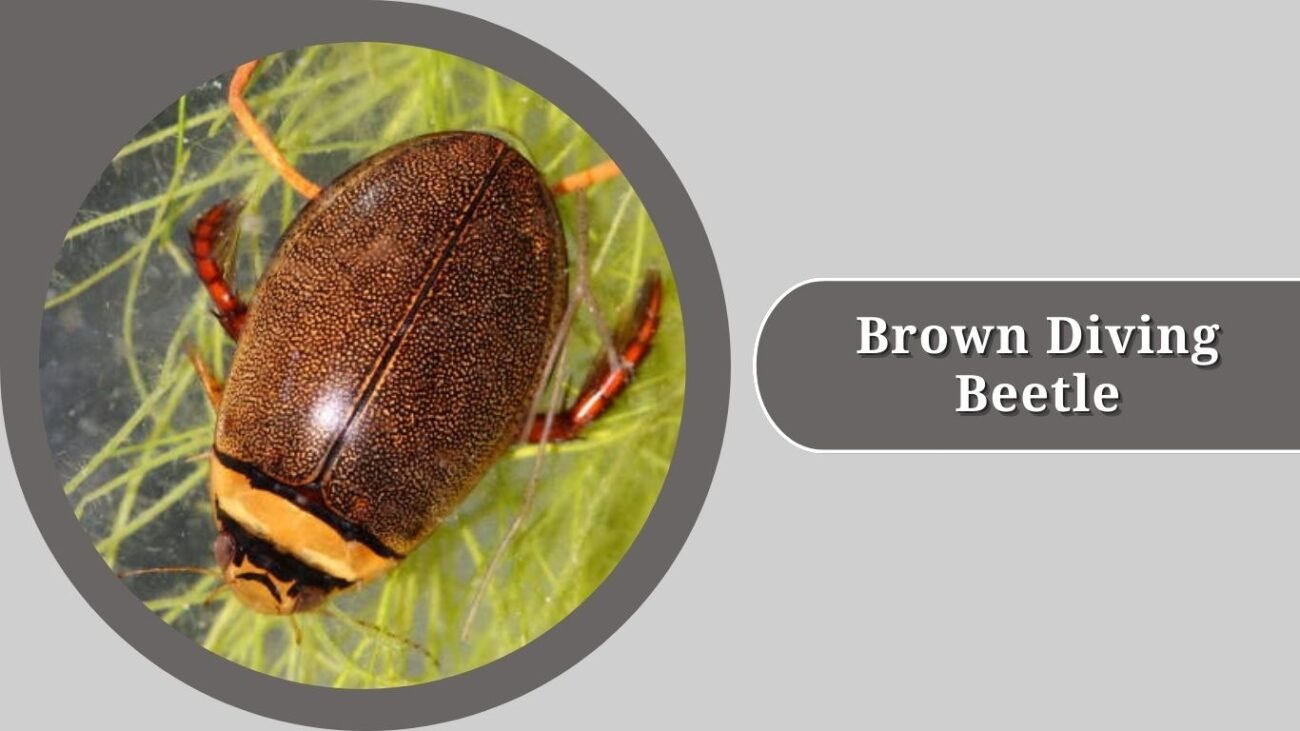
The Brown Diving Beetle is a medium-sized aquatic beetle commonly found across Europe. Although less striking than the larger species, it is an effective predator and contributes significantly to the balance of freshwater ecosystems.
Identification
- Medium size, about 12–15 mm long
- Elongated, oval body shape
- Brown to reddish-brown elytra, sometimes with faint markings
- Hind legs adapted with fringed hairs for swimming
- Smooth body surface aiding in streamlined movement
Habitat
Prefers ponds, marshes, ditches, and slow-moving waters with dense vegetation. It thrives in both permanent and temporary freshwater habitats.
Behavior
Like other diving beetles, it carries an air bubble beneath its elytra to breathe while submerged. Active mainly at night, it frequently swims to the surface for air and can fly between water bodies if necessary.
Diet
Predatory at all life stages, feeding on aquatic insect larvae, worms, and small crustaceans. Adults may also scavenge on dead organisms.
Lifecycle
Eggs are laid on submerged plants. Larvae develop underwater, molting several times before leaving the water to pupate in moist soil nearby. Adults then emerge and return to water to continue the cycle.
3. Black-bellied Diving Beetle (Hydrophilus aterrimus)
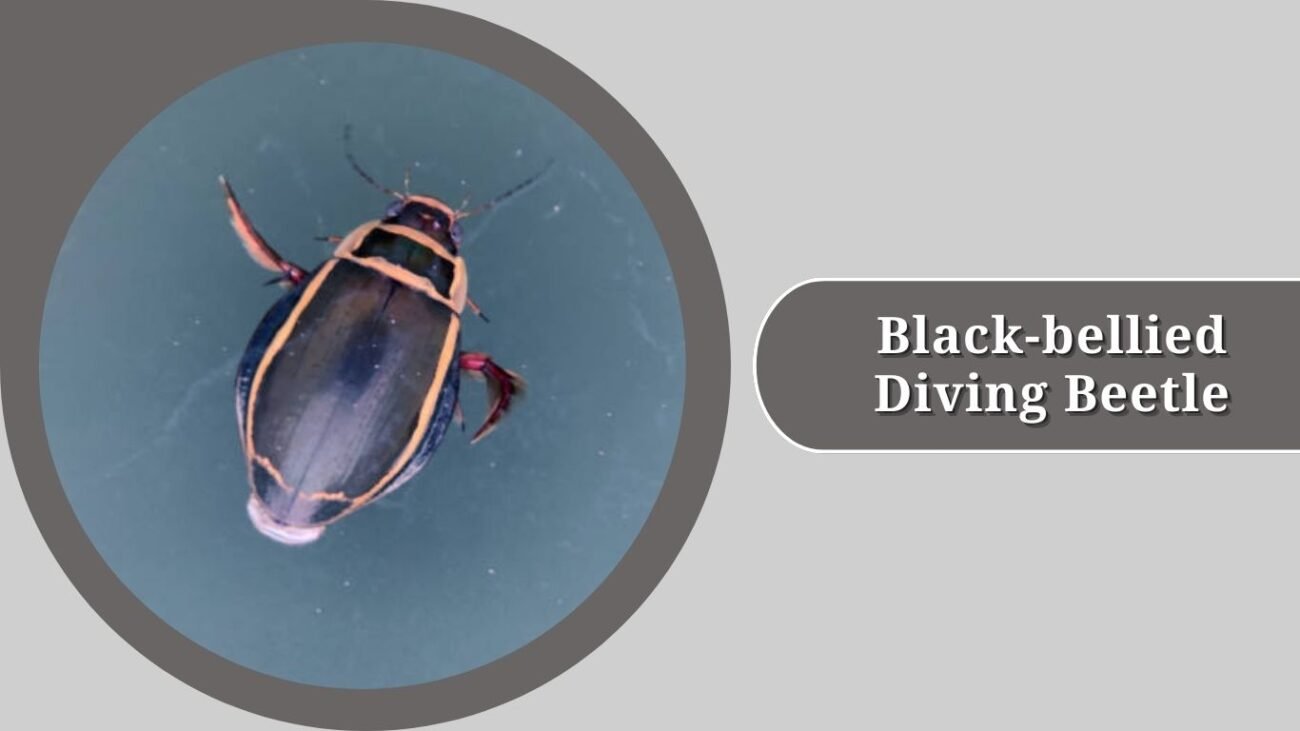
The Black-bellied Diving Beetle is a large, shiny aquatic beetle recognized by its dark underside. Unlike many other diving beetles, it is more of a scavenger, playing an important role in cleaning freshwater environments.
Identification
- Large beetle, up to 30–35 mm long
- Glossy black or dark greenish upper body
- Characteristic black underside (belly)
- Streamlined, oval body suited for swimming
- Hind legs flattened and fringed with swimming hairs
Habitat
Common in ponds, lakes, and marshes with abundant vegetation. It prefers still or slow-moving waters with organic debris, which provides both food and cover.
Behavior
This beetle surfaces to collect air beneath its elytra, enabling it to stay submerged for extended periods. It is an excellent swimmer but less aggressive than predatory species. Adults may also fly at night in search of new habitats.
Diet
Primarily omnivorous and scavenging in nature, feeding on decaying plant matter, detritus, and carrion. Occasionally it consumes small invertebrates and algae.
Lifecycle
Females lay eggs in silken cases attached to aquatic plants. The larvae are carnivorous, feeding on invertebrates, before pupating in damp soil near the water’s edge. Adults emerge and return to aquatic habitats to continue the cycle.
4. Spotted Diving Beetle (Graphoderus zonatus)

The Spotted Diving Beetle is a medium-sized aquatic beetle recognized for its attractive spotted pattern. Though not as large as the great diving beetles, it is a capable swimmer and active predator within freshwater ecosystems.
Identification
- Medium size, around 12–15 mm long
- Oval, streamlined body shape
- Yellowish-brown elytra with distinctive darker spots or markings
- Hind legs flattened with swimming hairs
- Smooth, glossy body aiding in movement through water
Habitat
Inhabits ponds, ditches, lakes, and marshes with clear, still, or slow-flowing waters. It favors places with rich aquatic vegetation for cover and hunting.
Behavior
Surfaces regularly to collect air under its wing cases, allowing it to remain submerged. Active mainly at dusk and night, it uses quick bursts of swimming to ambush prey. Adults can disperse by flight to colonize new water bodies.
Diet
Predatory at both larval and adult stages, feeding on small aquatic insects, crustaceans, and larvae. It may also consume weakened or dead organisms when available.
Lifecycle
Eggs are deposited on aquatic vegetation. The larvae, like other diving beetle species, are voracious hunters and undergo several molts before pupating in damp soil near the water. Adults later emerge and return to water to complete the cycle.
5. Green Diving Beetle (Thermonectus marmoratus)

The Green Diving Beetle is a striking species native to North America, particularly known for its shimmering, marbled green appearance. It is an agile swimmer and a skilled predator, playing an important role in aquatic ecosystems.
Identification
- Medium-sized beetle, about 12–18 mm long
- Shiny green or golden-marble patterned elytra
- Oval, streamlined body built for swimming
- Hind legs flattened and fringed with swimming hairs
- Distinctive metallic sheen under sunlight
Habitat
Found in ponds, marshes, and slow-moving streams, particularly in warm regions. It prefers shallow waters with abundant vegetation that provide both food and shelter.
Behavior
Surfaces to trap an air bubble beneath the elytra, enabling long dives. It is an agile and fast swimmer, often darting quickly through the water in search of prey. Adults are strong fliers and may disperse to new habitats when water sources dry up.
Diet
Both adults and larvae are carnivorous, feeding on mosquito larvae, aquatic insects, small crustaceans, and occasionally tadpoles. They are effective in controlling mosquito populations.
Lifecycle
Females lay eggs on submerged plants. Larvae hatch and grow rapidly, undergoing several molts before leaving the water to pupate in moist soil nearby. After pupation, adults emerge and return to aquatic life.
6. Broad-shouldered Diving Beetle (Dytiscus semisulcatus)

The Broad-shouldered Diving Beetle is a robust species of predaceous diving beetle, easily recognized by its widened thorax. It is a strong swimmer and voracious predator, commonly found in freshwater habitats across Europe.
Identification
- Large beetle, up to 25–30 mm long
- Dark brown to black body with a yellowish margin around the thorax and elytra
- Broad pronotum (“shoulders”) giving it a stocky appearance
- Flattened, hairy hind legs adapted for swimming
- Smooth, streamlined body for aquatic movement
Habitat
Lives in ponds, marshes, lakes, and slow-moving rivers with rich aquatic vegetation. Prefers shallow, still, or sluggish waters that provide cover and hunting grounds.
Behavior
Breathes by capturing an air bubble beneath its elytra, surfacing regularly to replenish it. Active mostly at night, it is a strong swimmer and capable flyer, often moving between water bodies.
Diet
A fierce predator that feeds on aquatic insects, larvae, tadpoles, and small fish. The larvae, known as “water tigers,” are especially aggressive hunters, injecting digestive enzymes into prey before consuming them.
Lifecycle
Eggs are deposited on submerged plants. Larvae undergo several molts while hunting underwater, then crawl to moist soil nearby to pupate. Adults emerge and return to water, continuing the predatory cycle.
7. Predaceous Diving Beetle (Cybister fimbriolatus)

The Predaceous Diving Beetle is one of the largest aquatic beetles in North America, well known for its powerful swimming and predatory behavior. Its impressive size and strong mandibles make it a dominant hunter in freshwater environments.
Identification
- Very large beetle, ranging from 30–40 mm long
- Dark, glossy brown to black body with smooth, oval shape
- Yellowish margins around the thorax and elytra
- Hind legs broad, flattened, and fringed with hairs for swimming
- Streamlined form adapted to fast aquatic movement
Habitat
Found in ponds, lakes, ditches, and slow-moving streams across North America. Prefers well-vegetated waters where prey is abundant and where it can easily hide.
Behavior
Surfaces to trap air beneath its wing cases, allowing it to dive for extended periods. Strong and agile in water, but also capable of flying at night to colonize new habitats. When threatened, it may release defensive secretions.
Diet
Highly carnivorous, preying on tadpoles, small fish, aquatic insects, and other invertebrates. Its larvae, the “water tigers,” are equally ferocious and use their hollow mandibles to inject digestive enzymes into prey.
Lifecycle
Eggs are laid on aquatic vegetation. The larvae hatch and pass through several molts while feeding underwater. Pupation occurs in damp soil near water, after which adults emerge and return to their aquatic life.
8. Lesser Diving Beetle (Agabus bipustulatus)

The Lesser Diving Beetle is a widespread and common species of aquatic beetle found across Europe and parts of Asia. Though smaller than many of its relatives, it is an active swimmer and predator in freshwater habitats.
Identification
- Small to medium size, about 7–9 mm long
- Dark brown to black body with two faint reddish spots near the rear of the elytra
- Oval and streamlined body for swimming
- Hind legs flattened and fringed with hairs for propulsion
- Less robust appearance compared to larger diving beetles
Habitat
Found in ponds, lakes, marshes, and slow-moving rivers. It adapts to a wide variety of freshwater environments, including temporary pools. Prefers areas with aquatic vegetation for cover and egg-laying.
Behavior
Breathes by carrying an air bubble beneath its wing cases. Swims actively, often darting quickly through vegetation in search of prey. Adults are also capable of flight and may move between water bodies, especially in spring and autumn.
Diet
Predatory, feeding on small aquatic invertebrates, insect larvae, and occasionally tiny crustaceans. Larvae are similarly carnivorous and hunt actively underwater.
Lifecycle
Females lay eggs on submerged vegetation. The larvae undergo several molts, then leave the water to pupate in damp soil or moss near the shoreline. After pupation, adults return to the water to begin the cycle again.
9. Three-lined Diving Beetle (Hydaticus seminiger)

The Three-lined Diving Beetle is a medium-sized aquatic beetle recognized for the distinctive pale lines running along its elytra. It is a strong swimmer and an efficient predator, common in freshwater habitats.
Identification
- Medium size, about 10–12 mm long
- Dark brown to black body with three pale yellowish longitudinal lines on the elytra
- Oval, streamlined shape aiding swimming
- Hind legs flattened and fringed with swimming hairs
- Glossy surface, well-suited for aquatic life
Habitat
Inhabits ponds, ditches, lakes, and slow-moving streams with plenty of aquatic plants. It is commonly found in shallow, vegetated areas that provide cover and hunting grounds.
Behavior
Breathes by trapping an air bubble beneath its wing cases. Frequently surfaces to refresh its air supply while diving actively. Adults are strong swimmers and capable of flying between water bodies when conditions require.
Diet
Predatory, feeding mainly on aquatic insect larvae, small invertebrates, and occasionally tiny tadpoles. Larvae are aggressive hunters, using their hollow jaws to capture and digest prey.
Lifecycle
Females lay eggs on submerged vegetation. The larvae develop underwater, molting through several stages before pupating in damp soil near water. Adults emerge from the pupae and return to their aquatic habitat to continue the cycle.
10. Sunburst Diving Beetle (Thermonectus nigrofasciatus)

The Sunburst Diving Beetle is a brightly patterned aquatic beetle native to North and Central America. Its striking black-and-yellow markings make it one of the most distinctive diving beetles, often spotted in warm, shallow waters.
Identification
- Medium size, around 11–15 mm long
- Elytra patterned with bold yellow spots or bands on a black background
- Oval, streamlined body for efficient swimming
- Hind legs flattened and fringed with hairs for paddling
- Highly noticeable coloration, unlike most dark-bodied diving beetles
Habitat
Prefers shallow, sunlit ponds, slow-moving streams, and temporary pools. Commonly found in warm climates, it thrives in clear waters with aquatic vegetation.
Behavior
Breathes by trapping air beneath its wing cases, surfacing regularly for replenishment. Known for its active swimming during the day, often darting about in search of prey. Adults can also fly and disperse to new water sources.
Diet
Predatory, feeding on mosquito larvae, aquatic insects, and small crustaceans. Its diet makes it a useful natural control for mosquito populations. Larvae are equally predatory, attacking small invertebrates in the water.
Lifecycle
Eggs are deposited on aquatic plants or debris. Larvae hatch and undergo several molts before leaving the water to pupate in moist soil. After pupation, adults emerge and return to aquatic habitats to continue the cycle.
11. Common Diving Beetle (Rhantus suturellus)
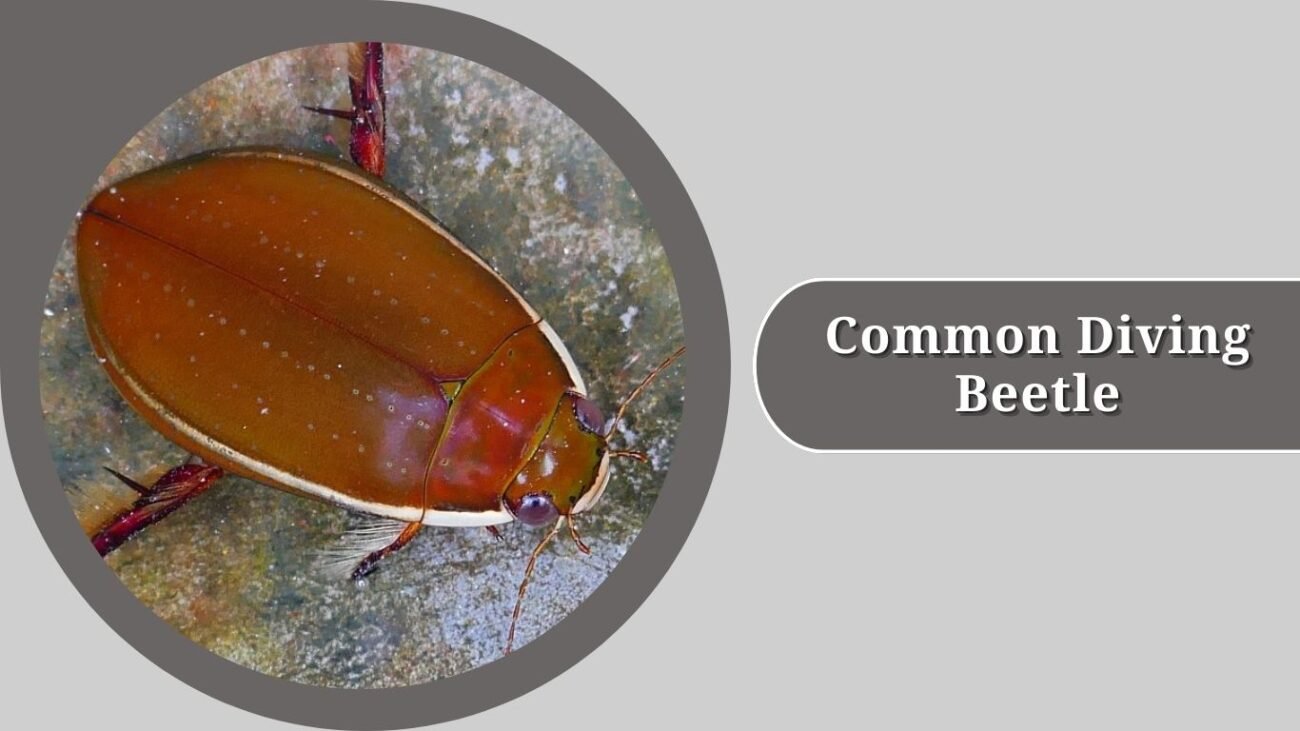
The Common Diving Beetle is a widespread and adaptable species, frequently encountered in ponds, ditches, and lakes across Europe. Though smaller than some of its relatives, it is an active swimmer and predator, playing an important role in aquatic ecosystems.
Identification
- Medium size, about 8–11 mm long
- Oval body, usually brownish to dark with lighter yellowish markings
- Elytra often patterned with fine lines or mottling
- Hind legs flattened and fringed with hairs for propulsion
- Streamlined body shape aiding in underwater movement
Habitat
Lives in ponds, marshes, ditches, and lakes, favoring shallow, still, or slow-moving waters. It thrives in habitats with dense aquatic vegetation for both cover and breeding.
Behavior
Breathes by carrying an air bubble beneath its wing cases, surfacing frequently to renew it. Active both day and night, it swims efficiently and is capable of flying to colonize new water bodies.
Diet
Carnivorous, preying mainly on small aquatic invertebrates, insect larvae, and sometimes tiny tadpoles. The larvae are also highly predatory, attacking and consuming small aquatic organisms.
Lifecycle
Eggs are laid on submerged vegetation. Larvae hatch and pass through several molts while feeding actively underwater. They pupate in damp soil near water before transforming into adults, which return to the aquatic environment.
12. Striped Diving Beetle (Hydaticus transversalis)

The Striped Diving Beetle is a distinctive aquatic beetle easily recognized by its bold yellow stripes across the elytra. Active and agile, it is one of the more visually striking members of the diving beetle family.
Identification
- Medium size, about 11–14 mm long
- Dark brown to black body with prominent yellow transverse stripes across the wing cases
- Oval, streamlined body for swift swimming
- Hind legs flattened and fringed with hairs for paddling
- Glossy appearance, often reflecting light in water
Habitat
Found in ponds, lakes, ditches, and slow-moving streams. It prefers shallow, vegetated areas where it can hide and hunt effectively.
Behavior
Surfaces to capture air beneath its wing cases and can remain submerged for extended periods. It is a strong and agile swimmer, often darting quickly to capture prey. Adults are capable fliers, dispersing to new habitats when necessary.
Diet
Predatory, feeding on aquatic insect larvae, small invertebrates, and sometimes young tadpoles. Larvae are fierce hunters, using their hollow jaws to inject enzymes into prey before consuming them.
Lifecycle
Females lay eggs on aquatic vegetation. Larvae develop underwater, undergoing several molts before leaving the water to pupate in moist soil near the shore. Adults emerge from the pupae and return to the water to resume predatory life.
13. Shining Diving Beetle (Colymbetes fuscus)
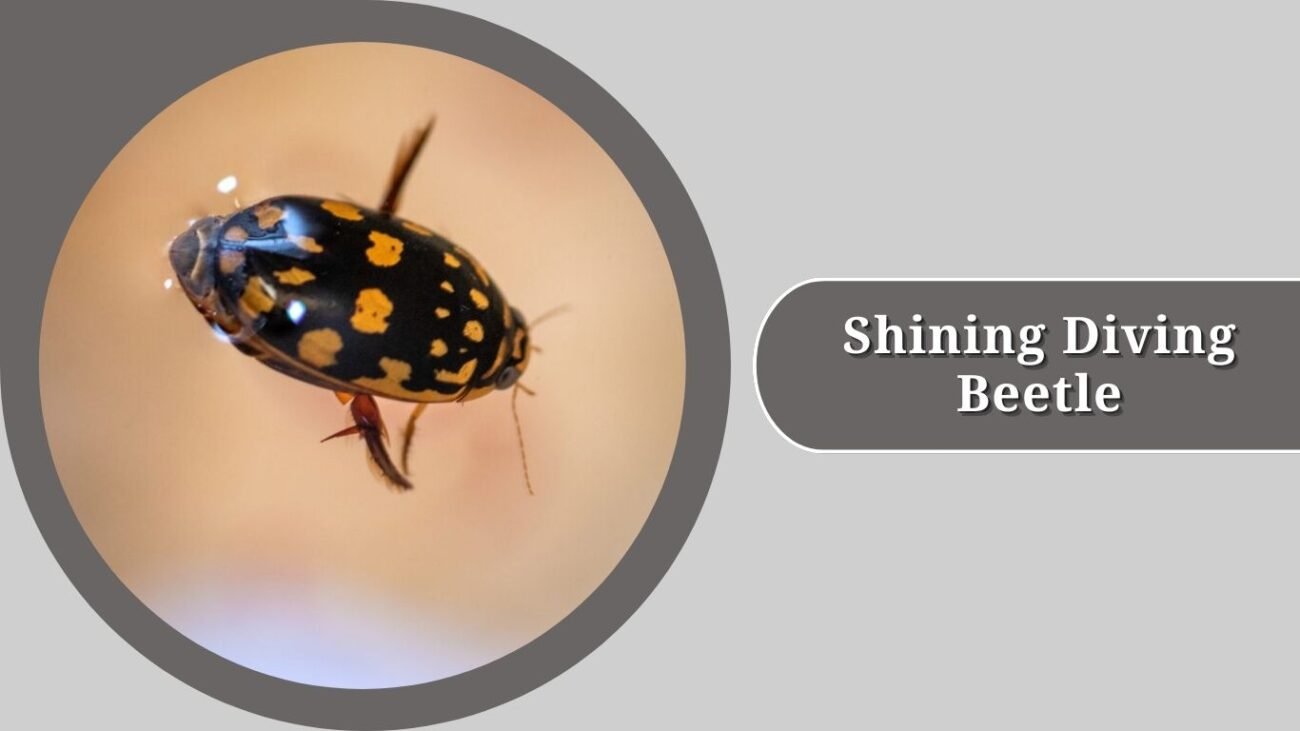
The Shining Diving Beetle is a medium-sized aquatic beetle known for its glossy, smooth body surface. Widespread across Europe and Asia, it is an active predator and a strong swimmer commonly seen in still waters.
Identification
- Medium size, about 12–15 mm long
- Smooth, shiny, dark brown to black body
- Oval, streamlined shape for efficient swimming
- Elytra sometimes with faint lighter markings
- Hind legs flattened and fringed with hairs for paddling
Habitat
Inhabits ponds, lakes, ditches, and marshes, particularly those with abundant aquatic vegetation. Prefers clean, still, or slow-flowing freshwater habitats.
Behavior
Surfaces to trap air beneath its elytra, enabling long dives. It is an agile swimmer, frequently seen darting through vegetation. Adults are also capable fliers and may disperse between water bodies, especially at night.
Diet
Predatory in both adult and larval stages, feeding on aquatic insect larvae, small crustaceans, and sometimes tadpoles. Larvae are aggressive hunters, using sharp jaws to capture prey.
Lifecycle
Eggs are laid on aquatic plants. Larvae hatch and grow rapidly through several molts while feeding underwater. Pupation occurs in damp soil near water, after which adults emerge and return to aquatic habitats.
14. Giant Diving Beetle (Dytiscus latissimus)

The Giant Diving Beetle is one of the largest and most impressive species of diving beetle in Europe. Its broad, powerful body and predatory nature make it a dominant presence in aquatic ecosystems, though it has become increasingly rare in some regions.
Identification
- Very large beetle, reaching up to 35–40 mm in length
- Broad, oval, flattened body—wider than most other diving beetles
- Dark brown to black elytra with yellow margins and fine sculpturing
- Pronotum broad and edged with pale yellow
- Hind legs wide, fringed with long swimming hairs for powerful propulsion
Habitat
Prefers large, clean, well-vegetated ponds, lakes, and slow-moving rivers. It requires high-quality freshwater habitats, which has contributed to its decline in areas affected by pollution or habitat loss.
Behavior
Surfaces to trap air beneath its elytra, enabling extended dives. A strong swimmer and capable flyer, it can disperse to new water bodies if conditions deteriorate. Often hides among dense vegetation while waiting to ambush prey.
Diet
Highly carnivorous, feeding on aquatic insects, tadpoles, and small fish. Larvae are equally predatory, attacking and consuming prey using their hollow mandibles to inject digestive enzymes.
Lifecycle
Females lay eggs within aquatic plant tissues. Larvae develop underwater, passing through several instars before leaving the water to pupate in moist soil nearby. Adults emerge and return to their aquatic environment, continuing the cycle.
15. Narrow-clawed Diving Beetle (Acilius sulcatus)

The Narrow-clawed Diving Beetle is a widespread species across Europe and Asia, commonly found in ponds and ditches. Its distinctive claws and streamlined body make it an efficient predator and swimmer in freshwater habitats.
Identification
- Medium to large beetle, about 14–17 mm long
- Oval, flattened body, usually yellowish-brown with dark mottling on the elytra
- Males possess narrow, hooked claws on their forelegs (used during mating)
- Hind legs broad and fringed with long swimming hairs
- Glossy, streamlined body adapted for aquatic life
Habitat
Commonly found in ponds, lakes, ditches, and slow-moving streams. Prefers shallow, still waters with abundant vegetation that provide cover and hunting opportunities.
Behavior
Like other diving beetles, it breathes by carrying an air bubble beneath its wing cases. It is an active swimmer, often surfacing to renew its air supply. Adults are strong fliers and may disperse between water bodies, especially at night.
Diet
Predatory at both larval and adult stages. Feeds on aquatic insect larvae, worms, tadpoles, and occasionally small fish. The larvae, known as “water tigers,” are especially aggressive hunters.
Lifecycle
Females lay eggs on submerged plants or plant stems. Larvae hatch and undergo several molts while feeding underwater before pupating in damp soil near the shoreline. Adults emerge from pupae and return to the water to continue the cycle.