Magpies are among the most intelligent and striking members of the crow family, recognized for their bold colors, long tails, and complex behaviors. Found across Europe, Asia, Africa, and North America, each species has unique traits that set it apart. From the common Eurasian Magpie to the rare Javan Green Magpie, this guide explores 15 fascinating types of magpies, covering their appearance, habitats, diet, and behavior in detail.
1. Eurasian Magpie (Pica pica)

The Eurasian Magpie is one of the most widespread members of the crow family, found across Europe, Asia, and parts of North Africa. Recognizable by its striking black-and-white plumage with iridescent blue-green wings and tail, it is highly intelligent and often regarded as one of the smartest birds in the world.
Identification
- Size: Around 44–46 cm (17–18 in) in length
- Wingspan: 52–60 cm (20–24 in)
- Plumage: Black head, breast, and back with white belly and wing patches
- Tail: Long, iridescent blue-green feathers
- Bill: Strong, black, and slightly curved
- Distinguishing trait: Contrasting black-and-white body with glossy metallic sheen
Habitat
Eurasian Magpies inhabit a wide range of environments, including farmlands, open woodlands, grasslands, and urban parks. They adapt well to human presence and are often seen in towns and villages.
Diet
They are omnivorous birds with a highly varied diet. Their food includes insects, small mammals, seeds, fruits, carrion, and occasionally eggs or chicks of other birds.
Behavior
Eurasian Magpies are social and intelligent, capable of using tools, recognizing themselves in mirrors, and solving complex problems. They are territorial birds and often live in pairs or small groups. Their vocalizations include a harsh chattering call, and they are known for caching food for later use.
2. Black-billed Magpie (Pica hudsonia)

The Black-billed Magpie is native to western North America and is closely related to the Eurasian Magpie. It is easily recognized by its bold black-and-white plumage and long iridescent tail. This species is known for its adaptability, intelligence, and social behavior, often seen in open fields, farmlands, and suburban areas.
Identification
- Size: About 45–60 cm (18–24 in) in length
- Wingspan: 56–61 cm (22–24 in)
- Plumage: Black head, breast, and back with bright white shoulders and belly
- Tail: Long, metallic green and blue iridescent feathers
- Bill: Straight, strong, and black
- Distinguishing trait: Contrasting black-and-white body with shimmering tail feathers
Habitat
Black-billed Magpies inhabit grasslands, shrublands, and open woodlands, often near rivers and agricultural lands. They are also common around farms and towns, where they scavenge for food.
Diet
They are opportunistic omnivores, feeding on insects, small mammals, carrion, fruits, grains, and food scraps. They are also known to raid nests for eggs and young birds.
Behavior
Black-billed Magpies are highly social and often seen in noisy flocks. They are resourceful birds, known for caching food and using cooperative strategies to defend territories. Their calls are loud and varied, often including harsh chattering and whistles.
3. Yellow-billed Magpie (Pica nuttalli)

The Yellow-billed Magpie is a striking bird found only in California’s Central Valley, making it an endemic species to the state. It closely resembles the Black-billed Magpie but is easily distinguished by its bright yellow bill and eye patch. This magpie is highly social and often forms large flocks, especially outside the breeding season.
Identification
- Size: Around 42–48 cm (16–19 in) in length
- Wingspan: About 56–60 cm (22–24 in)
- Plumage: Glossy black head, back, and chest with white belly and wing patches
- Tail: Long, iridescent green and blue feathers
- Bill: Distinct yellow, unlike any other North American magpie
- Distinguishing trait: Yellow bill and bare yellow skin around the eye
Habitat
This species inhabits oak savannas, agricultural fields, river valleys, and grasslands of central California. It avoids dense forests and thrives in open country with scattered trees.
Diet
The Yellow-billed Magpie has an omnivorous diet, feeding on insects, small animals, grains, seeds, fruits, and carrion. It also forages near human settlements for food scraps.
Behavior
These magpies are highly gregarious, often gathering in large flocks that roost communally in trees. They are intelligent and playful birds, using vocalizations and body language to communicate. During nesting, they become territorial and defend their area aggressively.
4. Azure-winged Magpie (Cyanopica cyanus)

The Azure-winged Magpie is a beautiful bird distinguished by its soft pastel colors and long azure-blue tail. Found mainly in East Asia, particularly in China, Korea, and Japan, this species is known for its highly social nature and melodious calls.
Identification
- Size: Around 31–35 cm (12–14 in) in length
- Wingspan: 38–40 cm (15–16 in)
- Plumage: Pale greyish-beige body with a contrasting black cap on the head
- Tail: Long, bright blue tail feathers with a glossy sheen
- Bill: Short, black, and slightly curved
- Distinguishing trait: Striking blue wings and tail combined with a black cap and light-colored body
Habitat
Azure-winged Magpies inhabit open woodlands, forest edges, farmlands, and urban parks. They prefer areas with scattered trees and shrubs, often nesting in tall trees close to human settlements.
Diet
Their diet is highly varied, consisting of insects, small invertebrates, fruits, seeds, nuts, and food scraps in cities. They are opportunistic feeders, storing food in caches to consume later.
Behavior
Azure-winged Magpies are extremely social and usually travel in large, noisy flocks. They are agile flyers, often seen darting between trees. Their communication involves a wide range of calls, from harsh chattering to soft whistles, reflecting their complex social structure.
5. Iberian Magpie (Cyanopica cooki)
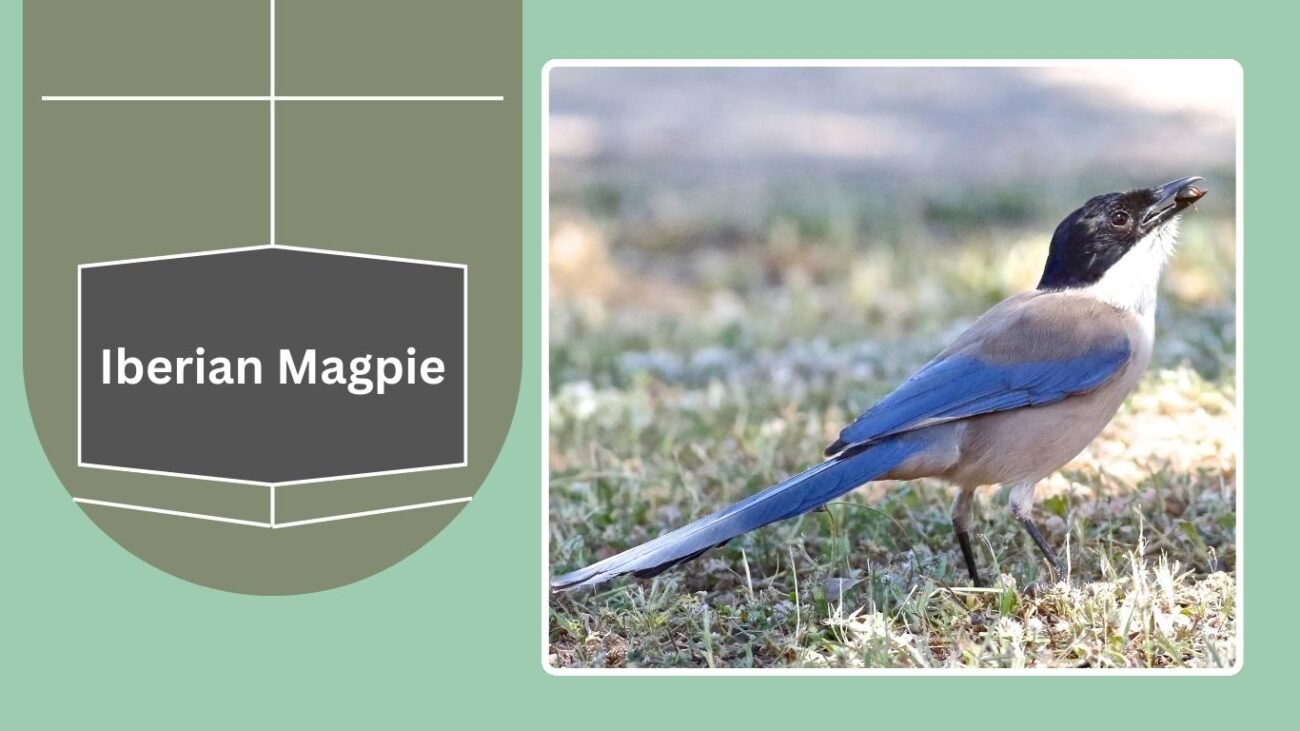
The Iberian Magpie is a striking bird native to the Iberian Peninsula, mainly found in Spain and Portugal. Closely related to the Azure-winged Magpie, it shares similar features but is recognized as a distinct species. Its elegant appearance and social behavior make it one of the most admired birds in southern Europe.
Identification
- Size: Around 34–37 cm (13–15 in) in length
- Wingspan: About 40 cm (16 in)
- Plumage: Pale greyish-brown body with a contrasting black cap
- Tail: Long and deep blue with a metallic sheen
- Bill: Black, short, and sturdy
- Distinguishing trait: Lighter body plumage compared to the Azure-winged Magpie, with similar black cap and bright blue wings/tail
Habitat
Iberian Magpies inhabit open oak woodlands, Mediterranean scrublands, and farmland edges. They are also frequently found in gardens, orchards, and near rural villages.
Diet
They are omnivores, feeding on insects, fruits, seeds, small reptiles, and eggs. In human-populated areas, they also scavenge food scraps.
Behavior
Highly social birds, Iberian Magpies travel in groups and often forage cooperatively. They are known for their noisy calls and complex social interactions. Outside of the breeding season, large flocks can be observed moving through the countryside.
6. Oriental Magpie (Pica serica)

The Oriental Magpie is a large and elegant bird found across East Asia, including China, Korea, Japan, and parts of Russia. It resembles the Eurasian Magpie but has subtle differences in plumage and voice. In many Asian cultures, the Oriental Magpie is regarded as a symbol of good fortune and happiness.
Identification
- Size: Around 46–50 cm (18–20 in) in length
- Wingspan: 55–60 cm (22–24 in)
- Plumage: Glossy black head, breast, and back with a contrasting white belly and wing patches
- Tail: Long, iridescent with blue-green and purple sheen
- Bill: Strong, straight, and black
- Distinguishing trait: Slightly shorter wings and tail compared to the Eurasian Magpie, with a softer call tone
Habitat
Oriental Magpies thrive in farmlands, forest edges, river valleys, and urban areas. They are often seen in villages, parks, and city gardens, adapting well to human-modified landscapes.
Diet
Their diet includes insects, worms, small rodents, fruits, grains, carrion, and occasionally eggs and nestlings of other birds. They are opportunistic feeders and can also scavenge around human settlements.
Behavior
Oriental Magpies are intelligent, vocal, and territorial birds. They live in pairs or small groups, and during winter, they sometimes form larger flocks. Their calls are varied, including harsh chatter and softer notes. They are also known for caching food for later use.
7. Black-rumped Magpie (Pica bottanensis)

The Black-rumped Magpie is a lesser-known magpie species found mainly in parts of the Himalayan region, including Bhutan, Tibet, and surrounding areas. It is closely related to the Eurasian and Oriental magpies but is distinct due to its darker rump and regional adaptations.
Identification
- Size: About 45–50 cm (18–20 in) in length
- Wingspan: Around 55–60 cm (22–24 in)
- Plumage: Black head, chest, and back with contrasting white underparts
- Tail: Long and iridescent with blue and green metallic hues
- Bill: Black, strong, and slightly curved
- Distinguishing trait: Characteristic black rump (instead of white in many other magpies)
Habitat
Black-rumped Magpies inhabit high-altitude woodlands, valleys, and rural farmlands of the Himalayan foothills. They prefer open areas with scattered trees and are often found near human settlements.
Diet
They are omnivorous, feeding on insects, small reptiles, fruits, seeds, carrion, and occasionally eggs. They also forage in agricultural fields for grains and scraps.
Behavior
Black-rumped Magpies are social and vocal birds, often moving in pairs or small groups. They are known for their loud, harsh calls and display strong territorial instincts. Their adaptability allows them to survive in both wild and human-modified landscapes.
8. Javan Green Magpie (Cissa thalassina)

The Javan Green Magpie is an endangered bird species found only on the Indonesian island of Java. Known for its dazzling bright green plumage and striking red features, it is one of the most visually stunning magpies in the world. Unfortunately, habitat loss and the illegal bird trade have placed it at serious risk of extinction.
Identification
- Size: About 24–25 cm (9–10 in) in length
- Plumage: Vibrant green body with black mask around the eyes
- Tail: Shorter than most magpies, green with bluish hints
- Bill: Bright red and slightly curved
- Eyes & Legs: Red, enhancing its vivid appearance
- Distinguishing trait: Unique bright green plumage and striking red bill, unlike most other magpies
Habitat
This species inhabits montane and subtropical forests on Java, typically at elevations of 800–2,200 meters. It prefers dense forest interiors with plenty of cover.
Diet
The Javan Green Magpie feeds on insects, small reptiles, and occasionally fruits. It is an active forager, searching through foliage and tree branches for prey.
Behavior
These magpies are elusive and often remain hidden in dense vegetation. They are intelligent, territorial, and communicate with a range of calls, from whistles to harsh notes. Due to their rarity, much of their behavior in the wild is still poorly documented.
9. Bornean Green Magpie (Cissa jefferyi)

The Bornean Green Magpie is a rare and beautiful bird found only on the island of Borneo. Closely related to the Javan and Common Green Magpies, it is distinguished by its brighter green plumage and more restricted distribution. Like its relatives, it is highly vulnerable due to deforestation and illegal trapping.
Identification
- Size: About 25–26 cm (10 in) in length
- Plumage: Bright green body with a black mask across the eyes
- Tail: Green with bluish tones, medium in length
- Bill: Bright red and slightly curved
- Eyes & Legs: Deep red, adding to its striking look
- Distinguishing trait: Richer green coloration compared to the Javan Green Magpie
Habitat
This species is found in montane forests of northern Borneo, usually at elevations between 750–1,800 meters. It favors dense forest undergrowth where it remains well-camouflaged.
Diet
The Bornean Green Magpie feeds mainly on insects, small reptiles, frogs, and occasionally berries. It forages actively in thick vegetation, often hopping between branches in search of prey.
Behavior
Known for being shy and elusive, the Bornean Green Magpie often stays hidden within the forest canopy. It is territorial, usually seen alone or in pairs, and communicates with a variety of whistles and harsh calls.
10. Common Green Magpie (Cissa chinensis)

The Common Green Magpie is one of the most colorful members of the magpie family, distributed widely across Southeast Asia. Its vivid green plumage, long tail, and bright red features make it unmistakable. Unlike many other magpies, it lives in dense forests and is less commonly seen in open habitats.
Identification
- Size: About 25–27 cm (10–11 in) in length
- Plumage: Bright green body with a black mask running across the eyes
- Tail: Green with blue tips, moderately long
- Bill: Bright red, strong, and slightly curved
- Eyes & Legs: Deep red
- Distinguishing trait: Vivid emerald-green plumage and striking facial mask
Habitat
The Common Green Magpie inhabits subtropical and tropical forests, bamboo thickets, and forest edges. It is found in countries like India, Nepal, Myanmar, Thailand, Laos, Cambodia, and Vietnam, often preferring elevations up to 2,500 meters.
Diet
This species is carnivorous and omnivorous, feeding on insects, small mammals, lizards, and nestlings of other birds. It also consumes fruits and berries when available.
Behavior
Common Green Magpies are intelligent and secretive, usually staying hidden in the canopy. They are highly territorial, often foraging in pairs or small family groups. Their vocalizations range from harsh chattering to melodious whistles.
11. Sri Lanka Magpie (Urocissa ornata)
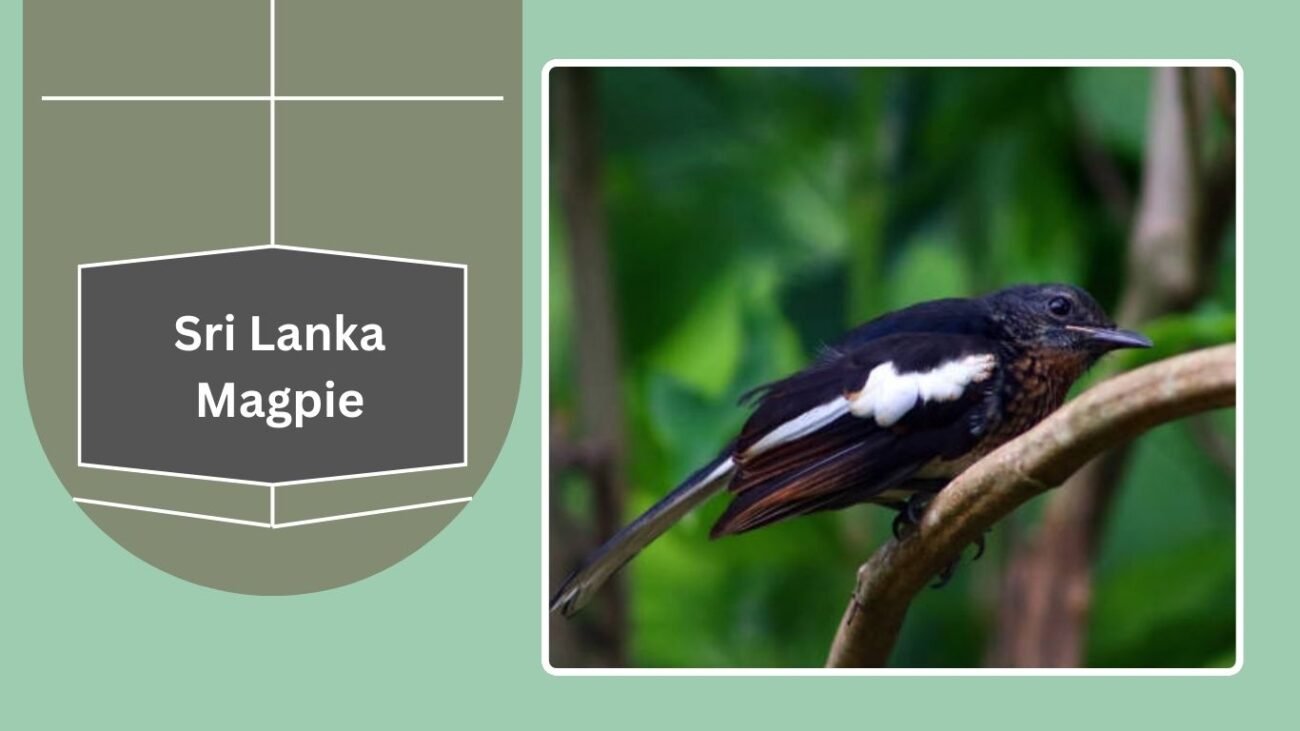
The Sri Lanka Magpie is an exotic and striking bird found only in the rainforests of Sri Lanka, making it an endemic species. Known for its brilliant blue and chestnut plumage, it is a highly sought-after bird for birdwatchers. Unfortunately, it is considered vulnerable due to habitat loss.
Identification
- Size: Around 42–47 cm (16–18 in) in length
- Plumage: Deep blue wings and tail with a rich chestnut head, neck, and underparts
- Tail: Long, blue with white tips
- Bill: Bright red, strong, and slightly curved
- Eyes & Legs: Bright red, enhancing its vibrant appearance
- Distinguishing trait: Unique chestnut-and-blue coloration, unlike any other magpie species
Habitat
This species is restricted to the wet zone rainforests of Sri Lanka, living at elevations up to 2,100 meters. It prefers dense, undisturbed forest interiors but may sometimes visit forest edges.
Diet
The Sri Lanka Magpie has an omnivorous diet, feeding on insects, small reptiles, amphibians, fruits, seeds, and occasionally eggs. It forages both in the canopy and closer to the forest floor.
Behavior
These magpies are shy and secretive, usually staying in small family groups. They are territorial and communicate with a wide range of loud calls. Despite their bright colors, they remain well-hidden in the dense canopy.
12. Red-billed Blue Magpie (Urocissa erythroryncha)
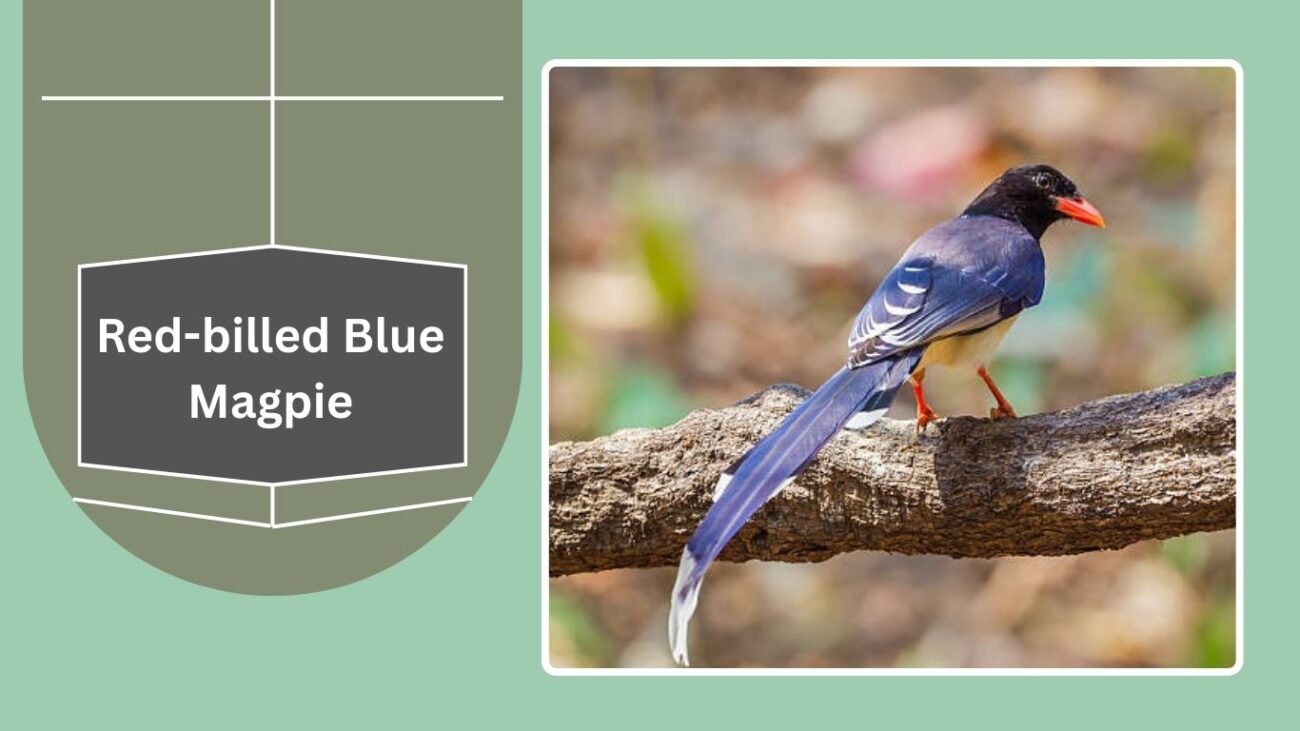
The Red-billed Blue Magpie is one of the most striking members of the magpie family, recognized for its long flowing tail and vibrant colors. It is widely distributed across the Himalayas, Southeast Asia, and parts of China, often seen in forests and hilly regions.
Identification
- Size: Around 65–68 cm (25–27 in) in length, including its long tail
- Plumage: Glossy blue wings and tail with white tips, black head and neck, and white underparts
- Tail: Exceptionally long, bright blue with contrasting white tips
- Bill: Bright red, slightly curved
- Eyes & Legs: Red, matching the bill color
- Distinguishing trait: Strikingly long tail and contrasting red bill against black-and-blue plumage
Habitat
Red-billed Blue Magpies inhabit forests, wooded hillsides, valleys, and forest edges, often at elevations of 1,500–3,000 meters. They are also frequently seen near villages and cultivated lands.
Diet
They are omnivorous, feeding on insects, small mammals, amphibians, fruits, seeds, and eggs. They also scavenge near human settlements.
Behavior
These magpies are active, noisy, and social. They often move in small flocks, producing loud and varied calls that include whistles, harsh chatters, and melodious notes. Their long tails make them acrobatic flyers, darting skillfully through trees.
13. Yellow-billed Blue Magpie (Urocissa flavirostris)

The Yellow-billed Blue Magpie is a beautiful and distinctive bird found in the Himalayan region, from Pakistan through northern India to Nepal and Bhutan. Closely related to the Red-billed Blue Magpie, it differs mainly in its bright yellow bill. Its graceful flight and vivid colors make it a favorite among bird enthusiasts.
Identification
- Size: Around 65–68 cm (25–27 in) in length, including its long tail
- Plumage: Deep blue wings and tail with white tips, black head and chest, and white underparts
- Tail: Very long and elegant, blue with bold white markings
- Bill: Bright yellow, strong, and slightly curved
- Eyes & Legs: Yellow-orange, complementing the bill
- Distinguishing trait: Striking long tail combined with a bright yellow bill (instead of red)
Habitat
This species inhabits temperate forests, oak and pine woodlands, and river valleys of the Himalayas, usually between 1,500–3,000 meters. It is often seen foraging along forest edges and sometimes near villages.
Diet
Yellow-billed Blue Magpies are omnivores, feeding on insects, small reptiles, eggs, fruits, grains, and food scraps from human settlements. They are opportunistic and adaptive in their feeding habits.
Behavior
They are social, vocal, and agile birds, often seen in pairs or small groups. Their calls are loud and varied, including whistles and harsh chatters. They are skilled flyers and use their long tails for balance during quick movements in dense forests.
14. Taiwan Blue Magpie (Urocissa caerulea)

The Taiwan Blue Magpie, also called the “Long-tailed Mountain Lady,” is an endemic species to Taiwan and one of the most iconic birds of the island. Known for its brilliant blue plumage, red bill, and long flowing tail, it is a symbol of pride and cultural heritage in Taiwan.
Identification
- Size: Around 63–68 cm (25–27 in) in length, including tail
- Plumage: Bright cobalt-blue body with a black head and upper breast
- Tail: Long, blue with bold white tips
- Bill: Bright red, thick, and slightly curved
- Eyes & Legs: Red, matching the bill
- Distinguishing trait: Endemic to Taiwan, with a vivid blue body and exceptionally long tail
Habitat
This species is mainly found in mid-elevation broadleaf forests of Taiwan, usually between 300–1,200 meters. It often appears near forest edges, tea plantations, and sometimes close to human settlements.
Diet
Taiwan Blue Magpies are omnivores, feeding on insects, small reptiles, fruits, seeds, and carrion. They are also known to raid bird nests for eggs and chicks.
Behavior
These magpies are intelligent, bold, and social. They live in small groups and practice cooperative breeding, where other members help raise the young. They are also highly vocal, producing a wide range of loud calls, and are often seen gliding gracefully with their long tails trailing behind.
15. Indochinese Green Magpie (Cissa hypoleuca)
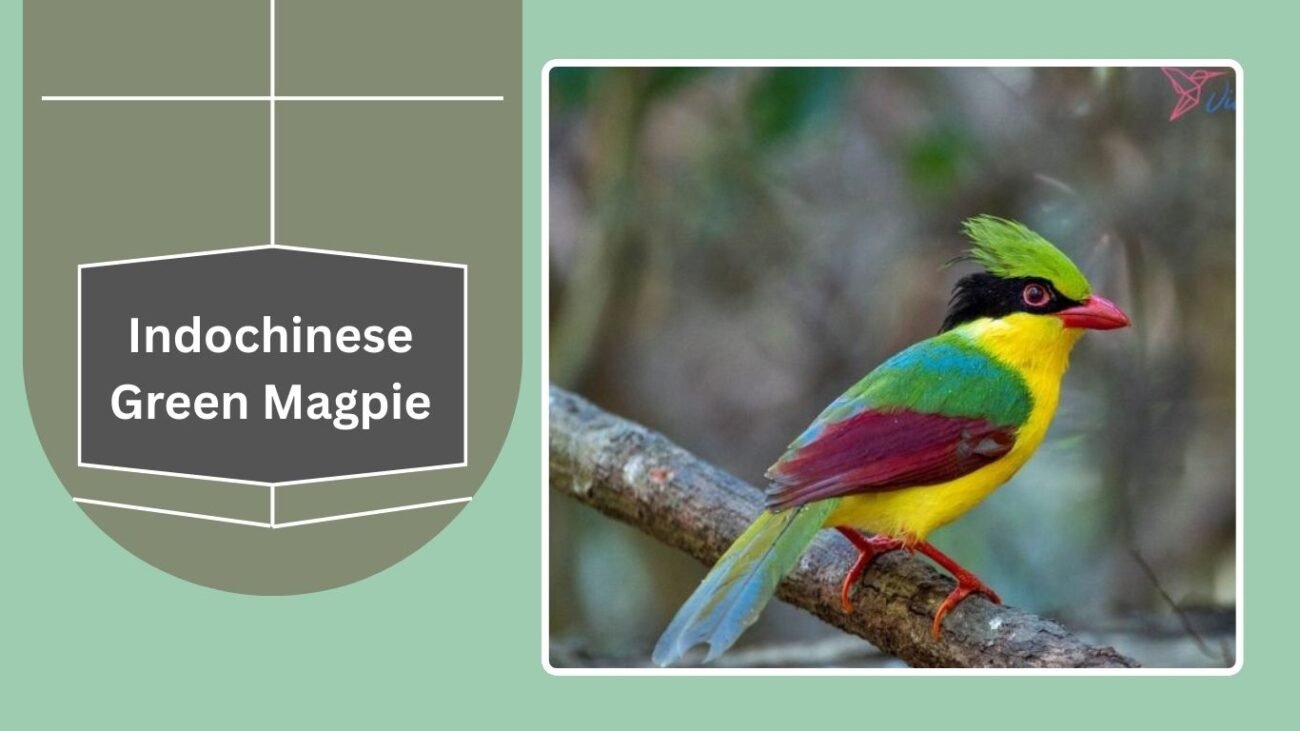
The Indochinese Green Magpie is a brilliantly colored bird found in parts of Southeast Asia, including Laos, Vietnam, Cambodia, and Thailand. Similar to the Common Green Magpie, it is strikingly vibrant but has paler underparts, which help distinguish it from its relatives.
Identification
- Size: Around 25–27 cm (10–11 in) in length
- Plumage: Bright green body with a black facial mask
- Tail: Green with bluish tones, medium in length
- Bill: Red, slightly curved and strong
- Eyes & Legs: Red, standing out against the green plumage
- Distinguishing trait: Lighter underparts compared to the Common Green Magpie
Habitat
This species inhabits evergreen forests, bamboo thickets, and dense woodlands across its range. It prefers hilly and mountainous regions, often up to 2,500 meters in elevation.
Diet
Indochinese Green Magpies feed mainly on insects, small vertebrates, eggs, and occasionally fruits and berries. They are active foragers, often moving quickly through the canopy and undergrowth.
Behavior
They are secretive and elusive, rarely venturing into open spaces. These magpies are territorial and usually seen in pairs or small family groups. Their calls are loud, varied, and often used to keep contact within dense forest cover.