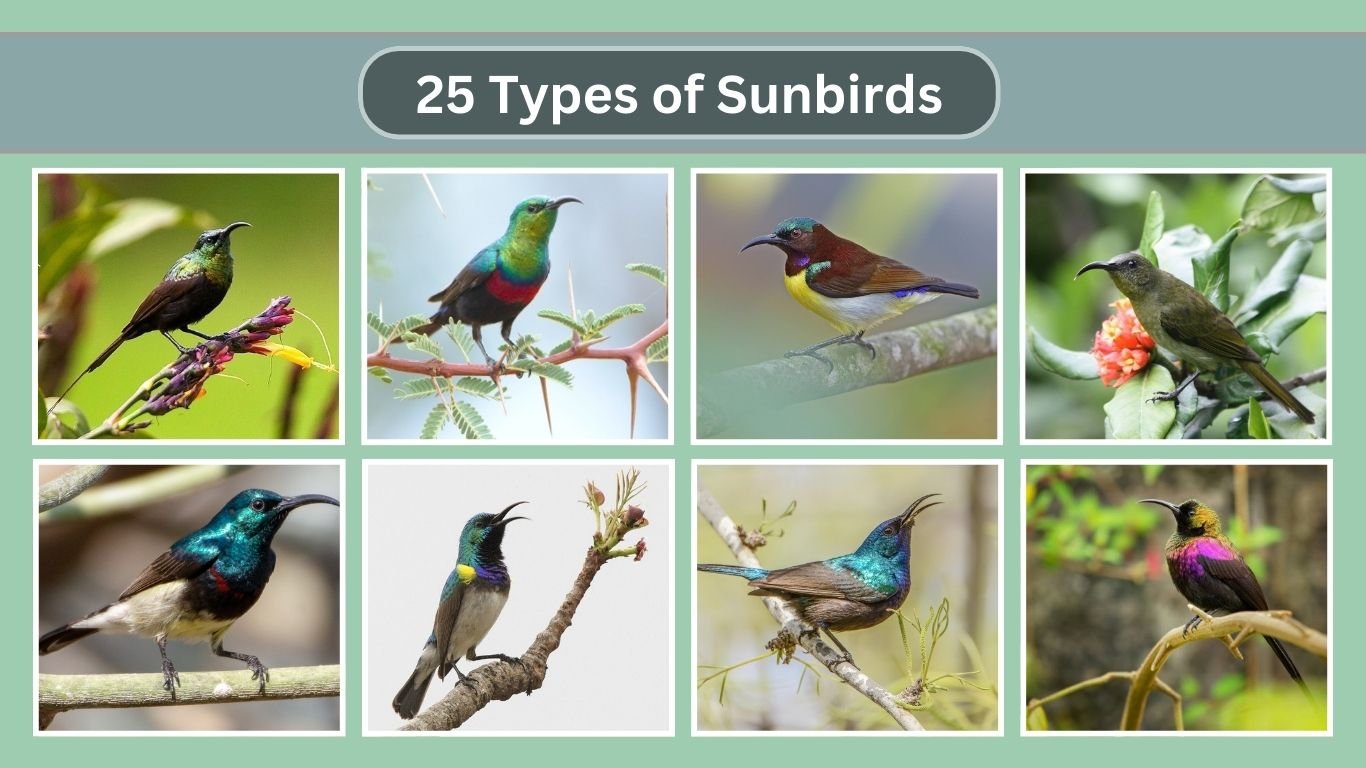
Sunbirds are small, nectar-feeding birds found across Africa, Asia, and parts of Australia. Known for their dazzling metallic colors, quick movements, and role as important pollinators, these tiny birds resemble hummingbirds in behavior but belong to a different family. From the vibrant Crimson Sunbird to the elegant Malachite Sunbird, here are 25 remarkable types of sunbirds, each with its own unique beauty, habitat, and lifestyle.
1. Olive-backed Sunbird (Cinnyris jugularis)
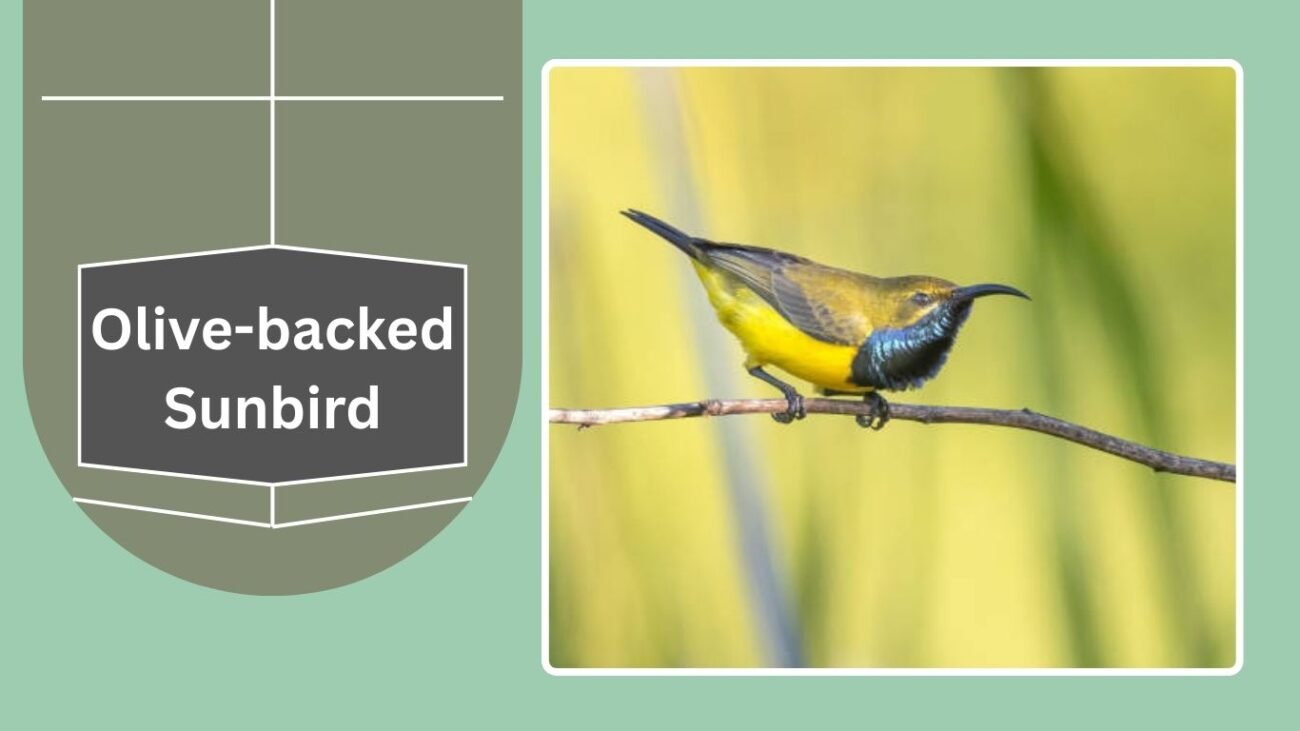
The Olive-backed Sunbird is one of the most widespread sunbird species, found across Southeast Asia, northern Australia, and the Pacific islands. Known for its striking yellow underparts and metallic plumage, it is a small, energetic bird often seen hovering like a hummingbird while feeding on nectar.
Identification
- Size: Around 10–12 cm in length
- Male: Metallic blue throat and upper breast, olive-green back, bright yellow belly
- Female: Duller coloration, olive back with pale yellow underparts
- Bill: Thin, curved, adapted for nectar feeding
- Wings: Short and rounded, suitable for rapid flight
Habitat
This species thrives in gardens, parks, forests, and mangroves. It often lives close to human settlements and adapts well to urban areas where flowering plants are available.
Diet
The Olive-backed Sunbird primarily feeds on nectar, using its long, curved bill to reach deep into flowers. It also supplements its diet with small insects and spiders, especially when feeding chicks.
Behavior
Highly active and agile, these sunbirds are often seen hovering briefly while feeding, though they usually perch on flowers. Males display bright plumage to attract mates, and pairs are known to build hanging, purse-shaped nests from grass, fibers, and spider webs.
2. Purple Sunbird (Cinnyris asiaticus)
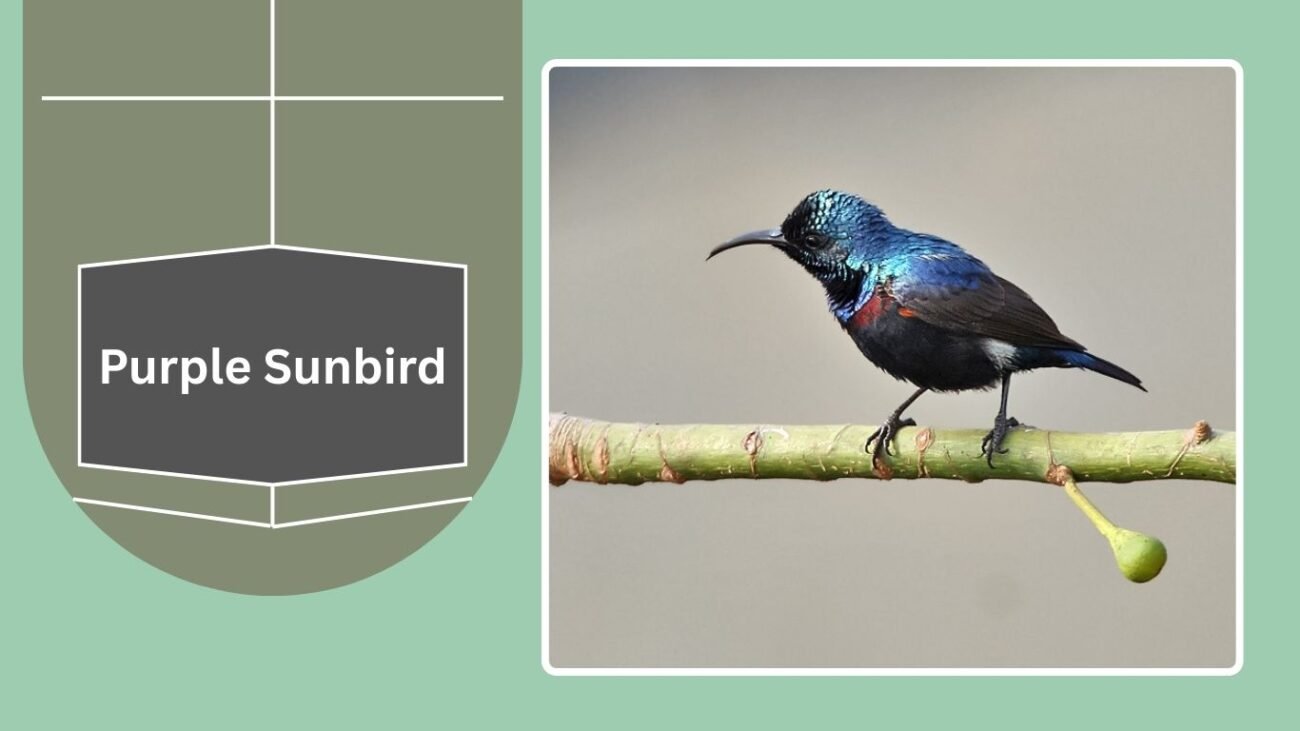
The Purple Sunbird is a small, vibrant bird widely found across South Asia and parts of the Middle East. Males in breeding plumage display a dazzling metallic purple-blue color, making them stand out among flowering plants. These birds are active pollinators and are often spotted in gardens and open woodlands.
Identification
- Size: About 10 cm long
- Male (breeding): Shiny metallic purple-blue or purplish-black plumage
- Male (non-breeding): Yellow underparts with a dark brown back and purple throat streak
- Female: Olive-brown above and yellowish underparts
- Bill: Thin, curved, adapted for sipping nectar
- Wings: Dark, short, and rounded for quick movement
Habitat
They inhabit open forests, scrublands, gardens, and cultivated areas. They are especially common near flowering plants and often thrive around human settlements.
Diet
Purple Sunbirds mainly consume nectar but also eat insects, particularly during the breeding season. This mix provides them with both energy and protein for chick rearing.
Behavior
They are agile and often seen darting quickly between flowers, sometimes hovering but usually perching while feeding. During the breeding season, males perform courtship displays by singing and showing off their iridescent feathers. Nests are built by females and are typically pouch-shaped, suspended from branches or man-made structures.
3. Crimson Sunbird (Aethopyga siparaja)
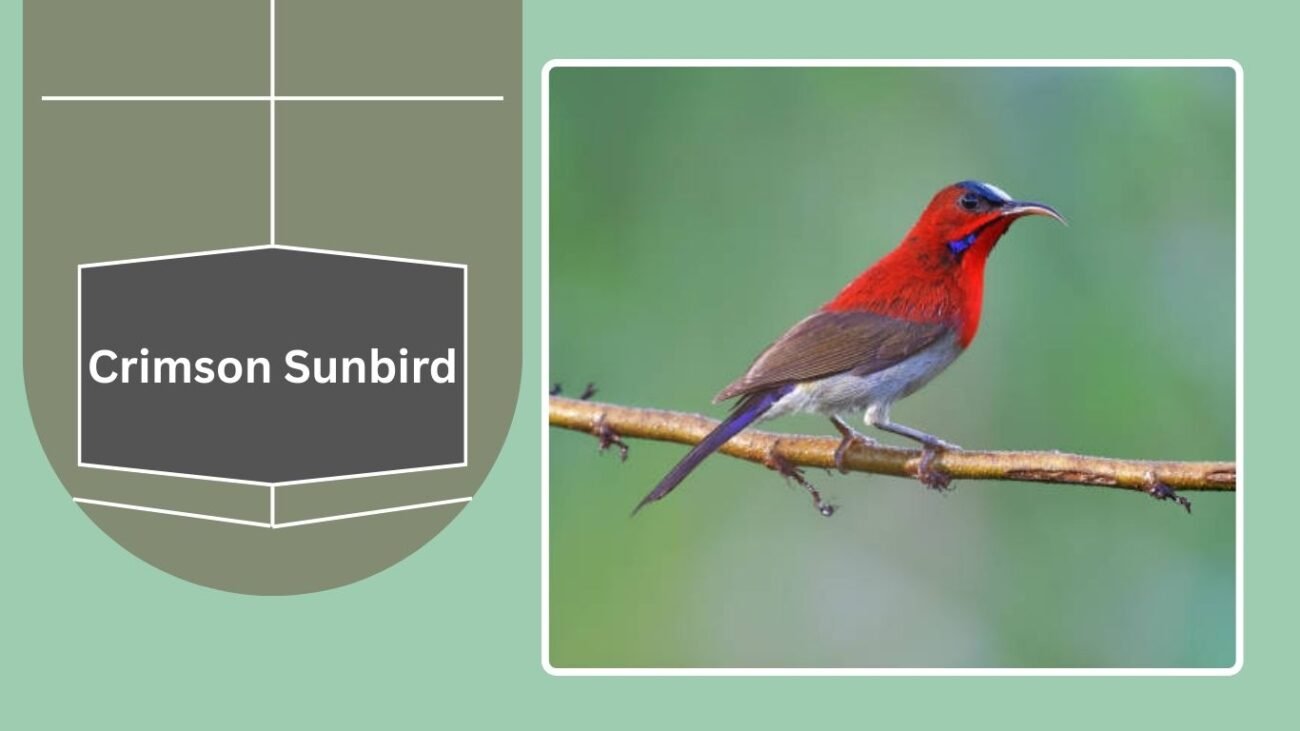
The Crimson Sunbird, often called the “little scarlet bird,” is admired for its brilliant red plumage and energetic nature. It is found across South and Southeast Asia and is often considered the national bird of Singapore. Its vibrant colors and quick movements make it a favorite among birdwatchers.
Identification
- Size: Around 11–13 cm in length
- Male: Bright crimson head, throat, and breast with metallic green crown and purple-blue tail
- Female: Olive-green upperparts and yellowish underparts
- Bill: Long, slender, and curved for nectar feeding
- Tail: Often longer than body, with blue or purple highlights in males
Habitat
Crimson Sunbirds are found in tropical and subtropical forests, gardens, and plantations. They adapt well to human-influenced environments, often visiting ornamental and flowering plants in urban areas.
Diet
Their primary food source is nectar, but they also consume small insects and spiders. This protein-rich diet becomes especially important during nesting to nourish their chicks.
Behavior
Active and acrobatic, Crimson Sunbirds frequently dart between flowers and can hover briefly like hummingbirds. Males are territorial, often defending flower-rich feeding areas. They build delicate hanging nests made from plant fibers, moss, and spider webs, usually suspended from tree branches.
4. Collared Sunbird (Hedydipna collaris)
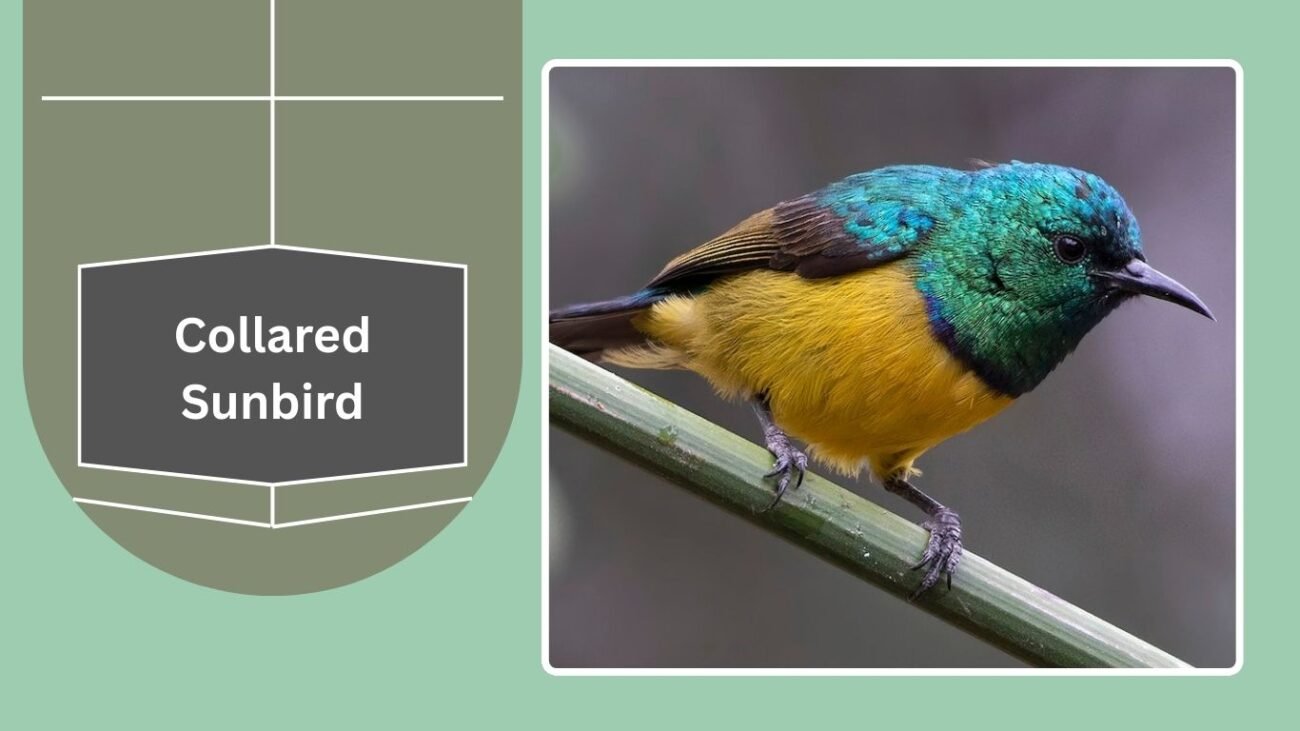
The Collared Sunbird is a small, bright species native to sub-Saharan Africa. Despite its tiny size, it plays a big role as a pollinator in forest ecosystems. Males are easily recognized by their metallic green and yellow plumage, while females are duller but equally active among flowers.
Identification
- Size: About 9–11 cm long
- Male: Glossy green head and back, bright yellow underparts, with a narrow blue band across the chest
- Female: Olive-green upperparts and pale yellow below
- Bill: Thin and down-curved, perfect for nectar feeding
- Wings: Short and rounded, designed for quick, darting flight
Habitat
This sunbird prefers forest edges, gardens, and woodland areas. It is commonly found near flowering trees and shrubs and adapts well to cultivated regions where nectar is abundant.
Diet
Collared Sunbirds feed mainly on nectar but also take insects, especially during breeding. Their feeding habits make them important pollinators in African ecosystems.
Behavior
These birds are fast and agile, flitting between flowers and often hanging upside down to reach deep blossoms. They usually perch while feeding instead of hovering. Males are territorial during the breeding season and can be seen defending prime feeding areas.
5. Variable Sunbird (Cinnyris venustus)
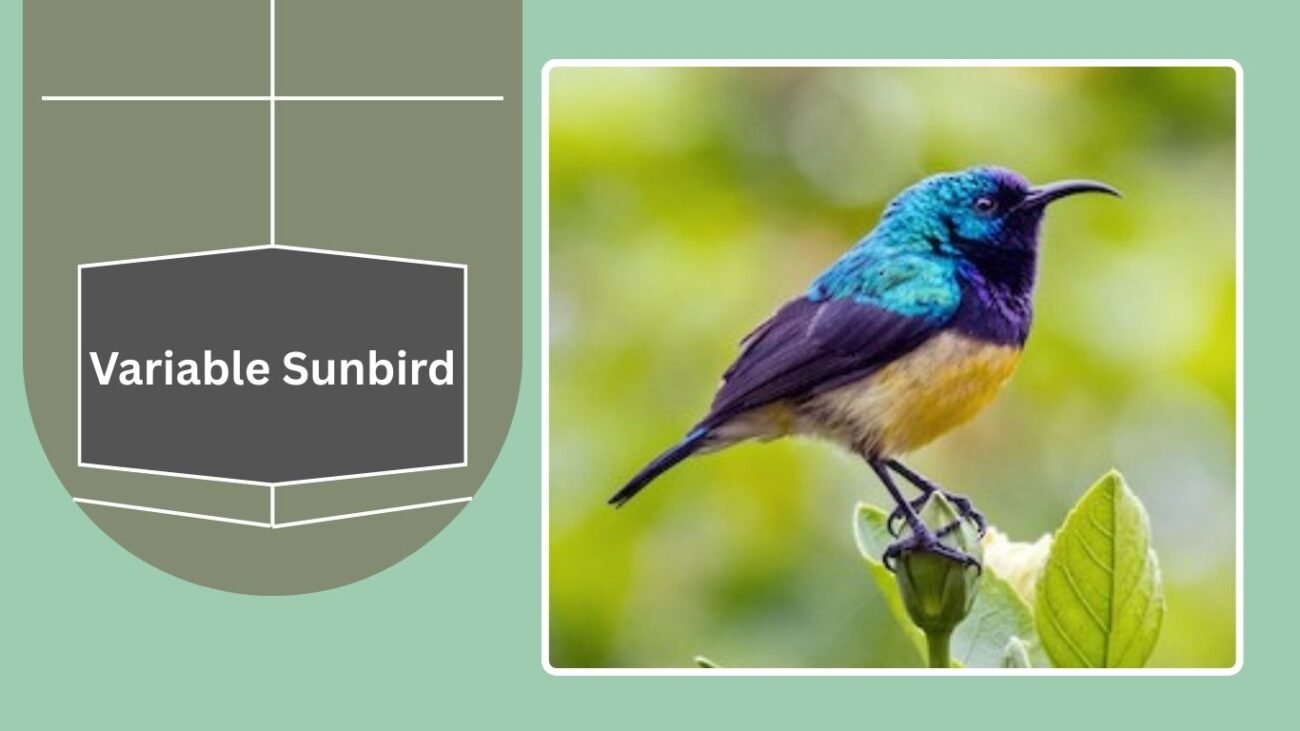
The Variable Sunbird, also known as the Yellow-bellied Sunbird, is a widespread species found across sub-Saharan Africa. Its name comes from the great variety in male plumage, which changes between seasons and regions. This small, colorful bird is highly active and an important pollinator in its habitat.
Identification
- Size: Around 10–12 cm in length
- Male (breeding): Metallic green head, throat, and upperparts with a deep blue or purple chest band and bright yellow belly
- Male (non-breeding): Duller, with less vibrant colors and more olive on the back
- Female: Olive-brown above, pale yellow below
- Bill: Thin, down-curved, adapted for sipping nectar
- Tail: Short, sometimes with metallic reflections in males
Habitat
Variable Sunbirds thrive in a wide range of environments, from woodlands and savannas to gardens and cultivated areas. They are often seen around flowering plants in both rural and urban settings.
Diet
They feed mainly on nectar but also eat small insects and spiders. The addition of insects provides essential protein, especially when raising chicks.
Behavior
These birds are energetic and often seen flitting rapidly between blossoms. They usually perch while feeding but may hover briefly. During breeding, males display their vivid plumage to attract females and often sing short, high-pitched notes.
6. Scarlet-chested Sunbird (Chalcomitra senegalensis)
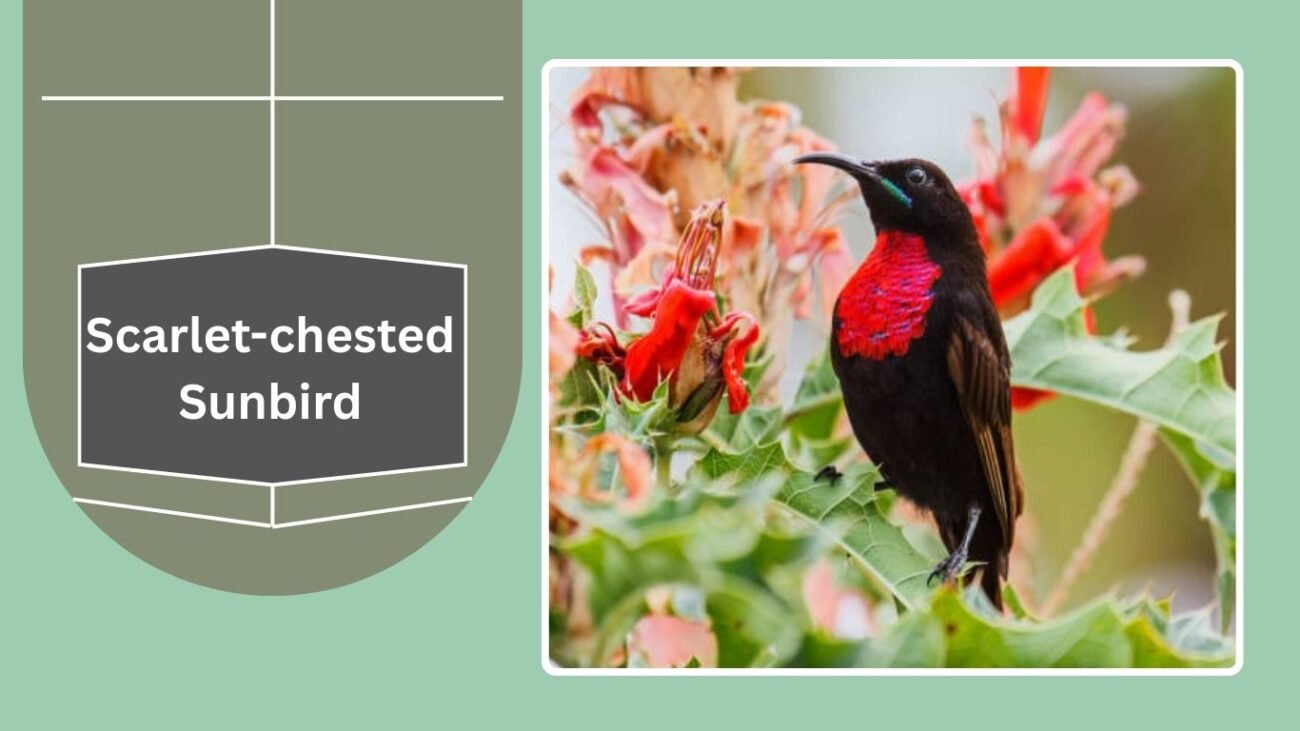
The Scarlet-chested Sunbird is a striking species found widely across sub-Saharan Africa. Known for the male’s vivid scarlet throat and breast, it is one of the larger sunbirds, easily spotted around flowering trees and shrubs. Its bold coloration and energetic feeding behavior make it a favorite among bird enthusiasts.
Identification
- Size: Around 12–15 cm, larger than many other sunbirds
- Male: Shiny black plumage with a brilliant scarlet throat and breast, and an iridescent green crown patch
- Female: Brownish-grey upperparts with pale underparts, lacking the male’s bright red chest
- Bill: Long, slender, and curved, designed for nectar feeding
- Wings: Dark and rounded, strong for agile flight
Habitat
This species inhabits savannas, woodlands, gardens, and cultivated lands across Africa. It is frequently observed in open areas with plenty of flowering plants, including urban parks and rural farmlands.
Diet
Scarlet-chested Sunbirds feed primarily on nectar, obtained from a variety of flowering plants. They also supplement their diet with insects, particularly during breeding, to provide protein for growing chicks.
Behavior
Active and bold, these sunbirds are often seen feeding conspicuously in flowering trees. Males are territorial during the breeding season, singing from exposed perches to attract females and deter rivals. They usually perch while feeding but are capable of brief hovering when necessary.
7. Splendid Sunbird (Cinnyris coccinigastrus)
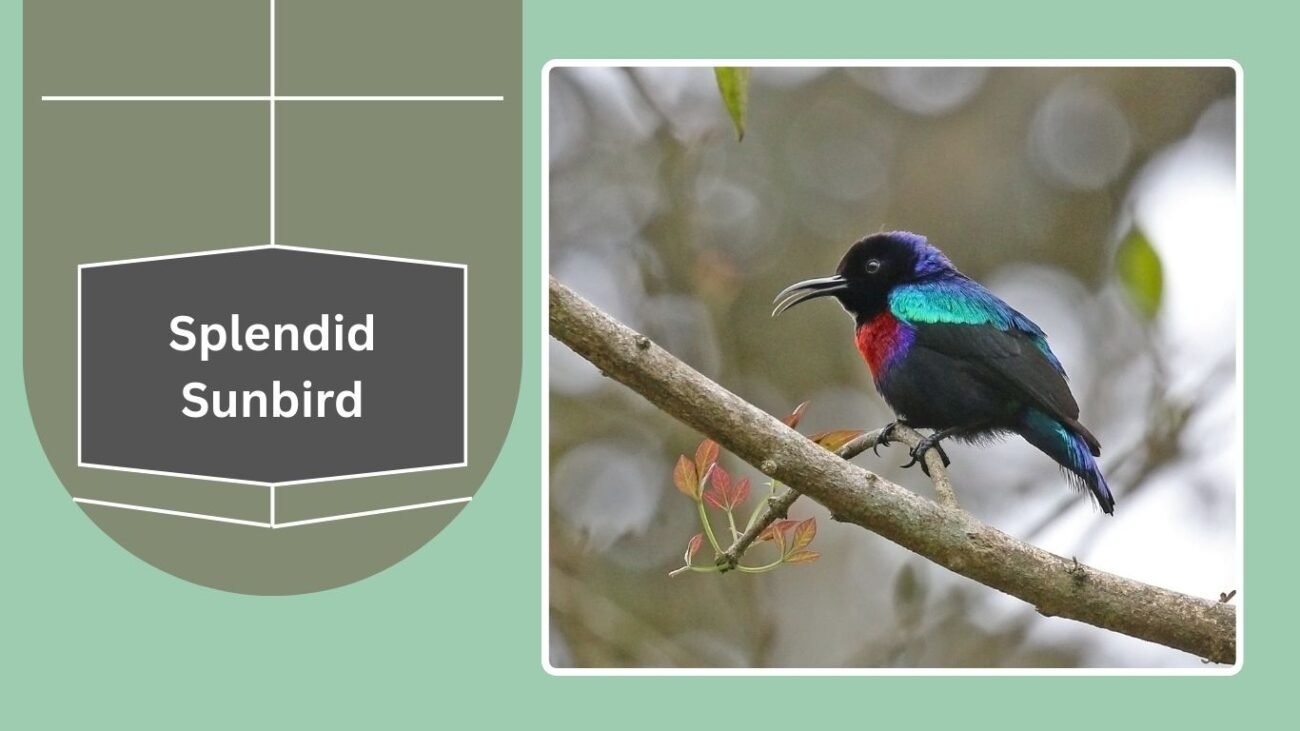
The Splendid Sunbird is a dazzling bird native to West and Central Africa, famous for the male’s shimmering metallic plumage. Its vibrant colors and energetic nature make it one of the most striking sunbirds. This species is often seen darting among flowering trees and shrubs, playing a vital role in pollination.
Identification
- Size: Around 15 cm long, slightly larger than many sunbirds
- Male: Iridescent green head and throat, purple-blue breast band, and a bright crimson belly with a long tail
- Female: Olive-brown above and yellowish below, much plainer than the male
- Bill: Long, thin, and curved downward for accessing deep flowers
- Tail: Males often have elongated central tail feathers
Habitat
Splendid Sunbirds thrive in savannas, gardens, forest edges, and open woodlands. They are particularly common in areas with abundant flowering plants, including cultivated gardens and parks.
Diet
They feed mostly on nectar from a wide variety of flowering plants. Insects and spiders are also an essential part of their diet, especially when feeding chicks.
Behavior
Splendid Sunbirds are energetic and often perch while feeding, but they can hover briefly like hummingbirds. Males are very territorial during breeding and use their bright plumage to attract mates and ward off rivals. Their loud, sharp calls are often heard before they are seen.
8. Green-headed Sunbird (Cyanomitra verticalis)
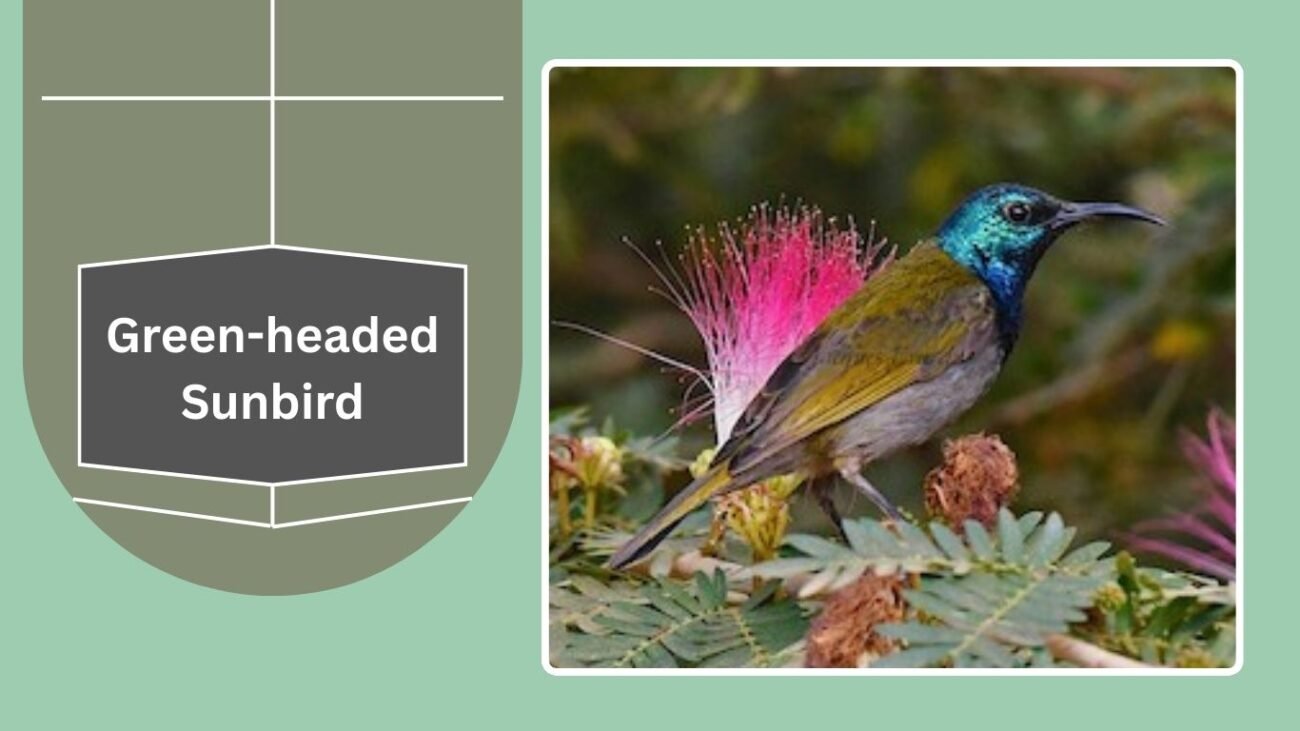
The Green-headed Sunbird is a vibrant species native to tropical Africa, easily recognized by the male’s shimmering emerald-green head. It is a lively nectar feeder, often found in forest edges, gardens, and wooded savannas, where it contributes to pollination.
Identification
- Size: About 12–13 cm long
- Male: Metallic green head and throat, dark brown wings, and a contrasting yellow belly
- Female: Duller, with olive-brown upperparts and paler underparts
- Bill: Long, slender, and curved downward for nectar feeding
- Tail: Medium length, slightly forked in appearance
Habitat
This sunbird prefers forest edges, secondary growth, and wooded savannas. It is also commonly found in gardens and cultivated areas rich in flowering plants.
Diet
The Green-headed Sunbird feeds primarily on nectar, visiting a variety of flowers. It also consumes insects and small arthropods, especially during the breeding season to provide protein for chicks.
Behavior
These birds are agile and active, often seen flitting rapidly between blossoms. They perch while feeding but can hover briefly when needed. Males are territorial during breeding, using their vibrant plumage and sharp calls to defend flower-rich areas.
9. Malachite Sunbird (Nectarinia famosa)
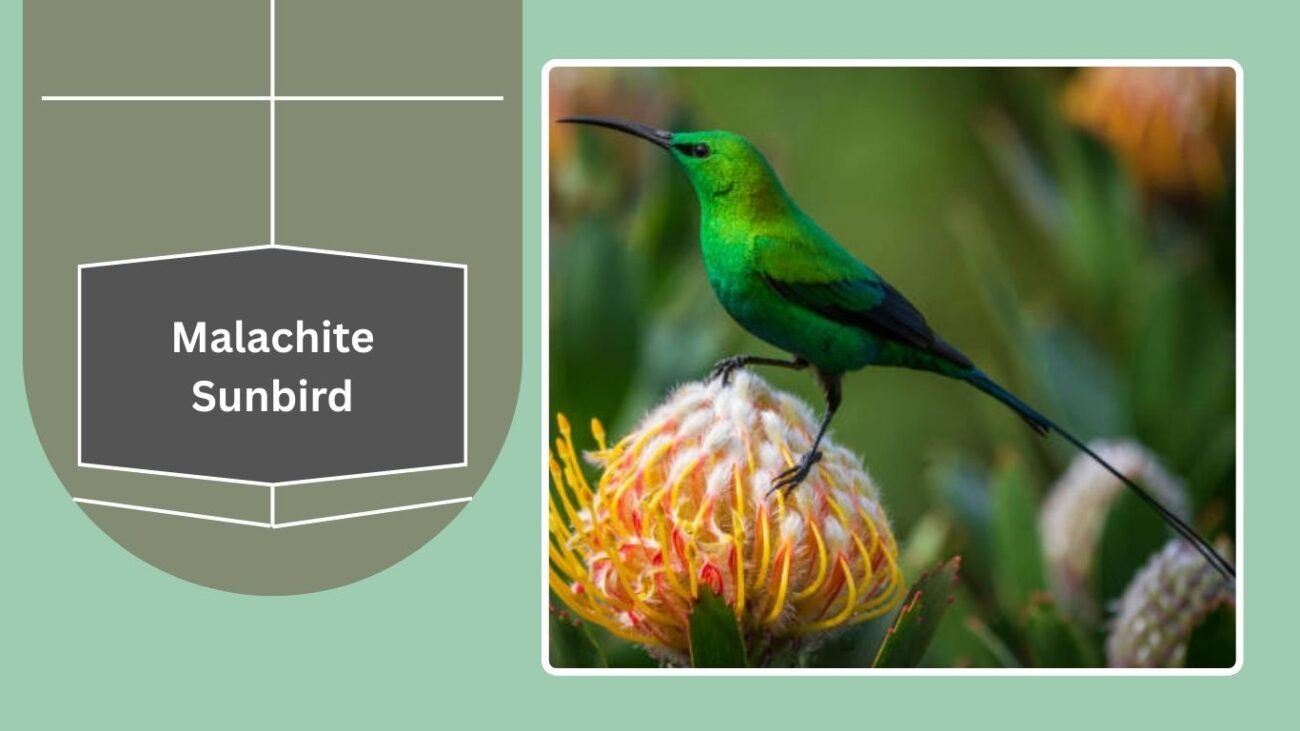
The Malachite Sunbird is one of the largest and most spectacular sunbirds, found mainly in southern Africa. Males in breeding plumage display a striking metallic green coloration with long tail feathers, making them highly distinctive. They are important pollinators, especially for aloe and other tubular flowers.
Identification
- Size: 14–18 cm, with males reaching up to 25 cm including tail streamers
- Male (breeding): Shimmering metallic green body with elongated central tail feathers
- Male (non-breeding): Duller with brownish upperparts and green flecks
- Female: Olive-brown above with pale underparts
- Bill: Long, slender, and strongly curved for accessing deep flowers
Habitat
This species inhabits montane grasslands, fynbos, and shrublands, often associated with flowering plants like aloes. They also adapt well to gardens and cultivated lands with ornamental blooms.
Diet
Malachite Sunbirds feed mainly on nectar, favoring tubular flowers such as aloes. They also catch insects and spiders, especially when feeding their young.
Behavior
These sunbirds are active and territorial, with males displaying their long tails and vivid plumage to defend feeding areas. They typically perch while feeding but are capable of hovering briefly. During the breeding season, their aerial displays and strong calls are used to attract mates.
10. Palestine Sunbird (Cinnyris osea)
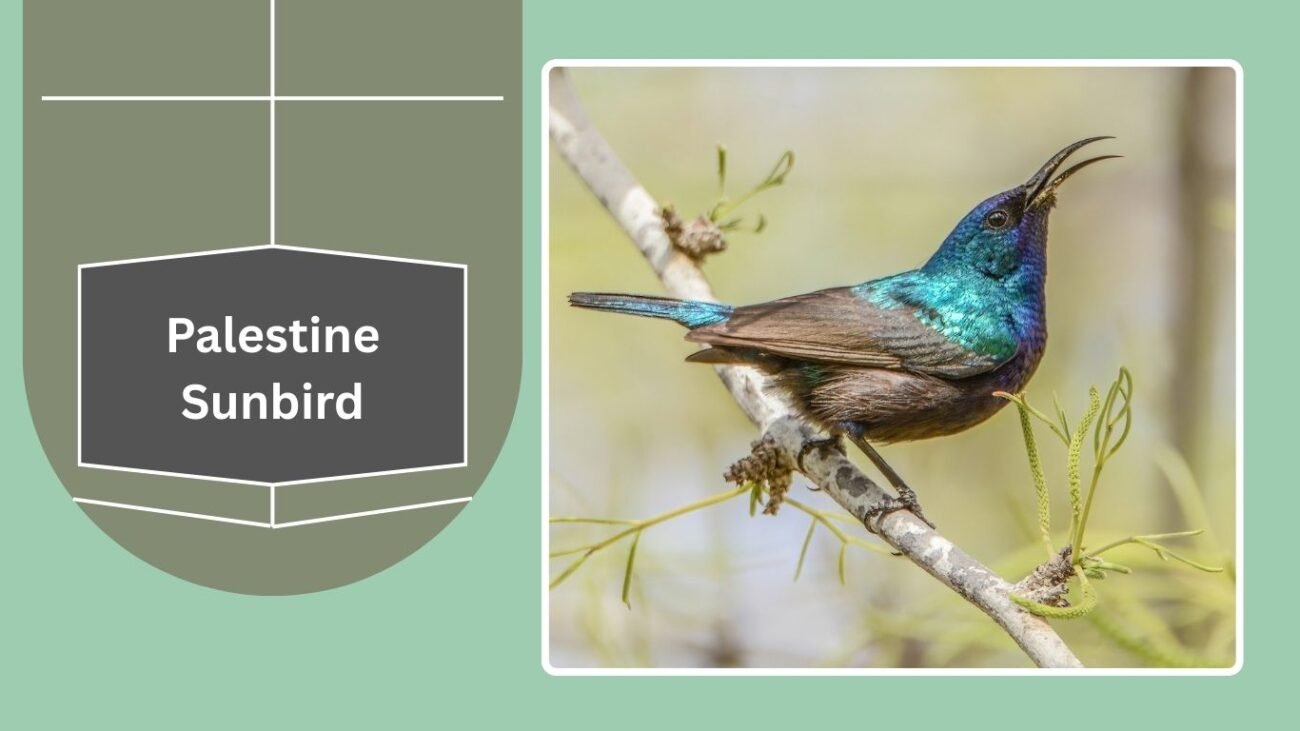
The Palestine Sunbird, also known as the Orange-tufted Sunbird, is a small but striking bird native to the Middle East and parts of northeast Africa. It is well adapted to both natural habitats and urban environments, often visiting gardens and parks in search of nectar.
Identification
- Size: About 8–12 cm in length
- Male (breeding): Shiny metallic bluish-green to black plumage with distinctive orange tufts on the sides of the breast
- Male (non-breeding): Duller with greyish plumage but still showing metallic hints
- Female: Brownish-grey upperparts with pale underparts, much less vibrant than the male
- Bill: Long, thin, and curved for nectar feeding
Habitat
This sunbird inhabits dry scrublands, gardens, orchards, and urban parks. It is commonly found around flowering shrubs and trees and is well adapted to human-modified landscapes.
Diet
The Palestine Sunbird primarily feeds on nectar, but it also eats insects and spiders, particularly during the breeding season when raising chicks.
Behavior
Active and fast-moving, these sunbirds are often seen flitting between flowers or perching briefly to feed. Males become highly territorial during breeding, using their vibrant plumage and sharp calls to attract females and deter rivals. They build delicate, purse-shaped hanging nests from plant fibers and spider webs.
11. Amethyst Sunbird (Chalcomitra amethystina)
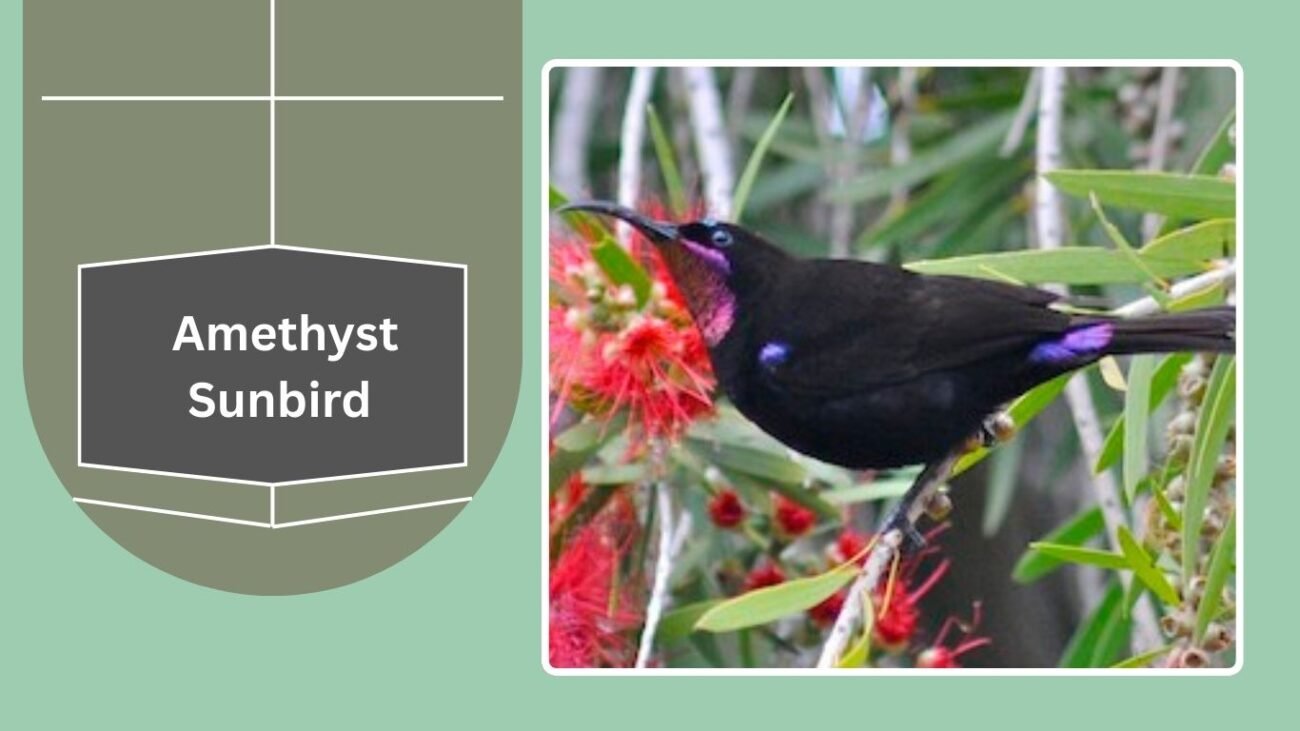
The Amethyst Sunbird, also called the Black Sunbird in some regions, is a striking African species known for its shimmering purple highlights. It is common across sub-Saharan Africa and often seen in woodlands, gardens, and forest edges. Its dazzling plumage makes it one of the most admired sunbirds.
Identification
- Size: Around 12–15 cm long
- Male: Glossy black overall with brilliant amethyst-purple throat and breast that shines in sunlight
- Female: Greyish-brown above with pale, streaked underparts
- Bill: Long, slender, and curved, adapted for sipping nectar
- Tail: Medium length, often slightly rounded
Habitat
This sunbird is found in woodlands, savannas, forest edges, and suburban gardens. It is especially abundant in areas rich in flowering plants and trees.
Diet
The Amethyst Sunbird feeds mostly on nectar but supplements its diet with insects and small arthropods, especially when feeding chicks.
Behavior
Highly active, these sunbirds frequently dart among flowers, perching while feeding rather than hovering. Males are territorial during the breeding season, often singing from prominent perches to defend their feeding and nesting areas. Their nests are hanging structures woven from grass, plant fibers, and spider silk.
12. Black Sunbird (Leptocoma aspasia)
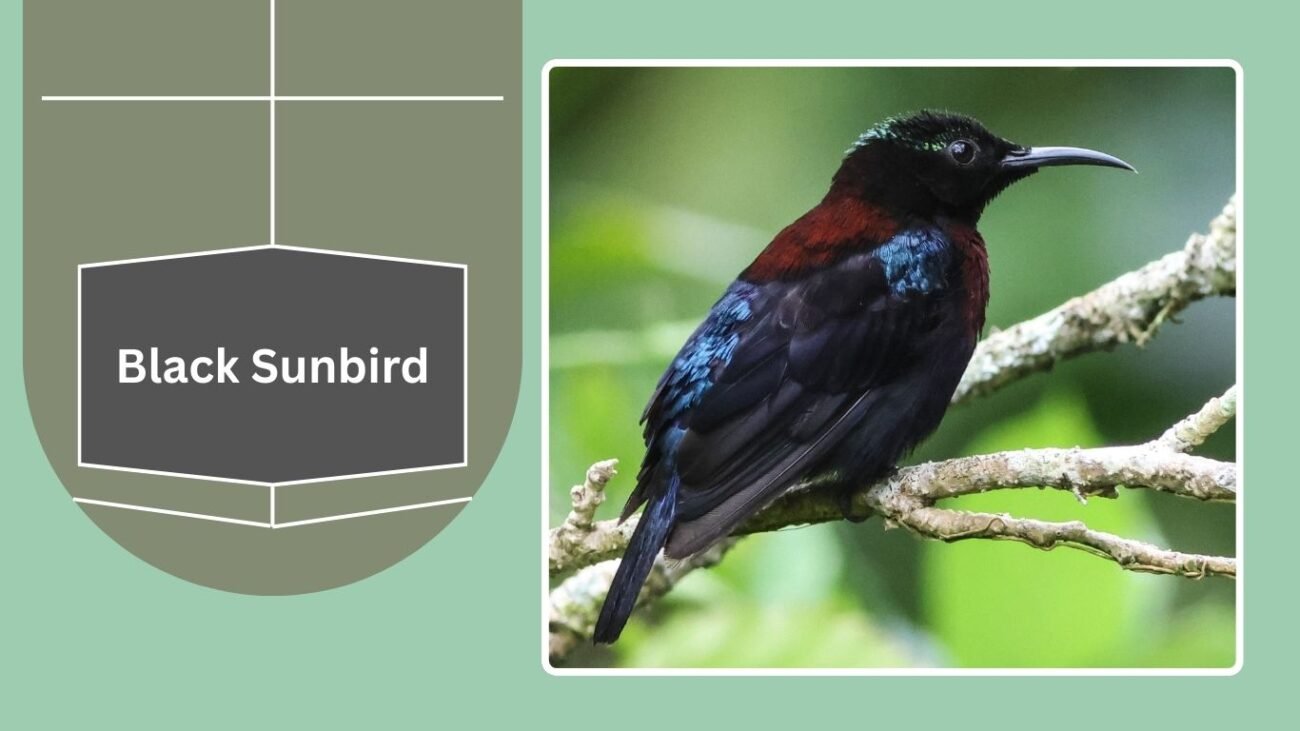
The Black Sunbird is a widespread species found across Indonesia, Papua New Guinea, and northern Australia. Known for its glossy dark plumage, the male appears almost entirely black but shimmers with subtle metallic tones in good light. It is one of the most adaptable sunbirds in its range.
Identification
- Size: About 12–13 cm long
- Male: Glossy black overall with iridescent purple, blue, or green sheen depending on the light
- Female: Olive-brown upperparts with pale yellow underparts, much plainer than the male
- Bill: Thin, down-curved, adapted for nectar feeding
- Wings: Dark, short, and rounded for agile flight
Habitat
The Black Sunbird inhabits coastal forests, mangroves, gardens, and open woodlands. It adapts easily to disturbed environments and is often seen near villages and plantations.
Diet
Its primary food is nectar, but it also consumes insects and small arthropods, particularly when raising young. This mixed diet supports both high energy and protein needs.
Behavior
These sunbirds are energetic and vocal, often flitting between flowers with quick, darting movements. They usually perch while feeding but can hover briefly. Males are territorial during the breeding season and use their glossy plumage to display dominance.
13. Orange-breasted Sunbird (Anthobaphes violacea)
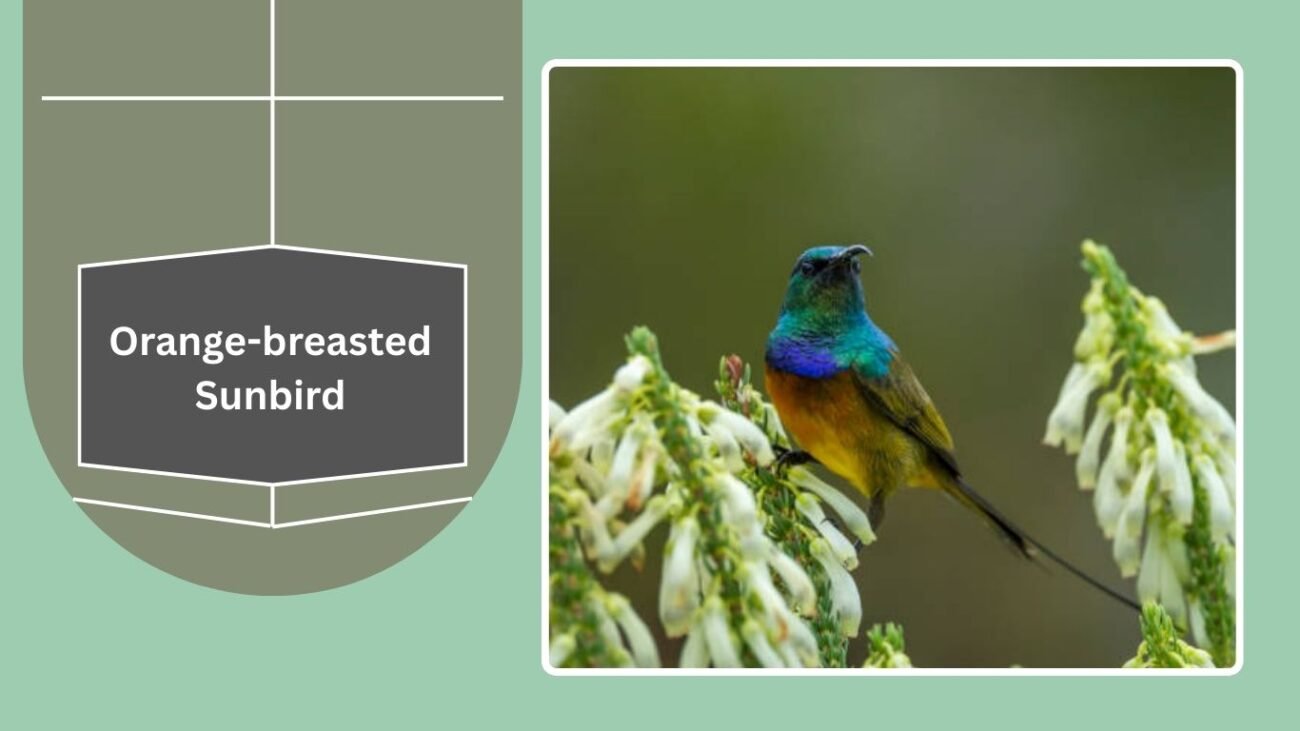
The Orange-breasted Sunbird is a stunning species endemic to South Africa, particularly associated with the fynbos region. It is one of the most colorful sunbirds, with males displaying brilliant orange and metallic hues, making it a symbol of the Cape floral kingdom.
Identification
- Size: Around 12–15 cm in length
- Male: Metallic green head, throat, and back with a vivid orange breast and purple band across the chest; long tail streamers
- Female: Olive-brown above and pale yellow below, much less colorful than the male
- Bill: Slender, curved, and well-suited for nectar feeding
- Tail: Long and elegant, especially in males
Habitat
This species is strongly tied to fynbos vegetation, especially areas rich in flowering proteas, ericas, and aloes. It is also found in coastal shrublands and sometimes in gardens with native flowers.
Diet
The Orange-breasted Sunbird feeds mainly on nectar from native flowers. It also consumes insects and small spiders, providing protein for chicks during the breeding season.
Behavior
These sunbirds are highly active and social, often seen in pairs or small groups. Males are territorial and defend prime feeding areas aggressively. They typically perch while feeding but are capable of short hovering flights. Their melodious calls add to the vibrancy of their habitat.
14. Loten’s Sunbird (Cinnyris lotenius)
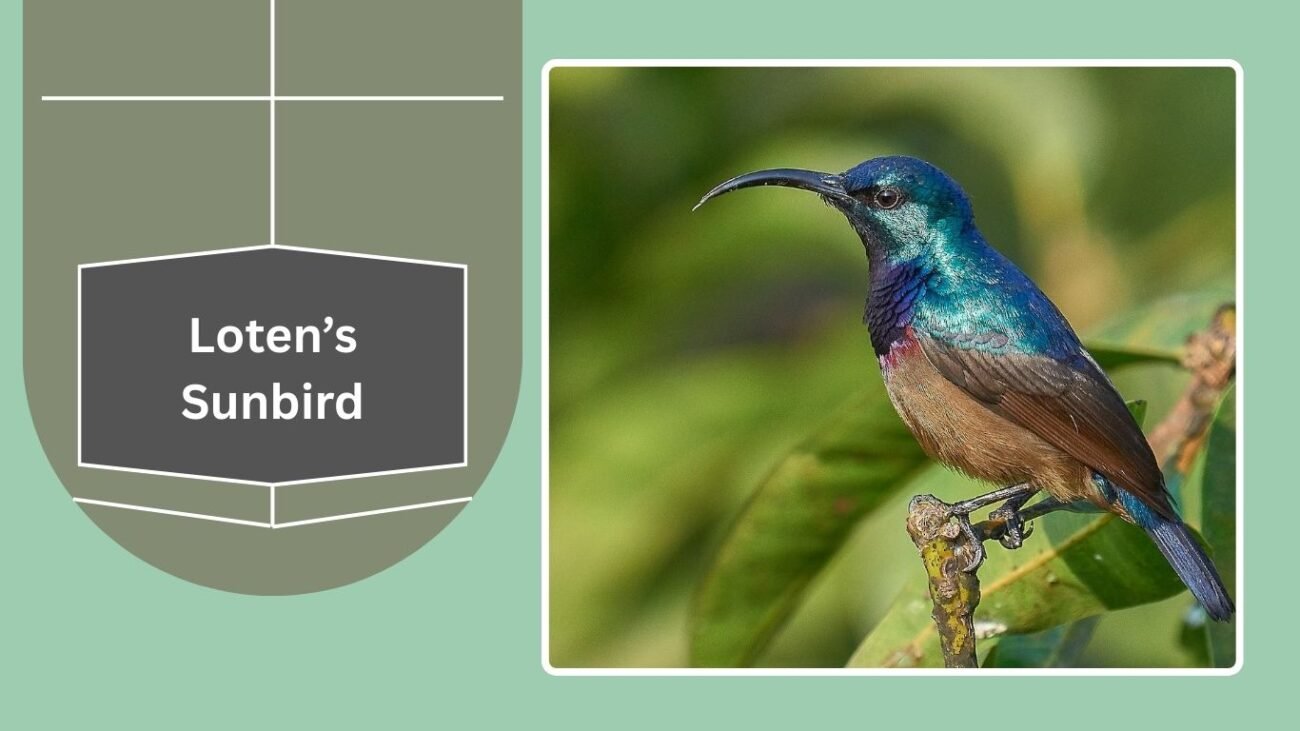
Loten’s Sunbird, also known as the Long-billed Sunbird, is native to South Asia, especially India and Sri Lanka. It is easily recognized by its distinctly long, curved bill, which sets it apart from other sunbirds. Males in breeding plumage shine with metallic purple hues, making them very eye-catching.
Identification
- Size: Around 12–15 cm in length
- Male (breeding): Glossy metallic purple plumage with maroon tones; long down-curved bill
- Male (non-breeding): Duller with more brownish upperparts and a hint of purple on the throat
- Female: Olive-brown above with yellowish underparts
- Bill: Noticeably longer and more curved than most other sunbirds
- Wings: Dark and rounded, built for rapid flight
Habitat
Loten’s Sunbirds prefer gardens, plantations, forest edges, and urban areas with flowering trees and shrubs. They are particularly associated with coconut plantations and coastal regions.
Diet
Their diet consists mainly of nectar, which they extract from tubular flowers using their extra-long bill. They also eat insects and spiders, especially during the breeding season to feed their chicks.
Behavior
These sunbirds are active and agile, often flitting quickly between blossoms. They perch frequently while feeding, but their long bill allows them to probe deep flowers without hovering. Males are territorial in breeding seasons and use their metallic plumage to impress females.
15. Copper Sunbird (Cinnyris cupreus)
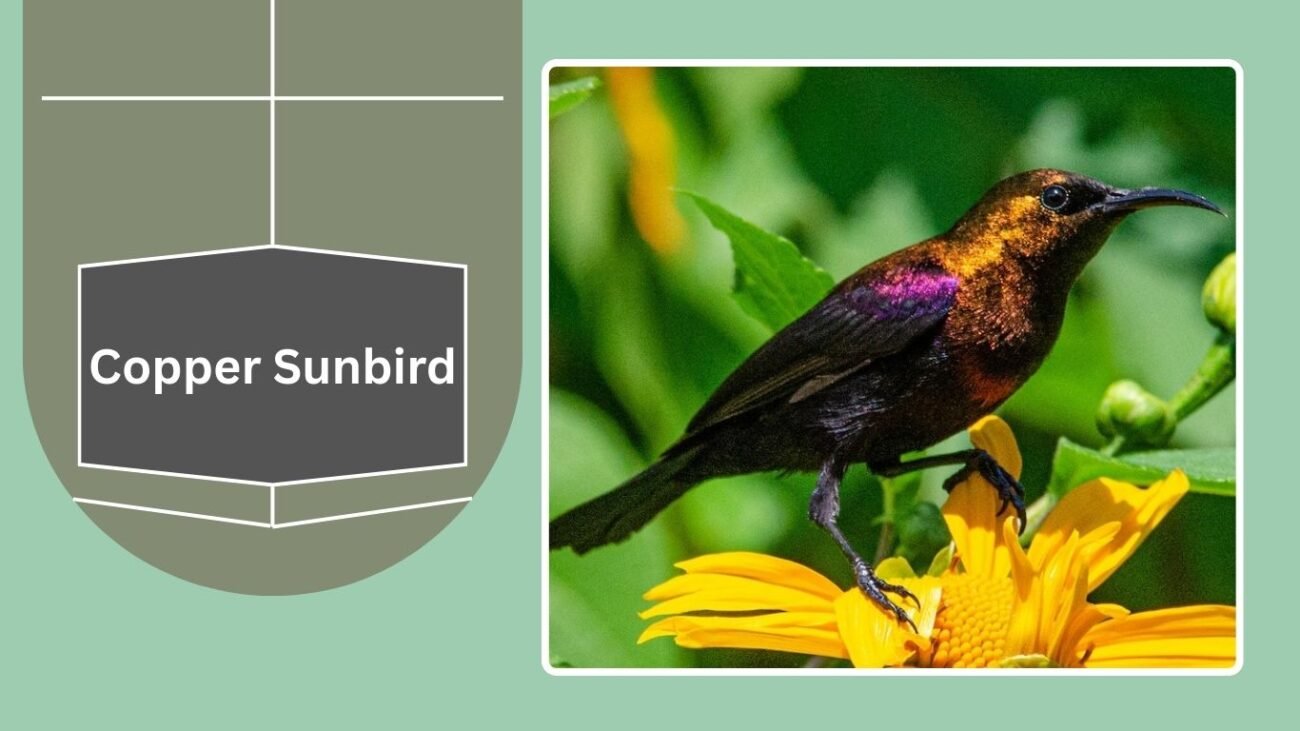
The Copper Sunbird is a widespread African species named for the male’s shimmering coppery sheen. It is among the larger sunbirds and is commonly found in open habitats, gardens, and woodland edges where flowering plants are abundant.
Identification
- Size: Around 12–15 cm long
- Male: Dark plumage with a strong metallic copper-bronze gloss that shines in sunlight; long tail feathers
- Female: Olive-brown above with pale yellow underparts, much plainer than the male
- Bill: Thin, curved, and suited for nectar feeding
- Tail: Longer in males, giving them a more elegant appearance
Habitat
Copper Sunbirds thrive in savannas, open woodlands, farmlands, and gardens. They adapt well to cultivated areas and are often found near human settlements with flowering plants.
Diet
Their diet is primarily nectar, but they also catch insects and spiders, especially when rearing chicks. This mixed feeding helps balance energy and protein needs.
Behavior
These sunbirds are highly active, moving quickly between flowers. Males are territorial during breeding and use their glossy plumage to attract mates and ward off competitors. They typically perch while feeding, though they can hover briefly when needed.
16. Beautiful Sunbird (Cinnyris pulchellus)
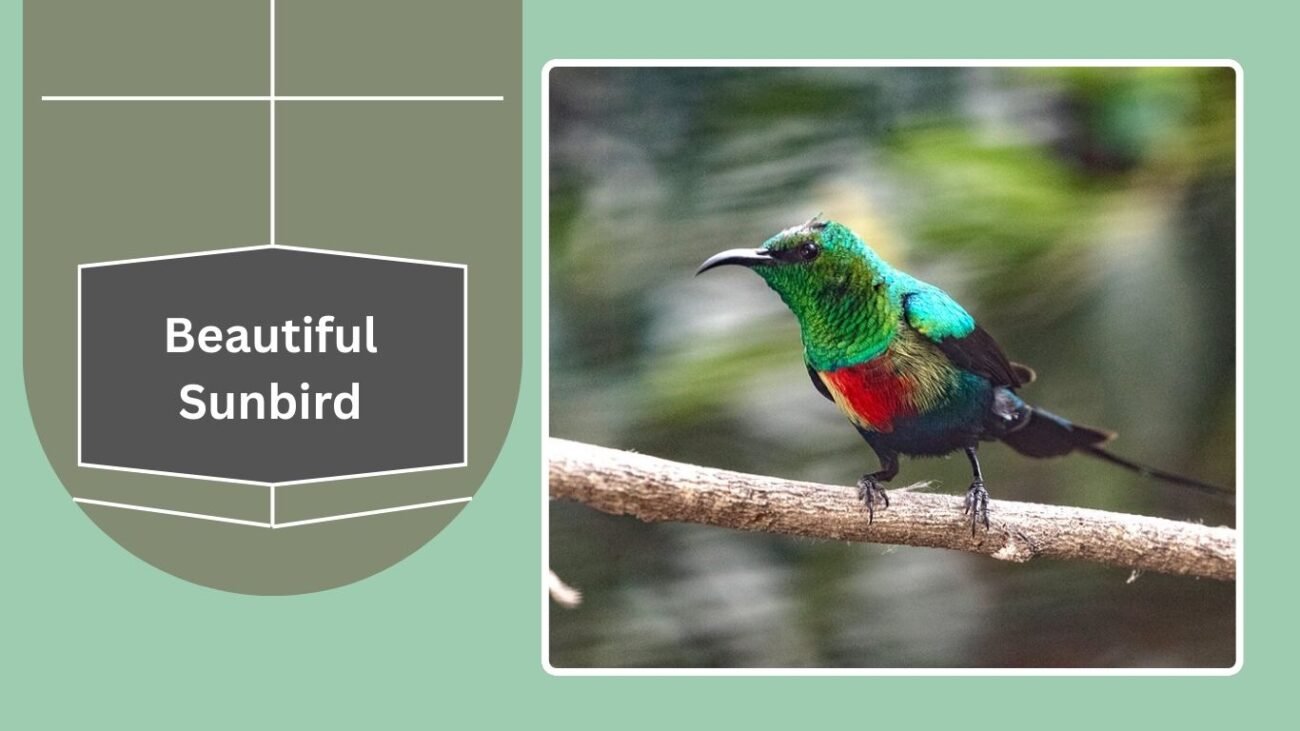
The Beautiful Sunbird is a dazzling species found across tropical Africa, living up to its name with striking, multicolored plumage. Its vibrant appearance and energetic feeding make it one of the most admired sunbirds in its range.
Identification
- Size: Around 10–12 cm long
- Male: Iridescent green head, bright red breast band, metallic blue throat, and yellow underparts; elongated tail streamers during breeding season
- Female: Olive-brown above with pale yellowish underparts
- Bill: Slender, curved, designed for nectar feeding
- Tail: Males develop long central tail feathers when breeding
Habitat
The Beautiful Sunbird inhabits savannas, forest edges, gardens, and cultivated lands. It adapts well to areas with human activity, often visiting flowering plants in villages and towns.
Diet
It feeds mainly on nectar but also eats insects and spiders, which provide essential protein for young birds during nesting.
Behavior
These sunbirds are active and acrobatic, often flitting between flowers and occasionally hovering to feed. Males are territorial in breeding season, displaying their bright colors and long tails to attract females and chase away rivals. Their hanging, purse-shaped nests are built close to vegetation.
17. Purple-rumped Sunbird (Leptocoma zeylonica)
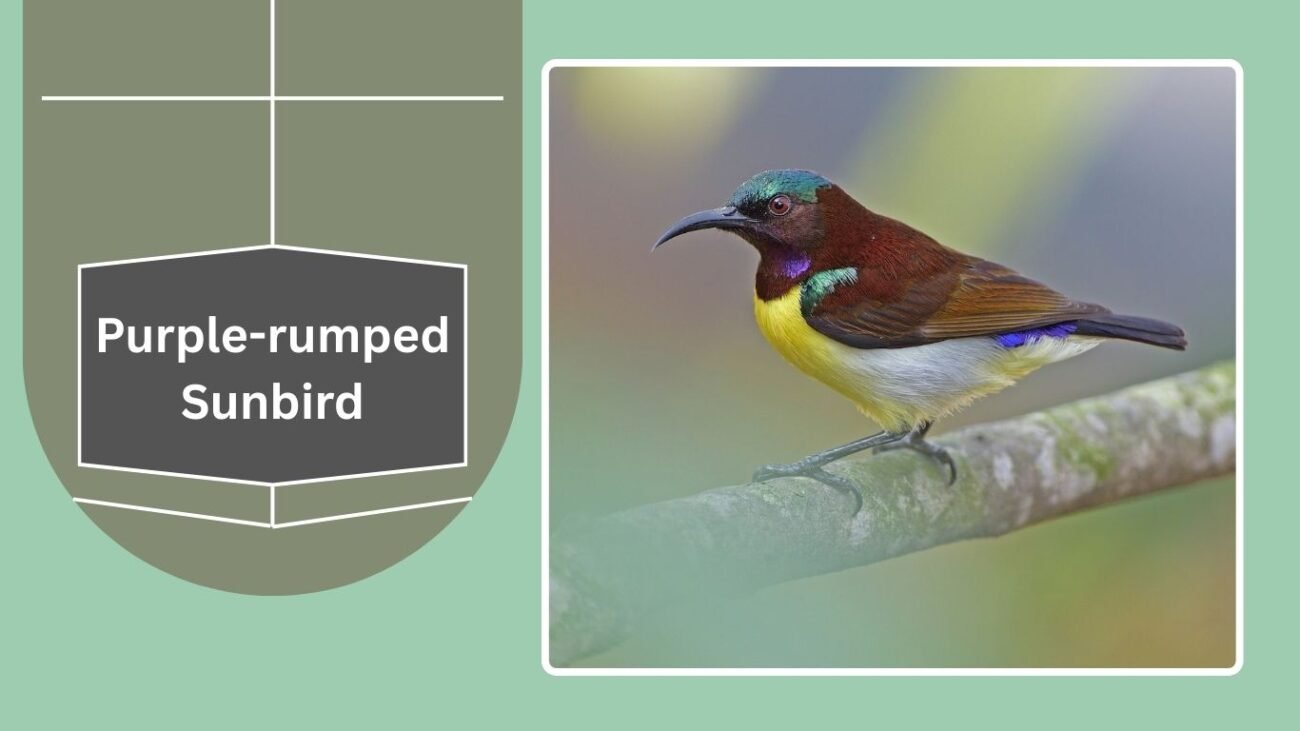
The Purple-rumped Sunbird is a small, colorful bird native to the Indian subcontinent. Endemic to South Asia, it is a common resident in gardens, forests, and urban areas. Despite its tiny size, it is bold and active, often seen darting quickly among flowering plants. The male’s metallic purple sheen and yellow underparts make it one of the most attractive sunbirds in its range.
Identification
- Size: Around 10 cm long, small and compact
- Male: Glossy metallic purple crown, throat, and back; bright yellow underparts; green crown patch and maroon wings with a white flank patch
- Female: Olive-brown above with whitish throat and yellow underparts, plainer than the male
- Bill: Slender, strongly curved for sipping nectar
- Tail: Short and rounded, suited for rapid movements
- Distinguishing feature: Prominent white patches on the sides of the male, visible in flight
Habitat
This sunbird thrives in gardens, plantations, forest edges, and even bustling urban areas. It adapts easily to human environments and is often spotted around ornamental flowers, hibiscus, and bougainvillea. Unlike some sunbirds tied to wild habitats, it is well integrated with city landscapes.
Diet
The Purple-rumped Sunbird primarily feeds on nectar from a wide variety of flowers, both native and cultivated. Insects and spiders form an essential part of its diet, especially during breeding, when extra protein is needed for chicks. Its role as a pollinator makes it important for both natural and garden ecosystems.
Behavior
Lively and restless, this species flits constantly between flowers, often hovering briefly but usually perching while feeding. Males are territorial during the breeding season, using their vibrant colors and high-pitched songs to attract mates. The species is known for its unique nest — a hanging, pouch-shaped structure made of cobwebs, fibers, and bark, often suspended from low branches or even human-made objects like wires.
18. White-bellied Sunbird (Cinnyris talatala)
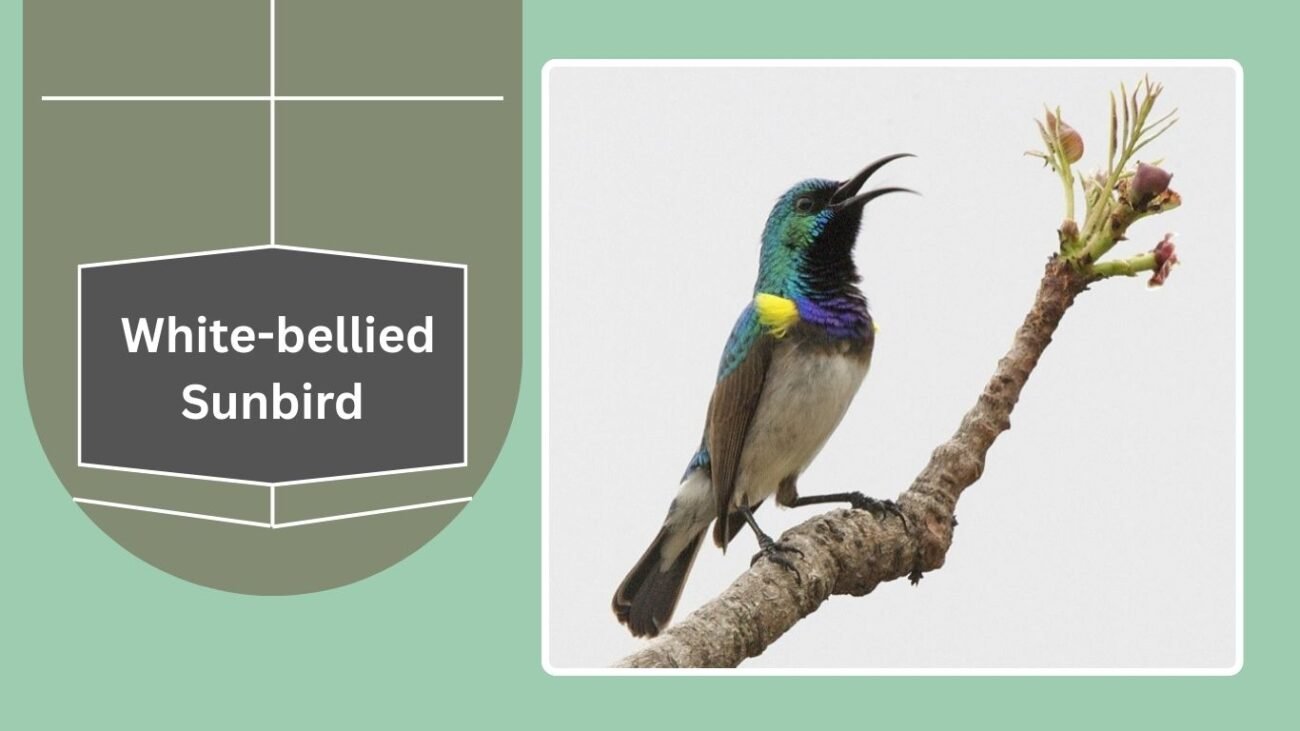
The White-bellied Sunbird is a small, striking species native to southern Africa. It is particularly common in gardens, savannas, and shrublands, where it flits energetically among flowering plants. The male’s iridescent colors contrast beautifully with its pale belly, making it easy to identify.
Identification
- Size: Around 11–12 cm long
- Male: Metallic green head, throat, and back; violet breast band with a clean white belly
- Female: Greyish-brown above with pale greyish-white underparts
- Bill: Long, thin, and curved for nectar feeding
- Tail: Short and slightly notched, adapted for agile movements
- Distinguishing feature: Male’s brilliant breast band and white belly combination
Habitat
This species inhabits open woodlands, savannas, gardens, and cultivated areas. It is highly adaptable and often thrives in suburban and rural environments with plenty of flowering plants.
Diet
The White-bellied Sunbird feeds mainly on nectar from a wide range of flowers. It also consumes small insects and spiders, which are especially important for feeding chicks during the breeding season.
Behavior
These sunbirds are active, fast, and restless, frequently darting from flower to flower. They generally perch while feeding but may hover briefly when necessary. Males defend feeding territories vigorously during the breeding season and use their vivid plumage to attract females. Their nests are pouch-shaped, suspended from shrubs or low branches and camouflaged with plant fibers and spider webs.
19. Marico Sunbird (Cinnyris mariquensis)
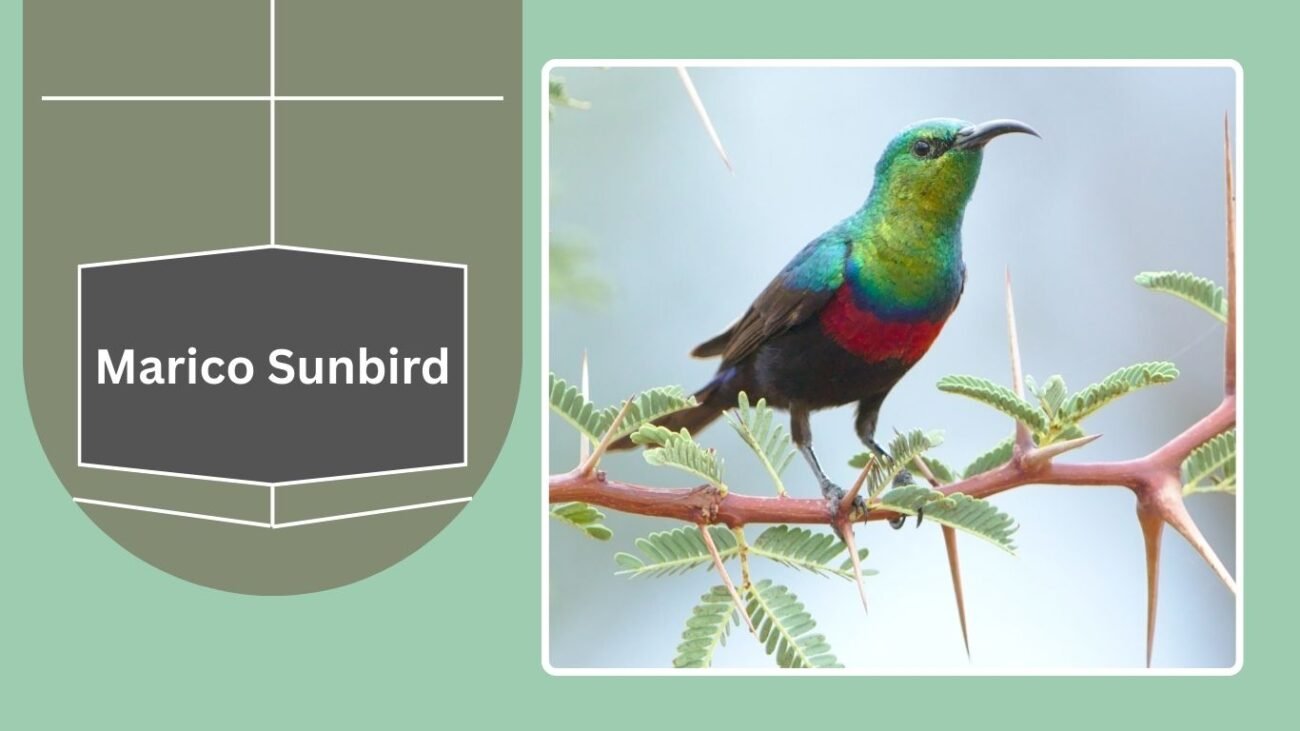
The Marico Sunbird is a large and brightly colored sunbird native to southern Africa. Its vivid plumage and energetic feeding behavior make it one of the most eye-catching species in its range. It is commonly found in woodland, savanna, and garden habitats where flowering plants are abundant.
Identification
- Size: Around 15–16 cm, one of the larger sunbirds
- Male: Shiny metallic green head and throat, dark maroon breast band, with a glossy purple belly and long tail streamers
- Female: Olive-brown above with pale yellowish underparts, plain compared to the male
- Bill: Long, slender, and down-curved for nectar feeding
- Tail: Long with elongated central feathers in males during breeding
Habitat
The Marico Sunbird inhabits savannas, woodlands, riverine areas, and gardens. It is especially common in regions with aloes and other nectar-rich plants.
Diet
Nectar forms the bulk of its diet, especially from aloes and other tubular flowers. Insects and spiders are also eaten, particularly during the breeding season to provide protein for young birds.
Behavior
These sunbirds are agile and active, often seen flying rapidly between flowering plants. Males are territorial, using their bright plumage and long tails to impress females and deter rivals. They perch while feeding but are capable of brief hovering. Their nests are delicate, pouch-shaped, and camouflaged with plant fibers and spider webs.
20. Green-throated Sunbird (Chalcomitra rubescens)
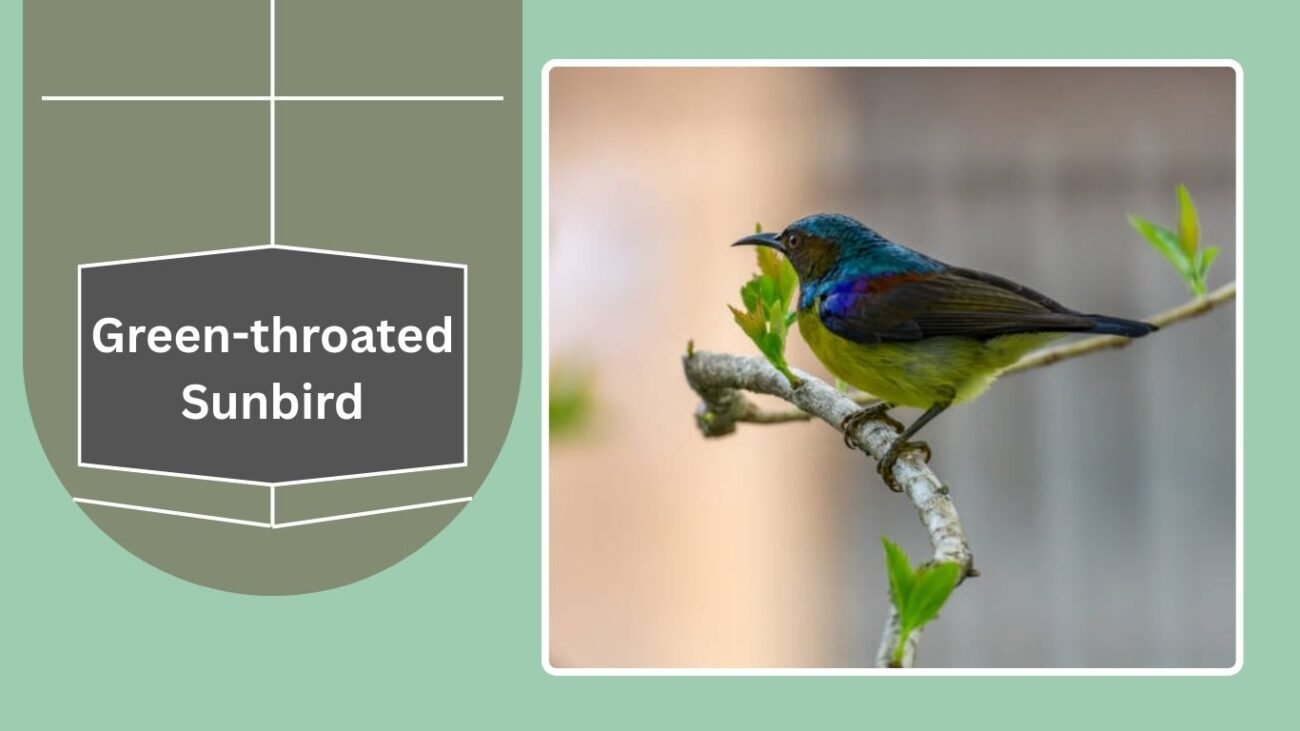
The Green-throated Sunbird is a dazzling species found in Central and West Africa. Its metallic throat and bright plumage make it one of the more striking members of the sunbird family. These birds are often seen flitting through forests and woodland edges, playing a vital role as pollinators.
Identification
- Size: Around 12–14 cm long
- Male: Metallic green throat and crown, dark upperparts, and bright yellow or orange underparts with a violet breast band
- Female: Olive-brown above with pale yellowish underparts, less vivid than the male
- Bill: Long, slender, and curved for reaching nectar
- Distinguishing feature: Male’s shimmering green throat patch, especially visible in sunlight
Habitat
This species inhabits moist forests, forest edges, plantations, and wooded savannas. It is also found in cultivated gardens where flowering plants are abundant.
Diet
The Green-throated Sunbird feeds mainly on nectar but also consumes insects and spiders, particularly during nesting periods. This diet supports both high energy from nectar and protein needs for chick growth.
Behavior
These sunbirds are lively and agile, quickly moving from flower to flower. Males are territorial and use their colorful plumage to defend feeding grounds and attract females. They typically perch while feeding but are capable of hovering for short periods. Their nests are pouch-like and camouflaged with fibers, moss, and spider webs, suspended from branches.
21. Long-billed Sunbird (Cinnyris jugularis rhizophorae / Cinnyris longirostris)
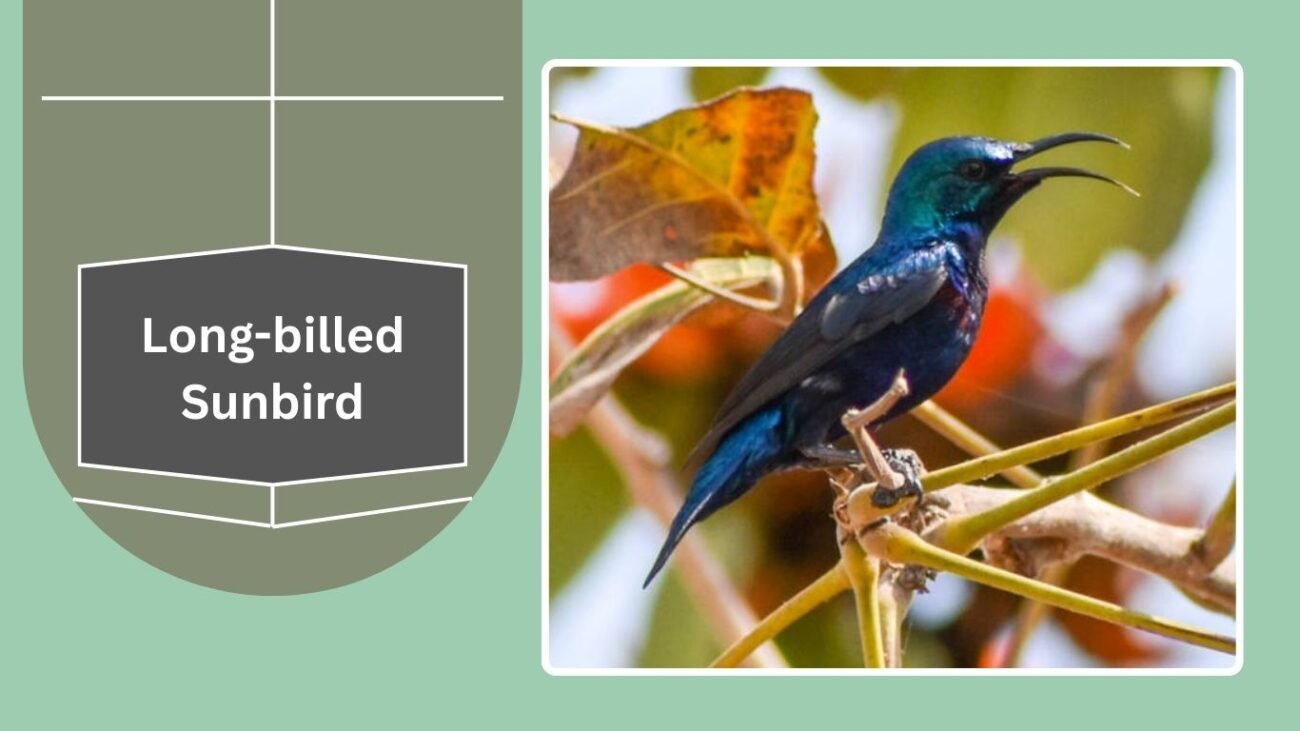
The Long-billed Sunbird is a distinctive species/subspecies found in parts of Southeast Asia and Borneo. As its name suggests, it is characterized by a noticeably elongated bill that allows it to feed on deep tubular flowers that many other sunbirds cannot access.
Identification
- Size: Around 12–14 cm in length
- Male: Metallic greenish head, throat, and back, with yellow underparts; long, slender, and strongly curved bill
- Female: Olive-brown above with pale yellow underparts, similar to the male but duller
- Bill: Exceptionally long compared to other sunbirds, adapted for probing deep flowers
- Tail: Medium length, with no extended streamers
Habitat
This species prefers mangroves, coastal forests, and lowland woodlands. It is especially associated with areas rich in deep tubular flowers. It can also be found in gardens and plantations where suitable plants grow.
Diet
The Long-billed Sunbird primarily feeds on nectar, especially from tubular flowers that other sunbirds struggle to reach. It supplements its diet with insects and spiders for protein, especially during breeding.
Behavior
These sunbirds are active and agile, darting quickly between flowers. The long bill allows them to exploit food sources unavailable to shorter-billed sunbirds, reducing competition. Males are territorial during breeding and use bright plumage displays to defend feeding areas. Nesting follows the typical sunbird pattern of a hanging, pouch-shaped nest woven from fibers and spider silk.
22. Souimanga Sunbird (Cinnyris souimanga)
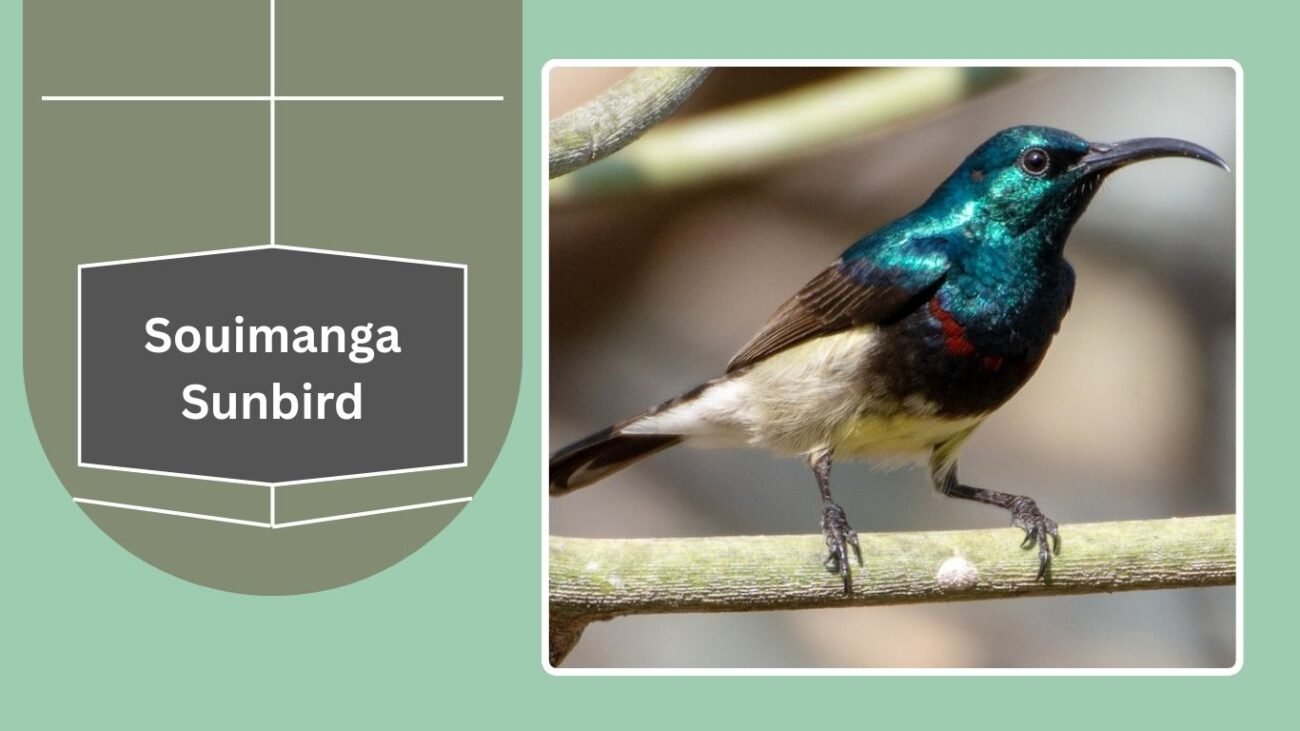
The Souimanga Sunbird is a small, brilliantly colored bird found in Madagascar, the Comoros, Seychelles, and surrounding islands. It is highly adaptable and often seen in both natural forests and human-modified habitats. Its vivid colors and energetic movements make it one of the most striking sunbirds in its range.
Identification
- Size: Around 11–12 cm long
- Male: Iridescent green head, throat, and back with a deep violet or purple breast band and yellow underparts
- Female: Olive-brown upperparts with pale yellow underparts, plainer than the male
- Bill: Slender and down-curved, adapted for nectar feeding
- Wings: Short and rounded, built for quick, darting flights
Habitat
The Souimanga Sunbird inhabits forests, gardens, plantations, and coastal scrub. It is one of the most adaptable sunbirds, thriving even in urban areas as long as flowering plants are present.
Diet
It feeds primarily on nectar, visiting a wide range of flowers, but it also consumes insects and spiders. This combination provides the energy and protein needed, especially during breeding.
Behavior
Souimanga Sunbirds are restless and fast-moving, often flitting between flowers in quick bursts. Males become highly territorial during the breeding season, using their bright plumage and sharp calls to defend feeding areas. Their nests are hanging, pouch-shaped structures woven from fibers and spider silk, usually suspended from shrubs or low branches.
23. Tacazze Sunbird (Nectarinia tacazze)
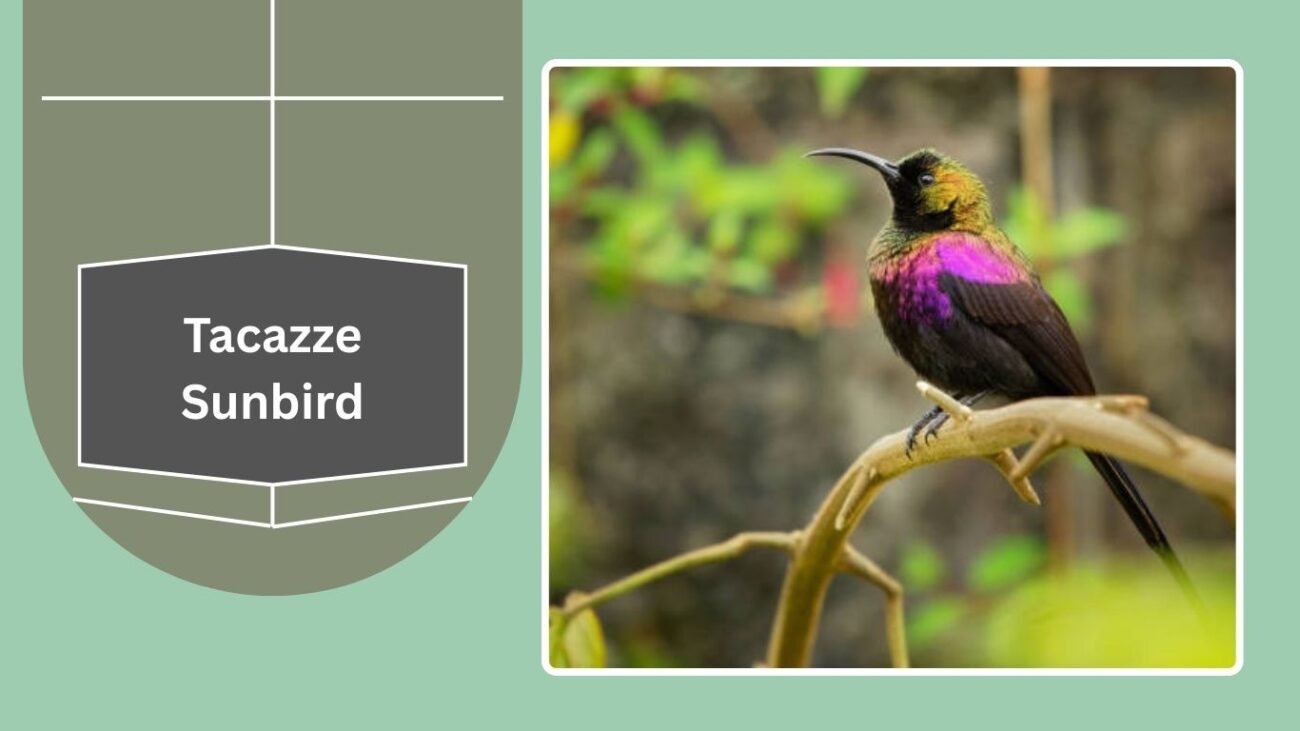
The Tacazze Sunbird is one of the largest and most spectacular sunbirds, native to the highlands of East Africa. Its long tail feathers and iridescent plumage make it a striking presence in montane forests and moorlands.
Identification
- Size: Around 22–25 cm, including long tail streamers in males
- Male: Shimmering metallic green head, throat, and back with purple highlights and extremely long central tail feathers
- Female: Olive-brown upperparts with greyish underparts, much duller and lacking long tail streamers
- Bill: Long, slender, and curved, adapted for probing deep flowers
- Distinguishing feature: Male’s extraordinary tail streamers and brilliant iridescence
Habitat
The Tacazze Sunbird inhabits high-altitude forests, montane scrublands, and moorlands in countries like Ethiopia, Kenya, and Uganda. It is often found near flowering plants such as aloes and giant lobelias.
Diet
This species primarily feeds on nectar, especially from montane flowers adapted to bird pollination. It also eats insects and spiders, providing additional nutrition for chicks during the breeding season.
Behavior
Tacazze Sunbirds are energetic and territorial, often seen defending rich nectar sources. Males display their long tails prominently during courtship and territorial disputes. They generally perch while feeding but may hover briefly when needed. Their nests are typical sunbird hanging pouches, built with grasses, fibers, and spider silk.
24. Bronze Sunbird (Nectarinia kilimensis)
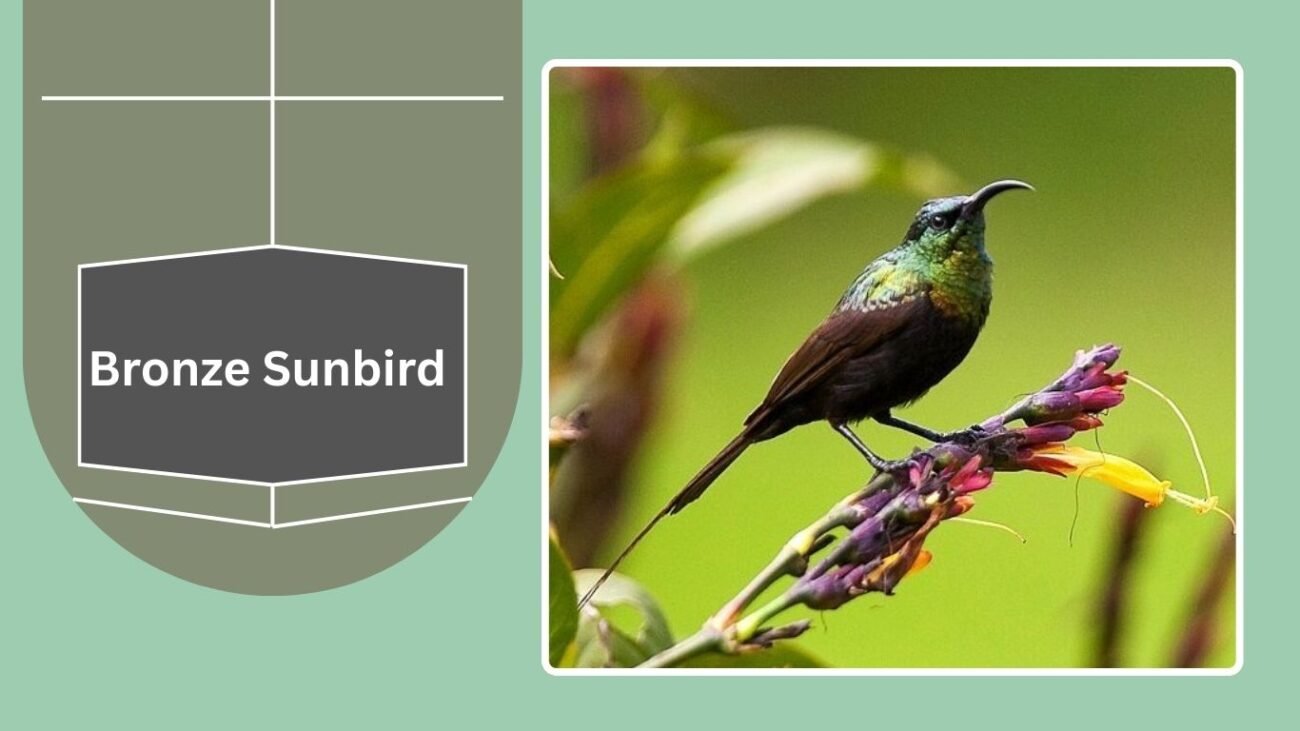
The Bronze Sunbird is a large and striking sunbird native to eastern and central Africa. Its name comes from the male’s dark bronze-green plumage that shimmers in sunlight. It is often found in highland regions, especially around flowering plants like aloes and hibiscus.
Identification
- Size: Around 15–17 cm long, with males sometimes longer due to tail streamers
- Male: Glossy bronze-green to almost black plumage with metallic reflections; long tail feathers during breeding
- Female: Olive-brown upperparts with pale yellowish underparts
- Bill: Long, slender, and down-curved for nectar feeding
- Tail: Elongated in males, adding to their elegant appearance
Habitat
This species inhabits montane forests, woodland edges, gardens, and high-altitude shrublands. It is often associated with flowering plants in both natural and cultivated areas.
Diet
The Bronze Sunbird feeds mostly on nectar, especially from aloes, hibiscus, and other tubular flowers. It also hunts insects and spiders, which are vital for chick development during nesting.
Behavior
These sunbirds are fast and active, often perching on flowers to feed but capable of hovering when needed. Males are territorial during breeding and display their shimmering bronze-green plumage to attract females. Their hanging nests are carefully constructed with fibers, leaves, and spider webs, suspended from shrubs or low branches.
25. Eastern Olive Sunbird (Cyanomitra olivacea)
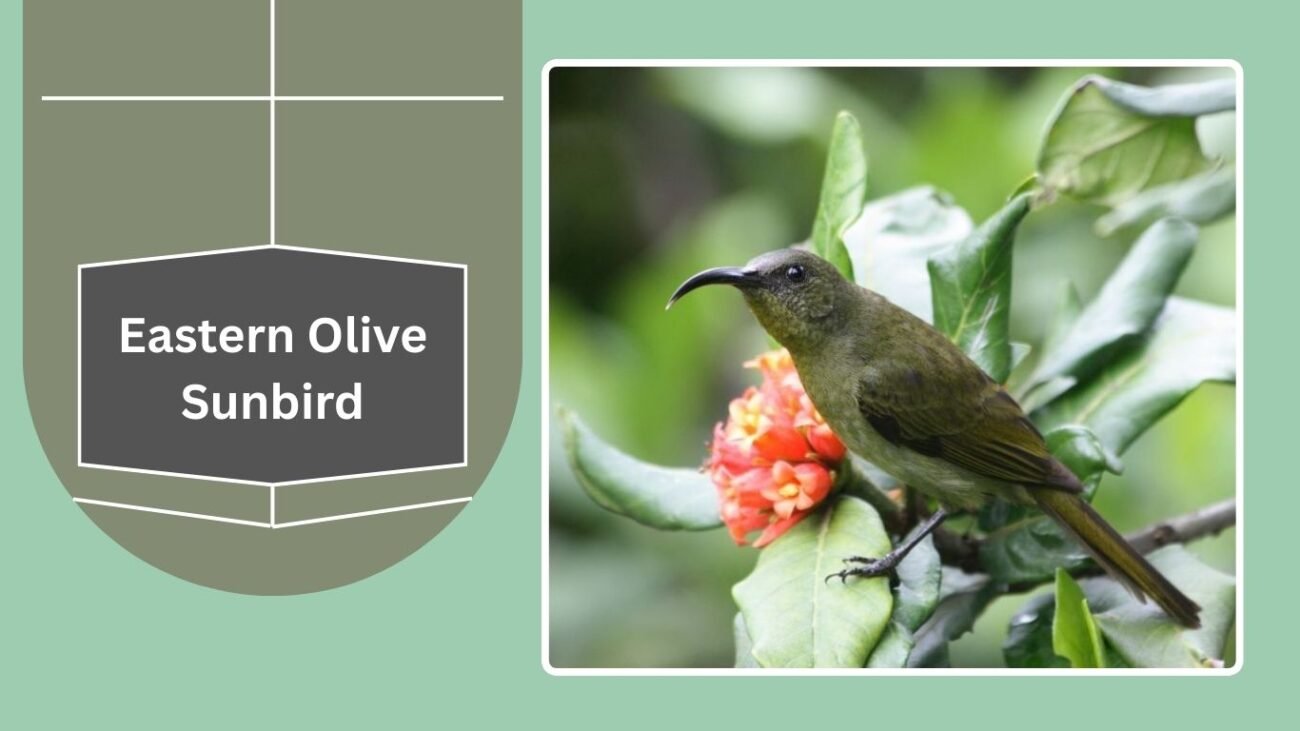
The Eastern Olive Sunbird is a widespread and adaptable species found across East Africa. Unlike the more vividly colored sunbirds, it has a subtle olive-green plumage that blends well into its environment. Despite its less flashy appearance, it is an active and important pollinator.
Identification
- Size: Around 12–14 cm in length
- Male: Olive-green upperparts with a slightly darker throat and faint metallic gloss; underparts yellowish to olive
- Female: Very similar to the male but slightly duller overall
- Bill: Slender, curved, suited for nectar feeding
- Distinguishing trait: Lacks the bright metallic patches of many other sunbirds, giving it a plainer look
Habitat
This species inhabits coastal forests, woodland edges, mangroves, plantations, and gardens. It is highly adaptable and often found near human settlements with flowering plants.
Diet
The Eastern Olive Sunbird feeds mainly on nectar, especially from flowering shrubs and trees. It also supplements its diet with insects and spiders, particularly when feeding young.
Behavior
These sunbirds are fast-moving and restless, frequently flitting from flower to flower. They generally perch while feeding but can hover briefly if needed. Pairs are often seen together, and their nests are typical hanging pouches woven from grass, fibers, and spider silk.