Robins are some of the most recognizable birds in both Europe and North America—but despite sharing a name, the European Robin (Erithacus rubecula) and the American Robin (Turdus migratorius) are not closely related. In fact, they belong to entirely different families and only bear a superficial resemblance due to their orange-red breast.
In this guide, we’ll explore 7 key differences between these two beloved birds—focusing on appearance, behavior, vocalizations, habitat, and more—to help you appreciate just how distinct they really are.
European Robin vs American Robin
| Feature | European Robin | American Robin |
| Scientific Name | Erithacus rubecula | Turdus migratorius |
| Bird Family | Old World Flycatchers (Muscicapidae) | Thrush Family (Turdidae) |
| Size | Smaller (12.5–14 cm or ~5.5 in) | Larger (23–28 cm or ~10 in) |
| Color Pattern | Bright orange face and breast, gray-brown back | Orange breast, dark gray back and head |
| Song and Sounds | Sweet, high-pitched melody | Flute-like phrases and varied calls |
| Habitat Preference | Gardens, hedgerows, woodlands | Lawns, forests, suburban areas |
| Behavior | Bold and territorial year-round | Migratory, social in winter |
1. Taxonomy and Scientific Classification
European Robin
The European Robin belongs to the Muscicapidae family, also known as the Old World flycatchers. It’s scientifically named Erithacus rubecula. Despite its familiar orange breast, it is not related to the American Robin and evolved separately in Europe and parts of Asia.
American Robin
The American Robin is part of the Turdidae family, commonly known as thrushes. Its scientific name is Turdus migratorius. It’s actually more closely related to blackbirds and nightingales than to the European Robin. The shared name is due to the similar red breast, not shared ancestry.
2. Size and Shape
European Robin
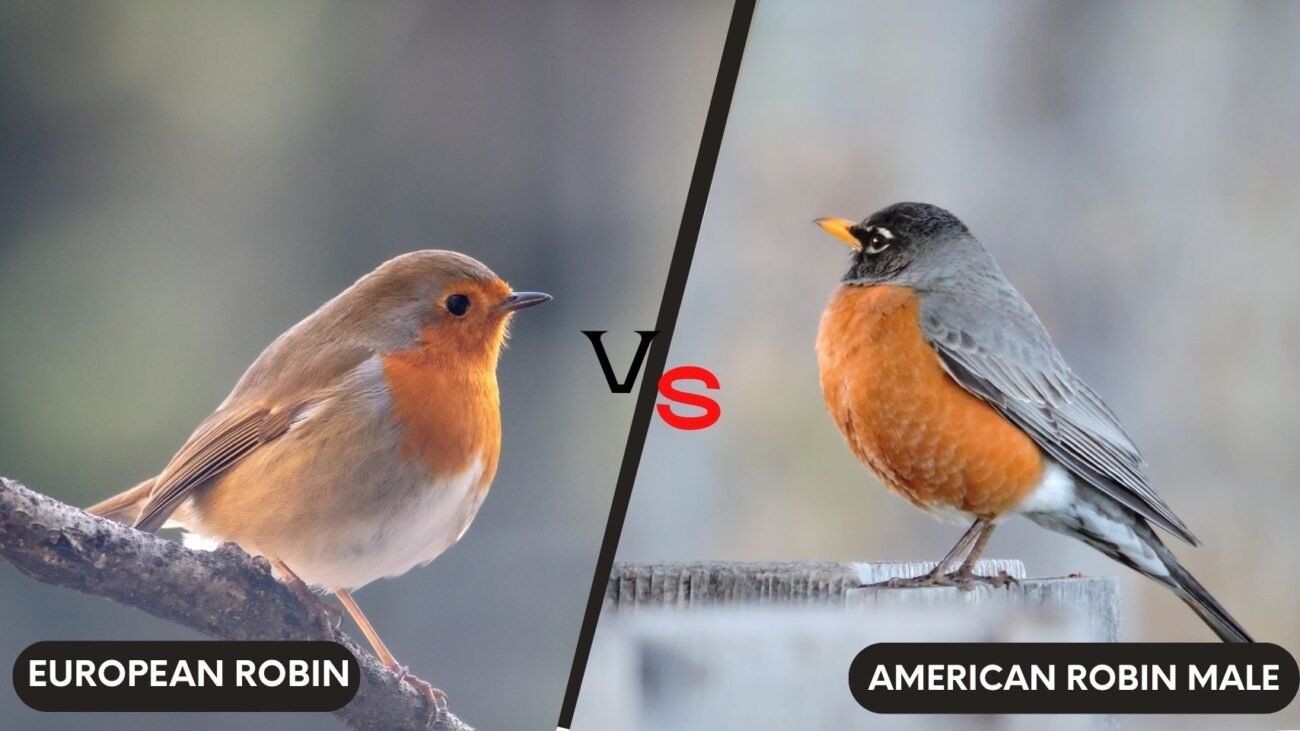
This robin is small and compact, averaging about 5 to 5.5 inches (12.5–14 cm) in length. It has a round body, short tail, and a relatively small, pointed beak suited for catching insects. Its small size and dainty build give it a delicate appearance.
American Robin
In contrast, the American Robin is much larger, measuring about 9 to 11 inches (23–28 cm) in length. It has a more elongated body, longer tail, and a stronger, straighter beak. Its size is closer to that of a small pigeon, making it significantly bulkier than its European counterpart.
3. Coloration and Markings
European Robin
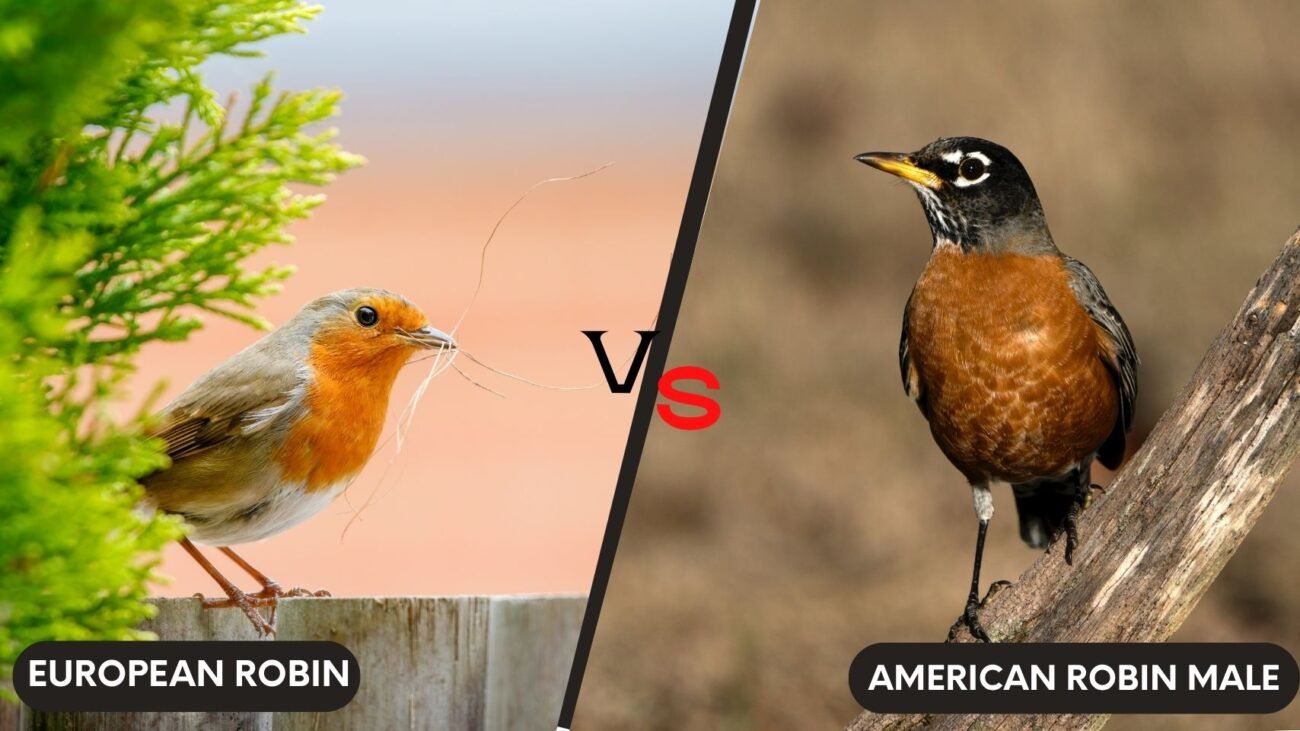
This bird is famous for its bright orange-red face and chest, which extend up around the eyes. The back, wings, and crown are an olive-brown color, while the belly is whitish. It has a sweet, rounded look and lacks any black or gray markings.
American Robin
The American Robin also features a rusty orange breast, but its head and back are dark gray to black, and its belly fades to white. Males tend to be more vividly colored than females. It lacks the orange face seen in the European Robin and has a more dramatic contrast in its plumage.
4. Song and Vocalizations
European Robin
European Robins are well-known for their melodic, high-pitched song, which they sing year-round—even in winter. Males and females both sing, which is relatively uncommon in the bird world. Their call is soft, fluting, and almost mournful at times.
American Robin
American Robins have a loud, clear song often heard in the early morning. It’s made up of flute-like phrases such as “cheerily, cheer-up, cheerio.” Males are more vocal during the breeding season, and their calls also include warning chirps and soft chatters when feeding.
5. Behavior and Temperament
European Robin
Despite its cute appearance, the European Robin is very territorial, especially during winter. Males are aggressive toward intruders, and both sexes defend feeding areas. They often appear fearless around humans, especially in gardens, where they may perch nearby while people dig the soil.
American Robin
American Robins are generally less territorial and more communal in non-breeding seasons. In winter, they often form large flocks, especially around fruit trees. They are active, ground-foraging birds and can be shy or bold depending on the region.
6. Habitat and Range
European Robin
European Robins are common throughout Europe, western Asia, and parts of North Africa. They prefer gardens, woodlands, parks, and hedgerows. They’re mostly non-migratory, staying in their territories year-round unless temperatures drop extremely low.
American Robin
American Robins are found throughout North America, from Canada to Mexico. They are highly adaptable and common in lawns, open woods, and urban areas. They migrate seasonally, heading south in winter and returning north in early spring—often one of the first signs that spring is coming.
7. Nesting Habits and Eggs
European Robin
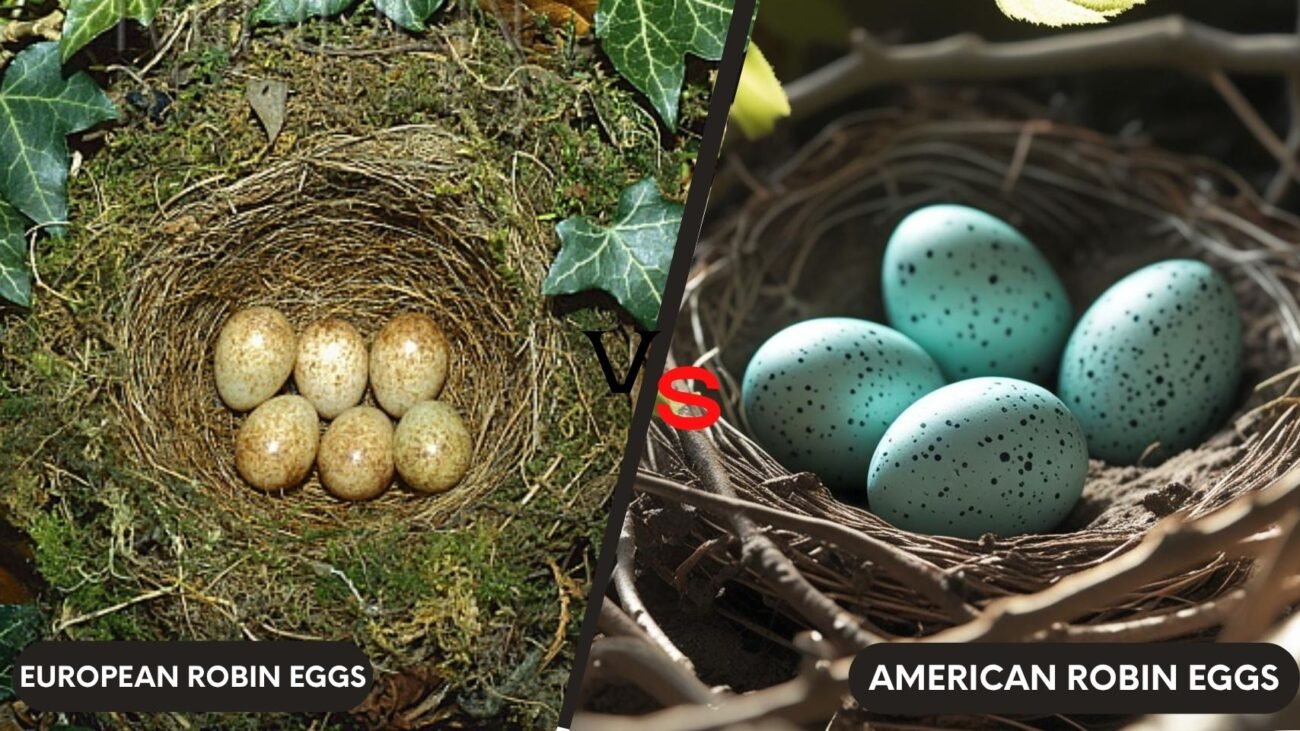
European Robins prefer to nest in covered, hidden areas—hedges, ivy, flower pots, even boots left in the garden. They build small, neat nests from moss, leaves, and hair. They lay 4–6 eggs, which are smooth and pale with reddish speckles.
American Robin
American Robins construct open cup-shaped nests, usually on tree branches, window ledges, or gutters. Their nests are made from grass and mud, creating a sturdy structure. They lay 3–5 pale blue eggs, which are iconic in color and easily identifiable.
Bonus: Cultural Significance
European Robin
In Europe, the robin is a symbol of Christmas and winter. It frequently appears on holiday cards and decorations. According to folklore, it gained its red breast from comforting Christ on the cross. It’s often considered a spiritual messenger or sign from lost loved ones.
American Robin
In North America, the robin is strongly associated with springtime and renewal. It’s often one of the first birds to sing at dawn and is seen as a hopeful sign of changing seasons. In some Indigenous and folklore traditions, it represents happiness and a good omen.
Final Thoughts
Though the European and American Robins share a name and an orange chest, they are quite different birds. The European Robin is a small, bold, and sweet-voiced songbird, while the American Robin is a larger thrush known for its clear flute-like song and energetic presence on lawns and in trees.