Shield bugs, also known as stink bugs, are a diverse group of insects recognized for their distinctive shield-shaped bodies and strong odor when disturbed. Found in gardens, fields, woodlands, and even homes, these bugs play a variety of roles in ecosystems — from plant feeders to natural pest controllers. This guide explores 15 different types of shield bugs, highlighting their unique features, habitats, behaviors, and diets.
1. Green Shield Bug (Palomena prasina)

The Green Shield Bug is one of the most common shield bugs in Europe. It is well known for its vibrant green coloration, which helps it blend into vegetation. This species is often found in gardens, woodlands, and hedgerows, where it feeds on plant sap.
Identification
- Bright green in summer, turning brownish in autumn/winter
- Shield-shaped body, about 12–14 mm long
- Broad, flat, and slightly rounded edges
- Antennae with distinct darkened tips
- Nymphs (immature bugs) are rounder and often have black and white markings
Habitat
The Green Shield Bug is widespread across Europe and commonly found in hedgerows, gardens, meadows, and woodland edges. They prefer areas with plenty of vegetation, where they can feed and hide from predators.
Behavior
Green Shield Bugs are mainly active from spring through autumn. They hibernate during winter, often changing color to brown for camouflage. They are generally harmless to humans and play a role in the ecosystem as plant feeders.
Diet
This species feeds primarily on the sap of a wide range of plants, including shrubs, trees, and garden crops. While not typically a serious pest, in large numbers they can cause some damage to fruits and vegetables by piercing plant tissues.
2. Southern Green Shield Bug (Nezara viridula)

The Southern Green Shield Bug, also known as the Southern Green Stink Bug, is a widespread species with a more global distribution than the common Green Shield Bug. It is considered an agricultural pest in many regions due to its plant-feeding habits.
Identification
- Bright green body, around 12–15 mm long
- Distinctive small black dots along the sides of the abdomen
- Antennae are pale with darker tips
- Body is shield-shaped and flatter compared to the European Green Shield Bug
- Nymphs are black with orange, white, or yellow spots depending on stage
Habitat
This bug thrives in warm climates and is found in southern Europe, Africa, Asia, the Americas, and Oceania. It is especially common in farmlands, orchards, and gardens where crops are abundant.
Behavior
The Southern Green Shield Bug is active during warm months and reproduces rapidly, producing several generations per year in favorable climates. It emits a strong odor when threatened, which is characteristic of stink bugs.
Diet
Unlike some shield bugs that mainly feed on wild plants, this species targets a wide range of crops including tomatoes, beans, corn, citrus, cotton, and soybeans. Its piercing mouthparts damage fruits and vegetables, making it a serious pest in agriculture.
3. Forest Bug (Pentatoma rufipes)

The Forest Bug, also known as the Red-legged Shield Bug, is a large and easily recognizable shield bug found across Europe. It is commonly associated with woodlands and broadleaf trees, especially oaks.
Identification
- Size: 14–16 mm long, larger than many other shield bugs
- Body is shield-shaped with a mottled brown and bronze coloration
- Distinctive reddish-orange legs, which give the species its name
- Prominent shoulders with slightly pointed angles
- Antennae are dark with lighter bands
Habitat
Forest Bugs are typically found in deciduous woodlands, especially in areas with oak trees. They also inhabit hedgerows, parks, and gardens with suitable trees. They prefer sunny, warm environments with plenty of tree cover.
Behavior
These bugs are active during the warmer months and are strong flyers. They spend much of their time on trees, feeding and mating. When disturbed, they release a pungent odor as a defense mechanism. Adults overwinter in leaf litter, tree bark crevices, or under loose stones.
Diet
The Forest Bug feeds primarily on the sap of oak trees but can also be found on other deciduous species such as hazel, apple, and alder. Occasionally, they prey on small insects like caterpillars, making them partly predatory as well as plant feeders.
4. Bronze Shield Bug (Troilus luridus)

The Bronze Shield Bug is a striking species, notable for its metallic sheen and predatory behavior. Unlike many other shield bugs that mainly feed on plants, this one is partially carnivorous, making it an important natural controller of garden pests.
Identification
- Size: around 10–12 mm long
- Distinct bronze or copper-colored sheen across the body
- Shield-shaped with slightly pointed shoulders
- Dark legs with reddish tones on joints
- Antennae with alternating dark and light bands
Habitat
This species is found throughout Europe and parts of Asia. It lives in woodlands, hedgerows, gardens, and fields, especially where there is a mix of vegetation and small insect populations.
Behavior
The Bronze Shield Bug is both a plant-feeder and predator. It is particularly known for feeding on caterpillars and other soft-bodied insects, making it beneficial for natural pest control. Like other shield bugs, it emits a strong odor when handled or threatened. Adults overwinter in sheltered spots such as leaf litter or under bark.
Diet
Unlike most shield bugs, its diet is mixed. While it feeds on plant sap, it also hunts caterpillars, beetle larvae, and other small insects. This predatory nature makes it one of the more useful shield bug species for gardeners and farmers.
5. Gorse Shield Bug (Piezodorus lituratus)

The Gorse Shield Bug is a colorful species associated mainly with gorse and broom plants. It is often found in heathlands and scrubby areas where these plants grow, making it a distinctive member of the shield bug family.
Identification
- Size: about 10–12 mm long
- Body green in spring and summer, but turns purple-brown in autumn
- Distinct red or purplish markings on the edges of the pronotum and wings
- Antennae with dark tips
- Shield-shaped with slightly angular shoulders
Habitat
This bug is strongly associated with gorse, broom, and other leguminous plants. It is most common in heathlands, scrublands, coastal dunes, and areas with wild gorse thickets. Occasionally, it may appear in gardens if host plants are present.
Behavior
The Gorse Shield Bug is most visible from spring to autumn. Its color change in autumn provides camouflage as vegetation darkens. Adults overwinter in leaf litter or at the base of plants, emerging again in spring. Like other shield bugs, it can release a pungent smell when disturbed.
Diet
This species feeds primarily on the seeds and sap of gorse and broom plants. By piercing pods and stems with its mouthparts, it extracts plant juices, which form the bulk of its diet. Unlike predatory shield bugs, it is strictly herbivorous.
6. Hairy Shield Bug (Dolycoris baccarum)

The Hairy Shield Bug is one of the most easily recognized shield bugs due to the fine hairs covering its body. It is a widespread species found across Europe and parts of Asia, often seen in gardens and meadows.
Identification
- Size: about 10–12 mm long
- Distinctly hairy body (fine, short hairs across thorax and abdomen)
- Mottled purple-brown coloration with greenish tones in spring and summer
- Distinct white banding on the antennae
- Rounded shoulders and broad, oval-shaped shield
Habitat
This species thrives in hedgerows, gardens, meadows, and woodland edges. It prefers areas with abundant flowering plants and shrubs where it can find both food and shelter.
Behavior
The Hairy Shield Bug is active from spring to late autumn. Its dense body hairs give it a distinctive look compared to other shield bugs. When handled or threatened, it emits the characteristic strong odor typical of stink bugs. Adults overwinter in sheltered places, such as under bark, leaf litter, or garden debris.
Diet
It feeds primarily on the seeds and fruits of various plants, including raspberries, blackberries, currants, and other soft fruits. Occasionally, it may also feed on flowers and develop seeds of wild plants like nettles and thistles.
7. Parent Bug (Elasmucha grisea)

The Parent Bug is a fascinating shield bug species, best known for its unusual behavior of guarding its eggs and young nymphs — a rare trait among true bugs. This maternal care makes it one of the most studied shield bugs in Europe.
Identification
- Size: about 10–12 mm long
- Color varies from mottled brown to grayish, providing good camouflage
- Shield-shaped with slightly angular shoulders
- Darker triangular scutellum (central shield part)
- Females are often larger than males
Habitat
Parent Bugs are typically found in woodlands, gardens, parks, and hedgerows. They are strongly associated with birch and alder trees, where they feed and reproduce. Their range covers much of Europe and parts of Asia.
Behavior
Unlike most shield bugs, females of this species show strong parental care. They guard their eggs and stay with the nymphs after hatching, protecting them from predators until they are large enough to survive independently. This behavior gives the species its common name. Like others in the family, they emit a strong odor when threatened.
Diet
Parent Bugs feed on the sap of birch and alder trees, especially on seeds and developing fruits. The nymphs also feed on the same host plants, often under the protection of the female.
8. Red-legged Shield Bug (Pentatoma rufipes)
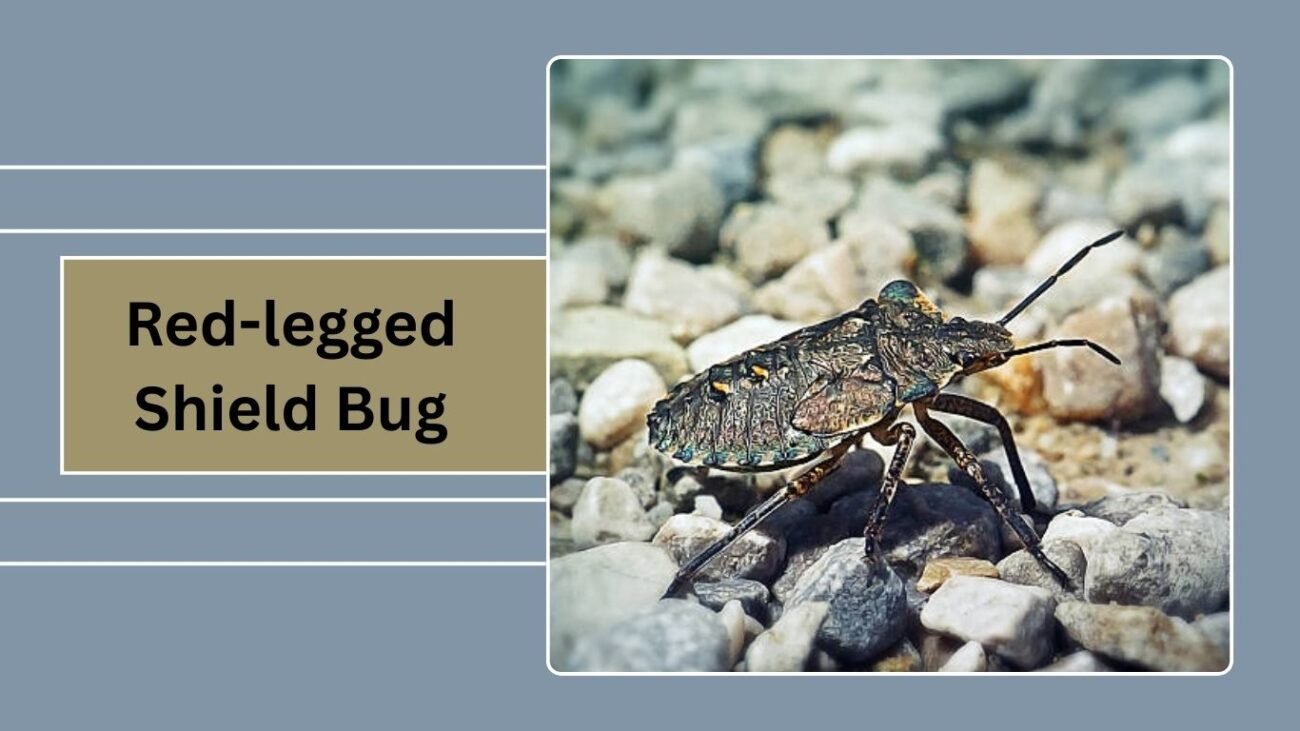
The Red-legged Shield Bug is a large, striking species commonly found in woodlands and gardens across Europe. It is often confused with the Forest Bug but is recognizable by its distinct reddish legs.
Identification
- Size: about 14–16 mm long
- Body is dark brown with a bronze or metallic sheen
- Distinctive reddish-orange legs (the main identifying feature)
- Strong, angular shoulders that give a more pointed outline
- Antennae with dark bands
Habitat
This species is widespread in Europe and prefers deciduous woodland habitats, particularly areas with oak trees. It can also be found in gardens, hedgerows, and orchards where host trees and plants are present.
Behavior
The Red-legged Shield Bug is most active from spring through autumn. Like other shield bugs, it uses chemical defenses, releasing a pungent odor when disturbed. Adults overwinter in leaf litter, under tree bark, or in sheltered spots.
Diet
Although it primarily feeds on the sap of oak trees, this bug is also partly predatory. It has been observed feeding on caterpillars and other small insects, making it beneficial in controlling certain pests.
9. Bishop’s Mitre Shield Bug (Aelia acuminata)
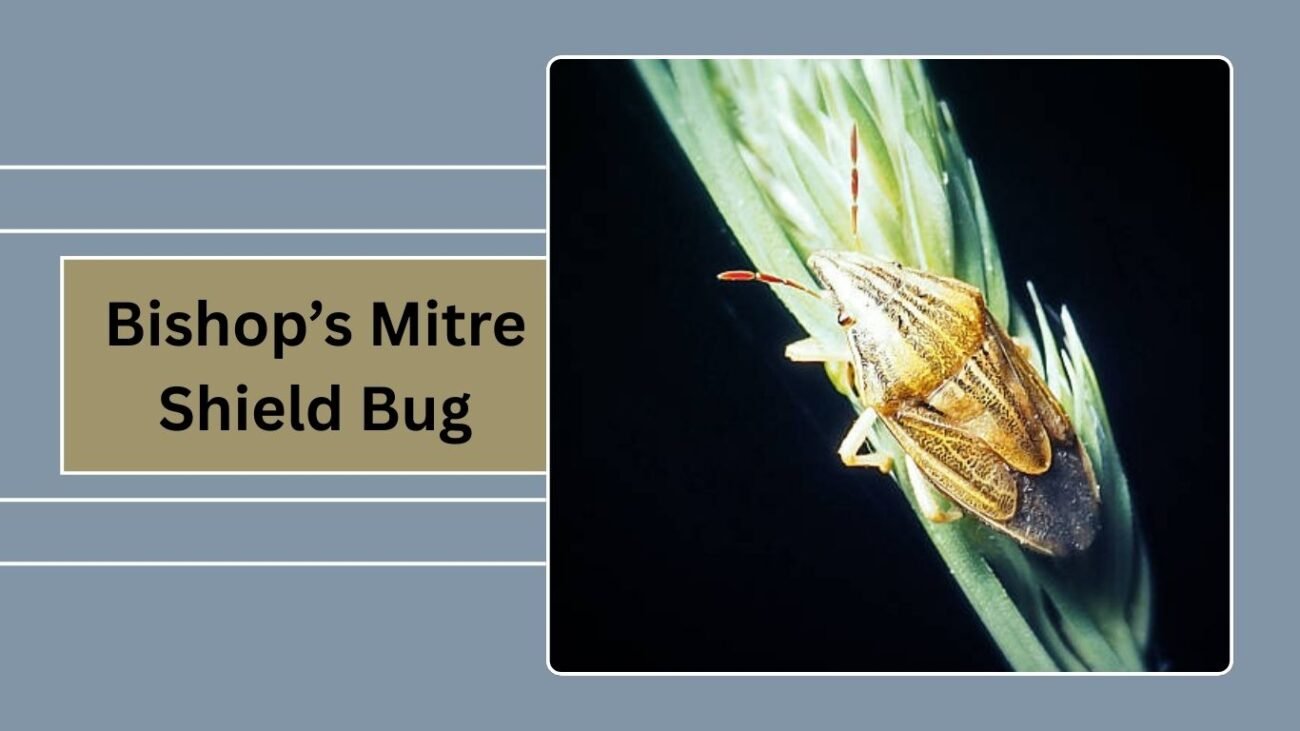
The Bishop’s Mitre Shield Bug gets its name from its pointed, helmet-like shape, resembling the headgear of a bishop. It is well adapted for living among grasses, where its narrow body shape provides excellent camouflage.
Identification
- Size: about 7–9 mm long (smaller than many other shield bugs)
- Long, narrow, shield-shaped body with pointed head
- Brown to straw-colored, perfectly blending with grasses
- Distinct ridges and patterns along the back, giving a “ribbed” look
- Antennae are thin and pale with darker tips
Habitat
This species is found in dry grasslands, meadows, heaths, and farmland. It is particularly associated with areas where wild grasses and cereal crops are abundant. Its straw-like coloring makes it well hidden among grasses.
Behavior
The Bishop’s Mitre Shield Bug is active in spring and summer, breeding on grass stems. It is less noticeable than brightly colored shield bugs due to its cryptic camouflage. Adults overwinter in grassy tussocks and emerge again the following year.
Diet
This species feeds exclusively on grasses and cereals, piercing stems and seeds to extract sap. It can sometimes be found on cultivated cereal crops such as wheat and barley, though it is not usually considered a major pest.
10. Dock Bug (Coreus marginatus)

The Dock Bug, sometimes mistaken for a shield bug, belongs to the squash bug family (Coreidae) but is often grouped with shield bugs due to its shape. It is a large, robust species commonly found in Europe and is easy to spot on dock plants.
Identification
- Size: 12–15 mm long
- Body elongated and brown, less rounded than true shield bugs
- Distinctive leaf-like expansions on the hind legs (a squash bug feature)
- Long antennae with reddish coloration at the base
- Shield-like outline, though narrower than most shield bugs
Habitat
Dock Bugs are found throughout Europe in gardens, fields, and woodland edges. They are strongly associated with dock plants and sorrels, where they breed and feed. They often bask in sunny spots on leaves during warm weather.
Behavior
This species is most active in spring and summer, often seen in pairs or small groups. Like true shield bugs, Dock Bugs release a strong odor when threatened. Adults overwinter in sheltered places such as leaf litter or under loose bark.
Diet
The Dock Bug feeds primarily on the sap of dock (Rumex) and sorrel plants. It uses its piercing mouthparts to suck juices from stems, leaves, and seeds. Though common, it is not considered a serious pest, as its feeding rarely causes significant plant damage.
11. Western Conifer Seed Bug (Leptoglossus occidentalis)
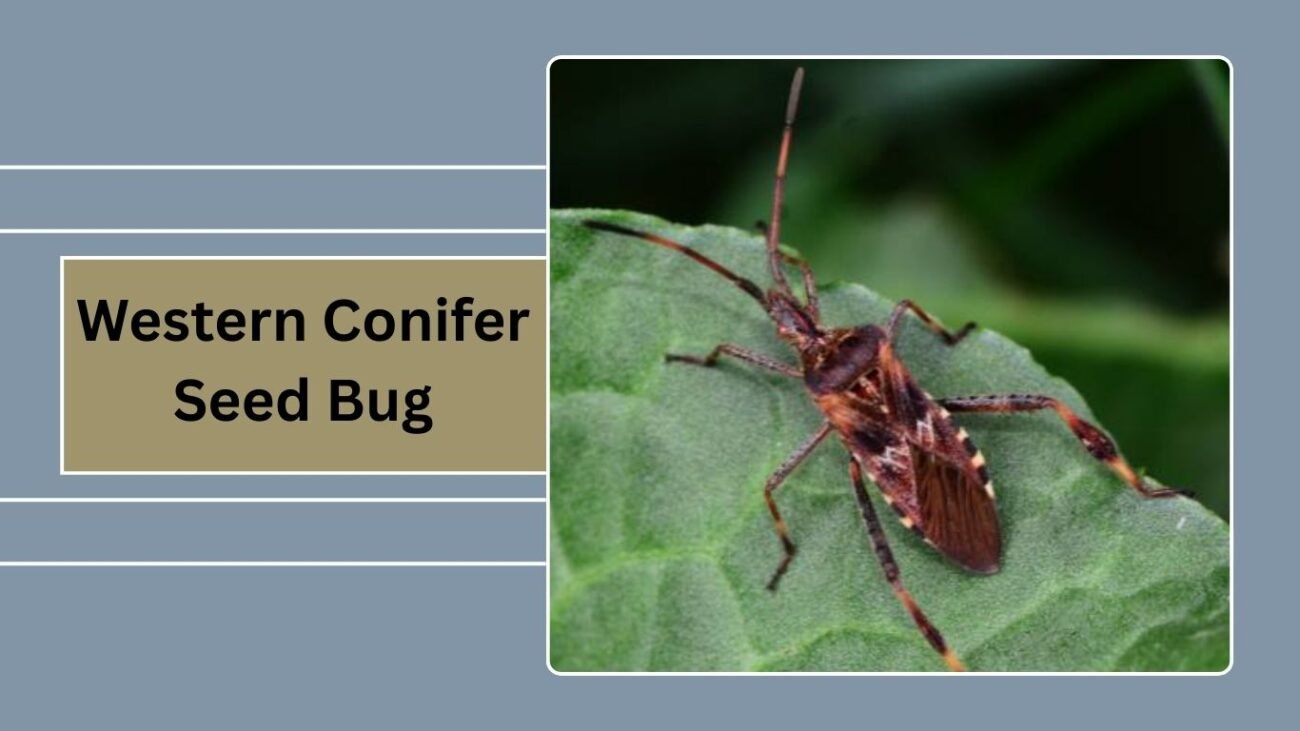
The Western Conifer Seed Bug is a large species originally from North America but now spread widely across Europe and other parts of the world. It is known for entering houses in autumn in search of shelter, often alarming people due to its size and buzzing flight.
Identification
- Size: 15–20 mm long, larger than many shield bugs
- Brownish body with a narrow, elongated shield shape
- Distinctive leaf-like expansions on the hind legs
- Long antennae, often banded in lighter and darker sections
- Pale zig-zag line across the wings (a key feature for recognition)
Habitat
This species is strongly associated with coniferous trees, especially pines. It inhabits forests, plantations, and parks, but during autumn it often wanders into buildings to overwinter. It is now well established across Europe and other continents due to accidental introductions.
Behavior
Western Conifer Seed Bugs are strong fliers and can cover large distances. They are most often noticed when they enter houses in autumn, seeking warmth and shelter for overwintering. Like other members of their family, they release a pungent odor when threatened or handled.
Diet
Their diet consists mainly of seeds from conifer trees, particularly pine, spruce, and fir. They use their piercing mouthparts to feed on developing seeds and cones, which can reduce seed production in forestry areas. While they are not dangerous to humans, they are considered a minor pest in conifer seed production.
12. Spined Soldier Bug (Podisus maculiventris)

The Spined Soldier Bug is a well-known predatory shield bug, valued in agriculture as a natural enemy of many crop pests. It is native to North America but has been used in biological control programs worldwide.
Identification
- Size: about 11–13 mm long
- Body shield-shaped, generally brown to mottled gray
- Prominent spines on the “shoulders” (pronotum), giving the species its name
- Pale yellow to tan underside with dark mottling
- Distinct sharp beak used for piercing prey
Habitat
This species inhabits woodlands, gardens, orchards, and agricultural fields. It thrives in environments where pest insects are abundant, especially areas with crops like corn, soybeans, and vegetables.
Behavior
The Spined Soldier Bug is an aggressive predator. Unlike most shield bugs that feed on plants, this species actively hunts caterpillars, beetle larvae, and other soft-bodied insects. It uses its piercing beak to inject enzymes and consume the internal fluids of its prey. When disturbed, it can also release the typical shield bug odor.
Diet
Its diet is primarily carnivorous. It feeds on many agricultural pests, including caterpillars of moths (armyworms, cutworms), beetle larvae (Colorado potato beetle), and other harmful insects. Due to its pest-control role, it is considered highly beneficial in farming and horticulture.
13. Brown Marmorated Stink Bug (Halyomorpha halys)

The Brown Marmorated Stink Bug is an invasive shield bug species originally from East Asia. It has spread across North America and Europe, where it is regarded as a major agricultural pest. Its tendency to invade homes in large numbers during autumn makes it especially notorious.
Identification
- Size: about 12–17 mm long
- Shield-shaped body, mottled brown and gray (“marmorated” means marbled)
- Alternating dark and light bands on antennae
- Distinctive white banding on the edges of the abdomen (visible from above)
- Broad, flat shoulders and wide shield shape
Habitat
Native to China, Japan, and Korea, it has now spread across North America and Europe. It thrives in farmlands, orchards, gardens, and urban areas. In colder seasons, it often seeks shelter in houses, barns, and other buildings to overwinter.
Behavior
Brown Marmorated Stink Bugs are highly adaptable and reproduce quickly, with multiple generations per year in warmer regions. In autumn, they gather in large numbers and invade buildings for winter hibernation. They release a strong odor when crushed or threatened.
Diet
This species feeds on a wide range of plants, including fruits, vegetables, and field crops. Common targets include apples, peaches, pears, soybeans, corn, and tomatoes. Their piercing mouthparts cause blemishes and deformities in fruits, leading to significant economic damage in agriculture.
14. Tortoise Shield Bug (Eurygaster testudinaria)

The Tortoise Shield Bug is a small, rounded species with a distinctive domed shape that resembles a tortoise shell, giving it excellent camouflage in grassy environments. It is one of the less colorful shield bugs but still easily identifiable by its shape.
Identification
- Size: about 6–8 mm long, smaller than most shield bugs
- Rounded, almost circular shield-shaped body
- Brown to gray mottled coloring, resembling a tortoise shell
- Head is short and tucked under the pronotum
- Antennae short and dark, often difficult to see against the body
Habitat
This species is found across Europe and parts of Asia, inhabiting meadows, grasslands, and agricultural fields. It is especially associated with areas where cereals and grasses are abundant, often blending perfectly with dry vegetation.
Behavior
Tortoise Shield Bugs are active in summer, spending much of their time on grasses and low vegetation. They are less noticeable than larger, brightly colored shield bugs due to their excellent camouflage. Adults overwinter in grass tussocks or leaf litter, emerging again in spring.
Diet
This bug feeds primarily on grasses and cereal crops, piercing stems and seeds to suck out plant juices. Although widespread, it is generally not considered a major agricultural pest, but in large numbers it can cause some damage to cereal fields.
15. Juniper Shield Bug (Cyphostethus tristriatus)
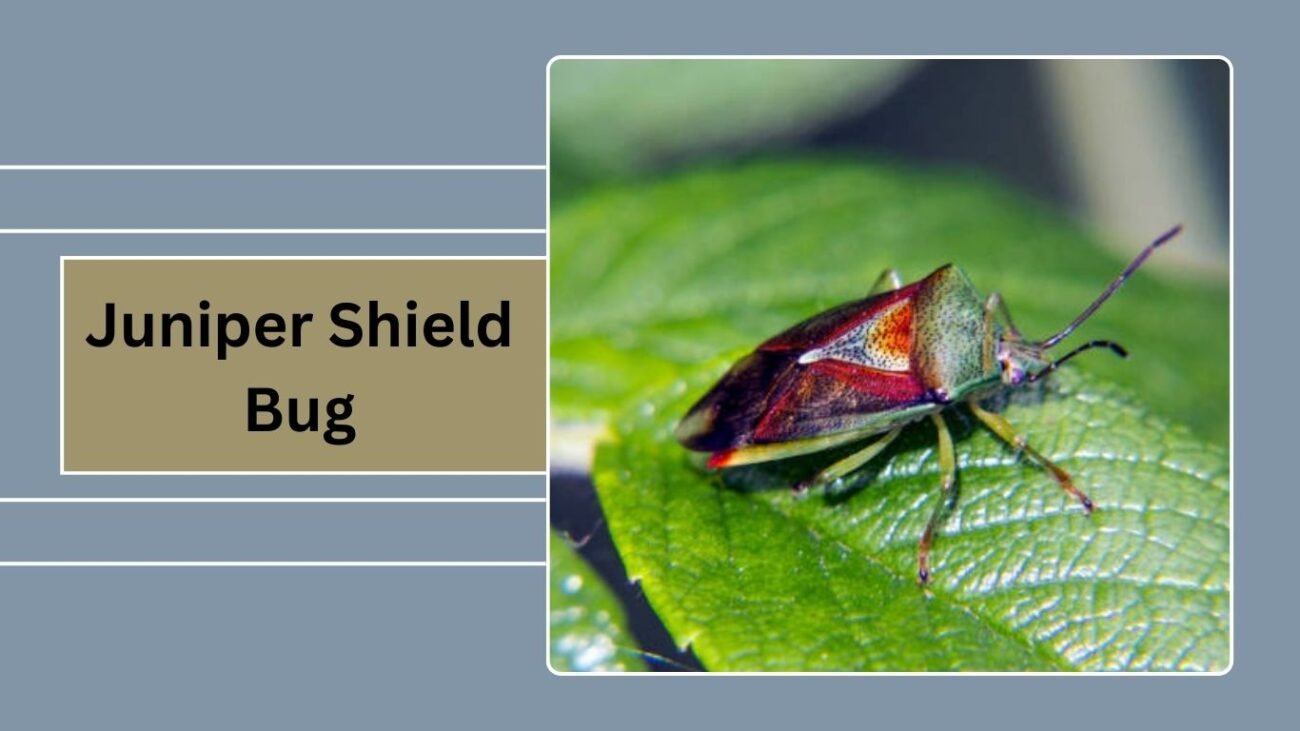
The Juniper Shield Bug is a bright and colorful species that has become more common in recent years, particularly in urban areas. It is closely associated with juniper and cypress plants, making it a frequent garden visitor where these shrubs are grown.
Identification
- Size: about 10–12 mm long
- Distinct shield shape with a bright green body
- Reddish-brown markings along the wings and pronotum
- Three pale stripes running down the scutellum (hence “tristriatus”)
- Antennae dark with lighter tips
Habitat
This bug is primarily associated with juniper and cypress plants. It is often found in gardens, parks, and ornamental landscapes where these conifers are planted. Originally more restricted, it has expanded its range and is now common across much of Europe, especially in towns and cities.
Behavior
The Juniper Shield Bug is active during spring and summer, mating and laying eggs on host plants. It overwinters as an adult, often finding shelter in leaf litter or at the base of host plants. It is harmless to humans but will release a strong odor if handled roughly.
Diet
Its diet is almost entirely based on juniper and cypress seeds and sap. It pierces seed cones and plant tissues to extract juices. While common in gardens, it is not considered a serious pest and rarely causes noticeable damage to ornamental plants.