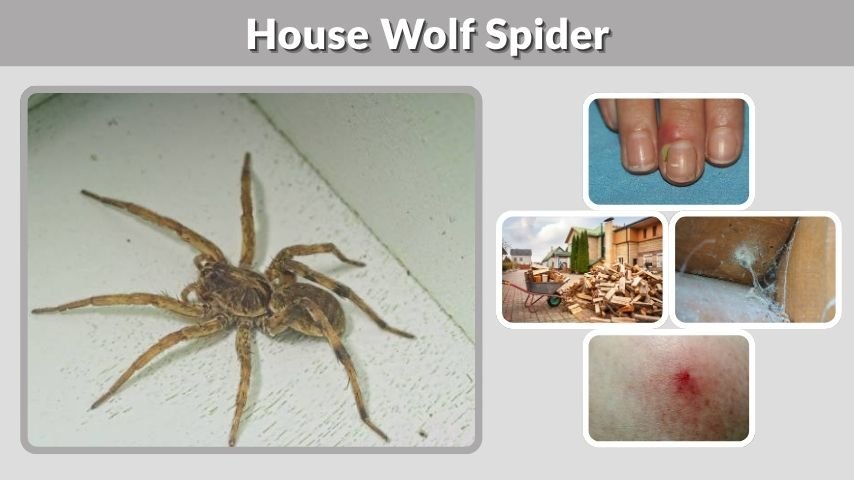
A house wolf spider is usually a wolf spider that has wandered indoors while searching for insects, shelter, warmth, or moisture. These spiders can look alarming because they are fast, brown or black, and often large. However, wolf spiders are not aggressive toward people and usually prefer to escape. This guide explains how to identify a wolf spider in the house, whether it is dangerous, and what to do if you find one.
What Is a House Wolf Spider?
A house wolf spider is not a separate species. It is a common name people use when they find a wolf spider inside the home. Wolf spiders belong to the family Lycosidae and are known for hunting prey on the ground instead of catching insects in webs.
Why Wolf Spiders Enter Houses
Wolf spiders usually live outdoors in grass, leaves, mulch, gardens, fields, and around foundations. When one appears inside, it often entered by accident.
Common reasons include:
- Searching for insects
- Escaping cold or hot weather
- Looking for moisture
- Entering through door gaps
- Following prey indoors
- Hiding in boxes, firewood, or outdoor items
A single wolf spider in your house does not always mean there is an infestation.
Are Wolf Spiders House Spiders?
Wolf spiders are not typical house spiders. Common house spiders often build webs in corners, windows, and ceilings. Wolf spiders are active hunters and usually stay on the floor, along walls, or in dark storage areas.
They may survive indoors for a while if insects are available, but they generally prefer outdoor habitats.
What Does a Wolf Spider Look Like in the House?
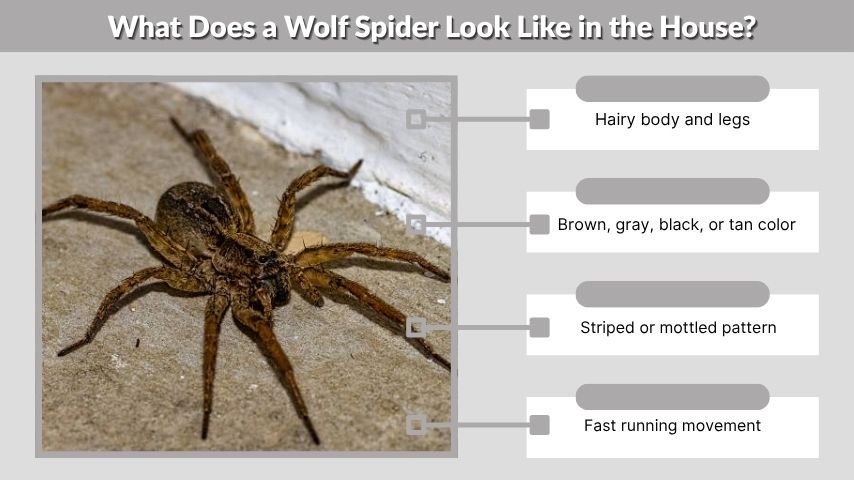
Wolf spiders can vary in size and color, but most have a strong, hairy body and long legs built for running. They are often mistaken for other brown or black house spiders.
House Wolf Spider Identification
A wolf spider in the house usually has a brown, gray, tan, or blackish body with stripes or mottled markings. It may move quickly across floors, basements, garages, or laundry rooms.
Common identification signs include:
- Hairy body and legs
- Brown, gray, black, or tan color
- Striped or mottled pattern
- Fast running movement
- Large forward-facing eyes
- Stocky body shape
- No web used for catching prey
- Often found at ground level
Wolf spiders are usually more robust than common house spiders.
House Wolf Spider Size
House wolf spider size depends on the species, sex, and age. Some are small, while others look large enough to scare homeowners. Females are often bigger than males.
A big wolf spider in the house may look dangerous, but size alone does not mean it is harmful. Many large wolf spiders are simply mature females or naturally large species.
House Wolf Spider vs House Spider
Wolf spiders and common house spiders are easy to confuse because both may appear indoors. However, their behavior and body shape are different.
Main Differences
Common house spiders usually build webs and wait for prey. Wolf spiders do not use webs to trap insects. They run, chase, and pounce on prey instead.
A wolf spider is more likely to be seen moving across the floor. A house spider is more likely to stay near a web in a corner, ceiling, window frame, or storage area.
Comparison Table
| Feature | House Wolf Spider | Common House Spider |
|---|---|---|
| Body shape | Stocky, hairy, strong legs | Smaller or more delicate |
| Movement | Fast ground runner | Often stays near web |
| Web use | Does not trap prey in webs | Builds webs to catch insects |
| Common location | Floors, basements, garages | Corners, ceilings, windows |
| Bite risk | Low, may bite if handled | Low, usually harmless |
| Pest control | Hunts insects directly | Traps insects in webs |
Black House Spider vs Wolf Spider
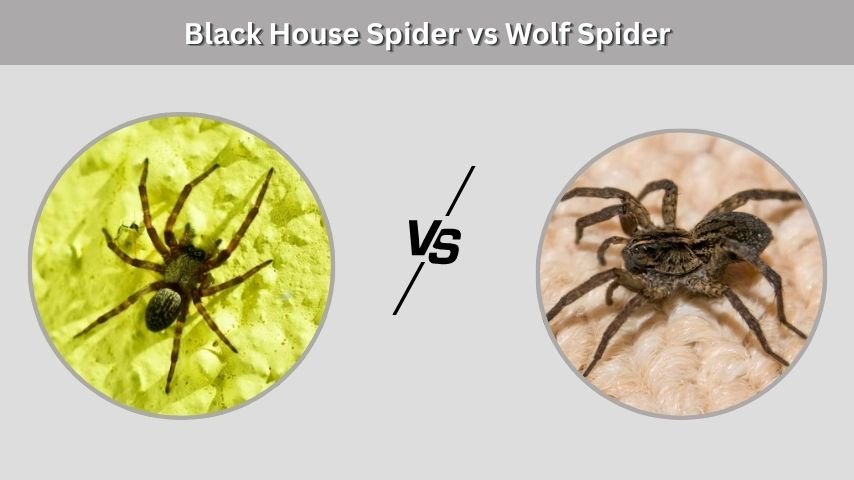
Some people search for black house wolf spiders because dark wolf spiders can look similar to black house spiders. The names can be confusing, but these are usually different spiders.
Black House Spider Appearance
Black house spiders are often dark brown or black and usually live near messy webs. They may be found around windows, walls, sheds, fences, or sheltered corners.
They are web-building spiders. If the spider stays close to a web, it is less likely to be a wolf spider.
Black Wolf Spider in House
A black wolf spider in the house may be a dark-colored wolf spider species. It will usually have a more athletic body, stronger legs, and hunting behavior.
If it runs quickly along the floor and does not stay near a web, it may be a wolf spider rather than a black house spider.
Giant House Spider vs Wolf Spider
A giant house spider and a wolf spider can both be large and fast. This often causes confusion.
Is a Giant House Spider a Wolf Spider?
No, a giant house spider is not a wolf spider. They belong to different spider groups. Giant house spiders often have long, thin legs and may stay near funnel-like webs. Wolf spiders are usually stockier, hairier, and more ground-focused.
How to Tell Them Apart
A giant house spider often looks leggy and may be seen around walls, corners, or webbed areas. A wolf spider looks stronger and heavier, with a more rugged body.
The easiest clue is web use. Giant house spiders are linked with webs. Wolf spiders usually hunt without prey-catching webs.
Brown Recluse, House Spider, and Wolf Spider
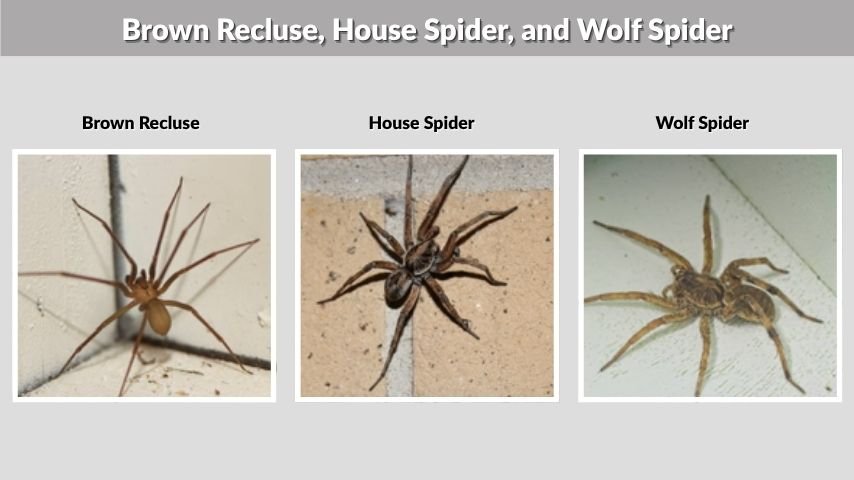
Brown recluse spiders are often confused with wolf spiders because both can be brown. This matters because brown recluse bites can be more serious.
Brown Recluse vs House Wolf Spider
A brown recluse is usually smoother, plainer, and less hairy than a wolf spider. It may have a violin-shaped marking on its back, though markings are not always easy to see.
Wolf spiders usually have hairy legs, striped patterns, and larger-looking eyes. They are also more likely to run in open areas, while brown recluse spiders prefer dark, quiet, undisturbed places.
When to Be Careful
Do not handle any unknown brown spider with bare hands. If you are unsure whether it is a wolf spider or brown recluse, take a clear photo from a safe distance or use a container to trap it.
Be extra careful with spiders found in:
- Shoes
- Clothing piles
- Storage boxes
- Closets
- Attics
- Basements
- Dark corners
- Under furniture
These are common hiding places for many spiders.
House Wolf Spider Bite
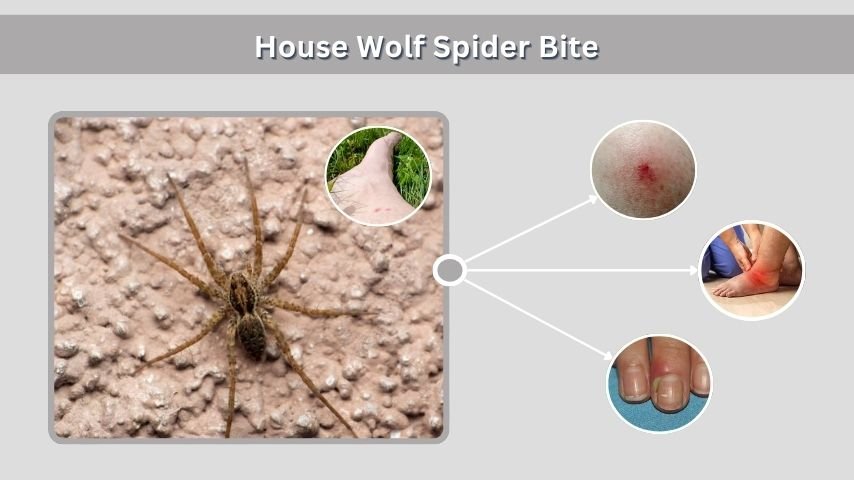
A house wolf spider can bite, but bites are uncommon. Wolf spiders usually run away unless they are trapped, squeezed, or handled.
Are House Wolf Spiders Poisonous?
Wolf spiders are venomous, like most spiders, but they are not considered highly dangerous to people. Their venom is used to subdue insects and other small prey.
The word “poisonous” is often used casually, but “venomous” is more accurate. A wolf spider bite may irritate the skin, but it is usually not serious for most people.
What Does a Wolf Spider Bite Feel Like?
A wolf spider bite may feel like a sharp pinch or mild sting. Symptoms are usually local and may include redness, swelling, itching, tenderness, or mild pain.
Most mild bites improve with simple care. Wash the area, apply a cold compress, and keep it clean.
When to Seek Medical Help
Medical care may be needed if symptoms become severe or unusual. Seek help if you notice:
- Spreading redness
- Severe swelling
- Increasing pain
- Pus or infection signs
- Fever or chills
- Dizziness
- Trouble breathing
- A dark or worsening wound
If possible, save a photo of the spider for identification.
Why Is There a Wolf Spider in My House?
A wolf spider in your house is usually there because the conditions allowed it to enter. It may not be trying to live there permanently.
Common Entry Points
Wolf spiders can enter through small openings around the home. They may also come in with outdoor items.
Common entry points include:
- Gaps under doors
- Cracks in foundations
- Open windows
- Damaged screens
- Garage doors
- Basement gaps
- Firewood
- Outdoor storage boxes
- Patio furniture
Sealing entry points can reduce future spider sightings.
Does One Wolf Spider Mean Infestation?
One wolf spider does not usually mean infestation. Wolf spiders are solitary hunters, not social insects. They do not build colonies like ants or termites.
However, seeing many wolf spiders indoors may mean your home has insects, clutter, or entry points attracting them.
Wolf Spider Nest in House
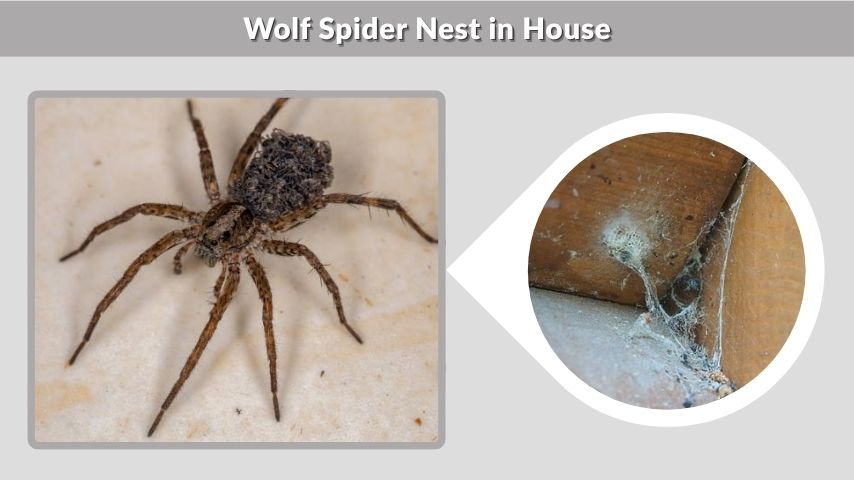
People sometimes worry about a wolf spider nest in the house. Wolf spiders do not build nests in the same way many pests do.
Do Wolf Spiders Build Web Nests?
Wolf spiders do not build web traps to catch prey. Some species may make silk-lined retreats or burrows, but they are not known for building messy indoor webs like common house spiders.
Female wolf spiders carry their egg sacs attached to their bodies. After the eggs hatch, the spiderlings ride on the mother’s back for a short time.
Baby Wolf Spiders in House
If you see many tiny spiders near a larger wolf spider, they may be spiderlings that recently left the mother. This can be unsettling, but they usually disperse.
Vacuuming carefully and sealing entry points can help manage the situation indoors.
Should I Kill a Wolf Spider in My House?
You do not have to kill a wolf spider if it can be safely removed. Wolf spiders are beneficial because they eat insects.
Why You May Want to Leave It Alone
Wolf spiders help control pests such as flies, crickets, roaches, beetles, and other insects. Outdoors, they are valuable predators.
However, many people do not want large spiders inside the home. In that case, relocation is a better option than killing.
How to Remove a Wolf Spider From the House
You can remove a wolf spider safely without touching it.
Use these steps:
- Place a cup or container over the spider.
- Slide stiff paper underneath.
- Keep the container level.
- Carry it outside carefully.
- Release it away from doors and windows.
- Seal the entry point if you can find it.
Do not pick up a wolf spider with bare hands.
How to Get Rid of Wolf Spiders in the House
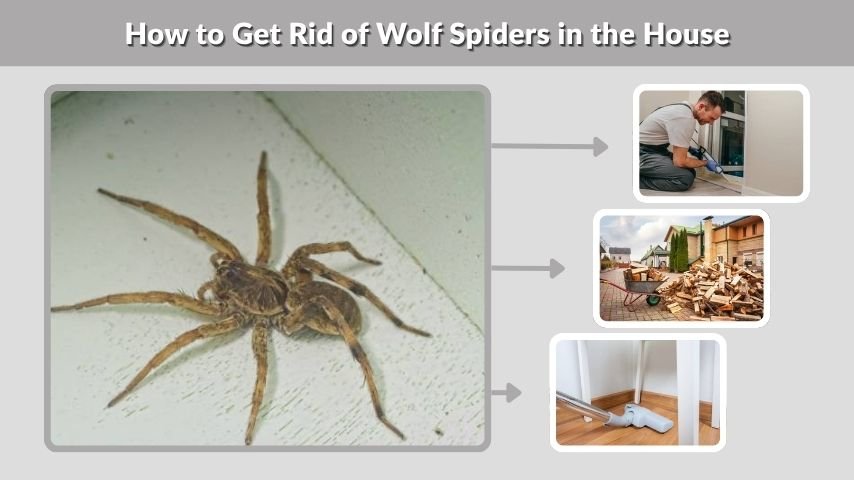
The best way to get rid of wolf spiders is to remove what attracts them and block how they enter.
Prevention Tips
To reduce wolf spiders indoors:
- Seal cracks and gaps.
- Install door sweeps.
- Repair screens.
- Reduce basement and garage clutter.
- Vacuum corners and baseboards.
- Keep storage boxes sealed.
- Move firewood away from the house.
- Trim vegetation near the foundation.
- Reduce indoor insects.
- Turn off unnecessary outdoor lights at night.
Outdoor lights attract insects, and insects attract wolf spiders.
When to Call Pest Control
If you keep finding wolf spiders indoors, or if you suspect brown recluse spiders, professional pest control may help. A pest expert can inspect entry points, identify spider species, and reduce insect prey around the home.
This is especially useful if you are seeing spiders repeatedly in bedrooms, basements, garages, or storage areas.
Are Wolf Spiders Good for the House?
Wolf spiders are good in the sense that they eat pests. However, most people prefer them outside rather than indoors.
Natural Pest Control
Wolf spiders eat many unwanted insects. They can help reduce pests around gardens, lawns, sheds, and foundations.
Their presence may mean there is a food source nearby. Reducing insects often reduces spider activity.
Best Place for Wolf Spiders
The best place for a wolf spider is outdoors, away from living spaces. If you find one indoors, relocate it outside and focus on prevention.
FAQs
Why is there a wolf spider in my house?
A wolf spider may enter your house while searching for insects, shelter, moisture, or warmth. It can come through gaps under doors, cracks, windows, basements, garages, or outdoor items brought inside. One wolf spider does not always mean you have an infestation.
Are house wolf spiders dangerous?
House wolf spiders are not usually dangerous to people. They can bite if handled or trapped, but most bites cause mild redness, swelling, itching, or pain. Severe reactions are uncommon, but worsening symptoms should be checked by a medical professional.
Should I kill a wolf spider in my house?
You do not need to kill a wolf spider if it can be safely removed. Wolf spiders are beneficial because they eat insects. Use a cup and paper to move it outdoors, then seal entry points to keep more spiders from coming inside.
How do I get a wolf spider out of my house?
Place a cup or container over the wolf spider, slide stiff paper underneath, and carry it outside. Release it away from doors and windows. Avoid using your bare hands because the spider may bite if squeezed or trapped.
Is a wolf spider the same as a house spider?
No, a wolf spider is not the same as a common house spider. Wolf spiders are active hunters that run on the ground and do not use webs to catch prey. Common house spiders usually build webs in corners, windows, or ceilings.