Although the UK is home to many harmless spiders, several species are known to bite when provoked. Most of these bites are mild and cause only minor irritation, similar to insect stings. However, understanding which spiders are capable of biting—and where they’re commonly found—can help you avoid unwanted encounters, especially in homes, gardens, or while exploring the outdoors. Below is a list of 14 spiders in the UK that are known to bite, along with their identifying features, habitats, and how dangerous their bites really are.
1. False Widow Spider
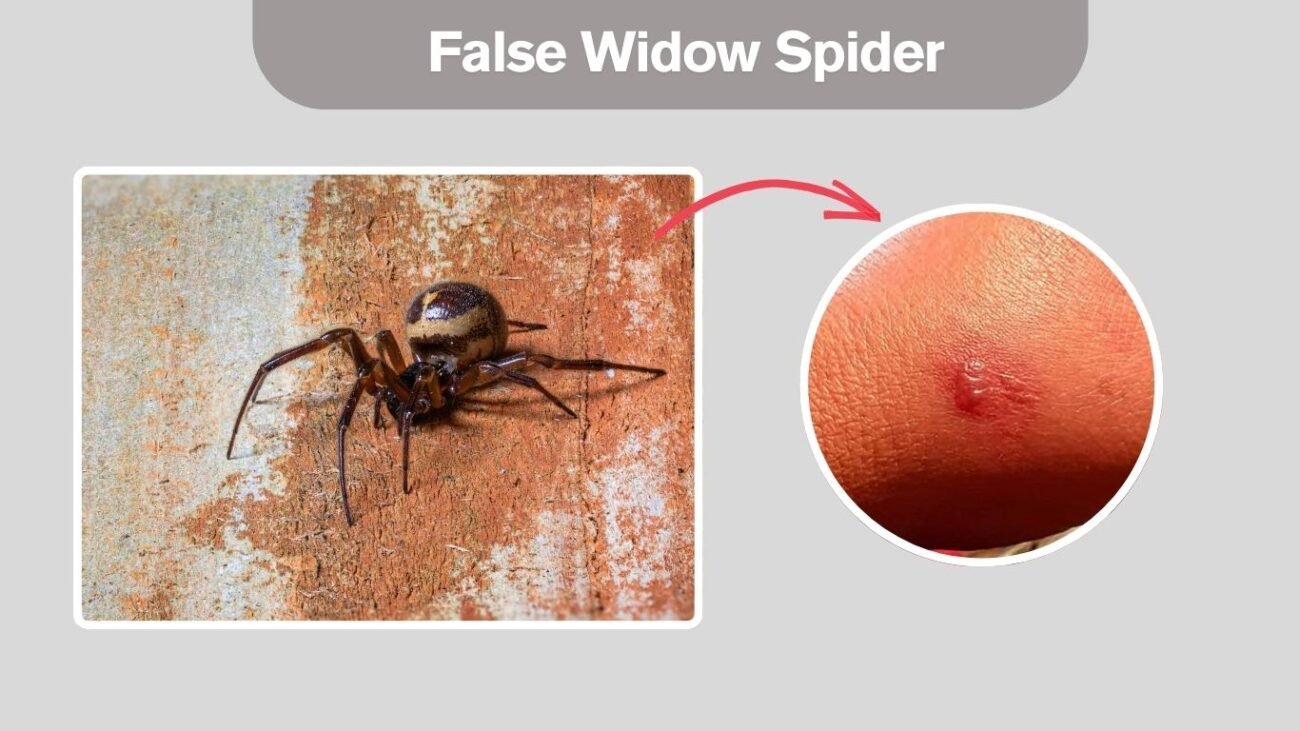
The False Widow Spider is the most infamous biting spider in the UK. Often mistaken for the more dangerous Black Widow, it has gained a reputation for its painful but generally mild bite. This spider is well adapted to urban environments and is commonly found inside homes, especially during cooler months.
Identification
- Scientific Name: Steatoda nobilis
- Color: Dark brown or purplish-black with a creamy, skull-like pattern on the abdomen
- Size: Body length ranges from 9 to 14 mm
- Legs: Orangey-brown, long and slender
- Web: Sticky, irregular webs often built in dark corners of buildings or sheds
Where It’s Found in the UK
False Widows are widespread in southern England and coastal regions like Devon, Cornwall, and the southern coast. They are also common in towns and cities like London and Brighton. Due to climate change, they’re now appearing more frequently in the Midlands, Wales, and even parts of northern England. These spiders prefer warm, dry environments and often nest in garages, lofts, window frames, and behind radiators.
Is the Bite Dangerous?
The bite of a False Widow Spider is typically no worse than a wasp sting. It causes localized pain, redness, swelling, or a numb sensation. In some rare cases, people may feel dizziness, nausea, or mild fever-like symptoms. Most bites resolve without medical treatment, but it’s best to clean the area and apply a cold compress.
When Are They Active?
False Widow Spiders are active year-round, especially indoors. They become more noticeable in late summer and autumn when males wander in search of females. In winter, they stay hidden in warm areas of homes. Because they thrive in artificial heat, sightings indoors are common even during the coldest months.
2. Woodlouse Spider
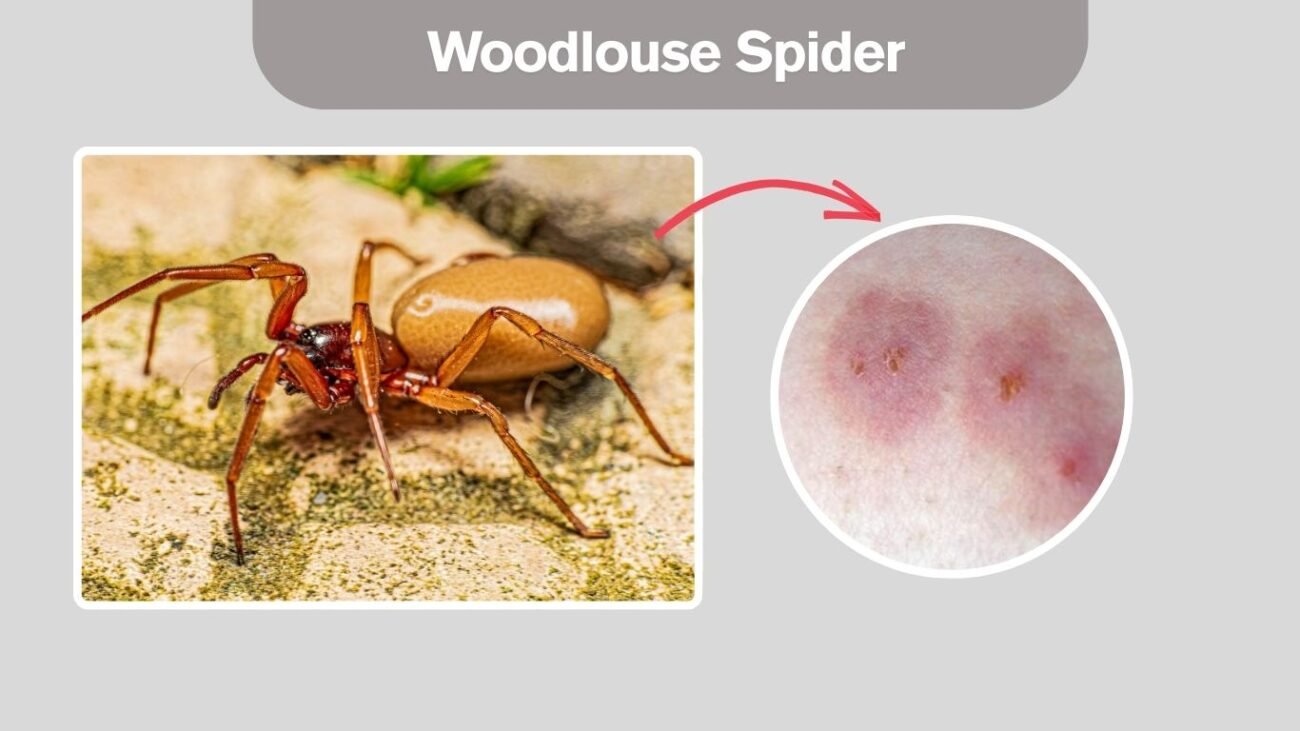
The Woodlouse Spider is a lesser-known biter in the UK but is easily recognized by its reddish body and strong jaws. It feeds primarily on woodlice and is often found in damp, dark places like under logs, stones, or garden debris. Despite its fearsome look, its bite is rarely serious.
Identification
- Scientific Name: Dysdera crocata
- Color: Reddish-brown cephalothorax with a pale, creamy abdomen
- Size: 10–15 mm body length
- Legs: Reddish with prominent forward-facing fangs
- Web: Does not build traditional webs; hunts prey actively
Where It’s Found in the UK
Commonly found across most of the UK, especially in gardens, sheds, compost heaps, and under stones. It prefers moist, sheltered environments where woodlice are abundant. It occasionally enters homes in search of prey.
Is the Bite Dangerous?
Its bite can break the skin and may cause a sharp stinging sensation followed by redness and swelling. Some people report itchiness or mild discomfort for a day or two, but it rarely requires treatment. This spider only bites in self-defense.
When Are They Active?
Woodlouse Spiders are most active from spring to early autumn, although they can be found year-round in warmer indoor environments or well-insulated garden structures.
3. Lace Web Spider

Lace Web Spiders are fast-moving and often seen darting around outdoor walls, fences, or brickwork after rain. Their bite is one of the more commonly reported in the UK, but symptoms are generally mild unless allergic reactions occur.
Identification
- Scientific Name: Amaurobius similis or Amaurobius ferox
- Color: Brown with mottled patterns on the abdomen
- Size: 8–12 mm body length
- Legs: Stout, hairy legs often banded with darker markings
- Web: Messy, lace-like web often near wall crevices or garden furniture
Where It’s Found in the UK
Very common across the UK. Found on garden fences, brick walls, and inside garages or under windowsills. They are also seen around compost bins or woodpiles. Urban and rural areas both provide suitable environments.
Is the Bite Dangerous?
Bites can cause localized pain and swelling. The sensation is sometimes described as similar to a bee sting. Serious symptoms are very rare. People with sensitive skin might experience prolonged itching or mild inflammation.
When Are They Active?
Lace Web Spiders are most active during late summer and autumn, especially after rain. They may also appear indoors when searching for shelter or during mating season.
4. Tube Web Spider

The Tube Web Spider is one of the more intimidating spiders in the UK, known for its fast movements and vivid green fangs. Though its appearance may be alarming, its bite is not dangerous to most people—though it can be painful due to its strong jaws.
Identification
- Scientific Name: Segestria florentina
- Color: Shiny black or dark brown body with metallic green fangs
- Size: Females up to 22 mm, males smaller
- Legs: Long and thick, with the front six legs pointing forward
- Web: Tubular silk tunnel in cracks or holes in walls
Where It’s Found in the UK
Most common in southern England, especially in cities like London, Bristol, and coastal towns. Typically found in brick walls, air vents, or gaps in stonework of older buildings. Its range is slowly expanding northward.
Is the Bite Dangerous?
The bite is often described as more painful than a wasp sting, causing sharp pain, swelling, and sometimes bruising. It may take a few hours to subside, but complications are rare. Medical attention is rarely needed.
When Are They Active?
Most active from spring through late autumn, particularly at night when they wait in their silk tunnels to ambush prey. They are less active in winter but may still be found in warmer indoor crevices.
5. Noble False Widow
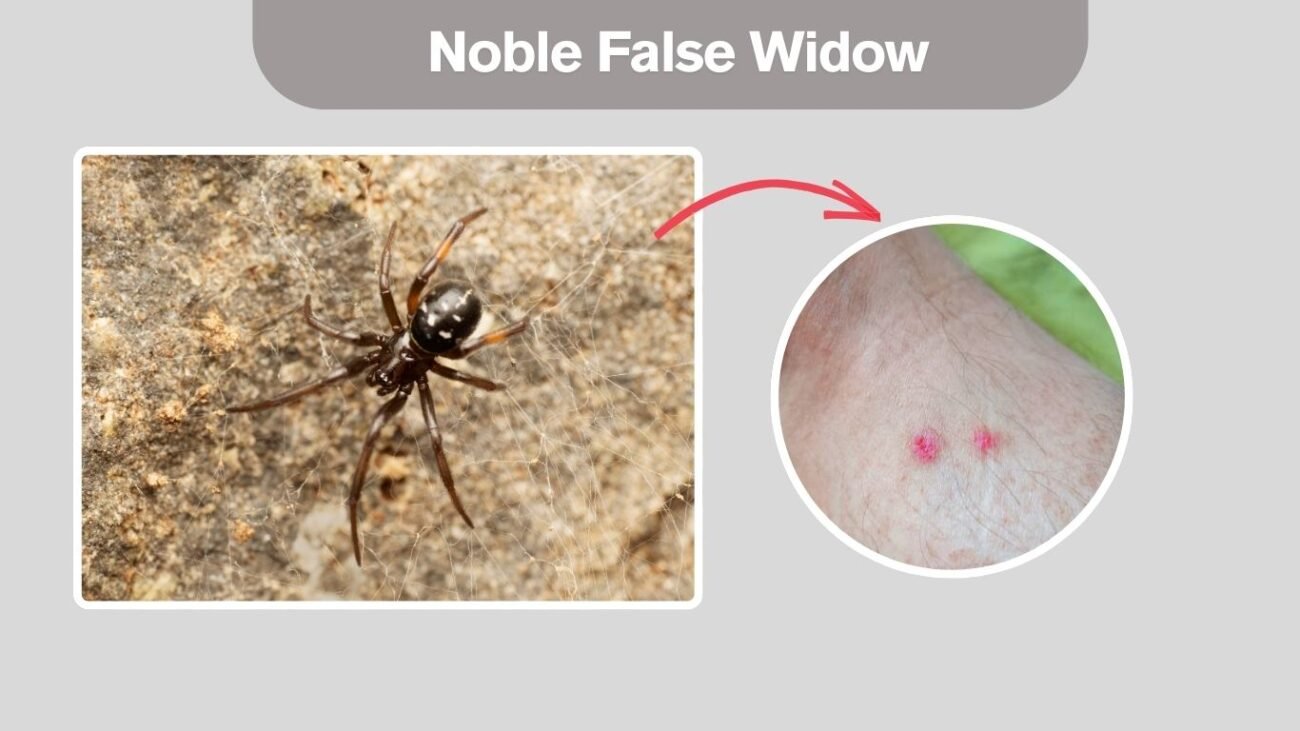
Often confused with the common False Widow, the Noble False Widow is slightly larger and more likely to bite humans. It is one of the most established biting spiders in the UK and is frequently reported in homes and buildings.
Identification
- Scientific Name: Steatoda nobilis
- Color: Glossy dark brown or black with a cream or beige abdominal marking
- Size: Females up to 15 mm, males slightly smaller
- Legs: Orangey-brown, relatively long and thin
- Web: Messy, tangled webs in corners, behind furniture, or outside buildings
Where It’s Found in the UK
Common throughout southern and western England, especially in coastal regions. Increasingly seen in Wales, the Midlands, and even parts of Scotland. Frequently enters homes, especially in colder weather.
Is the Bite Dangerous?
The bite is mild for most people—typically causing local swelling, burning, and redness. Some may experience a dull ache or mild flu-like symptoms. Serious reactions are rare but can occur in sensitive individuals.
When Are They Active?
They are present year-round, with peak activity during the warmer months. Indoors, they remain active even in winter, often hidden in warm, dry areas like airing cupboards, attics, and wall crevices.
6. Zebra Jumping Spider
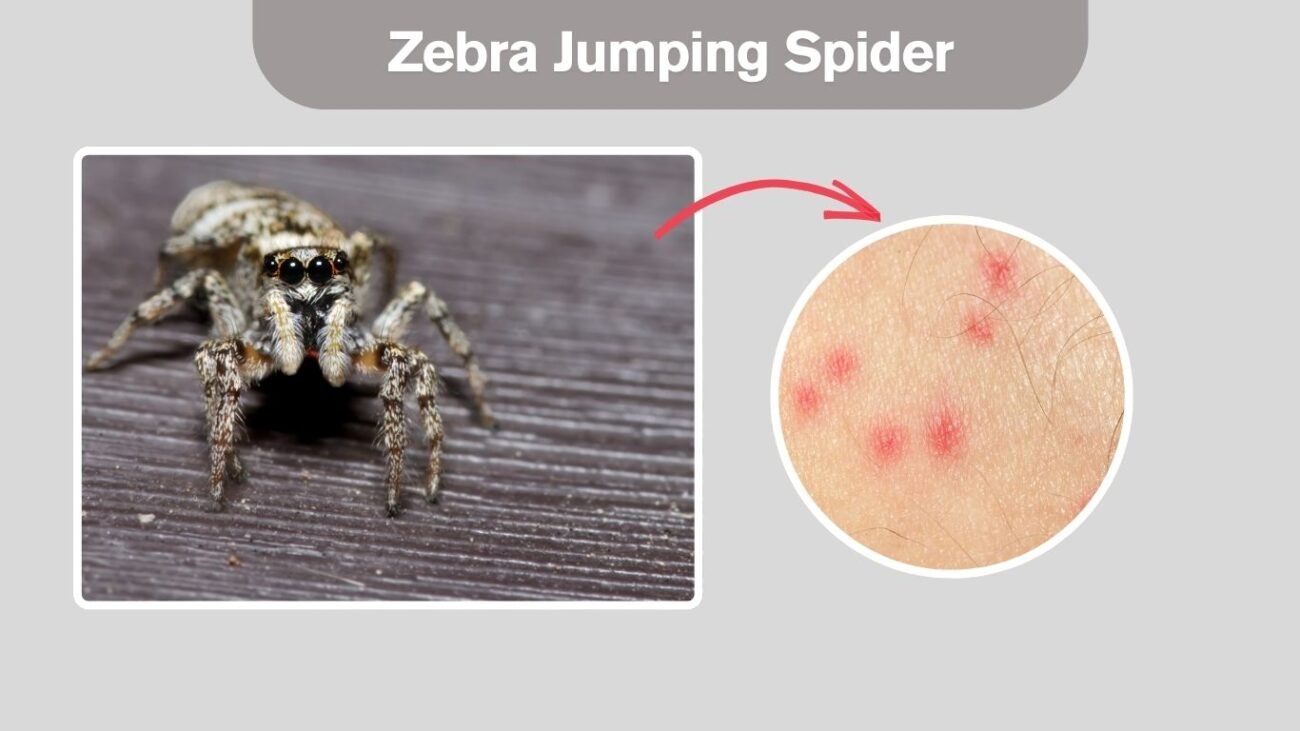
The Zebra Jumping Spider is a small but bold spider found across the UK. Despite its tiny size, it’s known for its quick movements and excellent vision. While bites are extremely rare, they are possible if the spider feels trapped or provoked.
Identification
- Scientific Name: Salticus scenicus
- Color: Black and white stripes resembling a zebra pattern
- Size: 5–7 mm body length
- Legs: Short and strong, adapted for jumping
- Web: Does not build webs to catch prey—actively hunts instead
Where It’s Found in the UK
Widespread throughout the UK in gardens, on walls, window ledges, and fences. Often seen basking in the sun on stone surfaces. Common in both rural and urban areas.
Is the Bite Dangerous?
Bites are extremely uncommon due to its small size and shy nature. If a bite occurs, it may cause a minor red bump or slight itching. No serious medical issues have been reported from this species.
When Are They Active?
Zebra Jumping Spiders are most active during warm, sunny months—spring through late summer. They are diurnal, meaning they hunt and move around during the day.
7. Walnut Orb-Weaver Spider
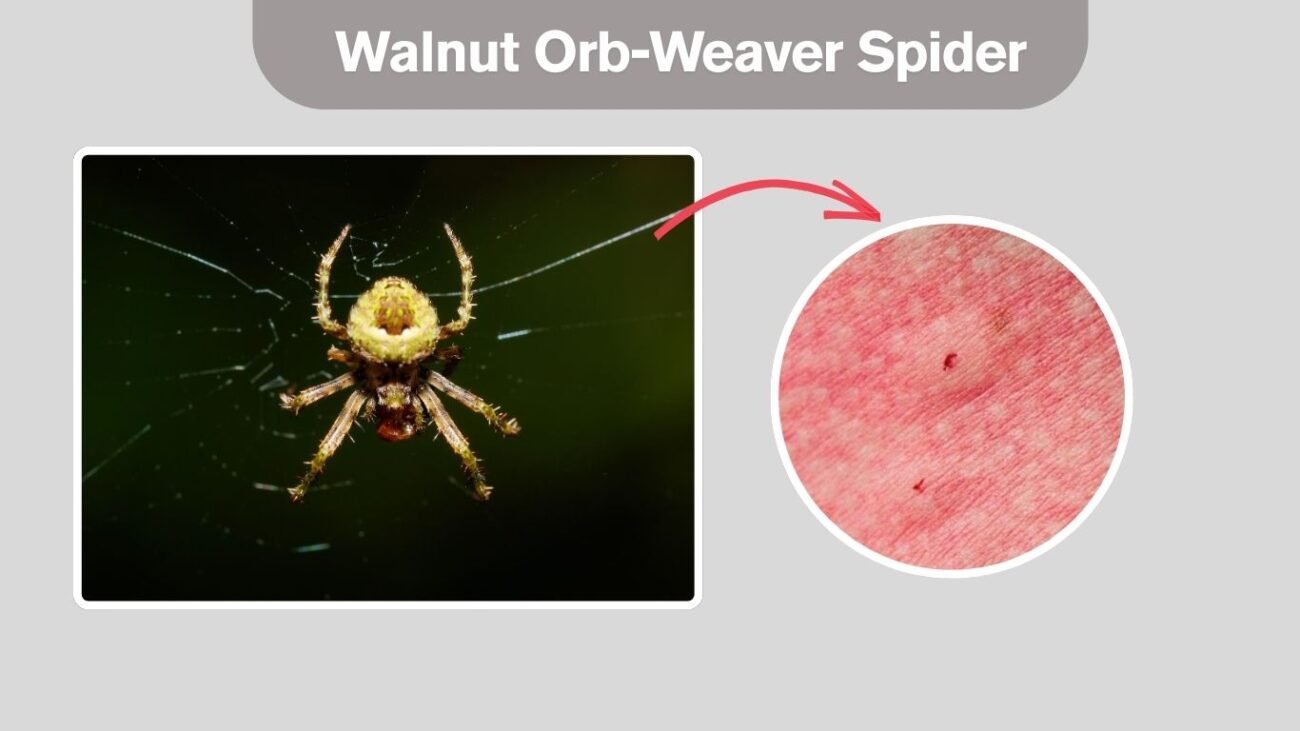
The Walnut Orb-Weaver is a compact, round-bodied spider that sometimes bites when disturbed. Though it’s not aggressive, it can deliver a mild bite if pressed against the skin accidentally.
Identification
- Scientific Name: Nuctenea umbratica
- Color: Dark brown or reddish-brown with a wrinkled, leaf-like abdomen
- Size: 9–14 mm body length
- Legs: Flattened body and legs adapted for hiding in narrow gaps
- Web: Circular orb web, usually built at night
Where It’s Found in the UK
Common in southern and central England, often hiding in wooden fences, behind bark, under loose stones, or cracks in buildings. Can also be found indoors behind furniture or window frames.
Is the Bite Dangerous?
The bite is mild and usually only happens if the spider is trapped against the skin. It may cause redness, slight swelling, or an itchy bump. Symptoms disappear within a day or two.
When Are They Active?
Nocturnal and most active from spring through autumn. During the day, they hide in narrow crevices, only emerging at night to build their web and hunt.
8. Garden Cross Spider
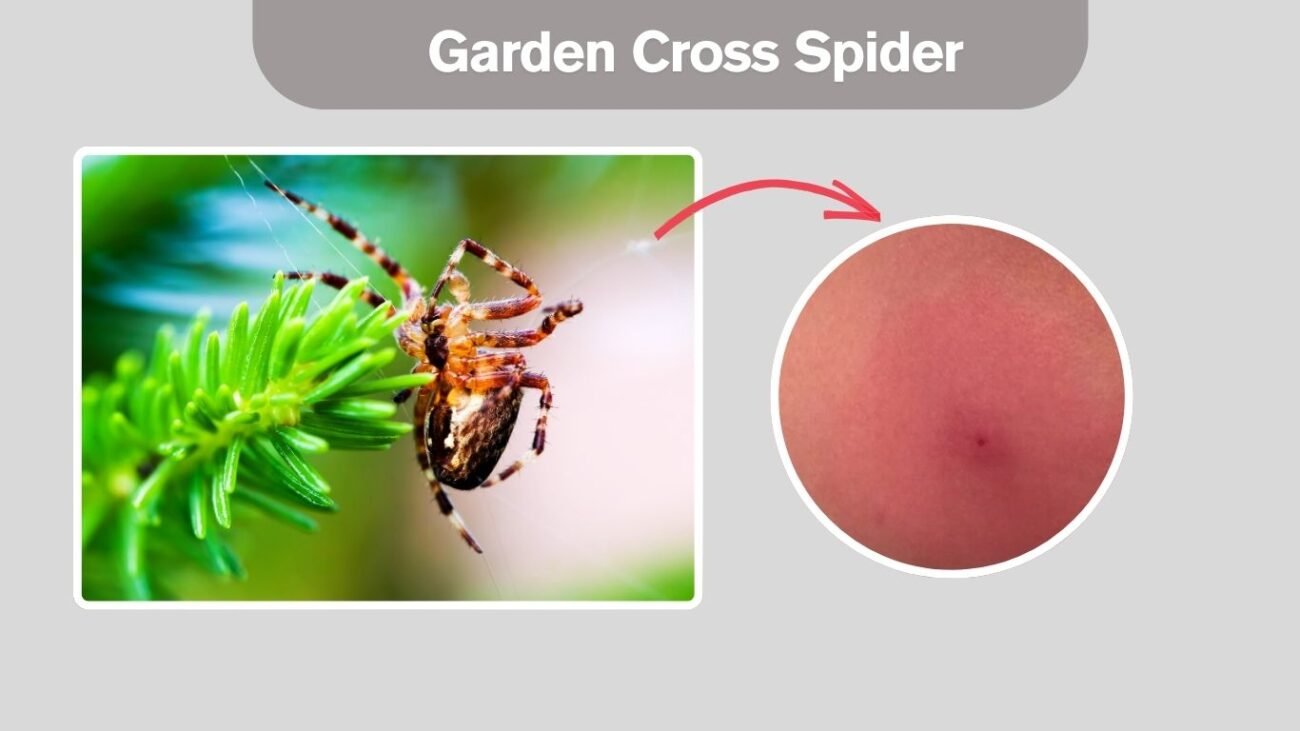
Also known as the European garden spider, this species is commonly found in UK gardens and hedgerows. It’s famous for its large, patterned abdomen and symmetrical orb web. Though generally harmless, it may bite if provoked or trapped.
Identification
- Scientific Name: Araneus diadematus
- Color: Brown, orange, or grey with a distinctive white cross-shaped pattern on its back
- Size: Females up to 20 mm; males smaller
- Legs: Long, spiny legs with faint banding
- Web: Large, circular orb web often built between plants or garden structures
Where It’s Found in the UK
Widespread throughout the UK—commonly found in gardens, hedges, woodlands, and parks. Frequently seen in late summer and autumn, sitting in the center of its web.
Is the Bite Dangerous?
Bites are rare and usually only happen when the spider is accidentally pressed. The bite may cause mild pain, swelling, or itching but resolves quickly. It is not dangerous to humans.
When Are They Active?
Most active from late summer to mid-autumn when adults are fully grown. They are daytime web-builders and often rebuild their webs daily in the early morning or evening.
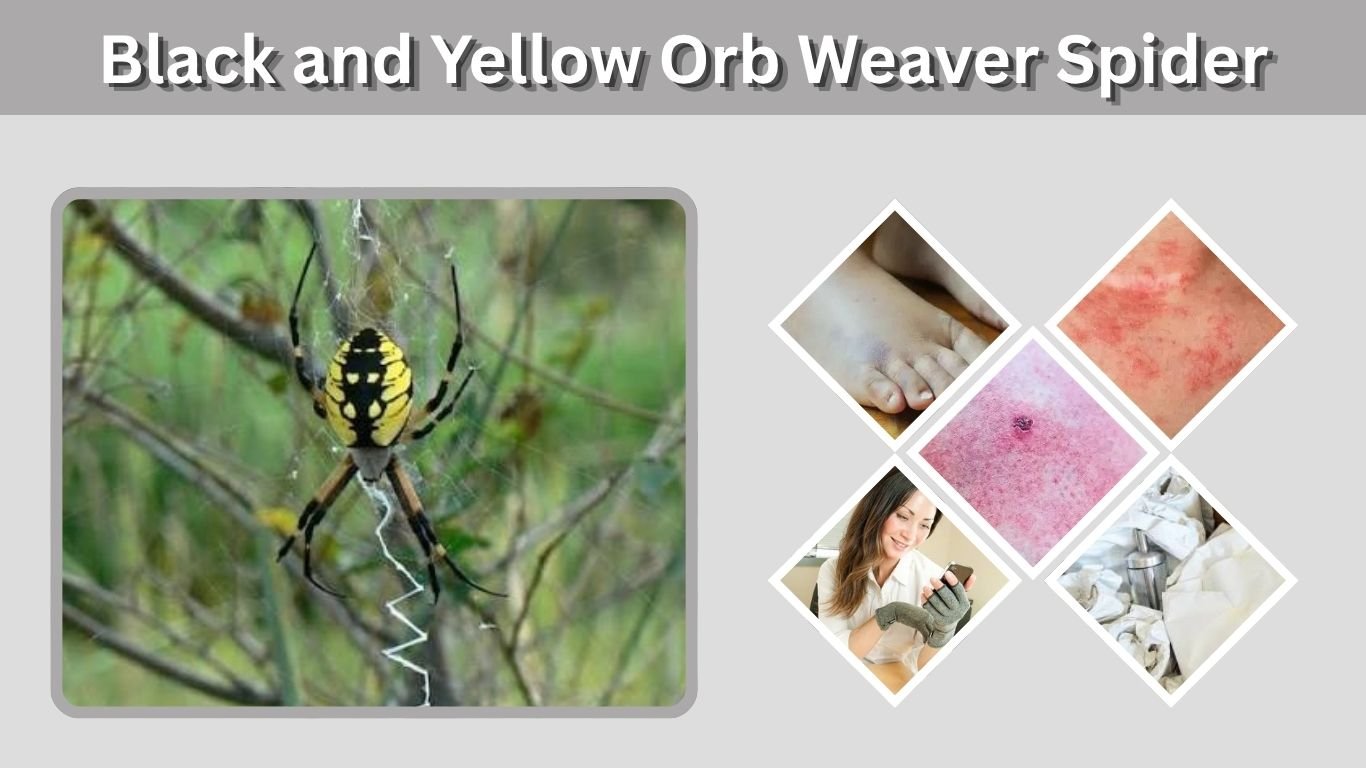
9. Wasp Spider
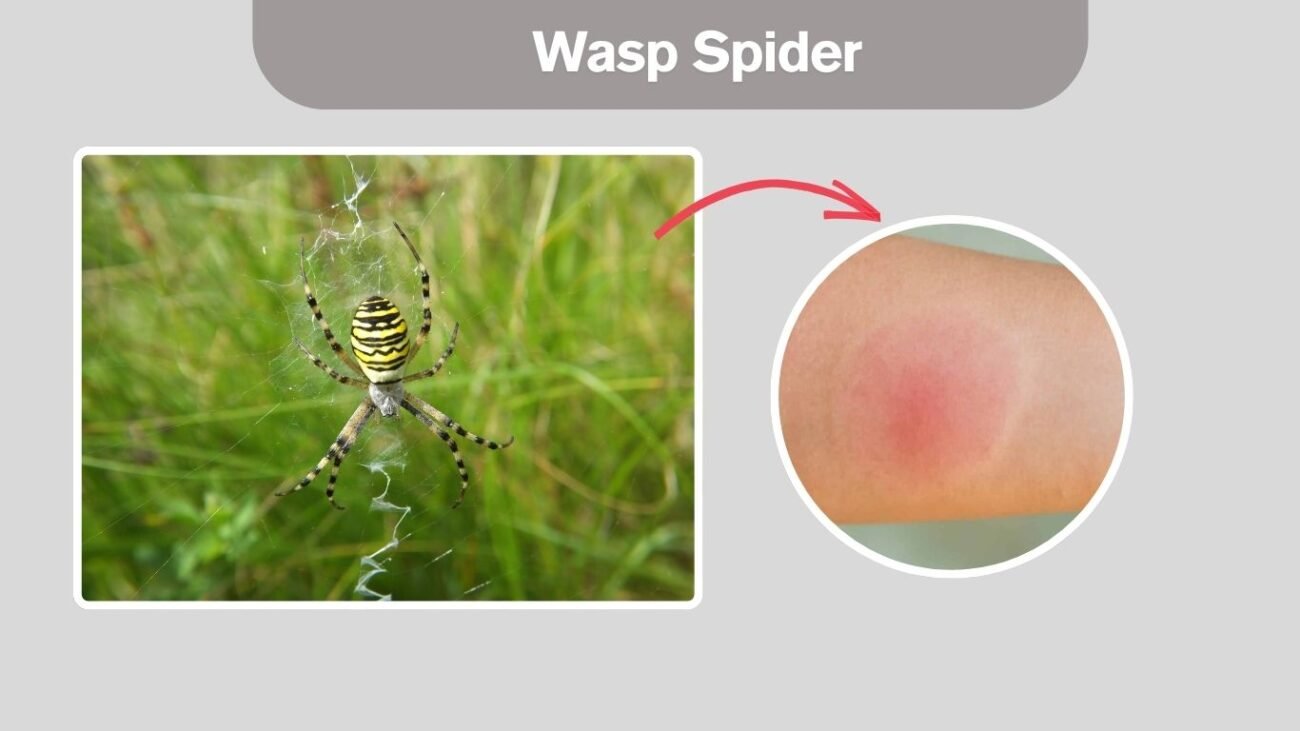
The Wasp Spider is an eye-catching, non-native species now established in parts of the UK. It resembles a wasp with its black, yellow, and white markings. Although not aggressive, it can bite if disturbed.
Identification
- Scientific Name: Argiope bruennichi
- Color: Bright yellow, black, and white horizontal bands across the abdomen
- Size: Females up to 17 mm; males around 4–5 mm
- Legs: Long and striped, matching the abdomen
- Web: Orb web with a distinctive zigzag (stabilimentum) in the center
Where It’s Found in the UK
Mostly found in southern England, particularly in long grass, meadows, and nature reserves. It’s slowly expanding northwards. Prefers sunny, sheltered areas with tall vegetation.
Is the Bite Dangerous?
Bites are very rare. If bitten, the result is similar to a nettle sting—mild pain or irritation. It is not considered dangerous to humans.
When Are They Active?
Active during late summer and early autumn, especially August and September, which is their mating and egg-laying season. Most visible when females are guarding their large orb webs.
10. Raft Spider
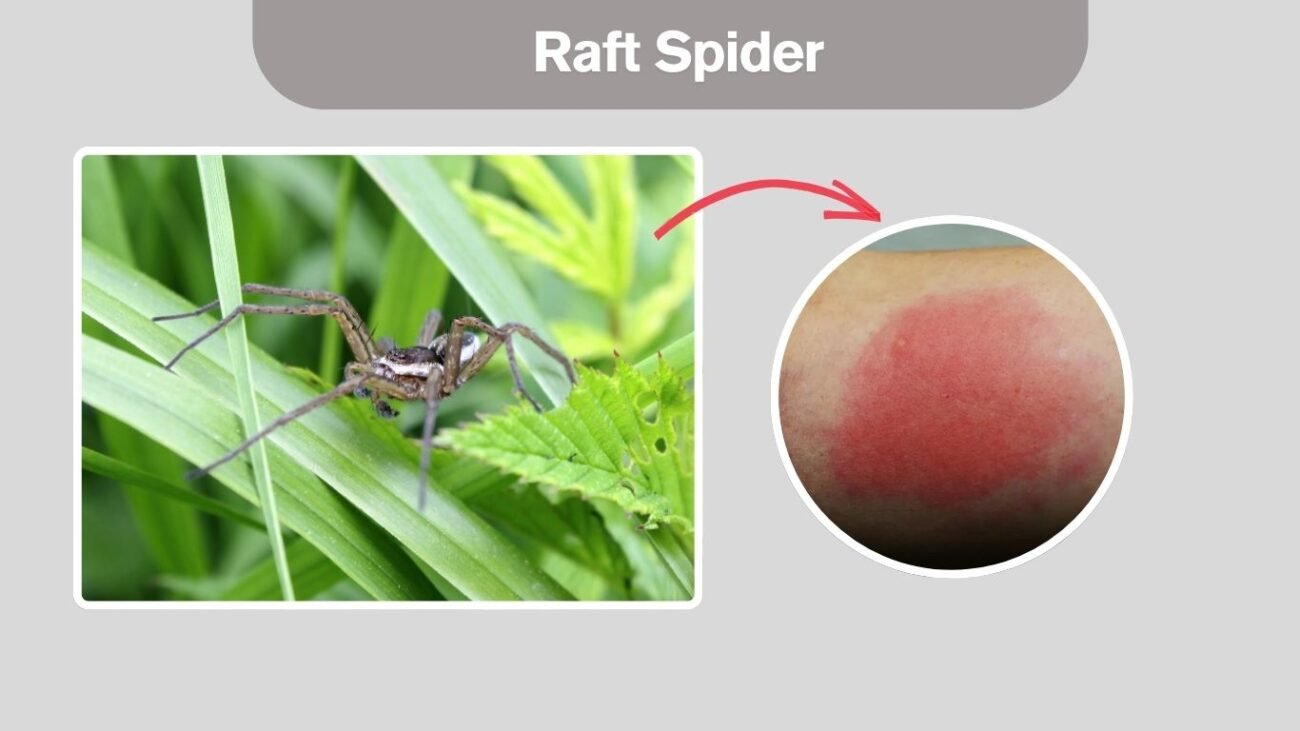
The Raft Spider is one of the largest native spiders in the UK and is semi-aquatic. It is often seen near ponds or wetlands. While it may bite if handled, it is not aggressive and generally avoids humans.
Identification
- Scientific Name: Dolomedes fimbriatus
- Color: Brown or dark brown with white or cream stripes running down each side of the body
- Size: Females can reach up to 22 mm in body length
- Legs: Long and spread out, allowing them to walk on water
- Web: Does not spin a web for catching prey—hunts directly on water surfaces
Where It’s Found in the UK
Mostly found in southern and western parts of the UK, particularly in wetland habitats such as marshes, bogs, and ponds. It is often seen floating or running on water near dense vegetation.
Is the Bite Dangerous?
The bite is rare and only occurs when the spider is handled roughly. It may cause a mild sting, slight swelling, and temporary discomfort. No long-term effects are expected.
When Are They Active?
Most active from May to September. They prefer warm, humid conditions and are often seen hunting or sunbathing on vegetation close to water.
11. Money Spider
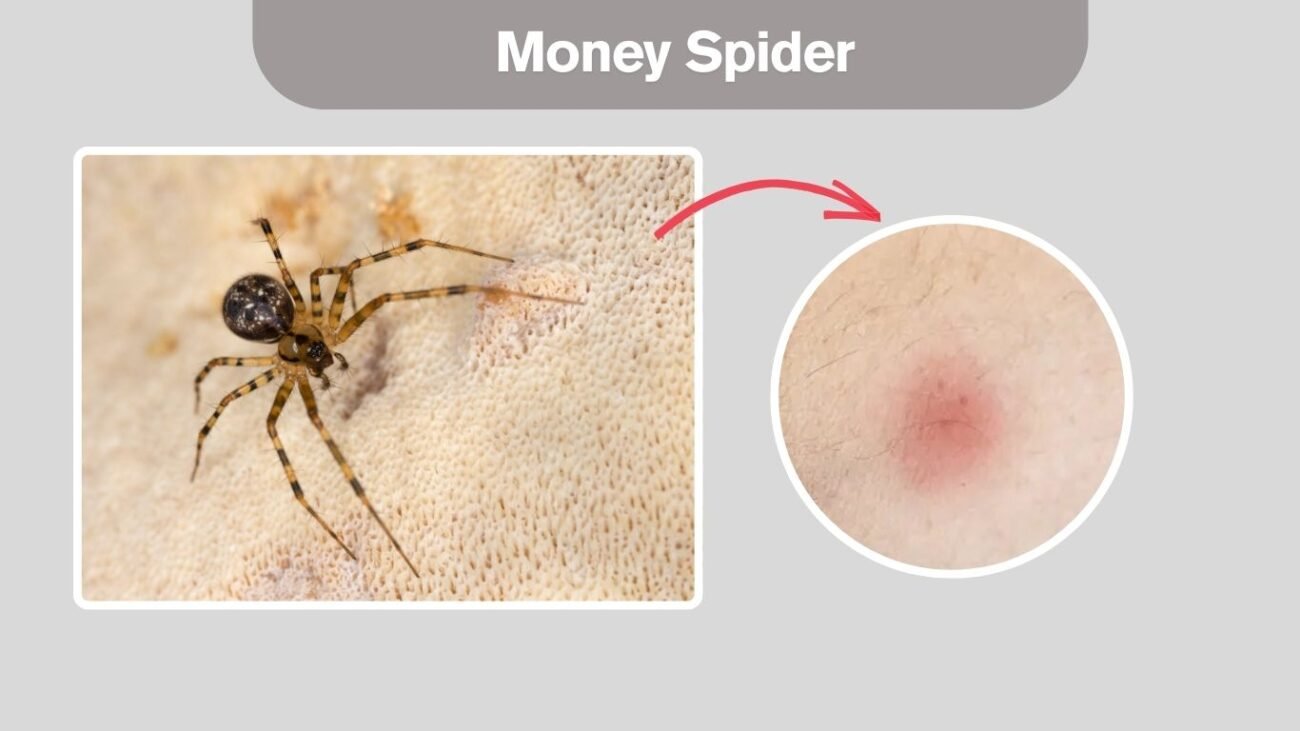
Money Spiders are a group of tiny spiders commonly found across the UK. While they are harmless and not known for biting, some larger species in this group are capable of delivering a mild nip when trapped against the skin.
Identification
- Scientific Name: Linyphiidae family (includes many species)
- Color: Usually black or dark brown
- Size: Typically 2–5 mm in body length
- Legs: Fine and short relative to their small body size
- Web: Fine sheet webs, often found in grass or low vegetation
Where It’s Found in the UK
Found everywhere from gardens and fields to homes and cars. These spiders are often seen floating through the air using a behavior called ballooning—riding the wind on silk threads.
Is the Bite Dangerous?
The bite is extremely rare and almost unnoticeable due to their small size. If it does occur, it may cause a very slight prick or tiny red mark, but no pain or swelling.
When Are They Active?
Active all year round, with peak visibility in spring and summer when young spiders balloon in large numbers. Indoors, they may be seen at any time, especially near windows.
12. Buzzing Spider
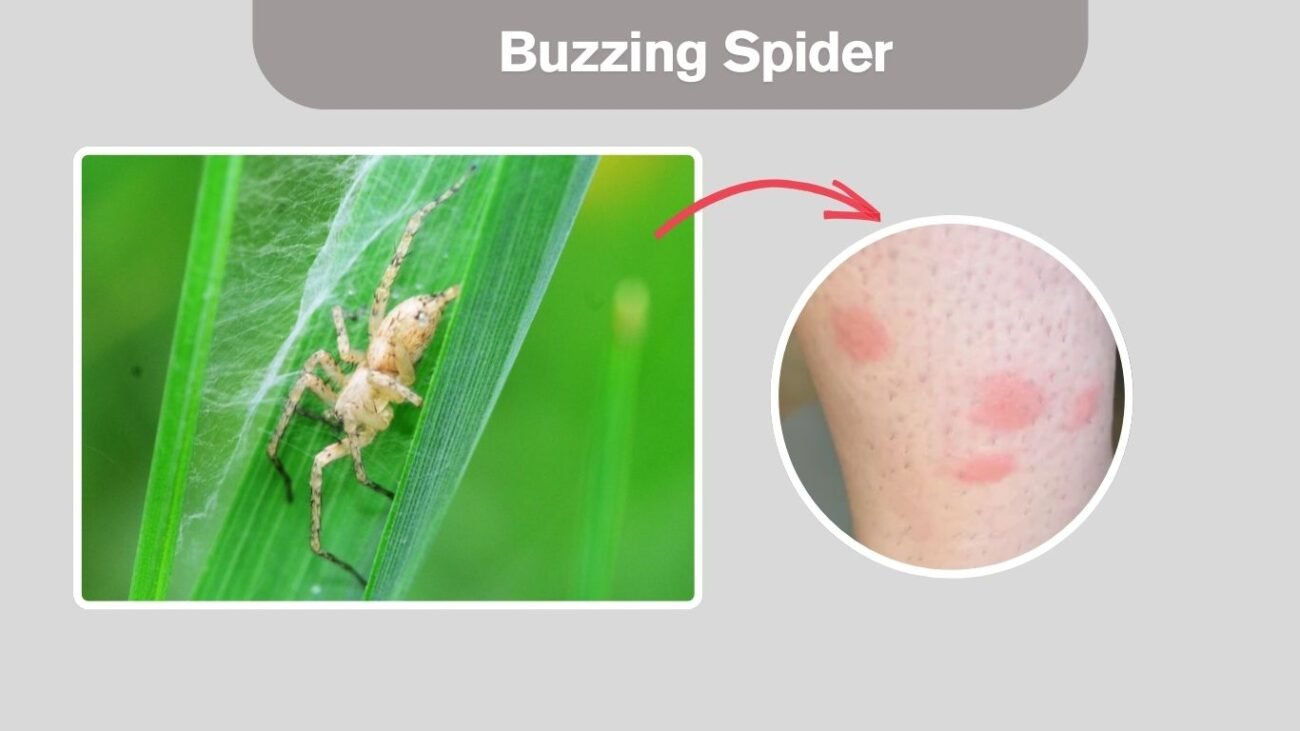
The Buzzing Spider gets its name from the buzzing or vibrating sound it makes when disturbed, especially during courtship or defense. Though it’s small and rarely bites, it is capable of delivering a mild nip if provoked.
Identification
- Scientific Name: Anyphaena accentuata
- Color: Pale brown or tan with dark markings on the abdomen
- Size: 5–9 mm body length
- Legs: Long and slender, built for speed
- Web: Does not build a capture web; hides in silken retreats in trees and shrubs
Where It’s Found in the UK
Commonly found in woodland areas, gardens, and hedgerows. Often seen on tree trunks, walls, fences, and occasionally inside homes, especially around windows and ceilings.
Is the Bite Dangerous?
The bite is extremely mild and only occurs when the spider is accidentally pressed or trapped. It may cause a tiny red bump or a brief itchy sensation. No serious effects have been reported.
When Are They Active?
Most active from spring through late summer. They are nocturnal hunters, resting during the day in rolled-up leaves or bark crevices.
13. Mouse Spider (Episinus truncatus)

Not to be confused with the dangerous Australian Mouse Spider, Episinus truncatus is a small UK species that rarely bites but can do so if disturbed. It’s reclusive and usually hides in low vegetation or under stones.
Identification
- Scientific Name: Episinus truncatus
- Color: Brownish-black with a narrow, elongate body
- Size: Around 4–5 mm body length
- Legs: Long and thin, typically held tucked in
- Web: Small, irregular cobwebs close to the ground or in sheltered corners
Where It’s Found in the UK
Found mostly in southern England in grasslands, scrub, and undergrowth. May be overlooked due to its tiny size and discreet lifestyle.
Is the Bite Dangerous?
The bite is not considered dangerous. If it does occur, it may result in a barely noticeable prick or a mild itch. No swelling or serious effects are expected.
When Are They Active?
Primarily active in the warmer months from late spring to early autumn. They are rarely seen unless actively searching for them in low vegetation.
14. Green-Fanged Tube Web Spider

The Green-Fanged Tube Web Spider is one of the most striking and intimidating-looking spiders in the UK due to its shiny black body and metallic green fangs. Though its bite can be painful, it’s not considered dangerous to humans.
Identification
- Scientific Name: Segestria florentina
- Color: Glossy dark brown to black body with vivid metallic green fangs
- Size: Females up to 22 mm; males slightly smaller
- Legs: Thick and hairy, with the front six legs angled forward
- Web: Funnel-shaped tube web in wall crevices, air vents, and old brickwork
Where It’s Found in the UK
Originally limited to southern England, especially cities like London, Southampton, and coastal areas, but now slowly expanding northward. Typically found in old walls, gaps in stone buildings, or near outdoor steps and railings.
Is the Bite Dangerous?
The bite is painful due to the spider’s large fangs—often described as sharper than a wasp sting. Some people report swelling, a burning sensation, or a deep ache lasting several hours. However, it poses no serious health risk and usually requires no medical treatment.
When Are They Active?
Most active from spring through early autumn, especially during warm evenings. They are nocturnal hunters and typically stay hidden in their silk tunnels during the day, waiting to ambush passing prey.