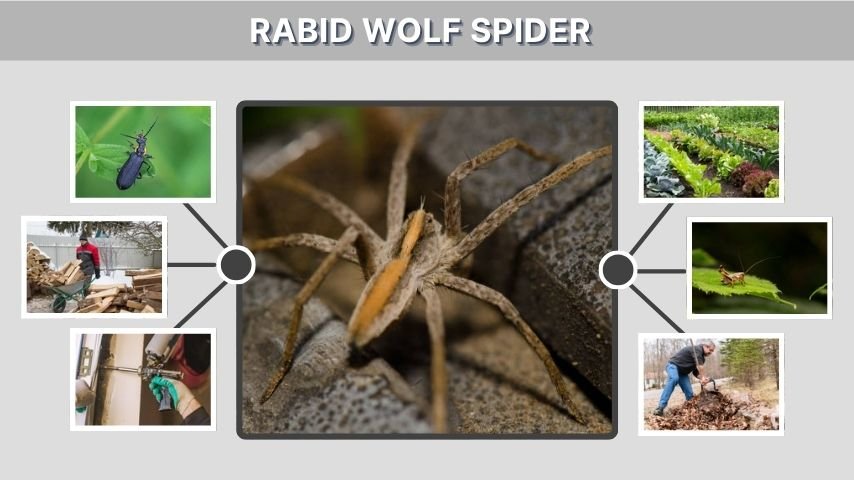
The rabid wolf spider has a scary name, but it is not as dangerous as many people think. This fast-moving spider is a real wolf spider species called Rabidosa rabida. It does not have rabies, and it does not spread rabies to people or pets. Many homeowners notice it in yards, garages, basements, or even inside the house. Learning how to identify it, understand its bite, and remove it safely can help you avoid unnecessary fear.
What Is a Rabid Wolf Spider?
A rabid wolf spider is a common North American wolf spider known for its speed, striped body, and active hunting behavior. The word “rabid” sounds alarming, but it does not mean the spider is sick or infected. This section explains what the spider is, why it has this name, and how it fits into the wolf spider family.
Rabid Wolf Spider Scientific Name
The scientific name of the rabid wolf spider is Rabidosa rabida. It belongs to the wolf spider family, Lycosidae. Wolf spiders are hunting spiders, which means they chase or ambush prey instead of using a web to trap insects.
This spider is often seen running across the ground, hiding in leaf litter, or moving quickly through grass and outdoor clutter. Its speed is one reason people often become nervous when they see it.
Why Is It Called a Rabid Wolf Spider?
The name “rabid wolf spider” comes from its quick and sometimes erratic movement. It does not mean the spider has rabies. Spiders cannot carry rabies the way mammals can, and a rabid wolf spider bite will not give a person or pet rabies.
The name can make the spider seem more dangerous than it really is. In most situations, it wants to escape rather than bite. It may only bite if it is trapped, squeezed, or handled.
How to Identify a Rabid Wolf Spider
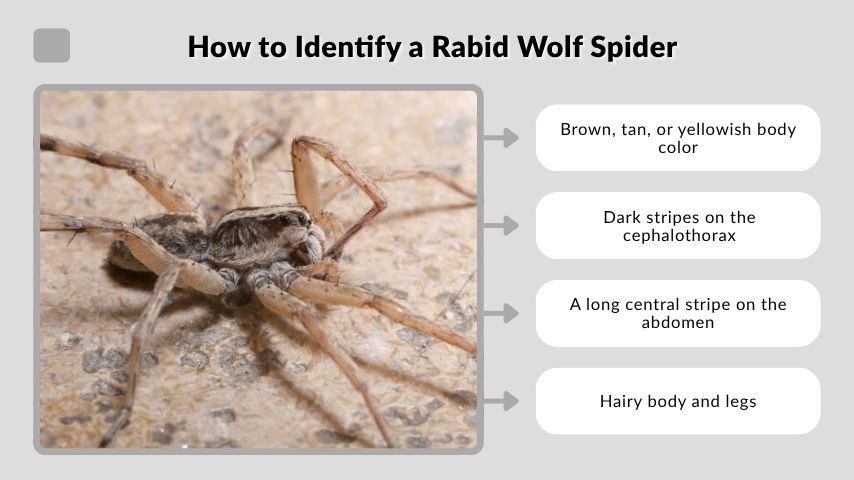
Identifying a rabid wolf spider can be difficult because many wolf spiders look similar. However, this species has a few helpful features, including dark stripes, a strong body, long legs, and a fast-running habit. Looking at size, color, markings, and sex differences can help separate it from grass spiders, brown recluses, and other household spiders.
Rabid Wolf Spider Size
Female rabid wolf spiders are usually larger than males. A mature female may reach about an inch in body length, while males are often smaller. The legs can make the spider look much bigger than its body measurement suggests.
Large rabid wolf spiders can look intimidating, especially when they run across floors or walls. However, size alone does not mean the spider is dangerous.
Color and Body Markings
A rabid wolf spider is usually brown, tan, yellowish, or grayish. It often has dark stripes on the front body section and a darker stripe on the abdomen. Its legs are long and built for running.
Common identification features include:
- Brown, tan, or yellowish body color
- Dark stripes on the cephalothorax
- A long central stripe on the abdomen
- Hairy body and legs
- Strong running movement
- Eight eyes arranged in wolf spider pattern
Male Rabid Wolf Spider vs Female Rabid Wolf Spider
A male rabid wolf spider is usually smaller and slimmer than a female. Males may also have darker front legs, which can help with identification. Female rabid wolf spiders are often larger and heavier-bodied.
Females may be easier to recognize when carrying an egg sac. Like other wolf spiders, the female carries her egg sac attached to her spinnerets. After the spiderlings hatch, they may ride on the mother’s back for a short period.
Is a Rabid Wolf Spider Poisonous or Venomous?
Many people ask whether a rabid wolf spider is poisonous, venomous, or dangerous. These words are often used together, but they do not mean the same thing. The rabid wolf spider does have venom for hunting prey, but it is not considered medically dangerous to most people. Understanding this difference helps reduce fear.
Is a Rabid Wolf Spider Poisonous?
A rabid wolf spider is not poisonous in the common sense. Poisonous usually means something is harmful when touched, swallowed, or eaten. This spider does not harm people that way.
However, like many spiders, it can bite. A bite is different from poison exposure because the spider uses fangs to inject venom.
Is a Rabid Wolf Spider Venomous?
Yes, the rabid wolf spider is venomous, but its venom is mainly used to subdue insects and other small prey. For most people, a bite causes only mild local symptoms such as pain, redness, or swelling.
A bite can still be uncomfortable, especially if the spider is large. People who are sensitive, allergic, or dealing with worsening symptoms should take the bite seriously and seek medical advice.
Is a Rabid Wolf Spider Dangerous?
A rabid wolf spider is usually not dangerous to humans. It is not aggressive, and it does not seek out people to bite. Most bites happen when the spider is accidentally pressed against skin or handled.
You should avoid picking it up with bare hands. Even harmless spiders may bite when they feel trapped.
Rabid Wolf Spider Bite: Symptoms and Care
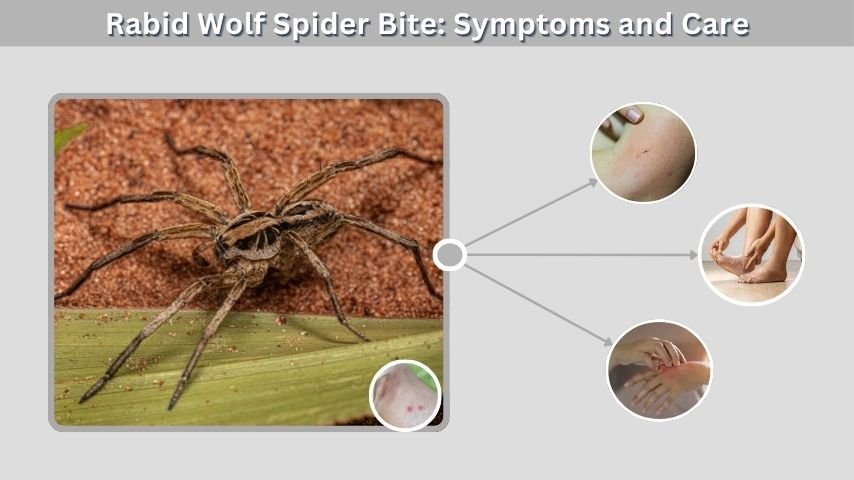
A rabid wolf spider bite is usually mild, but it can worry people because the spider looks large and fast. The bite may hurt at first and leave a red or swollen spot. Still, most wolf spider bites do not become serious. Proper cleaning and simple care are usually enough unless symptoms worsen.
Rabid Wolf Spider Bite Symptoms
A bite from a rabid wolf spider may feel like a sharp pinch. The area can become red, sore, or slightly swollen. Some people may notice itching or tenderness around the bite.
Possible symptoms include:
- Mild to moderate pain
- Redness around the bite
- Swelling
- Itching or irritation
- Small fang marks
- Warmth around the bite area
- Rare allergic reaction symptoms
What Happens If a Rabid Wolf Spider Bites You?
If a rabid wolf spider bites you, the first reaction is usually local pain. The skin may look similar to other insect or spider bites, which makes bite photos unreliable for diagnosis.
Most symptoms improve with time and basic care. However, seek medical help if pain spreads, swelling becomes severe, pus appears, fever develops, or you have trouble breathing.
Rabid Wolf Spider Bite Treatment
Wash the bite with soap and water as soon as possible. Apply a cold compress to reduce swelling and discomfort. Avoid scratching because broken skin can increase the risk of infection.
You may use an over-the-counter pain reliever or antihistamine if it is safe for you. If symptoms become worse instead of better, contact a healthcare provider.
Where Do Rabid Wolf Spiders Live?
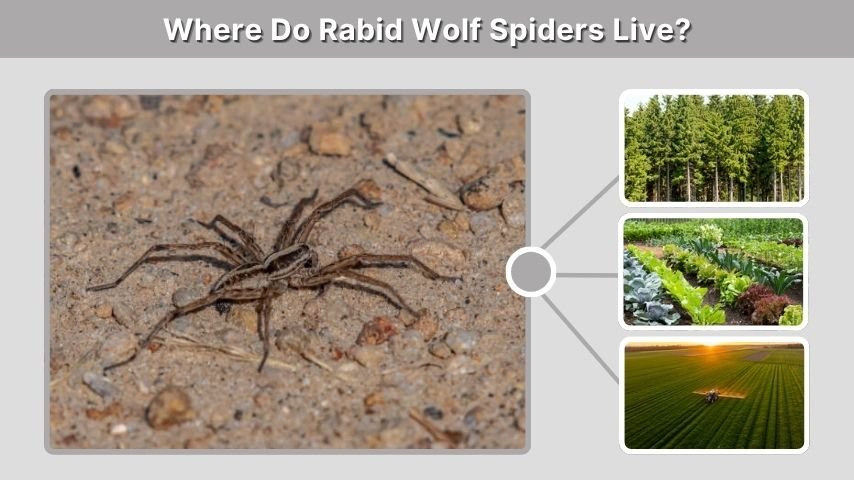
Rabid wolf spiders live in many outdoor environments where they can hunt insects and hide from predators. They are often found in grass, leaf litter, gardens, fields, and wooded edges. Sometimes they enter homes by accident. Knowing their habitat and range can help you understand why one may appear in your yard or house.
Rabid Wolf Spider Range
The rabid wolf spider is native to North America. In the United States, it is commonly reported through much of the eastern region and westward into states such as Texas and Oklahoma.
It may be searched by location because people often find one and want to know if the species lives in their state. Texas, Florida, North Carolina, Arkansas, Illinois, Indiana, Maryland, Oklahoma, and Massachusetts are all common state-based search topics.
Texas Rabid Wolf Spider
The Texas rabid wolf spider is not a separate species. It is the same Rabidosa rabida found in a state where the climate and outdoor habitats can support many spiders.
In Texas, these spiders may be seen in lawns, fields, gardens, garages, sheds, and around outdoor lights where insects gather. They may enter homes through gaps under doors, damaged screens, or cracks near foundations.
Rabid Wolf Spider Habitat
This spider prefers areas with cover and prey. It does not need a web to catch food, so it can live in places where it can run, hide, and hunt.
Common habitats include:
- Tall grass
- Leaf litter
- Wooded edges
- Gardens
- Fields
- Under rocks or logs
- Garages and sheds
- Basements and crawl spaces
Rabid Wolf Spider in House
Finding a rabid wolf spider in the house can be surprising, especially because it may run quickly across the floor. In most cases, one spider indoors does not mean there is a major infestation. It often means the spider entered by accident while searching for food, shelter, or a way away from weather.
Why They Come Indoors
Rabid wolf spiders may come indoors when outdoor conditions change. Heat, cold, heavy rain, or dry weather can push spiders toward sheltered places. Homes with insects, clutter, or easy entry points may attract more spider activity.
They can enter through door gaps, garage openings, vents, torn screens, and cracks around the foundation.
Does a Rabid Wolf Spider Make a Web?
A rabid wolf spider does not make a web to catch prey. This is one of the easiest ways to separate it from web-building spiders. Instead of waiting in a web, it hunts on foot.
It can still produce silk. Females use silk for egg sacs, and spiders may use silk for shelter or protection. But if you see a sheet-like funnel web, you may be looking at a grass spider instead.
What Does a Rabid Wolf Spider Eat?
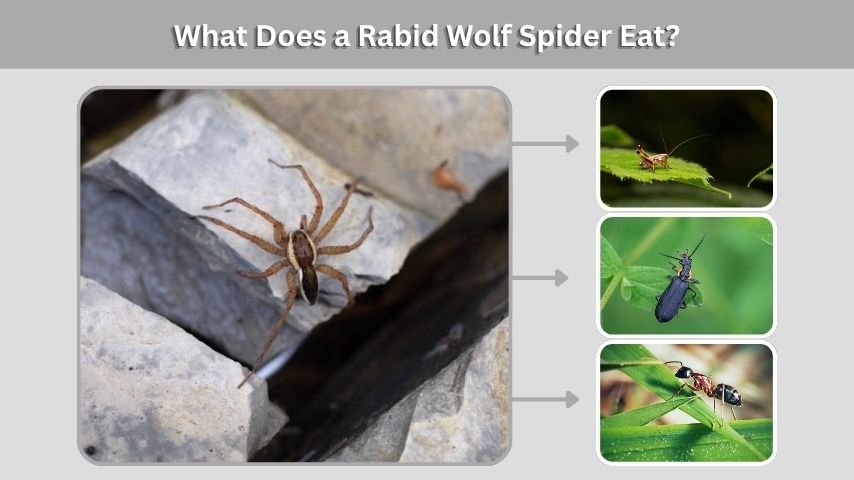
The rabid wolf spider is a predator that helps control small insects and other arthropods. It hunts actively, often at night, and uses speed and ambush behavior to catch prey. While it may look unpleasant indoors, outdoors it can be beneficial because it feeds on pests that live in lawns, gardens, and around homes.
Rabid Wolf Spider Diet
Rabid wolf spiders eat many small animals they can overpower. Their diet depends on what is available in their habitat.
They may eat:
- Crickets
- Roaches
- Beetles
- Ants
- Grasshoppers
- Flies
- Small moths
- Other spiders
- Soft-bodied insects
Do Rabid Wolf Spiders Eat Brown Recluses or Roaches?
A rabid wolf spider may eat roaches or other spiders if it can catch them. It may even prey on small spiders in the same area. However, you should not rely on wolf spiders as a solution for brown recluses or cockroaches.
If you see many spiders indoors, the bigger issue may be insects, clutter, or entry points. Reducing prey often reduces spider activity too.
Rabid Wolf Spider vs Similar Spiders
Rabid wolf spiders are often confused with grass spiders, brown recluses, black widows, and other wolf spiders. Misidentification can lead to unnecessary fear or unsafe handling. The best approach is to compare body shape, color, web behavior, and markings instead of relying on only one feature.
Rabid Wolf Spider vs Wolf Spider
A rabid wolf spider is a type of wolf spider. “Wolf spider” refers to a larger family of spiders, while “rabid wolf spider” refers to one specific species.
So, the difference between a rabid wolf spider and a wolf spider is like the difference between one species and its larger group. All rabid wolf spiders are wolf spiders, but not all wolf spiders are rabid wolf spiders.
Rabid Wolf Spider vs Grass Spider
Grass spiders and rabid wolf spiders can both be brown and fast. The biggest difference is web behavior. Grass spiders often build sheet-like funnel webs in grass, corners, or shrubs. Rabid wolf spiders do not use prey-catching webs.
Grass spiders also often have more noticeable spinnerets at the back of the body. Rabid wolf spiders usually look stockier and more like ground hunters.
Rabid Wolf Spider vs Brown Recluse
A brown recluse is usually smoother-looking, less hairy, and more plain brown than a wolf spider. It may have a violin-shaped marking, but that mark alone is not enough for safe identification.
Rabid wolf spiders are usually hairier, more striped, and more robust. Brown recluse bites can be more medically concerning, so avoid guessing if you are unsure. If you think the spider may be a brown recluse, use caution and contact a professional for identification.
Rabid Wolf Spider vs Black Widow
A black widow looks very different from a rabid wolf spider. Black widows are usually shiny black with a rounder body and may have a red hourglass marking on the underside.
Rabid wolf spiders are brown or tan, hairy, and striped. They run after prey, while black widows are web-building spiders. Black widow venom is more medically concerning than wolf spider venom.
How to Get Rid of Rabid Wolf Spiders
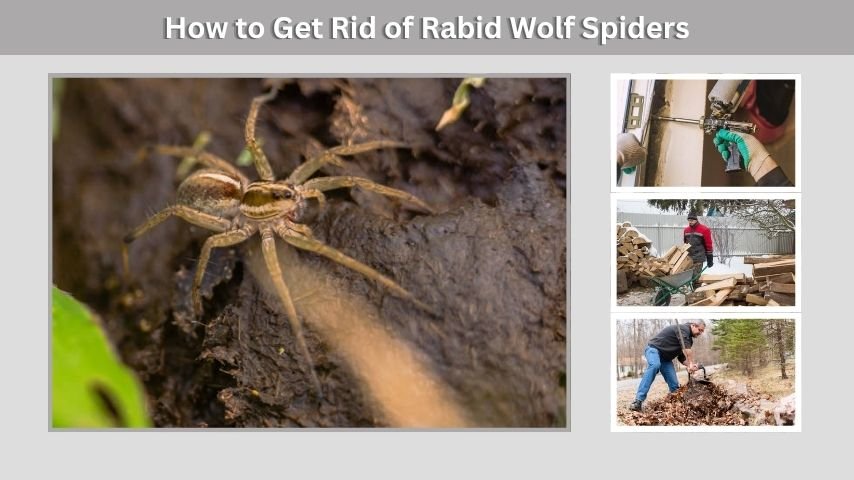
Getting rid of rabid wolf spiders should focus on safe removal and prevention. These spiders are usually beneficial outdoors, so killing them is not always necessary. If they are inside the home, removing entry points and reducing insects can make your space less attractive to them.
Safe Indoor Removal
If you find one indoors, avoid grabbing it with your hands. A simple catch-and-release method is often enough.
Safe removal steps include:
- Place a cup or container over the spider
- Slide stiff paper underneath
- Carry it outside carefully
- Release it away from doors and windows
- Wear gloves if you are nervous
- Vacuum only if capture is not possible
Preventing Rabid Wolf Spiders Indoors
Prevention works better than reacting to every spider you see. Since wolf spiders follow prey, reducing insects can also reduce spiders.
Helpful prevention tips include:
- Seal cracks around doors and windows
- Repair torn screens
- Add or replace door sweeps
- Reduce garage and basement clutter
- Move firewood away from the house
- Clear leaf piles near the foundation
- Keep outdoor lights from attracting too many insects
When to Call Pest Control
Call pest control if you see many spiders indoors, cannot identify the spider, or suspect brown recluses or black widows. You may also need help if spiders keep appearing in bedrooms, closets, pet areas, or children’s rooms.
A professional can inspect entry points, identify the spider, and recommend a safer long-term solution.
Rabid Wolf Spider Life Cycle
The rabid wolf spider has a life cycle similar to many other wolf spiders. Males search for females, females produce egg sacs, and spiderlings stay close to the mother after hatching. This behavior can look dramatic, especially when a female carries many young on her back.
Egg Sac and Spiderlings
A female rabid wolf spider carries her egg sac attached to the back of her abdomen. This is one of the most recognizable wolf spider behaviors. When the spiderlings hatch, they climb onto the mother’s back and stay there until they are ready to move on their own.
Seeing a female with babies does not always mean your home is infested. It may simply mean one female entered the area.
Lifespan and Growth
The lifespan of a rabid wolf spider can vary based on sex, food, climate, and survival conditions. Like many spiders, young spiderlings grow by molting. They shed their outer covering as they increase in size.
Males often focus on finding mates after maturity, while females may live longer and invest energy in producing and protecting egg sacs.
FAQs
Is a rabid wolf spider poisonous?
No, a rabid wolf spider is not poisonous in the usual sense. It is venomous because it can inject venom through a bite, but its venom is mainly used on prey and is not considered dangerous to most people.
Is a rabid wolf spider dangerous?
A rabid wolf spider is usually not dangerous. It may bite if trapped or handled, but it is not aggressive toward humans. Most bites cause mild pain, redness, or swelling and improve with basic care.
What does a rabid wolf spider bite look like?
A bite may look like a small red, swollen, or itchy spot. Sometimes tiny fang marks may appear, but many insect and spider bites look similar. Bite pictures alone are not reliable for identifying the spider.
Are rabid wolf spiders common in Texas?
Yes, rabid wolf spiders are found in Texas. They may live in lawns, gardens, fields, garages, sheds, and other areas with insects and hiding places. They may enter homes through gaps or open doors.
Do rabid wolf spiders make webs?
Rabid wolf spiders do not build webs to catch prey. They are active hunters that chase or ambush insects. They still use silk for egg sacs and shelter, but they are not typical web-trapping spiders.