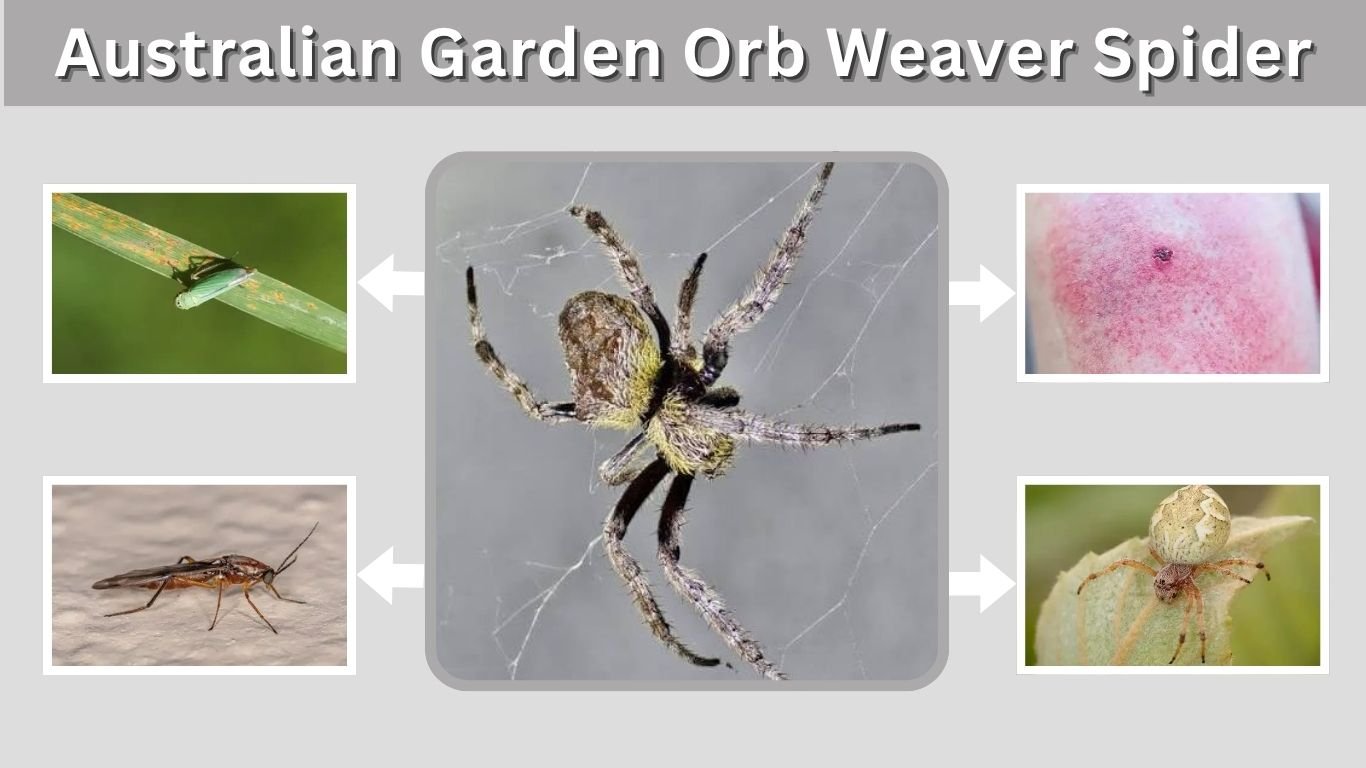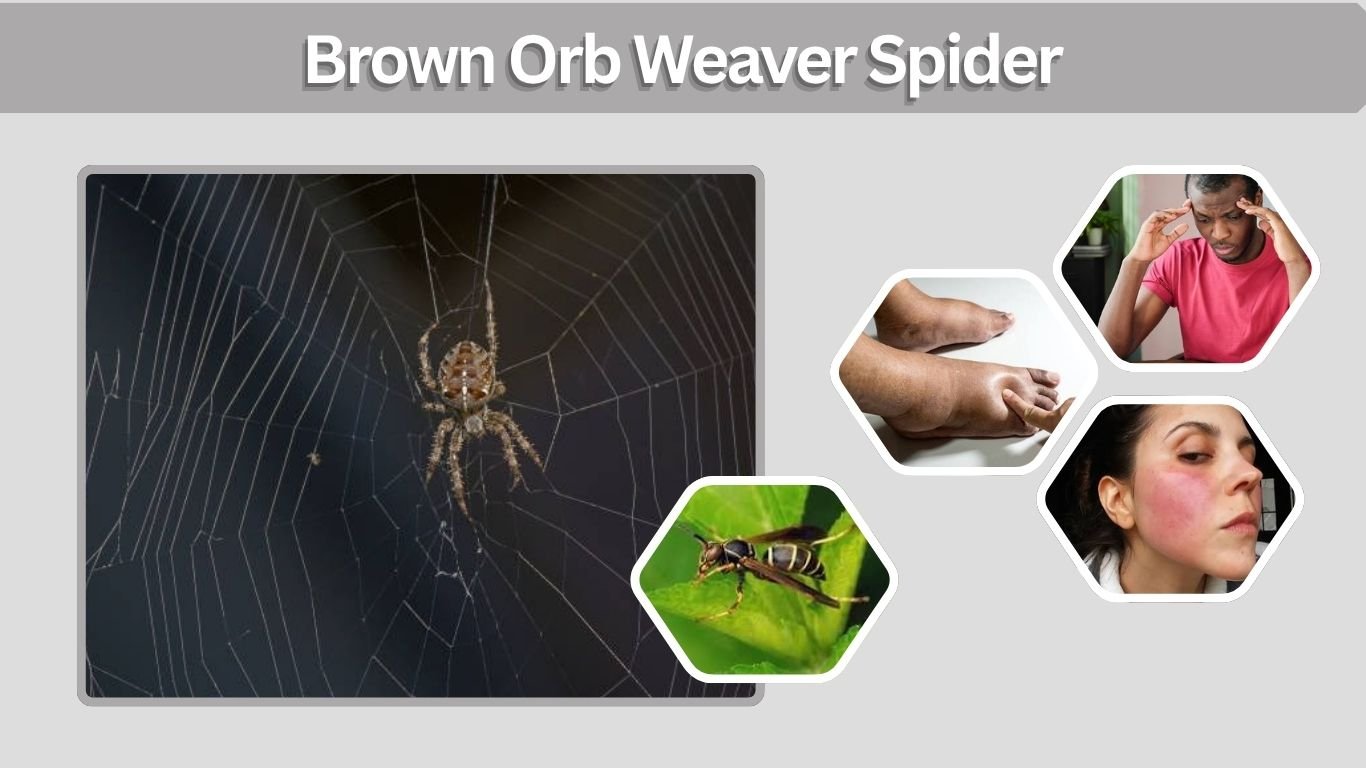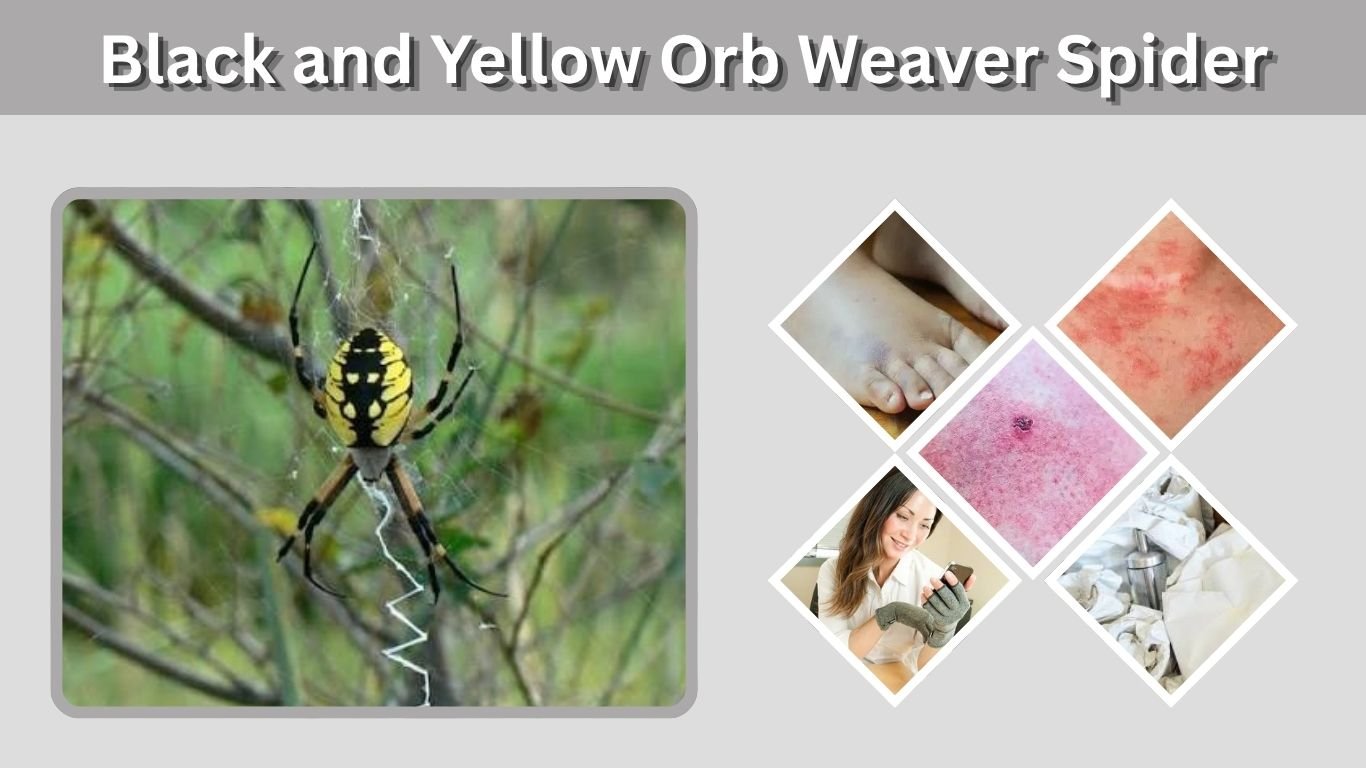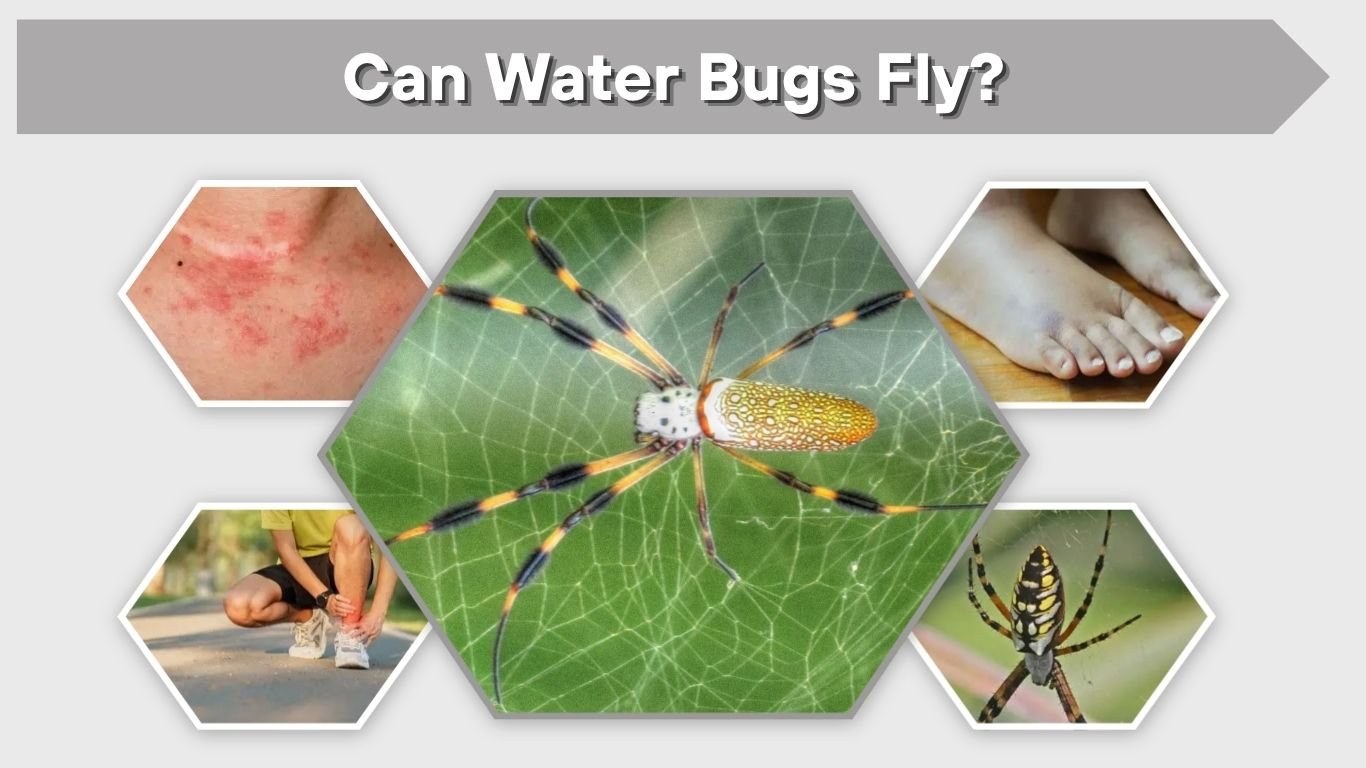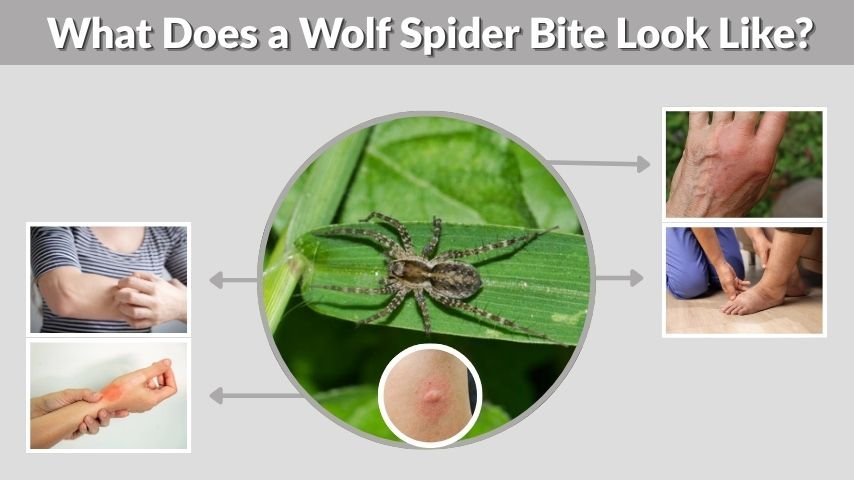
A wolf spider bite may look like a small red, swollen, itchy, or painful bump on the skin. In most cases, it is mild and heals with basic care. However, many marks blamed on wolf spiders are actually insect bites, skin irritation, or infection. A bite picture alone cannot prove the cause. This guide explains what a wolf spider bite looks like at first, how it changes, what symptoms may appear, and when to seek medical help.
What Does a Wolf Spider Bite Look Like?
A possible wolf spider bite usually looks like a small irritated bump with redness, swelling, soreness, or itching. Some people may notice tiny puncture marks, but they are not always visible. Cleveland Clinic says a wolf spider bite is typically harmless, though it may break the skin and cause redness, pain, and swelling.
Common Visual Signs
The bite can look different depending on your skin, the bite location, and whether the area is scratched. Most mild wolf spider bites stay limited to the skin around the bite.
Common visual signs include:
- Small red bump
- Mild swelling
- Tender or sore skin
- Itching around the bite
- Warmth near the area
- Possible tiny fang marks
- Slight discoloration
- Mild blistering in sensitive skin
What It Usually Does Not Look Like
A normal wolf spider bite usually does not look like a large open wound, blackened skin, or a rapidly spreading ulcer. If the skin turns dark, opens, drains pus, or becomes severely painful, it may be infected or caused by another problem.
Mayo Clinic notes that many skin sores blamed on spider bites are actually from other bug bites or skin conditions, so it is hard to be certain unless you saw the spider bite you.
What Does a Wolf Spider Bite Look Like at First?
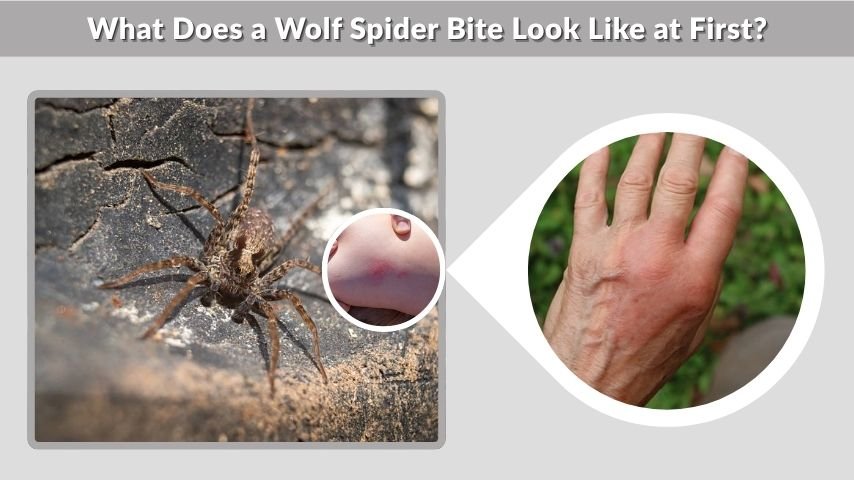
At first, a wolf spider bite may be hard to notice. It may feel like a quick pinch or sting before the skin becomes red or raised. The early appearance can look similar to a mosquito bite, ant bite, or minor irritation. Over the next few hours, swelling, soreness, or itching may become more visible.
First Few Minutes
In the first few minutes, the bite may feel sharp, like a small sting. The skin may look normal at first or show slight redness. Some people may not realize they were bitten unless they saw the spider or felt the pinch happen.
The bite should not immediately cause severe spreading pain or serious whole-body symptoms. If that happens, get medical advice.
First Few Hours
Within a few hours, the bite may look like a red, raised, or swollen spot. It may feel warm, tender, or itchy. The reaction should usually stay near the bite area.
If the redness spreads quickly, the pain becomes intense, or the skin begins to change color, do not assume it is a normal wolf spider bite.
Day 1 Appearance
By day 1, a wolf spider bite may look like a small swollen bump or irritated patch. It may still itch or feel sore. Mild redness and swelling can be normal during this time.
However, a bite that grows rapidly, turns black, forms a deep wound, or causes fever should be checked by a healthcare provider.
Wolf Spider Bite Look: Quick Comparison Table
A table can help compare a possible wolf spider bite with other common skin marks. Still, this is only a guide. Many bites overlap in appearance, and pictures alone cannot confirm the cause. The safest approach is to watch whether the mark improves or worsens and seek medical care for severe symptoms.
| Skin Mark | Common Appearance | Key Difference |
| Wolf spider bite | Red, swollen, sore bump | Usually local and mild |
| Mosquito bite | Raised, itchy bump | Often more itchy than painful |
| Ant sting | Burning spot or small pustule | May form a tiny white center |
| Skin infection | Red, warm, painful swelling | May spread or drain pus |
| Brown recluse bite | Blister, dark center, growing sore | Can become medically serious |
Why This Comparison Matters
Many people search for wolf spider bite pictures because they want a quick match. The problem is that several skin problems can look almost identical in the early stage.
A mild wolf spider bite, mosquito bite, and irritated hair follicle may all look like a small red bump. That is why symptoms, timing, and changes over time matter more than one photo.
When the Table Is Not Enough
If the bite becomes worse, the table is not enough for diagnosis. Spreading redness, pus, red streaks, fever, dark skin, or severe pain needs medical attention.
Mayo Clinic advises medical care when a spider bite may be from a dangerous spider, causes severe pain, creates a growing wound, or leads to breathing or swallowing problems.
Wolf Spider Bite Pictures: Can They Confirm It?
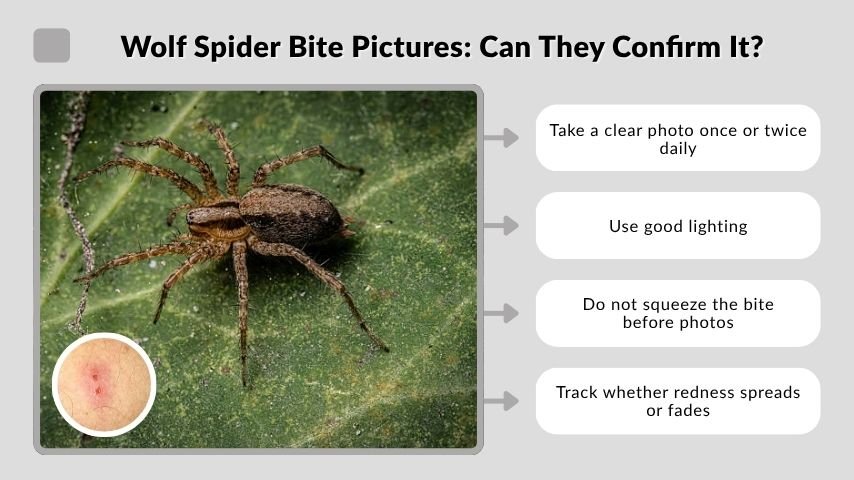
Wolf spider bite pictures can be useful, but they cannot prove the spider species. Many insect bites, allergic reactions, and infections look similar. Photos are best used to track whether the bite is healing or spreading. If the mark keeps changing for the worse, medical advice is more reliable than comparing online images.
Why Pictures Can Be Misleading
A wolf spider bite may look like a red swollen bump, but so can many other skin problems. Flea bites, mosquito bites, ant stings, tick bites, rashes, and bacterial infections may all look similar.
Even two people bitten by the same type of spider may react differently. Skin tone, allergies, scratching, and bite location can all change the appearance.
How to Use Photos Safely
Photos are helpful when you use them to monitor changes instead of diagnose the bite. Take pictures in good light and from the same distance each time.
Safe photo tracking tips include:
- Take a clear photo once or twice daily
- Use good lighting
- Do not squeeze the bite before photos
- Track whether redness spreads or fades
- Show photos to a doctor if symptoms worsen
- Avoid diagnosing only from online pictures
What Does a Baby Wolf Spider Bite Look Like?
A baby wolf spider bite is usually searched by people who saw a small spider and later noticed a skin mark. A smaller spider may cause a smaller reaction, but the appearance still depends on the person’s skin. A baby wolf spider bite may look like a tiny red bump, mild swelling, or a small itchy spot.
Is a Baby Wolf Spider Bite Different?
A baby wolf spider bite does not have a special look. It may appear milder than a bite from a larger spider, but sensitive skin can still react noticeably.
The bite may be red, itchy, or slightly swollen. If it stays small and improves, it is usually not a major concern.
When to Be Careful
Even if the spider was small, watch the bite closely. A growing wound, pus, spreading redness, severe pain, fever, or breathing symptoms are not normal signs.
Children, older adults, and people with allergies should be monitored more carefully after any suspected bite.
What Does a Rabid Wolf Spider Bite Look Like?
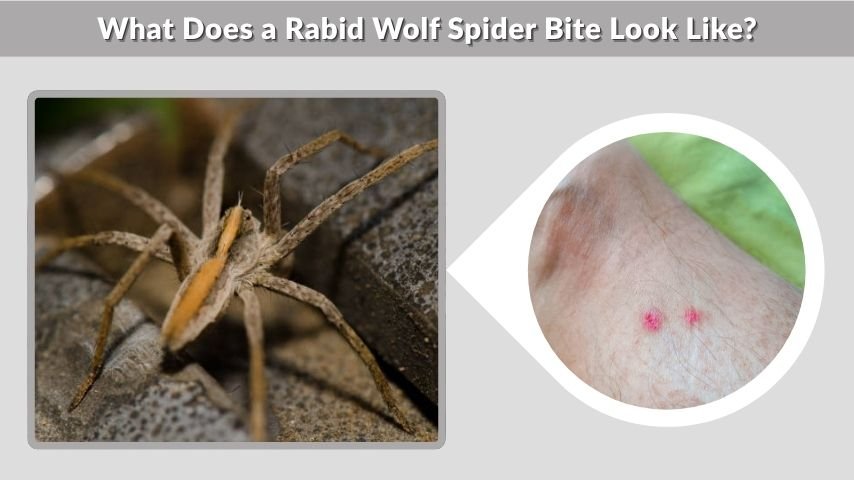
A rabid wolf spider bite looks similar to other wolf spider bites. The word “rabid” sounds frightening, but it does not mean the spider has rabies. A bite may appear as a red, swollen, sore, or itchy bump. There is no special rabid wolf spider bite pattern that proves the species.
Rabid Wolf Spider Bite Appearance
A rabid wolf spider bite may look like a small irritated area with redness and swelling. It may feel tender or warm. Sometimes small puncture marks may be visible, but they are not required for a bite to happen.
The bite should usually remain local. If symptoms spread or become severe, the issue may be allergy, infection, or another bite.
Rabid Wolf Spider vs Regular Wolf Spider Bite
A rabid wolf spider is one type of wolf spider, so the bite appearance is generally the same as other wolf spider bites. You usually cannot tell the species by the bite mark alone.
Identification is more reliable when based on the spider’s body, markings, location, and behavior rather than the skin reaction.
Symptoms That Often Come With the Bite
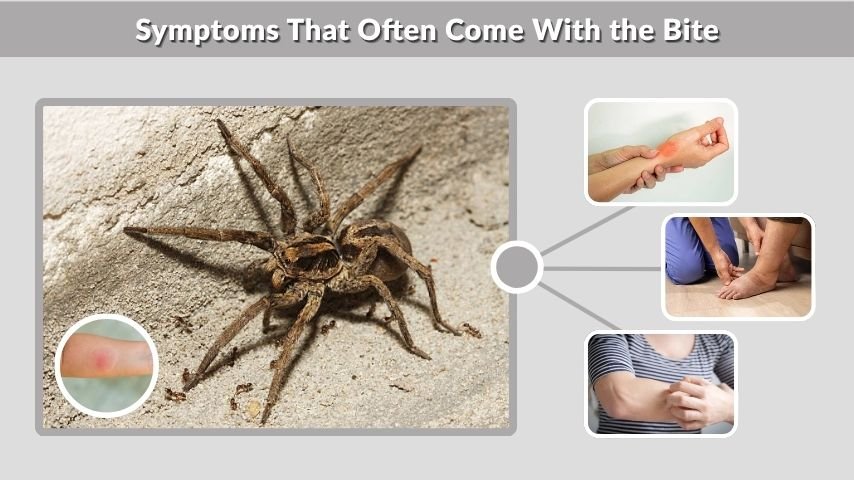
The way a bite looks is only part of the picture. Symptoms can help you understand whether the reaction seems mild or concerning. Most wolf spider bite symptoms stay near the bite area and improve gradually. MedlinePlus says spider bites may cause a reaction similar to a bee sting, including redness, pain, and swelling.
Mild Symptoms
Mild symptoms are usually local and manageable at home. They should slowly improve instead of becoming more intense.
Common mild symptoms include:
- Local pain
- Redness
- Swelling
- Itching
- Tenderness
- Warmth
- Small raised bump
- Mild soreness
Symptoms That Are Not Typical
Severe pain, spreading redness, red streaks, pus, fever, chills, muscle cramps, trouble breathing, or a growing wound are not typical for a mild wolf spider bite.
These symptoms may point to infection, allergic reaction, or a more dangerous spider bite. Do not wait if symptoms are severe or spreading.
What to Do If It Looks Like a Wolf Spider Bite
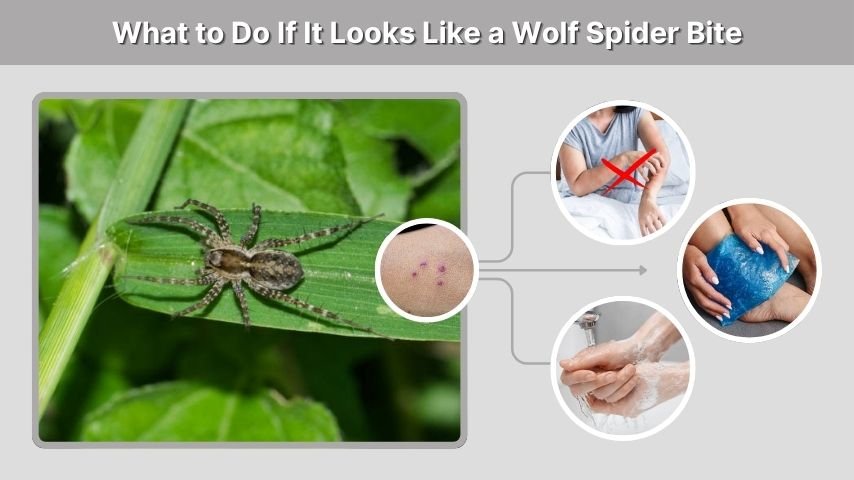
If the bite looks mild, basic first aid is usually enough. The goal is to clean the area, reduce swelling, avoid infection, and monitor changes. MedlinePlus recommends washing the area with soap and water, applying an ice pack or wet compress, and using pain medicine or antihistamines when appropriate.
Basic First Aid
Start with gentle care. Do not try harsh home remedies, and do not cut or squeeze the bite.
Basic care steps include:
- Wash with soap and water
- Apply a cold compress
- Keep the area clean and dry
- Avoid scratching
- Elevate the area if swollen
- Use pain relief only if safe
- Monitor for 24 to 48 hours
When to Get Medical Care
Get medical care if the bite becomes more painful, keeps growing, turns dark, drains pus, or develops red streaks. Also seek help for fever, chills, breathing trouble, dizziness, or trouble swallowing.
If you are unsure whether the bite came from a brown recluse, black widow, or another dangerous spider, contact a healthcare provider or poison control.
FAQs
What does a wolf spider bite look like?
A wolf spider bite may look like a small red, swollen bump with mild soreness, itching, warmth, or tenderness. Sometimes tiny puncture marks appear, but not always. Many bites and skin infections look similar, so appearance alone cannot confirm the spider.
What does a wolf spider bite look like at first?
At first, it may look like slight redness or a small irritated spot. It may feel like a quick pinch or sting. Over the next few hours, mild swelling, warmth, itching, or tenderness may appear near the bite.
What does a baby wolf spider bite look like?
A baby wolf spider bite may look like a tiny red bump, small swollen spot, or mild itchy patch. It is usually not dangerous, but symptoms that spread, worsen, drain pus, or cause fever should be checked by a medical professional.
What does a rabid wolf spider bite look like?
A rabid wolf spider bite looks similar to other wolf spider bites. It may cause redness, swelling, soreness, itching, or tiny fang marks. The word “rabid” does not mean the spider has rabies or creates a special bite pattern.
Can wolf spider bite pictures prove the bite?
No. Pictures can help track whether a mark is healing or spreading, but they cannot prove it came from a wolf spider. Many insect bites, rashes, allergic reactions, and infections look similar. A confirmed bite usually requires seeing the spider bite you.