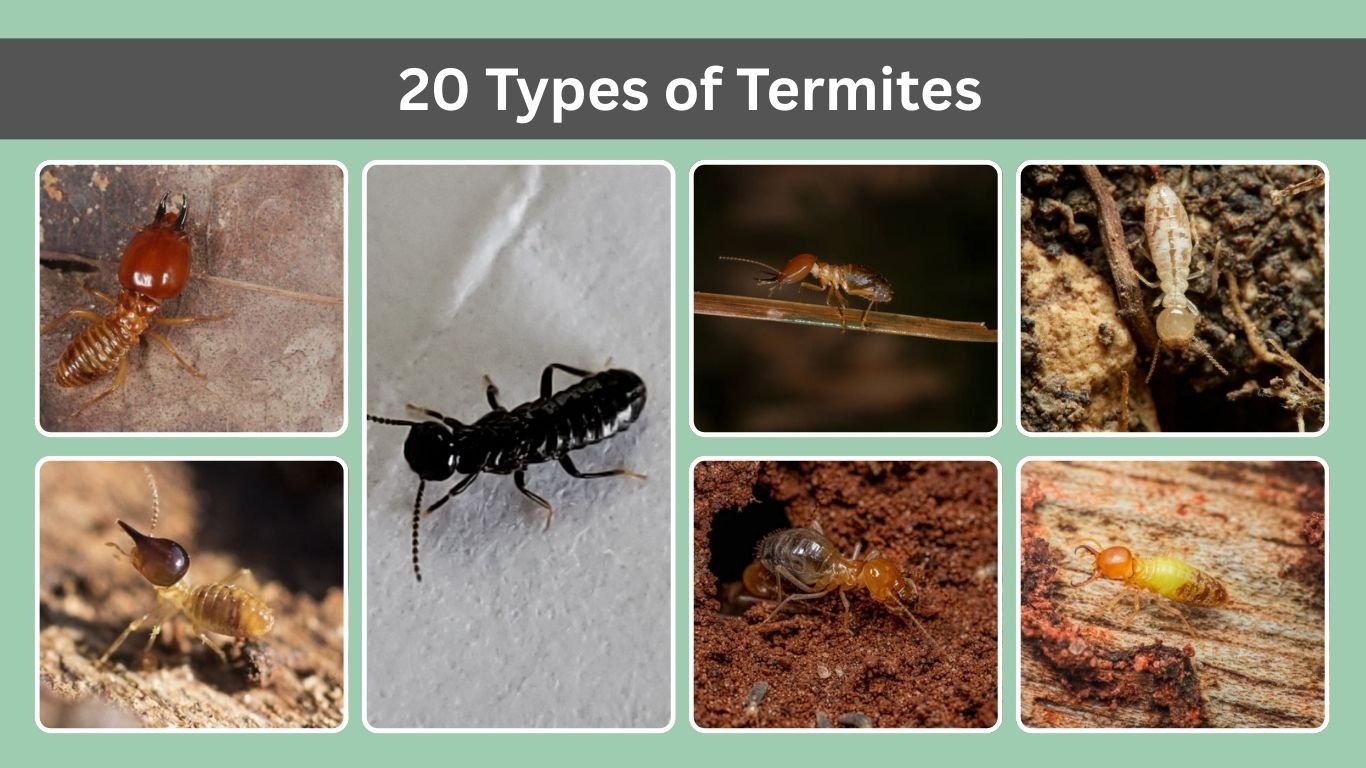
Termites are social insects that play important ecological roles but are also notorious for damaging wooden structures worldwide. With over 2,700 known species, their diversity is remarkable, ranging from wood-feeding dampwood termites to fungus-farming higher termites. This guide highlights 20 different termite types, focusing on their identification, habitat, behaviors, and lifecycle, to provide a clear understanding of how they live, where they thrive, and the impact they have on both ecosystems and human environments.
1. Eastern Subterranean Termite

The Eastern subterranean termite (Reticulitermes flavipes) is one of the most destructive termite species in North America. Known for silently damaging wooden structures, they cause billions of dollars in repair costs each year. Their colonies are large and hidden underground, making infestations difficult to detect until serious harm is done.
Identification
- Color: Workers are creamy white; soldiers have darker, elongated heads; reproductives are dark brown to black.
- Size: Workers measure 3–4 mm; soldiers slightly larger; kings and queens up to 10 mm.
- Body Shape: Soft-bodied with straight antennae.
- Distinctive Trait: Soldiers with strong, dark mandibles for defense.
Habitat
Eastern subterranean termites thrive in moist soil, building their colonies underground. They construct mud tubes to travel between soil and wooden food sources. They infest homes, fences, tree stumps, and any structure containing cellulose.
Behaviors
They are highly social insects, living in structured colonies with workers, soldiers, and reproductives. Workers forage continuously, chewing through wood and other cellulose-rich materials. Soldiers defend the colony, while reproductives ensure population growth. They rely on moisture, making damp wood and humid conditions favorable.
Lifecycle
- Egg Stage: Tiny white eggs hatch within a few weeks.
- Larvae Stage: Molt several times, developing into workers, soldiers, or reproductives.
- Nymph Stage: Some become winged alates (future kings and queens).
- Adult Stage: Workers maintain the colony, soldiers protect it, and alates swarm in spring to form new colonies.
2. Western Subterranean Termite
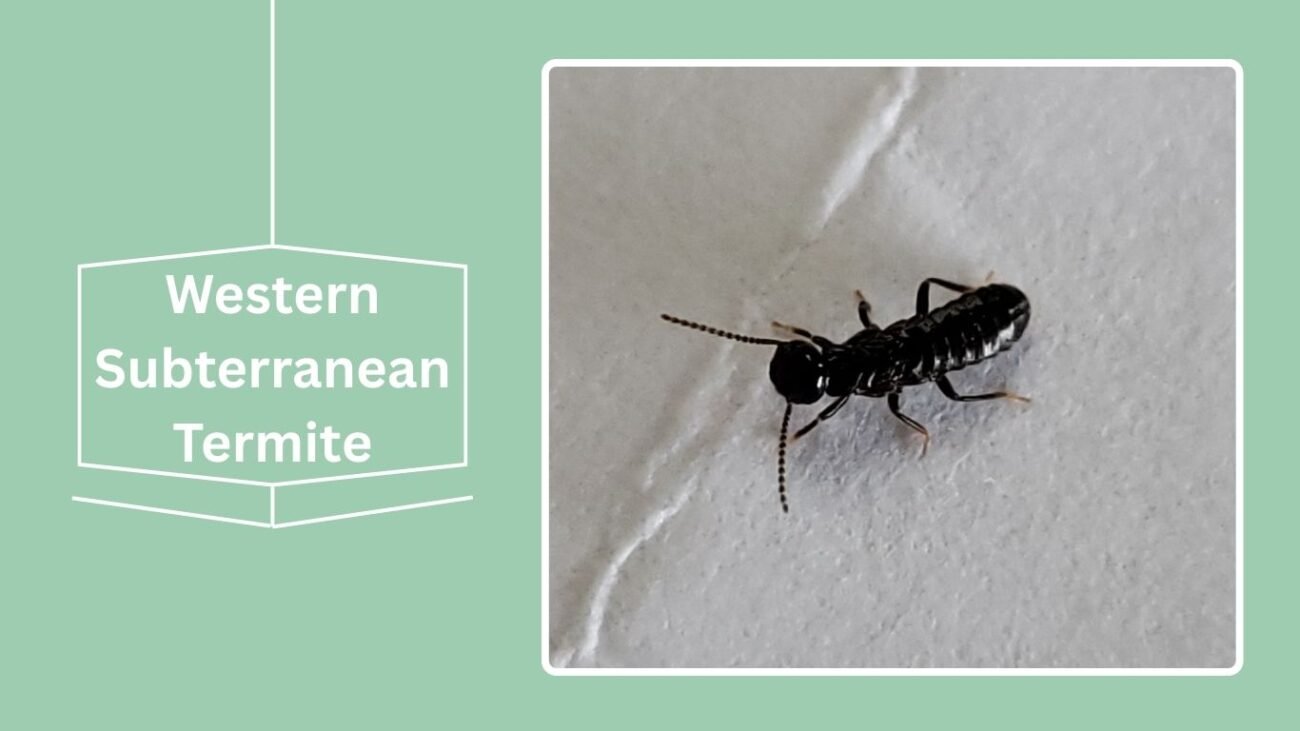
The Western subterranean termite (Reticulitermes hesperus) is the most common termite species in the western United States. They are highly destructive, attacking wooden structures, fences, and furniture, often going undetected until significant damage has occurred.
Identification
- Color: Workers are creamy white; soldiers have orange-brown heads with dark mandibles; reproductives are dark brown to black.
- Size: Workers around 3–4 mm; soldiers 4–5 mm; reproductives up to 10 mm.
- Body Shape: Straight antennae with soft, elongated bodies.
- Distinctive Trait: Soldiers with long, narrow heads compared to Eastern species.
Habitat
Western subterranean termites build underground colonies and use mud tubes to access wood above ground. They prefer moist soil and are commonly found in California, Washington, Oregon, and Nevada, infesting both urban and rural structures.
Behaviors
They consume cellulose-based materials, including structural wood, paper, and plant debris. Colonies work year-round, causing gradual yet extensive damage. Soldiers defend aggressively when colonies are disturbed.
Lifecycle
- Egg Stage: Hatch in 2–3 weeks.
- Larvae Stage: Molt and develop into workers, soldiers, or nymphs.
- Nymph Stage: Some mature into winged reproductives (alates).
- Adult Stage: Workers forage, soldiers guard, and reproductives swarm to form new colonies.
3. Formosan Subterranean Termite

The Formosan subterranean termite (Coptotermes formosanus) is often called the “super-termite” because of its massive colonies and aggressive feeding behavior. It is among the most destructive termite species worldwide, capable of consuming wood at alarming rates.
Identification
- Color: Workers are creamy white; soldiers have orange-brown heads; reproductives are yellow-brown.
- Size: Workers about 4–5 mm; soldiers 5–6 mm; queens up to 15 mm.
- Body Shape: Soldiers have tear-shaped heads with large mandibles.
- Distinctive Trait: Huge colonies with millions of individuals.
Habitat
Native to Asia, they have spread to the southern United States, Hawaii, and other warm regions. Colonies are built underground but may extend into buildings, trees, and even boats.
Behaviors
Formosan termites are aggressive and highly efficient feeders, consuming wood, flooring, and wallpaper. They can also chew through plaster, insulation, and thin metals. Colonies can number in the millions, making control extremely difficult once established.
Lifecycle
- Egg Stage: Queens lay thousands of eggs daily.
- Larvae Stage: Fed by workers until they molt.
- Nymph Stage: Develop into alates or secondary reproductives.
- Adult Stage: Workers forage, soldiers defend, and reproductives swarm in spring and summer.
4. Desert Subterranean Termite
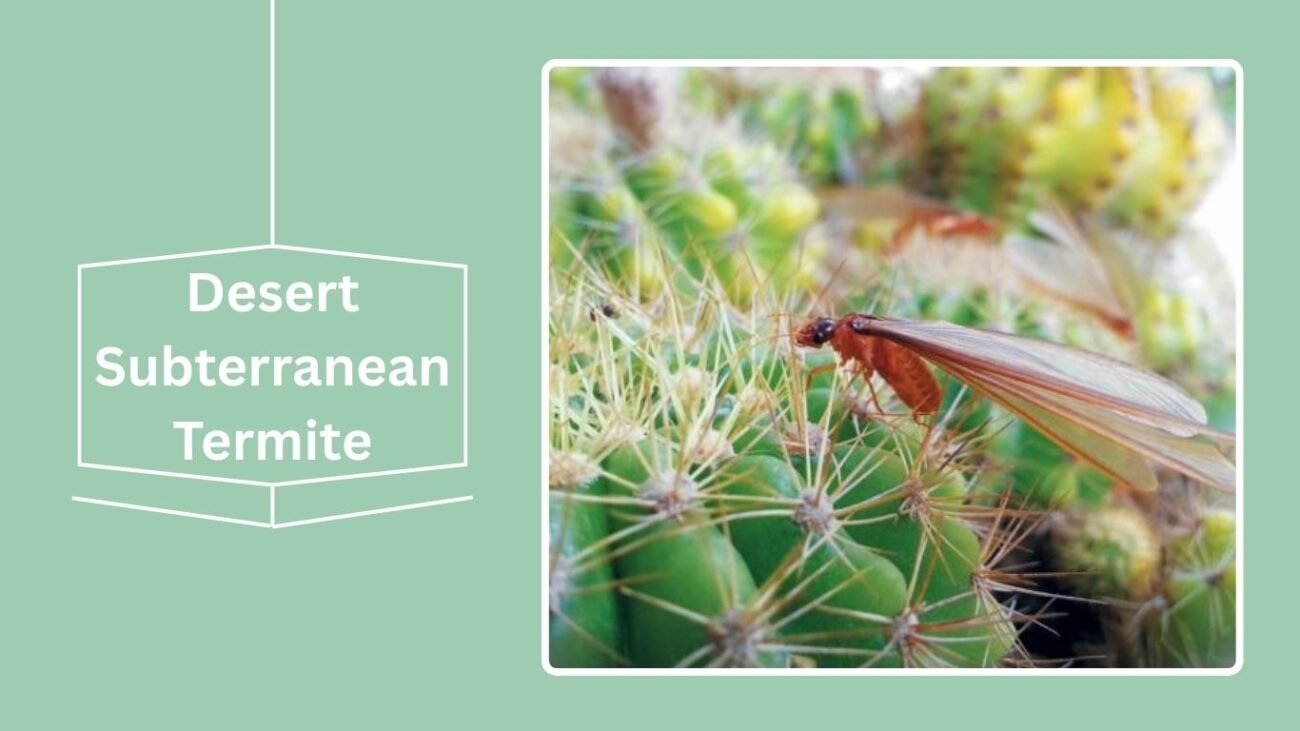
The desert subterranean termite (Heterotermes aureus) is well-adapted to arid environments and is commonly found in desert regions of the southwestern United States and northern Mexico. Unlike other termites, they can survive in very dry soils and feed on desert plants.
Identification
- Color: Workers are creamy white; soldiers have pale yellowish heads with dark jaws; reproductives are light brown.
- Size: Workers about 3–4 mm; soldiers 4–5 mm; reproductives up to 10 mm.
- Body Shape: Small and slender with straight antennae.
- Distinctive Trait: Ability to thrive in desert habitats.
Habitat
They nest in sandy or rocky soils, often near dry wood sources like cactus, dead shrubs, or desert trees. Colonies are usually smaller than those of Eastern or Formosan termites.
Behaviors
Desert subterranean termites feed on dry, cellulose-based materials, including structural wood, firewood, and desert vegetation. They construct thin, fragile mud tubes to reach above-ground food sources. Infestations often go unnoticed because damage progresses slowly.
Lifecycle
- Egg Stage: Hatch in 2–3 weeks.
- Larvae Stage: Fed by workers until developing further.
- Nymph Stage: Some become winged alates for reproduction.
- Adult Stage: Workers forage, soldiers defend, reproductives expand colonies.
5. Arid-land Subterranean Termite
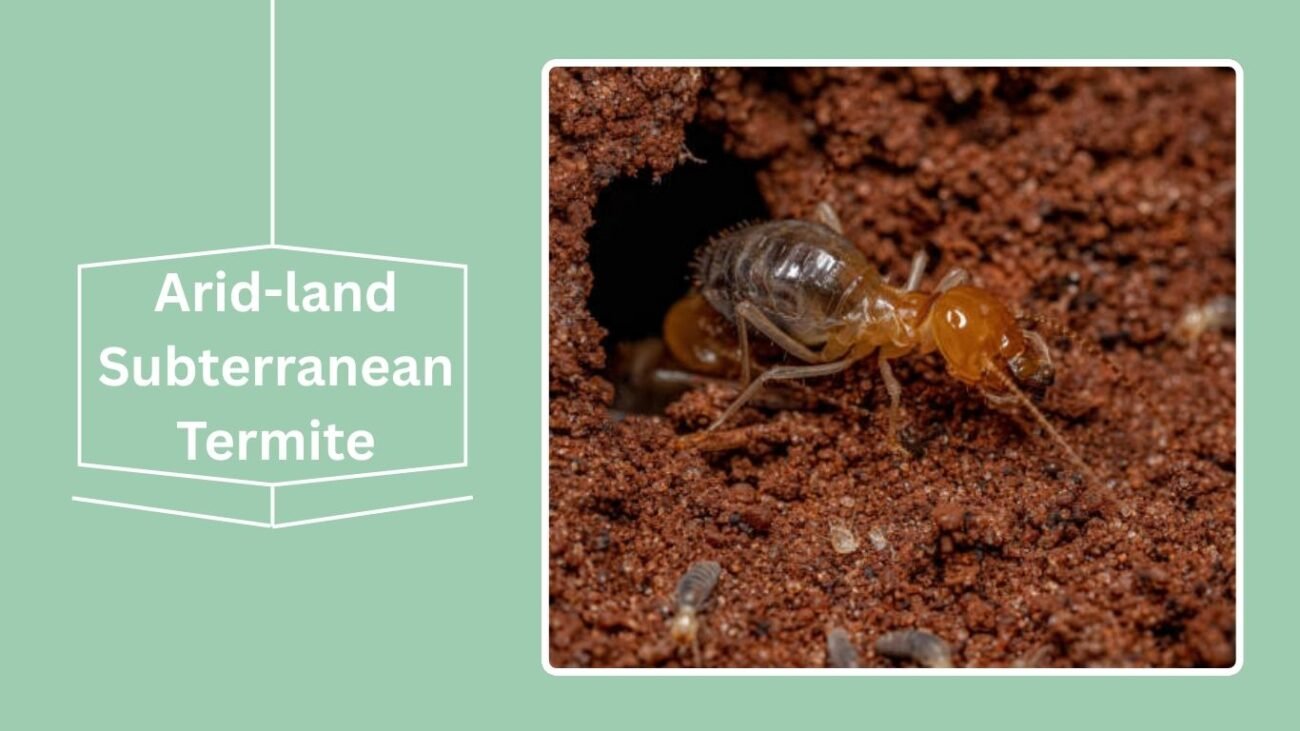
The arid-land subterranean termite (Reticulitermes tibialis) is another desert-adapted species. They are common in the western United States, especially in desert valleys and semi-arid climates. They are highly destructive to wooden structures in dry regions.
Identification
- Color: Workers are creamy white; soldiers have dark rectangular heads; reproductives are brown to black.
- Size: Workers 3–4 mm; soldiers 4–5 mm; queens up to 12 mm.
- Body Shape: Soldiers have rectangular heads with strong mandibles.
- Distinctive Trait: Rectangular soldier heads compared to other species.
Habitat
They build nests deep underground in sandy soils, often near dead wood, stumps, or structural timber. Colonies survive with very little moisture, making them resilient in desert regions.
Behaviors
Arid-land subterranean termites feed on wood, cellulose debris, and even desert grasses. They create mud tubes to bridge gaps between soil and food sources. Though slower feeders than Formosan termites, they cause extensive structural damage over time.
Lifecycle
- Egg Stage: Eggs hatch in 2–3 weeks.
- Larvae Stage: Grow into workers, soldiers, or nymphs.
- Nymph Stage: Develop into winged reproductives for swarming.
- Adult Stage: Workers forage continuously; soldiers protect; queens reproduce steadily.
6. Dark Southeastern Subterranean Termite

The dark southeastern subterranean termite (Reticulitermes virginicus) is a widespread species in the southeastern United States. It is one of the most common termites found in homes, known for infesting moist wood and soil-rich environments.
Identification
- Color: Workers are creamy white; soldiers have dark brown rectangular heads; reproductives are dark brown to nearly black.
- Size: Workers about 3–4 mm; soldiers 4–5 mm; reproductives up to 11 mm.
- Body Shape: Straight antennae with elongated bodies.
- Distinctive Trait: Soldiers with darker heads than related species.
Habitat
These termites thrive in warm, humid climates, nesting underground in soil. They are often found in decayed wood, fallen trees, and wooden structures in contact with soil, especially in the southeastern states.
Behaviors
Dark southeastern subterranean termites feed on cellulose, including timber, paper, and plant matter. Colonies are usually smaller than Formosan species but can still cause significant structural damage. They forage through mud tubes to maintain moisture while searching for food.
Lifecycle
- Egg Stage: Hatch in about 2–3 weeks.
- Larvae Stage: Fed by workers until molting.
- Nymph Stage: Some mature into alates for swarming.
- Adult Stage: Workers maintain colonies; soldiers protect; reproductives ensure growth.
7. Light Southeastern Subterranean Termite
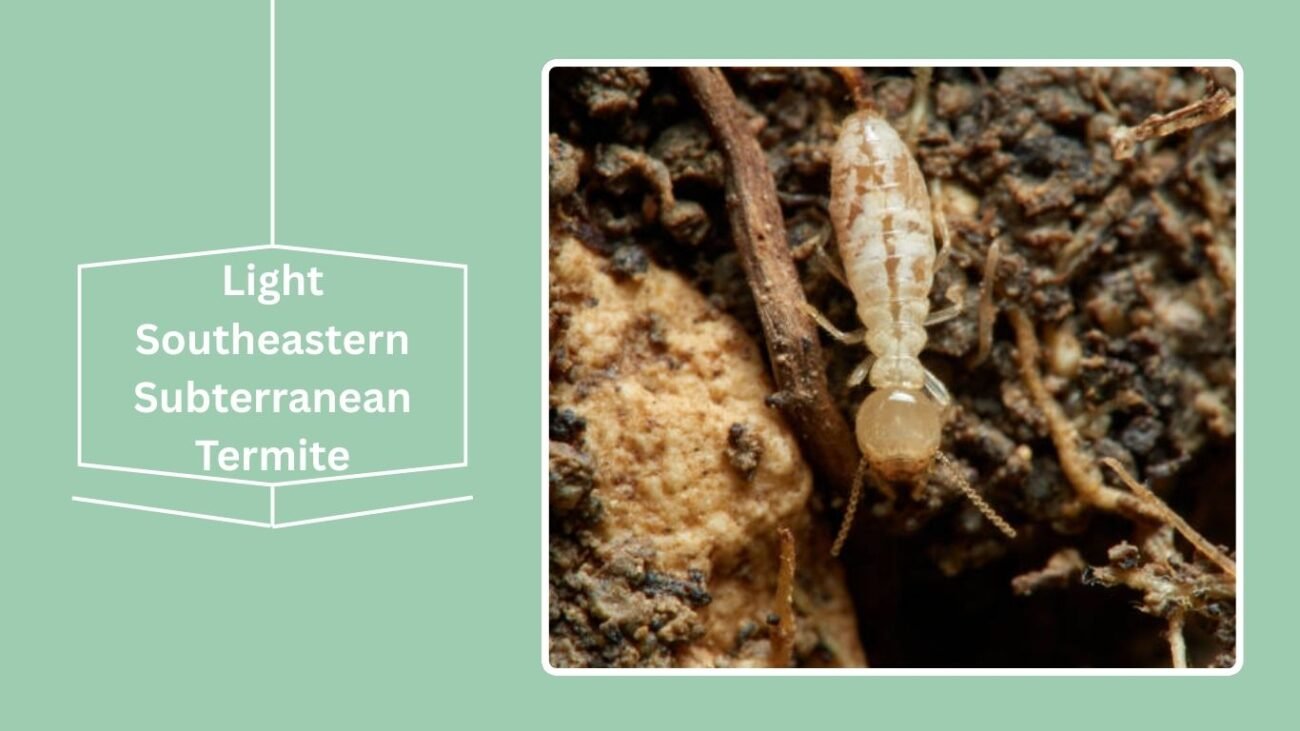
The light southeastern subterranean termite (Reticulitermes hageni) is another species found in the southeastern United States. They are similar to the dark southeastern termite but differ in coloration and nesting preferences.
Identification
- Color: Workers are creamy white; soldiers have yellowish-brown rectangular heads; reproductives are lighter brown than R. virginicus.
- Size: Workers measure 3–4 mm; soldiers 4–5 mm; reproductives up to 10 mm.
- Body Shape: Soft-bodied with long mandibles in soldiers.
- Distinctive Trait: Soldiers with lighter-colored heads.
Habitat
They build subterranean nests in soil, often near decayed wood and tree stumps. Colonies are generally smaller than those of other subterranean termites but can infest wooden structures in warm, moist regions.
Behaviors
Light southeastern subterranean termites feed on dead plant material, roots, and wooden structures. They use mud tubes to protect themselves from predators and dehydration. Although less destructive than Formosan termites, they can still cause serious long-term damage.
Lifecycle
- Egg Stage: Hatch in 2–3 weeks.
- Larvae Stage: Fed by workers and molt into castes.
- Nymph Stage: Develop into winged alates during swarming seasons.
- Adult Stage: Workers forage, soldiers defend, and queens produce eggs.
8. Coastal Subterranean Termite
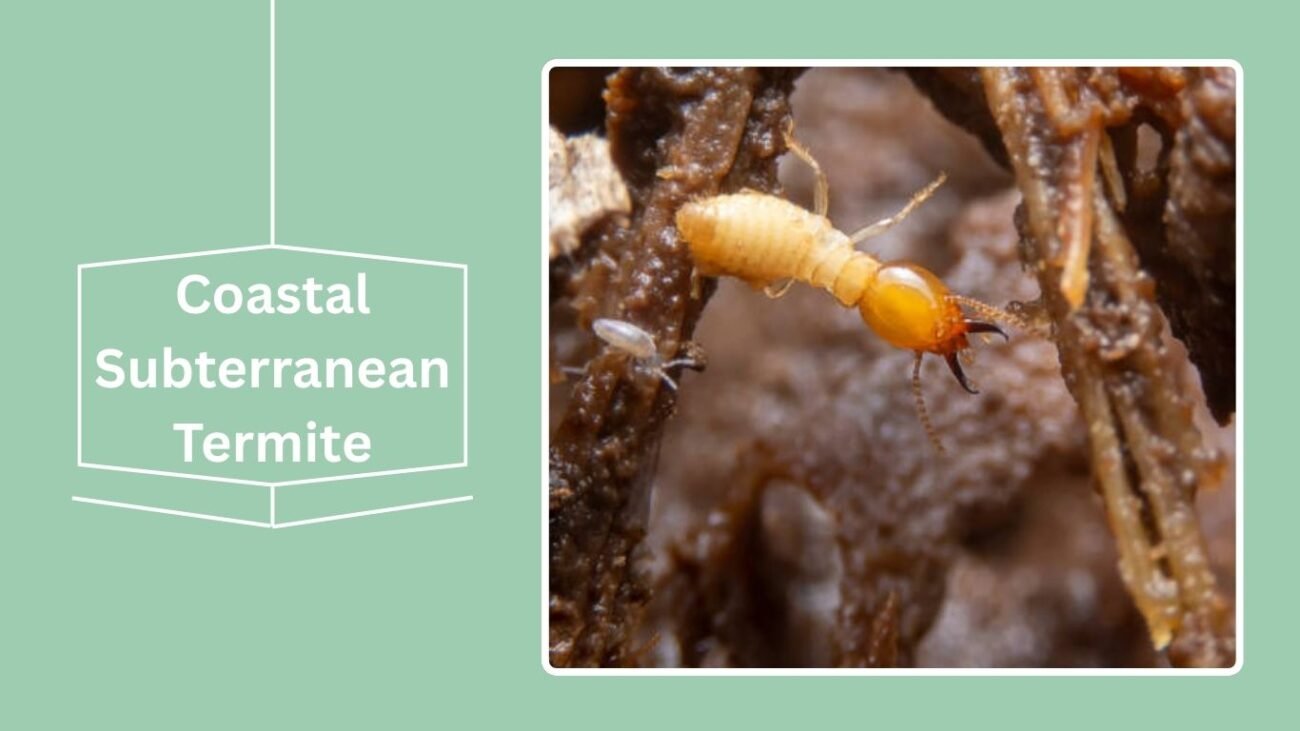
The coastal subterranean termite (Reticulitermes malletei) is a lesser-known species found along coastal regions of the southeastern United States. Though not as widespread as other subterranean species, it is still capable of damaging wood structures and vegetation.
Identification
- Color: Workers are milky white; soldiers have amber to dark brown heads; reproductives are brown to black.
- Size: Workers measure 3–4 mm; soldiers 4–5 mm; reproductives up to 10 mm.
- Body Shape: Slender, soft-bodied insects with straight antennae.
- Distinctive Trait: Often confused with Eastern subterranean termites but slightly lighter in appearance.
Habitat
They inhabit moist coastal soils, nesting underground near beaches, riverbanks, and wetlands. They build mud tubes to reach above-ground food sources and are more common in sandy coastal regions.
Behaviors
Coastal subterranean termites feed on cellulose, targeting wood structures, driftwood, and plant debris. Their colonies are not as massive as Formosan termites, but they can still cause significant localized damage.
Lifecycle
- Egg Stage: Hatch within 2–3 weeks.
- Larvae Stage: Cared for by workers until development.
- Nymph Stage: Some grow into winged alates for colony expansion.
- Adult Stage: Workers forage, soldiers protect, and queens lay eggs.
9. Dampwood Termite

Dampwood termites (Zootermopsis species) are among the largest termite species, known for infesting damp, decaying wood. Unlike subterranean termites, they do not require soil contact, preferring moist wood above ground.
Identification
- Color: Creamy white to light brown; soldiers have large, dark mandibles.
- Size: Workers and soldiers range from 10–20 mm, making them much larger than subterranean species.
- Body Shape: Robust, soft-bodied with straight antennae.
- Distinctive Trait: Large size and preference for damp, decayed wood.
Habitat
They are most common in the Pacific Northwest, Florida, and parts of South America. Nests are built inside logs, tree stumps, fallen branches, and water-damaged wooden structures.
Behaviors
Dampwood termites feed exclusively on decayed, moisture-rich wood. Colonies are smaller than subterranean termites but can cause structural issues in buildings with poor drainage or leaks. They do not build mud tubes since they stay inside wood.
Lifecycle
- Egg Stage: Hatch in about 3–4 weeks.
- Larvae Stage: Grow into workers or soldiers inside wood.
- Nymph Stage: Some develop into winged reproductives.
- Adult Stage: Workers expand tunnels; soldiers defend; reproductives swarm during humid seasons.
10. Pacific Dampwood Termite
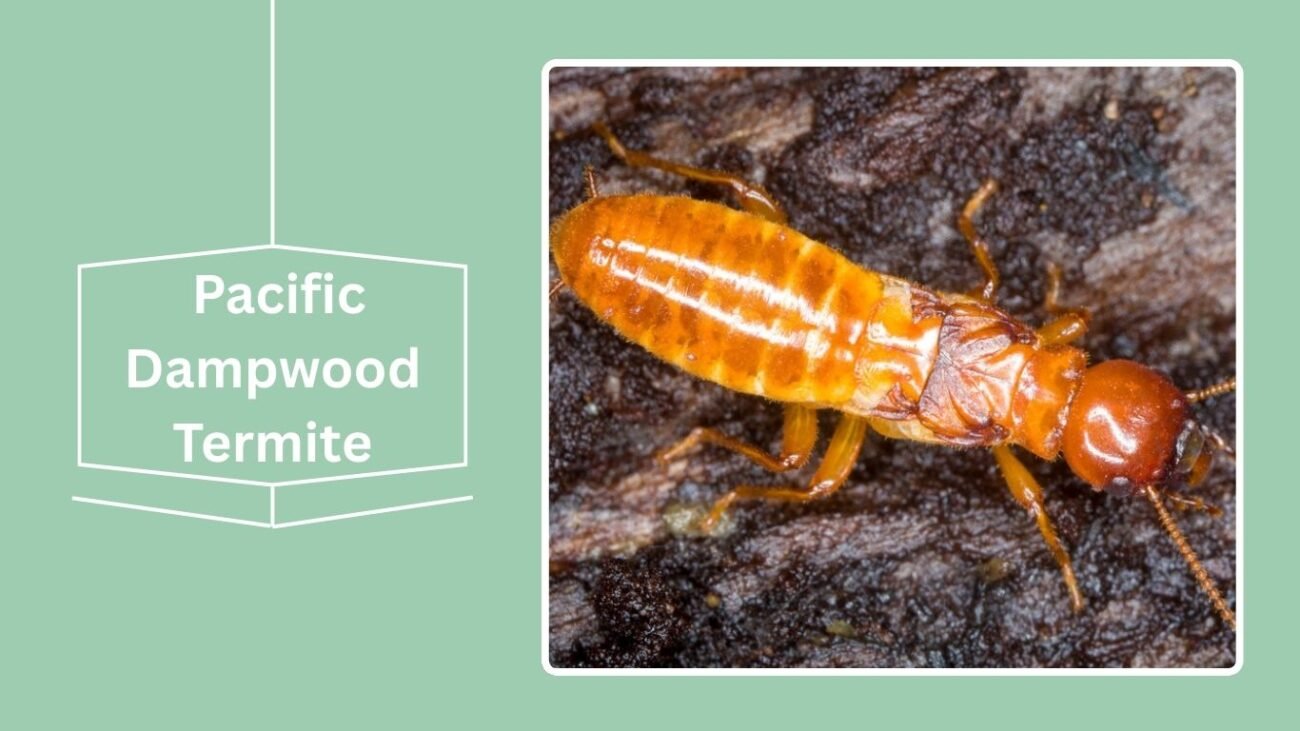
The Pacific dampwood termite (Zootermopsis angusticollis) is one of the largest termite species in North America. It is commonly found along the Pacific coast, where it thrives in moist forests and coastal woodlands.
Identification
- Color: Light brown to dark brown; workers creamy white.
- Size: Workers and soldiers can reach 15–20 mm; reproductives even larger.
- Body Shape: Stout, elongated with straight antennae.
- Distinctive Trait: Large size compared to other termite species.
Habitat
They prefer damp, decaying wood in coastal forests, fallen logs, and tree stumps. Infestations are often limited to outdoor wood but can occasionally occur in poorly ventilated or water-damaged homes.
Behaviors
Pacific dampwood termites feed on high-moisture wood, creating large smooth galleries inside logs and stumps. Unlike subterranean termites, they do not build mud tubes or require soil contact.
Lifecycle
- Egg Stage: Hatch in about 3–4 weeks.
- Larvae Stage: Develop inside wood into workers or soldiers.
- Nymph Stage: Some transform into winged reproductives (alates).
- Adult Stage: Workers expand colonies, soldiers defend, and reproductives swarm in late summer.
11. Florida Dampwood Termite
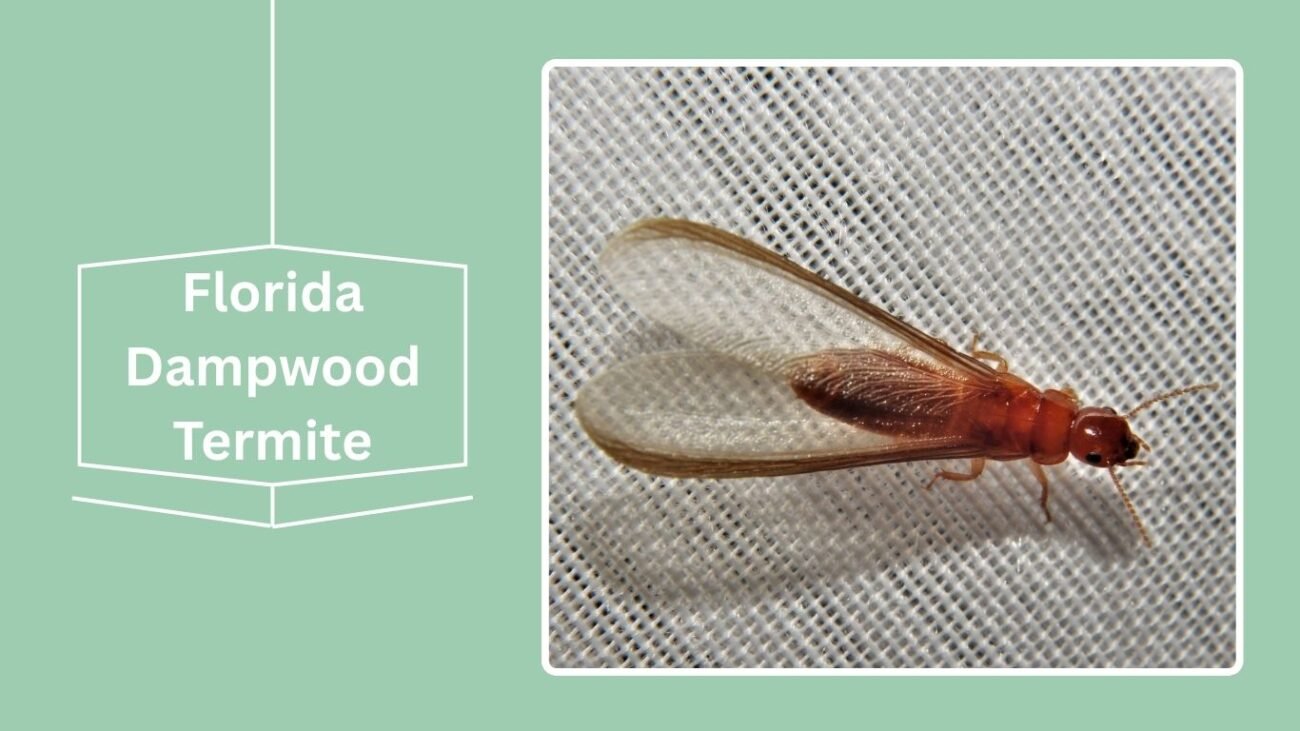
The Florida dampwood termite (Neotermes jouteli) is a large termite species found in Florida and parts of the southeastern United States. They thrive in humid conditions and infest damp, decaying wood both indoors and outdoors.
Identification
- Color: Workers are creamy white; soldiers and reproductives are yellow-brown to dark brown.
- Size: Soldiers can measure up to 12–15 mm; reproductives larger.
- Body Shape: Elongated, soft-bodied with strong mandibles in soldiers.
- Distinctive Trait: Large size and preference for moist environments.
Habitat
They are most common in Florida’s warm, humid climate. Colonies are usually found in decaying logs, tree stumps, utility poles, or water-damaged structural wood.
Behaviors
Florida dampwood termites prefer moist wood with direct water sources. Unlike subterranean termites, they do not construct mud tubes but instead live entirely inside wood. They are less likely to infest dry structures unless severe moisture issues exist.
Lifecycle
- Egg Stage: Hatch in 3–4 weeks.
- Larvae Stage: Grow into workers and soldiers inside damp wood.
- Nymph Stage: Some develop into alates for swarming.
- Adult Stage: Workers tunnel, soldiers defend, and reproductives expand colonies in late summer or fall.
12. Western Drywood Termite
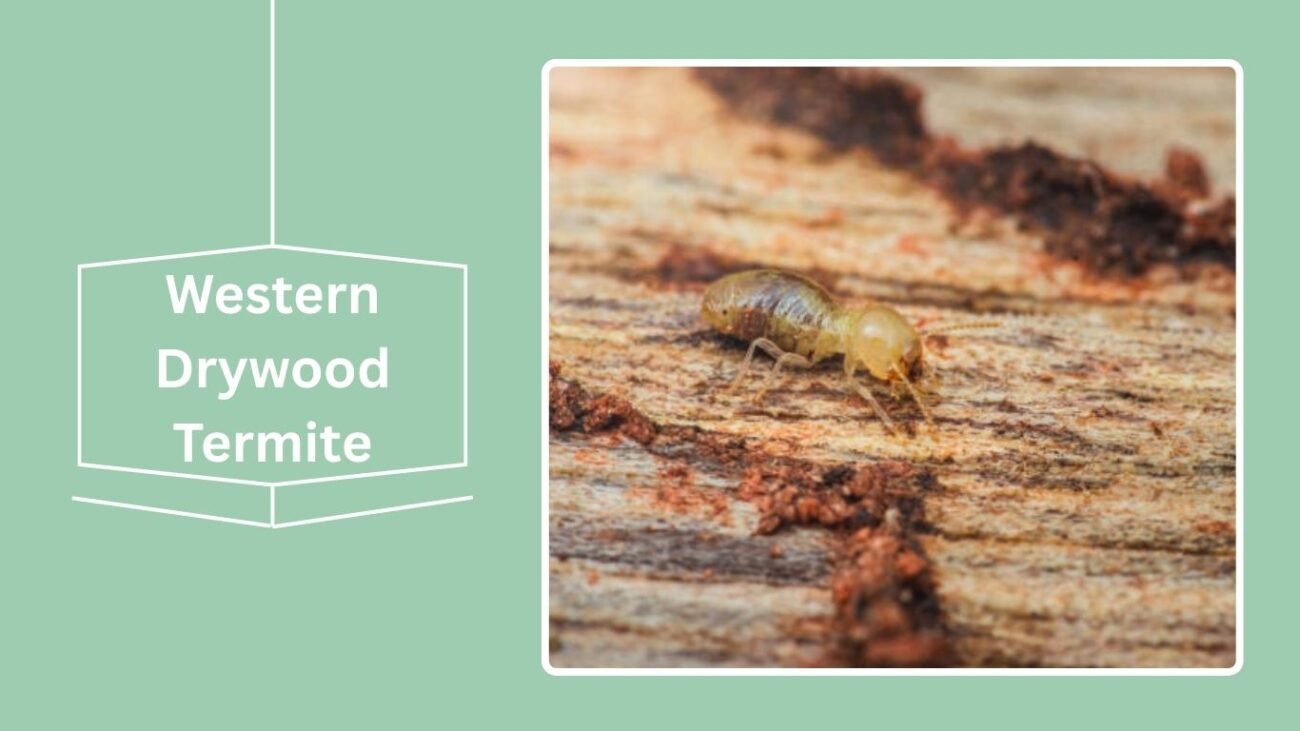
The western drywood termite (Incisitermes minor) is one of the most common drywood termite species in the United States, particularly in California and the southwestern states. Unlike subterranean termites, they live entirely in dry wood and do not require soil contact.
Identification
- Color: Workers (pseudergates) are creamy white; soldiers have reddish-brown heads; reproductives are dark brown.
- Size: Workers about 4–6 mm; soldiers 6–8 mm; reproductives up to 12 mm.
- Body Shape: Soldiers have large mandibles with teeth.
- Distinctive Trait: Small colonies entirely within dry wood.
Habitat
They infest dry, seasoned wood such as furniture, hardwood flooring, and structural timbers. Colonies are commonly found in attics, wooden frames, and even dead tree branches.
Behaviors
Western drywood termites feed directly on dry cellulose, creating small, smooth galleries inside wood. They leave behind hexagonal fecal pellets, a key sign of infestation. Colonies are relatively small but can survive for years.
Lifecycle
- Egg Stage: Hatch in 2–4 weeks.
- Larvae Stage: Develop into pseudergates, which can become workers, soldiers, or reproductives.
- Nymph Stage: Some grow into alates for swarming.
- Adult Stage: Workers maintain colonies; soldiers defend; reproductives swarm in late summer.
13. Southeastern Drywood Termite

The southeastern drywood termite (Incisitermes snyderi) is the most common drywood termite in the southeastern United States. Like other drywood termites, they live completely inside wood, making detection difficult until serious damage occurs.
Identification
- Color: Workers are whitish; soldiers have yellow-brown to reddish heads; reproductives are medium to dark brown.
- Size: Workers measure 4–6 mm; soldiers 6–8 mm; reproductives about 10–12 mm.
- Body Shape: Soldiers with large mandibles for defense.
- Distinctive Trait: Colonies confined to wood with no soil contact.
Habitat
They thrive in warm, humid climates across the southeastern United States, especially Florida, Georgia, and the Gulf Coast. Infestations occur in wooden furniture, flooring, utility poles, and structural timbers.
Behaviors
These termites feed on dry wood, leaving behind small fecal pellets pushed out of tiny holes. Colonies are smaller than subterranean species but persist for many years, slowly hollowing out infested wood.
Lifecycle
- Egg Stage: Hatch within 2–3 weeks.
- Larvae Stage: Develop into pseudergates, capable of various roles.
- Nymph Stage: Some develop wings and become alates.
- Adult Stage: Workers feed and tunnel; soldiers defend; reproductives swarm in spring or early summer.
14. West Indian Drywood Termite
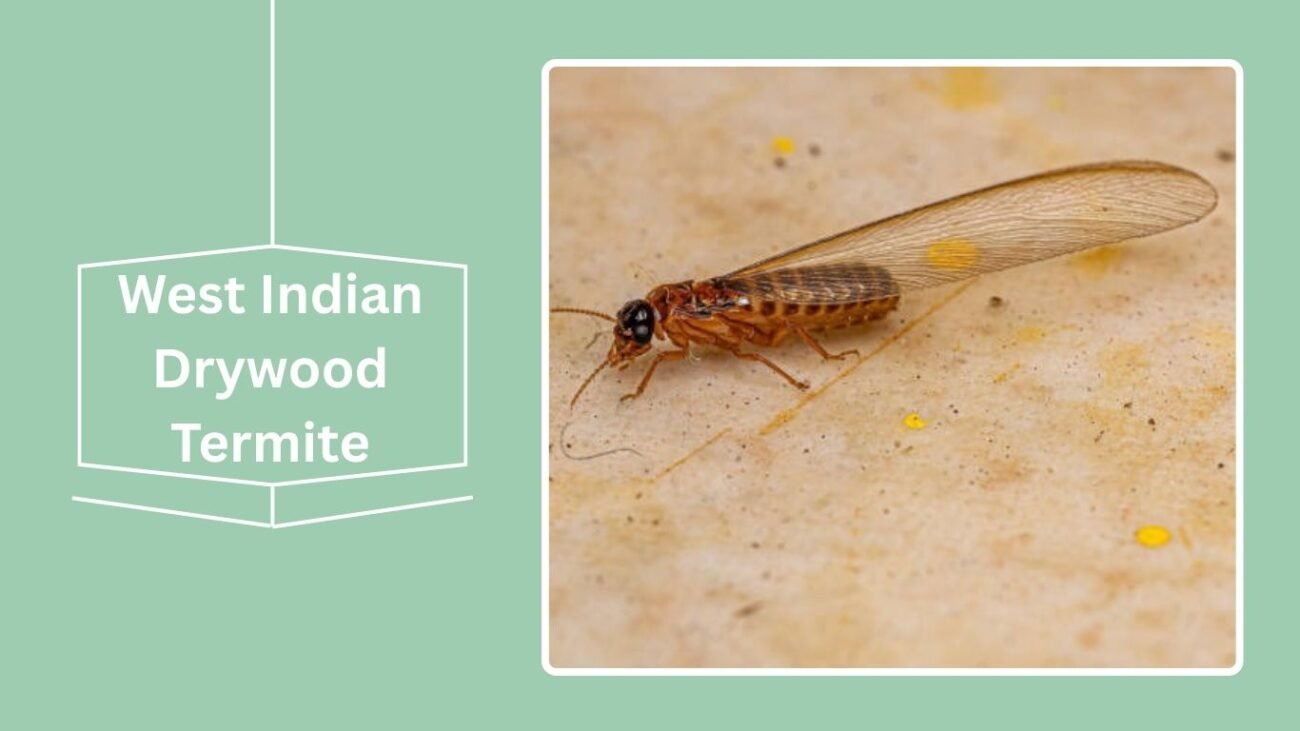
The West Indian drywood termite (Cryptotermes brevis) is one of the most destructive drywood termite species worldwide. It is infamous for spreading through infested furniture, timber, and wooden goods via trade, making it a global pest.
Identification
- Color: Workers (pseudergates) are creamy white; soldiers have large, square, dark-brown heads; reproductives are dark brown to black.
- Size: Workers about 4–6 mm; soldiers 6–7 mm; reproductives 8–12 mm.
- Body Shape: Soldiers with large rectangular heads and short mandibles.
- Distinctive Trait: Ability to survive entirely inside small wooden objects.
Habitat
They are most common in tropical and subtropical regions, including the Caribbean, South America, and southern U.S. states. They infest structural wood, furniture, picture frames, and even shipping crates.
Behaviors
West Indian drywood termites feed directly on dry wood and leave behind small fecal pellets as waste. They are spread primarily by human activity, often introduced into new areas through infested furniture or wood shipments.
Lifecycle
- Egg Stage: Hatch in 2–3 weeks.
- Larvae Stage: Develop into pseudergates or soldiers.
- Nymph Stage: Some mature into winged alates.
- Adult Stage: Workers sustain the colony; soldiers defend; reproductives swarm in warm, humid seasons.
15. Desert Drywood Termite
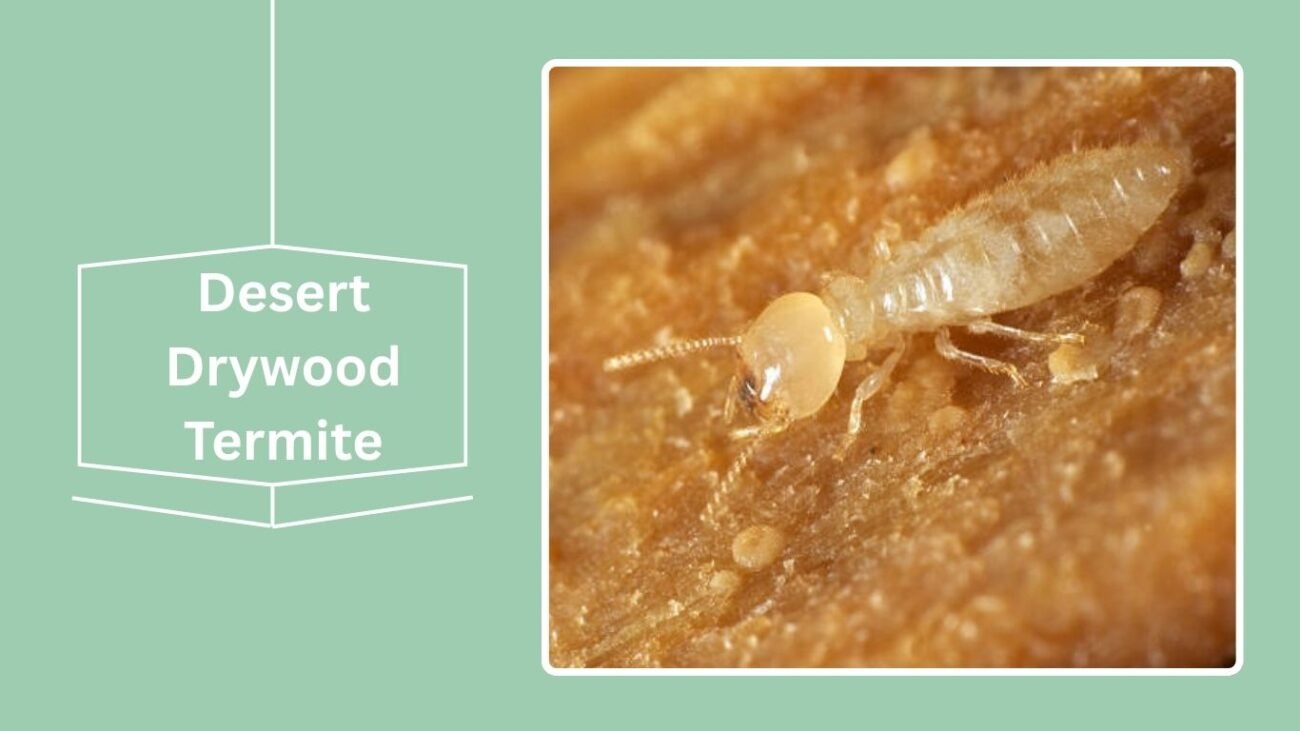
The desert drywood termite (Marginitermes hubbardi) is a drywood species adapted to arid desert climates. Unlike subterranean termites, they require no soil contact and survive entirely in dry wooden structures.
Identification
- Color: Workers are whitish; soldiers have reddish-brown heads; reproductives are dark brown.
- Size: Workers about 4–6 mm; soldiers 6–8 mm; reproductives up to 12 mm.
- Body Shape: Soldiers with long, curved mandibles.
- Distinctive Trait: Adaptation to desert climates without moisture dependence.
Habitat
They are primarily found in the southwestern United States and northern Mexico. Colonies live inside dead cactus, desert trees, firewood, and occasionally wooden buildings in arid environments.
Behaviors
Desert drywood termites consume cellulose in very dry conditions, often leaving smooth galleries inside wood. They produce fecal pellets that accumulate near nest openings. Colonies are smaller than subterranean termites but still destructive in rural desert homes.
Lifecycle
- Egg Stage: Hatch in 2–4 weeks.
- Larvae Stage: Grow into pseudergates or soldiers.
- Nymph Stage: Develop into alates for reproduction.
- Adult Stage: Workers forage within wood; soldiers defend; reproductives swarm in late summer.
16. Neotropical Drywood Termite
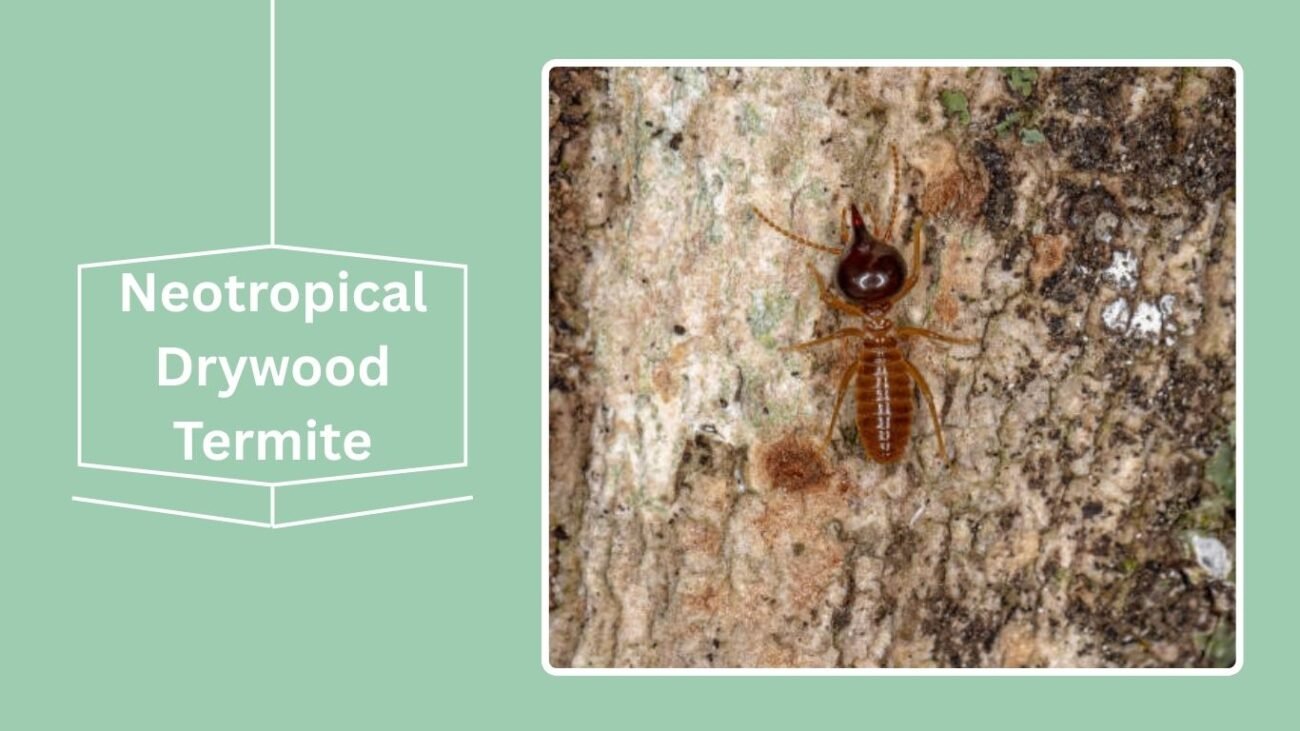
The neotropical drywood termite (Cryptotermes dudleyi) is a widespread pest species native to Central and South America but has spread to many tropical and subtropical regions worldwide. They infest homes, furniture, and other dry wooden materials.
Identification
- Color: Workers (pseudergates) are creamy white; soldiers have dark, square-shaped heads; reproductives are brown to nearly black.
- Size: Workers 4–6 mm; soldiers 6–7 mm; reproductives up to 11 mm.
- Body Shape: Soldiers with short mandibles and box-like heads.
- Distinctive Trait: Commonly spread through trade of wooden goods.
Habitat
They thrive in warm, humid climates, nesting entirely inside wood without soil contact. They infest furniture, shipping crates, wooden beams, and household timber, often introduced to new areas via commerce.
Behaviors
Neotropical drywood termites feed directly on dry wood, leaving behind fecal pellets that accumulate outside nest holes. Colonies are small but persistent, and infestations may go unnoticed until significant damage has occurred.
Lifecycle
- Egg Stage: Hatch in 2–3 weeks.
- Larvae Stage: Develop into pseudergates or soldiers.
- Nymph Stage: Some develop into alates for swarming.
- Adult Stage: Workers hollow out wood; soldiers defend; reproductives swarm seasonally.
17. Conehead Termite

The conehead termite (Nasutitermes corniger) is an invasive species originally from the Caribbean and Central America. It is highly destructive and named for the cone-shaped heads of its soldiers.
Identification
- Color: Workers are creamy white; soldiers have dark, cone-shaped heads; reproductives are dark brown.
- Size: Workers 4–6 mm; soldiers 5–6 mm; reproductives 8–10 mm.
- Body Shape: Soldiers with pointed heads that secrete defensive chemicals.
- Distinctive Trait: Cone-shaped head and rapid spread in infested areas.
Habitat
Conehead termites build nests above ground, often visible as dark mounds in soil, trees, or wooden structures. They do not rely on underground colonies like subterranean termites.
Behaviors
They are highly aggressive feeders, consuming wood, living trees, and even crops. Soldiers defend using chemical sprays from their cone-shaped heads. Colonies expand quickly, making them extremely invasive and difficult to control.
Lifecycle
- Egg Stage: Hatch within 2–3 weeks.
- Larvae Stage: Fed by workers until maturing.
- Nymph Stage: Some develop into alates for reproduction.
- Adult Stage: Workers forage, soldiers defend with chemical sprays, reproductives swarm to start new colonies.
18. Nasutitermes Termite
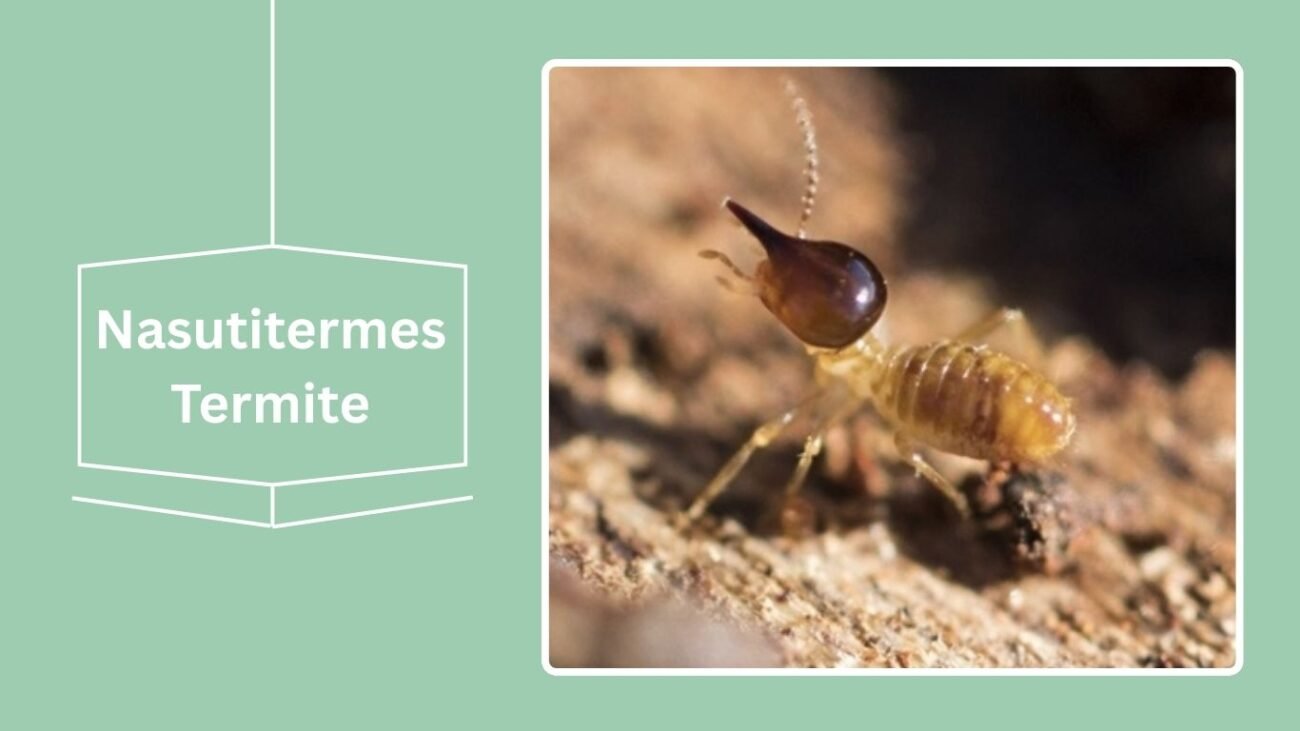
Nasutitermes termites are a diverse genus found mainly in tropical regions. They are distinguished by their soldier caste, which has a pointed snout (“nasus”) that sprays chemical defenses instead of using mandibles.
Identification
- Color: Workers are whitish; soldiers have dark, elongated, cone-shaped heads; reproductives are brown to black.
- Size: Workers 3–5 mm; soldiers 4–6 mm; reproductives up to 12 mm.
- Body Shape: Soldiers lack strong jaws but have a chemical-spraying snout.
- Distinctive Trait: Soldiers use chemical secretions for defense instead of biting.
Habitat
They are widespread in Central and South America, Africa, Asia, and Australia. Colonies build large above-ground mounds, arboreal nests in trees, or soil-based nests depending on the species.
Behaviors
Nasutitermes termites primarily feed on decaying wood, leaf litter, and other plant material, playing a vital role in recycling nutrients. They are highly territorial and defend colonies using chemical sprays that repel predators like ants.
Lifecycle
- Egg Stage: Hatch in 2–3 weeks.
- Larvae Stage: Fed by workers until molting.
- Nymph Stage: Some grow into alates for reproduction.
- Adult Stage: Workers forage, soldiers defend with chemicals, reproductives swarm seasonally.
19. Higher Termite (Macrotermes)
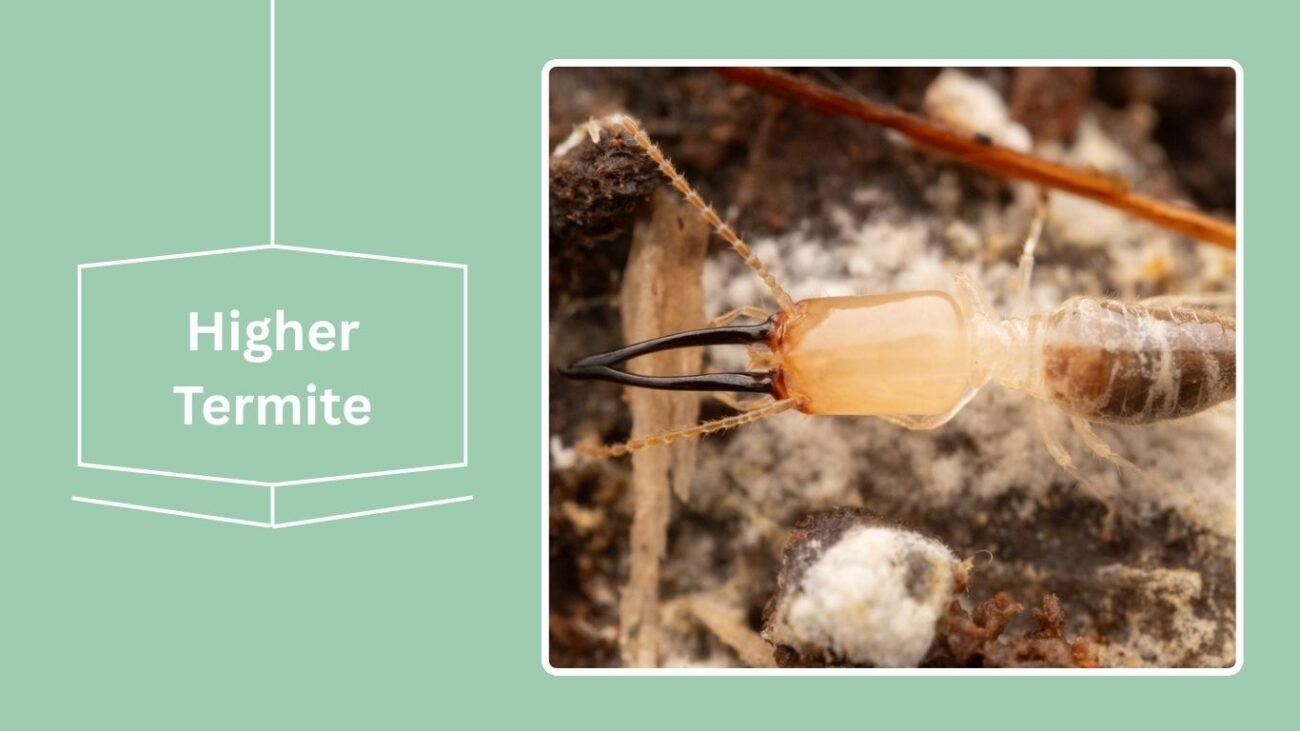
Higher termites, especially those in the genus Macrotermes, are famous for their complex mound-building and fungus-farming behavior. They cultivate fungal gardens inside their nests, making them one of the most advanced termite groups.
Identification
- Color: Workers are pale white; soldiers have large, dark brown heads; reproductives are dark brown to black.
- Size: Workers 4–6 mm; soldiers 8–10 mm; queens can exceed 100 mm in length.
- Body Shape: Robust with large mandibles in soldiers.
- Distinctive Trait: Fungus-farming inside nests.
Habitat
They are native to Africa and parts of Asia, living in massive earthen mounds that may rise several meters high. Colonies can contain millions of termites.
Behaviors
Higher termites collect plant material and use it to cultivate fungus (Termitomyces), which breaks down cellulose for easier digestion. Their towering mounds are intricately ventilated, maintaining temperature and humidity.
Lifecycle
- Egg Stage: Laid in enormous numbers by queens.
- Larvae Stage: Fed fungus and plant material.
- Nymph Stage: Some become alates for reproduction.
- Adult Stage: Workers maintain fungus gardens, soldiers defend, queens reproduce for decades.
20. Lower Termite (Zootermopsis)

Lower termites, particularly those in the genus Zootermopsis, are among the most primitive termite groups. They live in damp wood and rely on gut protozoa to digest cellulose, a trait that distinguishes them from higher termites.
Identification
- Color: Workers are whitish; soldiers have large reddish-brown heads; reproductives are dark brown to black.
- Size: Workers 5–7 mm; soldiers 7–10 mm; reproductives up to 12 mm.
- Body Shape: Soldiers have large mandibles and elongated heads.
- Distinctive Trait: Dependence on gut protozoa for cellulose digestion.
Habitat
They are found in North America, particularly in the western United States, nesting in fallen logs, decayed stumps, and damp wooden structures. Colonies remain inside wood rather than underground.
Behaviors
Lower termites feed exclusively on damp, decayed wood. They play an ecological role in breaking down fallen trees and recycling nutrients. Unlike higher termites, they lack fungus-farming but rely on symbiotic protozoa in their guts for digestion.
Lifecycle
- Egg Stage: Hatch in 2–3 weeks.
- Larvae Stage: Fed by workers and develop slowly.
- Nymph Stage: Some molt into winged alates.
- Adult Stage: Workers tunnel in wood, soldiers defend, reproductives swarm during warm seasons.