Vultures are nature’s clean-up crew—scavengers that play a vital role in keeping ecosystems healthy. From the soaring Andean Condor to the bone-cracking Bearded Vulture, each species has its own unique traits and survival strategies. In this guide, we’ll explore 25 types of vultures from around the world, covering how to identify them, where they live, and how they behave in the wild.
1. Turkey Vulture
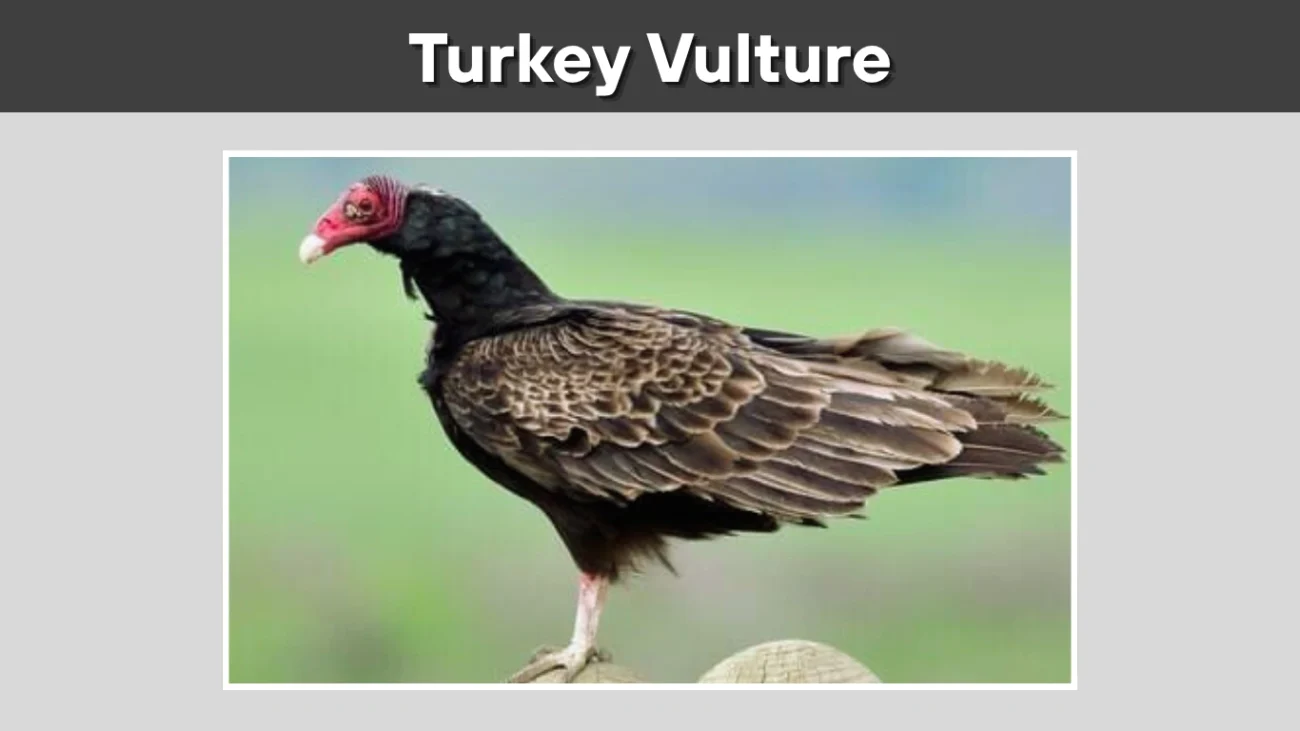
The Turkey Vulture (Cathartes aura) is one of the most widespread scavenger birds in the Americas. It’s easily recognized by its bald red head and graceful soaring flight. Despite its name, it’s not related to turkeys but gets the name from its similar head shape.
Identification
- Large dark brown body with a featherless red head
- Wingspan of about 6 feet
- Silvery flight feathers contrasting with darker coverts
- Slight V-shape when gliding (dihedral posture)
- Wobbly flight pattern when soaring
Habitat
Turkey Vultures inhabit open and semi-open areas such as forests, deserts, farmlands, and roadsides. They range from southern Canada to the southern tip of South America.
Behavior
They rely heavily on their keen sense of smell to locate carrion, a trait rare among birds. Turkey Vultures rarely kill and primarily feed on dead animals. They often gather in communal roosts and soar for hours with minimal wing-flapping.
2. Black Vulture

The Black Vulture (Coragyps atratus) is a robust scavenger found across the southeastern United States, Central America, and South America. Unlike the Turkey Vulture, it relies more on eyesight than smell to locate food.
Identification
- All-black plumage with a short, square tail
- Featherless dark gray head
- Broad wings with white patches at the wingtips
- Shorter wingspan compared to Turkey Vulture
Habitat
Prefers open areas, landfills, forests, and roadsides. Frequently seen near human settlements and carcass-rich areas.
Behavior
Black Vultures are aggressive feeders, often found in groups. They follow Turkey Vultures to find food and are known to chase them away once a carcass is located. They also occasionally feed on eggs and weak livestock.
3. Eurasian Griffon Vulture
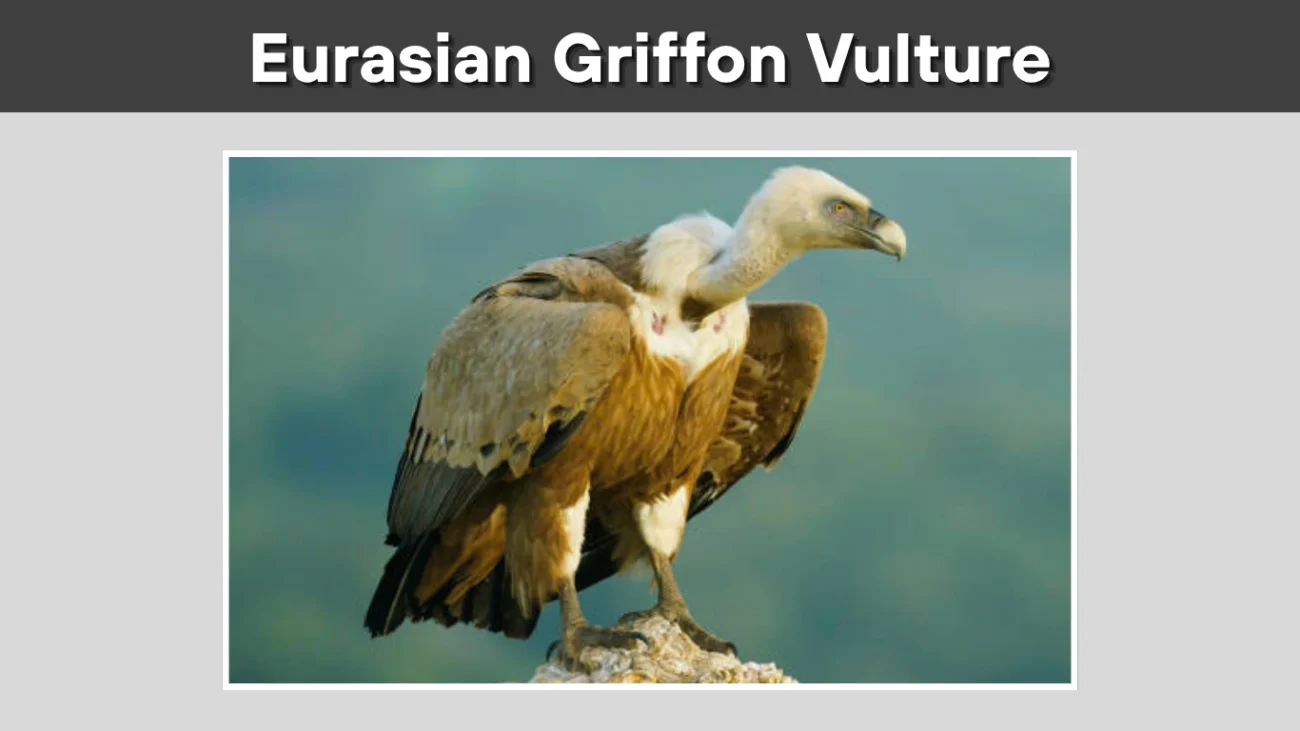
The Eurasian Griffon Vulture (Gyps fulvus) is a majestic Old World vulture known for its large wingspan and pale coloration. It plays a vital ecological role in mountainous and open regions of Europe, North Africa, and Asia.
Identification
- Pale brown body with a white neck ruff
- Long wings with finger-like tips
- Featherless pale yellowish head
- Wingspan up to 9 feet
Habitat
Found in mountainous regions, plateaus, and open grasslands. Roosts and nests on high cliffs or crags.
Behavior
Soars on thermals for hours while searching for carrion. Lives in colonies and often feeds communally. Known for their powerful beaks, they can clean large carcasses quickly, helping maintain ecosystem health.
4. Bearded Vulture
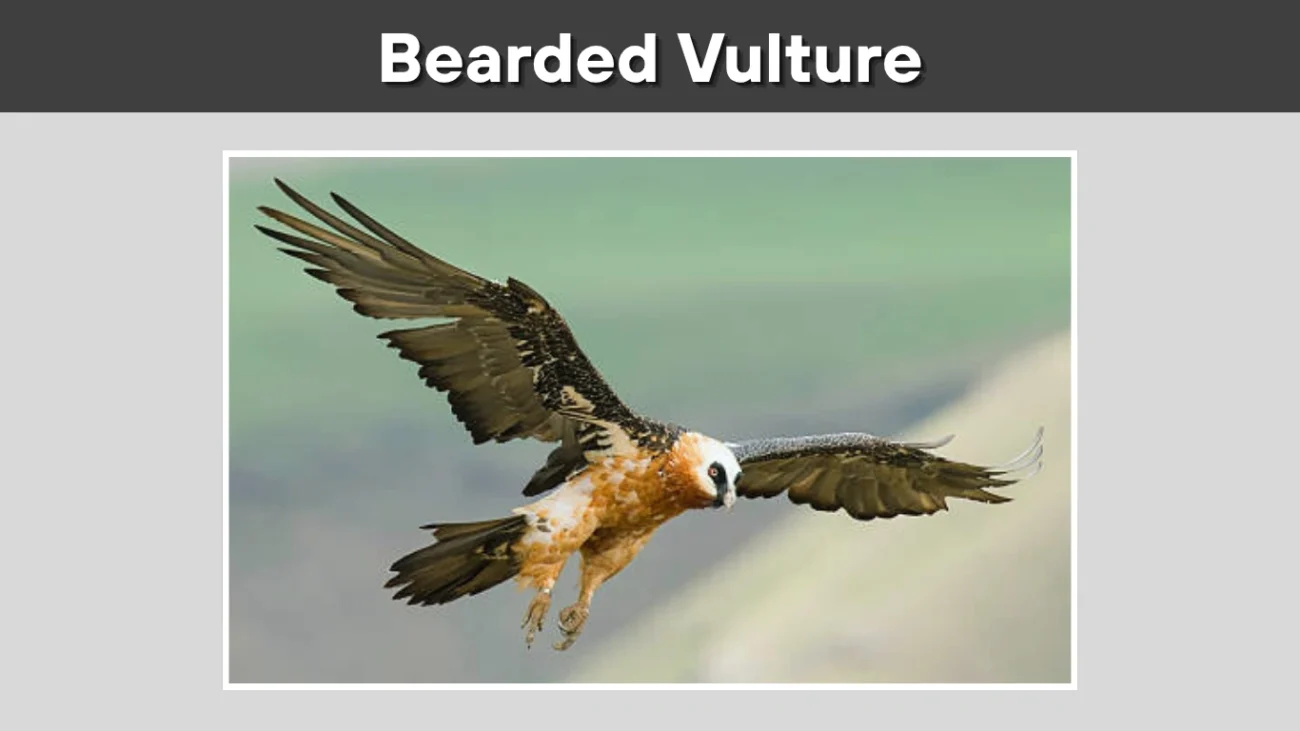
The Bearded Vulture (Gypaetus barbatus), also known as the Lammergeier, is one of the most unique vultures, famous for its bone-dropping behavior. It feeds mainly on bone marrow and is found in high-altitude regions of Europe, Asia, and Africa.
Identification
- Rusty-orange or pale body with black facial stripes
- Long, narrow wings and wedge-shaped tail
- Feathered head with beard-like bristles under the beak
- Wingspan up to 9 feet
Habitat
Prefers mountainous areas, cliffs, and alpine meadows at high elevations, often above 1,000 meters.
Behavior
Known for picking up bones and dropping them from great heights to break them open and access the marrow. Solitary or seen in pairs, and often nests on remote cliff faces.
5. Andean Condor

The Andean Condor (Vultur gryphus) is one of the world’s largest flying birds by wingspan. Found in the Andes Mountains and western South America, it is a national symbol in several countries.
Identification
- Massive black body with white collar and wing patches
- Bald head that ranges from red to gray, with wrinkled skin
- Males have a fleshy comb (caruncle) on the head
- Wingspan up to 10.5 feet
Habitat
Lives in open mountain regions, cliffs, and coastal areas where thermals assist their soaring.
Behavior
Soars for hours without flapping, searching for carrion. They feed on large carcasses and often arrive late after smaller scavengers. Known for strong social hierarchies and long lifespans, living up to 70 years in captivity.
6. Cinereous Vulture
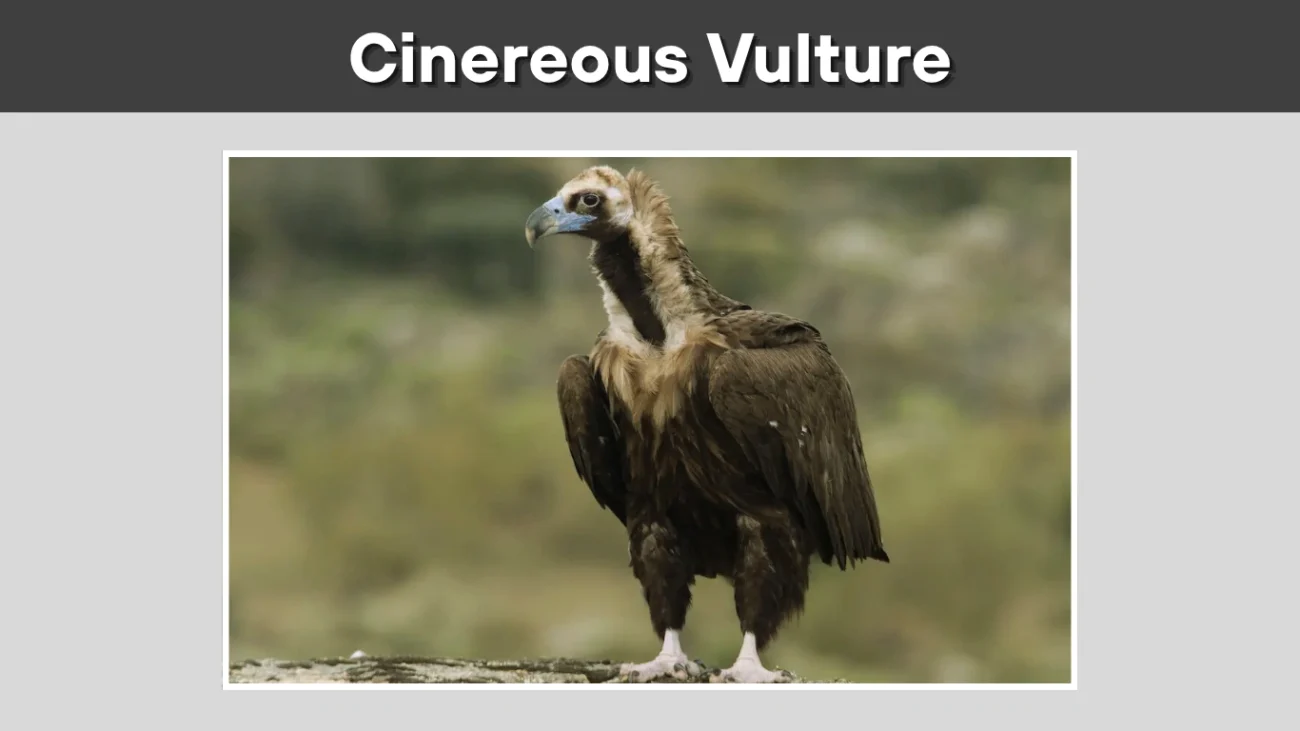
The Cinereous Vulture (Aegypius monachus), also called the Eurasian Black Vulture, is one of the heaviest and largest birds of prey in the world. It is a powerful scavenger found across parts of Europe and Asia, especially in dry, mountainous or hilly regions.
Identification
- Dark brown to black plumage with a thick, woolly-looking neck ruff
- Featherless bluish-gray head and strong, hooked beak
- Large wings with a squared-off tail
- Wingspan can reach up to 10 feet (3 meters)
- Bulky, broad-shouldered appearance
Habitat
Prefers dry, open habitats like mountainous woodlands, high plateaus, and steppe regions. Often nests in tall trees or rocky outcrops.
Behavior
Solitary or seen in small groups. Uses its powerful beak to tear through tough hides and tendons of large carcasses. Often dominates feeding sites due to its size. Builds massive nests and may reuse them year after year.
7. Egyptian Vulture
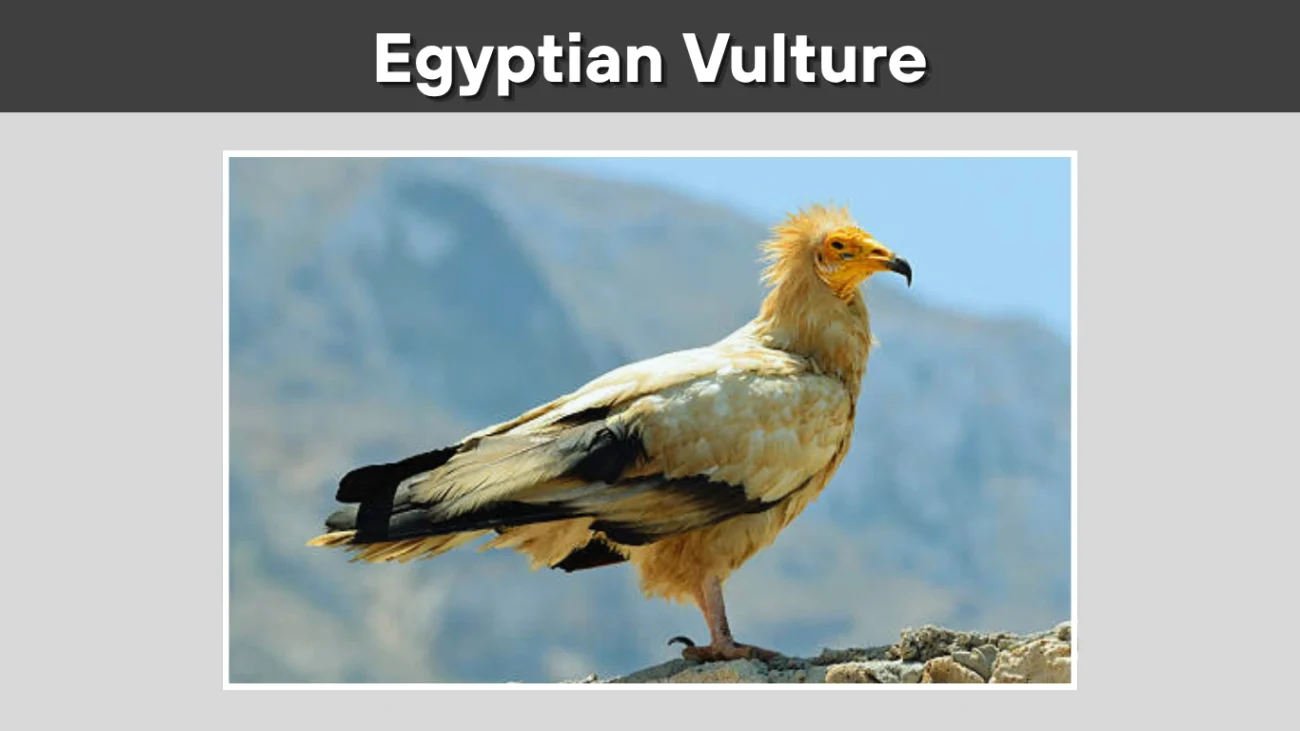
The Egyptian Vulture (Neophron percnopterus) is a smaller, intelligent vulture known for using tools—a rare behavior in birds. It’s widely distributed from southern Europe and North Africa to India.
Identification
- White body with black flight feathers
- Yellow, featherless face and thin, hooked beak
- Wedge-shaped tail
- Adults have a contrasting bright yellow face and bill; juveniles are darker and browner
- Wingspan ranges from 1.7 to 2.1 meters (5.5 to 7 feet)
Habitat
Found in dry, open areas including deserts, savannas, grasslands, and near human settlements. Often seen around garbage dumps, slaughterhouses, and cliffs.
Behavior
Feeds on small carcasses, scraps, and even feces. Known for cracking open eggs (especially ostrich eggs) by throwing rocks—one of the few birds observed using tools. Breeds on cliffs and buildings, often near human activity. Population declining due to poisoning and habitat loss.
8. Indian Vulture

The Indian Vulture (Gyps indicus) is a critically endangered species once widespread across the Indian subcontinent. Its sharp population decline in recent decades is largely due to poisoning from the veterinary drug diclofenac.
Identification
- Pale brown body with a whitish underside
- Long neck with sparse downy feathers
- Yellowish bill and pale, bare head
- Broad wings and short tail
- Wingspan around 2.5 meters (8.2 feet)
Habitat
Prefers open landscapes, dry scrub areas, and hilly regions. Often nests on cliffs or tall structures near human habitation.
Behavior
Feeds almost exclusively on carrion. Often seen soaring in groups or resting on cliffs and ruins. Nests colonially and returns to the same nesting areas each year. Plays a vital role in cleaning the environment but faces near extinction without conservation intervention.
9. King Vulture

The King Vulture (Sarcoramphus papa) is a striking New World vulture found in tropical lowland forests of Central and South America. It’s named for its dominant presence at feeding sites among other vultures.
Identification
- White or pale cream body with contrasting black wings and tail
- Head and neck are bald and brightly colored in shades of orange, yellow, red, and blue
- Large orange fleshy caruncle above the beak
- Short tail and strong hooked bill
- Wingspan up to 2 meters (6.6 feet)
Habitat
Inhabits dense tropical rainforests, often at low elevations. Prefers undisturbed primary forests but may also appear at forest clearings or near carcasses.
Behavior
Feeds mostly on carrion. Known to arrive first at a carcass and often tears open the hide for other vultures. Solitary in flight but may be seen with other scavengers at feeding sites. Rarely vocal and mostly silent except for hissing sounds.
10. Rüppell’s Vulture
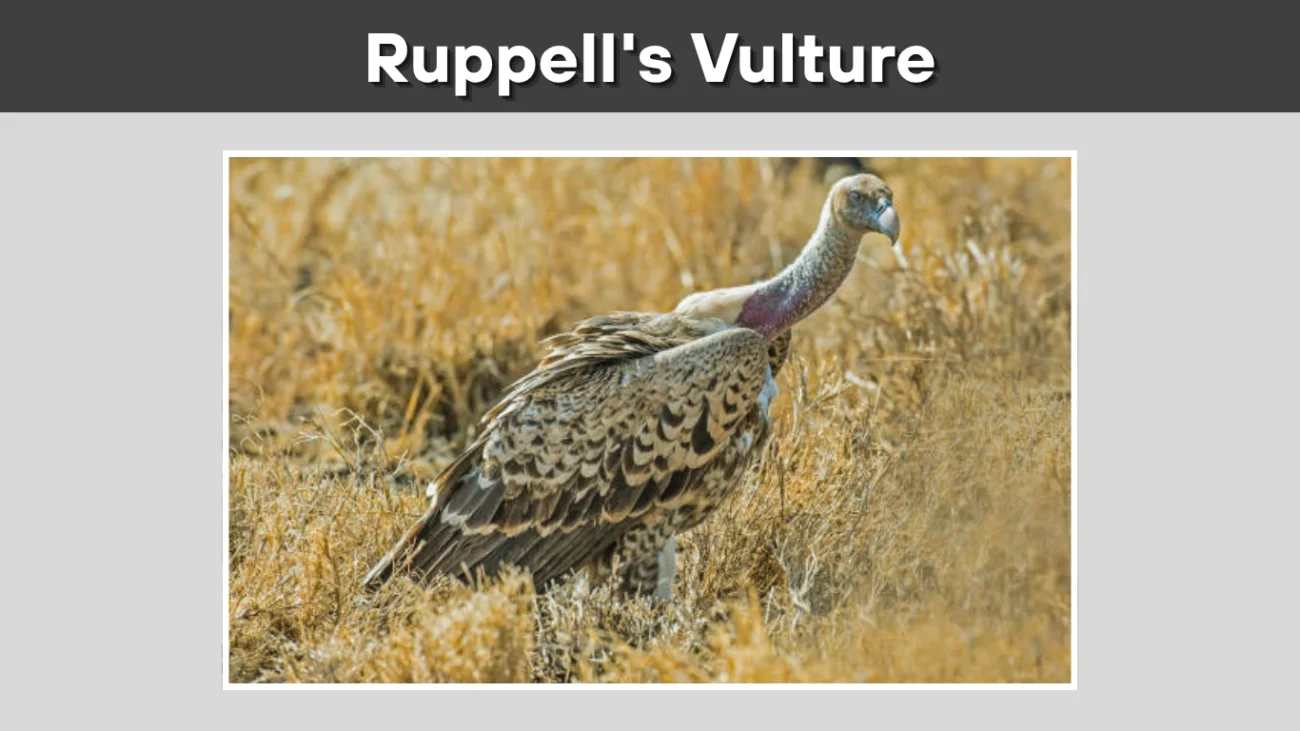
Rüppell’s Vulture (Gyps rueppelli) is known for holding the record as the world’s highest-flying bird, with confirmed flights at altitudes over 37,000 feet. Native to central and eastern Africa, it plays a critical role in the savanna ecosystem.
Identification
- Brown body with white streaks
- Pale head with a ruff of white feathers around the neck
- Dark bill and bare face
- White band running across the underside of the wings
- Wingspan around 2.6 meters (8.5 feet)
Habitat
Found in open savannas, montane grasslands, and dry plains. Often nests on high cliffs in colonies.
Behavior
Feeds on large carcasses and often dominates feeding grounds with other vultures. Soars at extreme altitudes while searching for food. Strongly social, nesting and roosting in large groups. Populations are declining due to poisoning and habitat encroachment.
11. New World Vultures
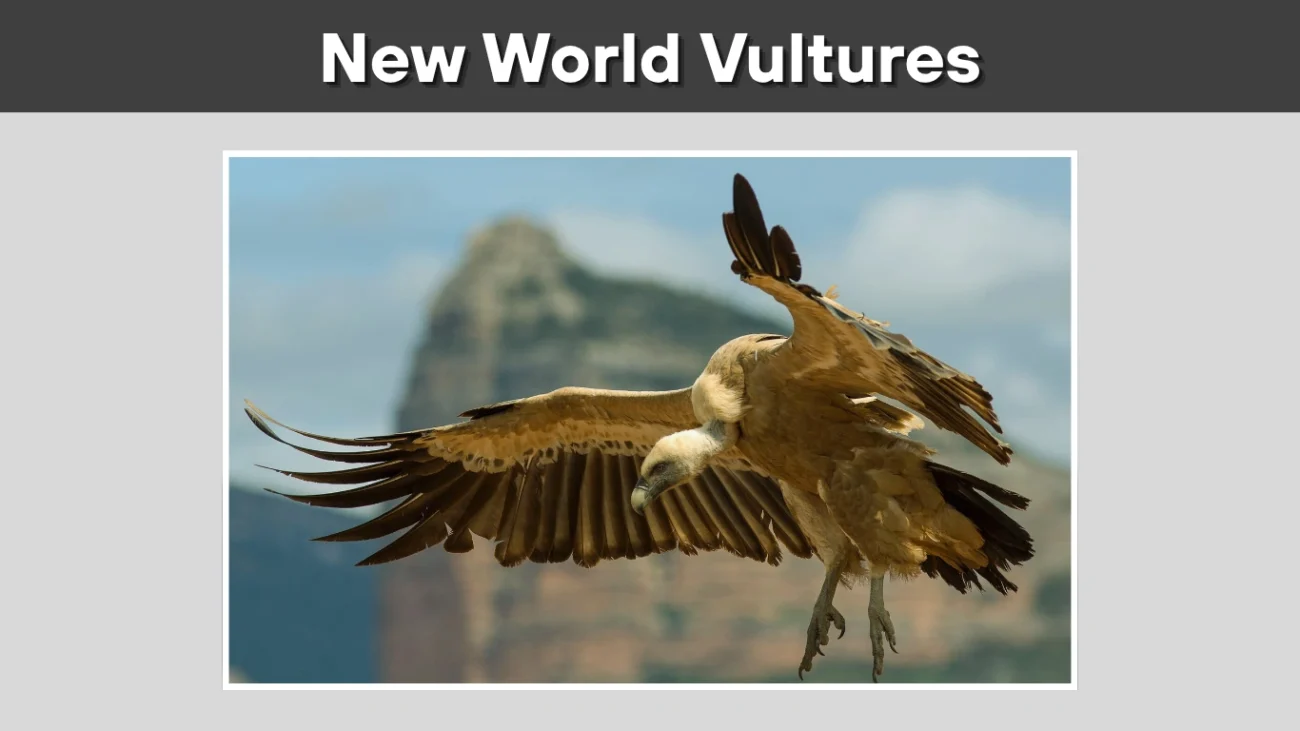
New World Vultures are a family of vultures (Cathartidae) found in the Americas. This group includes species such as the Turkey Vulture, Black Vulture, and condors. Though not closely related to Old World vultures, they share similar scavenging habits due to convergent evolution.
Identification
- Generally featherless heads
- Large wingspans adapted for soaring
- Excellent sense of smell (especially in Turkey Vulture)
- Includes both large (Condors) and medium-sized species
Habitat
Ranges from forests and mountains to deserts and wetlands throughout North, Central, and South America.
Behavior
Primarily scavengers, feeding on carrion. Unlike Old World vultures, many New World species locate food by smell. Most are silent, with limited vocal capabilities. Nest on cliffs, in hollow logs, or on the ground, depending on species.
12. White-backed Vulture

The White-backed Vulture (Gyps africanus) is one of the most common vulture species in sub-Saharan Africa but is now listed as critically endangered due to poisoning and habitat loss.
Identification
- Dark brown body with contrasting white back
- Pale, featherless head
- White neck ruff
- Broad wings and short tail
- Wingspan up to 2.4 meters (7.9 feet)
Habitat
Inhabits savannas, open woodlands, and semi-arid regions. Often found near carcasses, nesting sites, or water sources.
Behavior
Feeds on large animal carcasses, often in large groups. Known for quick and aggressive feeding. Builds large stick nests in tall trees, usually in loose colonies. Strongly social and commonly seen soaring with other vulture species.
13. Red-headed Vulture
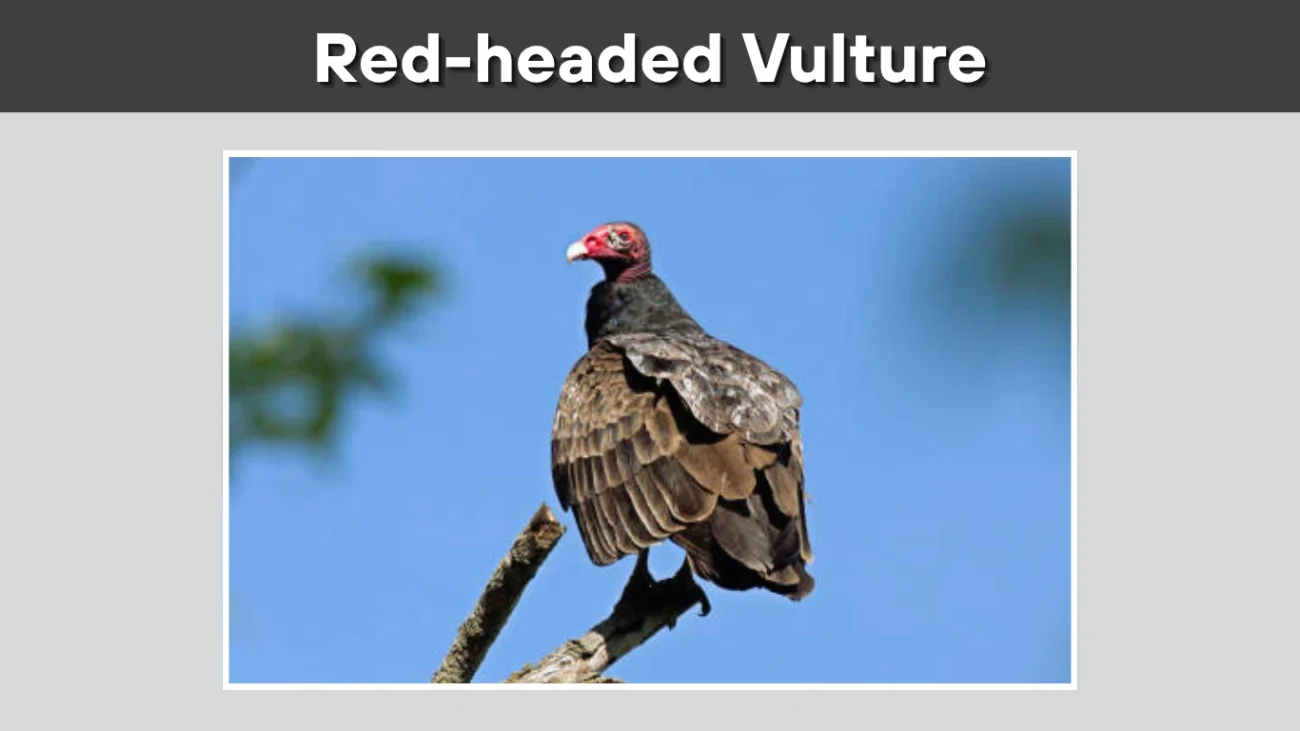
The Red-headed Vulture (Sarcogyps calvus), also known as the Asian King Vulture, is a striking Old World vulture native to the Indian subcontinent. It has suffered drastic population declines in recent decades.
Identification
- Black body with glossy dark wings
- Bright red, featherless head and neck
- Contrasting pale legs and bill
- White patches on thighs and upper wing coverts
- Wingspan around 2.4 meters (7.9 feet)
Habitat
Found in dry forests, savannas, and grasslands, often near human settlements. Prefers areas with low human disturbance for nesting.
Behavior
Solitary or found in pairs. Less social than many other vultures. Feeds on carrion but typically avoids large vulture groups. Nests in tall trees, and breeding pairs maintain territories. Rapid decline is linked to diclofenac poisoning and habitat destruction.
14. Himalayan Vulture

The Himalayan Vulture (Gyps himalayensis), also known as the Himalayan Griffon, is one of the largest Old World vultures. It inhabits the high-altitude mountain ranges of Central Asia and is well adapted to cold, rugged environments.
Identification
- Creamy-white body with dark flight feathers
- Pale, featherless head with a thick, white neck ruff
- Large yellowish bill
- Broad wings and short tail
- Wingspan up to 3.1 meters (10.2 feet)
Habitat
Lives in the Himalayas and Tibetan Plateau, typically at elevations between 1,200 and 5,500 meters. Prefers open mountain slopes, cliffs, and alpine meadows.
Behavior
Feeds primarily on carcasses of yaks and other large animals. Often forages alone or in small groups. Soars at extreme altitudes using mountain thermals. Builds large nests on cliffs, sometimes used for years.
15. Lappet-faced Vulture
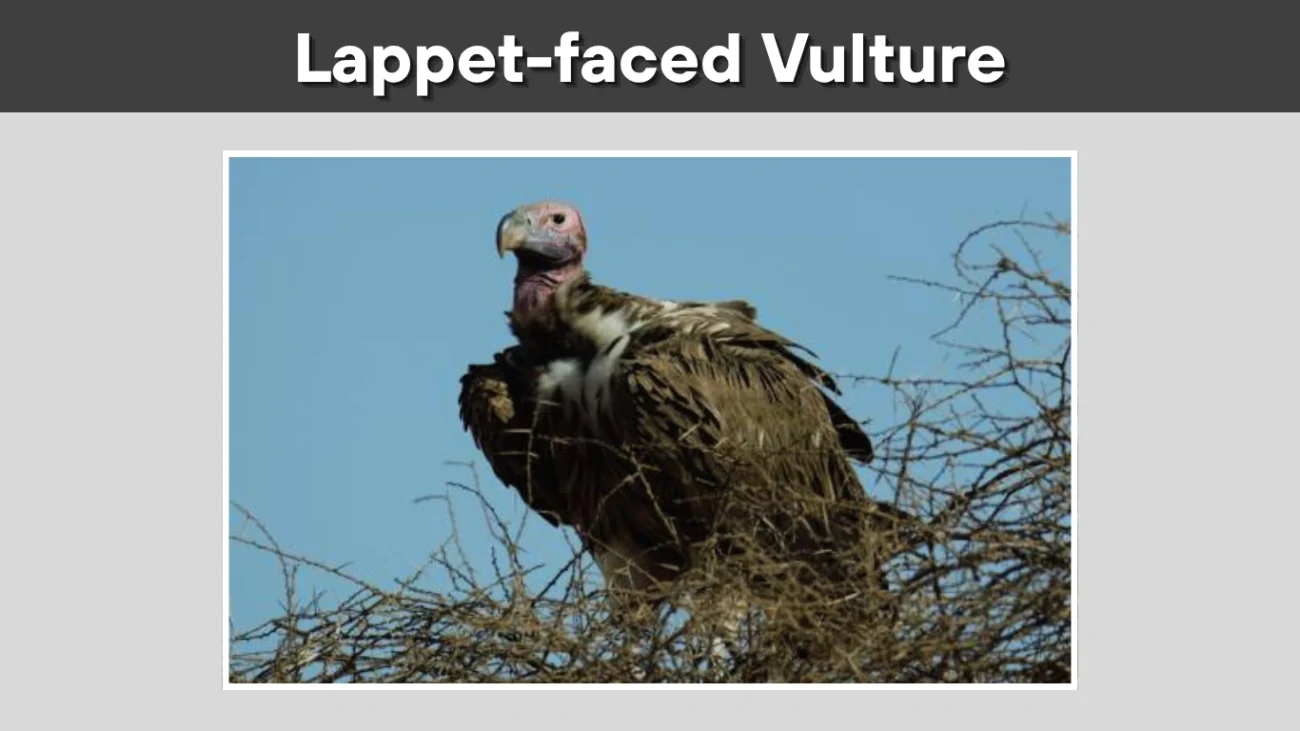
The Lappet-faced Vulture (Torgos tracheliotos) is one of Africa’s most powerful scavengers, capable of tearing through thick hides that smaller vultures can’t penetrate. Its distinctive wrinkled facial skin gives it a fearsome look.
Identification
- Large, dark brown to black body
- Bare reddish-pink head with prominent skin folds (lappets)
- Strong, hooked bill
- White thighs and short, square tail
- Wingspan up to 2.9 meters (9.5 feet)
Habitat
Found in arid and semi-arid savannas, deserts, and open woodlands across sub-Saharan Africa and parts of the Middle East.
Behavior
Feeds on large carcasses and often arrives first to open them for smaller scavengers. Solitary or in pairs; rarely seen in large groups. Also known to hunt small mammals and birds. Builds massive nests in acacia or baobab trees.
16. California Condor
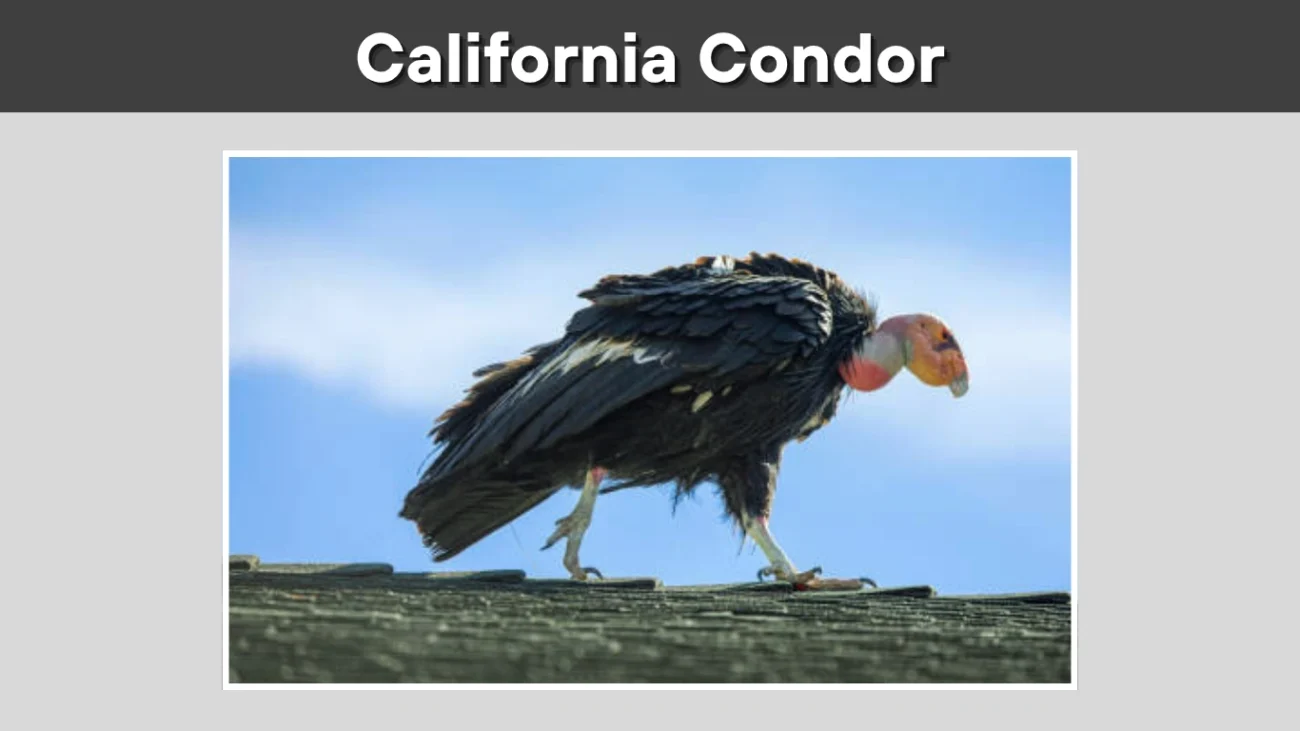
The California Condor (Gymnogyps californianus) is one of the rarest birds in the world and the largest flying land bird in North America. Once extinct in the wild, it has been successfully reintroduced through intensive conservation efforts.
Identification
- Large black body with white patches under the wings
- Bald, pinkish-orange head and neck
- Long, broad wings and a short tail
- Wingspan up to 3 meters (nearly 10 feet)
Habitat
Inhabits rocky shrublands, forested mountains, and coastal canyons of California, Arizona, and Utah. Prefers open areas for soaring and cliffside or tree-top nesting sites.
Behavior
Feeds on large carcasses such as deer, cattle, and marine mammals. Soars for hours searching for food. Typically nests on cliff ledges or in hollow trees. Strong conservation management includes GPS tracking and feeding programs.
17. Hooded Vulture
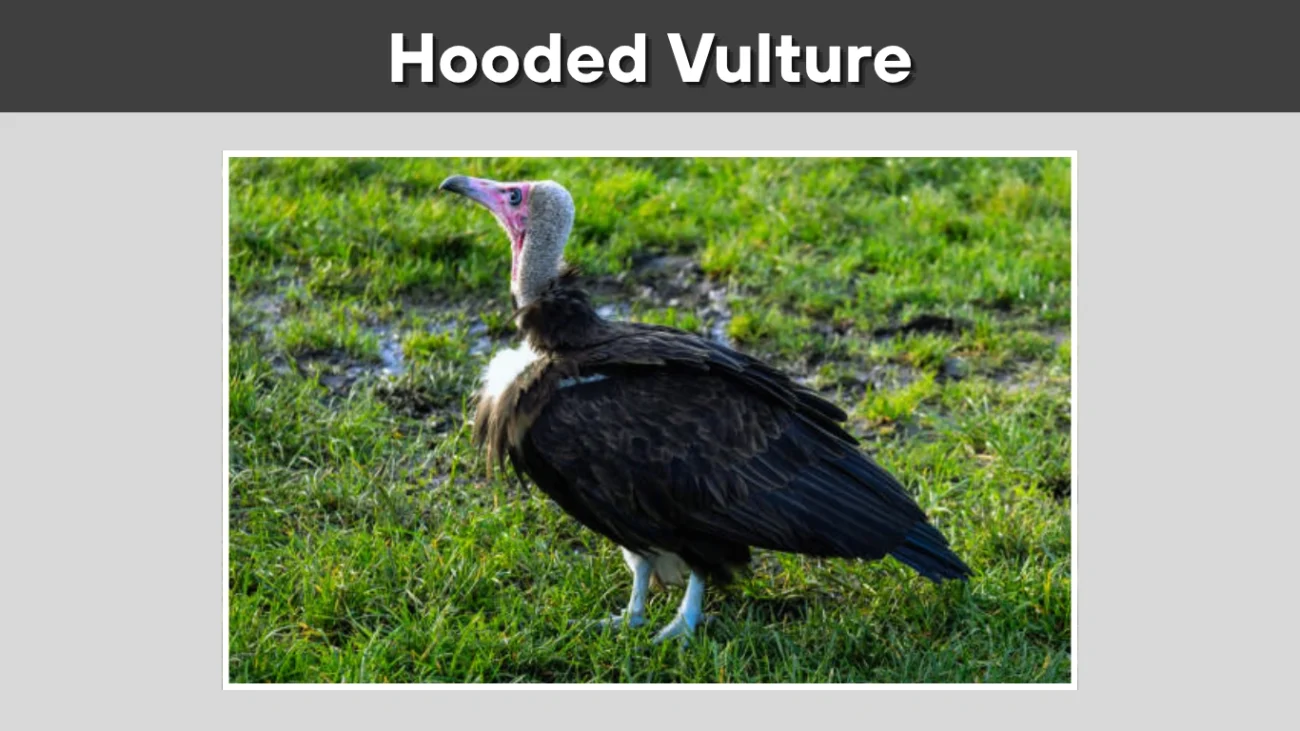
The Hooded Vulture (Necrosyrtes monachus) is a small, slender African vulture often seen near human activity. It plays an important role in sanitation but is now critically endangered due to poisoning and habitat loss.
Identification
- Dark brown body with a small, bare pinkish face
- Thin, curved bill and long neck
- Distinctive hood of downy feathers around the head
- Slender body and relatively small size
- Wingspan around 1.6 to 1.8 meters (5.2 to 5.9 feet)
Habitat
Commonly found in open savannas, villages, and city outskirts across sub-Saharan Africa. Often near abattoirs, dumps, and markets.
Behavior
Feeds on small scraps and carcasses, often scavenging at human garbage sites. Less aggressive than larger vultures and frequently displaced at feeding grounds. Often nests in trees, including those near settlements.
18. White-rumped Vulture
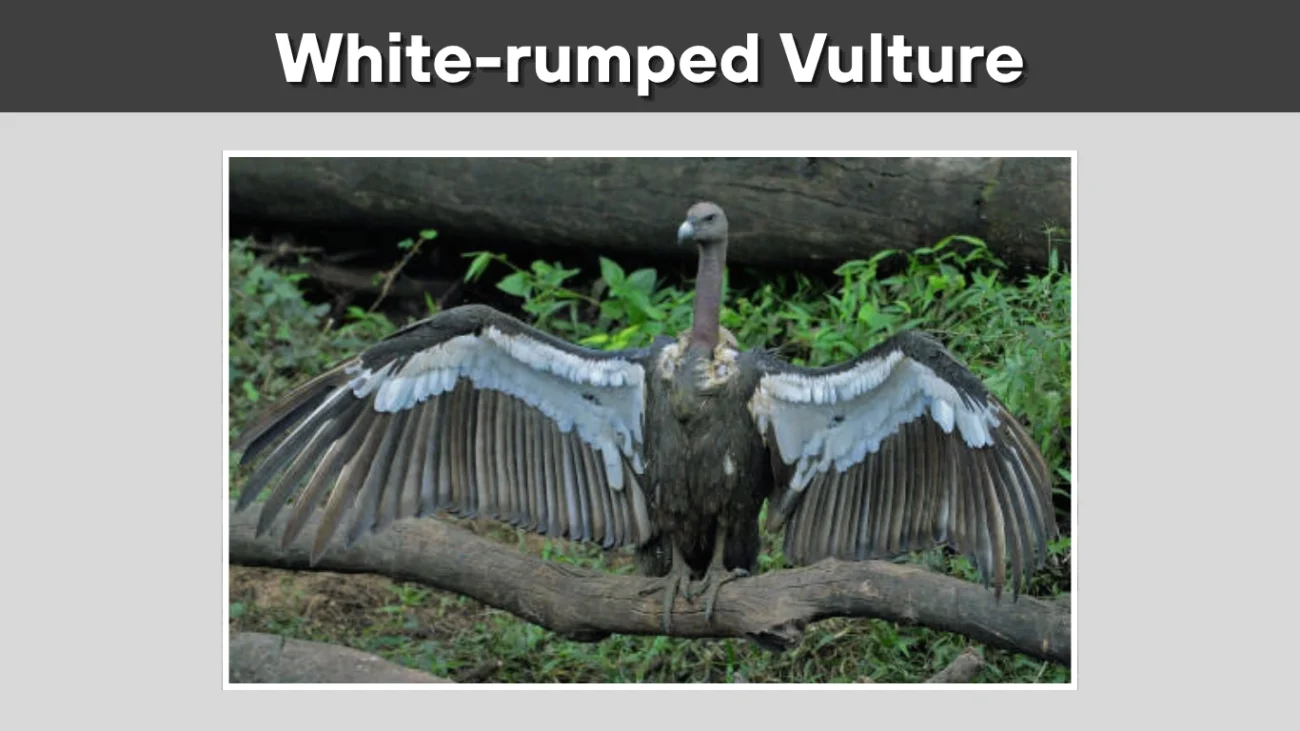
The White-rumped Vulture (Gyps bengalensis) was once the most abundant vulture in South Asia but has faced a catastrophic population decline—over 99%—due to diclofenac poisoning in livestock carcasses.
Identification
- Dark brown to blackish plumage
- Contrasting white patch on the lower back (rump)
- Pale, featherless head and neck
- White neck ruff and broad wings
- Wingspan up to 2.6 meters (8.5 feet)
Habitat
Found in lowland plains, near human settlements, forests, and farmlands across India, Nepal, Bangladesh, and Southeast Asia. Often nests on tall trees in colonies.
Behavior
Feeds on carrion, especially cattle. Highly social at feeding and nesting sites. Often seen in large flocks gliding in thermals. Conservation efforts now include captive breeding and vulture-safe zones.
19. Cape Vulture
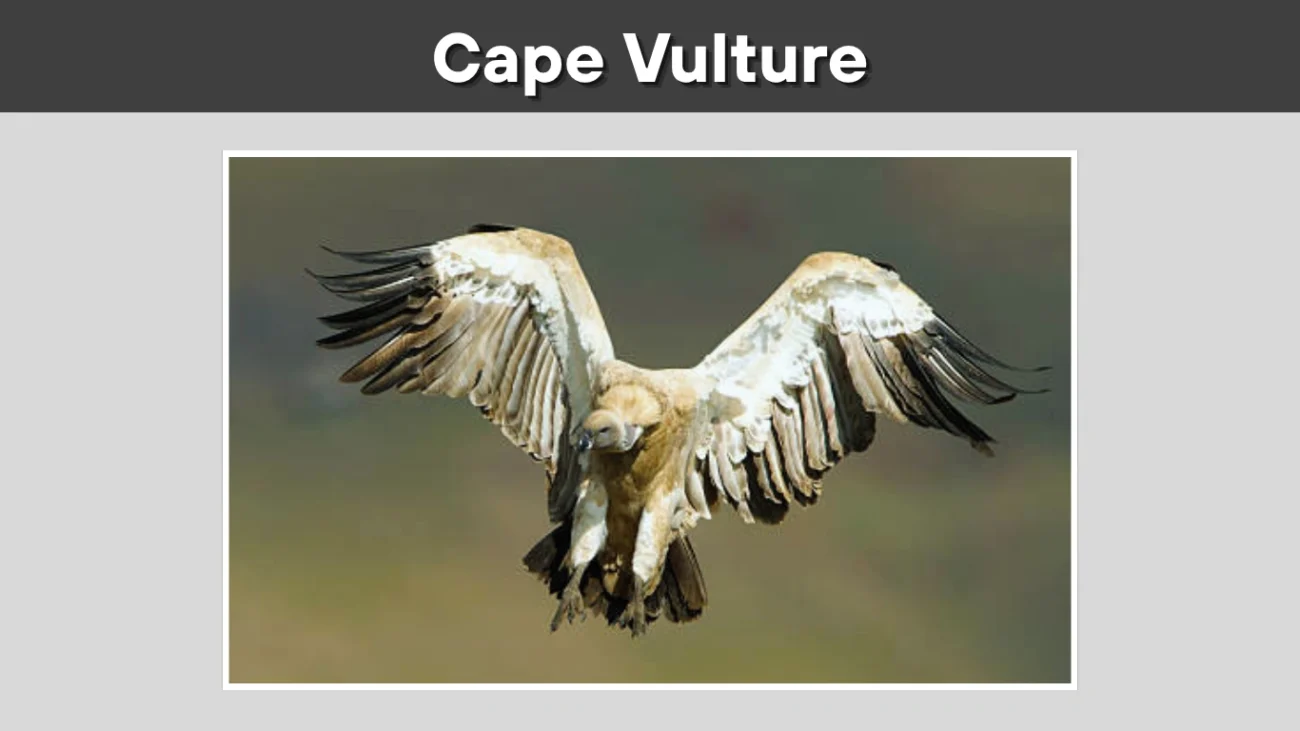
The Cape Vulture (Gyps coprotheres), also known as the Cape Griffon, is a large Old World vulture endemic to southern Africa. It is regionally important but considered vulnerable due to poisoning and powerline collisions.
Identification
- Pale creamy-brown body with darker flight feathers
- Long neck with ruff and a pale bluish-gray featherless head
- Yellow eyes and strong beak
- Wingspan up to 2.6 meters (8.5 feet)
Habitat
Inhabits open grasslands, mountainous areas, and cliffs across South Africa, Botswana, Lesotho, and Mozambique.
Behavior
Feeds communally at carcasses. Roosts and nests in large cliffside colonies. Soars widely in search of food and plays a key role in cleaning up dead animals. Very sensitive to poisoning and habitat changes.
20. White-headed Vulture
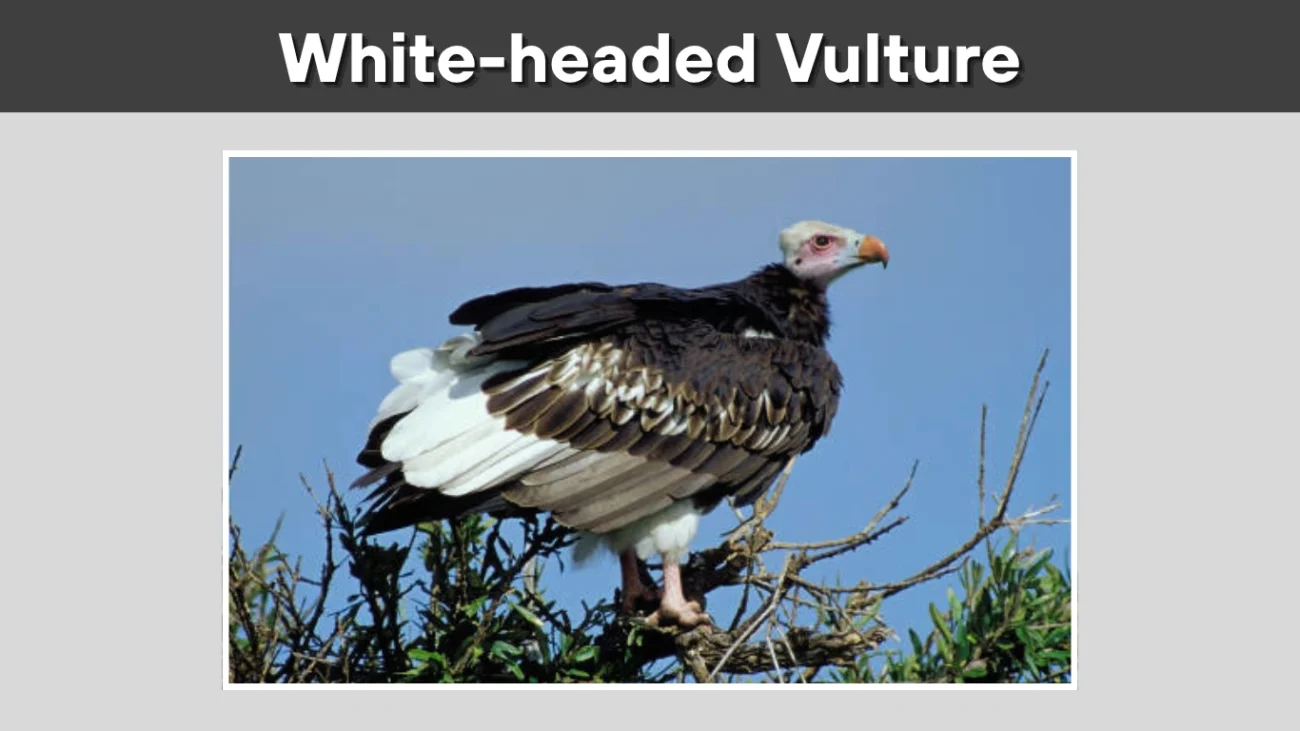
The White-headed Vulture (Trigonoceps occipitalis) is a distinctive African vulture known for its contrasting plumage and strong facial features. Unlike most vultures, it prefers to feed alone and is highly territorial.
Identification
- White head with a strong, hooked pinkish bill
- Black back and flight feathers
- White chest and underparts with dark wing edges
- Blue-gray facial skin and pink neck
- Wingspan up to 2.3 meters (7.5 feet)
Habitat
Inhabits dry savannas, open woodlands, and lightly wooded grasslands in sub-Saharan Africa. Nests in tall trees, usually in undisturbed areas.
Behavior
Often the first to arrive at a carcass, thanks to its sharp eyesight. Feeds alone or in pairs rather than in large groups. Known for its strong beak, which can tear into tough hides. Breeding pairs are solitary and defend large territories.
21. Slender-billed Vulture

The Slender-billed Vulture (Gyps tenuirostris) is a critically endangered species once widespread across the Indian subcontinent. Like the Indian and White-rumped vultures, it has declined rapidly due to diclofenac poisoning.
Identification
- Slender, elongated dark bill
- Pale grayish body with dark flight feathers
- Bare, dark gray neck and head
- Narrow neck ruff and slender silhouette
- Wingspan up to 2.5 meters (8.2 feet)
Habitat
Found in northern and eastern India, Nepal, and Bangladesh. Inhabits open lowland areas, near human settlements, forests, and farmlands. Often nests on cliffs or in large trees.
Behavior
Feeds almost exclusively on carrion. Roosts and nests in colonies, often near villages or rivers. Shares many behavioral traits with Indian Vultures. Conservation breeding and safe zones are in place to prevent extinction.
22. Palm-nut Vulture
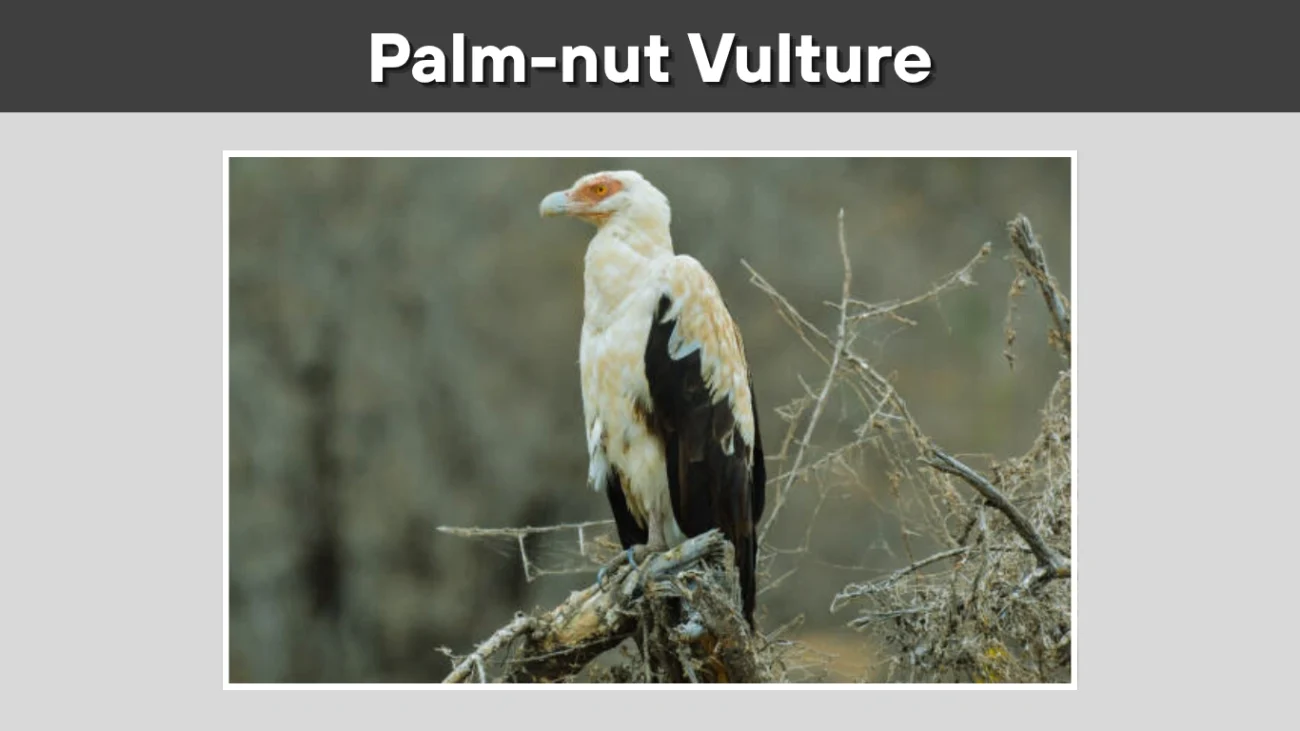
The Palm-nut Vulture (Gypohierax angolensis) is one of the few vulture species that primarily feeds on plant matter. It’s more closely associated with palm trees than with carcasses and is commonly found in sub-Saharan Africa.
Identification
- White body with black flight feathers and tail
- Bare red facial skin and pinkish-white legs
- Short, hooked bill
- Juveniles are brownish and resemble eagles
- Wingspan up to 1.6 meters (5.2 feet)
Habitat
Found in coastal and riverine forests, mangroves, wetlands, and palm groves. Often spotted near oil palms and fig trees.
Behavior
Feeds mainly on palm fruits, especially oil palm nuts, but may also eat fish, crabs, and carrion. Perches quietly in trees and nests in tall palms. Unlike most vultures, it shows more solitary and peaceful behavior.
23. Greater Yellow-headed Vulture

The Greater Yellow-headed Vulture (Cathartes melambrotus) is a New World vulture found in the lowland tropical rainforests of South America. It is similar in appearance and behavior to the Turkey Vulture.
Identification
- Black body with long, broad wings
- Bare, bright yellow to orange head and neck
- Long tail and white flight feathers underneath
- Slightly glossy plumage
- Wingspan around 1.7 meters (5.6 feet)
Habitat
Lives in dense rainforests of the Amazon Basin and surrounding tropical regions in countries like Brazil, Peru, and Colombia.
Behavior
Soars high in search of carrion, using a strong sense of smell. Typically solitary but may join other vultures at feeding sites. Rarely vocal and nests in hollow logs or dense vegetation.
24. Lesser Yellow-headed Vulture
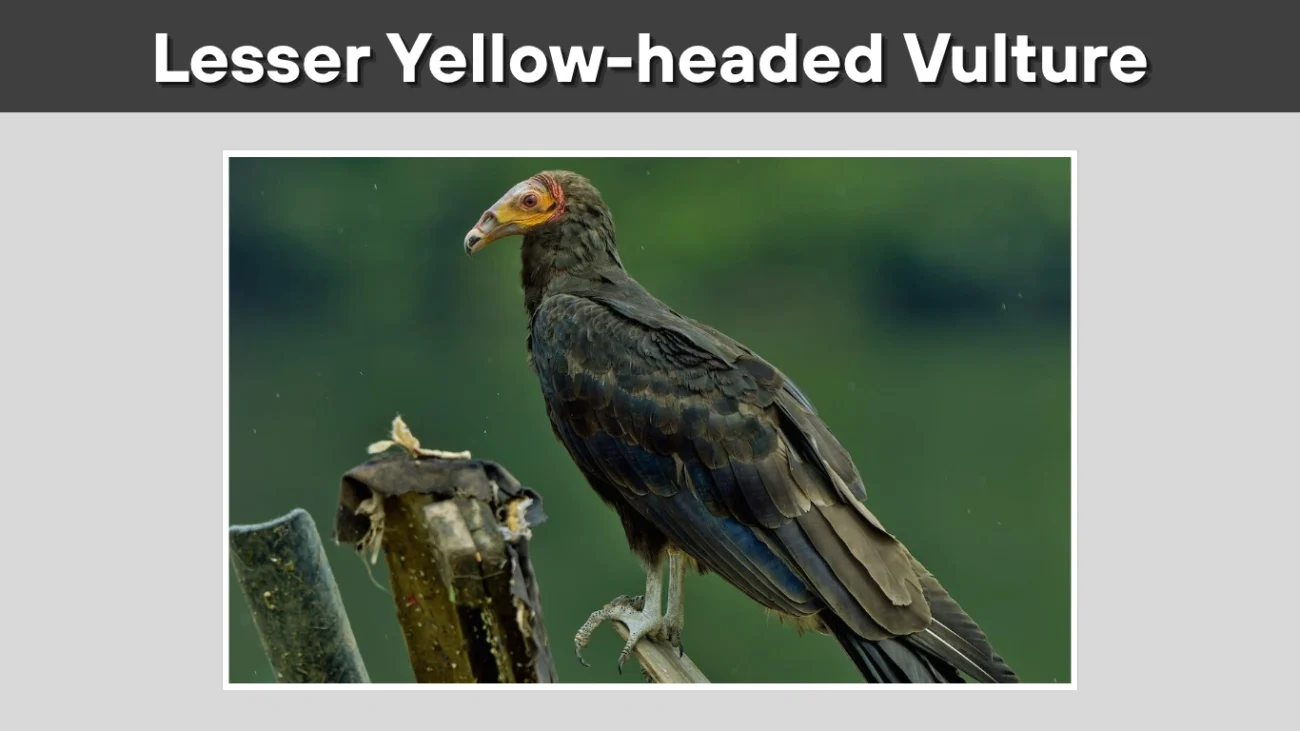
The Lesser Yellow-headed Vulture (Cathartes burrovianus) is a medium-sized scavenger found in wetlands, savannas, and open grasslands of Central and South America. It is closely related to the Turkey Vulture and Greater Yellow-headed Vulture.
Identification
- Slim black body with glossy greenish sheen
- Bare yellow to orange head and neck
- Pale, whitish legs and long, broad wings
- Short tail with white underwing markings
- Wingspan up to 1.7 meters (5.6 feet)
Habitat
Prefers open habitats near water—marshes, savannas, and swamps—from Mexico through Argentina. Often found gliding low over open areas.
Behavior
Uses a keen sense of smell to locate carrion, especially small carcasses in wetlands. Usually solitary but may feed in small groups. Nests on the ground or in dense vegetation. Avoids dense forests.
25. Aegypiinae
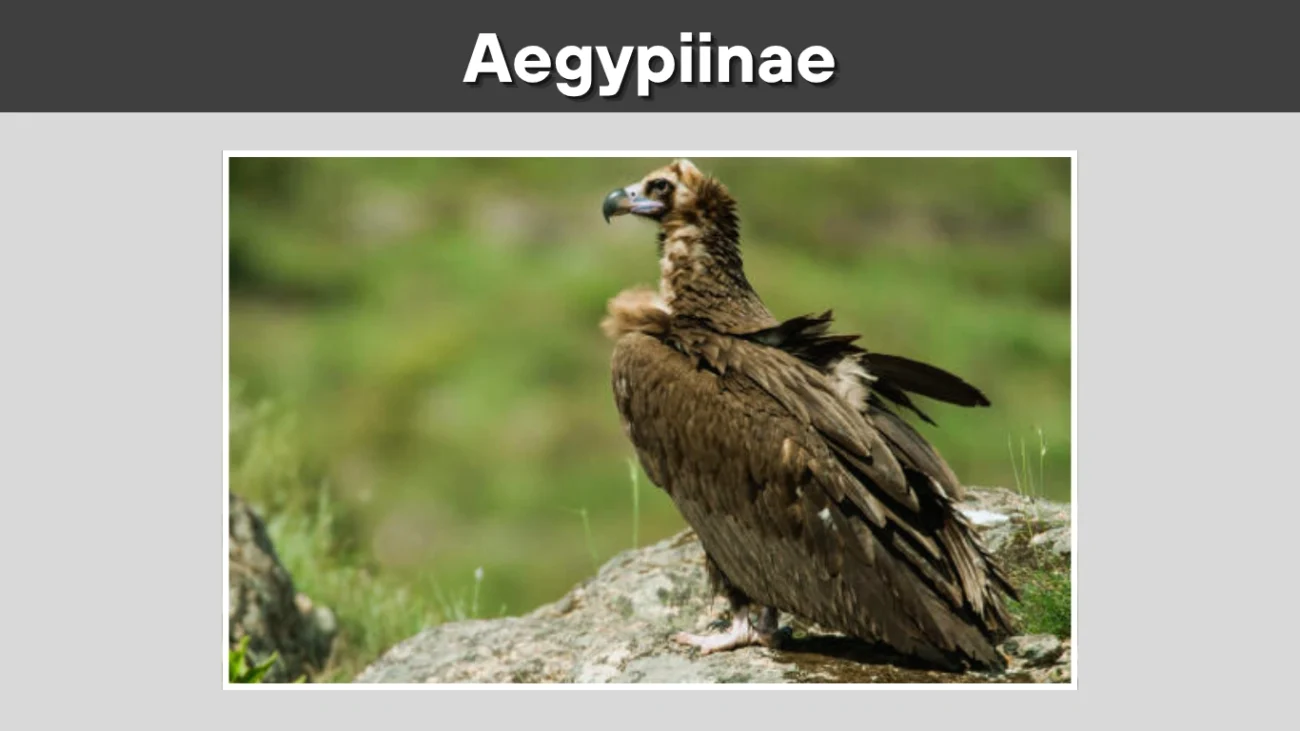
Aegypiinae is a subfamily of Old World vultures within the family Accipitridae. It includes several of the largest and most powerful scavenger birds in Europe, Asia, and Africa. Members of this group are often cliff or tree nesters and have strong beaks for tearing flesh.
Identification
- Generally large size with broad wings
- Featherless heads and necks
- Strong, hooked beaks
- Mostly dark brown or black plumage
- Includes species like the Cinereous, Griffon, and White-backed Vultures
Habitat
Range from mountains and savannas to forests and semi-arid regions. Most prefer open landscapes where thermals help them soar long distances.
Behavior
All are obligate scavengers, feeding exclusively on carrion. Highly social at feeding and nesting sites. Play a vital role in ecosystems by preventing the spread of disease from decomposing animals. Many species are threatened or endangered.