











Ducklings are some of the cutest little creatures you’ll ever see. But did you know that not all ducklings look the same? From fluffy yellow Pekins to tiny black East Indies, each breed has its own unique look and personality. Whether you’re raising them or just love learning about animals, this list of 25 common ducklings will help you spot the differences and enjoy them even more.
1. Pekin Duckling

The Pekin duckling is one of the most common and recognizable baby ducks. Known for its bright yellow fluff and friendly nature, it’s a favorite among backyard bird keepers and hobby farms. These ducklings grow quickly and are often used for meat production once mature.
Identification
- Fluffy bright yellow body
- Short orange beak and orange legs
- Rounded shape with a slightly upright stance
- Quick movement and chirping sounds
- Starts feathering into white as it grows older
Hatching Time
Pekin ducklings hatch after about 28 days of incubation. They are alert and mobile within hours of hatching.
Growth Rate
They grow rapidly—doubling in size within the first week and reaching full size in 7–8 weeks.
Common Use
Mostly raised for meat but also kept as backyard pets due to their calm, friendly behavior.
2. Mallard Duckling

The Mallard duckling is the wild ancestor of most domestic duck breeds. It is small, agile, and easily recognized by its classic two-tone coloring and active nature. Mallard ducklings are commonly found in the wild, but they are also raised in farms or homes for ornamental purposes.
Identification
- Olive-yellow body with darker brown or black eye-stripe
- Yellow to olive-colored beak and legs
- Slender shape and lower stance
- Makes soft peeping or squeaking sounds
- Gradually feathers into brown with blue wing patches
Hatching Time
Mallard ducklings hatch after 26 to 28 days of incubation, usually in natural nests near water.
Growth Rate
They grow steadily, feathering out by 4–6 weeks and becoming flight-capable by 8–10 weeks.
Common Use
Often kept for ornamental purposes or released into the wild. They’re also a popular subject in birdwatching and photography.
3. Khaki Campbell Duckling
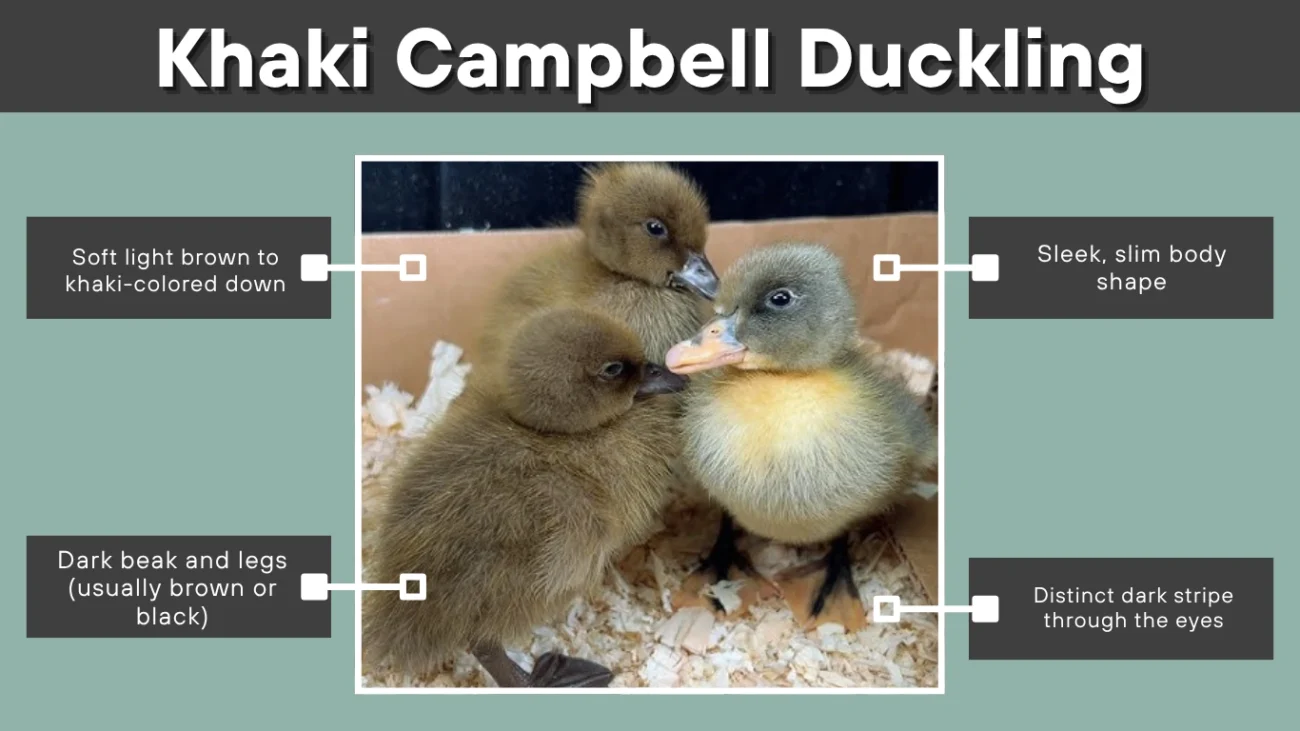
Khaki Campbell ducklings are popular for their high egg-laying ability when mature. As babies, they are energetic, alert, and have a more muted coloring compared to many other ducklings, making them easy to distinguish.
Identification
- Soft light brown to khaki-colored down
- Dark beak and legs (usually brown or black)
- Sleek, slim body shape
- Distinct dark stripe through the eyes
- Active and quick-moving
Hatching Time
These ducklings hatch after around 28 days of incubation, often in a brooder or nest setting.
Growth Rate
Khaki Campbell ducklings grow at a moderate pace, with full feathering by 6 weeks and near-adult size by 8–10 weeks.
Common Use
Primarily raised for egg production, but also appreciated for their quiet and independent nature.
4. Indian Runner Duckling

Indian Runner ducklings are known for their upright, penguin-like stance even from a young age. They are fast, nervous, and comical in appearance, making them a favorite among enthusiasts.
Identification
- Varies in color: yellow, black, or chocolate depending on strain
- Tall and slim body posture
- Upright stance even as ducklings
- Long neck and narrow build
- Highly energetic and quick on their feet
Hatching Time
Incubation lasts about 28 days, and ducklings become mobile very quickly after hatching.
Growth Rate
They grow quickly and start developing their upright runner form by 2–3 weeks, with full size reached by 8–10 weeks.
Common Use
Often raised for egg production and ornamental purposes. Their upright walk makes them entertaining and unique.
5. Rouen Duckling

Rouen ducklings resemble Mallards in color but are much larger and heavier. They are calm, slow-moving, and often confused with Mallard ducklings at first glance, especially in early stages.
Identification
- Yellow body with dark brown/black stripes on the eyes and back
- Orange or dark bill and feet
- Chunkier and broader than Mallard ducklings
- Lower stance with a heavier appearance
- Deep, mellow chirping sounds
Hatching Time
They hatch after 28 days of incubation and are generally slow to leave the nest area.
Growth Rate
Rouens grow steadily and remain larger than Mallards at every stage. They reach adult size between 10–12 weeks.
Common Use
Primarily raised for meat and exhibition, though some keep them as calm backyard birds.
6. Muscovy Duckling

Muscovy ducklings are different from most other domestic ducklings due to their unique lineage (they are not derived from Mallards). They are quieter, have clawed feet, and often appear less fluffy than typical ducklings.
Identification
- Pale yellow, cream, or chocolate-colored down
- Large eyes with a longer face
- Distinct claws on feet and sharp nails
- Slightly longer neck compared to others
- Less vocal, with hissing or soft peeps
Hatching Time
They hatch after 35 days, which is longer than most ducklings. They emerge strong and independent.
Growth Rate
Muscovy ducklings grow slowly at first but catch up by 10–12 weeks. Males especially become very large.
Common Use
Raised for meat, especially in gourmet markets, and for pest control, as they eat flies and mosquitoes.
7. Swedish Blue Duckling

Swedish Blue ducklings are hardy, friendly, and known for their soft grayish-blue down. They’re easy to raise and often kept for both eggs and ornamental value. Their muted coloring makes them stand out among more common yellow ducklings.
Identification
- Soft slate-gray or bluish down
- Light-colored chest and underbelly
- Dark gray bill and feet
- Rounded body with balanced stance
- May have a white patch on the chest (varies)
Hatching Time
They hatch after 28 days of incubation. Chicks are active within hours and adapt well to different brooder conditions.
Growth Rate
Steady growers, they begin feathering at 3 weeks and reach adult size by 9–10 weeks.
Common Use
Valued for egg laying and ornamental purposes. Their calm nature makes them great for backyard flocks.
8. Buff Orpington Duckling

Buff Orpington ducklings, also called Buff ducks, are soft-colored, docile, and make excellent pets or egg-layers. Their tan or peachy appearance gives them a distinct look from other common breeds.
Identification
- Light tan or buff-colored down
- Pink or pale orange bill and feet
- Smooth round body
- Gentle, quiet peeping
- Uniform color with minimal markings
Hatching Time
They hatch after 28 days of incubation and are typically calm and steady from day one.
Growth Rate
Moderate growth—feathers start developing by week 2, and full size is reached around 9–10 weeks.
Common Use
Often kept for eggs, exhibition, and backyard companionship due to their gentle disposition and soft appearance.
9. Cayuga Duckling

Cayuga ducklings are striking due to their dark, almost black coloring right from hatching. They are calm, quiet, and adapt well to both small backyard setups and larger farms. Their unique appearance makes them stand out among lighter-colored ducklings.
Identification
- Soft black or dark gray down
- Black beak and legs
- Compact body with a slightly glossy look
- Calm movement and quiet peeping
- May develop greenish sheen in feathers as they mature
Hatching Time
Cayuga ducklings hatch after 28 days of incubation. They are robust and tolerate handling well from early on.
Growth Rate
They feather out by 4–5 weeks and reach adult size by around 9–10 weeks.
Common Use
Popular for meat, ornamental purposes, and their dark-colored eggs. Also chosen for their quiet temperament.
10. Welsh Harlequin Duckling

Welsh Harlequin ducklings are elegant, active, and friendly. They often have mixed light and dark markings at birth, making each duckling slightly different in appearance. This breed is known for prolific egg-laying.
Identification
- Yellow down with brown or gray patches
- Mottled beak and feet (pink with dark spots)
- Balanced body shape
- Energetic and social behavior
- Markings may vary even within the same hatch
Hatching Time
They hatch after about 28 days, usually under a broody hen or in an incubator.
Growth Rate
Fast growers, they feather in early and are usually full-sized by 8–9 weeks.
Common Use
Primarily raised for eggs, though many keep them as friendly and decorative backyard ducks.
11. Call Duckling

Call ducklings are small, cute, and highly vocal from a young age. Originally bred as decoy ducks, their compact size and loud peeps make them a favorite among hobbyists and pet duck keepers.
Identification
- Fluffy yellow or grayish down (depends on variety)
- Very small and rounded body
- Short bill and tiny feet
- High-pitched, constant peeping
- Extremely lightweight and fast-moving
Hatching Time
Call ducklings hatch after 26–27 days, slightly earlier than standard breeds. They’re tiny but active right after hatching.
Growth Rate
They grow slower than larger breeds, with full feathering around 6–7 weeks, reaching small adult size by 10 weeks.
Common Use
Kept mostly as pets, show birds, or ornamental additions to backyard flocks due to their size and cuteness.
12. Magpie Duckling

Magpie ducklings are known for their unique piebald coloring and friendly personality. Their feather pattern starts to show early, and their upright stance gives them a smart, alert appearance.
Identification
- Yellow down with black patches on head and back
- Dark beak and legs
- Tall, upright posture
- Active and inquisitive from a young age
- Spotting becomes more distinct as they feather out
Hatching Time
They hatch after about 28 days. Ducklings are strong and energetic right after hatching.
Growth Rate
Moderate to fast growth. Feathering begins early, and they reach adult size in about 8–9 weeks.
Common Use
Often raised for eggs, ornamental value, and as friendly additions to backyard flocks.
13. Saxony Duckling

Saxony ducklings are large, strong, and gentle. They have a warm buff or peach-colored down with subtle markings that hint at their beautiful adult plumage. This breed is ideal for both eggs and meat.
Identification
- Soft buff or peach-colored down
- Subtle eye stripes and darker shading on the back
- Orange bill and feet
- Sturdy, broad body even as ducklings
- Calm and slow-moving personality
Hatching Time
They hatch after 28 days of incubation and are generally quiet and steady from the beginning.
Growth Rate
Fast-growing, especially in body mass. Feathers begin developing by week 2, and they reach maturity around 9–10 weeks.
Common Use
Valued for both meat and egg production, and also popular in exhibitions for their beautiful adult coloring.
14. Ancona Duckling

Ancona ducklings are playful and friendly, with unique spotted patterns that make each one easy to tell apart. Their cheerful temperament and striking appearance make them perfect for hobby farms.
Identification
- Yellow down with random black, brown, or gray spots
- Spot patterns vary between individuals
- Orange beak and feet with occasional spotting
- Medium body size with upright carriage
- Lively and curious behavior
Hatching Time
They hatch after about 28 days, often emerging with clearly visible spots that increase in contrast as they age.
Growth Rate
Moderate to fast growth with early feathering. Most reach full size by 9 weeks.
Common Use
Kept for eggs, pets, and ornamental purposes due to their unique appearance and friendly nature.
15. Silver Appleyard Duckling

Silver Appleyard ducklings are plump, energetic, and known for their excellent dual-purpose use. They are typically light-colored with speckled markings and grow into large, attractive adults.
Identification
- Yellow or cream down with brown or gray speckles
- Orange or pinkish beak and legs
- Broad body with a sturdy posture
- Playful and active in brooder settings
- Markings become more defined as they grow
Hatching Time
They hatch after 28 days, and are strong and active shortly after emerging from the egg.
Growth Rate
They grow quickly and gain weight steadily. Full feathering occurs by 4–5 weeks, with adult size reached around 9–10 weeks.
Common Use
Highly valued for both eggs and meat, and also admired for their striking appearance in backyard flocks.
16. East Indie Duckling

East Indie ducklings are small, sleek, and typically very dark from birth. Known for their glossy black adult plumage, they start life with a deep black or dark gray down and are often quiet and shy.
Identification
- Black or dark charcoal down
- Black beak and feet
- Slender, compact body
- Quiet and reserved personality
- Early signs of iridescence may show in light
Hatching Time
They hatch after about 28 days, emerging sleek and alert.
Growth Rate
Slow to moderate growth. Feathers develop gradually with a metallic green-black sheen appearing by 6–8 weeks.
Common Use
Primarily kept for ornamental purposes, especially in duck exhibitions and decorative ponds.
17. White Crested Duckling

White Crested ducklings are easy to spot thanks to the small fluff of feathers forming on the top of their heads — the start of the distinctive crest they’ll develop. They are cheerful, slightly quirky, and popular in ornamental flocks.
Identification
- Yellow down with a noticeable puff or bump on the head
- Orange bill and feet
- Round body and upright stance
- Playful and sometimes clumsy behavior
- Crest becomes more defined as they grow
Hatching Time
They hatch after 28 days, and crested traits are usually visible right at hatching.
Growth Rate
Fast growers with feathering starting by week 2. Full crest and adult plumage are seen by 8–9 weeks.
Common Use
Mostly raised for ornamental and exhibition purposes, though some keep them as fun backyard companions.
18. Bali Duckling
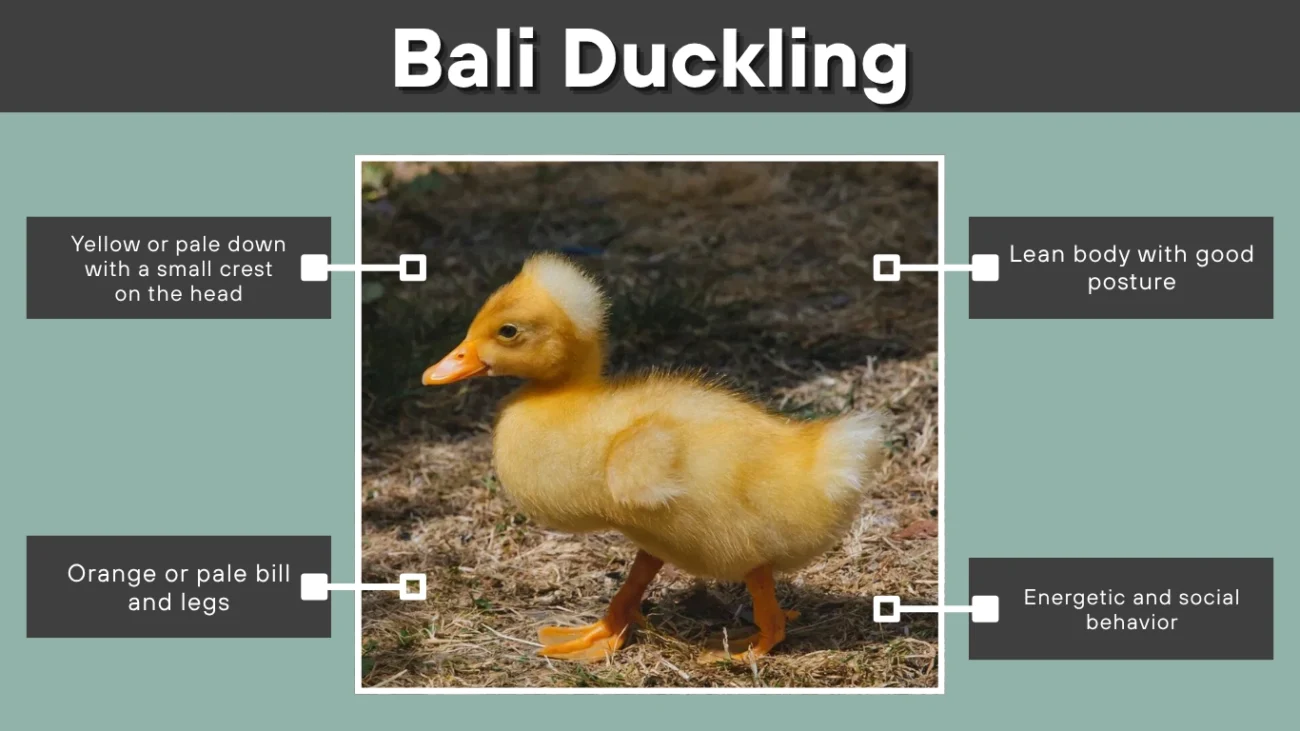
Bali ducklings are similar to White Crested ducklings but are slightly slimmer and often more active. They also sport a crest, giving them a stylish look from early on.
Identification
- Yellow or pale down with a small crest on the head
- Orange or pale bill and legs
- Lean body with good posture
- Energetic and social behavior
- Crest shape varies between individuals
Hatching Time
Hatching occurs after about 28 days, with crest visibility at birth in most ducklings.
Growth Rate
Moderate growth with clear feathering by 3–4 weeks. Crest becomes prominent by 8 weeks.
Common Use
Primarily used for ornamental purposes, often seen in duck shows and collections due to their unique head feathers.
19. Golden 300 Hybrid Duckling

Golden 300 Hybrid ducklings are bred specifically for high egg production. They are active, hardy, and grow efficiently. Their coloring varies, but they are generally easy to raise and manage.
Identification
- Yellow to light brown down (color varies by individual)
- May have darker spots or stripes
- Medium-sized body with upright stance
- Strong legs and fast movers
- Mixed coloring hints at their hybrid lineage
Hatching Time
They hatch after about 28 days, ready to eat and move shortly after hatching.
Growth Rate
Very fast growth. Feathering begins early, and egg-laying can start as early as 4–5 months.
Common Use
Bred mainly for high egg production, often exceeding 290 eggs per year. Ideal for homesteads and small farms.
20. White Layer Duckling

White Layer ducklings are lightweight, energetic, and built for efficient egg-laying. They are usually bright yellow at hatch and remain very clean and white as adults.
Identification
- Bright yellow down with no dark markings
- Pink or pale orange beak and legs
- Lean, upright body shape
- Very alert and active from day one
- Smooth, uniform coloring
Hatching Time
They hatch after 28 days, often with strong survival instincts and early mobility.
Growth Rate
Rapid development with adult feathering visible by week 4. Full size and egg-laying readiness by 16–18 weeks.
Common Use
Primarily used for egg production, especially in commercial or backyard egg-focused operations.
21. Black East Indie Duckling
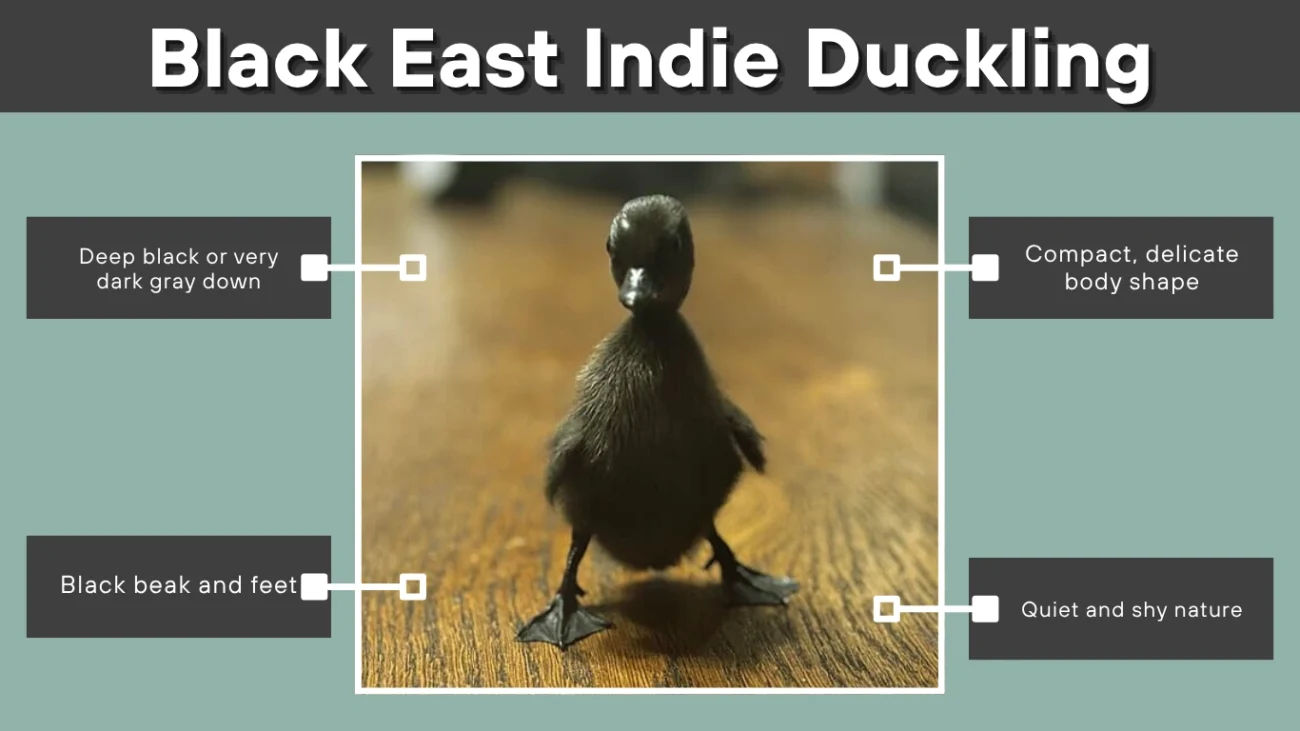
Black East Indie ducklings are small, elegant, and known for their dark, velvet-like down. They are one of the oldest ornamental duck breeds and prized for their shimmering black adult feathers.
Identification
- Deep black or very dark gray down
- Black beak and feet
- Compact, delicate body shape
- Quiet and shy nature
- Down appears matte but feathers become iridescent later
Hatching Time
They hatch after around 28 days, usually in smaller clutches.
Growth Rate
Slow to moderate growth. Feathering starts by 3–4 weeks with full iridescent plumage developing by 8–10 weeks.
Common Use
Kept mainly for ornamental and exhibition purposes, especially in decorative ponds and garden settings.
22. Fawn and White Runner Duckling

Fawn and White Runner ducklings are slim, upright, and energetic. Their fawn-colored patches over creamy down give them a unique look, and they start to show their tall runner stance early.
Identification
- Creamy yellow down with fawn or tan markings
- Tall, narrow body shape
- Upright stance from a young age
- Pinkish or orange bill and legs
- Very active and constantly in motion
Hatching Time
Hatch after 28 days, often needing careful handling due to their slim build.
Growth Rate
Fast growers with early upright posture. Full size and adult coloring emerge by 8–9 weeks.
Common Use
Popular for egg production, ornamental value, and their comical upright walk, making them favorites in backyard flocks.
23. German Pekin Duckling

German Pekin ducklings are similar to the American Pekin but are slightly more upright in stance and often used in European meat production. They are strong, fast-growing, and easy to recognize by their bright yellow fluff.
Identification
- Bright yellow down with thick fluff
- Orange beak and legs
- Taller, more upright posture than American Pekin
- Bold and alert behavior
- Slightly longer neck as duckling
Hatching Time
They hatch after about 28 days and are strong and mobile immediately.
Growth Rate
Very fast growth. Full feathering by 3–4 weeks and adult size reached by 8 weeks.
Common Use
Primarily raised for meat and occasionally for exhibitions in Europe due to their clean body lines and fast development.
24. Jumbo Pekin Duckling

Jumbo Pekin ducklings are bred for rapid weight gain and large adult size. They resemble standard Pekin ducklings but are larger, heavier, and grow faster.
Identification
- Bright yellow, thick down
- Broad chest and chunky body from early days
- Orange bill and large feet
- Quiet, calm nature but very hungry
- Noticeably larger than standard Pekins by week 2
Hatching Time
They hatch after 28 days, often appearing stronger and heavier at birth compared to others.
Growth Rate
Extremely fast—ideal for meat production. Reach processing size in just 6–7 weeks.
Common Use
Exclusively used for commercial meat production due to their large size and rapid weight gain.
25. Albino Mallard Duckling
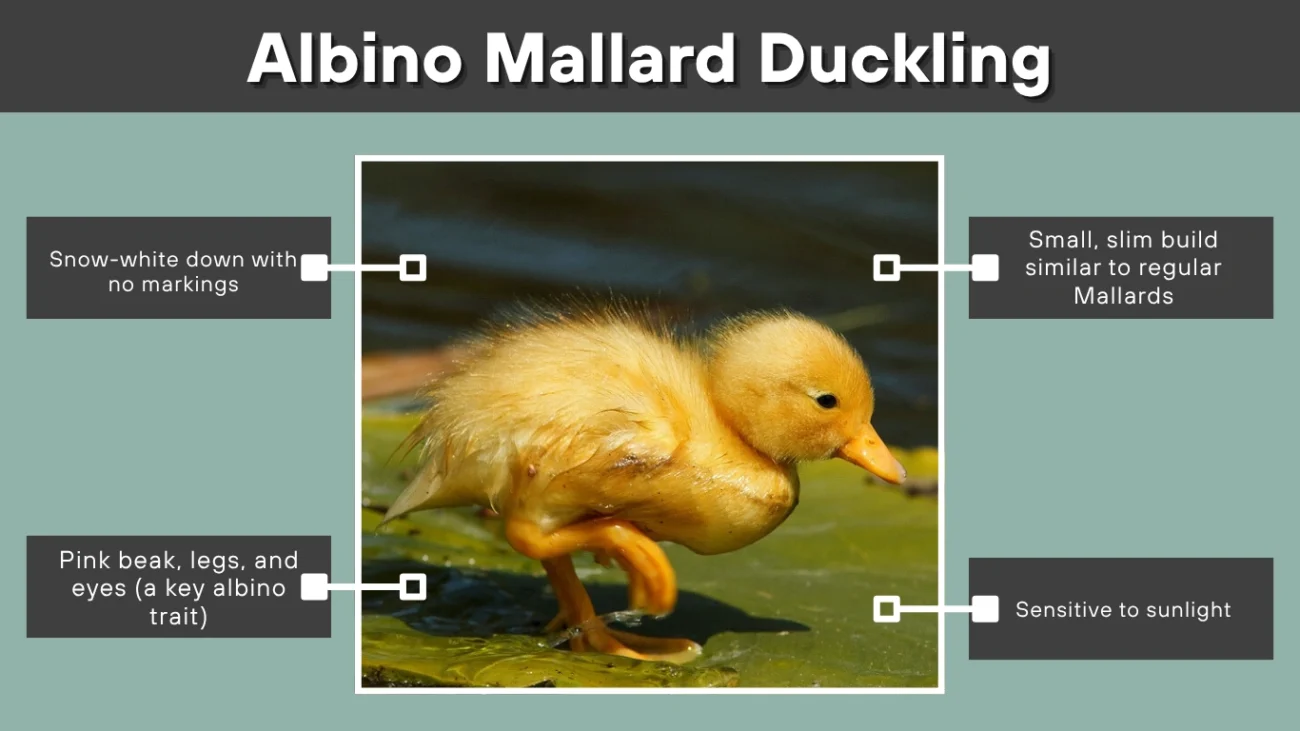
Albino Mallard ducklings are rare and stand out with their pure white down and pink eyes. They are a genetic variation of the standard Mallard, with unique traits that require careful care.
Identification
- Snow-white down with no markings
- Pink beak, legs, and eyes (a key albino trait)
- Small, slim build similar to regular Mallards
- Sensitive to sunlight
- Quiet and delicate in nature
Hatching Time
Hatch after 26–28 days, often under natural or controlled conditions.
Growth Rate
Moderate growth. Requires extra protection from sun and predators. Adult size by 8–10 weeks.
Common Use
Mostly kept for ornamental or research purposes, as their rarity and sensitivity limit outdoor or commercial use.


