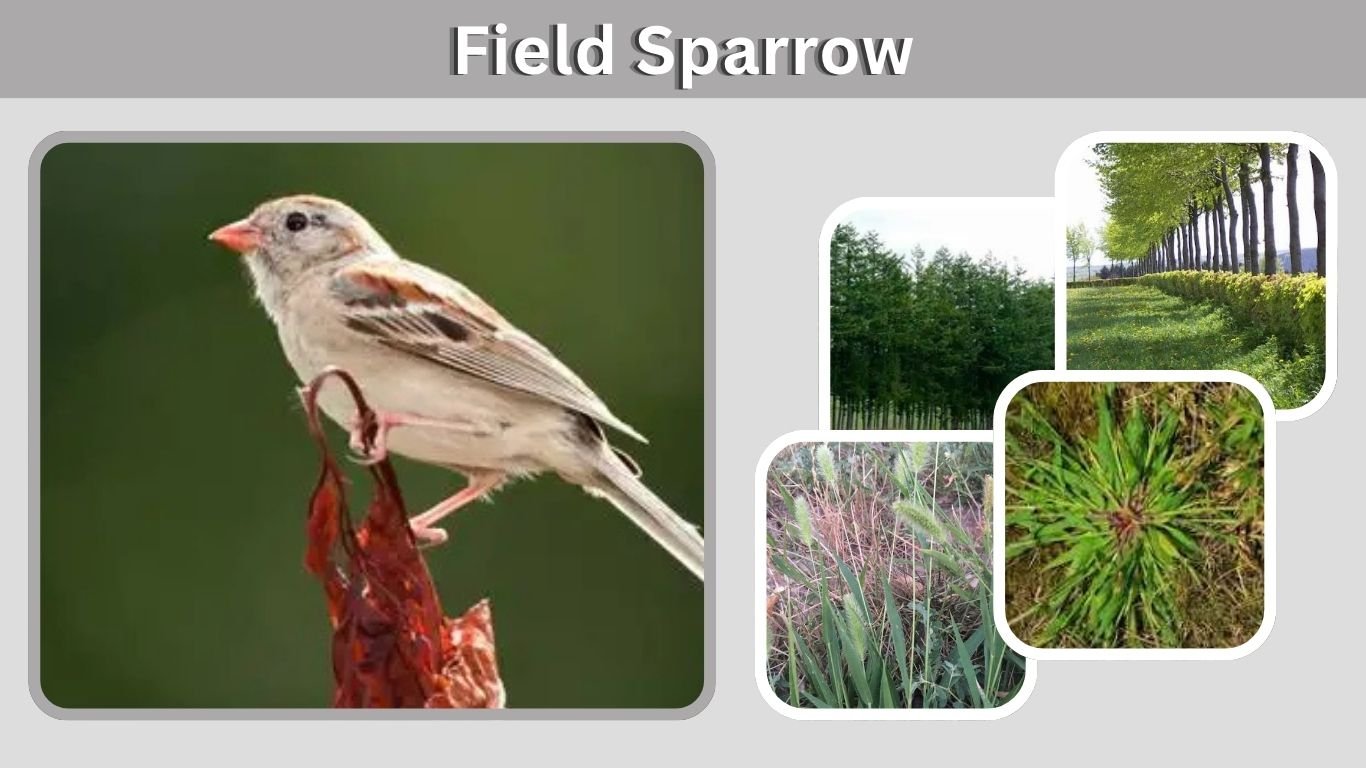
The Field Sparrow is a small North American songbird recognized by its pink bill, rusty crown, pale face, and sweet accelerating song. Despite its name, it rarely occupies completely open fields. It prefers overgrown grasslands containing scattered shrubs, young trees, and brush. Field sparrows are often quiet and difficult to notice while feeding, but breeding males become conspicuous when singing from fence posts and exposed branches. This guide covers their appearance, call, range, diet, nesting habits, juveniles, and similar species.
Field Sparrow Quick Facts
The Field Sparrow’s scientific name is Spizella pusilla. It belongs to the New World sparrow family, Passerellidae, rather than the Old World sparrow family that includes the House Sparrow.
| Feature | Description |
| Scientific name | Spizella pusilla |
| Length | Approximately 5–6 inches |
| Weight | Around 0.4 ounces |
| Bill | Small and pinkish |
| Main colors | Rusty brown, gray, buff, and white |
| Song | Whistles that gradually become faster |
| Habitat | Brushy fields, woodland edges, and overgrown pastures |
| Diet | Seeds and small invertebrates |
| Eggs | Usually 3–5 |
| Native range | Eastern and central North America |
Field Sparrows are small, long-tailed birds with rounded heads. Their quiet colors help them blend into dry grass, weeds, and low shrubs.
How to Identify a Field Sparrow
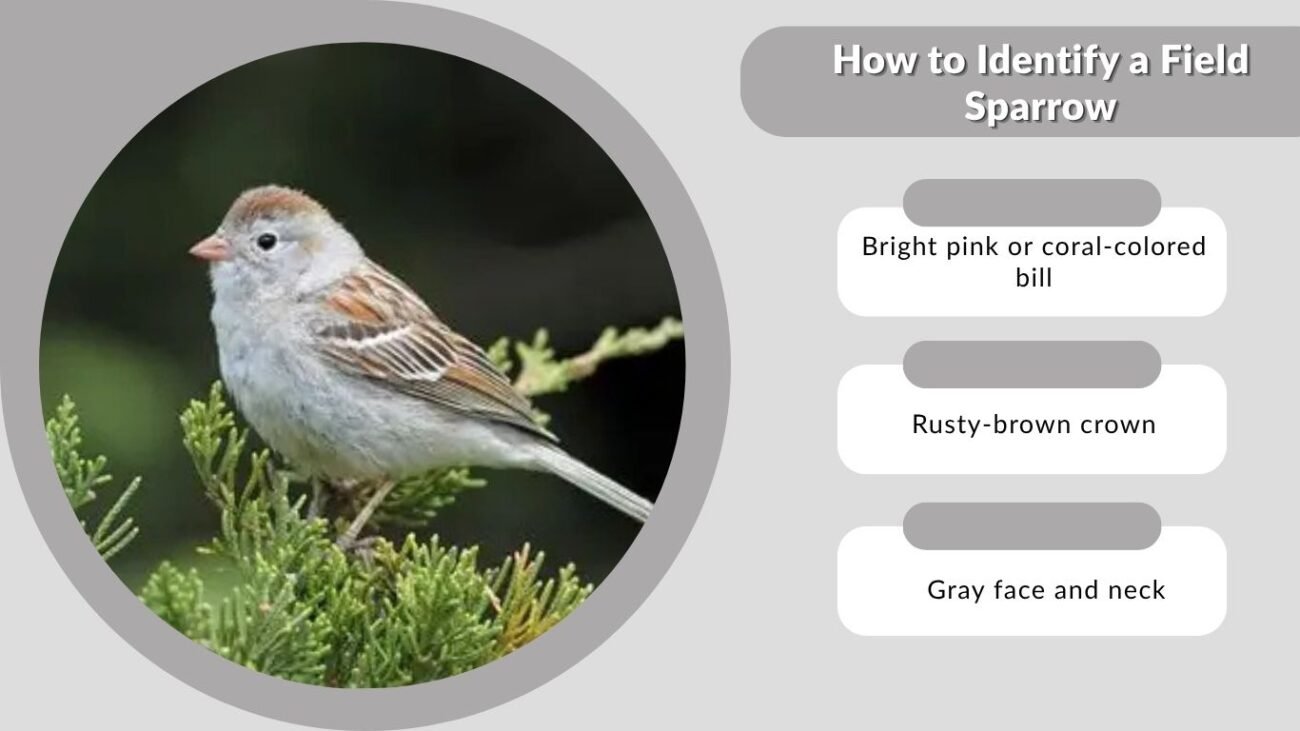
Field Sparrows have relatively plain faces compared with many other native sparrows. The combination of a pink bill, rusty cap, complete pale eye ring, and unstreaked breast is especially helpful.
Key Identification Features
Look for these characteristics:
- Bright pink or coral-colored bill
- Rusty-brown crown
- Rust-colored stripe behind the eye
- Distinct pale or whitish eye ring
- Gray face and neck
- Pale, unstreaked breast
- Brown back with darker streaks
- Two light wing bars
- Long, slightly notched tail
The face normally lacks the bold black markings seen on many sparrow species. This clean facial pattern can give the bird a gentle, open expression.
Adult plumage varies slightly. Some Field Sparrows appear warmer and more reddish, while others are grayer and less strongly colored.
Male vs. Female Field Sparrow
Male and female Field Sparrows look extremely similar. Both have pink bills, rusty crowns, pale eye rings, and unstreaked underparts. Plumage alone usually cannot identify their sex reliably.
Behavior offers better clues during the breeding season. Males sing repeatedly from prominent perches to establish territories and attract females. Females spend more time selecting nest sites, constructing nests, and incubating eggs.
Field Sparrow Song and Call
The Field Sparrow’s song is one of its most recognizable characteristics. Males are frequently heard singing during spring and summer, especially early in the morning.
What Does a Field Sparrow Song Sound Like?
The song begins with several clear, separated whistles. Each note becomes progressively faster until the sequence finishes in a rapid trill.
Birders commonly compare it to:
- A bouncing ball gradually losing height
- A marble spinning faster on a hard surface
- A series of whistles accelerating into a trill
The song may be represented as “fee…fee…fee-fee-fee-feefefe.” Males usually sing from the top of a shrub, fence line, or small tree where their voices travel across the surrounding habitat.
Field Sparrow Call
The ordinary call is much shorter than the song. It is usually a soft “chip,” “tseep,” or high-pitched contact note. Birds use these sounds while foraging, communicating with family members, or responding to potential threats.
The musical accelerating song remains the easiest sound for identifying a Field Sparrow.
Field Sparrow Habitat
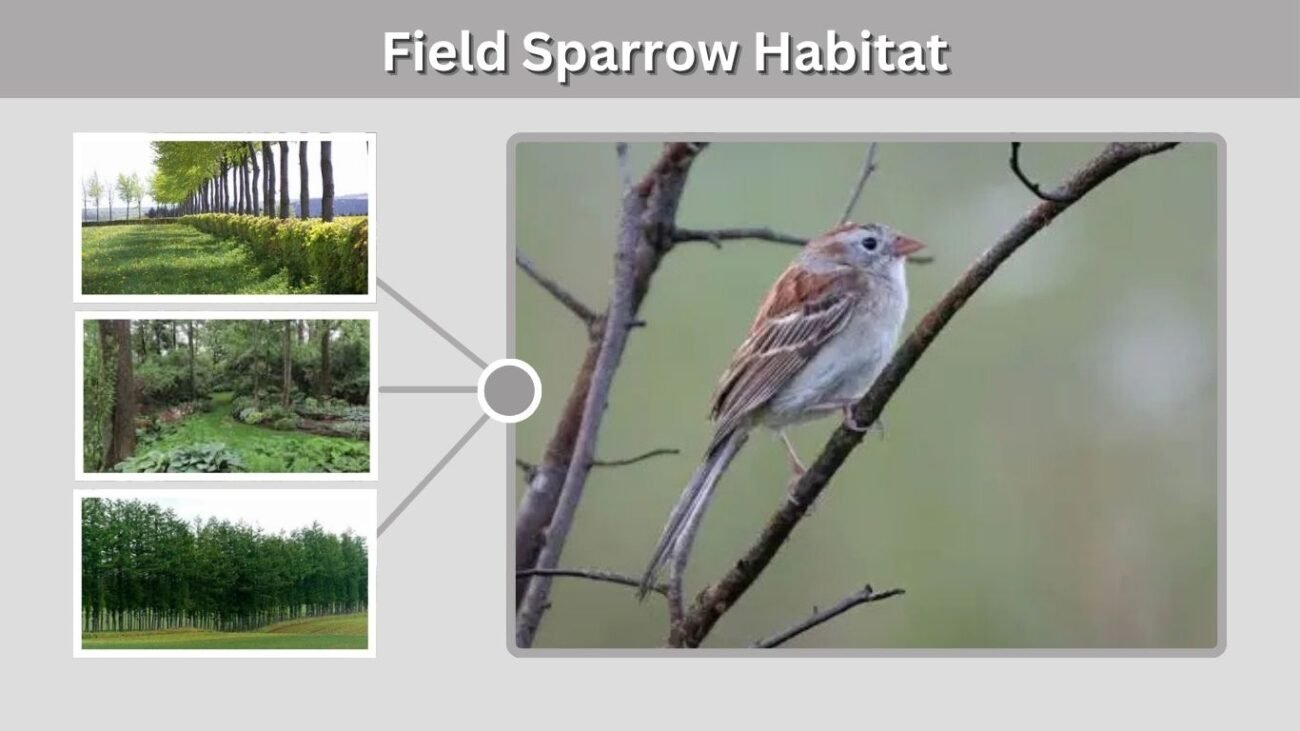
Field Sparrows need a mixture of grass and woody vegetation. They are not usually found in large agricultural fields or lawns lacking shrubs.
Common habitats include:
- Overgrown pastures
- Abandoned farm fields
- Brushy grasslands
- Hedgerows
- Young forest clearings
- Woodland borders
- Power-line corridors
- Roadsides with scattered shrubs
- Recently burned or disturbed land
Scattered bushes are important because they provide nesting cover, singing perches, and protection from predators. Audubon notes that the species generally avoids wide-open grasslands unless shrubs are present.
Habitat can disappear as fields become heavily developed, intensively cultivated, regularly mowed, or transformed into mature forest.
Range and Migration
The Field Sparrow occurs primarily across the eastern and central portions of North America. Its breeding range extends through much of the eastern United States and into southern Canada.
Northern populations migrate south in autumn. They spend winter in the southern United States and parts of northeastern Mexico. Birds living in the southern part of the range may remain throughout the year.
During winter, Field Sparrows may gather in small flocks and mix with:
- Chipping Sparrows
- American Tree Sparrows
- White-throated Sparrows
- Song Sparrows
- Dark-eyed Juncos
The species is native to North America and is not normally found in the United Kingdom. Reports of a “Field Sparrow UK” would represent an exceptionally unusual occurrence or confusion with another species.
Field Sparrow Diet
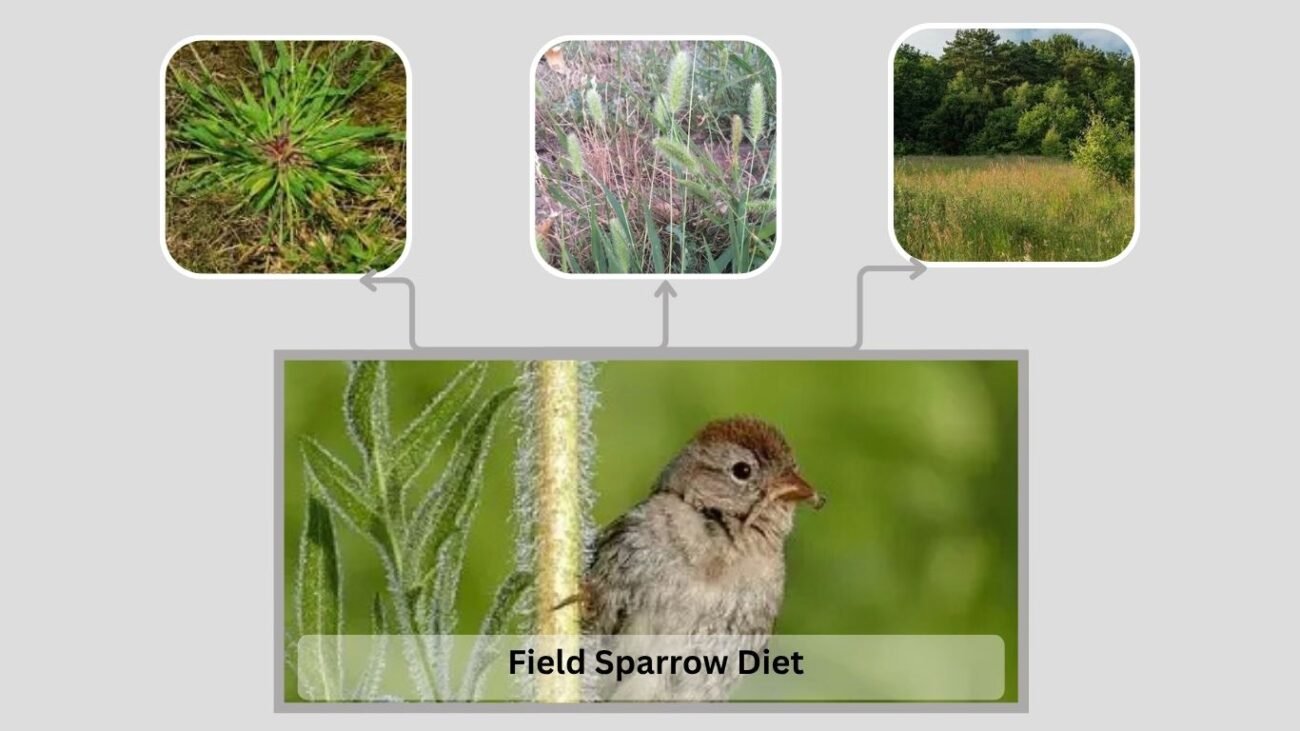
Field Sparrows feed mainly on the ground or within low vegetation. Their diet changes with seasonal food availability.
Seeds
Seeds make up much of the adult diet, particularly outside the breeding season. Common foods include seeds from:
- Grasses
- Ragweed
- Crabgrass
- Foxtail
- Weeds
- Wildflowers
- Agricultural plants
They often hop beneath shrubs and bend grass stems downward to reach seed heads.
Insects and Other Invertebrates
During warmer months, Field Sparrows consume beetles, caterpillars, grasshoppers, spiders, and other small invertebrates. These protein-rich foods are especially important for growing nestlings.
Adults may form loose feeding flocks after the breeding season, searching through weeds and brush near the ground.
Field Sparrow Nest and Eggs
Female Field Sparrows build small cup-shaped nests from grasses, stems, and other plant materials. The inside is lined with finer grasses, rootlets, or hair.
Nest Location
Early nests are often built directly on or close to the ground beneath grass clumps or shrubs. Later in the season, females may build nests higher in bushes as vegetation becomes denser.
Typical sites include:
- Low shrubs
- Blackberry tangles
- Small saplings
- Grass clumps
- Bushes along field edges
The surrounding vegetation helps conceal the nest from predators.
Field Sparrow Eggs
A typical clutch contains approximately three to five eggs. The eggs are generally pale bluish or creamy white with brown, reddish, or purplish markings.
The female performs most or all of the incubation. Once the eggs hatch, both parents help deliver food to the nestlings. Field Sparrows may raise more than one brood during a successful breeding season.
Juvenile Field Sparrow
Juvenile Field Sparrows look less cleanly patterned than adults. Their breasts and sides may display fine streaks that disappear as they mature.
Young birds commonly have:
- A duller or darker bill
- Brown-streaked underparts
- Less distinct rusty head markings
- A weak eye ring
- Shorter-looking tail feathers soon after fledging
A Field Sparrow fledgling may leave the nest before it can fly strongly. It usually hides in nearby vegetation while its parents continue feeding it. Finding a feathered fledgling on the ground does not necessarily mean it has been abandoned.
Field Sparrow vs. Similar Sparrows
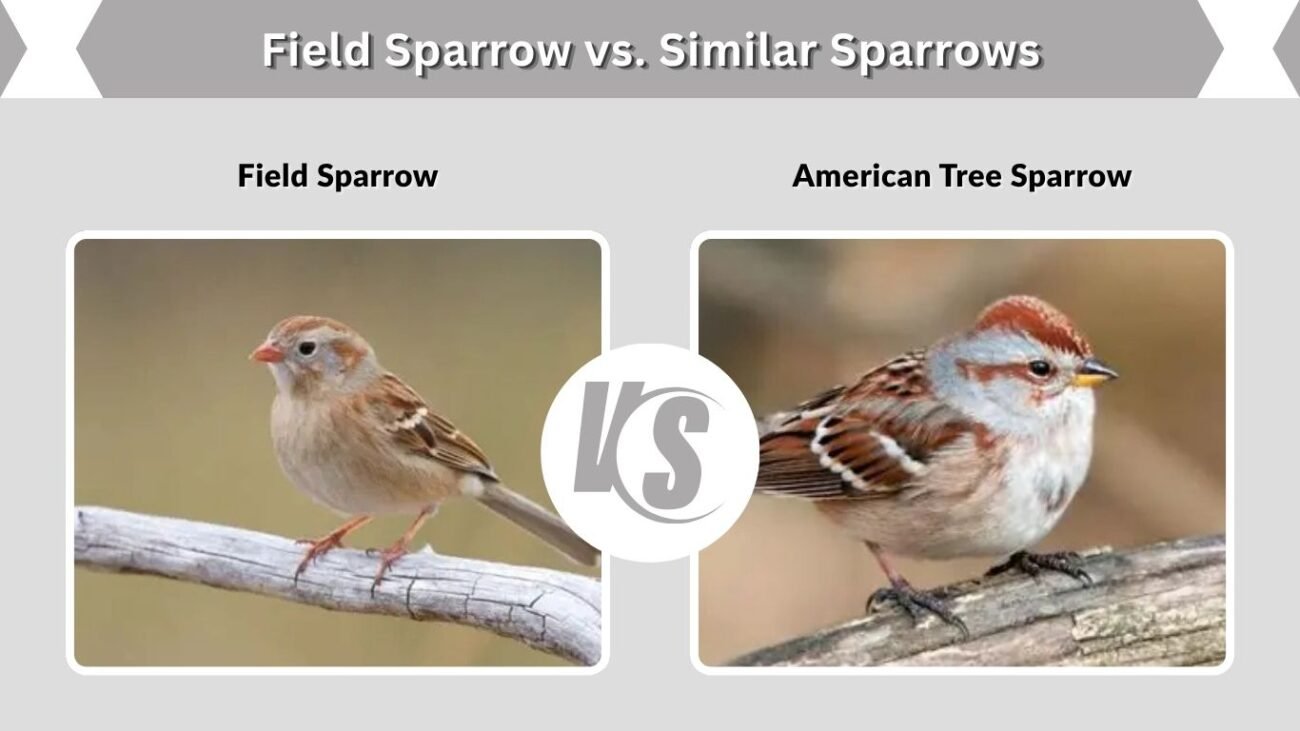
Several small sparrows share the Field Sparrow’s brown upperparts and pale underside.
| Species | Main differences |
| Field Sparrow | Pink bill, rusty crown, white eye ring, unstreaked breast |
| Chipping Sparrow | Dark eye line, sharper facial pattern, darker bill |
| House Sparrow | Stockier body, thicker bill, strongly patterned male |
| Song Sparrow | Heavily streaked breast and central chest spot |
| American Tree Sparrow | Dark chest spot and two-toned bill |
Field Sparrow vs. Chipping Sparrow
The Chipping Sparrow is the species most often confused with the Field Sparrow. Both may have rusty crowns and pale underparts.
A Chipping Sparrow usually has:
- A distinct black line through the eye
- A white eyebrow
- A darker bill
- A more contrasting head pattern
- A long, steady trilling song
A Field Sparrow has a pink bill, complete pale eye ring, plain gray face, and rusty eye stripe. Its song accelerates rather than remaining at one speed.
Field Sparrow vs. House Sparrow
The House Sparrow is larger, heavier, and more closely associated with buildings, farms, parking lots, and cities. Male House Sparrows have gray crowns, chestnut necks, and black throat patches. Females are dull brown with broad pale eyebrows.
Field Sparrows are slimmer native birds with pink bills, rusty crowns, and no black bib. House Sparrows also have much thicker bills adapted for cracking seeds.
Field Sparrow vs. Song Sparrow
Song sparrows normally have strong brown streaks covering the breast and sides, often forming a dark spot in the center of the chest. Field Sparrows have mostly plain, unstreaked underparts.
Song Sparrows also possess darker facial stripes and a less obvious pink bill. Their song is variable and complex rather than a simple accelerating whistle.
FAQs
Are Field Sparrows common?
Field Sparrows remain locally common in suitable brushy habitats across parts of eastern and central North America. However, they can be absent from areas dominated by intensive agriculture, development, regularly mowed grass, or mature forests.
Do Field Sparrows visit bird feeders?
They occasionally visit ground-feeding areas, particularly during winter. Millet, cracked corn, and small seeds scattered beneath low cover may attract them, although they are less regular at elevated feeders than House Sparrows or finches.
Where do Field Sparrows sleep?
They generally roost within dense shrubs, grass, and low woody vegetation. Thick cover protects them from wind, cold, and predators. Outside the nesting season, several birds may shelter in the same suitable habitat.
Are juvenile Field Sparrows streaked?
Yes. Juveniles often show fine streaking across their breasts and sides, unlike the clean underparts of adults. Their rusty crown, pink bill, and eye ring may also be less developed.
What is the Field Sparrow’s scientific name?
The Field Sparrow’s scientific name is Spizella pusilla. “Spizella” refers to a group of small North American sparrows, while “pusilla” is derived from a word meaning very small.