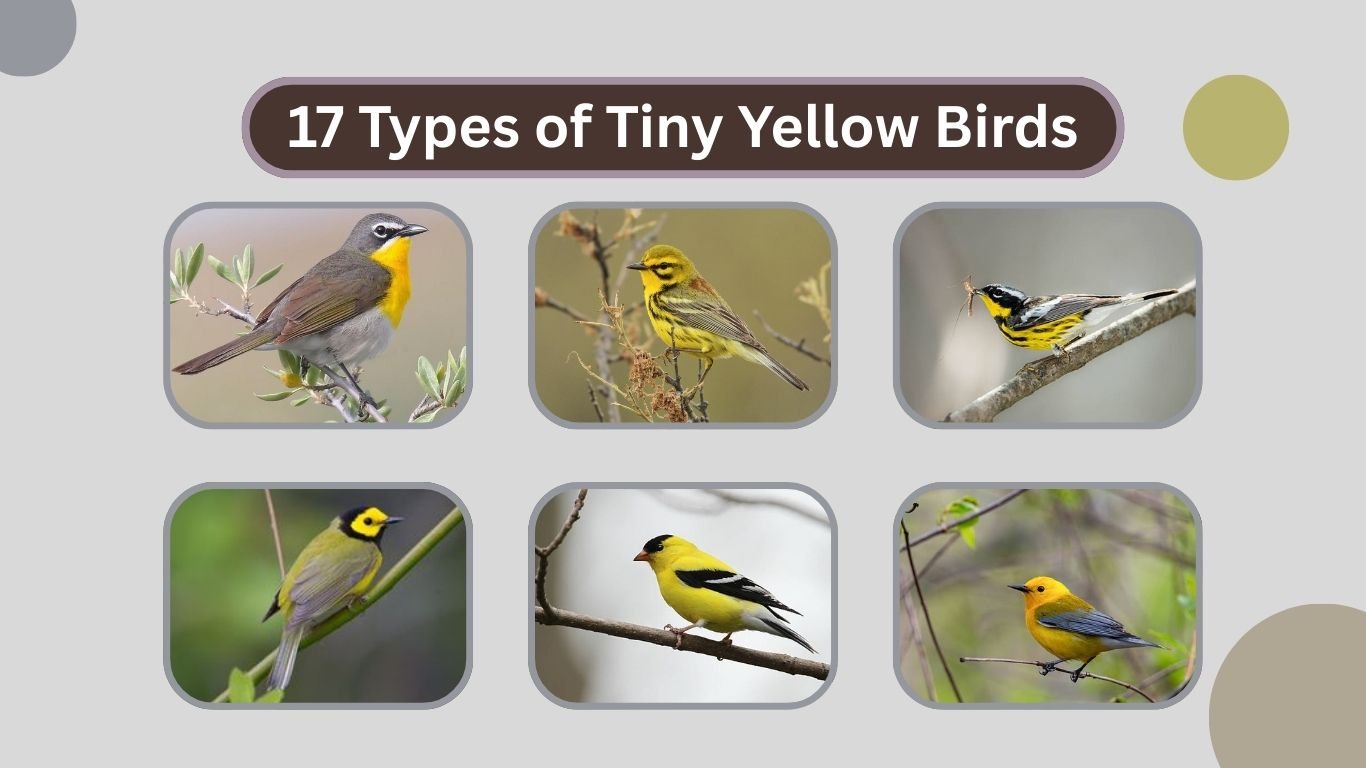
Tiny yellow birds bring a burst of sunshine to forests, fields, and backyards with their vibrant plumage and lively songs. From bright warblers to golden finches, these small species add charm and diversity to birdwatching experiences across the Americas. This guide highlights 17 fascinating types of tiny yellow birds, detailing their identification, habitats, behaviors, and vocalizations so you can recognize and appreciate them in the wild.
1. American Goldfinch
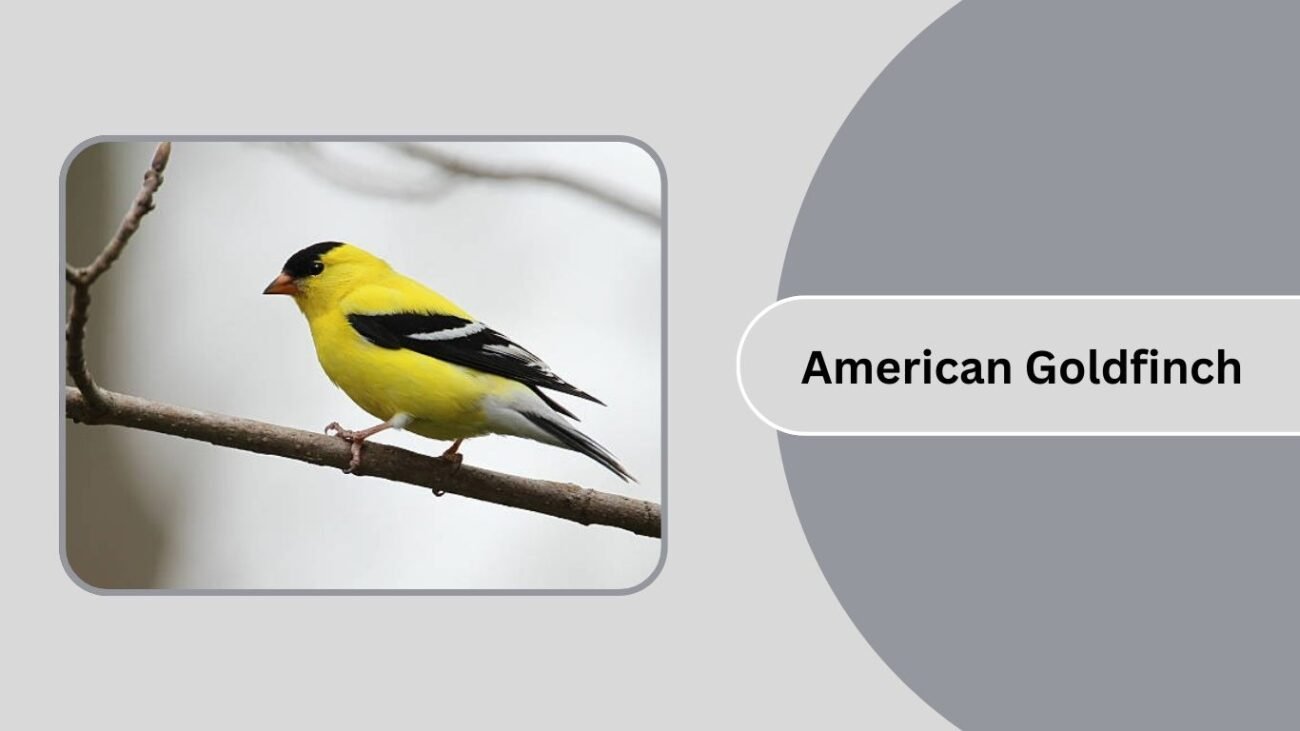
The American Goldfinch (Spinus tristis) is a small, vibrant finch well-known for its seasonal color changes and cheerful presence in gardens and open habitats. Males in summer display a striking lemon-yellow body with a black cap and wings, while females and winter males take on softer olive-yellow plumage. This bird is highly acrobatic when feeding and is one of the few songbirds to breed late in the season, timing nesting with peak seed availability.
Identification
- Size: 11–13 cm (4.3–5.1 in) in length
- Male (breeding): Bright yellow body, black cap, black wings with white wing bars, white undertail
- Male (nonbreeding): Dull olive-brown with faint yellow tones, reduced or absent black cap
- Female: Olive above, paler yellow below, no black cap
- Bill: Short, conical, pink to orange
- Flight: Bouncy, undulating pattern with distinctive “po-ta-to-chip” call
Habitat & Distribution
Common across North America, the American Goldfinch thrives in weedy fields, meadows, orchards, gardens, and suburban areas. They are especially abundant where thistles, sunflowers, and other seed-rich plants are present. Northern populations migrate south in winter, while southern ones remain year-round.
Behavior & Diet
Primarily granivorous, goldfinches feed on seeds from thistle, sunflower, coneflower, birch, and alder. They often cling to seed heads or feeders, sometimes hanging upside down while eating. Their late summer breeding coincides with abundant seed supply, and they build compact cup-shaped nests in shrubs or trees.
Vocalizations
Their song is a sweet, warbling series of twitters, while their flight call — “po-ta-to-chip” — matches the rhythm of their bouncing flight. Males sing actively during breeding season to attract females and mark territory.
2. Prothonotary Warbler
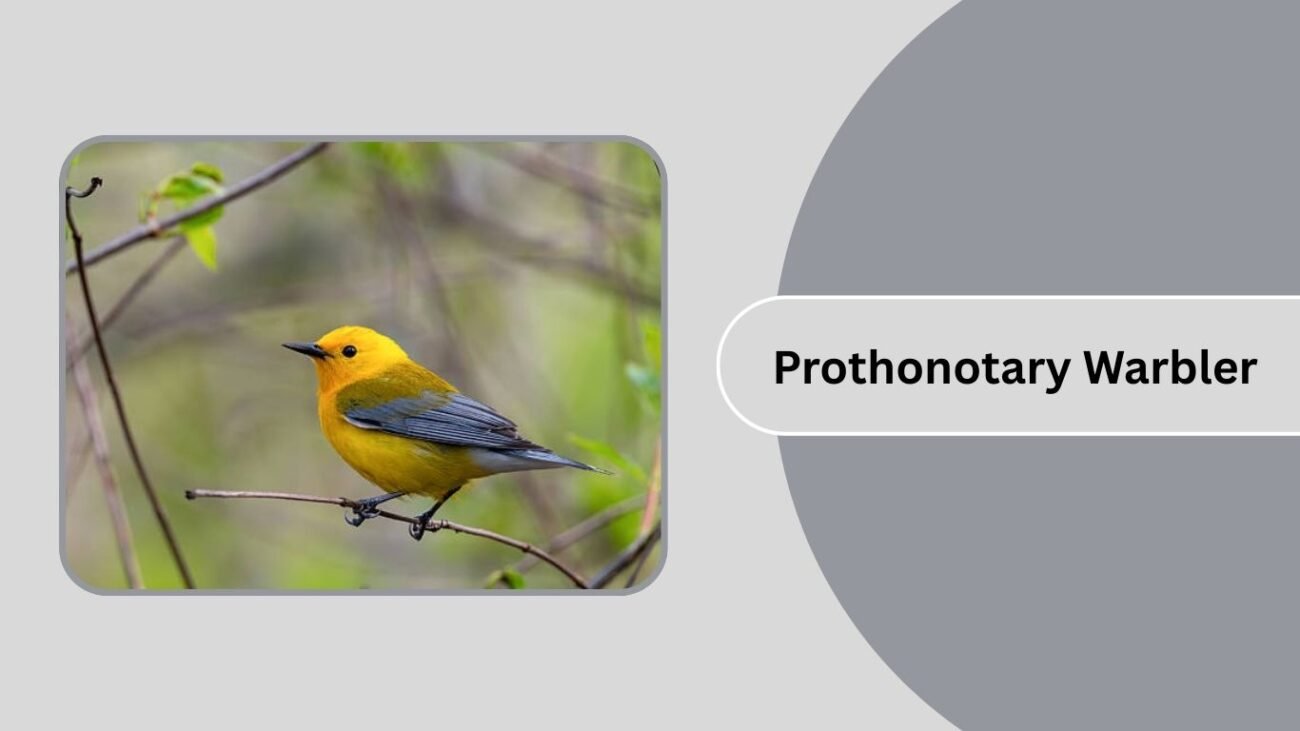
The Prothonotary Warbler (Protonotaria citrea) is a small, brilliantly colored songbird that brightens swampy forests and wetlands with its golden-yellow plumage. Often called the “swamp warbler,” it is one of the few warblers that nests in tree cavities. Its vivid color and distinctive habitat preferences make it a favorite among birdwatchers in the eastern United States.
Identification
- Size: 13–14 cm (5.1–5.5 in) in length
- Male: Bright golden-yellow head and underparts, blue-gray wings and tail, olive-green back
- Female: Slightly duller yellow, less vibrant contrast with wings
- Bill: Long, thin, and dark; adapted for probing insects in crevices
- Tail: Short with white spots on outer feathers
- Eyes: Large and dark, giving a prominent expression
Habitat & Distribution
Prothonotary Warblers are typically found in wooded swamps, flooded forests, and mangroves. Their breeding range extends through the southeastern and mid-Atlantic United States, especially along rivers, bayous, and wetlands. In winter, they migrate to Central America, northern South America, and the Caribbean.
Behavior & Diet
They are active foragers, moving along branches and probing bark and leaves for insects, spiders, and snails. They also eat small amounts of seeds and fruits. Known for nesting in cavities — often abandoned woodpecker holes or artificial nest boxes — they line their nests with mosses and grasses above standing water to deter predators.
Vocalizations
Their song is a clear, ringing “sweet-sweet-sweet-sweet” repeated in quick succession. Males sing persistently during breeding season to establish and defend territories.
3. Yellow Warbler
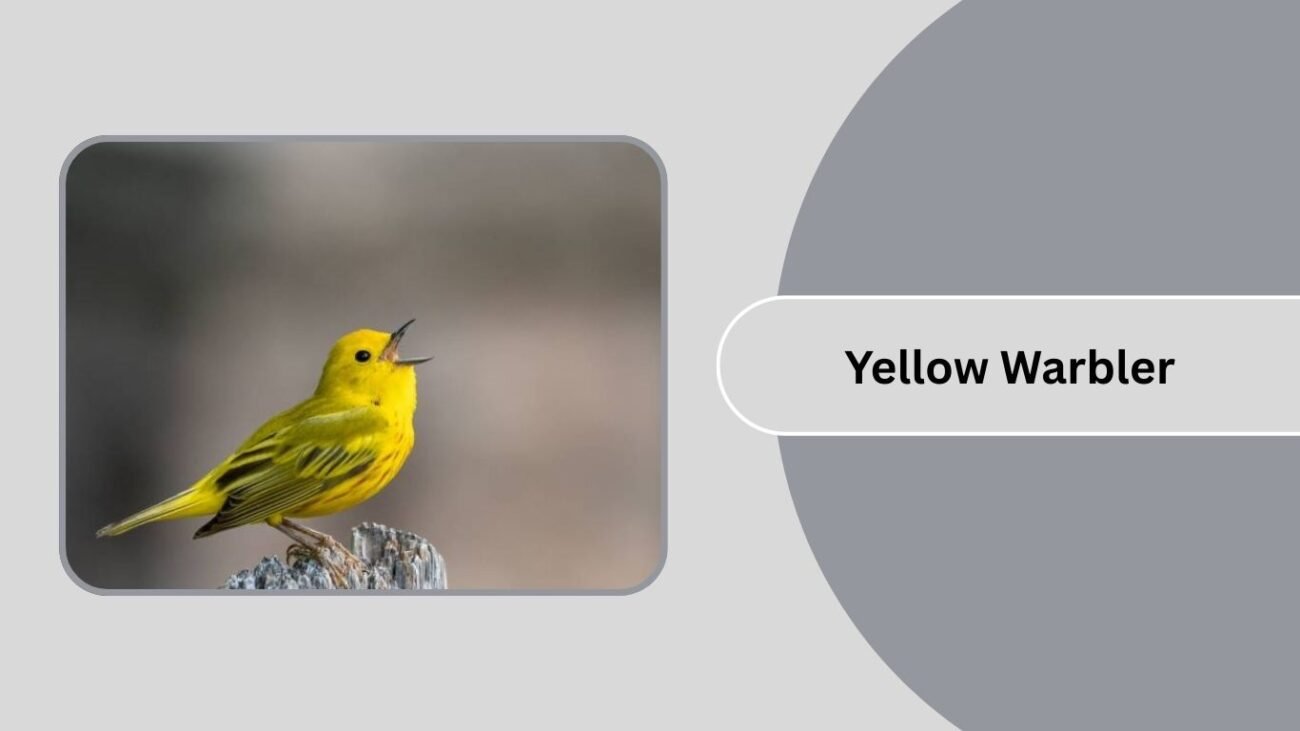
The Yellow Warbler (Setophaga petechia) is one of the most widespread and easily recognized warblers in North America. Its entire body glows with bright yellow, and males are marked with fine reddish streaks on the breast. These cheerful birds bring a burst of color and song to woodlands, wetlands, and gardens during spring and summer.
Identification
- Size: 12–13 cm (4.7–5.1 in) in length
- Male: Brilliant lemon-yellow plumage with rust-colored streaks on the breast, olive-tinged back
- Female: Similar but paler and with fewer or no streaks
- Bill: Slender, pointed, and dark
- Wings/Tail: Yellow overall with faint olive tones, no strong wing bars
- Eyes: Dark and round, giving a lively expression
Habitat & Distribution
Yellow Warblers breed across most of North America in thickets, willow stands, riparian areas, and shrubby wetlands. They are especially common along streams, lakes, and marsh edges. In winter, they migrate to Central and South America, occupying mangroves, forest edges, and gardens.
Behavior & Diet
Primarily insectivorous, they feed on caterpillars, beetles, midges, and other small invertebrates, often gleaning from leaves and branches or catching prey midair. They are active foragers and may hover momentarily to grab food. Their cup-shaped nests are built in shrubs and trees, carefully woven from grasses, bark strips, and plant fibers.
Vocalizations
The song is a sweet, rapid series of whistles described as “sweet-sweet-sweet, I’m-so-sweet,” repeated many times during the breeding season. Males sing persistently to defend territory and attract mates.
4. Common Yellowthroat
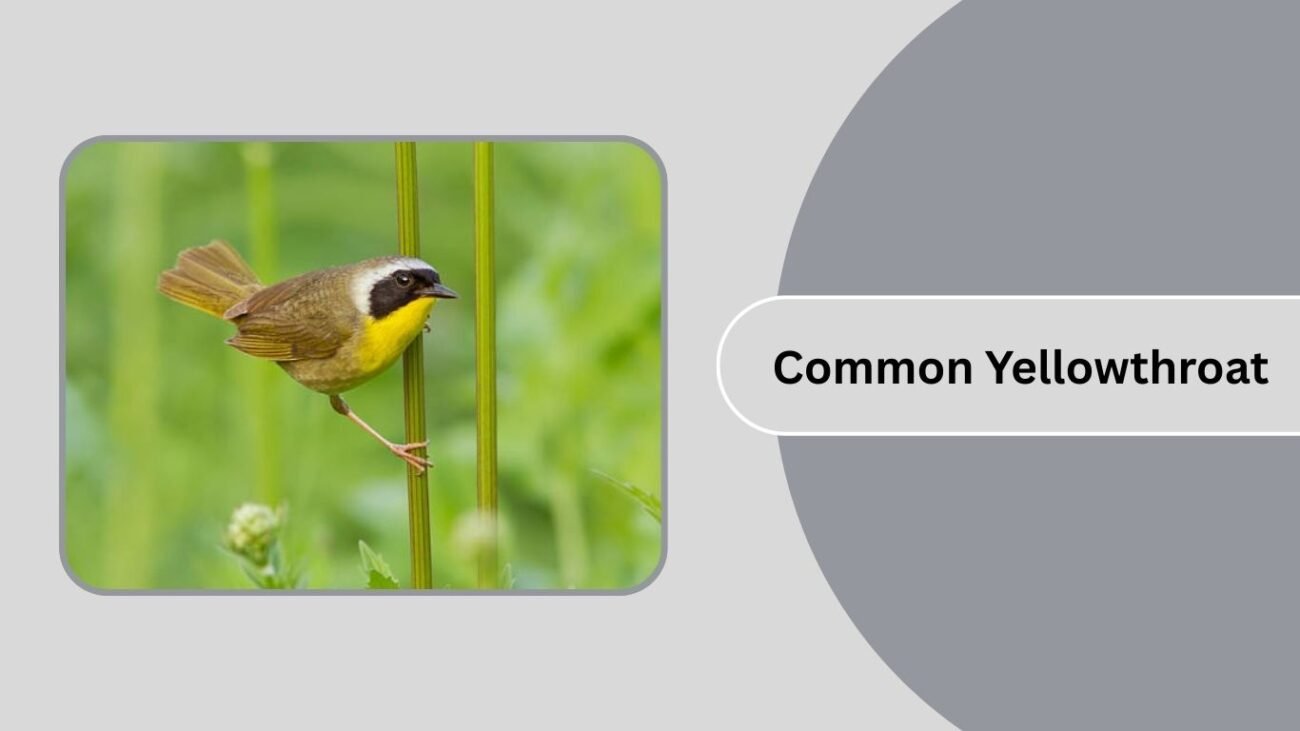
The Common Yellowthroat (Geothlypis trichas) is a small, lively warbler often heard before it’s seen, thanks to its distinctive “witchety-witchety-witchety” song. Known for its preference for dense, low vegetation, this bird is a familiar sight in wetlands, marshes, and brushy fields during breeding season. Its bold facial markings make the male instantly recognizable.
Identification
- Size: 11–14 cm (4.3–5.5 in) in length
- Male: Bright yellow throat and breast, olive-brown upperparts, and a striking black mask bordered with white or gray above
- Female: Lacks black mask, has a warm yellow throat and breast with olive-brown back
- Bill: Short, thin, and dark, suited for insect hunting
- Tail: Rounded, often flicked while foraging
- Eyes: Dark, set against the contrasting facial pattern (in males)
Habitat & Distribution
Common Yellowthroats breed across most of North America in habitats with dense vegetation, particularly wetlands, marsh edges, overgrown fields, and riparian thickets. In winter, they migrate to the southern U.S., Mexico, Central America, and the Caribbean, favoring similar dense cover.
Behavior & Diet
Primarily insectivorous, they feed on caterpillars, beetles, grasshoppers, and spiders, often gleaning from foliage or making quick sallies to catch prey. They remain low to the ground or in shrubbery, making them more often heard than seen.
Vocalizations
The song is a distinctive, rolling “witchety-witchety-witchety,” while calls are sharp and chipping. Males sing frequently during the breeding season to establish territory and attract mates.
5. Wilson’s Warbler
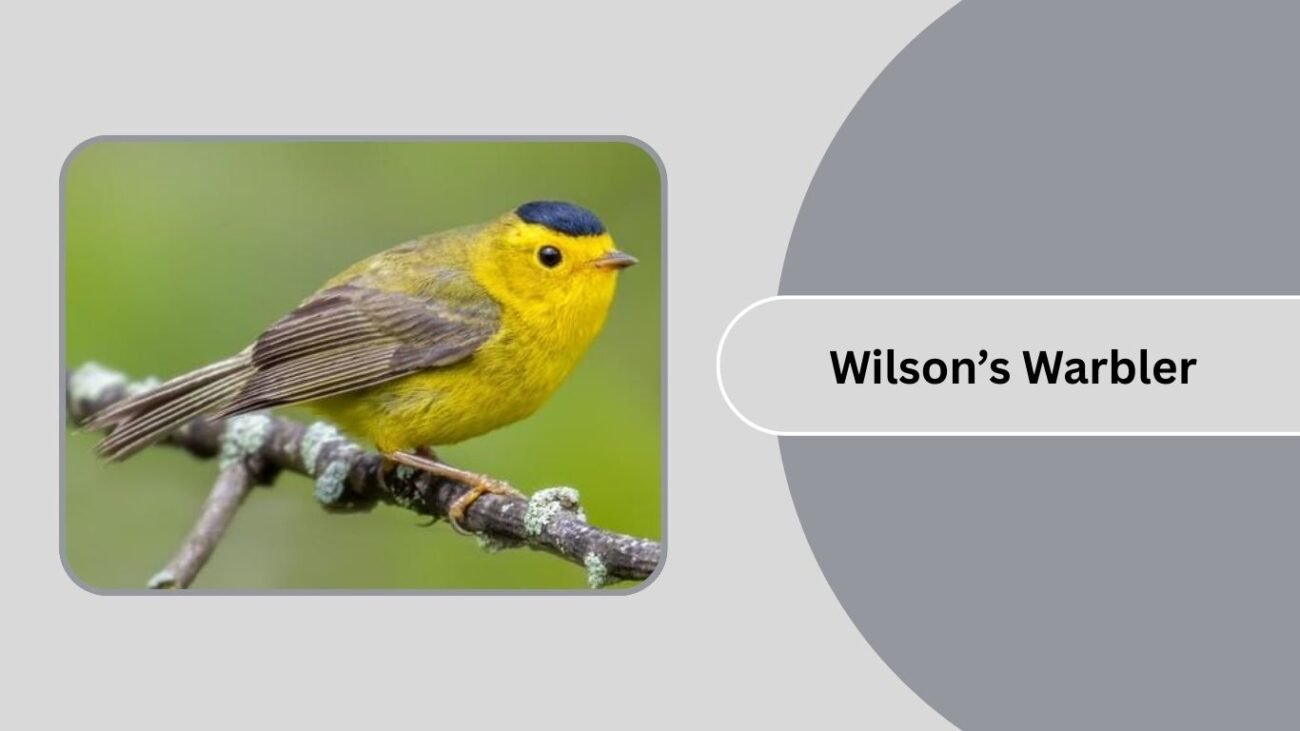
The Wilson’s Warbler (Cardellina pusilla) is a tiny, energetic warbler recognized by its bright yellow body and distinctive black cap on the male. This restless bird flits quickly through low shrubs and undergrowth, making it a delight for birdwatchers during migration and breeding seasons.
Identification
- Size: 10–12 cm (3.9–4.7 in) in length
- Male: Bright yellow face, throat, and underparts; olive-green back and wings; bold black cap extending from forehead to crown
- Female: Yellow face and underparts with olive-green back, but cap is faint or absent
- Bill: Short, thin, and dark; perfect for catching insects
- Tail: Small, slightly rounded, often flicked quickly
- Eyes: Dark and expressive, set against vivid yellow plumage
Habitat & Distribution
Wilson’s Warblers breed in shrubby areas near water, forest edges, and willow thickets across Canada, Alaska, and parts of the western and northern United States. They migrate through much of North America to wintering grounds in Mexico, Central America, and northern South America.
Behavior & Diet
These warblers are active insect hunters, gleaning small insects, larvae, and spiders from foliage, and occasionally making short flights to snatch prey midair. They tend to forage low to the ground, often in dense vegetation.
Vocalizations
Their song is a rapid, chattering series of notes, often described as “chi-chi-chi-chi-chi,” while calls are sharp and dry. Males sing frequently during the breeding season to maintain territory and attract mates.
6. Yellow-bellied Flycatcher
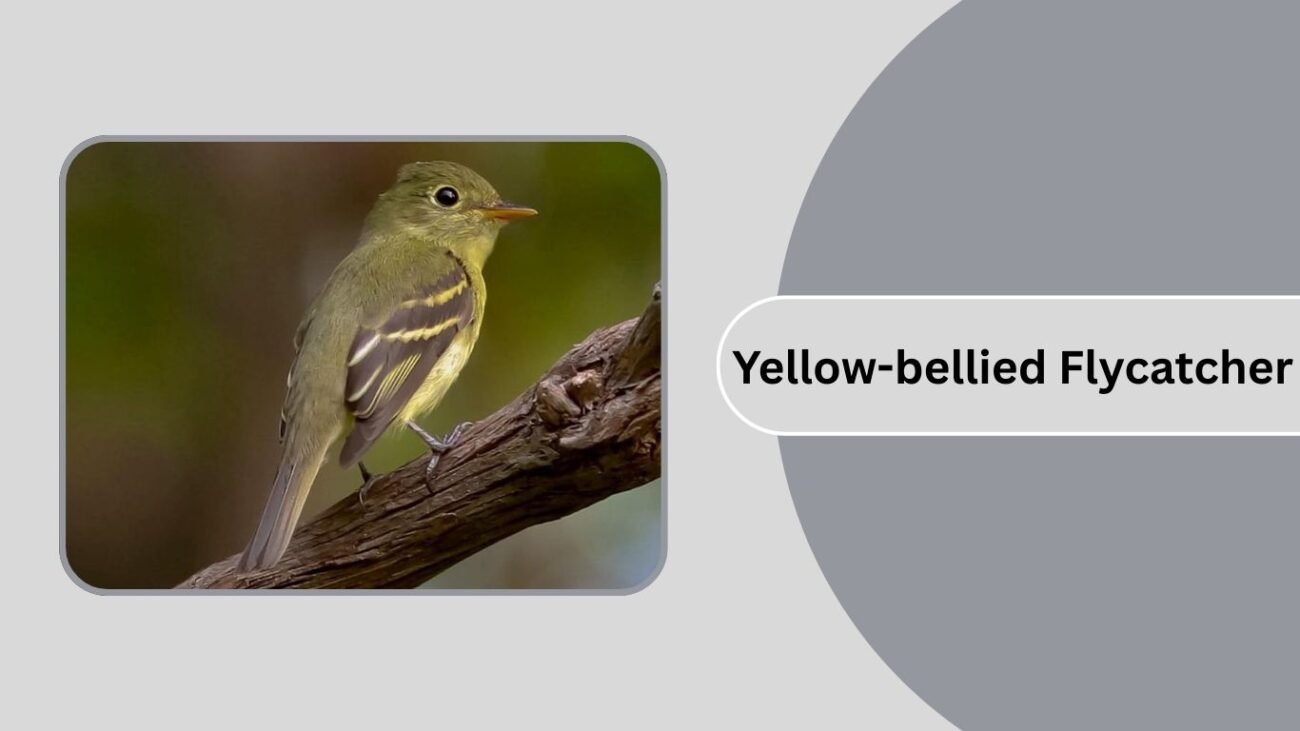
The Yellow-bellied Flycatcher (Empidonax flaviventris) is a small, delicate flycatcher named for its pale yellow belly and breast. Known for its shy nature, it is most often found in cool, mossy forests and bogs, especially during the breeding season. It is one of the more distinctive Empidonax flycatchers, though still challenging to identify without a close look.
Identification
- Size: 12–14 cm (4.7–5.5 in) in length
- Plumage: Olive-green upperparts, pale yellow underparts, slightly brighter on the throat and breast
- Eye Ring: Bold, complete white eye ring, often teardrop-shaped
- Bill: Short, with dark upper mandible and yellow-orange lower mandible
- Wings: Two distinct pale wing bars
- Tail: Short and slightly notched
Habitat & Distribution
During breeding, Yellow-bellied Flycatchers inhabit boreal spruce-fir forests, bogs, and mossy wetlands across Canada, Alaska, and parts of the northern United States. In winter, they migrate to southern Mexico, Central America, and the Caribbean.
Behavior & Diet
Like other flycatchers, they sally from perches to catch flying insects, but they also glean from foliage. Their diet consists mostly of flies, beetles, and other small arthropods, occasionally supplemented with berries.
Vocalizations
The song is a short, emphatic “che-lek” or “che-bek” with a sharp, rising tone. Calls are soft and abrupt, often given while foraging or in flight.
7. Hooded Warbler
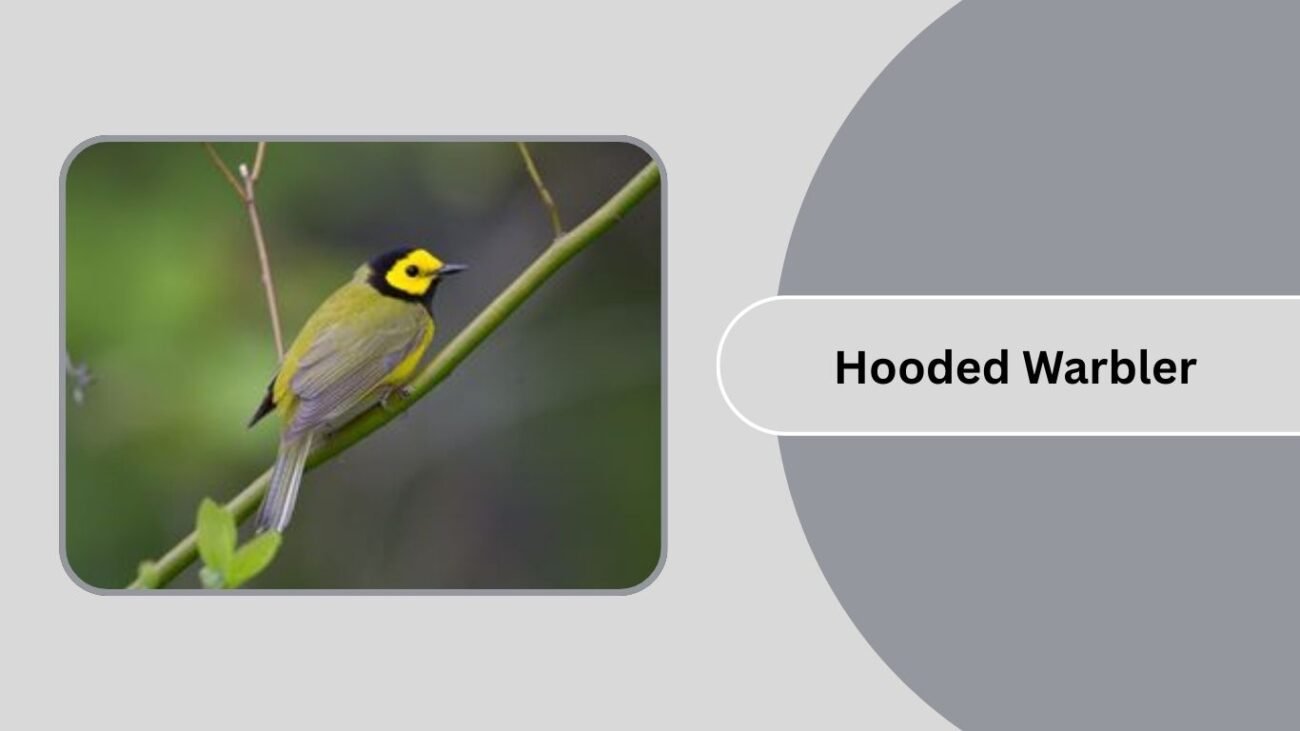
The Hooded Warbler (Setophaga citrina) is a strikingly patterned, small songbird recognized by the male’s vivid yellow face framed by a bold black hood. These energetic warblers thrive in dense understory vegetation and are often more easily heard than seen, thanks to their loud and musical song.
Identification
- Size: 12–14 cm (4.7–5.5 in) in length
- Male: Bright yellow face and underparts, black hood covering head and throat, olive-green back and wings
- Female: Lacks a full black hood, showing only faint or partial dark markings; still has a yellow face and underparts
- Bill: Thin, sharp, and dark, adapted for insect hunting
- Wings/Tail: Olive-green wings, tail with large white spots on the outer feathers
- Eyes: Large and dark, giving a bold facial expression
Habitat & Distribution
Hooded Warblers breed in the eastern United States, favoring mature forests with dense shrub layers, especially near streams and wetlands. They winter in Central America, the Caribbean, and northern South America, inhabiting tropical forests and thickets.
Behavior & Diet
These warblers are agile insectivores, gleaning caterpillars, beetles, flies, and other small arthropods from foliage. They often “flash” the white in their tails while foraging, which may help startle hidden insects into movement.
Vocalizations
The male’s song is a loud, ringing series of notes often rendered as “ta-wit ta-wit ta-wit tee-yo” or similar variations. Their call is a sharp “chip,” frequently heard as they move through dense vegetation.
8. Cape May Warbler
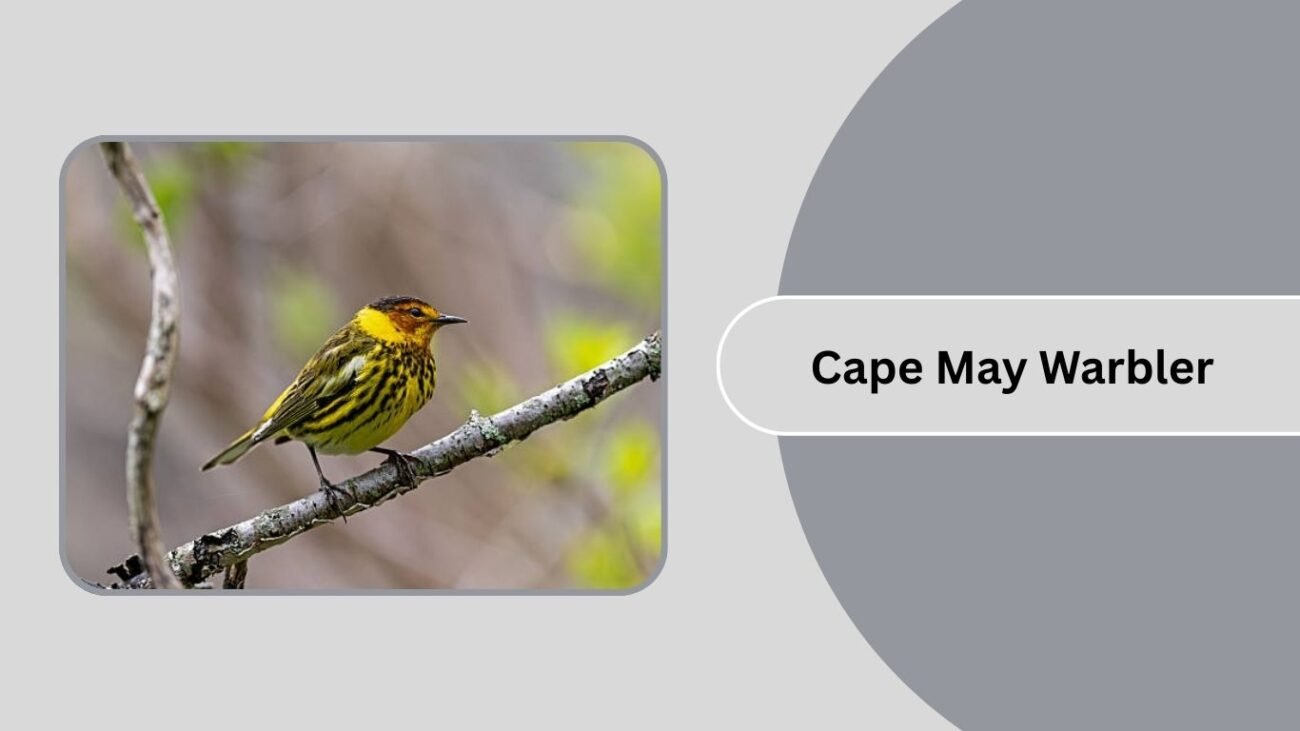
The Cape May Warbler (Setophaga tigrina) is a small, vividly patterned songbird that stands out with its tiger-striped breast and striking facial markings. Named after Cape May, New Jersey—where it was first recorded—it is most abundant during migration, especially in eastern North America.
Identification
- Size: 12–13 cm (4.7–5.1 in) in length
- Male (breeding): Bright yellow face with a bold chestnut cheek patch, olive back, black streaks on yellow breast and flanks, yellow rump
- Female: Paler overall, lacking chestnut cheek patch, but still shows faint streaking on underparts
- Bill: Thin, slightly decurved, adapted for insect and nectar feeding
- Wings: Dark with two distinct white wing bars
- Tail: Dark with white spots at corners
Habitat & Distribution
Breeds mainly in the boreal forests of Canada and the northern United States, favoring spruce and fir trees. During migration, it can be found in a variety of habitats, including gardens, parks, and coastal thickets. Winters in the Caribbean and parts of Central America.
Behavior & Diet
Feeds primarily on insects, especially spruce budworms during breeding season. Outside breeding, also consumes nectar and fruit, often visiting flowering plants and even hummingbird feeders. It is an agile forager, often moving quickly among branches and occasionally hovering to pluck food.
Vocalizations
The song is a thin, high-pitched series of “see-see-see-see” notes, often rising slightly at the end. Calls include short, sharp “tsip” sounds given while foraging or in flight.
9. Prairie Warbler
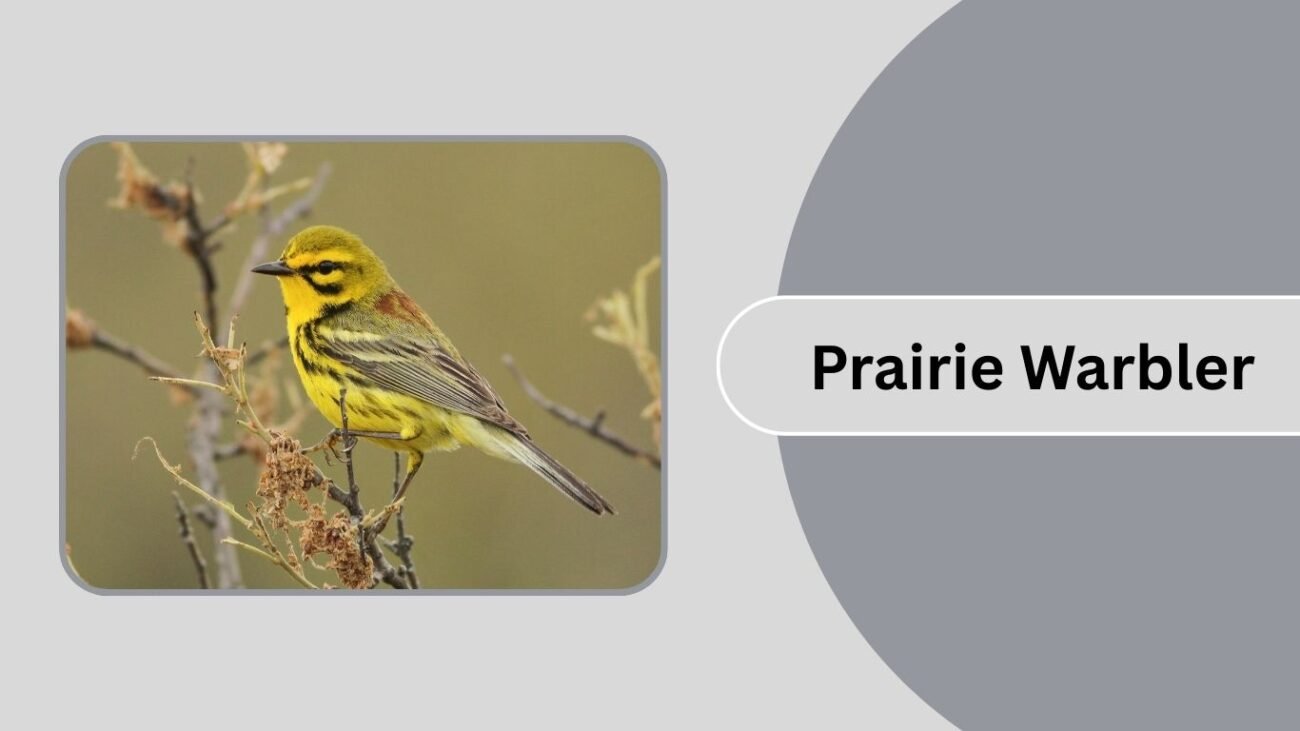
The Prairie Warbler (Setophaga discolor) is a small, brightly colored songbird known for its yellow face and underparts paired with bold black streaks along the sides. Despite its name, it prefers shrubby fields, regenerating forests, and scrubby hillsides rather than open prairies. Its distinctive rising song makes it a favorite among birders in its breeding range.
Identification
- Size: 11–12 cm (4.3–4.7 in) in length
- Male: Bright yellow face, throat, and underparts; black streaks on flanks; olive-green back with reddish streaking on upper back; thin dark eye line
- Female: Paler overall with fainter streaking on flanks and less intense yellow
- Bill: Thin, pointed, and dark, ideal for catching insects
- Wings: Olive with faint wing bars
- Tail: Long and often flicked, showing white outer feathers in flight
Habitat & Distribution
Breeds mainly in the eastern and southeastern United States in shrubby fields, young pine forests, and regenerating clear-cuts. Winters in the Caribbean, Central America, and parts of southern Florida, often in coastal scrub and mangroves.
Behavior & Diet
Feeds primarily on insects and spiders, gleaning them from foliage or making short flights to capture prey. Often forages methodically, moving from branch to branch while constantly flicking its tail.
Vocalizations
The song is a distinctive series of buzzy notes that ascend in pitch, often described as “zee-zee-zee-zee-zee,” and is repeated persistently during the breeding season. The call is a sharp “tsip.”
10. Canada Warbler
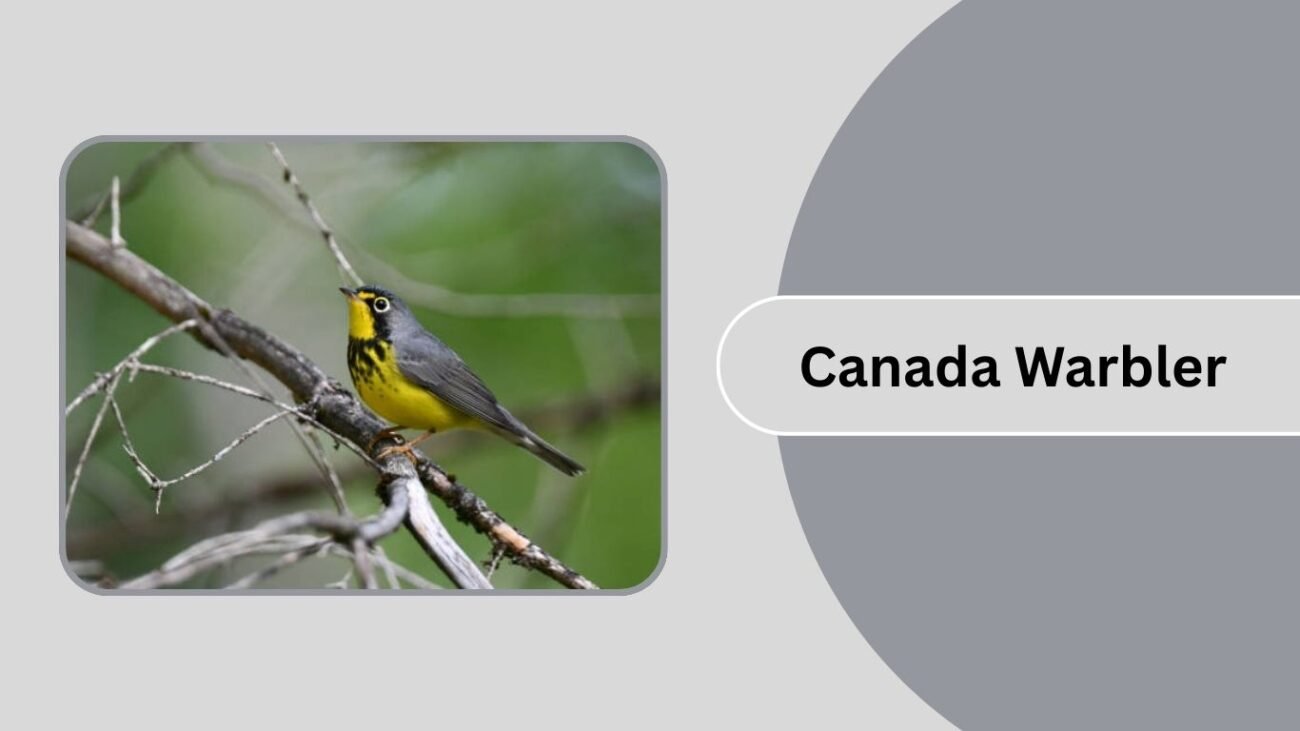
The Canada Warbler (Cardellina canadensis) is a small, active songbird known for its striking facial markings and bright yellow underparts. Sometimes called the “necklaced warbler” due to the bold, dark streaks across its chest, it is a late spring migrant that breeds in cool, moist forests.
Identification
- Size: 12–13 cm (4.7–5.1 in) in length
- Male: Bright yellow throat and underparts, gray back, and a bold black “necklace” of streaks across the chest; white eye ring and black lores
- Female: Similar but with a fainter necklace and duller coloration
- Bill: Thin, dark, and pointed
- Wings/Tail: Gray wings with no wing bars, medium-length tail often flicked
- Face: Distinct white eye ring gives a spectacled look
Habitat & Distribution
Breeds in moist, mixed, and coniferous forests, often near streams or in dense understory vegetation, across Canada and the northeastern United States. Winters in the northern Andes of South America, where it inhabits montane forests and edges.
Behavior & Diet
Feeds primarily on insects such as flies, beetles, caterpillars, and other small invertebrates, gleaning them from leaves and branches or capturing them in short flights. Often forages low in dense foliage, moving quickly through branches.
Vocalizations
The song is a fast, musical jumble of notes with a rich, chattering quality, often described as “chip chewy sweet dichetty.” Calls are sharp “chip” notes frequently heard while foraging.
11. Magnolia Warbler
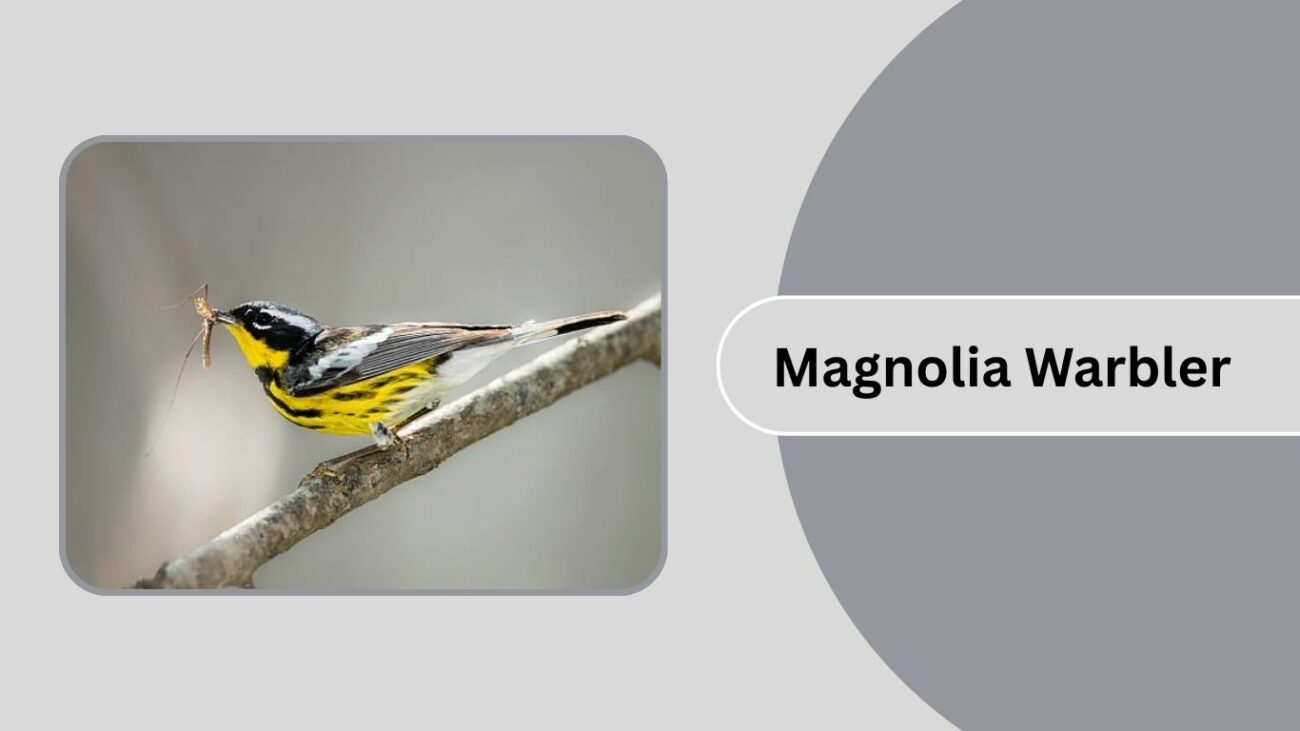
The Magnolia Warbler (Setophaga magnolia) is a small, colorful songbird admired for its striking plumage and active foraging style. Despite its name, it is not closely tied to magnolia trees—its name came from the first specimen found in a magnolia in Mississippi. This species is a favorite among birdwatchers during migration for its bold yellow and black markings.
Identification
- Size: 11–13 cm (4.3–5.1 in) in length
- Male (breeding): Bright yellow underparts with bold black streaking on the chest and flanks, black mask bordered with white, gray back, and white wing patch
- Female: Paler yellow with less distinct streaking, lacks strong facial contrast
- Bill: Short, thin, and dark, suited for insect hunting
- Tail: Dark with large white patches on the underside, conspicuous in flight
- Wings: Grayish with faint to bold white wing bars depending on season
Habitat & Distribution
Breeds in dense coniferous or mixed forests across Canada and the northern United States, often favoring spruce and fir. During migration, it passes through much of eastern North America and winters in the Caribbean, Central America, and northern South America.
Behavior & Diet
Feeds mainly on insects such as caterpillars, beetles, and flies, often gleaning them from leaves or making short, agile flights to catch prey. It frequently forages at mid to low levels in the forest, flicking its tail to reveal bold white patches.
Vocalizations
The song is a short, rising series of notes often rendered as “weeta-weeta-weetsee,” and the call is a sharp “tsip.” Males sing most actively during the breeding season to defend territories and attract mates.
12. Yellow-breasted Chat
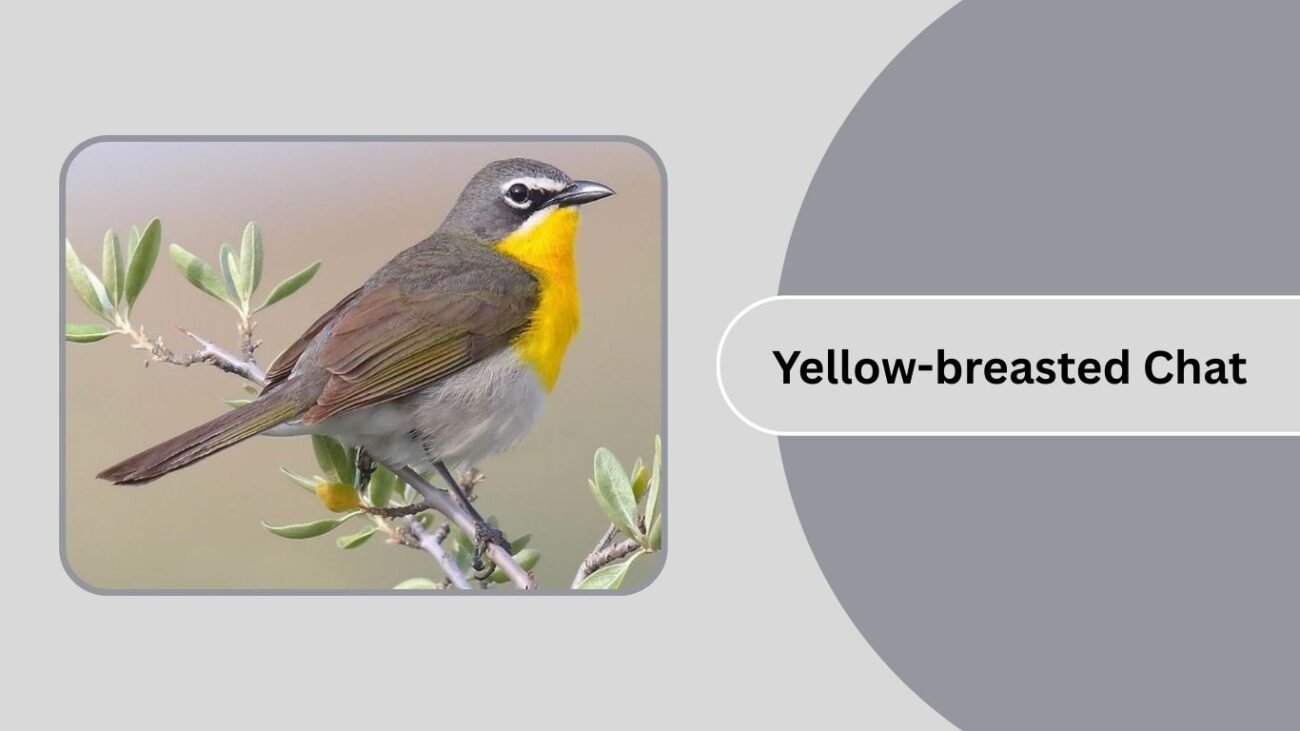
The Yellow-breasted Chat (Icteria virens) is the largest and most distinctive member of the New World warblers, though it behaves quite differently from most warblers. Recognized for its bright yellow breast, olive-green back, and long tail, this bird is known for its loud, varied song and elusive habits in dense vegetation.
Identification
- Size: 17–19 cm (6.7–7.5 in) in length, larger than typical warblers
- Plumage: Bright yellow throat and breast, olive-green upperparts, white belly, and striking white spectacles around the eyes
- Bill: Thick and slightly curved, dark in color
- Tail: Long and rounded, often flicked while perched
- Wings: Olive with no prominent wing bars
Habitat & Distribution
Yellow-breasted Chats breed across much of the United States and southern Canada, preferring dense thickets, shrubby fields, overgrown edges, and riparian brush. They migrate to Mexico, Central America, and the southern U.S. for the winter, where they occupy similar shrubby habitats.
Behavior & Diet
They are omnivorous, feeding mainly on insects such as beetles, caterpillars, and grasshoppers, as well as berries and small fruits. Chats are known for their skulking behavior, often staying hidden in dense cover, but will sometimes perch in the open to sing.
Vocalizations
Their song is an unusual mix of whistles, cackles, clucks, and harsh chatters, often delivered from a hidden perch or during a short aerial display. This vocal variety makes them one of the most distinctive-sounding songbirds in North America.
13. Yellow-headed Blackbird
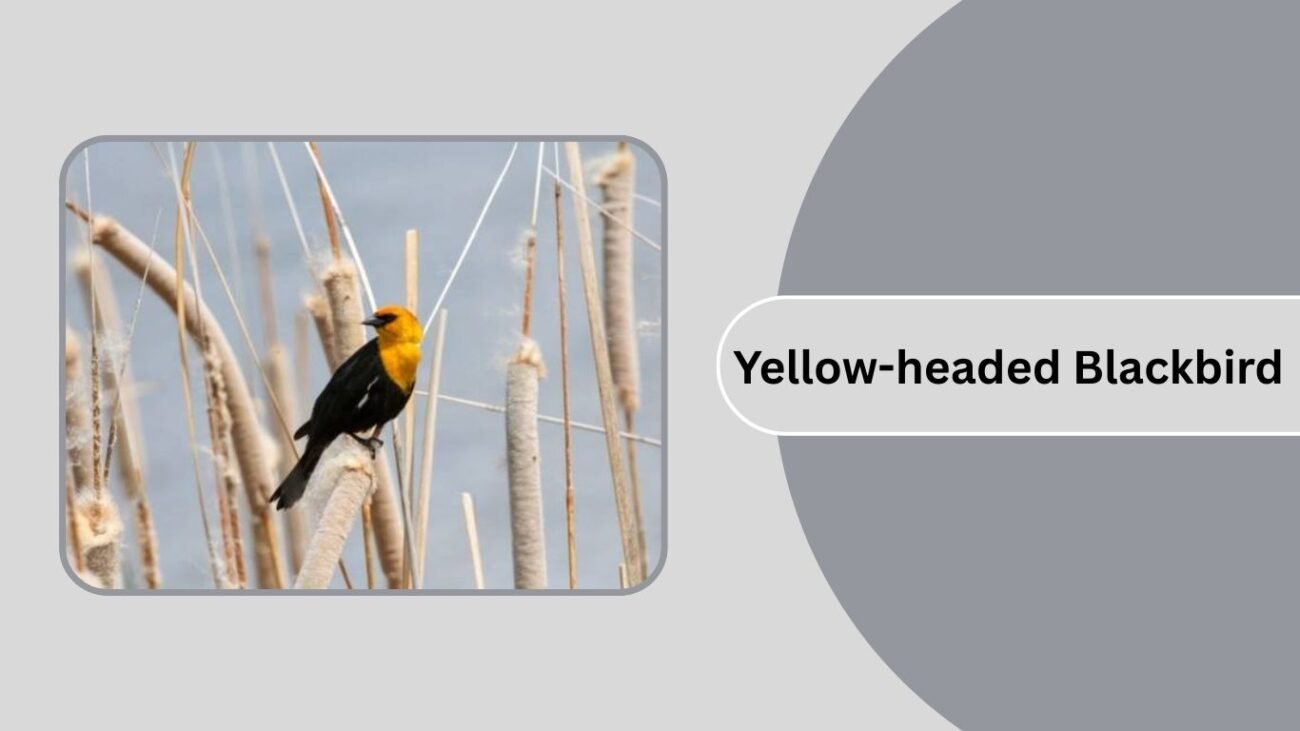
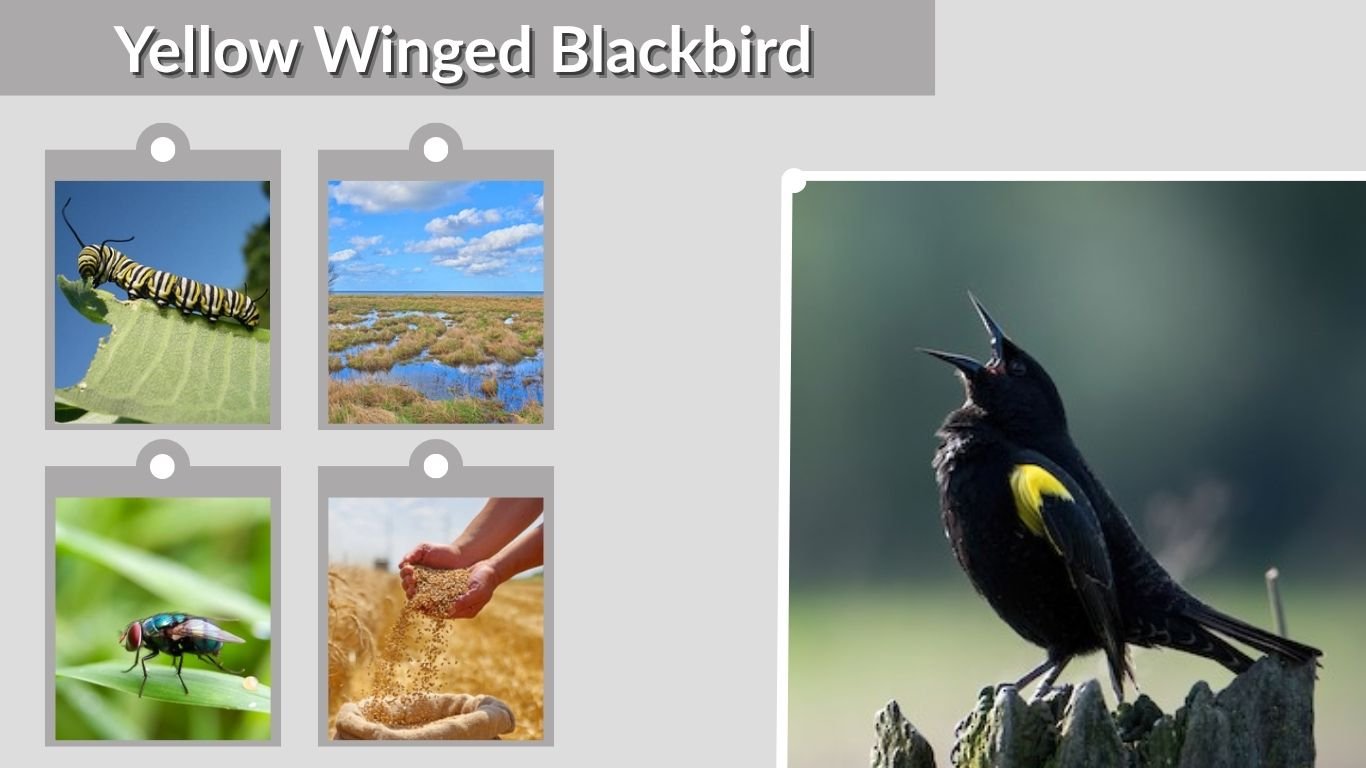
The Yellow-headed Blackbird (Xanthocephalus xanthocephalus) is a striking marsh-dwelling songbird recognized by its vivid golden-yellow head and contrasting black body. This bold appearance, coupled with its loud and unusual calls, makes it stand out among other blackbird species.
Identification
- Size: 21–26 cm (8.3–10.2 in) in length, larger than most blackbirds
- Male: Bright yellow head and chest, black body, white wing patches visible in flight
- Female: Brown overall with dull yellow on throat and chest, lacks strong contrast
- Bill: Conical, black, and pointed
- Wings/Tail: Dark with distinctive white wing patches in males
Habitat & Distribution
Breeds in wetlands with tall emergent vegetation such as cattails, bulrushes, and reeds across the western and central United States and parts of Canada. Winters in the southwestern United States, Mexico, and Central America, often in agricultural fields and open grasslands.
Behavior & Diet
Feeds on insects in summer—especially aquatic larvae and beetles—and shifts to seeds and grains in winter. Forages by gleaning from vegetation or probing mud and shallow water. Males are territorial during breeding season, often singing from tall perches in marshes.
Vocalizations
The song is a harsh, drawn-out, creaky “grrreeeeeaaakk,” sometimes likened to the sound of a rusty gate. Calls are sharp and chattering, especially in flocks.
14. Western Tanager (Female)
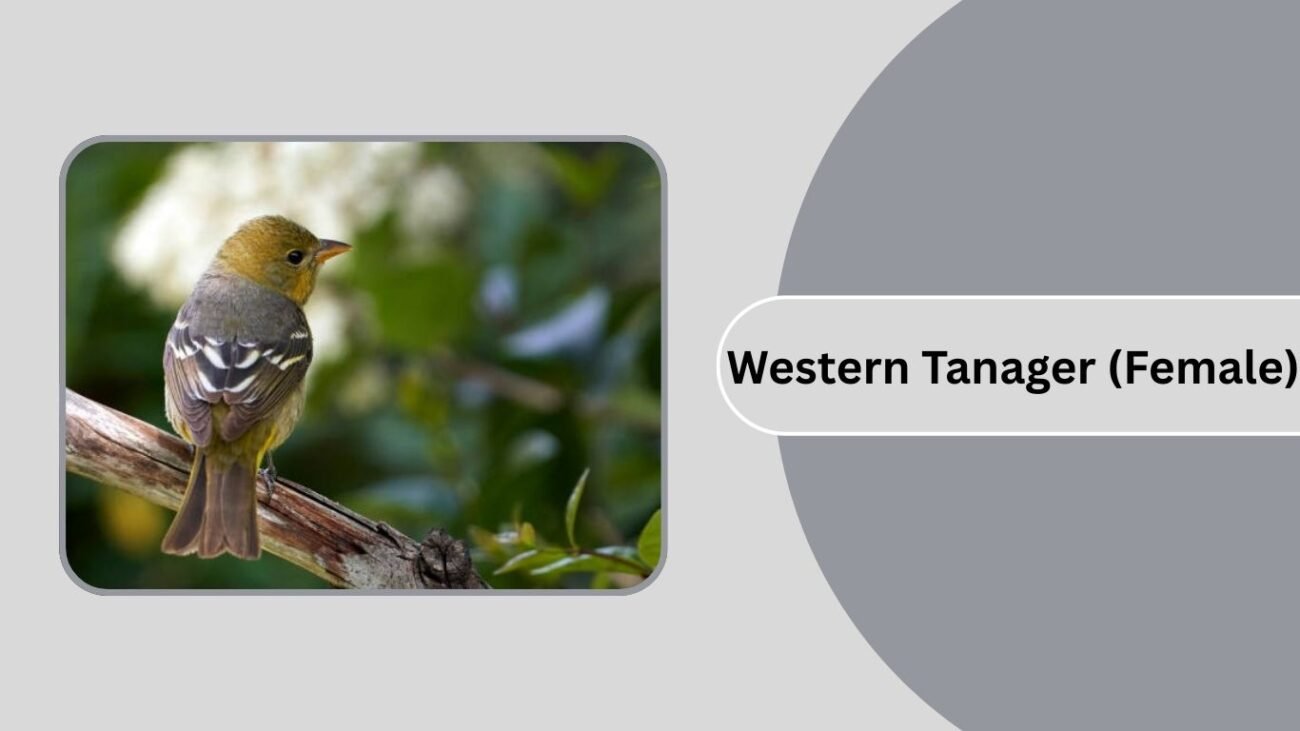
The female Western Tanager (Piranga ludoviciana) is a subtly beautiful songbird with soft yellow tones that contrast with the male’s vivid breeding colors. While not as flamboyant as her male counterpart, the female’s plumage offers excellent camouflage among leaves and branches.
Identification
- Size: 16–18 cm (6.3–7.1 in) in length
- Plumage: Yellow underparts, olive-green to grayish upperparts, dusky wings with faint wing bars
- Bill: Thick, pointed, and pale to grayish in color, suited for both insect and fruit eating
- Tail: Medium length, slightly notched
- Wings: Dark with pale edging and wing bars, less contrasting than in males
Habitat & Distribution
Breeds in coniferous and mixed forests across western North America, from Alaska and Canada down through the western United States. In winter, migrates to Mexico and Central America, where it inhabits open woodlands and forest edges.
Behavior & Diet
Feeds on a mix of insects, such as beetles, wasps, and caterpillars, and also consumes berries and fruits. Often forages in the canopy, sometimes sallying out to catch flying insects. Females are responsible for most of the incubation during breeding.
Vocalizations
Song is a series of short, hoarse whistles reminiscent of a robin but with a more clipped quality. Calls are sharp “pit” or “pik” notes often given in flight or while foraging.
15. Pine Warbler
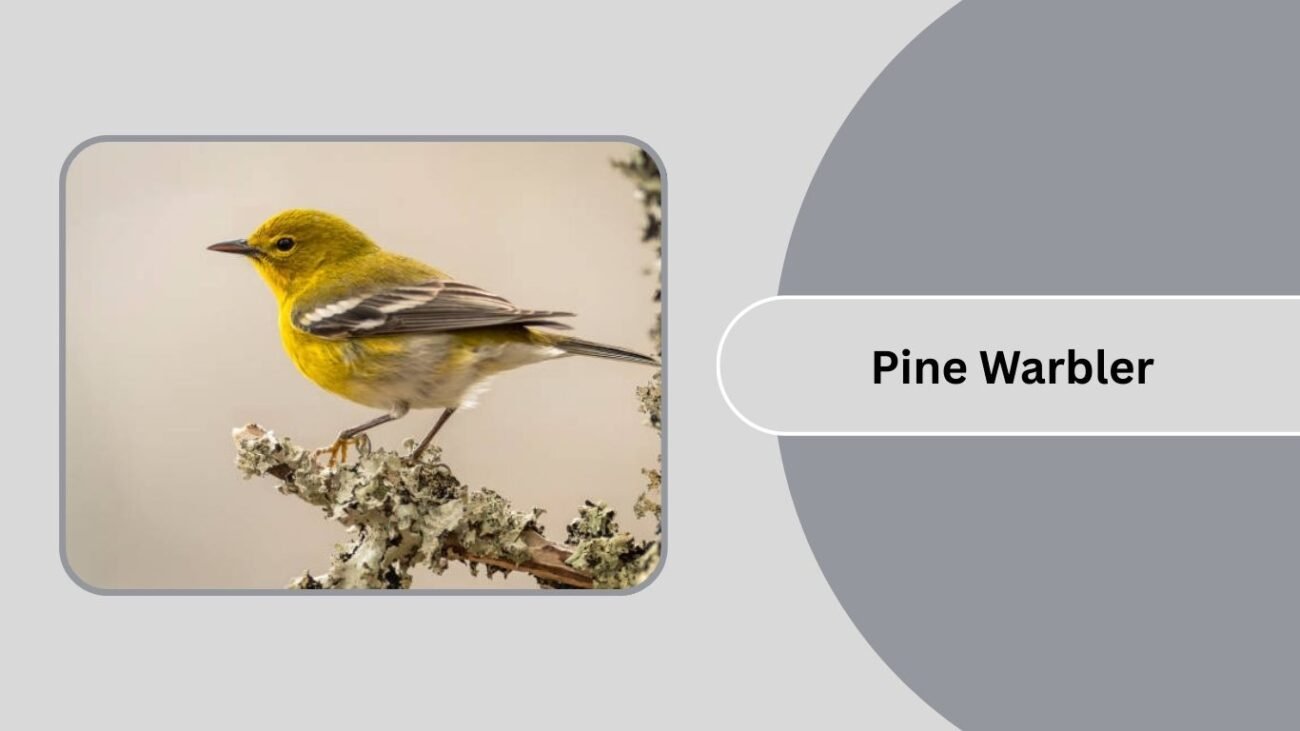
The Pine Warbler (Setophaga pinus) is a sturdy, soft-colored warbler that spends much of its time in pine trees, where its plumage blends well with the needles. Unlike many warblers, it frequently visits feeders, especially in winter, making it a favorite among backyard birdwatchers in its range.
Identification
- Size: 13–14 cm (5.1–5.5 in) in length
- Male: Yellow throat, breast, and belly with olive-green back; faint streaking on sides; two distinct white wing bars
- Female: Duller, more grayish-yellow, with less vivid underparts but similar wing bars
- Bill: Thin, dark, and pointed, suited for insect hunting and seed eating
- Wings/Tail: Brownish-olive wings with white wing bars; medium-length tail with pale edges
Habitat & Distribution
Primarily found in pine forests and mixed woodlands with a strong pine component across the eastern United States. Year-round residents in the southeastern U.S., with northern populations migrating south in winter.
Behavior & Diet
Feeds on insects such as caterpillars, beetles, and ants during warmer months and switches to seeds and berries in winter. Unusually for a warbler, it often visits suet and seed feeders. Forages by creeping along branches and sometimes hovering to glean food.
Vocalizations
The song is a clear, musical trill, similar to that of a Chipping Sparrow but slower and more musical. Calls are sharp “chip” notes given in various social contexts.
16. Orange-crowned Warbler
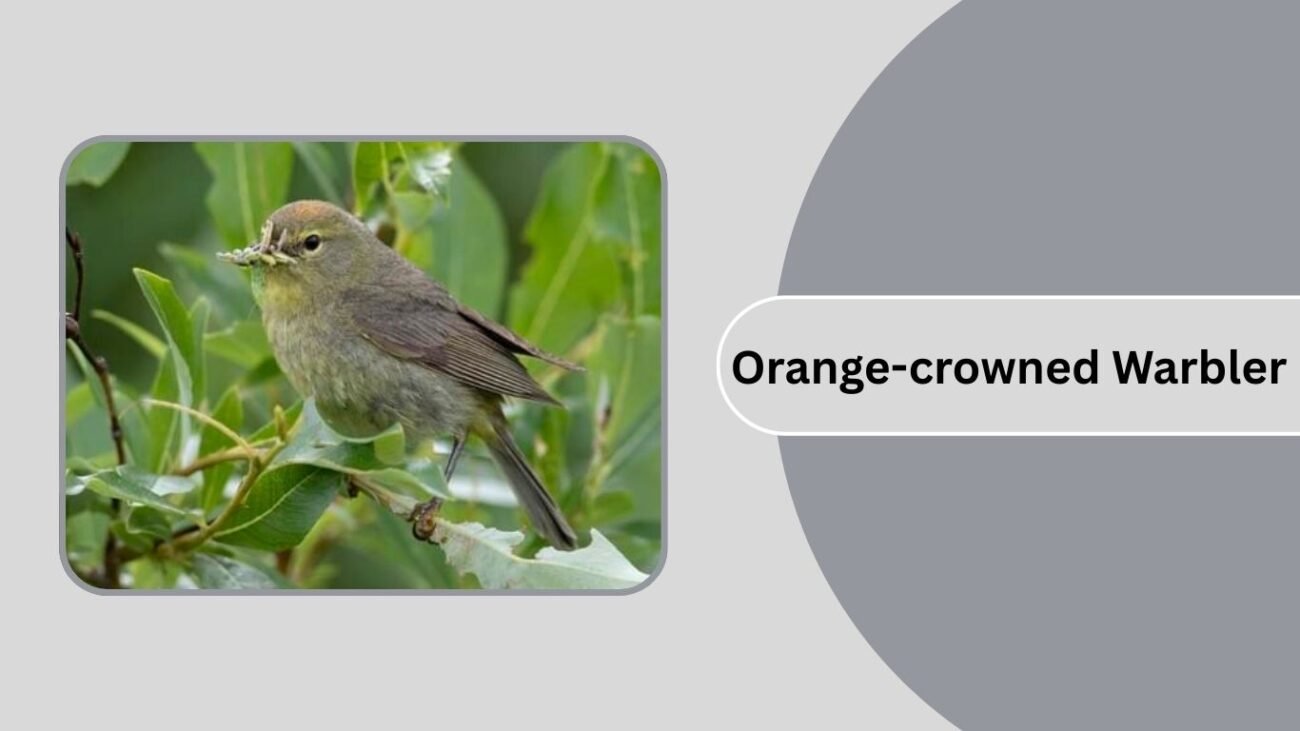
The Orange-crowned Warbler (Leiothlypis celata) is a small, understated songbird that may not grab attention with bright colors but wins birdwatchers over with its subtle beauty and active foraging. Its “orange crown” is rarely visible, making it one of the more modestly marked warblers in North America.
Identification
- Size: 11–13 cm (4.3–5.1 in) in length
- Plumage: Olive-green upperparts, yellowish underparts that can vary from dull to fairly bright, faint streaking on breast and sides
- Crown: Small patch of orange feathers, usually hidden and only visible when the bird raises its crown feathers
- Bill: Thin, pointed, and dark
- Wings/Tail: No wing bars; tail medium length, slightly rounded
Habitat & Distribution
Breeds in shrubby open woodlands, willow thickets, and forest edges across Alaska, Canada, and parts of the northern and western United States. Winters in the southern U.S., Mexico, and Central America, where it frequents gardens, scrub, and mangroves.
Behavior & Diet
Feeds on insects, spiders, and other small invertebrates, often gleaning them from leaves and twigs. Also consumes berries and nectar, especially in winter. Known for actively moving through foliage and sometimes hanging upside down while feeding.
Vocalizations
The song is a simple, fast trill that rises and then drops slightly, often compared to the trill of a Chipping Sparrow but softer. Calls are sharp “tsip” or “chip” notes.
17. Tennessee Warbler
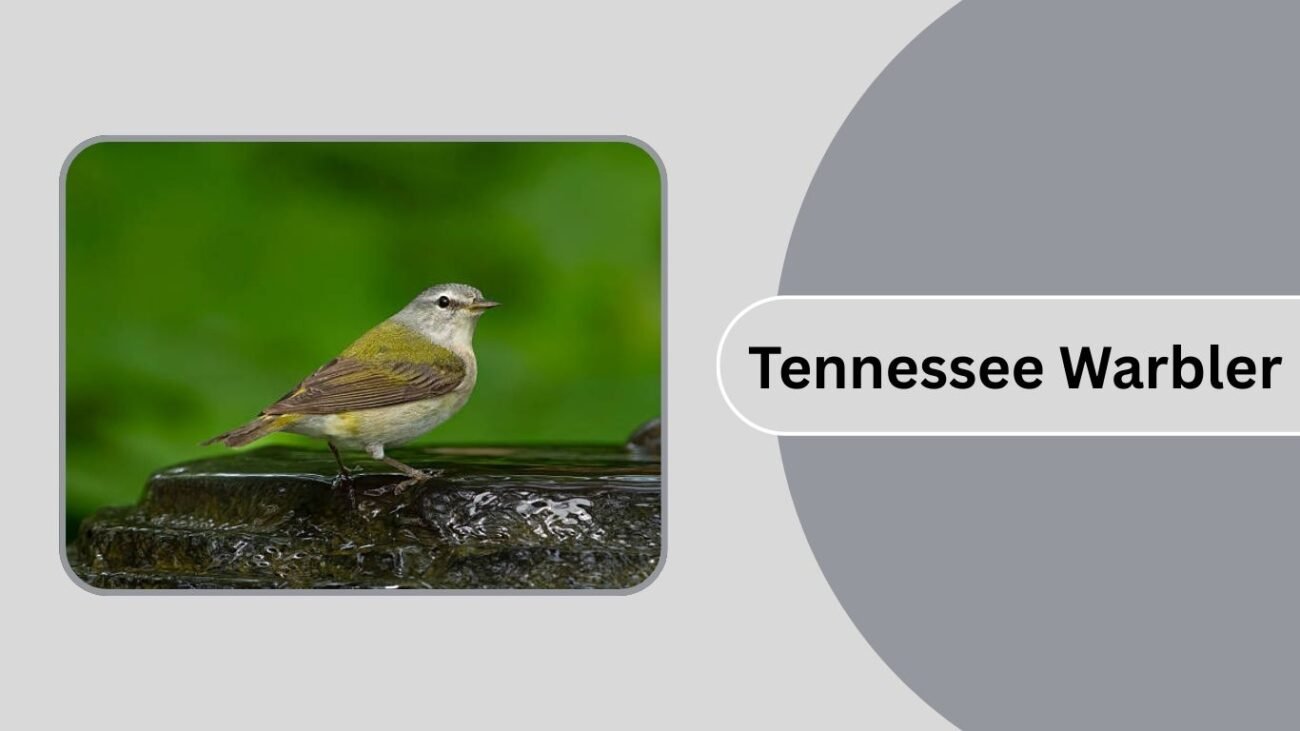
The Tennessee Warbler (Leiothlypis peregrina) is a small, active songbird that, despite its name, does not breed in Tennessee. Instead, it migrates through much of eastern North America, often in large numbers during fall. Known for its preference for caterpillars, especially spruce budworms, this warbler is a vital part of boreal forest ecosystems.
Identification
- Size: 11–12 cm (4.3–4.7 in) in length
- Breeding Male: Olive-green back, pale gray head, bright yellow underparts with faint green wash on the chest, white undertail coverts
- Female & Nonbreeding Plumage: Similar but duller, with less contrast between head and back
- Bill: Thin, dark, and pointed, ideal for picking insects from foliage
- Wings/Tail: No wing bars, short tail, slightly notched
Habitat & Distribution
Breeds primarily in the boreal forests of Canada and parts of the northern United States, favoring spruce and fir stands. Winters in Central America and northern South America, often in coffee plantations, forest edges, and shrublands.
Behavior & Diet
Feeds on insects, especially caterpillars, gleaning them from leaves and branches. During migration and winter, also consumes berries and nectar. Moves quickly through foliage, often in mixed-species flocks.
Vocalizations
The song is a high, rapid series of sharp notes, often described as “ti-ti-ti-ti-ti” followed by a buzzy trill. Calls are short, sharp “tsip” notes used for contact and alarm.