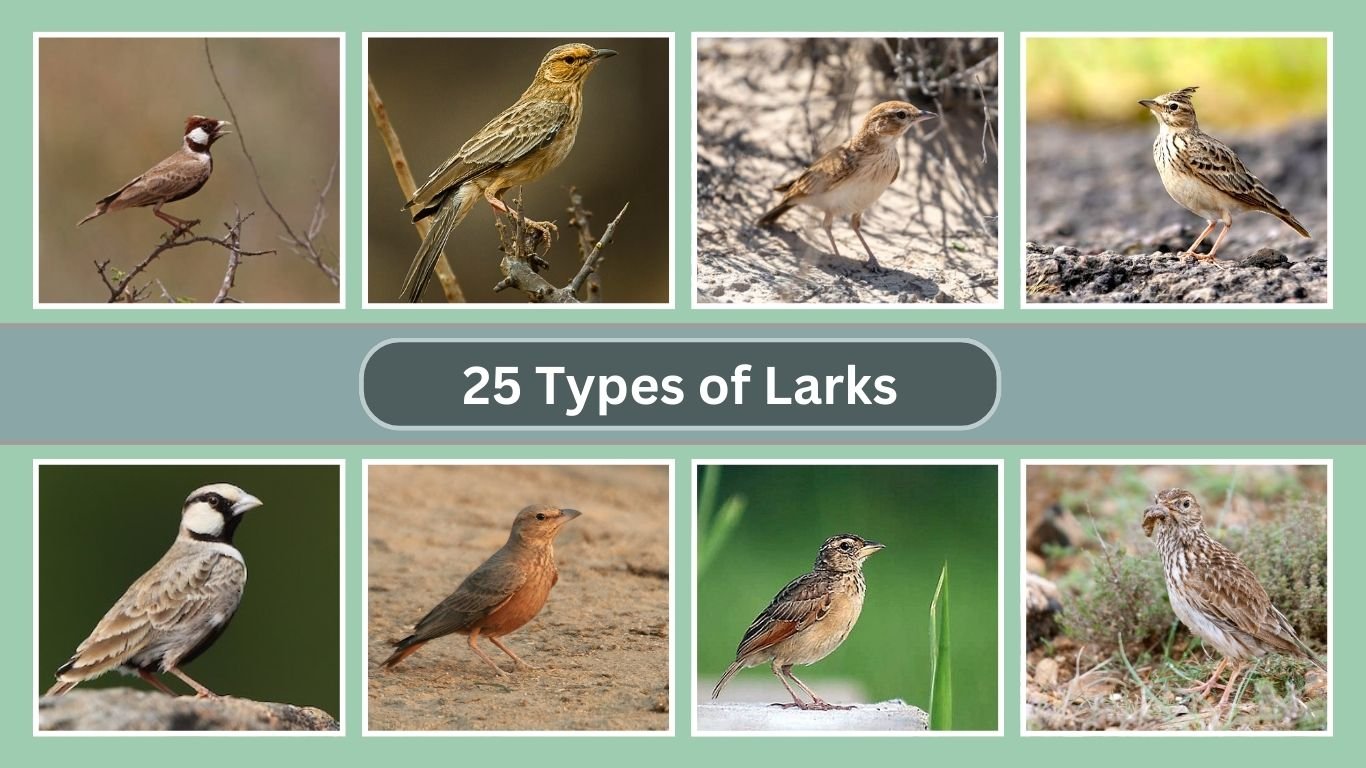
Larks are small, ground-dwelling songbirds known for their melodious voices, fluttering display flights, and adaptability to open landscapes. Found across Europe, Asia, Africa, and beyond, they thrive in habitats ranging from grasslands and deserts to farmlands and savannas. Each species has unique traits, from the soaring songs of skylarks to the desert camouflage of sand-colored larks. Below is a detailed look at 25 fascinating types of larks.
1. Eurasian Skylark
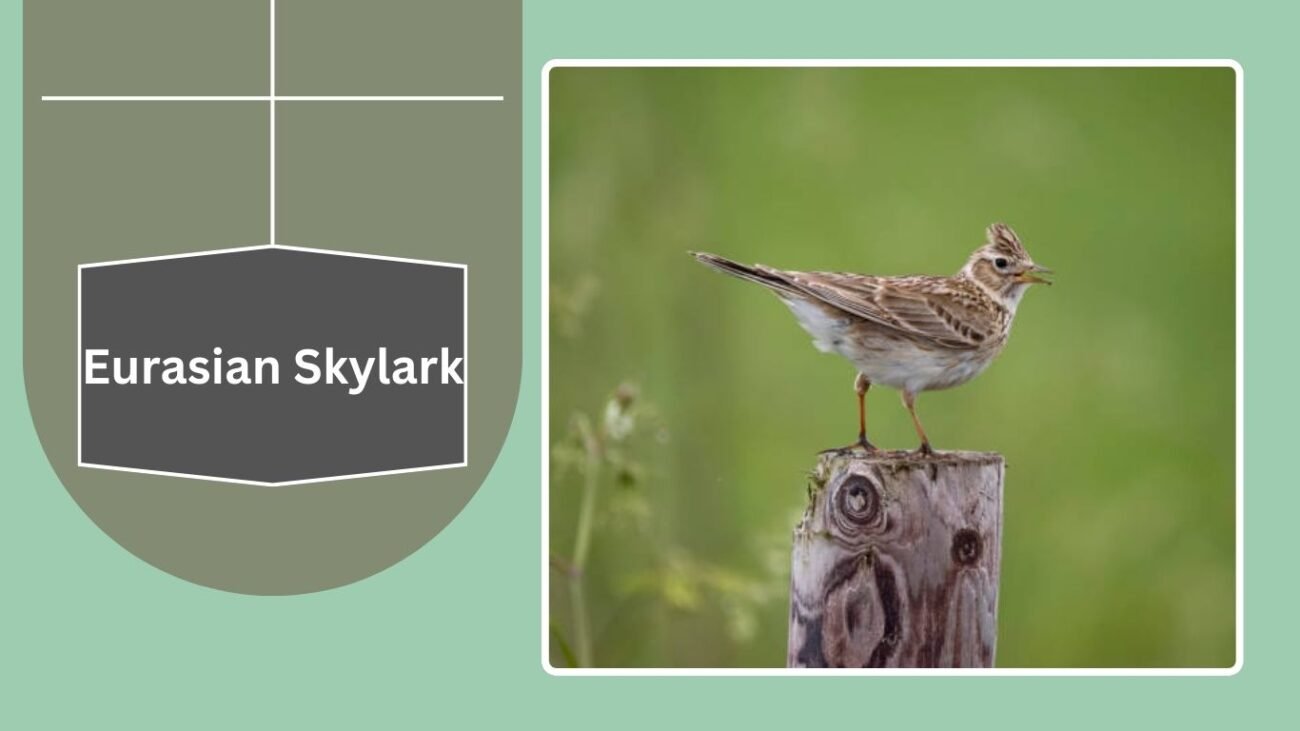
The Eurasian Skylark (Alauda arvensis) is a medium-sized bird admired for its powerful and continuous song delivered high in the air. It is widespread across Europe, Asia, and North Africa, thriving in open farmland, meadows, and grasslands. Its melodious display flight has made it one of the most recognized songbirds in the world.
Identification
- Length: 16–18 cm; wingspan 30–36 cm
- Streaky brown upperparts for camouflage in fields and grasslands
- Pale underparts with fine streaks on the breast
- Small crest that can be raised when alert
- Long, straight hind claw — a hallmark of larks
- White trailing edge on wings, visible in flight
Behavior
Males are known for their dramatic song-flight, rising almost vertically while singing continuously, sometimes for up to 10 minutes, before slowly descending with wings half-open. On the ground, skylarks remain inconspicuous, walking swiftly rather than hopping. Outside the breeding season, they gather in flocks, often feeding together in agricultural fields.
Habitat
This lark thrives in open landscapes with low vegetation, including farmland, pastures, and grasslands. It avoids forests and urban areas. Traditional farming once provided ideal conditions, but modern intensive agriculture has caused population declines in many regions.
Importance
The Eurasian Skylark is considered an indicator species for healthy farmland ecosystems. A strong presence suggests a balanced landscape with diverse vegetation and fewer pesticides. Declining numbers often point to habitat loss and overuse of chemicals in agriculture. Ecologically, skylarks help regulate insect populations and disperse plant seeds. Their song also enriches natural soundscapes, making them a vital part of cultural and natural heritage across their range.
2. Horned Lark
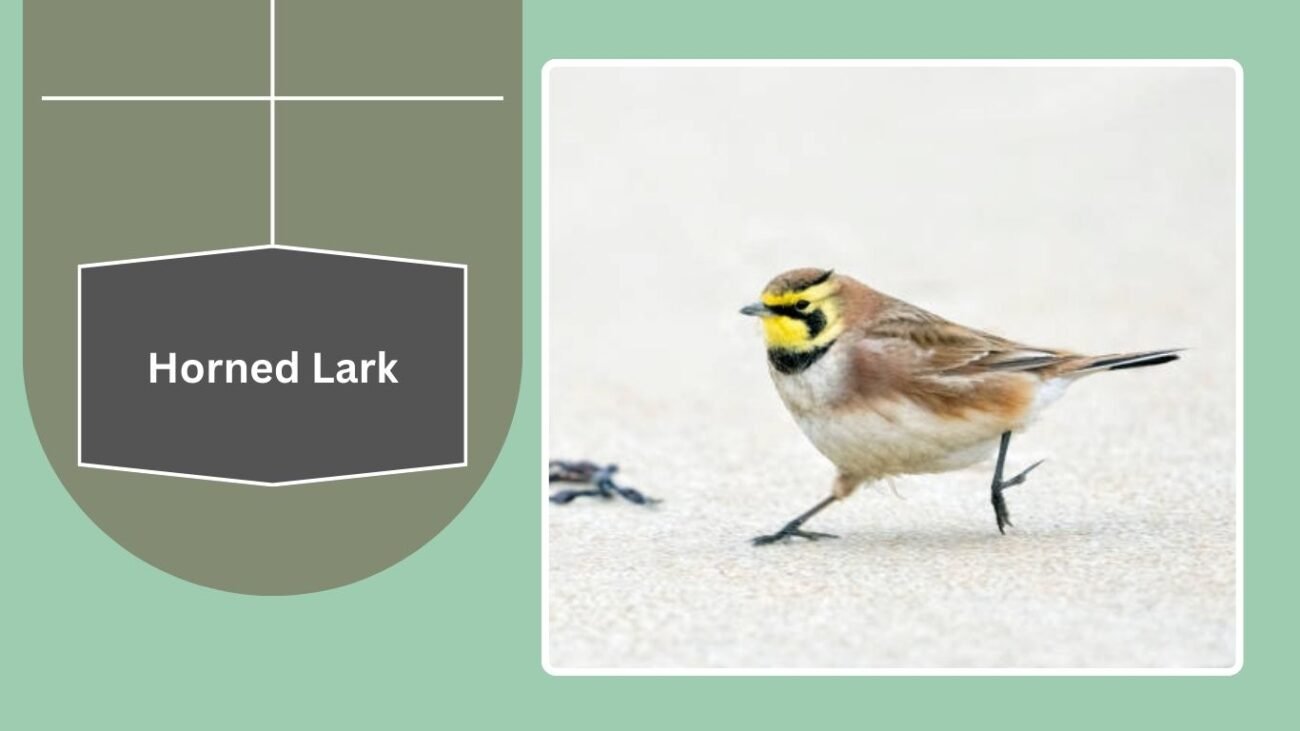
The Horned Lark (Eremophila alpestris) is a widespread species found across North America, Europe, and Asia. It is easily recognized by the small “horn-like” black feather tufts on the head, giving the bird its common name. Adaptable to various open habitats, this lark is among the few that can also be found in tundra and semi-desert regions.
Identification
- Length: 16–20 cm; wingspan 30–35 cm
- Sandy-brown upperparts with darker streaks for camouflage
- Pale underparts with a black breast band
- Distinctive black facial markings with yellow throat and face (varies by subspecies)
- Small black feather tufts (“horns”) on the head, especially noticeable in males
- White outer tail feathers visible in flight
Behavior
Horned Larks spend most of their time on the ground, walking or running quickly while foraging. They perform display flights in spring, where males sing while circling above their territories before gliding back down. Their calls are high-pitched and tinkling, carrying well across open areas. They are often seen in loose flocks outside of the breeding season, especially in agricultural fields and coastal habitats.
Habitat
This species thrives in open, treeless landscapes such as grasslands, tundra, coastal flats, deserts, and farmlands. Unlike many other larks, it can live in extreme climates, from Arctic tundra to dry plains. It favors areas with sparse vegetation that provide both feeding opportunities and concealment.
Importance
The Horned Lark plays an important ecological role by feeding on weed seeds and insects, helping regulate plant and insect populations in open habitats. It is also a key prey species for raptors and other predators in grassland ecosystems. Its adaptability to different climates makes it an important subject for studies on how birds respond to changing environments.
3. Crested Lark
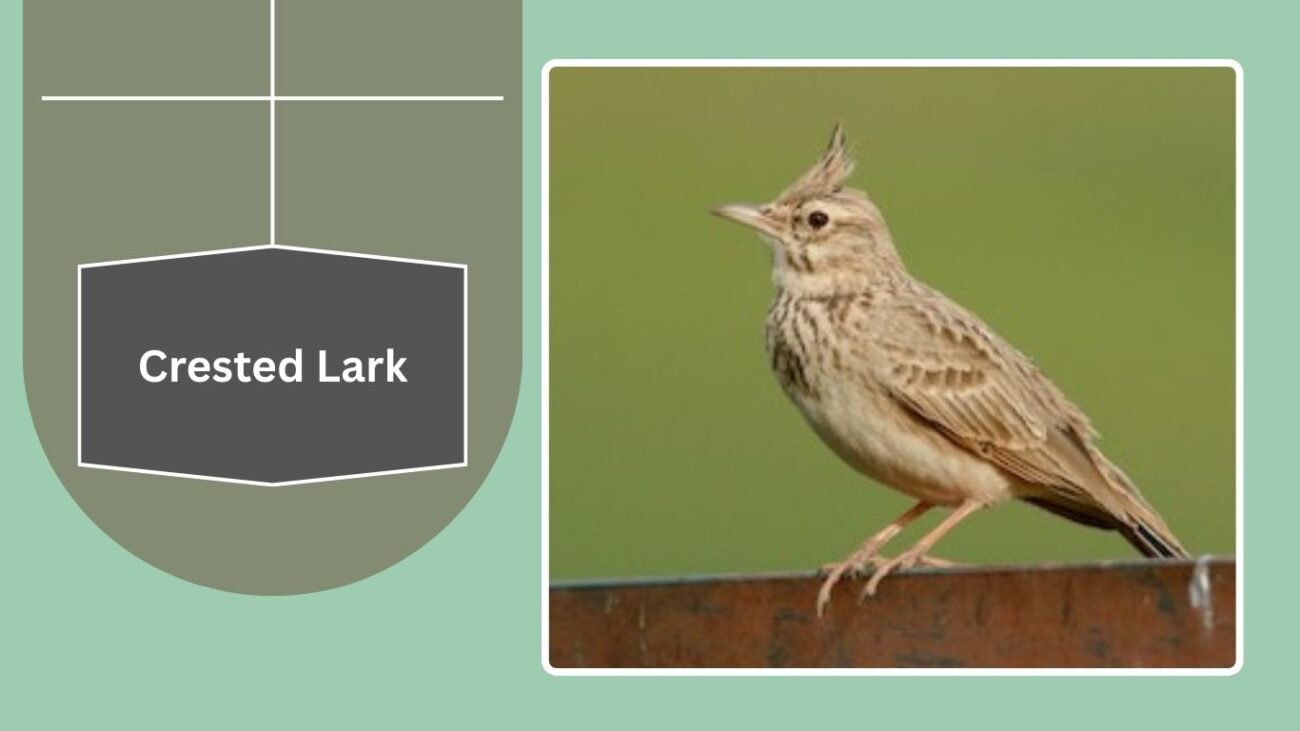
The Crested Lark (Galerida cristata) is a well-known lark species across Europe, North Africa, and parts of Asia. It is named for the prominent crest of feathers on its head, which can be raised or flattened depending on its mood. Unlike many larks, it often lives close to human settlements, frequently seen along roadsides, fields, and even towns.
Identification
- Length: 17–19 cm; wingspan 28–35 cm
- Brown, heavily streaked plumage that blends with soil and dry grass
- Distinctive long, pointed crest on the head
- Underparts pale with streaks across the breast
- Strong bill, slightly longer and more curved than many other larks
- Flight is undulating, often with short glides between wingbeats
Behavior
Crested Larks spend most of their time on the ground, walking steadily rather than hopping. They are not strong singers like skylarks but produce a varied, melodious song that includes whistles and trills, often delivered from perches such as rocks, posts, or bushes. They are territorial during the breeding season but may form loose flocks in winter. Their crest is often raised when alarmed, giving them a distinctive silhouette.
Habitat
This species prefers open and semi-open areas, particularly dry farmland, scrublands, plains, and roadside verges. Unlike many other larks, it tolerates human-modified habitats and can be seen near towns and villages. It avoids dense forests and wetlands, preferring arid or semi-arid landscapes with scattered vegetation.
Importance
The Crested Lark contributes to seed dispersal and insect control in farmland and natural grasslands. Its tolerance of human presence makes it an important bird for monitoring changes in agricultural ecosystems. In some cultures, its conspicuous crest and approachable nature have also made it a familiar and easily recognized countryside bird.
4. Thekla’s Lark
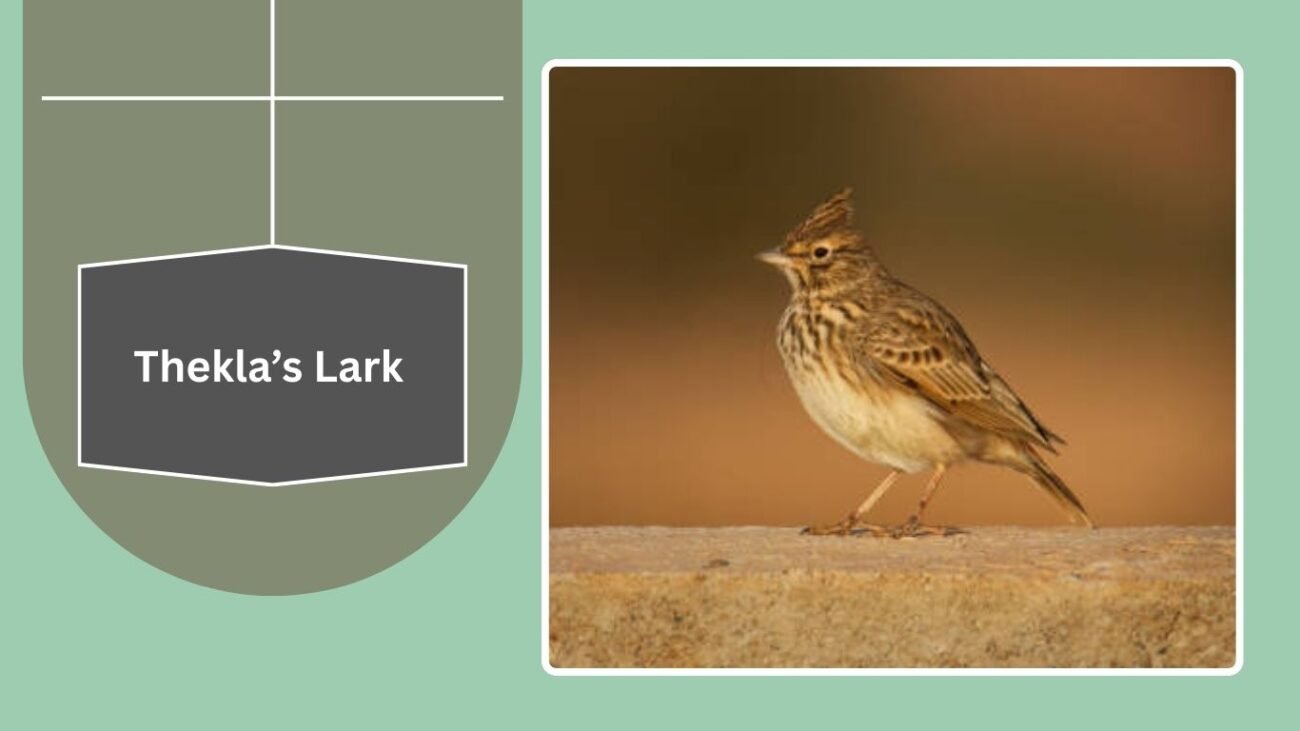
The Thekla’s Lark (Galerida theklae) is a close relative of the Crested Lark, found mainly in Spain, North Africa, and parts of East Africa. At first glance, it looks very similar to the Crested Lark but is generally smaller, darker, and has more heavily streaked plumage. Its preference for rocky and shrub-covered habitats also helps distinguish it from its close cousin.
Identification
- Length: 16–18 cm; wingspan around 28–32 cm
- Brownish-grey upperparts with dense streaking
- Short, pointed crest similar to the Crested Lark
- More heavily marked breast and flanks
- Bill slightly shorter and more curved than that of the Crested Lark
- Tail dark with white edges, noticeable in flight
Behavior
Thekla’s Larks are ground-dwelling birds that walk or run quickly while foraging. Their song is rich and melodious, often delivered from rocks, bushes, or short flight displays. They are less likely than Crested Larks to be found in urban areas and instead favor wild, rocky, or shrubby landscapes. Their crest is usually raised when alarmed, helping birdwatchers identify them at a distance.
Habitat
This species is strongly associated with dry, rocky hillsides, shrubland, semi-arid steppes, and open areas with scattered bushes. It is less common in cultivated farmland compared to the Crested Lark, preferring more natural and undisturbed habitats.
Importance
Thekla’s Lark is an important insect and seed consumer, helping maintain ecological balance in its arid and semi-arid environments. It also serves as an indicator of healthy scrubland ecosystems, as it thrives in landscapes that remain less disturbed by human agricultural expansion.
5. Wood Lark
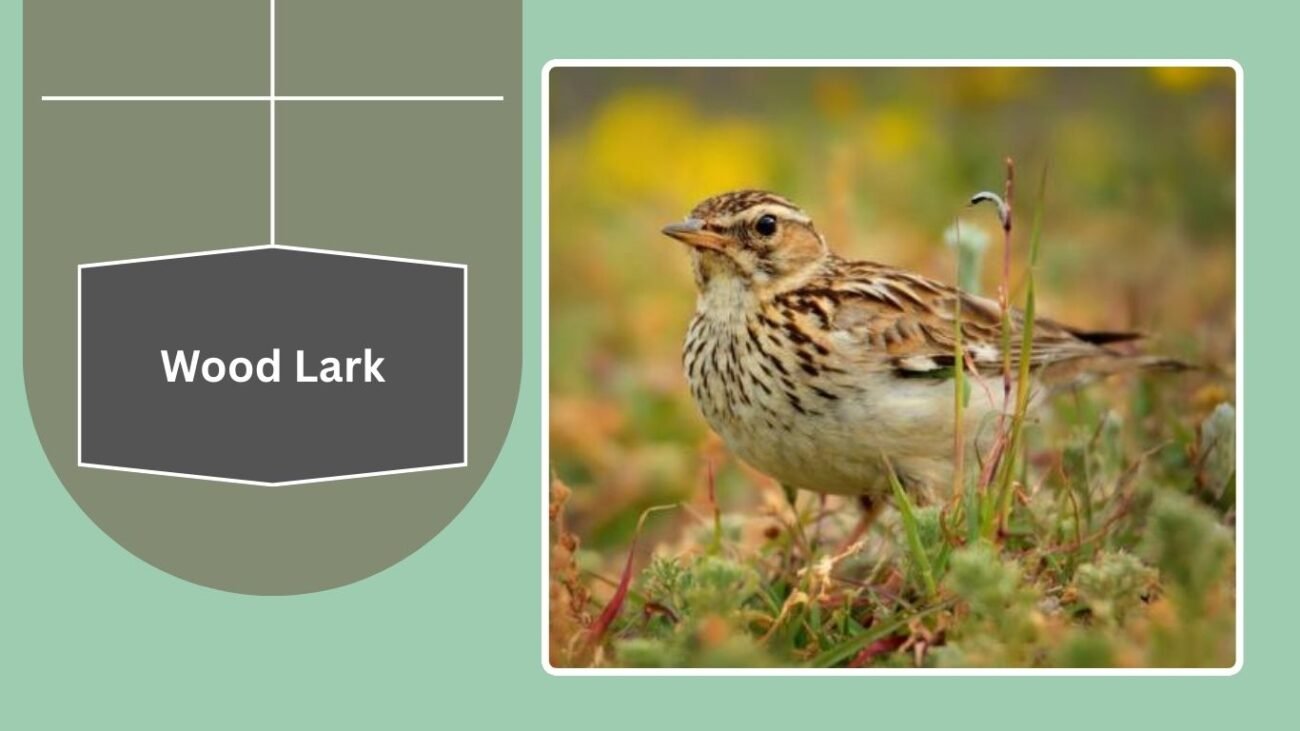
The Wood Lark (Lullula arborea) is a smaller and more delicate lark species found across Europe, western Asia, and North Africa. Unlike many other larks that prefer wide open fields, the Wood Lark is often associated with lightly wooded areas, clearings, and heathlands. Its distinctive, sweet, and fluting song makes it one of the most melodious larks.
Identification
- Length: 13–15 cm; wingspan 26–29 cm
- More compact body compared to other larks
- Warm brown upperparts with streaking
- Pale underparts with fine streaks on the chest
- Short crest, less prominent than in Crested or Thekla’s Larks
- Distinctive white supercilium (eyebrow) that meets behind the head, forming a complete “band”
- Shorter tail with a noticeable white edge in flight
Behavior
Wood Larks are less aerial in display than Skylarks but are admired for their musical song, which is delivered from perches such as trees or during short, fluttering flights. They walk gracefully on the ground while feeding and are more solitary than some other lark species. Their movements are deliberate, and they often remain low and hidden when disturbed.
Habitat
Unlike most larks, this species thrives in a mosaic of open ground and scattered trees. It is commonly found in heathlands, clearings in woodlands, forest edges, and open sandy areas. It avoids dense forests and prefers regions where open ground and trees intermingle, providing both foraging areas and perches for singing.
Importance
The Wood Lark plays a role in controlling insect populations in semi-wooded habitats and contributes to seed dispersal. Its presence also indicates the ecological health of heathlands and lightly wooded areas, habitats that are increasingly threatened by land-use changes and intensive forestry.
6. Desert Lark
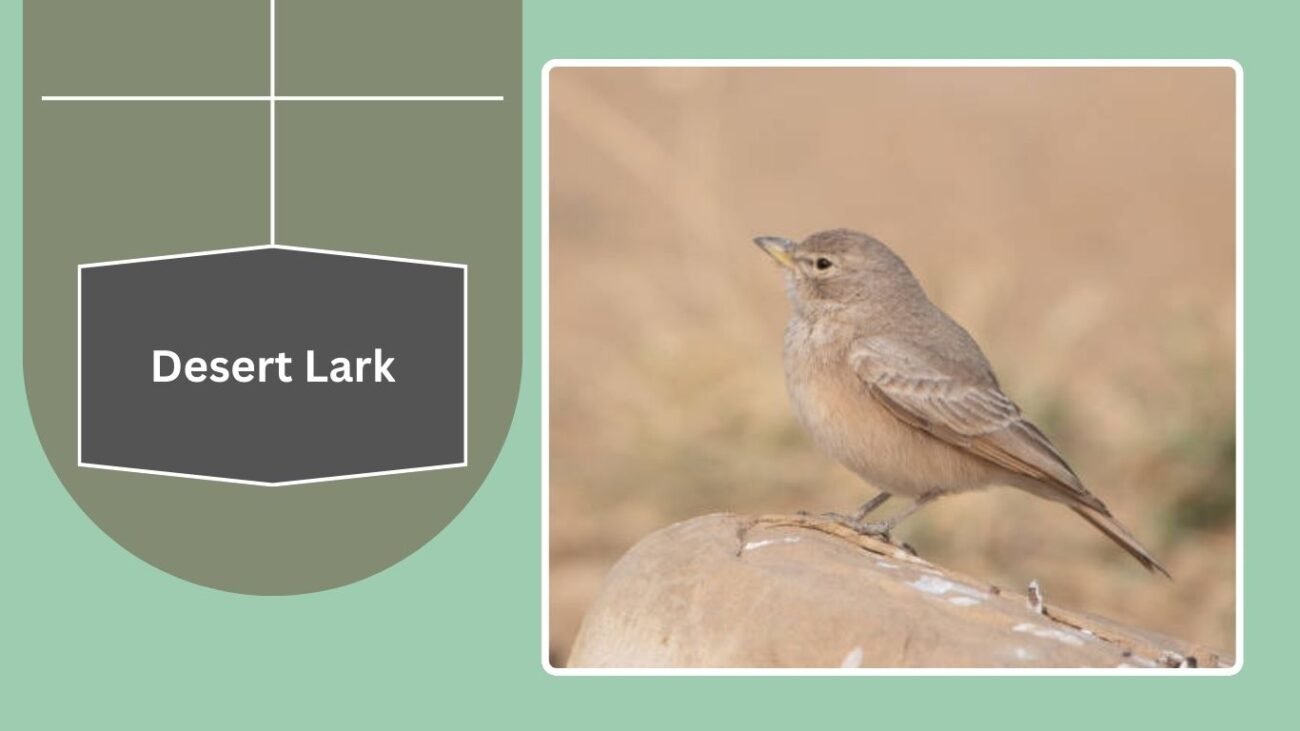
The Desert Lark (Ammomanes deserti) is a hardy bird well adapted to the arid and semi-arid regions of North Africa, the Middle East, and parts of Central Asia. Its sandy plumage blends perfectly with desert landscapes, making it one of the best-camouflaged larks in its range.
Identification
- Length: 15–16 cm; wingspan 28–32 cm
- Sandy-brown or greyish upperparts, color varying with local soil tones
- Pale underparts with faint streaks on the breast
- Short, rounded wings and a relatively long, slightly downcurved bill
- Tail dark at the center with pale outer feathers
- Plumage varies geographically, from pale sandy in deserts to darker brown in rocky areas
Behavior
Desert Larks spend most of their time on the ground, walking or running swiftly over sandy or rocky terrain. They are not as aerial as Skylarks but produce a soft, whistling song often delivered from a rock or low perch. When alarmed, they rely heavily on camouflage, remaining still against the desert floor rather than fleeing.
Habitat
As the name suggests, this species thrives in deserts, rocky plains, wadis, and semi-arid regions with sparse vegetation. It is absent from heavily cultivated areas and dense greenery, being a true specialist of dry environments. Their plumage coloration often matches the local soil, giving them excellent concealment from predators.
Importance
The Desert Lark plays a role in desert ecosystems by feeding on seeds and insects, helping maintain ecological balance in these fragile habitats. Its strong adaptation to extreme conditions also makes it an indicator of healthy desert environments and resilience against harsh climates.
7. Bar-tailed Lark
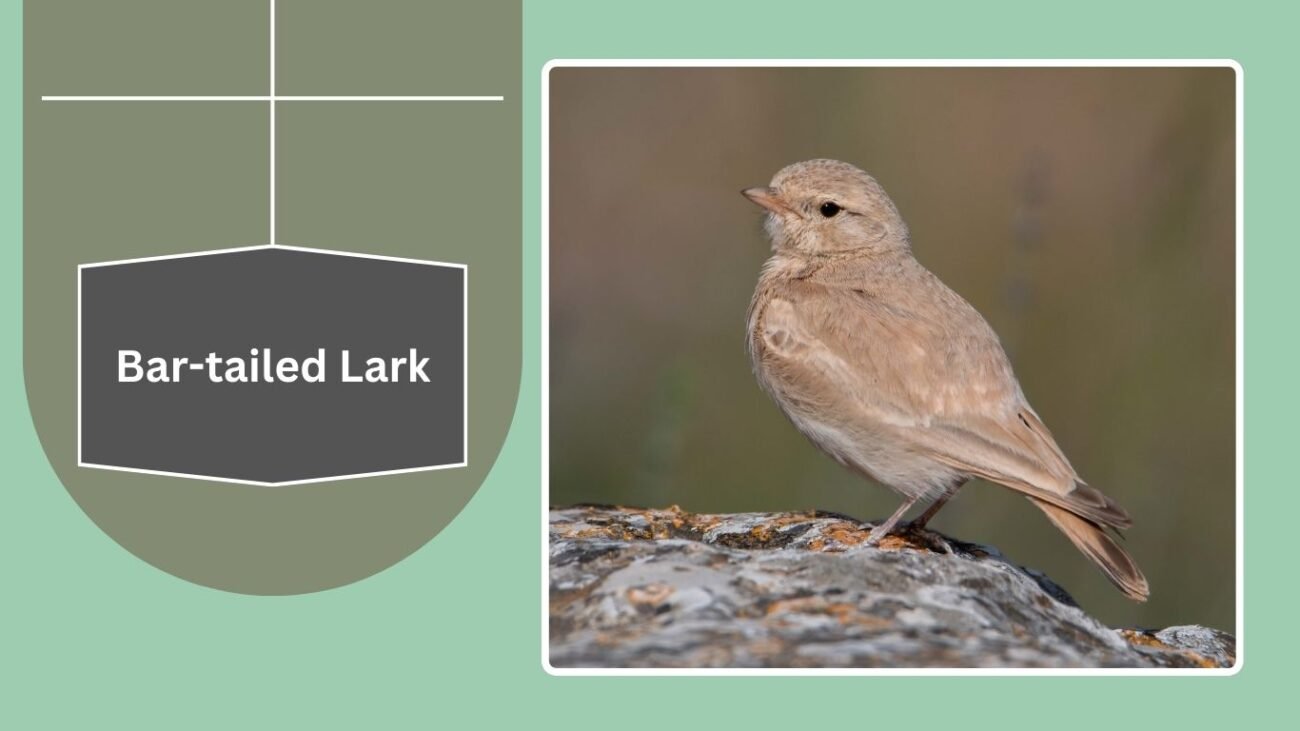
The Bar-tailed Lark (Ammomanes cinctura) is a small desert-dwelling bird found in North Africa, the Middle East, and parts of the Arabian Peninsula. It is one of the palest larks, perfectly blending into sandy habitats. Its name comes from the distinctive patterning on its tail, which helps in identification.
Identification
- Length: 12–14 cm; wingspan 25–28 cm
- Very pale sandy or buff upperparts with minimal streaking
- Underparts whitish, almost unmarked
- Short, slightly downcurved bill
- Tail shows a contrasting dark center with pale edges and a pale bar across it, visible in flight
- Rounded wings, giving a compact appearance
Behavior
Bar-tailed Larks are highly terrestrial, running swiftly across the sand when foraging. They are generally inconspicuous and rely on camouflage to remain undetected. Their song is soft and sweet, usually delivered from the ground or a low perch rather than in extended aerial displays. They are most active during the cooler parts of the day, avoiding midday heat.
Habitat
This species is strongly associated with sandy deserts, dunes, and semi-arid plains with sparse or no vegetation. Unlike some other larks, it avoids rocky habitats, preferring fine sand areas where its pale plumage provides near-perfect concealment.
Importance
The Bar-tailed Lark contributes to desert ecosystems by feeding on small insects and seeds, helping maintain balance in areas where biodiversity is limited. Its presence also indicates healthy sandy desert conditions, making it valuable for ecological monitoring in fragile arid regions.
8. Dunn’s Lark
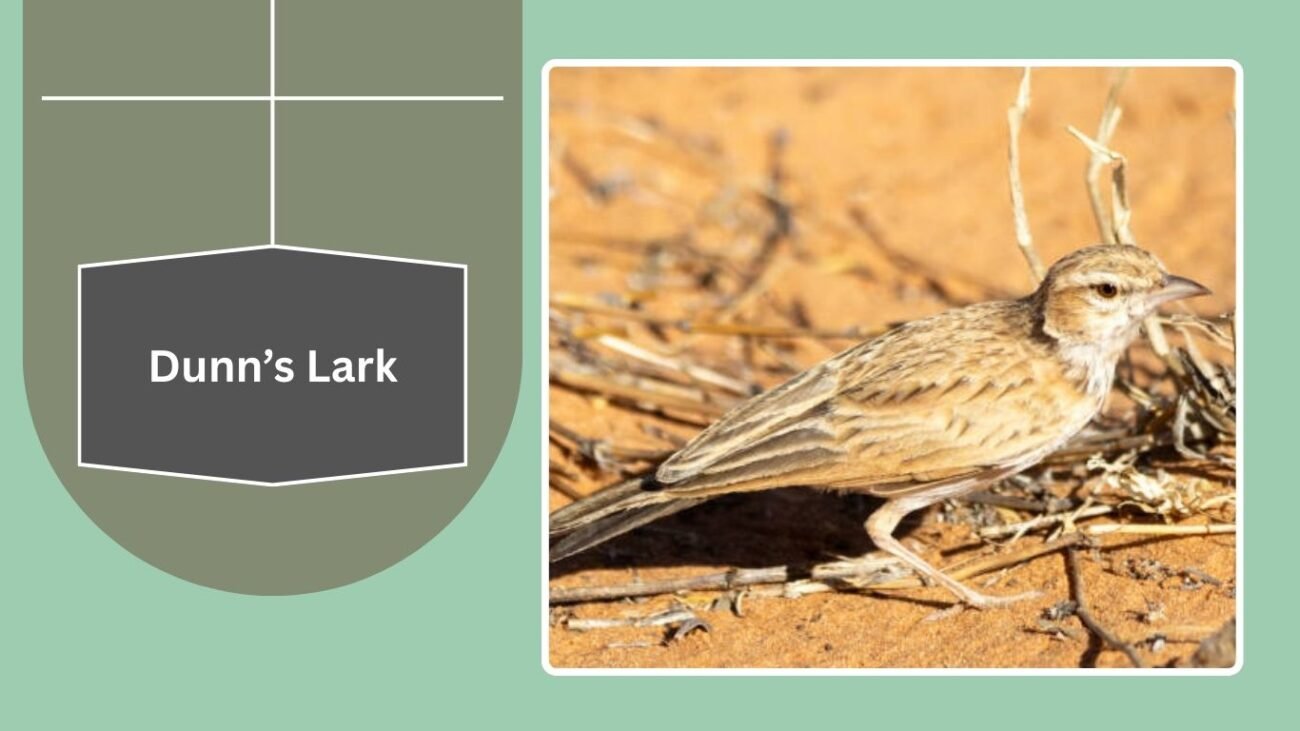
The Dunn’s Lark (Eremalauda dunni) is a scarce and localized species of lark found mainly in arid and semi-arid regions of North Africa and the Middle East. It is less well-known than many other larks and can be difficult to spot due to its sandy coloration and ground-dwelling behavior.
Identification
- Length: 14–15 cm; wingspan around 25–28 cm
- Sandy-brown plumage with fine streaking, blending perfectly with desert soil
- Underparts pale buff with faint streaks on the breast
- Short, stout bill adapted for seed feeding
- Tail relatively short with darker central feathers
- Overall compact, chunky body compared to other slender larks
Behavior
Dunn’s Lark is primarily a ground forager, moving quickly over sandy soil in search of seeds and insects. Its song is soft and simple, often delivered from a low perch such as a rock or small bush, and only rarely in short aerial displays. It is shy and relies heavily on camouflage, often crouching low to avoid detection rather than flying away.
Habitat
This species inhabits sandy and semi-desert regions, dry plains, and areas with sparse vegetation. It prefers sandy soils rather than rocky deserts, often found in places with scattered grasses or small shrubs that provide cover and food sources.
Importance
Although not as widespread as other larks, Dunn’s Lark is an important component of arid ecosystems, feeding on seeds and insects. Its presence highlights the unique adaptations of bird species to survive in harsh desert conditions, making it valuable for ecological studies on desert wildlife.
9. Short-toed Lark
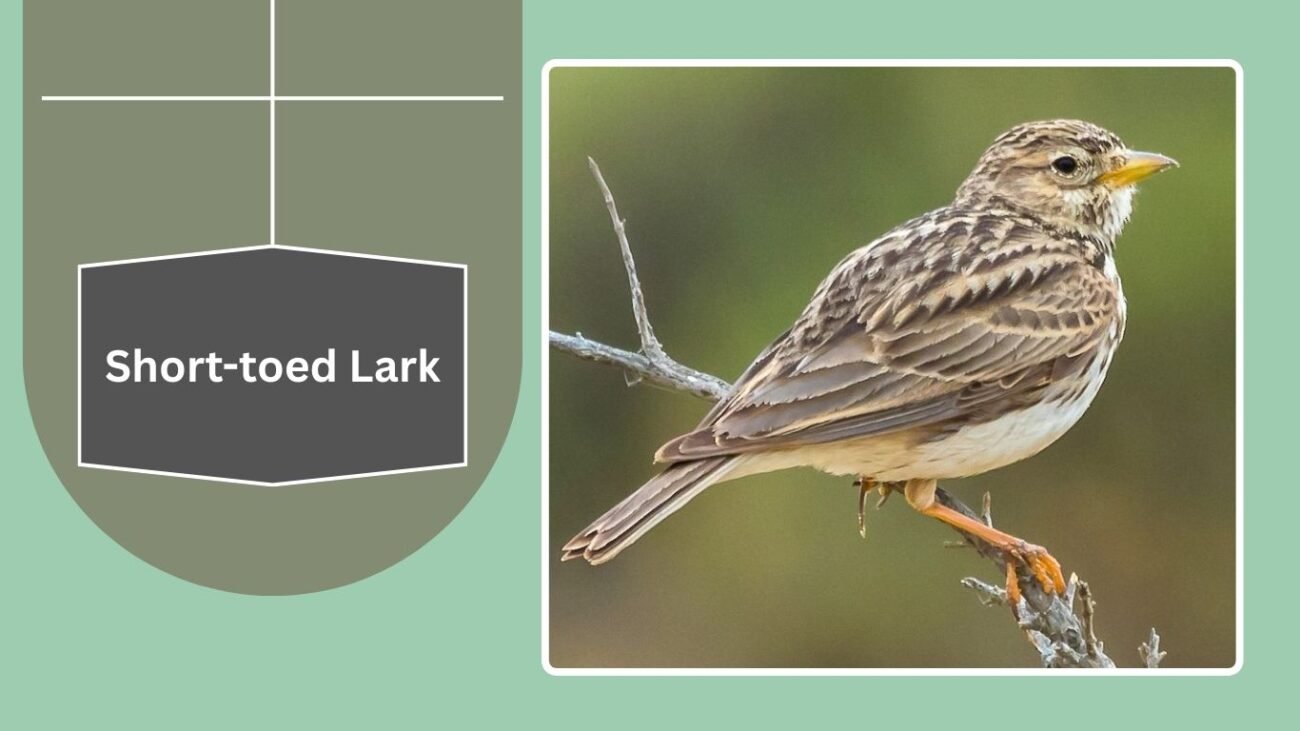
The Short-toed Lark (Alaudala rufescens) is a small and widespread lark species found across southern Europe, North Africa, the Middle East, and parts of Asia. It is known for its adaptability to dry, open habitats and for being difficult to distinguish from other small larks due to its plain plumage.
Identification
- Length: 12–13 cm; wingspan 22–26 cm
- Sandy-brown upperparts with fine streaking
- Underparts pale buff or whitish with faint streaks on the chest
- Short tail with white outer feathers, visible in flight
- Bill short and conical, suited for seed feeding
- Notably short hind claw compared to many other larks
Behavior
This lark spends most of its time on the ground, where it walks swiftly in search of food. Its song is simple, often a series of trills or chirps, usually delivered from the ground, low bushes, or during short circular flights. It forms flocks outside the breeding season, sometimes gathering in large numbers in open fields and plains.
Habitat
Short-toed Larks prefer dry, open landscapes such as arid plains, sandy deserts, stony fields, and lightly cultivated farmland. They are absent from dense vegetation and thrive in areas with sparse cover, where their cryptic plumage provides effective camouflage.
Importance
The species contributes to the ecological balance of arid and semi-arid environments by feeding on grass seeds and small insects. It is also important for monitoring habitat quality in dry regions, as its numbers can reflect changes in land use and climate conditions.
10. Greater Short-toed Lark
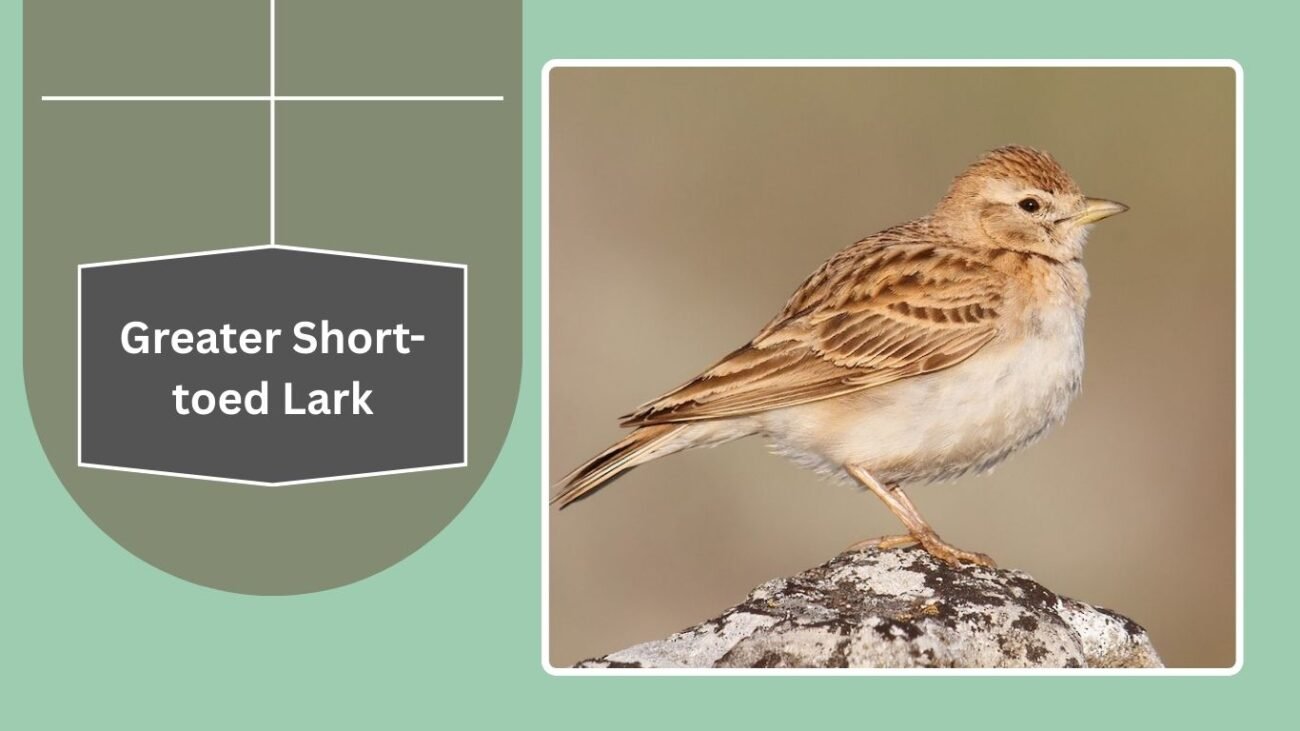
The Greater Short-toed Lark (Calandrella brachydactyla) is a small migratory lark widely distributed across southern Europe, North Africa, the Middle East, and central Asia. Compared to the Short-toed Lark, it is slightly larger and shows more defined streaking on the upperparts and breast.
Identification
- Length: 13–14 cm; wingspan 26–30 cm
- Sandy-brown upperparts with darker streaks
- Underparts pale, with noticeable streaking across the breast
- Bill short, conical, and slightly stouter than in the Short-toed Lark
- Tail with white outer feathers, seen in flight
- Short hind claw, a feature common in Calandrella larks
Behavior
The Greater Short-toed Lark is a ground-dwelling species that moves in quick runs while foraging. Its song is varied and musical, often delivered in short display flights where the bird circles before gliding down. It can also sing from perches such as bushes or stones. Outside the breeding season, it forms large flocks, especially on migration, sometimes mixing with other lark species.
Habitat
This species thrives in dry open habitats such as steppe, semi-desert plains, fallow fields, and lightly cultivated farmland. It avoids dense vegetation and is especially common in sandy or stony areas with scattered grasses. During migration, it can be seen in coastal plains and agricultural fields.
Importance
The Greater Short-toed Lark is significant in open dryland ecosystems, consuming both seeds and insects, thus contributing to natural pest control and seed dispersal. Its large migratory flocks are also important indicators of seasonal ecological changes in steppe and desert regions.
11. Bimaculated Lark
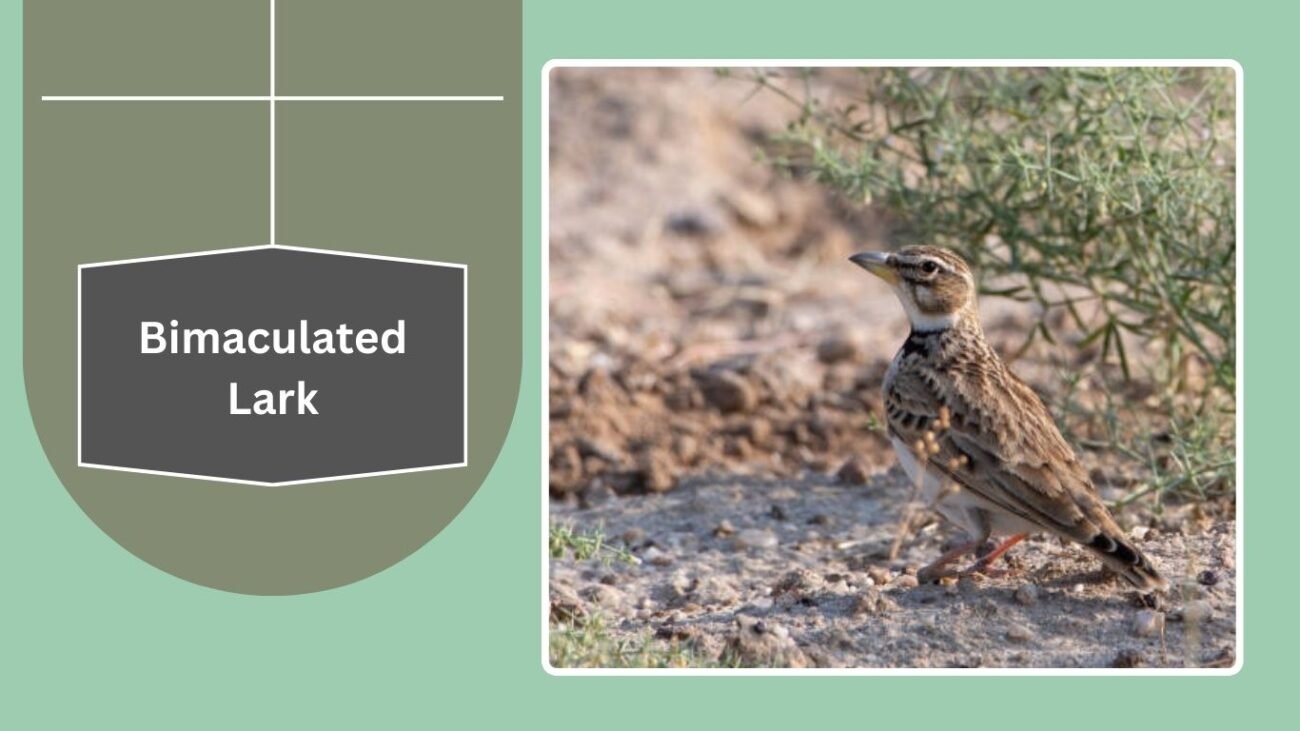
The Bimaculated Lark (Melanocorypha bimaculata) is a large lark species found mainly in southeastern Europe, the Middle East, and parts of Central Asia. It gets its name from the two distinctive dark patches (“bi-maculated”) on either side of its breast.
Identification
- Length: 16–18 cm; wingspan 32–36 cm
- Sandy-brown upperparts with darker streaks
- Pale underparts with two bold black patches on the breast
- Strong, slightly curved bill larger than in most smaller larks
- Long wings with pale trailing edges, visible in flight
- Broad tail with white outer feathers
Behavior
The Bimaculated Lark forages on the ground, walking steadily while searching for seeds and insects. Its song is rich and musical, often delivered during short, fluttering display flights above open fields. Outside of breeding, it may form loose flocks, particularly in migration periods, but it is generally less social than smaller larks.
Habitat
This species inhabits open steppe, semi-desert plains, dry grasslands, and cultivated farmland. It favors areas with short or sparse vegetation and avoids dense greenery. During migration and winter, it can also be found in agricultural landscapes and fallow fields.
Importance
The Bimaculated Lark plays an ecological role in steppe and semi-arid habitats, feeding on both insects and seeds. Its presence is also used as a marker of habitat quality in Eurasian steppe regions, where land-use changes threaten native bird populations.
12. Calandra Lark
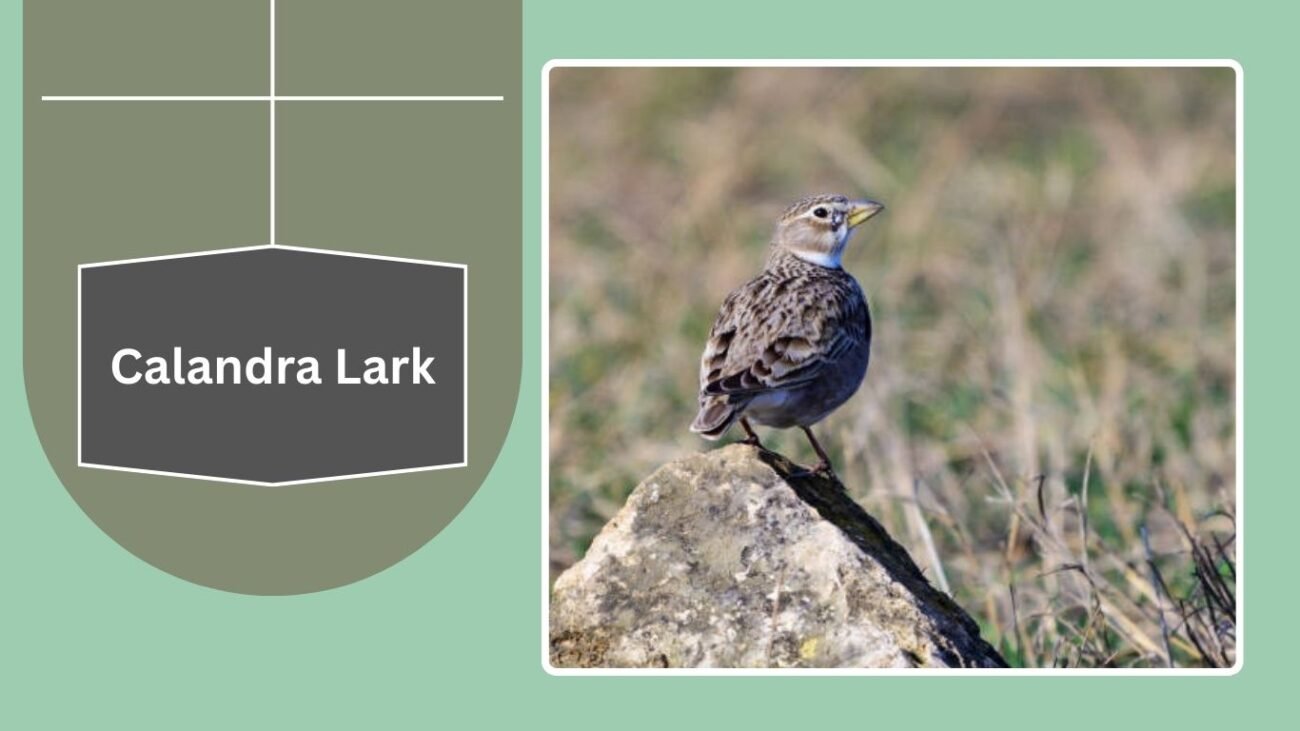
The Calandra Lark (Melanocorypha calandra) is one of the largest lark species, well known for its bold plumage and strong, melodious song. It is widely found across southern Europe, North Africa, and western Asia, favoring open farmland and steppe landscapes.
Identification
- Length: 18–20 cm; wingspan 35–40 cm
- Brown, streaked upperparts with a heavily marked appearance
- Underparts whitish with two bold black patches on the sides of the breast
- Large, powerful bill, thicker than that of many smaller larks
- Broad wings with striking white patches visible in flight
- Tail with dark center feathers and white outer edges
Behavior
Calandra Larks are strong fliers, often seen performing display flights while singing loudly and continuously. Unlike some larks that sing softly, their song is powerful and can mimic calls of other birds. On the ground, they walk steadily while foraging and often gather in flocks, especially outside the breeding season.
Habitat
They inhabit open lowland farmland, steppe, and dry grasslands. This species prefers wide, flat landscapes with short vegetation, avoiding forests and densely built-up areas. They are also commonly seen in cultivated fields where cereals and grains are grown.
Importance
The Calandra Lark plays an ecological role in maintaining farmland balance by consuming weed seeds and insects. Its strong presence is an indicator of healthy open countryside, but population declines in some regions highlight the negative impact of intensive agriculture and pesticide use.
13. Black Lark
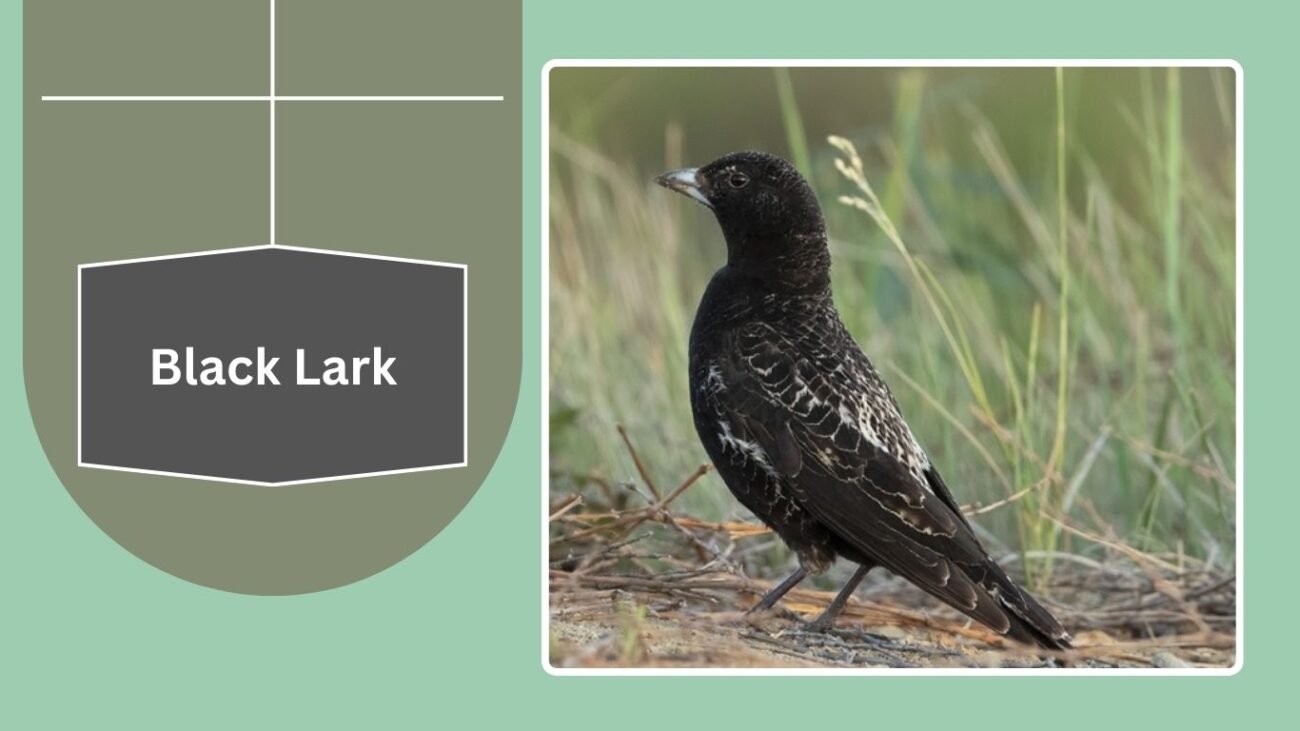
The Black Lark (Melanocorypha yeltoniensis) is a striking lark species native to the steppes of Kazakhstan, southern Russia, and surrounding regions. Males are almost entirely black during the breeding season, making them one of the most distinctive larks. Females, however, are much duller, showing streaked brown plumage.
Identification
- Length: 18–20 cm; wingspan 35–40 cm
- Breeding males: glossy black plumage with pale wing patches visible in flight
- Females: brown, streaked plumage resembling other steppe larks
- Large, strong bill typical of Melanocorypha larks
- Tail broad with contrasting pale edges
Behavior
Black Larks are ground-dwelling birds that forage for food by walking steadily across steppe landscapes. Males perform display flights during the breeding season, often singing loudly while circling above their territories. Outside the breeding season, both sexes may form large flocks, sometimes gathering in open farmland or steppe fields.
Habitat
This species is strongly associated with open steppe and grassland habitats. It favors flat plains with sparse vegetation, avoiding forested or mountainous regions. In winter, it may move southward into agricultural areas, where it forages in stubble fields.
Importance
The Black Lark contributes to the ecological balance of steppe ecosystems by feeding on seeds and insects. It is also considered a steppe specialist, and its population trends are valuable indicators of environmental changes in grassland habitats across Eurasia.
14. White-winged Lark
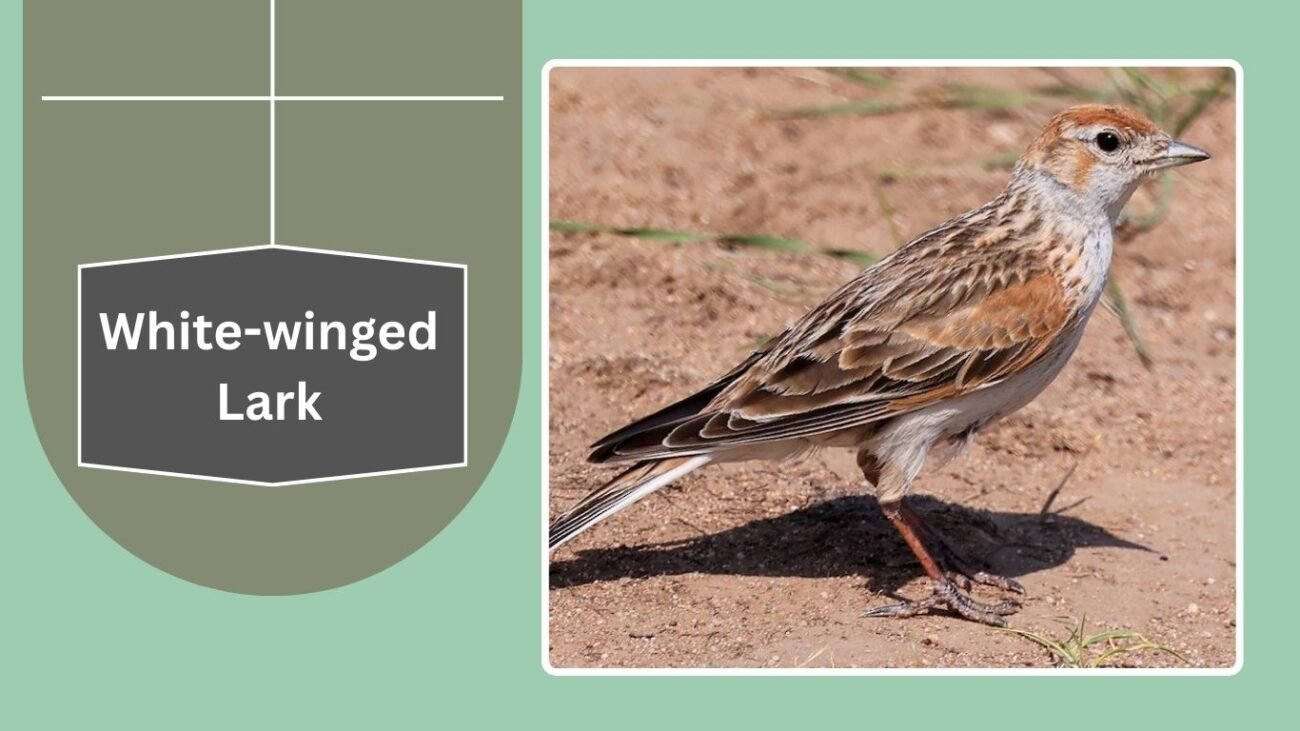
The White-winged Lark (Alauda leucoptera) is a rare and localized lark species, mainly found in the steppes of southwestern Russia and Kazakhstan. Its distinctive white wing patches, visible in flight, make it easier to identify compared to other streaky brown larks.
Identification
- Length: 16–18 cm; wingspan 32–36 cm
- Upperparts streaky brown with a mottled appearance
- Underparts pale whitish with fine streaking on the breast
- Large, strong bill suited for seed feeding
- Broad white patches across the wings, highly visible during flight
- Tail dark in the center with contrasting white outer feathers
Behavior
White-winged Larks are mostly terrestrial, walking steadily while foraging for seeds and insects. Males perform display flights over steppe landscapes, singing with a varied and melodic song. Outside the breeding season, they may form flocks, often mixing with other lark species. They are known for their restless flight and frequent wing displays.
Habitat
This species is restricted to steppe and semi-arid plains, preferring open areas with low vegetation. It avoids forests and wetlands, thriving instead in natural grasslands and occasionally in agricultural fields during winter movements.
Importance
The White-winged Lark plays a role in regulating insect populations and dispersing seeds across steppe ecosystems. Its declining numbers in many areas make it an important species for conservation monitoring, as it reflects the health of natural steppe habitats under pressure from agriculture and land-use changes.
15. Thick-billed Lark
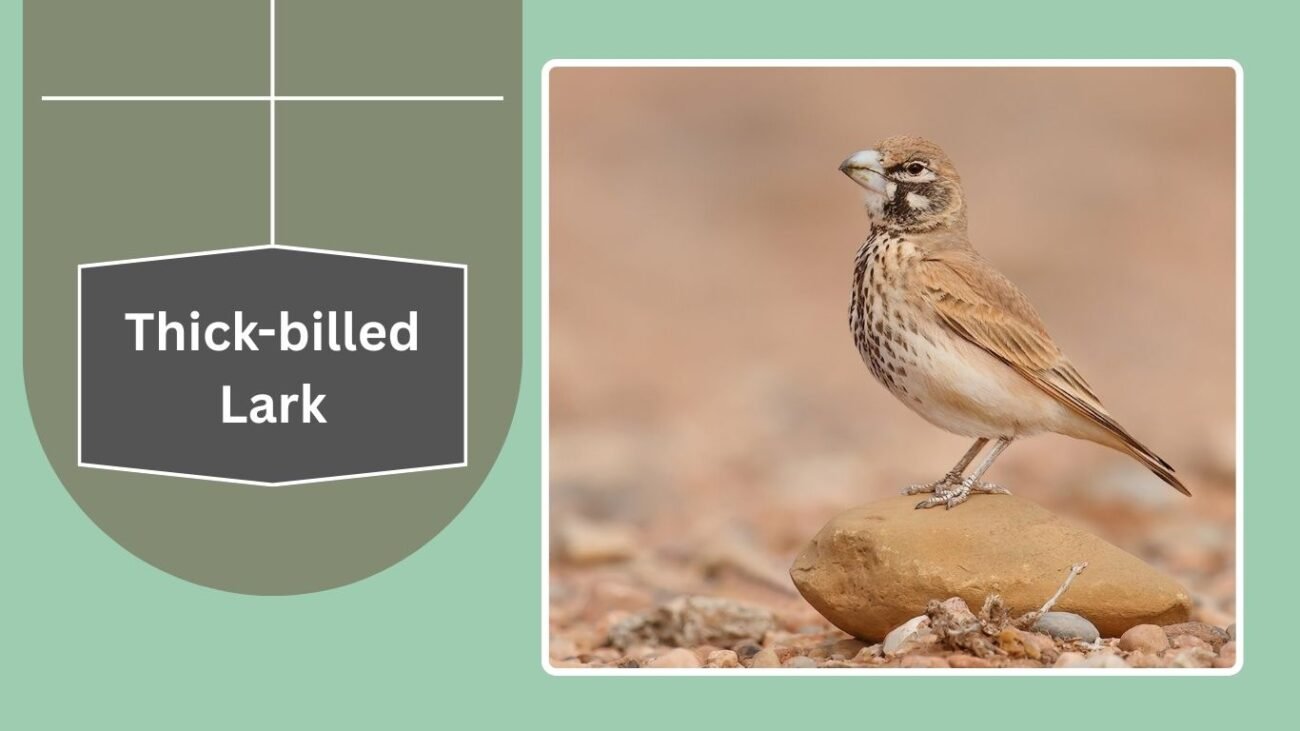
The Thick-billed Lark (Ramphocoris clotbey) is a distinctive and robust lark found in North Africa and parts of the Middle East. Its unusually large, strong bill sets it apart from other lark species, giving it a powerful appearance and aiding in cracking hard seeds.
Identification
- Length: 16–18 cm; wingspan 32–36 cm
- Large, deep, conical bill — much stouter than most larks
- Plumage sandy-brown with darker streaking on the upperparts
- Underparts pale with streaks across the breast
- Tail relatively short with dark central feathers and pale edges
- Broad wings with white patches visible in flight
- Males sometimes show darker facial markings around the eyes and throat
Behavior
This lark spends most of its time on the ground, moving in a steady walk while foraging. It often uses its powerful bill to break into tough seeds that other larks cannot easily handle. Its song is simple and whistled, usually delivered from rocks, bushes, or during short display flights. It is less aerial than skylarks and often relies more on perches for singing.
Habitat
The Thick-billed Lark inhabits arid and semi-arid regions, including stony deserts, dry plains, and semi-desert grasslands. It prefers areas with sparse vegetation where its plumage provides excellent camouflage against rocky ground.
Importance
The Thick-billed Lark is an important desert seed eater, able to exploit food sources unavailable to smaller-billed larks. This makes it a key species in maintaining the balance of desert ecosystems. Its presence also highlights the adaptations required for birds to survive in harsh, resource-scarce environments.
16. Lesser Short-toed Lark
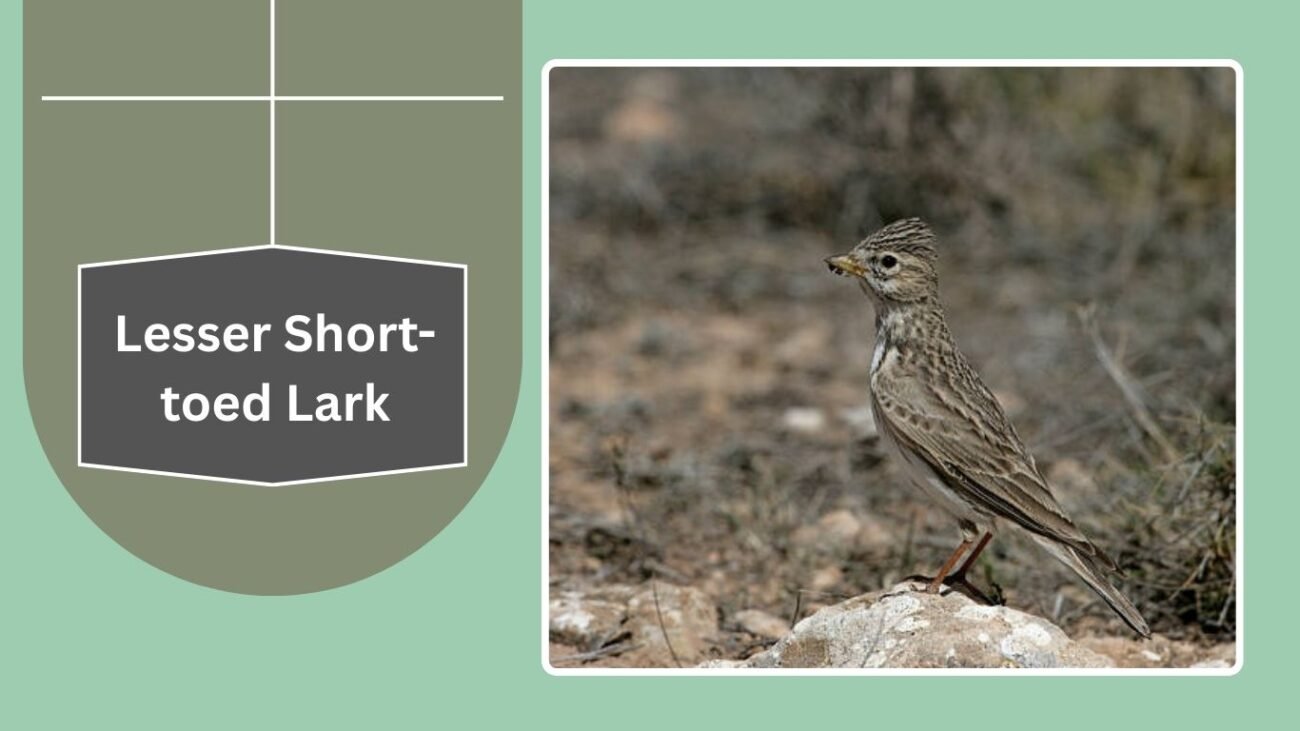
The Lesser Short-toed Lark (Alaudala rufescens) is a small lark species that closely resembles the Short-toed Lark but is generally smaller and paler. It is widely found across North Africa, the Middle East, and parts of Central Asia, with some populations also occurring in southern Europe.
Identification
- Length: 11–12 cm; wingspan 20–24 cm
- Small, compact body with sandy-brown upperparts
- Underparts pale buff or whitish with faint streaks on the chest
- Bill short and conical, slightly finer than in the Greater Short-toed Lark
- Tail short with white outer feathers, seen during flight
- Very short hind claw, a defining feature of the species
Behavior
This lark is mainly ground-dwelling, moving in quick runs while searching for food. Its song is a soft and repetitive trill, often delivered during fluttering flights or from the ground. Outside the breeding season, it can form flocks that forage in dry fields, plains, or semi-desert areas, often mixing with other small larks.
Habitat
The Lesser Short-toed Lark favors dry, open landscapes, including sandy plains, semi-deserts, salt flats, and lightly cultivated farmland. It avoids dense vegetation, thriving best in barren or sparsely vegetated regions.
Importance
The species contributes to desert and semi-desert ecosystems by consuming grass seeds and small insects, aiding both in pest control and seed dispersal. Its adaptability to arid conditions also makes it a useful indicator species for monitoring environmental changes in dry regions.
17. Steppe Lark
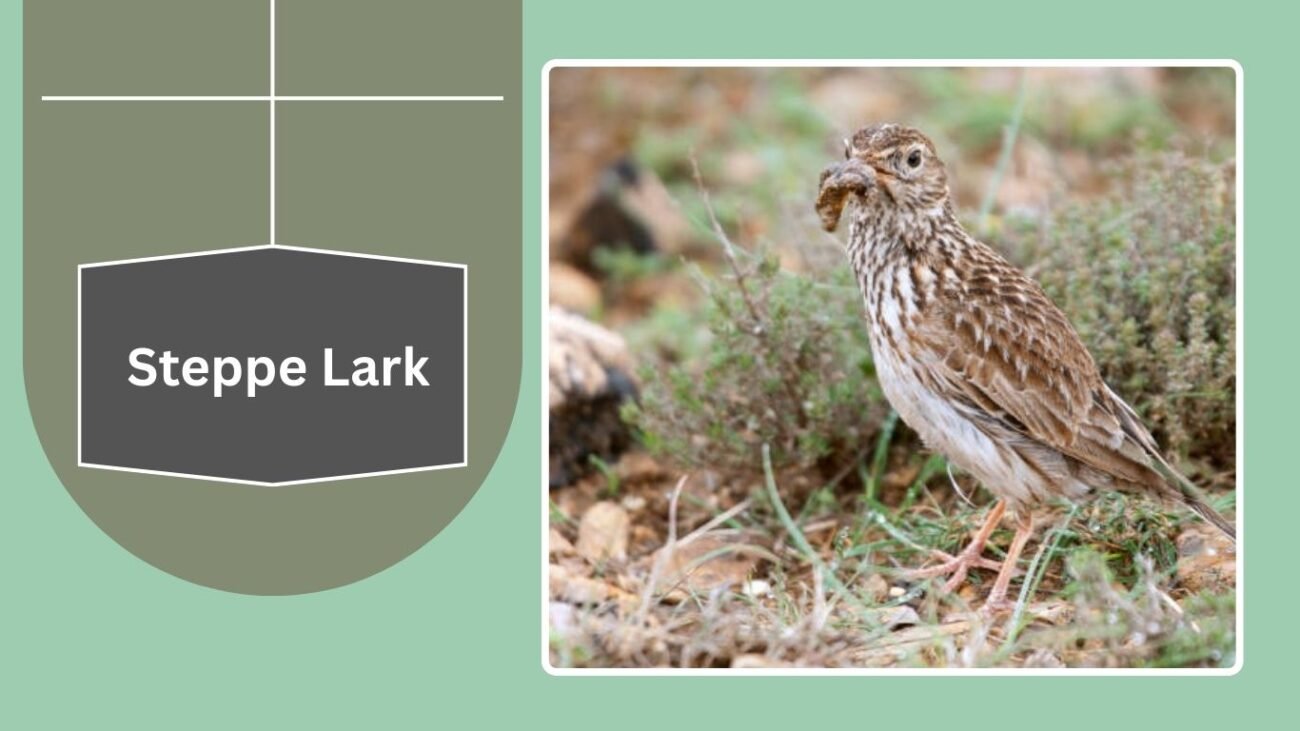
The Steppe Lark (Melanocorypha calandra dukhunensis or sometimes treated as Melanocorypha subspecies group) is a large, ground-dwelling bird native to the vast steppe regions of Central Asia. It is closely related to other Melanocorypha larks and is notable for thriving in wide, treeless plains.
Identification
- Length: 17–20 cm; wingspan 34–38 cm
- Streaky brown upperparts blending with grassland soil
- Underparts whitish with faint streaks across the breast
- Large, slightly curved bill, robust compared to smaller larks
- Wings broad with pale trailing edges, visible in flight
- Tail with white outer feathers contrasting with darker center
Behavior
Steppe Larks are strongly terrestrial, walking steadily across plains in search of seeds and insects. Males perform flight displays over open grasslands, singing varied and musical phrases. Outside of the breeding season, they often gather in large flocks, particularly during migration and in winter, sometimes mixing with Calandra Larks and other steppe birds.
Habitat
This species is strongly associated with Eurasian steppes, dry plains, and semi-arid grasslands. It avoids forests, wetlands, and heavily urbanized areas. During winter, it may move into stubble fields and lightly cultivated farmland, where food is more abundant.
Importance
The Steppe Lark is an essential species for maintaining ecological balance in Central Asian grasslands. By feeding on both seeds and insects, it helps control weed growth and insect populations. Its abundance or decline can also indicate the overall health of steppe ecosystems, which are increasingly threatened by overgrazing and agricultural expansion.
18. Oriental Skylark
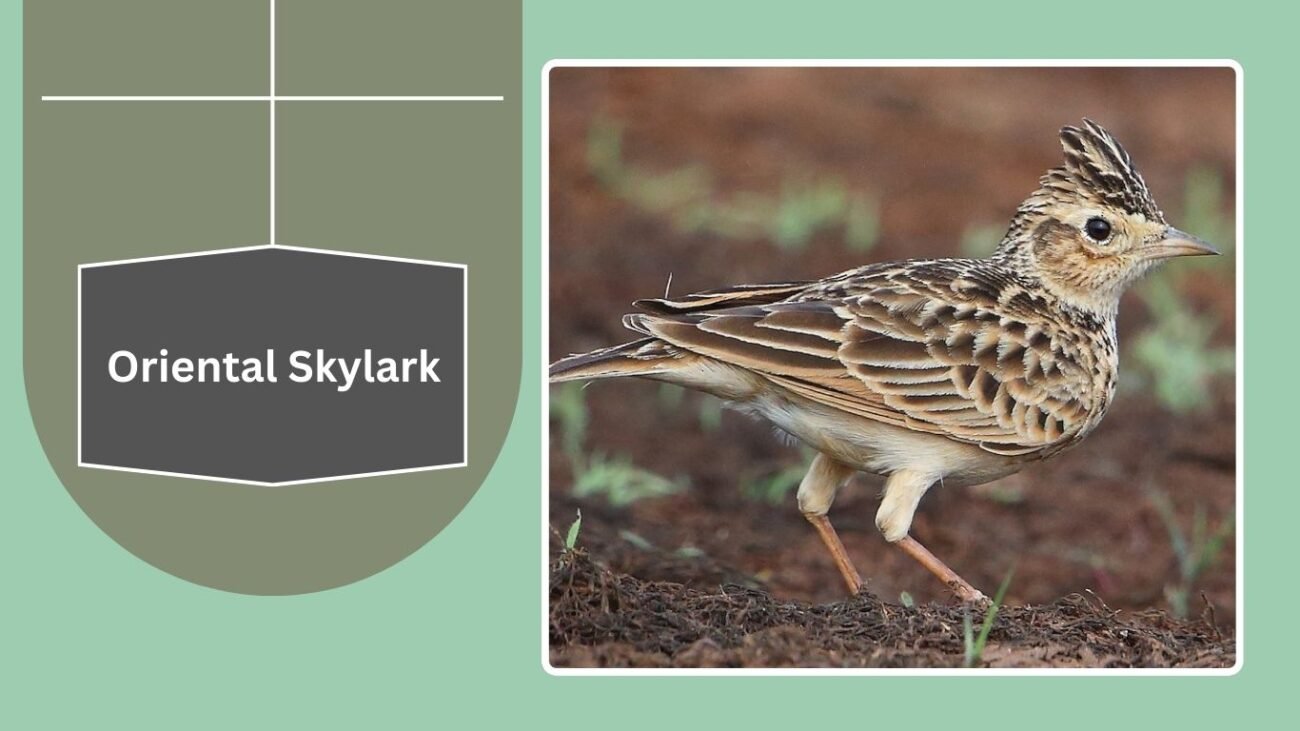
The Oriental Skylark (Alauda gulgula) is a small, widespread lark species found across South and Southeast Asia, extending into China and Indonesia. Closely related to the Eurasian Skylark, it is distinguished by its smaller size and slightly different song.
Identification
- Length: 15–16 cm; wingspan 28–32 cm
- Brown, streaky upperparts with darker markings
- Underparts pale buff with fine streaking on the chest
- Short crest that may be raised when alert
- Tail short with white outer feathers visible in flight
- Bill short and slender compared to the Eurasian Skylark
Behavior
Oriental Skylarks are best known for their continuous singing during fluttering display flights, similar to their Eurasian relative. However, their song is usually shorter and less complex. They spend much of their time on the ground, walking steadily while foraging, and rise suddenly when disturbed. Outside the breeding season, they may gather in small flocks.
Habitat
This species inhabits open fields, grasslands, scrublands, and lightly cultivated farmland. It is also found in rice paddies and open country near villages, showing tolerance for human-modified landscapes. Unlike the Eurasian Skylark, it prefers warmer lowland regions rather than temperate farmland.
Importance
The Oriental Skylark plays an ecological role in maintaining balance within agricultural and grassland ecosystems by feeding on grass seeds and insects. Its adaptability to farmlands makes it an important species for monitoring the health of rural landscapes across Asia.
19. Bengal Bush Lark
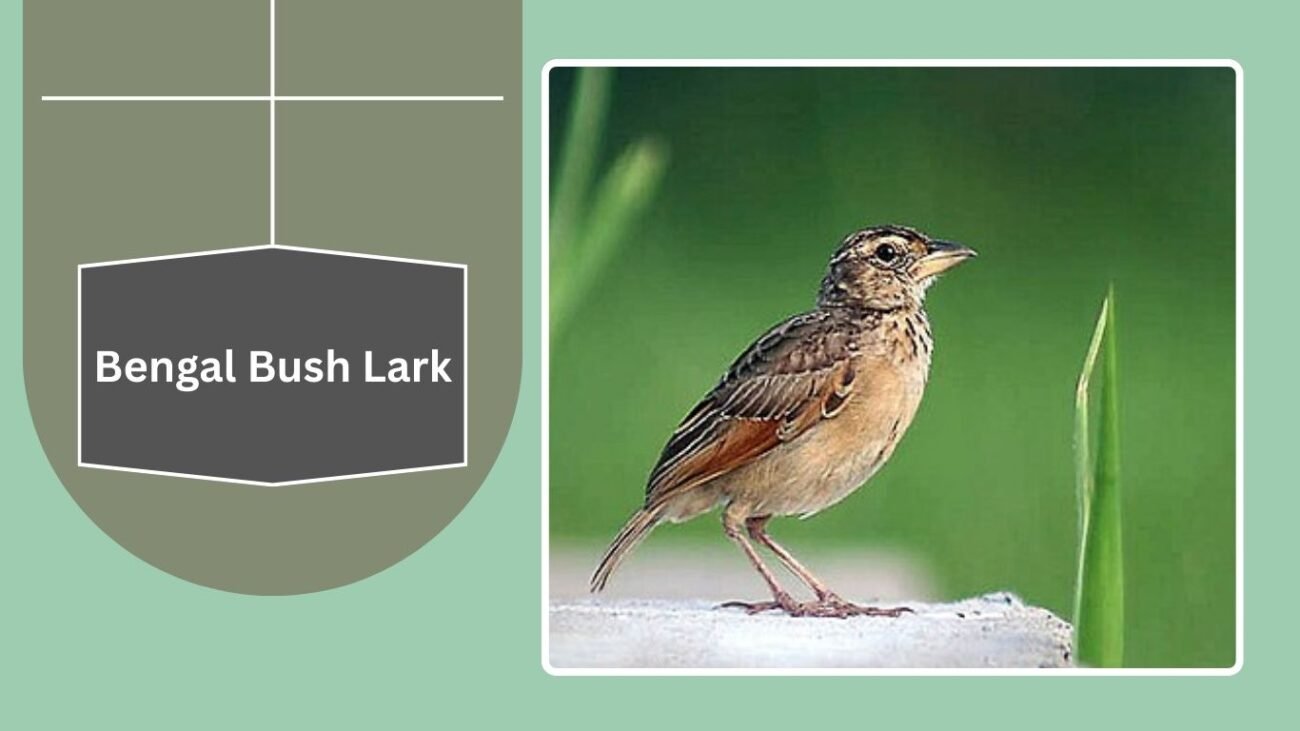
The Bengal Bush Lark (Mirafra assamica) is a small ground-dwelling lark widely distributed across the Indian subcontinent and parts of Southeast Asia. It is a common bird in open country and is often recognized by its distinctive, cheerful song delivered from bushes or short flights.
Identification
- Length: 15–16 cm; wingspan 27–30 cm
- Brown, streaky upperparts with rufous tones on the wings
- Underparts pale buff with streaks across the breast
- Bill short and slightly curved, adapted for seed feeding
- Tail dark with pale outer feathers
- Compact body with rounded wings, giving a chunky appearance
Behavior
The Bengal Bush Lark spends most of its time on the ground, moving with short runs while foraging. It frequently perches on low bushes, fence posts, or rocks to deliver its musical song, often incorporating mimicry of other bird calls. Its song-flight consists of short, fluttering rises followed by parachuting descents, during which it continues to sing.
Habitat
This species thrives in open scrublands, grasslands, agricultural fields, and dry plains. It avoids dense forests and wetlands, preferring areas with scattered bushes or short vegetation. It is especially common near rural villages and farmlands.
Importance
The Bengal Bush Lark is ecologically valuable as a consumer of grass seeds and insects, contributing to natural pest control in farmlands. Its widespread presence also makes it a reliable indicator of the health of open-country habitats in South Asia.
20. Rufous-tailed Lark
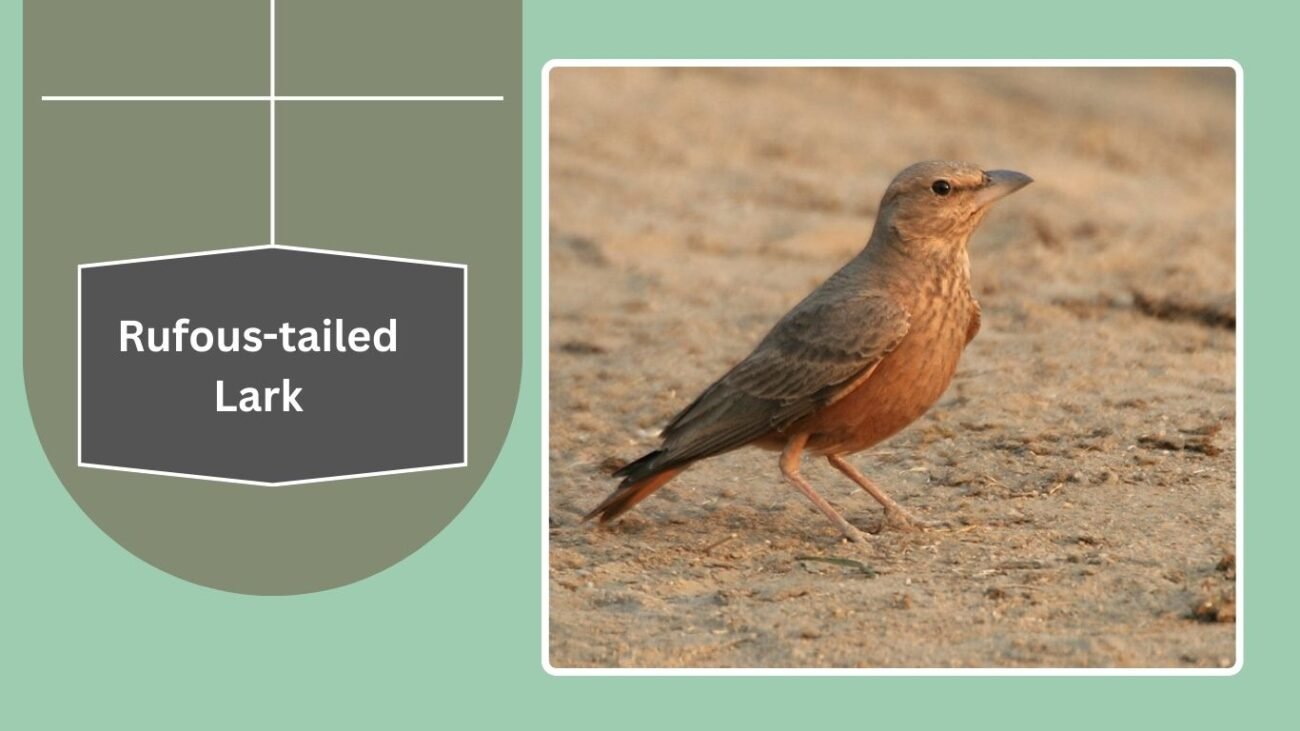
The Rufous-tailed Lark (Ammomanes phoenicura), also known as the Rufous-tailed Finch-Lark, is a small lark species native to the Indian subcontinent. It is well known for its rich rufous coloration and distinctive tail, which easily separates it from other larks in its range.
Identification
- Length: 14–15 cm; wingspan 26–30 cm
- Overall rufous-brown plumage, giving it a uniform warm tone
- Tail rich rufous with darker central feathers, highly visible in flight
- Bill short and slightly curved, suited for seed and insect feeding
- Underparts paler with a faint rufous wash
- Stocky build with rounded wings
Behavior
Rufous-tailed Larks are terrestrial birds, spending much of their time running and walking swiftly over open ground. Their song is sweet and musical, often delivered during short, fluttering display flights or from a perch such as a rock or small bush. They are usually solitary or found in pairs but may gather in loose flocks outside the breeding season.
Habitat
This species is strongly associated with dry, open landscapes including scrublands, rocky plains, grasslands, and fallow agricultural fields. It avoids dense vegetation and forested areas, thriving instead in semi-arid and arid regions.
Importance
The Rufous-tailed Lark plays an ecological role in dry habitats by feeding on seeds and insects, helping maintain balance in rural and semi-desert ecosystems. It is also a common bird of farmlands in India, acting as a natural seed disperser and insect controller.
21. Malabar Lark
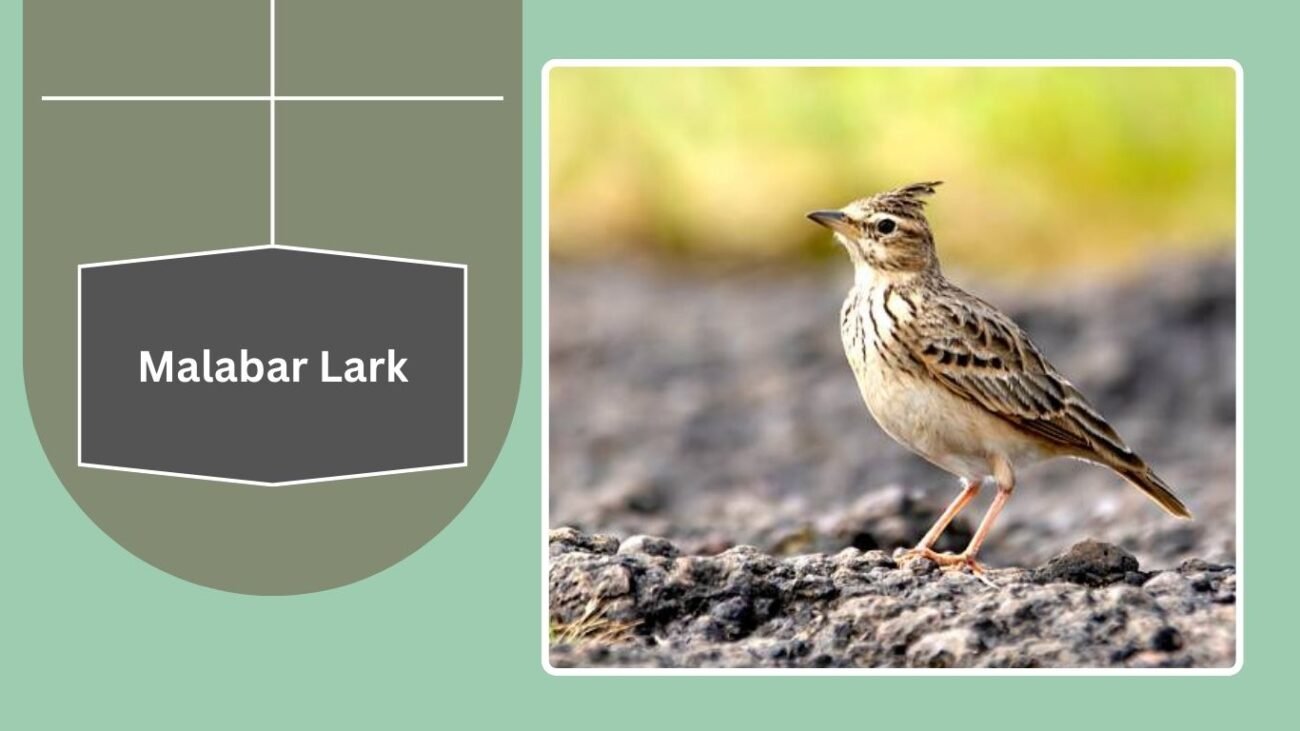
The Malabar Lark (Galerida malabarica) is a resident lark species found mainly in peninsular India. Closely related to the Crested Lark, it is distinguished by its darker plumage and stronger build. It is particularly common in dry farmlands and open scrub regions.
Identification
- Length: 16–17 cm; wingspan around 28–32 cm
- Brown upperparts with heavy streaking, darker overall than the Crested Lark
- Underparts pale with strong streaking on the breast
- Prominent pointed crest, raised when alert
- Strong, slightly curved bill
- Tail dark brown with pale edges, visible in flight
Behavior
The Malabar Lark spends much of its time on the ground, moving in steady walks while foraging. Its song is rich, musical, and varied, often delivered from perches such as fence posts, bushes, or rocks. Display flights are short compared to skylarks, but the bird is still highly vocal, especially during the breeding season.
Habitat
This species inhabits dry scrublands, agricultural fields, and grasslands across southern and central India. It is often seen near villages and roadsides but avoids dense forests and wetlands. It prefers open country with scattered bushes or rocks where it can perch to sing.
Importance
The Malabar Lark contributes to pest control in agricultural regions by feeding on insects, while also dispersing grass seeds. Its adaptability to human-modified habitats makes it an important species for monitoring the ecological health of rural landscapes in peninsular India.
22. Ashy-crowned Sparrow Lark
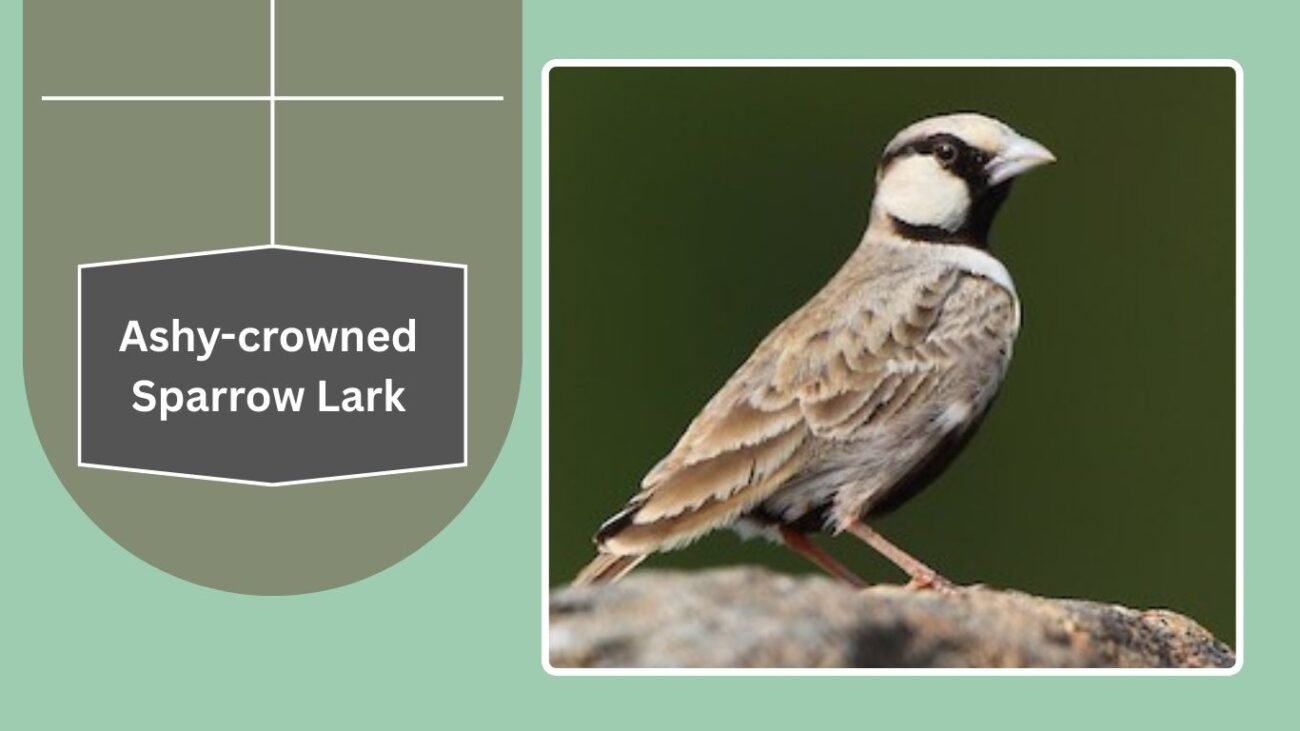
The Ashy-crowned Sparrow Lark (Eremopterix griseus) is a small, sparrow-like lark native to South Asia. It is one of the most common larks in India and surrounding regions, often seen in farmlands, open scrub, and dry plains. Males and females show strong differences in appearance, making the species easy to identify.
Identification
- Length: 12–13 cm; wingspan 20–24 cm
- Male: grayish-brown upperparts, black face, throat, and breast band, with a distinctive ashy-gray crown
- Female: sandy-brown and streaked, resembling a sparrow, with paler underparts
- Bill short and conical, adapted for seed feeding
- Tail short and square with pale edges
- Compact, stocky build with rounded wings
Behavior
This species spends most of its time on the ground, moving in short runs while foraging. Males sing from the ground, bushes, or low flight, producing simple, repetitive notes. During the breeding season, males perform short song-flights to attract mates. Outside breeding, they form small flocks and often forage in harvested fields alongside other seed-eating birds.
Habitat
The Ashy-crowned Sparrow Lark prefers open, dry landscapes such as scrublands, sandy plains, and cultivated farmland. It is especially common in rural areas with sparse vegetation and often seen along roadsides and village edges.
Importance
This lark is ecologically important as a consumer of grass seeds and insects, helping regulate agricultural ecosystems. Its abundance makes it a key species for studying farmland bird populations in South Asia, where habitat changes continue to affect native species.
23. Somali Short-toed Lark
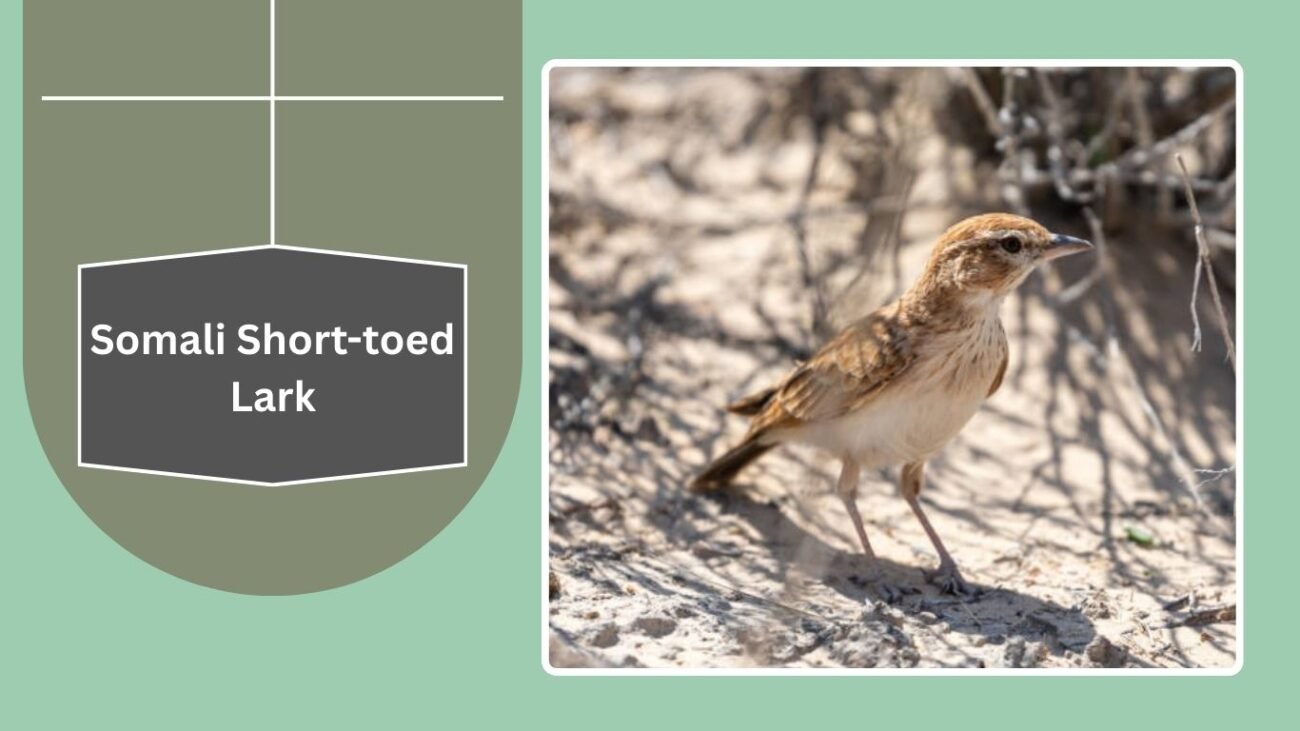
The Somali Short-toed Lark (Alaudala somalica) is a small lark species native to the Horn of Africa. Closely related to the Short-toed and Lesser Short-toed Larks, it is adapted to the dry, open environments of Somalia, Ethiopia, and surrounding regions.
Identification
- Length: 12–13 cm; wingspan around 22–25 cm
- Sandy-brown upperparts with fine streaking for camouflage
- Underparts pale buff to whitish with faint streaks on the chest
- Bill short and conical, slightly finer than in related species
- Tail short with white outer feathers, visible during flight
- Small, compact body with relatively short hind claw
Behavior
The Somali Short-toed Lark is a ground-foraging bird, moving in quick runs while searching for seeds and insects. Its song is simple and high-pitched, delivered during fluttering display flights or from the ground. Like other short-toed larks, it often forms small flocks outside the breeding season, sometimes mixing with other desert or steppe birds.
Habitat
This species inhabits arid and semi-arid plains, dry grasslands, and sandy scrublands of the Horn of Africa. It thrives in barren or sparsely vegetated landscapes, avoiding dense vegetation and forested areas.
Importance
The Somali Short-toed Lark contributes to the ecological balance of arid ecosystems by consuming both seeds and insects. Its presence in large numbers makes it a vital part of the food chain in dry grassland habitats, supporting predators such as raptors.
24. Pink-breasted Lark
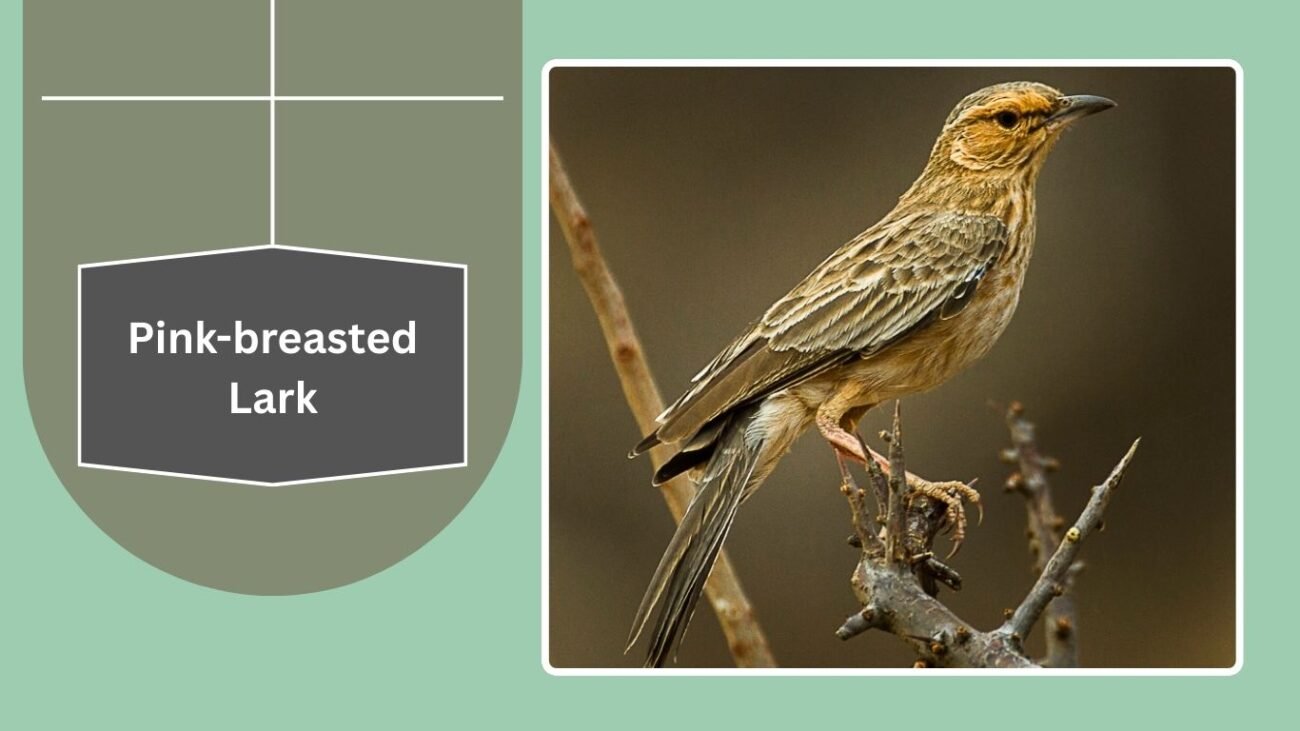
The Pink-breasted Lark (Calendulauda poecilosterna) is a medium-sized lark found in eastern Africa, particularly in countries such as Ethiopia, Kenya, Tanzania, and Uganda. It is named for the soft pinkish wash on its breast, which makes it stand out among other streaky larks.
Identification
- Length: 15–17 cm; wingspan 28–32 cm
- Brown, streaky upperparts blending with dry soil and scrub
- Underparts pale with a faint pinkish flush across the breast
- Bill medium-sized, slightly curved, adapted for seeds and insects
- Tail dark with pale outer feathers visible in flight
- Slender body with rounded wings and fairly long legs
Behavior
Pink-breasted Larks are primarily ground-dwellers, walking steadily while searching for food. Their song is pleasant and melodious, often delivered from a bush, tree, or short flight display. They are usually found in pairs or small groups, though outside the breeding season they may form larger flocks.
Habitat
This species thrives in dry savannas, bushlands, scrubby grasslands, and lightly wooded areas. It prefers open country with scattered shrubs or acacia trees, avoiding dense forests and wetlands.
Importance
The Pink-breasted Lark is an important insect and seed consumer in African savanna ecosystems. By regulating insect populations and dispersing plant seeds, it helps maintain the balance of semi-arid habitats. Its presence also reflects the health of savanna landscapes, making it a useful ecological indicator.
25. Chestnut-backed Sparrow Lark
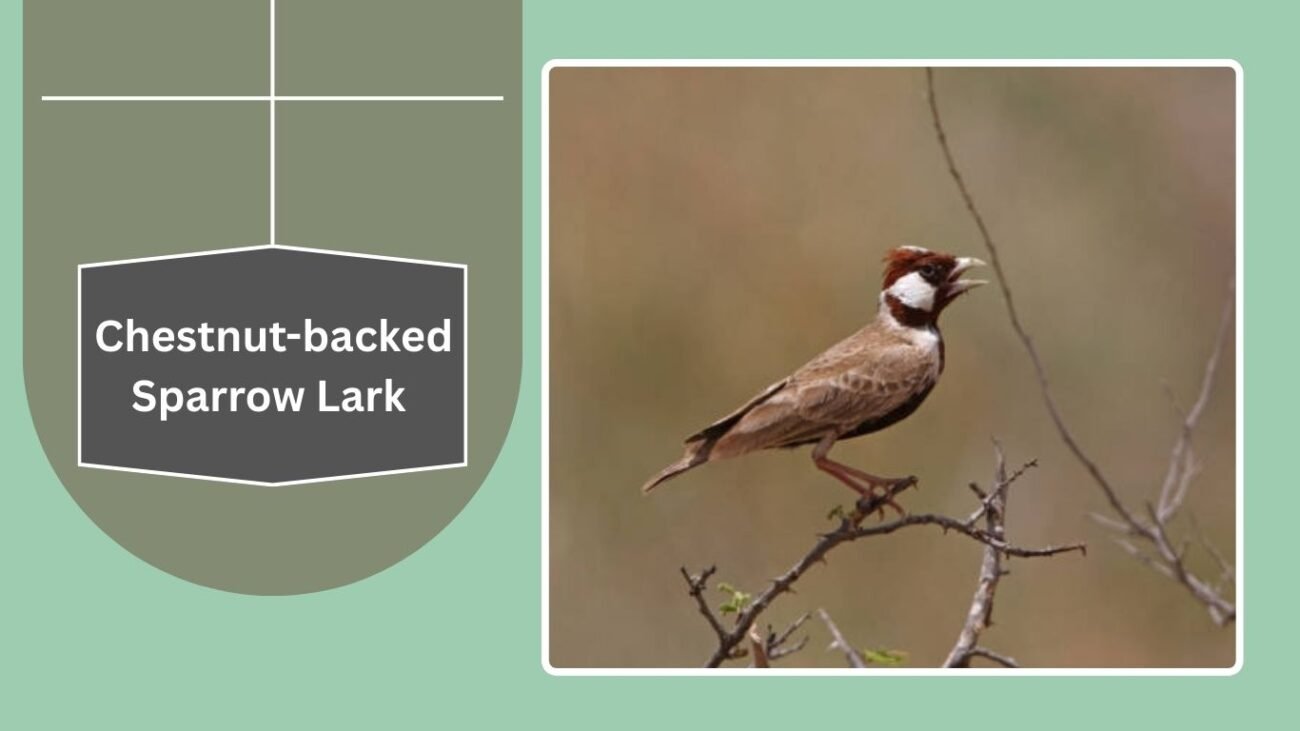
The Chestnut-backed Sparrow Lark (Eremopterix leucotis) is a small, striking lark widely distributed across sub-Saharan Africa. It is well known for its strong sexual dimorphism, with males showing bold black-and-white facial patterns and a chestnut back, while females are more cryptic and sparrow-like.
Identification
- Length: 11–13 cm; wingspan 20–24 cm
- Male: black-and-white patterned head and face, chestnut-brown back, pale underparts
- Female: sandy-brown upperparts with streaking, paler underparts, more cryptic overall
- Short, conical bill adapted for seed feeding
- Short tail with pale edges, visible in flight
- Stocky build with rounded wings
Behavior
This species is highly terrestrial, foraging in pairs or small flocks on the ground. Males often sing from the ground or low perches, producing simple and repetitive notes. During display, males may circle or flutter above the female before descending. Outside the breeding season, they gather in flocks that sometimes number in the hundreds, often feeding in harvested fields.
Habitat
The Chestnut-backed Sparrow Lark inhabits dry grasslands, scrublands, agricultural fields, and semi-arid plains across Africa. It prefers open landscapes with sparse vegetation and avoids dense forests or wetlands.
Importance
This lark is an important farmland and savanna bird, consuming large amounts of grass seeds and small insects. Its flocking behavior makes it an influential species in seed dispersal and insect population control, contributing to the ecological balance of African open-country habitats.