
Ratites are a fascinating group of large, flightless birds that have adapted to life on the ground. They include some of the world’s heaviest and most unique birds such as ostriches, emus, cassowaries, kiwis, and rheas. Spread across Africa, Australia, New Zealand, and South America, these birds share certain features like strong legs for running and the absence of a keel bone in their breast structure, which makes flight impossible. Despite their similarities, each species has distinct behaviors, habitats, and ecological roles. This list covers all 13 living species of ratites and large flightless birds that still roam our planet today.
1. Common Ostrich
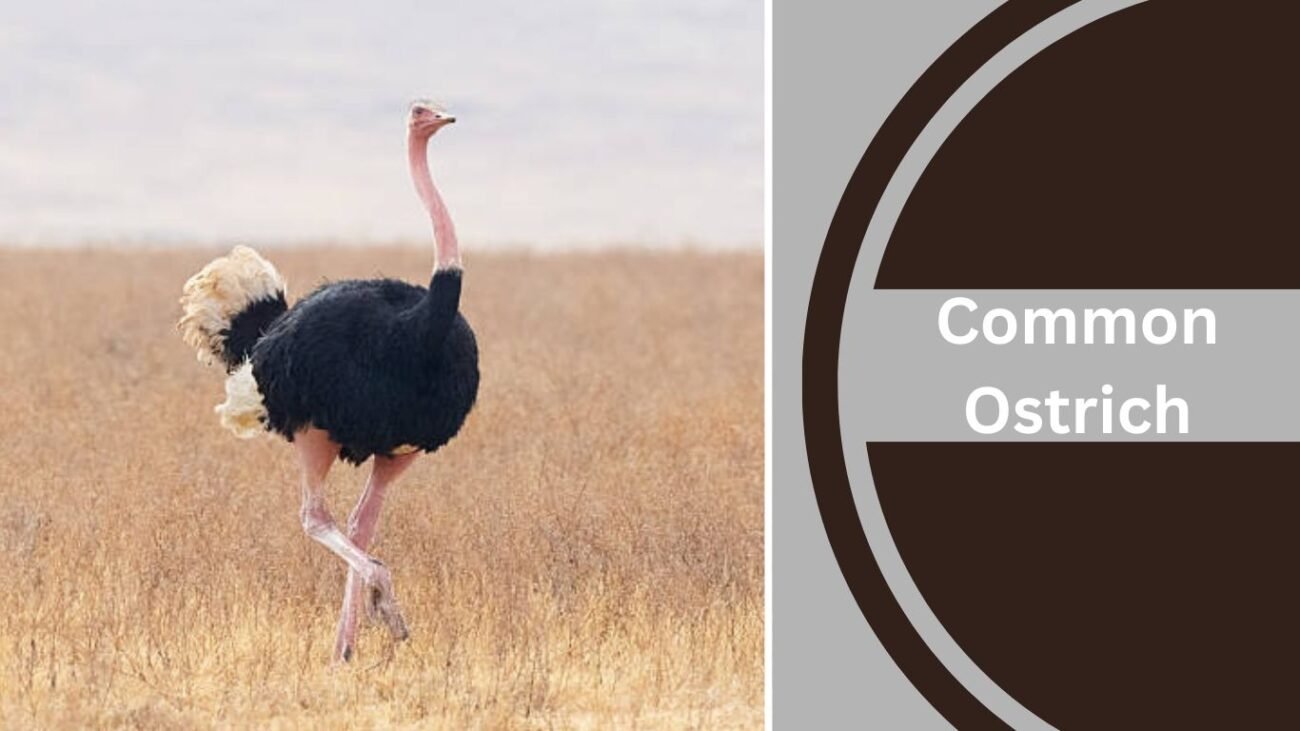
The Common Ostrich (Struthio camelus) is the largest living bird on Earth, native to Africa. Known for its incredible speed and size, this bird is flightless but highly adapted to running and surviving in open savannas and deserts.
Identification
- Height: Up to 9 feet (2.7 m)
- Weight: 220–290 lbs (100–130 kg)
- Long bare legs and neck
- Males: black body with white wings and tail
- Females: grayish-brown overall
Habitat
Commonly found in African savannas, semi-deserts, and open woodlands where they can see predators from a distance.
Behaviors
They are fast runners, reaching speeds of up to 70 km/h (43 mph). They live in groups and use strong legs for defense, delivering powerful kicks.
Nest
Nests are shallow scrapes in the ground, where multiple females may lay eggs in a communal nest watched by the dominant pair.
Diet
Primarily herbivorous—feeding on seeds, grasses, shrubs, and fruits, but also eat insects and small animals when available.
2. Somali Ostrich

The Somali Ostrich (Struthio molybdophanes) is a distinct species of ostrich native to the Horn of Africa. Unlike the Common Ostrich, it has unique bluish-gray skin on its neck and thighs, which becomes brighter in males during the breeding season. This bird is an important species for the arid ecosystems it inhabits.
Identification
- Height: 7–8 feet (2.1–2.5 m)
- Weight: 200–250 lbs (90–113 kg)
- Males: black plumage with white wing tips, blue-gray neck and legs
- Females: gray-brown with duller tones
- Strong legs with two toes, built for speed and defense
Habitat
Found in semi-arid plains, savannas, and open bushlands of Ethiopia, Somalia, Djibouti, and northern Kenya. Prefers dry regions with scattered vegetation where visibility is high.
Behaviors
Excellent runners, reaching speeds over 60 km/h (37 mph). Males perform courtship displays with booming calls, wing spreads, and rapid movements to attract females. They are mostly diurnal, resting during the hottest hours of the day.
Nest
Nests are large scrapes in sandy soil where several females may deposit eggs. The dominant female’s eggs are kept at the center for better survival chances. Males share incubation duties at night.
Diet
Omnivorous diet including grasses, seeds, shrubs, flowers, fruits, and insects. Their ability to consume plants with high water content helps them survive harsh dry environments.
3. Emu
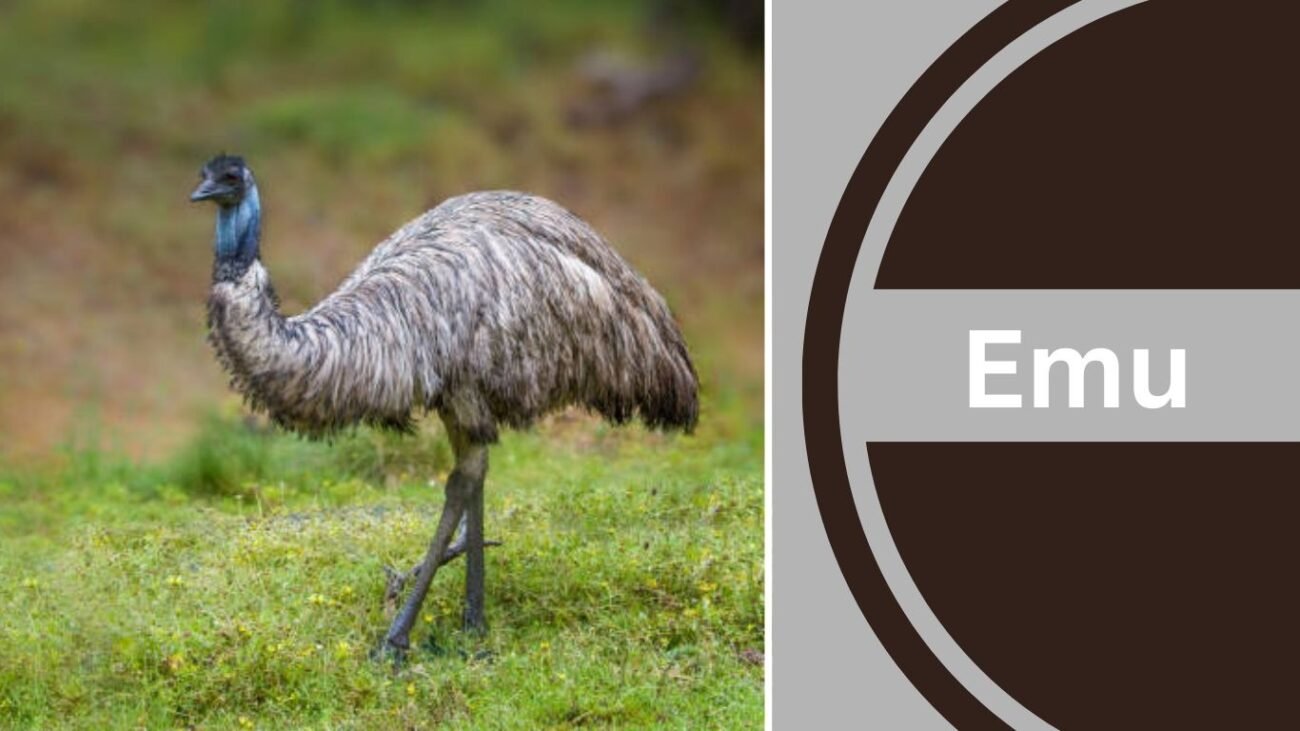
The Emu (Dromaius novaehollandiae) is Australia’s national bird and the only surviving member of the genus Dromaius. It is the second-largest bird in the world after the ostrich and is known for its adaptability to diverse habitats across the continent.
Identification
- Height: 5–6.5 feet (1.5–2 m)
- Weight: 66–121 lbs (30–55 kg)
- Long neck with small head, shaggy brown feathers for insulation
- Strong legs with three toes adapted for running
- Can run up to 50 km/h (31 mph) with long strides of nearly 9 feet (2.7 m)
Habitat
Widespread across mainland Australia, inhabiting grasslands, woodlands, farmlands, and semi-arid plains. Avoids rainforests and extremely dry desert interiors but can be found near water sources when possible.
Behaviors
Emus are nomadic, traveling long distances in search of food and water. They are powerful runners and swimmers. Unique among ratites, the males take on full responsibility for incubation and chick-rearing. They can survive for weeks without food but drink large amounts of water when available.
Nest
Ground nests are shallow depressions lined with leaves, twigs, and grass. Males incubate clutches of 8–12 dark green eggs for around eight weeks, often without leaving to feed. After hatching, chicks stay with the father for up to 18 months.
Diet
Omnivorous feeders—consuming seeds, grasses, fruits, flowers, shoots, and a wide variety of insects like caterpillars, grasshoppers, and beetles. Their diet shifts seasonally depending on food availability, helping maintain ecological balance.
4. Southern Cassowary
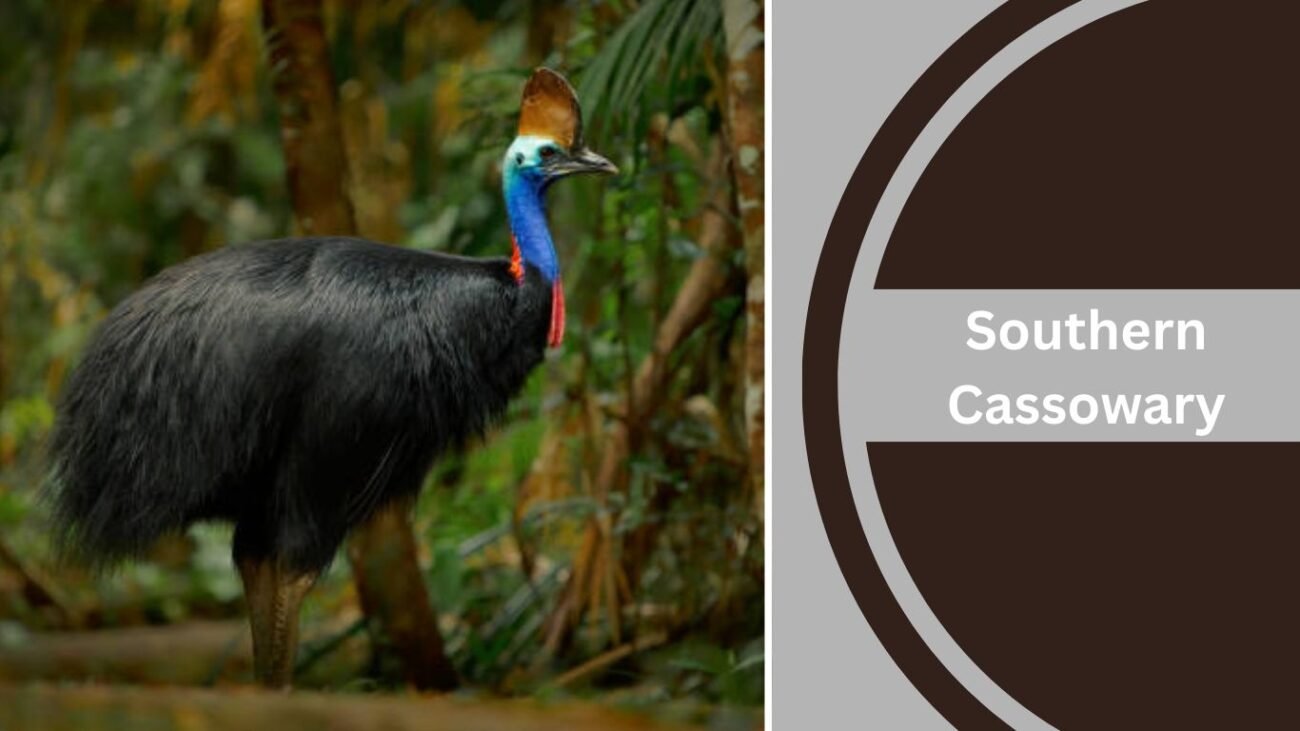
The Southern Cassowary (Casuarius casuarius) is the third-largest bird in the world and the most well-known cassowary species. Native to northern Australia, New Guinea, and nearby islands, it is often called the “world’s most dangerous bird” due to its powerful legs and dagger-like claws.
Identification
- Height: 5–6.6 feet (1.5–2 m)
- Weight: 55–130 lbs (25–60 kg)
- Glossy black plumage with bright blue and purple skin on head and neck
- Red wattles hanging from the throat
- Large helmet-like casque on the head
- Inner toe has a sharp claw up to 4 inches (10 cm) long
Habitat
Dense tropical rainforests, mangroves, and swampy lowlands. They prefer areas with abundant fruit trees and thick cover.
Behaviors
Solitary and territorial, especially females. Known for their aggressive defense if threatened, capable of lethal kicks. Excellent runners (up to 50 km/h), swimmers, and jumpers. Play a critical role in rainforest ecology as seed dispersers.
Nest
Males build shallow ground nests using leaves and grass. After females lay eggs, males incubate them for 50–60 days and later rear the chicks.
Diet
Primarily frugivorous—feeding on more than 150 species of fruits, but also consume fungi, insects, and small animals. Their digestion helps germinate large rainforest seeds.
5. Northern Cassowary

The Northern Cassowary (Casuarius unappendiculatus), also called the Single-wattled Cassowary, is found mainly in northern New Guinea. It is less studied than the Southern Cassowary but is equally impressive in size and strength.
Identification
- Height: 5–6 feet (1.5–1.8 m)
- Weight: 55–110 lbs (25–50 kg)
- Dark plumage with bare blue head and neck
- Unlike the Southern species, it has only one wattle hanging from the throat
- Prominent casque on head
Habitat
Primarily inhabits lowland tropical rainforests, swamp forests, and riverine habitats in northern New Guinea. It prefers areas with high fruit availability.
Behaviors
Solitary except during breeding. Territorial, using deep booming calls to mark presence. Strong runners and swimmers, capable of moving across rivers and thick undergrowth. Like other cassowaries, they play a vital role in rainforest seed dispersal.
Nest
Males prepare a simple nest of leaves on the forest floor. They incubate clutches of 3–5 large green eggs for about 50 days and protect the chicks until independence.
Diet
Feeds mainly on fallen fruits, supplemented with insects, small vertebrates, fungi, and plant matter. They can ingest toxic fruits that are poisonous to many animals but harmless to them.
6. Dwarf Cassowary
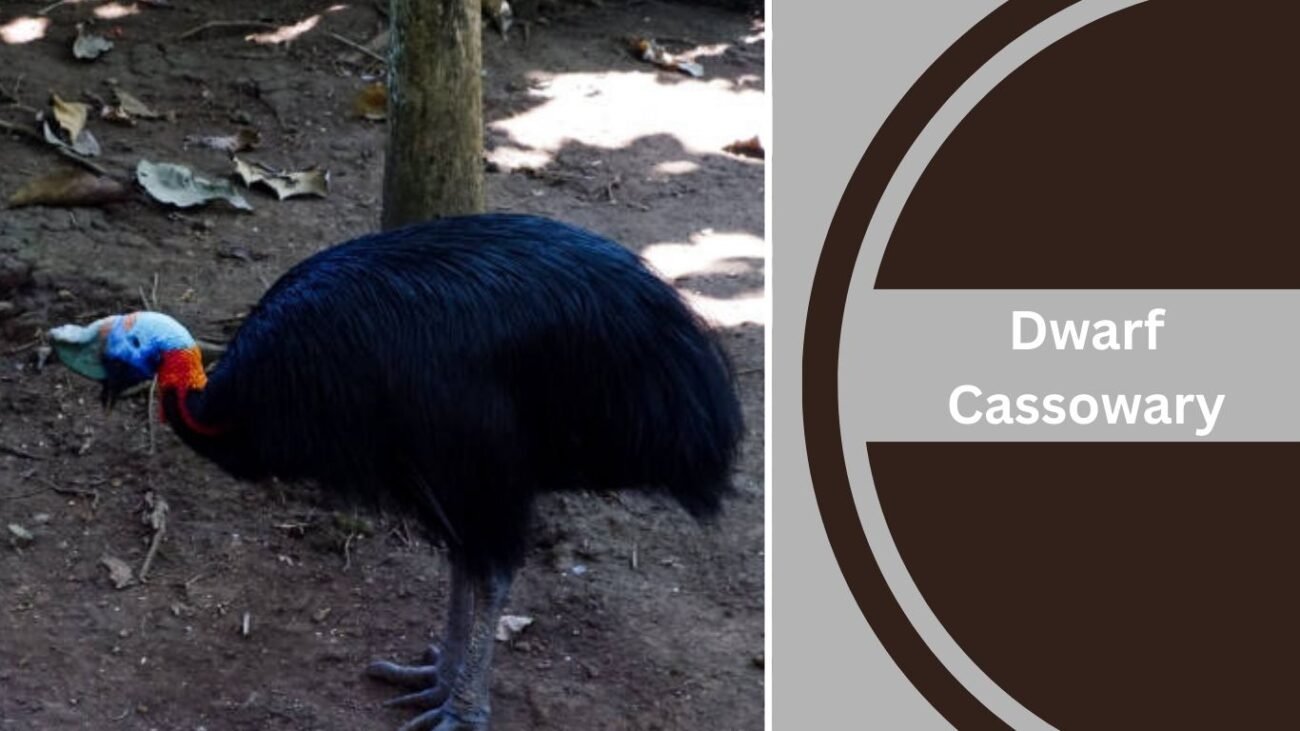
The Dwarf Cassowary (Casuarius bennetti), also called the Bennett’s Cassowary, is the smallest of the three cassowary species. Despite its size difference, it still plays a vital role in its ecosystem as a key seed disperser. It inhabits the mountainous forests of New Guinea and nearby islands.
Identification
- Height: 3.3–4.9 feet (1–1.5 m)
- Weight: 40–75 lbs (18–34 kg)
- Black plumage with a bright blue head and red or yellow wattles
- Casque is smaller compared to other cassowaries
- Stocky body with strong legs and sharp claws
Habitat
Mountain rainforests and mossy forests of New Guinea, New Britain, and Yapen Island. Found at elevations ranging from 1,000 to 3,000 meters.
Behaviors
More secretive than other cassowary species, it prefers dense vegetation. It is solitary and highly territorial. Known for its ability to climb steep terrain and move quietly through thick forests.
Nest
Ground nests are built by males using leaves and vegetation. Males incubate the 3–5 large green eggs and raise the chicks until they are independent.
Diet
Feeds mainly on fruits, especially fallen ones, but will also eat fungi, insects, and small animals. It is essential for spreading seeds of mountain plants across its habitat.
7. Great Spotted Kiwi
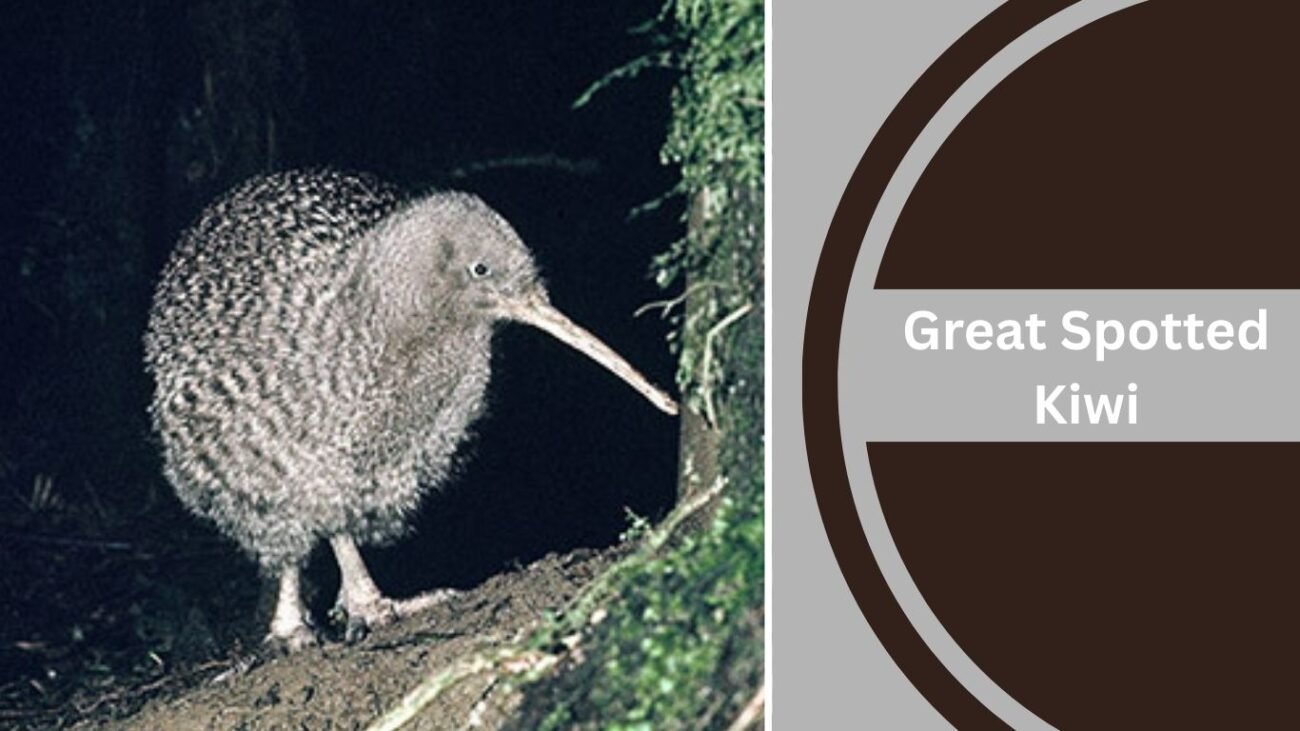
The Great Spotted Kiwi (Apteryx haastii) is the largest of all kiwi species and is native to the South Island of New Zealand. Unlike cassowaries and ostriches, kiwis are much smaller but still belong to the group of flightless ratites.
Identification
- Height: 18–20 inches (45–50 cm)
- Weight: 6–7 lbs (2.7–3.3 kg)
- Gray-brown plumage with lighter mottling giving a “spotted” look
- Long, pale bill with sensitive nostrils at the tip
- Strong legs with sharp claws for digging
Habitat
Inhabits mountainous forests, scrublands, and tussock grasslands in the northwestern and western parts of South Island. Prefers damp areas with soft soils rich in invertebrates.
Behaviors
Nocturnal and shy, spending the day in burrows or dense vegetation. Uses its keen sense of smell to locate worms, insects, and grubs at night. Monogamous pairs may bond for decades.
Nest
Nests are burrows dug into the ground, sometimes under tree roots. Eggs are unusually large relative to the female’s body size. Both sexes share incubation duties.
Diet
Omnivorous—feeding on earthworms, beetle larvae, insects, centipedes, fruits, and seeds. Their probing bills help detect prey underground.
8. Little Spotted Kiwi

The Little Spotted Kiwi (Apteryx owenii) is the smallest kiwi species and is endemic to New Zealand. Once widespread, its population has declined due to predators, but conservation efforts have helped stabilize numbers on predator-free islands.
Identification
- Height: 14–16 inches (35–40 cm)
- Weight: 2.2–3 lbs (1–1.3 kg)
- Pale gray-brown plumage with lighter mottling
- Small body with a long pale bill and short wings
- Tiny vestigial wings hidden under feathers
Habitat
Historically found across both main islands of New Zealand, now mostly restricted to offshore islands such as Kapiti Island and a few protected reserves. Prefers forested and scrubby areas with plenty of ground cover.
Behaviors
Nocturnal and shy, foraging at night for insects and worms. Known for its distinctive whistling calls. Lives in monogamous pairs and maintains small territories.
Nest
Uses burrows, hollow logs, or dense vegetation as nesting sites. The male usually incubates one or two large eggs for about 70 days.
Diet
Feeds on earthworms, beetles, moth larvae, spiders, centipedes, and some fruits. Their sensitive bill helps detect prey underground.
9. Okarito Kiwi (Rowi)

The Okarito Kiwi (Apteryx rowi), also called the Rowi, is the rarest kiwi species, found only in a small region of Okarito forest on New Zealand’s South Island. Intensive conservation has prevented its extinction.
Identification
- Height: 16–18 inches (40–45 cm)
- Weight: 3–6 lbs (1.4–2.7 kg)
- Soft gray-brown plumage, slightly lighter than other kiwis
- Long slender pale bill with nostrils at the tip
- Strong legs with sharp claws for digging
Habitat
Restricted to lowland podocarp forests around Okarito on the west coast of South Island. Conservation programs have established small populations on predator-free islands.
Behaviors
Nocturnal and reclusive, pairs are monogamous and defend small territories. They communicate with loud, shrill calls at night. Known to live for several decades in the wild.
Nest
Ground burrows, hollow logs, and natural crevices are used for nesting. The male primarily incubates the single large egg, which hatches after 70–80 days.
Diet
Omnivorous—consuming earthworms, beetle larvae, insects, spiders, and fruits. Their probing bill is highly adapted for detecting underground invertebrates.
10. Southern Brown Kiwi
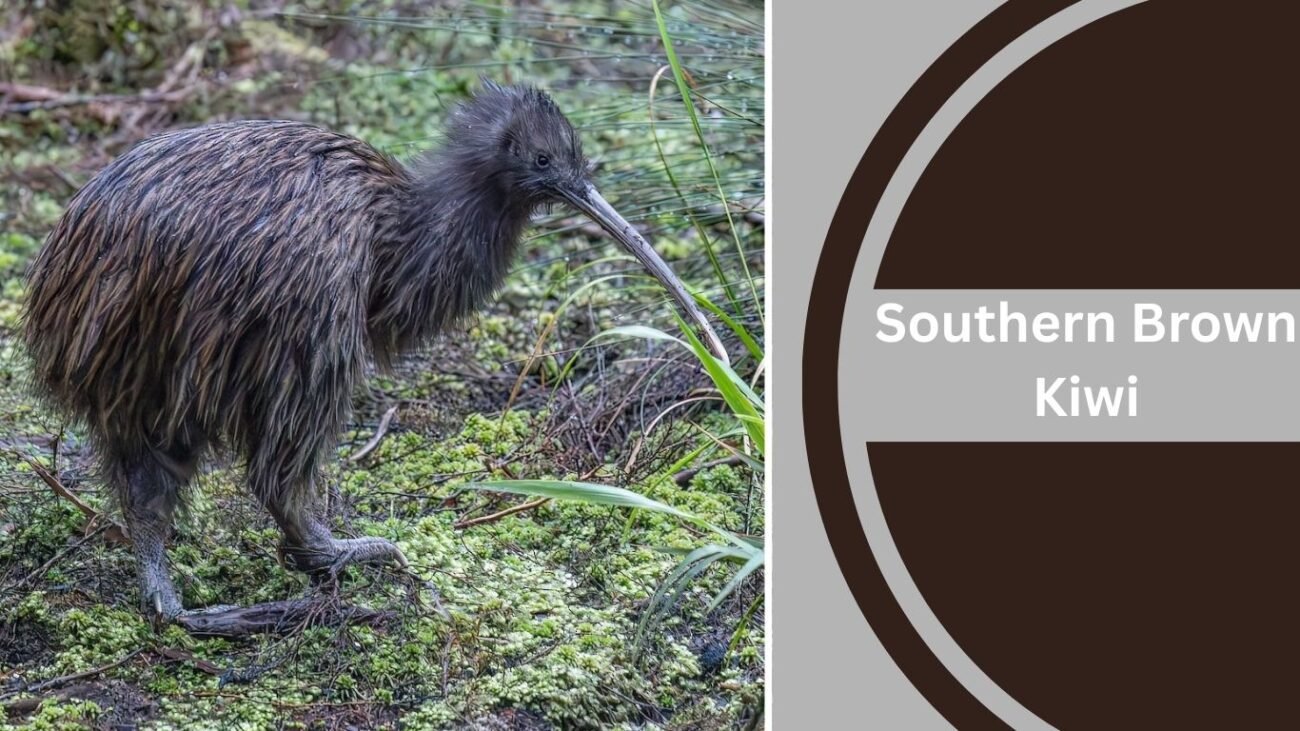
The Southern Brown Kiwi (Apteryx australis), also called the Tokoeka, is a flightless bird native to the South Island of New Zealand. It has several regional forms, including those found in Fiordland, Haast, and Stewart Island.
Identification
- Height: 18–20 inches (45–50 cm)
- Weight: 5.5–8.8 lbs (2.5–4 kg)
- Reddish-brown shaggy feathers resembling fur
- Long pale bill with nostrils at the tip
- Short wings and strong legs for digging
Habitat
Found in forests, subalpine scrub, and tussock grasslands of the South Island, including remote and wet areas. Stewart Island birds are known to forage during the day more often than mainland kiwis.
Behaviors
Nocturnal and territorial, except for Stewart Island populations which may be active at dawn or dusk. Monogamous pairs defend territories and communicate with high-pitched whistles. Known for being bolder than other kiwi species.
Nest
Burrows dug into the ground, hollow logs, or dense vegetation serve as nest sites. Males incubate one or two large eggs for up to 75 days.
Diet
Feeds on earthworms, beetle larvae, insects, spiders, snails, and fruits. Its long bill is sensitive to vibrations underground, aiding prey detection.
11. North Island Brown Kiwi
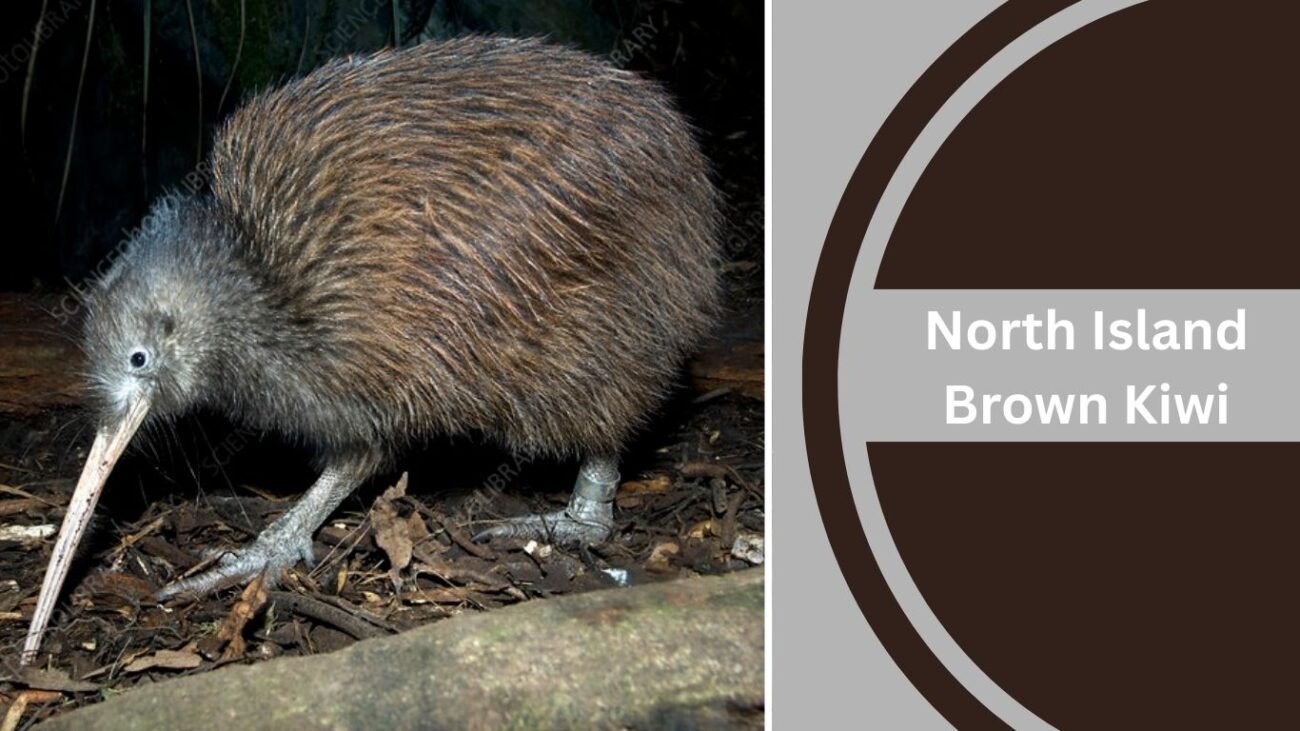
The North Island Brown Kiwi (Apteryx mantelli) is the most common kiwi species, found throughout New Zealand’s North Island. Despite its larger population, it remains vulnerable to predators like stoats, dogs, and cats.
Identification
- Height: 18–20 inches (45–50 cm)
- Weight: 4–6.6 lbs (1.8–3 kg)
- Dark brown shaggy feathers with streaks
- Long pale bill with nostrils at the tip
- Small vestigial wings hidden under plumage
Habitat
Occupies lowland and upland forests, scrub, and farmland across the North Island. Adapts to both native forests and regenerating bushlands.
Behaviors
Nocturnal, foraging at night with an excellent sense of smell. Lives in monogamous pairs but may also form family groups. Known for loud shrill calls that echo through the forest at night.
Nest
Burrows or natural cavities are used as nesting sites. Males incubate the eggs, sometimes with help from females, for 70–80 days.
Diet
Omnivorous—feeding on worms, insects, beetle larvae, centipedes, spiders, and forest fruits. Plays an important role in controlling invertebrate populations in its ecosystem.
12. Greater Rhea

The Greater Rhea (Rhea americana) is the largest bird native to South America and the biggest member of the rhea family. It is often called the “South American Ostrich” due to its resemblance, though it is smaller and lighter.
Identification
- Height: 4.1–5.6 feet (1.25–1.7 m)
- Weight: 44–88 lbs (20–40 kg)
- Gray or brown plumage with long legs and neck
- Large wings, which are not used for flight but for balance when running
- Males larger and darker than females
Habitat
Found in grasslands, savannas, shrublands, and pampas across Argentina, Brazil, Uruguay, Bolivia, and Paraguay. Prefers open areas with tall grasses.
Behaviors
Social outside of breeding season, forming flocks of up to 100 individuals. Males are territorial during mating and care for chicks after hatching. Rheas are swift runners and can swim across rivers.
Nest
Males dig shallow ground nests where 10–60 eggs may be deposited by multiple females. Males incubate and guard the clutch, later raising the chicks.
Diet
Omnivorous—feeds on grasses, seeds, fruits, roots, insects, lizards, and small vertebrates. Helps spread seeds across its habitat.
13. Lesser Rhea (Darwin’s Rhea)
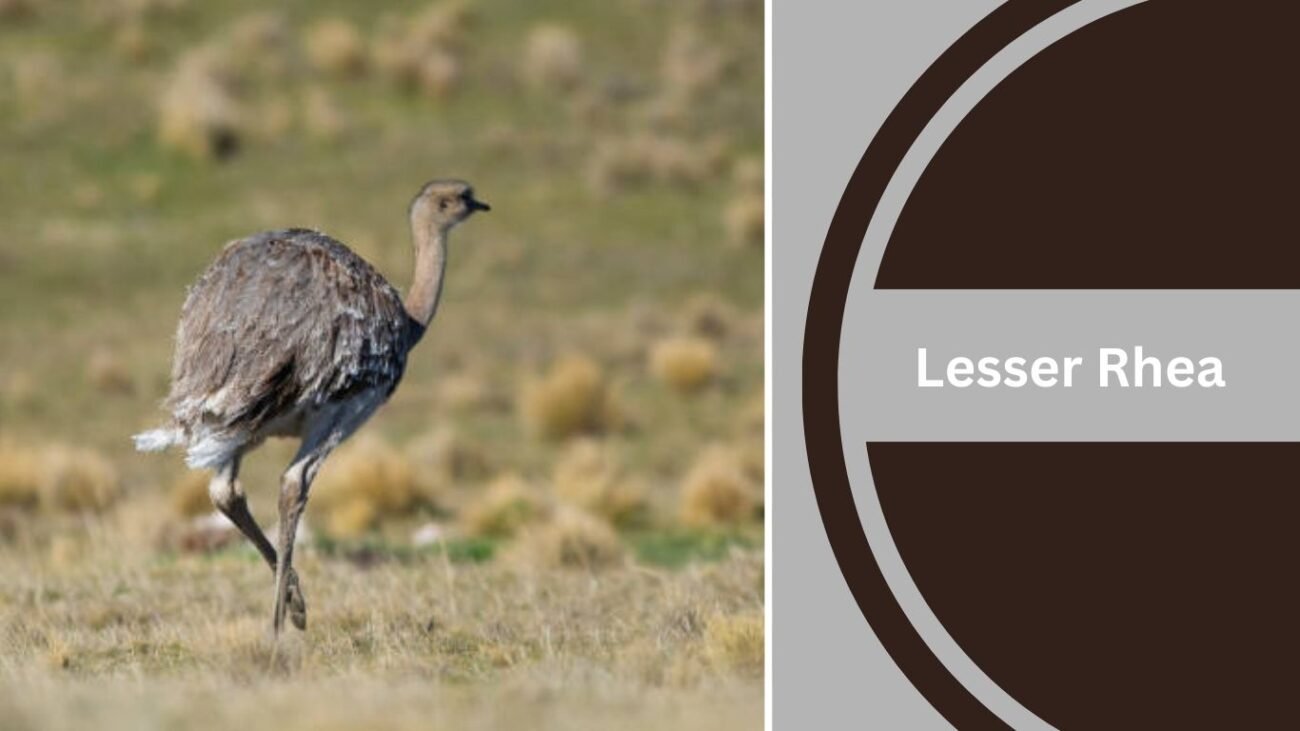
The Lesser Rhea (Rhea pennata), also known as Darwin’s Rhea, is smaller than the Greater Rhea and inhabits the colder, drier regions of South America. Charles Darwin documented it during his South American expeditions.
Identification
- Height: 3.3–3.9 feet (1–1.2 m)
- Weight: 33–66 lbs (15–30 kg)
- Brownish-gray plumage with white spots
- Shorter and stockier build compared to Greater Rhea
- Long, powerful legs with three toes
Habitat
Native to Patagonia, southern Chile, Bolivia, and the Andean foothills. Lives in steppe grasslands, scrublands, and arid plains.
Behaviors
Generally more solitary than the Greater Rhea but may form small groups. Fast runner, reaching speeds up to 60 km/h (37 mph). During breeding, males become aggressive and defend nests.
Nest
Males build simple ground scrapes, where several females lay eggs. A single male may incubate up to 30 eggs and later raise the chicks.
Diet
Feeds on grasses, seeds, cacti, roots, fruits, and occasionally insects and small vertebrates. Adapted to arid environments with sparse vegetation.