











Blue Jays are among the most striking and intelligent birds found across North America. With their vivid blue plumage, bold black markings, and loud calls, they are easily recognizable in backyards and forests alike. Yet, distinguishing between male and female Blue Jays can be surprisingly difficult. Their identical feather patterns and colors make visual identification tricky. However, subtle differences in behavior, size, and nesting roles can reveal whether you’re observing a male or a female.
Overview of Blue Jays
General Description
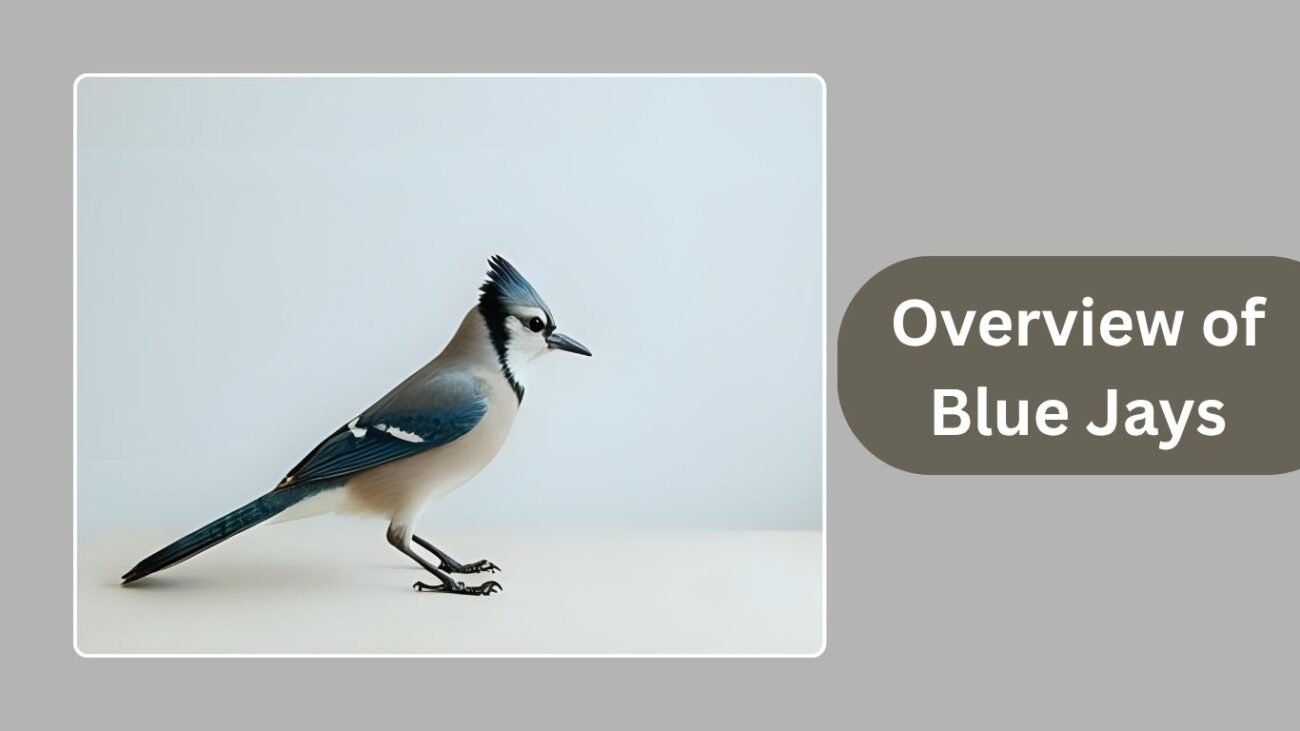
The Blue Jay (Cyanocitta cristata) is a medium-sized songbird belonging to the corvid family, which also includes crows and magpies. It typically measures about 9 to 12 inches in length, with a wingspan of around 13 to 17 inches. Both males and females have bright blue upperparts, white undersides, and a distinct black collar running around the neck. Their crest, which they raise or lower depending on mood, adds to their expressive appearance.
Blue Jays are native to eastern and central North America but can now be seen as far west as Texas and Colorado. They thrive in woodlands, suburban areas, and city parks, adapting well to human presence.
Importance in Ecosystem
Beyond their beauty, Blue Jays play a vital role in forest ecosystems. They are natural seed dispersers—especially of oak trees—because they bury acorns and often forget some, allowing new trees to sprout. Their loud calls also act as early warning systems for other birds when predators like hawks or snakes are nearby. Social and highly intelligent, Blue Jays contribute significantly to maintaining ecological balance in their habitats.
Male vs Female Blue Jay: Identification
- Size – Males are generally a bit larger and heavier than females. They have a more upright posture and slightly broader heads, while females appear a touch smaller and more compact in shape.
- Color – Both sexes share the same bright blue, black, and white plumage. However, males may seem a bit more vibrant during the breeding season due to fresh feathers, though lighting and molting can affect this perception.
- Wings – The wings of male Blue Jays can appear longer and more pointed, enhancing their bold flight display during courtship. Females’ wings are typically the same pattern but might look shorter and rounder when perched.
- Body – Males tend to have a fuller chest and a slightly bulkier frame, while females often look smoother and softer in contour. These distinctions are subtle and best noticed when both are seen side by side.
Physical Characteristics
Size and Weight Comparison
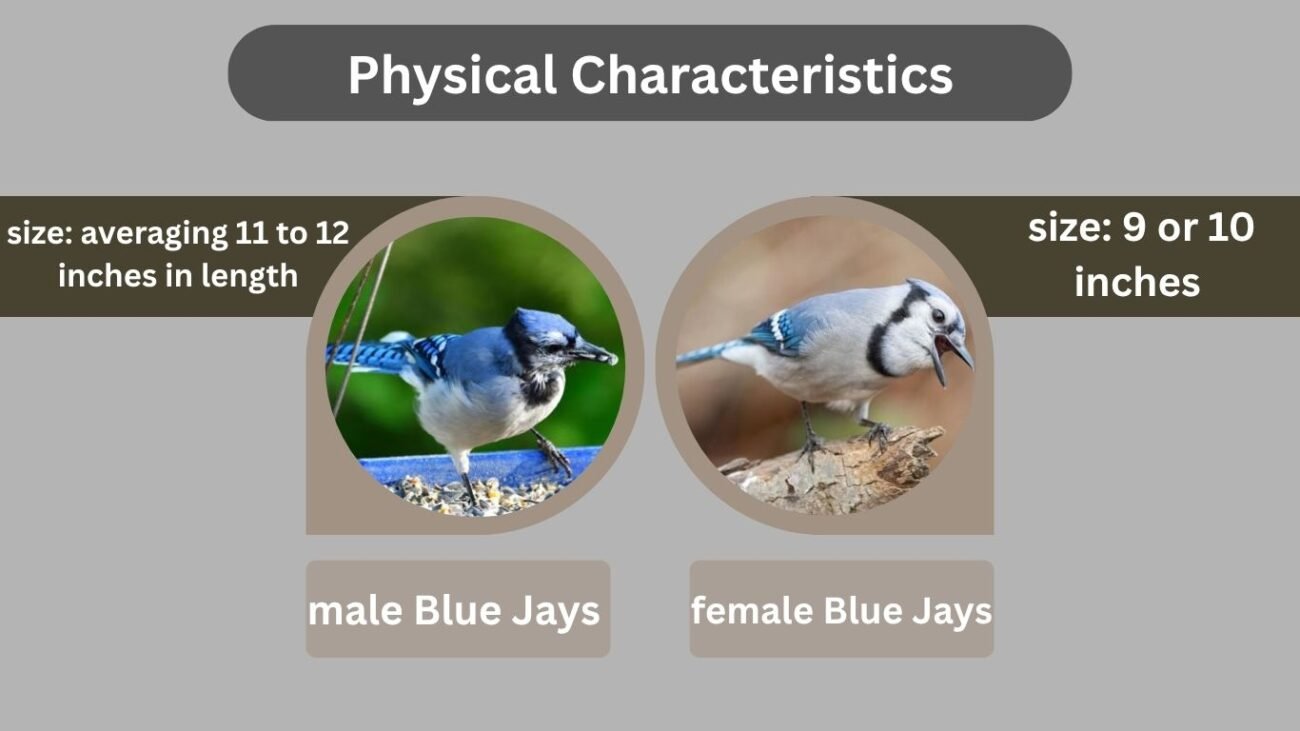
In terms of size, male Blue Jays generally measure at the upper end of the species range, averaging 11 to 12 inches in length, while females are closer to 9 or 10 inches. Males also weigh slightly more—about 3.2 ounces compared to females’ 2.8 ounces. However, environmental factors such as diet, region, and age can influence these measurements, making gender-based size comparisons unreliable without close examination.
Plumage and Coloration
Both male and female Blue Jays share the same exquisite pattern: blue backs and wings, white faces and bellies, and black collars and wing bars. Interestingly, the “blue” is not a pigment but a structural color caused by light scattering through feather microstructures. This means lighting and viewing angles can alter the perceived shade. Because both sexes exhibit this phenomenon equally, coloration is not a dependable indicator of gender.
Behavior Differences Between Male and Female Blue Jays
Aggression and Territory
Behavior is often a stronger clue than appearance when identifying a Blue Jay’s sex. Male Blue Jays are typically more assertive and territorial. During mating season, they vigorously defend nesting areas and food sources, chasing away rivals or intruders. Their crest is often raised during confrontations, making them appear larger and more intimidating. Females may show defensive behavior as well, but they’re generally less aggressive outside nesting duties.
Social and Flock Roles
Blue Jays are social birds that form tight family bonds. In mixed groups, males often take leadership roles, serving as lookouts for predators and vocalizing warning calls. Females, on the other hand, tend to stay near the nesting site, focusing on protection and incubation. This division of behavior allows both partners to ensure the safety of their young while maintaining cooperation within their social structure.
Courtship and Breeding Behavior
Courtship Displays
During the spring breeding season, Blue Jays exhibit elaborate courtship rituals. A group of males often gathers around a single female, performing a “courtship parade.” They fluff their feathers, bow, and make soft whistling or clicking calls to win her attention. Eventually, the female selects one male, forming a monogamous bond that can last for years or even a lifetime.
Males also engage in “courtship feeding,” where they bring food to the female as a display of strength and devotion. This behavior not only strengthens pair bonds but also signals the male’s ability to provide for future chicks.
Nesting and Egg Care
After courtship, Blue Jays begin building their nest together, typically in the crooks of tree branches or dense shrubs. Both the male and female collect twigs, bark strips, and roots to construct a sturdy cup-shaped nest. However, the female usually handles the fine weaving, creating a soft inner layer made of moss, grass, and feathers.
When it comes to egg care, the female takes the lead in incubation, keeping the eggs warm for about 17 to 18 days. During this period, the male’s role is vital — he provides food and guards the nesting area from predators. Once the chicks hatch, both parents feed and protect them for nearly three weeks until the young are ready to fledge.
Vocalization and Communication
Calls and Songs
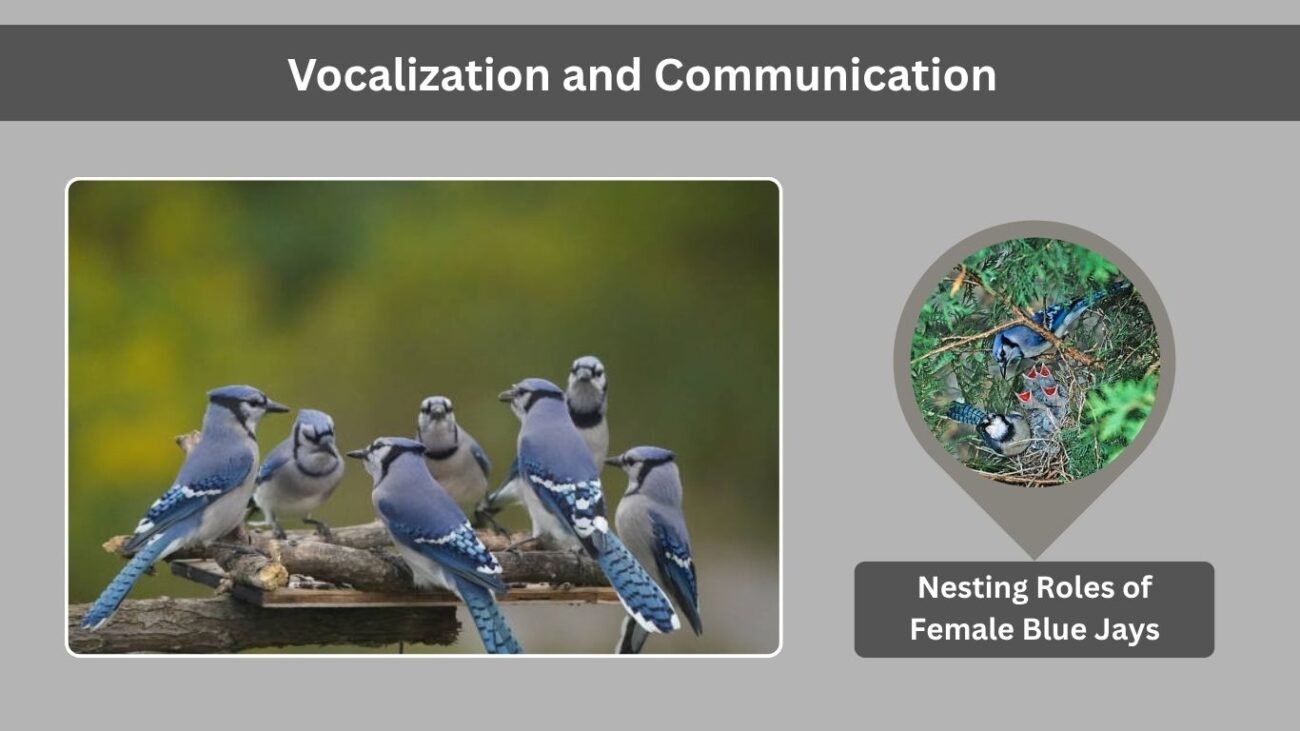
Blue Jays are known for their wide range of vocalizations — from musical whistles to harsh screeches. Their typical “jay jay” call is used to announce presence or alert others to danger. Both males and females share this repertoire, but males are generally more vocal, especially during territorial or courtship displays.
Blue Jays also mimic the calls of hawks to deter competitors or test their environment for threats. This impressive mimicry showcases their intelligence and adaptability.
Differences in Vocal Tone
While both sexes produce similar sounds, females often have softer and shorter calls, particularly when nesting. They use quieter chirps to communicate with mates without attracting predators. Males, conversely, employ louder calls to mark territory or guide family members to food sources. These subtle tonal variations can help experienced birdwatchers identify gender in the field.
Do Male and Female Blue Jays Look the Same?

At a glance, male and female Blue Jays are nearly indistinguishable. Their plumage, crest, and coloration are so alike that even experts often rely on behavior or DNA testing to confirm sex. This resemblance is a result of evolutionary adaptation — since both share similar roles in parenting and territory defense, they evolved identical appearances to maintain camouflage and reduce risk from predators.
Lighting and environmental conditions can sometimes make one bird appear slightly brighter or duller, but this is not a reliable indicator of sex. The “blueness” of a Blue Jay’s feathers depends entirely on light refraction — a scientific illusion, not a pigment difference.
Common Misconceptions
“The Brighter One Is the Male” Myth
A widespread myth claims that the brighter, more vivid Blue Jay is the male. In reality, this assumption is false. The intensity of a Blue Jay’s blue color changes depending on the angle of sunlight and feather health, not gender. Molting season, diet, and feather condition also affect brightness, leading to misinterpretation.
Misidentification in Photos
Photographs can exaggerate differences between male and female Blue Jays. Shadows, lighting, and camera exposure may make one bird look darker or more vibrant than the other. This often leads to the mistaken belief that males have richer coloration. In truth, both sexes have the same feather structure and color, appearing slightly different only under varying lighting.
Observing Blue Jays in Nature
How to Identify Them in the Wild
Identifying male and female Blue Jays in the wild requires patience and attention to behavior rather than color. During breeding season, look for interactions — the bird feeding another is likely the male, while the one being fed is the female. Observe size differences within pairs; males may appear slightly larger or stand more upright during displays. Watching how they act around the nest provides more clues than any physical trait.
Birdwatching and Photography Tips
When photographing or observing Blue Jays, it’s important to do so respectfully. Avoid approaching active nests or making loud noises. The best times for observation are early morning and late afternoon when Blue Jays are most active. For photographers, using a telephoto lens helps capture detailed images of both male and female birds without disturbing their natural behavior. Documenting their courtship, feeding, or vocal interactions can provide insight into their complex relationships.
Key Takeaways
- Male and female Blue Jays look almost identical, sharing the same bright blue and white plumage.
- Males are slightly larger and more territorial, especially during the breeding season.
- Females handle incubation, while males focus on providing food and protection.
- Behavior and size are better gender indicators than color.
- Observing courtship and feeding behavior reveals the most reliable clues about sex.
FAQs
1. How can you tell a male Blue Jay from a female?
Male Blue Jays are usually slightly larger with more defined crests. However, the best way to tell them apart is through behavior — males are often more aggressive and vocal, while females spend more time nesting and incubating eggs.
2. Do male and female Blue Jays have different colors?
No, both sexes share the same blue, black, and white coloration. Their feathers create the blue color through light refraction, not pigment, which is why both appear equally vivid under sunlight.
3. Are male Blue Jays louder than females?
Yes. Males tend to produce louder and more frequent calls, especially during spring and early summer. They use these calls to mark territory, attract mates, and warn their group about nearby threats.
4. Do both male and female Blue Jays build nests?
Absolutely. Both sexes participate in gathering materials, but the female usually crafts the nest’s inner layers. She then incubates the eggs while the male provides food and stands guard nearby.
5. Why are Blue Jays often seen in pairs?
Blue Jays form monogamous bonds and often stay together for life. They share all nesting, feeding, and defensive responsibilities, which is why pairs are commonly spotted together year-round, even outside the breeding season.


