











The albatross is one of the most captivating seabirds on Earth, famous for its enormous wingspan and its ability to glide effortlessly across vast ocean distances. What makes these birds even more remarkable is their longevity. Some albatrosses live longer than most birds—and even rival the lifespan of humans. Their impressive lifespan, often reaching several decades, varies between species such as the wandering, royal, and Laysan albatross. Understanding their lifespan offers insight into their survival strategies, environmental adaptations, and the importance of conservation for these oceanic wanderers.
Overview of Albatross Lifespan
What Is the Average Lifespan of an Albatross?
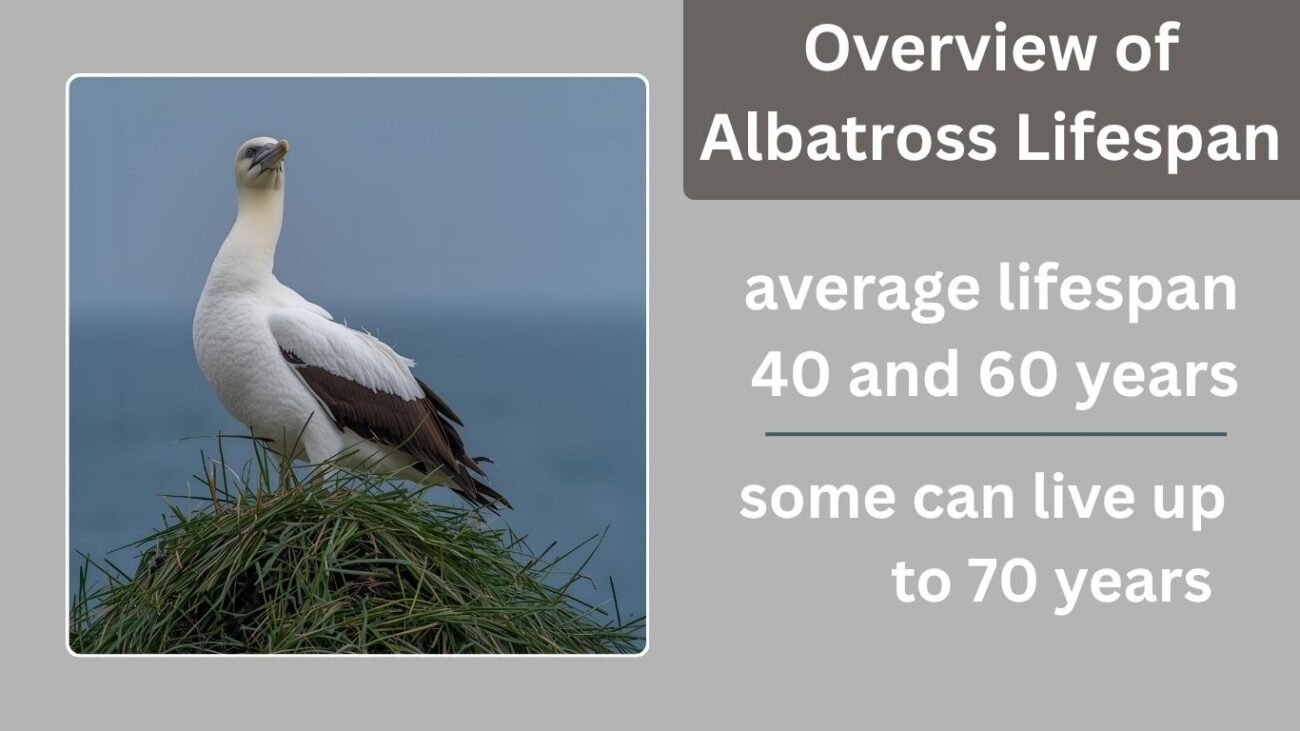
On average, most albatross species live between 40 and 60 years, though some individuals have been recorded living well beyond that range. The wandering albatross (Diomedea exulans) is particularly known for its long life, with some individuals reaching over 70 years of age. Scientists attribute this longevity to their slow metabolism, efficient flight, and low predation rates in adulthood.
Unlike many smaller birds, albatrosses take years to reach maturity, which contributes to their extended lifespan. This slow development allows them to invest more energy in survival rather than rapid reproduction. As a result, albatrosses exemplify nature’s balance between longevity and slow population growth.
Comparison Among Albatross Species
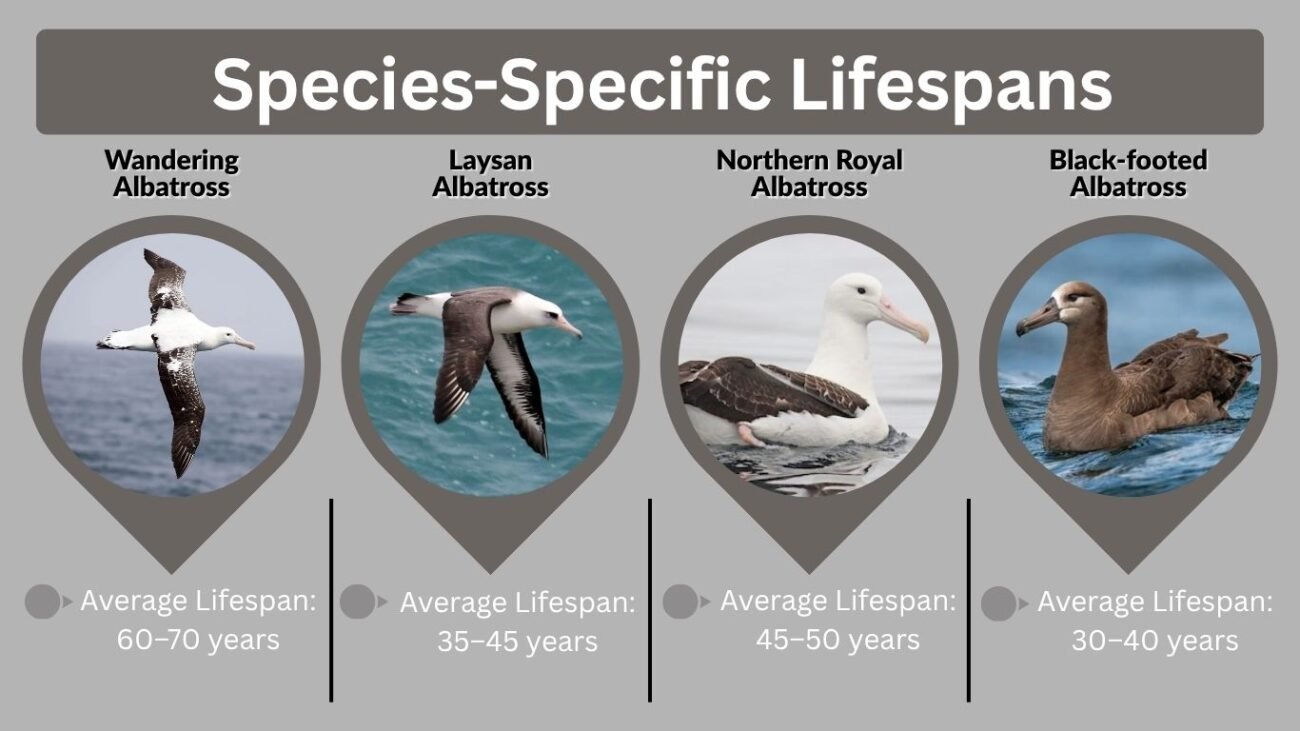
The lifespan of an albatross varies across species. Here’s a look at the estimated averages:
| Species | Average Lifespan |
| Wandering Albatross | 60–70 years |
| Laysan Albatross | 35–45 years |
| Northern Royal Albatross | 45–50 years |
| Southern Royal Albatross | 45–50 years |
| Black-footed Albatross | 30–40 years |
| Black-browed Albatross | 35–45 years |
These lifespans highlight the albatross’s extraordinary ability to survive harsh marine environments. The larger species, such as the wandering and royal albatrosses, generally live longer due to slower metabolism and fewer natural predators.
Species-Specific Lifespans
Laysan Albatross Lifespan
The Laysan albatross (Phoebastria immutabilis), found mainly in the North Pacific, typically lives around 40 years. However, some individuals exceed this age, especially in protected colonies. One famous example is Wisdom, a female Laysan albatross known as the world’s oldest wild bird. As of recent records, she’s over 70 years old and still breeding successfully—a testament to the species’ remarkable resilience.
Their extended lifespan is supported by their stable nesting sites, particularly in Midway Atoll and other Hawaiian Islands, where conservation programs minimize human impact. Laysan albatrosses benefit from long-term pair bonds, predictable food sources, and reduced threats in managed habitats.
Wandering Albatross Lifespan
The wandering albatross holds the record for the longest wingspan—up to 11 feet—and one of the longest lifespans in the bird world. These giants of the Southern Ocean often live 60 to 70 years, with some surviving even longer in the wild.
Their incredible gliding ability allows them to travel thousands of miles without expending much energy. Because they face few predators once mature, their deaths usually result from natural causes or human interference, such as longline fishing. Studies of banded wandering albatrosses have provided valuable insights into bird longevity and ocean ecology.
Their delayed breeding—typically not until ages 10–12—and long intervals between nesting cycles also contribute to their long lives, illustrating how slow reproduction can accompany great longevity in nature.
Royal Albatross Lifespan (Northern & Southern)
The royal albatrosses are among the largest and longest-living seabirds, divided into northern (Diomedea sanfordi) and southern (Diomedea epomophora) species. Both typically live 45–50 years, though some individuals exceed this range under favorable conditions.
These birds spend most of their lives gliding over the Southern Ocean, returning to land only to breed. Because they nest infrequently—often once every two years—their populations grow slowly. Conservation programs in New Zealand’s Taiaroa Head have successfully tracked and protected royal albatrosses, helping researchers document their long lives and migration patterns.
Their survival is closely tied to ocean health, as changes in sea temperature and fish availability can significantly affect their lifespan and reproductive success.
Other Albatross Species and Their Lifespans
Beyond the famous species, several other albatrosses exhibit impressive lifespans:
- Black-browed Albatross (Thalassarche melanophrys): Typically lives 35–45 years, one of the most widespread and studied albatrosses.
- Black-footed Albatross (Phoebastria nigripes): Averages 30–40 years, nesting primarily in Hawaii and facing risks from plastic ingestion.
- Buller’s Albatross (Thalassarche bulleri): Around 30–35 years, with populations centered in New Zealand.
- Grey-headed and Shy Albatross: Both average 25–40 years, depending on environmental stability and fishing threats.
- Short-tailed and Sooty Albatross: Lifespans range from 30–35 years, though both species are classified as vulnerable.
- Waved and Snowy Albatross: Found near South America and the Galápagos, typically live 25–40 years, affected by oceanic changes and limited breeding sites.
Together, these species illustrate how environment, size, and human influence shape albatross longevity.
Factors Affecting the Lifespan of Albatrosses
Environmental Influences
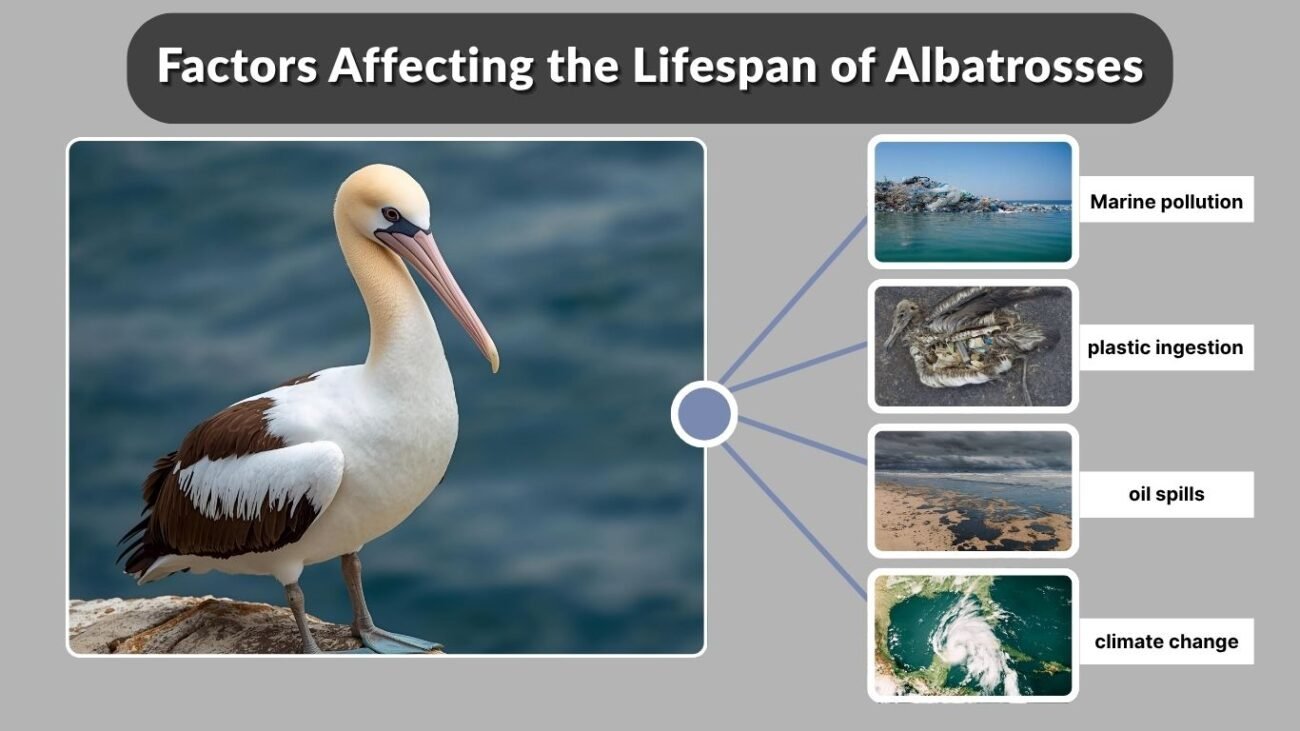
The environment plays a major role in determining how long an albatross lives. These birds spend most of their lives soaring over open oceans, and while their remote habitats protect them from land-based predators, they face growing threats from human activity. Marine pollution, plastic ingestion, oil spills, and climate change are among the leading causes of premature death.
Plastic debris, mistaken for food, can clog their digestive tracts and cause starvation. Rising ocean temperatures also disrupt fish populations, making it harder for albatrosses to find sufficient food. Additionally, longline and trawl fishing unintentionally kill thousands of albatrosses each year when they get caught in fishing gear. These combined pressures reduce their survival rates, especially among juveniles.
Biological and Behavioral Factors
Biologically, albatrosses are built for longevity. Their slow metabolism, low heart rate, and energy-efficient flight contribute to minimal wear on their bodies over time. They are also less exposed to predators once mature, giving them a greater chance to reach old age.
However, their slow reproductive rate is a double-edged sword. Albatrosses don’t begin breeding until they are 8 to 12 years old, and even then, they typically raise only one chick every two years. This low birth rate means that population recovery is extremely slow if adult mortality rises. Therefore, while individual birds live long lives, species populations can decline rapidly under environmental stress.
Gender Differences in Lifespan
Studies suggest that there are slight lifespan variations between male and female albatrosses. Female albatrosses may face higher risks due to long migrations and repeated nesting stress. Males often remain near nesting grounds and thus experience fewer energy demands. While the difference is small, it highlights how biological roles influence survival. Overall, both genders can live for decades, provided they escape human-induced threats.
Albatross Lifespan vs. Humans and Other Birds
Albatross Lifespan Compared to Humans
The albatross lifespan vs. human lifespan comparison is surprisingly close. Some albatrosses, particularly the wandering species, live nearly as long as people—60 to 70 years. This makes them one of the few birds capable of rivaling human longevity.
Their secret lies in their slow-paced life strategy. Unlike mammals, which burn energy quickly, albatrosses expend very little energy in flight thanks to their gliding technique called dynamic soaring. This energy efficiency, combined with a diet rich in nutrient-dense marine life and minimal predation, allows them to age gracefully. Essentially, their slow life rhythm mirrors that of other long-lived species such as tortoises and whales.
Comparison with Other Seabirds
When compared to other seabirds, albatrosses stand out for their extreme lifespans. While gulls, terns, and petrels may live 15–30 years, most albatross species exceed 40 years, with some surpassing double that. Their long lives are tied to their evolutionary niche—life in open oceans, slow breeding cycles, and minimal competition.
This extended lifespan also gives scientists a unique opportunity to study long-term ecological patterns. By tracking banded albatrosses for decades, researchers have learned about climate impacts, ocean currents, and global fisheries, making these birds essential indicators of marine ecosystem health.
Conservation and Lifespan Enhancement
Human Impact and Threats
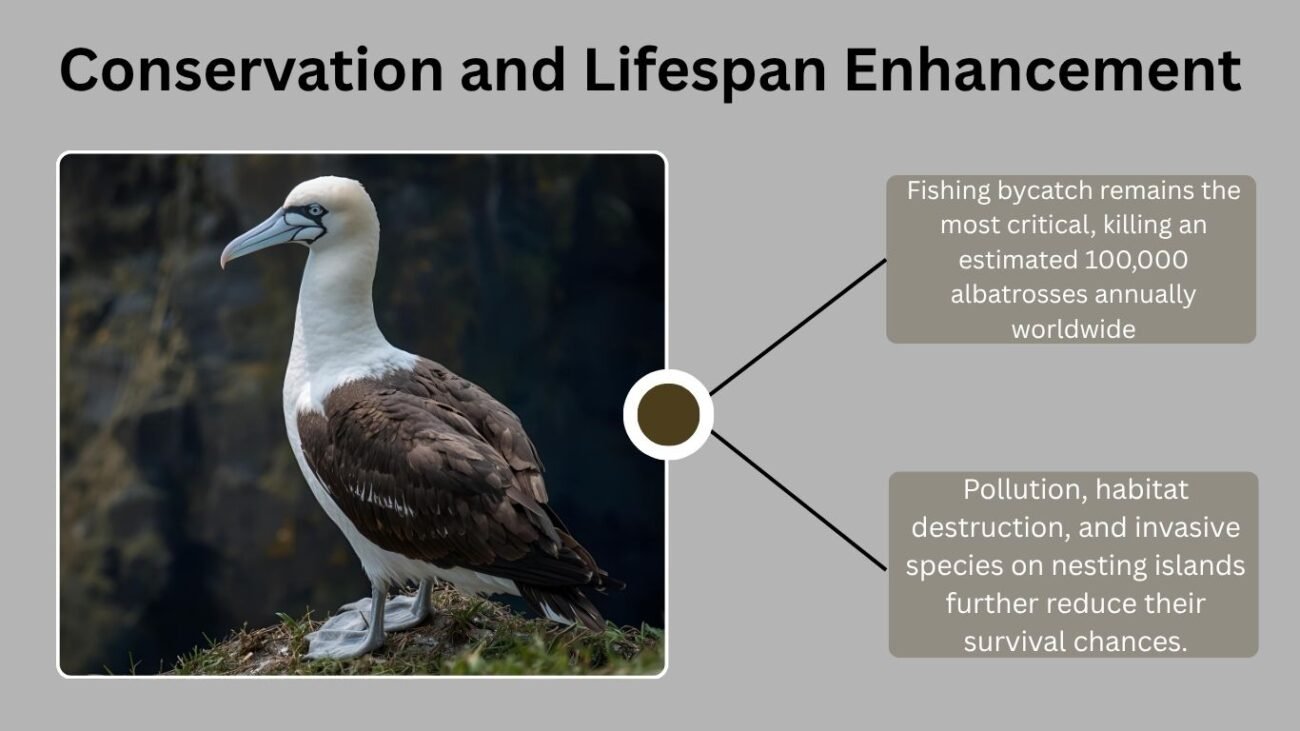
Despite their natural resilience, albatrosses face a growing list of human-induced threats. Fishing bycatch remains the most critical, killing an estimated 100,000 albatrosses annually worldwide. Pollution, habitat destruction, and invasive species on nesting islands further reduce their survival chances. Even light pollution and introduced predators like rats and cats can decimate nesting colonies by targeting chicks and eggs.
Global Conservation Efforts
Fortunately, international organizations and governments have recognized the plight of these seabirds. The Agreement on the Conservation of Albatrosses and Petrels (ACAP) has played a central role in protecting 31 species through policy, research, and community engagement.
Other conservation programs, like those run by BirdLife International, focus on reducing bycatch by encouraging the use of bird-safe fishing lines and hooks. In addition, habitat restoration projects on remote islands have helped several species recover from the brink of extinction.
How Conservation Helps Extend Their Lives
Thanks to these initiatives, many albatross species are now experiencing increased survival rates. For example, the introduction of towed bird-scaring lines and weighted hooks has drastically reduced bycatch mortality. Protected breeding colonies and marine sanctuaries also give young albatrosses a higher chance of reaching maturity.
Modern technology, including satellite tracking and AI-driven data analysis, allows conservationists to monitor albatross movement and predict threats. These ongoing efforts are vital in ensuring that future generations can witness these magnificent birds soaring over the open seas.
Key Takeaways
- Albatrosses are among the longest-living birds, with lifespans ranging from 30 to 70 years.
- The wandering albatross holds the record, often living beyond 60 years.
- Their longevity results from slow metabolism, low predation, and energy-efficient flight.
- Human threats such as fishing bycatch and pollution are the main causes of reduced lifespan.
- Global conservation programs have successfully improved survival rates for many species.
FAQs About Albatross Lifespan
What is the average lifespan of an albatross?
Most albatrosses live between 40 and 60 years, though some species, like the wandering albatross, can reach or exceed 70 years in the wild. Their slow life pace and lack of predators help them achieve this longevity.
Which albatross species lives the longest?
The wandering albatross is the longest-living species, often surpassing 60 years. Its vast range and low predation rates allow it to age gracefully, making it a true symbol of endurance.
Do male and female albatrosses live the same length of time?
Generally, both sexes have similar lifespans. However, females may have slightly shorter lives due to the physical stress of egg-laying and long migrations during breeding seasons.
What factors influence an albatross’s lifespan?
Several factors affect their longevity—diet, habitat stability, pollution, climate changes, and human fishing practices. Conservation measures like safe fishing methods and habitat protection are crucial to extending their lives.
How does the lifespan of an albatross compare to humans?
Some albatrosses can live as long as humans, up to 70 years. Their slow metabolism, minimal predation, and oceanic lifestyle give them an extraordinary advantage in longevity compared to most other birds.


