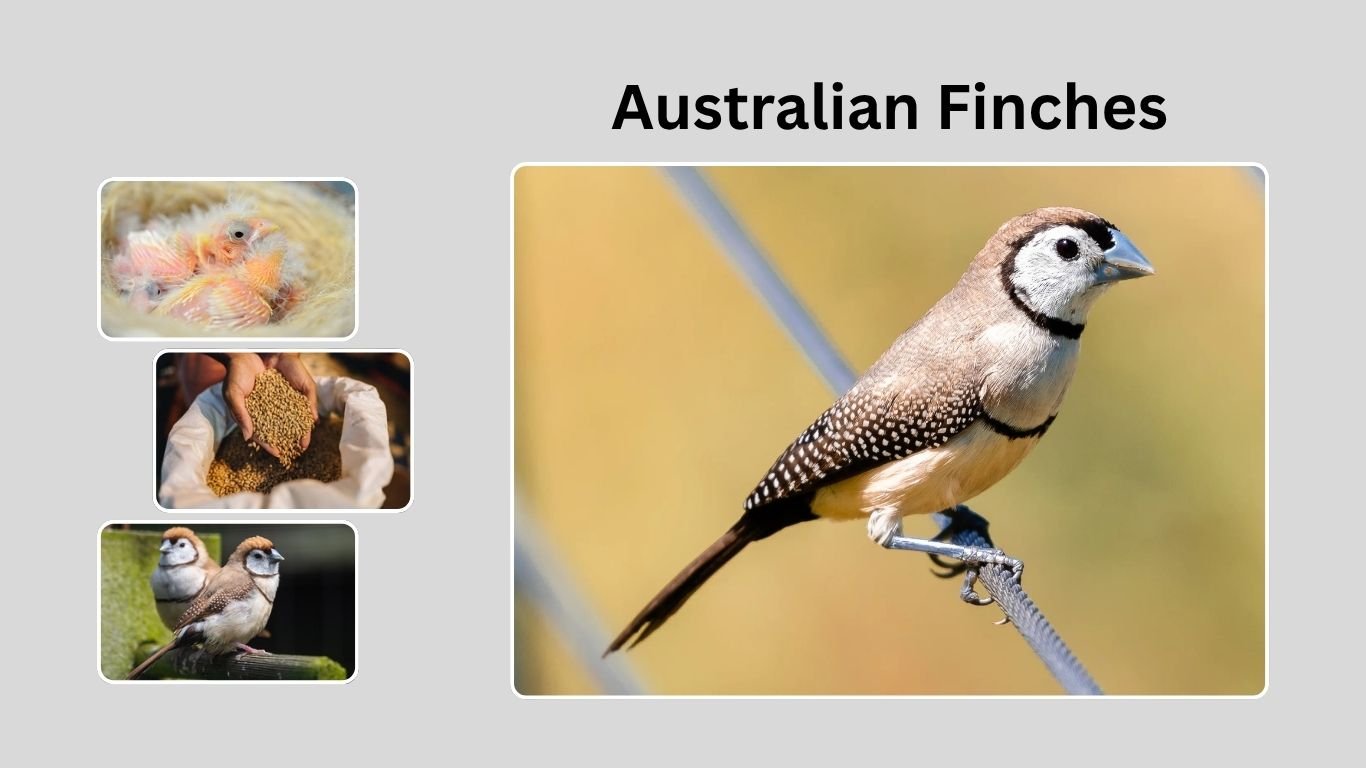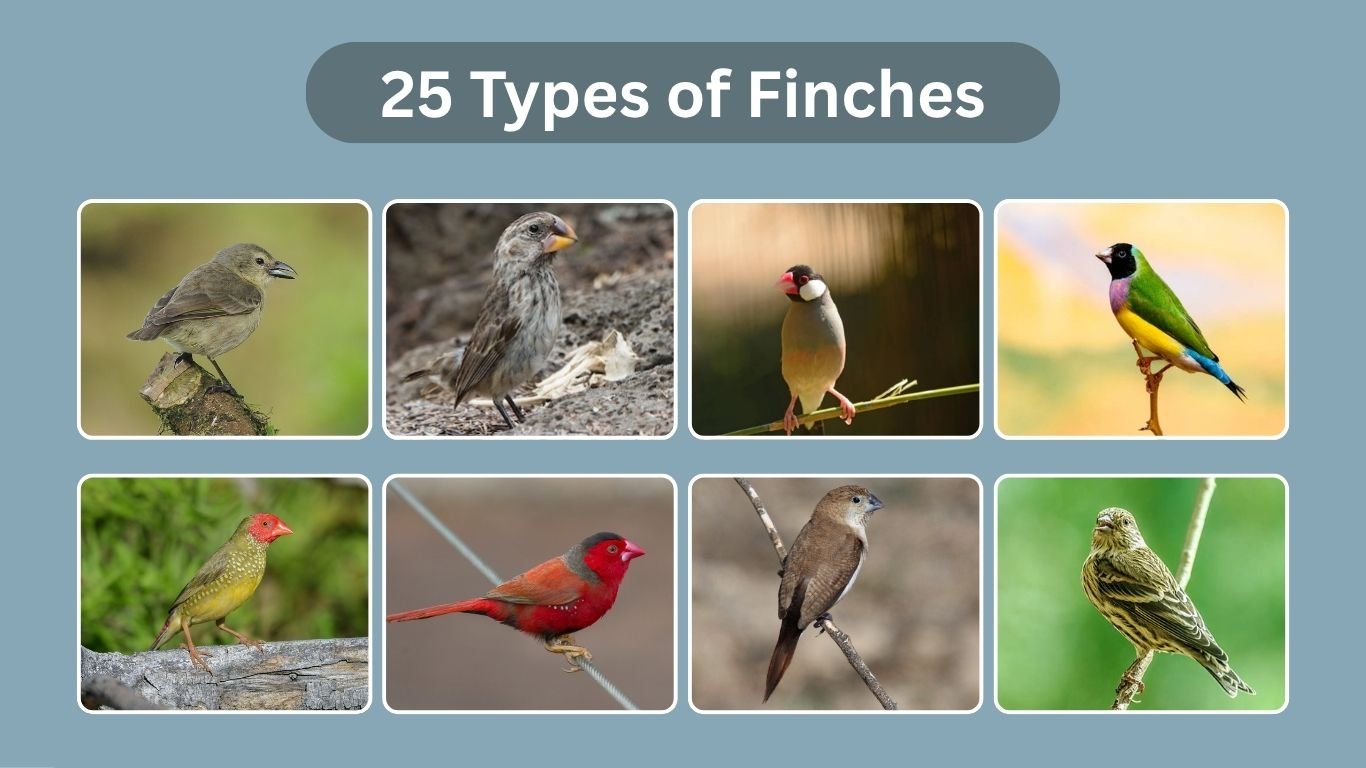
Finches are small, colorful, and melodious birds known for their diversity and adaptability. Found across nearly every continent, these fascinating creatures vary widely in color, size, and behavior. From the famous Darwin’s finches of the Galápagos Islands to the vibrant Gouldian Finch of Australia, each species plays a vital role in its ecosystem. Here are 25 remarkable types of finches from around the world.
1. House Finch
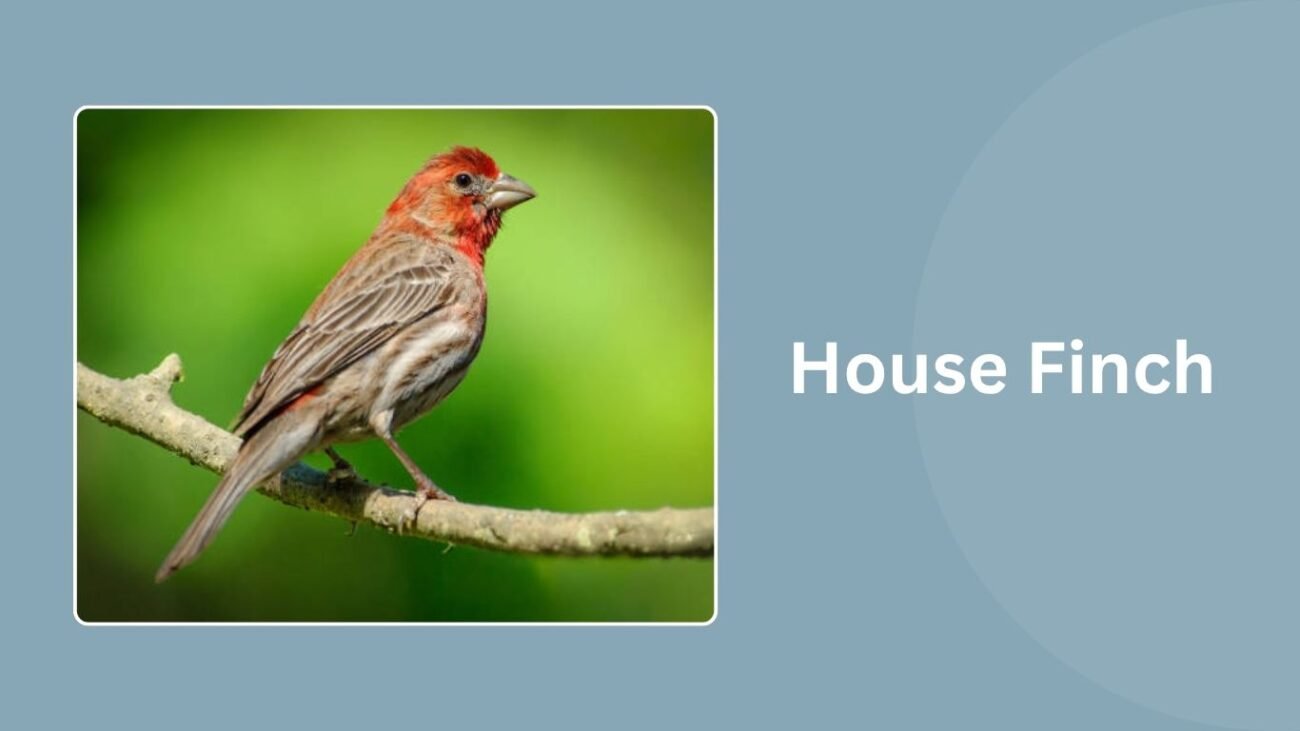
The House Finch (Haemorhous mexicanus) is a small, colorful songbird native to North America. Known for its cheerful warbling song and bright red plumage in males, it thrives in urban areas, gardens, and forests. Adaptable and social, the House Finch is one of the most common backyard birds across the United States.
Identification
- Scientific name: Haemorhous mexicanus
- Size: 5–6 inches (13–15 cm)
- Color: Males are red on the head and chest; females are brown and streaked
- Wingspan: 8–10 inches (20–25 cm)
- Distinct feature: Curved beak for cracking seeds
Habitat
House Finches inhabit urban parks, farmlands, and suburban gardens. Originally from the western U.S. and Mexico, they have expanded eastward, adapting to nearly every habitat except dense forests and deserts.
Behavior
These birds are highly social, often seen in flocks. They sing sweet, warbling songs throughout the day. Males use their bright colors and songs to attract females, and both parents share feeding duties.
Diet
Their diet mainly consists of seeds, grains, and berries. They are frequent visitors to bird feeders, where they prefer sunflower and millet seeds. Occasionally, they eat small insects during the breeding season.
Predators
Common predators include hawks, owls, cats, and snakes. Their flocking behavior helps reduce the risk of predation.
Lifespan
House Finches typically live 2–5 years in the wild, though some individuals survive up to 10 years under ideal conditions.
2. Purple Finch
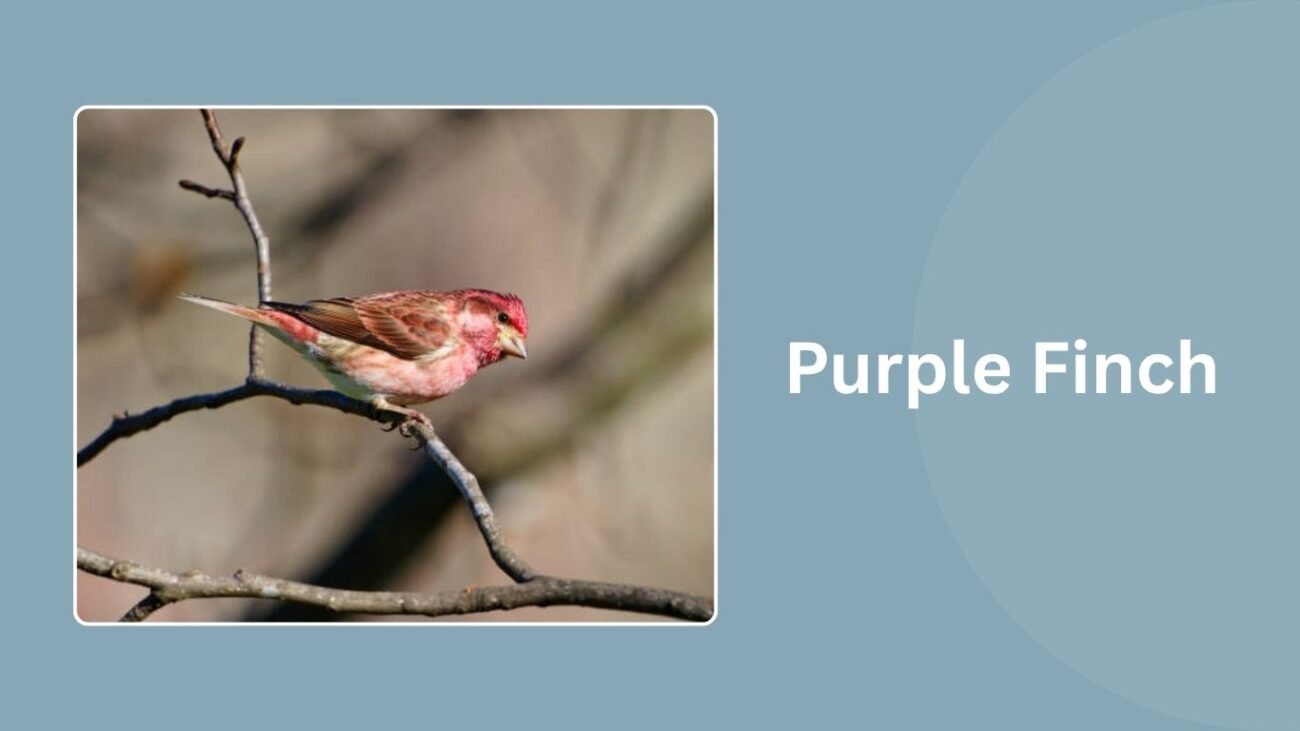
The Purple Finch (Haemorhous purpureus) is a small, vibrant songbird often described as a “sparrow dipped in raspberry juice.” Native to North America, it is admired for its melodious warbling and striking plumage. Despite its name, the Purple Finch is more reddish-pink than purple, and it is a close relative of the House Finch.
Identification
- Scientific name: Haemorhous purpureus
- Size: 5.5–6.3 inches (14–16 cm)
- Color: Males have a rosy-red head and chest; females are brown with streaked underparts
- Wingspan: 9–10 inches (22–25 cm)
- Distinct feature: Heavy conical bill and rosy-red coloration in males
Habitat
Purple Finches breed in coniferous and mixed forests across Canada and the northeastern United States. During winter, they migrate south to gardens, parks, and wooded suburbs. They prefer habitats rich in trees and shrubs for nesting and foraging.
Behavior
These finches are calm and social, often feeding in small flocks. Males sing rich, warbling songs to attract females and defend territories. They are known for their gentle nature and avoid aggressive encounters with other birds.
Diet
Their diet primarily consists of seeds, buds, and berries. They enjoy sunflower seeds at feeders and often consume flower buds and tree sap in the wild. Occasionally, they feed on small insects, especially in breeding season.
Predators
Purple Finches face threats from hawks, jays, cats, and snakes. They rely on camouflage and alert calls to escape danger.
Lifespan
The average lifespan of a Purple Finch is 2–4 years, though some individuals have been recorded living up to 9 years.
3. Cassin’s Finch
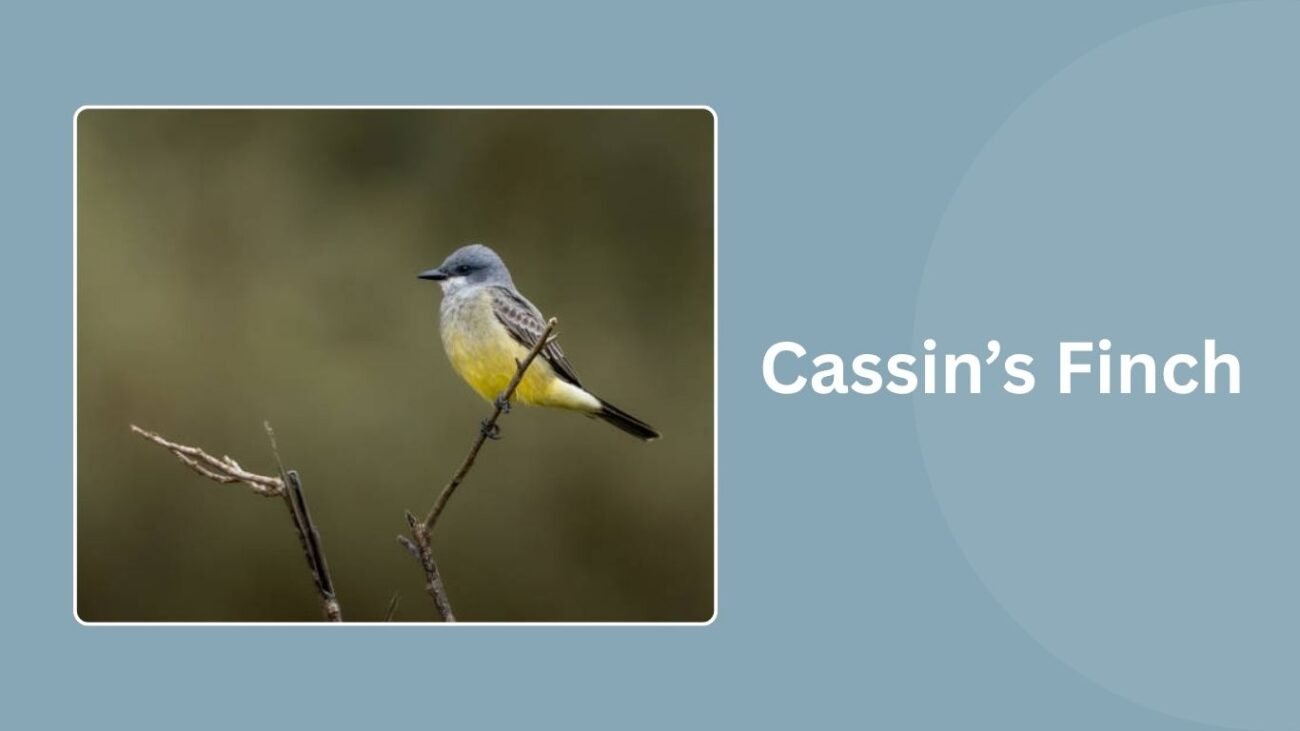
The Cassin’s Finch (Haemorhous cassinii) is a beautiful songbird native to the mountainous regions of western North America. Known for its rich rose-red coloring and melodious song, it is often found in pine forests and high-altitude areas. This finch is a close relative of the House and Purple Finch but can be identified by its brighter crown and longer bill.
Identification
- Scientific name: Haemorhous cassinii
- Size: 6 inches (15 cm)
- Color: Males have bright rose-red heads and throats; females are brown and heavily streaked
- Wingspan: 9.5–10.5 inches (24–27 cm)
- Distinct feature: Bright red crown and slightly longer, straighter bill than other finches
Habitat
Cassin’s Finches prefer coniferous forests in mountainous regions, especially those with pines and firs. They inhabit areas from British Columbia through the Rocky Mountains to northern New Mexico and Arizona. In winter, they may descend into valleys and urban feeders.
Behavior
These birds are social and often form small flocks outside the breeding season. Males sing a rich, warbling song from treetops to attract mates. During breeding, they display gentle courtship behaviors and often feed their partners.
Diet
Their diet mainly consists of seeds, buds, and fruits. They particularly enjoy pine seeds, berries, and small insects. In residential areas, they frequently visit bird feeders for sunflower and thistle seeds.
Predators
Common predators include hawks, owls, and snakes. Nestlings may also fall prey to squirrels or jays. Their cryptic plumage helps them remain hidden in forest canopies.
Lifespan
Cassin’s Finches typically live 3–5 years in the wild, with some surviving up to 8 years.
4. American Goldfinch
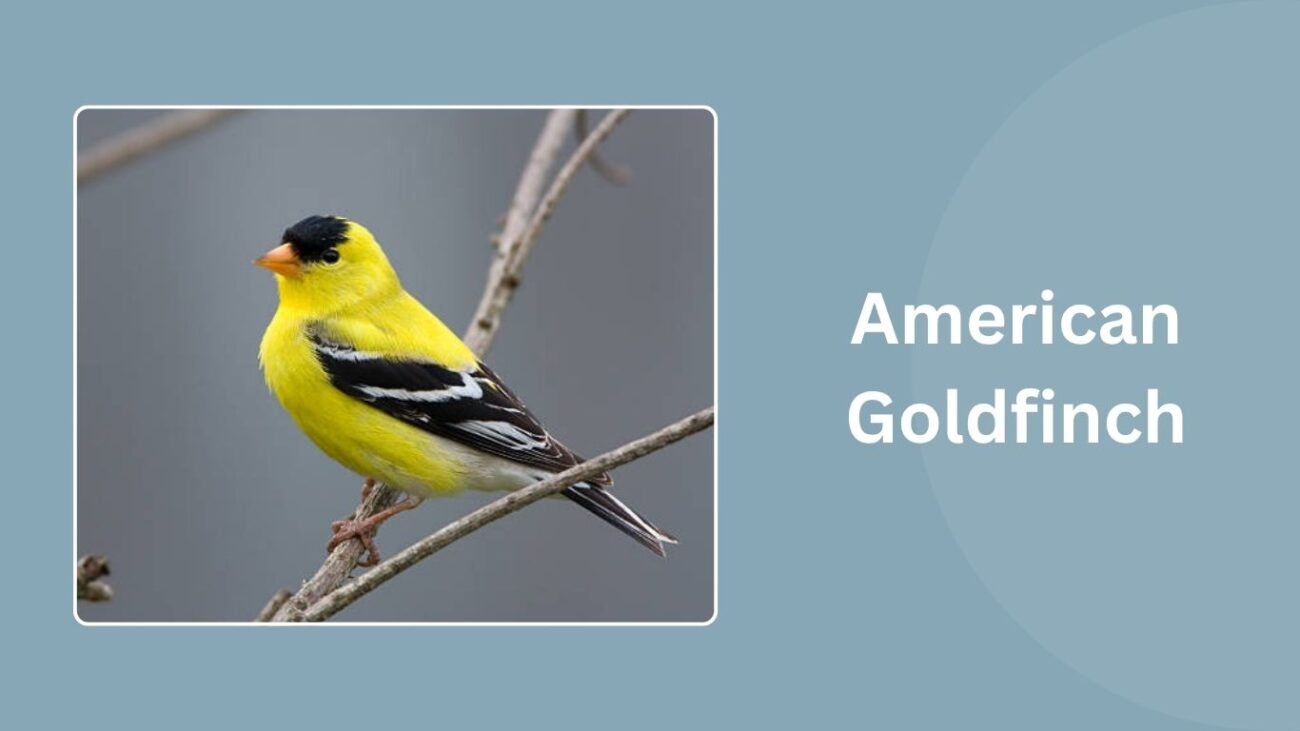
The American Goldfinch (Spinus tristis) is a small, vibrant songbird easily recognized by its bright yellow plumage and cheerful song. Known as the “wild canary,” this finch is widespread across North America and often seen flitting among fields, gardens, and meadows. Its acrobatic flight and melodic calls make it a favorite among bird enthusiasts.
Identification
- Scientific name: Spinus tristis
- Size: 4.3–5.1 inches (11–13 cm)
- Color: Males are bright yellow with black caps and wings; females are duller yellow-brown
- Wingspan: 7.5–8.7 inches (19–22 cm)
- Distinct feature: Conical beak and undulating flight pattern
Habitat
American Goldfinches inhabit open areas such as meadows, fields, and gardens. They prefer locations with abundant thistle plants and sunflowers. They are common across the United States and southern Canada, migrating southward during winter.
Behavior
These finches are highly social and often form flocks outside the breeding season. They are one of the few finches that molt twice a year, changing to a bright yellow coat in spring. Their flight is bouncy, and their calls sound like “per-chick-o-ree.”
Diet
Their diet consists primarily of seeds, especially from sunflowers, dandelions, and thistles. They are strict vegetarians, rarely eating insects. Goldfinches often hang upside down to feed from seed heads or feeders.
Predators
Predators include hawks, cats, and snakes. Nestlings are sometimes threatened by squirrels or jays. Their small size and alertness help them evade attacks.
Lifespan
American Goldfinches live 3–6 years in the wild, though some have reached 10 years under ideal conditions.
5. European Goldfinch
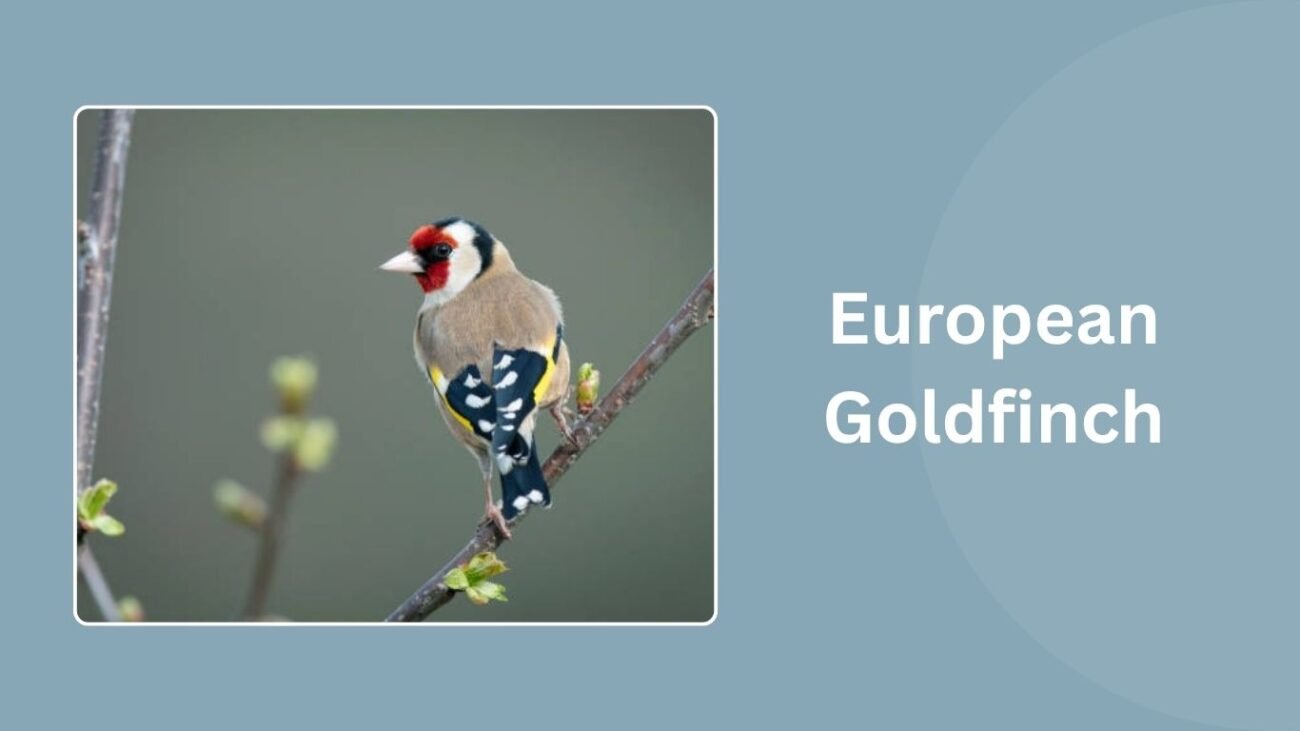
The European Goldfinch (Carduelis carduelis) is one of Europe’s most colorful and melodious songbirds. Recognized for its bright red face, golden wing bars, and delicate twittering song, this finch is a common sight across Europe, North Africa, and western Asia. Its beauty and pleasant song have made it a popular bird in folklore and art for centuries.
Identification
- Scientific name: Carduelis carduelis
- Size: 4.7–5.1 inches (12–13 cm)
- Color: Red face, black-and-white head, golden-yellow wing bars, and brown back
- Wingspan: 7.9–9.8 inches (20–25 cm)
- Distinct feature: Bright red mask and yellow wing patches
Habitat
European Goldfinches inhabit open woodlands, orchards, parks, and gardens. They prefer areas with scattered trees and abundant seed-bearing plants. They are widespread across Europe and western Asia, and many populations migrate to southern Europe or North Africa during winter.
Behavior
These finches are sociable and active, often moving in flocks outside the breeding season. They produce a series of liquid, tinkling notes and can hang upside down while feeding on seeds. Males use song displays to court females and defend nesting territories.
Diet
Their diet mainly includes seeds, especially from thistles, teasels, and dandelions. They also consume buds, small insects, and aphids during the breeding season to feed their chicks.
Predators
Predators include sparrowhawks, domestic cats, and magpies. Their swift flight and flocking behavior provide protection from threats.
Lifespan
European Goldfinches typically live 5–8 years, though some individuals can survive over 10 years in the wild.
6. Pine Siskin
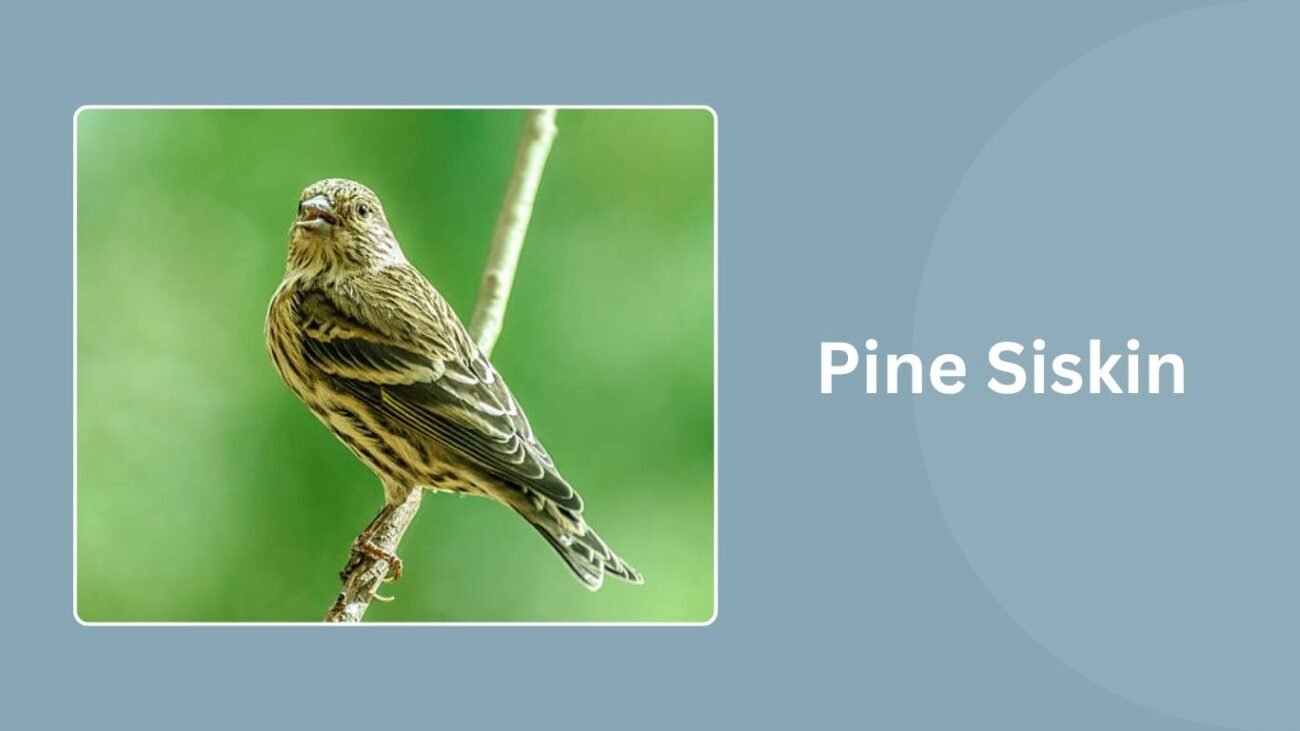
The Pine Siskin (Spinus pinus) is a small, streaked finch known for its lively behavior and buzzy, twittering calls. Found across North America, this bird is particularly associated with coniferous forests but often visits backyard feeders during winter. Its subtle beauty and friendly disposition make it a favorite among birdwatchers.
Identification
- Scientific name: Spinus pinus
- Size: 4.3–5.5 inches (11–14 cm)
- Color: Brown and heavily streaked with touches of yellow on wings and tail
- Wingspan: 7.1–8.7 inches (18–22 cm)
- Distinct feature: Thin, pointed bill and yellow wing edges
Habitat
Pine Siskins inhabit coniferous and mixed forests throughout North America. They are common in mountainous regions and northern areas but migrate unpredictably depending on seed availability. In winter, they can appear in large flocks at bird feeders and parks.
Behavior
Highly social and energetic, Pine Siskins form large flocks that travel great distances in search of food. They are known for their erratic migration patterns called “irruptions,” where thousands may move southward in poor seed years. Their calls are rapid, buzzy, and cheerful.
Diet
Their diet primarily consists of conifer seeds, such as pine, spruce, and cedar. They also eat thistle, birch, and alder seeds, and occasionally insects during the breeding season. They are frequent visitors to feeders with sunflower or nyjer seeds.
Predators
Predators include hawks, jays, cats, and snakes. Flocking behavior and rapid flight help them evade most threats.
Lifespan
The average lifespan of a Pine Siskin is 3–6 years, though some individuals have lived longer in captivity.
7. Common Chaffinch
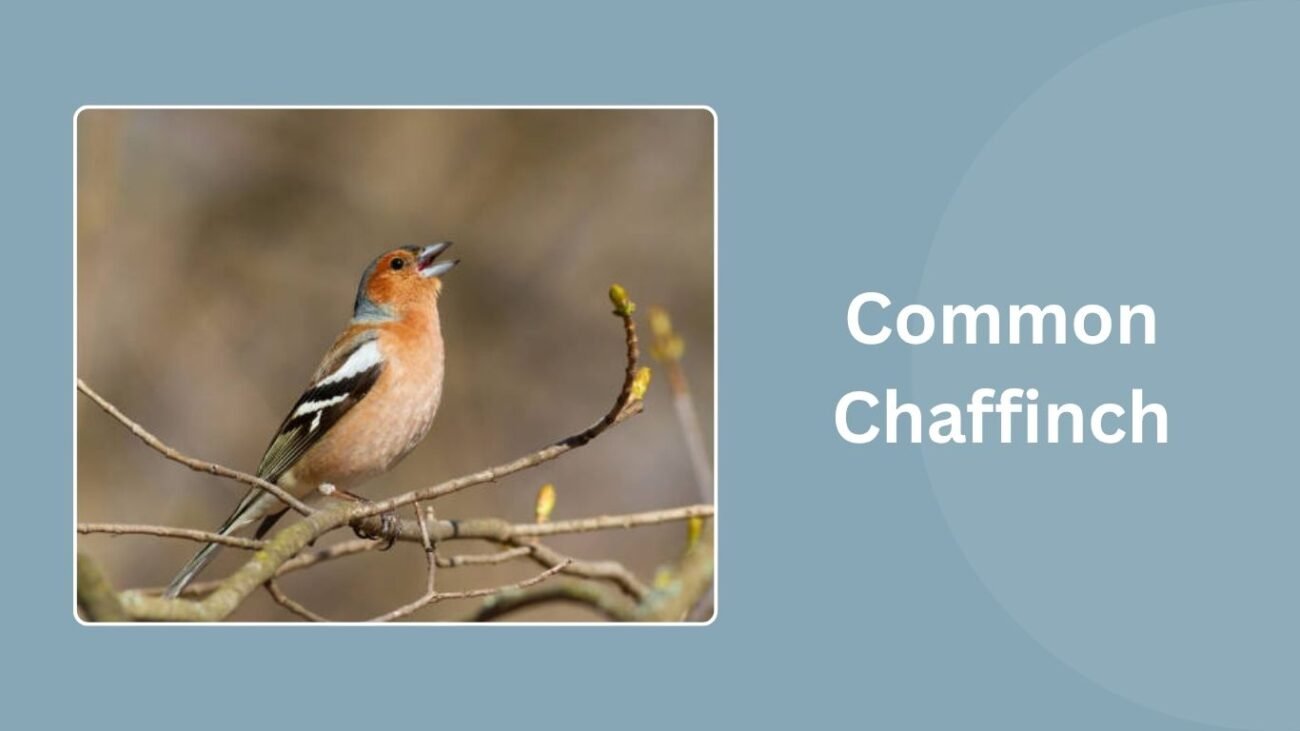
The Common Chaffinch (Fringilla coelebs) is one of Europe’s most abundant and colorful finches, known for its cheerful song and striking plumage. Males display bright blue-gray crowns and reddish underparts, while females are more subdued in color. Their loud, repetitive song is a familiar sound in woodlands and gardens across Europe.
Identification
- Scientific name: Fringilla coelebs
- Size: 5.5–6.3 inches (14–16 cm)
- Color: Males have blue-gray heads and reddish-pink breasts; females are brown and streaked
- Wingspan: 9.4–11 inches (24–28 cm)
- Distinct feature: Two bold white wing bars and strong, cheerful song
Habitat
Common Chaffinches are widespread throughout Europe, North Africa, and western Asia. They thrive in woodlands, hedgerows, gardens, and parks. These adaptable birds can live in both rural and urban areas, preferring regions with scattered trees and shrubs.
Behavior
Chaffinches are active and territorial, especially during breeding season. Males sing loudly from treetops to attract mates and defend their territories. In winter, they often gather in flocks, sometimes migrating south to warmer climates.
Diet
Their diet mainly includes seeds and grains, though they eat insects during the breeding season. Young chicks are fed on insects and larvae for protein. They frequently visit bird feeders offering sunflower or mixed seeds.
Predators
Predators include sparrowhawks, owls, cats, and snakes. Their alertness and flocking behavior help them avoid many threats.
Lifespan
Common Chaffinches typically live 3–5 years, though some individuals have reached over 10 years in the wild.
8. Hawfinch
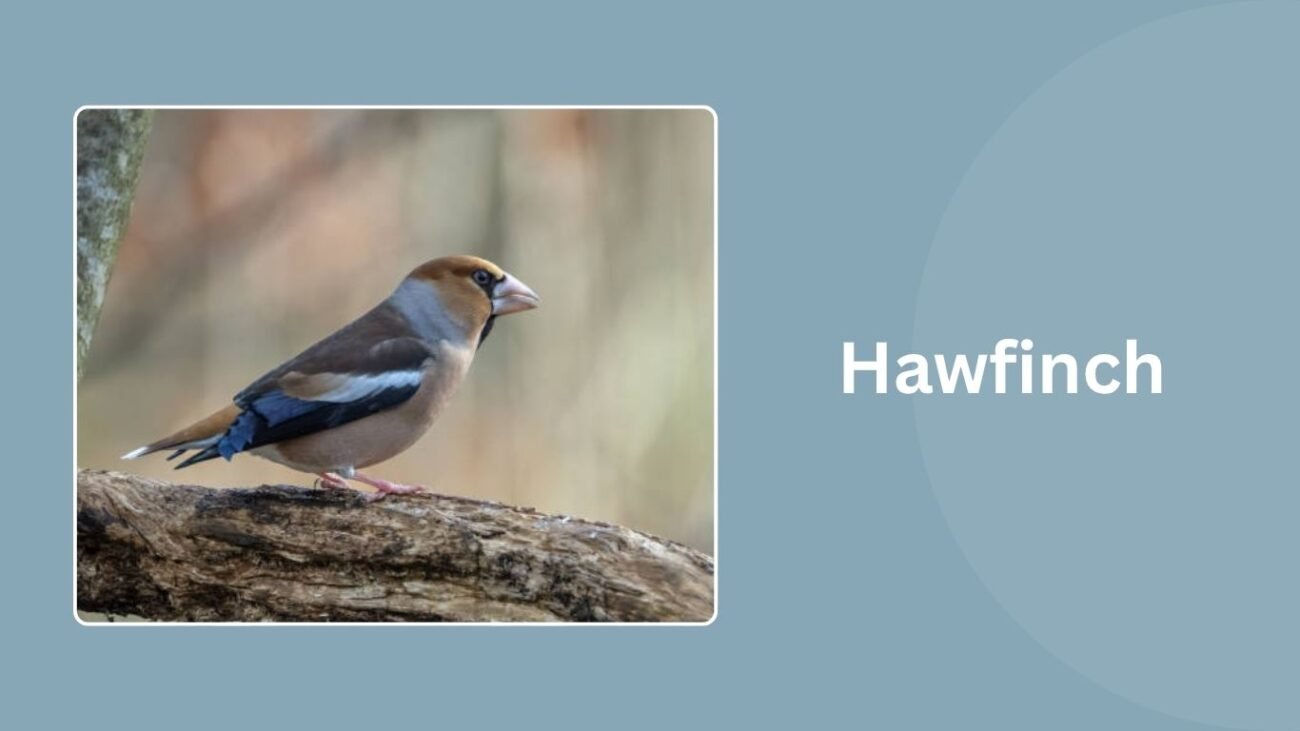
The Hawfinch (Coccothraustes coccothraustes) is a large, robust finch recognized for its massive bill and powerful jaw muscles capable of cracking hard seeds and cherry stones. Native to Europe and parts of Asia, this finch is shy and secretive, often seen high in tree canopies, making sightings a delightful experience for bird enthusiasts.
Identification
- Scientific name: Coccothraustes coccothraustes
- Size: 6.3–7.1 inches (16–18 cm)
- Color: Rich chestnut-brown body, black-and-white wings, and thick bluish-gray bill
- Wingspan: 11–13 inches (28–33 cm)
- Distinct feature: Extremely strong, conical bill used for cracking hard seeds
Habitat
Hawfinches inhabit deciduous and mixed forests across Europe and parts of Asia. They prefer areas with plenty of hornbeam, beech, and cherry trees. They are also found in parks, orchards, and wooded gardens during winter months.
Behavior
These finches are quiet and cautious, spending much of their time in the treetops. They form small flocks outside the breeding season and often feed early in the morning or late afternoon to avoid predators. Their flight is strong and direct, with rapid wingbeats.
Diet
Hawfinches mainly feed on hard seeds, fruits, and buds. They are famous for cracking open cherry and plum stones with ease. During summer, they may also consume caterpillars and beetles to feed their chicks.
Predators
Their main predators include hawks, owls, and domestic cats. Their reclusive nature and preference for tall trees help reduce predation risk.
Lifespan
The average lifespan of a Hawfinch is 5–10 years, though some individuals can live longer in protected environments.
9. Zebra Finch
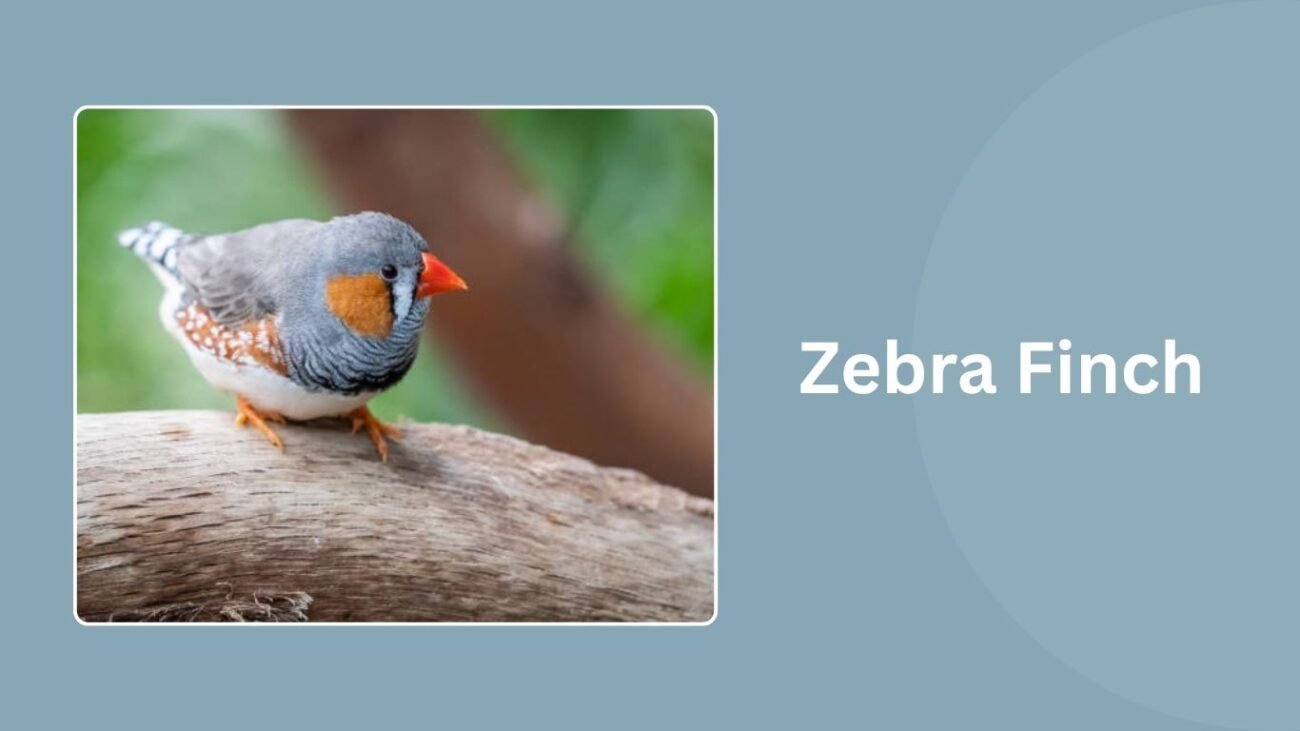
The Zebra Finch (Taeniopygia guttata) is one of the most well-known and widely studied finch species in the world. Native to Australia, this small, active bird is famous for its striking black-and-white facial markings, orange beak, and cheerful calls. It thrives in dry grasslands and open woodlands, often forming large social flocks.
Identification
- Scientific name: Taeniopygia guttata
- Size: 3.9–4.3 inches (10–11 cm)
- Color: Males have orange cheeks, black-and-white throat stripes, and a bright red-orange beak; females are paler with an orange beak
- Wingspan: 7.5–8.7 inches (19–22 cm)
- Distinct feature: Zebra-like black-and-white stripes on the throat and chest
Habitat
Zebra Finches inhabit arid and semi-arid regions across mainland Australia, except in dense forests. They are often found near water sources, grasslands, and agricultural areas. They adapt well to captivity and have been introduced to several other countries.
Behavior
Highly social and vocal, Zebra Finches live in colonies or flocks. Their calls are short and rhythmic, and males sing complex songs during courtship. They build dome-shaped nests using grass and feathers, often close to others in colonies.
Diet
Their diet consists primarily of grass seeds, millet, and small grains. They also eat insects and greens, especially during the breeding season when more protein is needed. They drink water frequently due to their dry habitats.
Predators
Common predators include snakes, raptors, and larger birds. Ground-nesting behavior makes their eggs and chicks vulnerable to lizards and rodents.
Lifespan
Zebra Finches typically live 3–5 years in the wild, though in captivity they can live up to 8–10 years with proper care.
10. Gouldian Finch
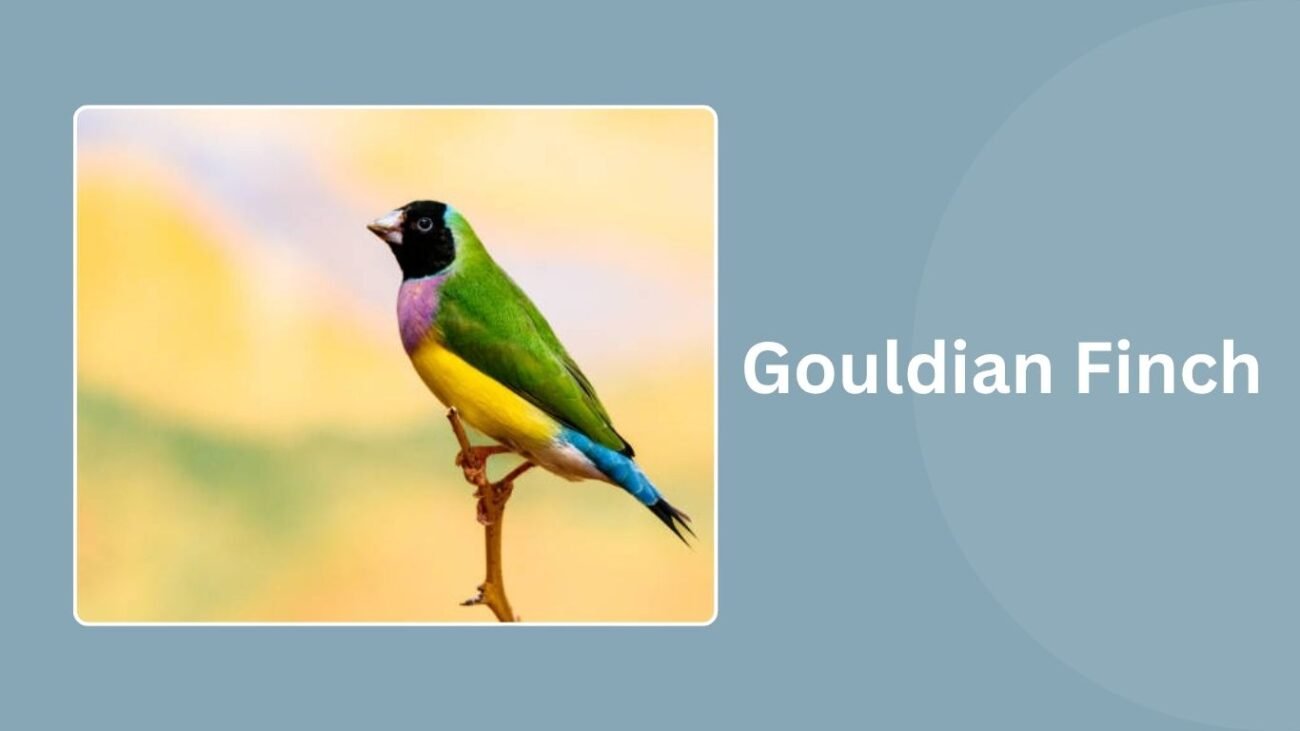
The Gouldian Finch (Erythrura gouldiae) is one of the most colorful and visually stunning finches in the world. Native to northern Australia, it is renowned for its vibrant plumage that features bright shades of green, yellow, red, blue, and purple. Often called the “Rainbow Finch,” it is a symbol of tropical beauty and diversity in birdlife.
Identification
- Scientific name: Erythrura gouldiae
- Size: 5–6 inches (12–15 cm)
- Color: Brilliant mix of green, yellow, blue, red, and black (three head color variations)
- Wingspan: 7.5–8.3 inches (19–21 cm)
- Distinct feature: Multi-colored plumage with three head morphs — red, black, or yellow
Habitat
Gouldian Finches inhabit tropical savannas, open woodlands, and grasslands in northern Australia. They prefer areas near water with tall grasses for nesting and feeding. Their population has declined due to habitat loss and limited access to water during dry seasons.
Behavior
These finches are social and usually live in small flocks. During breeding season, pairs become territorial. Males perform courtship dances, fluffing their feathers and singing softly to attract females. They nest in tree hollows, often near termite mounds.
Diet
Their diet mainly consists of grass seeds, especially those from sorghum and spinifex. During breeding, they consume insects to provide extra nutrients for their chicks. In captivity, they thrive on millet and specialized finch seed mixes.
Predators
Predators include snakes, lizards, hawks, and feral cats. Nestlings are particularly vulnerable to reptiles and rodents.
Lifespan
Gouldian Finches typically live 5–8 years in the wild, though in captivity with proper care, they may live up to 10 years.
11. Cut-throat Finch
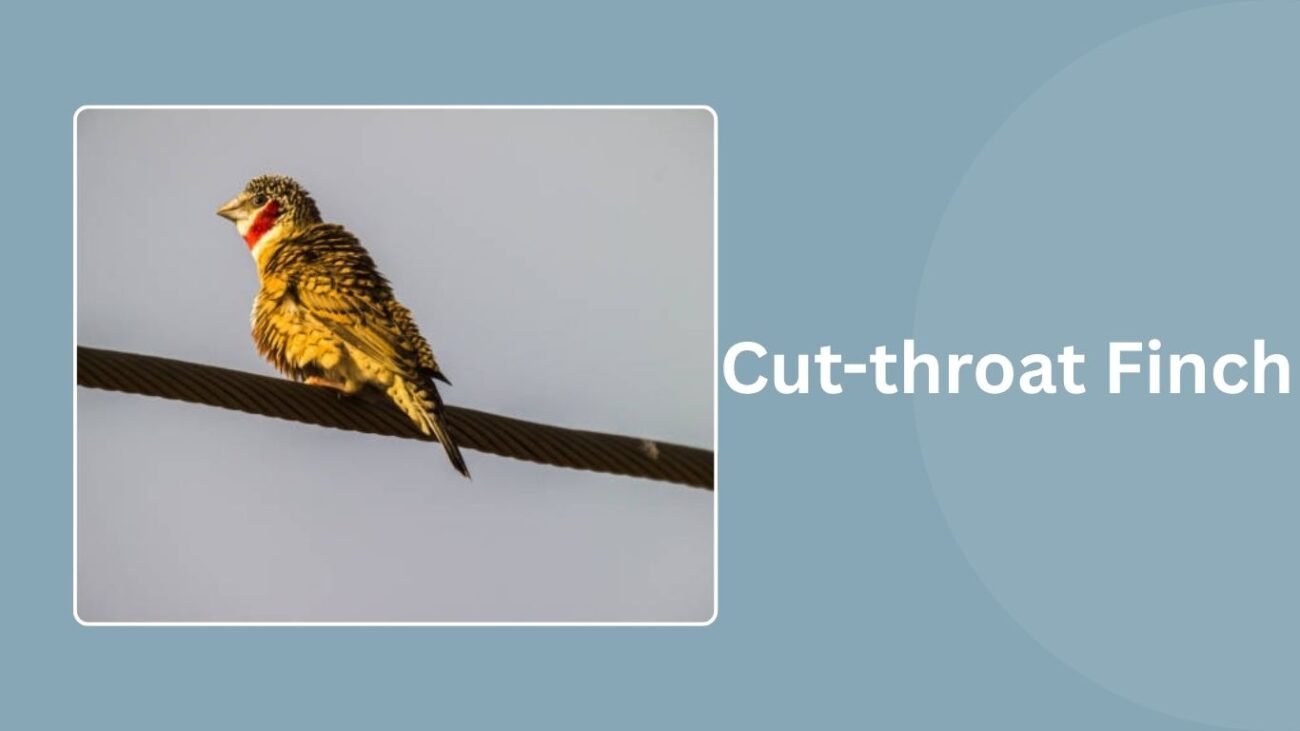
The Cut-throat Finch (Amadina fasciata) is a striking and hardy bird native to sub-Saharan Africa. It is easily recognized by the vivid red band across the male’s throat, which resembles a “cut,” giving the species its distinctive name. These finches are social, adaptable, and often found in large flocks across dry grasslands and savannas.
Identification
- Scientific name: Amadina fasciata
- Size: 5–5.5 inches (13–14 cm)
- Color: Brownish-gray body with fine spots; males have a bright red throat band
- Wingspan: 7.9–8.7 inches (20–22 cm)
- Distinct feature: Red throat stripe in males; females lack the band and are duller in color
Habitat
Cut-throat Finches inhabit open dry areas, including savannas, scrublands, and farmlands. They are distributed across much of Africa, from Senegal and Ethiopia to Tanzania and South Africa. They prefer habitats with scattered trees and access to water sources.
Behavior
These finches are gregarious and often form flocks of dozens or even hundreds outside the breeding season. They are ground foragers, hopping about in search of seeds. Males perform elaborate courtship displays, puffing up their feathers and singing to attract females.
Diet
Their diet primarily consists of grass seeds, millet, and small grains. During breeding, they also eat small insects like ants and termites to provide protein for their chicks.
Predators
Predators include snakes, raptors, and small mammals. Their ground-nesting habits make eggs and nestlings vulnerable to predation.
Lifespan
Cut-throat Finches live 4–6 years in the wild, though in captivity they may live up to 8 years with good care.
12. Red-headed Finch
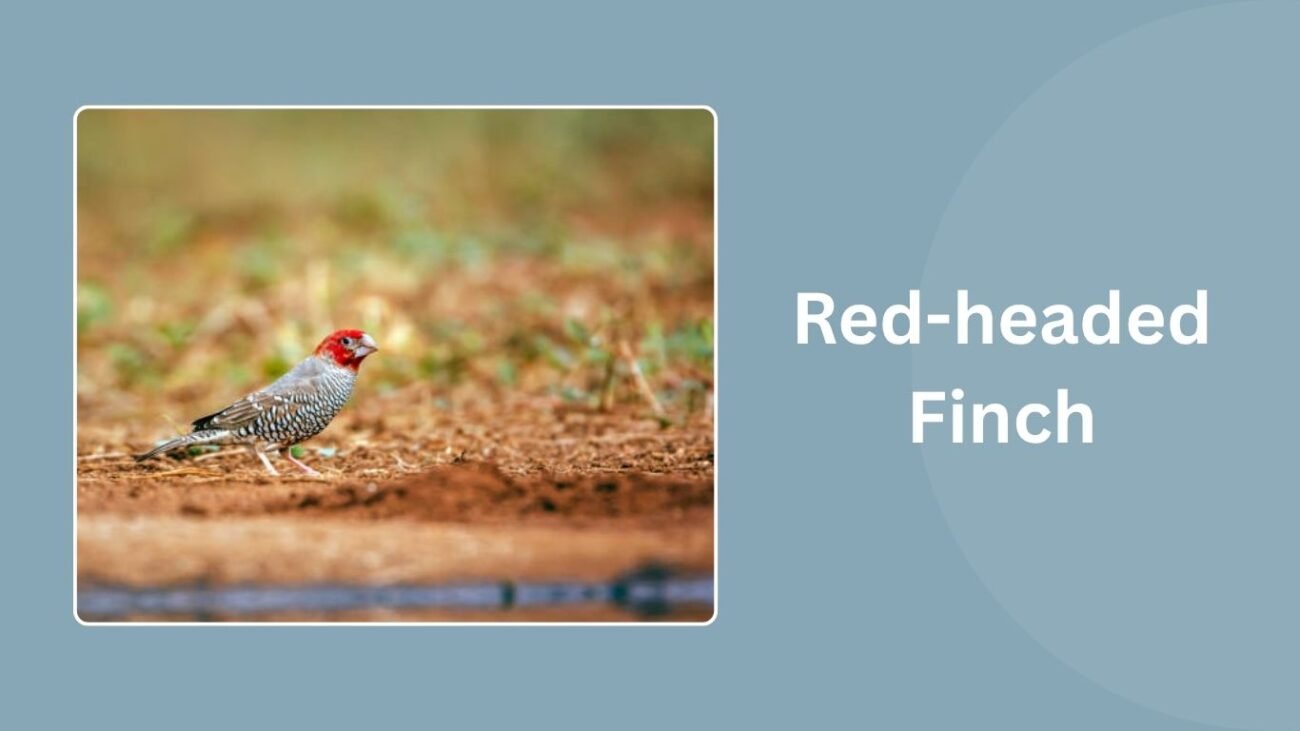
The Red-headed Finch (Amadina erythrocephala) is a bold and attractive bird native to southern Africa. As its name suggests, males display a vivid red head contrasting with a finely barred gray body. This hardy finch thrives in dry, open regions and is often seen foraging in flocks near grasslands and farms.
Identification
- Scientific name: Amadina erythrocephala
- Size: 5–5.9 inches (13–15 cm)
- Color: Males have bright red heads and gray, finely barred bodies; females are brownish-gray without the red coloring
- Wingspan: 7.5–8.7 inches (19–22 cm)
- Distinct feature: Striking red head (in males) and finely scaled plumage
Habitat
Red-headed Finches inhabit dry grasslands, semi-deserts, and savannas across southern Africa, including Botswana, Namibia, Zimbabwe, and South Africa. They prefer areas with scattered trees and access to water and are commonly seen near human settlements.
Behavior
These finches are highly social and often gather in small to medium-sized flocks. They are primarily ground feeders and move in a hopping motion while searching for food. During the breeding season, males sing softly and perform bowing displays to court females.
Diet
Their diet consists mainly of grass seeds, millet, and small grains, supplemented with insects such as termites and beetles during breeding. They frequently visit water sources to drink and bathe.
Predators
Predators include hawks, snakes, lizards, and cats. Ground-nesting behavior exposes eggs and chicks to additional risks from small mammals.
Lifespan
Red-headed Finches typically live 4–7 years in the wild, and up to 9 years in captivity under favorable conditions.
13. African Silverbill
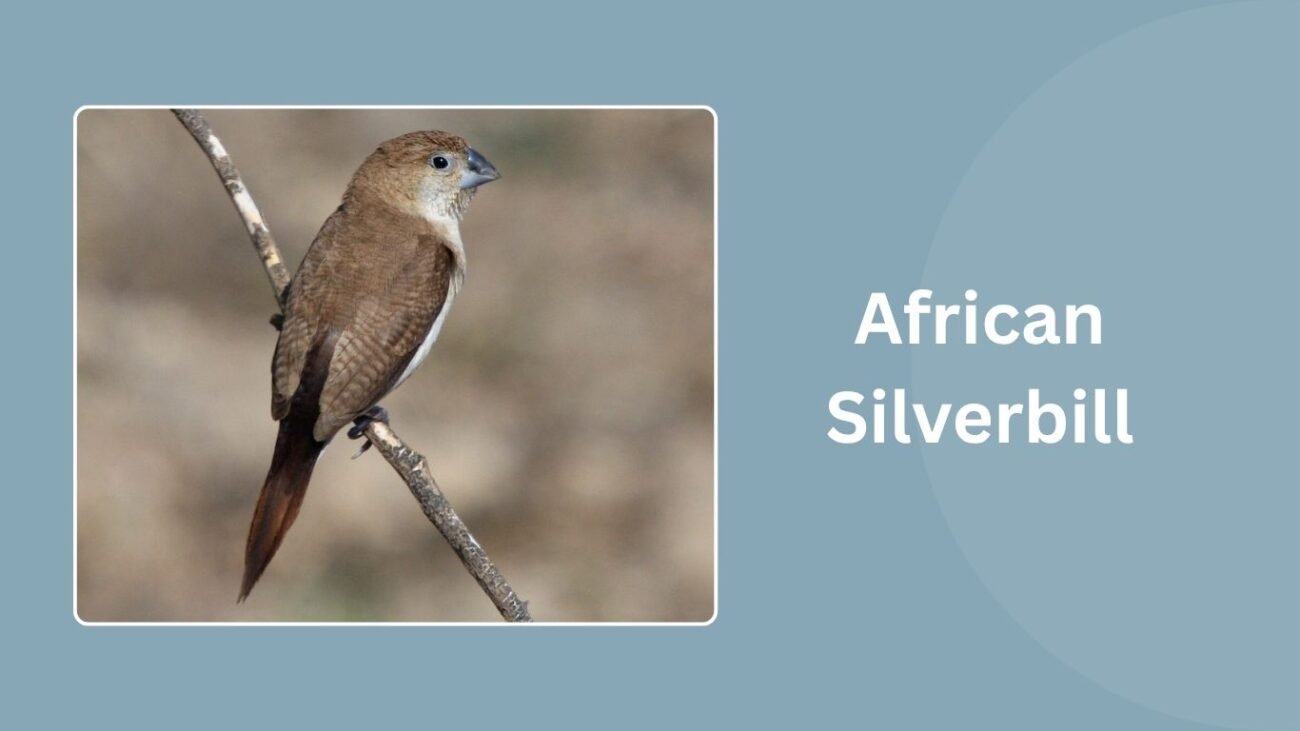
The African Silverbill (Euodice cantans) is a small, gentle finch native to sub-Saharan Africa and parts of the Arabian Peninsula. Named for its distinctive silver-gray bill, this bird is known for its calm temperament, pleasant calls, and social nature. It often flocks in large numbers in dry regions and open woodlands.
Identification
- Scientific name: Euodice cantans
- Size: 4–4.3 inches (10–11 cm)
- Color: Light brown upperparts with pale underparts and a silver-gray bill
- Wingspan: 6.7–7.9 inches (17–20 cm)
- Distinct feature: Silvery-gray bill and soft, squeaky song
Habitat
African Silverbills inhabit dry savannas, grasslands, and arid shrublands across Africa from Senegal to Sudan and south to Tanzania. They are also found in parts of the Arabian Peninsula and have been introduced to other regions. They prefer areas with scattered vegetation and access to water.
Behavior
These finches are peaceful and social, living in pairs or flocks. They are non-aggressive and often mix with other finch species. Their gentle, high-pitched “tsee-tsee” calls are used for communication within flocks. They nest in shrubs or small trees, often close to others.
Diet
Their diet mainly includes grass seeds, millet, and small grains, occasionally supplemented by insects during breeding season. They are ground feeders and frequent visitors to seed-rich fields and water sources.
Predators
Predators include snakes, hawks, and cats, particularly those that target ground nests. Their small size makes them vulnerable, but flocking provides safety in numbers.
Lifespan
African Silverbills typically live 5–7 years in the wild and can reach 8–10 years in captivity.
14. Bronze Mannikin
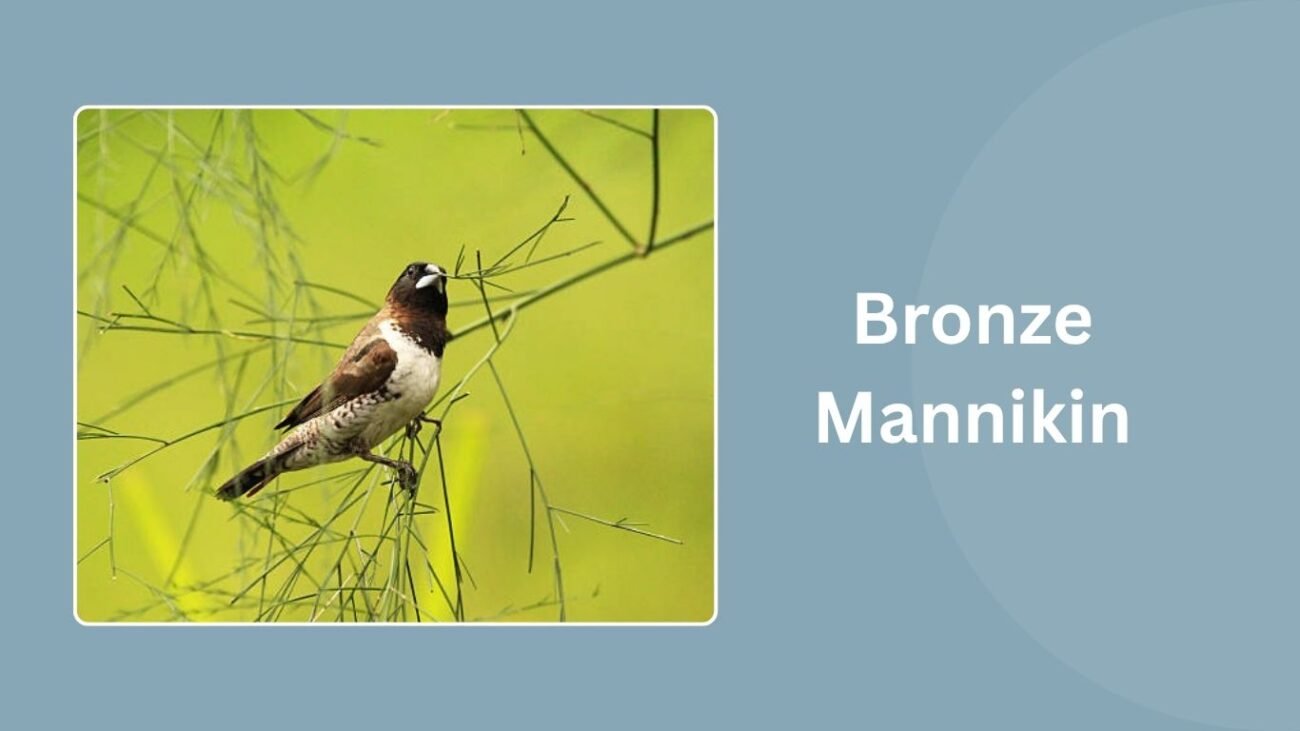
The Bronze Mannikin (Spermestes cucullata) is a tiny, sociable finch native to sub-Saharan Africa. Known for its glossy bronze and brown plumage, this bird is a common sight in gardens, grasslands, and farmlands. Its gentle chirping and tight flock formations make it one of Africa’s most charming and cooperative small finches.
Identification
- Scientific name: Spermestes cucullata
- Size: 3.5–4 inches (9–10 cm)
- Color: Dark brown head with bronze-green sheen, white underparts with brown flanks
- Wingspan: 6–7 inches (15–18 cm)
- Distinct feature: Shiny bronze hue on the upper body and a slightly forked tail
Habitat
Bronze Mannikins inhabit open woodlands, grasslands, gardens, and agricultural areas across sub-Saharan Africa. They are adaptable and thrive near human settlements, especially in areas with water and tall grasses.
Behavior
These finches are highly social and almost always seen in small flocks. They engage in group preening and synchronized movements while flying or feeding. During breeding, pairs form strong bonds and build domed grass nests, often close to other pairs in colonies.
Diet
Their diet consists mainly of grass seeds, millet, and small grains. They also consume soft fruits and occasionally insects, especially during nesting to feed chicks. They are frequent visitors to bird feeders stocked with small seeds.
Predators
Predators include snakes, hawks, and domestic cats. Their flocking behavior and preference for nesting in dense vegetation help protect them from threats.
Lifespan
Bronze Mannikins live 5–8 years in the wild and can survive up to 10 years in captivity under favorable conditions.
15. Scaly-breasted Munia
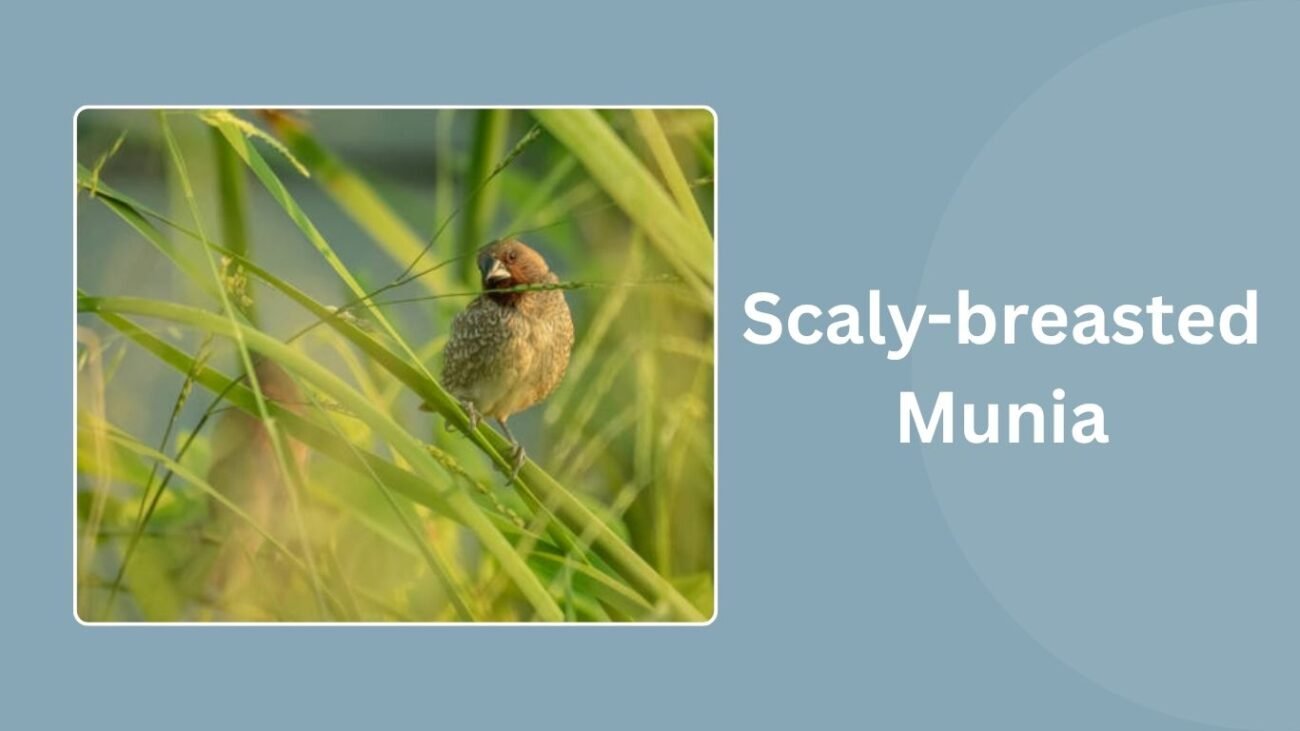
Identification
- Scientific name: Lonchura punctulata
- Size: 4.3–4.7 inches (11–12 cm)
- Color: Brown upperparts, white underparts with black “scales,” and a thick dark bill
- Wingspan: 7–8 inches (18–20 cm)
- Distinct feature: Scale-like markings on the breast and belly
Habitat
Scaly-breasted Munias inhabit grasslands, farmlands, wetlands, and urban gardens throughout South and Southeast Asia. They prefer warm, open areas with tall grasses and often adapt well to human settlements. They have also been introduced to many tropical regions worldwide.
Behavior
Highly social and peaceful, these finches are almost always found in flocks. They feed on the ground or in tall grasses, moving in coordinated groups. During breeding, they build round grass nests in trees, shrubs, or even on man-made structures.
Diet
Their diet mainly consists of grass seeds, paddy rice, and small grains, occasionally supplemented by small insects during breeding season. They are frequent visitors to grain fields and seed feeders.
Predators
Predators include snakes, cats, hawks, and crows. Their flocking behavior and preference for tall grass cover help reduce predation risk.
Lifespan
The average lifespan of the Scaly-breasted Munia is 5–8 years in the wild, and they can live up to 10 years in captivity.
16. White-rumped Munia
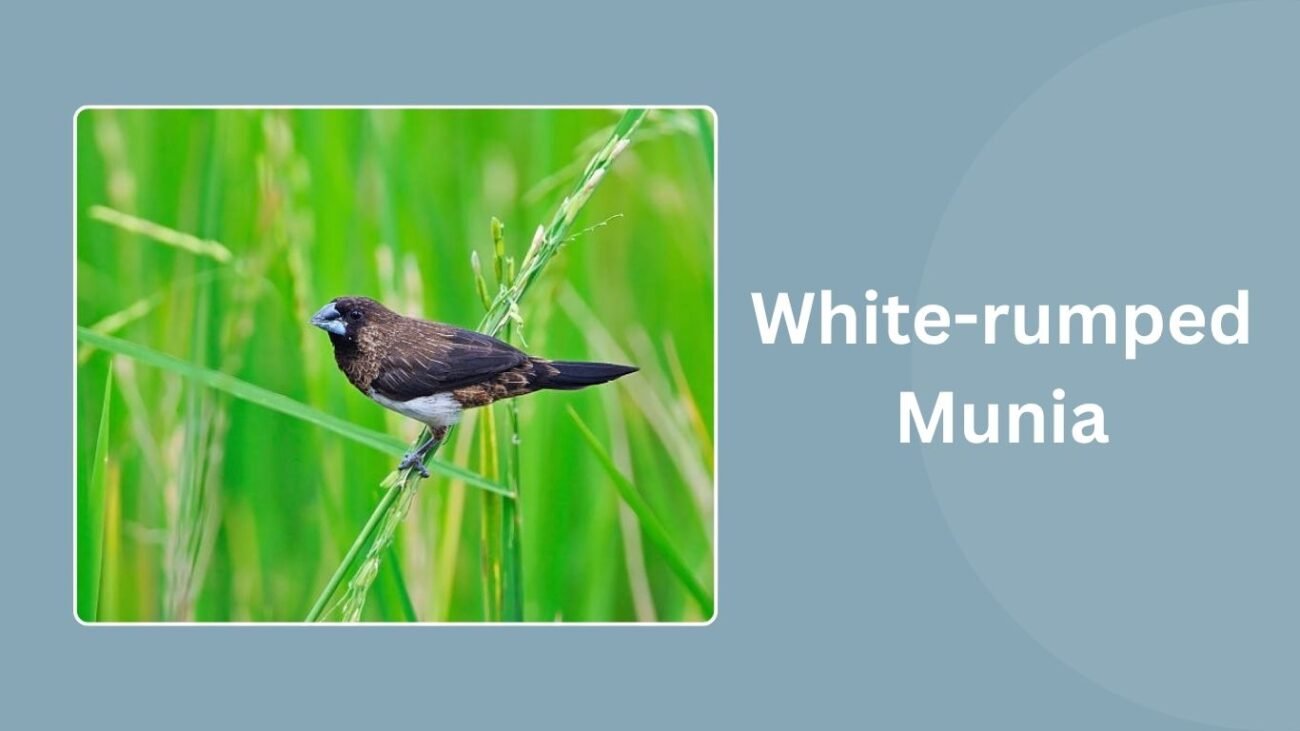
The White-rumped Munia (Lonchura striata) is a small, sturdy finch native to South and Southeast Asia. Recognized for its dark brown plumage and distinctive white rump, this bird is common in agricultural and grassy areas. Its adaptability and sociable nature have helped it thrive in both wild and urban environments.
Identification
- Scientific name: Lonchura striata
- Size: 4.3–4.7 inches (11–12 cm)
- Color: Dark brown body with a contrasting white rump and underparts
- Wingspan: 6.7–7.5 inches (17–19 cm)
- Distinct feature: Prominent white patch on the lower back and rump
Habitat
White-rumped Munias inhabit open grasslands, rice fields, gardens, and wetlands across India, Sri Lanka, Southeast Asia, and southern China. They prefer lowland regions with dense grass and shrubs but easily adapt to cultivated and urban areas.
Behavior
These finches are calm, social, and often found in flocks. They forage in groups on the ground or among tall grasses. Their chirps are soft and continuous, maintaining contact within the flock. During breeding, pairs build rounded nests made of grass, often hidden in bushes or reeds.
Diet
Their diet mainly consists of grass seeds, millet, rice grains, and small insects during nesting season. They are also known to visit grain stores and feed from bird feeders in gardens.
Predators
Predators include hawks, snakes, cats, and crows. Their group living and cryptic coloration help reduce the risk of predation.
Lifespan
White-rumped Munias live 5–7 years in the wild and can live up to 9 years in captivity.
17. Java Sparrow
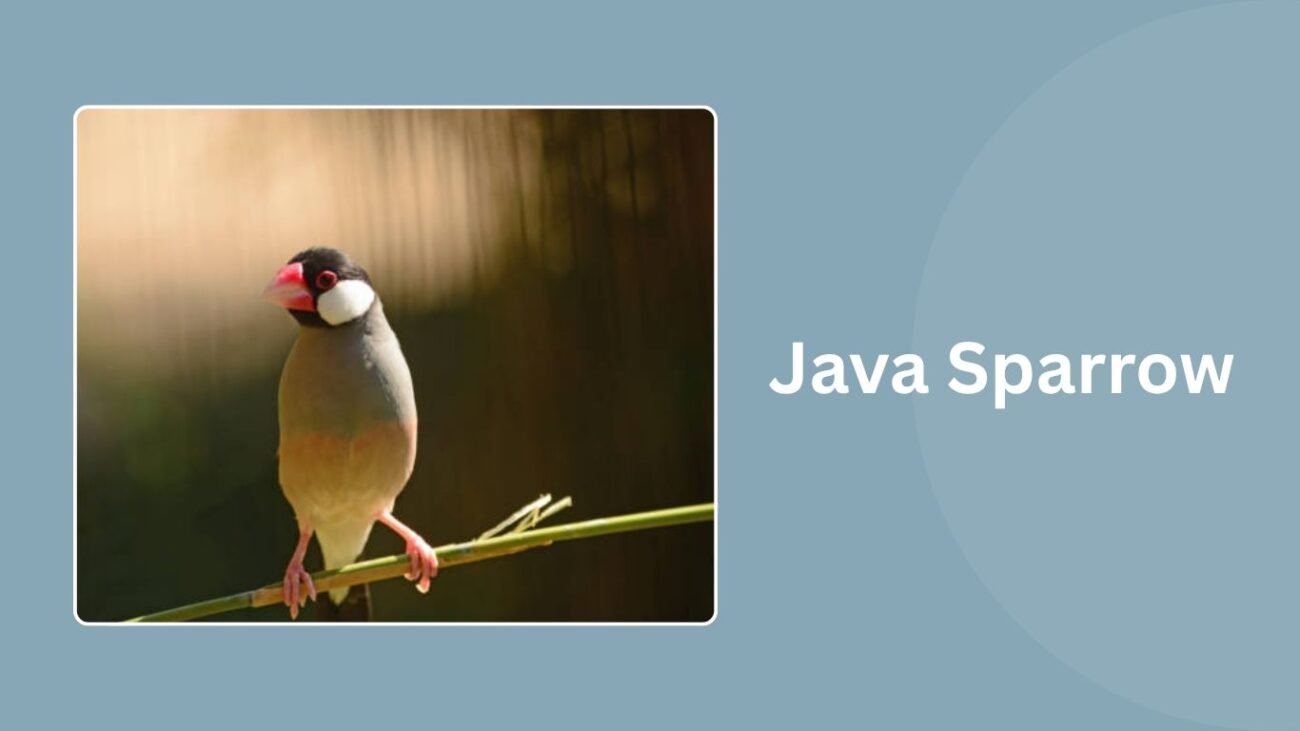
The Java Sparrow (Lonchura oryzivora), also known as the Java Finch or Rice Bird, is a strikingly elegant finch native to Indonesia. It is admired for its glossy gray plumage, bright pink beak, and contrasting black head. Widely domesticated and beloved as a pet, the Java Sparrow is both a symbol of beauty and social charm.
Identification
- Scientific name: Lonchura oryzivora
- Size: 5.5–6 inches (14–15 cm)
- Color: Gray body, black head, white cheeks, and pink bill and legs
- Wingspan: 7.9–8.7 inches (20–22 cm)
- Distinct feature: Thick pink beak and smooth gray plumage with white cheeks
Habitat
Java Sparrows inhabit grasslands, rice fields, and urban areas in their native Indonesia, especially on the islands of Java, Bali, and Bawean. They have been introduced to other regions, including Hawaii, Sri Lanka, and the Philippines. They prefer open areas with access to water and food sources.
Behavior
Highly social and intelligent, Java Sparrows live in flocks and are known for their constant chattering and synchronized flight patterns. During breeding, males perform a unique hopping dance and sing to court females. They build dome-shaped grass nests in trees, buildings, or nest boxes.
Diet
Their diet mainly consists of rice grains, millet, grass seeds, and small insects. In the wild, they often forage in rice paddies, which sometimes brings them into conflict with farmers. In captivity, they enjoy seed mixes, greens, and occasional fruits.
Predators
Predators include hawks, snakes, and cats, while nestlings may be targeted by crows and rodents. Flocking behavior helps reduce individual vulnerability.
Lifespan
Java Sparrows live 7–9 years in the wild and up to 10–12 years in captivity with proper nutrition and care.
18. Crimson Finch
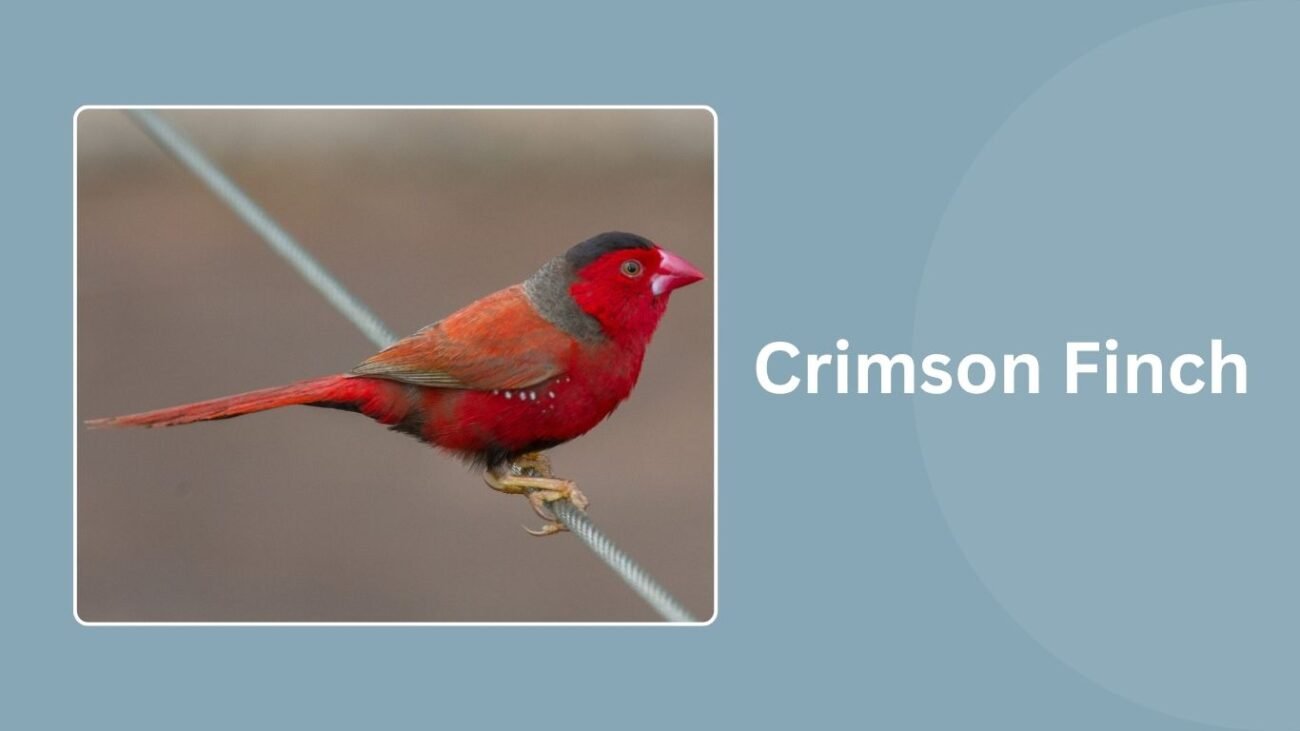
The Crimson Finch (Neochmia phaeton) is a stunning and energetic bird native to northern Australia and parts of New Guinea. Recognized for its vivid crimson coloring and long tail, this finch is often found near wetlands, rivers, and tall grass areas. Its bold appearance and lively behavior make it a standout among Australian finches.
Identification
- Scientific name: Neochmia phaeton
- Size: 5–6 inches (12–15 cm)
- Color: Bright red head, breast, and tail with dark brown wings and back
- Wingspan: 7–8 inches (18–20 cm)
- Distinct feature: Long tail and intense crimson plumage in males
Habitat
Crimson Finches inhabit tropical wetlands, grassy riverbanks, and reed-filled areas across northern Australia, particularly in Queensland and the Northern Territory. They prefer regions with abundant water and tall vegetation for cover and nesting.
Behavior
These finches are social, active, and often seen in small flocks. They are agile fliers that dart between grasses and reeds. Males perform display flights and sing soft trills to court females. Pairs build large, dome-shaped nests close to water using grass and feathers.
Diet
Their diet primarily consists of grass seeds, small grains, and insects. They forage on the ground or in low vegetation, feeding in groups. During the breeding season, they rely more on insects to provide protein for their young.
Predators
Predators include snakes, hawks, and monitor lizards, which prey on both adults and nests. Their preference for dense reeds and tall grasses provides some protection.
Lifespan
Crimson Finches live around 4–7 years in the wild and may reach 8–9 years in captivity.
19. Star Finch
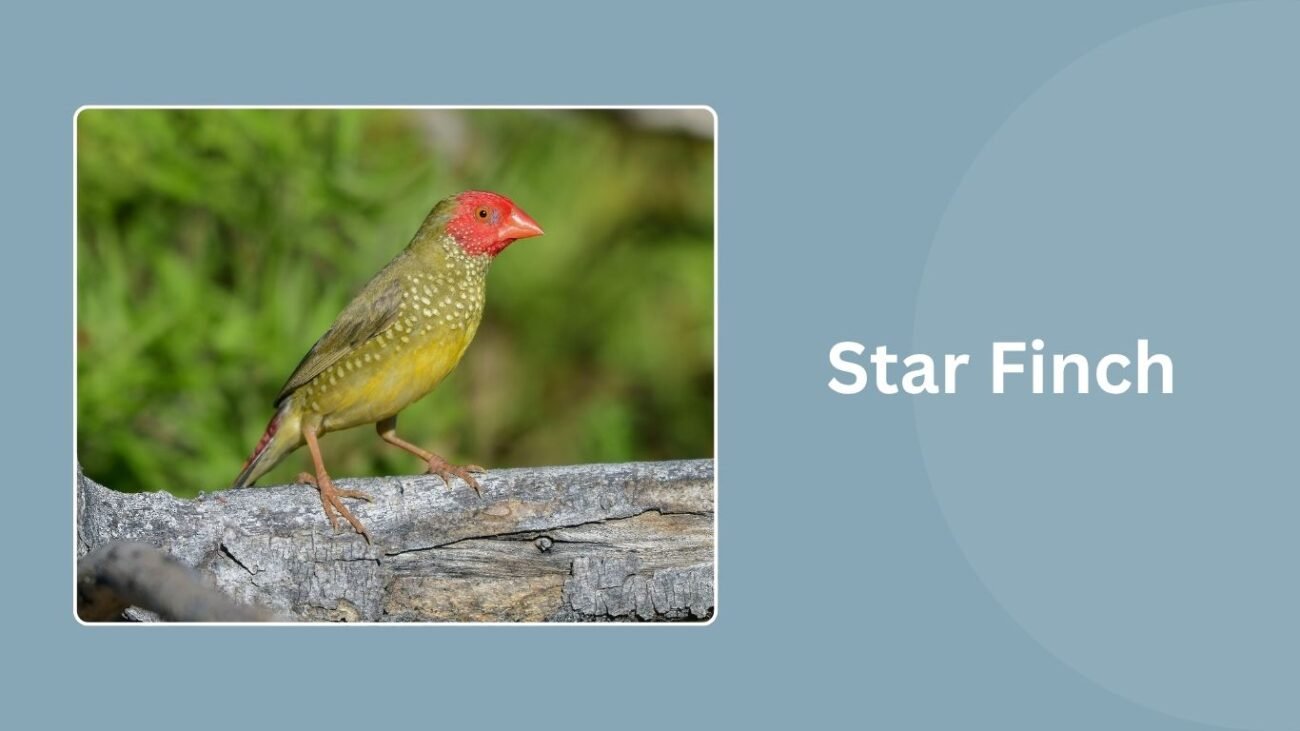
The Star Finch (Neochmia ruficauda) is a delicate and colorful finch native to northern Australia. Named for the tiny white spots on its face that resemble stars, this charming species is known for its beauty, soft songs, and peaceful temperament. It is commonly found near water in grassy woodlands and savannas.
Identification
- Scientific name: Neochmia ruficauda
- Size: 4.3–4.7 inches (11–12 cm)
- Color: Olive-green back, red face and rump, yellow underparts with white “star” spots on the face
- Wingspan: 6.7–7.5 inches (17–19 cm)
- Distinct feature: White speckled “star-like” markings on the face and red facial mask
Habitat
Star Finches inhabit tropical grasslands, wetlands, and river edges across northern Australia, particularly in Queensland, Northern Territory, and the Kimberley region. They prefer areas with tall grasses and reeds near water where seeds are plentiful.
Behavior
These finches are social and gentle, living in small flocks or pairs. They are active foragers, often seen hopping on the ground or perching on tall grass stems. Males perform courtship displays by fluffing their feathers and singing softly while offering nesting material to females.
Diet
Their diet mainly consists of grass seeds, millet, and small grains, with occasional insects during breeding season. They feed both on the ground and in grass seed heads. In captivity, they enjoy mixed seeds and greens.
Predators
Predators include snakes, raptors, and monitor lizards, as well as feral cats and rodents that may target eggs or chicks.
Lifespan
Star Finches generally live 4–7 years in the wild, and up to 9 years in captivity under ideal conditions.
20. Medium Ground Finch
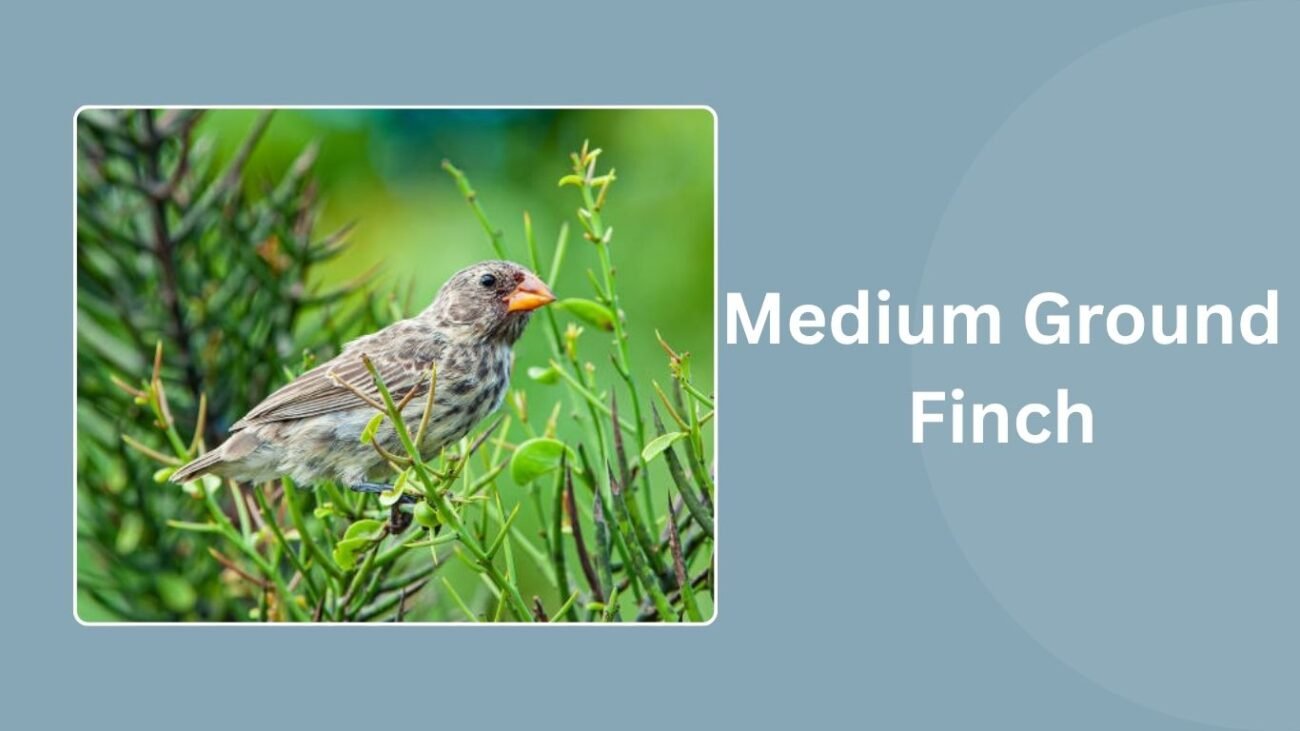
The Medium Ground Finch (Geospiza fortis) is one of the most studied of Darwin’s finches from the Galápagos Islands. This species is best known for its medium-sized beak, which allows it to eat a variety of seeds. It played a key role in Charles Darwin’s theory of evolution by natural selection due to its adaptive beak variations.
Identification
- Scientific name: Geospiza fortis
- Size: 4.7–5.5 inches (12–14 cm)
- Color: Males are black or dark brown; females are streaked gray-brown
- Wingspan: 8–9 inches (20–23 cm)
- Distinct feature: Medium-sized, conical beak perfectly adapted for cracking seeds
Habitat
Medium Ground Finches inhabit arid lowlands, shrublands, and dry forests across several Galápagos Islands, including Santa Cruz, San Cristóbal, and Floreana. They prefer open areas with scattered vegetation where seeds are abundant.
Behavior
These finches are territorial during breeding season but form small flocks outside it. They are curious and often perch openly while foraging on the ground. Their songs vary slightly between islands, creating unique local “dialects.”
Diet
Their diet primarily includes seeds, grains, and occasional insects. During dry seasons, when seeds are scarce, they may eat flower buds or nectar. Their medium-sized beak allows flexibility in feeding on both small and large seeds.
Predators
Predators include Galápagos hawks, snakes, and introduced species such as rats and cats that threaten eggs and chicks.
Lifespan
Medium Ground Finches typically live 5–10 years in the wild, depending on environmental conditions and food availability.
21. Small Ground Finch
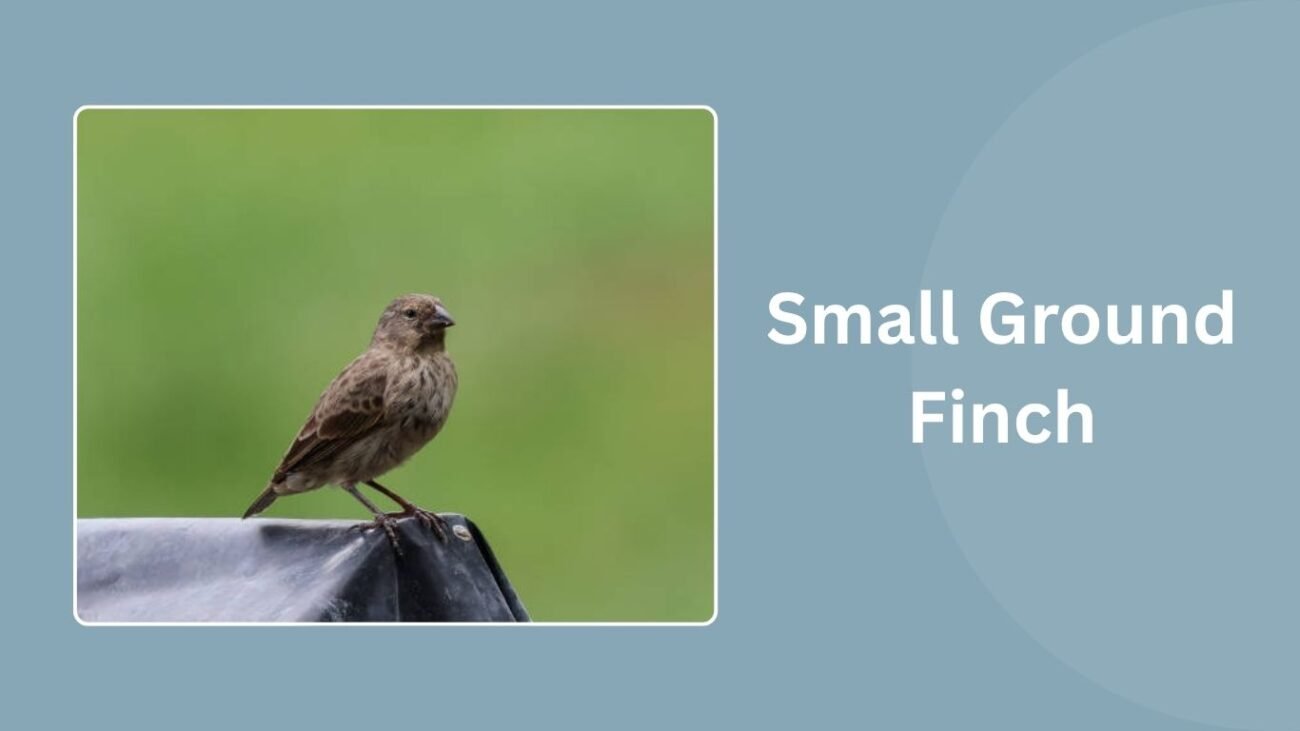
The Small Ground Finch (Geospiza fuliginosa) is one of the most widespread of Darwin’s finches, found across many of the Galápagos Islands. This adaptable species has a small, pointed beak suited for eating tiny seeds and insects. Its ability to thrive in varied habitats makes it a key example of evolutionary adaptation.
Identification
- Scientific name: Geospiza fuliginosa
- Size: 4–4.7 inches (10–12 cm)
- Color: Males are black; females and juveniles are brown with streaked underparts
- Wingspan: 7.5–8.3 inches (19–21 cm)
- Distinct feature: Small, conical beak specialized for fine seeds and small insects
Habitat
The Small Ground Finch inhabits arid lowlands, shrublands, and forest edges throughout the Galápagos Islands, including Santa Cruz, Isabela, and San Cristóbal. It adapts to both coastal and highland environments, often near human settlements.
Behavior
These finches are active and curious foragers, frequently hopping along the ground or perching on low shrubs. They are less territorial than other finches and form loose flocks outside the breeding season. Males sing a simple, repetitive song to attract females.
Diet
Their diet mainly consists of tiny seeds, small grains, and insects. During dry seasons, they often switch to feeding on insects and flower nectar when seeds become scarce. Their small beaks allow them to pick seeds others cannot.
Predators
Predators include Galápagos hawks, owls, and introduced rats and cats, which target eggs and chicks.
Lifespan
Small Ground Finches generally live 4–8 years, though individuals in stable environments may live longer.
22. Large Ground Finch
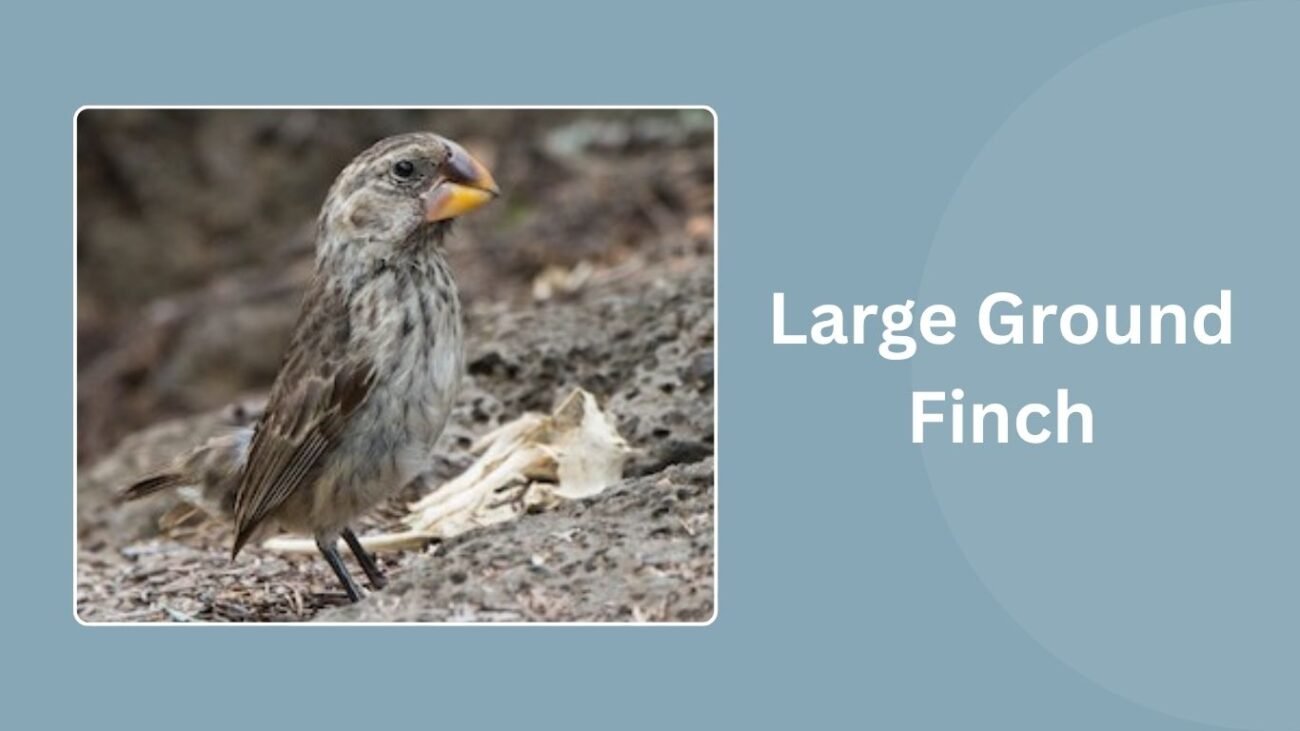
The Large Ground Finch (Geospiza magnirostris) is the largest and most powerful of all Darwin’s finches. Native to the Galápagos Islands, this bird is famous for its massive beak, capable of cracking the hardest seeds and nuts. It exemplifies how beak size evolved in response to different food sources across the islands.
Identification
- Scientific name: Geospiza magnirostris
- Size: 5.5–6.3 inches (14–16 cm)
- Color: Males are black; females are brown and streaked
- Wingspan: 9–10 inches (23–25 cm)
- Distinct feature: Large, deep, and broad beak—ideal for crushing hard seeds
Habitat
Large Ground Finches inhabit arid zones, shrublands, and coastal areas on several Galápagos Islands, including Santa Cruz, Española, and Genovesa. They prefer dry environments with scattered vegetation and an abundant supply of tough seeds.
Behavior
These finches are solitary feeders during the breeding season but may form small groups at other times. Males sing loud, simple songs from perches to attract mates. They are calm but determined feeders, often spending time cracking large seeds that smaller finches can’t handle.
Diet
Their diet mainly consists of large, hard seeds, nuts, and occasionally small fruits. Their robust beak gives them access to food sources unavailable to other finches. During droughts, they can survive by feeding on the toughest seeds and plant material.
Predators
Predators include Galápagos hawks, owls, snakes, and introduced rats or cats, which pose a threat to eggs and nestlings.
Lifespan
Large Ground Finches typically live 5–10 years, depending on environmental stability and food availability.
23. Cactus Finch
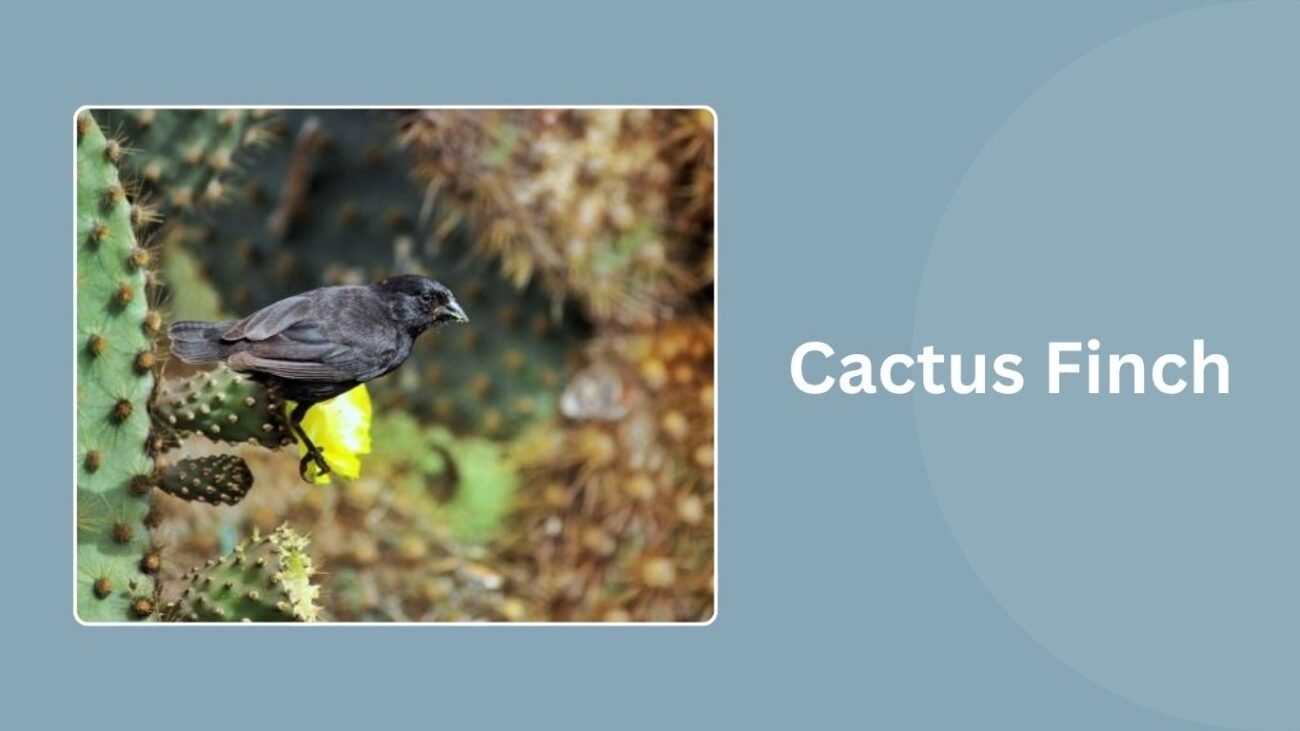
The Cactus Finch (Geospiza scandens) is a fascinating member of Darwin’s finches, specially adapted to feed on cactus plants in the Galápagos Islands. Its long, pointed beak allows it to extract cactus seeds and nectar, making it a vital species in the unique island ecosystem. This finch beautifully illustrates evolutionary adaptation to a specialized diet.
Identification
- Scientific name: Geospiza scandens
- Size: 4.9–5.5 inches (12–14 cm)
- Color: Males are black; females are brown and streaked
- Wingspan: 8–9 inches (20–23 cm)
- Distinct feature: Long, sharp beak designed for feeding on cactus flowers and fruits
Habitat
Cactus Finches inhabit dry coastal areas and arid scrublands on several Galápagos Islands, including Santa Cruz, Española, and Genovesa. They are strongly associated with the prickly pear cactus (Opuntia), which provides both food and nesting sites.
Behavior
These finches are active, alert, and somewhat territorial, especially around cactus patches. They are often seen perched on cactus pads, feeding carefully among the spines. Males sing melodious, simple songs from elevated perches during courtship, and pairs often reuse the same territory each season.
Diet
Their diet mainly consists of cactus seeds, fruits, and nectar, but they also eat insects and small arthropods when available. During droughts, they rely heavily on cactus fruits for moisture.
Predators
Predators include Galápagos hawks, owls, and introduced species such as rats and cats, which threaten eggs and chicks.
Lifespan
Cactus Finches live 5–10 years in the wild, with survival depending largely on food supply and climate.
24. Woodpecker Finch
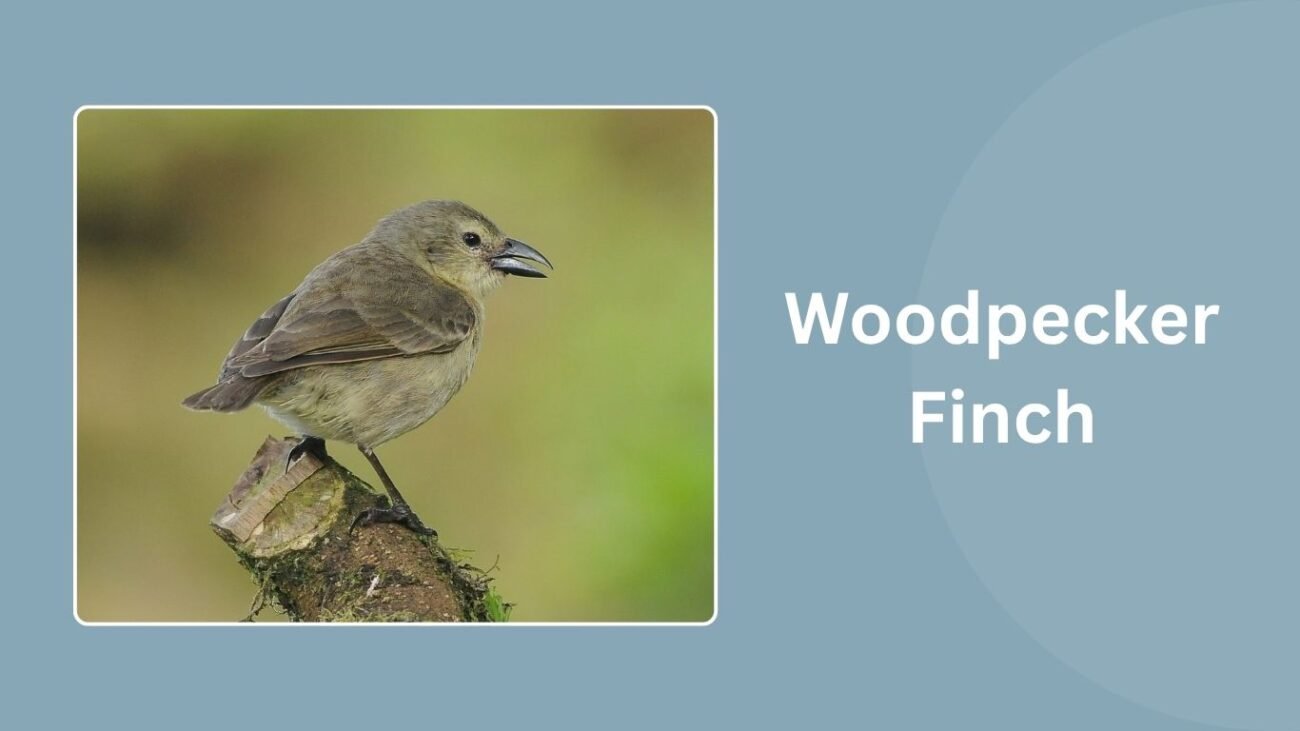
The Woodpecker Finch (Camarhynchus pallidus) is one of the most remarkable of Darwin’s finches, famous for its tool-using behavior. Found only in the Galápagos Islands, it uses cactus spines or twigs to extract insects from tree bark—an extraordinary adaptation that demonstrates advanced problem-solving among birds.
Identification
- Scientific name: Camarhynchus pallidus
- Size: 5–6 inches (13–15 cm)
- Color: Olive-brown upperparts and paler underparts with faint streaks
- Wingspan: 8–9 inches (20–23 cm)
- Distinct feature: Straight, pointed beak and habit of using tools to reach insects
Habitat
Woodpecker Finches inhabit humid and dry forests across several Galápagos Islands, including Santa Cruz, Santiago, and Isabela. They prefer areas with dead or decaying wood, which harbor insects and larvae.
Behavior
These finches are intelligent, active, and often solitary while foraging. They are one of the few non-human animals known to use tools—using twigs or cactus spines to pry insects from crevices. Males sing short, choppy songs and court females by offering food.
Diet
Their diet mainly includes insects, larvae, spiders, and small arthropods, but they also eat seeds and fruits when insect prey is scarce. Their tool use helps them access hidden insects unavailable to other finches.
Predators
Predators include Galápagos hawks, owls, snakes, and introduced rats, which threaten eggs and chicks. Adults are agile and often avoid predators through quick movement and camouflage.
Lifespan
Woodpecker Finches typically live 5–10 years, with survival depending on habitat quality and food availability.
25. Mangrove Finch
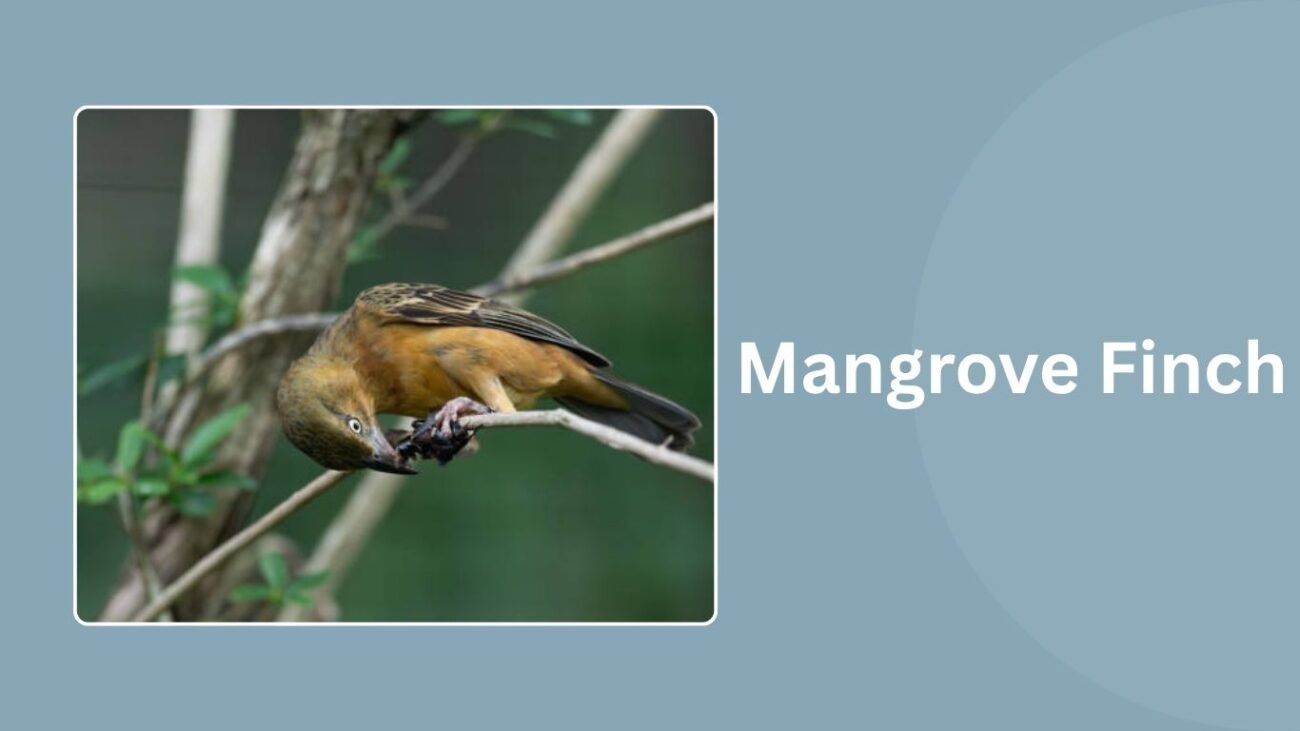
The Mangrove Finch (Camarhynchus heliobates) is one of the rarest and most endangered of Darwin’s finches. Found only in the Galápagos Islands, this unique bird has adapted specifically to life in coastal mangrove forests. Its survival is critical to the biodiversity and ecological balance of the islands’ fragile coastal ecosystems.
Identification
- Scientific name: Camarhynchus heliobates
- Size: 5–5.5 inches (13–14 cm)
- Color: Olive-gray body with lighter underparts and faint streaking
- Wingspan: 8–9 inches (20–23 cm)
- Distinct feature: Straight, pointed bill adapted for feeding in mangrove habitats
Habitat
The Mangrove Finch inhabits coastal mangrove forests, especially those dominated by black mangroves (Avicennia germinans), on the islands of Isabela and Fernandina. It depends entirely on these mangrove ecosystems for food, nesting, and shelter.
Behavior
This finch is elusive and quiet, often staying within dense mangrove branches. It forages among bark and roots for insects, using probing techniques similar to the Woodpecker Finch. Breeding pairs are monogamous, nesting in tree cavities or dense mangrove branches.
Diet
Their diet primarily consists of insects, larvae, spiders, and small arthropods. They also eat seeds and small fruits, but insect prey forms the majority of their nutrition, especially during breeding.
Predators
Predators include introduced rats, cats, and parasites such as the Philornis downsi fly, which lays eggs in nests, threatening chicks. Native predators like hawks also occasionally target them.
Lifespan
Mangrove Finches live up to 10 years, but current populations are very small—fewer than 100 individuals remain in the wild.