











The black-footed albatross (Phoebastria nigripes) is a large seabird of the North Pacific Ocean, best known for its dark plumage, impressive wingspan, and ability to glide effortlessly over open water for long periods. Often seen far from land, this species spends most of its life at sea, returning to remote islands only to breed. Closely associated with Hawaii and Midway Atoll, the black-footed albatross is also known by its nickname, the “gooney bird,” and plays an important role in marine ecosystems.
Identification and Scientific Classification
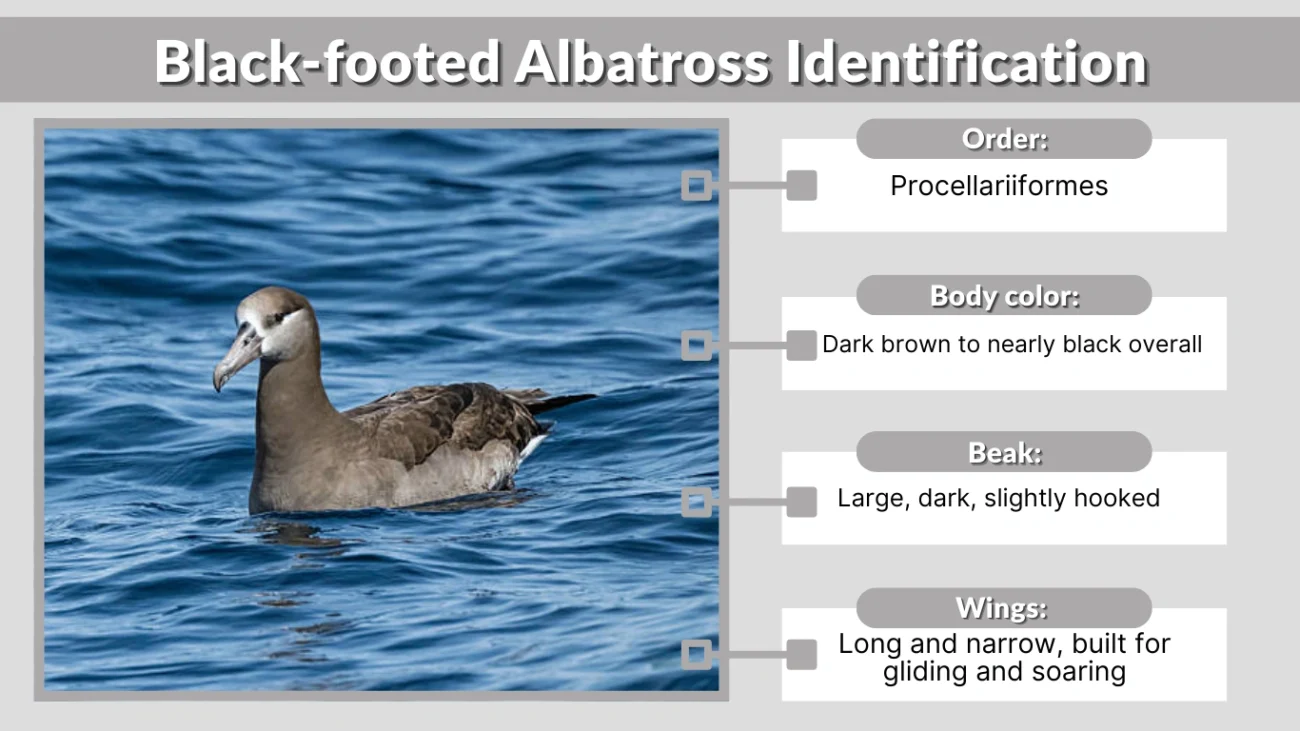
- Scientific name: Phoebastria nigripes
- Common name: Black-footed albatross
- Other names: Gooney, gooney bird
- Family: Diomedeidae
- Order: Procellariiformes
- Phylum: Chordata
- Hawaiian name: Kāua
- Body color: Dark brown to nearly black overall
- Feet: Distinctive black feet, giving the species its name
- Beak: Large, dark, slightly hooked
- Wings: Long and narrow, built for gliding and soaring
- Sex differences: Males and females look very similar
- Juveniles: Slightly darker plumage with a fresher appearance
Size and Physical Characteristics
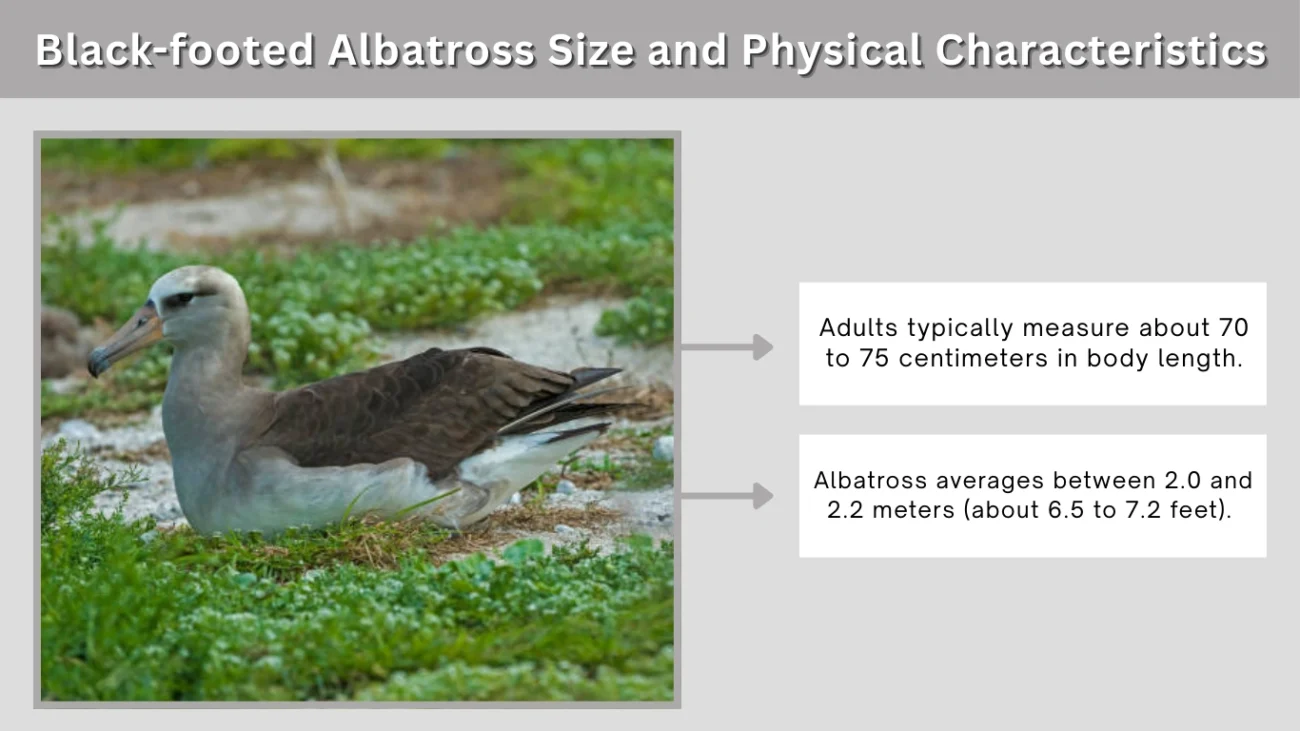
How Big Is a Black-footed Albatross
The black-footed albatross is a large seabird, though smaller than the wandering albatross. Adults typically measure about 70 to 75 centimeters in body length. When standing, they reach roughly knee height on an adult human. Most individuals weigh between 2.5 and 4 kilograms, with only minor size differences between males and females.
On land, the bird’s proportions can appear awkward, as its body is built primarily for flight rather than walking. Its long wings and relatively short legs are better suited to launching from windy coastal areas than moving across solid ground.
Black-footed Albatross Wingspan
The wingspan of a black-footed albatross averages between 2.0 and 2.2 meters (about 6.5 to 7.2 feet). While not the largest among albatross species, this wingspan is still enormous compared to most seabirds. The wings are stiff and narrow, increasing lift and allowing the bird to glide with minimal effort.
This wingspan enables the black-footed albatross to remain airborne for long periods, often traveling hundreds of kilometers in a single day while searching for food.
Size Compared to a Human
When compared to a human, the black-footed albatross appears modest in height but impressive in width. While it stands only knee-high, its fully extended wings can stretch wider than an adult human is tall. This contrast becomes especially striking when the bird takes off or lands, revealing the full span of its wings.
Anatomy and Adaptations
Wing and Skeletal Adaptations
The black-footed albatross is highly adapted for life over the ocean. Its wings are supported by lightweight yet strong bones that reduce overall body mass. Specialized shoulder joints allow the wings to lock in place during gliding, reducing muscle fatigue and conserving energy.
These adaptations make the species an exceptional glider, capable of traveling vast distances while expending very little energy.
Salt Glands and Drinking Seawater
Like other seabirds, the black-footed albatross can drink seawater. It possesses specialized salt glands located near the eyes that remove excess salt from the bloodstream. The concentrated salt solution is then excreted through the nostrils, allowing the bird to stay hydrated without relying on freshwater sources.
This ability is essential for a species that spends most of its life far from land.
Wings, Flight, and Behavior
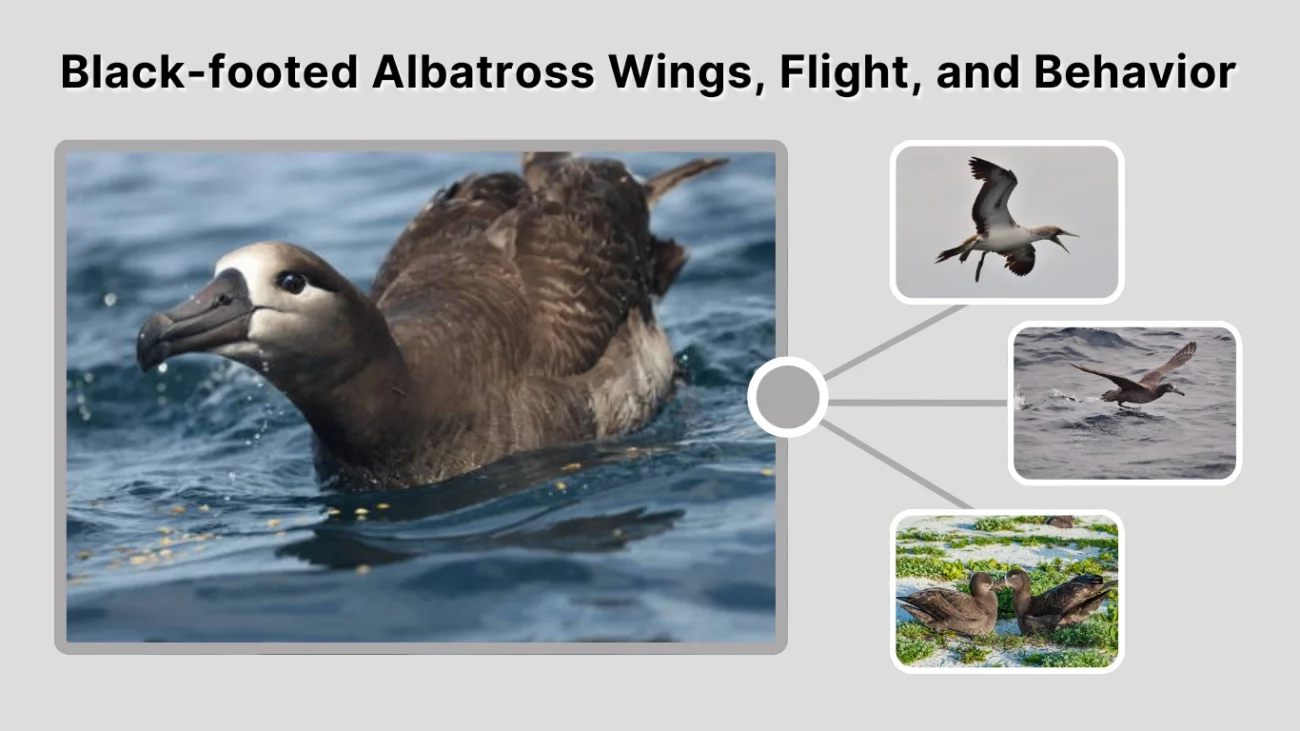
Flight Style and Gliding Ability
The black-footed albatross relies primarily on dynamic soaring to stay airborne. By rising into stronger winds and descending into calmer air, the bird extracts energy from the wind itself. This technique allows it to glide for hours without flapping its wings.
In strong wind conditions, black-footed albatrosses can travel at high speeds with remarkable efficiency, barely moving their wings as they skim low over the ocean surface.
Calls, Sounds, and Communication
Although generally quiet at sea, black-footed albatrosses become more vocal at breeding colonies. They communicate using a mix of calls, bill clacking, and body movements, especially during courtship and pair bonding. These sounds and displays help maintain social connections within crowded nesting areas.
Habitat and Distribution
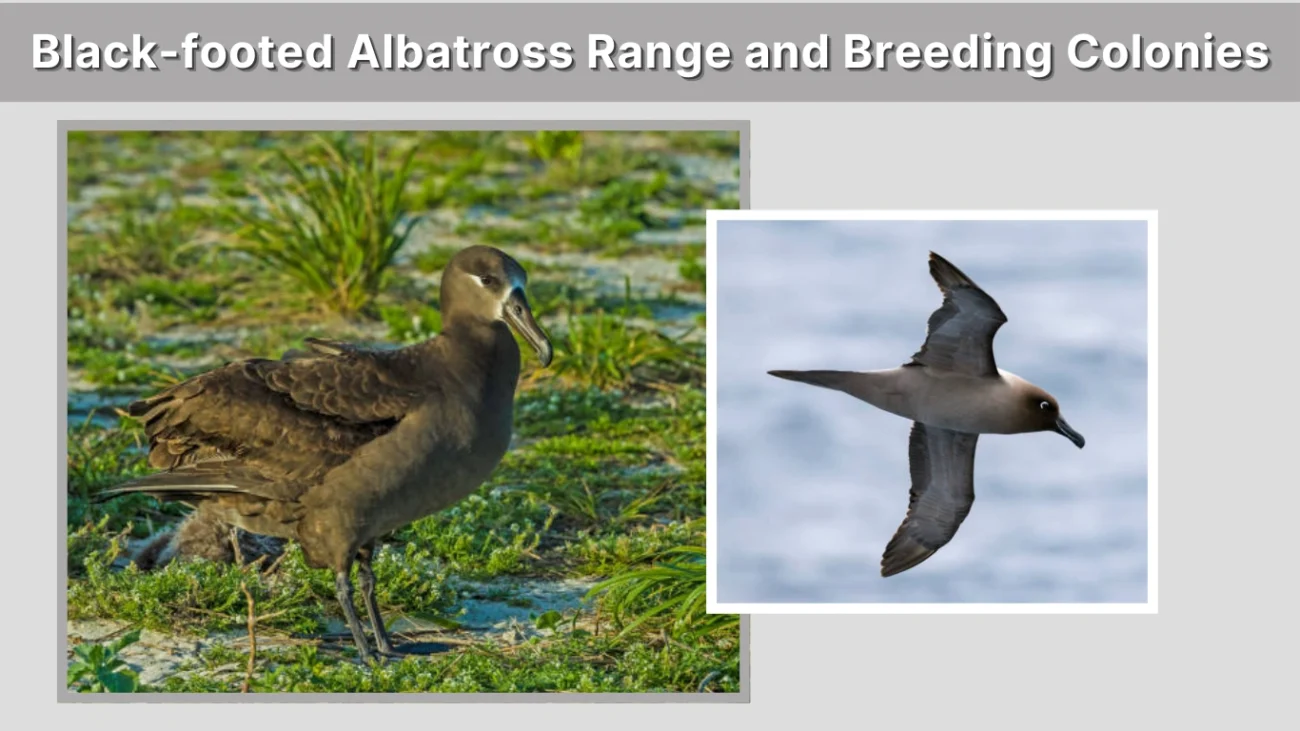
Black-footed Albatross Habitat
The black-footed albatross is an oceanic species that lives almost entirely over the Pacific Ocean. It favors open waters and is rarely seen near land outside the breeding season. Its dependence on marine habitats makes it closely tied to the health of the ocean environment.
Range and Breeding Colonies
Although black-footed albatrosses spend most of their lives far from land, they return to isolated islands to breed. The vast majority of the global breeding population nests in the Northwestern Hawaiian Islands, with Midway Atoll serving as the most important breeding site. Other significant colonies are found on Laysan Island and nearby low-lying islands.
These breeding areas are typically flat, sandy, or lightly vegetated landscapes that provide open space for takeoff and landing. Black-footed albatrosses show strong site fidelity, often returning to the same nesting area year after year.
Migration and Movement
Black-footed albatrosses are highly migratory and roam widely across the North Pacific Ocean outside the breeding season. Their range extends from Hawaii northward to Alaska and westward toward Japan and eastern Asia. Some individuals are also regularly observed along the west coast of North America, including California.
Rather than following strict migratory routes, these birds move in response to wind systems and food availability. Their ability to exploit prevailing winds allows them to cover enormous distances with minimal effort, making them one of the most wide-ranging seabirds in the Pacific.
Diet and Feeding Behavior
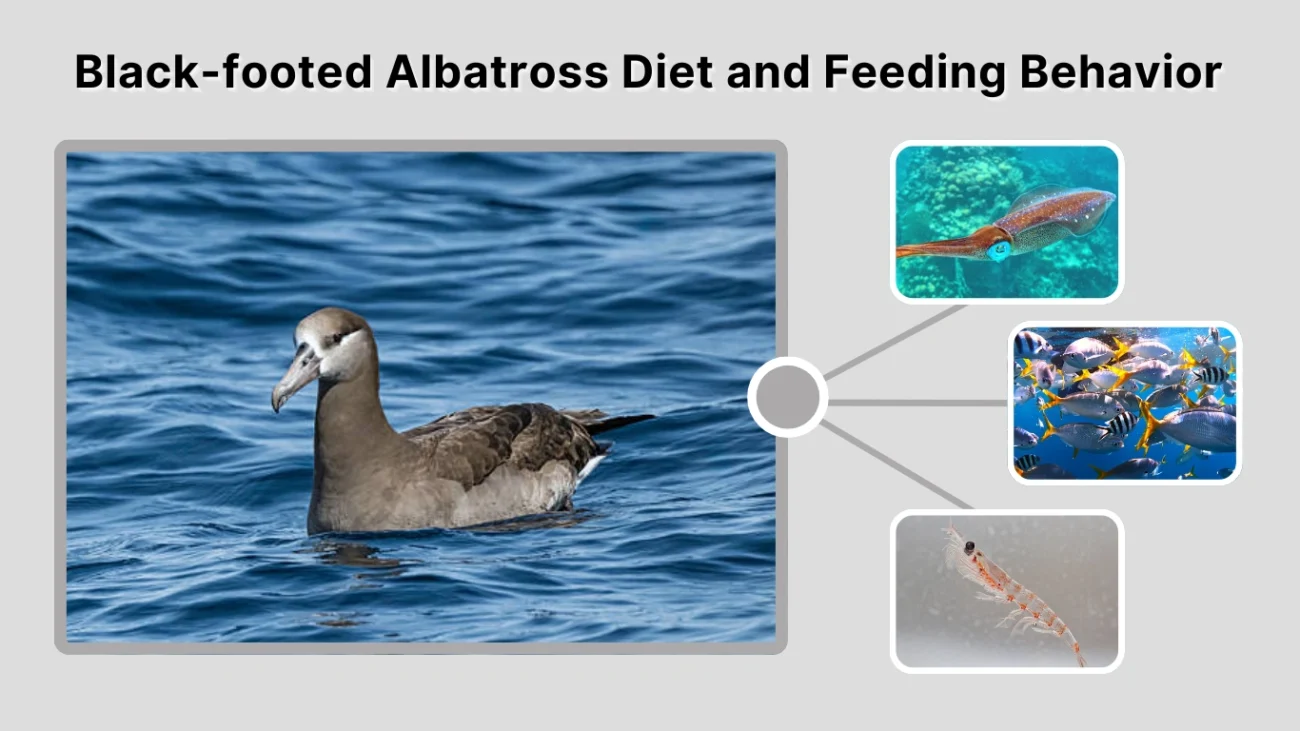
The black-footed albatross feeds primarily at the ocean surface. Its diet consists mainly of squid, fish, and crustaceans, which it captures by skimming the water and snatching prey with its hooked beak. It may also feed opportunistically on fish eggs or naturally occurring carrion.
Unfortunately, this feeding strategy makes the species especially vulnerable to plastic pollution. Floating plastic debris can resemble prey items, and adults may accidentally ingest it or feed it to their chicks. Plastic ingestion has become a serious threat to chick survival in many colonies.
Life Cycle and Reproduction
Nesting and Breeding Season
The breeding season typically begins in late fall, when adult black-footed albatrosses return to their nesting islands. Nests are shallow scrapes on the ground, often lined with sand or sparse vegetation. Each breeding pair lays a single egg per season.
Both parents take turns incubating the egg, which helps ensure its survival while allowing each adult to forage at sea.
Egg, Chick, and Juvenile Stages
Incubation lasts for about two months. After hatching, the chick is covered in down and remains entirely dependent on its parents for food. Over several months, the chick grows steadily as it is fed regurgitated meals.
Fledging occurs after roughly five months, at which point the young bird leaves the colony and heads out to sea. Juvenile black-footed albatrosses may remain at sea for several years before returning to land for the first time.
Lifespan
Black-footed albatrosses are long-lived birds, commonly reaching 30 to 40 years of age. Some individuals live even longer, which allows them to reproduce over many decades but also means populations recover slowly from declines.
Predators and Threats
Natural Predators
At sea, adult black-footed albatrosses face few natural predators, though large sharks such as tiger sharks may occasionally prey on them. On breeding islands, eggs and chicks are vulnerable to predation by other seabirds and introduced mammals.
Human-Related Threats
Human activity poses the greatest threat to black-footed albatross populations. Longline fishing is a major concern, as birds can become accidentally hooked and drown. Plastic pollution is another serious issue, particularly for chicks. Climate change also threatens breeding habitats through rising sea levels and altered ocean conditions.
Conservation Status
The black-footed albatross is currently classified as Near Threatened. While its population remains relatively large, ongoing threats from fishing bycatch, pollution, and climate change have raised concern among conservationists. International agreements and improved fishing practices have helped reduce mortality, but continued protection is essential.
FAQs
What is the scientific name of the black-footed albatross?
The scientific name of the black-footed albatross is Phoebastria nigripes. It belongs to the albatross family Diomedeidae and is native to the North Pacific Ocean.
How big is a black-footed albatross?
Adults measure about 70–75 centimeters in length and have a wingspan of roughly 2.0–2.2 meters. They typically weigh between 2.5 and 4 kilograms.
Where do black-footed albatross live?
They live primarily over the Pacific Ocean and breed on remote islands, especially in the Northwestern Hawaiian Islands such as Midway Atoll.
Are black-footed albatross endangered?
They are currently listed as Near Threatened due to threats such as fishing bycatch, plastic pollution, and habitat loss.
Why are black-footed albatross called gooney birds?
The nickname “gooney bird” comes from their clumsy appearance on land, which contrasts sharply with their graceful and efficient flight at sea.


