











The wandering albatross (Diomedea exulans) is widely recognized as the largest flying bird in the world by wingspan. Famous for its ability to travel enormous distances across open oceans, this seabird spends most of its life gliding above the Southern Ocean. With minimal wing flapping and exceptional energy efficiency, the wandering albatross has become a symbol of endurance, scale, and adaptation in the natural world. Its impressive size and slow life cycle also make it particularly vulnerable to environmental threats.
Identification and Scientific Classification
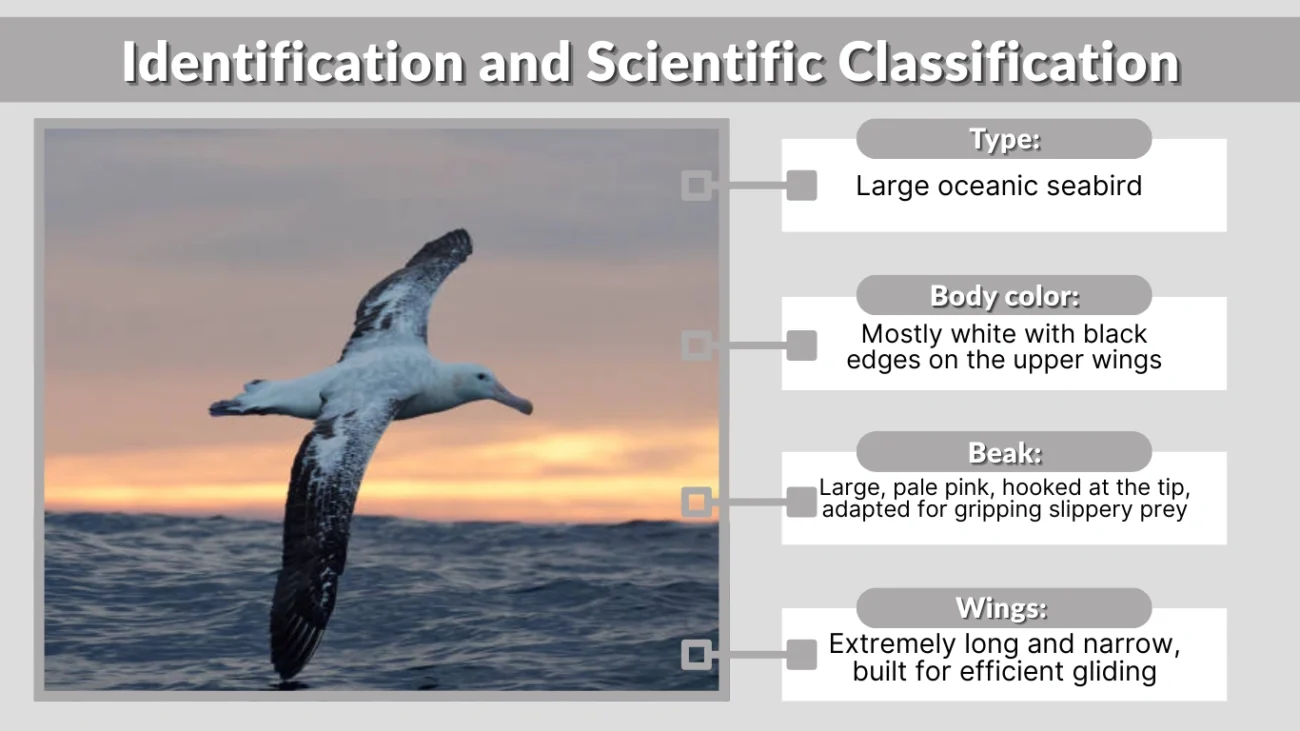
- Scientific name: Diomedea exulans
- Common names: Wandering albatross, snowy albatross, great wandering albatross
- Family: Diomedeidae
- Order: Procellariiformes
- Type: Large oceanic seabird
- Body color: Mostly white with black edges on the upper wings
- Beak: Large, pale pink, hooked at the tip, adapted for gripping slippery prey
- Wings: Extremely long and narrow, built for efficient gliding and dynamic soaring
- Sex differences: Males are generally larger and heavier than females
- Juveniles: Darker plumage with more black on wings and body, gradually whitening with age
Size and Physical Characteristics
Overall Body Size
The wandering albatross is a truly enormous bird. Adults typically measure between 110 and 135 centimeters in body length. When standing upright, their height can reach around 90 to 100 centimeters, placing them roughly at waist height for an average adult human. Weight varies depending on sex and condition, with males generally heavier than females. Most adults weigh between 6 and 12 kilograms.
Despite this weight, the bird appears relatively slender due to its elongated wings and streamlined body shape. This design reduces drag and allows the albatross to remain airborne with minimal effort.
Wingspan of the Wandering Albatross
What truly sets the wandering albatross apart is its wingspan. On average, the wingspan ranges from 3.0 to 3.5 meters (about 10 to 11.5 feet). Exceptional individuals have been recorded with wingspans approaching 3.7 meters, making this species the undisputed record holder among living birds.
These wings are not just long but also narrow, increasing lift and enabling the bird to glide efficiently over the ocean for hours at a time. The wingspan plays a critical role in the bird’s ability to exploit wind currents and conserve energy during long flights.
Size Compared to a Human
When compared directly to a human, the wandering albatross appears astonishingly large. While its body height is similar to a person’s waist or chest, its wingspan can extend far beyond a human’s reach. With wings fully spread, a wandering albatross can easily exceed the height of an adult human by more than a meter. This dramatic difference often leads to photos and illustrations that highlight the bird’s scale next to people for perspective.
Wings, Flight, and Adaptations

Wing Structure and Soaring Ability
The wandering albatross is perfectly adapted for life over open oceans. Its wings are supported by strong bones and specialized joints that can lock into place, allowing the bird to maintain extended glides without continuous muscle effort. This adaptation reduces fatigue and makes long-distance flight possible.
The bird primarily uses a technique known as dynamic soaring. By repeatedly climbing into stronger winds and descending into calmer air, it extracts energy from the wind itself, allowing it to travel vast distances without flapping.
How Long Can Wandering Albatross Fly?
Wandering albatrosses are capable of flying for days or even weeks without landing. Juvenile birds, after leaving their nesting islands, may remain at sea continuously for several years before returning to land for the first time. During flight, they can rest briefly while gliding, allowing them to maintain near-constant movement across the ocean.
Speed and Flight Behavior
In normal conditions, a wandering albatross cruises at speeds of around 30 to 50 kilometers per hour. With strong tailwinds, speeds can exceed 80 kilometers per hour. Despite their size, these birds rarely flap their wings, relying instead on wind patterns and their exceptional wingspan to stay airborne.
Habitat and Distribution
Where Do Wandering Albatross Live?
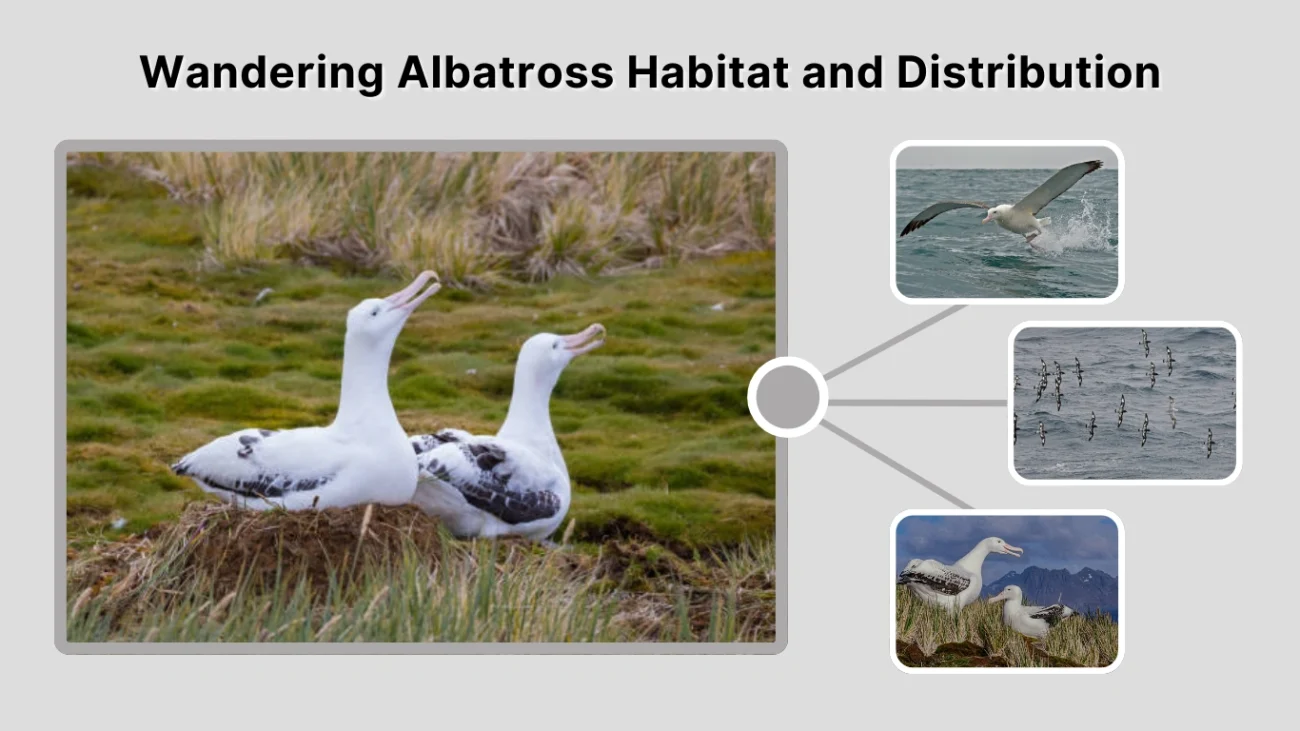
Wandering albatrosses live almost entirely over the Southern Ocean. They favor open waters and are rarely seen near land except during the breeding season. Their range extends in a broad circle around Antarctica, reaching into subtropical waters but seldom crossing the equator.
Breeding Locations
Although wandering albatrosses spend most of their lives at sea, they return to land to breed on remote sub-Antarctic islands. Major breeding sites include South Georgia, the Crozet Islands, Prince Edward Islands, and the Antipodes Islands. These locations are isolated, windswept, and largely free from land predators, making them suitable for nesting large seabirds.
Breeding colonies are typically found on open slopes or grassy plateaus where birds can easily take off and land. Because wandering albatrosses are not agile on land, access to strong winds is essential for flight.
Migration and Range
Wandering albatrosses have one of the largest natural ranges of any bird species. After breeding, adults disperse across the Southern Ocean, often traveling thousands of kilometers in looping, circumpolar routes. Some individuals have been tracked flying around Antarctica multiple times in a single year.
Juveniles show even more extreme dispersal patterns. After fledging, young birds may roam continuously for several years, covering vast oceanic distances before returning to their natal islands to breed. These migrations are not seasonal in the traditional sense but are driven by wind systems and food availability.
Diet and Feeding Behavior
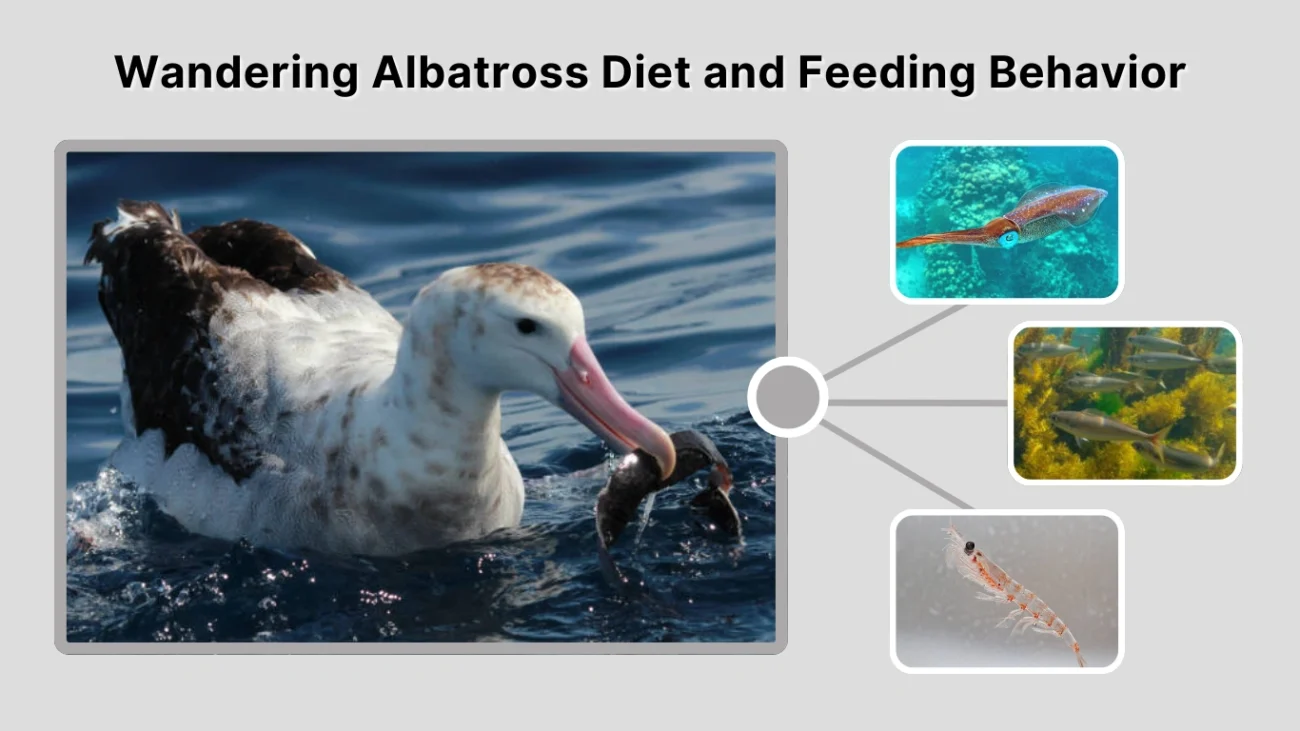
The wandering albatross is a surface feeder that relies on the open ocean for food. Its diet consists primarily of squid, fish, and krill, with squid making up a significant portion of its intake. The bird typically feeds at night, when squid rise closer to the surface.
Using its keen sense of smell, the albatross can locate food sources across immense distances. Rather than diving deeply, it skims the ocean surface and snatches prey with its large, hooked beak. It may also opportunistically scavenge naturally occurring carrion, although it does not rely heavily on scavenging.
Life Cycle and Reproduction
Breeding Behavior
Wandering albatrosses are monogamous and often form lifelong pair bonds. Courtship involves elaborate displays, including synchronized movements, bill clacking, and vocalizations. These rituals help strengthen pair bonds and may last several years before successful breeding begins.
Egg, Chick, and Juvenile Stages
Each breeding attempt produces a single egg, laid every two years. Both parents take turns incubating the egg for about 78 days. Once hatched, the chick is fed regurgitated food and grows slowly over several months.
The chick remains at the nest for eight to nine months before fledging, making this one of the longest chick-rearing periods among birds. After fledging, the young albatross departs to sea and may not return to land for years.
Lifespan
Wandering albatrosses are long-lived birds, commonly reaching 40 years of age, with some individuals known to live much longer. Their slow reproductive rate means populations recover very slowly from declines.
Predators and Threats
Natural Predators
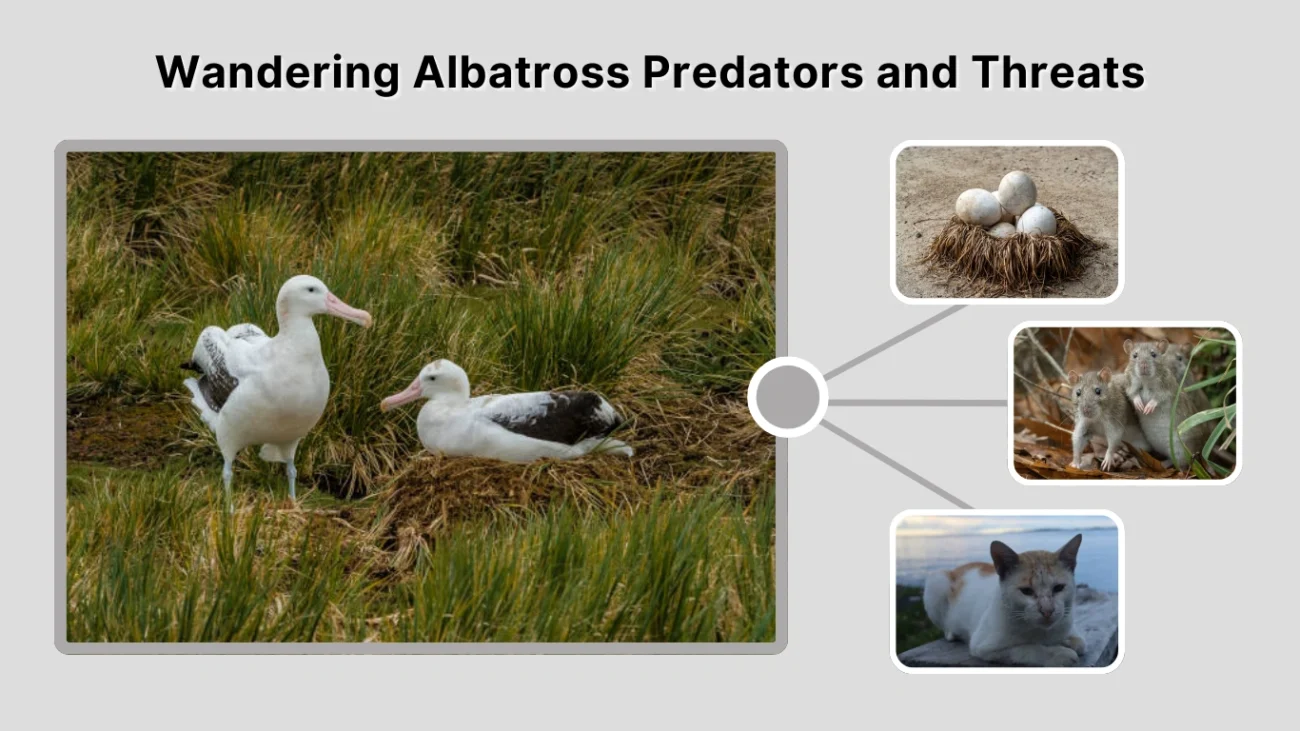
On breeding islands, eggs and chicks may be preyed upon by skuas and giant petrels. Introduced predators such as rats and cats pose a serious threat on some islands, particularly to unattended eggs and young chicks.
Human-Related Threats
The greatest threat to wandering albatrosses comes from longline fishing. Birds are often accidentally caught on baited hooks and drown. Plastic pollution also poses a risk, as birds may ingest debris or feed it to chicks. Climate change may further disrupt wind patterns and food availability, impacting flight efficiency and survival.
Conservation Status
The wandering albatross is currently classified as Vulnerable. While some populations are stable, others are declining due to continued fishing bycatch and environmental pressures. Conservation efforts include improved fishing practices, protected breeding islands, and international agreements aimed at reducing seabird mortality.
Comparisons With Other Large Birds
The wandering albatross is often compared to birds like the Andean condor or royal albatross. While condors may outweigh it, no other living bird matches the wandering albatross in wingspan. Unlike land-based soaring birds, the wandering albatross is uniquely adapted for constant movement over open oceans.
FAQs
How big is a wandering albatross?
The wandering albatross has the largest wingspan of any living bird, averaging 10–11.5 feet and reaching over 12 feet in rare cases. Adults typically weigh between 6 and 12 kilograms.
Can a wandering albatross carry a human?
No. Despite its enormous wingspan, the wandering albatross lacks the muscle strength to lift or carry a human. Its wings are designed for gliding, not heavy lifting.
How long can wandering albatross fly without landing?
They can fly continuously for days or weeks. Juveniles may remain at sea for several years before returning to land.
Is the wandering albatross endangered?
The species is classified as Vulnerable, mainly due to fishing bycatch and slow reproduction.
Where do wandering albatross live?
They live primarily over the Southern Ocean, breeding on remote sub-Antarctic islands and spending most of their lives in flight over open water.


