











The Laysan albatross (Phoebastria immutabilis) is one of the most recognizable seabirds of the Pacific Ocean, known for its long lifespan, graceful flight, and strong connection to Hawaii. Famous for forming lifelong pair bonds and performing elaborate courtship dances, this species spends most of its life soaring over open water. The Laysan albatross has also gained global attention through “Wisdom,” the oldest known wild bird. Despite its resilience, the species faces growing threats from human activity.
Identification and Scientific Classification
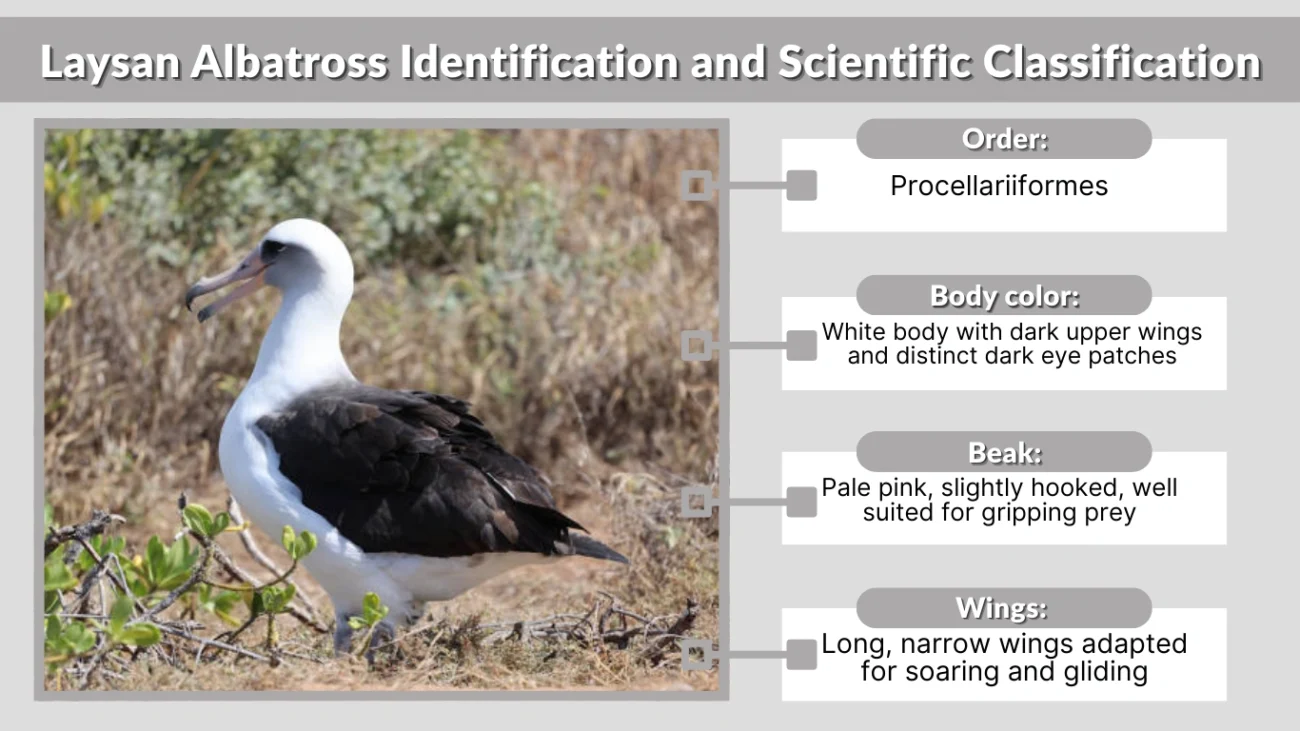
- Scientific name: Phoebastria immutabilis
- Common name: Laysan albatross
- Hawaiian name: Mōlī
- Family: Diomedeidae
- Order: Procellariiformes
- Body color: White body with dark upper wings and distinct dark eye patches
- Beak: Pale pink, slightly hooked, well suited for gripping prey
- Wings: Long, narrow wings adapted for soaring and gliding
- Sex differences: Males and females appear very similar in size and coloration
- Juveniles: Darker plumage overall, gradually lightening as they mature
Size and Physical Characteristics
How Big Is a Laysan Albatross
The Laysan albatross is a large seabird, though smaller than some of its southern relatives. Adults typically measure about 80 to 85 centimeters in body length. When standing, their height reaches roughly knee level on an adult human. Most individuals weigh between 2.5 and 4 kilograms, with little visible difference between males and females.
Despite this moderate weight, the bird’s long wings and streamlined body give it an impressive presence. Its proportions are optimized for flight rather than walking, which is why Laysan albatrosses appear somewhat awkward when moving on land.
Laysan Albatross Wingspan
The wingspan of a Laysan albatross ranges from approximately 2.0 to 2.3 meters (6.5 to 7.5 feet). While this is not the largest wingspan among albatross species, it is still enormous compared to most birds. The wings are narrow and stiff, helping the bird stay aloft with minimal energy use.
This wingspan allows the Laysan albatross to glide efficiently over vast ocean distances, often without flapping for long periods.
Size Compared to a Human
When compared to a human, a Laysan albatross appears modest in height but striking in width. While it stands only knee-high, its fully extended wingspan can be wider than an adult human is tall. This contrast often surprises people seeing the species for the first time, especially during takeoff or landing.
Wings, Flight, and Movement
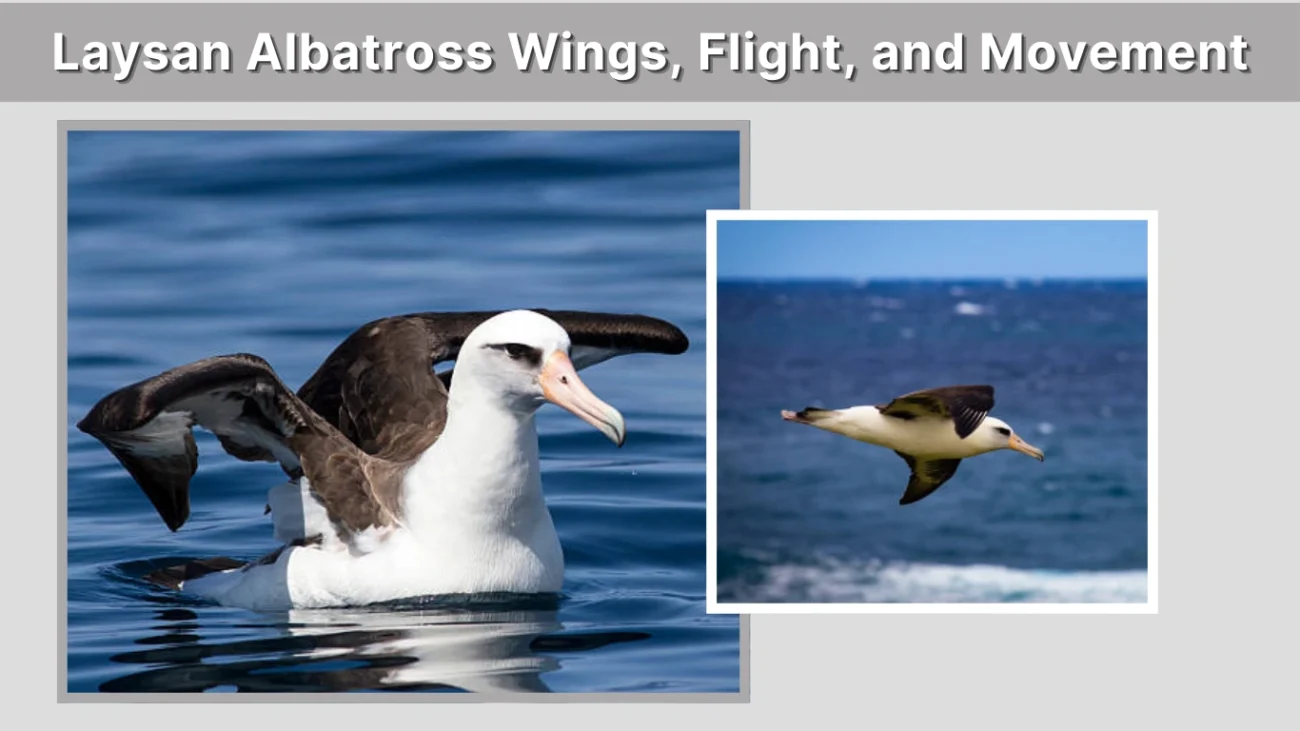
Flight Style and Adaptations
The Laysan albatross is a master of soaring flight. Its wings are specially adapted to exploit wind currents above the ocean surface. Rather than flapping continuously, the bird relies on gliding and dynamic soaring to conserve energy.
Its shoulder joints allow the wings to lock in place, reducing muscle strain during long flights. This adaptation enables the bird to remain airborne for hours while expending very little effort.
Flying Distance and Endurance
Laysan albatrosses are capable of traveling thousands of kilometers during a single foraging trip. Outside the breeding season, they roam widely across the North Pacific Ocean, often covering vast areas in search of food.
Young birds are especially impressive travelers. After leaving their nesting grounds, juveniles may spend several years at sea before returning to land for the first time, remaining almost constantly airborne during that period.
Courtship and Social Behavior
Courtship Dance
One of the most famous characteristics of the Laysan albatross is its courtship dance. These dances involve synchronized movements such as bill clacking, head bobbing, wing spreading, and vocal calls. The behavior strengthens pair bonds and helps birds recognize suitable mates.
Courtship rituals may last several seasons before a pair successfully breeds, highlighting the importance of social bonding in this species.
Mate for Life
Laysan albatrosses typically mate for life. Once a pair bond is formed, the same two birds return to the same nesting area year after year. This long-term partnership plays a key role in successful breeding and chick rearing.
Habitat and Distribution
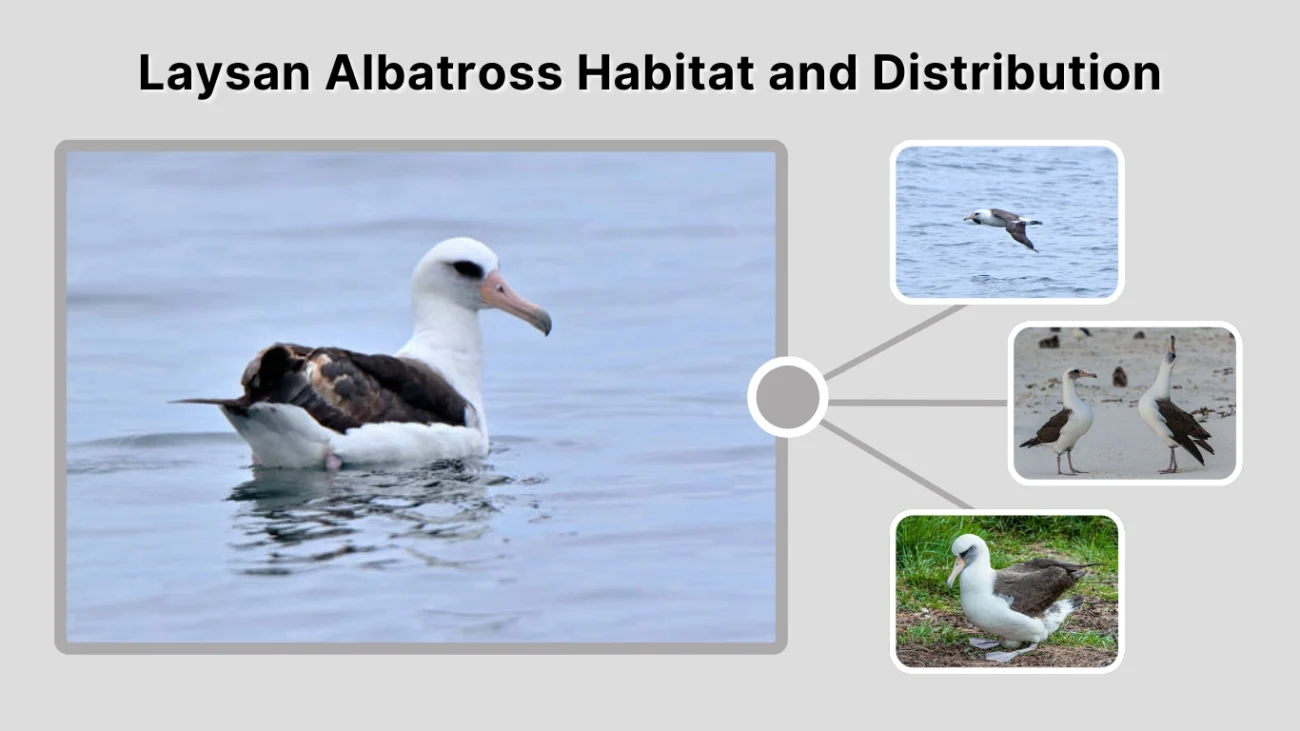
Where Do Laysan Albatross Live
Laysan albatrosses live primarily across the North Pacific Ocean. They spend most of their lives far from land, coming ashore mainly for breeding. Their oceanic lifestyle makes them highly dependent on healthy marine ecosystems.
Hawaii and Key Breeding Sites
Although Laysan albatrosses spend most of their lives at sea, they return to land to breed on remote islands across the North Pacific. The largest and most important breeding colonies are found in the Northwestern Hawaiian Islands, particularly Midway Atoll and Laysan Island. Smaller but growing colonies also exist on Kauai and other main Hawaiian islands.
These breeding sites are typically flat, sandy, or grassy areas with open space for takeoff and landing. Laysan albatrosses show strong site fidelity, often returning to the exact same nesting area year after year.
Migration and Range
Outside the breeding season, Laysan albatrosses disperse widely across the North Pacific Ocean. Their range extends from Hawaii to the coasts of North America and Asia, including waters near Alaska, Japan, and California. These long-distance movements are driven by food availability and seasonal ocean conditions.
Unlike many birds that migrate along fixed routes, Laysan albatrosses follow broad, looping paths shaped by wind patterns and ocean productivity. Some individuals travel tens of thousands of kilometers in a single year, making them among the most wide-ranging seabirds on Earth.
Diet and Feeding Behavior
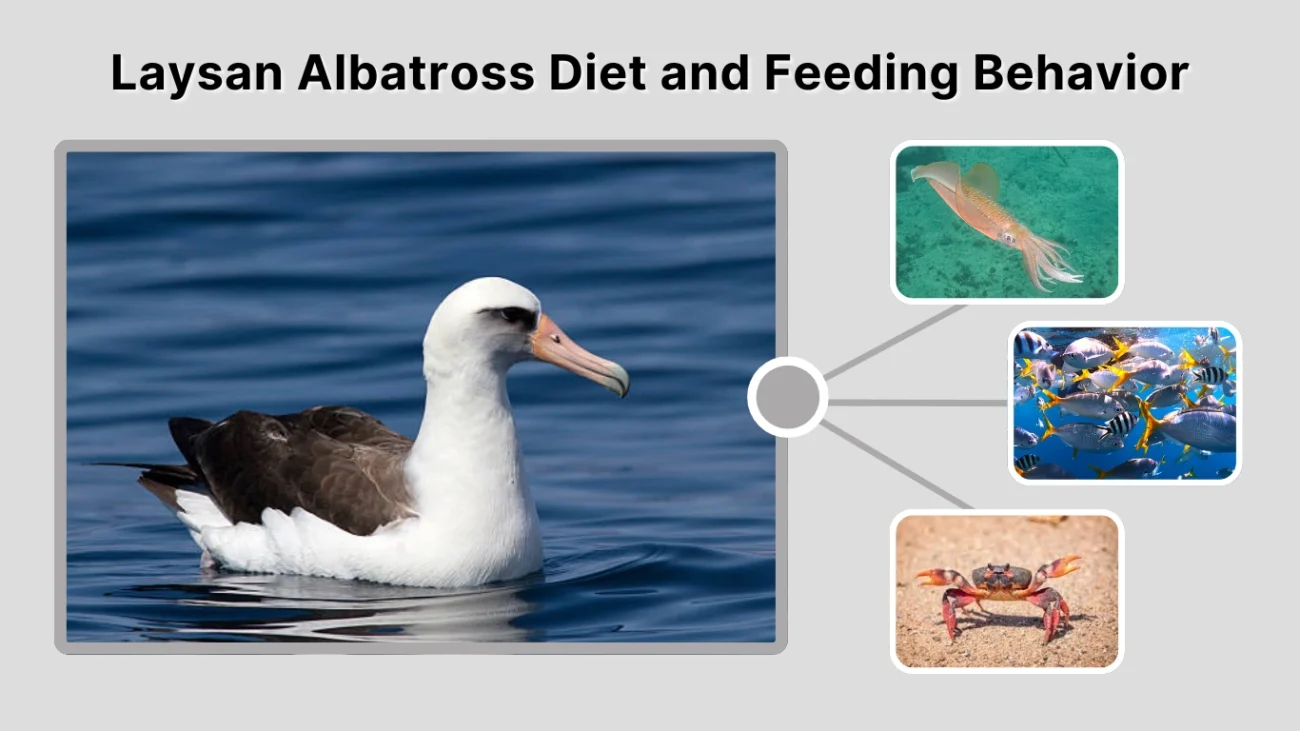
Laysan albatrosses are surface feeders that rely on the open ocean for food. Their diet consists mainly of squid, fish, and crustaceans. They often feed at night, when squid move closer to the ocean surface.
Rather than diving deeply, the birds skim the water and seize prey with their beaks. Unfortunately, this feeding style also makes them vulnerable to mistaking floating plastic for food. Plastic ingestion is a major threat, especially to chicks, which may be fed debris by their parents.
Life Cycle and Reproduction
Breeding Season and Nesting
The breeding season begins in late fall, when adults return to their nesting islands. Pairs build simple nests on the ground using sand, grass, and small bits of vegetation. Breeding occurs once per year, with each pair laying a single egg.
Both parents share incubation duties, taking turns sitting on the egg while the other forages at sea.
Egg and Chick Development
The egg hatches after about two months of incubation. The chick is initially covered in soft down and depends entirely on its parents for food. Over several months, the chick grows rapidly as it is fed regurgitated meals.
Fledging occurs after roughly five to six months, at which point the young bird leaves the nest and heads out to sea for the first time.
Juvenile Stage
After fledging, juvenile Laysan albatrosses may remain at sea for three to five years before returning to land. During this time, they learn to forage, navigate, and survive independently. This long juvenile stage is a defining feature of the species’ life history.
Lifespan and Longevity
Average Lifespan
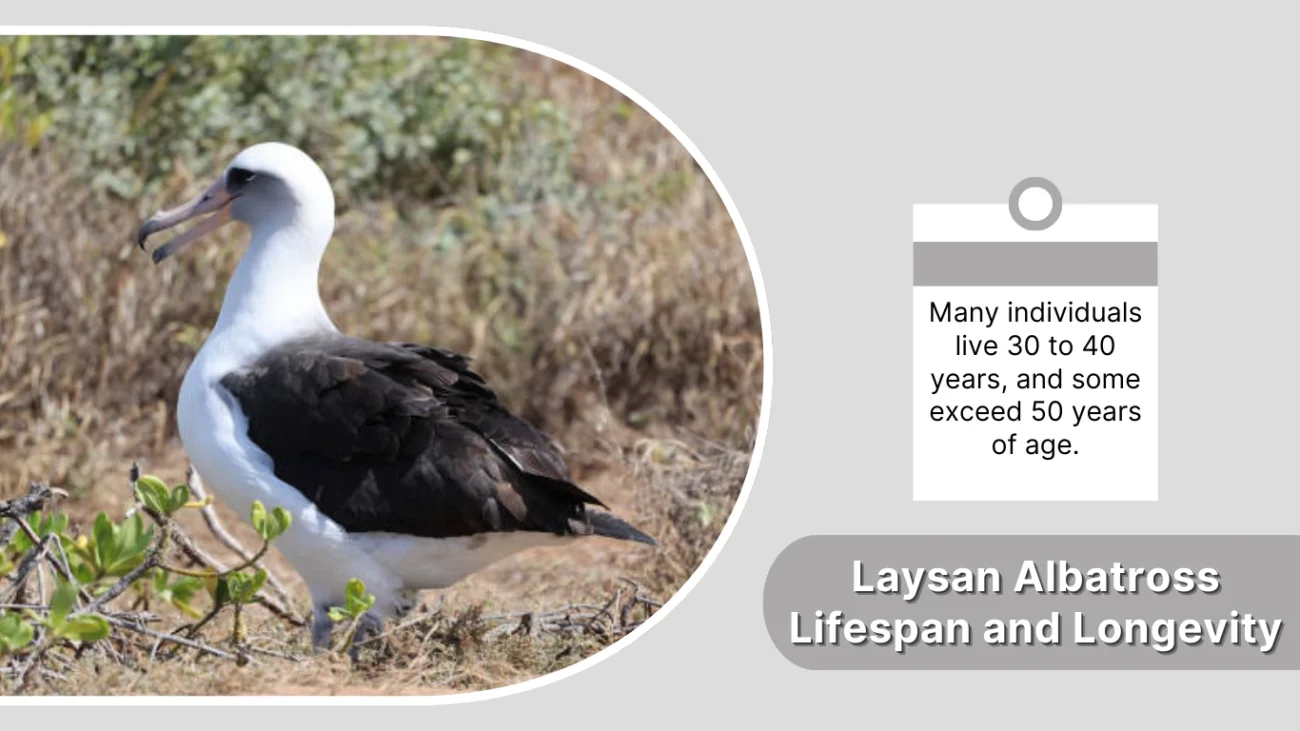
Laysan albatrosses are exceptionally long-lived birds. Many individuals live 30 to 40 years, and some exceed 50 years of age. Their slow maturation and low reproductive rate mean that population recovery can take decades.
Wisdom the Laysan Albatross
The most famous Laysan albatross is Wisdom, a female first banded in 1956 on Midway Atoll. She is considered the oldest known wild bird, having lived well over 70 years. Wisdom has laid dozens of eggs during her lifetime and continues to provide valuable data on longevity and reproduction in seabirds.
Predators and Threats
Natural Predators
Eggs and chicks are vulnerable to predators such as skuas, rats, and other introduced mammals on breeding islands. Predator control has become an important conservation strategy.
Human-Related Threats
Human activity poses the greatest risks to Laysan albatrosses. Plastic pollution, fishing gear, habitat loss, and climate change all threaten survival. Rising sea levels also endanger low-lying nesting islands.
Conservation Status
Laysan albatrosses are currently listed as Near Threatened. While populations remain relatively large, ongoing threats mean continued conservation efforts are essential. Protecting breeding habitats and reducing ocean pollution are key priorities.
FAQs
How long do Laysan albatross live?
Laysan albatrosses commonly live 30 to 40 years, with some individuals surviving more than 50 years. Wisdom, the oldest known wild bird, has lived for over seven decades.
How big is a Laysan albatross?
Adults measure about 80–85 centimeters in length and have a wingspan of 2.0–2.3 meters, making them one of the larger seabirds in the Pacific.
Where do Laysan albatross live?
They live across the North Pacific Ocean and breed mainly in Hawaii, especially on Midway Atoll and Laysan Island.
Are Laysan albatross endangered?
They are classified as Near Threatened due to plastic pollution, fishing impacts, and habitat loss.
Why is Wisdom the Laysan albatross famous?
Wisdom is famous for being the oldest known wild bird and for continuing to reproduce at an advanced age, providing valuable insight into seabird longevity.


