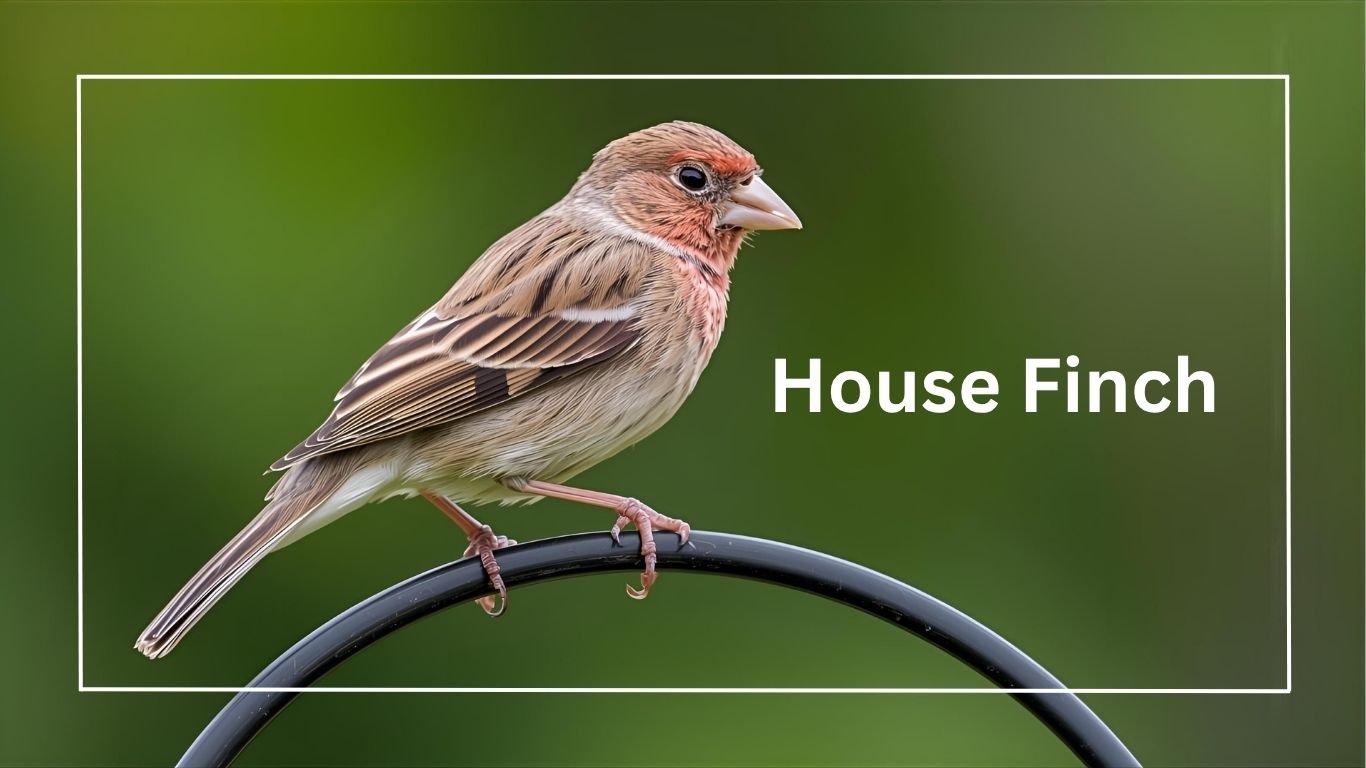
The House Finch (Haemorhous mexicanus) is a colorful, adaptable songbird widely found across North America. Known for its cheerful chirping and bright red plumage in males, this bird is a familiar sight in urban and suburban areas. Originally native to the western United States, it has successfully expanded its range across the continent. The House Finch’s friendliness, distinctive song, and adaptability make it a favorite among backyard birdwatchers.
Identifying the House Finch
Physical Appearance
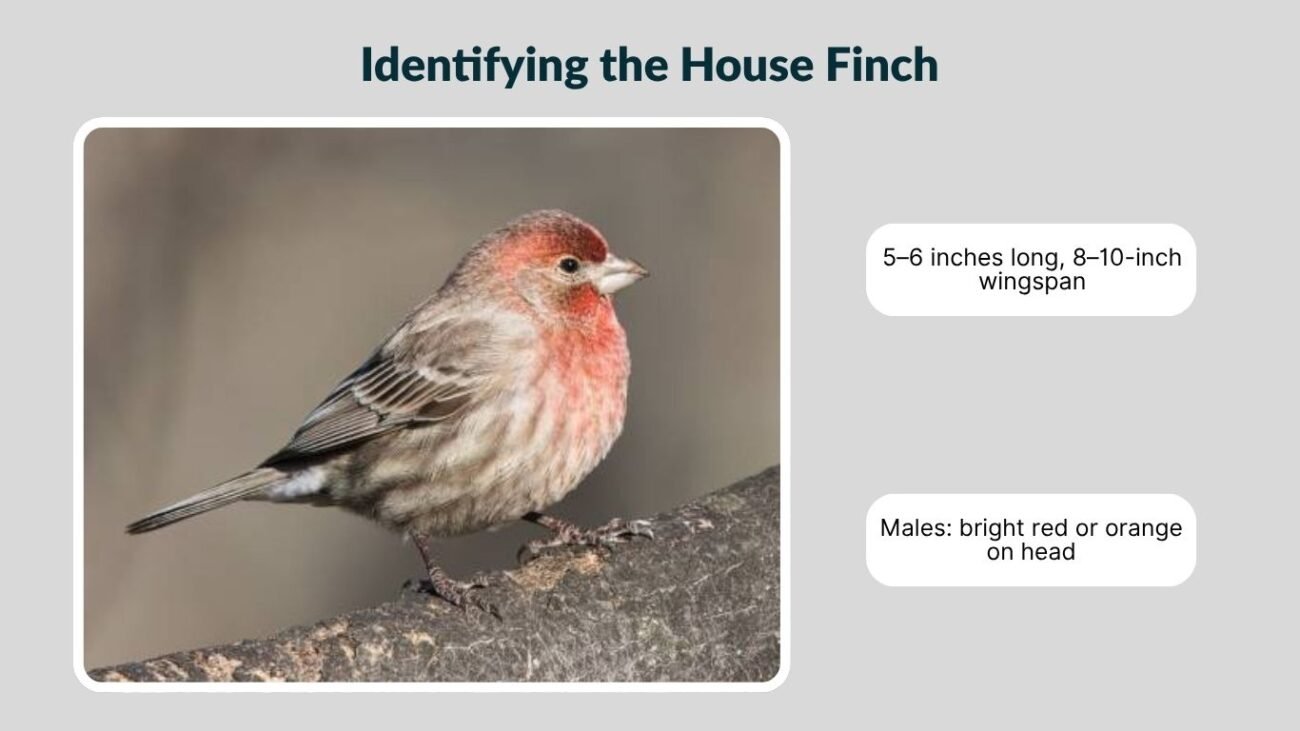
- Small songbird (5–6 inches long, 8–10-inch wingspan).
- Males: bright red or orange on head, chest, and throat.
- Females: brown and heavily streaked, no red tones.
- Both sexes have conical bills for cracking seeds.
- Juveniles resemble females but appear fluffier.
- Some males show yellow or orange instead of red (diet-based variation).
Male and Female Differences
- Males: red coloring limited to head and chest; streaked belly.
- Females: plain brown with fine streaks; no facial markings.
- Female finches lack the gray crown and cheek patch of sparrows.
- Males often perch higher and sing more frequently.
- Easy to distinguish from Purple Finch — House Finch has a lighter red tone and more streaking.
House Finch vs. Similar Species

House Finch vs. Purple Finch
One of the most common identification challenges is distinguishing between the House Finch and the Purple Finch. While both are small, seed-eating finches, their appearances and ranges differ noticeably.
The Purple Finch male has a deeper, raspberry-red coloration that spreads over the entire head and chest, blending smoothly into the back and flanks. The House Finch male, in contrast, has red mostly on the head and upper chest, with a streaked belly and brown back.
Females are trickier to tell apart: female Purple Finches have a bold white eyebrow line and a more pronounced face pattern, while female House Finches are generally plainer and more streaked overall.
When it comes to habitat, Purple Finches prefer forested areas, whereas House Finches thrive near human settlements, from gardens and backyards to city parks.
House Finch vs. House Sparrow
Another frequent source of confusion is between the House Finch and the House Sparrow. Both species are common around homes and feeders, but they differ in several ways.
House Sparrows are chunkier, with a flatter head and thicker bill. Male sparrows have gray crowns, black bibs, and chestnut neck patches, while female sparrows are dull brown with pale underparts. In contrast, the House Finch male’s red plumage and longer tail stand out easily, while females remain more uniformly streaked.
Behaviorally, House Finches are gentler and less aggressive than sparrows, which are known for dominating feeders and nesting areas. Observing their interaction at a feeder often reveals the more peaceful temperament of the finch.
Other Look-Alike Birds
Other birds that may be mistaken for House Finches include the Pine Siskin, Red-headed Sparrow, and Cassin’s Finch. The Pine Siskin, for example, is smaller and more streaked, with yellow edges on its wings and tail. The Cassin’s Finch has a red crown and pale belly, appearing more uniformly colored than the House Finch. Paying attention to these subtle variations helps ensure accurate identification.
Habitat and Distribution

Natural Range
The House Finch was originally native to the southwestern United States and Mexico, thriving in dry desert regions. However, due to its adaptability, it now inhabits nearly all of North America. It was introduced to the eastern U.S. in the 1940s and has since spread widely, becoming one of the continent’s most common urban songbirds.
Preferred Habitats
House Finches prefer open habitats such as suburbs, farms, city parks, and backyards. They are comfortable living close to humans and readily nest on building ledges, hanging baskets, and outdoor lights. You can also find them in rural areas near farms and orchards, where food sources are abundant.
They thrive in states like Texas, Ohio, and California, where mild climates support year-round populations. Because they don’t rely heavily on specific vegetation, they adapt easily to different environments.
Migration Patterns
House Finches are primarily non-migratory, meaning they stay in the same region throughout the year. However, in northern or mountainous areas, some populations may move short distances to warmer climates during winter. Their widespread adaptability allows them to survive in various temperatures, from deserts to snowy suburbs.
Songs, Sounds, and Calls
Vocal Behavior
The House Finch is known for its cheerful, warbling song, which consists of a series of short, rising and falling notes. Males often sing from treetops or rooftops to attract mates or mark territory. Their calls are musical and melodious, with a slightly “raspy” quality that distinguishes them from other finches.
Communication and Purpose
Both males and females use calls and chirps to communicate, but only males perform full songs. These vocalizations help in mating displays, warning of predators, or maintaining contact within flocks. Males sing more frequently during the breeding season, often serenading their mates and defending nesting sites through song rather than aggression.
Nesting and Reproduction
Nest Construction
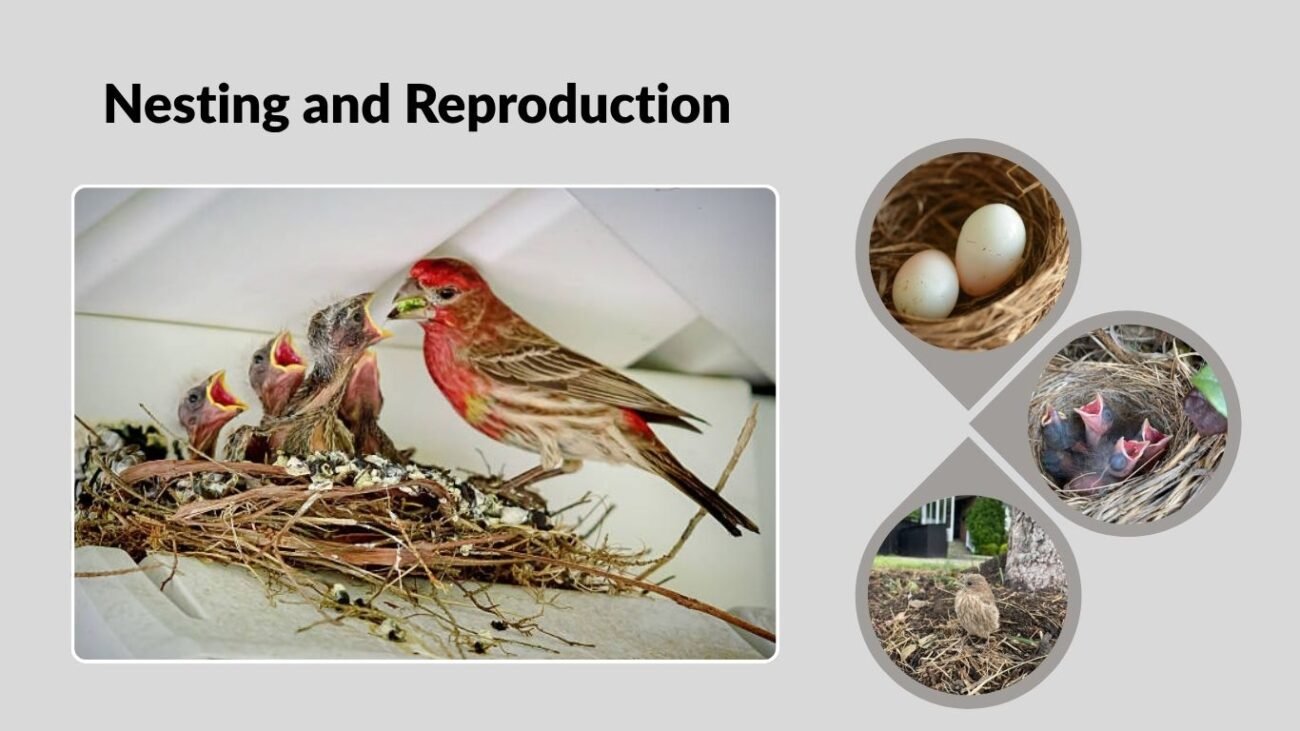
House Finches are resourceful nest builders, often selecting sheltered locations close to human dwellings. They use twigs, grass, feathers, and plant stems to construct cup-shaped nests. These nests are typically built in hanging planters, trees, building eaves, or even on outdoor light fixtures.
Their nesting adaptability allows them to thrive in both urban and rural areas. Females usually take the lead in building the nest while males provide materials and food during the process.
Eggs and Incubation
A typical clutch contains 3 to 6 pale blue eggs, sometimes with light speckles. The female incubates the eggs for about 12 to 14 days, rarely leaving the nest except to feed. Once hatched, both parents share feeding duties, bringing seeds and partially digested plant matter to their chicks.
Within two weeks, the fledglings grow feathers and begin venturing near the nest. Their parents continue feeding them for several days after they leave, ensuring they adapt to independent life.
Mating and Fledglings
House Finches are socially monogamous, often pairing with the same partner throughout a breeding season. However, they may choose new mates each year. Males perform lively displays, fluffing feathers and singing to attract females.
After the chicks hatch, they grow rapidly, leaving the nest at around 14 to 18 days old. The parents may raise multiple broods in a single season, especially in warmer climates where food is plentiful.
Diet and Feeding Habits
What Do House Finches Eat?
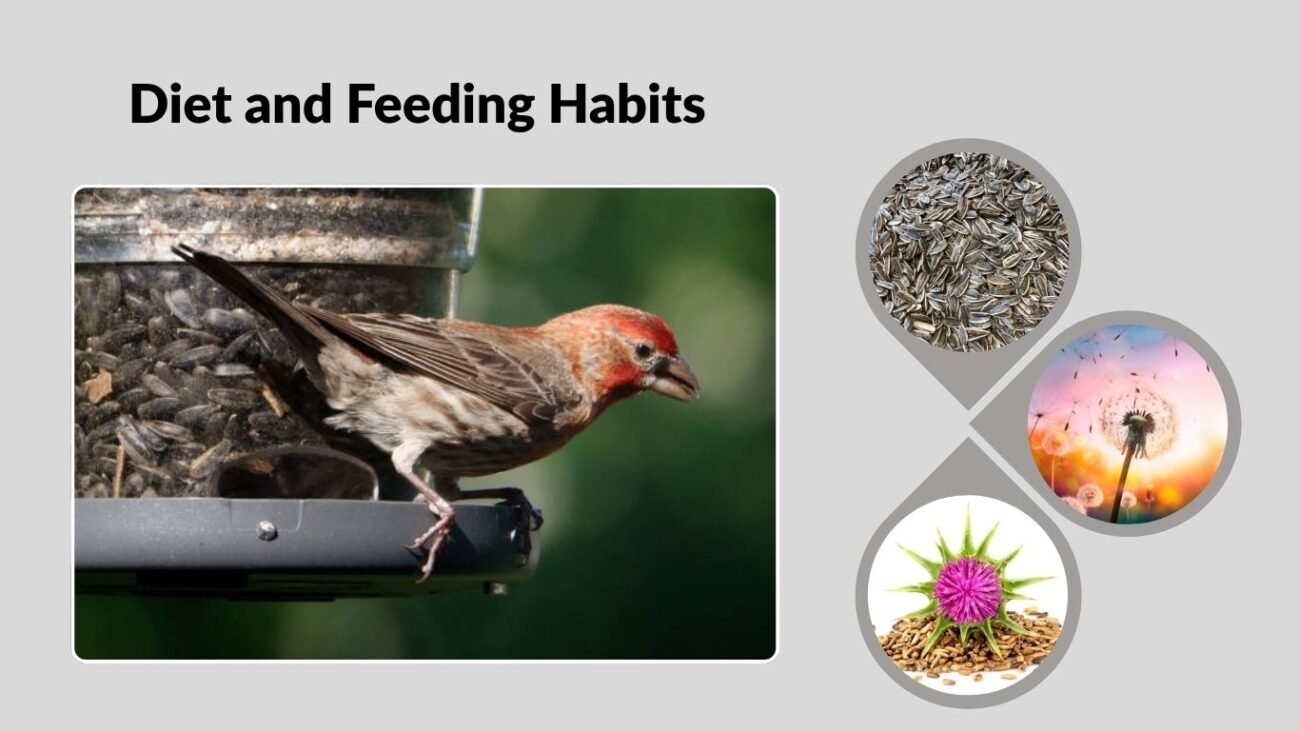
House Finches are primarily granivores, meaning seeds form the bulk of their diet. They particularly enjoy sunflower, dandelion, and thistle seeds, though they also eat fruits such as cherries, berries, and small buds. During the breeding season, they occasionally consume insects to provide protein for their growing chicks.
Their strong, conical beaks are perfectly adapted for cracking tough seed shells. You’ll often find them perched on feeders or foraging on the ground beneath trees.
Attracting Them to Feeders
If you want to attract House Finches to your yard, install tube or platform feeders filled with black oil sunflower seeds. They’re not picky eaters and will visit year-round if food is available.
Adding fruit slices, millet, and nyjer seeds can increase visits, especially during nesting season. Keeping feeders clean is crucial, as this species is prone to House Finch eye disease, which spreads at dirty feeding stations.
Lifespan, Health, and Common Diseases
Lifespan in the Wild
In the wild, the average lifespan of a House Finch ranges from 5 to 10 years, though many live shorter lives due to predators or harsh conditions. In captivity, they can live longer under proper care.
Their high reproductive rate helps maintain stable populations even when faced with natural challenges such as disease or habitat loss.
House Finch Eye Disease
One of the most recognized health issues affecting House Finches is Mycoplasmal conjunctivitis, commonly known as House Finch eye disease. This bacterial infection causes swollen, crusty eyes that can lead to blindness.
It spreads rapidly through contaminated feeders and close contact. Birdwatchers are encouraged to clean feeders with a bleach solution weekly and remove any visibly sick birds from feeding areas to help control outbreaks.
Behavior and Social Traits
Daily Habits
House Finches are gregarious and active, often seen in small flocks outside the breeding season. They spend their days foraging, perching, and socializing through chirps and songs. Unlike more territorial species, they coexist peacefully with other birds, especially around feeders.
Breeding Season Behavior
During spring, males sing vigorously to attract females and defend nesting sites. Their courtship includes fluttering displays, feeding the female, and vocal serenades. Once paired, both parents cooperate in raising the young — a partnership that enhances their survival success.
Symbolism and Cultural Meaning
Spiritual Significance
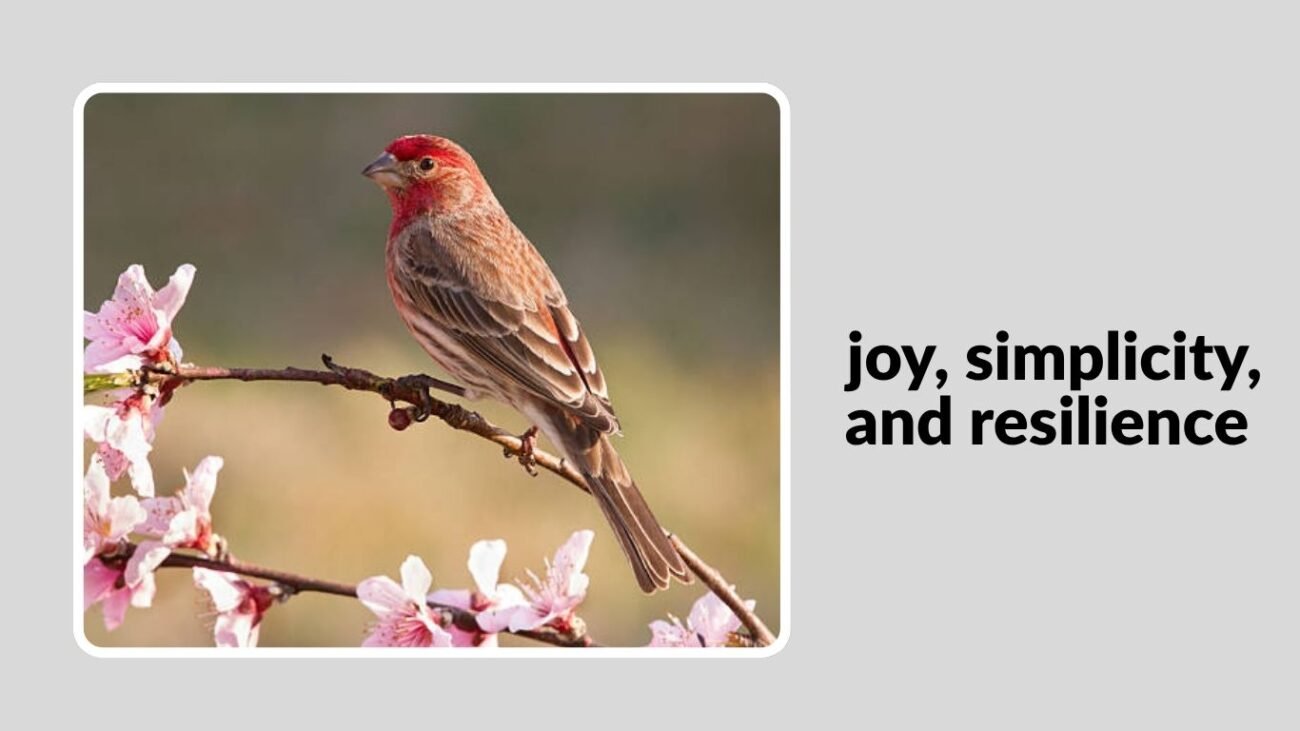
In symbolism, the House Finch represents joy, simplicity, and resilience. Its cheerful song and adaptability remind many of optimism and harmony. Spotting a finch near your home is often seen as a message of renewal, abundance, and gratitude.
In spiritual beliefs, they symbolize connection and companionship, reflecting their social and family-oriented behavior.
Connection with Nature
Beyond symbolism, the House Finch plays a crucial role in connecting humans to nature. Their presence in cities and towns brings wildlife closer to daily life, reminding us of the importance of ecological balance.
Their ability to adapt to human environments makes them ambassadors of coexistence between wildlife and urban life.
Conservation and Ecological Role
Population and Status
House Finches are classified as a species of Least Concern by the IUCN, thanks to their vast population and adaptability. They are among the most widespread songbirds in North America, thriving in both wild and developed landscapes.
They contribute significantly to the ecosystem by dispersing seeds, helping plants propagate naturally across wide areas.
Human Impact
While human development has altered habitats, it has also created new opportunities for House Finches. Backyard feeders, garden plants, and urban nesting sites have supported their population growth. However, improper feeder maintenance and pollution can pose threats.
By maintaining clean feeders and planting native vegetation, people can help sustain healthy House Finch populations.
Visual Identification and Observation Tips
House Finch Images and Photos
Photographs of House Finches show their variety of colors, from bright red males to streaked brown females. Birdwatchers can consult online resources or field guides to differentiate them from similar species like the Purple Finch and Cassin’s Finch.
Observing in the Wild
House Finches are easiest to spot during early morning or late afternoon when they actively feed and sing. Using binoculars or a camera with zoom allows for close observation without disturbing them. Look for them perched on wires, shrubs, or feeders, often singing cheerfully in pairs or small flocks.
Key Takeaways
- Male House Finches display red or orange plumage; females are brown and streaked.
- Found throughout North America, especially near human habitats.
- Their melodic songs make them a favorite backyard visitor.
- They eat seeds, fruits, and occasional insects.
- Play an important ecological role by spreading plant seeds.
- Prone to eye infections, so clean feeders are vital for their health.
FAQs
What does a house finch look like?
House Finches are small birds with conical beaks and streaked bodies. Males have bright red or orange coloring on their head and chest, while females are entirely brown and streaked. They are often mistaken for sparrows but have longer tails and more slender builds.
Where do house finches build their nests?
They often build nests in hanging planters, trees, window ledges, or even under roofs. The nests are made from twigs, grass, and feathers and lined with soft materials for warmth and comfort.
What do house finches eat?
Their diet mainly consists of seeds, fruits, and plant buds. They especially love sunflower seeds and will readily visit backyard feeders. During nesting season, they also consume insects for added protein.
How long do house finches live?
In the wild, House Finches usually live between 5 and 10 years, though many face threats from disease and predators. Their adaptability and high reproduction rate help maintain their stable population.
Do house finches migrate?
Most House Finches are non-migratory, remaining in their territories year-round. However, northern populations may move short distances south during harsh winters in search of food and milder climates.