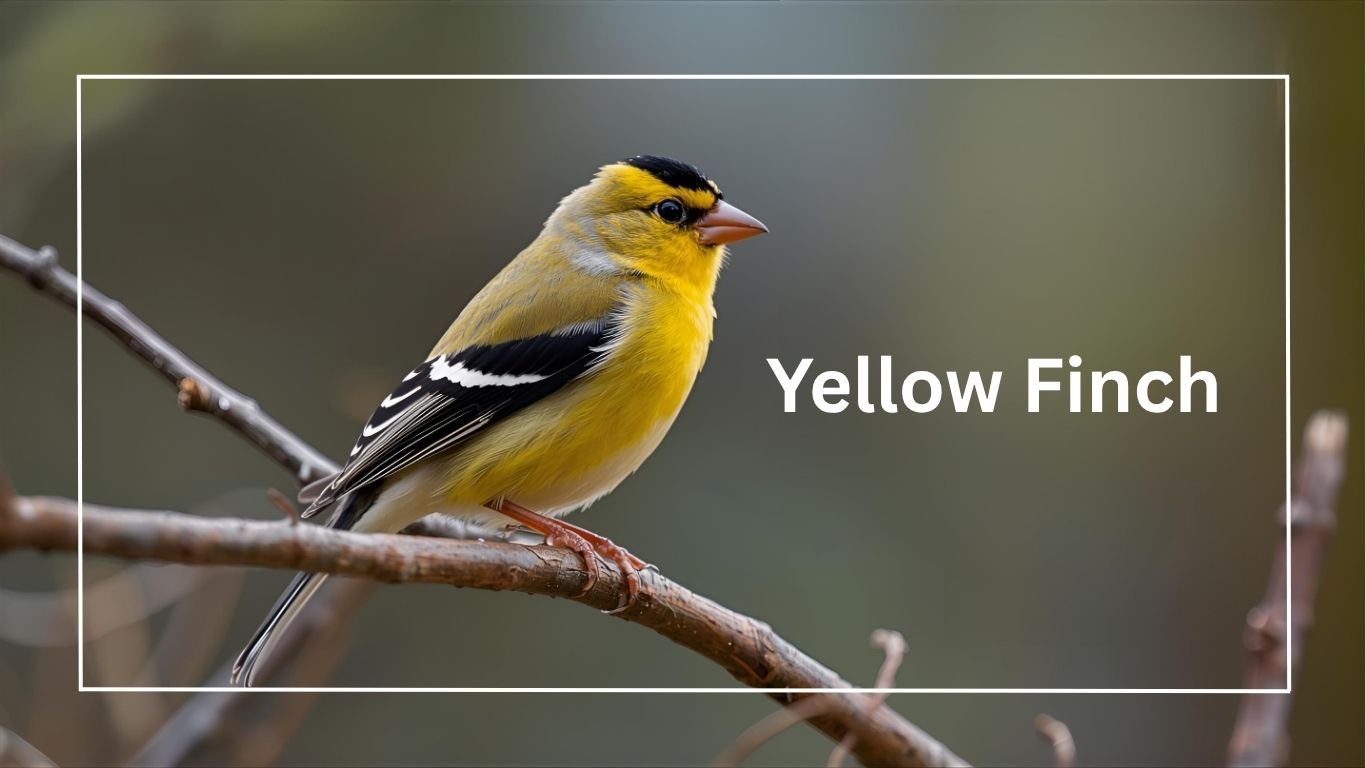
The yellow finch is one of nature’s most delightful small birds, known for its bright yellow plumage and cheerful songs. Found throughout North America, these colorful creatures bring life to gardens and open fields. Their joyful presence, distinct call, and social behavior make them a favorite among birdwatchers. In this article, we’ll explore how to identify yellow finches, their habitats, feeding habits, and the deeper symbolism behind these golden birds.
What Is a Yellow Finch?
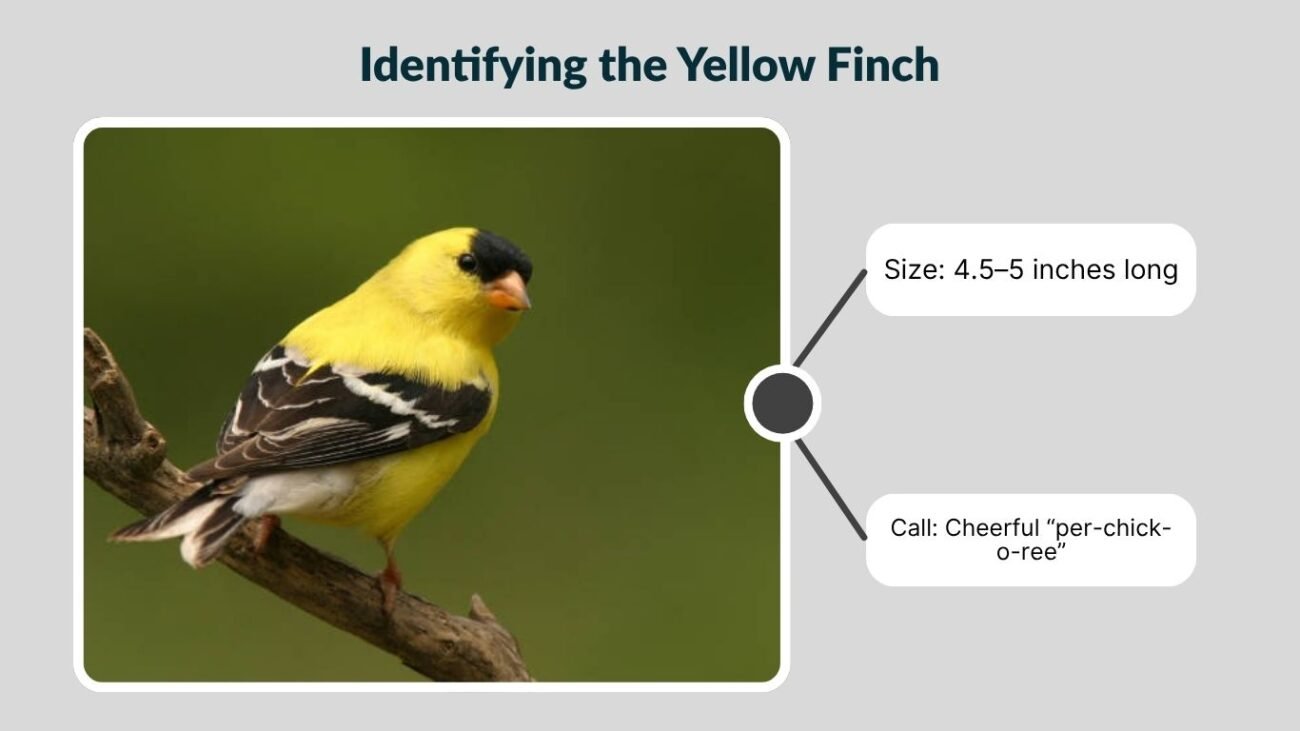
Identifying the Yellow Finch (Quick Facts)
- Size: Small songbird, about 4.5–5 inches long.
- Color (Male): Bright lemon-yellow body with black wings and forehead.
- Color (Female): Duller olive-yellow plumage for camouflage.
- Beak: Short, conical, ideal for cracking seeds.
- Markings: Black tail with white edges; males gain brighter color in spring.
- Behavior: Active, acrobatic flyers; often seen hanging upside down while feeding.
- Habitat: Found across North America — meadows, gardens, and forest edges.
- Call: Cheerful “per-chick-o-ree” song and “po-ta-to-chip” flight call.
- Often Confused With: American Goldfinch — nearly identical but slightly brighter yellow.
Types of Yellow Finches
Several species are commonly referred to as “yellow finches.”
- American Yellow Finch (Goldfinch): The most recognized type in North America, known for its pure yellow coat and black crown.
- Yellow House Finch: A variation of the house finch with yellowish tones on the head and chest.
- Yellow Bellied Finch: Found in South America, with a striking yellow belly and olive back.
- Orange Fronted Yellow Finch: A tropical variety featuring an orange crown.
- Gouldian Finch (Yellow Form): A colorful species often seen in aviaries, showing a mix of yellow, red, and green hues.
Each type varies slightly in appearance and habitat, but all share the same sunny and friendly personality that captivates bird enthusiasts worldwide.
Male vs Female Yellow Finch

| Feature | Male Yellow Finch | Female Yellow Finch |
| Plumage Color | Bright lemon-yellow body with black wings, tail, and forehead | Soft olive-yellow or brownish tones, less vibrant overall |
| Breeding Season Appearance | Becomes intensely yellow to attract mates | Color remains muted for better camouflage while nesting |
| Winter Plumage | Fades to olive or dull yellow during molting | Appears slightly grayer or brownish but mostly unchanged |
| Size | Slightly smaller and sleeker | Slightly rounder and fuller-bodied |
| Behavior | More active, sings frequently to attract mates | Quieter, focuses on nesting and caring for eggs |
| Song | Loud, melodic “per-chick-o-ree” or “po-ta-to-chip” call | Softer chirps and calls for communication |
| Role in Nesting | Collects food and defends territory | Builds nest, incubates eggs, and tends to chicks |
Habitat and Distribution
Where Yellow Finches Live
Yellow finches are widespread across North America, favoring open areas such as meadows, gardens, orchards, and forest edges. They are particularly abundant in Ohio, Michigan, Illinois, Florida, and California. These adaptable birds also thrive in suburban areas where feeders and flowering plants are plentiful. They build their nests in shrubs or trees, usually at a moderate height to stay safe from predators.
Migration Patterns
Do yellow finches migrate? Yes — but not all populations do. Finches in colder regions migrate southward during winter to seek food and warmer temperatures, while those in milder climates often stay year-round. Migration typically occurs in small flocks, and their distinctive “po-ta-to-chip” flight call can often be heard as they travel. Interestingly, they are late breeders, often nesting after most other birds, usually in mid to late summer when seeds are abundant.
Diet and Feeding Habits

What Do Yellow Finches Eat?
Yellow finches are primarily granivorous, meaning they thrive on seeds. Their diet includes thistle (nyjer), sunflower, and dandelion seeds, which are rich in fat and nutrients. They also occasionally eat insects, especially during the breeding season, when extra protein supports chick development. Yellow finches have a unique ability to cling to seed heads and even feed while hanging upside down, a behavior that makes them fascinating to watch.
Bird Feeders for Yellow Finches
Attracting yellow finches to your backyard is easy with the right feeder setup. They prefer tube-style feeders with small openings designed for tiny seeds like nyjer or millet. The feeder should be placed in a quiet, open area near shrubs or trees that provide safety. Keeping feeders clean is vital since finches are social birds and gather in flocks, increasing the chance of disease spread if hygiene is ignored.
How to Attract Yellow Finches to Your Yard
To make your yard a finch paradise:
- Plant native wildflowers such as coneflowers, sunflowers, and black-eyed Susans — their seed heads attract finches naturally.
- Provide clean water sources for drinking and bathing.
- Use bright feeders — yellow-colored ones tend to attract them more.
- Avoid pesticides, as they can reduce seed availability and harm the birds.
With a little patience and the right environment, you can enjoy the lively company of these cheerful birds all year round.
Nesting and Breeding
Where Do Yellow Finches Nest?
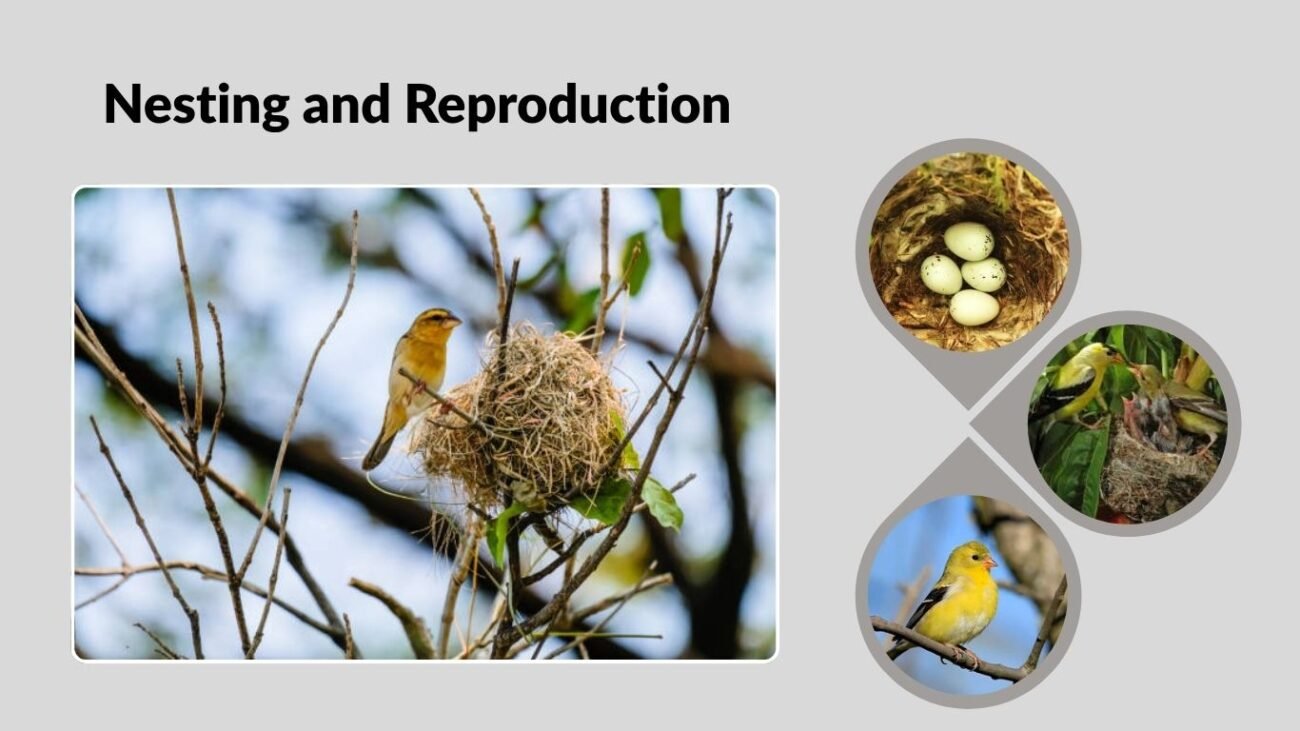
Unlike many other birds, yellow finches are late nesters, waiting until midsummer to start breeding. This timing allows them to build nests when soft plant fibers and seeds are most plentiful. The female usually constructs the nest using grasses, roots, and thistle down, creating a tight, cup-shaped structure.
These nests are often placed in shrubs, small trees, or tall weeds, about 3–10 feet above the ground. The design is so well woven that it can hold water if it rains. Finches are known for their careful choice of nesting spots, preferring areas protected from predators but open enough for quick flight access.
Yellow Finch Eggs and Chicks
A typical clutch consists of four to six pale blue eggs. The female incubates the eggs for about 12–14 days, while the male provides food. Once the chicks hatch, both parents share the feeding duties, bringing regurgitated seeds and occasionally small insects.
The chicks grow rapidly, leaving the nest within two weeks. Because yellow finches breed later in the season, their young benefit from warm weather and abundant food sources, increasing survival rates.
Sounds and Communication
Yellow Finch Song and Call
The yellow finch’s song is one of the most cheerful sounds in nature. Their high-pitched, twittering melody is both lively and musical, often sung in flight. Males sing to attract mates and defend territory, while females produce softer calls to communicate with their partners or chicks.
The song’s distinctive rhythm — often described as “per-chick-o-ree” — is a signature trait of this species and helps birdwatchers identify them even before they’re seen.
Recognizing Their Call
Apart from their melodic songs, yellow finches have a unique flight call that sounds like “po-ta-to-chip.” This call is often repeated midair as they bounce through the sky in a wave-like flight pattern. During feeding, they communicate through gentle chirps and trills, maintaining contact with nearby flock members. Their calls not only express social bonding but also alert others to danger.
Behavior and Lifestyle
Social Nature
Yellow finches are gregarious and non-aggressive birds. They often gather in small flocks outside the breeding season, foraging together on weeds and flower heads. Their friendly nature makes them common guests at backyard feeders, where they coexist peacefully with other small birds.
Even in winter, they stay active, moving as a group in search of seeds. Their cooperative behavior and social calls help the flock stay together and find food efficiently.
Flight and Feeding Behavior
One of the finch’s most recognizable behaviors is its bouncy, undulating flight pattern. As they fly, they alternately flap and glide, producing a rhythmic rise and fall in the air. While feeding, they often hang upside down to pluck seeds — a playful and distinctive habit.
This acrobatic style allows them to reach seeds that other birds can’t access. It’s this energetic combination of flight and feeding that adds charm to their presence in open meadows or gardens.
Symbolism and Spiritual Meaning of the Yellow Finch
Spiritual Significance
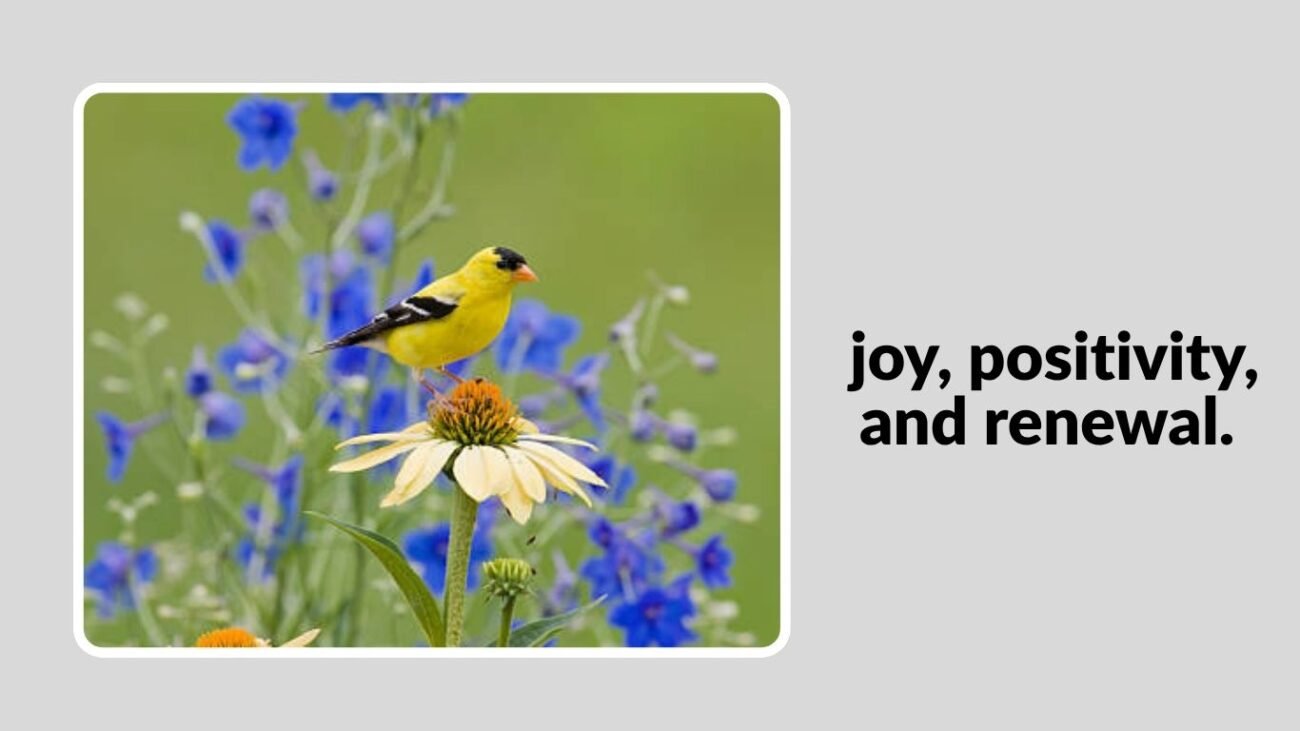
The yellow finch carries a strong symbolic meaning across various cultures. Its bright color and cheerful song are associated with joy, positivity, and renewal. Seeing one is often considered a message of encouragement — reminding you to stay optimistic and embrace happiness.
In spiritual contexts, yellow finches are thought to symbolize new beginnings, much like spring’s return after winter. Their sudden appearance can signify emotional healing or creative inspiration.
Cultural and Dream Symbolism
In many traditions, dreaming of a yellow finch represents freedom, transformation, and lightheartedness. Because these birds molt and change colors seasonally, they’re also seen as symbols of personal growth and spiritual rebirth.
Native American lore often views finches as messengers of good fortune, guiding individuals toward hope and balance. For some, their golden hue connects them to the sun, representing warmth, life, and divine energy.
Interesting Facts About Yellow Finches
- The American Goldfinch (often called the yellow finch) is the state bird of Iowa, New Jersey, and Washington.
- They are one of the few songbirds that molt twice a year, changing colors dramatically.
- Unlike most birds, they breed in late summer rather than spring.
- Males serenade females with courtship songs and flights, fluttering in small circles.
- Their nests are so tight that they can hold water without leaking — a unique engineering marvel of nature.
Common Confusions — Yellow Finch vs Goldfinch
Key Differences
The terms “yellow finch” and “goldfinch” are often used interchangeably, but they refer to slightly different birds.
- American Goldfinch: The true species, Spinus tristis, with vivid yellow feathers and a distinct black forehead.
- Yellow Finch (general term): May refer to several species, including the yellow house finch and yellow bellied finch.
Goldfinches are typically brighter, have more defined markings, and are more common in northern regions. In contrast, house finches (sometimes yellow-tinged) have streaked chests and a less uniform color. Both, however, share similar diets and cheerful personalities.
Key Takeaways
- Yellow finches are small, colorful songbirds symbolizing joy and renewal.
- Males are bright yellow; females are paler with olive tones.
- They feed mainly on seeds like nyjer and sunflower.
- Late breeders — they nest in midsummer using plant fibers.
- Their cheerful songs and social behavior make them favorites for backyard birdwatchers.
- Spiritually, they represent happiness, light, and emotional growth.
FAQs
What does a yellow finch look like?
A yellow finch is a small, bright bird about five inches long. Males have vivid yellow plumage with black wings and a black forehead, while females are more olive-toned. Their short conical beaks are ideal for cracking seeds.
What do yellow finches eat?
They mainly eat seeds, including thistle, dandelion, and sunflower. During nesting, they may add insects for extra protein. Providing nyjer or millet seeds in feeders helps attract them to your yard.
Do yellow finches migrate?
Yes. Northern populations migrate south in winter to avoid the cold, while those in warmer climates may stay year-round. Migration occurs in small, vocal flocks that travel short to moderate distances.
How can I attract yellow finches to my yard?
Use tube feeders with nyjer seeds, plant native wildflowers, and keep water sources available. Yellow finches love bright-colored feeders and quiet, open areas with trees or shrubs for nesting.
What does a yellow finch symbolize?
The yellow finch represents happiness, hope, and renewal. Spiritually, it’s seen as a messenger of joy, reminding you to stay positive and embrace new opportunities in life.