











Parrots are known not only for their intelligence and beauty but also for their astonishingly long lifespans. Some species can live for decades, even outliving their owners. However, their lifespan depends on several factors such as species, diet, environment, and emotional care. In this guide, we’ll explore how long parrots live, compare different species, and explain how to help them enjoy a long, healthy life.
Understanding Parrot Lifespan

Average Lifespan of Parrots
The average lifespan of parrots can vary widely depending on their size and species. Generally:
- Small parrots (like budgies or conures) live 10–25 years.
- Medium parrots (like Ringnecks, Senegals, and Quakers) live 25–40 years.
- Large parrots (like African Greys, Amazons, and Macaws) can live 50–90 years.
Unlike most bird species, parrots mature slowly and age gracefully. Their combination of high intelligence, slow metabolism, and strong immunity contributes to their longevity. A well-cared-for parrot can easily become a lifelong companion.
Key Factors That Affect Longevity
- Diet: Balanced nutrition with fresh fruits, vegetables, and pellets supports heart and liver health.
- Environment: Clean, safe, and spacious enclosures encourage activity and reduce stress.
- Socialization: Regular interaction prevents depression and self-destructive behavior.
- Veterinary Care: Routine checkups detect early signs of illness or malnutrition.
Proper diet and emotional health are just as important as genetics when it comes to extending a parrot’s life.
African Grey Parrot Lifespan
How Long Do African Greys Live?
The African Grey Parrot is one of the most intelligent and long-lived bird species.
- Wild lifespan: 25–35 years
- Captive lifespan: 40–60 years, with some reaching 70 years or more
Their long life expectancy makes them a lifelong companion, but also a responsibility requiring patience, attention, and affection.
Why They Live Long
African Greys possess exceptional problem-solving skills and emotional depth. Their intelligence helps them adapt well to captivity when properly stimulated. However, mental neglect can lead to stress, which shortens their lifespan.
A healthy African Grey thrives on variety in diet, daily playtime, and strong emotional bonds with its human family.
Tips for Longer Life
- Offer daily social interaction to prevent boredom.
- Use toys and puzzles for mental stimulation.
- Provide high-quality pellets, leafy greens, and calcium-rich foods.
- Avoid toxic fumes like non-stick cookware or smoke.
An African Grey’s emotional well-being is directly linked to its physical health, so companionship is essential for a long life.
Amazon Parrot Lifespan
Average Lifespan
Amazon Parrots are another long-lived and talkative species. Their lifespan ranges between 40–70 years, depending on care and genetics. Some individuals, particularly the Double Yellow-headed Amazon, have lived beyond 80 years in captivity.
Popular Amazon Species and Their Lifespans

| Species | Average Lifespan | Notable Traits |
| Yellow-naped Amazon | 50–70 years | Excellent talker and singer |
| Blue-fronted Amazon | 50–60 years | Social, friendly, expressive |
| Double Yellow-headed Amazon | 60–80 years | Intelligent, long-living companion |
Factors Influencing Longevity
Amazon parrots are highly active and sociable birds that rely on constant interaction and stimulation. A poor diet, lack of sunlight, or restricted movement can shorten their lifespan.
- Provide sunlight or full-spectrum lighting to aid vitamin D production.
- Encourage daily flight or climbing for physical health.
- Keep a consistent routine — sudden changes can stress them.
Their energetic and curious nature means they thrive in engaging, affectionate households.
Macaw Parrot Lifespan
Lifespan Range
Macaws are the longest-living parrots in the world. In the wild, they typically live 40–60 years, but in captivity, they can reach 80–90 years with proper care. Some Hyacinth Macaws, the largest parrot species, have reportedly lived close to a century.
Common Macaw Species and Lifespans
| Species | Average Lifespan | Key Characteristics |
| Blue-and-Gold Macaw | 50–70 years | Playful, sociable, colorful |
| Scarlet Macaw | 40–60 years | Bold, intelligent, energetic |
| Hyacinth Macaw | 80–90 years | Gentle giant, exceptionally long-lived |
Why Macaws Live So Long
Their large size gives them a slower metabolism, strong heart, and robust immune system. Macaws also form lifelong bonds with their owners or partners, reducing emotional stress. In captivity, a balanced diet, ample space, and consistent affection are vital.
Tips for Longevity
- Provide flight opportunities to build muscle strength.
- Keep their diet rich in nuts, fruits, and leafy greens.
- Offer social time — they’re highly emotional and dislike isolation.
Macaws are deeply emotional and intelligent, and with love and care, they can become multigenerational family companions.
Quaker and Smaller Parrots Lifespan
Quaker Parrot Lifespan
Quaker parrots, also known as Monk Parakeets, live about 20–30 years in captivity. They are hardy and adaptable but still require emotional and dietary care. With regular engagement, they can form lifelong friendships with their owners.
Other Small and Medium-Sized Parrots
| Species | Average Lifespan | Description |
| Indian Ringneck Parrot | 25–35 years | Intelligent and talkative |
| Conure Parrot | 15–25 years | Playful and affectionate |
| Senegal Parrot | 25–40 years | Calm, loyal companion |
| Meyers Parrot | 25–35 years | Gentle, loving personality |
Care Tips for Smaller Parrots
- Maintain a clean cage with plenty of perches and toys.
- Feed fresh fruits and vegetables daily.
- Allow them free flight or supervised playtime outside the cage.
- Keep them socially active — small parrots crave companionship and mental activity.
Even the smallest parrots can live long, vibrant lives when cared for properly.
Eclectus Parrot Lifespan

Average Lifespan
The Eclectus Parrot is known for its striking colors and calm personality. On average, Eclectus parrots live 30–50 years in captivity, with some individuals reaching up to 60 years when given ideal care.
Their lifespan is heavily influenced by diet, as these parrots require a high amount of natural fiber and moisture from fresh fruits and vegetables.
Care and Longevity Tips
- Feed a low-fat, high-fiber diet with tropical fruits, sprouts, and leafy greens.
- Maintain proper humidity and warmth in their environment.
- Provide enrichment through talking sessions, toys, and social time.
- Monitor for hormonal behaviors, which are more common in females.
With the right balance of care and companionship, Eclectus parrots remain healthy and vibrant for many decades.
Cockatoo and Other Large Parrot Lifespan
Average Lifespan
Cockatoos are among the most emotional and affectionate parrots. Depending on the species, they live between 40–70 years. Some larger species, like the Moluccan Cockatoo, have been known to live beyond 80 years in captivity.
Challenges Affecting Longevity
- Cockatoos are highly social and can suffer from severe loneliness if neglected.
- They require constant interaction and mental stimulation.
- Without proper engagement, they may develop anxiety and feather-plucking habits.
Care Essentials for Long Life
- Offer plenty of out-of-cage time daily.
- Provide safe chewable toys to satisfy their natural instinct.
- Keep them emotionally secure — they thrive on affection and attention.
Cockatoos often bond deeply with their owners, and their emotional intelligence can both enrich and challenge their care routine.
Rare and Exotic Parrot Lifespans
Unique Species
| Species | Average Lifespan | Notable Traits |
| Dracula Parrot | 20–30 years | Striking black and red plumage, rare species |
| White-bellied Parrot | 25–35 years | Playful, acrobatic, affectionate |
| Alexandrine Parrot | 25–40 years | Majestic, regal appearance, calm temperament |
While these parrots are less common as pets, their lifespan and care needs are similar to medium-sized species. They require spacious environments, nutritious diets, and consistent social interaction to thrive.
Clarifying Misconceptions
Some searches about “Parrot Fish Lifespan” or “Blood Parrot Cichlid Lifespan” actually refer to aquarium fish species, not birds. These fish typically live 10–15 years, whereas parrots are avian creatures capable of outliving several generations of owners.
Parrot Lifespan in Captivity vs Wild
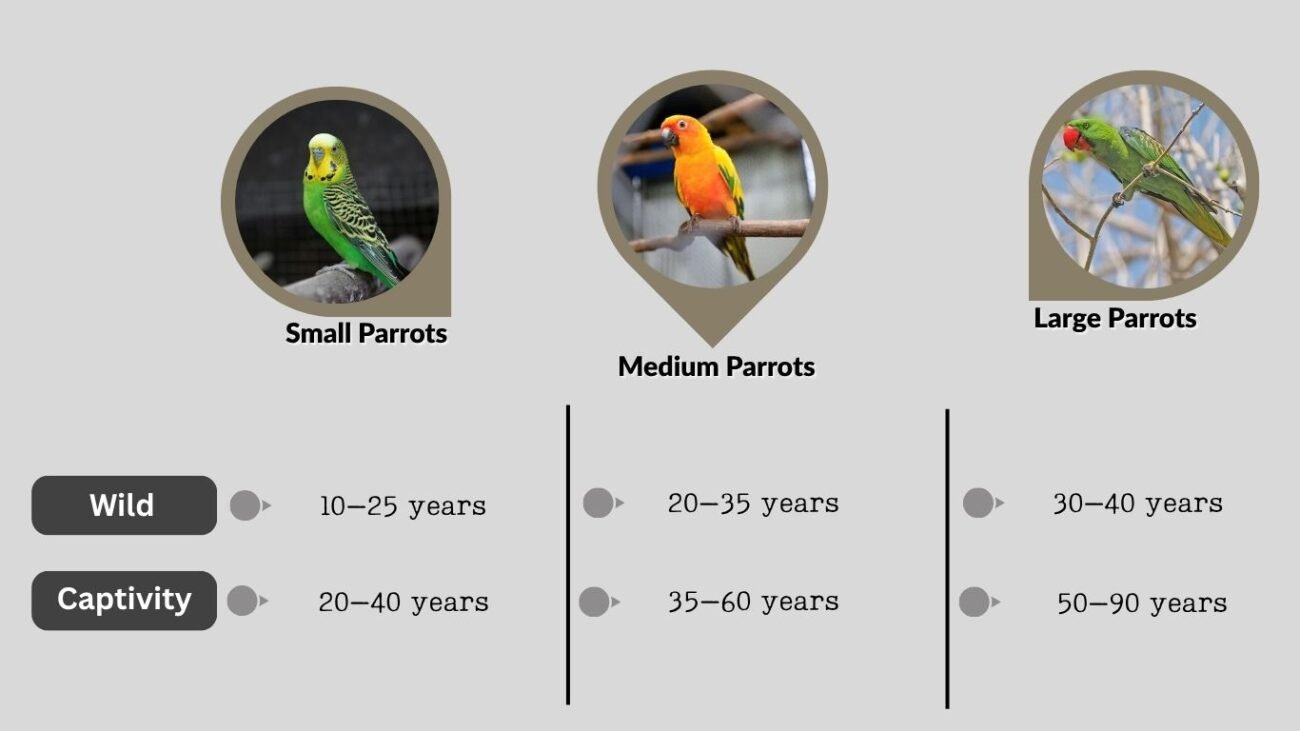
Comparison of Lifespan
| Environment | Small Parrots | Medium Parrots | Large Parrots |
| Wild | 10–25 years | 20–35 years | 30–40 years |
| Captivity | 20–40 years | 35–60 years | 50–90 years |
Why Captive Parrots Live Longer
Captivity offers safety, stable food supplies, and medical care — all crucial for longevity. However, this extended lifespan comes with a challenge: parrots in captivity depend entirely on human caregivers for their emotional and physical well-being.
Key benefits include:
- Protection from predators and environmental hazards.
- Access to balanced nutrition and clean water.
- Veterinary monitoring for early disease detection.
- Reduced stress from seasonal changes or habitat loss.
Parrots in captivity can live twice as long as their wild counterparts, provided they receive the same stimulation and freedom that nature offers.
Common Myths About Parrot Lifespan
“Parrots Can Live 140 Years”
This is a myth often repeated online. While parrots can live remarkably long lives, there is no verified record of any parrot living 140 years. The longest-living parrots, like Hyacinth Macaws or Double Yellow-headed Amazons, usually live up to 90 years under exceptional care.
“All Parrots Have the Same Lifespan”
Different parrot species age at different rates.
- Small parrots: Shorter lives due to faster metabolisms.
- Larger parrots: Slower metabolism and greater resistance to disease.
- Hybrid species or mutations may also have slightly shorter life expectancies.
How to Help Your Parrot Live Longer
Healthy Living Essentials
- Nutrition: Feed a balanced mix of pellets, vegetables, fruits, and small amounts of seeds or nuts.
- Exercise: Allow daily flight time or climbing activities to keep muscles strong.
- Sleep: Provide 10–12 hours of uninterrupted sleep in a quiet, dark space.
- Clean Environment: Maintain cage hygiene to prevent respiratory infections.
- Companionship: Spend time daily interacting and talking to your parrot.
Emotional and Medical Care
- Mental stimulation: Rotate toys and teach new sounds or words.
- Regular vet visits: Annual checkups ensure early detection of health issues.
- Avoid toxins: Keep parrots away from smoke, perfumes, and Teflon-coated cookware.
- Stress management: Maintain a stable routine and familiar faces — parrots dislike sudden change.
Healthy parrots not only live longer but also remain active, vibrant, and emotionally connected to their human families for decades.
FAQs
What is the average lifespan of a parrot?
Most parrots live 20–60 years, depending on size and species. Large parrots such as macaws and Amazons often exceed 70 years with excellent care.
Which parrot lives the longest?
The Hyacinth Macaw and Double Yellow-headed Amazon are known to live up to 90 years, making them some of the longest-living birds in captivity.
Do parrots live longer in captivity?
Yes. Captive parrots benefit from steady food sources, medical care, and protection from predators, allowing them to live two to three times longer than wild parrots.
Can parrots really live 140 years?
No. That’s a myth. Even the longest-living parrots rarely surpass 100 years. Most live between 40–80 years when cared for properly.
How can I help my parrot live a long life?
Provide a balanced diet, exercise, mental stimulation, and emotional connection. Regular veterinary checkups and a loving home are key to helping your parrot thrive for many decades.


