











The green parrot is a symbol of color, charm, and intelligence. Found in tropical regions worldwide, these parrots are admired for their bright plumage and playful personalities. The term “green parrot” can refer to various bird species — or even popular places like the Green Parrot Bar in Key West. Their beauty, adaptability, and mimicry skills make them both fascinating wild birds and beloved household pets.
Appearance and Characteristics of Green Parrots
Physical Traits
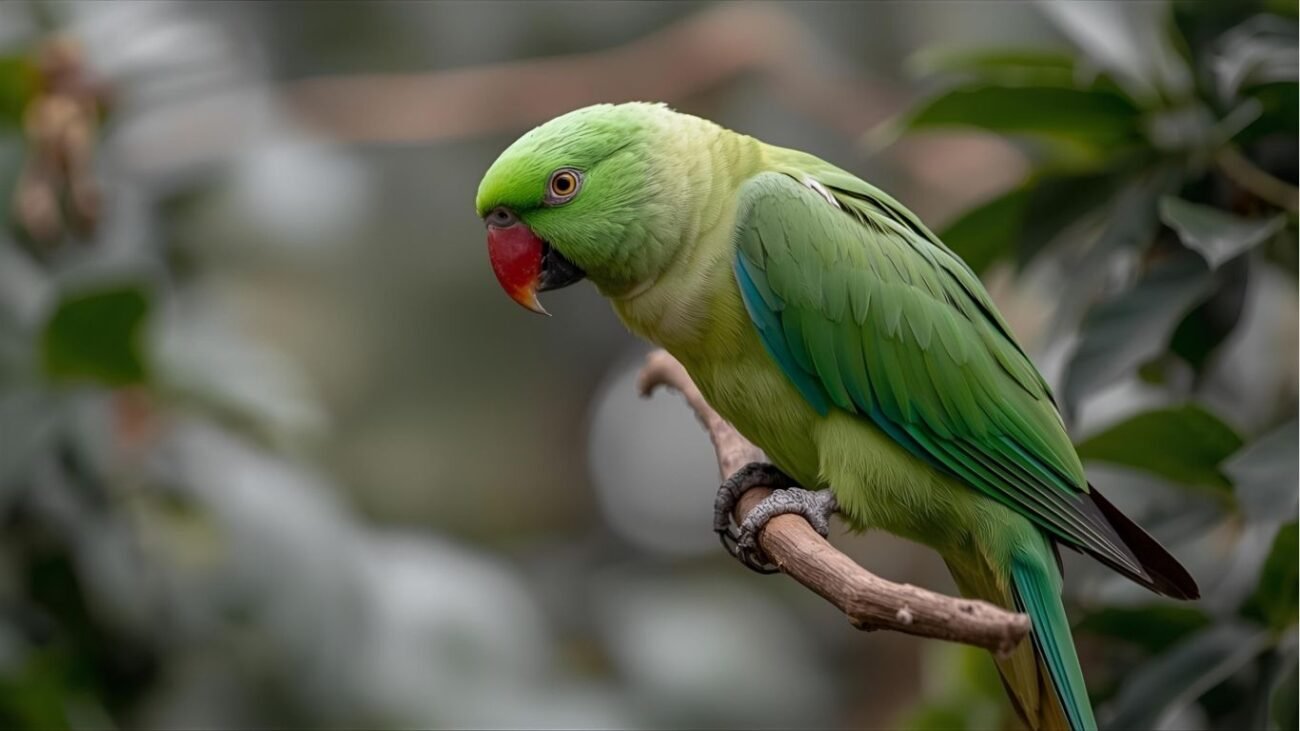
- Bright green feathers that blend perfectly with their natural habitat.
- Some species feature red, blue, or yellow highlights on wings and tail.
- Strong, curved beak ideal for cracking nuts and seeds.
- Zygodactyl feet (two toes forward, two backward) for climbing and gripping.
- Medium-sized body with expressive, intelligent eyes.
- Feather shades vary from light lime to deep emerald tones.
Behavior and Intelligence
- Highly social and thrive in flocks or family groups.
- Excellent mimics — can imitate voices and environmental sounds.
- Display emotions through body language and vocal cues.
- Curious, playful, and need constant mental stimulation.
- Form close bonds with owners when raised in captivity.
- Communicate through chirps, whistles, and mimicry.
Common Green Parrot Species
Amazon Parrots
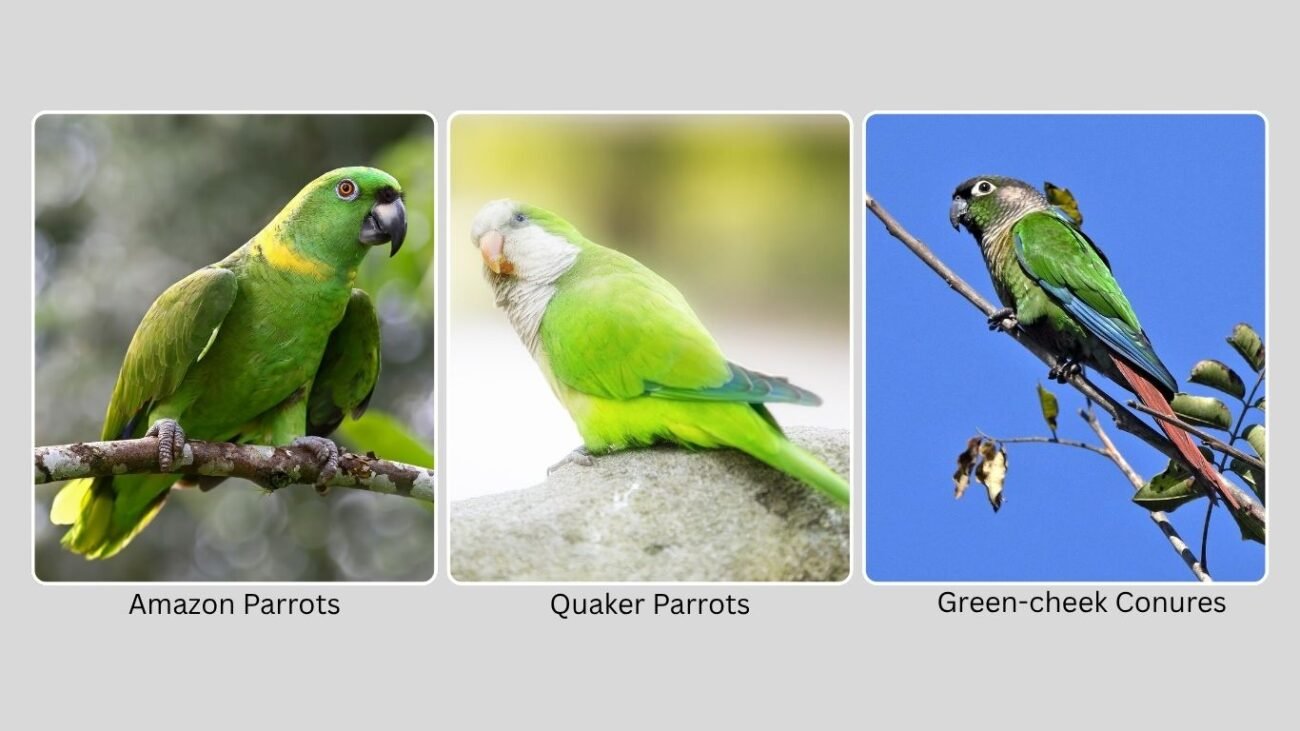
Amazon parrots are among the most recognized green parrot types. With their vivid feathers and remarkable talking ability, they are favorites in aviculture. Common varieties like the Yellow-naped and Double Yellow-headed Amazon are native to Central and South America. They are medium-sized, highly vocal, and can live for more than 50 years when properly cared for.
Quaker Parrots
Also called Monk Parakeets, Quaker parrots are small, social, and incredibly expressive. They build intricate stick nests and adapt easily to urban environments. Their soft green plumage with a hint of gray around the face makes them visually distinct. Quaker parrots are quick learners and can mimic simple words, making them excellent pets for beginners.
Green-cheek Conures
Green-cheek Conures are small parrots with a big personality. Native to South America, they have a bright green body, maroon tail, and playful nature. Though quieter than many parrots, they are affectionate and bond strongly with their owners. Green-cheek Conures are known for their curiosity and enjoy interactive playtime, making them ideal companions for families.
Ringneck and Monk Parrots
The Indian Ringneck Parrot is another striking species, featuring a sleek green body and a colorful ring around the neck in males. These birds are known for their intelligence and ability to form close attachments. Monk parrots, in contrast, are community builders and thrive in small groups, often spotted nesting in colonies.
African and Indian Varieties
African green parrots and Indian ringnecks share vibrant coloration but differ in temperament and habitat. African species, like the Senegal Parrot, are calm and adaptable, while Indian varieties are lively and love vocal interaction. Both types are adored for their expressive personalities and adaptability to human companionship.
Habitat and Distribution
Natural Environments
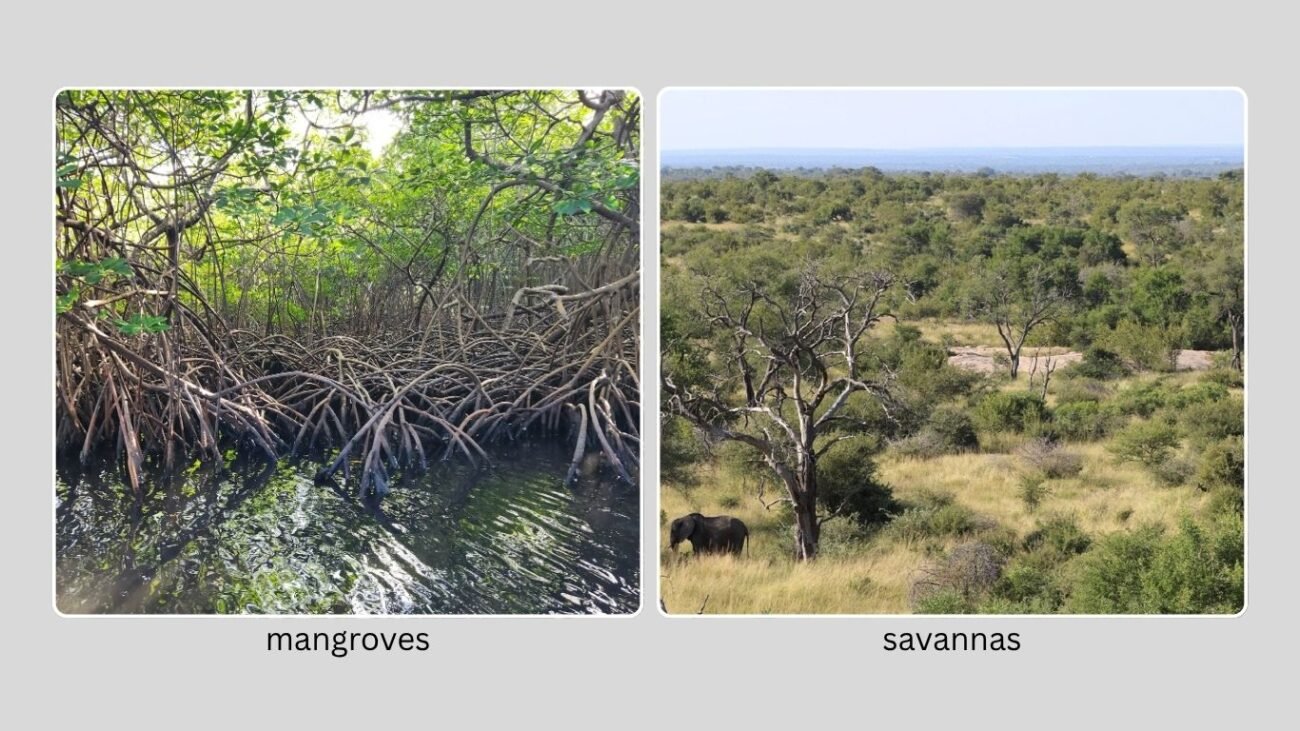
Green parrots inhabit tropical and subtropical regions, thriving in rainforests, mangroves, and savannas. They prefer areas with abundant trees, fruit availability, and safe nesting sites. These birds are primarily found in South America, Africa, and Asia, adapting easily to local climates. Their green plumage provides perfect camouflage among dense foliage, protecting them from predators.
Green Parrots in Florida
Florida has become home to several feral populations of green parrots. Escaped or released pet parrots have established thriving colonies in cities like Miami and Orlando. Quaker parrots, in particular, have built large communal nests on telephone poles and palm trees. The state’s warm weather and plentiful food supply create an ideal habitat for these vibrant birds to flourish naturally.
Care and Maintenance for Pet Owners
Diet and Nutrition
A balanced diet is vital for keeping green parrots healthy. They thrive on a mix of pellets, seeds, fresh fruits, and vegetables such as apples, carrots, and leafy greens. High-fat seeds like sunflower should be limited. Owners must avoid toxic foods such as avocado, chocolate, and caffeine, which can be harmful or fatal to parrots. Fresh water and daily feeding routines ensure long-term vitality and feather brightness.
Training and Socialization
Green parrots are quick learners when approached with patience and consistency. Early training helps build trust and communication. Owners can teach parrots to mimic words, perform tricks, or respond to cues using positive reinforcement. Socialization is equally important — daily interaction, talking, or playtime prevents boredom and behavioral issues. Parrots love toys that stimulate their problem-solving skills, such as ropes, bells, and mirrors.
Health and Lifespan
Green parrots can live remarkably long lives, depending on their species and care. Smaller parrots like Green-cheek Conures often live 15–25 years, while larger species such as Amazon parrots can exceed 50 years. Regular veterinary visits, mental stimulation, and a balanced diet contribute to longevity. Owners should watch for signs of illness like feather plucking, loss of appetite, or lethargy, which often indicate stress or dietary imbalance.
Proper hygiene also plays a major role in their health. Clean cages, fresh water, and non-toxic cleaning solutions help prevent infections. Because parrots are prone to respiratory diseases, maintaining good air circulation and minimizing exposure to fumes or cigarette smoke is essential. A healthy green parrot displays bright eyes, smooth feathers, and active behavior.
Buying or Adopting a Green Parrot
Responsible Ownership
Owning a parrot requires commitment and compassion. Green parrots are intelligent and emotionally sensitive, meaning they need regular social interaction. Before buying one, prospective owners should consider the time, attention, and space required. Ethical breeders and rescue organizations emphasize responsible ownership to prevent neglect or abandonment. Avoid purchasing from unverified sellers or those involved in illegal wildlife trade, as many parrots are still captured from the wild.
Adopting from a rescue can be a fulfilling alternative. Many surrendered parrots are well-trained and simply need a second chance. These birds often thrive when reintroduced to loving homes that provide patience and consistent care.
Where to Buy or Adopt
Green parrots are available from certified avian breeders, specialty pet stores, or parrot rescues. Visiting the facility helps assess cleanliness, bird health, and breeder credibility. A healthy parrot should be alert, active, and have smooth feathers. Online adoption platforms also connect potential owners with verified rescues.
When adopting, always ask about the bird’s background, diet, and temperament. This ensures you find a species that fits your household and experience level.
Price Overview
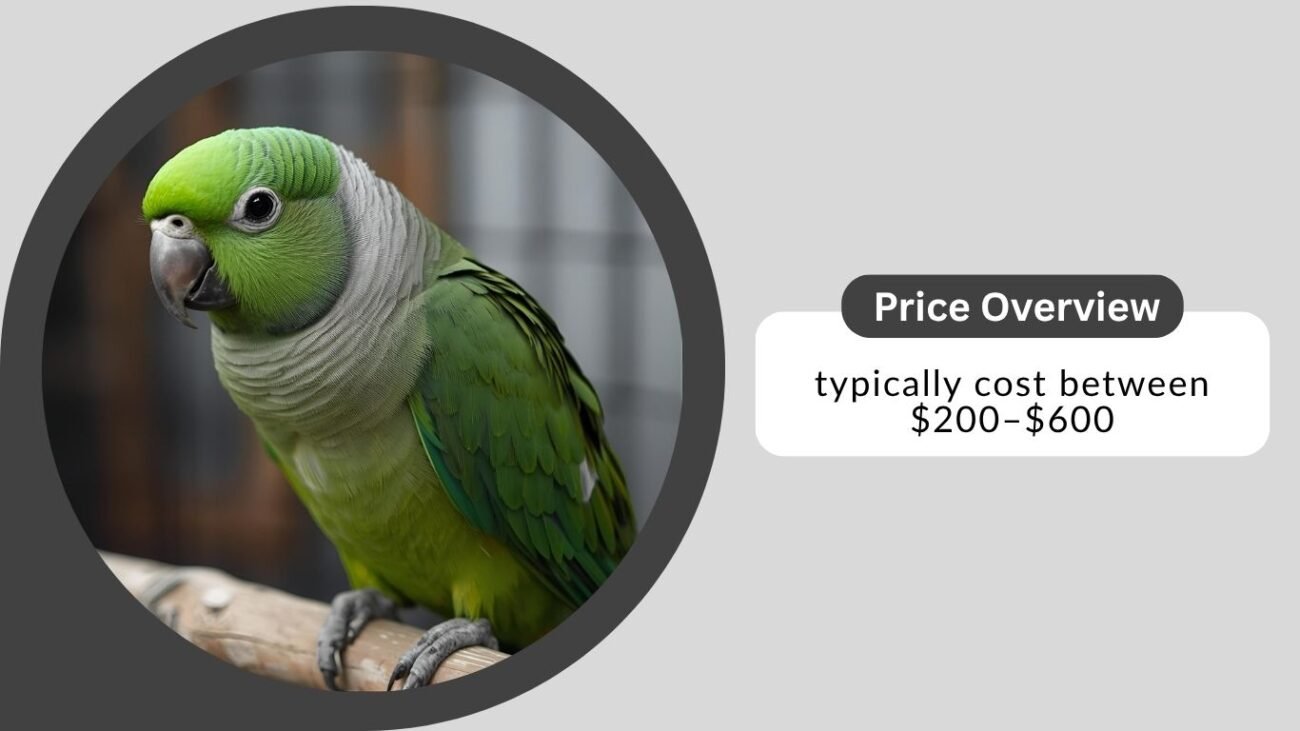
Green parrot prices vary widely depending on the species. Small parrots like Green-cheek Conures typically cost between $200–$600, while medium to large species such as Amazon parrots range from $800 to $2,000 or more. Rare or specially trained parrots can cost even higher. Beyond the initial purchase, owners should budget for food, toys, cages, and veterinary expenses, as parrots are long-term companions.
Famous “Green Parrot” Locations
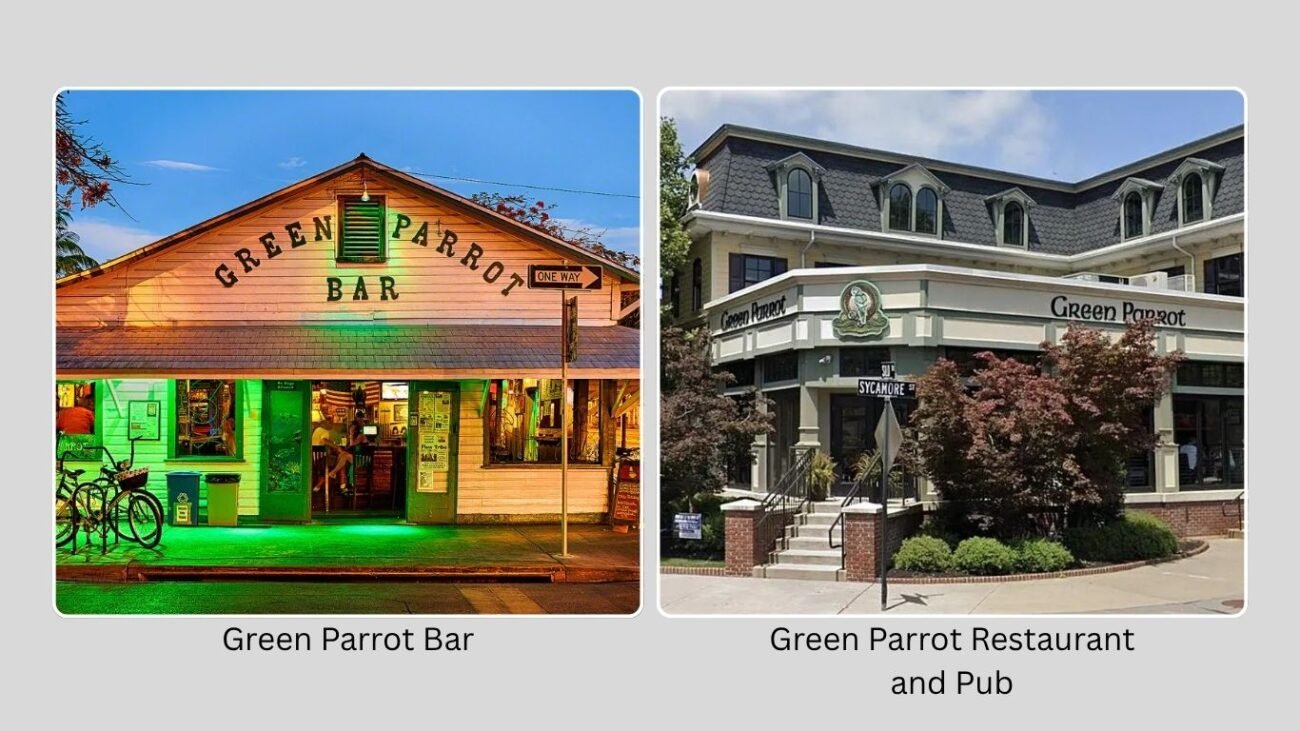
The phrase “Green Parrot” doesn’t only refer to birds — it’s also the name of several beloved restaurants and bars across the United States. These venues capture the fun, tropical energy that parrots represent.
Green Parrot Bar – Key West, Florida
One of the most iconic is the Green Parrot Bar in Key West, Florida. Established in the late 1800s, it’s considered one of the island’s oldest and most famous bars. Known for its laid-back vibe, live music, and colorful decor, the Green Parrot Bar embodies the spirit of Key West. Visitors often describe it as the “southernmost honky-tonk,” where locals and tourists gather for drinks, dancing, and community events.
Green Parrot Newtown, Pennsylvania
Located in Newtown, PA, the Green Parrot Restaurant and Pub combines classic American dining with a friendly neighborhood atmosphere. It’s popular for its casual menu — from burgers and sandwiches to seafood and salads. The venue also hosts trivia nights, sports viewings, and weekend live music, making it a social hub for locals and visitors alike.
Green Parrot Santa Ana, California
In Santa Ana, the Green Parrot Villa offers a cozy setting for dining and events. With its warm décor and Latin-inspired cuisine, it’s often chosen for weddings, banquets, and private gatherings. The restaurant’s combination of elegance and comfort reflects the same charm found in its tropical namesake.
Green Parrot Virginia Beach, Virginia
The Green Parrot Grille in Virginia Beach stands out as a tiki-style bar and seafood restaurant. It’s known for fresh coastal dishes, outdoor seating, and a vibrant beach-town energy. The name “Green Parrot” here evokes fun, sunshine, and relaxation — just like its counterparts across the country.
Fun Facts About Green Parrots
- Some species can learn over 100 words and recognize individual voices.
- Green parrots use their feet like hands, gripping food or toys with remarkable dexterity.
- The oldest recorded Amazon parrot lived more than 70 years in captivity.
- Their feathers contain unique pigments called psittacofulvins, which produce vivid green hues.
- Many parrots form lifelong pair bonds, showing affection through preening and soft chirps.
FAQs
What makes green parrots so popular as pets?
Green parrots are intelligent, sociable, and full of personality. They can mimic human voices, respond to commands, and form strong emotional connections. Their striking colors and playful behavior make them ideal companions for bird lovers who can dedicate time to training and interaction.
How long do green parrots live?
Lifespan varies by species. Smaller parrots like Conures live 15–25 years, while Amazons and Ringnecks can live 40–60 years or more. Providing a nutritious diet, safe environment, and regular exercise ensures they stay healthy throughout their long lives.
Can all green parrots talk?
Not all green parrots talk, but many can mimic sounds and short phrases. Amazon parrots are the most skilled talkers, capable of learning vocabulary and tone. Quakers and Conures can also imitate speech with patient training and daily engagement.
Where can you find green parrots in the wild?
Green parrots naturally inhabit tropical forests and savannas in regions like South America, Africa, and India. In the United States, feral colonies exist in Florida, particularly around Miami, where escaped pets have established thriving wild populations.
Are green parrots good for beginners?
Yes, smaller green parrot species such as Quakers or Green-cheek Conures are perfect for beginners. They are friendly, adaptable, and less demanding than larger parrots. With consistent care and gentle handling, they become affectionate companions suitable for families or first-time owners.


