










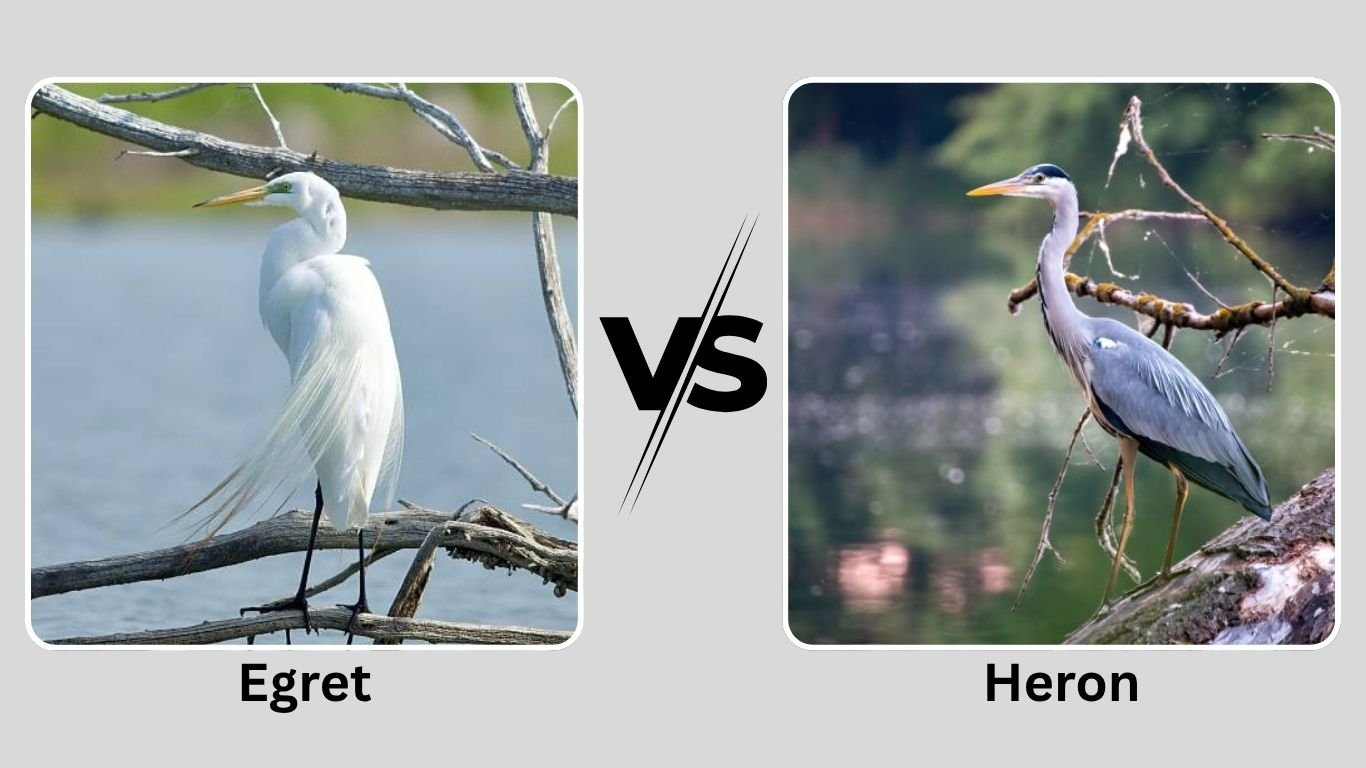
The elegant egret and the stately heron share a long-legged silhouette that defines the wetland landscape. Both belong to the same bird family, Ardeidae, yet they differ in color, size, and lifestyle. These graceful waders often stand side-by-side in shallow water, leading birdwatchers to wonder which is which. While egrets are technically white herons, their refined appearance, breeding plumes, and social behavior set them apart from their larger, darker relatives.
Overview of Herons and Egrets

Scientific Classification
| Category | Herons | Egrets |
| Family | Ardeidae | Ardeidae |
| Main Genus | Ardea, Butorides, Nycticorax | Egretta |
| Common Species | Great Blue Heron, Grey Heron, Black-Crowned Night Heron | Great Egret, Snowy Egret, Cattle Egret |
| Typical Color | Gray, blue-gray, brown | White or off-white |
Quick Facts
- All egrets are herons, but not all herons are egrets.
- Herons are typically larger and show varied colors.
- Egrets are smaller, white, and often display long aigrettes (plumes) in breeding season.
- Both share a flexible neck structure and spear-shaped bill built for hunting fish.
Identification and Appearance
Distinguishing an egret from a heron is easiest by color and body build. Herons often appear heavier and darker; egrets look lighter and more delicate. Their contrasting appearances reflect differences in habitat and feeding style.
Herons
- Bulkier, with thicker necks and longer legs.
- Plumage: gray, slate-blue, or brown; some species have a white morph.
- Long feathers on the chest or head form shaggy crests.
- Examples: Great Blue Heron (Ardea herodias), Grey Heron, and Black-Crowned Night Heron.
Egrets
- Slender, pure-white plumage with soft, wispy plumes.
- Smaller and more graceful in proportion.
- Bill is thin and yellowish or black, depending on species.
- Examples: Great Egret (Ardea alba), Snowy Egret, and Cattle Egret.
Quick Comparison Table
| Feature | Egret | Heron |
| Color | White or pale | Gray, blue, brown, or black |
| Body Type | Slim, lightweight | Larger, robust |
| Bill | Thin, straight | Thicker, longer |
| Legs | Usually black or yellow | Often greenish or gray |
| Plumes | Decorative during breeding | Shorter, functional feathers |
Habitat and Distribution

Heron Habitats
Herons thrive in freshwater and coastal wetlands, including marshes, ponds, rivers, and tidal flats. They favor deeper water where larger fish are available.
- The Great Blue Heron dominates North American lakeshores and estuaries.
- Grey Herons inhabit rivers and coasts throughout Europe and Asia.
- Solitary by nature, herons often defend their feeding areas fiercely.
Egret Habitats
Egrets prefer shallow, calm waters such as lagoons, rice paddies, and mangroves. Their lighter frame allows them to hunt where water depth is only a few inches.
- The Snowy Egret favors tropical marshes and estuaries.
- The Cattle Egret often feeds inland, following livestock to catch stirred-up insects.
- Egrets are more social, nesting in large colonies called rookeries.
Where They Overlap
In many wetlands, both species coexist peacefully. Herons occupy deeper zones, while egrets patrol the shallows—an elegant example of ecological balance.
Behavior and Feeding Style
Herons
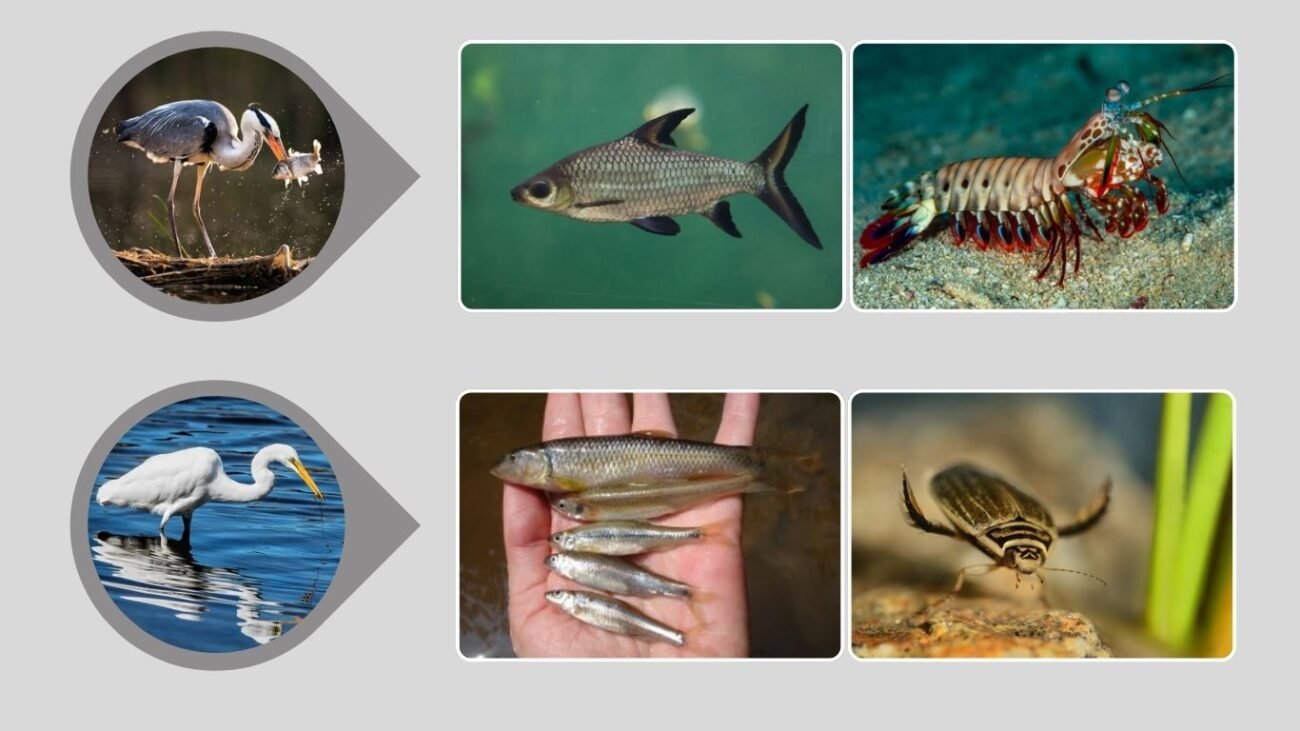
Herons hunt with patience. They stand motionless for long periods before striking swiftly at passing prey.
- Diet: fish, frogs, crustaceans, and small mammals.
- Technique: ambush predator—stalk, freeze, and spear.
- Usually hunt alone, especially at dawn or dusk.
- Their long necks store potential energy for lightning-fast strikes.
Egrets
Egrets are livelier hunters, often seen stirring the water with one foot to flush fish or insects.
- Diet: small fish, tadpoles, crustaceans, and aquatic insects.
- Technique: active feeders—walk, stir, and snap quickly.
- Frequently feed in flocks, especially during migration seasons.
- The Snowy Egret’s yellow feet may help lure fish by mimicking movement of prey.
Shared Traits
Both use sharp, spear-like bills for catching food. Their S-shaped necks act as springs, allowing them to strike with accuracy and power. Despite differences in temperament, both species play vital roles in controlling aquatic life populations.
Color and Size Comparison
Color and size are the easiest physical cues to tell them apart.
Color
- Egrets: Always white or pale cream, with delicate texture.
- Herons: Exhibit a wide color range — from blue-gray and ash to cinnamon and even black.
- Some herons, like the Great Blue Heron, have a rare white morph called the Great White Heron, often mistaken for an egret.
Size Overview
| Species | Height | Wingspan | Weight |
| Great Blue Heron | 3.5 – 4.5 ft | ~6 ft | 5 – 6 lb |
| Great Egret | 3 – 3.5 ft | ~5 ft | 2 lb |
| Snowy Egret | 2 ft | 3.5 ft | 1 lb |
| Cattle Egret | 1.6 ft | 3 ft | 1 lb |
Herons dominate in both height and wingspan, while egrets excel in agility and lightness—traits that match their graceful, flock-based lifestyle.
Famous Species Comparisons
Great Egret vs Great Blue Heron
These two are the most commonly compared species due to their size and presence across North America.
| Feature | Great Egret | Great Blue Heron |
| Color | Pure white | Blue-gray |
| Bill | Slender, yellow | Thick, yellow to gray |
| Size | Slightly smaller | Larger and heavier |
| Feeding Style | Graceful and social | Solitary and patient |
| Range | Worldwide | North and Central America |
The Great Egret embodies elegance — it feeds in groups, often wading gracefully through shallow waters. In contrast, the Great Blue Heron is a solitary giant, standing motionless at the water’s edge before striking with precision.
Snowy Egret vs White Heron
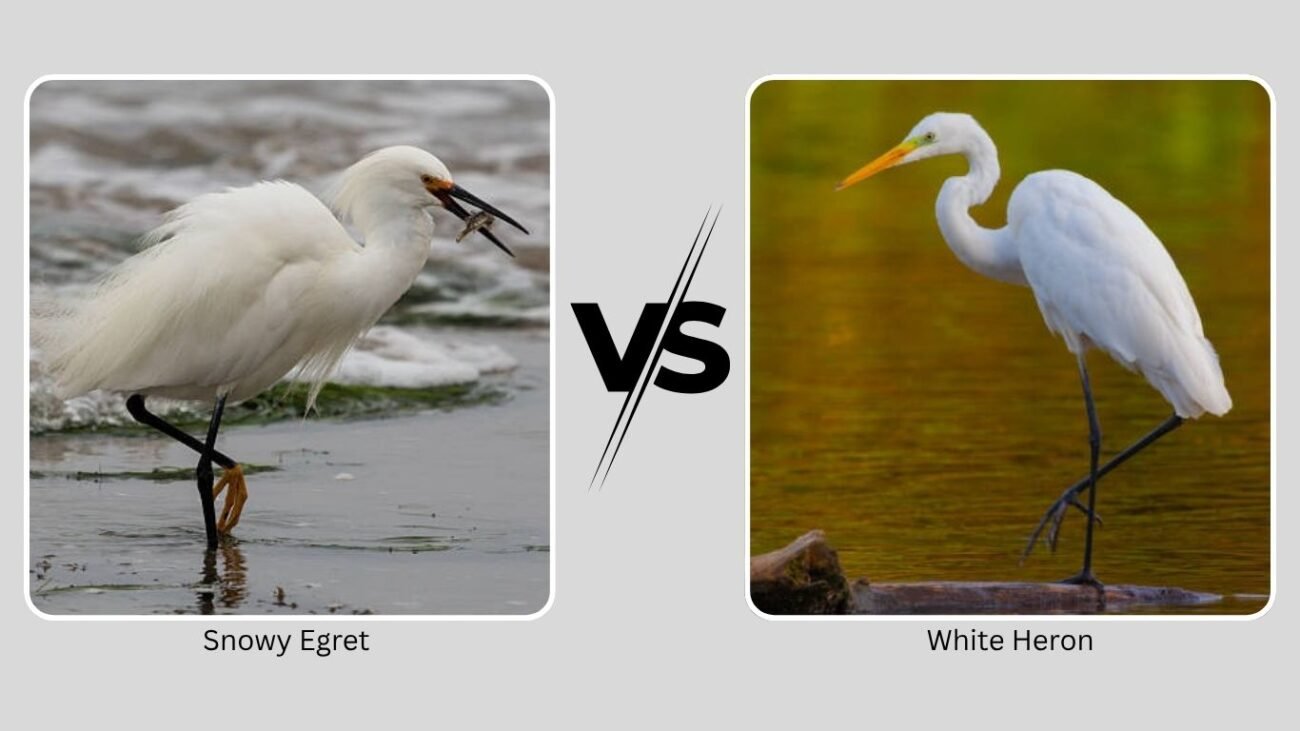
| Feature | Snowy Egret | White Heron (Great White Heron) |
| Size | Small (2 ft) | Large (4 ft) |
| Bill | Black with yellow base | Yellow or gray |
| Feet | Bright yellow | Gray or dark |
| Habitat | Tropical wetlands and estuaries | Coastal Florida and Caribbean |
| Behavior | Active, stirs water with feet | Still, hunts by waiting |
The Snowy Egret’s lively hunting behavior and contrasting black-and-yellow features make it instantly recognizable, while the Great White Heron, a rare morph of the Great Blue Heron, has a stately and calm presence.
Cattle Egret vs White Heron
- Cattle Egret: Small inland bird often found following cattle or tractors, feeding on disturbed insects.
- White Heron: Coastal, larger, and specialized for aquatic prey.
Cattle Egrets represent adaptability—they thrive far from water, proving how versatile the Ardeidae family can be.
Egret vs Heron vs Crane vs Stork vs Ibis
Herons and egrets are easily confused with cranes, storks, and ibises. However, each group has unique traits that set them apart in the wild.
Crane
- Larger body and longer wingspan.
- Flies with neck extended, unlike herons and egrets that retract theirs.
- Often found in grasslands or meadows instead of wetlands.
Stork
- Thick, heavy bill and robust legs.
- Often seen nesting on rooftops or trees.
- Flight resembles cranes — neck stretched straight forward.
Ibis
- Shorter neck, rounder body, and curved bill for probing mud.
- Usually moves in flocks over mudflats and lagoons.
Comparison Table
| Bird | Neck in Flight | Bill Shape | Preferred Habitat | Behavior |
| Heron | Retracted | Long, spear-like | Wetlands | Solitary |
| Egret | Retracted | Slender, straight | Shallow lagoons | Often social |
| Crane | Extended | Short, pointed | Grasslands | Gregarious |
| Stork | Extended | Thick, straight | Dry wetlands | Pairing groups |
| Ibis | Extended | Curved, slender | Mudflats | Large flocks |
Behavior in Flight

Herons
Herons have a majestic flight, with slow, strong wingbeats and their necks retracted into an S-shape. They often fly low over the water, appearing powerful and deliberate. Their wings are broad, giving them a heavier silhouette in the sky.
Egrets
Egrets glide gracefully, their white plumage shimmering against sunlight. Their lighter bodies make their flight appear buoyant and effortless. During migrations, egrets often travel in V-shaped formations, resembling cranes but with retracted necks.
Symbolism and Cultural Meaning
Heron Symbolism
The heron represents patience, wisdom, and solitude. In many cultures, it symbolizes the ability to wait for the right moment.
- In Native American tradition, the heron stands for self-determination and reflection.
- In ancient Egypt, the heron symbolized creation and the rising sun.
- In Japanese art, it embodies longevity and purity.
Egret Symbolism
The egret carries meanings of purity, grace, and balance. Its white feathers make it a universal symbol of peace and spiritual clarity.
- In Chinese culture, egrets signify strength through calmness.
- The bird’s elegance inspired 19th-century fashion, though it nearly led to their decline from plume hunting.
Shared Symbolism
Both birds reflect the essence of mindful stillness — moving only when necessary, acting with precision and grace. They are timeless emblems of patience and purpose.
Conservation and Human Impact

Status Overview
Most herons and egrets are listed as Least Concern globally, but their well-being depends heavily on wetland health.
Historic Threats
During the 19th century, egrets were hunted extensively for their ornamental feathers, used in women’s hats and clothing. This practice nearly wiped out several species until strong conservation movements emerged in the early 20th century.
Modern Challenges
- Wetland Loss: Draining of marshes and mangroves for development.
- Pollution: Runoff and pesticides harm fish populations.
- Climate Change: Rising sea levels and altered water cycles disrupt breeding sites.
Conservation Efforts
- Protected under the Migratory Bird Treaty Act and international laws.
- Wetland restoration projects have boosted breeding success.
- Organizations like Audubon Society and BirdLife International promote habitat protection and citizen monitoring programs.
Herons and egrets now serve as indicator species, meaning their presence reflects the health of the entire ecosystem.
Interesting Facts
- The word “egret” comes from the French aigrette, meaning “plume.”
- The Great White Heron is not a true egret—it’s a white morph of the Great Blue Heron.
- Egrets’ breeding plumes once sold for more than gold by weight in the early 1900s.
- Herons can swallow prey larger than their heads due to a flexible throat and bill hinge.
- The Cattle Egret is the only member of the family that thrives away from water, following livestock worldwide.
- Both species nest in large colonies called rookeries, often alongside ibises and spoonbills.
FAQs
Are herons and egrets the same bird?
Yes. Egrets belong to the same family (Ardeidae) as herons but differ mainly in plumage and breeding display feathers.
Which is bigger, an egret or a heron?
Herons are generally larger and heavier, while egrets are smaller and more agile.
Do herons and egrets live together?
Yes. They often share wetlands, especially during breeding season, but usually feed in separate zones.
How can I tell them apart in flight?
Herons appear darker and heavier; egrets are bright white and lighter. Both retract their necks in flight, unlike cranes.
Are they endangered?
No. Most species are stable, though local populations face habitat loss and pollution threats.


