











The Little Green Heron (Butorides virescens) is one of the smallest and smartest wading birds in North America. Known for its striking plumage and tool-using behavior, this secretive bird is often seen along the edges of ponds and wetlands, waiting patiently for prey. Unlike larger herons that feed in open groups, the Little Green Heron prefers solitude and strategy. Its remarkable fishing technique — dropping bait into the water to lure fish — has made it one of the few bird species recognized for using tools in the wild.
Overview of the Little Green Heron
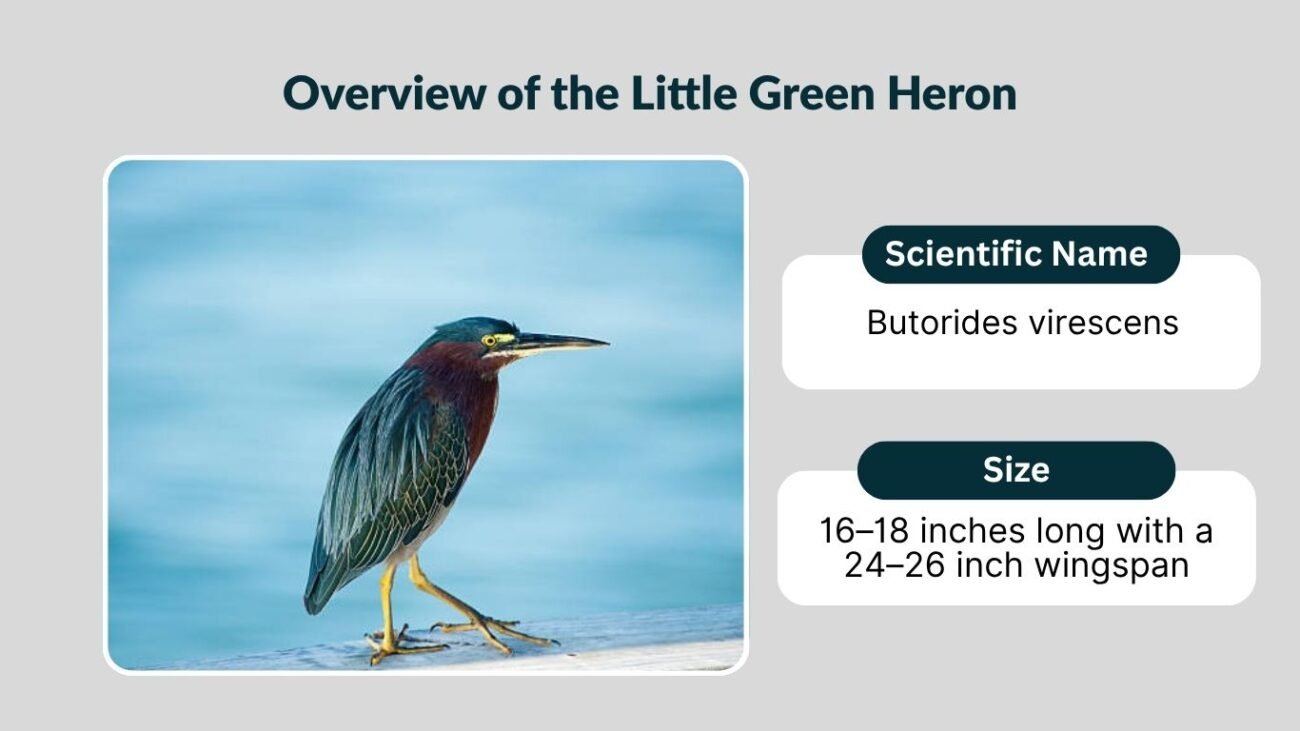
Scientific Classification
- Scientific Name: Butorides virescens
- Family: Ardeidae (Herons and Egrets)
- Genus: Butorides
- Conservation Status: Least Concern (IUCN)
- Average Lifespan: 6–10 years
Quick Highlights
- Smallest heron species in North America.
- Famous for using bait or tools while fishing.
- Solitary, secretive, and highly observant.
- Found across wetlands, mangroves, and backyard ponds.
The Little Green Heron’s intelligence and adaptability make it an extraordinary example of avian problem-solving. It’s not just a hunter but a strategist — watching, waiting, and adjusting until success.
Identification and Appearance
The Little Green Heron is a compact bird with a sharp gaze and a vivid color palette. Though small, its appearance commands attention, especially when sunlight reveals its glossy greenish-black feathers and deep chestnut neck. Its posture — low, crouched, and patient — makes it a master of stealth.
Key Identification Features
- Head and Back: Glossy greenish-black with metallic blue tones.
- Neck and Breast: Rich chestnut or maroon hue.
- Bill: Short, strong, and pointed — perfect for spearing fish.
- Eyes: Bright yellow, turning orange during breeding.
- Legs: Yellow-green, shifting to orange or reddish in mating season.
- Size: 16–18 inches long with a 24–26 inch wingspan.
Juvenile and Immature Birds
Juvenile Little Green Herons are more brown than green. Their necks are streaked with buff and white lines, helping them blend into reeds and tree branches. Young birds also have duller bills and yellowish eyes, gradually darkening as they mature. By their second year, they acquire the glossy green and chestnut tones of adults.
Breeding Plumage
During the breeding season, colors intensify. The crown appears more iridescent, and the legs glow a brighter orange. Males often raise their crests and display short flights to attract females. The subtle beauty of this plumage complements their quiet confidence in courtship.
In Flight
The Little Green Heron flies low and fast, with quick, steady wingbeats. Its neck remains tucked in, giving it a compact, dart-like shape. From above, the bird appears dark, but underneath, its chestnut neck and pale belly flash briefly in motion.
Habitat and Geographic Range

Preferred Habitat
The Little Green Heron is most comfortable near water. It thrives in freshwater and brackish wetlands, often near:
- Ponds and lakes
- Marshes and lagoons
- Mangroves and tidal creeks
- Streams and canals
It prefers shallow, still waters where fish are abundant and vegetation provides cover. This combination of concealment and opportunity suits its hunting style perfectly.
Geographic Range
Native to North and Central America, the Little Green Heron ranges from southern Canada to northern South America. Populations in the northern U.S. and Canada migrate south for winter, while southern birds remain year-round residents. It’s common in Florida, Texas, and the Gulf Coast, and can even appear in suburban ponds or gardens where fish are plentiful.
Human Coexistence
This heron is remarkably adaptable. It tolerates quiet human environments, often visiting ornamental ponds or golf course lakes. While generally shy, it can thrive close to people as long as food sources and vegetation remain intact.
Behavior and Lifestyle
Solitary Nature
Unlike egrets or larger herons that feed in groups, the Little Green Heron prefers solitude. It hunts alone, using stealth and precision rather than speed or competition. This solitary behavior allows it to remain unnoticed by both predators and prey.
Territorial Behavior
Each heron defends its feeding area fiercely, especially during breeding season. Males may display aggressive postures, raise crests, or issue sharp calls to warn intruders away. Despite their size, they’re bold defenders of their chosen territory.
Intelligence and Adaptability
The Little Green Heron’s intelligence sets it apart from most birds. It is one of the few species observed using tools — a behavior typically seen in primates and crows. These herons have been recorded dropping objects like twigs, feathers, or even bits of bread into the water to lure fish. They then watch patiently, striking the moment a curious fish surfaces.
This deliberate use of bait demonstrates not just instinct but planning and learning, showing the heron’s ability to adapt and innovate. Wildlife researchers have documented individuals refining this technique over time, suggesting problem-solving and memory skills uncommon among birds.
Diet and Feeding Habits
Primary Diet
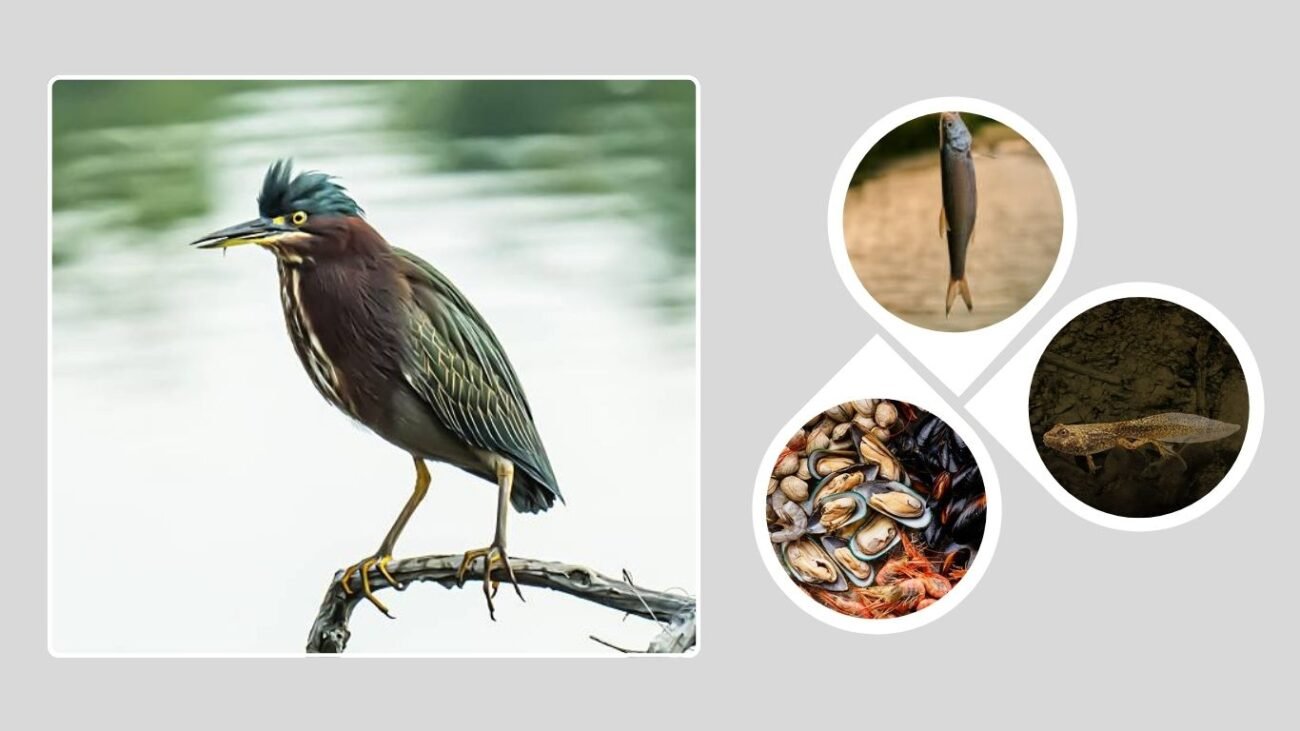
The Little Green Heron feeds mainly on small aquatic animals, including:
- Small fish (minnows, guppies, and perch)
- Frogs and tadpoles
- Crustaceans such as shrimp and crayfish
- Aquatic insects and larvae
- Occasionally small snakes or lizards
Hunting Style
Its hunting method is a combination of patience and precision. It often perches on a low branch, log, or rock, leaning forward with its bill just above the water’s surface. Once prey is within reach, it strikes with lightning speed, spearing or grabbing it before swallowing it whole.
To improve its view, the heron sometimes uses a behavior called mantling — spreading its wings slightly to shade the water and reduce glare. This gives it a clearer view of movement below the surface.
Famous Fishing Behavior
The Little Green Heron’s fishing intelligence is what truly sets it apart in the bird world. Researchers and birdwatchers alike have documented its extraordinary use of tools — an extremely rare trait among avian species.
Using Bait to Catch Fish
The heron is known to drop bread crumbs, insects, feathers, or twigs onto the water’s surface to lure curious fish. When the fish swims up to inspect the bait, the heron strikes with perfect timing. In some observed cases, individuals adjusted their strategy — repositioning bait, choosing different materials, or waiting longer — depending on their success.
This flexible approach proves that Little Green Herons possess problem-solving skills and learned intelligence, not just instinct. Videos of this behavior have gone viral, showing these small herons as one of nature’s most inventive hunters.
Patience and Strategy
Unlike birds that chase prey, the Little Green Heron practices restraint. It can stand perfectly still for several minutes, sometimes blending in with reeds or shadows. Its stealth and timing ensure a high success rate with minimal effort — a remarkable example of efficiency in the wild.
Nesting and Breeding
Breeding Season
The Little Green Heron breeds mainly between April and July, with some variation depending on latitude. Males begin courtship by fluffing their plumage, stretching their necks, and performing short display flights. These displays, though quiet, are graceful and deliberate — mirroring the heron’s overall calm demeanor.
Nesting Habits
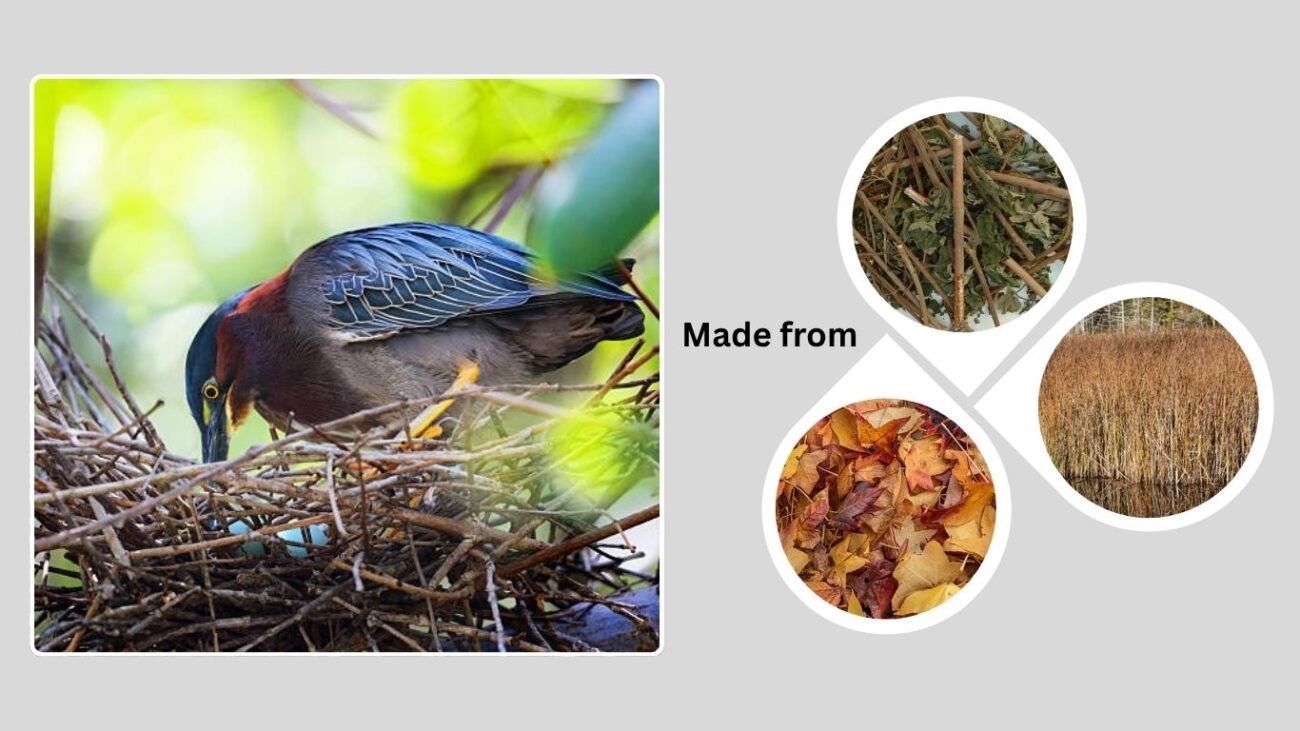
- Nests are built in low trees, shrubs, or mangroves, usually near water.
- Made from sticks, reeds, and grasses, lined with soft leaves.
- Both male and female participate in construction and defense.
- Nests are often reused and repaired across multiple years.
Eggs and Chicks
- A typical clutch contains 3–5 pale blue-green eggs.
- Both parents share incubation for about 20 days.
- Chicks hatch covered in gray down and are fed through regurgitation.
- They begin to climb within two weeks and fledge around 21–25 days.
Even after fledging, juveniles may remain close to their parents’ territory, practicing hunting in shallower areas until independent.
Calls and Vocalization
Common Sounds
- Alarm Call: A sharp “skeow!” or “kyow!” sound when startled.
- Flight Call: A brief croak as the bird takes off at dusk.
- Breeding Call: Low grunts and short coos exchanged between mates.
- Juvenile Calls: Higher-pitched “keek” sounds for begging food.
Communication Behavior
Little Green Herons are relatively quiet birds, but their calls are precise and meaningful. Most vocal activity occurs around sunrise and sunset or during the breeding season. These sounds serve as communication cues, warnings, and courtship signals within their small territories.
Comparison with Similar Species
Little Green Heron vs Little Blue Heron
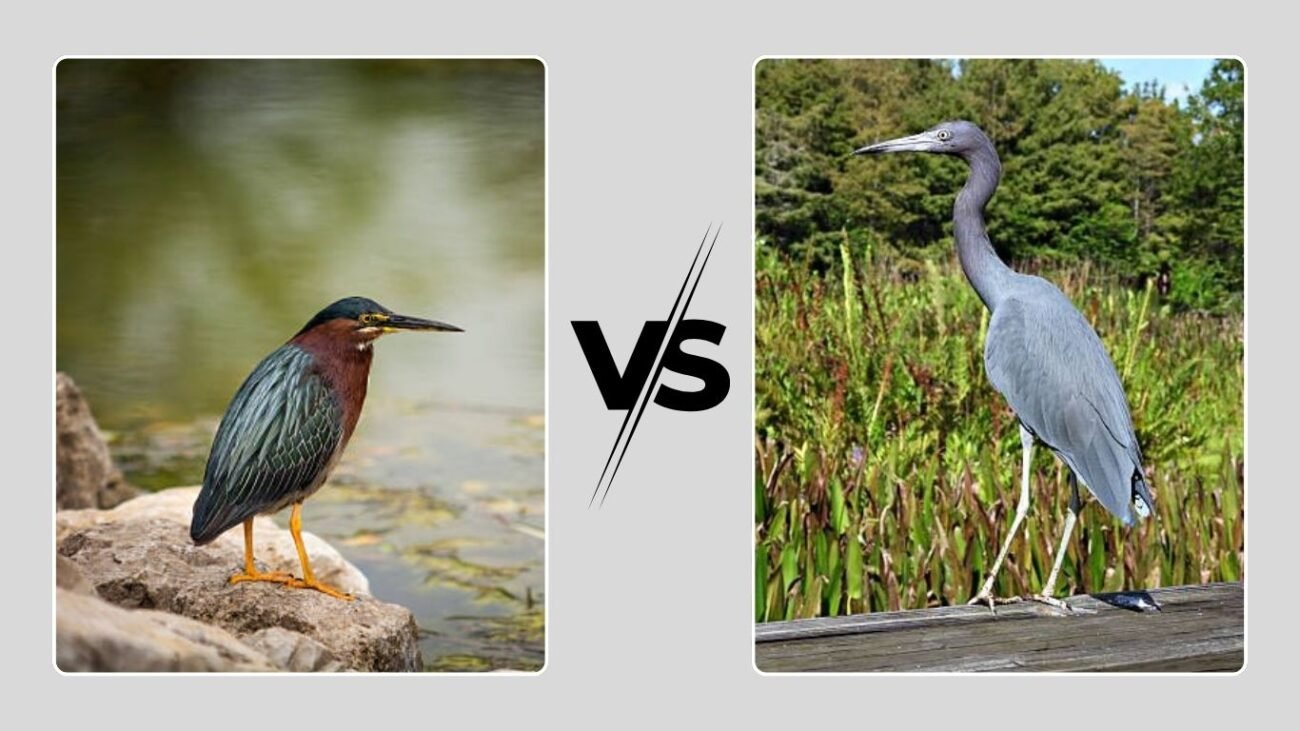
| Feature | Little Green Heron | Little Blue Heron |
| Size | Smaller and stocky | Taller and more slender |
| Color | Greenish-black back, chestnut neck | Slate-blue body, purplish neck |
| Behavior | Solitary and patient | Social feeder, active hunter |
| Intelligence | Uses tools for fishing | No baiting behavior recorded |
| Habitat | Shallow streams and ponds | Open marshlands |
Little Green Heron vs Green Heron
Both names refer to the same species. The term Little Green Heron emphasizes its small stature, while Green Heron is more commonly used today.
Little Green Heron vs Striated Heron
The Striated Heron (Butorides striata) of Asia and Africa closely resembles the Little Green Heron in color and behavior. Both species exhibit similar bait-fishing intelligence, showcasing this genus’s remarkable adaptability across continents.
Conservation and Threats

Current Status
The Little Green Heron is listed as Least Concern globally, with stable populations across much of its range. However, localized declines occur where wetlands are drained or polluted.
Major Threats
- Habitat Loss: Draining of ponds and marshes for development.
- Water Pollution: Agricultural runoff and pesticides harm aquatic prey.
- Human Disturbance: Increased activity near nesting areas can cause desertion.
- Climate Change: Altering water levels and food availability.
Conservation Efforts
- Protected under the U.S. Migratory Bird Treaty Act.
- Wetland restoration programs benefit this and other heron species.
- Wildlife organizations such as the Audubon Society monitor breeding sites.
- Public education campaigns emphasize the importance of healthy wetlands for maintaining biodiversity.
Symbolism and Cultural Meaning
Symbolism
The Little Green Heron symbolizes patience, intelligence, and creativity. Its ability to wait calmly for the perfect moment teaches lessons about mindfulness and timing. The bird’s use of tools represents adaptability — a reminder that innovation often comes from observation and persistence.
Cultural and Artistic Influence
- Featured in Native American and Asian folklore as a “wise fisherman.”
- Represents resourcefulness in Japanese art and poetry.
- A favorite subject in bird photography and nature paintings for its reflective poses and vivid colors.
Its calm demeanor and sharp focus make it a living symbol of nature’s quiet genius.
Interesting Facts about the Little Green Heron
- One of the few bird species known to use tools for hunting.
- Uses “mantling” — shading the water with wings to reduce glare.
- Capable of swimming short distances if necessary.
- Can live up to 10 years in the wild.
- Sometimes nicknamed the “Little Fisherman Heron.”
- Its call, “skeow,” can often be heard at dusk near wetlands.
- Despite its name, the green color may appear blue-gray in bright light.
FAQs
Do Little Green Herons use bait when fishing?
Yes. They’re famous for dropping objects like bread crumbs, feathers, or twigs into the water to attract fish — one of the clearest examples of tool use in wild birds.
Where do Little Green Herons live?
They inhabit wetlands, lakes, streams, and mangroves across North and Central America, wintering in Central and South America.
What do Little Green Herons eat?
They eat small fish, frogs, crustaceans, insects, and occasionally lizards or rodents.
Are Little Green Herons endangered?
No. They are classified as Least Concern, but habitat loss and water pollution can threaten local populations.
What makes Little Green Herons unique?
Their intelligence — especially their use of bait and tools — sets them apart from other herons and egrets. They also display patient, calculated hunting behavior rarely seen in birds.


