











Starfish come in a wide range of shapes, colors, and ecological roles, and their diversity is organized into many species, families, orders, and superorders. This list highlights 19 notable starfish types—from iconic reef species to deep-sea specialists. Each entry includes identification traits, habitat details, behavior, and size to help you understand the unique features that define these remarkable marine animals.
1. Crown-of-thorns Starfish

The crown-of-thorns starfish (Acanthaster planci) is a large, venomous sea star known for its long spines and coral-eating behavior. It is one of the most ecologically significant starfish species due to its major impact on coral reef health, especially in the Indo-Pacific region.
Identification
- Color: Usually gray, green, purple, or reddish.
- Spines: Long, sharp, venomous spines covering the entire body.
- Arms: Typically 7–23 arms (more than most starfish).
- Size: Can reach 25–35 inches (60–90 cm) across.
- Texture: Bristly and heavily armored appearance.
Habitat
The crown-of-thorns starfish inhabits tropical coral reefs, especially within the Indo-Pacific. It prefers environments rich in hard, stony corals, which form its primary food source. These starfish often hide in reef crevices during the day and come out at night to feed, showing mostly nocturnal activity.
Behavior
This species is known for rapid movement, active feeding, and the ability to regenerate lost arms. It consumes coral polyps using its everted stomach. Population outbreaks occur periodically, during which they can devastate large areas of coral reef. Their venomous spines deter most predators, making them efficient coral consumers.
Size
Adult crown-of-thorns starfish typically measure 12–15 inches (30–40 cm) across but can grow up to 35 inches (90 cm). Their body mass increases dramatically during coral outbreaks. The long spines can reach up to 2 inches (5 cm), adding to their overall visual size and defensive capability.
2. Common Starfish

The common starfish (Asterias rubens) is one of the most widespread sea stars in the northeastern Atlantic. Known for its classic five-armed shape and orange coloration, it is frequently found along rocky shores and sandy bottoms.
Identification
- Color: Usually orange, but may be brown, yellow, or violet.
- Arms: Typically 5 arms with a rough, grainy surface.
- Size: Commonly 4–10 inches (10–25 cm) across.
- Texture: Spiny skin with noticeable rows of short spines.
Habitat
This species inhabits cold to temperate waters of the northeastern Atlantic, from Norway to Portugal. It thrives in intertidal zones, rocky coasts, tidepools, and sandy seabeds. It can live at depths from the shoreline to about 600 feet (180 m).
Behavior
The common starfish is an active predator, primarily feeding on mussels, clams, and other bivalves. It uses hydraulic tube feet to pry shells open. It is slow-moving but persistent, and it can regenerate arms if damaged. Seasonal migrations occur between shallow and deeper waters.
Size
Adults typically measure 4–10 inches (10–25 cm) across, though larger individuals can exceed 12 inches (30 cm). Juveniles are much smaller and tend to stay hidden until they reach several centimeters in diameter.
3. Sunflower Sea Star
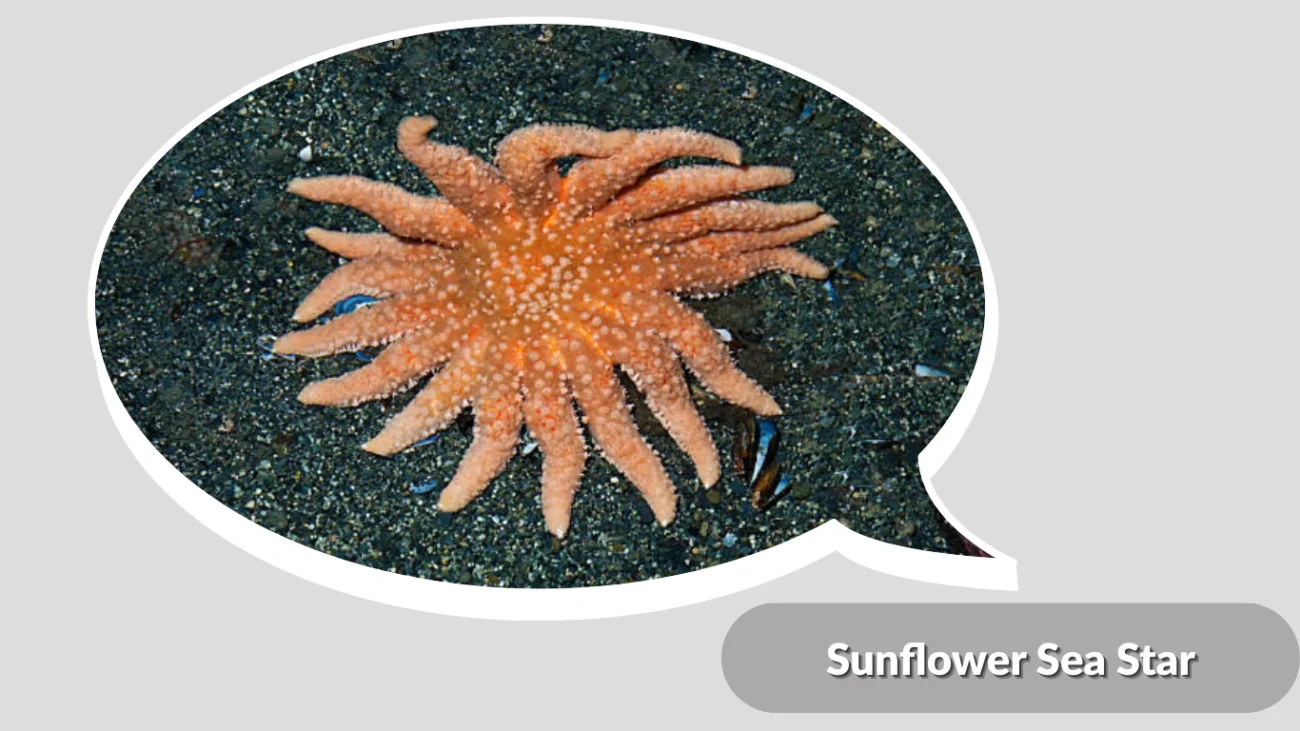
The sunflower sea star (Pycnopodia helianthoides) is one of the largest and fastest sea stars in the world. Its numerous arms and soft, flexible body give it a striking sunflower-like appearance, making it a prominent species in Pacific coastal ecosystems.
Identification
- Color: Shades of orange, purple, brown, yellow, or pink.
- Arms: Usually 16–24 arms, soft and flexible.
- Size: Can reach up to 3 feet (1 meter) across.
- Texture: Velvety surface with thousands of tube feet underneath.
Habitat
This species inhabits the Pacific coast of North America, from Alaska to California. It thrives in cold, nutrient-rich waters, typically in kelp forests, rocky bottoms, and sandy coastal areas. It prefers depths from the intertidal zone down to about 400 feet (120 m).
Behavior
The sunflower sea star is a rapid-moving predator, capable of gliding quickly using its many tube feet. It feeds on sea urchins, clams, crabs, and other invertebrates. Its predatory role is essential for maintaining ecological balance, especially in kelp forests.
Size
Adult sunflower sea stars commonly grow to 2.5–3 feet (75–90 cm) across. Their arms continuously regenerate if damaged, and juveniles begin with fewer arms before growing additional ones as they mature.
4. Ochre Sea Star
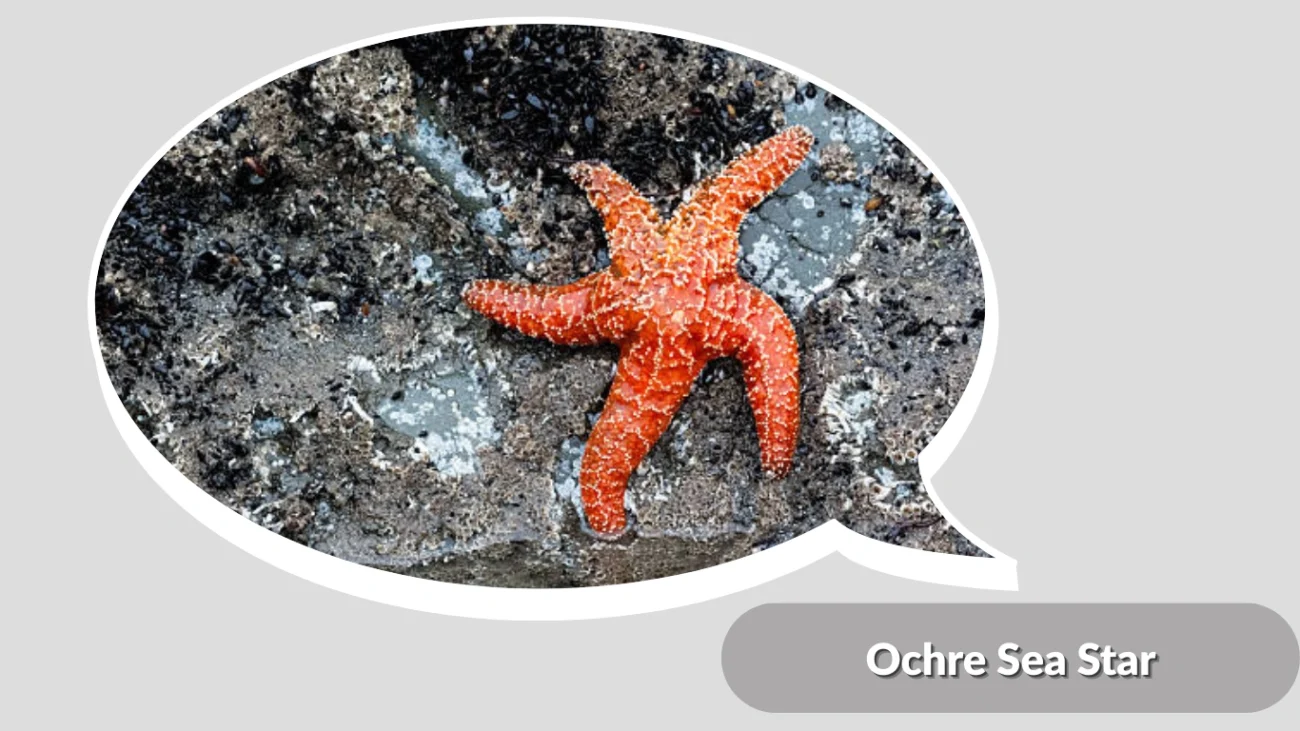
The ochre sea star (Pisaster ochraceus) is a well-known intertidal sea star found along the Pacific coast of North America. Famous for its bright colors and ecological importance, it is a keystone species that helps maintain healthy mussel populations.
Identification
- Color: Commonly orange, purple, brown, or red.
- Arms: Typically 5 thick, robust arms.
- Size: Usually 10–14 inches (25–35 cm) across.
- Texture: Rough, knobby surface with small spines.
Habitat
The ochre sea star inhabits rocky intertidal zones from Alaska to Baja California. It prefers wave-exposed shorelines, tidepools, and boulder fields. It is most abundant in mid-intertidal areas where mussel beds concentrate.
Behavior
This species is a strong predator of mussels and barnacles. By feeding on dominant mussel species, it prevents them from overwhelming other organisms, maintaining biodiversity. It withstands harsh conditions such as crashing waves, exposure to air, and temperature swings.
Size
Adults commonly reach 10–14 inches (25–35 cm) across, though some may grow slightly larger in colder northern waters. Juveniles are much smaller and often remain hidden in crevices until they mature.
5. Blue Sea Star

The blue sea star (Linckia laevigata) is one of the most recognizable starfish species due to its vibrant blue coloration. Found throughout the Indo-Pacific, it is a popular sight among divers and plays an important role in reef ecosystems.
Identification
- Color: Bright blue most commonly; can also be green, purple, or aqua.
- Arms: Typically 5 long, cylindrical arms.
- Size: Commonly 8–12 inches (20–30 cm) across.
- Texture: Smooth, rubbery surface with minimal spines.
Habitat
This species inhabits shallow tropical waters of the Indo-Pacific, including coral reefs, lagoons, and sandy areas. It is frequently found on reef flats and seagrass beds, usually at depths of 3–100 feet (1–30 m).
Behavior
The blue sea star is generally slow-moving and peaceful, feeding on detritus, biofilm, and small invertebrates. It is known for its remarkable ability to regenerate arms and can reproduce both sexually and asexually. Juveniles often hide within coral structures for protection.
Size
Adults typically measure 8–12 inches (20–30 cm) across, though some individuals may reach up to 14 inches (35 cm). Arms grow proportionally longer as the sea star matures, giving it a graceful, stretched appearance.
6. Choriaster (Granulated Sea Star)

The granulated sea star (Choriaster granulatus) is a distinctive, thick-bodied starfish recognized for its swollen arms and smooth, bumpy surface. Its unique shape and pastel coloration make it one of the most visually striking Indo-Pacific species.
Identification
- Color: Usually pale pink, beige, or light brown with darker tips.
- Arms: Five very thick, rounded arms.
- Size: Typically 10–12 inches (25–30 cm) across.
- Texture: Smooth, swollen appearance with fine granules.
Habitat
This species inhabits shallow tropical waters throughout the Indo-Pacific, including coral reefs, sandy bottoms, and lagoon environments. It prefers warm, calm waters and is commonly found at depths of 3–100 feet (1–30 m).
Behavior
The granulated sea star is slow-moving and feeds mainly on detritus, sponges, and small invertebrates. It tends to be solitary, resting during the day and becoming slightly more active at night. It is known for its gentle nature and strong regenerative ability.
Size
Adults generally reach 10–12 inches (25–30 cm) across. Their thick arms give them a bulky appearance, and juveniles start out much slimmer before growing into their characteristic round shape.
7. Asterias
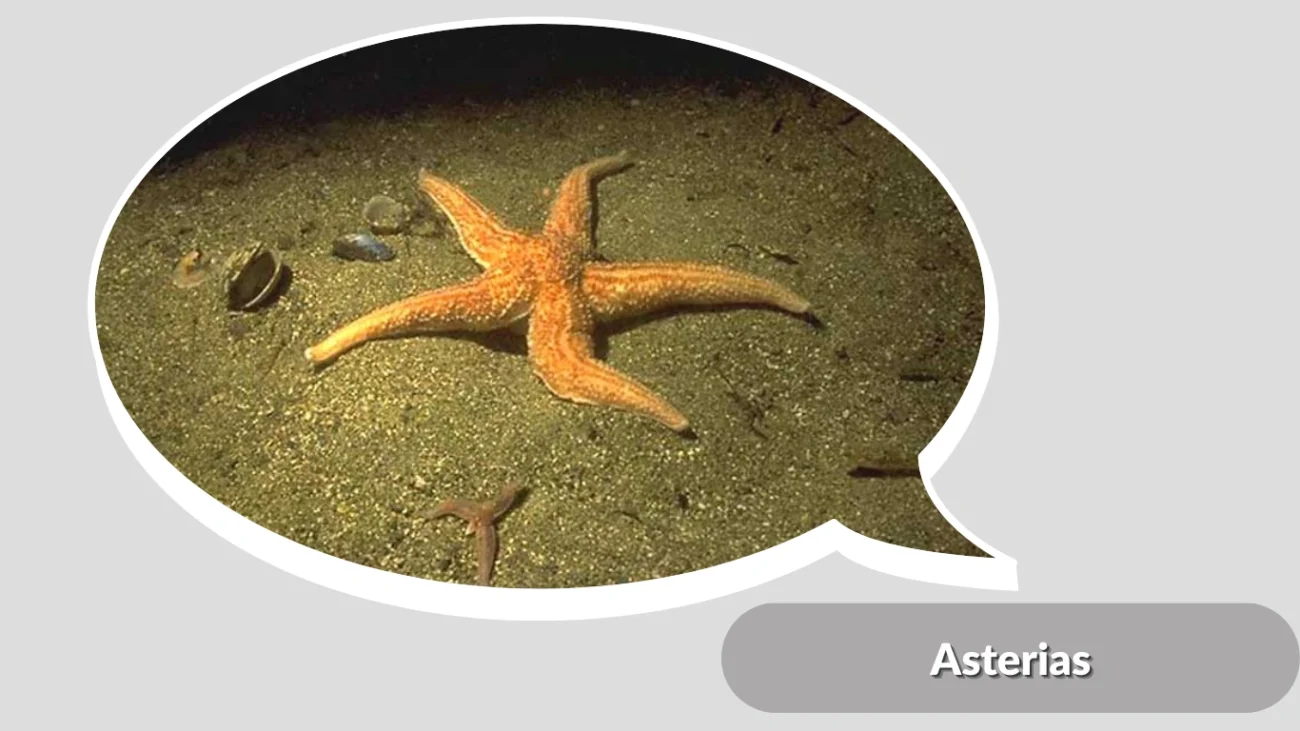
Asterias is a genus of classic five-armed starfish found primarily in northern Atlantic and Pacific waters. Species within this genus are known for their strong predatory behavior, especially toward bivalves, and their ability to thrive in cold marine environments.
Identification
- Color: Commonly orange, yellow, brown, or mottled shades.
- Arms: Typically 5 arms with noticeable spines along the surface.
- Size: Most species range from 6–12 inches (15–30 cm) across.
- Texture: Rough, spiny skin with clear radial patterns.
Habitat
Members of the Asterias genus inhabit cold and temperate coastal waters, including the North Atlantic, North Pacific, and subarctic regions. They are found on rocky shores, muddy substrates, and mussel beds, often in intertidal to subtidal zones.
Behavior
These starfish are active predators, feeding on mussels, clams, oysters, and other shellfish. They use their powerful tube feet to pry open shells. They are resilient to harsh conditions, exhibit seasonal movements, and can regenerate lost limbs effectively.
Size
Depending on the species, Asterias typically grow between 6–12 inches (15–30 cm) across. Some northern species may grow slightly larger in deeper or colder waters. Juveniles are small and often well-camouflaged against rocky substrates.
8. Cushion Star (Culcita novaeguineae)
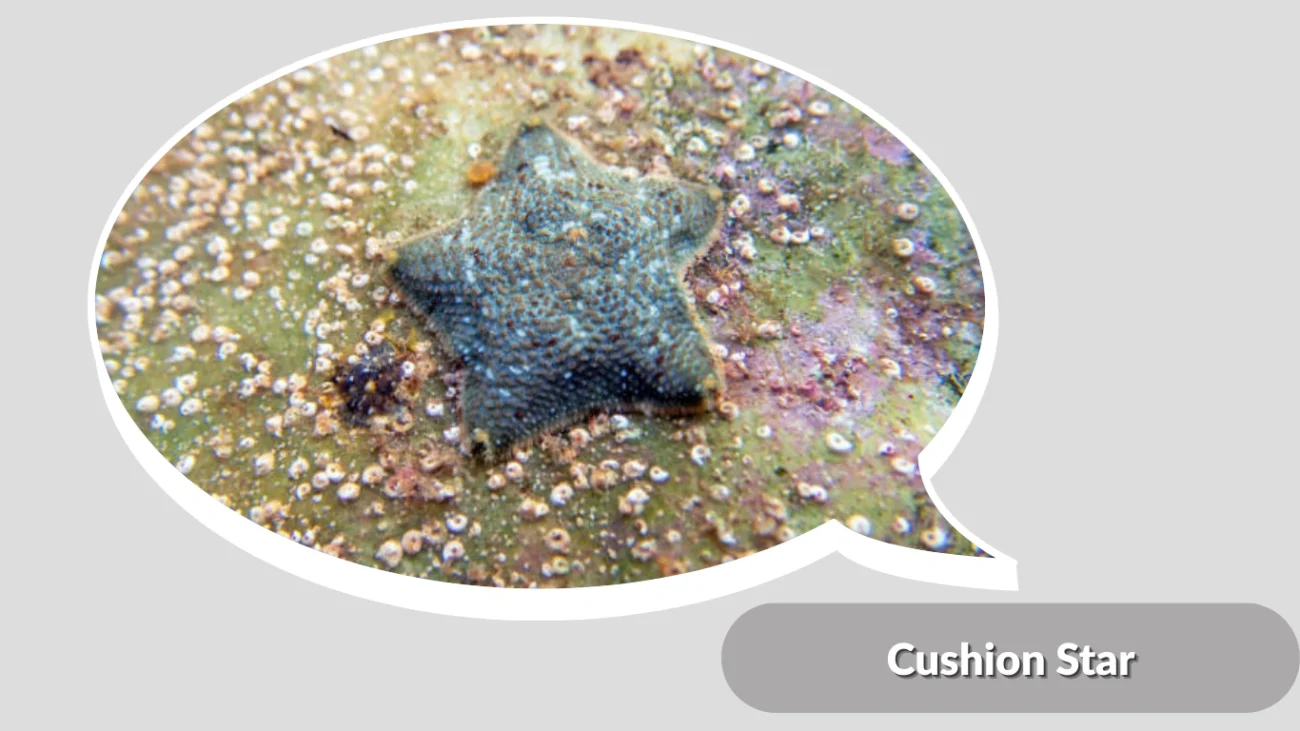
The cushion star (Culcita novaeguineae) is a highly recognizable starfish known for its rounded, pillow-like shape. As adults, their arms become so reduced that they appear almost spherical, making them unique among Indo-Pacific starfish.
Identification
- Color: Often mottled green, brown, yellow, orange, or spotted.
- Arms: Very short, almost indistinguishable in adults.
- Size: Typically 8–12 inches (20–30 cm) across.
- Texture: Thick, inflated body with a firm, leathery surface.
Habitat
Cushion stars inhabit tropical Indo-Pacific coral reefs, lagoons, and reef flats. They prefer sheltered reef zones with abundant coral cover and can be found from shallow waters to around 100 feet (30 m). Juveniles often hide within branching corals for protection.
Behavior
They feed on algae, sponges, and detritus, making them important reef grazers. Cushion stars move slowly but steadily, using suction-tipped tube feet. Their thick bodies protect them from predators, and they regenerate damaged tissue efficiently.
Size
Most adults measure 8–12 inches (20–30 cm) across, though some can grow slightly larger. Juveniles start with more defined arms, which gradually shorten and widen as they age, giving them their signature “cushion” form.
9. Asterina
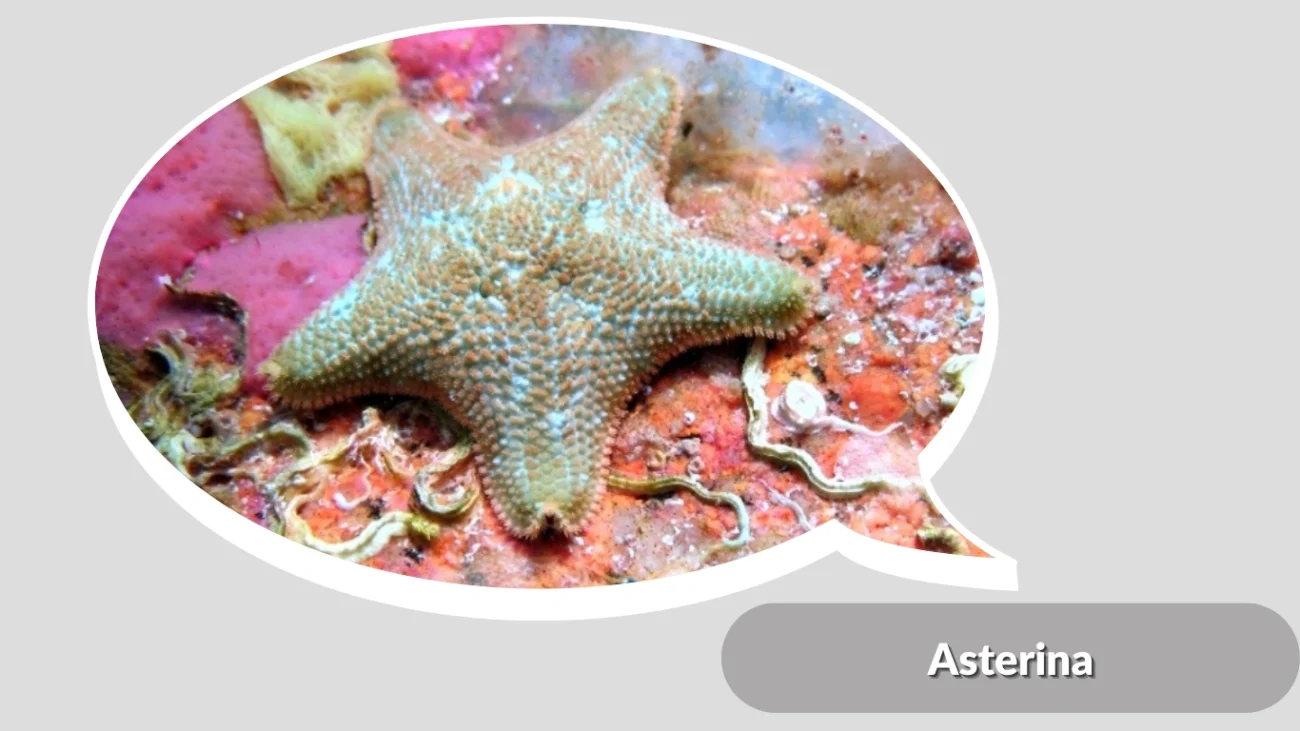
Asterina is a genus of small, flat-bodied sea stars commonly found in shallow coastal waters worldwide. These miniature starfish are known for their variable shapes and their ability to reproduce asexually through fission.
Identification
- Color: Gray, green, brown, orange, or mottled patterns.
- Arms: Typically 5 short, broad arms; some species appear slightly asymmetrical.
- Size: Small—usually 0.5–1.5 inches (1–4 cm) across.
- Texture: Soft, flattened body with fine surface granules.
Habitat
Asterina species inhabit tidepools, rocky shores, seagrass beds, and shallow reef flats. They tolerate a wide range of salinity and temperature, allowing them to thrive in intertidal zones where conditions are harsh and variable.
Behavior
These sea stars feed on algae films, detritus, and tiny invertebrates. Many species can reproduce by splitting their bodies in half, allowing rapid population growth. They are slow-moving, highly adaptable, and often hide under rocks or coral rubble during the day.
Size
Most individuals reach only 0.5–1.5 inches (1–4 cm) across, making them one of the smallest starfish groups. Their size and shape vary depending on age, environment, and whether they have undergone fission.
10. Northern Pacific Seastar (Asterias amurensis)
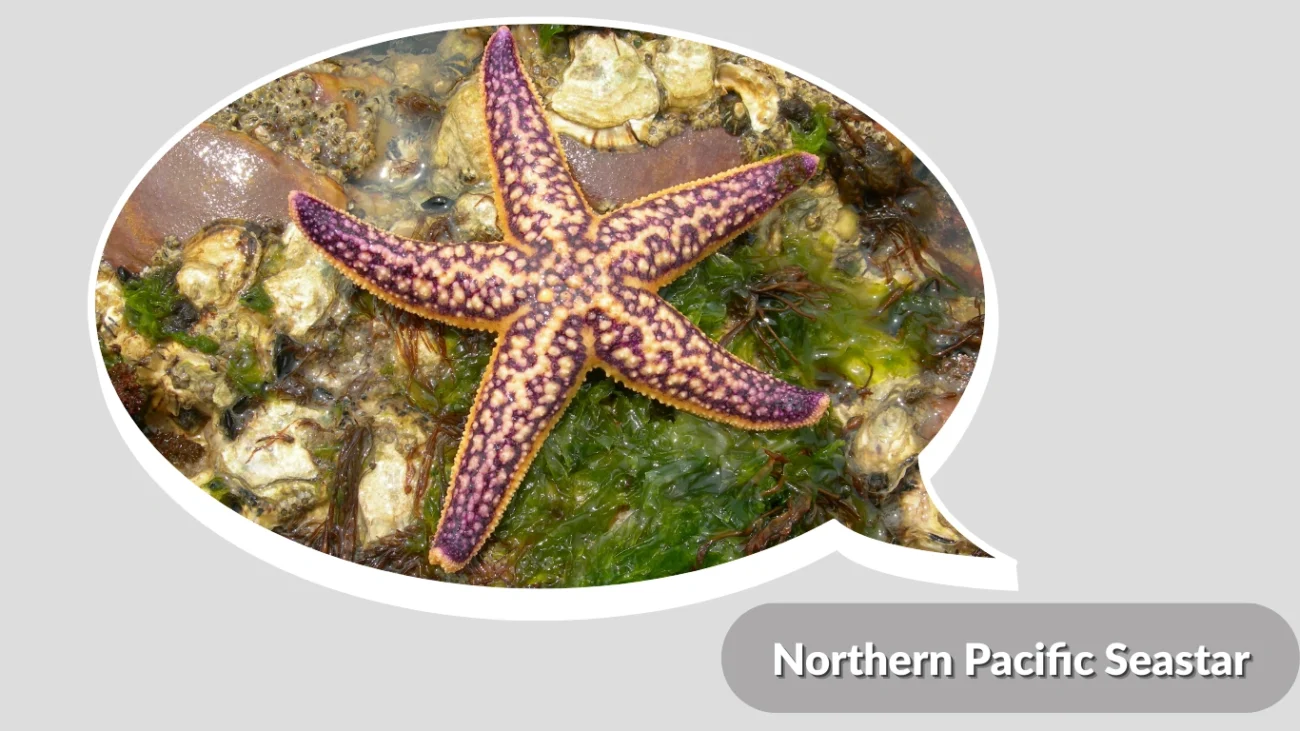
The northern Pacific seastar (Asterias amurensis) is a large, invasive sea star native to the northwestern Pacific. It is known for its rapid reproduction, strong predatory behavior, and major ecological impacts in regions where it becomes established.
Identification
- Color: Yellow, orange, purple, or mottled combinations.
- Arms: Typically 5 long, tapering arms.
- Size: Commonly 8–20 inches (20–50 cm) across.
- Texture: Spiny surface with distinct rows of short spines.
Habitat
This species inhabits cold to temperate waters of Japan, Russia, China, and Korea. It prefers estuaries, sandy bottoms, rocky shores, and areas with abundant bivalves. Invasive populations have also become established in southern Australia, causing concern for local ecosystems.
Behavior
The northern Pacific seastar is a voracious predator that feeds on clams, oysters, mussels, and other invertebrates. It reproduces rapidly, producing millions of eggs per season. Its high adaptability and tolerance to variable salinity make it a successful invader.
Size
Adults usually range from 8–20 inches (20–50 cm) across, with some individuals growing even larger in ideal conditions. Juveniles start small but grow quickly, especially in nutrient-rich coastal environments.
11. Brisingida
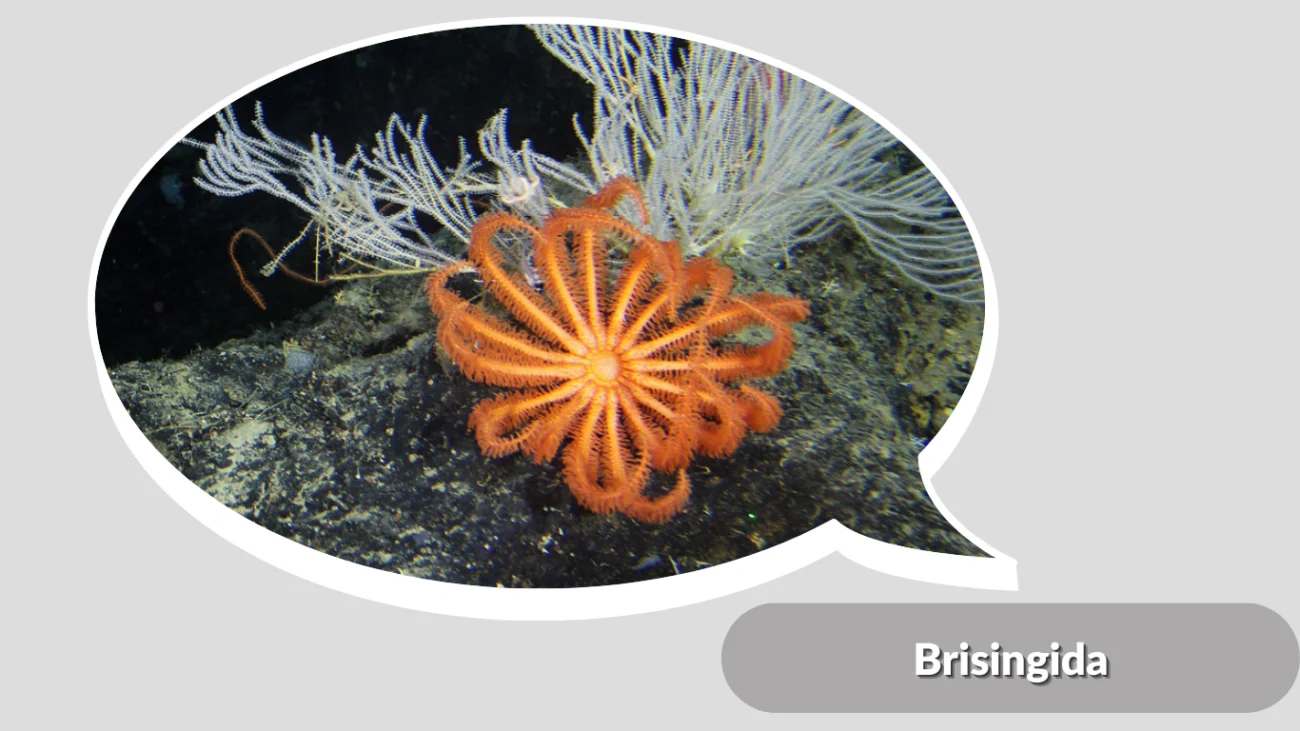
Brisingida is an order of deep-sea starfish known for their extremely long, delicate arms. These starfish live in some of the ocean’s deepest regions and are adapted for suspension feeding, capturing drifting particles from the water column.
Identification
- Color: Usually orange, red, or pale shades.
- Arms: 6–20 very long, thin, spiny arms.
- Size: Body small, but arm span can exceed 12–20 inches (30–50 cm).
- Texture: Spiny, fragile arms suited for filter feeding.
Habitat
Brisingida starfish inhabit deep-sea environments, typically below 1,000 feet (300 m) and often much deeper. They are found on steep slopes, seamounts, and abyssal plains. Their long arms help them maximize food capture in low-nutrient waters.
Behavior
These starfish are suspension feeders, raising their long arms into the current to trap plankton and organic particles. They move very little, conserving energy in the deep sea. Their fragile arms can break easily but regenerate over time.
Size
Brisingida species vary, but most have a small central disc with arm spans reaching 12–20 inches (30–50 cm). Some deep-water species may grow even longer arms depending on water flow and available food.
12. Bat Star (Patiria miniata)

The bat star (Patiria miniata) is a colorful and widely distributed sea star found along the Pacific coast of North America. Its webbed arms give it a bat-like shape, making it one of the most distinctive intertidal starfish.
Identification
- Color: Red, orange, yellow, purple, brown, green, or mottled mixes.
- Arms: Typically 5 broad, webbed arms.
- Size: Usually 4–8 inches (10–20 cm) across.
- Texture: Smooth to slightly rough, often with mottled patterns.
Habitat
Bat stars inhabit rocky shores, kelp forests, eelgrass beds, and sandy bottoms from Alaska to Baja California. They tolerate a wide range of conditions and are commonly seen in tidepools and shallow subtidal zones, usually up to 300 feet (90 m) deep.
Behavior
These sea stars are scavengers and detritivores, feeding on decaying plant material, dead animals, algae, and small invertebrates. Their omnivorous diet makes them important cleaners of coastal ecosystems. They are slow-moving but highly adaptable.
Size
Adult bat stars typically measure 4–8 inches (10–20 cm) across. Individuals from colder northern waters may grow slightly larger. Juveniles start with more pointed arms that gradually broaden and web together as they mature.
13. Red Cushion Star (Oreaster reticulatus)
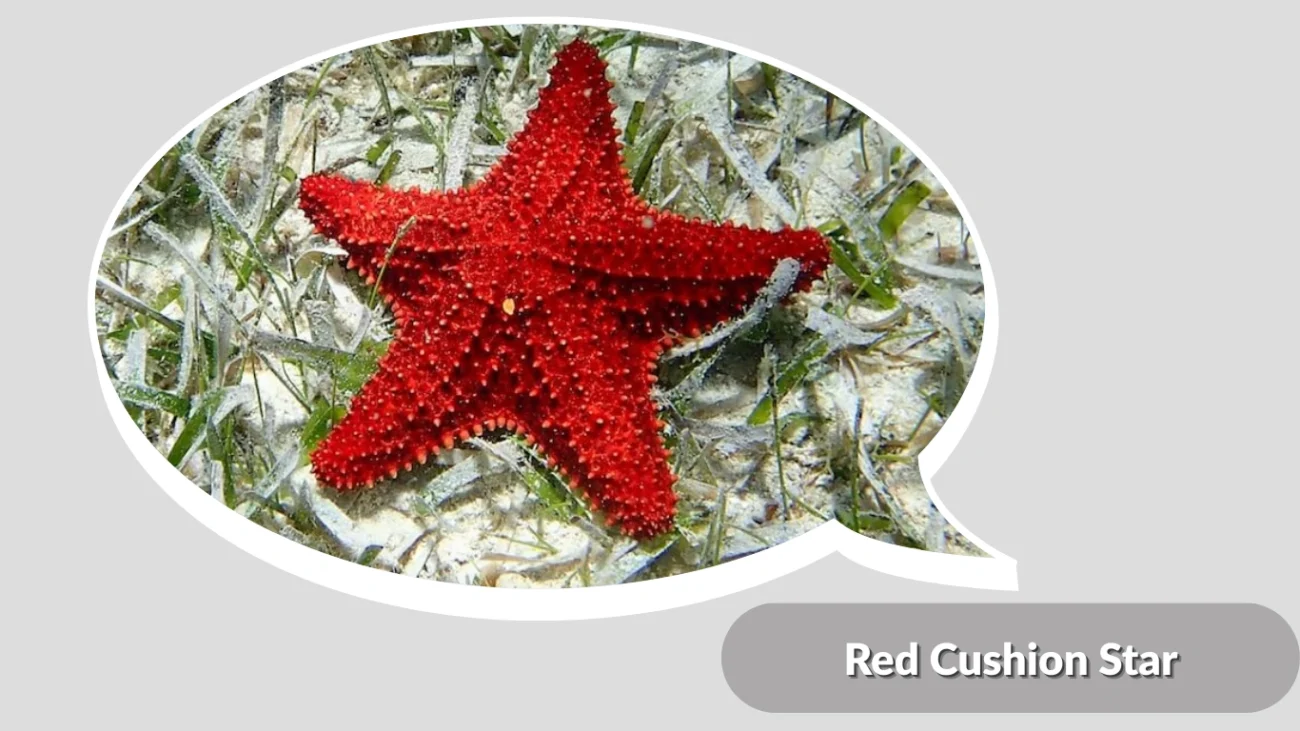
The red cushion star (Oreaster reticulatus) is a large, thick-bodied starfish commonly found in the Caribbean and western Atlantic. Its inflated appearance and bold coloration make it one of the region’s most recognizable sea stars.
Identification
- Color: Bright red, orange, tan, or mottled patterns.
- Arms: Five short, thick, blunt arms.
- Size: Commonly 10–16 inches (25–40 cm) across.
- Texture: Firm, bumpy surface with raised nodules.
Habitat
This species inhabits shallow tropical waters, including seagrass beds, sandy bottoms, and coral reefs. It is most often found in the Caribbean Sea, Gulf of Mexico, and around the Bahamas, usually at depths of 3–100 feet (1–30 m).
Behavior
The red cushion star feeds on algae, detritus, and small invertebrates found on sandy or grassy substrates. It moves slowly and spends much of its time grazing. Juveniles tend to hide in seagrass or under rocks until they develop their thick adult form.
Size
Adults commonly reach 10–16 inches (25–40 cm) across, though some individuals may exceed this size. Their body thickens significantly with age, giving them their characteristic cushion-like shape.
14. Red-knobbed Starfish (Protoreaster lincki)

The red-knobbed starfish (Protoreaster lincki) is a striking and easily identifiable species found in the Indian Ocean. Its bold coloration and prominent red nodules make it a favorite among marine enthusiasts and photographers.
Identification
- Color: Light gray or beige body with bright red knobs.
- Arms: Five broad arms with large, raised red spines.
- Size: Typically 8–12 inches (20–30 cm) across.
- Texture: Firm, bumpy surface with pronounced nodules.
Habitat
This species inhabits shallow tropical waters, including coral reefs, sandy flats, lagoons, and seagrass beds. It is commonly found along the East African coast, the Red Sea, Madagascar, and nearby island regions. Preferred depth ranges from 1–100 feet (1–30 m).
Behavior
Red-knobbed starfish are slow-moving omnivores that feed on algae, detritus, sponges, and small bottom-dwelling invertebrates. They are hardy, resilient, and known for their strong regenerative capabilities. Juveniles often hide in reef crevices for protection.
Size
Adults generally reach 8–12 inches (20–30 cm) across, with well-defined arms and large red knobs that become more pronounced with age. Their thick body structure makes them appear sturdy and heavily armored.
15. Forcipulatida
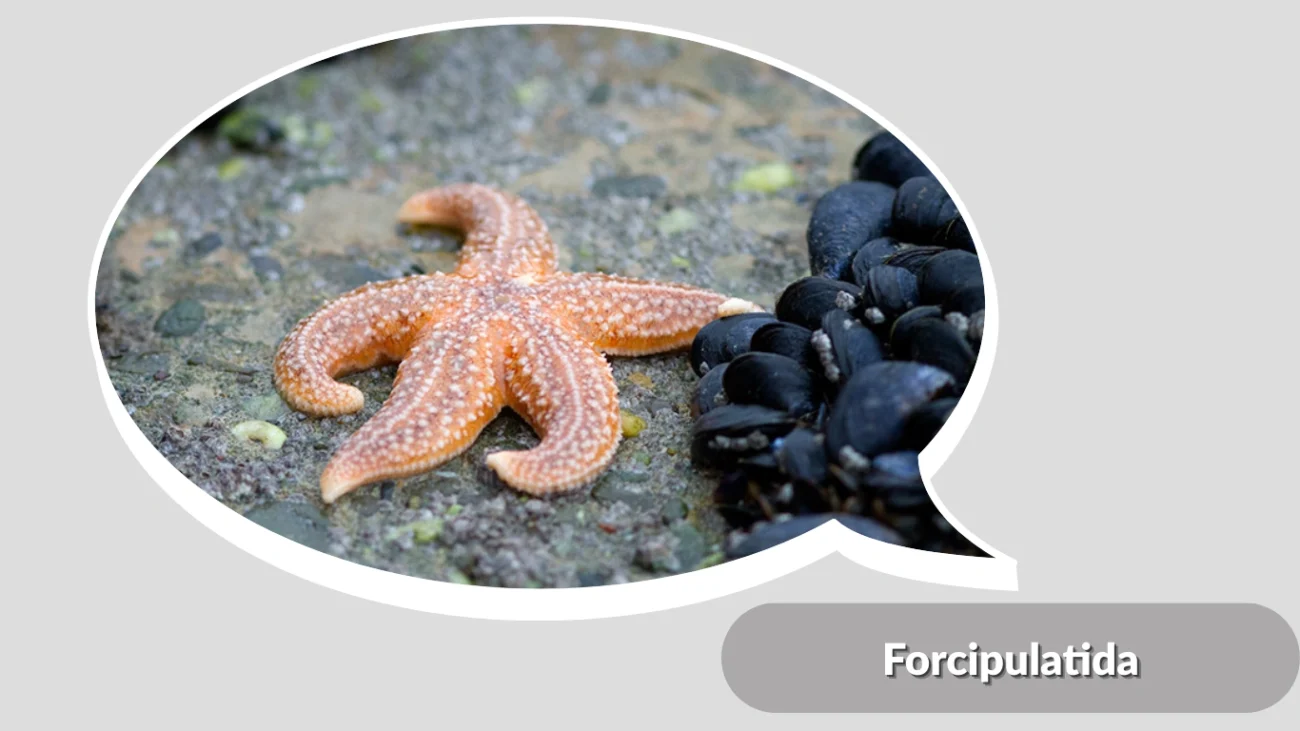
Forcipulatida is an order of sea stars known for their distinctive pincer-like pedicellariae and robust, often spiny arms. Many familiar cold-water species belong to this group, which plays an important role in marine ecosystems as active predators.
Identification
- Color: Varies widely—orange, purple, brown, red, or mottled.
- Arms: Typically 5 thick, sturdy arms with noticeable spines.
- Size: Many species range from 6–14 inches (15–35 cm) across.
- Texture: Rough, often heavily spined with pincer-like structures.
Habitat
Members of the Forcipulatida order inhabit cold and temperate waters worldwide, including rocky coastlines, kelp forests, and deep-sea regions. They are especially common in the North Pacific and North Atlantic, thriving from the intertidal zone to deep continental shelves.
Behavior
Forcipulatida sea stars are active predators, feeding on mussels, barnacles, clams, and other invertebrates. They use strong tube feet and specialized pedicellariae to handle prey. Many species exhibit notable regeneration abilities and withstand harsh tidal conditions.
Size
Species within this order typically reach 6–14 inches (15–35 cm) across, though some deep-water species can grow larger. Juveniles often resemble miniature versions of adults, with spines becoming more prominent as they mature.
16. Paxillosida

Paxillosida is an order of sea stars characterized by their pointed tube feet and lack of suckers, adaptations that help them thrive in sandy and muddy environments. They are often burrowers and play a role in soft-bottom marine ecosystems.
Identification
- Color: Typically tan, brown, gray, or muted earth tones.
- Arms: Usually 5 slender arms, sometimes more depending on species.
- Size: Commonly 4–10 inches (10–25 cm) across.
- Texture: Smooth to slightly spiny surface with pointed tube feet.
Habitat
Members of the Paxillosida order inhabit sandy bottoms, mud flats, and soft sediments in both shallow and deeper waters. They are widespread in tropical, temperate, and deep-sea environments. Many species bury themselves partially or completely under the substrate.
Behavior
These sea stars are adapted for life without suction-cup tube feet. They rely on pointed podia for digging and moving through soft sediments. Many species are detritivores or scavengers, feeding on organic matter, tiny invertebrates, and surface microbes.
Size
Most Paxillosida species measure 4–10 inches (10–25 cm) across. Their long, slender arms and streamlined bodies help them move efficiently through loose sediments. Juveniles are small and spend much of their early life hidden beneath the substrate.
17. Spinulosida
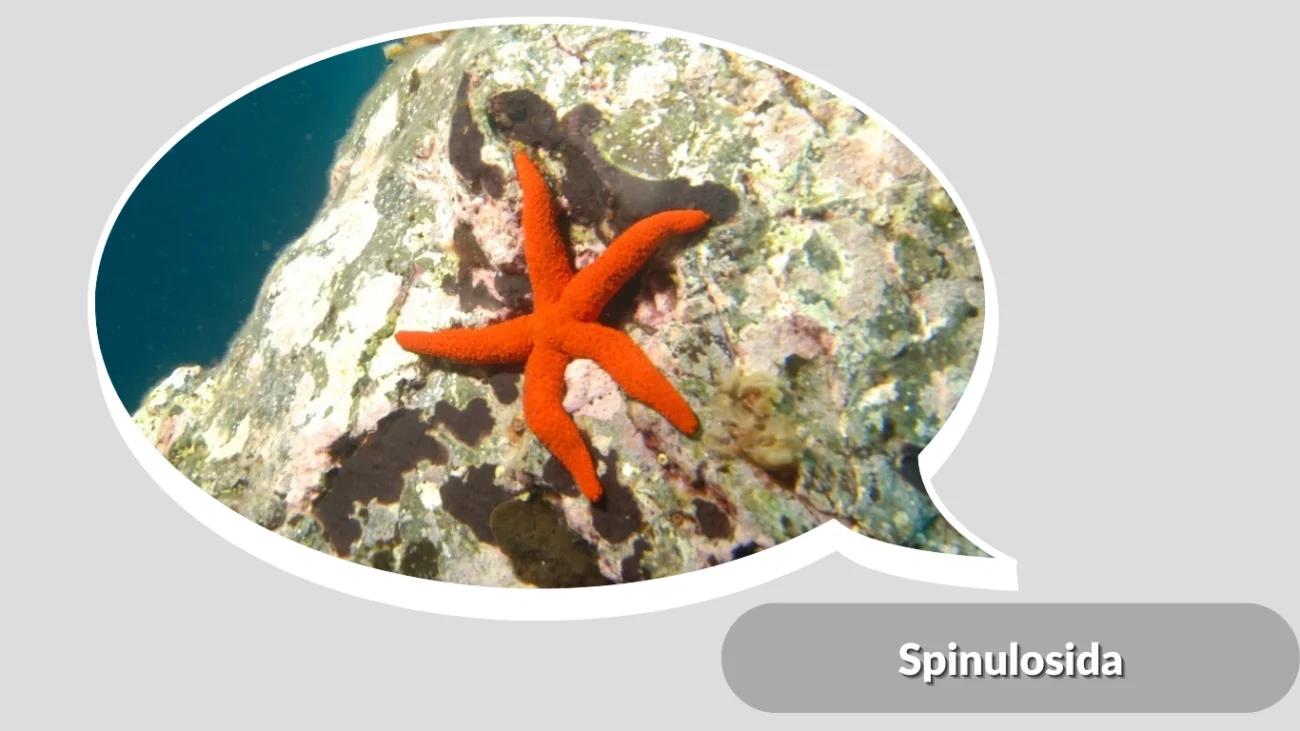
Spinulosida is an order of sea stars known for their numerous fine spines that cover the upper surface. These delicate spines give them a textured appearance and help distinguish them from other starfish groups.
Identification
- Color: Often brown, orange, yellow, or pale shades.
- Arms: Typically 5 slender arms.
- Size: Generally 3–8 inches (8–20 cm) across.
- Texture: Covered with many small, fine spines (spinules).
Habitat
Spinulosida starfish inhabit shallow to moderately deep waters in tropical and temperate regions. They frequent rocky bottoms, coral reefs, sandy flats, and seagrass areas. Their fine spines help them blend into textured surfaces.
Behavior
These sea stars are slow-moving and feed mainly on algae, detritus, and small benthic organisms. Their delicate spines can break easily but regenerate well. They tend to be solitary and spend much of their time hidden among rocks or reef structures.
Size
Most Spinulosida species grow to about 3–8 inches (8–20 cm) across. Their slender arms and dense covering of spinules give them a lightweight, delicate appearance compared to many other starfish orders.
18. Pterasteridae
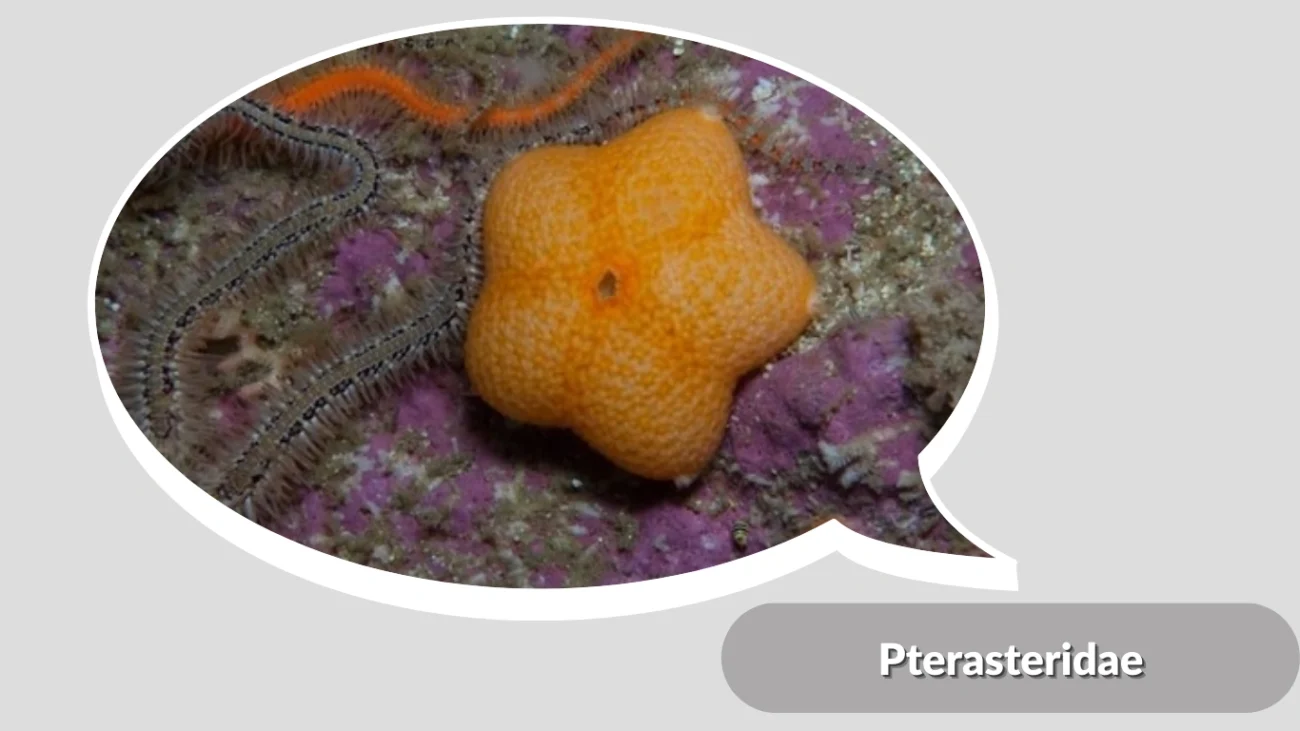
Pterasteridae is a family of sea stars known for their unique “slime star” trait—many species produce copious mucus as a defense mechanism. They possess a distinctive inflated surface membrane that sets them apart from most other starfish.
Identification
- Color: Usually pale orange, yellow, white, brown, or pink.
- Arms: Typically 5 short, thick arms.
- Size: Commonly 4–8 inches (10–20 cm) across.
- Texture: Soft, inflated upper membrane that may release slime.
Habitat
Members of the Pterasteridae family inhabit cold and deep marine environments, including the North Atlantic, Arctic, and Antarctic regions. They are often found on muddy or rocky seabeds, as well as deep-sea slopes and basins.
Behavior
These sea stars are famous for producing slime when threatened, creating a slippery barrier against predators. They feed on sponges, detritus, and small invertebrates. Their inflated aboral membrane helps protect delicate structures underneath.
Size
Pterasteridae species generally reach 4–8 inches (10–20 cm) across. Their compact shape and balloon-like surface distinguish them from more rigid, heavily spined starfish groups. Juveniles display a firmer texture that softens as they mature.
19. Valvatacea
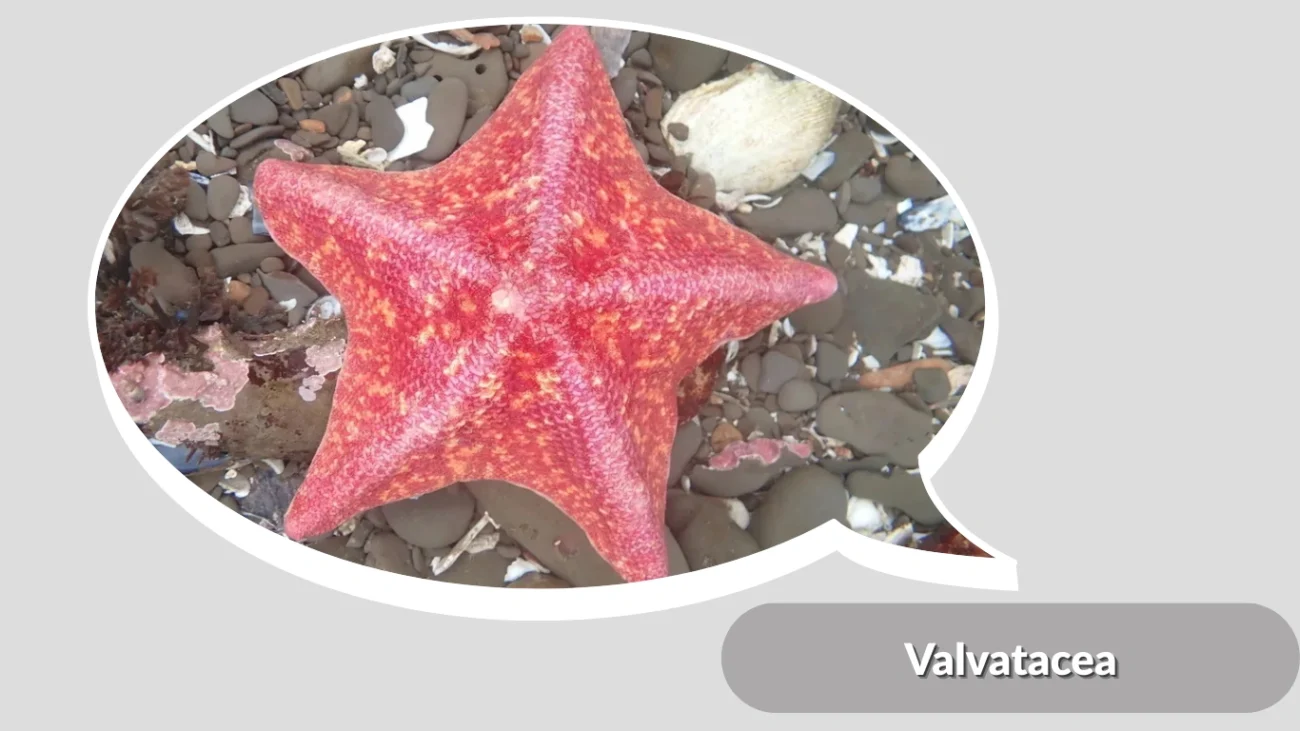
Valvatacea is a large superorder of sea stars that includes many familiar species found in oceans worldwide. It comprises several orders and families, making it one of the broadest and most diverse groups within Asteroidea.
Identification
- Color: Extremely variable—orange, red, purple, brown, blue, yellow, or patterned.
- Arms: Most have 5 arms, but some species may have more.
- Size: Ranges widely from small (2 inches) to very large (over 20 inches).
- Texture: Can be smooth, spiny, knobby, or granular depending on the subgroup.
Habitat
Valvatacea species inhabit a wide range of marine environments, including coral reefs, rocky coasts, sandy bottoms, kelp forests, and even deep-sea habitats. Their distribution spans tropical, temperate, and cold-water regions across the globe.
Behavior
Due to the group’s diversity, behavior varies greatly; however, most Valvatacea species are predators or scavengers. They feed on mollusks, detritus, and small invertebrates. Many are capable of strong regeneration and adapt well to different environmental conditions.
Size
The size range within Valvatacea is broad, from small species just a few inches across to large stars exceeding 20 inches (50 cm). Shape, arm length, and body texture differ greatly among the families and orders within this superorder.


